Students Said

‘he was next to me’ students said
‘i could only run away’ students said
‘when the baton hit his head’ students said
‘i ran away’ students said
‘when he was caught’ students said
‘he screamed his name’ students said
‘and his school’s name to the camera’ students said
‘i can’t sleep’ students said
‘people never wake’ students said
‘don’t cry for us’ students said
‘when you’re on the frontline’ students said
‘there’s no time to cry’ students said
‘don’t say you’re sorry for us’ students said
‘this is not helping’ students said
‘my friends were caught’ students said
‘i can only wait at the court’ students said
‘i can only watch’ students said
‘this is not enough’ students said
‘i’m not going home’ students said
‘i can’t’ students said

Posted in HONG KONG | Tagged

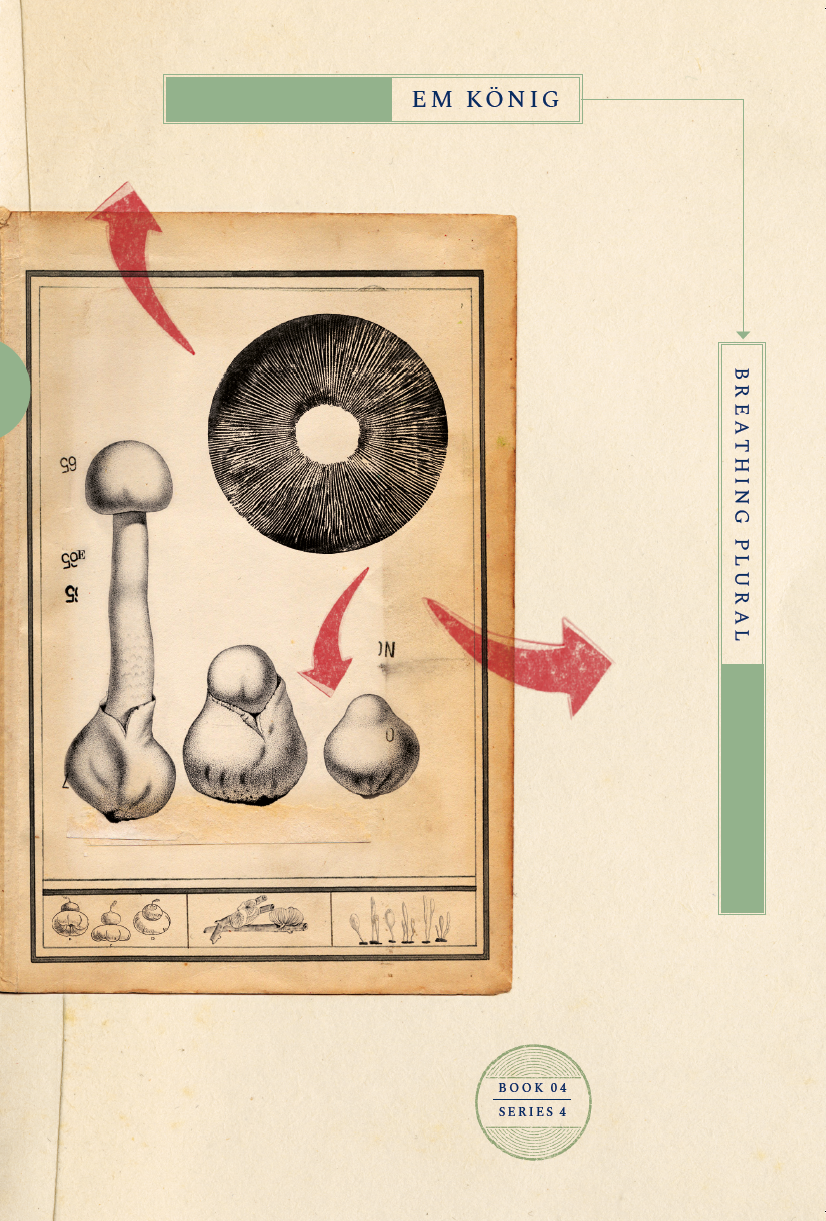
Introduction to Em König’s Breathing Plural

BUY YOUR COPY HERE

Will we miss nature, asks Em König in Breathing Plural? In ‘dreams of stale breath’, maybe. Or ‘in another life, on another planet … maybe’ (echoing The Only Ones’ only hit). Glenn Albrecht says in Earth Emotions, ‘It [nature] effectively no longer exists’. We know, and it’s not a recent problem. Timothy Morton’s 2007 book was titled Ecology Without Nature. Gary Snyder’s 1992 new and selected was called No Nature. Bill McKibben published The End of Nature in 1989. Just for starters.

Em König knows this relationship is/was the difficult one. So how can we humans mourn or acknowledge the break, the loss? To feel it as lovers do, as mothers and children do, as friends and companions do. Because we are breaking up with nature, they say in ‘Dear Nature’. And Nature is breaking up with us.

We’ve worn each other
thin. Lake dry. We’re arid,
dear Nature. I will miss you. Love ebbs
And carries big.

Thankfully, König’s Breathing Plural is not disaster chic, nor is it wilderness kitsch. I don’t want to burden the book with a label such as queer ecopoetics (but there, I said it) but for König, no one is one, things aren’t straight, and neither, obviously, is the planet. We exist in multiplicity. So this book might also be asking, is the poem splitting up with Poetry, or with the page, or the single readerly eye, the single poet’s voice? What might this mean, especially now in the climate and virus emergency, to compose or recompose, to decay or adapt?

This book’s queerness is queer in structure, not just content. It queers edges rather than flirting with centres (there is flirting in it, by the way). It’s unstable, multiple and accessible in the way you can read it anyway you like, backwards, upside down, pick ’n’ mix. You only have to open it to see that. In it, form disrupts the normal, the expected, sanctioned ways of reading, and disturbs hierarchies of long and short, front and back, as well as top and bottom, dare I suggest, in various senses. König places poetry’s upside-downness literally on the page. These effects haunt the book through iteration, erasure and doubleness as its words multiply, diminish and spawn across and around the pages.

This generative and fluent (even effluent) work also traverses bodies, inside them as well as outside, from permed hair to arsehole, wet spot to herpes blister, as well as through grounds and positions, over terrains as diverse as a club, a bed, an outback town, a London street, the Adelaide suburbs, the banks of Karrawirri Parri (the Torrens River).

It’s a book you can do things with and one you can also do things along with. You could read it in self-isolation, on the bus, during sex, or on a walk, say, by the Torrens. It’s a book you can make into another book, taking apart its language as König does, to see how it fits, falls, fucks, tumbles and mulches with other things. Try it.

König’s queer decomposing always leads to something new and shows us that our self-composition is more than simply identity. Who we are is part of ‘we’ as well as ‘I’. These poems enact entanglements with things/beings, with desires and unnatural natures, what’s happening in neglected places, the cracks (including the body’s cracks), as well as our mundane rooms and houses.

Breathing Plural is bracing, sometimes scary, camp, funny, vulnerable, angry, ironic and tender. It’s the breathing work of poetry and you need to read it, whoever your ‘you’ is or is becoming, in whichever way the all-that’s-you choose.

Posted in INTRODUCTIONS | Tagged , , ,

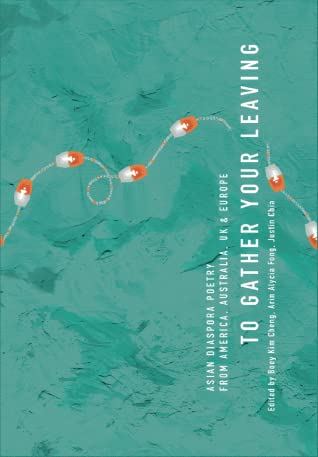
James Jiang Reviews To Gather Your Leaving: Asian Diaspora Poetry from America, Australia, UK & Europe

To Gather Your Leaving: Asian Diaspora Poetry from America, Australia, UK & Europe
Edited by Boey Kim Cheng, Arin Alycia Fong and Justin Chia
Ethos Books, 2019


An anthology like this one that aims to be so broadly representative puts itself in a paradoxical position where the failure to articulate a coherent voice amounts to a kind of success. Towers of Babel are invariably more interesting than angelic choruses and it is a credit to the editors that one comes away from To Gather Your Leaving not entirely sure what poetry of the Asian diaspora ought to look or sound like. The sense of intractable heterogeneity about this volume—its ‘sand-grain variousness’ to borrow a phrase from Suji Kwock Kim—is certainly an effect of its capacious size and ambitious sweep. A handsome soft-cover weighing in at almost three quarters of a kilogram, To Gather Your Leaving devotes over 600 pages to poets with Asian heritage writing out of the Anglophone ‘West’: America, Australia, the United Kingdom and Europe.

The continental scale of this volume allows it to sidestep the essentialising slide of other more localised diasporic categories such as Asian American, Asian Australian and British Asian. Part of the problem has to do with the very concept of diaspora. As Ien Ang pointed out not so long ago, ‘diaspora is a concept of sameness-in-dispersal, not of togetherness-in-difference.’ As such, it may point not so much towards the dissolution of the individual nation-state as an intensification of sentiments of ancestral rootedness and belonging; not so much a transnationalism, then, as a nationalism sans frontières. But set against the centripetal force of diasporic identification is the sheer size of that sprawling variegated landmass: Asia. ‘Where are its boundaries?’ the editors ask in a handy if slight introduction. While the volume ends up with a ‘focus on South, and East and South-East Asia’, they are careful ‘to stake out boundaries without trying to dictate what Asia should be’. Whether one draws the border at Pakistan or Iran, Asia in this book is less a fixed geographical zone than a marker of collective difference, a natal horizon ever receding from those, like the speaker in Nguyễn Tiên Hoàng’s ‘Hàn River’, left ‘tast[ing] the fluid of accident’: water, blood, history.

But while the poems are grouped according to continent, they might well have been arranged generationally. The volume spans four decades of work by two, arguably three, generations of poets: from Ee Tian Hong (b.1933), who emigrated to Perth from Malaysia in 1975, to Ocean Vuong (b.1988), the Vietnamese-American winner of the T.S. Eliot Prize in 2017 (he also gifts this collection its elegant title). Generational distinctions have become somewhat hackneyed, but they provide a useful way of tracking the longitudinal stylistic shifts observable in an anthology as capacious as this. Making one’s way from the Boomers to the millennials born in the very decade that the former began to receive recognition from the Anglophone literary world (Vuong was 8 when Shirley Geok-lin Lim won the Commonwealth Poetry Prize), one notices, very broadly, a growing linguistic self-consciousness that attempts to ‘weird’ English (to borrow Evelyn Nien-Ming Ch’ien’s term) through polyglottal fluency as well as the increasing influence of other media, particularly the visual arts (photography, film, collage), on these poets’ textual practices. Even in a collection wedded to a fairly conventional idea of what constitutes poetry, one gets the impression that the future of Asian diasporic art will be multimedial.

It isn’t entirely surprising that of the book’s three sections, the first group of poems written out of America is by far the most substantial. Asian American writing arrived relatively early on the scene (compared to the other Anglophone contexts considered here), emerging as a distinct field of literary, cultural and political activity in the seventies through collections such as Roots: An Asian-American Reader (1971) and Aiiieeeee! An Anthology of Asian-American Writers (1974). But the selection of Asian American poetry presented in To Gather Your Leaving is less representative of the field’s polemical birth than it is of its maturation in the mainstream. A large part of this recuperative process can be put down to academic institutionalisation: the preponderance of the book’s American contributors work at universities and colleges, in English and/or MFA programs. The wages of institutionalisation are counted with ambivalence in Kimiko Hahn’s ‘Asian American Lit. Final’, a poem which alternates between the programmatic questions on an exam paper (‘How does the Asian American body appear in Jessica Hagedorn’s poem—/ In Cathy Song’s poem—/ In Marilyn Chin’s poem—’) and a more vulnerable mode of questioning recorded in diary excerpts (‘Do I recycle images hoping they will endlessly ignite? Do we all recycle them? make our own clichés?’). Through this alternation, the poem registers the burgeoning gap between the diagnostic confidence of a specialised discourse and the uncertainties of a living (and lived) tradition.

For the most part, the American poems just about manage to skirt the pitfall of cliché through the competence and consistency of their craftsmanship. But more than anywhere else in the volume, one gets the impression here of a lyric sensibility unified around memories of warfare, scenes of filial piety, and migrant melancholia. Two poets, however, felt like outliers. Bhanu Kapil’s work is impossible to mistake; her divagations on monstrosity, feral children and psychosis bring the relief of a perverse strangeness to a routine of respectable estrangement. In ‘Notes on Monsters: Section 2 (Wish)’, the migrant is transformed from a forlorn wanderer to an insatiable hitchhiker—equal parts monster and cyborg. Lyric perception is spliced with the uncanny (‘It’s as if the day has a memory of her and not the other way around’) in Ovidian fables where the boundary between bodies is always provisional.

As mnemonic and mourning, songs have always been a potent trigger for the diasporic imagination, but in Pimone Triplett’s verse there is musicality to match. Her poems are a fair way in from the experimental edge of Kapil’s work, but there’s something irresistible about Triplett’s command of cadence. The speaker of ‘Driving Eye’ lays out a stereoscopic vision of Bangkok in a freewheeling approximation of sprung rhythm:

drifting in instances, a grit
in wind worrying
the surface, the facts,

                                     out to finger the invisible
                                     gap we would inhabit, pulsing always
                                     in between.

There’s evidence, too, of the sharpness of Hopkins’ reverential eye in ‘On Pattern’, an intricately arranged poem in which the speaker’s commitment to formalism in both art and ritual opens a way to being maintained by tradition (‘how your vessel is rented,/ a work/ to be given back’).

Posted in BOOK REVIEWS | Tagged , , , , , , , , , , , ,

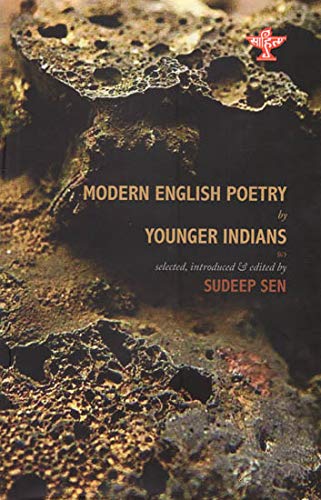
Nicholas Birns Reviews Modern English Poetry by Younger Indians

Modern English Poetry by Younger Indians
Edited by Sudeep Sen
Sahithya Akademi, 2019


Postcolonial poetry has always lagged behind postcolonial fiction on the world market. Yet in most cases, this is attributable to poetry generally lagging behind fiction in sales and publicity. In Australia, for instance, the profiles of Tim Winton and of John Kinsella, internationally known Australian writers of comparable achievement, are about what one would expect given the different profiles of the genres they are best known for writing in.

The disparity between Indian and Indian-diaspora fiction and poetry, though, seems even greater. Every even barely conversant reader can reel off ten or so prominent novelists of Indian background that are part of the world literary conversation on its most basic level, but few could come up with any Indian poet. And those that would be mentioned—Nissim Ezekiel, Meena Alexander, Dom Moraes, A. K. Ramanujan—are no longer on the scene.

Sen’s anthology is an adept guide to an emerging body of work not as known, in a literary world that thinks itself multicultural and cosmopolitan, as it should be. It does not favor or prescribe one sort of poem or one poetic modality. There are some formal poems (sonnets, ghazals, rhymed quatrains) but also many free-verse poems bound together by imagery and insight, and a generous amount of prose poems, which comprise some of the most stimulating aspects of the book. The formal aspect is well-represented by Uttaran Das Gupta’s “Iron In The Rain”:

Or will my clockwork stop its endless run
on its own? There’s no medication,
no bulwark against this growing mistrust
that eats away my iron coat like rust. (131)

This poem bears effective witness to environmental damage, delves into the apparent consciousness of the nonhuman, and also is very urbane in its sense of panache and style. Just as the formal verse is vitally contemporary and does not smell of the lamp, so are the prose poems engaged with life and not stuck in the avant-garde miasma which so often afflicts the genre. Umit Singh Dhuga also is an absolute master of form:

How many loads of laundry can I do
to pass the time until I might or might
Not be hearing back again from you?  (135)

Dhuga is arguably one of the best poets of his generation in English today, and certainly the one whose formal achievement seems the most effortless. Other poets shadow classic forms, as Hinali Singh Soin does in ending “Invisible Poetry”, her seventeen-line poem: “Sonnet like wandering and wondering. Sonnet like all fourteen lines. like one.” (192) Navkirat Soodhi’s micro-poems, though not rhymed, are so concise to be exquisite in form, as in “Act Three”:

We begin to leave
Just as we
Begin to love (232.)

Rohan Chhetri’s “Everything For Me Is Something Else” is both observational and surreal, sensitive to feeling but also holding back some level of awareness, or stretching at communicating something ineffable:

Outside the Public Library in New York, a man pushing an empty pram
on the sidewalk, a woman behind him with a drowning face screaming
at the back of his head. A little girl whose eyes I once looked at through
the pale webbing between her fingers clawing mechanically on the glass
window, beggaring at an intersection in Bombay. Rainwater awning
over her eyelashes, her hair plastered on her skull, & lips trying to
spell something inconsolable.

Rochelle Potkar’s “Transmogrified,” about the love between a he-snake who first loves a she-snake but then, as he changes species, has different encounters with lovers bound to the one species, was my favorite poem in the book. Its vision of interspecies samsara is both catchy and droll, and evocative of traditional Hindu metaphysics, Darwinian evolution, and the dangers of the Anthropocene all at once. The poem’s closing line, “Sometimes evolution and progress is so fast, blessings and curses are all mixed up, and One” (192) would be apophthegmatic inverse but as a prose poem it is pleasingly grave, arch, and dry at the same time.

Modal diversity is accompanied by diversity in tone. Though most of the poems stay in a high, ceremonial register, some, such as Nawaid Anjum’s “A Poem”, are refreshingly colloquial and conversational:

“I don’t hold with this,” you say, “how is this possible?
this doesn’t, what do they say, hold water.”
“It happens with me. I must be real weird.”
I blabber on, even as you look at me with
disbelieving eyes. “No, you’re not gonzo.” (51)

The conversational energy here is between the lines of the clichés, in the rapport and critical attention of the dialogue. The poets included here operate as much by the ear as the eye, and this is especially important in conveying to non-Indian readers the sound and the beat of contemporary poetry from the subcontinent. The Canada-based Priscilla Uppal, who sadly died of cancer in 2018, is engaging in her first-person honesty, as when she says, of her own body, “I am no/longer the love of your life” (251).

Posted in BOOK REVIEWS | Tagged ,

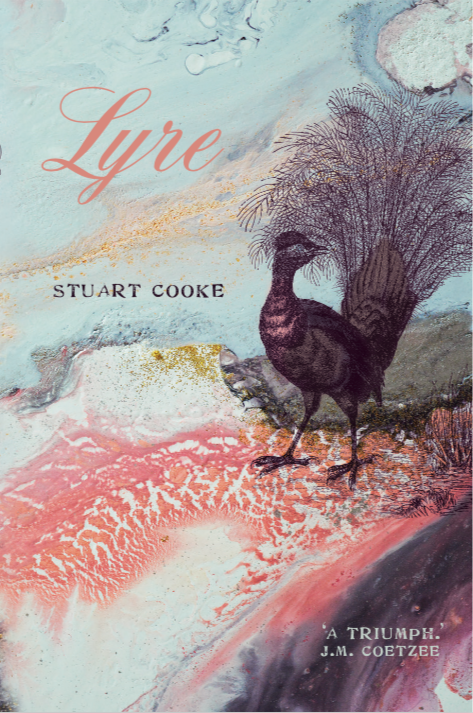
Corey Wakeling Reviews Stuart Cooke’s Lyre

Lyre by Stuart Cooke
UWA Publishing, 2019


Stuart Cooke’s Lyre is the most ambitious work of ecopoetry in recent years. Few other writers could be employed to embark on this kind of project either, I think, considering Cooke’s long engagement with the central questions of ecocriticism not only by way of extensive reading and writing in this field, but also with immersed fieldwork in diverse ecologies found outside Australian metropolitan and suburban zones: notably, the Philippines, Chile, and the West Kimberley. Lyre represents a high point in a substantial career devoted to a life of ecopoetry. The collection channels a career of attentive learning into striking, unpredictable ecotextual records, of the nanosecond-shifting foci of the firefly in flight, the stammering tremulant sonar of the Eastern Whipbird and the deep time shapes of Antarctic Beech distribution.

      in the temperate forests, the wet
                                              sclerophyll forests where tempests
                                                           moan in yourm  leaves, a storm beating
                                                                 muffled drums at the entrance
                                                                         to the underworld, the lands
                                                                              of Gondwana, motherland of Australia,
                                                                                  South America, the hundreds
                                                                                     of years creeping, the moss about youm creeping
      ‘Fallen Myrtle Trunk’

Lyre represents an ambitious realisation of a practice that in one sense has been the result of four distinct companionships with particular writer–critics: Stephen Muecke, Peter Minter, Michael Farrell and Martin Harrison. Companionships, more so than mentorships or influences, would no doubt be the preferable term for many of the parties involved here. And these companionships concern most of all shared ethical and intellectual commitments. Of course, there are countless more one could mention. Jerome Rothenberg is another key companion we should consider in Cooke’s ecocritical project, certainly as one of the first writer–critics to so engage in a poetics learnt from non-Western poetic traditions with the same degree of suspicion for the Western literary ancestry as Cooke employs. But fusing such contrasting yet companionable poetic trajectories is to also achieve something in poetry, at least, that has not looked like this before. No poet has so visibly digested the many alternative trajectories offered by these poets and thinkers into a singular practice.

These companionships signal a more influential body of thought than concepts of practice attributable to them. That body of thought is First Nations thought, most specifically Indigenous Australian thought, but additionally South American Indigenous, especially Mapuche thought. Muecke, Harrison and Minter have been channels to these epistemologies, Farrell a central collaborator in thinking about them, but Cooke has for some time now come to distinguish himself in a project of receptivity and learning with regards to these forms of knowledge.

In tune with the objectives of the postcolonial philosophical endeavour to return to cultural trajectories destroyed and distorted by colonisation, Cooke has shown decolonial attentiveness to contexts whose modes of thought and cultural authority have been poorly understood or integrated into visiting language practices through his own major studies in Indigenous language and thought. These studies have been best represented so far in Cooke’s work as editor of Nyigina lawman George Dyuŋgayan’s West Kimberley-based Bulu Line in The Bulu Line (2014), and in Cooke’s monograph on comparative Australian Indigenous and South American Indigenous poetics, Speaking the Earth’s Languages (2013). Cooke’s linguistic, philosophical and critical endeavours add up to a considerable resource for rethinking environmentally informed writing that tries to divest from the colonial–industrial enterprise.

While the vast majority of poems in Lyre do not make the achievement of earthly consciousness through political strategy per se, unlike the poetics of, say, John Kinsella, the book’s last poem, ‘Lake Mungo’, is an exception and, like Kinsella’s poetics, the poem’s remonstrances stem from the scandal of colonisation, with a heartfelt inquiry into the spirit of Mungo Man and Mungo Lady, names attributed to the oldest remains of Indigenous people discovered on the continent. This section of the expansive poem alludes to Oodgeroo’s ‘We Are Going’ in a key reversal:

                                            [. . .] youm reveal
                               history’s carcass as yourm progress
                                                  youm reveal what descends
                                                        until futures unleash reversions
             a Man and a Lady convene worlds, having been dispersed in them
                                                                                                     they are returning, they will return

To continue reading the poem, as with the rest of Lyre, we must follow the line guided by textual kinesis, pattern and some of our own instinct, rather than follow conventional left-to-right, top-to-bottom consecutive flow. In fact, the following excerpt continues the line beginning ‘they are returning, they will return’ on the opposite page of the book, and thenceforward we clearly should read upwards to continue the flow starting from ‘stories in the land as we see it’:

                                                           the subtlety of Aboriginal time / the force of White settlement
                                                         in yourm lakebeds, dunes and sediments
                                                   yourm plants and animals, their evidence
                                                   stories in the land as we see it

So, this is the philosophical heart of Lyre. The book chronicles ‘organism’ in Alfred North Whitehead’s sense of it, as an immanent suborganization of a totality, something we see in Cooke’s willingness to base poems not only on birds and marine life but also ‘Mangroves’ and the ‘Shallow Estuary’. However, the principle has been learnt from Indigenous thought, that organisms generate their meanings, and that these epistemologies still prove obscured, ignored or misunderstood by a settler nation and polity. ‘Lake Mungo’ avows this influence and engages in an imaginative project with the discoveries of Mungo Man and Mungo Lady to allegorise it; the preceding poems activate the same project, but through an osmotic textual practice attempting to collaborate with the expressivities of nonhuman life as they seem to sound and dance through the page.

Following the decolonial ambitions of a nomadological, earthly journal-ism a la Muecke, a metamorphosed, archipelagic (and therefore post-national), ecologically informed consciousness a la Minter, a polyvocal repertoire of textual registers attuned to local alterity a la Farrell, and an entrustment of philosophical value in heightened sensory experience a la Harrison, Lyre presents the most sustained effort in recent memory of an ecopoetics that combines textual experiment and wild earthly experience in such dynamism.

Lyre does not present the landscape-wandering phenomenologies we are familiar with in the ecopoetry of, say, Louise Crisp or Peter Riley. Such poetry’s experiential motion explores new phenomenological mobilities inspired by earthly contact, and tends to mean visual, cartographical results. In Cooke’s case, in line with the posthuman becoming theorised in Gilles Deleuze’s philosophy and presented in Cooke’s opening epigraph – ‘writing as a rat draws a line or flicks its tail, as a bird casts a sound, as a feline slinks or sinks in sleep’ – the result is a transformative and sensory textuality. Both phenomenological and posthuman approaches to ecopoetry have their comparative appeal; the former is invested in the embodied experience of the environment while the latter is in trans-subjective intensity. Consider Cooke’s ‘Satin Bowerbird’ chronicle, remembering that such a bird should mean some of the most visual delights of the avian world:

                                                       yourm lamp’s intense licks of lilac
                                                    full blue-black in yourm seventh year

                                     or it swerves and collides with the leaves
                                   pours over youm, seeps into youm
                                  seal shape, sealed slick, light
                                    youm build scene with yourm
                                 black root, lure of scene
                               splayed azure from its sleek
                             yourm anatomy spills into art

Not merely visual, the sensory palette of the passage considers architectural, chemical, erotic, haptic and aural qualities also. As such, the practice continually strays from conventional single-voice-centred phenomenological orientations found in lyric poetry, or vignette, so-called objective approaches influenced by modern technology, such as Imagism. While Cooke cannot entirely refrain from the temptation of imagining what some of these organisms think and feel – it is only human – mostly in Lyre tremendous patterns of footfalls, swish, flutter, scamper, explosion, bluster, blaze, flower and furl shape the page-overflowing behaviour of unruly life.

Lyre represents a multi-modal effort to bring logics of environmental relation into textual play that seem to motivate the gecko’s shifting attention, stir the air with the compound utterances of magpies that network their communication systems, or even explain the despondent laziness of an idle cat in the afternoon. Achieving less in terms of the descriptive, existential or political means for the urgent need to improve humankind’s sustainable intimacy with nonhuman life – the prominent poets past and present in this line from this continent include Lionel Fogarty, Judith Wright, Minter and Kinsella, and Cooke hardly resembles these stylistically – Lyre realises an unlikely itinerary of vibrant ecospheres, mammalian, marine and volcanic, that continues a complementary project to such necessary poets in a new vein.


This use of ‘yourm’, and ‘youm’ later in the quotation – obviously meaning ’your’ and ‘you’ respectively – seems puzzling, but in my understanding represents a desire to estrange pronouns from their linguistic invisibility to English speakers and thereby bring attention to the a priori function of human subject identification within this language, especially since saying ‘you’ refers in many of these cases to nonhuman subjects; that is nevertheless what we do in English – attribute others, whether human or otherwise, with ‘you’ when referring to them. It appears then that Cooke wishes to estrange that invisibility of the pronoun and so too alert the reader to the act of naming in the encounter with others.

Posted in BOOK REVIEWS | Tagged ,

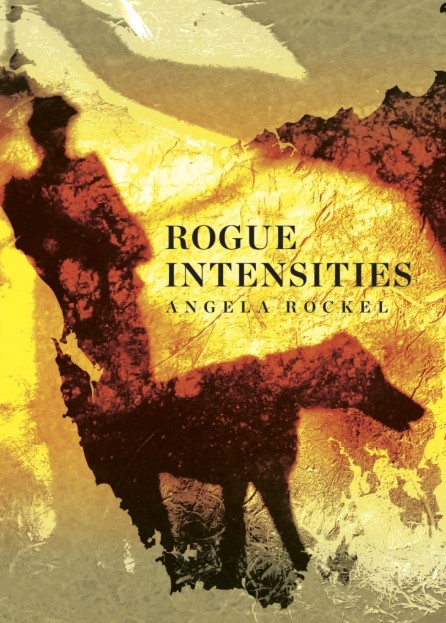
Pam Brown Reviews Angela Rockel’s Rogue Intensities

Rogue Intensities by Angela Rockel
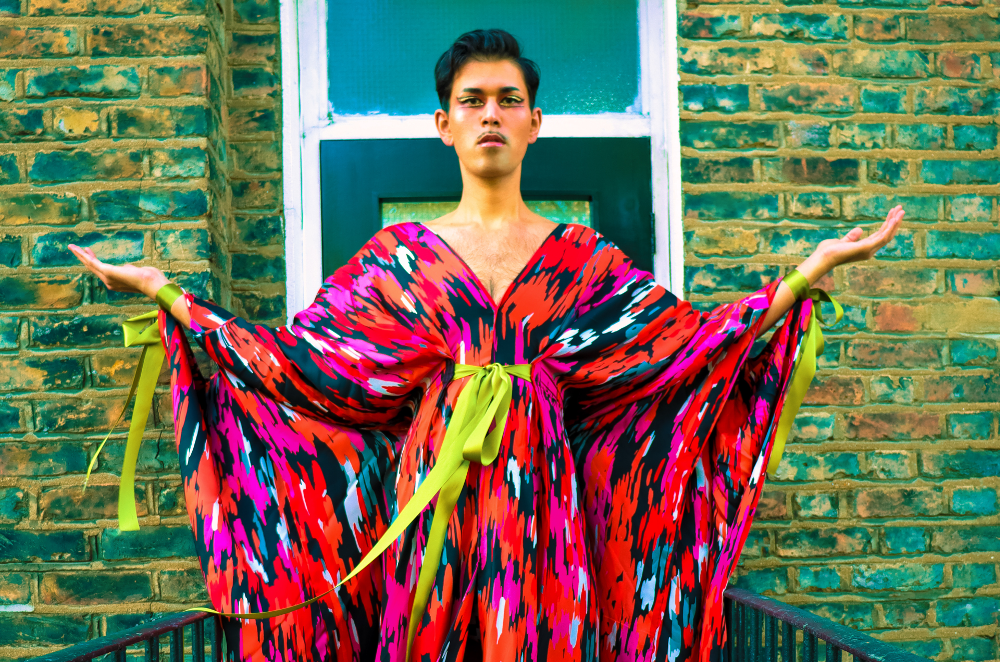
UWA Publishing, 2019


It’s January. As I begin to write this review it’s over 40 degrees celsius outside our small non-air-conditioned house in inner suburban Sydney. I’m indoors, perspiring lightly, with a desk fan on, windows closed, blinds drawn, listening to wails of gusts of hot wind. In Melbourne some of the international tennis competition matches have been closed. It’s been raining mud there. Canberra airport has been closed. There is thick smoke and nearby fire and runways are needed for water tanker aircraft. Friends in Bundanoon in the Southern Highlands, who have already been evacuated three times during recent bushfires, are on ‘Watch & Act’ alert as a fire a few kilometres from their place has reared up again. In the context of these extreme climate-changed conditions I’ll attempt to ignore my anxiety and temperately address Angela Rockel’s Rogue Intensities, though I know that the intensities I’m talking about presently are more commonplace than rogue.

Angela Rockel’s book is a journal of place. It’s a contemplative, highly literary diary documenting five of her more than forty years of observations and experience of living in rural Tasmania. Evolving from blog posts and structured almanac-like by Gregorian calendar, described as ‘moving month by month across five turns of the solar year’, the book works its entries through connection with nature, history, terrain, mythology, philosophy, family, farming, community as well as involving several international locations. Rockel says that she ‘bears witness to this place as I attend to it’.

The title is taken from a line by US anthropologist and ethnographer Kathleen Stewart – ‘Rogue intensities roam the streets of the ordinary’. Rockel’s introduction explains ‘a rogue intensity’ as a moment of potent feeling when an object provokes a brief, acute response, for example, being suddenly stopped in your tracks by a leaf animated by sunlight or the particular colours of an insect. Not so much ‘the streets of the ordinary’, these entries already seem less banal because of their location in terrain where ‘the ordinary’ is the complex superdomain of a rural biota.

Originally from Aotearoa, in the early 1980’s Rockel settled on her husband’s farm in fire country on the Huon River in south eastern Tasmania. Her husband is identified as T throughout the journal. His antecedents were ticket-of-leave settlers from Tipperary, Ireland. His great grandfather was a convict transported to Van Diemen’s Land in 1853 for stealing sheep. T’s great grandmother arrived as an indentured servant. In the late 1850s the emancipated and by then married couple was granted the parcel of land on which T and Rockel now live.

Wild fire has long been part of the area. Only a few pages in, in a climate-altered summer month of January, there is the realisation that Aboriginal methods of land management with fire have been disregarded since colonisation. T and Rockel’s old farmhouse had burnt down in 1981, from a chimney cinder, not a bushfire. She writes looking out on a thicket of deciduous food forest ‘in a provisional reprieve’ from catastrophic climate change and knowing ‘a lick of burning air could still flick down from the red centre and take us out’.

Natural flora and fauna are documented in precise detail, in lists, and significantly, in description of their return once, half a century ago, T had stopped the old practice of cutting regrown trees for box timber and also ceased dairy farming, leaving the land to grow as forest.

One autumn, walking through the forest’s undergrowth Rockel and T look up to see a Wandjina cloud spirit blown in from the Kimberley that as they move closer morphs into a large tall masked owl. The bird is injured. They wrap her in a shirt and take her to a local raptor rescuer. He thinks the bird has been hit by a car. He places her in a box to rest and, possibly, recover. Worried that the bird might not live Rockel spends the night fretting.

At times her language seems quaint and a little anachronistic, as if from earlier times. She has already written in this entry that she is ‘restless and heartsore and full of dread’ on hearing that a friend, M, in Aotearoa is sick.

Perhaps she should have killed the owl. She philosophises about damage and death, unintended suffering inflicted on both humans and creatures ‘and to communities and cultures’. The rescuer reports that the bird has grown stronger in the aviary. A year later, although not free, it’s surviving well and is being visited by a wild male masked owl. Rockel sees the wounded owl as having ‘somehow presaged’ M’s death and that leads her into a meditation on loss and love. Then she muses on her family’s story that their last name onomatopoeically means owl ‘somewhere in the forests of Northern Europe, up near the Baltic Sea’.

Rockel takes her ‘foreignness to the foreign place of my maternal ancestors in Ireland who had left a place scoured and ruined by nineteenth century famine’ to emigrate to Aotearoa. The visit to the old stone farm house outside Bantry, an area ruined by conquering English land grabbers (here named only as ‘landlords’), is unsettling. Until then she had regarded her dispossessed relatives as ‘virtuous escapees’ to Aotearoa but now (quote ‘here be monsters’) she reflects on the complex idea of ownership and the unease of living herself on unceded Aboriginal land in Tasmania.

‘Bearing witness’, she records dire situations like that of the critically endangered swift parrot on Bruny Island. She investigates ocean heat as a prime effect on climate change in scientific articles. There are many instances of lists that form a kind of personal biological taxonomy. There is coverage of research into toxoplasma and zoonoses like the lyssa virus transmitted from fruit bats to humans. There are notes on the inventive Scottish road builder John McAdam. There is the care of dairy cows that Rockel tends and milks. There is a daughter’s grief when her mother dies – and renewal – in a return to Aotearoa, via Christchurch, ‘the quake-shattered city’. To share the strangeness of her mother’s absence with her sisters, without overstating, the topics here are wide-ranging and the book is of substantial length.

Posted in BOOK REVIEWS | Tagged ,

Wrestling with Mode and Meaning: the Play of Poetry in Theatre

Sitting high in the John Golden Theatre on Broadway, the opening moments of Jeremy O Harris’s Slave Play leave me open-mouthed. A black woman, dressed simply and of another era – one might presume as a slave – enters the space with a broom. She is sweeping. After a moment, the song ‘Work’ by Rhianna starts to play. Loud and jaunty. The woman is aware of the music. She starts to enjoy it. She starts dancing, and twerking. We are in a mixed world. It is exciting and disorienting. She is interrupted by the arrival of a white man, scrawny, not a rich man, but holding power largely by the whip evident on his person.

JIM

KANEISHA!
The hell you doin’?

(With an inhalation Kaneisha is up and staring back at Jim—prey before predator. She puts the scarf back on her head, hiding away her hair.)

KANEISHA

Oh lord…

uh…


I’s sorry Masa Jim.


Somethin jus came ova me.

JIM

It’s somethin’ alright!
I ain’t never seen no
‘negress’
move like that there before!

(Jim shifts to hide his growing tumescence.)

Where’d you learn dat?
Thought they beat all the Africa outcha’ll
fore we broughtcha up here to MacGregor’s.

KANEISHA

Well Massa / Ji-

JIM

(Confused whisper)
Ain’t gotta call me
‘Massa’
I don’t reckon.

(An awkward pause.) (Location 145-168)

This extract is taken verbatim, including all original formatting, from the script of Slave Play (Act 1: ‘Work’). The way text is laid out on the page is striking. Dialogue is usually written continuously in play scripts. It may be centred or left justified. It may have line breaks. But on the whole it ‘looks’ more like prose than poetry. Harris’s dialogue looks more like a series of short poems. He’s signalling something very particular in the shape of the speeches: which words stand alone, which are held between inverted commas. To my mind, he is saying to the actors, the director, the production team: ‘Look at this language. Look at how the words appear. This is not naturalism. This is language I want you to notice’.

The play has garnered a huge amount of praise and loud detractors and critics as well. The excitement I felt watching the opening scene stems in large part from the privilege I have of being a white person living in a white dominant culture where such enactments of sexual violence can be viewed with distance, as (disturbing) entertainment. As Zoe Samudzi notes, Slave Play ‘recreates scenes of sexual violence in ways that could be described as anti-Black trivialisations of historical trauma’ (par. 3).

My interest in the play is part of a broader interest I have in the use of language in theatrical works, particularly where that language could be considered poetic and what the purpose and effect of that is. I will therefore not attempt a rigorous critique of Slave Play from a socio-political or racial perspective, but rather use it to illustrate some thoughts and provocations around language and theatre – though these aspects (political and aesthetic) are intimately linked in the texts explored here. This goal – to make language visible, or audible, where audiences are hearing dialogue and not reading it – gets to the heart of what I think poetic text does in contemporary theatre.

Posted in ESSAYS | Tagged

Net Carries Water


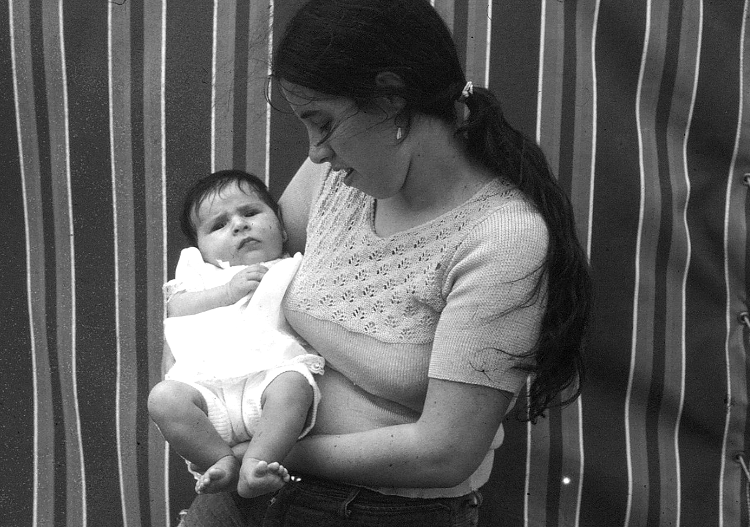
She’s balancing me on her hip, her bare feet sinking in the mud and her tiny denim shorts cutting across her dimpled thighs … She’s standing in front of a striped annex in a caravan park, somewhere in Far North Queensland.

What is this blur, whir of colour, this axe-grind-darkness? Nostalgia. Absence. This grief written along a curve, looping back and out, layered through time. Time is perhaps as Tomas Tranströmer offers not linear, but more a labyrinth, where you can press against the wall at the right spot to hear your past and future selves on the other side.

*

This thread of longing: how can it be finite?

*

Are we picking up the shattered pieces of our traumatised selves as we write? We know trauma, as Judith Herman observes, produces ‘profound and lasting changes in physiological arousal, emotion, cognition and memory.’ Traumatic events ‘shatter the construction of the self that is formed and sustained in relation to others’ and ‘cast the victim into a state of existential crisis.’

*

Are we mapping darkness?

*

In Negotiating with the Dead, Margaret Atwood says ‘writing has to do with darkness, and a desire to illuminate it, and to bring something back out to the light.’ She quotes Virginia Woolf: ‘Writing a novel is like walking through a dark room, holding a lantern which lights up what is already in the room anyway.’

*

Holding aloft a lamp, you cast your net.

*

She’s balancing me on her hip, her bare feet sinking in the mud and her tiny denim shorts cutting across her dimpled thighs. Her crochet lavender top rides up as she struggles to grip me, yowling to get away – at least that’s what I picture happening after the photo was snapped. She’s standing in front of a striped annex in a caravan park, somewhere in Far North Queensland. The Aussie tropical air: soupy. She is seventeen, yet she looks so much younger, too young to be dealing with anything as serious as being my mother. She looks utterly uncomfortable in her own skin, and I feel as though I’m voyeuristically looking through a window at her, right now. I am used to doing this. I grew accustomed to studying her from a distance over the years. She was always, it seems, housed in another building, even when we were in the same room.

*

SPECULATIVE adjective \ ˈspe-kyə-lə-tiv , -ˌlā- \

  1. involving, based on, or constituting intellectual speculation
  2. marked by questioning curiosity: A writer with a speculative mindAntonyms – actual, factual, real

*

When my sister rang I prattled on about the stupid Internet google dongle thing I couldn’t get working until I noticed her silence. When she spoke, her voice had the timbre of glass scraping the roots of teeth. My breath caught, waiting to hear, ‘I’ve got cancer.’ When the words, ‘Mum’s dying,’ spilled from her lips, I breathed. I did not tell her that only two days before I had confessed to a friend that Mum’s eventual death might be my blessing, a release from the pain of wanting what I could never have.

Posted in ESSAYS | Tagged

Unearthing the Greek in the Australian: an Account of Owl Publishing’s History and Foundation

Poetry publishers are an essential staple of the poetry community. When their existence is challenged by funding cuts, blinkered economic rationalisation and misguided consumerism, poets rail – as we should. But when a publisher like Owl Publishing quietly states, it is time to stop and rest, a ripple of grief accompanies an embrace. Since 1992, Owl Publishing has produced 41 titles – this is an enormous amount of work given that it is small, independent and run from a home.

Helen Nickas, a former lecturer in Greek Studies at Latrobe University, established Owl Publishing to open literature to the distinct voices of creative writers based in Australia with Hellenic background or identity. The compulsion to document those poets of Greek origin or heritage grew out of Nickas’s academic studies at Melbourne University, and her journey and output has deservedly been acknowledged.1

Like archaeology, searching and digging into the quiet writing spaces from inner-city suburbs to country towns takes time, energy and persistence. Helen Nickas sifted and discovered those poets garnering presence and those endanger of neglect. She was not alone in this quest to bring to the fore an Australian literature of Greek foundation. Rather, she advanced the excavation commenced by a number of academics, notably Con Castan and George Kanarakis.2 In the1980s, Kanarakis and Castan pioneered the expedition with a focus on first-generation Greek-Australian writers. Steadily working on their findings they investigated a growing group of Greek and Greek-Cypriot writers producing poetry, plays, stories … either in Greek or English, or alternating between languages like Dimitris Tsaloumas.3

The 70s and 80s were the decades when the term multicultural was assembled, catalogued and dissected. It was a term championed by the prolific academic Sneja Gunew:4 ‘We believe that the time is now right for multicultural writing to enter the literary arena with more strength than ever before.’ This wasn’t meant to be oppositional, as Gunew and her co-editor, Kateryna O Longley stated that their aim is: ‘… to move beyond an opposition between multiculturalism and Australian culture so that the latter is enriched by the inclusion of the former. Migration is the tradition of all non-Aboriginal Australians and ethnicity is a factor in all our lives.’

However, publishing a solid collective of migrant writers, creates the impression of ‘other’ and arguably compromises the writer who is categorised solely on these terms. And yet, this same writer may feel gratitude that their work is being published, critiqued and provided a platform. The dilemma of marginalised difference has a strong history within the literary canon of Australian-based writers of Greek heritage.5 Need it be either or neither? No, replies Antigone Kefala, an author of poetry and prose: ‘A migrant writer or an Australian writer? I feel that I am both, and that the positions are not mutually exclusive.’6 Kefala, like Dimitris Tsaloumas, has been widely published, reviewed and awarded. Their biographies demonstrate their ability to straddle successfully the wider Australian literary arena and that smaller literary space comprised of the Greek-Australian diaspora.

Both Kefala and Tsaloumas, in their distinct ways, contribute to Australian literature about settlement in a new land with a contrasting culture. The significance of their contribution can be likened to contributions by Anglo-Australian authors, for example, The Drover’s Wife by Henry Lawson, which stirred the minds of migrants and fueled the space for adaptations, reimaginations, and discourse concerning the struggle to create a home and to acclimatise to a harsher reality. Tsaloumas expresses this experience and confirms its presence in his poetry in the following excerpt of an interview in 1994:

Q[uestion]: In the article The Distant Present you speak of the inner conflict you underwent trying to understand the two realities of past (your life in Greece) and present (your life in Australia). In hindsight you acknowledge that period as a time of growth. Is this spiritual journey reflected in your poetry?

T[saloumas]: Yes, of course it is; it is a slow process and it takes place almost imperceptibly. Whatever I wrote reflects my experiences in this country over the years as well as colouring my past in recollection. This fusion and confusion and at times, separation of the two worlds: the coming together, the conflict that arises, the reconciliation, the harmonisation, the final tone of acceptance; it’s all there.7

Posted in ESSAYS | Tagged , , , , , , , , , , , , ,

NO THEME IX Editorial

Amulet

‘This is not a Warning, it is a Threat! Happy new year!’ So tweeted the American President before launching a missile strike in Iran that almost began World War Three. The American President (for separate reasons) was impeached, and then he was acquitted. Australia burned and did not stop burning and in the middle of that national crisis the Australian Prime Minister flew his family to Hawaii. He was an Australian being an Australian, and if we, like him, keep on being Australians, we will, as Australians, get through this. (This not being the national crisis of the past but the international crisis of the present.) Unprecedented rain flooded the North of England at the same time as new-normal rain emptied biblically into East Africa, quickly followed by a plague of hundreds of billions of locusts, forcing Somalia to declare its own national emergency. The Indian Prime Minister revoked the articles in the Indian Constitution that protected the safety and autonomy of the Muslim state of Kashmir, and, in Delhi, mobs burnt Muslim homes and lynched the people who lived in them, while the government and the police stood by and watched, and, in some cases, participated. The United Kingdom was paralysed by the extended death throes of Brexit, then Megxit – following one on the other like a fever dream of Empire’s end. And then came the collapse of our global health care system, a cataclysmic failure that held capitalism to the light like a soiled white cloth.

We started reading for this issue in December and finished in the middle of March. In those three months, the world changed so drastically, so definitively, that many of the poems here took on an urgency we never could have foreseen. A cataclysm creates its own velocity. It leaves in its wake broken lives, deserted cities, the ongoing futile paroxysms of grief, and a residual nostalgia for time passed, not a previous century or decade, not last year but last week.

Zadie Smith, in her essay, ‘Elegy for a Country’s Seasons’: ‘People in mourning tend to use euphemism; likewise the guilty and ashamed. The most melancholy of all the euphemisms: ‘The new normal.’ ‘It’s the new normal,’ I think, as a beloved pear tree, half-drowned, loses its grip on the earth and falls over.’

In the face of the catastrophe that has transformed our days, we mourn the normal. We mourn the loss of our old way of life, the world as we’ve always known it. We mourn the sudden loss of lives, a loss so abrupt we go slack with the shock of it. Strange to think that only two weeks ago, from the time of this writing, we were saying to our friends that we weren’t worried, that this too shall pass as everything passes, and we met them for brunch and touched their hands across the table, and shared our food from each other’s plates, and kissed their children on their heads, necks, cheeks, and paid for our meals with real physical money standing as close as we wanted to anyone. In a little over a month, when this issue goes to publication, how abnormal will that old normal feel? Because now we know the nature of the new world order created by business houses and political figures, those shadowy or showy operatives unaware of, or oblivious to, the true cost of their rapacity: the world is an arrangement of dominoes, each community is dependent on those beside it, and if one topples over like a beloved pear tree, then so will another, and another, until there are no trees left standing.

Despite this edition being unthemed – the 77 poems here unified by nothing but our own aesthetic persuasions – what emerged at the end was an anthology of our times. During these four months as editors, and as a part of the human community, we watched as the world hurtled towards disaster – pandemic, plague, a new Depression – and that made it difficult to look at these poems, to read them and read them aloud, without being struck by a sense of the biblical, the apocalypse, the end of days.

We’ve asked ourselves whether it was the timing, that so much happened while submissions were open, or if it was us, subconsciously reading for those words that would help us process the moment we were living in. It may be one or the other; and it doesn’t matter, not really, because this much is clear: themes emerged, bold and uncanny, in lines about the climate, about god or the absence thereof, about love and dread, the persistence of memory, the uses of humour as a weapon against power, and, again and again, the mechanisms that vivify the divisive, corrosive heart of our current historical moment.

If poetry is where we go to lick our wounds and whisper to each other the ancient sounds that will heal us, what you have in your hands or on your screen, dear reader, is a prayer or incantation, an amulet against the unravelling.

March, 2020

Posted in ESSAYS | Tagged ,

Never Be Alone Again: Hip-Hop Sampling as a Technique in Contemporary Australian Poetry


Image by Tim Grey

for Candy Boy, Rents and Danilo

Intro

Middle-aged 90s hip-hop fans like myself are clichéd enough to be parodied by The Betoota Advocate but if you’re not familiar with any of the songs, or the source material, I’ve put together a little Spotify playlist for you to check out as you read. No De La Soul though. Their masterpiece, 3 Feet High and Rising, isn’t on streaming services. While most of the 70 plus samples on the album were cleared, it was only for physical media, and, according to the band, their label Warner Brothers is completely disinterested in doing the work that would get the album online.

One of those most important battles of hip-hop’s first two decades wasn’t waged between two MCs at a cypher. And it wasn’t a couple of b-boy crews popping and locking at a block party. Instead, it pitted a hip-hop clown against a puffy-sleeved Irish balladeer. The battleground: Foley Square Courthouse in Lower Manhattan. Grand Upright Music Ltd., the publishing company of 70s chart topper Gilbert O’Sullivan, was suing Warner Brothers, the parent company of Biz Markie’s record label, alleging that the latter had built ‘Alone Again’, the 12th track on I Need a Haircut, his much-anticipated follow up to 1989’s breakthrough The Biz Never Sleeps, out of eight bars of the former’s ‘Alone Again (Naturally)’. You’d be forgiven for not recognising O’Sullivan or his song but it was a bona fide hit in its day. American Top 40 host Casey Kasem’s Wikipedia page ranks it as the fifth most popular song of the 70s, so it probably hadn’t slunk into obscurity by the time documents pertaining to the case had been filed. Markie looped the piano intro of O’Sullivan’s song to create the melody for his tune, borrowing its forlornness to underpin his tale of a hapless rap chump.

In the late 80s, sampling – the practice of lifting part of a song, usually a handful of bars, and looping it over and over – was at its apex. What Markie was doing wasn’t unusual and his record label, Cold Chillin’, had actually written to Grand Upright Music, which was run by O’Sullivan’s brother Terry, requesting permission to use the sample. Terry hadn’t replied by the time I Need a Haircut was released. In this sense Markie was caught red handed but, as Warner Brothers’s lawyers argued, everyone was doing it. Presiding judge (and, in the words of the Village Voice’s legendary Robert Christagau, ‘noted hardass’) Kevin Duffy ruled: ‘the defendants … would have this court believe that stealing is rampant in the music business and, for that reason, their conduct here should be excused.’ The defendants had a point. Everyone was doing it.

Sampling was how hip-hop got its melodies and hooks. Samples were on almost every track. Some artists made some effort to clear some samples, but it was hardly systematic. Instead, hip-hop was fuelled by an avant-garde aesthetic that valued experimentation, innovation and artistic risk; the newest and the freshest, above all else. Il faut être absolument modern. And sometimes that meant turning old things like dusty B-sides – or in more brazen cases like Markie’s, genuine chart toppers – into new things like hooks and beats. It seems clear that Markie knew he was outside the law. The letter to Terry O’Sullivan was taken as proof that Markie was aware permission, and perhaps compensation, was required. Duffy’s judgement, somewhat breathlessly, declared ‘[the defendant’s] only aim was to sell thousands upon thousands of records. This callous disregard for the law and for the rights of others requires not only the preliminary injunction sought by the plaintiff but also sterner measures.’ Eventually Warner Brothers settled for a reported $1.7 million. Judge Duffy asked O’Sullivan for an autograph and referred the matter for criminal prosecution. The autograph is unconfirmed, and sanity prevailed. No charges were filed, but the damage had been done. Markie’s career never quite reached the heights it had promised but he kept a sense of humour about it, appearing on the cover of his next album All Samples Cleared! wigged in a courtroom gleefully waving a gavel.

Markie wasn’t the only person to suffer as a result of Duffy’s ruling, nor was it the only significant legal case involving hip-hop sampling that year. Months earlier De La Soul had reached an out-of-court settlement with B-grade British Invasion hacks The Turtles. The settlement was for the unlicensed use of a snippet of The Turtles’ ‘You Showed Me’, on a skit on their landmark 3 Feet High and Rising. Together these decisions helped bring to a close the anarchic first phase of sampling, just as the technique was reaching a high-water mark. 3 Feet High and Rising was a bold statement about what was possible – James Brown sweetened with Liberace, Billy Joel and a dash of Bo Diddley. Two of the era’s other canonical recordings, Public Enemy’s It Takes a Nation of Millions to Hold Us Back and the Beastie Boys’s Paul’s Boutique, both reportedly feature more than 200 samples. It is widely acknowledged that neither album could be recorded today. Sampling, for better and for worse, would never be the same.

Posted in ESSAYS | Tagged , , , , , , , , , , ,

Lockdown Lookbook: Juicy Iso Couture from Radam Ridwan

Lockdown Lookbook began out of necessity, to create something during a period of stifled expression. Quickly, it transformed into an insatiable, look-hungry monster. On some days, outfits were put together to match moods. On others, it was simply to feed the monster. The piece lives as a representation of my way of surviving during an unprecedented moment in history. A testament to getting the fuck out of bed when there’s nothing to get out for, to showing off when there’s no one to show, and the power of fashion in the creation and re-creation of oneself.

Posted in ARTWORKS | Tagged

7 Works by Eugenia Lim


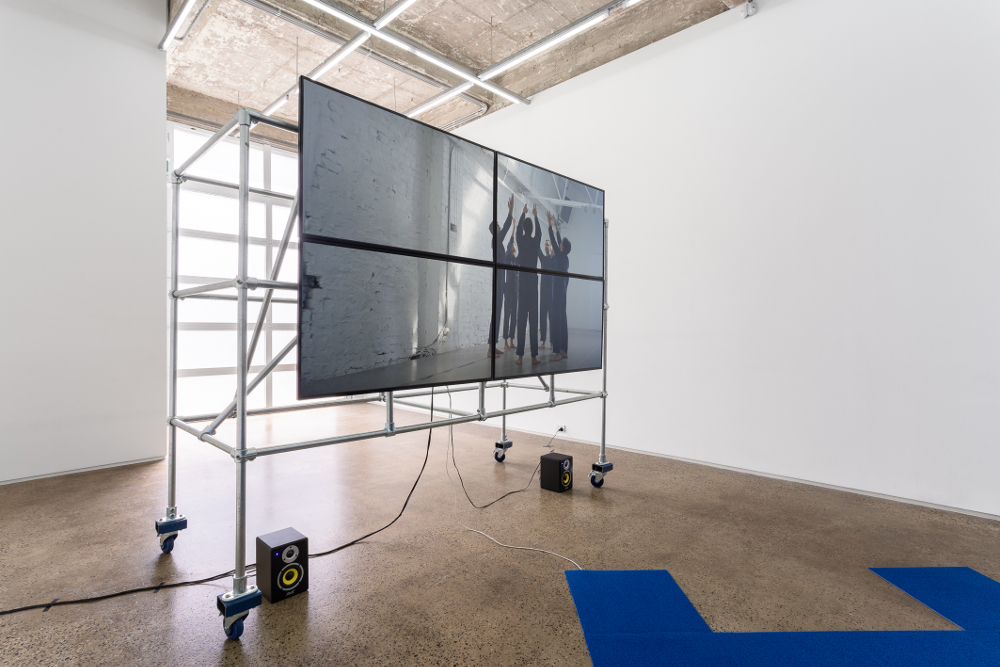
Eugenia Lim | installation view of ON DEMAND | 2019 | Gertrude Glasshouse. Photo: Christo Crocker

Nothing is neutral

I came to art-making via writing (poetry, actually). Each idea, project and work always begins as words; words that I find both expansive and limiting that are nevertheless rich with possibilities. Usually, once I settle on a title (or it finds me), this language articulates the form and shape of the work to come. Double meaning and wordplay gives me the scope to explore multitudes, pluralities, ambiguity and contradictions.

Collaboration and social practice has always been important to me, and this has continued to support and inform my work as an artist. My work with APHIDS (with Lara Thoms and Mish Grigor) challenges and supports me to work at scale, with conceptual and political rigour, humility and openness that comes from our combined identities across class, culture and sexualities; and to work collectively to platform and make space for the voices of women, non-binary, First Nations, people of colour, emerging and older artists in culture.

The 15 images you see here are taken from the past seven-odd years of my work. Reflecting, I can see that there’s been a turning outwards over this time; from an earlier, more personal exploration of Asian–Australian identity and my family’s migration in Yellow Peril through to projects like ON DEMAND and Artificial Islands that seek to understand work, labour, and class within globalisation, capitalism and the digital. The Australian Ugliness was a provocation: if architecture shapes us, then we all must have agency in this process of who we become. My work tends to begin with a question: how am I complicit in systems I don’t agree with, but nonetheless live within? My work is an attempt to understand my place in global systems – of inequity and solidarity – and a dialogue between my audience and their reality. At its most basic, my work navigates the tension between alienation and belonging on a personal and socio-political level.

I write this from my hallway, with my partner and child walking past and interrupting, my makeshift workspace during this pandemic which has pushed those of us who are able to be – inside. This present moment is one of extreme challenge and hardship, but also one of immense possibility for artists, writers, musicians, as ‘seers’ in the world. Now is a time for reflection and thoughtful, deliberate action, as people, citizens and as artists. For me those ways of being: who we are at home, who we are in the world, and the work we make as artists – are interconnected and inseparable.

Here’s to slowing down and making time and space for reflection. For me, slowing down time or being non-linear in my approach to time, is an important act – slowing time as a political act; as a way of saying: I don’t agree with the status quo. I want to imagine a different reality.

Posted in ARTWORKS | Tagged

Brenton McKenna Has More than 14 Monsters

I’ve been illustrating a monster a day since the start of the school holidays here in Western Australia, the official COVID-19 lockdown date for Broome.

Why did I choose monsters? Ever since I was a kid, I have loved drawing monsters: mostly because it’s fun and, unlike a lot of subjects I draw, there are no rules. All the sketches you see here started off as warm up side scribbles I did on breaks between jobs. In my daily process, before I knuckle down to get a few hours of illustration done, I start off doing warm ups sketches (trust me they make a huge difference to my daily output). What I do is find a random image from the web or in the current day’s newspaper and do a 7-minute sketch inspired by it. Then I do another sketch without the visual reference and adding in my own horror Sci-Fi flare.

With these illustrations, I challenge myself of not using a references, and to be creepy without any gore or with minimal blood and guts. I was raised on horror movies, and not using blood splatter was going to be a challenge. I tried to capture the yucky cringe factor like staring into a big black head pimple.

Not all illustrations are cringeworthy, but I explored the term ‘monster’ and its varied interpretations.

Posted in ARTWORKS | Tagged

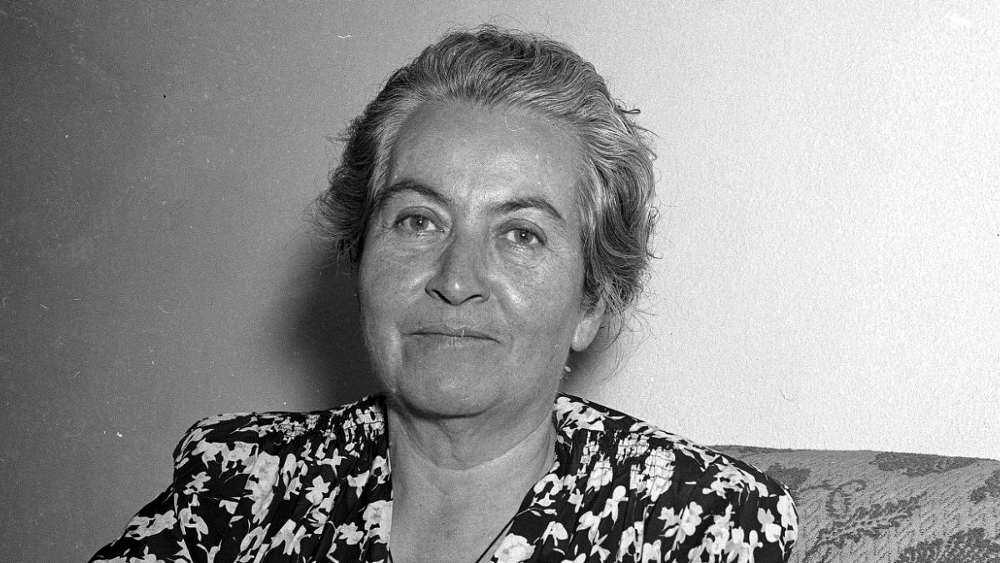
5 Gabriela Mistral Translations

Gabriela Mistral is a central figure in 20th Century Latin American poetry. She was the first Latin American writer to win the Nobel Prize (in 1945), and to this day is the only Latin American woman to have won the award. Unfortunately, however, her work has been translated into English far less than almost all of her significant contemporaries. In many ways she is a much more interesting poet than Pablo Neruda, for example, but her international reputation is dwarfed by his. In part, this is to do with the fact that it is hard to access complete editions of her poetry even in Chile, and in part this is to do with her gender; as Ursula Le Guin argues, because Mistral was represented as a poetess, she was not taken seriously as a poet.

The only substantial selection of her work available in English is Le Guin’s Selected Poems of Gabriela Mistral from the University of New Mexico Press. Le Guin’s accomplishment is a formidable one, particularly given that she had little Spanish herself; drawing on a range of Mistral collections from different countries, Le Guin’s translations provide an incredibly comprehensive selection of Mistral’s oeuvre. For the first time after decades of neglect, the Selected Poems gave readers in English a sense of Mistral’s power, intellect and compassion.

However, the Selected Poems is marred by innumerable errors and unfortunate translation choices, not to mention an ungenerous design which crams Spanish and English versions together on the same page. Of course, this is not the space in which to provide anything like a substantial correction of these problems; instead, I offer these few translations as alternative versions to Le Guin’s, if for no other reason than to show that more than one version is possible (and should be possible, for a writer of Mistral’s calibre).

The poems included here are all from Mistral’s 1967 collection, Poem of Chile. More modest in scope than Neruda’s Canto General (1950) – where Neruda attempts to sing into being an entire continent, Mistral embarks on a kind of dream-journey down the length of Chile – Poem of Chile nevertheless relies on a similar, geomantic faith in the power of poetic enunciation to reimagine the ground of Chilean being. Three companions are present in most of the poems: a woman (the speaker), who seems to straddle the worlds of the living and the dead; a Diaguita boy (from northern Chile); and a huemul, or Andean deer. Together, they represent the three main foci of Poem of Chile – female experience, Indigenous Chile (Mistral herself had Indigenous heritage), and the natural world – and constitute the framework of a pioneering, feminist decolonial poetics.

To some degree, Mistral is anomalous in the context of a domestic literary tradition dominated by big, male communists (Huidobro, Neruda, de Rokha, et al). Next to their loud, party poetics, Mistral is a fiercely independent humanist; next to their rhetorical flamboyance, her short lines and simple rhyme schemes seem decidedly sober, if not naïve; next to their bombastic readings, her voice has a softer, Chilean twang. In all of these ways, she suggests correlation with Judith Wright, though Wright would rarely embrace her country as warmly as Mistral does in the poems here.

Mistral’s association of indigeneity with childhood, or of the natural world with an unspeaking deer, might strike many as problematic. But of such critics I’d ask that we try to keep in mind the time and place(s) in which these poems were written. It’s unlikely that poems like these would have been possible in the Australian 1960s. Indeed, published only four years earlier, perhaps the best Australian companion to Poem of Chile is Oodgeroo Noonuccal’s We Are Going, the title poem of which is undoubtedly resonant with Mistral’s ‘Mapuches’, included here.

Posted in TRANSLATIONS | Tagged , ,

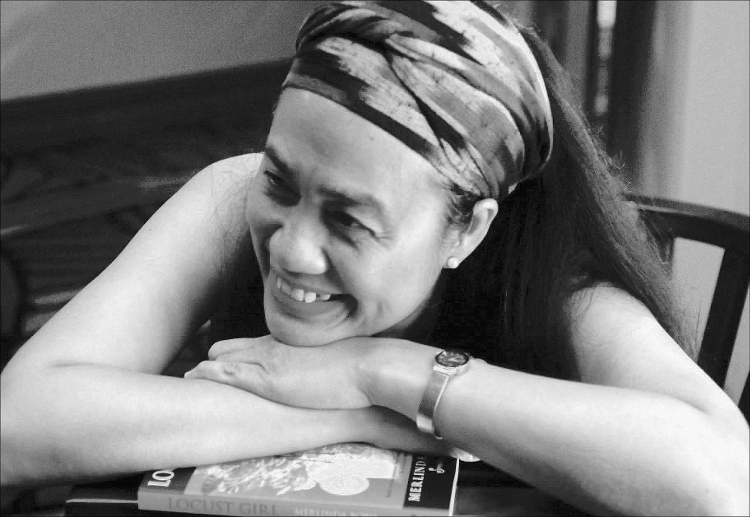
‘A way of breathing together’: Winnie Dunn Interviews Merlinda Bobis

Merlinda Bobis is a poet first and foremost but her extensive body of work has transpired across novels, plays, performances, essays, and works for radio. A single dialogue between us can in no way capture her incredible writing, which is able to transcend borders in all their myriad and sometimes devastating forms. Yet, what I have aimed for in this interview is to showcase the mind of one of Australia’s most brilliant writers to date writing through her Filipino-Australian heritage in a time where the Filipino-Australian community has been vastly ignored and undervalued. As we live, love, and strive to survive together in a time of a global pandemic, I hope this dialogue reminds us how poetry moves through us and can be used as a tool to keep us together.

Winnie Dunn: What does poetry mean to you as a Filipino-Australian writer?

Merlinda Bobis: As a Filipino-Australian writer now, I regard poetry as a way of being, a way of breathing together. It is auditory art as much as it is literature that is not exclusive but shared among the community. I grew up in the Bikol region in the Philippines listening on radio to the tigsikan, an oral poetry joust that used to be done in the public park. Some say the tigsik originally meant ‘a toast’, a Bikol poetic form of three to four rhyming lines extemporaneously rendered at drinking sessions or community get-togethers under the full moon, or in ‘a courtship conversation’ between young men and women. Nowadays it’s used to praise, critique, have fun or have a contest of ideas. Thus, ingrained in me is ‘poetry as community practice’ – it has to do something more and beyond the interests of the poet or the writer. This is why, writing here in Australia about this new home or the Philippines and other parts of the world, I can’t work in an ivory tower. The ‘art for art’s sake’ poetics does not sit well with me. As I grow older, I believe writing has to be with the community of the planet, with bodies (human and non-human) engaging each other and the daily business of living, loving and dying, and jousting with issues that affect all of us as we relate to each other and our shared home, the planet. And one relates primarily with the body before anything else. Poetry is senses and limbs, muscle and bone, and all the tiny cells in them awake to the world we live in!

WD: You talk about your writing practice as ‘collision-collaboration’ and that the ‘space between two colliding elements actually emerges as a third element: hybrid, ambivalent, and constantly interrogating itself’. To what aspect do you use poetry to interrogate yourself? What parts of you need interrogating to produce a poem?

MB: It’s not so much that I consciously use poetry to interrogate myself but that the very process of writing poetry is underpinned by an intuitive self-interrogation. Who and what am I in relation to what I’m writing about in this given space and time, without discounting what came before and what is to come? It’s this interrogation of positionality that underpins the ethics of writing or any practice for that matter. Often, it’s unconscious, a little niggle at the back of my head: ‘you write about a Filipina domestic helper in Manhattan from the comfort of your Canberra study?’ Sometimes, it grows into a conscious querying, an unpacking after the fact: ‘what does this poem/story about a war or a typhoon in the Philippines do for the Filipinos you’ve left behind? Who gains and who loses out in your poetic enterprise?

Now, let me tackle that quote on ‘collision-collaboration’ of different elements. As a Filipino-Australian writing in three languages and across different forms (poetry, short story, novel, drama, and recently screenplay), and performing my own writing for different audiences, I am constantly working with diverse elements that collide and collaborate with each other. So, I find myself producing a hybrid piece that has been informed by diversity. And in this ‘finished piece’, these diverse elements constantly negotiate with each other, so it’s never fully finished as such, thus sometimes readers find it difficult to pigeonhole the writing or the writer. But who wants to be pigeonholed? The writing process is a continuous creating and catapulting outside of one’s creation/s, in order to create anew.

WD: What languages do you use in your poetry and why? Can you also tell us more about Bikol?

MB: My ‘incanting of the world’ is shaped by who I am, where I come from and where I’m at, all of which have ‘grown’ my body and sensibility. I have written poetry in my first tongue, Bikol, the language of the Bikol region where I’m originally from; Filipino, the national language of the Philippines; and English, which I learned at school when I was about six years old. English was originally the American colonisers’ (about 40 years of colonial rule) tongue, but I now ‘own’ it and use it in my own way informed by my original languages. English has primacy in my writing because of where I live now, Australia, and because I grew up at a time when education was primarily in English. But I love my first heart’s tongue: Bikol. It’s often spelled out as Bicol, but most Bikolano writers have opted to change the ‘c’ to ‘k’ to decolonise from the Spanish influence. The Philippines experienced nearly 400 years of Spanish colonial rule. When I was growing up, there was no ‘c’ in the Filipino alphabet but Bikol was very much Hispanised, so Bikolanos have been using the Spanish ‘c’ since the colonial times, except, currently, the local writers. Spanish words have also been adapted into the Bikol language, but I believe ‘owned’ and turned on its head by the local sensibility. Having said all these, I want to clarify that I also love the Spanish language as much as I love English – I tried to write poetry in Spanish at one time, but I’m not proficient in the language. Language is a beautiful gift, wherever it comes from. But while I love it, as writer from a colonised country (whether it’s the Philippines or Australia for that matter), I cannot erase its historical and especially colonial context. In an early essay, ‘Redreaming the Voice: From Translation to Bilingualism’ (Rubicon, 1995), I wrote about English, with its colonial roots, as the scourge and gift of tongue.

WD: Can language be shared in an ethical way?

MB: Sharing a language is about usage and reception, and ethical considerations apply to both. Language is not a disembodied artefact. Language is people and place. So, when one writes or reads about an/other people or place, one needs to listen to their language, their voice. When I’m writing about a Philippine village in English, I try to write the English line/sentence in a way that embodies the tone and cadence of the village tongue and the bodies speaking it. I use words in the language, not just for local colour, but because I want the reader to ‘hear’ this particular place or people. Now, it’s up to the reader whether s/he cares to listen and enjoy this new sonic experience. It’s the listening that is often ethically problematic, especially with the monolingual, English-speaking-listening ear that sticks to hearing a foreign place/people only in English (and its kind of English) and judges anything that sounds other as not as good. The insular ear forgets that the world (or Australia for that matter) is not monolingual nor is it English. I wrote about this in my essay, ‘Subversive Translation and Lexical Empathy: Pedagogies of Cortesia and Transnational Multilingual Poetics’ (in Narratives of Difference in Globalized Cultures: Reading Transnational Cultural Commodities, 2017).

Posted in INTERVIEWS | Tagged ,

On Presence, Defiance and Honesty: daniel ward Interviews CAConrad

CAConrad is the author of 9 books. Their most recent book JUPITER ALIGNMENT: (Soma)tic Poetry Rituals is forthcoming this year through Ignota Books. The rituals are explorations of ‘extreme presence’, in which they invite us to locate, access and utilise our own expansive and mysterious potential. CAConrad teaches across Columbia University in New York City and Sandberg Art Institute in Amsterdam. They have recently published a powerful new essay titled ‘SIN BUG: AIDS, Poetry, and Queer Resilience in Philadelphia’ in Poetry Foundation’s Harriet blog, a publication dedicated to exploring poetry in its many facets both past and present. As CAConrad writes in the opening of their poem ‘Lonely Deep Affection’: ‘years of practice for a soft / landing in the slaughter / we looked far off to / a flag sewn into flesh’. This exchange also touches upon the value of flesh and whose flesh is valued more over others.

daniel ward: In speaking to the themes of your new essay ‘SIN BUG: AIDS, Poetry & Queer Resilience’, and in consideration of the current outbreak of COVID-19, what parallels might we be able to pull between these two global epidemics? How do you think your own experiences throughout the 80s and 90s inform your current experience witnessing widespread health concerns and distress?

CA: Thank you so much for this interview; I appreciate it. Is it possible you are seeing what is happening here in America? US corporate medical supply companies are making governors of states compete by outbidding one another! As a result, doctors and nurses are risking their lives because they cannot access protective gear. It taxes the soul, witnessing the grotesque teeth of this heartless empire! After this is over, quite honestly, daniel, if someone wants to champion capitalism, I will shrug at them because I cannot imagine a more explicit illustration of its violent deficiencies then what we are currently living in.

There are so many moments these last week’s where I see correlations between this crisis and the early years of AIDS. Those who see money in every opportunity, for instance. AZT was a failed cancer drug that was used, and I tried so hard to keep my friends off of it. Everyone I knew who took it died, and Michio Kushi warned us at one of his macrobiotic lectures that the drug was killing people, but too much money was being made to halt production. Today reporters showed us how in Las Vegas homeless people are being made to sleep in specially marked sections of parking lots while there are thousands of empty hotels and casinos!

Poetry helped me subsist when I was a kid watching my friends die of AIDS, and poetry is still with me all these years later. Seven years ago, I did a (Soma)tic Poetry Ritual to cure my depression after my boyfriend Earth was brutally tortured, raped, and murdered in Tennessee. The ritual made its impact on me by using a small crystal he gave me the last time I saw him, which he had kept it in his pocket for over a year and a half, turning it into a library of his breath, his dreams, and movements. Twenty-seven poems resulted from the ritual, and I am nothing but grateful that poetry afforded me this opportunity to heal what seemed a permanent and debilitating wound.

The strength of poetry gave me my life back again; however, as soon as I felt better, the many deaths of friends and lovers who died of AIDS flooded back to me. Every neighbourhood in Philadelphia had a door, sometimes several doors of people I knew who had died when we were just kids. I decided to write this ‘SIN BUG’ essay, but it took me seven years because the process was too overwhelming to write it until recently.

The essay was an exorcism, leaving me lighter. It is a cliché to say this, but it is a fact, it was a release, a relaxed psychic clench. A vehicle for writing it was listening to Alexandra Pajak’s album, Sounds of HIV. He assigned pitch and tone to DNA study results by the US National Institute of Health. His translation of the virus is unexpectedly calming. I climbed inside the music and was able to keep focused through bursts of crying. When you are a teenager and then in your early 20s and that many people are dying around you, and nearly everyone else is acting like it is not happening, that kind of PTSD takes years to be able to cope. To contact my deceased friends while writing the essay, I created a (Soma)tic poetry ritual I call The Wizard of Oz Portal. This film is something all of my dead friends, and I saw, and knew quite well, so it became the perfect place to visit and invoke their names. Here is what I did: I have been thinking a lot about hypogea in ancient Greece. Hypogeum was circular burial chambers, and pregnant women would visit the remains of their dead ancestors to invite them to inhabit the bodies of their unborn babies. I hope I was a pregnant woman who performed this ritual in a past life. It sounds terrifying at first, seeing the bones of the dead. Still, it is exciting thinking of such an experience coursing through my electrical circuitry, my blood pumping into the heart of my unborn child and ancestor simultaneously.      
Do you remember the scene in the film where the wicked witch puts Dorothy into an opium-induced trance in the poppy field? It is an essential part of the story because after Dorothy is pulled out of the trance by the good witch Glenda, she can finally see the solutions for the way out of fear and suffering. But when she is asleep in the poppies, this is where I freeze the frame, then sit across the room with binoculars, studying Dorothy caught inside her morphine-hypnosis while I quietly invoked the names of dead lovers and friends.

I had a dream that I walked past a church and singing poured onto the street. When I walked inside, everyone I knew who had died of AIDS was there. They were all healthy and hugged me, happy to see me, and I was so glad to see them. There has never been a dream as good as that one for me. Even my next best was only half as overwhelming a vision, laughing, and talking with these friends. If I could get pregnant, I would want to be in a hypogeum with them and invite them to revisit the physicality of Earth through the life of my baby. Without hesitation, I would do it and write poems with our child, a true collaboration. I did enjoy revisiting everyone through The Wizard of Oz Portal. The ritual assisted me in re-examining the parts of my life that these vanished souls made more beautiful.

Posted in INTERVIEWS | Tagged ,

‘Desire’s temporality is going to be perverse’: Elena Betros López Interviews Lisa Robertson

Lisa Robertson and I were introduced through my dear friend Marnie Slater following an invitation by Autumn Royal to undertake an interview for Cordite Poetry Review. I felt the need to be completely transparent with Lisa in stating that I’m artist working in moving image, that I’m not a writer by trade, and neither an expert on Lisa’s work. In fact, it was Marnie who introduced me to Lisa’s poetry, inviting me to a reading Lisa gave in Brussels in 2017. After this I bought three of her books at once, yet somehow, I found myself reading them slowly, over long durations of time and with some loyalty in finishing one publication before starting another. I felt curious about my own time with these publications, how in my focused and durational readings began to inform my life and thinking.

After exchanging a few emails, Lisa and I spoke for a number of hours via Skype on 26 February 2020. We had agreed that our dialogue would be fleshed out through a written exchange. My first reflections after our Skype conversation were posed to Lisa on 1 March. The time which separated our initial contact and my first written reflections and then eventually, her responses, was radically re-negotiated by the outbreak of the COVID-19 virus. During this time, Lisa was travelling in Vancouver, slowly cancelling the other parts of a West Coast book tour as we all learned about the gravity of the pandemic. Then she flew home to France early, in time for lockdown there. As a result of these shifting circumstances, and our email exchanges about our own changes in space and time – we have decided to date each portion of our writing as they have been added to or cut into the existing body of the text. Please be aware there is a lack of linearity to this exchange, which may reflect on how conversations and exchanges actually occur. As Lisa writes in ‘The Seam’ from 3 Summers1: ‘Now it’s time to return to the sex of my thinking. / How long do I get? / A fly moves across the pages of an open book / (the pages are quivering)’.

Elena Betros López (1 March 2020): References to time kept arising whilst I was revising my notes from our conversation. I found this striking especially as I raised my own time with your poetry in my initial email to Marnie. How I felt I could not put down Magenta Soul Whip2 which I started in 2017 until 2019 when I began reading 3 Summers. These books have held different temporalities for me, yet each is read very slowly and with much re-reading or re-visiting, I feel some fidelity to each publication in that I find it hard (in an embodied sense) to move onto another until I’m ‘done’ with the one I am reading.

I didn’t really arrive at any specific questions, I tried but it felt too forced. Through revising my notes, I gathered a number of fragments we spoke about which felt most pertinent to me. I’m wondering if you could build on these reflections and we can work from here?

EBL (5 March 2020): A quick note to say that our initial musings and writing on time seem striking in view of the present circumstances. My writing the questions before this present moment of time, the COVID-19 time, which feels to me to hold a special temporality, then your responses after. I have been feeling like the future has been suspended in this time of the pandemic. I’ve placed the dates on my questions and your responses. I think it is interesting at least for now to chart the subjective and embodied shift with this dating, as well as to mark my recent questions cutting into your existing responses.

EBL (1 March 2020): During our Skype conversation we spoke about the type of slow time you need to write, its tension within or maybe resistance to the neo-liberal colonisation of time. You mentioned that your methods were developed in a different political economy yet have been carried forward. Later asking the question: ‘How to create language that gives experience as much time as it needs?’

Lisa Robertson (22 March 2020): I don’t have a certain answer to this question. I think it will continue to change, happily, and is also very situational. My experience as a worker, a composer, and thinker in language keeps showing me, in diverse ways, that language itself (here by ‘itself’ I don’t mean an ideal, desituated language, but each specific experience in language, each shock we receive in its company) is already a constantly mutating temporal record and organism. In the experience of language we are multiple, outside ourselves. The challenge in writing, reading, and of course oral exchange, could be to slow down, or to learn how to frame one’s linguistic perception, so that the micro events and traces inherent to both our vocabularies and syntax become conscious. Within this alerted consciousness, more kinds of responses and movements and celebrations and critiques become possible. Speed is also a pleasure, clearly – slowness won’t be relevant consistently – but play, contemplation, mixture and experimentation with tempo, in composition, or in reception, and in their entanglement, is a way to begin to individually resist capital’s reduction of public discourse to a utilitarian exchange with the end goal of consumption. The neo-liberal political economy proceeds by the rule of austerity, or collective limitation. I utterly scorn this law. I am in favour of abundance, whether temporal, aesthetic or social. We can create abundance for each other. That’s one of the gifts of poetry.

Posted in INTERVIEWS | Tagged , , ,

3 Lionel Ray Translations

The evening stretches towards the trees :
the dead never left this country
nor the lesser shadows of these hills.

And you, you awake
in the dust and flame of a simpler time.

In the ripening brightness,
this mouthful of final words, obscured,
consenting.

~

Le soir s’étend vers des arbres :
Les morts n’ont pas quitté le paysage
ni les ombres inférieures des collines.

Et toi, tu veilles
dans la poudre et la flamme du temps simple.

Dans la lumière mûrissante,
cette bouchée des derniers mots obscurs
et consentants.

Posted in TRANSLATIONS | Tagged ,

Nothing Would Be the Same | Nimic nu ar mai fi la fel

Nothing would be the same
even if you came back
your space in the bed has been taken
by the dog of solitude.

tall
and extremely difficult to defeat.

the four seasons are: spring, summer, autumn and winter.

In spring the grass grows,
the flowers bloom and the snow melts
we work in the garden.

In summer it’s warm, lots of sun,
we wear shorts
we take holidays.

In autumn the vegetables ripen,
the leaves fall, the wind blows and it rains
the school year begins.

In winter it’s cold,
we lose heat through our hands
it snows
children go sledding and Father Christmas comes.

Nothing would be the same
even if you came back

they have already learned
not to scream, not to talk over the grown-ups. To wait.
To keep quiet.

~

Nimic nu ar mai fi la fel
chiar dacă te-ai întoarce
golul din pat e acum ocupat
de câinele singurătății.

înalt
și extrem de greu de învins.

cele patru anotimpuri sunt: primăvara, vara, toamna și iarna.

Primăvara crește iarba, cresc
florile și se topește zăpada
lucrăm în grădină.

Vara afară este cald, mult soare,
ne îmbrăcăm în pantaloni scurți
avem vacanță.

Toamna se coc legumele și fructele,
cad frunze, bate vântul și plouă
începe școala.

Iarna e frig,
căldura se pierde prin mâini
ninge
copii se dau cu sania și vine Moș Crăciun.

Nimic nu ar mai fi la fel
chiar dacă te-ai întoarce

au învățat deja
să nu țipe, să nu vorbească peste adult. Să aștepte.
Să facă liniște.

Posted in ROMANIAN | Tagged

Love | Dragostea

begins neither with a bang
nor with a sob

but with a shiver, a tiny hum
a stirred molecule
provoking storms inside the knees

wonderful things begin this way

at the tip of every finger
fragments of eyes,
hundreds of mirrors turned towards the world –

a kiss like a potent drink that shatters the spine

from my sky I see the whole bed

two beautiful invalids
silent under the blankets, in a motionless embrace.

they search for words
to fuse them together as one body

they smile. they breathe

their exhalations grow into great water plants entwining above the bed

~

nu începe cu un bang
şi nici cu un scâncet

ci înaintea lor o vibraţie, un zumzet mic
o moleculă trezită
stârnind furtuni în genunchi

nimic minunat nu poate începe altfel
 
la capătul fiecărui deget
fragmente de ochi,
zeci de oglinzi întoarse spre lume –

un sărut ca o băutură tare aruncă şira spinării în aer

din cerul meu se vede tot patul

doi invalizi frumoşi,
întinşi sub pături, tac împletiţi şi nemişcaţi.

ei caută cuvinte care
să îi sudeze aşa cum singur trupul i-a apropiat

zâmbesc. respiră

uriaşe plante de apă cresc din aerul expirat şi se înlănţuie deasupra patului

Posted in ROMANIAN | Tagged

Love No | Dragoste Nu

I miss you in every place

your absence leaves me weary
I talk a lot
I cut my meals in half

I am a bomb
programmed to explode
in front of anyone who comes too close

in front of this man who warms the soles of my feet.

we could
watch the same ceiling together
consumed by heat and fatigue

we could walk around the house blindfolded all pleasure
all pain and after a few hours
a tremendous lack of imagination.

but hell is the inability to think
and the punishment for too little love is not death

but countless deaths.

~

mi-e dor de tine peste tot

obosesc repede când ești departe
vorbesc mult
și tai masa în două

sunt o bombă
programată să explodeze
în fața oricui se aproprie prea mult

în fața acestui bărbat care îmi încălzește tălpile.

am putea
privi același tavan împreună
topiți de căldură și de oboseală

am putea umbla prin casă legați la ochi numai plăcere
și numai durere și după nici câteva ore
o mare lipsă de imaginație.

dar iadul înseamnă să nu te mai poți gândi
și pedeapsa pentru prea puțină dragoste nu e moartea

ci nenumărate morți.

Posted in ROMANIAN | Tagged

Fever | Febră

I have a fever.
and in this light
I see the hideous beauty of all the plants forced to grow
in darkness.

The thought of you makes my hands hurt all the way up to my shoulders
keeps them separate from my body
stops them from hugging me.

instead of shoulders
I have two holes and the rain falls through them.
every time I talk to you, there is lightning outside.

I can’t even call it a dream
now that I’ve seen it materialising, relentless and strident
like mannequins devouring themselves
in a closet.

in ominous silence
our exquisite love passes from night to night.
no regrets. no death,
just this miraculous fever
in which reason fails
for it is too exact an instrument

~

am febră.
şi în lumina asta
văd frumuseţea hidoasă a tuturor plantelor silite să crească
pe întuneric.

doar mă gîndesc la tine şi mă dor mîinile pînă la umeri
asta le îndepărtează de trup
împiedicîndu-le să mă îmbrăţişeze.

în locul umerilor
am două gropi în care plouă.
de cîte ori îţi vorbesc, afară fulgeră.  

nici nu pot să-i spun vis
după ce am văzut-o întrupându-se stăruitor şi scrîşnit
aidoma mestecatului pe care îl fac manechinele
devorîndu-se într-o debara.

în cea mai cumplită linişte
dragostea noastră perfectă trece din noapte în noapte.

nici regrete. nici moarte,
doar febra asta miraculoasă
în care raţiunea dă greş
pentru că e un instrument prea precis.

Posted in ROMANIAN | Tagged

March 8 and March 7 and Forever | 8 Martie și 7 Martie și Mereu

Good evening,
I called so you can say happy birthday to me.
I let 24 hours pass
but I thought you might like to say happy birthday.

Because I am forced to speak
I remain quiet for too long
when I want to speak
everything goes against my nature
I want to filter messages
but I accept
I want to unlike
but I like
I want to unfollow
but I follow
the sound of incoming calls makes me want to scream.
I scream inside, then, politely:
Hello! Yes! How may I help you?
I scream inside
I scream.

When you say hello
I must reply
because that’s the way I am
and a stadium filled with people lacking b a s i c
kindness
who want to share
to explain
to complain
to announce
to inform
to notify me

because my thoughts
my skin and my synapses
have vanished
and it is never quiet
and never dark enough
never quiet enough
for me to process: you were very beautiful
I didn’t realise back then how beautiful you were.

because
the doorbell
and the knock on the door
make my stomach turn
and I answer with infinite kindness:

good evening, I am sorry to hear that you care.

the scream barely leaves

~

Bună seara,
am sunat să îmi spui la mulți ani.
Am lăsat să treacă 24 de ore
dar m-am gândit că ți-ar placea să îmi spui la mulți ani.

Pentru că vorbesc din obligație
tac îndelung
atunci când aș vrea să vorbesc
totul se întâmplă împotriva naturii mele
vreau să dau filter message
și dau accept
unlike
și dau like
vreau să dau unfollow
și dau follow
sunetul telefonului mă face să urlu.
urlu în interior apoi politicos:
Alo! Spuneți, vă rog! Cu ce vă pot ajuta?
urlu înăuntru
urlu.

Pentru că mă salutați
trebuie să răspund
pentru că sunt eu
și un stadion plin de oameni lipsiți de e l e m e n t a r ă
tandrețe
care vor să spună
să relateze
să se plângă
să anunțe
să informeze
să îmi aducă la cunoștință

pentru că gândurile mele
pielea și sinapsele 
s-au stins 
și nu e niciodată liniște
și niciodată destul întuneric
niciodată îndeajuns de liniște
să procesez: erai foarte frumoasă
eu nu îmi dădeam seama atunci cât de frumoasă erai.

pentru că
soneria
și ciocănitul la ușă
îmi întorc stomacul pe dos
cu infinită tandrețe răspund:

buna seara, îmi pare rău să aud că vă simțiți.

urletul iese un milimetru în afara gurii
și cade la pământ.

Posted in ROMANIAN | Tagged