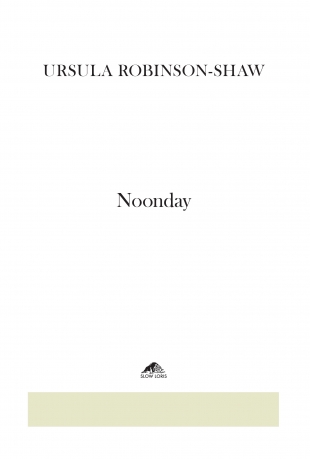
Melinda Bufton Reviews Ursula Robinson-Shaw’s Noonday

Noonday by Ursula Robinson-Shaw
Slow Loris, 2019


Noonday is an intriguingly built set of poems. As a reader, I am looking to be jolted into a new paradigm. I want the poet to raise the stakes and am generally looking for puzzles I cannot solve. It seems a bonus if the work doesn’t remind me of anybody else’s poetry. In this debut chapbook (out of the excellent Slow Loris imprint of Puncher and Wattmann), Robinson-Shaw does all of this with a curious and compelling combination of elan and humility. How do these even belong together – elan, humility – and how does this operate to bring us the silkily resolved work of this collection? And by resolved, I don’t mean without room to take this style even further. And by ‘belong together’, I’m not suggesting for a second that there isn’t texture and dirty hip-and-shouldering aplenty in these poems, between ideas and between fragments.

‘Sonnet for the Good Meat’ exemplifies this by propping a dare in the opening lines – ‘g says the only way to write a love/poem is to make sure you’ve never read a sonnet before in your/life’ – and then unleashing a neon wave of unhinged, pacey lines that gather up every punkish extremity and surprising inclusion they can conjure in their wake. Almost every line begins with the name ‘Jenny’, until it feels like a new form of punctuation: ‘jenny jenny jenny/jenny we are fucked from the perspective of eternity/jenny it’s scary but that’s the price of freedom/lolling around in the interminable present’.

The poem ‘Noonday Demon’ concocts a psychogenic topography, a kind of meandering, mental detritus diorama. It is a list poem, but with teeth. This begins with a ramble over literal landscape signifiers, sprinkled with self-deprecation – ‘it is taking myself for a walk/down to the hill or the mountain slope/down to the ravine’ – pitstopping at ‘it is my pink rubber trousseau filled with divorce letters’ and ‘it is to steal butter from my neighbours . . . like a fox’. It then broadens its own field with other ‘definitional’ gambits – ‘it is my floor mattress and my industrial conditioner’, ‘it is my gnarly emotional plasticity’, ‘it is living on the cream at the top of the bottle’ – which seem to cluster around two capitalised segments. At first, I wanted to read these as two separate climactic points, two word-peaks (to continue the metaphor of landscape) compelling us to pay attention with their bold stance:

I DON’T WANT TO SEE YOUR HOMEWORK
NOR A SAUSAGE MADE
DO NOT USE THE PENDANTIC SIC
I MEANT IT EXACTLY AS I WROTE

(and)

HAVE YOU RUINED ANY LIVES LATELY

Perhaps, though, they function as primarily stylistic, for the pleasure of their author and for us as readers. The poems do bounce with confidence and energy but in saying that, Robinson-Shaw does this – arrangement of suppositions, poking us in the eye poetically and offering up despair reconfigured as curiosities – with a lit match nearby, and an escape plan folded neatly in her pocket.

Measured scepticism features as an intended corrective; it seems to both undercut – or unbalance – the declamatory or commentating words or segments it interleaves. This adds up to a sweet wryness. Robinson-Shaw’s poems can have it both ways by never proclaiming answers, even while actively critiquing that which deserves evisceration:

the conspirators
had you made to order
and delivered, by the merchants
of elliptical reality . . . they make you write an outline chart
of your life . . . . the scene has many dramatic possibilities . . . . . however
they leave 
to do mental hygiene

These lines, from ‘Conspiracy Party’, perform this wryness in a kind of circular dance – the ‘elliptical reality’ the lines name – where no one is sure where self-hood begins or ends. Or that it was dreamed up in ‘marketing’, and now no one can stop this deluge of absurd meaning–manufacture we unwittingly swim around in. I see this in other poems also, such as ‘Vogelfrei’: ‘this is the post-scarcity/digital psychosis phase even the sacred/penetrating in the chinks of the profane/has been paywalled, your mentors/all died of indecent exposure/altho good news population decrease makes it easier/to run crotchless between houses’.

This somehow calls to mind and trumps Anne Carson’s famous ‘If prose is a house, poetry is a man on fire running quite fast through it’. i


iKate Kellaway, ‘Anne Carson: I do not believe in art as therapy’, The Guardian, 30 October 2016.


Posted in BOOK REVIEWS | Tagged ,

Submission to Cordite 100: BROWNFACE


Image by Tyler Aves

The brownface caricature of Jonah Takalua – as created and played by comedian Chris Lilley in the television show Jonah from Tonga – has been haunting Australia for twelve years.

Drawing on the long and racist history of blackface, brownface enables White people to don textured wigs, act out exaggerated slurs and speech and cover their skin in dark paint as a way to dehumanise people of colour all in the name of a “laugh”.

As Australia attempts to lift the brown veil of its minstrel ghost, how do its poets respond? What has happened in your country?

The kind of work I’ll be looking for includes:

  • poems that address and are critical of the use of brownface;
  • poems that re-centre cultural stories and storytelling;
  • poems that unpack the dangers of predominantly White-controlled nations;
  • poems that reflect the nuanced intersections – race, age, class, gender, sexuality, disability – of its writer.

For this theme, I and Cordite Poetry Review strongly encourage Black, Indigenous and people of colour to submit work.


Cordite is celebrating 25 years of publishing in 2021, including our 100th free issue of Cordite Poetry Review, our 40th Cordite Books title published and our new free anthology 40 Poets.

Please consider making a donation. Cordite receives no financial, salary or in-kind support from a university.


Submit poems (prose, comics, visual, concrete) or works of micro-fiction (500 words maximum). Read more about submitting to Cordite Poetry Review. Please note:

  1. The guest editor has sovereign selection choice for all poems submitted.
  2. Masthead editors will also contribute to the issue.
  3. We will only read submissions sent during our official submission periods.
  4. Cordite maintains a hybrid submissions policy. This means that the guest editor may invite five (5) Australian and five (5) overseas authors directly to submit to the issue. In addition, the guest-editor will anonymously select an additional 30-35 works from Australian authors and use their discretion to select further overseas works. For each issue, the guest editor does not know the identities of the online contributors (via Submittable) until after the final selections have been made.
  5. Simultaneous submissions or previously published material will not be considered. This includes works published in print and web journals but does not apply to material first published on personal blogs.
  6. Please place up to three (3) poems in one (1) Word, RTF or PDF document (unless specifically noted otherwise for special issues), with no identifying details in the document itself.
  7. We are not able to offer feedback on individual poems.
  8. Submissions will only be accepted via Submittable …

submit


Posted in GUNCOTTON | Tagged ,

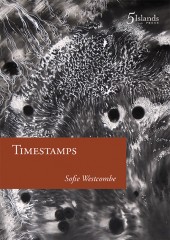
Alison Flett Reviews Sofie Westcombe’s Timestamps

Timestamps by Sofie Westcombe
Five Islands Press, 2019


Mochilera

Quiet One
Finds a tempo with a friend
Who lifts condor wings
To call herself into the universe,
To answer solipsistic notes
From the moon.

Miming a hike 
With an Argentinian man, she says
Ticka-ticka
Like the traffic light heartbeat
Back home.
She wiggles long fingers:
I come in peace.
He understands,
Puts his hands on her face
For luck.

So begins Sofie Westcombe’s debut collection Timestamps, one of the last books to be released from the Five Islands Press traps. At first glance it’s a curious choice for an opening poem, the ethereal New Age tone seemingly at odds with the rest of the collection’s insistence on the concrete. But this is poetry that shrugs off first glances, that beckons the reader in, inviting full engagement. The poems resist our habitual mode of poetry-decoding by refusing to state their intentions: the ‘meaning’ is often vague, forcing the reader to participate in the creative process by filling in the sense-gaps. And ‘Mochilera’ introduces us to this idea via the backpacker who journeys into new territory, communicating in novel ways, using sounds and finger-wiggles. Like the ‘Quiet One’, we as readers must find Westcombe’s tempo, staying open to the possibilities of a different type of interaction.

There’s no titular poem in the book, but the relevance of ‘timestamps’ is apparent in its definition: ‘a sequence of characters or encoded information identifying when a certain event occurred … sometimes accurate to a fraction of a second’. Westcombe’s poems are certainly careful records of split-second events: a wasp interrupting lunch, someone yelling from a bridge, napkins flapping on a table. Each is recorded with a precision and openness, an almost haiku-esque quality, that reflects and celebrates the potential depth of meaning in any ordinary experience. As in haiku, everyday events are given significance through the simple act of recording: ‘There is a sheen on the road,/ Sound a half tone deeper where the tires move/ Their tonnes (‘Toll’). At the same time, the open language enables a multitude of possible interpretations: ‘The edge of the mind/ Is at home in the bush./ Out here you could—/ Blank—/ Camera, memory/ Moot.’ (‘Lure’).

The neat and tidy structure of the collection (52 one-page poems, each line left-aligned with the first word capitalised) also seems pertinent to the title. The uniformity and brevity of form (the longest poem is 19 lines) makes it easy to imagine the collection as an album of timestamped events, one for each week of the year, pressed between the pages so as not to be lost in the annals of time, a way of saying

Here is what I felt/
Here is where
I have been.                            (‘Demerara jar’)

But the poems are much more than reportage. Their structure is often paratactical or, more specifically, what Brian Reed has described as ‘attenuated hypotaxis’ – clauses and phrases that are ‘tenuously interconnected’ though the connections are unclear.i It is this, to return to an earlier point, that forces the reader to make their own sense, draw their own lines of connectivity. What do we make of the opening lines of ‘Flypaper’, for example?

Make a go of it!
Says an old man in the mouth of a garage,
The spent cigarettes doing black wonders.

Is it a call to ‘seize the day’ uttered by someone nearing the end of their life? And what is the relevance of the garage? A place where one’s mode of transport lies dormant while one tinkers, wasting time on never-ending tasks? Or is tinkering the point, an attempt to ‘make a go of it’, fixing the dormant vehicle so that one can go places/ move on? Or does ‘the mouth of the garage’ simply allude to the jaws of death? Then there’s that mesmerising phrase, ‘the spent cigarettes doing black wonders’. A reference to lung cancer? Or just cigarette butts pirouetting through the air, having been cast aside (since ‘doing’ suggests some action) or lying squashed on the ground (as ‘black’ and the title ‘Flypaper’ suggest)? The line might have read ‘The spent cigarettes squashed like dead flies’, clearing up any ambiguity. Instead, the twisted syntax shies away from fixed interpretation, allowing the moment to become, as Lyn Hejinian puts it in ‘The Rejection of Closure’, ‘potent with ambiguity, meaning-full, unfixed and certainly incomplete’.i

It’s a practice often associated with the Language school—writing with an intent to involve the reader in the composition — but is Westcombe a Language poet? She certainly employs many Language school devices (insertion of overheard conversation, parataxis, deconstructed syntax) but she’s also happy to flirt with poetic elements that many Language poets rejected (personification, jeu de mots, simile, the poetic ‘I’). In this respect, she’s very much post-Language poet, or what Stephanie Burt dubbed ‘the elliptical poets’, those who rose from the dust of the Language v. Romantic-lyric battleground happy to wield the odd hammer or chisel from the Language toolbox but equally prepared to take up some of the old traditional tools (form, narrative, lyric) to create ‘poems as volatile as real life … (poems that) remake the self, pick up the pieces after its dissolution’.ii Terrance Hayes, Meghan O’Rourke and Burt herself are examples.


i Hejinian, Lyn. ’The Rejection of Closure’. The Language of Inquiry, Lyn Hejinian, University of California Press, California, 2000, p. 41
ii Burt, Stephen. ‘The Elliptical Poets’, American Letters and Commentary 11, pp. 45–55.

Posted in BOOK REVIEWS | Tagged ,

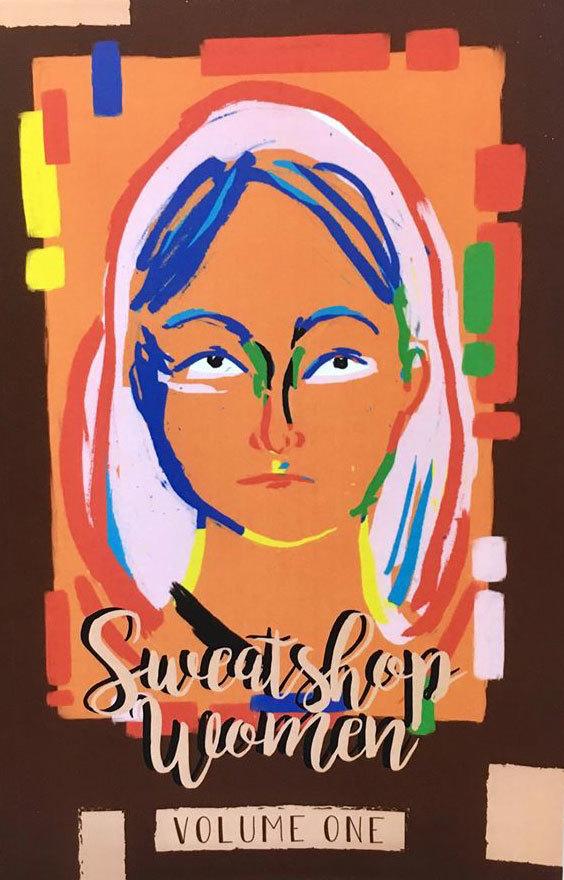
Aïsha Trambas Reviews Sweatshop Women: Volume One Edited by Winnie Dunn

Sweatshop Women: Volume One
Edited by Winnie Dunn
Sweatshop, 2019


Sweatshop Women: Volume One is an anthology of poetry and prose by twenty-three emerging writers based in Western Sydney. As a text, Sweatshop Women unapologetically claims space in the public archive of literary testimony crafted on this continent by women of colour. Equally, I can’t help but regard this anthology as more than simply the text itself. After all, Sweatshop is a self-professed ‘literacy movement’, a community arts initiative providing local literary programming for creators of colour in Western Sydney. Naturally, the anthology is grounded in this function and purpose. From mentorship, to editing, to graphic design of the work and, of course, the writing itself, Sweatshop Women asserts the right of women of colour to exercise autonomy throughout all aspects of sharing their voices and stories, and facilitates an opportunity to do so. This is a more generative place for my mind to meet this work: in first acknowledging the process and practice of bringing a publication like this together, and the work of initiating relationships, opening to the communal and individual (un)learning and risk-taking that community arts practice entails. In her introduction, editor Winnie Dunn references the writers of this anthology as ‘the collective’, describing their monthly workshops and crediting guidance from established writers such as Randa Abdel-Fattah, Roanna Gonsalves and Alison Whittaker as formative in its creation. Within the settler colony of so-called ‘australia’, gathering emerging and established women artists of colour together to think critically, speak and share freely and take ‘charge’, in Dunn’s words, of representing themselves is important and meaningful work, though not without challenge and complexity.

In this work, I am transported to local community celebrations and family gatherings, quiet and contemplative moments of grief and loss, Islamophobic job interviews and school visits, suburban hangouts and raucus childhood disputes. While styles and forms of writing included are broad, there is a pervasive sense of groundedness, attentiveness and intimacy throughout the collection, magnified by the confessional and interior nature of many pieces, which sit in an ambiguous space between fiction and memoir. Themes of cultural assimilation, coming of age and finding a sense of balance between belonging and autonomy among family and community take various shapes. One of my most cherished motifs (both in life and in this anthology) emerges early on: migrant elders and their beloved fresh produce! Lieu-Chi Nguyen’s vivid ghost story ‘The Long-Boobed Ghost’ is populated with scenes of grandmothers and aunties who vigorously suck lychees and rambutans, sitting peacefully among fruit pips as they share in gossip and instruction. Shirley Le’s short fiction in ‘Vietnam Still Remains Vietnam’ meditates on her mother’s love of mandarins, ‘IMPERIAL’ stamped, a humble vessel through which to consider the colonialisms of her homeland, and the present-day Australian colony. Such meticulously told short stories brush up against the enigmatic, bold free verse of Jessica Wendy Mensah’s poetry in ‘Tracing Our Waist Beads’, whose rhythm and emphasis I crave to see amplified in live reading, with its heavy use of capitalisation — ‘I’M BLACK BAKED!’ — and thunderous, Ṣàngó-imbued imagery of ‘black rain’ and raging weather. Mensah weaves together subtle yet striking histories of migration of Yoruba people from Nigeria to Ghana — ‘Yoruba packaged their empty souls into cubed boxes’ — and now to a suburban setting where the ungodly ‘Women’s Weekly falls’. Mensah’s work is a stark outlier in comparison to the three remaining poems of the collection: ‘Dirty White’, ‘Best Little Brothel on Parramatta Rd’ and ‘Spice Mix’, which exhibit a much more explicitly narrative approach and remind me of the often vulnerable ways narrative storytelling and poetic form might merge at an open mic night filled with free verse, and interior reflections.

The stories and poems of Sweatshop Women weave deftly between Dharug land — with its recurrent ‘white fibro houses’ signifying Sydney’s Western suburbs — and elsewhere, as we follow storytellers’ familial lineages abroad, through travel or memory. Unsurprisingly, these writers’ attentiveness to place is one of the collection’s strengths and pleasures in reading. The first lines of Monikka Eliah’s story ‘Bethet Dinga’ open like a map to reveal the epicentre of her tale, an example of the care taken throughout the collection to orient readers within shifting settings.

The first house I remember was on Jabal Amman — Mountain of Amman. It was in the first circle, an area marked 
by eight large traffic spots spread out along the main street named Zahran.

Another contributor, Claire Cao, subtitles the halves of her short story ‘Going to Kuan Yi Temple’ according to the soil of the suburbs she writes of: part one, ‘Cabramatta Dirt’ and part two, ‘Canley Vale Dirt’, which I learn are neighbouring yet distinct. I find myself on Google Maps on more than one occasion, seeking visual confirmation of locations already precisely described. Much of the collection is lightly punctuated by scenes at local train stations, schools, public and community spaces such as Yagoona Station, Bankstown Girls, Belmore PCYC. As a non-local of any of the domestic or international locations described, I lack experiential knowledge and connotation of my own regarding these places, and I’m sure many subtleties wash over me. I imagine for any Western Sydney locals, Sweatshop Women presents a series of winding paths, diverging and converging again, down many of which will be familiar landmarks, establishments and scents. Recognisable to those who know, a kind of insider intimacy lies inherent within these writers’ approaches to space and geography.

The plight of the Third Culture Kid who inhabits a liminal space between the culture, time and place of their parents, and that of their own surroundings (whether in childhood or now grown) is a thread that runs throughout this text. I find that much of the most evocative and deftly handled writing of Sweatshop Women occurs in the interactions between parents, elders and those who have come after them. The warmth, care and often impatience which marks mothers’ interactions with daughters are carefully recounted. ‘Mumma knows every path through my hair,’ is a soft and graceful line from Raveena Grover’s story ‘Frizz Witch’. In ‘Wall of Men’, a young woman holds her breath after hearing her mother speak openly about the patriarchal violence she experienced in her first marriage, reciting from a deep well of heteronormative advice, ‘I tell you to be careful. The man you choose is the life you choose.’ The sombreness of this revelation continues to infect the tale, which moves on through acidic humour and unabashed, cheeky exploration of the young protagonist’s sexual and romantic desires. In Naima Ibrahim’s short story ‘A Curse and a Prayer’, a Somali mother is devastated when her son returns home with his ear pierced, distressed that it will be interpreted by other parents and elders in the community as a reflection of inadequate parenting. Though unwilling to remove the earring, the gentleness of her son’s response is evocatively described, and the complicated terrain of intergenerational relationships, religion, gendered cultural expectations and mental health within communities who have survived war, exodus and relocation is delicately evinced:

I couldn’t help it. I started to cry. He wrapped an arm around my shoulder, his clumsy boy hands held mine tight. 
‘It’s okay, Hooyo.’ These breakdowns had become common in the last few years. I’m still not sure why.

I’m entranced by Ibrahim’s succinct ability to capture both the sense of emotional intimacy and dissonance between mother and son in this vignette. This story excites me as another nuanced local voice broadening representation of African families in the full vulnerability and personhood systematically denied us.

Posted in BOOK REVIEWS | Tagged , , , , , , , , , ,

John Who Wears Black

12th June 2019, Admiralty, Hong Kong

protests alongside ten thousand youths now called rioters now reduced to statistics
disregarded by the one in power the dowager who holes up in the golden
interior of her palace

her yellow curtains her white couture her private prison she dares not step out into
the light which burns her skin to the streets where people whisper murmur pronounce
their rage

each sparked each cradling a little hope that the second week of June
2047 will not be as red-sinister as what everyone has just lived through

so much growing-up is forced upon the young in the seven days of rain thunder
the manmade mist which makes eyes tear and the sun scalding their cheeks their necks
their sweat-soaked shirts

stuck on their backs but that’s okay because now they hoist umbrellas enduring
the facemasks and goggles not minding the dirt on their names chanting
what is right is right

until the police lunge at them with long shields and batons and while on the move
John hands over his umbrella and helmet to the also-running reporter

the teargassed cameraman holds fast and films a master shot of humans being human
this stripped-down kindness is the light the heat the verve which moves me moves you
moves whoever is watching

this city needs John who grasps Jane’s hand and turns back for Jason and his friends
and behind them two million flames

Posted in HONG KONG | Tagged

Hong Kong Now

Hong Kong has experienced almost a year of political and social turmoil, with the aftershocks of last year’s protests continuing to be felt, and many of their grievances unaddressed. We did succeed in weathering the COVID-19 outbreak well enough, largely due to our readiness to adjust our lives and make necessary sacrifices, not to mention the prior experience of SARS in 2003 which claimed 299 lives here.

As a city, we face continual challenges and our will is strong. Hong Kong’s unique qualities and strengths have been forged in the city’s colonial past and its more recent political struggle.

Still, I can’t help but think that Hong Kong people are now perpetually in a state of emotional exhaustion. There is a heavy and frustrating feeling in the city. As I write this, there is an ominous air because of the impending National Security Law. People here have no doubt that Beijing will use it in as broad and vindictive a way as possible, and there are even concerns that it might be used retroactively. The fact the Hong Kong government is showing little interest in consulting the public about the law tells you all you need to know about their intentions.

Six exquisite artworks were commissioned to respond to some of the poems: 6 Artworks by Anthea Y

Belle Ling: Nebulous Vertigo
Belle Ling: Dining Alone
Marco Yan: Midsummer
Marco Yan: John Who Wears Black
Collier Nogues: Article XII: Autonomy
Collier Nogues: Preface: Important Notice
Wawa (a.k.a. Lo Mei Wa): 1.
Wawa (a.k.a. Lo Mei Wa): 2.
Akin Jeje: Last Days of August
Akin Jeje: Passing
Akin Jeje: Pak Tai Street
Akin Jeje: Almost Greatness
Cheng Tim Tim: Annie, Anyone?
Cheng Tim Tim: Students Said
Tammy Lai-Ming Ho: Your Name in My Lexicon Means Yes
Tammy Lai-Ming Ho: This May Be a Love Poem
Tammy Lai-Ming Ho: Tomorrows
Tammy Lai-Ming Ho: The Visitation
Tammy Lai-Ming Ho: One Person


It is too early to say for sure if this will be the end of Hong Kong, but it certainly does not bode well. The last few years have shown that Beijing has little respect for the Sino-British Declaration it signed 35 years ago and it is grasping every opportunity to have a greater say in how Hong Kong is governed. If the law is passed, and it is likely it will be, the legal firewall between Hong Kong and the mainland will disappear and people the Chinese government deems troublesome stand to be pursued even more easily than the proposed extradition bill last year would have allowed.

But at times we manage to be cautiously optimistic about what the future will bring. Moments of lightness seep through cracks of heavy, seemingly impenetrable walls of doom. I believe many Hongkongers want to arrest the erosion of what makes Hong Kong special and distinctive. This is encapsulated in the slogan ‘Let Hong Kong be Hong Kong’, worn on T-shirts in the city.

One of the many things that make me proud of Hong Kong is the coexistence of multiple languages, including English, spoken and written by its people, despite Chinese being the majority language. True, there are far fewer creative writers writing in English than I would like to see, but the mere fact they write and are published at all points towards a degree of diversity in creativity. In this small collection, I am pleased to present some of the active poets from Hong Kong or living here who are writing today, who explore different topics and concerns in their works. For some of them, English is their first language. For others, English is an adopted writing language. A city is built by the wisdom of its citizens, Bertolt Brecht wrote. It is also built by the words of its people. Here are some words.

Posted in CHAPBOOKS | Tagged , , , , , , ,

Midsummer

Pale sky high clouds the heat soaks into the concrete
making shadows out of everything it’s the Establishment
of Summer again the city open to light and humidity
see the dust gnats pollen tinsels of pollution
the sweat on my arm coursing through the hair
like cars along the winding coastline where my brother and I
swam and paddled as dogs swallowing brine small stones
our own piss our mouths embittered only to spit
at each other’s face the length of the shore measured
by the clams we picked then dropped into the blue bucket
we laid the shells on charcoals at night watched them
crackle their meat dead and full of sand
the sand of some other beach where my childhood
friends and I dug with our hands nails collecting grains
a pit to bury driftwood crabs and soda cans
a treasure chest we made no map to wouldn’t uncover
even if we stood on the X one more time we shouldn’t
ask for the keepsakes we’ve gifted to the land let the land
remember us let it remember for us because I can’t return
to the time the girl I liked lay next to me the damp towels
the fearful sun the angst of not knowing how to talk
without leaving a clue of what I wanted we ran
to the waves and sank ourselves so we could touch
spume clinging to our skin a straitjacket of salt
we struggled to strip off it was sticky it was
bliss eternally thick on these bodies of ours dear
brother dear friends my dearest girl here we are
look how much we’ve perspired on this day
there are things we can never wash off can we

Posted in HONG KONG | Tagged

Tomorrows

If I walk on a Hong Kong street
for long enough,
I will eventually bump into someone I know
from a long time ago.
So long ago that each of us wilfully resorts to
deceptive amnesia.

There are streets in this city
that are almost unwalkable:
they are too neat, they lack
cigarette smoke, the old women
no longer sit on the pavement.

Sometimes a word said by a stranger
presents itself intimately, enters my ears
like a curse. I turn around,
it’s a group of shadows
counting tomorrows.

Posted in HONG KONG | Tagged

The Visitation

My paternal grandmother came to me
in a dream and said:
I have no money and I’m cold.
I recounted the visitation to my parents—

They had forgotten to burn
for my granny paper money,
paper clothes—offerings
sent to the fire and received

by imaginary ghosts.
Except I hadn’t imagined granny’s
animated agony. It was a song she sang
when dealing Hakka cards:

I have no money and I’m cold.
I have no money and I’m old.
For years I haven’t seen these cards,
their characters now even more foreign.

I remember the strangeness
of the names the cards were called.
White strands in a water basin
when granny slowly washed her hair.

The humble dishes she cooked
in the warm windowless kitchen:
lean pork, steamed egg, rice in soy sauce.
Her lingering odour in summer.

Talking to a friend, Hakka words barked
into the receiver of a black rotary phone
with a long curly cord.
I sat there, understanding it all.

Now, I sing her song
on an odd, hot Hong Kong night.
I’m not allowed to forget:
I have no money and I’m old.

Posted in HONG KONG | Tagged

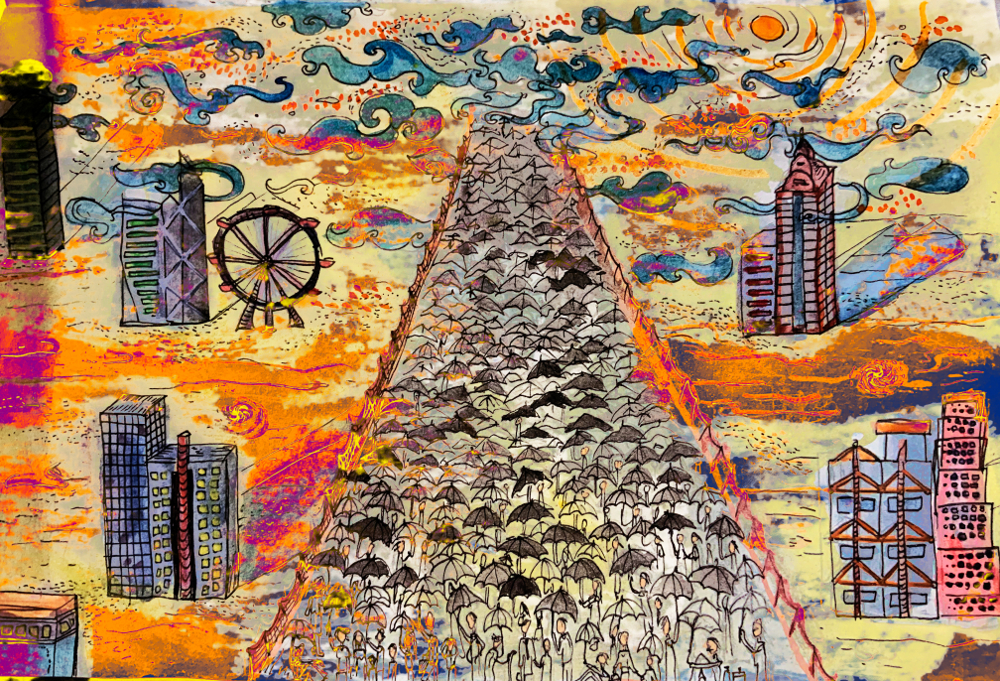
6 Artworks by Anthea Y


Anthea Y | Article XII Autonomy

Collier Nogues: Article XII: Autonomy

This poem and artwork is part of the Hong Kong Now chapbook curated by Tammy Lai-Ming Ho.

Posted in ARTWORKS | Tagged , , , ,

One Person

If I tell you my full name, will you only say it when I drown or fall? Which protest poster will you carry around close to your chest like an oversized pendant? Have you been served gas or spray? Where to meet next, a nearby MTR station or the airport? When they used water cannon they hijacked our story—our story. Can we rehearse running away, not from our family, but from the gangsters, the police? Can you chant louder, please? We don’t have a microphone or an elaborate stage. Tell them not to look at us as though we are in a clichéd narrative. Sometimes, when we are all together, I just want to see one human face. All the voices in the dark enlivens this street in the poorest neighbourhood in Hong Kong. You are in my memories, emerging from engulfing smoke, your helmet broken in symmetrical halves. Don’t tell me sleep is good when armed men with dazed eyes are still out there. Throughout epochs, time is the epitaph, the answer. Remember: history will not desert us. We are everything: the pavements, the schools, the little shops, the young women violated, the protest songs sung over the Chinese national anthem, the placards that enthusiastically say Add Oil, the walls covered with post-its and graffiti: ‘You taught me peaceful marches are useless’. The moon does nothing but watches, for she knows our destiny. It mourns lives lost. We are time and we witness and we flow, in motion, but we are not silent. One of us holds up a sign, millions of us mouth the same words, solitarily, across this tiny, insignificant port city, which is my city. Millions. Millions.

(5 September 2019)

Posted in HONG KONG | Tagged

Your Name in My Lexicon Means Yes

Once, you talked to me on the phone,
I complained about the loud wind
obscuring your voice. You responded:
Baby, I can’t make the wind stop.

The creation of meanings
takes three steps: saying yes,
singing no, unbinding maybe,
and be understood, un-annotated.

My Cantonese knows no new slang.
Your plurality of languages,
body, eyes, fingers like lovers,
speak of unfeasible eras.

You called me petty, naive, dishonest,
too cultural and too self-aware.
I said the latest version of you
legitimises your superiority.

Posted in HONG KONG | Tagged

This May Be a Love Poem

We are ugly but we have the words,
even if no one reads them.
We carry no axes, unready to kill.

Or turn on the oven until it warms.
trains have passed us
since the day we were born

and none have crushed us.
We don’t scheme to
drown in a shallow pond.

Tell me again
how you intend to dig
a grave into our bed.

And how, after all these years,
nothing else but you fills the air.
It’s forever your season: loud & clear.

Posted in HONG KONG | Tagged

Nebulous Vertigo

It is one of the days that I sit
here like an abyss.

The sky, soft and introspective, my mind
opens a gap that opens
another gap

that is not simply air, but a circling coolness when shame
jars the air. She doesn’t blame.
She sits at an edge that polishes

lights. Much white.
She grabs two eggs, crushes one, drops
the other, saying:

“to be exposed is to be real.”
I tell her that I really miss him.
A sight jumps to another sight in the mirror,

with a flick of impromptu
wantonness.
She presses the button, and now in the blender

the whole morning is wrung. Force,
akin to clouds, giant and mesmerizing. It invents
trajectories, and precipitates nothing

but itself. “Hear an egret?” Where?
“It screams but you can’t see—”

That warp of milk, a nebulous vertigo.
Finality, serene after the last squawk, checking
each feather of the egret.

The ending, turned inside out,
smooth and silky. I dare not climb
over it.

Posted in HONG KONG | Tagged

Article XII: Autonomy

The autumn shall be a desert of the hard road,
which shall enjoy a high degree of brightness and floating clouds directly under the
white sun.

The white sun shall be the bright blanket of heaven,
which shall enjoy a high degree of sheltering the people spreading
directly over the hard road.

The hard road shall be an immensity of people,
which shall enjoy a high degree of perching and nesting
directly under umbrellas.

The people shall be a sword of ten thousand umbrellas,
which shall enjoy a high degree of brightness and billowing wind
directly under heaven.


This poem remixes Article XII of Hong Kong’s Basic Law with imagery from Li Bai’s “Ancient Air (39”) / “古风 (39)”

Article XII text:
The Hong Kong Special Administrative Region shall be a local administrative region of the People’s Republic of China, which shall enjoy a high degree of autonomy and come directly under the Central People’s Government.

Posted in HONG KONG | Tagged

Dining Alone

The sky watches like yesterday.
The stars haven’t finished predicting.

The door doesn’t drag on—
A fly, sprawled, pushes to enter.

The candles bruise their souls,
the wind, outside, refrains

from stepping in once more.
Dinner comes, doesn’t know where

to begin. The windows can’t eat.
Their faces, thirsting for a glass

of water, nearly break
into a pitch. I raise my hand

to the glass,
picking up gravity.

Posted in HONG KONG | Tagged

Preface: Important Notice

This poem repurposes text from the first page of the publicly-distributed, print version of the Basic Law, Hong Kong’s constitution.

This booklet is not
the Basic Law.

This booklet contains
the Basic Law but is not
the Law itself.

The container has
no legal status,
and should not be
relied on.

Refer to the Government
for the official version.

What, then, is contained here?

An instrument
a state

a con
a form

a leaf
a boot

some men
a foot

more men and women

Are we contained?

Are we these leaves,
the foot in this boot?

How does it fit?

Can this be
our boot, our instrument?
Can we edit it?

Posted in HONG KONG | Tagged

Almost Greatness

Superficiality just kills here, from its concrete roots to its bamboo tips.

The nakedness of the city unravels as the MTR zips down the navel
Of its shorn planes, towards the exposed tip at the edge of the harbour.

There was a moment, a memento that served as mnemonic last night,
To the tempo of the cold drizzle of a Saturday December evening,
Between Tai Po Market and Kowloon Tong, where greatness was almost achieved on the shiny-steel-toy-Meccano cleanness of the East Rail MTR line, more streamlined Ikea than chaotic Kolkata, hurtling away from the border, where heavy brush and fused branches in thickets and high ranges draw thicker and denser and closer.

It passed, knowledge and fire and fields, stop by stop, as the engine hurtled towards its future, heedless of a hard-won past.

After the next alighting, the train and its predestined path sink back into the night, into the grinning artifice of the holiday lights.

Posted in HONG KONG | Tagged

Passing

Passing by the quiet morning street on June 4th, in one shop there were three young hogs lying dead, streaked in their own blood next to the crimson family shrine, the last of the incense burned to the base.

One corpse was splayed, split to the spine, as the butcher stripped and carved his remains, heavy eyebrows knit in deep focus as strips of moist flesh came away, the disappearance timed and deliberate, to re-appear under a mild orange sweet and sour glaze, or the roast crispness of siu yuhk on cotton-white rice, gardened by verdant, steamed choi sum.

Their deaths were for public consumption, but since most never saw the massacre, the squeals of agitation, the throes of agony, the desperation of the sacrifice, the meat, to most, remained un-tinged by bitterness, only a curious absence.

Further on, at the curb of the sidewalk, a small, grey mouse, crushed by what she had seen, also lay dead. Her demise provoked consternation among the passersby, for who knows, if left unchecked and exposed, what these vermin will spread!

Posted in HONG KONG | Tagged

Pak Tai Street

Sundays on Pak Tai Street, outside the royal blue and ornate gold of the no-longer regal Jockey Club, flocks of strange birds with rectangular wings are gripped by gnarled hands stained with black ink, congregating on gritty, uneven sidewalks and ash-flecked tiles, grimacing strained lopsided smiles.

Prize fowl flutter feathers embroidered with ads for watches, restaurants and mobile phones, stats on steeds with evening dreamlove petnames like Dreamscape, Midnite Promise, Kowloon Star, Tears to Your Eyes and Ultimate Glory. The men who tend their beauties shake fists at screens in weekly vain to alter their foregone stories.

It is an overcast and windswept day on the street, crowded with red-top minibuses, clusters of chattering filial crowds that make even leisure time insufferable, stalls and shrieks selling everything from pots to toothpaste to ginger to paradise in a clasp, wok or sizzle, as gamblers join the choruses of touts, hawkers, hagglers and fiddles. Above the din, cries amplify, as pages ripple, cooing in anxious hands, promising so much, but delivering little.

Later, after the sky sets on even the most fervent punters, the most rabid bidders, greyed and blackened carcasses remain, smudged, flat. They lie muddied, foot-trod, drained of the visions they promised earlier, drowned in grime and spittle.

Posted in HONG KONG | Tagged

Last Days of August

It’s a concrete August swelter in Hong Kong this year,
Where even the sidewalk cracks melt into uniformity,
Steamed by the slower, sun-broiled diminished crush of the city,
Lower Kowloon’s consumed in a rare seasonal siesta,
Its denizens for once sauntering, rather than scampering

Deep-chilled from the fiercely arctic conditioning of Nathan Road’s shopping empires,
Lured by the lurid, the garish displays and ice-fire,
The city, in its rest, has gained what I thought it never had,
A sweet, clean, hard resonance of jazz,
That straight-ahead, vibrating-off the tenements and glass skyscrapers alike
Wayne Shorter horn, deep, brassy, bright,
In contrast to the sodden, stale haze silhouetting the sky,

Even that’s almost acceptable, something near alright,
As the heat gives way to the evening breeze, and the sun gives way to streetlights.
On the edge of the peninsula, last ferry of the night, I give into saudade,
A bittersweet Brazilian Stan Getz inflected nostalgia,
In tribute to the last days of August,
In memoriam to the last day of August,
Final note fluttering into the fragrant smoke the second I alight.

Posted in HONG KONG | Tagged

2.

Translated from Chinese by Henry Wei Leung.

pure spring gush · mirror heaven earth karmascape
life death since · no-name water
· no return no advance
great sea small raft · docking at the last life
farewell beneath a harbinger sky · smoke rising
ten-directioned offertory sea of samsara
all life holding forth · incense cloud · horizon-severed
animae et animi · roots coiling ten thousand miles
body of ash · interred in sea
from then on · eyes closed
walking on sky


清泉湧映天地緣境
生死以來 無名水
無歸無去
大海小舟 泊岸前生
陰陽天送別 煙起
十方苦海回向
萬物傾盡 香雲 天邊斷
千情萬意 根連萬里
一身灰燼 同葬大海
從此 閉目
空中行

Posted in HONG KONG | Tagged

Annie, Anyone?

Annie, anyone petrified
by loving ones, manufacturers
into placid, plastic smiles
kissed by many practitioners
who must learn to say

‘Annie, anyone, are you okay?’
Annie, anyone’s chest’s pressed
in case of cardiac arrest.
Some stormed out of the room
after a few rounds but resumed.
Old failures haunt the mind

‘Annie, anyone, stay alive.’
Annie, anyone could save you
if they care to learn how crude
one suffocates, bones protrude,
blood runs into wrong places —
as in news’ unresolved cases
‘Annie, anyone to save the day?’

Posted in HONG KONG | Tagged

1.

Translated from Chinese by Henry Wei Leung.

empty sea empty · this wave comes
that wave goes
thousand-year wave watching the wind
can’t see the last life · can’t see the next lifetime
straddling water · Guan-beholding-pitchblack-sound-yin
to have nothing but all life
go back to naught · go forth for naught
no blossom overhead · no root underfoot
the sky heeds not · the earth asks not
may both be with you


空海空 此浪來
彼浪去
萬年浪望風
不見前生 不見來世
立水中央 觀漆黑之音
與萬物廝守
無所歸 無所去
頂上無花 腳下無根
天不聞 地不問
與天地同在

Posted in HONG KONG | Tagged