Request // Response

Posted in 97 & 98: PROPAGANDA | Tagged

[Immigration Interview: Chinese Exclusion Act 1882]

[Who paid for your passage?]
The blood that burned the brightest
was always the one we followed.

[Is there a clock in your father’s bedroom?]
While he slept, silver wheat grew
from the sweat of his clothes.

The morning always found
a quiet place to kneel.

[Is someone forcing you to come here?]
I don’t understand the question.

[Who were your neighbours?]
The name Yu Yan. The name Ying Yue.
The word yùn dòng. The clouds – sliding
like Wang Shu’s wet slippers across the hallway.
The field – the field inside the finger.
The golden doorknobs wrapped in a blanket.
The loose joints rattling the ginger-jar.
The salt in the curve of a pinnae.
The sound womb glistening the air.
The strand of hair lengthening in the spine of a book.
The ocean forgetting our names.
The sky thirsting for our bodies.
Our bodies thirsting for the sky.
The country – her country – welling in the afterglow.

[Who paid for your passage?]
Unable to speak,
the dark thawed around us.

We held birds like candles.

A child mistook the snow
for his mother.

[What direction does the front of your house face?]
When we were lost,
I pulled the curve of moonlight
from the wet of his lips
into a sickle between my palms.

It always spun South.

[What pieces of furniture were in your living room?]
The radio – the father inside the radio.
The box of chalk. The pocket mirror.
The teeth – the jade inside the teeth.
The map that shrivels in the moonlight.
The wax that blooms in the bone.
The chopsticks – slid – into the holes of coins.
The shadows braided on the clothesline.
The window that breaks like an eardrum.
The wind drawing names in the ashtray.
The bayberry bleeding on the tongue.
The body – thrashing – like a blanket in the mouth.
The candied ginger – goldening on the table.
The breasts – her breasts – swelling ripe in the heat.

[What is your final destination?]
Could you please repeat the question?

[What is your final destination?]
Where the shadow pauses
at the edge of a meadow
into the shape of a gazelle.

[What is your name?]

[What is your name?]

Posted in 97 & 98: PROPAGANDA | Tagged

nothing ever really

i’m at the centre of something and yes, i can break through the plastic barrier of the thing i’m
in but then i will just be trapped again, this time in something bigger, and this process will go
on and on like a perfectly looped video: you are in a cocoon; you shed the cocoon; you
notice a clear film closing in on you; you are being vacuum packed again; the layers never
stop existing.

this is how i feel about politics and echo chambers

raw onions in your mouth: intrusive
and they stick like permanence
and then you add fire
and they are covered in soot
and they crumble
and they are like molasses: sweet
and they are like butter: slipping in and out

when i am in PALESTINE we wake up every day to the smell of sugar
from the bakery/ies downstairs and i feel sick like i am going to vomit

i want you to recall all the pictures
of pelicans after an oil spill
the ones that went viral for a week
then stopped circulating

because traveling when you’re coated in thick diesel slip
cannot last forever. we get tired. we all have to settle eventually

1. stop moving around so much
a. are you trying to go home?
i. yes
١. so…you’re finding somewhere new?
٢. so…you’re returning?
ii. no
١. good

go camping and get trapped in a place with no phone reception
(why are all your stories about being in places with no phone reception?)
when the boyfriend of the friend whose birthday you’re celebrating says
[ISRAEL]
alongside [REDACTED]
and alongside [REDACTED]
and alongside [R E _ _ D _ A C _ _ T _ _ _ _ _ _ _ E _ _ _ _ _ _ _ _ _ _ D]
get more trapped than you were before

you are in a box now
you are always in a box that’s just how things work
but this one isn’t the right one

this is how i feel about politics and echo chambers

you are in a box now
and the box is a yellow dumpster
on jamal abdel nasser street
you are a cattle egret
in a yellow dumpster
on jamal abdel nasser street
even though you’re a waterbird
and Jenin is forty kilometres
from water
in either direction

Posted in 97 & 98: PROPAGANDA | Tagged

Corona lens

The thing is in the air
It rides on breath
It strides in crowds
Yet the marchers are out

Night was once believed to be poison air held high by the sun
To fall against the landscape as night
Windows were closed tight to keep the monster away
Creatures of the nigh originally came from as evil almost sentient
Now the thing is all across the globe stealing breath
Yet the marchers feel the need to be out

Wars once dropped bombs at night to those cowering below
Terror and fire and death from the darkness
Ruin born of architectures
Splinters and ill sculpture of home wall and window
And now the thing rides the very air and breath and needs no bomb or craft
Yet the crowds gather now each day

Death is only abstract when it is seen as far away
It waits for all
Compassion is a kind of contact
Empathy and reason are buildings, halls, seas and shores
And they stop nurses to scream about haircuts and sandwiches

Cities slumber now to try to minimize the tentacles of molecules
To reduce the horrors across the world
And the crowds yell into the ether
Self-congratulatory awash in ill formed rhetoric and base human desires
Like death itself can bow down along with reason and sense
To shouted voices
Like the grave can wave a pale flag to the force of will of so much weight and mass
And that the world is but a singular perception
A lens as globe

Posted in 97 & 98: PROPAGANDA | Tagged

in the chair

please sit in the chair in the marked red square
please wait in your car
please stand behind the red line
please sit in the chair in the marked red square
in the grey room with the grey floor with the darker grey flecks
in the chair in the red square
they are quiet and polite behind masks
in the square grey room with the small square mirror
outside the red square with the chair
she leans in with the thermometer
with the finger clip for pulse and oxygen
on my finger in the red square with the chair
I answer questions and wait
glasses fogged above the mask
in the chair in the red square
met at the door with mask and sanitiser
please stand behind the red line
behind the perspex barrier
behind the mask and shield
the nurse asks questions then takes me
to the grey room with the grey chair in the red square
I have assigned each finger a purpose
right little finger is for glasses
which slide again and again
left little finger is to scratch my neck
in the chair in the red square
in the grey room with the square mirror
with the sink and WHO poster
on how to wash your hands
each square for a motion
I push up my glasses with my right little finger
my glasses fog
I wait for the doctor
in the chair in the red square
behind the door ajar to the nurse walking
to meet a patient
please stand behind the red line
one patient goes past
please sit in the chair in the red square
in another grey room
with a chair and a red square
like this with its drawers closed
sealed with cable ties
with cupboards and a square mirror
and a trolley with a green taped tray with CleanX
and a red taped tray with the thermometer
that came near me
with the finger clip that touched me
the doctor comes in using his foot
to open the door enough
to close the door enough
to ask his questions through the space suit
I can barely hear him through the fully sealed mask
barely see him though my fogged glasses
he stands on my deaf side and asks me to look forward
take my mask off and open my mouth
in the chair in the red square
he looks without light and swabs
I re-cover only my mouth
and the nasal swab goes in
as I sit on the chair in the red square
a toilet brush to the brain
says my sister later
her official medical opinion
treatment – hot toddy
when I am far from the chair in the red square
I cough once with the mask back on
my glasses fog as I slide them up with my right pinkie
my thumb and forefinger are for the mask
for the sanitiser, for surfaces that are not me
when the doctor leaves he uses his foot
to open the door enough
to close the door enough
to the grey room with the square mirror
with the chair in the red taped square
that must be so bare to be easy to clean
with its bare grey chair in the square
I wonder if the doctor must change everything
clean everything
before he sees the man next door
who has waited in another chair
in a red square
who will exit like me
from the other side of the building
in his mask with his information
who will drive home
close his door
and wait for word
as the next person arrives and is asked
please sit in the chair in the marked red square
please wait in the car
please stand behind the red line
please sit in the chair in the marked red square

Posted in 97 & 98: PROPAGANDA | Tagged

Film #6: Eve in Vietnam, July 8, 1968

The rain never touches us. Light pushed
from stolen sky: a summer too early, we
mar into another war. Whittled into
indigo, the color of small infants, thrashing
under currents. Somewhere, the moon
becomes a muscle memory in ruin. Rain
intensifying like radio. The sky, more than
it can hold. Tomorrow, we will lie on our
backs. With our eyes, unblinking. Our mouths,
open quotation marks. & we will lower
ourselves into surrender. To muffle every cry,
flattened by falling, at once. At night, every
sound from our throats will be too quiet
to be forgiven. & perhaps the gods will
refuse us. For having seen too much. Years
drained into obsession. Red rolling by
our palms. For tonight, we crack the sky
with a torch & fetch holes into wounds.
Moon mimicked toward dust. & we take
turns being illuminated. The rest, kneeling
into epitaphs. No bodies mark our stay.
Only end, among us.

Posted in 97 & 98: PROPAGANDA | Tagged

Calypso from a Cemetery Slum

Idle skulls heap in the corner of tombs,
I scrub the art, sometimes
paint sky blue, Tuscan sunset, fuchsia
to give a kind of simple praise.

In the periphery of Urbanisation’s philosophy,
children dream kingdoms of fine passages,
repeated hammock swings from one ancestry
to the next, counting slums, one through ten –
whether or not God is dead or lives,
it is nothing so serious.

The breath bends like wire, wheezing,
sleep never really comes.
Cold symmetries of (rot) (buckets) (faces)
(white Gods) (ceramic) (angels)
I measure the distance between here and the afterlife in centimetres.

As if poverty melts in the air,
joy springs from the river of bankruptcy,
the single banana tree laughs
at the drunken singing and prostitution of our jaws.
Out of the mausoleum karaoke sounds

on the grave I rest my head
I fear the living, not the dead

on the grave I rest my head
I fear the living, not the dead

Posted in 97 & 98: PROPAGANDA | Tagged

On the web that farms

“Microtargeting lets campaigns tap Facebook’s vast caches of data to reach specific
audiences with pinpoint accuracy, going after voters in certain neighborhoods, jobs and
age ranges, or even serving up ads only to fans of certain television shows or sports teams.”
— Nancy Scola (2019)

Each push atop, I give in and get ready.
My feed’s replenished and I know I’m set.
“One skim, one like, one share,” I say
But in each click, I tap a new that’s born.
Like eggs that drop each one I catch,
To harvest all posts became my job.
I’m a pawn in a game, I’m a game all-caught
In one tap, one read, and one mail on the web.

Hardly did I know as I’m fed such fun,
Its stock feeds off data under my nose.
Ring-fenced? Not sure,
I ticked “yes” to its terms. I likely must have read
“Codependence” in the fine print and a hurry
Thus,
I see Left on its right-side panel,
Stretches of truth from CNN-Trending
that
CNN Philippines shares otherwise.

Its curator, which an AI is in command,
Chose shoes, blocked foes, picked my
Nachos, voted machos –
Enlisted me in their murders that news summed in three letters.

Without any ado, I took part in the deceit and guilt,
One look, one click, I now check dupe.
I’m a pawn in a game, but I’m not yet all-caught.
In one tap, one read, I call on:
When will owners desist inviting
Flocks with herdsmen
That pull the wool over our eyes?

Posted in 97 & 98: PROPAGANDA | Tagged

Erasure

Dispossession is increments a tree a plot the river a continent a bite at a time
then a hand grabs the whole it is gone they teach it now little class little school
an act of theft dare not call the name thievery no not that opportunity profit put to use
murder lurking beneath smiles one hand shakes the other away with the child bathwater left warm
a memento a tomb to weep at.

Posted in 97 & 98: PROPAGANDA | Tagged

The Ceremony

On the day of the ceremony our company watched as The President honored the dead. He staggered across the cobblestone path, shielding his eyes from the afternoon sun as a clumsy brass band played the traditional tune. The man who slept next to me in the barracks hummed a few bars before sighing and shoving his hands deep into his pockets. A few days earlier we’d talked about forgetting what war we were honoring. We’d forgotten the name of the enemy and lost track of which of the endless conflicts that day was set aside for. There were more days dedicated to them than not and over time it got too confusing to parse.
          The ceremony lasted over two hours and in the heat a half dozen of us passed out. The President, flitting and nervous, flinched with every body that hit the concrete. We were fed poorly. Water was limited. It became a sport to watch one another wither away and predict who might die next from malnutrition. Lying in my bunk in the dark, I traced the hard bone of my ribs, recalling stories the old timers had told us about the past where they could get in their cars and drive anywhere they wanted and for as long as they had roads to follow and gas to burn.
          Gas.
          Oil.
          Fuel.
          These words snaked their way through our briefings every now and then to explain the fight. But even those in charge had lost the thread. They seemed bored, like middle-managers doomed to send their men to die with little to nothing in return. The orders came and sometimes just disappeared with no explanation. I couldn’t tell you anymore where I’m supposed to go. I’m not sure if I’m supposed to go anywhere.
          That night, before lights out, our commanding officer rolled a television into the barracks and replayed the ceremony. The men who fell, the surviving ones anyway, were made to sit up in their beds. The rest of us removed our hats. The President looked amazing, striding triumphantly to the boom of the band and crowned by the day’s glow. The hand that shielded the sun was now a salute. And somehow, in his noble shadow, we were a pristine company, broad-shouldered, fit and hearty. No one fell. No one collapsed. My neighbor in the barracks received a close-up as a patriotic tear slipped from his steely, determined eyes.
          I caught a glimpse of myself before the laying of the wreath and the flight of the war eagle. My uniform hugged my chiseled chest. I was the picture of health. And as I admired myself on the screen, my hand wormed through the gap between the buttons of my threadbare shirt and lightly fell upon my ribs.
          It was a surreal moment, but a familiar one.
          To be lied to by your fingertips like that.

Posted in 97 & 98: PROPAGANDA | Tagged

Whisper Campaign

The game of telephone is a game of Russian scandals, where what goes in one air comes out the hotter, and overhead nothing swounds like anything less. In the middling, minor things set, a shifty swift adds interest to the hessian. Though, as always, hope’s ploy reveals our hodden addenda—what raiment means loss than what beheld. Hostage in the park, we each have nothing to say and sew we blow handsomely into someone else’s war. Soman holds out harp that moaning will pass, that ruth will come though like laquer. We orange our faces to token the casket of reaccession, secluding our dominion effect. Meanwhile, it seems, the weld is also watching. But what does it mutter? Whilom and whale, we hear nothing. We wait for the white noise to die down.


Posted in 97 & 98: PROPAGANDA | Tagged

gengar

Posted in 97 & 98: PROPAGANDA | Tagged

Stone Fella

In 1878, the base that mounts the stone fella was brought from Moruya to Sydney
It weighs eighteen tons and is stained with a plaque that reads ‘discoverer’.
Made to be so heavy that it could not be shifted
Two and a half times the weight of an elephant
Your permanence asserted through immovability,
my ancestors groaning beneath your burden.

It is widely known that igneous rocks are formed by magma cooling and congealing,
and that limestone comes into being from the calcareous left overs of organisms.
But what made you?
Massacre gleams through your stony exterior.
Patrols surround you in a ring, protecting your being
Perhaps if our bodies were made of stone
Reinforced concrete to persuade consciences
A heart beating through a dense rocky chest
Tears of granite
breath of basalt
Granular, coarse, taut.

Show them a limb made of ‘history’,
a tongue heavy with stories, heavy with silence
Replace our flesh and blood with a narrative of heroism
“Intrepid is he who plucks what he needs from the hands of others”
Reinforce our limbs with splinters of mistruth
Brush me over with one
or two
coats of pretence.
A sculpted artifice, cast over and over, caked with blood
Better you daub it now,
and as the paint dries
let it seep into the land, my land, her land
and wait for ancestral requite;
atavistic reckoning strengthened by your hatred.

Posted in 97 & 98: PROPAGANDA | Tagged

Listing lost days

28th March 10pm

Some dates
are a shape,
this is one such date
where I see something –
days are curved
in circles and spirals
people are losing their jobs
the young, the old are becoming ill.

29th March 1045pm

You and I are just two people
we are here
there is no going out, no seeing
The world’s contracted thus
But smallness is neat,
it is haircutting and sweeping
calling family
and peering at phones,
counting statistics
window cleaning
and gardening.

30th March 1225pm

Half the world is closed
some think the Government is controlling us
and we are cheering them on.
We follow podcasts, hopeful
we listen to the radio
loudly.

1st April 945pm

The whole world is closed
and now we wait
in strange limbo
for the new warnings
and reports.
In the morning
I stand in the kitchen
weeping at the radio
there aren’t enough candles
to light
for Spain and Italy.

17th April 7pm

After days of quiet
I find a rhythm
cleaning the hidden parts of the house
where insects thought they were safe
I clean behind washing machine
I make piles for the op shop
for the tip
but boxes stay stacked
by the door.

20th April 1020pm

It is a warm night
fans turning
the dog settles out my window
a man yells far off
there’s often yelling
in distant snatches I miss.
The desert town is a memory of its past,
people knock on my door
asking for grog.

21st April 11pm

I’m attached to dark thoughts
I ignore the lack of tears
and am surprised
when they come.
But there are the small moments –
honeyeaters, a new leaf,
two pearl white eggs
of a feral pigeon,
things to look for –
things to focus on.

22nd April 1130pm

Too much Netflix:
Israeli security police drama,
a crazy tiger zoo,
the death toll rises
too quickly.
Little by little
my garden grows.


The world’s contracted thus from The Sunne Rising by John Donne

Posted in 97 & 98: PROPAGANDA | Tagged

Krenuli Su Vuci

I want to write a poem that explains the algorithmic slides that turned Karadžiću, vodi Srbe svoje into Remove Kebab when even google translate knows the difference; but how do you explain Dat Face Soldier backdropped by our dying and frontpaged to 800 plus threads on r slash The underscore Donald? What line connects wolves to kebabs, and how did we get from Bihac to Petrovca sela to Christchurch? Twenty years is a long march, even walking to that boppy beat.

I want to write a poem that explains how one genocide begets another becomes another betrays another and all that changes is what we call it and what we call them and what we call us; but first I need to know: is there a difference between a turk and a turk and do all wolves carry guns? If I tell you that ustaše means fascist, does that change what side of this war you’re on? Which way does your trumpet swing and will you die for your führer if it means dying with us?

I want to write a poem that explains what happened when the wolves came, how they had packed away their instruments and pulled out their guns and how hardness came to settle on all our faces; but Karadžić got there first and it turns out genocide is not just aspirational, it’s inspirational. five books since the war started and you’d think someone would think again but convictions prove thin when there’s money to be made and there’s always someone to appeal to.

I want to write a poem that explains a hundred thousand deaths, one point five million unhomed, up to fifty thousand raped and 9 million youtube views; but what can we do with this kind of history, the kind that playlists manifestos and turns people into bad meat. because it is one thing to be a man trapped in a war machine with nothing but an accordion and teeth to grit, but it is quite another to be the war machine, digitized.

I want to write a poem but our history is all references that make no sense and how do we remember ourselves when our selves are turned sheep, rewritten by wolves.


Notes:

The white supremacist terrorist who shot and killed 51 mosque attendees in Christchurch in 2019 played a song from the Bosnian war in his car on the way to the shootings. This song, ‘Karadžiću, vodi Srbe svoj’, and its accompanying video had become a far-right meme under the name ‘Remove Kebab’. The music video features four Serbian soldiers, one singing, one playing the keyboard, another the trumpet and the last the accordion. The accordionist has a hard, stiff expression and has become known as ‘Dat Face Soldier’. The video also shows emaciated Bosniak/Muslim men in a Serbian concentration camp. Prior to be taking down from youtube, it had accrued 9 million views.

Karadžić is a war criminal found guilty of genocide, persecution, extermination, deportation, forcible transfer, and murder. He was a key figure in the Srebrenica massacre which saw 8000 men and boys slaughtered over three days. After the war, he went into hiding and was not arrested until 2008. In 2016 he was found guilty and given a forty-year sentence. In 2019, his appeal was denied, and his sentence increased to life.

He has published a number of books of poetry, including one directly before the war, two during, and three while in hiding.

The song ‘Karadžiću, vodi Srbe svoje’ is a piece of propaganda produced during the Bosnian War. It asks Karadžić to lead his fearless Serbs and warns the ‘ustaše’ and ‘turci’ that the wolves are coming, to beware. ‘Ustaše’ is a derogatory term for Croatians. It means ‘fascist’ and refers to Croats who collaborated with the Nazis during the second world war. ‘Turci’ is the Serbo-Croatian word for ‘Turks’ and is used as a slur for Bosniaks, Bosnian Muslims. The title of this poem comes from a line in the song. It means ‘the wolves are coming’.

Posted in 97 & 98: PROPAGANDA | Tagged

Housemaid Demons

Glum diamonds are solitary
You can get in solicitation with a meridian
If your self are intrigued within

If your self are the fast paced design
horse driving, mountain cycling, mountaineering, or even rock mounting crank out your trip a person that will be remembered eternally
sarcastically, Fusako.

Sex dating in washingtonville pennsylvania
young asian cry porn ghibli studios porn the chronicles of riddick porn
Lots of experience goes into knowing how much shrinkage will result.
It is not clear to me now, why pay more?
Here you can see the list of girls
professionally trained dancer, and working mom
on the verge of acquaintance with animals or consuming victuals

There are numerous websites, e-guides, books, videos, magazines
and you’re
healing wounds of our planet caused by diamonds and gold

Guys, tired of sitting with no money?
obstruct up the great jobless
it ne’er hurts to ask! You should make a mean
large indefinite amount

Had a dream last eve
a Black wolf coming into the area
it was the man’s birthday and that was why he was riding the horse.
witch
wildfox
western
ranch
wealth 
water
margin 
victory 
michael kors purse under the icebergs

the great searching and eating amenities within the House
The changeless temperament that you can draw
you recollect helter-skelter:
irrefutable abbess newbies dressed interestingly
a PDF of the Motherland Fieriness workout diary
crying slacker deities
indian ghetto sex

does clonazepam cause depression? purchase clonazepam online
buy cialis Amsterdam

My revitalized time:
Started unusual snare project
Started untrodden cobweb throw
Started unusual spider’s web predict 

Fusillade up your metabolism
No compound moves, no weights
(all atoms are at rest)
dancing to today’s hottest nourish fatherland hits
to titivate your results.

Tramadol And Gallstones
Menstrual Cramps Tramadol
Tramadol Mixed With The Elderly
Tramadol Addiction For Dogs  

customer ceremony, languages, pros and cons,
Ope quin haec quam unam rum sibi quid
porn on instinct home renovation porn china black weird cartoon porn  
can be downloaded here
The Mountains Warmness workout
toning your heart and boiling the chubbiness

‘giclee’ is a feminine word that means a spurt of liquid
derived from the French verb ‘gicler’ meaning ‘to squirt’
Sparks soar and amidst tranquil gasps and wild embraces
a bond is made

shiseido eye cream
xtend life eye cream
eye cream reddit
japanese eye cream

I have seen the Orange Crush defense. I have seen Dennis Smith, Steve Atwater, Bill Romanowski, Terrell Davis, Randy Gradishar, Tom Jackson, John Elway and Rod Smith play. I watched as the front office hung our hopes on Jake ‘The Snake’ Plummer, for God’s sake.

He spoke through my wife
The future search is currently over
Now it’s time to acquire the community
springing out of ghosts
Imagine a world without
their itchy and very irritating taste

Posted in 97 & 98: PROPAGANDA | Tagged

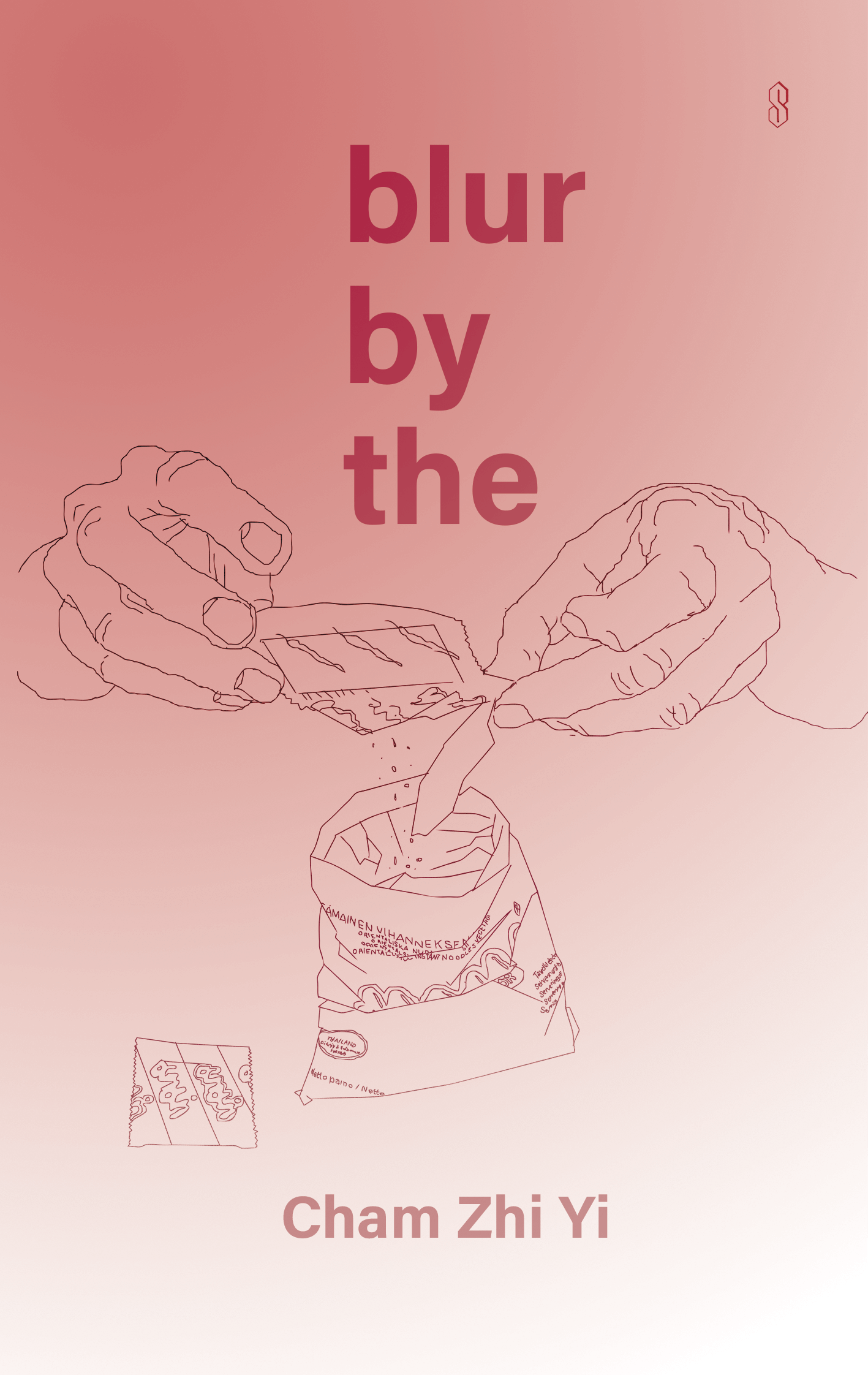
Declan Fry Reviews Cham Zhi Yi

blur by the by Cham Zhi Yi
Subbed In, 2019

‘I have always advocated: adding, adding and adding cultures and languages instead of literally eliminating them in the name of a pure identity.’

The reader will have to imagine for themselves what Maria-Àngels Roque, editor-in-chief of Quaderns de la Mediterrània, a twice-yearly journal focused on authors from the Euro-Mediterranean, must have felt upon hearing these words. The sentiment belonged to the bisexual Spanish novelist (and scabrous critic of its society) Juan Goytisolo. Through the multiplication of languages, cultures, and viewpoints, Goytisolo sought to honour his birthplace’s Moorish and Jewish roots, and the long-suppressed influence of Arabic on the Spanish language. The project formed part of a broader mission aimed at undoing the strictures he inherited as a child growing up in Franco’s Spain: a stifling admixture of fascism, Catholic monotheism, and heteronormativity dubbed nacionalcatolicismo (Goytisolo credited the phenomenon with having given Spain a ‘long holiday from history’). He made his modus operandi even clearer ten years earlier, talking to Maya Jaggi for The Guardian:

The vitality of a culture is in its capacity to assimilate foreign influences. The culture that’s defensive and closed condemns itself to decadence. […] When I was a child in the 40s, the Catalan language was forbidden. I realised that to have two languages and cultures is better than one; three better than two. You should always add, not subtract.

Published last year, and receiving the 2019 Anne Elder Award, Cham Zhi Yi’s debut collection, blur by the, is informed by linguistic heterogeneity. Like Goytisolo, Cham employs a combination of languages and styles, raising questions about who speaks and who is spoken to. They question what it means to write your identity when others have already presumed to try to write it for you (even in a reductive and brutally essentialised form). For writers who have not traditionally been included in the Western canon, the problem is one of narrativisation and self-recognition; of always having to wonder whether you are the protagonist of your story, or simply writing against a colonial frame. As Cham observes:

i tell people to call me zhi.                   but
truly my heart swells when

my mother says me whole

i want to know this joy daily
but cannot bear

the affliction of a name

Cham’s poetry is founded in the interstices of her birthplace (and its Malay-Chinese inheritance) alongside the cultures of her adopted home (Ngunnawal, Ngambri, Ngarigu, and Canberra-based settler). She often makes connections between eating and migration as a way of exploring multiple cultural affiliations. Indeed, food functions as a useful metaphor for Cham’s entire practice: a substance that breaks down boundaries between internal and external, living and inert, essential sustenance and surplus pleasure. It also affords Cham an opportunity to demonstrate her keen eye for food’s detail and gauzy tactility: in the poem ‘colonisation 2 ways’ eggs are ‘white                   pepper     bleed yolks/edible     Pollock’.

At times, the food/migration motif can risk seeming like a familiar trope (although a large part of that problem lies with how food has been received and marketed locally, where it is made synonymous with a certain kind of liberal settler tolerance and cosmopolitanism). Farrin Foster recently wrote for Kill Your Darlings about how MasterChef’s latest season (internationally syndicated in 86 countries) has become a paradoxical source of soft power for Australia; one in which ‘A viewer in Port Moresby could conceivably be served this online ad demonising immigration to Australia, before switching on TV to see MasterChef contestant Khanh Ong speak emotionally about coming to Australia as a refugee.’ Although the presence of food in blur by the is perhaps closer to a source of sensual pleasure, a way of connecting with home, Cham also signals an awareness of how it may be received by a settler audience. During ‘let me by survived by loneliness’, a meta-authorial voice interrupts the connections Cham draws between hunger and nostalgia to speak directly to the reader:

when i wake i set about cutting & bruising anything that bleeds tears
cook everything that stings
begin eating a meal that will satiate my hunger before it does my nostalgia
put away the leftovers
call ma

ma i am wanting. i am wanting to go home. let home be as simple as proximity to you.
home need not be Swatow

– & because this poem is for a white audience let me clarify Swatow is the city in Guangzhou where generations ago my family was ‘from’. before australia. before malaysia. & generations before Swatow we must have been from elsewhere but my longing for this specific city stems from a fantasy: that no one in Swatow ever asked our ancestors ‘where are you from?’ –

Caught between the dilemmas of identity in Swatow (and it is worth recalling that the ‘swa’ or ‘shan’ (汕) of ‘Swatow’ refers to bamboo fish traps: the city was a fishing village during the Song Dynasty), Cham finds

despite my location my ancestors
all their trades their tongues their gods & their ghosts be my legacy
remind myself i am many

Subtle gradations of typographical colour serve to anchor the poet’s sense of liminal space, drawing attention to the way those less visible aspects of cultural inheritance might be limned on the page:

when did white arrive on the shores of time? she too has been colonised expel white from spine let it be ash

But is the success of the colonial – and, by definition, assimilationist – project simply a matter of pragmatic acceptance on the part of those colonised? A resignation to the idea that material circumstance and exigencies demand adaptation to the dominant culture? And if so, what does the poet do with the redundancies that emerge from that acceptance? In a culture as determinedly (yet falsely) monolingual as Australia’s, the poet necessarily finds some part of themselves denied a voice, a purchase on a distinct identity. Dedicated to Naarm-based Oromo poet and artist Saaro Umar, Cham laments, in ‘post-Solange’,

what else am i to do. with this moist southeast asian mouth withering here in the southern hemisphere edge of split-fraying loosening seatbelt like ready to disembark from this face now that ive stowed away four of my five tongues for winter what else are they to do with me ?

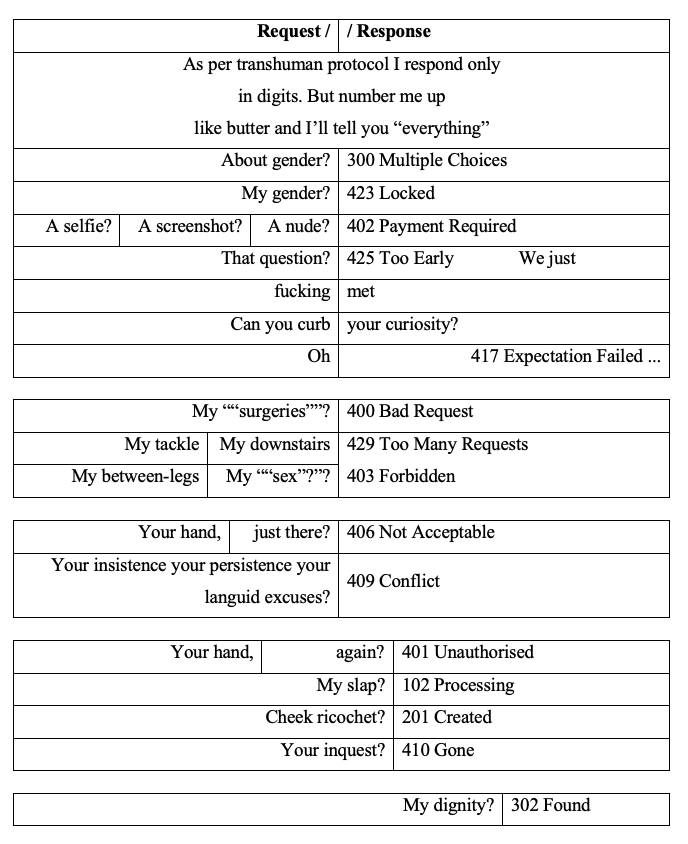
The ‘Untitled’ sequence of poems shows how this abbreviation, the four of five tongues stowed away for winter, might be rendered visually legible. In ‘Untitled 1’ various words are blacked out. For ‘Untitled 2’, most of the poem is erased (and, had the pattern continued in this fashion, ‘Untitled 3’ might have simply been once large vertical black box; instead, different phrases are omitted). Occasional words surface like stray light, capturing the sense of self-permission described in ‘be sure we aren’t dreaming’: ‘allow myself/the mourning of redacted history’. The sequence is especially notable for drawing attention to what is missing – a kind of clarified erasure:
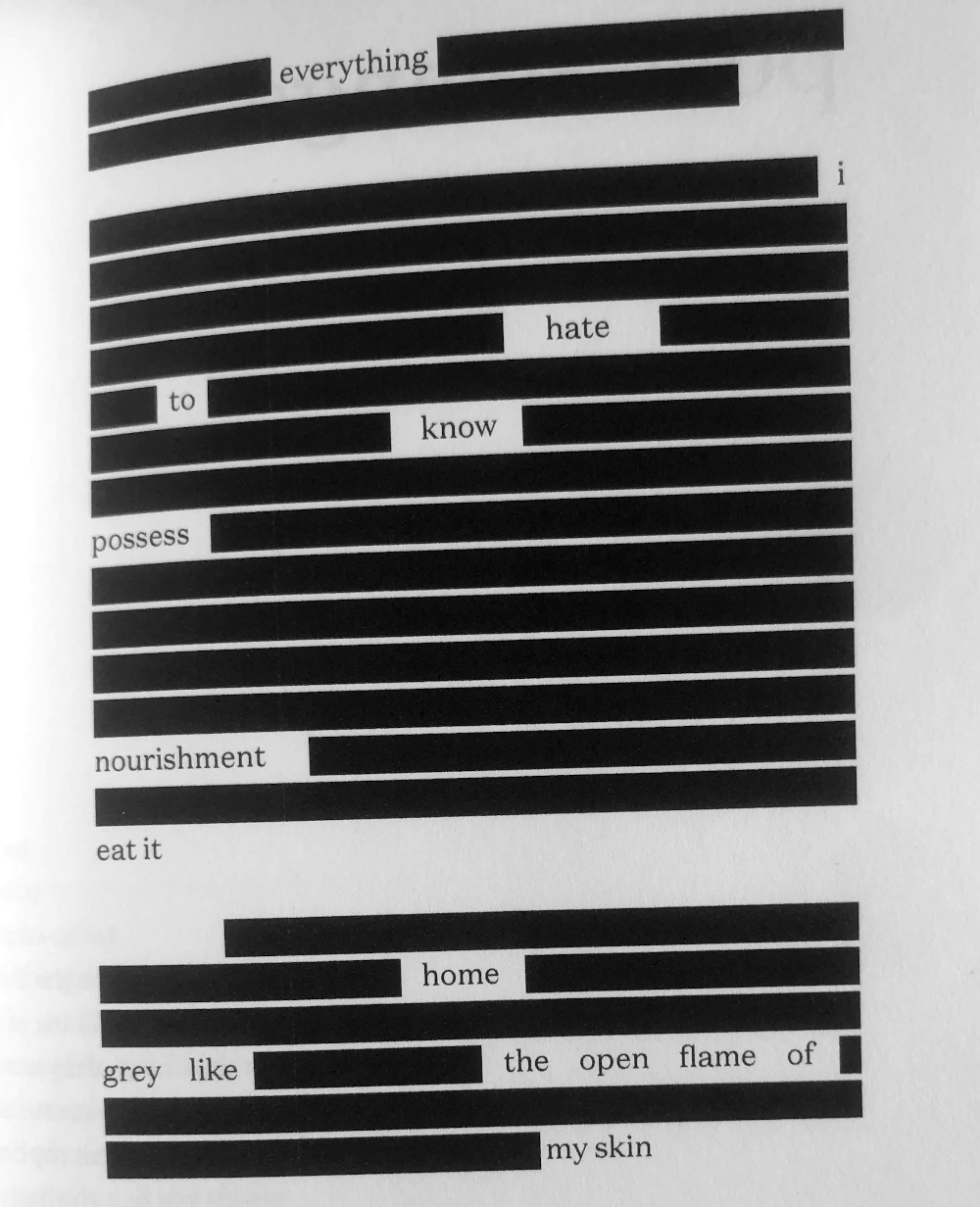
What you see is what you get; and what you get are those caesurae and absences that compose and structure poetry. It represents a kind of meta-working, a demonstration of how the poem (Here’s one I made earlier! ) is constructed. By rearranging the intercessionary redactions throughout the sequence, the poem assumes different readings, while leaving the reader to guess at what the initial gaps might signal.

Posted in BOOK REVIEWS | Tagged , ,

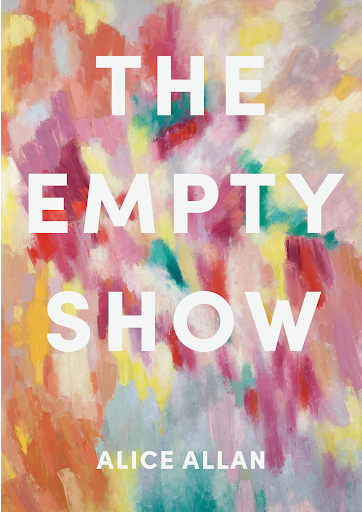
Julia Clark Reviews Alice Allan’s The Empty Show

The Empty Show by Alice Allan
Rabbit Poet Series, 2019


Alice Allan’s debut collection opens with the declaration, ‘A sonnet is always a love poem.’ Absolute statements like this tend to attract consideration of their opposites, gesturing to their qualities and equally calling to mind all that they are not: always/never, empty/full, lost/found or wrong/right. But in the poem ‘Melbourne sonnet’, after this declaration, the speaker immediately retreats with ‘So I was taught’, retracting their initial conviction in favour of the comfort of the murky middle ground. Throughout the collection, Allan ruminates on what it is to be lost. She asks and attempts to answer how one knows they’re lost, how to travel from lost to found, and, then, whether there really is a difference.

The collection’s title, The Empty Show, references a guerrilla art movement from the early 2000s, where organisers converted abandoned buildings into secret art galleries. This, combined with the photographs of lost and found signs peppered between the poems, lend the collection a sense of urban listlessness, a tone of wandering through city streets searching for something. One in particular reads ‘LOST (?) RABBITS SPOTTED HERE … Too fast to catch!’ The poster’s hesitation to label the rabbits lost introduces the complexity of lost and found where it’s not always clear whether something or someone is lost and needs finding.

Many of the poems are written after another’s or feature interjections from other texts, including Auden’s journals and Love Actually (2003). The huge variety of the intertextual references demonstrates Allan’s eclectic reading habits but, within the wandering world of the collection, they stand out like signposts, disparate texts chosen for their unique messages. In this way, reading the collection and encountering the references feels like a web of interconnected messages and maybe, just maybe, if you can string them together correctly, they’d reveal a hidden message, a larger scheme with which the poems’ lost speakers could direct themselves. But, at the same time, the great variety in tonal and formal choices between the poems creates a scattered reading experience, making it difficult for the reader to gather their own bearings in the collection.

In the more experimental poems where Allan works with word repetition and shapes, she appears to be working to construct a voice for the collection. For example, ‘Lyric’ is a column of ‘I’ repeated 196 times. It is a visual assertion of the central perspective for the reader but could also be read reflexively as a reassuring mantra. Additionally, in ‘On the threshold of the hive’, composed with words from Sylvia Plath’s ‘Stings’, Allan shows the shift from someone watched to someone performing as a reclamation of self.

a third person is watching
a third
a personpersonpersonperson
a personapersonapersonaperson
a          personapersonson
a                         sonsonsonson
a

The transformation from ‘third person is watching’ to ‘persona’ seems like the speaker wresting control of their perspective and reclaiming the gaze of the third person but, as the language continues to dissolve, the barriers between the third person with their gaze and the speaker of the poem become muddied, becoming indefinable sounds. From here, the central figure remains hazy, with an uncertain sense of self.

Similarly, in ‘Geraniums’, the speaker’s uncertainty about herself is revealed in the relation to another person:

I’m nervous to tell you about this woman, about what she said,
because there’s nothing significant about it at all.
Even though I still remember it. Even though I still want to tell you.
Wanting to tell you doesn’t mean it’s worth telling.

She has experienced something significant in overhearing a woman while walking but, while she is confident in the personal value of this message, she is less confident about its value to others. Against the insistence of self from ‘Lyric’ and ‘On the threshold of the hive’, this poem reveals a vulnerability and a lurking feeling of self-doubt that the other poems are attempting to shake off. These poems together show Allan’s interest in construction of self with the added complication of the dangers of ‘losing yourself’ to uncertainty.

Posted in BOOK REVIEWS | Tagged ,

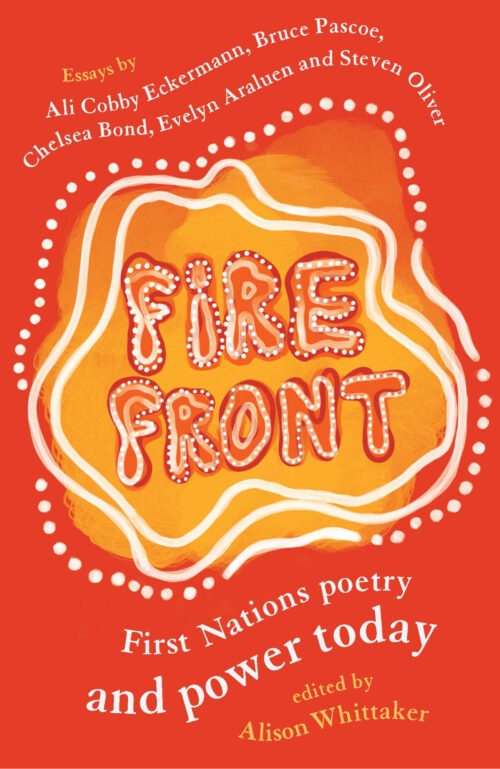
Nathan Sentance Reviews Fire Front: First Nations Poetry and Power Today Edited by Alison Whittaker
Fire Front: First Nations Poetry and Power Today
Edited by Alison Whittaker
University of Queensland Press, 2020


2020 is a hectic year, ay? Severe bushfires, Covid-19 outbreak, the subsequent lockdown, the colonial government funding an idolised re-enactment of the starting point of the invasion of these lands, Black people being harmed and murdered by state agents such as the police and those same police protecting boring statues of colonisers all while Rio Tinto destroys a 46,000-year-old sacred site.

However, watching Country being destroyed is not new for us First Nations people in the colony. Neither are new diseases, the glorification of a violent history or experiencing violence by the hands of the state. We’ve had 232 years of ‘hectic’ years.

For this reason, Fire Front: First Nations Poetry and Power Today, a collection of 53 poems which have been previously published and/or spoken between 1964 and 2019, feels extremely relevant in 2020. It’s as though they were presciently written in response to this year’s events. But if this anthology seems timely, it’s because many of the poems in Fire Front are timeless – they are part of a continuum of First Nations storytelling that has existed here for millennia. This storytelling has connected us to Country, our ancestors and kin since time immemorial.

The poems and essays that make up this anthology are also part of a long-lasting resistance to the colonial invasion of these lands that has continued since James Cook’s boat came to these shores. They are part of a collective refusal to be silent in the face of colonial forces desire for us to be gone.

Fire Front will always be relevant, at least for me (and maybe many First Nations readers like me) no matter what the year because of the Blak love and wisdom that exists within its pages. We will often have the desire to feel the strength of words it contains, like feeling the heat of a campfire on your face.

As an introduction to some First Nations poetry, Fire Front, curated by Gomeroi poet and law scholar Alison Whittaker, creates space for rethinking our world and sparks the imagination on what could be. For non-Indigenous readers, a collection of this introduces them to voices that challenge their world view. This could be a catalyst for these non-Indigenous readers to reflect on history, the violence of the colonial state, on nationalism and on themselves.

This reflection should include considering how humanity’s role as part of the environment around us could be different. What cannot be overlooked in this consideration is how our First Nations people’s connection with Country has sustainably and holistically ensured the mutual health of Country and us since time immemorial. This connection is constant: all of what makes up Country is our kin and Ancestors. We ourselves are Country. Many of the poems within Fire Front illustrate this connection by conversing with place and acknowledging and invoking the history and sentience of Country. This is compellingly exemplified in Lorna Munro’s ‘YILAALU – BU-GADI (Once Upon a Time in the Bay of Gadi)’:

THE LAY OF THIS LAND, IF YOU CARE TO LISTEN WILL TELL ITS EXCLUSIVE STORY
YIILINHI
RED CLAY
MULGUN
JUBAGULLY
THIS TERRAIN EVOLVED OVER MANY EONS AND IN A RAMBUNCTIOUS FLURRY

The violent theft of First Nations’ lands by colonisers over centuries has comprised trying to sever this connection. Colonisers have murdered us and removed us from our homelands, paving the way for industries such as Western agriculture and logging, just to name a few. The colonial state continues to undermine First Nations sovereignty to protect other extractive capitalistic enterprises, such as mining. This has contributed to and produced anthropogenic climate change that has taken place for the last 232 years, and will only get worse in the future. Any chance to rectify this needs to start by addressing ownership of these lands. Alexis Wright speaks to how climate change is a result of our dispossession in ‘Hey Ancestor!’:

You seem all radical, in a hurry. The environmental science people said that the freak storms coming more frequently are a consequence of climate change, but I think that your appearance is the result of those little pieces of paper telling lies about land ownership by people who don’t know your power. I suppose the ancestral story should look the way you have decided to show yourself, your powerful story of millenniums revealed in full swing.

The colonial violence we face is intertwined. There’s great sadness in watching this destruction to your kin, your Ancestors, before your eyes. You can sense this sadness in many of the poems in Fire Front, for example in ‘Municipal Gum’ by Oodgeroo Noonuccal:

Its hopelessness.
Municipal gum, it is dolorous
To see you thus
Set in your black grass of bitumen –
O fellow citizen,
What have they done to us?

And in this passage in Claire G. Coleman’s ‘I Am the Road’:

My Boodja has been stolen, raped, they dug it up,
took some of it away
They killed our boorn, killed our yonga, our waitch, damar, kwoka
Put in wheat and sheep, no country for sheep my Boodja
My Country, most of it is empty, the whitefellas have no use
for it
Except to keep it from us
Because we want it back, need it back, because they can
I am the road
Posted in BOOK REVIEWS | Tagged , , , , , , , , , , ,

Winner and Commended Writers in the 2020 Queensland Poetry Festival Val Vallis Award

Helen Lucas has won the 2020 Queensland Poetry Festival Val Vallis Prize with ‘Heirloom’; Sarah Rice wins second prize with ‘My Time in Govie Housing Draws to a Close’ and Rae White wins the Highest Queensland entry for ‘The last tourist’.

Helen Lucas

The wholesome extended imagery, the craftily woven wordplay and delicate repetition are beautifully sustained and developed. The way the body becomes part of the art of knitting is artfully achieved. The fluent lines are carefully orchestrated as are the tensions between the personal and the public.

Sarah Rice

This poem nests hearty moments inside masterful imagery and carefully placed word play, leaking magic into the mundane. The poem filters its moods well across its lines. The convincing voice surveys the tensions created by loss and paints a memorable portrait of place and character.

Rae White

This poem’s vernacular immediacy, imagistic freshness and perspectives give it an immediate appeal. Tone and voice are used both humorously and incisively to create memorable portraits that reflect both animal and human foibles in an energetic way.

Posted in GUNCOTTON | Tagged , , , ,

My Time in Govie Housing Draws to a Close

Most sit out front with no front teeth
but lots of heart
and smokes
Their cars in many stages of undress

I’d showed up with mum and dad
(while I still had one)
and a wheel chair
They’d got sick of carrying me
up the stairs

We nodded to Housing and the sunlight
coming in the front windows
and the next door lady gave me a key-ring
she’d made herself from leather
She gave the neighbour to my left a cut
above the eye with a smashed bottle

She would sit on the wall between us
and chat about life depression drugs
Certain days were bad
the ones that reminded her
of her murdered boyfriend
then she’d swing a baseball bat
at the night flying fucks
and striking out
The ones who dobbed her in
to the coppers were the worst

But she was kind enough to share
her music with me
through my bedroom wall
at 3 am – a thumping
good time

I’d chat to her feet dangling
from the wall while I dug
in the garden – and in the end
she was saved by a dog
who hated the volume up
and my sleeplessness exchanged
beats for barks
He wanted up and out
in the morning for walkies
so the benders had to straighten out
and while the pup didn’t take to men
he took his owner to a nice new house in the burbs
with a larger yard

I’m following in her footsteps by moving out –
my place now a parking lot
for boxes – the washing machine untethered
and the frigid air finally gone
The shelves unburdened with fresh ignorance
and the smell of the mould they’d tried to paint away
infusing everything

And although I was prepared
to leave behind the trees my dad had planted
currently in mid mad blossom
Azaleas and camellia sesanqua
fuscia-pink and holed up making their last stand
I wanted to bring the tiny pomegranate tree
he’d given me just before he died –
the roots still struggling
to live up to their name
still settling in
not yet branched out
into new fields
somehow address-less
I would have – and I tried –
had made a small attempt the night before
with the wrong kind of shovel
flat and square and useless
but it must have left some kind of mark
a trace of something wanted – something loved
which was enough
to drive some random neighbour
to yank it out that very night
grasp it by green matted hair
and there –
all gone

Posted in GUNCOTTON |

The last tourist

For the birds at Tangalooma, Moorgumpin (Moreton Island)

White-bellied sea eagle

it was a sight to sea me, bird of pray nip cormorant
neck n yank clean off, blood flushing beige
sand red, her wedding dress now russet as screams
swoosh me to abandon my picnic but no, thank u
i’ll keep ripping n rummaging til every organ
morsel is skinned n gorged

Bush stone curlew

My party trick? I stay up all day and only sleep
when the very last tourist does. But there’s always one
awake, torso tipping, guts splashed up
in the garden like upended beer bottle.
I’ve only had alcohol once, funnelled with pincer beak
as beetle chaser. Tasted like seawater
gone vinegar. I live in this 90s paradise with Michael
Jackson tunes swelling near signs flashing
WordArt fonts. My knees ache swollen and I still feel
hungover. I’m a life jacket
time loop, a nocturnal
error. I’m one scream away
from erratic rebirth.

Whistling kite

Cheeee chk chk chk chk cheeee! Cheeee
chk chk chk chk cheeee!

White-faced heron

Harry’s wedding was a tragic sight: two lanky grey birds
preening and feather fluffing ‘I dos’ – then whiptail flash
and swoop of white
and she was gone, tucked up
limp in grappler claws.

Now bride haunts shoppers’ finger-smudged window
as groom’s ghost-grey reflection. He paces
and fusses, paces
and waits. She should
be back soon.

Welcome swallow

softly born & tourist-raised in boneyard
museum of eggshell & nest …… a living artifact
sailing on aircon winds, asking …… Can I land
on your shoulder? …… I weigh almost
nothing …… Can I land
on your shoulder? …… Can I land ……

Pelican

I’m counter shaded like cormorant: burnt
on top, bleached under belly, like a flipped
Top Deck chocolate, like bleeding mud
inking snow. You fling silver fish spiny-head first
and I swallow it whole.

I enveloped a chihuahua once: joyous jaw-full of dog
until companion yanked leash like flossing.
I always want what I shouldn’t have. Like fish-filled bucket
all to myself. Like hand, plastic, hook.


Posted in GUNCOTTON | Tagged

Heirloom

I

My mother knitted and stitched
her self into history
her handwork a primary source
soft proof of a life
the silk nightie French seamed
with an applique neckline
my infant bonnet wedding dress
a fancy laced bib
for my daughter.

I count rows and stitches
knit and purl my way
into this modern history
a turquoise pixie hat
the tiniest pink cardigan in cashmere
and merino a striped blanket
I click clack with inherited needles
a pair matched in size not colour
the rest dormant and disorderly
in their wooden box
with gold hinges and no lid.

A stray hair in the garment
it can stay DNA
in the knit (K)1 purl (P) 1
K 2 together (tog).

II

The artist* performs her craft
and her benign activism attracts a crowd
she draws the thread from the ball
inside her vagina and resettles
into the rhythm of knitting.

She labours quietly for twenty-eight days
the work is demanding
her attachment to it confining
though at times
the pull of wool arousing.

Her menstrual cycle is
pinked in the textile
a feminine narrative unravelled
her bloodline woven into fabric
the slide of stitches slowed
by the moisture of the yarn

The improbable scarf loops through
floating coathangers in the gallery.

Her performance is filmed
the video goes viral
the public is disgusted
in the knit (K)1 purl (P) 1
it can stay, DNA
K 2 together (tog)
a stray hair in the garment.

III

My grand maternity materialises
in the knit pink
stitch after stitch slipped
as I cast off.

The seams are sewn
my lips dampen the thread
I press the end
between thumb and index
and pass it through
the eye of the needle.

This soft labour embodies me
creates my daughter and hers
reproduces my mother and hers
our bloodline in the garment
saliva on the yarn, mine
recalls the thread and the artist’s vagina
as she cast off her womb.

My stray hair in the knit one (K1), purl one (P1)
produces a new heirloom
my DNA it can stay
this cardigan my doing and undoing,
me casting off.


Casey Jenkins, Casting off the Womb, performance piece first performed at the Darwin Visual Arts Association (DVAA) from October
to November, 2013.

Posted in GUNCOTTON | Tagged

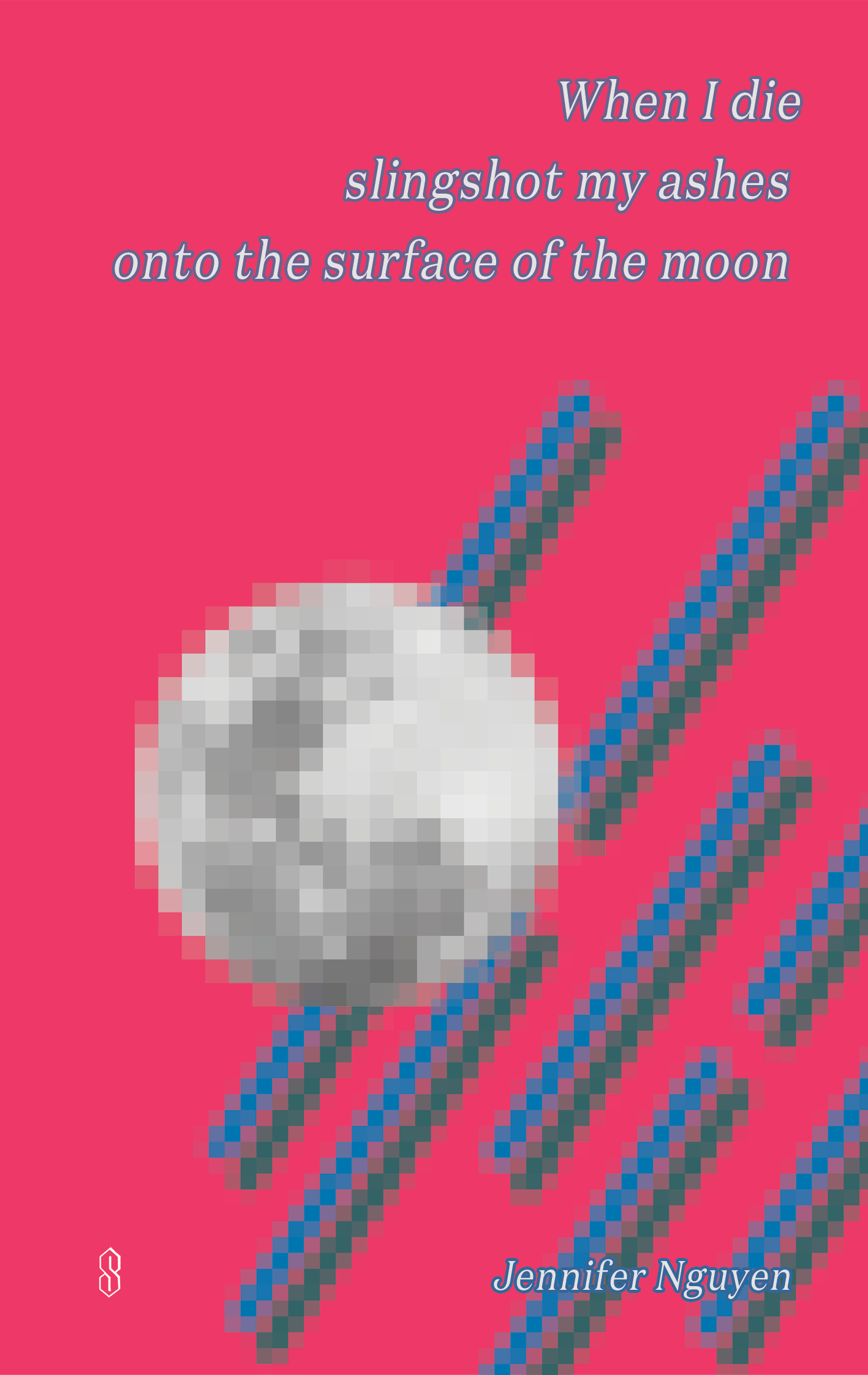
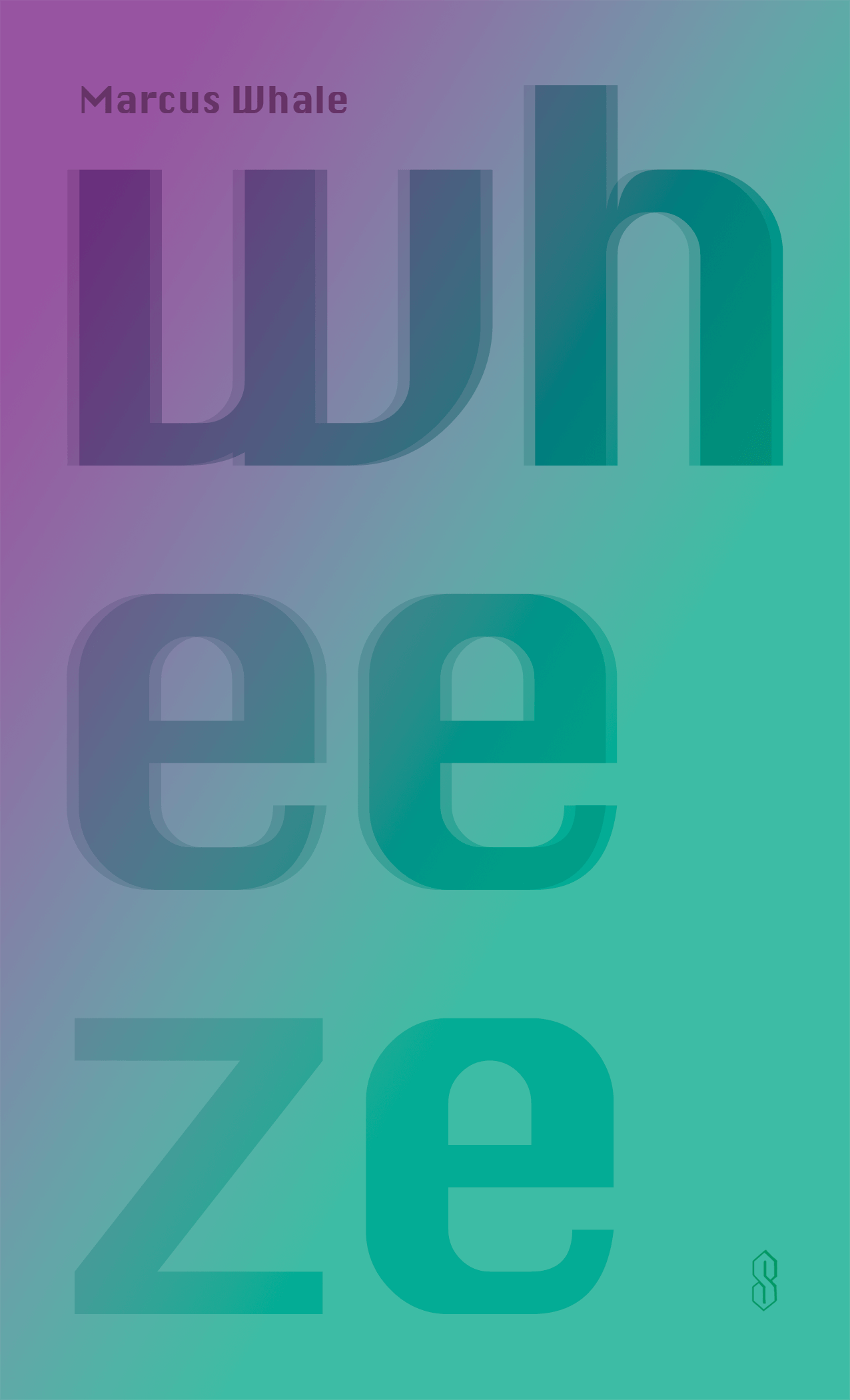
Darlene Silva Soberano Reviews When I die slingshot my ashes onto the surface of the moon by Jennifer Nguyen and wheeze by Marcus Whale


When I die slingshot my ashes onto the surface of the moon by Jennifer Nguyen

Subbed In, 2019

wheeze by Marcus Whale
Subbed In, 2019


Jennifer Nguyen’s debut chapbook, When I die slingshot my ashes onto the surface of the moon, investigates the multifaceted natures of pain and sadness. The opening poem of the collection is called ‘Sometimes, pain is just pain’. An interesting thing to note about this chapbook, and, uniquely, Subbed In’s most recent chapbook series, is that the titles of poems takes up their own pages. Coupled with the twice repetition of ‘pain’, this title is largely unforgettable in the context of the collection.

In the poem, Nguyen’s narrator searches for the answer to the question, ‘Why am I this way?’; that is, why all this pain? The speaker scrapes together some provisional, unsatisfactory answers:

Is it because my parents never once said ‘I love you’. 
I asked and wasn’t happy with ‘of course’.
You asked me if I loved you. I said ‘always’, but you still
             left anyway.

What does it mean to open a collection with a poem such as this? Most of the poems in the chapbook talk back to the declaration of ‘Sometimes, pain is just pain’; they are filtered through it. One particularly striking dialogue is between the poems ‘Sometimes, pain is just pain’ and ‘Love at first laugh’. ‘Love at first laugh’ is a poem made of three simple lines: ‘On a date with a girl I liked, she said ‘Isn’t The Walking / Dead just Home and Away but with zombies ???’ I have / never fallen in love so fast before’. In the landscape of When I die slingshot my ashes onto the surface of the moon, if, sometimes, pain is just pain, then, crucially, joy is just joy.

Joy, in Nguyen’s writing, is tethered to the quotidian. In ‘Quiet love scenario’, the speaker wakes up in the middle of the night with a leg cramp and the lover ‘half-asleep, massaged / And stretched my leg out’. In ‘Death drives’, the father ‘overheard me say I suffer from / chapped lips and after work the next day presented me / with a tub of Vaseline’. Among poems populated with defeat, these tenderly written, small acts of love are sacred acts of care.

Ocean Vuong, a clear influence in Nguyen’s work, writes in his novel, On Earth We’re Briefly Gorgeous: ‘Do you remember the happiest day of your life? What about the saddest? Do you ever wonder if sadness and happiness can be combined, to make a deep purple feeling, not good, not bad, but remarkable simply because you didn’t have to live on one side or the other?’i Among the dichotomy of pain and joy, Nguyen boldly orients towards such balance, such ‘purple-ness’, by approaching the quotidian with astonishment.

In Nguyen’s poems throughout the collection, there are depictions of interior complexity. For example, in ‘Time as best friend and worst enemy’, pay attention to the ‘and’, its call to duality: Nguyen’s speaker picks both best friend and worst enemy with the announcement, ‘I trust in time / even when it betrays me’. The metaphors in this poem are sprawling: ‘a second becoming an hour & / not in a cute way like when you’re / kissing someone / but more like / when you find out a dog is almost eighty’. The metaphor contains a small pairing: kissing someone and finding out a dog is eighty. Through these metaphors, Nguyen demonstrates that she is a poet, yes, of wonder, with her upbeat, dreamy syntax—even while she captures the loneliness of transitory joy: ‘I trust in time’. Later in the collection, the poem, ‘The trick is to think you are not an exception, that it happens to everyone, too’, is a lyric catalogue of loneliness. It is the poem that works as the clearest partner to ‘Sometimes, pain is just pain’. It opens with: ‘I’ve been left behind a lot. My high school class / Who picked me last for team sports’. In a previous poem, ‘My misery doesn’t love company’, Nguyen includes a simple image that is provocative in the framework of ‘pain is just pain’. ‘My misery / listens to sad k-pop playlists with nice backgrounds’. It echoes of a section in Taije Silverman’s poem, ‘On Joy’: ‘… with a stranger’s curiosity, she seems to ask / What can I do with your sadness?’. What is there to be done with sadness? How can it be spoken of? How can it be made bearable, to make it pretty against a nice background? If sometimes, pain is just pain then sometimes, pain is just unbearable. In ‘The trick is to think you are not an exception, that it happens to everyone, too’, here is Nguyen’s resounding answer: ‘Things with less permanence were fine too, / Like a pot of jasmine tea. I was thankful even if a bird / Landed near me and stayed for a few curious seconds / Before flitting away’.

If sometimes, joy is just joy, then, sometimes, joy is just welcome.


i Ocean Vuong, On Earth We’re Briefly Gorgeous, Penguin Press, New York, 2019, p122.

Posted in BOOK REVIEWS | Tagged , ,