
ESSAYS
Uneasy dreams: A century of change in Victoria’s public swimming pools
One of my earliest memories is being trapped by an uncomfortably safe seatbelt into the back of a 1980s-hot family van and seeing a gigantic swimming pool come into view. This pool emerged, mirage-like, from a hazy horizon of eucalyptus trees and melting bitumen. I don’t remember first seeing the ocean, but I remember thinking the water at this place was similarly vast. Decades later, trying to place this vivid but untethered memory, I’m almost certain this was the Raymond West swimming pool – or swimming lake – in Shepparton, northern Victoria.
Poetry’s magic circle: ‘By the incantation of this verse’
Dashiell Moore and Philip Morrissey’s collection on Lionel Fogarty in Poetry and Politics, launched last September, contains some valuable essays and is also – remarkably – the very first volume dedicated to the study of one of the greatest poets this country has ever produced. That poet passed away on 12 February 2026; his family have requested as part of cultural protocol around mourning that he be known for the next year as Dhoompoo Lionel Fogarty.
Approximating coherence: A reading of three collections on disability
There is a certain way to be written into society. This necessitates hiding parts of yourself that society cannot process into a coherent script, one where the body and mind play roles that are compliant to societal demands and can fit into neat categories. One of the ways that coherent script is written depends on a person’s ability to socialize, work, regulate, and take care of themselves. Being unable to meet these requirements makes one prone to being labeled as disabled. However, although often used synonymously as a medical condition, disability hinges more on the willingness of one’s social environment to accommodate (or not) a person’s needs, as opposed to being inherent to an individual (World Health Organization, “Disability”).

I’m your Andy
Goddess,
why do you love Andy Kaufman?
I don’t know— I just
Do.
I love looking at his face, those eyes…
I think about him when I [—] and he
[— — —]. I just
desire him
long for him
love him.
But would you still love him if he were a Zionist?
We’re on a camming website. People address me as ‘Goddess’; I tell them I want to be worshipped. They tell me they love me, love my body, offer to house me, pay for plane tickets to them, ask me to be their girlfriend, marry them. I decline. “Just send me tokens on this website please, not elsewhere, because I don’t want to get kicked off. I need the money. Plus, I’m reserved for Andy Kaufman.”
How to be a poet: Expert advice for aspiring and emerging poets
To commemorate Poetry Month, I’ve put together a guide for people who want to try poetry, or who are writing poetry and don’t know what to do next. I reached out to a variety of working poets, teachers and editors, asking for their best advice for aspiring and emerging poets. Together with my own advice, here’s the consensus.
Weapons (Javelins)
Javelins of light denote the presence of the god that threw them. A litany of all-purpose made devices exist. One shaft can be seen to exist. Arrowheads exist, too; tools that look like missiles exist. One weapon extends forward like a sharp from a bow, another like an easily replicable nail you’d find in a hardware store, a third like a figment exists (a talisman or torture device, a slew of items in the armory, an ancient hunting item from a story once heard in passing all exist) the edges all glistening and warped, each passing continuously through a surface, as in fiberglass, as in walls. Shards exist, daggers and diadems that blind; soldiers exist, and arrows, and spears and knives.
NO THEME 15 editorial
I love the chaos and possibility that an open theme edition brings – the wonder and hope in casting a net wide, and carefully sifting through the magic that returns. As is often the case when editing something, I wish I could have chosen many more works to be published. The standard of work was exceptional, and I’m told there was a record number of poems submitted.

A language for grief: Writing horror in fiction and poetry
I write and read between and across genres, but horror has always been my first love. Much has been written about the appeal and utility of horror, often combining, as sociologist and film critic Andrew Tudor attests, analysis of the texts themselves as well as the genre’s consumers.

Algorithm non grata: The relentless banality of LLMs
In regurgitating the dominant scientific account of human evolution, LLMs adopt a particular stylistic posture: one that privileges qualification over commitment, context over certitude, expansion over a foray into humour, irony, or sarcasm. They’re like the corporate psychopath who, when presented with a task that requires nuance and a bit of wit, impulsively blurts: “Let’s map this out, shall we!”
‘And then the world went loud’: Reflections on protest and solidarity
This essay was originally delivered as a speech at the OzAsia Festival in Adelaide on 7 November 2025. It was written in response to the prompt ‘And then the world went loud’.
DIALOGUE editorial
I have never been very interested in writing about poetry. I much prefer to read poetry, think about poetry and write poetry itself. In the few months that I have been guest-editing this issue of Cordite, I have done a lot of reading of poems and thinking about poetry in many fresh ways. Engaging with these new poems over the many weeks has felt like sustaining a long, meandering conversation with a roomful of strangers whose minds and hearts were open to me for a little while through their words on the page.
Poetry in motion: The mobile poetic inquiry of a CALD educator
I’m gradually getting used to living up here on the 6th floor, in Melbourne’s Inner North. The wide windows facing northwest. Canopies of Royal Park and Princes Park filter tram noise and invites nomads of autumnal little corellas, murmuring through the green air. When you are long-term at a residential college, people around you never grow old. I began as a Singapore-born, Malaysian-Chinese, English-graduate student. I’m now an Australian permanent resident, Malaysian-Chinese Literary Fellow and former Resident Tutor. Melbourne Residential colleges are somewhat neither here nor there.

A website is a zine
At a zine fair in Wagga Wagga I met a person called Zachary. He bought the zine I wrote about finding a 2007 MacBook in the e-waste bin at work, and we got to talking about it, and our feelings about digital culture more generally.

FIT editorial
How would people respond to the word fit? Not as many sports poems as I’d thought. But hundreds of brilliant interpretations. Too many to fit in the issue. Choosing is difficult. The poems start to form a landscape. They fit together and don’t fit.
After the drive-in
What I remember best is all of the stars, and the robots glistening like they were made of stars, which I guess they technically were. When they clashed, sparks splashed out of their bodies, stretching across the enormous screen that met the sky, so that it seemed like the sparks were leaping up and getting stuck in the cloudless night.

The Algae Will Stay Another Day
I’m staring up at this precious night sky and I wish on a shooting star that the algal bloom will go away. When I look a little harder, I see it’s not a shooting star, but one of Musk’s Starlink Satellites.
Regeneration Is Not a Metaphor
I’m coming to you in English because the tall ships’ memory is still in my psyche, and in the time when I was born in 1992, this lingo was the first language for most of us on the east coast. Even when my youngest granddaughter passed over, they were still speaking in English.
Poetry as Protest; Protest as Poetry
We’ve had reason, lately, to wonder at the effectiveness of protest. Movements like Black Lives Matter and Me Too (or, earlier: the Occupy Movement) mobilised millions of people around the world, yet it feels – particularly in our current political moment – as though despairingly little has changed. This frustration is felt with acute horror in the face of Israel’s genocidal campaign in Gaza, which has seen protestors gathering in the tens of thousands and hundreds of thousands every week for two years, demanding an end to the violence only to be ignored or painted as extremists by their governments.
PRECARIOUS Editorial
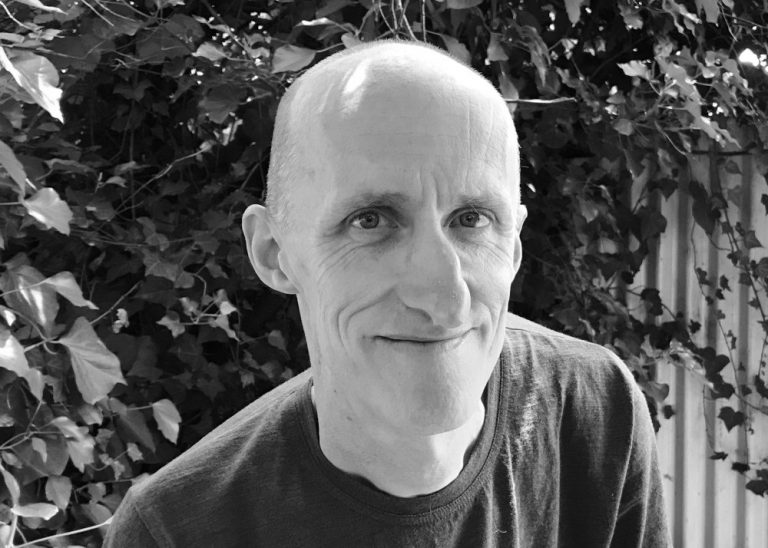
What actually do we mean by “precarious”? When I made the call for submissions, I had particular “at risk” spaces on my mind – employment, peace, health, community, ecosystems, social systems. Not only the global but the bodily. Not only systems of meaning-making but the water and the air. So, yes, what isn’t precarious, especially these days?
Fake Gamers, Real Workers
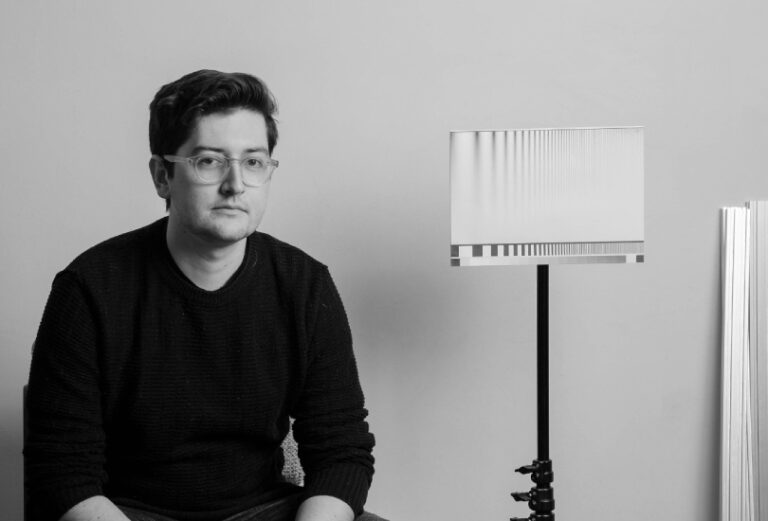
Rory Gillen (he/him) is a narrm based early career Australian contemporary artist, writer, and educator specialising in the politics of labour and technology. His practice spans screens, code, essay, and e-waste, and centers around networks, lost futures, and speculative hype cycles. It is anchored by a sense of optimism for humanities capabilities but deflated by its present reality.
Time Does Not Heal All Wounds: On Writing Poetry as Document
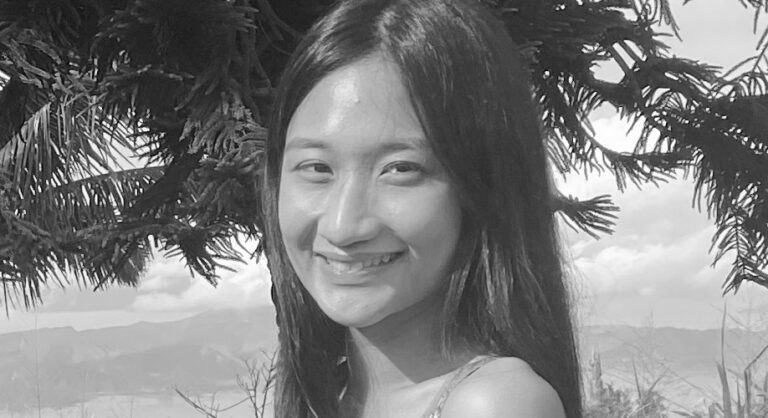
All her life my grandmother, Teresita Meer, taught at the University of Santo Tomas. She was the second eldest daughter among 13 siblings, and her family resided in a compound, once a big house, in Navotas City. Already deteriorated by the time I was born in 1994. My father would tell stories of how my grandmother’s father, Lolo Anghel, was a fierce activist imprisoned during Martial Law.
thalia’s Enduring Shorthand Poetics
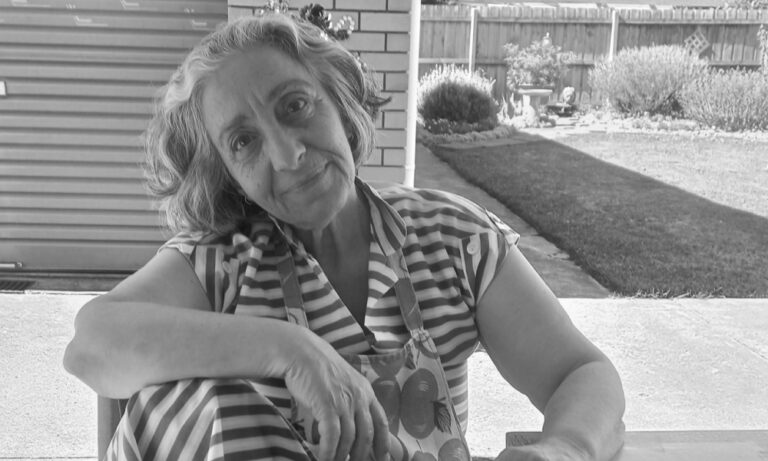
thalia is one of Australia’s foremost visual poets, with an expanded poetry practice spanning from 1972 to the present day, working across writing, drawing, painting, rhinestones, embroidery, and, occasionally, sculptural glass beads affixed to garden walls and fences as graffiti. thalia’s enduring body of work is summarised in her major publication A Loose Thread, published by Collective Effort Press in 2015, which collects over 180 of her visual poems. She herself is a foundational part of Collective Effort the renowned and enduring Naarm-based poetry collective which includes notables such as π.o., artist, sculpture and poet Sandy Caldow, Dadaist Jas H. Duke and poet and editor Jeljte, among others.
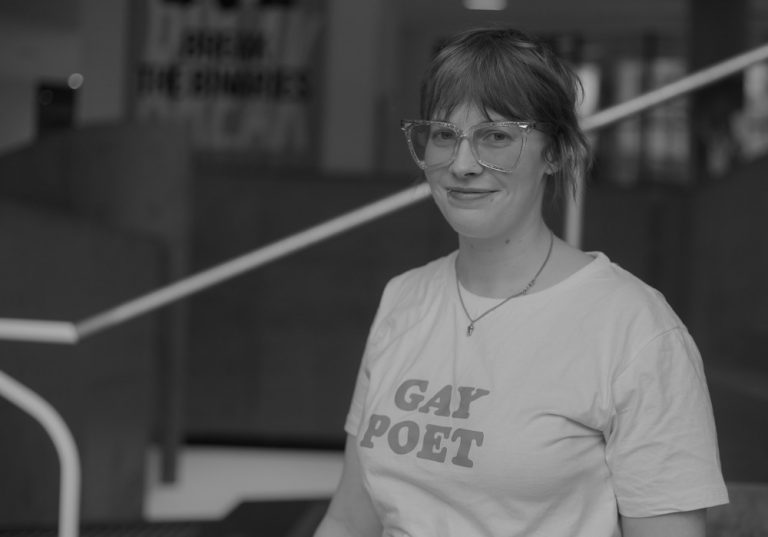
NO THEME 14 Editorial
The poetry in this issue is damn juicy. As a writer, there’s perhaps an added degree of exposure or vulnerability in submitting a random suite of your poems, unmoored by theme. Showing your backlog = showing your poetic bussy.
I’m sorry for what I said when I used ChatGPT
I’ve been scratching the back of my head lately, and maybe it’s a new condition I’ve yet to ask a doctor about or maybe it’s old allergies coming back, or maybe it’s because I can’t recall the title of this piece I read, the one that says our bodies are mostly microbial, and I can’t remember what meaning I tried to get out of it, can’t even remember if it was an essay or a medical report, or if it even matters, so maybe it’s not that; maybe it’s because I’ve been worrying about the mistakes I need to make up for while wrestling with the possibility that I may have to move to another country while struggling with the fact that one day I would lose my cat to time.







