Review Short: Stephen Oliver’s Intercolonial

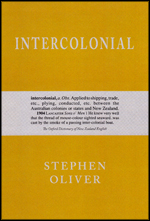
Intercolonial

Intercolonial by Stephen Oliver
Puriri Press, 2013

Intercolonial, a new book-length poem by Stephen Oliver, focuses its attention on New Zealand, Australia, and the sea that lies between them. With sweeping long lines, Stephen Oliver zooms in on the details of place and geology: the poem is full of cinematic pans over landscape, seascape and human history, fulfilling what is often a purview of the long poem in naming the world and its inhabitants. Continue reading

Posted in BOOK REVIEWS | Tagged ,

Review Short: Sarah Day’s Tempo

Temp

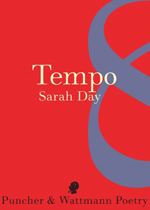
Tempo by Sarah Day
Puncher & Wattmann, 2013

There is much poetry about currently which does not value rhythm and music as integral to its sense. Day’s poetry absolutely does; filled with assonance and internal rhyme which renders many individual lines beautiful and suggestive. The first poem, ‘El Iskandariya’ is one of the best, capturing a moment without labouring it:

When marsh birds pooled out of the sky like ink
on water to devour the barley flour 
that Alexander’s men had laid to mark 
the city’s boundaries, the hour 

seemed lost beyond recall ...
(p. 1)

Continue reading

Posted in BOOK REVIEWS | Tagged ,

Review Short: Carol Jenkins’s Xn

Xn

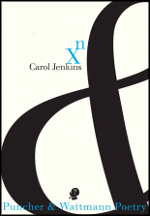
Xn by Carol Jenkins
Puncher & Wattmann, 2013

Xn has been described as a ‘mathematical metaphor for poetry’ and Carol Jenkins as a science-poet, but these are misleading claims. Jenkins’s vocabulary may derive from the sciences, but her themes are firmly grounded in the domestic. From the cosmic to the most mundane, nothing is beneath her scrutiny:

nothing is too large to think into being
or too small to overlook once I turn
my mind that way, such as this pen
the poem and even you.

Continue reading

Posted in BOOK REVIEWS | Tagged ,

Mathew Abbott Reviews Justin Clemens

The Mundiad

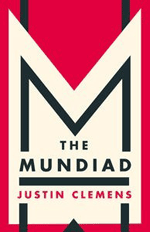
The Mundiad by Justin Clemens
Hunter Publishers, 2013

What was mock epic? I use the past tense because the genre is thought to have died in the nineteenth century. According to a recent study by Professor Ritchie Robertson, a Queen’s College fellow and Taylor Professor of the German Language and Literature at Oxford University, mock epic died because epic lost its authoritative status: it was only possible to write a real mock epic in a time ‘when serious epics were being written and read in large numbers, manag[ing] to attain a position of cultural authority remotely comparable to that of Homer, Virgil, or Milton.’1 Mock epic needed something prestigious to mock; when the epic lost its prestige mock epic lost its reason for being.

Continue reading

Posted in BOOK REVIEWS | Tagged , , ,

Review Short: Luke Fischer’s Paths of Flight

Paths of Flight

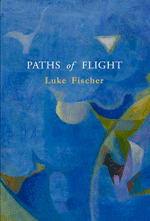
Paths of Flight by Luke Fischer
Black Pepper Publishing, 2013

In Shakespeare’s last great poem, The Phoenix and the Turtle, the owl is banished from the allegorical proceedings of the bird funeral:

But thou, shrieking harbinger,
Foul pre-currer of the fiend,
Augur of the fever's end,
To this troop come thou not near

Whether you read this poem as dense figural allegory, enigmatic elegy or refined coterie poem, you should mark this ironic moment of exclusion. The tradition of augury in poetry is richly prefigured here, not only in the careful inclusion and exclusion of birds, but in the deceptive formal simplicity of the stanzas. Devolving into triplets in the threnody coda, the rhythm of the poem is incantatory, reminiscent of the magic of prophetic language. Why, then, the prohibition on the augur owl?

Continue reading

Posted in BOOK REVIEWS | Tagged ,

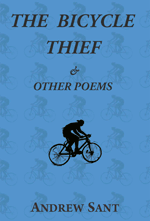
Review Short: Andrew Sant’s The Bicycle Thief & Other Poems

The Bicycle Thief & Other Poems

The Bicycle Thief & Other Poems by Andrew Sant
Black Pepper Publishing, 2012

It’s no current reference, but reading Andrew Sant’s recent collection, The Bicycle Thief, Andrew McGahan’s Praise springs to mind. When I studied McGahan’s novel, a more astute student than I pointed out that Gordon’s only romantic relationship was with his car, and that, accordingly, his only romantic response was towards the sad demise of that Holden. His relationship with Cynthia (who he develops a relationship with) was conversely defined by emotional inertia and moral detachment. This observation struck me as highly sophisticated. It did not endorse a clichéd view of Australian men and their cars, rather it subtly suggested a masculine romance for an idyll of mobility.

Continue reading

Posted in BOOK REVIEWS | Tagged ,

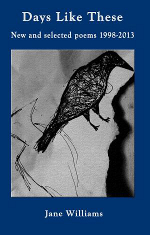
Review Short: Jane Williams’s Days Like These: New and Selected Poems 1998-2013

Days Like These: New and Selected Poems 1998-2013

Days Like These: New and Selected Poems 1998-2013 by Jane Williams
Interactive Publishers, 2013

Days Like These: New and Selected Poems 1998-2013, by Jane Williams, includes new work and selections from Outside Temple Boundaries (1998), The Last Tourist (2006) (both published with Five Islands Press), Begging the Question (2008) from Ginninderra Press and City of Possibilities (2011) from Interactive Press. It’s always a pleasure to discover the writings of a poet who you have not read before. In Days Like These Jane Williams delivers poetry that wants to feel the ‘pulse of every living thing’; she is a writer sensitive to the world.

Continue reading

Posted in BOOK REVIEWS | Tagged ,

Feature Poem with Judith Beveridge: a poem is not a meme

Miro Sandev’s poem ‘poetry is not a meme’ is an ironic take on poetry’s refusal to be subsumed by technological culture. In the octave of the sonnet, the poet uses web jargon and terminology in intelligent and witty ways, effectively undercutting the corporatisation of language. The use of the sonnet form is a grand stroke of irony, for in the sestet the poet draws together the idea of poetry as being like a rampant bug ‘replicating itself, indifferent to host’- yet the sonnet form is formalised and self-contained, so form and content here are in tension. The syntactical complexity of the poem (all one sentence) highlights the idea that the experience of reading poetry is of a totally different order than our encounters with web-language, where our attention can be overtaken by ads and hyperlinks. All in all, this is an intelligent, beautifully layered poem full whose form and content play with each other in intriguing ways. – JB

a poem is not a meme


its interface of diction and cadence
is ill-suited to mobile web versions
so without major surgery it will suffer
on the click-throughs; and another bug
that semantic tangle does not allow for
teasing out discrete interests, hyperlinks
to Google adwords or analytics
the revenue stream will dry up

though poetry can get viral, make you
laugh out loud like a cat furballing
give your senses a rick-rollicking
spin & spur career of lifelong trolling—
it is a selfish gene at its core:
replicating itself, indifferent to host


Posted in GUNCOTTON | Tagged , ,

Submission to Cordite 46.1: MELBOURNE Now Open!

Submission to Cordite 46.1: MELBOURNE now open!

Poetry for Cordite 46.1: MELBOURNE is guest-edited by Michael Farrell.

This will be Cordite Poetry Review‘s first special issue that includes a number of poems selected from open submissions. It is supported by the City of Melbourne through its Arts Grants Program.

I will be looking for poems that write of Melbourne’s plurality: recollected in a mixture of moods – poems that bring the world of poetry into the city, resulting in poems of the city. Poems that are microcosms – viewing Melbourne as a dot on a map – or elemental in a collection are what I seek, not poems that attempt to sum up the city.

Unpredictable or conceptual inner suburban poems. Visual poems. Concrete poems. Multilingual poems. Poems that intersect with aspects of other Melbourne arts. Poems that reflect the diversity of Melbourne habitats and lives (including non-human beings). Poems of study, work and recreation … of Melbourne dreams.

The city’s not just cafes and laneways, but if you can refresh these #ed-to-death themes, then do it. Think meta-tourist rather than tourist. Meta-critic rather than critic. Mixed forms rather than established. Fake histories, fictional anecdotes.

Submission to Cordite 46.1: MELBOURNE now open!

Talk poems (written down), dialogues (real or imagined), comparative poetics. Poems of varying narration. Conscious poems and just-woke-up-from-an-internet-coma poems.

Melbourne poems.

– Michael Farrell


Please submit only once, with a maximum of two (2) poems in one document (1) … but first, please read the submission guidelines. You do NOT need to be a resident of Melbourne, of Victoria or even of Australia to submit. Submissions are open to all, but your poems must address one of the angles from above. This issue will be the rebuttal to Cordite 38.0: SYDNEY with poetry guest-edited by Astrid Lorange.

Posted in GUNCOTTON | Tagged , , ,

Shining Worlds: On the Artist’s Book of Robert Adamson and Peter Kingston

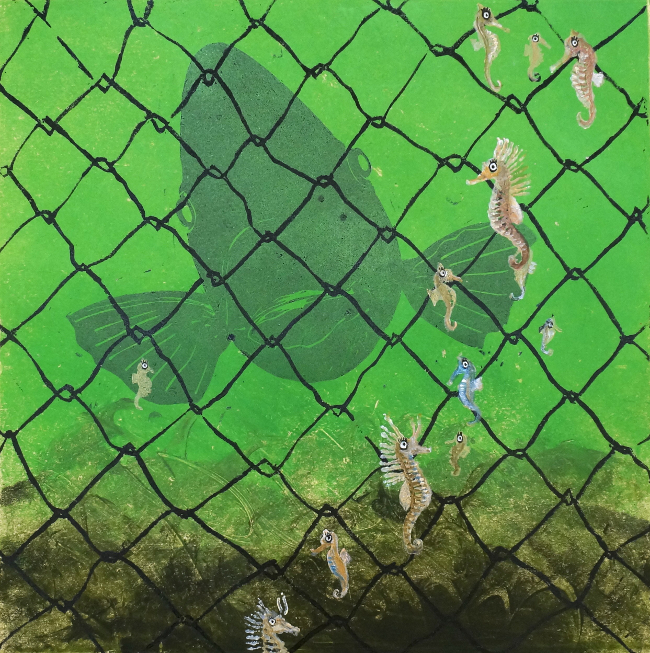
I’m sitting in the Rare Books room of the State Library of Victoria, lost in time and strangely joyous as I encounter one of its new acquisitions, the late 2012 ‘artist’s book’ and collaboration between poet Robert Adamson and well-known Australian artist Peter Kingston, Shark-net Seahorses of Balmoral: A Harbour Memoir.

It is a privilege to read, in this vault of deep, clear silence and rarified air, the fourteen poems Adamson created for the book, and to sift my responses to these sensitive, memorialising poems through the light of their twinning, linocut images (21 in all), created by Kingston in response to the poetry. The poems are hand-printed en face to the images.

Central to the book’s genesis was the fact that both poet and artist grew up on Sydney Harbour, though in different parts of it, and their adolescent and adult lives diverged strongly. While the poems are autobiographical, they also assimilate experiences of Kingston.

A limited-edition production of 26 – marked A-Z – the work was initially priced by Australian Galleries, the Australian dealer for the book, at $7,500 each. The book was published – also in character of collaboration – by rare-book dealer Nicholas Pounder. It includes a photographic portrait of Kingston and Adamson by Juno Gemes, Adamson’s partner.

Shining Worlds

Image courtesy of the artist and Australian Galleries, Sydney & Melbourne

Alongside being responsible for design, printing and assemblage, Pounder created the light-sensitive circuitry necessary for another eccentricity of this artwork: when one opens the hand-made, large wooden box which houses the book, a song entitled ‘without words’ is played, composed by Kingston in homage to Australian poet-magnus, Francis Webb. A poem late in Adamson’s suite, ‘Francis Webb at Ball’s Head’, is for that poet too, one on whom Adamson has previously delivered a lecture as Chair in Poetry at the University of Technology.

As is common to the rarity of these objects, Shark-net Seahorses of Balmoral: A Harbour Memoir can be appreciated as equally produced by writer, artist and publisher. This tradition of artists’ books, also sometimes known as livres d’artistes, has modern precedence in the decisions by the likes of Parisian art dealers Ambroise Vollard and Daniel-Henry Kahnweiler to also become publishers.

Exploring the potential of the book to be a de luxe art object are 20th-Century collaborations of enduring brilliance by artists and writers such as Bonnard with Verlaine, Picasso with Reverdy, and Miro with Eluard. A facsimile of this last book, À toute épreuve, is also in the library’s collection.

The history of the artist’s book, where it has directly related to the publication of poems and literature, is long-standing. As discussed in an essay accompanying a 2008 exhibition on artists’ books at London’s V&A, curator Dr Rowan Watson cites the creation of title pages by Rubens, the illustrations by Delacroix for Goethe’s Faust in 1828, and Manet’s images for Edgar Allan Poe’s The Raven in 1875 as other precedents. And you could think of Blake’s Songs of Innocence and of Experience – the first copies of the forerunning Songs of Experience were illuminated and printed by Blake himself.

However, as Watson points out, it is ‘facile’ to consider a literary book to be an artist’s book just because an artist has been involved in producing images to be used with it.

Instead, he and others such as the SLV’s Rare Printed Collections Manager, Des Cowley, consider the intention in an artist’s book to be focused. An artist’s book is any book or book-like work created by an artist with the intention that it is an artwork or art object in its own right.

In many cases, an artist’s book need not involve language in any form or collaboration, and it is a form explored by numerous contemporary and modern artists, including Rauschenberg and Kiefer.

Cowley, responsible for artist’s book acquisitions at the SLV, has charted a sharp increase in the production of them in the past 20 years, both locally and globally.

Says Cowley:

‘I think it is arguable that the electronic environment we live in is making us more appreciative of the handmade and tactile. In a world where most information is electronic, it is the physical properties of a book that make it special – paper, ink, design, binding. We experience artists’ books rather than read them in the traditional sense, and in this way they provide us with something beyond the digital book.’

The trend can also be seen as a kind of extreme version of fetishisation of the book as a valuable, even venerable object … a direction inversely related to the predicted death of the physical (as opposed to digital) book of mainstream publishing.

The form of the artist’s book is also plural, Cowley continues: ‘It may be a unique one-off book, it may include etchings and lithographs and be produced in a limited edition, it may be a conceptual book printed offset in an unlimited edition.’

Using the National Library of Australia’s Trove allows the holdings of artist’s books such as Shark-net to be displayed. Usually a copy of an artist’s book is accessible to members of the public if you make an appointment.

Other important acquisitions of this kind at the SLV include collaborative or mixed-mode editions such as Chris Wallace-Crabbe and artist Bruno Leti’s projects; Australian artist Lyn Ashby exploring poetic language as a visual field in works such as On Particle Physics and Ideo(t) gram[infinity symbol]atica; and Faded World by Melbourne writer and artist Antoni Jach whose 78 images are accompanied by a 10,000 word lyric essay written to a poetic constraint; every paragraph is four lines long.

So it is that I find myself, absorbed in a quiet joy, with Shark-net. This makes sense: while the emotional barometer of the poetry shifts across a number of registers in the book, its life-force comes from the memories of a boy whose experiences of the sea and harbour shimmer with edenic origin.

Some of the poetry produces mirth, not an easy achievement – and, initially, they appear to do so innocently. Such is the case of the poem, ‘The River Caves’, where Adamson and a cohort of tween sea-scouts jump boat in the middle of a scenic ride. However, there is a darker dart residing here when one remembers that the poet grew up to spend time in juvenile detention centres.

A poem later in the book, ‘The Long Bay Debating Society’, has a similar edge; some of the prisoners, who form a debating team, want to hold a debate with others visiting from the outside. Their request is acceded to, but on a condition: ‘The Governor would choose the topic’. The group is eventually handed ‘the Governor’s note/ (it was the summer of 1964) our topic/ ‘Is the Sydney Opera House really necessary?’

This essay’s title, ‘shining worlds’, comes from the book’s title-poem, composed in 10-line stanzas, with phrases such as ‘The beach was the boy’s shining world … ‘ and ‘sepia kelp with its drifting shark-skin leaves’. Adamson and Kingston’s profound attachment to the Harbour foreshore resonates throughout Shark-net – where its waters, nearby landmarks and cultural experiences also abide. This is the grounded and, via the sparks of memory, luminary ‘shining world’, a reader is presented here in words and images.

Posted in ESSAYS | Tagged , , , ,

The River Caves

We were keen young cubs, members
of 3rd Mosman Bay Sea Scouts.
Twelve years old and full
of excitement, collecting donations
for the club house charity.
On bob-a-job week we walked
up and down steep streets
around the harbour, mowing
lawns, raking leaves, taking
on any work we were offered.
A woman asked us to remove
a huge white carp from one
of her garden ponds,
dead for a week, its smell clung
to our uniforms all day—
she had a mansion with a
suburban jungle surrounding it.
One Saturday morning
we ended up at Luna Park,
wandered in, and came across
the River Caves—a ride
that carried us through dark
caves and illuminated caverns
sitting in little brightly painted boats.
By the time we entered
the second cave we were looking
for trouble. The next cave
was an artificial South Pole,
with ice and hundreds of penguins.
I jumped out first—
the others followed, our boat
moved on so fast it left us
stranded. We heard another one
coming, and not to be caught,
I told my friends to ‘freeze’ as if
we were models of cubs in a landscape,
the frozen Sea Scouts of the River Caves.

This poem first appeared in Shark-net Seahorses of Balmoral: A Harbour Memoir

Posted in POETRY | Tagged

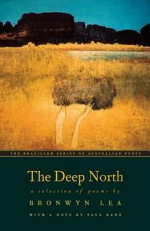
Maria Takolander Reviews Bronwyn Lea

The Deep North

Escape artist

The Deep North by Bronwyn Lea
George Braziller, New York, 2013

It is a tribute to the quality and readability of Bronwyn Lea’s poetry that a selection of her work forms the second volume in the new George Braziller series (edited by Paul Kane), which aims to introduce contemporary Australian poets to American readers. True to lyric poetry, Lea’s poems are musical in their composition, and they can be intimate in their subject matter. However, Lea’s work is never just about crafting agreeable verse, and it is never just about her personal experience. Continue reading

Posted in BOOK REVIEWS | Tagged ,

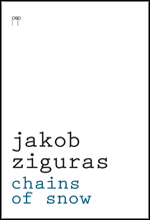
Stephen Edgar Launches Jakob Ziguras

Chains of Snow

From time to time, a genuinely exciting poetry discovery arrives – I was going to say in the letterbox, but more usually now in the email inbox. So it was when Jakob Ziguras first sent me some of his poems, nearly two years ago now. He told me that he had been writing for some fifteen years but had made few attempts to publish his work. I could hardly reconcile the second fact with the first. It was immediately apparent, when I began to read what he had sent me, that I was not dealing with a mere beginner. Here was someone who had not only pretty well mastered the technical skills of formal verse but could employ them – and this does not always follow – to compose poetry. He was already writing with authority and a clearly individual voice. Continue reading

Posted in GUNCOTTON | Tagged ,

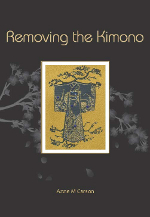
Review Short: Anne M. Carson’s Removing the Kimono

Removing the Kimono

Removing the Kimono by Anne M. Carson
Hybrid Publishers, 2013

Every poem in Anne M. Carson’s collection is appealing on account of the distinctive cast of mind revealed in a precise language that registers the author’s alertness to all senses. Three groups of poems establish a pattern of mortality and rebirth, of natural forces and human emotions.

Continue reading

Posted in BOOK REVIEWS | Tagged ,

Submission to Cordite 46: NO THEME III Now Open!

Submission to Cordite 46: NO THEME III now open!

Poetry for Cordite 46: NO THEME III is guest-edited by Felicity Plunkett

I am interested in the idea of architecture as a way of capturing the place of a ‘no theme’ issue … amidst Cordite‘s many themed ones. In the architecture of a journal, a themed issue opens a particular window to bring poems in through that filter, and invites particular kinds of art.

A ‘no theme’ issue is an open house, a special and celebratory event where all windows and doors are flung open to allow the flow of creative energies to circulate freely.

I am reminded of Roethke’s line ‘My doors are widely swung’, a darker sort of take, but valid as any in this context.

Felicity Plunkett


Once again, it’s summer in Australia. Bask, disassociate, imbibe, unfetter, defenestrate. Submit once, up to three poems, and all in one document please … but first, please read the submission guidelines.

Posted in GUNCOTTON | Tagged ,

Notes from New York, New York

New York Diary, 6 November 2013

Louis Armand

The day begins at the Hollywood Diner on West 16th and Sixth. I used to keep office hours at Joe Junior’s down at 12th but they closed it two years ago and shifted it, grime and all, to 17th and Third across town, so then I moved to the Hollywood. Joe’s looks just the same as it always did, same pictures on the walls, same ex-boxer type at the hotplate cracking eggshells in a bowl like a lesser man might crack heads, but it’s a hike. The Hollywood’s only five blocks from my hotel. It used to be Steve Dalachinsky’s hangout back when he had a crazy streak in him, four a.m. on a comedown spilling the works on Zorn, Cherry, Fred Anderson. He’s always good for a yarn about Ira Cohen, too. The man’s a walking jazz anthology. This morning I’m sitting there alone with echoes of transatlantic static still ringing in my ears. It always takes a few days after touchdown for my head to stop acting like a conch out of water. When I get to the Hollywood it’s still dark outside. The place hasn’t yet started filling up with the late breakfast crowd, when they put the hustle on for table space. I sit back in a booth and kill time watching the street lights and human traffic. By ten o’clock I’m on my fourth coffee, eggs over easy, a week-old copy of the Voice with Lou Reed on the cover – trying to remember the first time I heard the Velvets, but all that comes up on the mind-screen is a picture of Lou on stage at the Lucerna Ballroom in Prague, with Havel in the audience, bitching about the acoustics and, like Doctor Benway, how am I expected to operate under these conditions? Well he’s dead now. I think of Songs for Drella. It’s still in my head when I get to Academy Records a block east on 18th. They don’t have any Lou Reed on the shelves that I don’t already own, so I drift around to the jazz section. It’s shrunk by half since the last time I was here but I still manage to walk away with some Keith Jarrett, Pharaoh Sanders, The Vandermark 5, some vintage Ornette, Freddie Hubbard, Lee Morgan, the Clifford Brown Memorial. Outside, November blue skies light the canyons. I settle into the drift, down Fifth Avenue through Washington Square, no jazzmen in the park today only hipsters with Lytton Strachey beards and grey squirrels and a student film crew rehearsing a set-up that’ll still be in progress mid-afternoon. I skip Shakespeare & Co and the Strand and head straight to St Marks Books. Rumour suggests they’re about to go under or move downscale and most of the shelves are half-empty. They’ve still got a whole rack of The Return of Král Majáles: Prague’s International Literary Renaissance 1990-2010 on display in the anthology section.

St Mark’s is one of the last independents in Manhattan and it’ll be a shame to see them go, but like Gotham they seem determined to make questionable business choices. As they say in the classics, if someone’s determined to do themselves in, you’re only getting in the way. It’s a regular theme around here. A couple of blocks further on, past the CBGB’s theme park, at East Village Books I find a copy of The Burroughs File for eleven bucks in the ‘anti-this-establishment’ section. They’ve also got half-a-dozen issues of Re:search, Zone, and ‘the German issue’ of Semiotext(e) the Sylvère Lottringer franchise. It all seems a long way from the ‘Occupy’ anthologies on sale up the street. Freakshow detritus turned to museum fodder. I sell some books back to the East Village guys then it’s time to run the gauntlet of sushi bars past Thompkins Square Park to Mast Books down on Avenue A. It’s a hipster joint but they’ve got class, enough at least to put cash up-front for the bag of books I drop on the counter. Among them the new Bataille from Equus, and if you think you’ve read Bataille and haven’t read this you’re kidding yourself. Light of a load I cut back west along 3rd, across Broadway and Bowery, down Great Jones Street past the loft space Warhol leased to Basquiat back in the ’80s. They’ve torn down a couple of more buildings at the Lafayette intersection. In a few years it’ll be worse than Chelsea around here. Types like Donald Trump always get away without a scratch, which is something that should be on the top of everyone’s fix-it list. Add Cooper Union and the Bowery Mission to the mix, and what chance does anyone else stand? The sign in the sky says Real Estate or Bust, all the rest’s just Shitsville nostalgia. It isn’t my business anyway.

I make a detour to East 4th and Other Music, this time it’s Franks Wild Years and Hot Rats. Then back to the park to watch the pigeons for an hour, scribbling random thought transmissions on folded paper scraps I’ll probably never look at again. Like voodoo messages plugged into the entropy, the cosmic sleeper’s mind in which we all play-act at individuated destinies, calling the shots, our own at least, maybe even us dreaming it. It passes the time. I amuse myself this way for a while then retire to St Dymphna’s on the Place for a couple of quick ones. Someone’s left a copy of Rolling Stone on the bar and I can’t help wondering who the hell reads Rolling Stone anymore. Somehow the Guinness in New York tastes heavy on the charcoal, maybe it goes with all that diasporic melancholia that got exported before the Celtic Tiger roared and then squeaked. Like those Washington Heights pubs that keep a framed portrait of Gerry Adams over the bar. Back out on the street they’re setting up the soup kitchen, right under the noses of the restaurant crowd. There’s a line half-way round the block. It’s got all nice and shiny round here but people are still hungry. When the blizzards start in, this is no place to be sleeping rough, but plenty do – up on 14th the subway grates are at a premium. Well, I’m leaning on the gate at Tomkins watching the rats sniffing around their burrows when Eddie Berrigan slouches across the intersection holding a two-dollar pizza slice. He’s heading over to Simon Pettit’s birthday bash. Or someone’s birthday. I’ve got the latest VLAK in my bag with the tortured monkey on the cover, Peter Milne’s statement on vivisection. It looks even more sinister under the orange streetlight. We’ll be launching the new issue at Unnameable Books in Brooklyn in just a few days time, with Marjorie Welish, Bruce Andrews, Vanessa Place, Vincent Katz, Stephanie Strickland, Steve Dalachinsky, Amy King, Anselm Berrigan, Stephanie Gray and an old Prague friend Holly Tavel. Like Tom Waits says, nobody brings anything small into a bar around here.

Joshua Cohen

Joshua Cohen

It’s been a year already since the last time Eddie and I talked face-to-face. Things happen, the world gets smaller. We make a date for the Poetry Project later in the night. No sooner has Eddie gone than a voice at my elbow speaks to me and I realise Joshua Cohen’s standing right there. This’s the sort of thing that still happens around here. Cohen and I haven’t seen each since the Král Majáles book came out, three years ago. We’d had lunch at a Russian joint over by Brighton Beach before spending three hours in traffic trying to make it to the Czech Centre on the Upper West Side. They’d shut the west side of the island down on account of some big notes at the UN. Cohen, who used to edit the Prague Pill with Travis Jeppesen, is one of the best writers I know. He explains how he’s been hiding out in Jersey, away from all the trolls that’ve been waving dollars in his face to write the next Great American Novel. We head to a bar and shoot the proverbial shit for an hour or so then wander across to St Mark’s Church. I part with eight bucks to go inside for the Thurston Moore & Anne Waldman show but Cohen takes a rain cheque for Saturday night, he’s got a lady waiting at Astor Place.

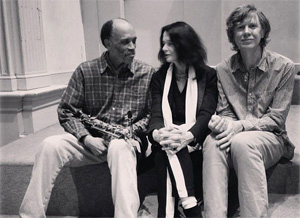
Daniel Carter, Anne Waldmann and Thurston Moore

Daniel Carter, Anne Waldmann and Thurston Moore | Poetry Project

The show’s set for the main chapel. Eddie’s already inside with his brother Anselm and Bruce Andrews, who introduces me to Thurston, and there’s Vincent Katz too and Yuko and Steve Dalachinsky who’s got it in for Keith Jarrett tonight. He says ‘Keith Jarrett couldn’t shine your shoes.’ The place fills up smartish, but it’s a dry house, a real church service, listening attentive in hard chairs to the old folk spin the parables. They begin the set with a joint reading of a poem Anne wrote for Lou Reed, Daniel Carter joining in on horn. Then Thurston reads solo for a while, short epithets reminding of Bill Berkson mixed with the odd tour bus sutra, before plugging in and taking us all through a long slow meditation on guitar, no frills, the simple riff making its own action. This closes out the first half of the show, before talk time, flesh-pressing, people avoiding each other, the bottom-feeders on the prowl, not a drink in sight. Then a woman who’s too young to know better takes the podium and unloads one of those interminable love-ins that pass for introductions down Naropa way. Bruce says, ‘if the length of the intro’s anything to go by…’ And he’s not wrong. Anne starts right in on the more recent collected works, joined an hour later by Carter who puts in a serious effort accompanying on alto, soprano, tenor, bringing the word redemption to mind. Thurston comes back on stage, adding subtly layered noise to the background, keeping it civilised. Anne takes the opportunity to launch into something she calls ‘free jazz,’ though she’s reading from a script. At least the crowd gets their money’s worth as she works up into a series of screeches and staccato ‘cuts’ and moans. All the while Bruce, who’s sitting next to me, is shuffling catalogue cards, scribbling time-to-time choice morsels for his latest assault on sense and sensibility. Across the aisle Dalachinsky rolls his eyes. A couple of kids in the front rows swoon. A sense of moment passes by. They didn’t even have to dim the lights. It’s all wrapped up by 10:30. And the night’s only just begun.

Posted in ESSAYS | Tagged

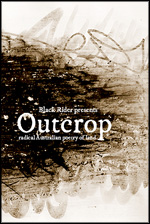
Review Short: Outcrop: radical Australian poetry of land

Outcrop: radical Australian poetry of land

Outcrop: radical Australian poetry of land
Jeremy Balius and Corey Wakeling, eds
Black Rider Press, 2013

As I write this review, sunlight filtered through a pall of smoke casts a dull orange glow over my kitchen bench. The Blue Mountains are burning. Sydney’s haze resembles downtown Beijing’s and it’s only October. Such an apocalyptic scene – part of the ‘Australian experience’ I am assured by our Prime Minister – provides context for the world into which Outcrop and its ‘radical poetry of land’ emerges. This is not to suggest that the anthology’s outlook is primarily environmental, but that alternative ways of examining land are sorely needed.

Continue reading

Posted in BOOK REVIEWS | Tagged , , , , , , , ,

GONDWANALAND Editorial

Derek Motion

Wagga Wagga, Derek Derek

Cordite 44: Gondwanaland looks to a place in our pre-history, a time of supercontinents. How do poets connect with or make use of such an idea?

This theme was thrust upon me. But I didn’t mind then and I don’t mind now, because it’s one of those themes wherein the specificity of the notion seems to force poets into imaginative leaps. Besides, I wanted this gig (years ago, I mentioned to David Prater, former Managing Editor, that I wanted to be considered for a guest editing spot). I love that every issue is exciting and diverse, that every guest editor introduces me to a new poet. Now I’ve done it.

There is a terrestrial aspect to the poems I’ve gathered here, one hard to ignore, in land and ocean: what was the planet once and what is it now? What can it be in the future? Here I have presented you with a collection that features more words for water and earth than any other like it. Jessica Smith ponders the connections between Alabama and Australia, the ‘sedimentary memory’ that still links the two lands. David Adés also focuses in on the matter beneath our feet, repeating the primitive incantation ‘Rocks    rocks    rocks    rocks.’ Toby Fitch’s ‘Rock Bottom’ appears as a rock. I could go on.

Early on I wondered whether I would include any poems titled ‘Gondwanaland’ and, as it turns out, yes I did … but what interests me most about the process is the way this issue encompasses the outliers. Some of the most interesting pieces didn’t initially seem to fit the theme at all. It’s an odd paradox, because where many of the poets have given us works that are clearly littoral or liminal in geographical terms – the speaker is poised near an ocean for instance, pondering rock formations – other works are liminal in the way they add to this thematic compilation of ‘Gondwanaland’, and one might say that this is appropriate. Sarah Holland-Batt places us on the beach at the beginning of her poem, ‘I tread where the mangroves end / in a high tide of red fiddler crabs-’; Ross Jackson orients us with the title of his ‘Latte at the edge of The Indian’; while Eddie Hopely turns a microscope on the way (his) hair falls. Claire Jansen writes about a game of pool. What has hair or billiards to do with seismic shifts? Perhaps everything.

Often what I enjoy most about poetry (and maybe life) is observing the balance between playfulness and thoughtfulness. Some of the poets have pulled off a fine balancing act in this regard, using imagery or the science of shifting landmasses. Emma Barnes’s ‘Long Form Thought’ is what it says it is, but it’s also fun: ‘Science / is to be used sparingly like cocaine / or cayenne.’ Ian Gibbins’s piece uses notions of continental drift to rove across a personal relationship, but frames it within the microcosm of a conference, simultaneously capturing the attention with science and metaphor.

I am very pleased with this issue of Cordite. It is a great thrill to read so many diverse poems “blind”, and to then have new and familiar names revealed. I was also pleased to be given the chance to invite a handful of writers to submit directly to me – a new change of editorial policy that I support. Hopefully this approach has let me introduce you to some fine writers, many of who have rarely published in Cordite before.

Finally I’m excited by the rocky, watery way this issue reads. It makes me feel very much an integral part of our particular Earth.

Posted in ESSAYS | Tagged

Story Circle: The Transnational Story Hub and the Inspiraciones Literarias

Story Circle

The Ripple Effect: The Poetics of the Story Circle


In February 2012, the Transnational Story Hub1 (University of Wollongong writers) responded in poetry to Collections of Hopes and Dreams, an exhibition of artifacts and stories of migration and settlement in Australia at the Wollongong City Gallery.

An initiative of the Migrant Heritage Project and curated by Eva Castle, this exhibition recorded the experiences of European migrants and refugees (Croatian, German, Hungarian, Polish, Ukrainian) who arrived in the Illawarra after World War II. Aptly titled The Story Circle: Bearing Witness to Hopes and Dreams, our poetry response project was supported by the South Coast Writers Centre and its Director Friederike Krishnabhakdi-Vasilakis.

One afternoon, we ‘witnessed’ story objects showcased behind glass: documents of identity, a wedding dress, photos, poems, hand-painted porcelain plates, a wedding bible and corsage, tiling tools, banknotes, home-sewn crafts, postcards, hand-decorated eggs, a workbench, a pot, a coat, a plait of hair. All intimate lives and public histories evoking long journeys, the artifacts of migration were not silent. They told stories.

The glass cases were mirrors: clear water to look into lives, and to reflect back our own. It was a humbling and unsettling moment: we witnessed, felt deeply, and felt connected and interrogated all at once. How to witness, how to respond, how to listen, how to speak afterwards.


Document of Identity by Patrick McGowan
Mother Ganga by Donna Waters
Tools by Tara Goedjen
Banknotes by William Alister Young
The Dress by Elisa Parry
Tectonics by Matilda Grogan
Kosa: Hair by Merlinda Bobis
Home Hogar by Inspiraciones Literarias
(Cleo Pacheco, Maricarmen Po’o, Gil Po’o, Juan Quiñones,
Emilio Yañez, Violeta Cordova), Tara Goedjen


The seven poems in this cycle are concluded by an eighth poem: a bilingual poem collaboratively written by the South Coast’s Inspiraciones Literarias–Spanish-speaking Writers with one of the poets from the Story Circle project. This final poem and its process is the culmination of the multiple mirrorings: among English-Spanish, Australia-Chile-Spain, and different lives-bodies-sensibilities.


All different yet hopefully kindred in storytelling.

Storytelling is not lonely. There is no story without a teller and a listener. First, the storyteller, then the listener who bears witness to the told story–and who can only tell another story in response, to acknowledge the original story.

Thus, the story circle expands. It becomes ripples of telling and listening, and telling and listening all over again. The arcs navigate outwards, echoing each other ‘as [we] step ashore,’ always into a new story, a poem.

-Merlinda Bobis, editor of Story Circle Poetry Cycle, December 2013


Posted in CHAPBOOKS | Tagged , , , , , , , , , , , , ,

Proteaceae: A Chapbook Curated by Peter Minter

In January 2013 I visited the inaugural exhibition of the new Blue Mountains City Art Gallery, an eclectic and compelling collection of works curated by Gavin Wilson and entitled ‘Picturing the Great Divide: Visions from Australia’s Blue Mountains’.

I stood for what seemed like an hour before John Wolseley’s wonderful ‘The Proteaceae of NSW and Argentina 1996’ – a water colour and pencil work that is part of his ongoing creative enquiry into geological and biological temporalities, and one which advances an intensely felt and thought aesthetic of deep trans-historical and trans-biological emergence. Wolseley writes that ‘the painting shows the waratahs flowering at Blackheath, and on the far right, a ciruelillo (Embothrium coccineum) I found high in the Andes near Glacier Piedras Blancas in Argentina. The form of the flowers of this ancient plant family had only changed a little during their millions of years travelling on the two continents as they moved apart.’


Satan’s Riders by Jim Everett
Nightwork by Bonny Cassidy
Nether by Bonny Cassidy
The Vanishing by Michelle Cahill
Ode to PolesApart – Tracking by Natalie Harkin
Harts Mill Projections by Natalie Harkin
At Knowth by Ali Cobby Eckermann
At Giants Causeway Northern Ireland by Ali Cobby Eckermann
At Glendalough Ireland by Ali Cobby Eckermann
Magpie by Stuart Cooke
Remnants by Louise Crisp
Milk and Honey by Martin Harrison


A great epochal tectonic arc takes us toward and through Gondwanaland. Wolseley’s artwork shows how plant species such as the beautiful red waratah (and in other works, mosses and birds and other creatures) have archaic affinities with similar species around the planet. This profound geo-aesthetical encounter reminds us of an embedded planetary and genetic inheritance that, despite the complexities of our technologies and linguistic apparatuses, is always and unescapably experienced ‘in common.’ Indeed, it is the deepest of the commons, the shared information – geological, biological, cosmological, cybernetic – that is central to our core relations to the earth and each other.

Gondwanaland is a temporally opaque but profound precursor to our core existential relationship with the cosmos. It inflects a human commons and a politics of speciation, the deep unfurling and substantiation of organic and cultural form.

The poets gathered here are sisters and brothers of Gondwanaland and its temporary emergence among human actors – spanning time, politics and cultures. I thank each of them for being here, and hope you enjoy their poetry as much as I do.

Posted in CHAPBOOKS | Tagged , , , , , , , ,

Place, Palimpsest and the Present Day: Gondwana in Caroline Caddy’s Antarctica

Gondwana and palimpsests appear as largely historical entities as, respectively, a continent that existed millions of years ago and a kind of manuscript from ancient to medieval times. Yet, within Caroline Caddy’s 1996 poetry collection Antarctica,1 published after a journey to the continent sponsored by the Antarctic Division in 1992, the two are combined in a way that suggests not only their contemporary relevance but also their ongoing influence. Through her use of place, Caddy layers references to India, Australia and Antarctica in ways that form a palimpsest. This layering acknowledges the connections between India, Australia and Antarctica historically but also insists on their continued contemporary relationship. In this way, the combination of two historical entities, Gondwana and palimpsests, allows Caddy to probe present relationships and engage with our contemporary layered existence.

Place as palimpsest

This is not the first work to link palimpsest to ideas of place. Iain Chambers’s article on the work of Paul Carter is significant in the way it not only performs this link, but sees it as having substantial contemporary significance. The language Chambers uses is essential in the way he describes how place:

[P]rovides not an idle excuse for theoretical departures and homecomings, but rather, in researching and receiving its overlapping narratives and shifting grounds, the glimpse of a delicate geo-graphy, hesitant, incomplete, destined for decay and subsequent reworkings. In this palimpsest of language, lives and time, the land, its rugged materiality, insists. Its insistence, however, is not that of perpetual truth but rather one of a temporal frame whose confines and borders set limits that simultaneously nurture the potential of transit.2

Chambers here directly engages the idea of the palimpsest as a way to figure place. Chambers describes Carter’s notion of place as ‘overlapping narratives and shifting grounds’ as well as the idea of ‘subsequent reworkings’, both ideas he relates directly back to palimpsests. This view of place is obviously transcultural as it embraces multiple meanings and stories – this is revealed in the palimpsest. Not only does Chambers identify transcultural place as a palimpsest, he notes its concrete existence. The land has a ‘rugged materiality’ that ‘insists’ on its own existence. Chambers goes further than this, though; he directly engages transcultural place as not only a concrete palimpsest, but one that is capable of movement. Chambers identifies this movement not as one of ‘perpetual truth’ but of crossing borders. It is a movement in a ‘temporal frame’ in which the borders ‘set limits that simultaneously nurture the power of transit.’ What could be a static representation of a palimpsestic place instead becomes alive. Chambers describes Carter’s sense of place in a way that imagines a palimpsestic, transcultural sense of place that is concrete, insistent and capable of the border-crossing that embraces a kind of movement that is nonetheless alive to possibility.

Placing palimpsest in the present day

In order to come to terms with what kind of palimpsest may be invoked by this active, transcultural form of placed palimpsest discussed by Chambers, the critic Sarah Dillon is of considerable assistance. Dillon’s The Palimpsest: Literature, Criticism, Theory explores palimpsests, and particularly the way they lend themselves as a device to critical enquiry. Dillon argues the ‘concept of the palimpsest exists independently’ of actual palimpsests and ‘it is a strange, new figurative entity, invested with the stature of the substantive.’3 It is palimpsest as a figurative entity that is useful here as it embraces what palimpsest might mean, rather than what they physically are. Dillon identifies the way these figurative palimpsest imply both comingling and separation. Dillon uses the term ‘palimpsestuous’ to describe this, noting how this terms comes to present ‘a simultaneous relation of intimacy and separation’ and it is useful as it acts by ‘preserving, as it does, the distinction of its texts, while at the same time allowing for their essential contamination and interdependence.’4 Dillon uses this potential of palimpsests, and the term palimpsestous, for several different projects, including the relationship between literature and literary criticism. However, the strength of the term comes from the way it can also be applied outside Dillon’s usage – in this case to a sense of place. Indeed it will be this relationship, between contamination and independence when applied to place, that I see present in Caddy’s depiction of Gondwana.

George Bornstein also writes on palimpsests – in a way that relates closely to ideas of the present. Bornstein’s aim is to examine ‘the cause of contingency, in the double sense both of the text itself being historically contingent in its circumstances of production and reception, and of it being contingent in its (re-) construction in the present.’5 This project, to reintroduce the importance of context and contingency not only into the creation and reception of a text, but also into the way it is produced in contemporary times, is quite a different use of the palimpsest to Dillon’s, however they intersect in productive ways. Bornstein notes how ‘the palimpsest becomes less a bearer of a fixed final inscription than a site of the process of inscription, in which acts of composition and transmission occur before our eyes.’6 This idea of the palimpsest critiquing the notion of a final inscription is related to concepts describing palimpsests as undermining certain ideas of power. Bornstein notes the way ‘acts of composition and transmission occur before our eyes’7 within the palimpsest and thus the medium is not only a point of questioning, but also of contaminated creation. It is Bornstein’s description of the ever-present act of creation before our eyes that locates the power of the palimpsest in its continual critique and creation as a text that is never quite finished that enables it to be used in such a productive way when talking about the present.

It is the combination of these two ideas, Dillon’s intimacy and separation with Bornstein’s transmission within the present that Caddy uses when presenting Gondwana through place. It is these essential features of palimpsests that allow Gondwana to be resurrected before the reader’s eyes not as a historical concept, but as something very much alive.

Gondwana as palimpsest

Two poems in Antarctica contain direct, if brief, references to Gondwana and suggest the presence of palimpsest in the present day: ‘Day Tripper’8 and ‘Proverbs’.9 In ‘Day Tripper’ Gondwana comes near the beginning of the poem where the persona describes:

flash of icefields
veldts and steppes that ease apart at tidal cracks
                                                       as if India  Australia
                                                                        had gravity. (Lines 13–16)

Antarctica is introduced through the icefields, which are characterised by their veldts and steppes that ‘ease apart’. It is in these tidal cracks that India and Australia appear as active layers in the landscape. India and Australia are given gravity, suggesting both the weight of their presence and their ability to pull Antarctica open. It is as the layers are revealed through the cracks that India, Australia and Antarctica exist as a palimpsest. Further, this revealing of the palimpsest occurs in the poem’s present; the cracks are revealing, rather than showing something that has been revealed.

‘Proverbs’ continues this trend, showing the shifting of time in Antarctica as the persona describes how ‘Every season here is a lesson / a film run backward / then forward’ (lines 1–3). This mutability of time becomes a very part of existence when the persona describes the various ways in which landfall is made in Antarctica. They note how:

At first we can only get ashore
                                             with legs wheels or skis
anything that can move on land.
Then we need wings – 
Gondwana breaking up – 
                         amphibians crawling
                                               the barren slopes. (Lines 5–11).

The series of progressions this section describes – the move from the sea to land, from walking to flying, and the implied move from mammals to amphibians – creates a mutable time loop. Rather than this loop being located in history, the persona gives it a contemporary relevance by having the loop play out in the time of the poem, which is also the time of their experience. History is brought into the present, and exists as a fast-paced cycle that does not imply a logical progression or hierarchy. Rather, much like a palimpsest in which two histories are juxtaposed and complicate each other, words running into one another, Antarctica becomes a palimpsest of history as movements are entangled in each other, and this is located in the poetic present rather than the past.

To really draw out the relationship between Antarctica, India and Australia as palimpsest in the present day, it is necessary to do a close reading of three of the most prominent poems to explore this relationship as a whole. ‘Being There’ depicts Australia and Antarctica as present-day palimpsest, ‘Gathering Moss’ has India and Antarctica in a similar relationship, while ‘Freeze’ brings together all three places in a way that allows them to inhabit each other through historical entities that are given contemporary gravity.

‘Being There’

Examining the connections between Australia and Antarctica, ‘Being There’10 frames both places in a way that insists on their presence within each other in the contemporary moment. Opening with Antarctica, the persona notes that:

After waiting so long to be here
            			          the frame of a window
					                          in Antarctica
is the windscreen of my car
            			          and I’m driving through
					                          a summer (lines 1–6)

It is the double framing of the window and the car that allows the persona to look out and to compare these views. The window in Antarctica is deliberately described as a frame, and is the view from this that is not only suggestive of, but actually becomes, a view of the Australian summer. Significantly equal weight is given to both places with each having three lines, and the lines themselves even go so far as to reflect each other. Antarctica and Australia become two equal views that inhabit each other through the persona’s frame of the window and the car windscreen.

The persona continues to comment on the relationship between Australia and Antarctica, though in a more subtle way in the following lines. The Australian summer is described as:

extended so far beyond
expectations of rain
		    that each morning is like waking
				                      on a different world (lines 7–10)

While the persona appears at first to be describing only Australia, the connection to Antarctica is also present in the background. The Australian summer is seen as waterless, ‘extended so far beyond / expectations of rain’ (lines 7–8), but Antarctica is also a continent on which rain very rarely falls, and thus the comment could easily apply to either. This is also relevant to the persona’s comment ‘that each morning is like waking / on a different world’ (lines 9–10). Australia and Antarctica have both been frequently depicted in literature as being otherworldly, or being a completely different sort of place. Here, the position both places have as deserts and ‘otherworldly’ places allows them to be linked productively in a way that they inhabit and comment on each other. Australia and Antarctica are interleaved with each other to form a sense of place that allows each to keep its separate identity, but also to be intimately linked with the other. Further, this kind of linking is both cultural and geographical, relating to both depictions in literature and their status as deserts, which suggests not only a historical, but also a contemporary relationship between the two, and this linked relationship is performed in front of the reader.

Posted in ESSAYS | Tagged , , ,

Destroy Kansas to Reveal Oz: from John Ashbery to Francis Webb

Frank O’Hara’s ‘To a Poet’ seems to encapsulate the New York School’s disregard for an Imagist poetics in which the natural object is always the adequate symbol: ‘when the doctor comes to / me he says, ‘No things but in ideas’’. The cornerstone edicts of Anglo-American Modernism, as contained in Pound’s ‘A Retrospect’, are seemingly casually dismissed in this phrase, along with the accepted prescriptions of Doctor Williams; a critical schism is established in Modernist poetry, with the materialism of Pound-Williams on the one hand and post-moderns such as John Ashbery placed in an alternate lineage with Wallace Stevens as adherents of a post-Symbolist Absolute. Yet the same Williams apparently being derided here writes quite differently about his approach to poetics in Spring and All:

‘the writer of imagination would attain closest to the conditions of music not when his words are dissociated from natural objects or specified meanings but when they are liberated from the usual quality of that meaning by transposition into another medium, the imagination.’ (Perloff 1983: 113)

This statement is indebted most particularly to Apollinaire, a poet often associated with O’Hara, whose essays Williams encountered in The Little Review around 1922: Apollinaire’s anti-realist approach is best summarised in his statement (in ‘Preface to The Breasts of Tiresius’) that the ideal representational substitute for a leg is not an artificial leg, but the invention of the wheel. Williams’s Autobiography also establishes his admiration for that other key figure of avant-guerre Parisian literary experiment, Gertrude Stein, whose foregrounding of words as materials for connotative play provides an essential model for the apparent disregard for ‘reference’ in overtly abstract poems such as O’Hara’s ‘Second Avenue’ and the writings of John Ashbery (Williams 1967: 251-259).

Ashbery’s response to Wallace Stevens has been extensively ventriloquised by leading American critics over many years. A more direct statement of influence is available, in Ashbery’s own words, in his review of Stein’s Stanzas in Meditation, first published in Poetry magazine in July 1957, and significantly titled ‘The Impossible’. As Ben Lerner points out, the essay ‘is a wonderful account of what – long after ’57 – it will be like to read Ashbery himself’. Lerner further comments, ‘It’s hard to take critics seriously who emphasise Ashbery’s anxious relationship with Stevens to the exclusion of his loving relationship with Stein’ (Lerner 2010). Ashbery commences with an acknowledgement that interest in Stein’s work might be limited to ‘readers who are satisfied only by literary extremes’, but he asserts that the ‘monotony’ of the title-poem, with its emphasis on the manipulation of apparently affectless minor words, is of ‘the fertile kind, which generates excitement as water monotonously flowing over a dam generates electrical power’ – a useful metaphor for the flux-state instilled by his own extended works. Comparing Stein’s effects to the visual art practice of de Kooning (just as, in 1913, Mabel Dodge had likened Stein to Picasso), Ashbery is careful to assert the denotative function retained within Stein’s apparently abstract play on sound: ‘it really is the world, our world, that she has been talking about’. This is consistent with Stein’s own statements about the slipperiness of signification, such as those in the ‘Roast Beef’ section of Tender Buttons: ‘So the sound is not obtrusive. Suppose it is obtrusive suppose it is. What is certainly the desertion is not a reduced description.’ (Stein 1962: 479) Referential meaning is retained even when words are licensed and physicalised to become objects in themselves.

This is the key to Ashbery’s assertion that ‘this is a poem about the world, about ‘them’’: while Stein discards the lyrical subject, she does not sacrifice the perceptive focus of a human presence to the machinic autonomy of the poem-as-object. To the contrary, Ashbery argues that what instead emerges is a depiction of consciousness in process – as might be expected of an author whose studies at Harvard brought her into intersection with William James, the psychologist who coined the term stream of consciousness. Her lines are ‘like people…comforting or annoying or brilliant or tedious. Like people, they sometimes make no sense and sometimes make perfect sense; or they stop short in the middle of a sentence and wander away, leaving us alone for a while in the physical world, that collection of thoughts, flowers, weather, and proper names’.

Once again we are reminded of the emphasis on quotidian details in Ashbery’s own poetry – here defined in terms of an attempt to give palpability to ‘the feeling of time passing’, the awareness of existence in temporality that Stein calls the continuous present. As Allegra Stewart describes this, ‘It is in the present moment that the mind is free to act creatively and to ‘make’ out of the ‘given’ subject matter new objects that have no causal connection with the course of events in the external world’ (Stewart: 1957). In Ashbery’s expression of this conception, ‘it is usually not events which interest Miss Stein, rather it is their ‘way of happening’’. His analogy for this is drawn from the later Impressionist (or early Modernist) novels of William’s brother, Henry James, in which interior experience is similarly foregrounded over ‘events’, and a musicalised and subjective language becomes increasingly focalised in prose works ‘which seem to strain with a superhuman force toward ‘the condition of music’, of poetry’.

Ashbery’s other analogy – presumably a further discovery of Anglo-American poets of the 1950s – is with ‘that real reality of the poet’ described in the writings of Antonin Artaud. Like Stein, Artaud again provides a powerful model for the attempt to exceed the limitations of everyday referential language – in his case amounting almost to an attempt to overleap the barrier between sign and referent, to establish a language of pure symbol (most hauntingly inscribed in the ritually saturated landscape of Journey to the Land of the Tarahumaras). In a 1959 essay on Artaud, Ashbery similarly relates the French poet’s work to Abstract Expressionism: ‘Artaud was unable to concentrate on the object; he was ‘non-objective’ rather than Surrealist’ – later noting that, ‘Artaud supplants true history with spiritual truth. This is his real importance.’ (Ashbery: 1960) What each of these authors has in common, as a premonition of Ashbery’s practice, is their attempt to provide a textual reflection of the temporal flux of life in process – in Ashbery’s words, to ‘actually imitate its rhythm, its way of happening, in order to draw our attention to another aspect of its true nature’:

Just as life is being constantly altered by each breath one draws, just as each second of life seems to alter the whole of what has gone before, so the endless process of elaboration which gives the work of these two writers a texture of bewildering luxuriance – that of a tropical rain-forest of ideas – seems to obey some rhythmic impulse at the heart of all happening.

Beyond this, the ‘almost physical pain’ with which the reader receives such texts is itself a reflection of the difficulties involved in having our existence thrown into the flux of life-in-time, ‘the painful continual projection of the individual into life’ (the Heideggerian overtones of Ashbery’s phrasing are evident). In this sense, the aesthetic experience of reading an author such as Stein, James or Artaud illustrates, and is in a fundamental way a parallel for, our experience of life: ‘the aesthetic experience being a microcosm of all human problems’. In Ashbery’s startling conclusion, which recalls the standpoint of O’Hara’s ‘To a Poet’, Stein becomes a model for ‘what can’t be done’: her work creates ‘a counterfeit of reality more real than reality’.

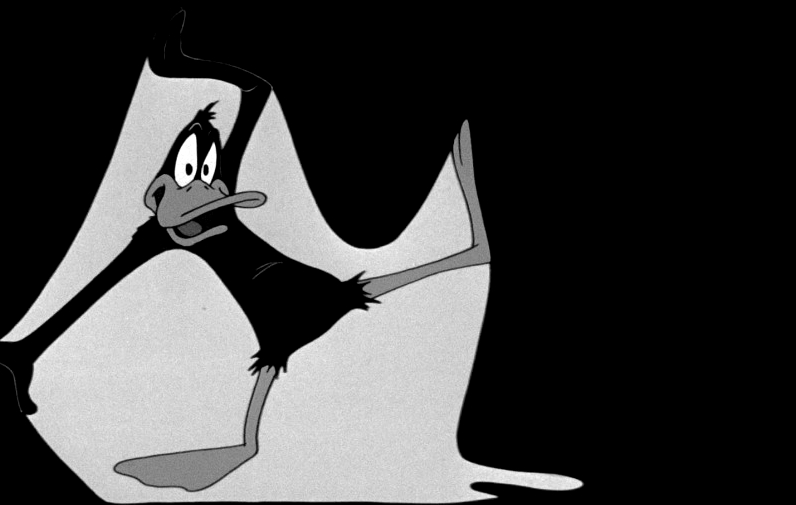
Ashbery has famously written that O’Hara’s favourite French poets (Rimbaud, Mallarmé, the Surrealists) were those ‘who speak the language of every day into the reader’s dream’ (O’Hara 1995: vii). Ashbery’s best-known poems, such as ‘Daffy Duck in Hollywood’ from the 1975 collection Houseboat Days, present landscapes of dream-like simultaneity in which past and present, the transcendent and the material, the aesthetic and the real, are juxtaposed through a collage technique inherited from the visual arts via Apollinaire. This is especially apparent in a poem based on the cartoon ‘Duck Amuck’, in which the unfortunate protagonist is being tormented by his animator/creator (later revealed as Bugs Bunny), appearing before continually changing background scenes. The poem occupies two simultaneous settings: the past, signified through reference to pastoral Romances and the courtly codes (Amadigi di Gaula); and a mediated Hollywood present, associated with imagery of sexual gratification (‘algolagnic nuits blanches’), in which ‘everything is getting choked to the point of / Silence’. The concatenation of these two orders produces remarkable serial effects such as in the following passage:

How will it end? That geranium glow
Over Anaheim’s had the riot act read to it by the 
Etna-sized firecracker that exploded last minute into
A carte du Tendre in whose lower right-hand corner
(Hard by the jock-itch sand-trap that skirts
The asparagus patch of algolagnic nuits blanches) Amadis
Is cozening the Princess de Clèves into a midnight micturition spree
On the Tamigi with the Wallets (Walt, Blossom, and little
Skeezix) on a lame barge ‘borrowed’ from Ollie
Of the Movies’ dread mistress of the robes. Wait!
I have an announcement! This wide, tepidly meandering,
Civilised Lethe (one can barely make out the maypoles
And chalets de nécessité on its sedgy shore) leads to Tophet, that
Landfill-haunted, not-so-residential resort from which
Some travellers return! This whole moment is the groin
Of a borborygmic giant who even now
Is rolling over on us in his sleep…

It is relevant to note that a ‘carte du Tendre’ is the map of a fictional country, representing the landscape of the heart, in 17th Century romances. This is a useful description of the poem itself, though the imagery that follows is anything but sentimental: ‘algolagnic’ refers to sexual satisfaction through pain; ‘châlets de nécessité’ are public toilets; and ‘borborygmic’ is the noise of gas in the intestines. One can only speculate on what is being described here at a referential level, though this carnival of excess might not be unrelated to the experience of living in New York in the mid-1970s.

Posted in ESSAYS | Tagged , , , ,

Planting Roots: A Survey of Introductions to Ecopoetry and Ecocriticism


Image courtesy of Fremantle Press

This year the most comprehensive attempt at anthologising American ecopoetry was released in the form of The Ecopoetry Anthology (Ann Fisher-Wirth & Laura-Gray Street). This work comes in the wake of increased ecoconsciouness in political, social, personal, academic and poetic spheres. This is the year that President Obama announced ‘global warming is real’ and all of America was forced, finally, to listen. Critical work addressing the ecological context of poetry, specifically ecocriticsm, has existed since Scigaj’s Four Eco-Poets (1999) and was expanded in J. Scott Bryson’s Ecopoetry: A Critical Introduction (2002); yet, while these works do a lot to initiate the conversation over what could be considered ecopoetry, it was not until The Ecopoetry Anthology that an attempt to gather and present the poetry itself was made in earnest.

Continue reading

Posted in ESSAYS | Tagged , , , , , , , , , ,

5 Poems by Ардак НУРГАЗЫ in English, Chinese and Kazakh

Ardakh Nurgaz (Ардак НУРГАЗЫ) is a Kazakh poet, essayist, critic born in 1972. He graduated from university in 1995, and began publishing work in 1991. From 2006 to 2008, he was editor-in-chief of Foreign Literatures, a bi-monthly in Kazakhstan. He is now correspondent of The Alma-Ata Evening newspaper. He has published the poetry collections A Book of Pseudo Freedoms (2009) and A Collection of Humming Birds (in Chinese and Kazakh, 2012). Nurgaz has also published a collection of literary criticism, On Modern Kazakh Poetry (2010) and a collection of short fiction, Horizontal Strokes and Dots (2010).

A Flower

I planted a flower, to offer to the sun
The burning sun
Very bright
Always accompanying loneliness
Darkness flying away, like birds

Drinking the brilliance of the sun to my heart’s content
I feel my heart is beating violently
Tightening, and loosening up
Like a candle, just lit

Flowers of wave rushing to the other shore

The sun offered to the flower
Its own never-fading colours
My heart also opens, the way the petal of a flower does
Vividly fresh, like a drop of blood
《一朵花》

我栽上一朵花,献送给太阳
燃烧的太阳
很明亮
永远陪伴着孤独
黑暗像群鸟似的飞走

豪饮太阳的光辉
我的心脏也暴跳
她也在一紧,一松
像点亮的烛火
奔向对岸的浪花

太阳献给花朵
自己永不凋谢的色
我的心也花辫似的方开
鲜艳的像一滴血
ГҮЛ

Бір сабақ гүл үзіп алып 
ұсындым күнге
Өрт болып жанған,
Шұғыласын шашып
Жалғыздыққа мәңгі айрылмас 
серік болған,
Тастай қатқан түннен безіп.

Шалқыған алауын сездім
Жұмыр жүрегіммен
Ол да соғады
Бір ашылып — бір жұмылып
Алауын жақпай
Бұлқынады
Жағаға ұрылған толқындай
Көбігін шашқан,
Тебіренісімен.

Күн шуағын сыйлады гүлге
Өзіндей қызарған
Мәңгі солмайтын.
Жүрегім де толқиды гүл болып
Тасыған бетінің қаны сабағында.
Posted in TRANSLATIONS | Tagged ,