The Earth of Kashgar (translated excerpts of a long poem)

Other than the fact that Adili Adili Tuniyazi is a Uyghur poet, I know nothing more about him. But when I first read his work in Dangdai xianfeng shi 30 nian (Contemporary Avant-Garde Poetry for 30 Years)), I was impressed. The word zuguo (motherland) that he refers to frequently in his poem is so ambiguous that I suspect it’s not China proper. Indeed, when I read an article in Chinese by Yao Xinyong about Tuniyazi’s writing, he talks about the Chinese government not allowing Uyghur poets to use the word ‘motherland’; instead, they should use the word ‘China’.

The Roamer

A caravan and an early morning,
In a bright sun-shining city,
Sinking at the eyes of the horse with a head of white spots.
Man and the universe,
Each creates its own history,
Till the receding far star,
At a corner of the earth.
The ancient city is shining,
Strange faces everywhere,
Even if a Paris beauty is by your side,
You don’t present a comfortable smile.
You laugh, still not at ease,
I yearn, even your handkerchief soaked in tears.
In my motherland,
Your pain is your own pain.
In my motherland,
Your sorrow is revealed in your own language.
Well, visitors, even if you are a millionaire,
You still don’t have a thatched hut before a beggar,
And everyone watches you with a cold eye.
Even if you drink beautiful wine in a gold cup,
You still miss your motherland,
Once a bubble emerges.
In the night sky of Berlin,
You look at all the stars as the eyes of Uygur,
The wooden church of Virgin Mary,
Also resembles the mosque in a lane that you are familiar with.
If you go on a pilgrimage to Mecca,
Khudai obviously stays in your hometown.
If your motherland is in hell,
You always are migrants in heaven.
Ah, motherland, motherland,
Everything about you is unmatched, beautiful,
Even your pain and sorrow,
Are like fragrant four-season flowers,
Natives of my hometown are like Isaiah and Moses,
In a foreign land, even one’s own relatives are cold and insensitive.
In the motherland, if an unfamiliar child,
All of a sudden, runs past you,
You won’t forget it even in a hundred years.
If he abuses you in his own tongue,
It also sounds intimate.
In today’s world, you won’t find
Words more intimate than your own tongue.
Sometimes you, by accident, open a newspaper,
And read a poem by Paz or Tagore,
You lose interest or remain unmoved,
As you still miss the moving folk songs of your hometown.
When death descends,
You weave your own wreath,
And, with your love of the motherland,
You knit your own shroud.
When you are buried in a foreign land,
The motherland is also burying itself in your heart.
When every compatriot overseas
Misses Kashgar,
Such are their longings written at the end.


Birds Countryless birds, Crying for the season, The wind, wandering in bitterness, Carrying the withered leaves of home, Tall buildings, Standing alone, like wooden blocks What separates human beings Is only a wall, The wall, A second legend. Joining, A strange burial, Tears of the birds, Lonely and sad glass, A door that no long whips could reach. A bed, Escaping sleep, Icy hands, On the open window-sill, An ashtray, filled with sorrow. The plane, The ocean, Tears of the birds, In the train station, The old man who has just sold me figs, Are selling me figs again, Probably because he has forgotten, Or because he doesn’t know That love, within my heart, is sweeter than the figs. This love, Like the lines of a long-distance telephone, Makes it possible for me to know Familiar people, strangers and buses on the road, And I, using this love And crossing Kashgar, Become connected with far distant Latvia and France, The Esquimos in the Northern Pole, Living among the whites, The blacks eternal as the twinkling stars in the night sky, The beaches on the other side of the Atlantic And the fishing girls, The sky over the forest in Chile, The light, still moonlight, The evening glow over the waters, Like the opening red roses, The spectacular Nile, I, for one, in this tiny place, Would like to be a wave, surging from the Tarim River And emptying myself into the sea. I’d love to become A star over the Altai Forest, Shining over the grave of a loved one, For a Palestinian woman, And I, in Jesus’ language, Bless the young Jews Who’s carrying a Cross On his way to Jerusalem. In the dry, hot season on the Taklimakan, I, in desert colours, Pay my respects to the European greenness. I’d turn into the clean atmosphere, Filling the universe with happy laughter. On the map of the earth, Kashgar, like me, Is a tiny little city.
Ai Te Dore Like a quiet heart, The solemn minaret remains still, Its eyes, Speaking eyes, Khudai, The one without followers, The world, The one with mouths, Songs, Ones that have not been sung. The Attika Bazaar is a wonderful bazaar, Where Uygurs are crowding the Uygurs, Lovers come here to buy flowers, Little knowledge comes here to open its eyes, Ones short of language come here to find words, Men fight hard to buy a naan, Women, for a living, sell aosima, the brow-dyeing grass, The young men, leaning against the railings, As if they were in a strange city, Eyes slanting and mouths askance, carelessly watch, Someone comes, holding a naked baby, People come surging from everywhere, Busy washing and changing new clothes for their babies. In the imagination of the obscure poet, People can see the sun from their hearts. The Attika Minaret, Like a heart, Beats, pit-a-pat, without a sound.
Posted in TRANSLATIONS | Tagged ,

4 Melancholic Songs by Rubén Darío

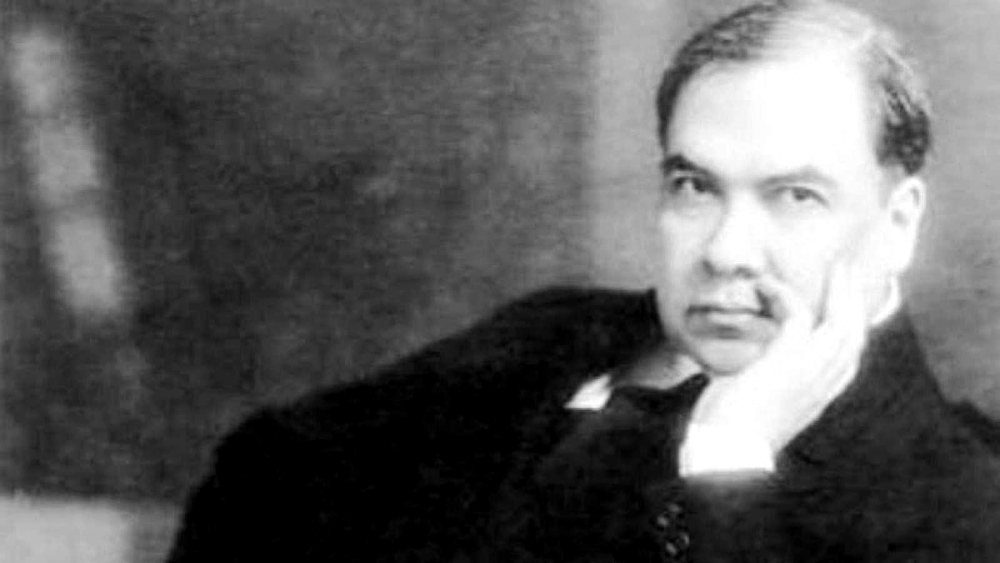
Rubén Darío

Born in Nicaragua as Félix Rubén García Sarmiento, Rubén Darío (1867-1916) is one of the most famous and influential of all Latin American poets. Generally credited with initiating the modernismo movement, he has had a profound impact upon Latin American letters. In the English-speaking world, however, his reception has been confused by a lack of critical attention and by translations that tend to obscure the shock of his language at the dawn of the twentieth century.

Continue reading

Posted in TRANSLATIONS | Tagged ,

Four Cutups from MBC

Click
the
image
to
launch
the
show …


[EasyGallery id=’maxineclarke’]


Posted in 46: ELECTRONICA | Tagged

The Ethics of Attention in Peter Larkin’s ‘Leaves of Field’

This paper is concerned with ‘making sense’ in Peter Larkin’s ‘Leaves of Field’, a long poem that articulates a post-pastoral poetics based on ethical valency activated by attention. ‘Leaves of Field’ directs questions at us: How do we look at ‘natural’ objects? What is adequate poetic description? Can there be ethics without an apparent subject? How can we avoid instrumentalising nature poetically and ecologically after human intervention? What is the ‘value’ of human-and-non-human relations? Creating a lyricism not based on self-expression or explicitly only-human community, Larkin answers the challenges of writing innovatively with ethical consciousness by attending minutely to poetic texture and to ‘attention’ itself.

Continue reading

Posted in ESSAYS, SCHOLARLY | Tagged , , ,

Timothy Yu Reviews Contemporary Asian Australian Poets

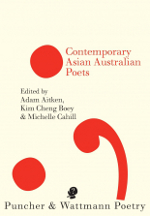
Contemporary Asian Australian Poets

Contemporary Asian Australian Poets
Adam Aitken, Kim Cheng Boey and Michelle Cahill, eds.
Puncher & Wattmann, 2013

A decade ago, Cordite Poetry Review asked me to write a review of its tenth issue, ‘Location: Asia-Australia.’ In my review, I wrote that while the issue did a splendid job of showing the intersection between two separate places called ‘Asia’ and ‘Australia,’ it was less clear whether the ‘Asian-Australian’ could also be a thing unto itself, a kind of writing that might be visible within domestic as well as international spaces: Continue reading

Posted in BOOK REVIEWS | Tagged , , ,

Mortal:Drift

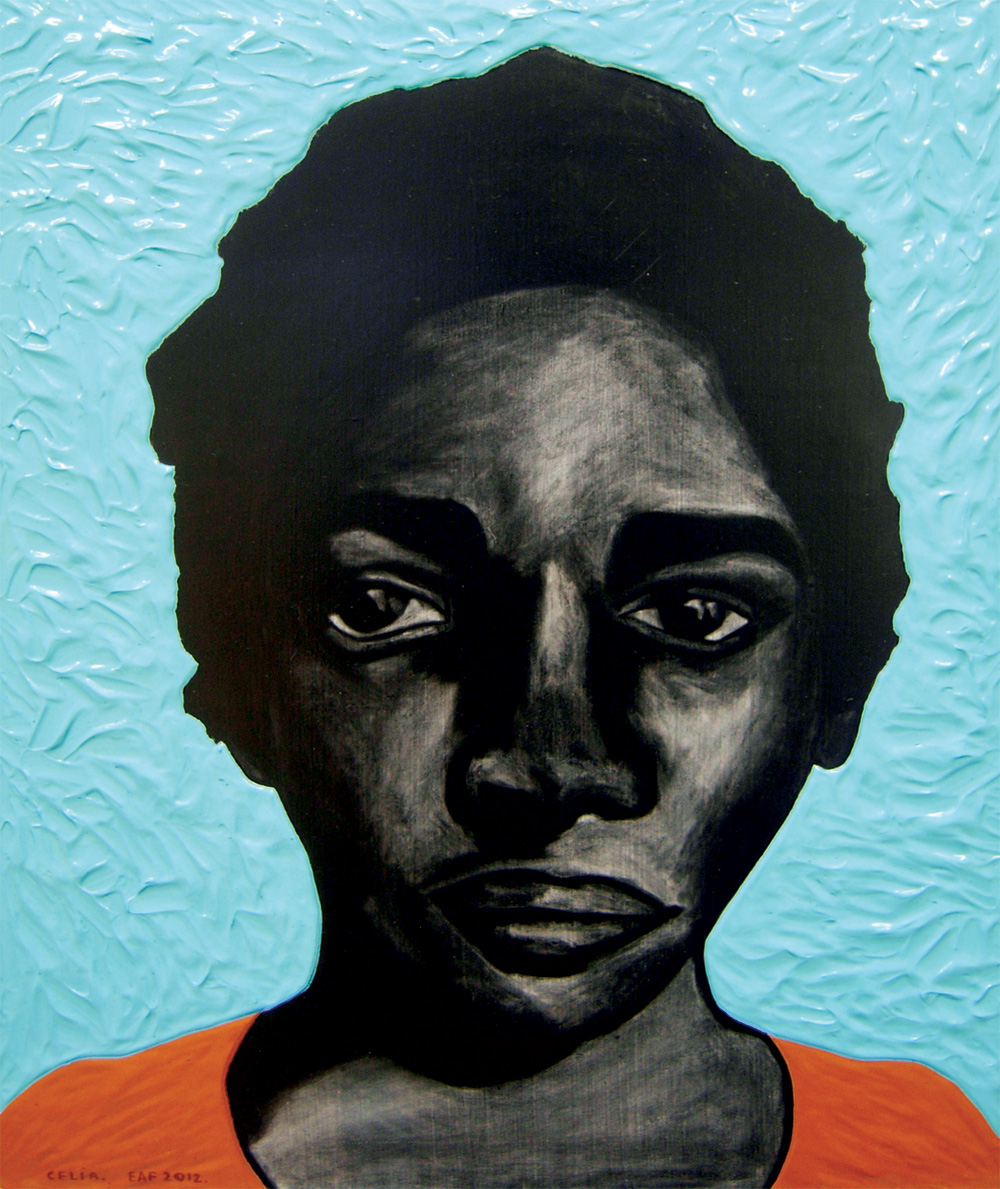
Celia
Celia | Fiona White | Oil on linen | 45cm x55cm

I

I said, don’t put a frame
around me.
I’m not your art.

Outside, cicadas pulse.
Summer. All those new boys
trebling for a mate,

bright-coloured, fancy,
and as many dulled girls
without their glasses on.

Earth and its usual dramas:
keeping busy,
the middle space.

Sometimes,
a winding, like conversation.
A thermal lift on the hope

of an aerial view.
So we carry on,
him gone

and me at 39:
most certainly,
not

art.

Posted in ARTWORKS | Tagged ,

The Breath of Vast Time

‘May the future make shift for itself.
I would know how it was before…’


I sit in Kevin Kiernan’s garden on the middle slopes of The Mountain. In the 1970s a young Kevin Kiernan was prominent in the unsuccessful struggle to save Lake Pedder from inundation within a back-up storage reservoir, a struggle that stands within Australian history as the first great nationally-scoped battle for wilderness preservation. Kiernan’s essay from those days, ‘I Saw My Temple Ransacked’, remains an Australian classic of engaged nature writing. I am here to interview him about environmental activism. Around me are many plants that are familiar to me, the trees of the Gondwana forests. Except that they are not entirely familiar. Because these trees are from South America, Gondwana cousin species to those of our own rainforests, but so similar that the differences defy recognition unless you know what to look for. In my own place-specific engagement with Gondwana, I find it easy to overlook the vast planetary amibit of the super-continent’s legacy. Kevin’s garden sends me a wake-up call. I am reminded, too, of the Wollemi Pine, only ‘discovered’ in 1994, and in a secluded Blue Mountains ravine a little over 150 kms from Sydney its very self. This may have been the greatest botanical discovery of the departed century. And it is a Gondwana plant- a member of the Araucarian conifer family, one deemed by some to be an evolutionary dead-end. And known to my island only from the pollen record. I must lift my eyes beyond the island shore – there’s a lot of Gondwana out there.

The past has always held more fascination for me than the future. The future reeks with dire portent. The past, at least, is inscribed with our evolutionary success, we who are specifically still here, all we swimmers, fliers, crawlers, wrigglers, striders, lopers and scurriers whose genotypes and phenotypes have survived both the perils of global catastrophe and the quiet, insidious competition for those niches within which life takes hold, endures. The future, furthermore, can only be guessed at, and it must be a wild and despairing guess at that … what has occurred, though, lies prone behind us, its record tricked out in an inchoate mix of the clear, the artlessly obscure and the deliberately obfuscated, a puzzlement to fascinate any curious mind.

I have gone too far. Who could not find the unpredictable mystery of the future as fascinating as the riddle-me incomprehensibility of the past? So I’ll recast my position thus: the seamless transition of past into future is the most pressing responsibility of the body politic. It is to carry forward the vast biological and cultural treasurehouses bequeathed by the past to the future; to safeguard the passage of time; to lodge it within the future, accessible in palimpsest, so we may know who we are, from where we have come, and, reflexively, how this shapes our new world. Anything other is a descent into the madness of an existence without identity, without agency, without context, without reference points around which to structure collective life and individual being. This is not a plea for an end to history and change – a plea to preserve, mindlessly, the bads of the past along with its goods. Change is a simple fact. The tectonic plates will shift. Volcanic stacks will lift their lids. Continents sink, rise. Cities fall to ruin. We will deem it just that slavery ends, that women vote, that wars cease, that the young be protected from violence and predation, that same-sex couples may marry, that arid market abstractions not take precedence over the real lives of real entities, that animals be accorded ethical standing. But to have a point of moral vantage that even makes such determinations possible we need the inheritance of the past.

How far past is the past? Listen. Turn your cheek to the wind blowing from the desert, from the seas that roll over two-thirds of the planet to wash against our western shores. On your cheek is the breath of vast time. The green decay of vanished forests. The foetid breath of terrible, dead lizards. Pangaea? That might be too big an ask. Perhaps even the great supercontinent, Gondwana, when all the lands of today’s Southern Hemisphere were one, along with the Indian subcontinent and Arabian Peninsula. But the early Jurassic saw the supercontinent begin its groaning schism and East Gondwana inched away from Africa. The breath on my cheek speaks of those times.

The forest is the sum of history:
At the eye’s edge I almost see
Looming reptiles, terrible and stark.

Rainforest covered most of the supercontinent, and this is a legacy that endures in Australia’s cool temperate forests. How should we come to these forests? On an Australian Government website I may read of ancient ferns and conifers, and ‘a concentration of primitive plant families’ that link directly to the evolution of flowering plants 100 million years ago. I may read that ‘few places on earth contain so many plants and animals which remain relatively unchanged from their ancestors in the fossil records’, and that the relic Gondwana forests are ‘the most ancient type of vegetation in Australia’. That’s a good start. That establishes the forests as dramatic, unique, afizz with portent. It leads to the illuminations of science – and I love reading the science of the forests. It may also lead to poetry.

On my island the breath of vast time blows clear, strong and charged. There is no fey mysticism contained within that observation – I write, rather, of a palpable presence; a physical fact. Gondwana concentrates here. The island is its enduring soul. Look at a map of rainforest distribution and this sense eludes – Gondwana seems a small factor on paper, strip-clinging to watercourses in Tasmania’s steep, unpeopled places. Tread the ground, though, and you know you tread Gondawana. Even here, within the weak sun on my suburban deck, a pencil pine shares my space. And a strawberry pine. And a Huon pine.

Lagarostrobos franklinii. One of two species that, for me, emblemise Gondwana. The Huon pine is a Tasmanian endemic, its range confined to lakeshores and riverbanks in the wild wet south and west. The vast sprawl of a super-continent distilled to such a precise geography. Individual Huon pines can live for 3000 years, bested only by the bristlecone of North America. Pollen records place it on the planet 135 million years ago. It is hardcore Gondwana. At a semi-secret location near Mt. Read is a stand of genetically identical male trees with a 10,000 year old basal root stock. The tree’s presence within the river systems that flow into Macquarie Harbour and Port Davey has given us stories – glorious, awful, gothically thrilling – of Sarah Island, derring-do, cannibalism, piracy. Within its resinous sap is extraordinary oil that renders the tree almost impervious to rot, even after hundreds of years of submersion in mud. It may be the best boat building material on the planet. It buffs to a beautiful sun-capturing nutty yellow, and its scent is of the arbour of the gods. Conventionally it is said to be slow to grow, , but here on my deck it springs for the sky. I once thought it unpleasing to the eye. I know better now. It sings of life’s exuberance, its haphazard panache. How can such an entity not compel poetry?

Huon pine: all scrag
Fingers from a strangler dream,
And a heart of gold.

My other iconic rainforest species is Nothofagus cuninghamii, locally known as the myrtle beech, in this case a species with a range extending into Victoria. A near cousin, Nothofagus gunnii, restricted to the high country in the island’s central and west, has the distinction of being Tasmania’s only deciduous native. Over 30 near relatives within the Nothofagus genus exist elsewhere in Australia, New Guinea, New Caledonia, New Zealand and South America, and even the oak and beech trees of the Northern Hemisphere are ‘family’. Huon pine stands apart and unique and is iconic to my mind on that account. The myrtle beech is iconic for the opposite reason – it is the dominant species of the Tasmanian rainforest, and if the Gondwana forests lodge within the island’s soul, this is to say that in large part it is the myrtle beech that sits within the inner chamber of the island’s beating heart. And it is beautiful. The foliage is small, heart-shaped, sculpted, and a deep, generous green. Excepting the new growth, which is of a burnished copper shading to red. I know of nothing like it. I have seen the autumn turning of the woods of maritime Canada. That is as glorious as it gets. For the leaf of the myrtle beech, though, another aesthetic category requires articulation. I cannot do it. Though it has drawn forth poetry in other ways:

The gloom wraps around, patterned in
Tiny flecks of rain: time, formless,
Seeps, slides through a mess
Of lichen.

Myrtles choke in a shroud
Of gnarled green parasite:
Cancered logs grue and twist, aloud
With cavewet anti-light.

To find poetry in the leaf of the myrtle beech requires close engagement. And it is so, I think, of the Gondawana forests generally. The myrtle and the Huon pine might iconise the Gondwana treescape, but it is the intricate, endlessly complex microworlds within the forest that most potently enchant. I became electrically aware of this on a trip down the Franklin River. As the voyage progressed, the more I became fixated on the tiny worlds of the river bank, the never-replicated assemblages of worts, lichens, mosses, fungi, tiny flowers and herbs. It is sometimes observed that the rainforest is species-poor, and it is certainly the case that other island ecosystems harbour a greater diversity of animal life. The Gondwana forests are not, after all, Aboriginal scapes; not the product of firestick farming. Their boundaries may be – because the game-rich ecosystems favoured by the native peoples, open forests and grasslands, were maintained by keeping the expansionary aspirations of the Gondwana forests in check. It is even true that there is a greater floristic diversity in some other ecosystems (we might instance coastal woodlands, or lowland wetlands). But down at the scale of the small and the infinitely intricate the proposition that the rainforests are species-poor is just not tenable. Down here with the mosses and the herbs is a window into alchemistical possibility. I come back continually to ‘enchants’, because this is the word that fits. This is why I can never forgive the brutal assault upon the very soul of the island that clearfelling the Gondwana forests represents. Trees we can grow again. It is the careless disregard for the biological genius invested in the creation of those complex, irreproducible micro-worlds that I cannot forgive.

Lichen is the forest’s ancient enlightenment,
	and the planet’s –
	and it reaches through the very fields of space
	to infuse the cosmic winds,
a swirl of principle
to spark a universe.

When it comes to the spatial dimension I may need to lift my game – but not when it comes to that other perceptual axis, the temporal one. From the start I have known that it is that breath of vast time that has been the vector that has carried me from contemplation of the Gondwana forests to poetry. I love the woodlands, and I love contemplating the haunting melancholy that must have characterised its casuarina-dominated scapes after the continent dried and before the march of those brash, upstart eucalypts. But the vast age of the rainforests trumps all this in the strange sphere of my affections. Here on this island it is a key to the construction of time, and will become more so, I think, as the years roll by.

I wasn’t always so conscious of the shaping presence of vast time. As a younger man I lamented the absence of the old in my island. I looked to Europe and its long heritage of unfolding culture. It was a perspective that was profoundly disrespectful of Aboriginal peoples, and it was misplaced in other ways, too. Then I discovered the ancient forests, and Europe seemed a mere playful pup by comparison. I knew that I lived in a country of vast age, that I had been welcomed within it, gathered up in a deep, knowing stream of time. I could feel its cool, wise breath upon me.

I look to the snippets of poetry with which I have seasoned my essay are dark. It is to the Gothic in the forests that I have responded. This is real. To be lost in the rainforest, even if you know yourself not to be permanently lost, is to confront fear, to face mortality. Some of the quoted passages were written in reflection upon precisely those circumstances. But I would want, now, to be more celebratory, in keeping with the tone of this essay. I’ll go away and give it a try.


The poetry quoted comes from the following sources, in the order it appears in the essay: ‘In Memory of William Paterson…’, Silently On The Tide, Walleah Press; ‘Lost in Rainforest, King William Range’, The View from the Non-Members’ Bar, Hazard Press; ‘On the Gordon River Cruise: Notes for a Poem’, Silently On The Tide, Walleah Press; ‘Lost in Rainforest, King William Range’ The View from the Non-Members’ Bar, Hazard Press; ‘Old Man’s Beard’, Island.

Posted in ESSAYS | Tagged ,

3 Poems by Lydia Daher

November

the rain is falling
these days like a superfluous
statement
probably
in order to give
the grey a reason
to mirror itself
once more
and there i am sneaking
around november puddles
together with the light
of a broken
moon and do not think
it’s strange
what do i care
if artemis calls me arthritis
a stab at my heel
and two or three at my heart
are hampering me
currently

only
58 more days
to the end of the year
and everything seems to be
desirous for another
because of delusions and idealizations
call it wind moon
winter’s month
red moon
nebelungen the month of november
it is and will be november evermore
at the end of which
scorpions transform
into sagittarian archers


What I Would Paint

in the background:
trees
that are tumbling over trees
buildings
that are tumbling over buildings
people
that are tumbling over people

in the foreground:

two grey doves
amongst
two yellow cars

nothing else


The Stars Have Long Been Sold Out

Who, for example, but you,
who may think of

folding the moon
into this room

and to feel the picture
to be far to forlorn

and thus instead
prefer taking a photo

of something
entirely other.

November

der regen fällt
dieser tage wie ein überflüssiges
statement
wahrscheinlich
um dem grau einen
grund zu geben
sich darin noch ein mal
zu spiegeln
da schleiche ich also
um novemberpfützen
zusammen mit dem licht
eines gebrochenen
mondes und finde
rein gar nichts daran
von mir aus
nennt mich artemis arthritis
ein stich in die ferse
und zwei drei ins herz
verhindern mich
derzeit

nur noch
58 tage bis jahresende
und alles will sich
durch verklärungen
nenn ihn windmond
wintermonat
schlachtmond
nebelungen
es ist und bleibt november
an dessen ende sich
skorpione in schützen
verwandeln


Was ich malen würde

dahinter:
bäume
die über bäume stürzen
häuser
die über häuser stürzen
menschen
die über menschen stürzen

davor:

zwei graue tauben
zwischen
zwei gelben autos

mehr nicht


Die Sterne waren lang schon vergriffen

Zum Beispiel wer außer dir,
wer käme darauf,

den Mond
in dieses Zimmer zu falten

und seine Füße
daneben zu stellen

und dieses Bild
zu einsam zu finden

und deshalb
lieber ein Foto zu machen

von etwas
ganz anderem.
 

Posted in TRANSLATIONS | Tagged ,

2 Poems by Ulrike Draesner

untitled

alongside the field vor uns um uns
                                        a banquet row
gravel, surfaces, one and a half yards wide
your accuracy the lopsided slant
of the road the usual 2.5% beneath a creamy
sun’s frosty halo against the ascending
turf’s degree of difficulty stately planum
sloped
            with vibrant grass. the mass
dirt incrusted stopped by the grader
in front of the contact sensitive group I was
nearing from outside as an unsettled layer
of sand grit
            and recycled emotional grout
for frost protection the powerful finisher
on drifting planks (pushing the future wagon)
160 centigrade hot mixture the entire
breath of relations used as asphalt binder
hot on hot paved in a single motion

the lunch break, a period of official time
                                                was now really
up. thermos bottles stained
the base curse two scoops for the sunshine
lay there, waiting. only after looking twice
did i discover the rolling mill. they had
realized from the outside that we’ve been
lingering? the wind gently fondled
the bushes a sand wasp flew away
red-striped her rear
slopedlove, the wild grass kind


to gaze into indecipherable eyes

how i can’t see myself as i stand there
unable to see snake lizard perentie
ancient trosity rubbletrosity black ancient benison
the chirring earth insects and no birds yet
soar not air not only panting only volcano
only spewing only seas only teeth giants only
oldtrosity delltrosity elder errors gorging perenties
jaws bacteria-brimming towering eyes: failing
                                                            the trosity
in corrupted in cordial in coming providence
of his little limbs his audacity
to creep forth from sea to land: over-
due and wildtrosity
                        riding upon the plug
of the medicine bottle the dakar, healer
of islands upon a creature half horse
half man shielding his stern and serious
face from the ninth century
he rides only one blink of the eye
away
                        look, amongst the birds
lonely the hornbill budges his fine haired
folded eye. look, how it chaplets the borders
of other empires and its own
its trosity
                        garlands


neben dem feld before us around us
                                        ein streifen BANKETT
schotter, oberboden, eineinhalb meter breit
deine genauigkeit das einseitgefälle
der straße die üblichen 2,5% unter milchigem
sonnenreif gegen das ansteigende
schwierigkeitsgelände planum getragen
geböscht
            mit vibrierendem gras. die schar
dreckverkrustet stoppte der grader
vor der empfindungsgruppe der ich mich
von außen näherte als ungebundne lage
aus sand kies
            und rezykliertem fühlstoff
für den frostschutz der mächtige fertiger
mit schwimmbohle (der den zukunftswagen
schiebt) 160° heißes mischgut die gesamte
beziehungsbreite in bindeschicht heiß
auf heiß in einem zug asphaltiert

die offizielle zeit für die mittagspause
                                                war nun wirklich
vorüber. thermoskannen fleckten
die tragschicht zwei sonnenschaufeln
lagen bereit. die walze entdeckte ich
erst auf den zweiten blick. man hatte
unser verharren also auch von außen
erkannt? leicht rührte der wind
im gebüsch eine sandwespe flog auf
rotgebändert ihr hinterleib
böschungsliebe, the wild-grass type


in undurchdringlichen augen zu sehen

wie ich mich nicht sehen kann wie ich da stehe
nicht sehen kann schlange waran riesenwaran
uraltes tüm trümmertüm schwarzes uraltes segnen
der erde zirpen der insekten und keine vögel noch
fliegen nicht luft nicht nur hecheln nur vulkan
nur speien nur seen nur zähne riesen nur
urtüm urtäler irrtümer mäuler der warane
voller bakterien türme die augen: erscheitern-
                                                            des TÜM
in der ver- in der zuvor- in der kommenheit
seiner kurzen glieder seines wagemutes
vom wasser an land zu kriechen: über-
fällig und stüm
                        reitet auf dem stöpsel
der medizinflasche der dakar, heiler
der inseln auf einem wesen halb pferd
halb mensch herbernsten schützenden
gesichtes aus dem neunten jahrhundert
herbei nur einen wimpernschlag
weit
                                    schau, unter den vögeln
bewegt einzig der hornrabe das zart behaarte
gefältelte auge. schau, wie es die grenzen
anderer reiche und ihrer
tümer
            bekränzt
 

Posted in TRANSLATIONS | Tagged ,

2 Poems by Nora Gomringer

The Hunter

You bring along cake and wine, happen upon the wolf.
He opens his pants and says:

Reach inside.
And he’s standing close to your car window while he speaks
and you pray that he may not realize
that a button pressed in your red Ford
doesn’t mean automatic—
that the wolf may not lead you astray.

Finally, the key slips into the ignition,
you twist it and start the engine.
Now the wolf is mumbling and growling that you must stay,
because of grandmother.
His jaws, he says, are enormous, he will devour her,
should he not get any—cake, any wine.
This is how this marriage begins, as you stay.

And he never eats your cake, drinks your wine entirely. He always saves
a bit for bad times, for dog days.

Years pass by, until somebody comes
who shows grandmother and you the bare necessities,
secretly, of course, after work, at the rifle range in the forest
outside of town.

When once again then cake and wine are to be put out on the table,
and you absolutely refuse to dish up and fill the glass,
refuse to lift your skirt and spread your legs,
gunshots are heard.

And if he wouldn’t have died, he’d still live happily ever after.

(Years elapse, until a well is found, deep enough,
to let things vanish and fade.)


Jäger

Du bringst Kuchen und Wein, triffst den Wolf.
Der macht seine Hose auf und sagt:

Fass hinein.
Dabei steht er nur knapp neben deinem Autofenster
und du betest, er möge nicht feststellen,
dass ein gedrückter Knopf in deinem roten Ford
nicht automatisch heisst,
dass der Wolf dich nicht vom Weg abbringen kann.

Endlich lässt sich der Schlüssel ins Schloss stecken,
du drehst ihn und startest.
Da knurrt der Wolf, dass du bleiben musst
der Großmutter wegen.
Seine Schnauze wär so groß, mit der würd er sie fressen,
kriege er nichts vom Kuchen, vom Wein. So fängt diese Ehe an, denn du bleibst.

Und er isst deinen Kuchen, trinkt deinen Wein nie ganz, hebt sich
immer noch etwas für die noch schlechteren Zeiten auf.

Es dauert Jahre bis einer kommt,
der der Großmutter und dir das Nötige beibringt,
natürlich heimlich nach der Arbeit, auf einem Schießstand im Wald
außerhalb der Stadt.

Als dann aber wieder einmal Kuchen und Wein auf den Tisch sollen
und du partout nicht vorsetzen und dekantieren,
die Röcke nicht hoch und die Beine nicht breitmachen willst,
fallen Schüsse.

Und wenn er nicht gestorben wär, so lebte er noch heute.

(Es vergehen Jahre, bis ein Brunnen gefunden ist, tief genug,
die Dinge vergehen zu lassen. )

Posted in TRANSLATIONS | Tagged ,

Ursonate (Kurt Schwitters fragment)

[audio:http://cordite.org.au/audio/08 Ursonate (Fragment).mp3|titles=Ursonate – Anna Fern]
Ursonate (4:34) | by Anna Fern

Posted in 59: GONDWANALAND | Tagged ,

Satan’s Riders

well we might think our world is dead
with visits from the devils
these white-men who came with their guns of hate
yes the one’s who came as men of God
came here to face us with their evils
bringing white sails and loaded guns
to kill to rape and plunder
with mission-men who brought The Book
they came with words of thunder
and so they savaged all they took
for their whim was to make us suffer
to suffer for their savage nation to grow
ever onwards to be called Australia
with God’s word they killed some more
and use His name to make us bow
embrace their church and know his law
to not be here yet be their mill-stone
as vermin they killed us mob by mob
yet now they want our souls down-under
in strength our struggle is our Country
so strongly we challenged the man-god laws
owned by white-men His law decided
who we are and where we go
we see their washed hands still unclean
from the things they did in man-god’s name
look at the tracks to their savage lair
where priestly man-gods say God is truth
and the white-men say that we must follow
and so we follow with grace in struggle
our journey takes us to see your white-man gods
where we can see men in the papal bull
yes the papal bull’s words that lie in thunder
making secret miracles from twisted words
they pressure down on their true believers
on these good church people true to all
accepting all people in their churches
until the man-gods judged their very souls
and the papal Horn made their blood to flow
for they could kill and rape and plunder
like those before them who ruled with power
these man-gods came with evil doings
they saved the priests who loved their man-god
priests who did things and the children cried
the men’s plan blocks their women’s pathways
for they did as they did to save their image
and save the ones with privileged powers
ordaining men alone to talk with God
giving the men power over unbelievers
while the world watches evil in the churches rituals
we now see blackfellas following to find a new peace
in our peaceful ways we went for hope in God
our mob followed churches the men-gods made for us
yes we followed them through to see their popes
we followed a trail they left in His words
those twisted words the popes do tell
we followed their tracks into the centre
the man-god tracks to the Vatican tomb
going down where they keep their secrets
down deep in the dungeons far below
again we saw those words so wicked
down in the tomb with the popes of old
there we see the Horns in golden glory
these are the Horns where popes will pray
a pope will pray and so his priests will
forever to hold His law in their Book of God
to carry his words for all believers
believing a lie through a man-god’s magic
making God in man then twisting the image
while they all sit here with a secret God
the Horns hold secrets of men-god savages
in Satan’s tomb where His Horns are revered
we watch this lie where white-man is God now
where all believers see the lie as true
the madness is in believing the lie of magic
you white-men expect gratitude for all you did us
and you tell us to believe a man-god lie
to believe He is God alone and mighty
to love Him and cherish Him as the God on high
you lead us on a path where we are the strangers
and we see the evil forces that we must challenge
in your Australia we look and see hate and misery
and you feel our struggle against man-god magic
in our struggle for freedom in the natural world
with strength of Country we have powers from way back
to force truth from the lips of your man-god priests
who’s snouts in troughs sated savage cravings
we will force them and push them in the public eye
until the horns are broken into millions of shards
and in our time we will deliver our sermon of Country
our words of wisdom in the patterns of knowing
of a Country old with our stories to tell you
to end man-gods rule and the savage priesthoods
until nothing is left of your disciples of Satan
and freedom is our Mother set in Country we know.

Posted in PROTEACEAE | Tagged

Long Form Thought

You are the inside out left hand glove
I slip onto my right hand in morning
too dim to tell what I’m doing. You do
the job. My whole body is one giant
fracture as I force it to walk on one
foot then the next in a well worn path
to the centre of our small universe.
You created me a library of leaves to
crunch through in afternoons spent on
trying to time travel without the more
conventional use of science. Science
is to be used sparingly like cocaine
or cayenne. As the rain works itself
through the little stitch holes in my
raincoat I imagine I am the water
and my body is your memory of ice
melting in your mouth after you
crunched it to pieces with teeth.
When the air is blood temperature
you unzip me and hand out my
calm disposition to children clam
-ouring in the street. We run round
together and fall down flat at the
end of the song. In this way we are
respecting the parts of our heritage
that are the same and allowing space
for your skin and my gender to fall
apart on an as needed basis. This is
the more common romantic avalanche.

Posted in 59: GONDWANALAND | Tagged

Nightwork

Conveyor belt wriggling into action, cries

rubbish rocks rubbish rocks

the machine breaks floodlight, its flash
a stingray covered, uncovered.
The bulldozer rearing—
pandanus bows

with a shake dissolves
drone tyres.

From the rocks and rubbish
one kid
naked, thick-haired and furiously sweeping
a path through reeds

pandanus shakes

entranced by armfuls of trucks
manganese
as stingrays. The old men spin
like tyres covered, uncovered.

It’s the sixties, then it isn’t.

Posted in PROTEACEAE | Tagged

Halfway Home

Vancouver to Sydney, Monday 8 May 2012

Dawn breaks for three hours straight along the wing
Of a 747, six thousand miles behind me, two thousand
Miles to go, Pentecost Island like a small light off the tip
Of the port wing.
While I lay across three seats impersonating
Sleep, a whole day disappeared; it happens all the time. The sea
Is blue and legioned and steep with days, and it’s fifteen hours
Across. The Pacific is an isobaric book of tides beneath
Me that has swallowed up where I’ve been.
But as long as my watch
Tells me the time I left behind, I’m still halfway there: midday
Tuesday in Vancouver; five a.m. Wednesday in Sydney; no time
At all where I am, thirty-six thousand feet above Noumea.
You step into an airport near midnight and mountains fall
Away. Everywhere you’ve been, shut like a child’s pop-up
Book, till the next time someone picks it up.
Your old life
Ahead of you yet, waking without you; you’re a thicket
Of afterthought, swimming home in high cloud.
But home
Is a fable, too, from this height, and you hang stateless, Aeneas
On a string that no one holds. You’re rowing home high in a medium
As mythic and elegant as Virgilian hexameter.
Nearing home
Is like remembering the future, and you’re hungry to make it
New this time, truer than how it’s ever run before.
But everything of course—once one lands—
Will be much the way it was.
Nearing home,
You’re a ghost walking out of rehab, stepping back
Into a body you cloaked while your inner life wandered
The peneplain; you’re putting on old clothes now
At thirty thousand feet and trying to stand up in them again.
Dawn’s still breaking hours later, when time starts to remember
Itself. History resumes, the sea resolves to come to an end; you tighten
Your belt and feel the plane relent.
Home is an island
Below you now, clouds bivouacked along its eastern shore; home
Is a theatre of war in its own aftermath, and an army of other ghosts
Is massed there, waiting for the right wind
to carry them way back out beyond their depth.

Posted in 59: GONDWANALAND | Tagged

Nostos

All through the flight you’ve had Cavafy
playing in your mind. Is it true that arriving here
is what you’re destined for? Call it homing
rather than homecoming, for once the airport
doors seal the vacuum of miles and time,
it’s as though you’ve never been gone.

An easterly blows from the night-washed hills,
the air is warm and soft as ironed cloth. You breathe
blue flames of eucalypt, till your body unlocks
its prodigal shape, and distance is cleansed
from your bones. Since you went away, your life
has lacked its tinder. You’ve tried to belong

elsewhere, gathered knowledge from scholars, bought
fine things. Laistrygonians and Cyclops,
angry Poseidon—you’ve carried them all
in your soul. But this place has burned in you
since birth, coloured your sleep with cochineal,
shrilled it cobalt blue, and your body won’t quit

trying to pull you back, searching for the heart
it buried in the dirt, a lodestone fired
in desert and sky, cooled in the Indian Ocean.
Blue flames breathe in you. Way beyond the rim
of the airport lights, you know there’s emptiness
as full as you’ve ever seen, where you become part

of the scansion of land, its accents of Spinifex
and schist. Gorges brim with a brazen edge.
A daytime moon spreads a scallop
of lace. Hills mount a ghost-hazed wave.
You wait as the bleach of afternoon light
darkens to the palette of dusk. Lilac. Plum.

Russet. Silver-sage. This land has archived
colour and time, when you press your palm
against the warmth of stone, you touch
the whole earth’s story. And if yours
were the only skin left behind to recite
from the chronicle of place? Embedded

in this dossier of rock, in ancient script,
are words which make sense of home.
But will you ever learn how to own
their shapes? Will this be your Ithaka?

Posted in 59: GONDWANALAND | Tagged

Last Morning in the Country

Out of the morning—
the yawning blue, sleepy-eyed
morning where the leaves rustle
like bed-clothes and the fence-post crows
drip rippling notes
into the steeping silence—
rushes the wind.

I stand stooge in the paddock—dozing a dream
of childhood paddocks: long grass subsides
beneath the sun; the thistle bristles
its prickled crowns, claims its brief footsore territory; crickets weave
a gauzy haze of sound and
off in the encircling stands of flooded gums the call
of the whip-bird falls
and falls
and falls

when the wind comes—scything the grass
into her arms like the past—

she tousles the trees, shakes
the cows from their sleep-ins:

herds of clouds stampede the sky,
a water dragon, posed like weathered wood on
a weathered log, skitters away—dappled
skin into dappled shadow—and the river
murmurs feebly over the rocks before swallowing
its words—until all I can hear
is the wind—roaring
through the treetops like a new world.

Posted in 59: GONDWANALAND | Tagged

Approaching Paradise

Here in the white, white wing of a gull
you may glimpse paradise. In the flensing sun.
The prodigal sea, bent back on itself,
has the rough green mind of paradise.

Paradise is in the breadfruit’s low sling,
the purple scrawl of bougainvillea up a wall.
It is in the yachts’ clatter and wheel,
the fishermen’s nylon stringing the wind.

You will find paradise in a whiting
drowning in a bucket of freshwater,
in the jammed blade of a fishscale
like quicklime under the thumb.

Women roast themselves in coconut oil
and children run bare-legged in paradise.
Praise them. And praise the black-faced bat
traveling even in sleep through paradise.

This fringe of stormstreaked shacks
with genuflecting surfers riding in,
this line of Norfolk pine. Wet dogs
nosing the muck of a king tide.

Praise the bloated body washed in,
the gentle nibbling of baitfish and bream,
bikini-clad tourists yanked out by rips,
the summer and violence of paradise.

A shark’s slit corpse gapes pink on the jetty,
its head yanked on a hook like a sacrifice.
Its shank is smooth and black as paradise.
Men with knives kneel down like seraphim.

Posted in 59: GONDWANALAND | Tagged

Home Hogar

Where my heart sings,
Donde mi corazon canta.

It could be kin, then places, country, town, street.
Finally, a dwelling place with floor, ceiling, doors and windows.
Through those windows, I see the outside world.

Despues podrian ser los familiares, lugares, pueblos, calles
Finalmente un lugar habitable, con piso, techo, puertas y ventanas.
A traves de las ventanas puedo mirar hacia el mundo exterior.

From the porthole of the ship,
I saw The Sydney Harbour Bridge,
With its wide, warmest arms. It is my home.

Desde el ojo de buey del barco
Vi El Puente en La Bahia de Sydney,
Con sus anchos y calurosos brazos. Es mi hogar.

The first time I saw Australia
Through the window of the plane
The sun was glinting off the waves.

La primera vez que vi Australia
A traves de la ventana del avion
El sol estaba brillando sobre las olas.

Years ago walking around Uluru,
Early in the morning,
I felt I was at home, with my family.

Años atras caminando alrededor de Uluru
Una mañana temprano,
Me senti en mi hogar, con mi familia.

Love and Peace. Amor y Paz

Home—the little corner
Of my father’s arm.

Hogar—el rinconsito
En el brazo de mi padre.

Warmest home
Where we live, where we rest

Hogar sentimientos de calor
Donde vivimos, donde descansamos.

The world around me
Friends, trees, the ocean, waves and seagulls.

El mundo alrededor
Amigos, arboles, el oceano, las olas y las gaviotas.

The world outside me
Those homes are people, countries, cities,
Buildings, houses.
Sadly sometimes very poor shanties.

El mundo fuera de mi
Aquellos hogares son gente, paises, ciudades.
Tristemente, algunas veces poblaciones pobres.

Home—the picture hanging on the wall,
The undeniable scar.
Still, the sun shines behind the cloud
Unashamed of who we are.

Hogar—el cuadro colgado en la pared,
Una cicatriz no se puede negar.
Aun, el sol brilla detrás de la nube,
Sin vergüenza, de quienes somos.

Home—anywhere from a branch in a tree
To the cloud in solitude.

Hogar—en cualquier lugar, en la rama del arbol,
O en una nube solitaria.

Home is already here. Home is me.
Hogar esta aqui. Hogar soy yo mismo.

Any sword has a case, any migrant a suitcase.
You are my skin. I take you everywhere.

Cualquiera espada tiene su vaina, cualquier emigrante una maleta.
Tu eres mi piel. Te llevo a todas partes.

Where my heart sings,
Donde mi corazon canta.


The South Coast’s Inspiraciones Literarias–Spanish-speaking Writers wrote a collaborative poem about hogar/home with Tara Goedjen. For the group originally from Chile and Spain, home is born in two languages, Spanish and English, as Cleo Pacheco writes:

Cuando los rayos de sol caen
sobre la faz de la tierra
el Corazon del poeta explota 
nace el hogar.

As the sun’s rays fall and make
ripples on the face of the earth
the poet’s Heart explodes
home is born.

She adds, ‘The bilingual home is where [the poet] finds repose … the home within.’ This embodiment of home is echoed by Juan Quiñones who says he is ever linked to Chile with ‘a very long umbilical cord.’

Return to Story Circle: The Transnational Story Hub and the Inspiraciones Literarias, a chapbook curated by Merlinda Bobis.

Posted in STORYCIRCLE | Tagged , , , , , , , ,

The Deosai Plains

are baptized in July
with four thousand
pink scimitar-flowers,
trampled and chewed
by wild, wild goats.

Snowcocks hound their temples,
the smoking rockscape
hollows that seem to breed
in this part of Pakistan,
and house the Himalayan
marmot and ants
that dig for gold.

They are a national park
at the foot of eight thousander
mountains, the giant
ribs of God with names
like Everest and Makalu.

Bearded vultures whip
and splash like fleets
of kayaks in the sky,
piloted by Choctaw
shaman daughters
or sorcerers from Pyke.

One bird will gnaw
the blossoms and rest
at Jaisalmer, the city
where yellow foundations
rise like mountains
of powder and coal,
gnarled and broken
as the marrow
in an eaten bone.

But back to the plains
it goes in a week,
perching on viny terraces
where manioc and peaches grow,
wild and invasive,
thrumming in the brutal wind,
dancing in a horde.

The flowers, goats, birds
and ants and rats are conjoined
in purple tongues,
blades of summer grass
lifting in a requiem
and pentecostal glow.

They float over churches,
mosques and the stone turtle
at Karakorum range,
and for miles of Pakistan
until it is swallowed in the shore.

Posted in 59: GONDWANALAND | Tagged

Mama Gondwana

mama cracks the arm back
rips my body from the crater of its birth
shakes it splitting
black lands from black lands
tearing
down
a
jagged line
faults on every side and schism
rift and drift and lava flows muscle memory
forming mountain chains
a spine

mama punches my buckled crust and the legs
drifting westwards from the rip zones
bleeding
in a deep sea bed separating sediment
scorpions
whale skeletons in sand

mama dumps the debris a crumpled carcass
dried like fossil ferns and set
dismemberment
and in her rain shadow I am Cambrian cold
smelling laurel forests and lungfish
south polar dinosaurs

cracks through a pangaean heart

mama
please stop

Posted in 59: GONDWANALAND | Tagged

live through

a pottery angel
rises from the mantelpiece

to the gallus energy
of new morning

the entelechy of words
works through sleep, we dream

repeats, we have
all the time in the world

to design cities
weed vegetable beds

watch pittosporum flowers
bloom and dwine

I have faith
that the buddhists

will manufacture moments
for those who are short

when they get their commercial arm
fully muscled

the wise man is not erudite
and so say all of us

it’s almost morning, trucks
thunder the road

Posted in 59: GONDWANALAND | Tagged

Time Scratched Record

I write his scratched word into a record. My time, his daughter’s hot, long day. I write to find water. I write of him to see that he was, to see that he was my father, was one of my people. He was one. He is one, two, many people. He said “we can”. I did write my father with his “we can”, with his hot, long sound, water for his daughter’s word. No sound did come out. No scratched word made it down to my father’s record, like these.

I did find water. I did find my sound, scratched in his record. He was my father. This, his daughter’s record, is my word, my find, my ‘him’.

We could write so long on ‘father’, we could write a long scratched record of ‘him’. We could out all of his sound, many may look to this, number my word. Each word divides a record of time that you and I know, that they will see as ‘them’ as ‘scratched’.

I know this, but I write. I am his. I am his daughter’s time. I am his record and so I look to record all the sound, each word he did make, each time he said ‘how’, each ‘and’.

At first people will dry their time, the record scratched, hot with no sound to water to water the father they could not find. We could make this long thing a time to use. We could call them in, water people with the sound, make a long thing, a long time, many people, a record of many people, each their own scratched daughter’s word. We could. At first people may side with ‘him’. Then with ‘her’. In time they will know two people as one thing.

When each word has a deeper use people will know. This time I write, I know. I know he has been.

I know water. I know the sound of that record I scratched. I know each downside, but by some hot overlook I write his sound, know it will be my water, know. I know I will have some of him to find each scratched day in this, my time.

Posted in 59: GONDWANALAND | Tagged

Cape Weed

Cape weed wears
cowards’ colours
chokes healthy feed
with jealousy
true native fields borne
by generations
made useless
by polluted seed
bearing strong
on the genome
twisting in to hook
and hold
like burrs.

Posted in 59: GONDWANALAND | Tagged