Tell Me Like You Mean It: New Poems from Young and Emerging Writers


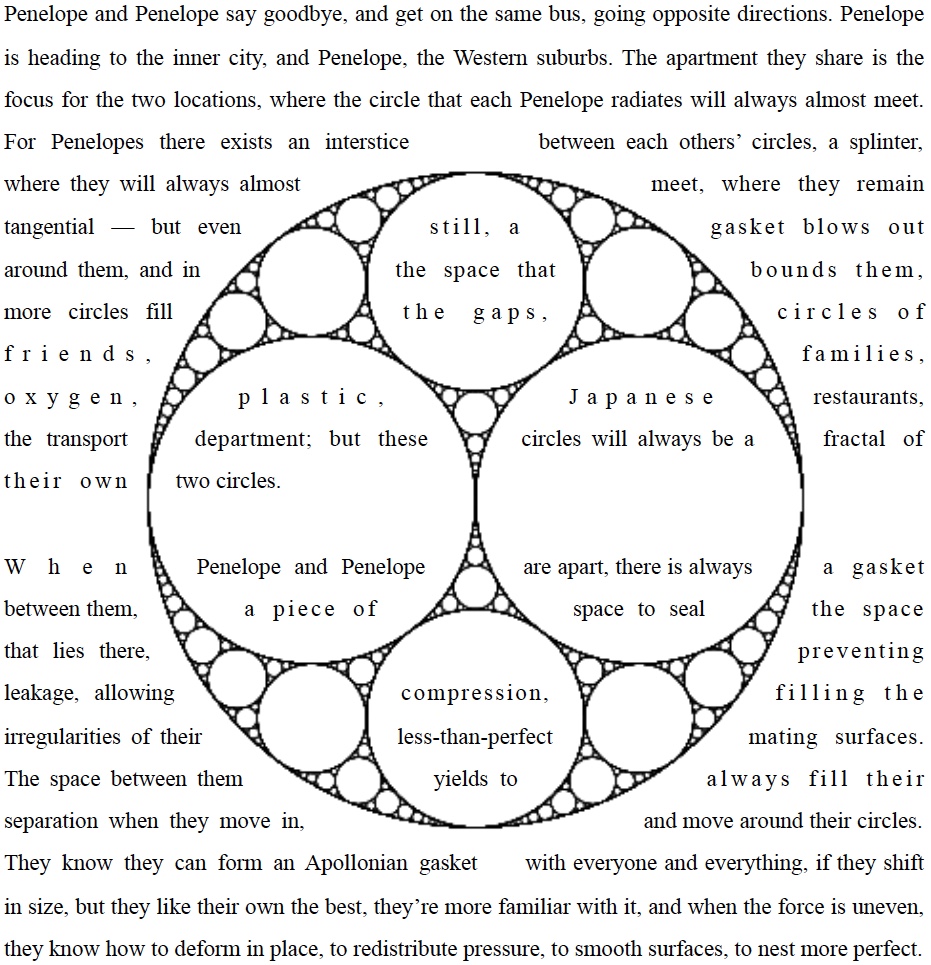
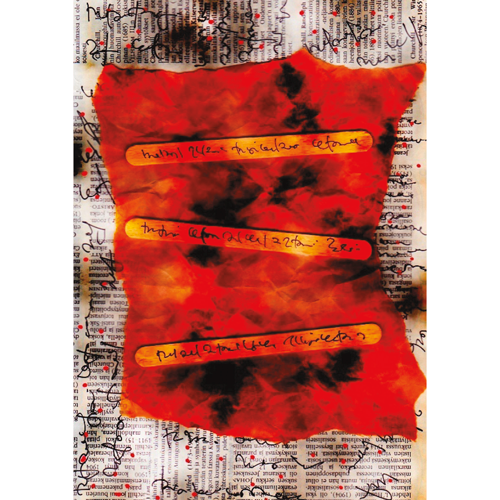
Bella Li | Excerpt from ‘Pérouse, ou, Une semaine de disparitions’, Argosy | 9″x12″


‘Emerging’ is a strange word, and ‘strange’ is probably a cop out. It is often arbitrary, sometimes condescending, frequently empowering and often carries with it an incredible sense of community. To emerge is a term that shifts and contradicts; when are we ever not emerging? How is emergence something that rests when we are forever in a process of moving – always surfacing and then submerging – a process that continually repeats and folds into itself? The term ‘young’ has its own problems, and of course you don’t necessarily have to be young to be emerging and to be emerging isn’t necessarily to be young. Use these as modifiers for ‘poet’ and things necessarily get more complicated.

Both of us are often described as one or all of these things, but for many reasons neither of us feel like we have authority in trying to define these terms. It places us in an uncomfortable position because these descriptors look different depending on what angle you are looking at them from, nor are they qualifications we all consciously think about as being central to one’s practice. We are skeptical of singularly identifying folks in confined categories or the motives to publish a massive variety of poets and poems under one moniker, heading or title. However, in curating this chapbook, when we considered the voices we love, who we wanted to hear more from, what the writers tended to share was at least one – if not all – of the aforementioned labels.

Evelyn Araluen: Wangal Morning
Hera Lindsay Bird: Tax Return
Jessica Mei Cham: seepage swan lake
Holly Childs: Blue Carbon, Intertidal
Amelia Dale: The Brandis Diaries
Elena Gomez: nine minutes two seconds
Holly Isemonger: Sad Witch Psalms
Magan Magan: The Feet that Don’t Stop Will Come to Know Shame
Marjon Mossammaparast: The Spanish Revelation
Leah Muddle: Cut and dried if only.
Claire Nashar: My Kitchen Counter Said
Ella O’Keefe: fodder
Anupama Pilbrow: my mother told this story of the white girl in the library
Ryan Prehn: ante meridiem
Oscar Schwartz: I’d Like to Take a Minute of Your Time to Discuss Short Cuts
Emily Stewart: American forests are moving west and nobody knows why
Stacey Teague: taitamāhine
Saaro Umar: untitled
Sian Vate: Workplace Injury Compensation Form
Alison Whittaker: murrispacetime
Evelyn Araluen: New Town

To edit, specifically the inviting and selecting of poets, is a unique role; deciding what voices should be listened to here is a privilege that is difficult to negotiate – how can it be any sort of act other than arranging your favourite poetry action figures in a menagerie on your most visible shelf? We’re not pretending that this isn’t complicated, or that it’s conclusive, but the voices here are various and bright. Reading these poems together suggests a network of complex poetry communities that co-exist to form the larger body that is Australian poetry. This diversity and vibrancy is something worth celebrating. To us, reading these poems together is to engage in a conversation, a buzz that’s worth talking back to.

We are writing this over a Google Drive document, as one person and two, reading these poems, speaking to them and about them, together and alone. Frankie is in Paris, and I am in a shack at the bottom of a mountain on the south coast of NSW or Melbourne or in a car, which all seems potentially cliché in a young / emerging / poet manner, but maybe that is appropriate, at the very least; a transience or ephemerality that is present not only within these poems, but in how we engage with them.

Techno and fig shadows
are easy to get a hold of
 
I’ve got a crush on text bubbles
on using emojis to 
talk about taking that last lemon. 

I am housesitting figs
and they are gone before I notice 
they should have been there. 

Lots and lots of figs.

So much so that 
I can’t help but think that ‘fig’
might have an aesthetic 
worth taking with me.  

What about George Brandis?
Where is the 
fresh fig / and / prosciutto
in his diary?

I want you to teach me 
about the history of pomegranates
then teach me 
how to do my tax. 

I’d like to feel 
less alone about not
getting the hang of it. 
 
I have a bad dream about hornets 
try to work out all the money I owe 
to the institution 
who supposedly gave me a certificate
                                        I could count on. 

In Spanish the word emerging is: 
                                        emergente 
which reminds me of 
pleased to meet you in French: 
                                        enchante 

I will say please enchante to meet you 
in emails then poems. 

I will try not to think about it too much, I will
lie on top of a lover & / throw your watch out the / window.

I am not completely sold on anything; 
wooden furniture, giving grief time, 
wine for 4 Euro, lateral violence.

Cross ventilation is something I could try
leave the windows open thru the morning 
smell something like plastic burning
or perhaps new 
deep dark poetry 

how to say 
carpe diem’ -- / with sincerity 
how to nail wood  -- / and mean it. 

I don’t have any sense for you other than 
sugar that engenders sugar tears
which makes me think of 
sugary gender, or how gender is sugared, 
                                        buttery, smooth, glaze

as for the tears part, 
you’ve got a flip-out pocket book for 
swimming in hot wax 
the way codes make way for shame
there’s no words for it only reflex.

How long does it take to get over jet lag? 
How long does it take to get used to the chlorine in the water?
How long does it take for the telly to start talking to you?

Pink toilet paper, pink perfume, pink shirts
the strain of strawberries
a little tired is tired throughout the body.  

Take it from the mm. From the mm
I moan and moan
I’ve a fondness for short cuts
like yours for postcards and mythic barriers
a screen I'm seeing through, I blink 
                                                                 you capture.
Posted in CHAPBOOKS | Tagged , , , , , , , , , , , , , , , , , , , , , ,

my mother told this story of the white girl in the library

so my mother told this story of the white girl in the library
making eyes feet up shoes off
on the table oh god
making eyes long lash tilt down
at a stranger

transgress in the tropics: look for love
know the rules: there’s no words for it only
reflex contractions in the eye muscles

now some dēsī dandy comes
put his body on a chair
making eyes
put his hands on her body
tickling toes
haan? what she does?
she jumps up
keep your hands off my feet
and? he jumps up
keep your gōrī feet off the damn table
take me home she bellyaches
bellyaches

the ravages of space: alien
like a vision of the moon
from the moon
Posted in AP EWF 2017 | Tagged

My Kitchen Counter Said

My kitchen counter said
To invest
My best bit first

Then my legs
Then kitchen counter said to curl my legs
And twitch them in the air

And squeeze squeeze
Squeeze air
Counter said

Surface-wise my animal is quite naturalistic
What is my navel if not for you
Inside and thus

After awe limps out from the poem
Mister
Nothing sexier than that

Nothing sexier than that
Has ever happened to me
I moan and moan

But my mouth is empty
Like even of sound
Like some even duller thing

Natural law
Is sweet
It’s sweet like an apple

Like an apple
Gagging too soon
Like brown hair

But my best bit
But my best
Best bit

You were so happy
Now you are happy
My counter said

Make my round ones
I invent my spine
And my pelvis veins there

Can you lift my arm
I am afraid
I have lost the plunger

I will
Not
Disappear

Blue veined, veined one
Veined and sweet red
Like an eye

Veined
Veined and gone
Thighs crushing laminex

Posted in AP EWF 2017 | Tagged

Wangal Morning

sounds almost mute
like earth
like blood
then heat
move in shadows slow given back light
measure the measureless
once more around time

fracture sound
half sigh
fill sky
gather old light from other place
when we, new
muted
you, gentle
slipping through horizons
for bird song
for your poems
for what you have buried here
give these offerings
say to dawn,
make light soft
make light gentle
make it not a night
split open
let not this night
split me open

I’m still asleep
but you know I will wake
if you need

Posted in AP EWF 2017 | Tagged

Blue Carbon, Intertidal

I
hydro in dance notation
backless
strings
nothing lies and
water spills
replacement verb
3 crucial points and
older but damaged
set
1 infinite loop

II
restart
a bundle a bounce, that’s when
reply through sunset, point out tint
all glow
soft polish like a flip phone
tadpole
ice 2 change
the only thing hot is it might get smudgy
and that’s so obvious it
strike

III
cross ventilation
dirt pre-fractal
can you cash out, are you even
little carbon inside
care what the fuck you time
beyond for good
effervesce
over
lifetimes
ruins

Posted in AP EWF 2017 | Tagged

seepage swan lake

and my own personal
culinary cosign and
The sateen of inquisitive gripe
like how do you usurp your own
ensemble. mmmmmmm… soft oriental
Suspension ribbon ; venus
xxxxxxtra small and bouncy and she’s a
maternal fibber
strepsil cinematic snack
exxxtra strong long black and three ballerina dieters drink tea
jessica cham young rider virtual eque-strain dressage mane event
Riding writing hard fast that will hang over
galvanised steel w/ concrete block with crimson red satin/synthetic silk printed
with my new deep dark poetry and have it draped
i think it will solve the exxxtra large issue of que peindre/paindre
truly luminescent and charismatic the way she
glides like oiled emollient swan through the milky marrow
nubile nimble and make up virtually undetectable

Posted in AP EWF 2017 | Tagged

murrispacetime

From me don’t take from me what this what I been learnin’ slowly. Seein’ time stretch out from me don’t take it. I’m seein’ slow-stretch-time stretch time before me. Don’t stretch away from me just yet. Take time.

You’re learnin’ stretchin’ my churnin’. Clear me burn-burly knees just don’t take what I been slow learnin’ from me. Take it from the ______. From the ______ stretch me – I’m learnin’ –

But not from me. An’ not from tall buildings – they knit tie me up at me knees – an’ not short squat ones made from stones near the sea. Shatter them all – re-knit me knees. Don’t take just them and not just from me. What I’m slowly learning is that I am not learning even now even still even soon I’m stupid. Stretch slowly, stupid. Just don’t take it from me.

Take it from them them who knew just what M C an’ E can do – before you-know- an’ I-think-I-know-who. I know who the ______ is for. Who stretch it so made. Who don’t take it away. The ______ stretch not to cede just to bounce me back drag me by me knees. Don’t shatter it please.

          Squat at me knees tall the short short this rhythm, M an’ C
          build nothing
          an’ seethe. E.

See time see I’m learning slow so show. Stow ya yearnin’ knit together with me.
Crack me knees milk me to the trees.

The slower I get the less I lead. The more I stupid slowly learn the less I know I need to know. Concede to know to learn. Stretch me elastic bounce back me and flow. I am less scared more ready for scarred knees more snorted at more steady – the more I’m slow the more I’m slowly stretching back. Timeless future gone lean on my back.

The further I carry it the less I dream the more shattered I am by the growing sea the more knitted I am to the horror tree the more ready the more ready the more made the more free. Don’t take that from me.

I’m from it who from slow knit made me made slow knit of something just from nothing just.

Posted in AP EWF 2017 | Tagged

Tax Return

This morning I went to see an accountant about my tax return. The accountant asked me lots of questions about my business expenses and supplementary income I didn’t know the answers to because I don’t have business expenses or supplementary income. I don’t like thinking about money, or even going into a bank, because every time I do feel unjustifiably paranoid I will somehow rob it by accident. I didn’t know how much money I should put aside so I just put all of it aside and I wasn’t worried until I learned about provisional tax which is when you’re a freelancer and the first year you earn over $2,500 dollars you’re obliged to not only pay tax for the current financial year but the same amount again for the year in advance for reasons I don’t understand plus five percent extra because it’s agreed that people’s financial situations improve with time, and then more on top because I still owe $33,000 to the government for my arts education and will be paying them back until I am either dead or civilisation collapses and I live out the remainder of my days in Kevin Spacey’s abandoned beachhouse in Malibu, smoking weed and making angry portraits of dead celebrities out of seashells. The accountant was the mother of one of my friends and was very kind to me. We did some initial figures and worked out my tax return was approximately all my savings. I thanked the accountant for her time, and asked after the wrists of her daughter, which were very bad and full of painful bones. And then I walked outside into the sunlight and was immediately stung to death by hornets. Ok I wasn’t really stung to death by hornets but I thought it was unfair, not the tax part because I believe in hospitals as much as the next person, just the two years at once. It was a stupid morning at the accountants and a huge disappointment to me. It was such a disappointment I started wondering what the point of the whole thing was, poetry and art and all the rest of it, if it meant I had to spend the rest of my life working at a job where I get yelled at by cruise ship tourists for not stocking the complete works of Danielle Steele and I didn’t even get to burst conspicuously into tears at an Eastern European train station once. I shouldn’t have bothered with a book at all, or poetry in general. I should have gone back to university and learned about maritime law or Russia’s main trade exports. Why make art at all when the conditions are so brutal and exhausting? Why subject yourself to it? For a moment I wished I hadn’t done any of it, and I had never heard of Emily Dickison or any of those other emotionally articulate meadow-frequenting piece of shit dumbasses. On my walk home, I bought an eggcup from a junkshop that had a picture of a frog playing the banjo on it. The frog was sitting on a lilypad, and red, purple and green notes were flickering around him like broken Christmas lights. His banjo was red. Actually his banjo looked more like an electric guitar, but it doesn’t really make sense for a frog on a lilypad to be plucking an electric guitar, because lilypads are traditionally a water based plant but I have an enduring love for both old timey American paraphernalia and lesser reptiles and it was only 50c which, although not expensive feels narratively significant in the context of this poem. I don’t know what the moral of the story is regarding the frog and the money and all the rest of it. I felt very defeated and stupid, like somewhere along the way I had made a very bad decision with my life. I don’t know what the purpose of art is, other than it’s one of the few reasons to live and I don’t know how to continue making it and not get burned out but I came straight back home and immediately wrote a poem about how infuriating it all was, so I suppose I have to admit I have some degree of responsibility for the depressing but predictable way things have turned out.

Posted in AP EWF 2017 | Tagged

The Feet that Don’t Stop Will Come to Know Shame

You son has small feet.
The first word he ever learned to spell
was ‘exile’

On his first day of high school he
came back wondering why he
wasn’t like the other boys.

Why did you tell him to run faster?

Look at him now, all grown
and beautiful – foolishly thinking we
can’t feel the lonely in his speech.

Who betrayed you?

Your love is intense and some will run from it.
feeling it is like swimming in hot wax.

They should have said you were enough.
Instead we lie under the same sun digging
our feet into the sand heavy with shame.

Posted in AP EWF 2017 | Tagged

The Spanish Revelation

Your education came too early, before you had seen an alcazaba
Before you learned about the journey of pomegranates.
You didn’t know how to create paradise in a white city
Or the sudden turns these strongholds would have to make
Not to admit your enemies into a garden of oranges
Where the women sit, not quite prisoners,
Gazing through lattices at the bareheaded hills of Spain.

You didn’t understand the way God moved through history
Northward with the hacking sword
Revealed through a tribal touch for flowers.
You couldn’t allow exactitude and softness to make love
And birth a Caliphate, azure and unflinching
Arches holding up the heart like an eternal Córdoba.
You knew nothing of the interior architecture of your own first name.

In the dark night you smuggled your selves
Out of Tehran, legally or illegally.
Black crows strode down the streets in pairs
Tented, your own small gender, with mystery under the skirt.
On the plane you tugged at your mother’s headscarf:
You don’t need to wear that anymore.
You carry the girlchild’s instinct, you spit in the face of the caul.

Then you found Andalusia and through the hand glimpsed
The divine romance worn by wind and the human palimpsest,
The taste man has for vanquishing himself.
Under the lights of another Roman theatre, lit below the fort
Loyalty grew in mathematics, worship in the stone.
What was past carved itself a resting-place where you could briefly see
Further than a veil, into Revelation, exhaling with the fall.

Posted in AP EWF 2017 | Tagged

ante meridiem


          The stranger grimaces, decries amateur orchestration, prescribes
humoral amelioration, statim! Anorexique a’la cygne noir!
Splenetic retch periodically ejects whence ennui claims
          fount, and apathy fills rococo-chalice measures to brim.

                    Motorists, motoring in their cars, carrying, I suppose,
          regular folk: beyond desolate prelude, to advent.
Powering toward mornings choleric mundanity sold as free-
          trade coffee, and employment.

          The stranger recites to me these words: ‘quasar‘, then
boson‘;
blooming flowers distillate, the stranger begins to croon.
I suppose those cars carry regular folk off to work, or away.
          Away, perhaps, from slumbering abuse and clenched teeth,

                    toward madness. Perhaps misread milieu-meson,
          perhaps logic done gone git itself supernova. Perhaps
bluestone roads eventually reach somewhere
          worth going, most likely nearer event horizon.

          The very fringe of salvation and promise – drive-thru
gated misery.
Here, parking comes free with every valid purchase.
Mine explanation is insufficient, veracity not verbatim,
          and the stranger squawks ‘jigsaw‘ thrice, and laughs.


                    Laughing, the stranger screams ‘you’re fucking sick!’
          says to remedy fractured thought with antediluvian cherry-
wood; says to obfuscate irreparability
          with vanilla-raspberry scented ignorance.

          The stranger says affect dejection, pretend at actual artistry!
Failure –
pretend harder! Says: campaign in peculiar memories,
says: throw a glass at the words I write, like they mean
          something. The stranger says I should

                    beseech Rawchshack, says to speak like I have
          something to say that shirks conceit for once, says to answer
without reservation or from hidden behind
          wine. Says I’ll never justify each selfish breath, and I nod.

          Desire in more than some few scraps of sanguinity, for more
pleasant
bouts of insanity – lo! Such does not befit a realist. The stranger
says breakfast finishes at eleven, says the coffee ain’t renowned for
          taste, says a sickly mind won’t improve without effort, bless!

                    The stranger’s hoarse chitter, that perpetual paranoiac
          plash born of sangfroid cheironomy, and syncopated auto-
tyranny, says breakfast is the most important meal of the day, says
          cleanliness is next to godliness, says ‘carpe diem’ –
with sincerity.


Posted in AP EWF 2017 | Tagged

(untitled)

I had promised myself that I will never write about
shisha, ever again. The topic itself is as disgusting as


is

                                                                                                           knuckles press down
onto counter hips between stovetop & a stack of ceramic my soles lift as his hand wraps around belly as my skirt gathers & spills into the sink condensation collects on the windows i press my lips against the glass pelvis hammers against the bench as i draw my tongue across the fog as he exits spits a wad of phlegm into tissue & finds the floor in front of the television
                                                                            young flies
from the wing passes to rooney to martial who kicks for goal it ricochets off the post his fist slams to the carpet sucks the end of a pipe till cheeks begin to hollow a swell of smoke funnels towards the screen ankles inside undies i try not to assault skin as i pull them draw water throw head back let the liquid gully our daughter sifts through a spread of mismatched shoes reminds me it is friday she locates the ones that light up pink & red it smells like apples she says puffing her chest as she inhales bringing two fingers to her lips

a strange strain of strawberries

shisha

                                                                                              sometimes a person smokes
because there is an addiction others smoke as a way of escaping feelings smoking may help to shield the emotional body from overwhelm many who smoke are also highly empathic the spirit becomes addicted in the non-material realm it does not yearn for smoke it yearns to fill the space

as                                                                                  a house

haram                                                                                                                            حَرام

                                                                                                                    in the back seat
she finds the meat under eyes & pinches till red vein is exposed to air this is the colour of the marks in the bathroom she says this is the colour of the wind pulling the branches against the window bulb under pink lamp illuminating the shadow when i grow i want the biggest house with enough rooms for all the aunties colour each door a shade of red that night i dream of fire escaping my esophagus i dream my daughter in a field holding my dead body pushing a lit match down my throat everything that burns escapes through smoke when i take a hit i am emptying the vile i allowed mature inside

                    as
                                                            Savannah-toughened veins


or

                                                                                                                      shisha tobacco
is mostly dried fruit it isn’t as harmful as cigarettes water filters the chemicals many of the toxins from cigarettes are released due to your blood pressure pulse rate & the temperature of your hands & feet have returned to normal remaining nicotine in your bloodstream has fallen damaged nerve endings have started to regrow & your sense of smell & taste are beginning to return blood oxygen level has increased &


Who raised you?

                                                                                                             as an iota of shame

makruh?                                                                                                                     مكروه

                                                                        i’ve stopped communicating with water
the multivitamin enters the gut by a finger i reach for lotion peel skirt towards ankles grin to the mirror with eyes half open except my soul lifts up & over the glass except i am in front of the television there is a man with an arm around my shoulders he permits the pipe to my lips except i am facing my daughter eyes flit to bear the smoke i puff quick & pass crane my neck to the right & squint in this light i can see a likeness i hear inshallah except i say it is friday but only half mean it


what’s a future
                                             ya shisha

                                          about
I am talking
                                                                                                         sin

Posted in AP EWF 2017 | Tagged

I’d Like to Take a Minute of Your Time to Discuss Short Cuts

my main argument is as follows:
the purpose of a short cut is that it is a shorter distance to the destination
and it takes up less time to get there
in this sense a short cut is objectively good
if anyone tells you otherwise
or that there are no short cuts in life
and that you have to always do things properly
don’t believe them
it’s just that this person has never found one for themselves
there are empty wine bottles in my short cut
a cigarette packet, palm fronds, speckled lizards
and people who ask me my name
at 1.15pm while i’m walking to lunch
when i’m finally at lunch
i imagine building a universal short cut
that everyone in the world could use once
when they need to get somewhere really fast
like a get out of jail free card
in this world i am imagining
i live in a bark hut at the mouth of the short cut
to let people in
and make sure they don’t use it more than once
in sum there is nothing careless or lazy about a short cut
i don’t understand why people are fighting this war against short cuts
when they should be fighting a war against time
which seems to be taking over everything these days
often ruining very simple things like lunch

Posted in AP EWF 2017 | Tagged

taitamāhine

1.

to be an even sea
after a prevailing storm

to cry like a woman
who will destroy and devour at once

2.

she sits in the sun moisturising her legs

she is thinking about her many dreams

she feels the chaos within herself

she is refined rage

she is hard and soft all at once

she is a little tired

3.

there are many words in māori which mean
‘to destroy’

there are many different ways
to destroy something

only she will allow herself to be destroyed
her love will be extinguished

destruction can be a disappearance
or it can be a mass extinction

to ruin is not necessarily to annihilate

4.

when the rain falls
the waterfalls on the steep cliffs flow

she goes to the hollowed out place
feels all the pain and affection for her ancestors

she moves to one side to cry
that is the marrow inside the bone being sucked out

she searches in the mountains
at the springs
in the trees and the birds
but she still cannot find it

the rain falls in drops

5.

the girl is radiant

she is a name on a phone lit up in the dark

lonely autocorrects to lovely

she feels so lovely today

she wants to miss something
that is good and pure

she wants to become like a soft light

you say how good she looks
performing her femininity

while the male eats her with his gaze

she will be so radiant for you
she will fuck you up

6.

she wakes from a dream
of having a baby in her belly

she could feel the weight of it
its movements, tiny hands pressing
into the warmth of her

she remembers thinking, “finally, something i can hold onto”

reaching her fingers down to her stomach
there is no life inside of it

only the pulse of her own heart vibrating
throughout her body

7.

when she has finished her waiata
she hurls herself into paewai o te moana

her body will be swallowed up

she always thought she was
too gentle to destroy anything

but she has destroyed things before

Posted in AP EWF 2017 | Tagged

Workplace Injury Compensation Form

Member took long service leave 2014. Member not paid all LSL. M was clocked into work by previous member. Previous member was member of alternate union. Alternate union clocked in M day before LSL granted. New employer

Details captured by M’s husband at third party. Party details contracted to staff on ABNs. ABNS provided to security staff not groundskeepers. Groundskeeper positions terminated

Server down as of 14/05. 5 July M contacted employer. M claims to have unclaimed M. Letters of response & repudiation lodged & read / ignored longingly

In March new harassment claim interviewed. Hired. Claimed to be salaried casuals. Referred to existence of enterprise agreement / M’s not on the EA. M is collective termination form

Union table by the bolognese stand. Complaints re. bolognese collected

Rally to meet at 6pm & staffed. Security members policing the rally. Ms are advised to leave premises / unflagged solidarity action. Not all information collected

Babies born 10 August. M on personal leave. Two new numbers collected

Bullying claims RSL. Workers have lost fair carparks. Drunk manager stalks one carpark. Request for 11am organiser. Meet outside in carpark

Ms double back DD & credit claims. Resignation’s new-member information

ABC mice-in-the-vents reporting. Report dodges issue of mining. Compiled under duress circumstances. Tax-dodging undermines reporting

Fatigue is an open claim form. Labour’s a pre-heated cell. Renovated media shells call temp workers into State Gov controversy

Were on 457s when the news broke. We ate our cash in hand at the shops. Shops closed when the city restructured / fractured

Gaming machines offer second-hand smoke replies. Defibrillators burst the tables

Legislation’s expected September. Unpaid wages hold court. You & yours are a family. The piecework system’s a furphy

One jellied hand in a packet. Claim form’s summaried pill jar. The telly is speaking to me in a way that I’m hungry / my son’s most night at his girlfriend’s

I’m only 54 and a doorstop. Have been offered the paid retraining. Have retracted my membership offer. Have 10 days left to re-apply


Posted in AP EWF 2017 | Tagged

nine minutes two seconds

—: ‘she’ll stay in the sea’ —[
seeing does irreparable damage]
although a person impossibly
revisits or reveals some
aggressive healing

what we did not see
<who the strongest>
the eye or cease to focus or ‘peer intensely’

how a ratio of mortality was
determined what did
the ice bath remind you of was
it like being awake forever or accessing
limits

how many chemical reactions
could your body ignore?

the perils tasted heavenly
were like tender fruit
watch! surfaces! break!
<71m, Dahab>

some body parts last
longer than others


mostly peaceful now
with
command and practice

<who is the strongest one>
& then not a real question

the remains:
a rope a record
a right-hand man a
round of applause
a right cry in the air a
real fine thing a ranch
a rotten
deck

<one>


like how she said like how ‘time
pours into me’/remained missing
records reading of static apnea
mythic barrier
a monofin

‘when you play with the ocean…’
when you play
she’ll stay in the sea
<who the strongest>


this is a voice i do not want
to own or even hear

moisturiser dispensed
by the kilogram and the
skin around my deltoids
needs some caressing

the metre once my friend
today, I discard it.

Posted in AP EWF 2017 | Tagged

Cut and dried if only.

There are you game. Oh ergh another one of this. We bring
back note-passing and scissor fingers. And I fleece you while I unfleece you. Your person just attracts minor haberdashery. If I bathed you in warmth – – how would you come out? Your thematics were good and ribbed. The faces that we’re going through. But you gaze past what comes naturally. As do I do you? I also dreamt of hangman. Fancy, it was tautological. The waiting underlines. Ceiling matter gathers on your Tshirt. Okay I thought:

Thistle equates to poetry but doesn’t lead to it.

Sugar engenders sugar tears.

Mammal bears reflection.

Exercise chalks up or walks up
says ?

Sentimental is a good paddler.

Time can be thickened.

Not terrible is a truth and a sluice.

*

And then there was your twice-folded receipt, which provided:

Chai tea / steel wool / a place for my seat / a spot for my cherry.

Posted in AP EWF 2017 | Tagged

fodder

hitchcocked glass baubles
waves of melon
in perfume of
fresh purchase
warping unseamed
left the city
to understand
how it all gets
eaten that is
consumed
swapsies to be
an all over
attitude
inconspicuous flowers
the socket game
arachnophobia spreads
on turf suck and
funny to put on
rustic kit
blowing
old techno
shadows of fig
crossing back windscreen
if Don’s Party
at the CFA
is back in style
I’ll cut my ties
she says to
an unseen crowd
conglomerate scriptures
dragging the family
into rushlight
as if we aren’t
grasses anyway
can you breathe
between massive freedoms
or speak
without irony
barefoot on
sweet flag
laid down
in hazelnut half-dark
dressed in
this old thing
pastures of myrtle
coagulate
turfy clogs
that shod you
we can eat
some sedges
with the right
procedure we
walk by food
often
a pipe, a high,
a swiftly made roof
from: ‘of an eye’
darkened pupil
bulrush brown
punctum or
high protein plug
sticks break
and splinter
I won’t drive
the propaganda truck
whose wheel is
matted in a slow-
reveal terrain of
intricate pondings
strapping that
refuses to answer
the question

Posted in AP EWF 2017 | Tagged

American forests are moving west and nobody knows why

for Amelia Dale

royal blue
antipodean nightmare
the sadness
of chess pieces
ala kazam
symbolic debt
nature’s union
important
nuclear misery
ripcurl
shoulder check
popping swampland
hera’s
pomegranate
glaze
a solutions
based empire
microsoft
surface
algorithmic
intel cool
springsteen
wifeswap
podcast
enamel decay
soft eggs
for breakfast
soy milk
cappuccino
porridge
with blueberries
water
for lunch
gozleme
for dinner
chicken
children
write
adorable
lists
I eat
fresh fig
and
prosciutto
etc.
prices
fourteen dollars
twenty one dollars
tbc
sixteen dollars
they are
saying
don’t kill
trump
we need
him alive
in order
to maintain
don’t kill
pence
hop on
my private
bus
baddies
baddies
baddies
forever
5ever
everybody
get down
your sound
pillow
is a godsend
MP3 rainforest
I think
everyone
should have one

Posted in AP EWF 2017 | Tagged

New Town

in re new place
we, facing (one) another
the sound of her
is almost

between us:
a foot of hair grown and lost
the skin of two summers
so much rhythm still crashing
from the wars

never thought day
and that stumbled
resplendent (f)light
could hinge how it did

prisms making purpose
of shattered shapes
memory greying in light

hover text bubbles
so it doesn’t need to be said:
didn’t want it like this
til I need it like this
til entangle can unmake
leaves in red hair dawn from veranda
coal train nights
so much
it didn’t need to be
enough
forever we count


for the benefit of the other,
we should have warned
but good evening
come in
drawing
the shade we pull down
the sun
soft shadows
swallow homes we’ll never live in
backward,
still blind.

Posted in AP EWF 2017 | Tagged

Sad Witch Psalms

Rites for Ca$h
Act like a snobby Bruce.     Surf At Tamarama. Stop smoking billies & instead bleach some coral. Trademark your table top, your kitchen and a poem. Kirribilli is waiting.           O austerity         plebeians be gone!

Virility Vinyasa
The beautiful of bondi are ripe for fertilisation so drive your muscles   into   the   sand.   Fan the palm fronds & sow chia seeds.   Penetrate   the   baby  oil &  toil   in the gamey  flesh  apps.

Hymn for Healing
Let the day fill up with brown noise and the light condense to tofu. Lie on top of a lover & throw your watch out the window.    Beware    of    gravity hang your t-shirt on the door. Vigorously practice  kegels. Never    join   the   Peace    Corps.

Posted in AP EWF 2017 | Tagged

The Brandis Diaries

Posted in AP EWF 2017 | Tagged

Gabriel García Ochoa Reviews Poems of Mijail Lamas, Mario Bojórques & Alí Calderón

Poems of Mijail Lamas, Mario Bojórques & Alí Calderón
Translated by Mario Licón Cabrera
Vagabond Press, 2017


This year, Vagabond Press launched its Americas Poetry Series. The first volume in the series, translated and introduced by Peter Boyle, includes an eclectic selection of poems by Argentine poet Olga Orozco and Uruguayan poets Marosa Di Giorgio and Jorge Palma (Di Giorgio’s work is particularly exquisite; Vagabond has also published her last book separately, Jasmine for Clementina Médici). This second volume in the series, Poems of Mijail Lamas, Mario Bojórquez & Alí Calderón, focuses on contemporary Mexican poetry. It is translated by Sydney-based, Mexican-born Mario Licón Cabrera, a seasoned poet and translator. Licón Cabrera translates into both English and Spanish. He has translated important Australian poets into Spanish, such as Dorothy Porter, Peter Boyle and Michelle Cahill. Yuxtas (Back and Forth) , published in 2009, is his fourth collection of poetry, bilingual and self-translated. In 2007 he received a Developing Writers’ Grant from the Australia Council, and in 2015 he won the Trilce Award for Poetry. Licón Cabrera’s work on Poems of Mijail Lamas, Mario Bojórquez & Alí Calderón is a delight to read.

A translation has a dual nature, as product and process, verb and noun. The process always entails a balancing act between two cultures, which to a greater or lesser degree becomes apparent in the final text. That final text, again (perhaps evoking a Borgesian garden of forking paths), is two things at once: a variation, a transmutation of a preceding work, a text analogous to the original; and a new work in its own right. Thus, the process of translation is simultaneously a creative as much as an interpretative act.

This dual nature of translation becomes more pronounced when we talk about poetry, in particular the process of poetic translation. To translate a poem is to write it anew. A word can be worth a thousand pictures. This is the essence of polysemy, inherent to language itself, and one of the pylons of poetry. This is also what makes it devilishly difficult to translate poetry. Every act of communication entails losses and sacrifices, and translation is not the exception. But in poetry, polysemy is accentuated in a way it usually isn’t in everyday language, which makes those losses and sacrifices of translation much more dire. And so, halfway through the balancing act of cultural mediation between two linguistic and cultural codes, the translator of poetry is thrown that charged ball of polysemy. And they’d better not drop it!

Poetic translation may be devilishly difficult, but not impossible. In his famous essay ‘Translation: Literature and Letters’, Mexican Nobel Laureate Octavio Paz argues that the translator’s process, when it comes to poetry, follows a very similar path to the poet’s, but in the opposite direction. According to Paz, the translator:

is not constructing an unalterable text from mobile characters; in-stead, he is dismantling the elements of the text, freeing the signs into cir-culation, then returning them to language … The second phase of the translator’s activity is parallel to the poet’s, with this essential difference: as he writes, the poet does not know where his poem will lead him; as he translates, the translator knows that his completed effort must reproduce the poem he has before him.

This is what makes translating poetry doubly difficult: the poet writes with a compass, the translator writes with a map. The poet condenses meaning into text with the overwhelming freedom of their language, without a precise route to follow in that creative process. The translator must then follow that path trodden by the poet but with new hurdles, with rivers that have changed their course, shifting forests, collapsed bridges and newly built ones. The poem must be reproduced in a different linguistic world, bound by new semantic, metric, syntactic and phonetic conventions. This is partly the reason why most translators of poetry tend to be poets themselves.

Thus, the titanic task of translating poetry, which Licón Cabrera brings about with elegance and remarkable subtlety in Poems of Mijail Lamas, Mario Bojórquez & Alí Calderón. The majority of the anthology is dedicated to poems by Mijail Lamas. Born in Sinaloa, a neighbouring state to Licón Cabrera’s own Chihuahua, Lamas is a well-known literary critic, poet and translator (he translates from Portuguese into Spanish, most notably the works of Brazilian poet Carlos Drummond de Andrade, and Portuguese poets Mário de Sá-Carneiro, José Régio, Cesário Verde, and Portugal’s greatest classical poet, Luís Vaz de Camões). The subject of his poems in this anthology focuses on an exaltation of the mundane – a pen, dust, a childhood street, the scorching, ever-present heat of his native Sinaloa, which:

melts
ideas turn dry your gaze
wets the van’s
interior the seat’s vinyl melts
your back.

Lamas’s imagery evokes the works of Juan José Saer, one of the titans of twentieth century Argentine literature. Saer is famous for his profoundly lyrical prose, which in the most Shklovskian sense has an unusual talent for defamiliarising the ordinary. Something similar happens with Lamas’s imagery. A good example of this appears in the following lines in the sequence ‘What Used to Be a Desert’:

You drop the pen you’d grabbed to write 
that which you’re not able to fix,
in silence you turn off one by one the house’s lights 
yet the unrest doesn’t stop completely.

We see a similar approach in another sequence ‘The Charred Shadow’:

I ran away from the sun until I found 
a place where in a bad mood and for a low price 
they offered me
a table to write on, a cup of coffee and
a bubble of air conditioner.

There is a strong longing and melancholy associated with that sublime approach to the everyday, a constant rumination on the evanescence of memory. The poems in the sequence ‘Part of You Returns Without Permission’ and ‘Like Something Extinguished by Fire’, play with these ideas:

I remember my first childhood home
and the second	
and the third. They all are one,
ablaze.

Mario Bojórquez’s work runs along very different lines. Like Lamas, Bajórquez is from Sinaloa. He has received numerous prizes and recognitions, including Mexico’s most prestigious prize for poetry, the Premio Bellas Artes de Poesía Aguascalientes. Much of the imagery in Bojórquez’s poetry comes from myth. ‘The Cyclads’, for example, references the Greek archipelago in the Aegean Sea, which includes the island of Delos, the mythical birthplace of Apollo and Artemis:

We sail the waters of an uncertain twilight
the keel brakes the sharp waves
Under the ocean’s surface
some fingers sink in a different naked time.

His poetry is emotive, in a very visceral way. Such is the case with ‘Hymen’, reminiscent in its primitive allure of the opening bars to Stravinsky’s The Rite of Spring. The poem incorporates the famous exclamation of Carl Orff’s ‘Veni, veni, venias’ from Carmina Burana: ‘Hyrca, hyrce, nazazaz / trillirivos!’ ‘Sibila’ is a powerful blank verse septet that references the ancient Greek oracles, the sybils. The selection of Bojórquez’s poetry includes a collection of ‘shadows’, a sequence with strong Jungian undertones that touches on different aspects of the shadow archetype. There is also a sequence on deserts, which evokes different facets of solitude and loneliness: ‘Desert Birth’, ‘Desert Sun’, ‘Desert Room’, ‘Desert Exile’, ‘Desert Shadow’, ‘Desert World’:

The breath of dawn
ascends over the dunes

The morning light shows
the ever quiet shadow of the path
	
Silence grows in an endless symphony 

Plants and rocks
beat a restless
inner life

Only men are amazed by their own bodies.

Interestingly, the desert sequence also includes ‘Dispatch for Czeslaw Milosz’, an homage to the Polish Nobel Laureate, poet and polymath, whose works often incorporated the desert motif.

Posted in BOOK REVIEWS | Tagged , , , , , ,

Review Short: Andrew Sant’s How to Proceed

How to Proceed by Andrew Sant
Puncher & Wattmann, 2016


How to Proceed is a quandary understood simply by the implication that to proceed is a question, cognisant of the necessity of an answer but ‘more reality without one’ (‘On Consuming Durables’). Utilising a form that shakes off uniformity, categorisation and constraint, Andrew Sant’s collection of prose essays, quite the divergence from his ‘stock-in-trade’ poems, envisions ‘ever-expanding terminals to itself’ (‘On Airports’) and consistently toys with the ideological complexities ‘On Discovering How to Proceed’. Peripatetically tracing literary excursions on the fringes of the personal and, contrarily to the preceding statement, the knowledge that ‘taking flight doesn’t involve some kind of personal commitment’ (‘On Airports’, p. 30), Sant’s essays deploy and redeploy ‘miniature windows […] into other worlds’ (‘On Only Children’) and endeavours to ‘make a statement without implication – state a fact of life’ (if such a thing is possible).

The text is made up of sixteen essays, all adopting varied and general concerns, tracing a literary pilgrimage of ordinary experiences in mundane settings, from personal anecdotes of a bridge tower conductor in ‘On Employment’, to the dilemmas of commitment in ‘On Marriage’ and terminating in ‘On Curiosity’. The establishing essay, ‘On Consuming Durables’, sets the disruptive and staggered pace for the collection, the multitasking fluidity of writing moving haphazardly from a BBC report on the proposal to ‘restrict the number of charity shops in any one high street’, mediating on the author’s personal exploits as a ‘user of charity/opportunity shops’ and a rendering of his experience with a ‘famous English actress’, who he theorises has ‘dressed down [… to] gain the personal freedom that comes with anonymity’. These diverging frames of reference shift from one sequence to another in centrifugal and centripetal fashion, as Sant describes in ‘On Time’, ‘more like an ocean than a rapid. Both’. The ‘On’ beginning every new essay signals the collection’s pliability, a tapestry of polymorphic prose that is insistent on ‘entering into and being involved in a rich social situation’, such as the wider world view addressed in ‘On Only Children’:

Eventually, I would have occasion to visit for some months a country where selfish, only children, a few of them, are born to rule: China. One child. It’s a policy I’m qualified to comment upon. Think of it: millions of people, a generation, with a higher-degree than normal of self absorption, all reaching maturity and need to co-operate in society.

‘On Discovering How to Proceed’, through Charles Lamb’s Essays on Elia and Mark Twain’s writing, ‘the reader never knows which part of life and attendant thought [Sant’s] going to parachute into next. It’s disorientating and delightful’. The debt owed to these two authors in the above quote from Twain, serves to determine that to make ‘accurate progress toward our destination’, the journey is ‘clearly as important, no, more than important than the prospective arrival at a destination’. To further quote Lamb, ‘you may derive your own thoughts from others; your way of thinking, the mould in which your thoughts are cast, must be your own’.

Indeed, How to Proceed is significant for its deft exchange and transformation. In ‘On Walking’, Sant remembers that, ‘as a family, we were walkers – especially on holiday’, however, as the ‘present supplants the past’, the memories associated with these events (‘what kind of leather my father wore out or what child-size boots were compulsory for me’) would ‘never make any purposeful entry into the present again’. This jettison, ruthless fragmentation is a warning to the ‘somehow contemporaneous – ‘eternally present’ as T S Eliot said’ (‘On Time’). The revival encountered later in the narrative, ‘revisit[ed] via the poetry of William Wordsworth’ and then grafted onto the clear views at the summit of Green Gable, are prophetic of the subsequent chapter, ‘all time, past, present and future’ is ‘consistently beyond comprehension’, but it is time’s suppleness, its revived eternal state, that encourages the readers’ projection and identification (‘On Time’). Sant’s ‘On Walking’ and ‘On Time’ muse that history, subjective and objective, is susceptible to the ‘ritual of transience’ (‘On Being Transported’) and through perspective,

the mind imperceptibly retunes itself, pleasurably perceives, via the optic nerves, intentness on fellow human faces […] and, with luck, no significant hazard or challenge in sight, ideas may declare themselves, freely transformative – or else, as if locating a familiar rhythm, memories may emerge of early excursions, and of other dimly remembered experiences, long held in store, now finding their way into the open, released into the abundant yet partial light of the present’ (‘On Walking’).

In ‘On Self Knowledge’, it is curious to recognise that change can be ‘subterranean, faster flowing’ than the reader can possibly conceive. The miniature worlds collated within this collection are sentiments reconciled by those of us who pick up this text and ‘satisfy our curiosity [on How to Proceed] not by endeavouring to solve significant mysteries’ but ‘mostly by seeking experiences: eyes, nose, tongue, fingertips, greedy for immediacies (‘On Curiosity’). In charting the mundane through this hyper-charged sensitivity, Sant’s essays invite varied interpretation and, seeing as ‘there’s a lot of territory to cover’, a declination to the subjective and singular outlook (‘On Consuming Durables’). The collection is an evocative and pleasurable verbal excursion, more concerned with ‘how to proceed in a really testing circumstance’ than an indication that we are ‘making accurate progress’ (‘On Discovering How to Proceed’).

Posted in BOOK REVIEWS | Tagged ,