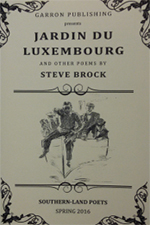
Review Short: Chapbooks by Mike Hopkins and Steve Brock

Selfish Bastards and Other Poems by Mike Hopkins
Garron Publishing, 2016

Jardin du Luxembourg and Other Poems by Steve Brock
Garron Publishing, 2016


Displaying an impulse that is communitarian and geographic by turns, Mike Hopkins’s Selfish Bastards and Other Poems, and Steve Brock’s Jardin du Luxembourg and Other Poems address the quotidian of the present under the notion that place-based does not necessarily mean place-bound. Brock’s itinerary darts from France to Barcelona, Madrid to San Francisco, to arrival at the Hollywood hotel, taking readers beyond the physical boundaries traditionally ascribed to place and ‘on a walking tour / a literary one’. However, as much as these poems depend upon travels and traversals, Brock as our guide takes us through scenes and sets that reinforce our ‘role here / is confined to that of tourist / as much as we try and walk like locals’ (‘Jardin du Luxembourg 2’). Hopkins’ collection, conversely, unfolds in a specific place, articulating a contemporary critique of the Australian present. The poems are inflected with the volatility of political lyricism in ‘Selfish Bastards’ and ‘Anzacery1’, and Hopkins’ ‘In the Beginning was the Cliché’ terrifically probes and parodies popular culture.

Upon reading Steve Brock’s Jardin du Luxembourg, you might say that the collection is a miniature epic of wanderers; it can be read as a quest book – except Brock is adamant that the trip is its own goal:

And the Gary Snyder Reader
I carried with me from Australia 
reminding me about roots
and the need to plant seeds
upon my return home.

(‘The Hollywood Hotel’)

Undoubtedly, one could easily focus on a single poem in Brock’s collection and be done with it, but such a disregard for the complexities and diaspora within this collection would carelessly overlook how these poems serve as affective sites rather than fixed locations on a map. Brock beckons us not to focus on our ‘roots’ while ignoring the routes that made the journey possible, but observe the interactive motion and turbulence that remains in our minds long after the camera has stopped rolling, as in the titular poem:

the take begins again
and just as the man 
nears the end of his walk
an elderly female tourist
ducks under the tape
and crosses the set
to cries of disbelief from the director

(part 1)

The interrupted syntax and enjambment gives the collection a terseness meant to convey immediacy without drama. Notational and observed, the poems seem to manifest seamlessly into the next. Indeed, Brock’s metaphor for this process of traversal could be considered ‘Jardin du Luxembourg’, the convergence of French and English in a single garden, the various statues contained within an apt representation of intercultural exchange.

In ‘Barcelona’, Brock writes:

I get the feeling
Since arriving in Europe	
I’m finally arriving at the subject 
Lorca’s cante jondo 
street artists and a language 
we can decode
re-united with long-lost family 
we feel at home

As the ‘I’ recedes and the ‘we’ becomes more prominent in the poem, one gets a deep sense that the language alone possesses the power to bypass ‘the cultural faux pas and mis-readings’ of traversing multiple places. Fraught with predicates that ‘realise’, ‘think’, ‘look’, ‘wonder’ and ‘recognise’ that too much of our attention is based on the location of culture and too little on the displacement of culture:

I ask him how he feels 
about the whole Napoleonic/Pantheon thing
walking in the steps of big writers
and history makers

he says you can let it stifle you
or look at it like
see what’s possible 
see what can be achieved

(‘Jardin du Luxembourg 3’)

From one side of the world to another, Mike Hopkins’s Selfish Bastards places his truth within the perception of Australia’s political stage. This truth can compete in the public arena with the ‘truth’ that is portrayed by politicians, such as:

Politicians who tell us we need to tighten our belt, and then
use a helicopter to go to a cocktail party — Selfish Bastards

Perhaps veering towards the overtly casual, the title poem might translate less well to a wider audience than others. However, as has been part of recent debate and scholarship, ‘Bastard’ is now part of the Australian vernacular and apparently yelling expletives in a public forum no longer constitutes offensive language. Being free from the same existential competition that obligates politicians to indulge their constituent public, Hopkin’s doesn’t flatter and indulge his audience in the eponymous slam poem:

People in the audience who don’t shout out “SELFISH 
BASTARDS” when politely asked to do so — Selfish Bastards! 

Rather, the poem performs in front of the reader’s eyes, the musicality of the concluding refrains unpacking the realities of our monotone and formulaic reality:

People who like their own posts on Facebook — Selfish Bastards!

Indeed, Selfish Bastards signals a condemnation of contemporary society. Reinforced in ‘The Template’ and ‘In the Beginning was the Cliché’, we are confronted with thick hectic prose, sentence fragments and the hackneyed that has taken ‘the world by storm, though it was a small world, when all is said and done’. These clichés humorously gain momentum in ‘In the Beginning was the Cliché’, as the people ‘did not stay glued / to the one true cliché’ but ‘ took to false clichés like ducks to water’. In ‘The Template’ Hopkins satirises the public treatment of our magazine society and paper-politicians:

Another soldier dead. Pull
out the template and we’ll 
knock off the news story in 
a flash. First the headline: 
“Digger” and “fallen” are
mandatory words. “Brave”
and salute are excellent 
accompaniments.

Structured like a traditional newspaper spread in two columns side by side, such portrayals are confrontational to the say the least, but there is also a sense of warning that is conspicuous here. Hopkins, in similar tonality to Brock’s ‘Hollywood Hotel’, takes an itinerary of the cookie-cutter Australian media and divisive political scene:

Get a shot or two of 
the politicians in the pews, 
and the comforting the next 
of kin outside the church. 
After all they’ve sacrificed 
their precious time to
attend the service, and 
they like to see that we’ve 
stuck to the template.

The words ‘cliché’ and ‘template’ are key here. The tired terminology is fixed in repetition, an endless ventriloquy hovering over texts, criticising and energising in turn. The geographic impulses that these texts address is one of renewal, the language resonating with a precise duplicity that recognises regardless of the place, we encounter distance, we are always a tourist on the outskirts of a template, political, humorous or based in the explorative:

This rule is our rule: 
THIS DAY IS NOT FOR YOU

(‘Anzacery1’, by Hopkins).
Posted in BOOK REVIEWS | Tagged , ,

Julian Novitz Reviews Philip Salom

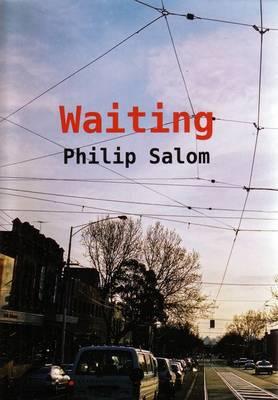
Waiting by Philip Salom
Puncher & Wattmann, 2015


‘How much of human life is lost in waiting!’ wrote Ralph Waldo Emerson in his essay, ‘Prudence’. Philip Salom’s excellent third novel takes this condition as its title and theme, focusing on four characters who have become mired, to greater or lesser degrees, within their lives and locations.

The eccentric couple known as ‘Big’ and ‘Little’ spend their days contently wandering between a few regular haunts in their North Melbourne neighbourhood: the IGA, the post office, the library and the boarding house where they live. Big is, quite naturally, largely than life: a hefty, bearded, cross-dressing autodidact who is often brash and loquacious in a manner that, as a number of reviewers have noted, evokes comparisons to Ignatius J. Reilly in John Kennedy Toole’s A Confederacy of Dunces. Little, by contrast, is a shy, nervous and diminutive woman afflicted with Lupus, who quietly manages the practical affairs of life that seem to easily overwhelm Big, and serves as a gentle check on her partner’s excesses. Big and Little exist in a nebulous space – one that is meant to be temporary, but which has long ago become permanent for them – sharing a cramped room in their boarding house while making vague and often unrealised plans for the future, enjoying each other’s company and the sense of community they have built with the other residents.

The other key characters in the novel seem to be stuck in in-between spaces of their own. Angus, Little’s cousin, is a designer, who has moved from constructing fire-proof homes for rural Australian areas to working on lake-scapes for city councils. He is new to Melbourne, living a solitary life while he waits for his house in Adelaide to be sold and his divorce settlement finalised, still quietly haunted by the memory of a recent bushfire and the alleged failure of his safe house design. Early in the novel, Angus embarks upon a tentative relationship with Jasmin, a Melbourne academic who lectures in the field of semiotics and feels that her career has recently stalled due to the delayed publication of her second book. None of these characters are undergoing any profound doubt or stress, but they are all busy waiting for someone or for something to change.

Perhaps reflecting the sense of inertia experienced by its characters, this novel moves slowly, with the majority of its focus given over to the brilliantly captured descriptive details of its North Melbourne setting, and the subtle interrogation of its protagonists’ internal states, exploring their desires, beliefs and insecurities. However, as Waiting progresses, a narrative through-line starts to emerge, which promises tumultuous change in the lives of Big and Little, and slowly starts to pull Angus into their sphere. Little’s estranged mother in Adelaide is apparently dying, and, in a sudden change of heart, has decided to leave her house to her daughter, much to the chagrin of Little’s aunts in Adelaide, who are determined to ensure that the house will pass to them. Angus is roped in by his own unscrupulous mother to visit Little and convince her to either share or renounce her inheritance. While the Adelaide aunts are appropriately vicious in their disdain for Little and their underhanded scheming, they never really emerge as a credible threat or source of conflict in the narrative. Even Angus, their principal agent, is quick to dismiss their plans as both unethical and unlikely to succeed. Rather they serve as a source of underlying tension for Little, an intrusion into the generally calm world that she has created for herself with Big. Furthermore, the prospect of her mother’s death and an inheritance to follow, means that Little has potentially more concrete future prospects, allowing her to envision a new life for her and Big. As she consults with a lawyer and develops a cautious friendship with Angus, Little contemplates moving to Adelaide to occupy the house after her mother is gone, or using the proceeds from its sale to find a place for herself and Big in Melbourne.

Posted in BOOK REVIEWS | Tagged ,

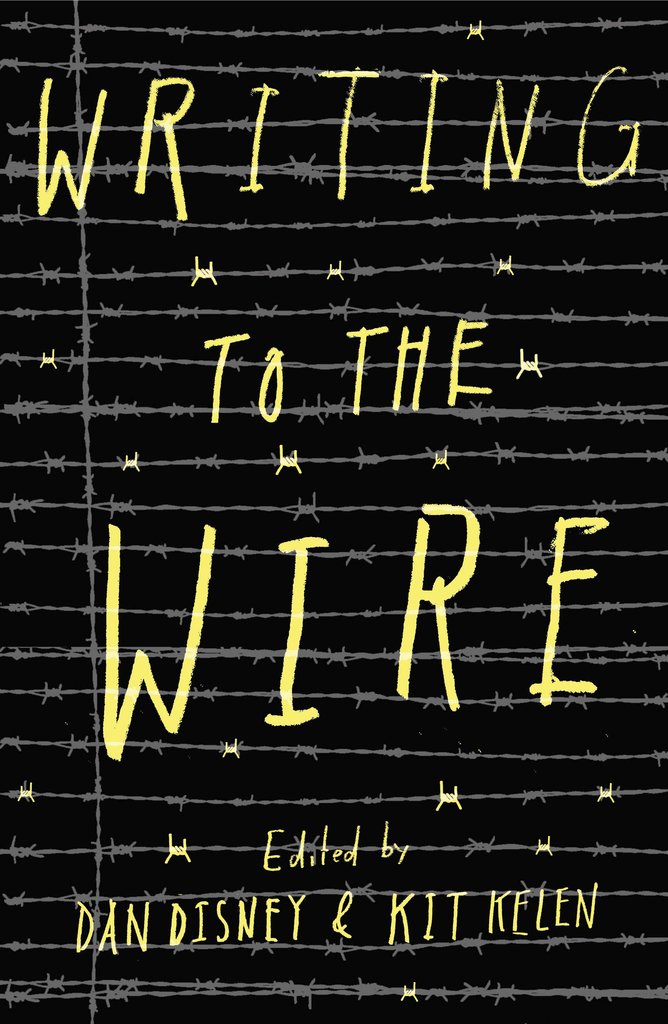
Review Short: Writing to the Wire, Dan Disney and Kit Kelen, eds.

Writing to the Wire, Dan Disney and Kit Kelen, eds.
UWA Publishing, 2016


Hannah Arendt clearly noted it: a dog with a name-tag has a better chance of surviving than an anonymous dog. She also noted that the alleged protections offered by legal and moral rights – human or otherwise – would only be made available to those who did not need them. The right to have rights would be stripped from the rest; they would be consigned to the worst. And so it came to pass: governments around the globe, wearied by the difficulties of politics, turned themselves into servile machines whose only raison d’être is to help deracinated multinationals to extract as much surplus as fast as they possibly can from the peoples and places of the earth. Politicians of every stripe are now the sworn enemies of the people that they allegedly represent, preferring to torture children than risk being put out of office by an irritable corporate goon.

So Dan Disney and Kit Kelen, clearly horrified by the situation that they outline in their introduction to Writing to the Wire, have commissioned a truly diverse range of Australian poets and asylum-seekers to call us back to our responsibilities through verse. It is clear that this is an issue that should bring us together against the entrepreneurs and exploiters of human misery, and it is surely not nothing that so many well-known writers have answered their call. One exemplary bio reads: ‘Rachael Briggs immigrated to Australia from the U.S. Became a citizen. People in camps deserve the same opportunity.’ Yes they do.

Yet many of the contributors are not marked by their publications and other accomplishments, but only by an initial: ‘A. is from Iran’; ‘A. is a Hazara boy from Afghanistan who has been incarcerated in Australia’s immigration detention network for more than two years’; ‘B. is a young man who has been incarcerated in Australia’s Manus Island detention camp for the past 27 months. He chooses to withhold his name.’ Several have even lost their initials altogether: ‘Name withheld’; ‘anonymous.’ Such a severing of bodies from names is symptomatic of dictatorships, not democracies.

Whether anonymous or notorious, all contributors are concerned to speak as best they can about such a deleterious state of affairs, evident from even a glance at the alphabetised titles: ‘drone illuminations’, ‘Drowning Inland’, ‘The Duty of Punishment’. As Samuel Wagan Watson writes in ‘No entry anytime’, which has Muhammad Ali’s famous anti-imperialist and anti-racist boutade ‘No VietCong ever called me a Nigger!’ as an epigraph: ‘Restraining orders come natural to me…this isn’t my country unless a federal court deems it so. I’m not welcome here and I’m not welcome there …’ Or there’s Ali Alizadeh, whose ‘Who’ speaks of ‘the degradation of the political to policing’. Or, as B. describes in ‘Night’:

Every thing is worse than our nightmares –
                         torture and despair.
                         Bring me the night.

At this point, there is no difference between poetry and testimony: the true speech of the witness, which goes beyond the brute facts to touch upon what cannot be experienced without misery and dissolution; the address to others who were not there, who may not have eyes to see or ears to hear, but whose existence provides a (minimal) hope that there is more to the world than unjust incarceration, primitive accumulation, and murderous rapaciousness. Writing to the Wire does not provide a context for aesthetic evaluation, but for the transmission of testimonial gestures of justice.

We know the fiscal costs of one great Australian corporate and governmental cabal: nearly $10 billion dollars to date to keep refugees incarcerated by private companies on foreign soil. That this indefinite incarceration of innocents is now the preferred alibi for governments to transfer taxpayers’ money to private hands – and so impoverish their own polities, their welfare and education systems, as if that impoverishment were the very essence of the salus populi – is a kind of epitome of Orwellian double-speak and double-think. An epitome of contemporary charity, too, given that the sadistic sociopaths who chuckle and sneer on Q&A as if they were simply discussing the qualities of snuff, constantly congratulate themselves on taking the hard moral decisions for our benefit. Nathan Curnow’s ‘Reply to a father from a Federal Member’ takes up precisely what W H Auden would have called the ‘elderly gibberish’ or the ‘gushing drivel’ of these irredeemably corrupted personages: ‘Explain to your kids / that you can’t be specific / in the interest of national security’. When you live in a world where reporting on a crime is considered worse than committing one, it becomes ever easier for the culprits not only to evade responsibility, but to turn the victims into the true criminals. Sigmund Freud points out that, since that every individual, no matter how timid, submissive, or law-abiding, remains a potential threat to the masters’ rule, the ultimate telos of government must be to ensure perpetual peace through universal mortification.

It’s perhaps noteworthy that, despite the embittered irony evident in a number of these poems, nobody proffers a satire on the order of eating refugee babies or selling them for medical experiments, like Jonathan Swift on Irish impoverishment, or Monty Python on indigent Catholics. Perhaps that’s itself a sign of how bad things are, that the extremity of radical literature may be too uncomfortable to sustain in the ambit of these actual atrocities, that the concentration camps are simply too calculated in their evil to permit any too-extravagant an imaginative response. Still, I was queasily struck that several poets here almost seemed to compare their perceived lack of attention as poets in Australia with indefinite incarceration behind razor wire, out of sight out of mind on client islands – but there you are. It’s a reminder that the wire doesn’t simply divide us from each other, but runs within us, dividing our own actions from themselves, our affects from our effects. To that extent, we ourselves have become a ‘Trash Vortex’, to use Felicity Plunkett’s disturbing phrase.

As Julian Burnside QC writes in his foreword, taking up an image of Vladimir Mayakovsky’s: ‘I hope that all Australians who read these poems will be inspired to start hammering our government for a refugee policy which more honestly embodies the true values of this country.’ I hope so too. Yet I also fear that poetry itself isn’t really politics; it may even be the opposite of politics. Power politics is often the committed enemy of poetry. Still, even such politics must retain an attenuated link to the same language which poetry deploys. Opening and opposition, then: where there’s language, there’s life. Is that enough? Think of Bertolt Brecht’s refrain from ‘The Infanticide of Marie Farrar’ (in S.H. Bremer’s translation):

But you I beg, make not your anger manifest
For all that lives needs help from all the rest.

There are many ways to read Brecht’s plea, including that anger is a signal of despairing impotence that can trick you into moral self-regard rather than political action. At the very least, then, you should read this book, before hammering your Federal Member.

Posted in BOOK REVIEWS | Tagged , ,

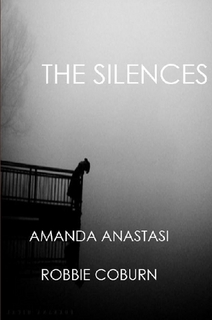
Review Short: Amanda Anastasi and Robbie Coburn’s The Silences

The Silences by Amanda Anastasi and Robbie Coburn
Eaglemont Press, 2016


These 41 pages from a revived Eaglemont Press (once run by the late, revered Melbourne poet, Shelton Lea) contain the first collections (or first half-collections) of Lea’s much younger fellow-Melbournians, Amanda Anastasi and Robbie Coburn. It’s analogous to two good friends buying a very small inner-city flat to get a toe-hold in the daunting real estate market of that city. Bigger things are sure to come later.

The book’s concern with various sorts of silence (and perhaps the reasons for them) starts from its first poem, ‘The Initiation’. It’s by Anastasi and details the treatment of a somewhat reluctant infant being christened, probably in a Catholic church, given ‘a constant male rhythmic murmur’ of the priests. The baby sets up ‘a persistent ostinato cry’. In reply, it receives ‘a protective stroke of the head’ before the poem ends with ‘and the hushing. / The endless hushing’. We’re not told which sex the baby is but one suspects she’s female.

The use of such implication and indirection is typical of Anastasi’s work more generally and yet she and Coburn stop well short of the densely-packed lexical obscurity that currently prevails in some of Melbourne’s poetry circles. Something of the future of the baby just referred to may be sensed in Anastasi’s later poem, ‘Wing’, where the flight of a bird demands that ‘the only posture is that of crucifixion’. The last four lines, however, are notably optimistic: ‘The open-mouthed dependency / of the bristling nest is far behind. // There are many destinations. / The sky is the resting place.’

A comparable sense of opening out occurs in Anastasi’s ‘Night Arrows’. First, the prevailing background of the book is re-established with: “A dog yelps / at the alteration in the wind. // The empty night is an ear, / collecting all that is dismissed.’ Finally, the speaker decides to ‘embrace the unknown, / not the frightening known.’

Robbie Coburn’s poems are somewhat different to Anastasi’s, despite a number of shared assumptions and techniques. This is felt particularly in those poems stemming from Coburn’s farming background. Like some other poets of similar origins (the late Philip Hodgins, for instance, or Brendan Ryan) Coburn’s rear-vision portraits are far from romantic. As he says in ‘Suicide Country’: ‘living in the country remains with you long after you’ve gone / becoming a second skin dislodged when away from the grasses …’

This ambivalence continues in other poems such as ‘How I Feel About Being Here’ which concludes: ‘I love all the things I hate about being here.’ The majority of Coburn’s poems are, however, like Anastasi’s, set in the city – Melbourne, we may assume. Most of them have a somewhat romantic, young man’s angst. ‘Night Walk’, for instance, ends with: ‘from where I am standing / the damage is immeasurable / / no one on the road at 4am / listening / to the cars approaching’. Later, a poem called ‘Missing’, in its opening lines, seems almost to continue the earlier one: ‘dawn comes             not unlike / the sleeplessness preceding it, / unalterable and dragging through your breath.’

Sometimes, Coburn moves a beyond his youthful urban despair to produce slightly longer, more fully-achieved poems that go deeper into the causes of the malaise – and, even better, imply a way out of it. A fine example is ‘Lines to Myself’. It’s a persuasive evocation of a kind of undiagnosed and unnamed mental illness. Half way through, the poet says: ‘you must understand that your mind is not your own. / the emergence of fear settling into your breath / is not a fault of character, not weakness, / and this imbalance is beyond your control’. This could also be a helpful psychiatrist talking but at by end of the poem the narrator realises: ‘I can promise you something … / one day …. / you will recognise something new about / the image distorting in the wet glass. / I tell you now, // you won’t always be so unwell.’ At a time when young male rural suicides are a major problem in Australia, ‘Lines to Myself’ offers a sharp and useful insight.

It’s important to insist that The Silences is no mere arrangement of convenience. Indeed it’s something of a livre compose, despite its having been written by two separate poets. While Anastasi and Coburn do have their differences, the reader may surmise that, if their names were taken off the poems, The Silences would still read like a coherent, well-organised first collection. The title itself suggests a certain bleakness and the imperfections of human communication which are reflected in many of the poems. This is no chatty celebration of Melbourne’s coffee culture. It’s more an inside-on-a-winter’s-night-back-to-work-on-Monday sort of feeling. It will be interesting to see where these two young poets go next.

Posted in BOOK REVIEWS | Tagged , ,

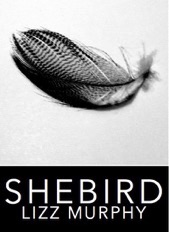
Review Short: Lizz Murphy’s Shebird

Shebird by Lizz Murphy
PressPress, 2016


I am a slave to the cocoa bean
So too the children who harvest it

It was these lines from Lizz Murphy’s book of micro poetry, Shebird, which entranced me into selecting it for review. The simple yet effective metaphor, the point at which the mundanity of western life and the horrific reality of child labourers converge, at the crossroads of consumerism: this was what brought me into entering the world of Shebird, the ‘woman or girl who wears the shroud of widows, guards the new grave, tastes gun’. The physical and emotional pain that the Congolese women experience is conveyed expertly in the sensory language that Murphy wields.

When I received the book, I felt like I was holding something fragile and intimate. The paperback format of Shebird gives the volume a textile, delicate feeling, much like the downy feathers of a bird. As the sixth poetry volume in Murphy’s career, the work is highly refined, and finely crafted. Readers of Murphy will appreciate the continuation of the feminine perspective from previous collections such as her anthology Wee Girls, which focused on Irish women’s poetry in Australia. Murphy’s preoccupation with the marginalised voices of women and girls is astutely conveyed in this volume, which translates the pain and violence experienced by women into brief yet profound verses.

The micropoetry format is a continuation of Murphy’s Portraits, inspired by her work with visual art. In the summary of this collection, Murphy describes the micropoem as ‘a flashing wing, a story in a heartbeat, a scrap of the living, a satirical stir’. In Shebirds¸ Murphy continues this slant of ‘a punch in a line’ with many of her poems consisting of only a few lines. The poem I have quoted above, entitled ‘Chocolate Fix’, has been transcribed in its entirety of two epigrammatic lines, yet the implications are expansive. By linking two classes of women through a single image, the coffee bean, Murphy creates a portal into the world of Shebird, the world of the child worker, the girl slave, the global ‘other’ whose voice is unheard.

Murphy demonstrates her ability to concisely portray complex emotions, issues and situations with style and grace. In ‘Dangerous Women’ the stripped back syntax and intensely corporeal language communicate a pain that is at once sharp and compelling.

she scrapes off her own mouth
                     eyes lowered
          grief tempest grey

Murphy’s poetics envelop the reader into the world in such a visceral manner, that it forces the reader to acknowledge the issue at hand. The poetry demands to be read, demands to be heard. Each poem is brief, sometimes only one line, yet it speaks to the heart of an issue that is so often left out of cold statistics.

The number of men
Who sexually assaulted
a twelve year old girl:
Reckoning 101

The colloquial tone of this poem, ‘Who’s Counting’, denies the news report’s cold distance of journalism, and instead gives the rape of this young girl a more human voice. Murphy addresses the issues of violence against women and girls in third world countries in apposite, yet highly imagistic poems. She refuses to let these women and girls be turned into statistics.

A bird motif recurs throughout the volume – in numerous incarnations it is deployed to allegorise the old woman, the child who toils, and the poet-narrator herself. The bird is a fragile, endlessly suffering creature, but also a figure of resilience, one that endures suffering and retains its beauty despite its trials. This culminates in one of the final poems, ‘A Woman is Raped’, in which the poet urges the figure to ‘rise like a shebird / against / the war on women’. As the notation indicates, this poem was inspired by an art and text work depicting the rape of Congolese women. These indices remind the reader that the girls, or shebirds, rendered in this volume are not simply poetic devices, but real human beings that theses horrors are currently being inflicted upon.

This ultimately gives the poetry a gravitas that is needed when handling such a distressing and often unheard of issue. Far from simply being a pleasing assortment of words and lines, though the collection is masterfully crafted, Murphy’s Shebird draws attention to the most vulnerable girls and women in the population, and urges the women’s voices be heard and their stories be told.

Posted in BOOK REVIEWS | Tagged ,

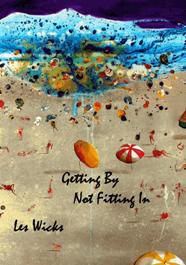
Review Short: Les Wicks’s Getting By Not Fitting In

Getting By Not Fitting In by Les Wicks
Island Books, 2016

Is Les Wicks afraid of love? Yes, Les Wicks is afraid of love.

I start this review with a swift homage to Charles Simic (1975) because of the feelings, affects and question marks I was left with after first reading Les Wicks’s Getting By Not Fitting In (2016). Continue reading

Posted in BOOK REVIEWS | Tagged ,

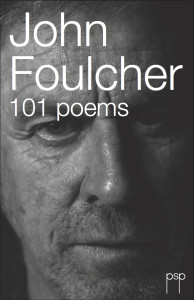
Review Short: John Foulcher’s 101 Poems

101 Poems by John Foulcher
Pitt Street Poetry, 2015

Over a career spanning more than thirty years many critics have praised John Foulcher’s skill at ‘capturing a moment’. The simplicity of such an observation, however, is no platitude considering how fully Foulcher achieves this. 101 Poems is a retrospective collection that shows the poet’s ability to illustrate how time can be clear and immediate. Continue reading

Posted in BOOK REVIEWS | Tagged ,

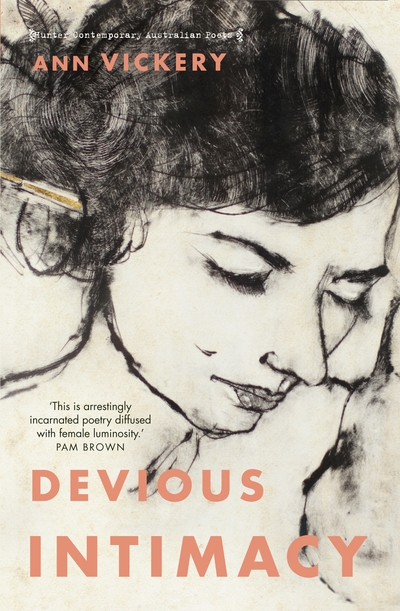
David Gilbey Reviews Ann Vickery and Brendan Ryan

Devious Intimacy by Ann Vickery
Hunter Publishers, 2015

Small Town Soundtrack by Brendan Ryan
Hunter Publishers, 2015


These two recent volumes from the distinguished Hunter Contemporary Australian Poets series are about as different from each other as umeboshi and camembert, and – as I’ve found when wanting to impress Japanese visitors with a striking new taste combination that has the energy and disorder of a good poem (to cite Tom Shapcott’s useful terms) – such obverses delight with both surprise and recognition.

Anarchically centrifugal, barely staying still for a line, a phrase, let alone a haiku curlicue of ‘gander gossip’ or ‘polyblivion’, Ann Vickery’s magical poems in Devious Intimacy tease the gazing brains of their readers with non-sequiturs, frizzle-tops and virtuoso titillation: disjunct, disarray, dishevel, discontinue … Vickery’s virtuoso sleight of word camps grandly (see ‘Vivienne’).

Building on notions of the ‘trace’ Vickery has re-framed both ‘devious’ and ‘intimacy’ in these elusive/allusive/illusive, playfully and deadly serious poems. ‘A poem is a mirage of distillation’, she writes in ‘Ecopoetic Ecumenical’:

Purgatory is by nature hot and full of hoons.
Temperature, not temperament, a nice set of wheels.
It’s generally the assholes that get all the love poems.

This poem’s ‘bucket list of romance’ suggests both ‘razing the grapes’ and ‘Cling to a hundred little homilies’; though ‘love’s climate countdown / is inordinately inevitable. Terroir on tap.’ Vickery’s distilling has produced concentration, sculpting, pruning, (self-)conscious architecturing. The poet might be pretending disingenousness, but like Socrates, Joyce and Pam Brown, she is well in control of the reins.

Devious Intimacy is unceasingly interlocutory. The facing page’s ‘Edinburgh guard:         fragment’ might be taking us through that ambiguous ‘Malley country’, a ‘thistle-fisted, / cento puff to full-ferried existence […] you fuck angels / on a Duino roof’. Suggestive and ambiguously threatening, like ‘Ecopoetic Ecumenical’ the poem ends in the underbelly: ‘unsexed terroir’. Where conventional syntax and logic are abandoned for something more ‘porphyrial’, the poetry multiplies and mystifies connotation, creating both anxiety (about not being able to define, pin down, axiomise) and delight (in multiple, juicy, dichotomous meaning-making). In both poems the last words are thematically significant.

After all (and echoing AD Hope?) ‘We are all gulags /         aren’t we?          Migratory cycles / of need, energy and failure of the body. / Listening only when the expected comes unstuck’ (‘Russian Bit Player’) and our passion is ‘moulted’ like mutton birds, ‘Starved at / the end-point of love’. In ‘Adventure at Sadies’:

Down the rabbit hole, we find
a world of cottage cheese and over-inflated
princedoms 
… conjecture convivially on the poet’s last fuck—
ing stand

Suggesting that traditional fantasy narratives may be untrustworthy, Vickery’s poetry celebrates its predominant trope of bathos, elevated to new heights of critical insight: ‘What price Russian formalism? / How unusual can an everyday poem be?’ Linguistic juxtaposition is usually unsettlingly polysyllabic so, a few lines later, ‘Circularity breeds / stove-top despair, the coffee always spills twice’. Clearly this poem’s rejection of conventional poetic fluency, cadence and lyrical organicism is a kind of conversation with poet friends—some names are mentioned towards the end, bearing out Devious Intimacy’s epigraph: ‘Poems should echo and re-echo against each other.’

Posted in BOOK REVIEWS | Tagged , ,

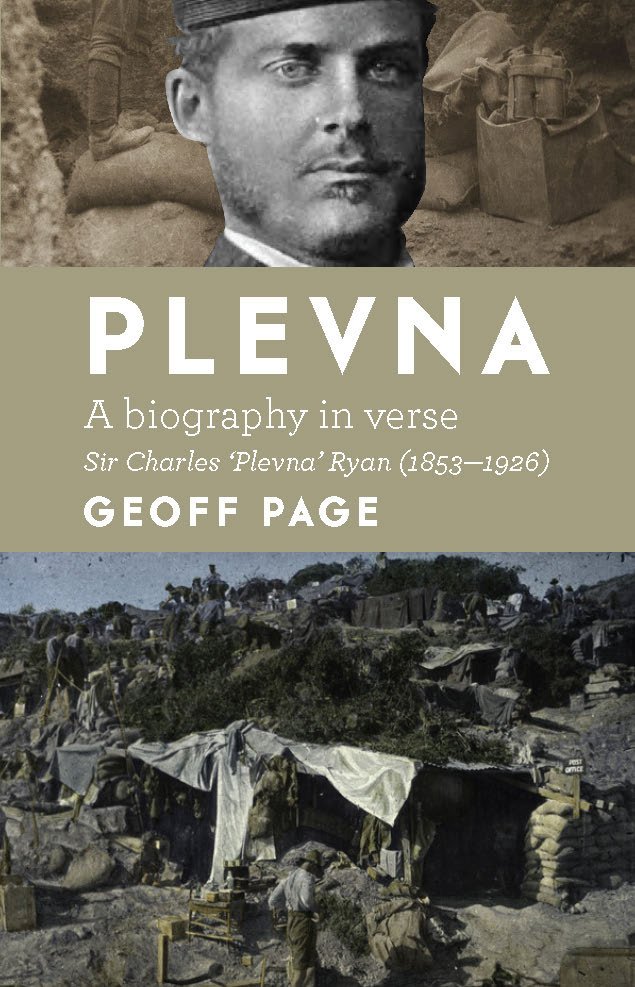
Jessica Wilkinson Reviews Geoff Page

Plevna: A biography in verse by Geoff Page
UWA Publishing, 2016


Geoff Page is a well-known figure in the Australian poetry scene: a prolific writer with over twenty books to his name and an established editor (recently of the 2014 and 2015 Best Australian Poems), yet perhaps known most widely as a reviewer. A regular feather-ruffler, Page’s reviews frequently appear in prominent publications such as the Age and the Australian. Page’s trust in, and loyalty to conventional verse forms is no secret; he often takes aim at more experimental or avant-garde Australian works, as if such attempts to broaden the field of Australian poetics are to be regarded with some suspicion. See, for example, his 2014 post on the Southerly blog ‘Obscurity in Poetry—A Spectrum’, where Page specifically criticises what he calls ‘wilful obscurity’ in the work of ‘a significant group of contemporary (mainly young) Australian poets.’ Or his more recent review in the Sydney Morning Herald of the Australian issue of the American journal Poetry, in which the ‘adventurous but not avant-garde’ is praised, while the work of poets such as Fiona Hile (an award-winning poet, no less) are implied to be ‘outposts’, lacking in substance and complexity. Page’s opinions have challenged more than a few members of the contemporary poetry scene, this author included. Nevertheless, a little healthy sparring keeps all authors on their toes, and given the prominence of Page’s own opinions in Australian media, he is perhaps ready to receive some constructive challenges to his own poetry.

Page’s most recent release, Plevna is a verse biography of Charles Snodgrass Ryan, a Melbourne surgeon and army officer who served in the Turko-Servian and Russo-Turkish wars, then later at Gallipoli. He received the nickname ‘Plevna’ after spending four months in the siege at that city in 1877. From the first poem, Page suggests a reason for his interest in pursuing Ryan as a biographical subject: ‘Why have we no biography, / three hundred pages, dense with footnotes, / boasting your achievements?’ Ryan’s own 1897 book, Under the Red Crescent: Adventures of an English Surgeon with the Turkish Army at Plevna and Erzeroum, 1877-1878, left ‘a vivid whiff’ of his experiences, Page writes, ‘but covers two years only’. There is a sense, then, that Page intends to celebrate a life not yet well celebrated in historical narratives.

Fittingly, Page begins not with his poems, but by using Ryan’s own words from Under the Red Crescent. This opening quotation, in first person, documents Ryan removing the leg of an injured man who refused anaesthetic. There is a hint of humour in the patient’s casual demeanour:

He never said a word, and went on smoking his cigarette all the time … [and] answered all the questions quietly and unconcernedly while I was stitching up the flap of skin over the stump’ [italics in original source].

Page continues to present prose quotations as moments of pause between the poetry sections. Selection and quotation from historical documents are a common feature of documentary poetry, and Page has included passages that titillate in their gruesome and shocking details as Ryan portrays his dealing with injured soldiers: a man suffers a bullet through ‘the upper portion of the brain’ but recovers; another has his head blown ‘clean off’ and after ‘a spirting [sic] from the blood-vessels in the neck … the headless corpse spun around in a circle.’ There are also frequent quotations littered throughout the poems, indicated with quote marks, which increase in frequency as the narrative unfolds. The following passage, for example:

You meet his rather splendid wife,
just ‘twenty years of age’,
‘complexion of exquisite fairness’,
‘large blue eyes that looked me frankly
in the face’. In eighteen months
you haven’t seen a woman
anything like this.
	
The Bulgar girls are ‘squat and swarthy’;
Armenians are ‘frowsy’; the Turkish
girls all ‘veiled in yashmaks’.
Your heart is ‘beating’ with ‘delight’.

This method of including source material spoils the flow of the poems a little, and suggests an anxiety on the part of the poet regarding unattributed quotation. Some of the more successful documentary poetry – see, for instance, works by the US poet Susan Howe, Canadian poet Dennis Cooley, or Australian poet Jordie Albiston – will absorb the words of others into the poems as part of the performance of redacting history through the poetic medium. Page has opted to foreground his quotations, and while some of these do offer insights into Ryan’s voice or manner of speaking, a majority of ‘quoted’ phrases, such as ‘twenty years of age’, do not seem justified in their use of the same technique.

Page sets up an interesting dichotomy between Ryan’s first-person, prose passages, and the second-person voice that addresses Ryan in the poems and draws the poet-author into the field of narration. The first poem finds its way to approach Ryan through biographical narrative, with the ‘I’ of the author exposing a ‘maudlin’ desire ‘to address the dead’; and this conceit of direct address continues throughout the book:

Maudlin to address the dead,
especially unintroduced,
but even so, Charles Ryan,
I have the urge to do so,
Melbourne surgeon, later Sir,
but ‘Charlie’ to your friends.
Also known as ‘Plevna’ Ryan
but that can wait till later.

Your dates are 1853
to 1926,
a life as long as mine is now
or was when I began.

The decision to use second person is a curious one, perhaps intended as an extended elegiac narrative; the remembrance that Page felt to be lacking. Or, perhaps Page intends to bring an intimacy between the subject and himself, the author of this life story. The approach works well in the initial stages of the narrative, as the poet matches some of grisly medical details to come with his own poetic metaphors. Page ponders the ‘shock’ that a young Ryan at med school must have experienced as a rural-born boy: ‘the way a scalpel slices in / to spill things on a slab / and how a ribcage may be sawn / to offer up its thoughts.’ There are several such moments of speculation, where Page muses in the space where details are missing; this gives us a strong sense of the poet’s attempt to ‘find’ and connect with his subject. This intimacy, however, is soon held back by a persistent tendency to document the facts of what happened at different moments in Ryan’s life in a rather plodding, chronological manner, rather than utilising the complex devices available to the poetic medium to help us understand more intimate details about the man. On this note, it is worth mentioning that Page has adopted an iambic metre for the poetry, which seems apt considering that much of this work is focused on Ryan’s involvement in World War I; the iamb recalls the rhythms of war poems of Wilfred Owen (‘Dulce et Decorum Est’), John McCrae (‘In Flanders Field’) and others. Beyond the promise of the first pages, however, there is a formality to the poems that comes across a bit flat, especially combined with their adherence to linearity and fact.

Posted in BOOK REVIEWS | Tagged , ,

Prithvi Varatharajan Reviews Peter Boyle

Ghostspeaking by Peter Boyle
Vagabond Press, 2016


Peter Boyle’s Ghostspeaking belongs to a relatively rare poetic tradition, in which the poet creates heteronyms through which he or she writes. Indeed, the cover blurb of Ghostspeaking announces that the book contains ‘eleven fictive poets from Latin America, France and Québec. Their poems, interviews, biographies and letters weave images of diverse lives and poetics.’ As opposed to the pseudonym, which is merely a false name that allows the poet anonymity, the heteronym entails the creation of an entire life: not only distinctive poetic works, but also a biography for the poet that embeds them in real history. There are not many practitioners of the form, but a major precursor is Fernando Pessoa, the late-nineteenth century and early twentieth-century Portuguese writer, literary critic and translator. Pessoa created scores of heteronymous prose writers and poets, and is best known for four: Álvaro de Campos, Ricardo Reis, Alberto Caeiro, and Bernardo Soares. His creations were so much their own entities to him that, when writing as Fernando Pessoa, he often referred to their opinions, some of which were in contrast to ‘his own.’

To offer ways of thinking about what Boyle is doing in Ghostspeaking, I’ll start by characterising Pessoa’s writing and then move on to Boyle. Pessoa’s poems had affinities with dramatic poetry, where the poet creates characters in verse. He saw his poetry as being somewhere between dramatic and lyric poetry; in fact, he argued that the two are not as separate as they may seem. ‘There is a continuous gradation from lyric to dramatic poetry,’ he wrote in his essay ‘Heteronyms: Degrees of Independence’: ‘if we were to go to the very origins of dramatic poetry – Aeschyllus, for example … what we encounter here is lyric poetry in the mouth of various protagonists’. In an essay titled ‘Degrees of Lyricism in Poetry,’ he addresses the interrelations between the two traditions in a different way, by distinguishing between lyric poets who adhere closely to their own experience as the source of their poetry (the conventional Romantic sense of a lyric poet), and those who invent the experiences of others. Having categorised lyric poets into four ‘degrees’ which relate to their reliance on personality – with the first one being the most personal – he states:

The third degree of lyric poetry is that in which the poet … begins to depersonalize himself, to feel, not just because he feels, but because he thinks he feels; to feel states of soul which he truly does not possess, simply because he understands them. We are in the antechamber of dramatic poetry, its intimate essence … The fourth degree of lyric poetry is that much rarer one, in which the poet … embarks upon complete depersonalization. He not only feels, but lives, the states of soul which he does not directly possess.

The last of Pessoa’s degrees of lyricism is the one he aspired towards in his heteronymous works. It is also the one that Boyle inhabits in Ghostspeaking. This fourth degree of lyricism may seem similar to what the novelist does with her characters, but there are important differences. The structure of the realist novel typically has the author at the top, and the fictive creations below her. Such a novelist does not make any claims that her characters are authors in their own right: the privilege of authorship is reserved for her. Moreover, in the contemporary English novel there is often a coherence of style across the novel, at least in the narrator’s voice which ties the various characterisations together. The ‘master author’ is given special importance within the confines of the novel. This is not the case in heteronymous poetry, where each poet jostles for the status of author in their own right. It is also worth noting that heteronymous poetry is different to biographical poetry, such as in the work of contemporary Australian poets Jessica Wilkinson (Suite for Percy Grainger, 2014) and Jordie Albiston (The Hanging of Jean Lee, 1998). Such poetry animates real historical figures, and the poetry is a conscious act of writing in character while hovering at the border of fiction and fact. By contrast, heteronymous poetry entails the creation of a person who is not already in the world’s records, along with the creation of their rhetorical voice in poetry.

Heteronymous poetry is decidedly eerie if we conclude that its spirit is lyrical rather than dramatic (or that it is more lyrical than dramatic). Because the lyric is so closely tied to embodiment – the lyric authorial voice is often thought of in relation to a singular authorial body – heteronymous lyric poetry has a ghostly quality to it, as the voice seems to emanate from nowhere, from no body, even if, rationally, we are aware that all the voices in such a book emanate from the body whose name is printed on the cover.

Ghostspeaking follows Boyle’s excellent Apocrypha (Vagabond Press, 2009) in the use of heteronyms. But whereas Apocrypha seemed to featured one heteronym – a ‘William O’Shaunessy’ whose ‘translations’ of fragments of classical Western literature Boyle claims to have discovered and edited – Ghostspeaking clearly features eleven such figures. I say ‘seemed to’ because it becomes clear in Apocrypha that O’Shaunessy is not the only imagined figure in the book, that there are heteronyms lurking within ‘his’ translations. Because of this initial picture, which resolves itself upon closer reading, Apocrypha reads as a book of works by real poets, translated by Boyle-as-O’Shaunessy, whereas Ghostspeaking looks to be a meandering anthology of heteronymous writing, containing poems, prose, letters, interviews, and biographical introductions. A similarly expansive imagination motivates both projects, but in some ways Ghostspeaking is more upfront about the number of heteronyms in its pages.

Ghostspeaking contains work by the following poets: ‘Ricardo Xavier Bousoño (1953-2011)’; ‘Elena Navronskaya Blanco (1929-2014)’; ‘Lazlo Thalassa (1940?- ?)’; ‘Maria Zafarelli Strega (1961- ?)’; ‘Federico Silva (1901-1980)’; ‘Antonio Almeida (1899-1981)’; ‘The Montaigne Poet’; ‘Robert Berechit (1926-1947)’; ‘Antonieta Villanueva (1907-1982)’; ‘Ernesto Ray (1965-2016)’; ‘Gaston Bousquin (1957-2014).’ Let them rest here in quotations, to mark their fictive reality. In the remainder of the review I’ll refer to them without quotations, to honour them as authors in their own right, as Boyle asks us to. A further conceit of the book is that Boyle is the translator of all these poets. The effect of this is that Boyle is present in the heteronymous works, while proclaiming them to be someone else’s, just as translators are a quiet presence in the works they translate.

There are many allusions to the act of poetic ventriloquy in the text of the book. The title poem ‘Ghostspeakings’, by Ricardo Xavier Bousoño, contains the lines: ‘And you came floating, / A white witch in flowing robes […] / And I, a ghost led by a ghost’. If the poems in Boyle’s book are spoken by ghosts – the eleven disembodied heteronyms – then this poem suggests that ‘Peter Boyle’ should also be treated as a ghost, as a self that is no more permanent than the others: a ghost-self led by ghost-selves. In this title poem Boyle signals the arrival of the many selves within himself, in the manner of one of the book’s epigraphs, by Argentine poet Alejandra Pizarnik: ‘I cannot speak with my voice – only with my voices’ . This suggests a compulsion which is not always the case for Boyle: much of his earliest poetry is in a singular poetic voice, in a more conventional lyric style. A possible motivation for the poet to have written Ghostspeaking is proffered by Maria Zafarelli Strega in the penultimate section of the book titled ‘Package Received From Mexico City, December 2015’. In the introduction to this section, Boyle claims he received a package from Strega’s address in Mexico; we are told the poems in this package are the last that Strega wrote before committing suicide. The poems arrive at his doorstep after passing through many hands – a metaphor for the book as a whole. In one of the enclosed poems, Boyle-as-Strega tells us that:

In my twenties I hungered so desperately for fame—admiration
for my poems, recognition as the one to watch, to take note
of … Now it is anonymity I seek, the chance to become
completely nameless, to vanish.

The poet has also slipped these allusions of ghostliness into the poets’ biographies in a more playful way, like mischievous winks to the reader. In Boyle’s account of an interview with Argentine poet Ricardo Xavier Bousoño, we’re told: ‘A recurrent theme in Ricardo’s conversations was his sense of being passed over, never mentioned in awards, excluded from magazines, having to fund the publication of his own books.’ Likewise, the biographical note on Lazlo Thalassa reads: ‘The eccentric Mexican poet of mixed Bulgarian and Turkish origins is a shadowy figure whose very existence has been much debated.’

Posted in BOOK REVIEWS | Tagged ,

Submission to Cordite 80: NO THEME VI

No Theme vi

Poetry for Cordite 80: NO THEME VI is guest-edited by Judith Beveridge.

Here’s what I’m looking for: poems of fewer than 100 lines, on any theme or style.

So that’s about as succinct as you can get. Judith worked Cordite in 2014 to select and critique a featured monthly poem.

Now, you may be wondering … so, with Cordite 57: CONFESSION publishing in February, 2017, what’s happened to issues 58-79? In short, we have already done them, all those XX.1 and XX.2 special issues we have published over the last decade. As our essays, poems, reviews, translations and scholarly research have become increasingly cited around the world and web, the dizzying confusion of what our issue structure actually is has become more vertiginous. So we are going to keep doing those special issues, but simplify things. After all, Cordite 80: NO THEME VI with Judith Beveridge actually will be our 80th issue. Please submit, and thank you for 20 years (come 2017) of readership.


Submit poems (visual and concrete welcome) or works of microfiction (500 words maximum). Read more about submitting to Cordite Poetry Review. Please note:

1. We will only read submissions sent during our official submission periods.

2. Cordite maintains a hybrid submissions policy. This means that the guest editor may invite five (5) Australian and five (5) overseas authors directly to submit to the issue. In addition, the guest-editor will anonymously select an additional 30-35 works from Australian authors and use their discretion to select further overseas works. For each issue, the guest editor does not know the identities of the online contributors (via Submittable) until after the final selections have been made.

3. Simultaneous submissions or previously published material will not be considered. This includes works published in print and web journals but does not apply to material first published on personal blogs.

4. Please place up to three (3) poems in one (1) Word, RTF or PDF document (unless specifically noted otherwise for special issues), with no identifying details in the document itself.

5. We are not able to offer feedback on individual poems.

6. Submissions will only be accepted via Submittable …

submit


Posted in GUNCOTTON | Tagged ,

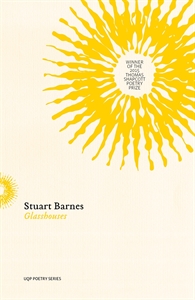
Alexis Late Reviews Stuart Barnes

Glasshouses by Stuart Barnes
UQP, 2016


Stuart Barnes’s early exposure to poetry reads like a literary fantasy. As a child he attended the same Tasmanian church as Gwen Harwood. The two struck up an unlikely friendship, and Harwood encouraged him to write. That formative experience saw him move to Melbourne to study literature where, in 2005, he was handed a notebook and, once again, urged to write. Barnes’s first collection of poetry, Glasshouses, is the culmination of years of carefully honed impressions, reflections and commentary. It is a kaleidoscopic portrait of the artist, covering a yearning childhood, the development of a writer self, the difficulty of coming out, the paradoxes of mental health, and the solace of bird-watching. Additionally, it is a multi-faceted mirror of the world he inhabits, of the moments gathered throughout Tasmania, Melbourne and Queensland, and the dusty inner roads of the roving poet. Barnes does not stand still, and neither do the poems in this collection, whose vividness seems to leap from the pages.

The first section, modestly titled ‘Reflections’, opens with ‘Fingal Valley’, a reminiscence of a childhood in the Tasmanian countryside. ‘Nan’s budgerigar’, it begins: situating this locale within a child’s perspective, where pets often occupy a large, looming presence. Remembrances follow in a sudden, hurried manner, as the overflow of memories intrudes upon the present. There is exquisite phrasing here, as Barnes writes of ‘squeezing like morning / fog between oxidised barbed / wire and gorse’, merging both action, weather and environment in a potent image. There is mention of slug guns, sheep skulls and plovers, an amalgamation of the experiences of country kids. There are perceptions that only a child would have, such as in the lines, ‘transfixed by sixpence’ and ‘a leering toilet roll’. One of the finest moments is when Barnes tells of ‘night’s deer-sprint to the outdoor / loo / the top bunk’s hexagonal wiring sprung, / mattress oozing through cells like honey’. There is a sharp beauty in ‘night’s deer-sprint’ as it captures the child’s fear of night time, and also captivates with its romanticism. The final simile could refer to memory – it oozes through the cells of the poet’s mind and drips into his present.

‘Ebon Cans’ opens with an epigraph from ‘Bone Scan’ by Harwood. This is her seminal poem about an epiphany experienced while looking at her scan, which allows her to know what is ‘beneath appearances’. This is also a theme within Barnes’s poem, though it is not obvious at first. The poem seems to be based on the poet’s experience with his early mentor, and begins: ‘In the twinkling of her eye, all is changed’, as he writes of a child ‘afraid of almost everything … but books, and paper and pen’, who finds poetry via his mentor in the church. A disturbing revelation follows. A priest in the same church abuses him. Later, he struggles in high school, and is told he will amount to nothing: ‘his father’s negativity’. There is a powerful use of internal rhyme, a wave-like rhythm: ‘oily priest’, ‘will roil minds’, ‘he’ll coil at high school’; rolling us through the devastation in order to emphasise the flame within the poem, revealed in the final lines – ‘he glances over his shoulder. She mouths Write’. The lack of a closing full stop stresses the possibilities that follow. As in ‘Bone Scan’, where the scan reveals Harwood to herself, Barnes hints that the poet mentor is a scan revealing the young writer to himself. Underneath the trauma and fear is a burgeoning artist, who will write himself out of the pain.

‘ValproateFlouxetineClonazepam’ is the first of the poems tackling mental health. The title references three psychiatric medications, the lack of spaces indicating the run-on nature of taking these pills at the same time. ‘Every day four purple pills’, he begins, and there is an ominous air throughout, as the verbs indicate: ‘cochineals … burned’, ‘elephant’s head severed’, ‘flowers crushed’. The images these pills bring to mind are not images of recovery. In the third stanza he describes one of the tablets as the ‘Eucharist’ and ‘a sport’, bringing to mind the unquestioning acceptance, and the game played by the psychiatrist to find the right combination. The last stanza is most disturbing, as Barnes uses rhyme to drive home the words that are the antithesis of a cure:

These are the cures that isolate
These are the cures that chill
These are the cures that splice the will
These are the cures that kill

These lines are a subtle remix of the final stanza from ‘Elm’ by Sylvia Plath, a poem that explores the darkness of depression. Plath writes, ‘it petrifies the will / These are the isolate, slow faults / That kill, that kill, that kill.’ Plath is referring to the mental illness itself, whereas Barnes applies the devastation to the medications. They are posited as ‘cures’ but the sicknesses they induce present an obvious contradiction. Barnes brings into question the role of psychiatric medication, revealing an insider’s account of the difficulties. It is perhaps too easy to assume these ‘cures’ are simply that, so we are invited to consider another perspective. In ‘ENDONE Oxycodone hydrochloride 5 mg’, Barnes writes ‘it does not take the place of your doctor or pharmacist … accident or emergency.’ Is he implying the accident of mental illness? The accident of finding yourself tied to a doctor? Is he commenting on the emergency of relying on a pharmacist when your sanity is on the line? Again, he presents the side-effects of medication, writing ‘swallow / it before meals with a glass of nausea’.

The final stanza is acute and precise, a surge of negation where before there was commentary. Barnes writes:

Do not show your pupils, abnormal,
do not show your restlessness, do not show your goose-
flesh, do not show your fast heart rate, do not show your new-
born child to a doctor or pharmacist.

The sudden shock of the final line jolts us out of the dream-like, early stanzas. It presents the doctor and pharmacist in an almost criminal light, as he lists side-effects that lead up to a child born with defects as a result of the mother’s medication.

Posted in BOOK REVIEWS | Tagged ,

Alex Kostas in as Cordite’s First Summer Intern

Cordite Publishing Inc. turns 20 years old come 2017, and it’s an honour that we’re now publishing poetry and criticism from writers that were not yet born when we started. Our first issues featured some of the last published poems by a number of significant Australian poets, and some of the first by writers now well, well established. We’re into our third generation now.

Cordite Publishing Inc. has relied on untold sums of volunteer hours to make our 80 issues of Cordite Poetry Review, 20 print books (see 2017) and all those supremely intricate int’l collaborations happen.

I am delighted to announce that Alex Kostas will be our first Summer intern. He will be involved with many facets of the journal’s production, editing and writing. Alex was born and raised in Canada but currently resides in Melbourne, and has been published in publications including otoliths, Unusual Works and Voiceworks. He was also shortlisted for the Lord Mayor’s Creative Writing Prize 2015. He is currently studying a Law / Arts double bachelor at Monash University, and is hopelessly in love with John Steinbeck and Sharon Olds.

Posted in GUNCOTTON | Tagged ,

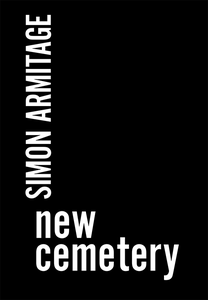
Review Short: Chapbooks from Simon Armitage and Philip Gross

New Cemetery by Simon Armitage
Recent Work Press @ IPSI, 2016

Time in the Dingle by Philip Gross
Recent Work Press @ IPSI, 2016


Poetry has a peculiar provenance in the public sphere. To describe the situation with egregious simplicity, some allege that poetry should speak to and for the people, while others assert that poetry should be avant-garde, testing the conventions of language and enacting nothing less than a transformation of society. The demands we make of poetry – arguably more pronounced than of other forms of literature – were recently explored in Ben Lerner’s The Hatred of Poetry (2016), which argues that such idealism inevitably results in dissatisfaction with actual poetry. Poetry ends up not being accessible or representative enough, while the avant-garde poem, as Lerner memorably describes it, disappoints like a bomb failing to go off.

These reflections seem pertinent to a review of two chapbooks by the British poets Simon Armitage and Philip Gross, published by IPSI (International Poetry Studies Institute), a poetry research centre housed at the University of Canberra. The work of the Yorkshire poet Armitage, in particular, has been celebrated for its accessibility and popularity, while also being criticised for betraying the avant-garde poetic ideal. In 2013, Armitage was the third best-selling living British poet (after Carol Ann Duffy and Pam Ayres). That year, he also published a non-fiction book documenting a walk along the Pennine Way, during which he famously gave poetry readings in exchange for food and board, emulating the troubadours of the Middle Ages. However, his considerable skill as a poet has also been institutionally acknowledged by his 2015 appointment as Professor of Poetry at Oxford University, suggesting that, for some, Armitage’s poetry would undoubtedly not be accessible enough.

The author of over 20 poetry collections and numerous other works across different genres, Armitage has the reputation of being a ‘working poet,’ and New Cemetery is further evidence of his impressive professionalism. The untitled poems concern the construction of a new cemetery, which is memorably compared to the construction of a housing estate. It is an event that inspires reflections on the mortal body, as well as on the poet’s vocation in the face of such impermanence (in a way that echoes Heaney.) Each of the poems shows off Armitage’s formal assurance. I quote from the thirteenth poem:

Today the poet
                  repairs his shed,
                                    last night’s storm

having scalped from the roof
                  some forty square feet
                                    of weatherproof felt,

                  lifting and slinging the job lot
                                    into next door’s field…

Armitage’s poetry is perfectly measured and typically distinguished, as here, by its outward gaze. The distancing use of the third person figure of ‘the poet,’ as in a number of poems in the chapbook, is interesting in this regard, refusing the autobiographical musing that render some lyric poetry obscure. (Some of Plath’s work comes to mind – though, interestingly, Armitage has named both Plath and Ted Hughes as key influences on his work, along with that other ‘popular’ poet Phillip Larkin.)

Armitage’s work is also known for its wit. In the fifth poem, the poet portrays himself working in an attic while it snows outside. An automatic sensor repeatedly turns off the light, due to the perceived lack of movement in the room. It is an episode rendered uncannily resonant in the context of a collection implicitly about death. The entire poem reads:

A cheap ballpoint
                  usually does the trick,
                                    just enough drag and flow,

like this one, striped
                  with the faded name
                                    of a Munich hotel.

Fine-grained snow
                  like old fashioned static
                                    fell into the night, blanking

the tiled rooftops.
                  At the writing desk
                                    in an attic room

I pushed forward, except
                  every fifteen minutes
                                    a sensor detected

no movement,
                  no signs of life, and turned out
                                    the one light bulb.

Philip Gross, like Armitage, is a prolific writer across various forms (from young adult fiction to opera libretti). Despite winning the TS Eliot prize (notably, when Armitage was a judge) and writing a book of poems about the concrete stumps of electrical pylons, Gross has, like Armitage, been criticised for writing poetry that is popular and therefore, by implication, compromised.

Time in the Dingle, like Armitage’s New Cemetery, is more accessible or ‘reader-friendly’ than some other works of poetry, but it is also far from facile, demonstrating Gross’s considerable skill with poetic language. Gross’s chapbook is a sequence of poems that centre on a local ‘dingle’ – a term the poet playfully defines in a poem called ‘Sounds’ (in which we see echoes of Hopkins and any number of contemporary lyrical ‘nature’ poets).

             … I’ve tried cleft
cleave coomb chine for this sudden steep slip

             of a strip of stray wildwood
into this crack crease interstices slightly
unpicked seam between breezeblock railing fence

             over which, not quite concealed
by under-tangle, small spews of rubbish get spilled
as if over-the-hedge was outside-of-the-story

             and into hiatus, the kind of between
we make with backs turned, where a place, a whole
order of things, might absent abscond conceal

              itself under a word like
dingle – there, I’ve said it. Yap-dog in the leaf-mould.
We can call its name but it won’t come to heel.

The linguistic excess here distinguishes Gross’s lyrical verse from Armitage’s, even as they share a Romantic interest in environmental – as distinct from environmentalist – topics. There is also similar wit in some of the imagery. In ‘…or the squirrel,’ a squirrel is described as pouring ‘up a fifty-foot oak as if I’d spilled him.’ Another similarity: despite their shared working-class origins (often foregrounded in establishing their populist credentials), there is a great deal of ‘middle-class’ emotional restraint or ‘tastefulness’ in these observational lyric poems.

Will these chapbooks ‘change the world’? Probably not. There is much to admire and enjoy but little that is urgent here – though some of the other titles on the IPSI list (by Samuel Wagan Watson, for instance) offer different poetic models. Is this poetry that ‘speaks for everyone’? Probably not, given the complexity of some of the poetic language and diction, though the work of Armitage and Gross has proven relatively popular. Do such questions matter? In The Hatred of Poetry, Lerner recommends that we rediscover our love of actual poetry by reading poems without such idealistic baggage. It might be worth a shot.

Posted in BOOK REVIEWS | Tagged , ,

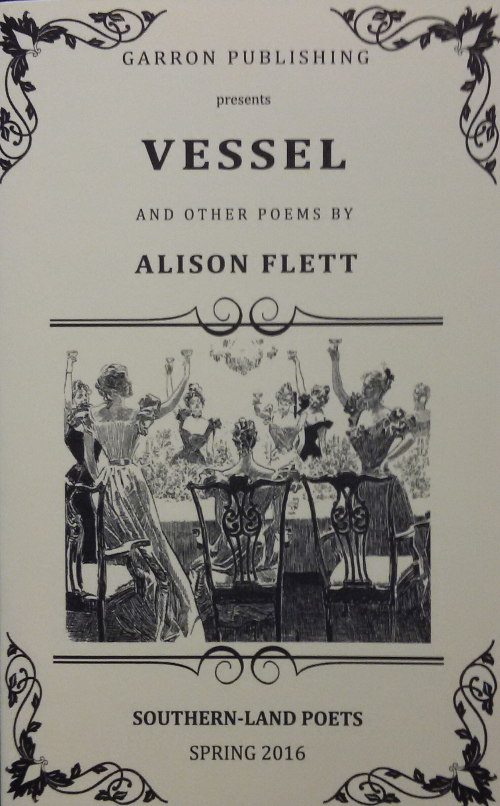
Review Short: Chapbooks by Alison Flett, Louise McKenna and Judy Dally

Vessel by Alison Flett
Garron Publishing, 2016

The Martyrdom of Bees by Louise McKenna
Garron Publishing, 2016

Lost Property by Judy Dally
Garron Publishing, 2016


Garron Publishing’s recent ‘Southern-Land Poets’ collection is a ‘pathway                    trampled with voices’ (Vessel, by Alison Flett), intricately connected by a ‘golden thread/ still hanging from’ the readers flesh ‘like the sharp point of a stylus / forcing its message’ (The Martyrdom of Bees, by Louise McKenna). Composed of five individual chapbooks (of which this review will tackle three) Alison Flett’s Vessel, Louise McKenna’s The Martyrdom of Bees, and Judy Dally’s Lost Property move ‘closer to                                       the beautiful empty                                                                                                   at the                                        centre’ of ‘human’ experience, oscillating between modes of nostalgia, loss and mortality (‘Here is a pathway                   Trampled with Voices’, by Flett). The result of such a collection is a series of coalescing filaments restricting and expanding with experience:

                                                                never really knowing 
who he is 	who she is	where they stop

where the outside 	   begins

‘Vessel III’, by Flett)

Louise McKenna’s revelations of immanence in her titular poem, ‘The Martyrdom of Bees’, are subtle, precise and filled with a ‘deafening silence / as if the whole world tilts on the brink of loss’ (II). Composed of three distinct sections, McKenna’s prologue quote depicts the self-sacrificial nature of the bee to ‘protect the nest’ and the sequenced Passion of Christ narrative is split between the three sections (arrest, trial and suffering). Part one begins:

One of the swarm has left
her honeycombed sanctuary to find him.

This initial aphoristic couplet is suspended by the anthropomorphic possibilities in the ‘her’ and ‘him’; the subsequent stanzas concentrate on the physicality of the turbulent, mimetic world of bees. There’s a swift modulation between human and animal drives before the ‘her’ is resolved to the animalistic, as ‘she alights upon his arm, testing for sweetness / on the inside of it’. This double voice resonates between the three sections as part two establishes the masterful power ‘bees’ possess within this para-anthropocentric world:

‘If the bee disappeared off the surface of the globe then man
would only have four years of life left’. – Albert Einstein

Undergoing a perspectival shift to the human, the ‘martyrdom’ the bees embody becomes the inner experience of a modern man who, disregarding the ‘stylus / forcing its message’ and being hallowed of the bees ‘etiquette, / their lessons in humanity’, is doomed to be crowned ‘queen of a desolate queendom’. In part three, the martyr-bees are rendered as a perfect metaphor of humanity’s inner turbulence; this metaphor serves as a loose meditation upon the transience of life and imminence of death. Indeed, the suffering the bees experience at the hands of ‘aerosol venom’ is dual, as McKenna illustrates in the opening line and closing line: ‘Sometimes death is a mist the cell drinks’, and ‘Tonight I dream I am Dali’s wife, naked / beneath airborne tigresses, poised to kill’.

Lost Property adheres to familiar themes of nostalgia and loss, however it is Dally’s meticulous typesetting and spatial-organisation on the page that sets the two collections apart. Take for instance, Dally’s ‘My Mother Dreams’, a vision of mortality impeccably realised through the mundane:

My mother dreams she’s making cups of tea 
for people she doesn’t know
                     or doesn’t like
                     or doesn’t want to disappoint

with tea bags that break	
                     or split
                     or fall off their strings
in cups that overflow
                     or leak
                     or fall to pieces.

These disconnections articulate, spatially and typographically, an understanding that our visceral experience of reality (the lines at the margin) is contingent upon a cerebral counterpart (made manifest by the repeating ‘or’ conjunctions), as the final two stanzas conclude:

In her dreams
my mother thinks she’ll die
if the tea doesn’t get made. 

I’m afraid 
she’ll die
when it does.

In a sense, one feels like Orpheus looking back on Eurydice knowing that if we look too long ‘it will be — / careless, forgetful me —/ who loses / her mother’ (‘Lost Property’). At the same time, Dally demonstrates that by not looking back we become the ‘Lost Property’, our reality simply a placeholder for death:

I missed my father today. 

He died
forty-four years ago

and back then I felt relief
more than sorrow. 

But today
an old photograph 
called him to mind

and I missed 
not missing him then.

In a similar vein, Alison Flett’s Vessel is concerned with departure and revival. The opening poem an embodiment into metaphysical geography, tracing the ‘Vessel’’s departure into time, the ‘hollow                   gaps                   at the surface’ of reality, and peering past ‘CEMETARY SONGS’ to ‘Arrival’ at the beginning again:

No-one else	has seen inside	this child.

(‘Vessel I’).

This establishing line is a synthesis of juxtaposing modes, nostalgia and present, the narrative focused on the existential:

When you get older		do you remember more? 	
And her mother has answered	yes	I suppose you do		

and the child knows		this is		the wrong answer: 
she knows her mother means	you have more things
to remember		there’s more living filling your head

(‘Vessel I’)

Accordingly, the following poem, ‘Vessel II’, traces trajectories of ubi sunt (‘will she remember / where she was / before // she was born’ (‘Vessel II’)) and transform the mundane into memento mori:

a cup is holding itself       together    around      a cup’s 
worth of space.     In her head      something is pulling

(‘Vessel I’)

The after images of the cup taking on a second-life:

She watches her hands    move     apart. 
She watches the cup     drop     and break
The pieces   thrown outwards     making new

(‘Vessel’ I).

‘It seems a thing of itself / a thing that appears / and disappears’, mediating and obstructing reality as a shadow that is always in the peripheral of Flett’s ‘Vessel’ – the splintered fragments of the broken cup oscillate between the ‘fore’ and the ‘after’ of the object. This equivocation of mise en abyme is transfixing and dually destabilising as Flett continually moves between the discontinuities and splintered traces of words. Perhaps best envisioned in her eponymous poem sequence, each half/third is its own absolute entity:

She just asked her mother      a question
When you get older     do you remember more? 
And her mouth has answered      yes    I suppose you do 

And the child knows 	    this is     the wrong answer.

(‘Vessel I’)

In this instance, we cannot help but be captured by the present-tense nostalgia lingering in the final line. There is a remoteness of reality as we see the ‘beginning of / an understanding                   of how we go beyond                   what / we are                   an awareness                   of being and not being’, until we/’she comes to see / the cup                   isn’t                   what matters’ (‘Vessel I). The only concrete knowledge we may possess within Flett’s existential mediation is the centripetal and centrifugal motions of life, ‘the filling and emptying                   of the world’ (‘Vessel II).

These individual collections are a ‘balance of substance & space’ (‘Vessel II’, by Flett), reflections of the same reality shifting between experiences and perspectives. Such a series cannot be perceived alone; it is the whole and not the sum of its parts, to paraphrase Aristotle, that fantastically revises and reformulates aspects of the human condition to determine whatever text the reader experiences first,

                                                                          [w]hatever 
                                                                                 path we took
                                                                                        it didn’t
                                                                                               matter
                                                                                      it was always
                                                                                        going to end
                                                                                              with us

                                                                          (‘Arrival’ by Flett)
Posted in BOOK REVIEWS | Tagged , , ,

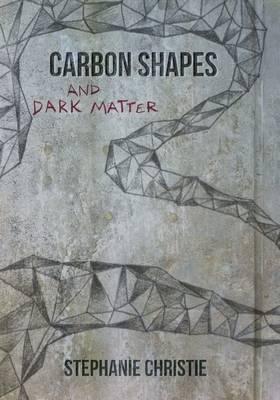
Review Short: Stephanie Christie’s Carbon Shapes and Dark Matter

Carbon Shapes and Dark Matter by Stephanie Christie
Titus Books, 2015


In Stephanie Christie’s first collection, Luce Cannon (2007, as Will Christie), language is a fissile material, words are rendered particulate, unstable, always threatening to devolve into their component parts. And while its subject matter is, often, not what you would call exactly bright, its tone is also not sombre, language tumbles along with a kind of free fall intelligence:

T- d rails                     the rushing scent
Sound of gull wheels          fin   e
Gers in water                       th.  Oughtful
	
Lady ailments              her bod is décor
A shun scars             and wheeling away
Holds out two wrists          wit  

(‘Overaching’)

Her second collection, The Facts of Light, was published as part of Vagabond’s deciBel series edited by Pam Brown, in 2014. This book continued certain elements of her previous poetry, but also saw a break in style, its poems assuming a more regular stanzaic form.

Her third collection, Carbon Shapes and Dark Matter (2015), may represent a more comprehensive merging of the two modes. As with The Facts of Light, there are lines of around five-to-ten words, and these are grouped into stanza-like formations; but concurrently there is Christie’s unusual cantilevered spacing, rapid switches in tone, puns, use of paradox, and characteristic word-grafting. In the latter modes, Christie’s poems are wonderful heterogenising machines: breaking words open to reveal their internal differences, recombining them with others (‘We simplicate things so much’ (‘The Old Story’)), making allusions (see, for example, the eighties/nineties song titles buried in the poem ‘Hung r’). The first, isolated word of the collection is the amalgam, ‘strugglue’, and indeed this insight into the somewhat sticky, glue-like nature of ‘struggle’ percolates through the book. Struggle involves time, and like time it can both flow and harden up or congeal. The reader is left with the sense of Christie’s respect both for personal resolve, and for vulnerability:

We all know our multiplying sides 
get into messes. He fights himself
a long time, then heads down
Cuba St with a golf club
just going for windows.

 (‘Wingettes’)

The knowledge that we are living in an epoch of climate change is one that rarely leaves these poems, and it follows that a current of anxiety runs through the book, along with a desire to find ways to think, feel, and love in light of that knowledge, and a reckoning of the capacities of hope. It is a curious characteristic of this book that the weighty descriptions of the previous sentence co-exist with Christie’s ebullient language: these are not poems that seem to map out a certain idea and then follow it through, but are always moving and shifting.

This reader must now admit to being at first disappointed that Carbon Shapes was not as immediately visually exciting as the earlier Luce Cannon. It was not until I heard an audio recording of a reading given by Christie that I began to understand what the poems were doing in their own right. Christie’s precise renditions of the poems brought across the highly tensile nature of the work as a whole, and attuned me to the more subtle level of experiment going on in the collection:

How did the future become this?
Sadness sits down on my chest
I can see it breaking up
before the fifty years the researchers
assume in their ethnographic sketches.

My mind is out of its debt.
Hope’s a feeling of progress
towards an empire and a safe bed. 
My irrational terror is really reasonable
when you look at the big picture. 

(‘Nix’)

Modulations of tone occur line by line: from the apparently sincere statement, to ambiguous wordplay (the mind ‘out of its debt’; logically this suggests ‘freedom’, though sounds like something quite different), to, one assumes, a kind of ironic sarcasm (‘an empire and a safe bed’), to paradoxical fact. In her book Ugly Feelings, Sianne Ngai refers to tone as, ‘the affective “comportment” of a literary text’. The rapidly changing nature of tone – that conventionally worded statements of feeling are neighbour to Joycean neologisms and word-splicings – might be one mark of the tone of Carbon Shapes; that’s to say, it stably evokes a mood of instability. While not confessional, there is a sharp clarity (and dry humour) to its reports of extreme states:

Being destroyed is wild and drastic
and for a while you’re intact enough
     to enjoy the show. 

 (‘Cleave’)

The theme of climate change runs alongside frequent references to elements of Christianity, specifically Protestantism, to which the poet seems to have a complex relationship. Words such as ‘prayer’, ‘God’, ‘heaven’, and ‘redemption’ appear, usually accompanied by a measure of ironic distance: ‘God’s love is the heavy black mass / in the brain that helps us sleep’ (‘Parachute’); ‘As fast as we chase it, redemption keeps / the same distance away’ (‘Clod’). In ‘Parachute’, again, we read: ‘Each day, the extra light fills us / with a worn hope’. The last two words read as richly suggestive about the utility of hope in regard to climate change, or indeed to the political change necessary to avert catastrophe.

The eternal themes of love and loss, and sadness, are found throughout Carbon Shapes, while a kind of everyday violence and fear flickers at the edges of many of the poems. This is a collection of many brilliant lines (‘Lust stutters in the blood’ (‘Post-protest/ant’); ‘Intense moderation’s hypnotic’ (‘Clod’)), and for this reader, Christie is one of the most exciting poets writing today in Aotearoa/New Zealand.

Posted in BOOK REVIEWS | Tagged ,

Review Short: Ouyang Yu’s Diary of a Naked Official

Diary of a Naked Official by Ouyang Yu
Transit Lounge Publishing, 2015

Well known as a poet, translator and literary critic, Diary of a Naked Official marks Ouyang Yu’s second foray into the novel form. His first, Loose: A Wild History (Wakefield Press, 2007), mixes fiction and non-fiction, poetry, literary criticism and diaristic writing. Continue reading

Posted in BOOK REVIEWS | Tagged ,

EXPLODE Editorial: Awfully Passionate Egregious Demagogueries … reflections on absolutes, straying, anguish and bees

I am responsible for the good of the other come what may: that is, my responsibility is anarchic, on the hither side of moral principles and the reasonings that provide their support – which means, among other things, that my relation to others is not one of knowing but, as Levinas likes to put it, one of proximity, as of skin exposed to touch.

Gerald L. Bruns, ‘Should Poetry Be Ethical or Otherwise?’


(i)

If poets are in the business of cultivating ‘voice’ then, logically enough, to which ends? Is there an onus not only to learn how to speak but to also become versed in what to speak of? If 20c. English-language poetry can be characterised at least partly as a constellation of non-dogmatic radicalised tropes making response to authorising discourses of power / knowledge, then which impetus remains (if any) to adopt transgression as a foremost rhetorical mode? In his fine essay, ‘On the Sidewalk: Towards an Ethopoetics of the Streets’, Kim Cheng Boey adopts a Levinasian methodology to then assert this heuristics:

it is in the act of writing that an ethos is discovered or established, an intersubjective poetics of ethos that arises from the dramatic and lyric recreation of the self-Other encounter.

How are we to be more than mere dilettante onomasiologists? This edition of Cordite Poetry Review is suffused with interruptings, ironisings, rupturings, reterritorialisings, strayings, problematisings and interventions which seem to ask, both in particular ways and when read as a swarming cluster: how to begin to look each other directly in the face?

(ii)

On a train from Bergamo to Milan with my wife and a friend … a man drops a card written in English and Italian on the empty seat beside us: ‘I am jobless, homeless, with two children: for god’s sake please help us.’ When he places similar cards with each passenger in the carriage we glance at one another cursorily, then fish through our bags for small change. He returns five minutes later and, finding a few coins on the arm rest beside us, wishes a ‘god’s blessing’, then continues through the carriage … and as he goes I catch myself thinking how I hope he doesn’t ask me anything, or try to talk to my wife, or want more money, as if my bit-part performance in this drama is not an act of kindness, but an attempt at self-absolution: what does this small change actually change? For me, everything … for make no mistake, this is a performance and those coins may have just purchased a ticket to a place where I can grant myself permission to no longer need to be further involved. The friend we are travelling with is an anesthetist; how many of us living in comfortable material certainties are already numb to those many who are not one of ours, flatly dehumanised, neither interesting nor real enough to be more than a passing moral complexity?

(iii)

After Mallarmé’s much-appropriated lines to Poe (later transmuted by Eliot, in which the work of poets is rendered an adage in which we ‘purify the dialect of the tribe’), which sorts of clarifications might be up for grabs and more crucially: how to steer clear of mere demagoguery? If lyric poetry resonates (etymol. ‘prolongation of sound by reverberation’) then explicitly: how to re-verb the ‘makings’ of poets? And how therein to avoid the totalisations of so-called purity? After Adorno’s claim for the lyric as a non-product to illuminate our alienations through the ‘subjective expression of a social antagonism’ (‘Lyric Poetry and Society’, 30), and after Levinas’ claim for poetry as a revelatory point of contact and possibility, a saying of proximities opening onto ‘an ethical relationship with the real’ (Collected Philosophical Papers, 118), to which extent do / should / must we compulsively express the ague of idealism? Is it barbaric to write in the aftermath of genocides so methodically hidden by officially enshrined mythologies? Is it reasonable to merely sing, lyrically, averting ourselves from all proximity with our others?

(iv)

Surely we must cultivate strategies (linguistic, ideal, moral, antagonistic) by which to bear witness?

(v)

Concerning himself directly with OzPo contexts, in ‘Being Caught Dead’ Justin Clemens opines that poetry ‘is threatened, like the honey bees of our world, with what’s known as ‘colony collapse disorder’,’ because we live in an era in which ‘everybody writes poetry, but nobody reads it’ (Overland #202). In her rebuttal, ‘Against Colony Collapse Disorder; or, Settler Mess in the Cells of Contemporary Australian Poetry’, Ann Vickery proposes an alternative focus toward ‘correspondences in otherwise unconnected ‘bees’ and the capacity for transformation’ (Cordite #48). Bees as a decollectivised swarm of strays? Indeed, contemporary poetry in ’Straya seems full of drift, and equally reactive with enforcers waspishly patrolling boundaries of possibility. In that place which operates yet to the logic of late colonisation, are we not simply an order of cleptoparasites, robber bees hiving / archiving creative / critical / cultural products in a coloniser’s material, extending next new narratives of habitus (always anything but a nullius) … and

within this nexus, beyond anguish, what is our duty?

What are to be the languages of these days (and their nexts),

(vi)

and which language (horde, purified, etc.) is ever as stable as enforcers would have us believe? That same way Chomsky illuminates difference between syntax and semantics with his ‘colorless green ideas sleep furiously’, my title should underscore just how furiously words can drift from etymological roots … that same way colonisers drift from origins to create authentic-seeming discourses (self / country / nation / other), language also strays: contingent, random, mutable, its own unreliable narrator. In contexts swarming with displacements both historical and contemporary, I catch myself asking: where does this leave the lyric?

(vii)

Deep in Italy’s northwest mountains, we are sitting at a table over steaming polenta, cheese, bread. A short burst of conversation with our friend’s friend, Beppe, about his country becoming part of what he calls ‘Eur-arabia’. None at the table has the (insert here — linguistic abilities? Chutzpah? Something else?) to venture in our stunted Italian a challenge to this man who has never travelled beyond the comforts of these sublime valleys. Our silence: complicit and enabling. Beppe, who spent his life working as a policeman, thinks in binaries of ‘us’ and ‘not us’ … and I catch myself thinking: how friendly a racist can seem (at least, when ‘we’ bear resemblance to anyone but the most ethnically, racially, culturally ‘not us’). Later, arriving at Milan’s Stazione Centrale we stand under a baking sun and watch the façades perform particular authorisations in white, fascist’s marble … less known is the subterranean platform where four generations ago Jewish people were transported to the German-run Nazi extermination camps in Poland. This is where identity thinking and its enforcements takes us. A small plaque in the station bears an inscription from the first line of Primo Levi’s ‘La bambina di Pompei’:

Poiché l’angoscia di ciascuno è la nostra
(Bearing witness matters since everyone’s anguish is our own).
Posted in ESSAYS | Tagged , , ,

Sublime Necrophilia or Ceasing To Exist in Order to Be : On Translating Kim Kyung Ju’s I Am a Season that Does Not Exist in the World

The tradition of the oppressed teaches us that the ‘state of emergency’ in which we live is not the exception but the rule. — Walter Benjamin, Theses on the Philosophy of History VIII

What you have heard.
Translations do not share. Bad copy.
They come after. Knock off. 
Is true like true is true.

Like the male dusky antechinus, an Australian marsupial, translation has an unusually long mating period. For 14 hours it fucks so vigorously that its stress hormones overload, causing its immune system to collapse. It performs the sexy death. A lethal transfer of life. Or is it a deathy sex? Continue reading

Posted in ESSAYS | Tagged , , , , , , , , ,

‘Transgressive Circulation’: Translation and the Threat of Foreign Influence

1.

At the AWP writers’ conference in Minneapolis a couple of years ago, I attended a panel on Paul Celan’s poetry. In the Q & A that followed the panel, the first question was ‘How can we make sure that young American poets are not improperly influenced by Celan’s poetry without truly understanding it?’ The panel responded by offering a variety of possible solutions, such as reading the extensive literature about the poet or reading his letters and journal entries that have been published as well. Continue reading

Posted in ESSAYS | Tagged , , , , , , ,

Metapod: An Essay and Analysis

Introduction

Pokedex Entry #011: Metapod is a Bug Type Pokemon. It evolves into Butterfree.

Species: Cocoon Pokémon

Metapod Base Stats

Metapod Stat Ranings

Metapod Moves
Metapod Fast Moves:

Metapod Charge Moves:

Posted in ESSAYS | Tagged

Activist Journal: Ireland and Germany Extraction, 2015-16


Image courtesy of JGR Tübingen

18/9/2015 Rosewood, Schull, Co. Cork, Ireland

Difficult and full fortnight of work coming up before I have to travel solo to London on bus, ferry and train.

Continue reading

Posted in ESSAYS | Tagged , , ,

Plato, Badiou and I: an Experiment in Writerly Happiness


Image courtesy of Ceasefire Magazine.

I have many irresolvable arguments with a close and particularly argumentative friend of mine. We regularly disagree, in a civilised, congenial way, on specific topics to do with politics, love, the weather, Asian food and ethics. But it is apropos of the matter of writing that we diverge most pigheadedly. And, yes, my friend is a fellow writer.

My friend believes that writing brings the writer pleasure, and it is this pleasure which more or less compensates for the lack of financial and social rewards. I, on the other hand, refuse to accept that I derive much pleasure from writing. Writing agitates me and makes me sleepless. It makes me very introverted and at times quite gloomy. Although I have been told that I’m one of the more active writers of my generation, I can’t say that I’m ever really pleased with the practice or products of my writing. So why then, as my friend often asks with a half-mocking smile, do I write so much?

The answers that I have given him and others in the past have been frankly dishonest, pretentious, perhaps even ideological. Yes, I have suffered a good deal for my decision to become a writer; and, yes, despite a few publications and some fondness from a few kind readers, I could not imagine ever receiving just recompense for the years, indeed decades, of work that I have put into literature. So, to expiate for this obvious imbalance, I’m given to providing grandiose, unintentionally untrue reasons for why I write.

I have claimed to write because I wish to change the world; to protest against injustice; to give voice to the voiceless; and so on. But these justifications seem, at best, secondary to the primary act of writing, to the initial decisions involved in spending hours, days and weeks alone producing texts most of which have never been published or read; most of which have not, in other words, been in the position to have any effect whatsoever on the world.

So why do I write? The simple and true answer that I would like to consider in this essay is that writing, despite all its concomitant challenges and disappointments, makes one happy. And this is not a happiness associated with an immediate sense of pleasure, nor does it have anything to do with a fantasy of how one’s writing may affect its potential readers. Looking back over the past two decades of my life, I have come to view a quest for happiness as central to my decision to remain loyal to the often difficult, unrewarding passion for writing books, poems, articles and stories. But this happiness seems at best intangible and ephemeral. In this essay I wish to simultaneously narrate and explore a definition of such a thing. This essay is both a story and an investigation of my years of yearning for contentment as a writer. My investigation will be an experiment in fusing the philosophical with the personal, the conceptual with the autobiographical, to occasion a hopefully intelligent and novel approach to the theme of happiness.

Guilt and failure

In his fascinatingly playful and modern recent rewriting of Plato’s Republic, contemporary French philosopher Alain Badiou provides an engrossing discourse on happiness. In the book’s fifteenth chapter, Badiou presents Socrates’s dialogue on happiness with two of his disciples, Amantha and Glaucon (the former being Badiou’s own female invention, based on the character of Adeimantus in Plato’s original Republic). This dialogue follows on from a discussion on tyranny in the book’s previous chapter, and begins with a contemplation on unhappiness.

Claiming that there exist three dimensions or agencies to the human subject – ‘Thought, Affect and Desire’ (Badiou 2012: 294) – Socrates argues that in tyranny ‘the agency of Thought is subservient to that little part of the “Desire” agency that’s ordinarily kept in check but that in this case runs rampant: the vilest desires, envy, informing on people, the outrageously exaggerated satisfaction of trampling on the weak’(Badiou 2012: 294). Amantha interprets Socrates’ characterisation of the tyrant as someone who, despite possessing the power to enact his ‘basest desires’, ‘always has the feeling he’s failed’ (Badiou 2012: 294). She sees this depiction of the tyrant as ‘the portrait of the fascist’ who ‘secretly regards himself as a failure and spends his whole life trying unsuccessfully to overcome the lethal duo of resentment and guilt’ (Badiou 2012: 294).

This definition of the other of happiness resonates with me strongly. Indeed, many of my memories of the earlier years of my work as a writer are saturated with feelings of failure and guilt.

I had been a voracious writer – of stories, biographical sketches and historical summaries – as a child in Iran prior to migrating to Australia in the early 1990s; but these writings were in Farsi, and it took a number of years for me to feel remotely confident to start writing in English.

In my late teens, while I was an undergraduate Creative Arts student in Queensland, and inspired by classmates who performed their poetry as spoken word, I began to write in English, and this made for an auspicious beginning to my writing life as an adult. I felt appreciated by my peers and teachers for performing my own poems at student gatherings and minor cultural events on and off campus, and, by the time I had turned twenty-one, I had decided that I wanted to become a writer.

Posted in ESSAYS | Tagged , , ,

Sharon Olds, Gwen Harwood and Dorothy Hewett: Truth, Lies, Poetry


Image courtesy of Vogue.

In 2008, US poet Sharon Olds came out about her poetry, admitting that her writing is based on her own life. Since the publication of her first book, Satan Says, in 1980, when she was thirty-seven, she’d been evading questions about the biographical basis of her work. In her rare interviews, she would gently correct ‘personal’ to ‘apparently personal’ as a description of her poems and emphasise with kindly patience that they were works of art, not autobiography. Continue reading

Posted in ESSAYS | Tagged , , ,