The River Merchant’s Daughter: A Letter

While I in sandpits sat, dug holes to China,
Walked home from school, green backpack, shoulders bouncing,
Penknife in hand, you’d pace the forest’s heart—
Pick berries, dream revenge against the killers.
We grew on separate, split by small sea-water,
Two lengthening children, pre-desire, regret.

At fourteen your eyes loomed large, closed round, white-moon.
I longed to duck my head and instead stood,
Not knowing my mouth must move––
Kept air beneath my bow, above the string:
Risked not one mis-stepped sound, false frictive note.

Discarding clothes compared to this was simple,
A bed I’d swum, blank-white, sea-bright, since birth.
Asked me, a thousand times, I never answered—
Thought bodies outgrew words, had not yet learned
Of Satan’s fall, smote on him sore,
His legions, angel forms, who lay entranced,
Thick as autumnal leaves strowing the floor,
Kindling a sea of flame, the once-cool brooks in Vallombrosa
Leaping, furnace-forged, white-hot, red-gold,
Vaulted with fire. So I was but did not know,
Nor could look down, nor could forewarn, nor could feel awe.

At fifteen from my mouth outpoured a river.

At sixteen you crossed the wildest ocean,
Didn’t drown in shock-storms or tsunamis.
Five months gone: the native birds still pierce the air,
Their shell-beaks pick, necks pink with frosting.
They don’t turn back
But walk forwards through the grass,
Mouths pressed earth-down.
No arms, just legs and throat.
White crests like wind-topped waves.
Grey tail-wings uselessly at rest.
I did not believe your words.

The jacarandas bloomed more fulsome than before,
Purple flowers filled
When I was small and I was whole.
It’s too late now to hear their bullet fall.
The rain has washed all through one month of autumn.
The new year’s children climb on wooden benches,
They topple on the ground, forget they cry.
Am I light like them?
Their voices hurt me.
I grow older.

If you are sailing backwards down the river,
Rewinding the ocean you left upon,
Seeing caps white glare blue, so bright, you must avert your eyes,
Hear this, the water’s sound.

My father said after you’d gone: forget it wholly.

I remember now only his age-long care
Which ceaselessly returns, like winds cross oceans
Which earth’s aeons’ mountains onwards range.

Posted in 107: LIMINAL | Tagged

susmariosep!

And Sunday sinks its heathen summers into the kneecaps of the expropriate wicked /

kain na tayo! / having genuflected hours for a piece of motherfucking bread

isang bagsak, anak! the concrete moves you!

marking devotions this morning to chismis / the auspices of the Gran

Pasista Almighty / fat fist forcefield burrowing achilles’ kili-kili /

and the golden deluge let loose in the just-clean toilet of the parishioners’ office

next to church

Sinful!

a practice of bad descendantry with guarantees of holy sustenance / compass set

for slurpees and cardinal direction in the ravenous I of the beholder / imbibe

blue juice for brainfreeze / and graduate cousins in the crypto-mythology of paying for shit

with hypothesis / sticky finger anointment / a rising sea level washing

the dirt-dream dendrology of juvenile tortures on scabskin

isang bagsak, iha!

Pamilya,

the New Flotilla / ravaging the virgin aisles of Teks and Go-Lo / for a new piece

of shiny / new piece of dollarstore ass / new peace of gestational minute /

for bone-deep highway brains riding rodeo reptilian into a memory of may dila / bankrolling

the covenant into a communism of white conyos / white canticles

white love / of ancestral injunctions on reverence after life lived in the violence

of an easy televangelism / we umutot on the Vatican! / we are pilgrims to the Maccas

and two-dollar chook neck nuggets / cheap as chicken shit / as chipped china imports

adorning the cabinets of migrante pantheons and speakeasy delirium

isang bagsak, ate!

Do you think when he said you have your grandfather’s mouth that he meant

he wanted to / you know / at least we will have something to sin about /

in the bright-beam tinnitus of an open confessional / empty hymnals rehearsing

antiphony karaokes / anathema algorithm to the tune of Mother Mariah

out the stereo with fanta sweat and ballad baptisms

isang bagsak, kapwa! how the humid moves you!

an islandry of miss pilipinas blockading the streets on streets of mini malls of Asia /

brandishing new haymarket chanel / op-shop imitations / & proliferative degrees

of sacred separation / famous uncles brothers cousins stepson’s best

friend’s daughter / gracing the call list of b-grade teledramas / parallel kinships

with the celebritied / your incidental earthquakes / 7,641 islands / your kinship

of global atoms / you balikbayan boxes / you recycled recipes / you transnational

pageantries / fried fish filipiniana / kare kare & KFC / to grow strong / to gestate

isang bagsak, bunso!

one of you farted! / I could smell it /

white husband white wife procession trumpeting the second coming with Glen 20

here, let me convert you

Sit still and pray hard, children!

The spirit behoves you!

Posted in 107: LIMINAL | Tagged

VERRITION

1.

Verrition: an untranslatable term Césaire used to indicate a kind of sweeping. Not really: it was a term to indicate the double jouissance of licking words, over and over again. But that is not unlike sweeping, and sweeping is not unlike action painting, your heft and back pushing bristles as they sound off, marking the floor with a tacky rub, or licking the ground, over and over again.

Maybe we could buy a new broom at Bunnings? That question hovers for minutes, days. Maybe we could find ourselves licking the ground at the interval between days, between minutes, between the 59 and the 0? What is the interval between days, between night and day? (Le petit matin, Césaire called it, which Walcott translated, and I find plausible, as foreday morning.) Cognitive drowning, or a tortured landscape in foreday morning, then. Drowning before or at the fore of the zero, which is day. What I mean is that this is not the only thing tethered to the fore of a zero thing, the foreday thing, which is not only an aesthetic thing. And the inclusion of human references here will not be decorative. Except the conclusion here might be decorative, assuming the human will have already existed.

I can’t open it, I say, when I can’t open a file or a link, when I don’t have the password anymore. I can’t open it anymore. But then I thought I was in a landscape or countryside. The file or the link was in the countryside. How do I open a link out there? What if I don’t know the password? What if I don’t know the countryside—which countryside—the institutional countryside—that has disordered my relationship with passwords? My body seizing, pushing bristles as they sound off. This would be me, from the countryside.

Glissant says, I am less interested in your origins in the countryside than in how you would draw a tree, for instance, which is no longer genealogical nor biographical when the picture includes the soil, the manure, the grasses, the birds, the water in the air, the water in the ground, the water on the leaves, the adjacent trees, all the condensation from all the leaves, the clouds humming in the blue hinterland. Humming is historical. Is it biographical, but no longer intimate? Or is it intimate, but no longer personal; that is, no longer a person? Waiting for a live one in a tortured landscape: humming. This is not Glissant talking anymore, this is someone else. This would be me. The notion of privacy is an intensely held public notion; quite the sacred notion, if a notion can be spoken about as sacred. This morning me and my notion tentatively called the Magistrate’s Court, passing through a number of institutional countrysides into the sacred countryside where the private matter could be dealt with. Then, more boldly, we called the Carpet Court. We ordered 59 kilometres squared of carpet. We wanted to lay it down and lick the ground, over and over again.


2

At some point I try to tally roughly how many times I texted ‘Leo is leaving this Monday’ or ‘Leo left this Monday’, usually prefaced with ‘I’m not sure if I already told you, but—’ or suffixed with ‘—I thought you should know’. Three times would have been ideal. I went for a walk at night in Lorne, at some point I thought to do it, as a context. Shape of the bay and shape of the moon, plausibly analogous. A plausible analogy. An old Italian man in my car is at me about poetics, because it takes me a long time to understand things I love. A woman eats a rotisserie chicken. One hand holds the chicken. The other hand, covered in a plastic bag, prises the flesh apart. Her mouth holds something key—the neck?—in place. I wear the new PSG jersey to the little bar they have here and the staff at the bar go absolutely nuts. They go absolutely nuts. Which was probably, somehow, key: the neck of the plan.

Last night on the phone to Cam he told me he was the Ian Thorpe of chillin’ and I said, yep, you’re the chill-pedo and we both laughed and laughed, because my god there were so many levels to it. Like, two levels! And then because I was already getting off the phone I said, how the fuck can you follow chill-pedo, and at the same moment Cam said, who the fuck can I call now?


3

The thing with protest is that it involves a lot of singing. Protest is the thing that involves a lot of singing. I am sitting on the Rathdowne St side of Carlton Gardens, near the corner of Victoria Pde. I have just finished work and I’m wearing my stupid work clothes, which protect me from being mistaken for a member of Extinction Rebellion, who set up camp here only a few hours ago only a few metres away. The XR camp is enclosed by an improvised fence made of washing line from which XR logo-ed tee-shirts hang. When I sit down, a trio of women are singing the Stop Adani song and I’m reminded of the claim I overheard once at a meeting to organise a protest immediately following the detention of DW embassy leader, DT Zellanach. Some guy in a wide-brimmed hat and hiking clothes was rifling through his soft briefcase full of sheet music, explaining to a pondy young woman that he is responsible for a number of the ‘current chants’, and that his authorship extends to ‘Coal, don’t dig it / Leave it in the ground it’s time to get with it’. I don’t know why I don’t believe this easily plausible claim. The same week I attended that meeting about DT Zellanach, a local squatter in the house near the bike track told me he is currently involved in several legal cases, including one with Jay Z for part-songwriting credit for Rihanna’s ‘Umbrella’. He told me this after asking me if I worked for the local council, thinking he was about to tell me to get fucked, concerned about the meaning of my work clothes. That claim about ‘Umbrella’ is a claim I am willing to entertain because it’s more entertaining and therefore more plausible.

A few police shift about in the park, looking embarrassed, perhaps by XR’s singing or perhaps by their own patrolling. They are humming, their own singing. I keep going to these things, though I keep reverting to this abstract journalism. Patrolling the singing, oh, the bloody singing: this is a wild desire to leave. Though we believe it when the protestors say this is an emergency.

There is a ‘smoking area’ that XR has set up near a river red gum outside the tee-shirt fence. On the back of a placard, the painted words say: ‘Smoking Area: Bin Your Butts!’ I stare at this sign for a long time. Under the river red gum, a young man and a young woman are slowly, but slowly, kissing. Last time I looked at them, before I began staring at the Bin Your Butts sign, they were simply staring into each other’s eyes, legs crossed. I can’t decide whether it is weird or completely unweird that everyone at the XR camp is white. I can’t decide if it’s weird that I wear a suit to work when there’s no dress code at work and basically no one ever sees me at work and, basically, I’m not even sure I’m really in work.

As I leave for my conventionally parked and recently washed car, I see the XR march coming up Exhibition St, singing the Stop Adani song. People clap on beat. People beat a drum. A police car parallel parks in the space behind me. The song sounds like what I imagine a dirge must sound like. Only now I realise I’ve never knowingly heard a dirge before. The policeman in the car scrapes his left wheels against the kerb. He nearly doors a cyclist. I have a feeling I shouldn’t leave. The feeling is a dirge.

As I drive away, the radio plays an article about how the number of volunteer firefighters has been in decline since Black Saturday, in part due to the trauma of that event, in part because the weather is changing in a way that’s unpredictable, so that no training can prepare someone to do this job. The weather is changing. Verrition, over and over: something so plausible I’m swept away.


CONCLUSION

The water in the kettle is dancing, says Leo. Can I use that, I ask.

Do you guys have any money, I ask. Cash money. Good point, says Mel, walking a $5 note to the man sitting on the ground in our path. Actually, I say, I want to go use the photobooth on the other side of the station. It only takes one- and two-dollar coins. Six bucks for four photos, I say. This is taken as a passing comment, because we never cross the bridge to the photobooth, not heading out west and not coming back east to the car.

We should go to the Skydeck when this is over, I say. The path to the Skydeck crosses our path, reminding me of the time I went to the Skydeck in a fever after speaking at the photography college. I’m afraid of heights, but sure, says Mel. That feeling of heights, explains Leo, is the body recalling a previous experience of falling. You feel it in your groin, I say. Yes, they both say. The past is a feeling in the groin, no one says.

Somewhere after Queensbridge we lose our bearings following the river west. In an alcove under the Bolte Bridge, a department relevant to the river or the bridge has left a notice on a door. Do not venture further, it says. We look at the West Gate Bridge, which is closer than we remember. It’s a destination we don’t make this day, but a few days later those boys will get there. It doesn’t make it to the news, but when they make the middle of the bridge, those boys start dancing.

Posted in 107: LIMINAL | Tagged

Farmer’s Ektara

Ektara, in the key of rebirth and revolution. Farmer flies on the back of the white horse to the beginning of our lifelines. I have forgotten to age. From the wound in the throat, I fish an old pumpkin, horsehair and bells. The lower octaves are stitched to the world below: black snakes on the red earth, communist manifestos and moods of indigo. The upper octaves are stitched to the world above: palms full of cowrie shells, misty mountains and the origins of love. I walk to the middle of the world without my face. I am just a thief in the rain. When two suns fall to sea, white horses come from the waves as mirror images, with our unborn children on their backs, signifying rupture in the upper and lower realms. We stand on one leg at the end of paradise, shrouded in gunpowder, poppy and equilibrium. We have always said to our two suns and our two lovers: I will wake before you rise so I can worship you. Our eyes open on the underside of the sea, beneath the flames. Farmer is biting into flesh, and sea, and the melody of the changing earth, in an old language only understood in skin and instrument. Our memories, our names and our borders burn with the sea. Between two suns, the ektara synchronises with the dead. We pray to the faces of our unborn children. Our love for them is sublime. The ektara is blue. The road is red.
Posted in 107: LIMINAL | Tagged

Landscapes, with Poem

i.

The first vision: it was prehistoric,
the gargantuan ferns reflected in what he called
a billabong. We didn’t know what it heralded,
wider than the promise of platypus
the arresting half-risen stumps of drowned giants,
when on we gingerly picked through mud
in our ill-prepared shoes
I had wanted to visit the lake for years
for years I had been alone, on the misty drive to Forrest
had braved the unsealed road only once
and then only halfway, afraid of being a girl Where is Yugoslavia?
without reception, and all that Past the curatorial intent.
forest
It can dwarf you.
The light hardly reached. The rainbow horizon
had closed in, where we had wound up from the breakers,
the unrelenting open-mouthed dominion of surf
into which we could

Always be afraid. Awe
that is what lives on this continent, not small things:
the footprint of a megasaur, among whose reeds
a duck.


ii.

Echuca: the barges are busy with incantation.
The word spiritual drops from the mouth of a woman
for the first time, into the river.
It sinks, upon this scratchy red-gum churning course
with its load of goods, with memory Where are the bags of flour?
of its load, of goods, when Bush was Frontier. Past the curatorial intent.
Spirit is the frontier. I am not Australian.


iii.

A windowpane of light above the descent of evening
I know there is memory in that, grasped in the outline of trees,
the white peaks of waves in the distance beyond the pier
in echoes I must now explain in words, for poems
stuck to windowpanes, where Christos left a tiny shark
hanging from the hook of his fishery, the globe of its right eye
a dead glass encased in gelatine. Here is the poem,
this self-reflexive patterning. He was ousted by the market
driven past the day’s catch, and we – readers of line-work, augurs
who stopped for those taped-up faded handwritten
notes of ascent Where is it written?
stop now for our reflection. It shows us real life Past the curatorial intent.
the strain of offices, coffee, catastrophe in the mouth.
Down by the swing bridge, the estuary cuts, cuts the sand
continually rewriting the moon.


iv.

“If one no longer has land but has the memory of land
then one can make a map”

All this whiteness makes me cry.
I seek succour in a Vietnamese fabric store,
that conjures a land adjacent to another adjacency In the dot and the line
and so on, riding a carpet that might take me closer that say to me, Nothing.
to the places adjacent to my dreaming.
In Magic Dollar I say to the woman, You have everything
东西, that lie between East and West.
Her door is interval, sluice gate, through which my heart
predates concepts, nicely rounded out.
Somewhere مرجان is the name of a girl
mounted on a plinth. I am waiting, like the stolen,
for a handful of earth in my coat.


Notes:
东西 = dōngxī (thing), composed of the Chinese characters for East (东, dōng) and West (西, xī)
مرجان = Marjon/Marjan (Farsi)
Section iv epigraph is a quote from an unnamed source at the Jewish Museum of Australia, St Kilda

Posted in 107: LIMINAL | Tagged

Mangroves

We hear their voices echo across the estuary
fathers, mothers, and children fishing,

an old man with a cane walks up the steep track
a lyre bird is scraping among the ferns

Every imagined finch, and the whip bird’s call is a guess
you spot the dry cormorant, self-grooming

and tell me stories of canoeing the Lane Cove River,
your mother’s compassionate eyes, the ancestral home

at Greenwich, asking what patch of blue is the sky?
Cornflower, I say, though later, it turns an eggshell blue

Later, in the blurred catastrophe of phone cameras
evening bruised me with lost childhoods

We talk about nuclear emissions, the sharp air
how many lives destroyed before Putin’s tyranny is spent?

The mangrove leaves glitter despite toxic chemicals,
rising sea levels, microplastics in storm waters

No one is to blame for the moon’s abrupt, ironic face;
a shadow drawn over my incurable days

Posted in 107: LIMINAL | Tagged

Kintsugi Illuminated.

I thought I had written much more meaning than I really had, and I think of Faust and pacts and graves that are opened and floor stains of blood that can never be cleaned—and all this seems possible, but I don’t understand how so little meaning is interpreted. For it seems, in truth, that when I realised my failure, I had contrarywise hit a vein and many pilgrims came in procession with incense and song, dancing around what I had harvested.

I have checked for poison, knife wounds, pills, or noose and have found no footprints that lead to the erasure of words. Did words dream themselves into a phantom army, luscious and responsive to the dance of fingers? I am in awe of their absence, of the meagre volume of creation.

I make gestures at the librarian—two fingers in the mouth is the sign for a pagan heretical text—a gagging gesture without making a sound alerts the librarian to my desire for such a text. I run my aging hands over foolscap, reimagining it as papyrus, vellum or the more highly prized paper made from the uteruses of aborted calves. Interpretations of said texts are forbidden, lest I crave the desire to edit them. Most however are burnt, though some have survived.

Cracks appear in the skulls of monks who make it back from glimpsing the other realms, much like newborn fontanels’.

There is gold that fills in the hairline fractures of broken plates, and gold to be poured into the space where bodies are drained of all tears, and gold to blind the last days when words had meaning.

Posted in 107: LIMINAL | Tagged

Hay fever

This is the feeling when I climb inside you. Like holding egg yolks in my baby hands. Always cutting my fingers on the grater.

This is the beginning, but it feels like an end. You say, once this is over, like we’re living inside something.

A thing that is constantly happening. The wide open, the gaping mouth. The way it eats without seeing, without touching.

The way I look for it with my eyes closed, and only my hands are there, grasping on cotton buds and stalks of wheat. And what is my name except a sound that means me?

The first fire of winter that smokes up the lounge room. All our windows covered in frost and grass crunching underfoot.

Balling newspaper and collecting pinecones next to the highway. Running outside and carrying in wood, covered in splinters. I can’t help but snap the roots.

When I crack my chest open, and all of this is inside. The drought is long since over and the rain makes everything smell like eucalyptus.

The riverbank is primed for camping, though we’re not allowed to light fires anymore. The mulberry tree is full of fruit, and we make jam.

I say I made this for you. And maybe it is enough.

Posted in 107: LIMINAL | Tagged

Wind

When you are
at your loneliest

you are this wind
at work

being itself
nonstop

Posted in 107: LIMINAL | Tagged

the password is: “Love you for 10,000 years”

but it’s not undying1; let’s not give it
forever. i just want to make time a little stretchier.

in this kind of love: my body hurtles towards the ceiling at 2 a.m
with the fan on the highest setting, and everywhere
is a wish-come-true:
11:11 in your lower lashes,
11:11 gathering in clouds of ants under a rock. at 11:11,
“i love you” sounds like static electricity when it clings to
a lightbulb. flicker on & off & on
& off & on & on & on &&&

i touch your cheek in the dinner broth and your oily reflection
films around my finger. i interpret that as your way of saying
“i want you to be the person who reminds me to do Duolingo
every night before we go to sleep”.

i’ve been sweeping the bathroom floor for days—your hair
finds impossible new places to hide. you interpret this as
my way of saying “it feels so beautiful but so heavy to write about you”.

in this kind of love: i am becoming a better listener, and i
stare out the window way more now.
same song on repeat:
it’s you, it’s you, it’s you i was dreaming of

2

in this kind of love: when i finally get my wisdom teeth removed,
your name runs tiny circles around my scalp: zip zap zip zap zip zap
zip zap as the room spins. fuzzy little syllabic currents
and my brain is a heavy balloon bouncing against the wall.

in my anaesthetic haze, i forget to recognise you,
and try to hit on you, clumsily, again & again & again
& again
promising:

thiiiiiis much. i love you thiiiiiiiiiiiiiiiiiiiiiiiiiiiiiiiis much.

Posted in 107: LIMINAL | Tagged

The Hanging On

First day. My father tracking one axis
deer. Tomorrow morning a fallow.
Come evening I’ll make fire and char the
meat for eating. My hands are good
at that now. Turning one thing to another.
I want to describe how once
this was the only place I could be what
I was but today what I want is to
go wherever my daughter is, in the years now
when the sun freckles her arms and dirt
cakes her fingernails. But that’s a feeling
I don’t have nouns for. I was the same age
when I watched my father take an axe to
the fox with a paw in the foot trap. The sound
that left it frightening rabbits from their warrens.

Posted in 107: LIMINAL | Tagged

Untitled Wild Geese Game

[sorry Mary Oliver] [sorry House House]

you do not have to be good
(you are horrible)
you do not have to walk on your knees
(you have no knees) (your feet are webbed)
for a hundred miles, through the desert repenting
(only a few miles, it’s a village after all, and
it’s a lovely morning and
you are a horrible)

thinking about who gets to be bad

like geese … or some children
or some leaders
and their closest followers. very few
of the people I know enjoy
the grace of mistakes.
they’d probably love a gentle historical
wave of the hand,
less assumed responsibility, less criminal glance,
less epigenetic markers of this or that
shithole country of origin stress –

Honk! Honk!

thinking of knees, thinking of scraping them,
getting my fifth tetanus shot – why’d the brits leave
so much scrap metal – was it our own fault – we should
have cleaned it up
– and
pinching the puffy permanent scar from my third-world vaccine

it’s hard to make good decisions when you want to be bad

stealth mode, if only

relatedly, sometimes I’m tempted by dominion
over the prairies and the deep trees
the mountains and the rivers
but then, I remember:
the world doesn’t offer itself to our imagination

Honk! Honk!
choose smaller.

<<if we make a wrong decision, everything will turn to absolute dust>>

so I’m letting the harsh animal of my body, like –
so I’m complaining all the time, cute –
so I’m pissing angrily in my own toilet, ew –
so I make this farmer cry, wah wah,
the chud,
and I steal all the bells, ALL of them,
for my very own special ditch,
the village has no clue but yes, the rumours are true, it is me:

~ the most horrible, the most best, the most wildest of goose ~
~ I’ll never be lonely again ~

and then I’m walking the few metres up and down
our tiny carpeted apartment, and you’re
off to another appointment, in the crumbling animal
of your own body, and you’re saying something like
well, when we were young we didn’t have
all this, and the rice, the grains, if you trace them back,
were of poor quality, the best exported elsewhere,
for the empire?
and now all these illnesses, I guess I guess

I can barely hear
I just want a new noise that’s all, um:

Honk me to the moon!
Let me honk among the stars!
Let me see what honk is like on
Jupiter and Mars!
Weightless and unflappable – probably!
(in the history and family of things)

Posted in 107: LIMINAL | Tagged

let it be known

let it be known that I witnessed the valley.
imprinted grass like the coast of ritual
washed & walked on & two friends, two lovers
bleated at dogs. here lies a shadow
let it be mine, I say. let it shed warmth.
I stick twigs in holes when friends tell me
of snakes & walk on stones kissing in the dark.
I measure time by sun stripped
on scoured bark, how it traces its hand
over its eyes & closes them
like a lover at a funeral.
when the day finishes, I feel the need to speak.
to break the bread when the light hesitates
to reach out & hold it, just once.

Posted in 107: LIMINAL | Tagged

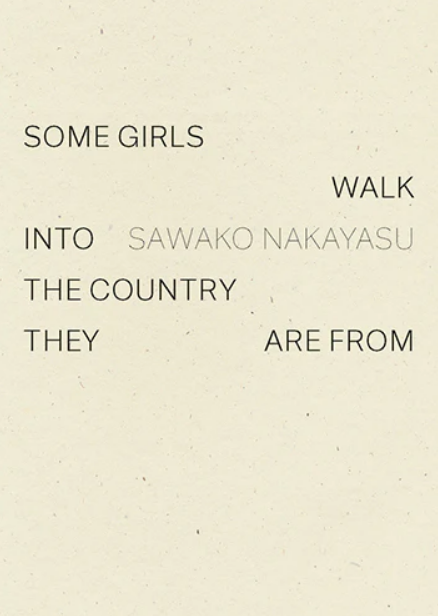
Translation and Experiment and Translation: Some Girls Walk Into The Country They Are From by Sawako Nakayasu (and Friends)
Some Girls Walk Into The Country They Are From by Sawako Nakayasu
Wave Books, 2020

f

This review concerns poet Nakayasu’s most recent major collection (as of March 2022), the self-translated adventure that is Some Girls Walk Into The Country They Are From (2020). Some Girls is one of the most advanced realizations of an experimental writing practice informed by modernist approaches to literature explicitly between languages and sensitive to a multilingual compass. Global poetries today go far beyond the masquerade model of deliberate and scholastic language translation Ezra Pound developed by way of the persona. We now live in an Anglophone sphere of intercultural and interlingual normalcy in which lived realities reflect multiplicities and changing frontiers of language.

In keeping with this more sociological shift in the language of poetry today, Some Girls happens to be a social enterprise. The book is a multi-author/translator as well as multi-lingual work, involving the work of poet–translators Miwako Ozawa, Karen An-Hwei Lee, Kyoko Yoshida, Kyongmi Park, Hitomi Yoshio, Lyn Xu and Genève Chao, who translate poems that themselves comprise the collection. This decentralisation of author-ity, of origin-ality, and of individual-ity makes the persona concept a very distant forebear to the new directions in translation and invention found here. Today, under the direction of Nakayasu, the logic becomes the dynamic palimpsest, and the swarm. Poems reappear, disappear, translated into French, Japanese, retranslated into English, but also deliberately various idiolects and accumulations, all in order to dissolve the binary of linear transmission between two counterparts. When we live between languages in parties of translation and generate poetry by it, what becomes of the designations ‘author’ and ‘reader’ then? Nakayasu, one of the most important translator–poets of our time, provides us with some new directions.

Say what is the smallest unit of translation, say word, say syllable, say phoneme, say orthography, say hand-writing, say breath, say the particle of thought preceding articulation.

Say what is the largest unit of translation, say poem, say book, say all the books, say everything they ever wrote, say everything they never wrote, have yet to write, say the transit between everything they ever wrote and everyone who ever reads anything they ever wrote, or say something larger more vast.

(Say Translation is Art 5)

These principles of translation hypothesized in Say Translation is Art (2020) explain some of the innovative ideas about writing that orient Nakayasu’s rescaling of authorship and creativity post-translation. Nakayasu deconstructs, in other words, what it is that undergoes translation when translation might be said to happen. That “what” belongs to all poets: the subatomic, synaptic emergence points of word. Transposition is the most commonly-assumed role of translation, and that is quickly deconstructed here. Some Girls, a book of poems ‘authored’ by Nakayasu, embraces and empowers these sites of supposed untranslatability – ‘breath’, ‘particle[s] of thought’, book context, oeuvre context, cultural placement – popular with language purists. Indeed, Nakayasu’s own curriculum vitae points to the ways in which reassessment of translation’s place in the context of language art might stimulate new ways to experience language. We are familiar with the modernists who in the twentieth century resituated translation as the wellspring of new poetics. Those wishing to be familiar with twenty-first century directions would do well to observe Nakayasu’s endeavours.

Nakayasu, a Japanese-American poet who has lived her life both in the US and Japan, whose first book was published in 2002 by transpacific publisher Tinfish Press and whose latest book is published by innovative publisher of contemporary poetry and poetry in translation, Wave Books, is one of the outstanding translation innovators of the day. Crucially, Nakayasu is the renowned translator of Japanese modernist Chika Sagawa, a project of two decades, and most fully compiled in The Collected Poems of Chika Sagawa (2015). Sagawa has been a lesser-known modernist figure in Japanese literature until now, but whose translation to English by Nakayasu has meant a complete reappraisal of modern Japanese literature. Then, more recently, Nakayasu translated Yi Sang, the radical Korean poet a part of whose output was written in Japanese during colonization (2020). Nakayasu has been attracted to translation projects that themselves question our presumptions not only about translation and intercultural literature, but about writing and language themselves. Some Girls testifies to what such a career in translation can bestow upon a writer’s authorial and linguistic consciousness.

Posted in BOOK REVIEWS | Tagged , , , , , , , ,

Writing Threat and Trauma: Poetic Witnessing to Social Injustice and Crisis

This article explores creative responses to crises that are written and technologically mediated in a liminal zone between threat and trauma. In considering how poetic texts witness social injustice-related crises – henceforth referred to as social justice-crisis – I posit that this liminal zone produces a different kind of witnessing than the post-traumatic witnessing traditionally associated with literary trauma testimony, and as such, it is an emergent 21st-century mode of witnessing and testimony.

Literary writing between threat and trauma is not new; what is new is the speed in which writing can now reach readers while crises are in play because of the Internet. This enables a more direct mode of trauma testimony, arising in the present, the space between threat and trauma. For example, a text like The Diary of Anne Frank (published initially as Het Archterhuis in 1947) could only reach readers well after the event, casting the testimony as historic. Likewise, literary writing that communicates as a form of public health or social justice advocacy is not new; what is new is the increasing textual articulation and growing understanding of the two as inexorably linked.

My exploration of poetic witnessing focusses on the Australian 2019/2020 Black Summer fires and the COVID-19 pandemic, examples of crises with broad social justice and public health implications. Examining poetry responding to these protracted events makes clear that both climate change and the pandemic are proving traumatic, especially for those most affected and at the front lines. Both pose potential threat to individuals and society. Researchers warn that the stage is set for climate crisis to wreak havoc: security threats, social unrest, and potential wars (Barnett and Adgar). They also anticipate mental health deterioration due to the limitations of our capacity to adapt to climate extremes (Berry, Bowen, and Kjellstrom). The first global pandemic in over a hundred years has revealed the traumatic fault lines of neoliberal Western social organisations and global inequity. Both climate change and the pandemic have created conditions that increase people’s dependency on the Internet for information and as a shared forum for processing and acting out affect and trauma, and poetry has risen to fore as a form of witnessing that also serves as digital artistic advocacy. In a chapter published in 2010 that seems eerily – if metaphorically – to foreshadow more recent developments, Anna Gibbs stated that:

Contagion is everywhere in the contemporary world. It leaps from body to body, sweeping through mediatized populations at the speed of a bushfire. No longer confined to local outbreaks of infectious disease or even of hysteria, contagious epidemics now potentially occur on a global scale and, thanks to electronic media, with incredible rapidity. (‘After Affect’ 186)

But just as this has negative and damaging potentials, such as the rise of fake news and conspiracy theories, it also has positive and productive potentials, such as the capacity of mediatised poetry to testify to collective trauma in a way that provides connective tissue for grieving, empathy, and action in the (globally warmed) heat of the moment.

Scholars in media studies have productively drawn on media theory and trauma theory to tease out the mediatisation and mediation of trauma (Pinchevski; O’Loughlin). Some even call for a new field; “digital trauma studies” (Menyhért & Makhortykh). Even so, there is not yet a conceptual framework addressing the implications of writing that witnesses to social injustice-crisis during unfolding collective catastrophes. Understanding this is important because witnessing to social injustice is one aspect of how culture evolves (Louis & Montiel; Andrews; Giugni, McAdam & Tilly; Henderson) and the act of bearing witness and testifying to injustice and trauma is critical to the re-evaluation of social values, and, potentially, policies and practices.

Posted in ESSAYS, SCHOLARLY | Tagged , , , , , ,

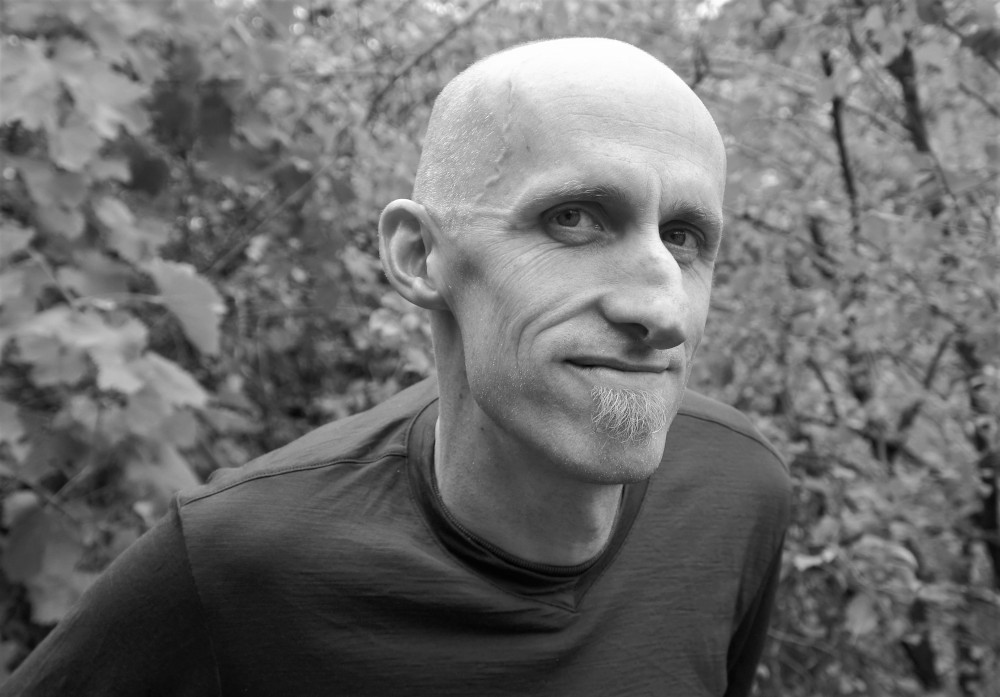
‘Energy is Art’s force’: Dan Disney in Conversation with Joyelle McSweeney

‘In a station of the vortex pick me up and hurl me’ writes Joyelle McSweeney in the poem ‘Oocyte’, appearing in their celebrated collection Toxicon and Arachne (Nightboat Books, 2020). In this heady exchange of ideas, the author of ten books (poetry, fiction, drama, non-fiction, translation) reveals a formidable erudition swirls through the heartlands of their elemental writing. This interview ranges over affect, ethics, utility, and community, and McSweeney’s responses to Dan Disney’s questions are as if still points in the moving eye of a storm, or anthropocentric compass, or image-haunted mind.

Dan Disney: Hello Joyelle, most importantly, sincerest possible thanks for agreeing to conduct this interview; I’m extremely grateful for your time (of which I will try not to steal too much) and am so pleased to be in contact. Again: thank you for being available to answer these questions!

Noting, with warm congratulations, that you have received this year’s Shelley Memorial Award, I wonder if I can cite from judge Calvin Bedient’s comments: they assert that Toxicon and Arachne ‘tightens up formally against invasive things, everything toxic, corrupting, spoiling, devastating … [McSweeney is] alert to every bullying thing’.

If, after Walter Benjamin’s famous chiasmus, we must respond to the aestheticisation of politics with the politicisation of our art, can I ask about your ethics? Broadly speaking, which energies / impulses underwrite your creative and critical contributions?

Joyelle McSweeney: I believe art has and should have force, but that force could be infinitesimally large or infinitesimally small – either can disrupt the universe.

On a personal level I strive to be something completely unabsorbable, that lodges in and inflames the tissues in which it lodges – a fatal splinter, a fatal flaw, a grain of poison, viral DNA. As a publisher I want to load the corpuscle with so much unlikeness that it capsizes in the vein and changes the blood.

I think of the vibrations of the porn actor Pajarito in Roberto Bolaño’s short story, ‘The Prefiguration of Lalo Cura’: ‘Back then you weren’t afraid – you moved so fast that only little creatures and fetuses could see you moving. Only cockroaches, nits, lice, and fetuses’. And I think, oppositely, of Raúl Zurita’s skywriting, his maxim on art: After the coup, we have to make art with the force of the coup.

Such contradictions define Art – simultaneously as small as the eye spots of nits, lice, fetuses, as big as the militarised sky, as small as a neutrino, as large as the Big Bang. Such contradiction releases a pulse, releases energy. That energy is Art’s force.

DD: When turning the gaze toward your work, I am struck by the sheer verbal force of your creatively deployed language, which seems as if seamlessly preternatural and yet startlingly hyper-modern, as if it has always been in (or waiting for) the syntactical units in which we find it. The sheer arresting power of lines such as ‘The bruisey weeds in the garden / ungoogleable / and eyeless, closed around their seedy code / nearby and remote as on the edge / of the galaxy’ (‘Morning Wants an Eidolon’) or, elsewhere, ‘[t]he joystick’d boys sink arrows into the ozone. / If we can’t have bees we’ll have drones’ (‘Oocyte’) compel immediate re-reading. Can you illumine your creative processes: by which methodological means does syntax like this arrive?

JM: My method is to ride the black skirt of sound as it curves in vantablackness. Its signs, its sins, its sinuses, its sines.

To dilate on this topic: sound is moving past and through us and, as language, carries with it the newness of inflection and the history of where it’s been. Etymology is my favourite form of divination, a scrying–an occult, possibly fictive arrangement of language to scrutinise for what it tells us about the past and future. What I call ‘hyperdiction’ bears the imprint of empires, histories, accidents and conflicts, as well as the svelteness of novelty shuddering into being. I want my language to be oddly familiar even as it morphs into something not quite ever heard before, even as it elapses, even after it’s gone.

Posted in INTERVIEWS | Tagged , , ,

‘It’s no gift to have this kind of knowledge’: Indigo Perry in conversation with Dani Netherclift


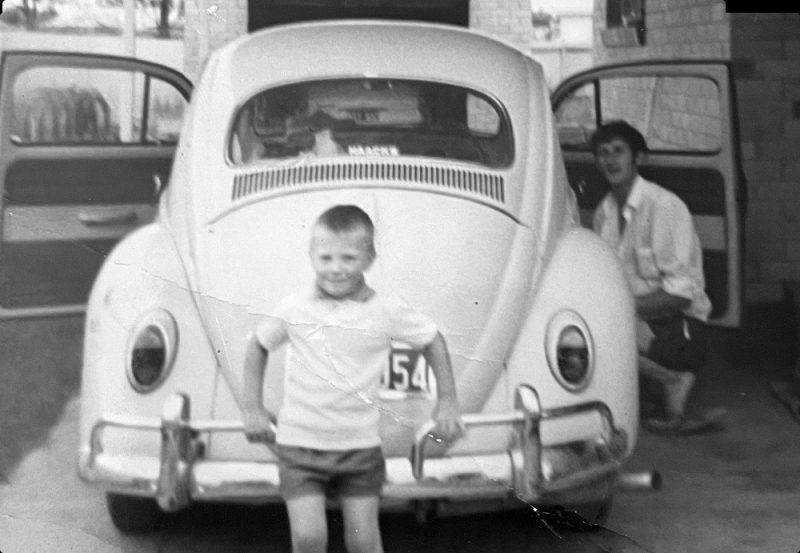
A photograph of Indigo Perry and Dani Netherclift’s brother and father.

Indigo Perry and Dani Netherclift are sisters living and writing in Victoria. Their father and older brother both drowned in an irrigation channel in 1993. Below is a conversation about the ways that this tragedy has shaped their creative practices both singularly and in dialogue with each other’s work. This exchange highlights how the intangibility of grief potently forms an invaluable insight into a how their experiences are forced upon their understanding of writing and poetics. Such an exchange trusts the reader to embrace their account tenderly when considering how to challenge elegiac traditions.

Indigo Perry: After I knew, I kept returning in my mind to the precise moment when they drowned. (But until now, I have not thought this through, that it is unlikely, impossible, truly, that they simultaneously stopped breathing after their lungs filled with water [the ingress]. Even though I have mourned each of them differently and often separately, I have always thought of them as having drowned together, always two of them, but as one. Of course, with their different ages and health, constitutions, shapes – their different matter – our father and brother’s lives would have ended at different times on a clock.)

We have been alike through it all in our desire for detail. Timing. Biology. Physics. The corporeal, yes, but more than that. Reconstruction leading to a kind of reanimation in the slowed, blurred light quality of dream or memory.

There came a moment that afternoon when both were gone, and you were standing on the bank of the channel and having the thought you have described to me, that nobody else knew what had happened yet. At that same moment, I was probably swimming at Brighton Beach. I remember being in the water, not simply that I was in the water; I recall the feeling of being immersed. It was hot and I have never liked hot weather. Being up to my neck in the cold water of the sea was a relief, but even then, the storm that would arrive by evening was beginning to show itself in the choppy waves and in the sand blowing into my face. Still a hard blue, the sky was the kind that my daughter, born many years after that day, would come to describe as noisy. But the storm was incoming. Also incoming was a cascade of knowing. The news of our father and brother’s deaths flowed through you and our cousin at the channel, the fisherman who stopped to help, the police, our uncle, our grandparents, our mother, me, our brother and onwards. Later, I would picture myself, immersed, oblivious, in the cold sea, hard sky blaring, and wonder how I could not have known what was happening. How was it that they – those two – were drowning and

               I didn’t know.

Dani Netherclift: Years later, my soon-to-be mother-in-law was fitting me for my wedding dress in faraway Kiama, New South Wales. She was talking about the wedding of her eldest daughter. This wedding took place on the day that our father and brother died. She said that everyone had been annoyed with my husband for turning up to the wedding with a black eye. Though we had known nothing of each other at the time, when I learned of it, I recognised that sense of a wound that marked space and damage for this day, carving out remembrance for the grief of a future wife. I imagine this black eye in the same light as your sensation of being immersed in water that day, un-knowing.

In one of Michael Ondaatje’s ‘Wells’ poems from Handwriting, he elucidates the location of the soul as being ‘always’ close to the site of a wound [A black-eye, water experienced as pleasure]. The practice of writing or poetics and the ‘practice’ of grief are at times like this seamless.

In the same way, vis-a-vis our talking, letters and writing, our grief and memories have been since the beginning something knitted together of fragments, observations,

               interlocutions,
               of a piece.

Posted in INTERVIEWS | Tagged ,

‘Revolt and remembrance’: Joel Scott in conversation with Don Mee Choi

I’ve known Don Mee Choi now for more than 10 years. I got to know her work as a poet and a translator simultaneously, through her first book of poems, The Morning News is Exciting, and her first book-length translation of the work of Kim Hyesoon, Mommy Must Be a Fountain of Feathers. I instantly became a fan of both writers, and I ended up writing about the two of them briefly in my PhD thesis, and we corresponded sporadically over the years. It wasn’t until 2017, long after I moved to Berlin, that we actually met in person for the first time, when Charlotte Thießen and I invited her to read at our artiCHOKE series, for which we translated her work into German and wrote a short essay on it. It was exciting to be able to talk with Don Mee in this format. I’ve read plenty about her writing and translation practices before, but throughout this exchange, I still learned a lot that I didn’t know. And it was valuable for Don Mee to generously ask about my own writing too, to be forced to crystallise aspects of it that might not have been so clear to me before. In this interview, we discuss the politics behind our work and our conversations span across more than a year due to the restrictions that paid labour tends to place on thinking.

Don Mee Choi: I hope it would be alright if I begin by tracing back to how we met. It was eleven years ago that I found your fascinating review in Cordite my translation of Kim Hyesoon’s Mommy Must Be a Fountain of Feathers (Action Books, 2008) and my first book The Morning News Is Exciting (Action Books, 2010). I was so thrilled that someone wrote a review of both books, making such interesting links between the two, let alone for an Australian literary journal. As you already know Australia is where my parents and siblings have permanently settled. I contacted you via your blog, and I think you told me that your sister-in-law was Korean. A few years passed, and you went to Berlin to do your dissertation research on Walter Benjamin. Then in 2017, you invited me to Berlin for the artiCHOKE international reading series, which you co-founded and curated. I had no idea then how being back in Germany, even so briefly, would trigger so many changes in my life. I remember us, including poet and translator Charlotte Thiessen and performer, poet and artist Tabea Xenia Magyar, meeting for dinner at an Italian restaurant next to Tempelhof the night before the reading. I remember you telling me a bit about how you grew up in a suburb of Sydney playing soccer—how your father was interested in Steiner’s theosophy. And I told you how my mother’s cousin made it first to Australia via Brazil. In my mind, I still refer to her as Aunt Brazil.

Joel Scott: I like that you chose this tracing back as a way to start. I have a terrible memory, and you’ve gone back more than 10 years, but I remember some of the sequencing differently in ways that might be interesting. I think you have forgotten our very first encounter, which is how I came to write that review in the first place. I was about to start a PhD (I can’t quite remember if I had already applied for it, but I was shopping around for supervisors at different universities and speaking to the people who held the purse strings for the scholarships), and I was asked to write some blog posts on the Three Percent blog. It was one of those tasks that should be paid but that universities get grad students to do. And what better person than somebody currently sniffing around for a scholarship spot for a PhD in translation studies? I was genuinely interested in the symposium, and back then I guess I imagined ending up in academia in some way, so it seemed like a good thing to do. I can’t remember what I wrote about the keynotes and other speakers on that blog, but I remember that I tried to behave. I didn’t want to be a ‘hand biter’.1 But there had been one presentation at the conference about contemporary Chinese literature that really irritated me. I was probably getting the complete wrong end of the presenter’s rhetorical stick and didn’t know enough about literature and certainly Chinese literature to know whether there was any sense to what he was saying, but I remember him saying something like ‘the use of language and metaphors in a lot of contemporary Chinese literature sounds like it’s written by people who have had literature described to them, but never read it’ (this of course now remembered through the haze of more than 10 years). And on top of finding this assertion suspicious, I really liked the passages he read as examples of these failed attempts at literature. They seemed exciting and bodily and obscene. And so, being as I am at least a partial hand biter, I wrote a rant about this talk on my personal blog, not bothering to consider that I had linked to my blog in my bio note on the professional blog.

And so of course people found their way back to my blog, including the presenter I had bagged out, who was needless to say a little perturbed to find my rant there. Immediately I felt that I had done it again, opened my big mouth where I shouldn’t have, and was a little mortified to have been caught out behaving badly. But then one of the people who commented on my blog was you, and you offered to send me your translations of Kim Hyesoon (Mommy Must Be a Fountain of Feathers) and your own book, The Morning News is Exciting. And not long after the books arrived, and I was totally in love with them. It seemed to have taught me a very ambiguous lesson. I had acted out, but then partly that is how you found me, and I always thought (and only now does it occur to me that I might have been totally wrong about this) that you had decided to send me your books because I had been so critical (unfairly or not) of that presenter. Like: you’ll ruin your career but you’ll meet your true comrades in the process.

The other thing that you remembered which, I’m fairly sure, is not true, but is interesting, opens something up, is that my father was into Steiner’s theosophy. It’s funny because I’m sure I would have spoken about my father, his religion, the role it played in my upbringing. But (to my knowledge) my father is not into Steiner’s theosophy. But the thing is, he would be. Alongside his Evangelism he has become increasingly obsessed with nutrition, organic food, in quite an anthroposophic way. But rather than getting too deeply into my father’s idiosyncrasies, I want to kind of open this up as a topic. Fathers. Mothers. Your father is everywhere in your work. Your mother is less present to me. (And as an aside, thinking about the mother in particular in relation to Kim Hyesoon’s work). There is a kind of simple explanation in that your writing is constantly reworking history and your father was a war photographer/photo-journalist and produced all of this documentary material. But I’m just kind of thinking keywords at the moment. Moving families. You have Aunt Brazil. When I was a kid my family didn’t go further than country NSW. I don’t think I ever thought about the idea of going on a plane until I was in my teens or something. I’m just thinking about the different kind of families (as units of particular coagulations of class, race, etc.) as mobile, floating, or immobile and fixed things.

It’s been nine days since you wrote your first section, which was before Russia invaded Ukraine. War refugees are heading west, mostly towards Poland, but thousands of people are arriving in Germany all the time. Everything has shifted. Nothing has settled yet.

Posted in INTERVIEWS | Tagged ,

3 Savita Singh Translations by Medha Singh

End

In Karnataka’s dark village,
a family prepares
to close the game
of life.

A mat is splayed out
on the ground & poison
mixed in a bowl.

Seating the kids in a corner
their mother caresses them,
watching her universe
for the last time. Wraps her sari
anew, settling her pallu;
and in front of itself,
a storm stilled: the farmhand.

They gaze at each other
man and woman, their silent eyes,
and a yawl explodes
in the throat
of the farmer
buries itself that very
moment. An emptiness
looking their way
and them at it. Neither
fears the other.

A pall of silence spreads
through the air,
the bodies lie, aquiver.

Posted in TRANSLATIONS | Tagged ,

6 Manoel de Barros Translations by Bruna Dantas Lobato and Flávia Stefani Resende

Translations from Country Boy.

II.
Our knowledge wasn’t from reading books.
It was from grabbing from touching from listening and from other senses.
Could it be a primal knowledge?
Our words leaned on one another for love
and not for syntax.
We wanted the arpeggio. The song. The chirping of words.
One day we even tried to cross trees
with birds
to get that chirping into our words.
We didn’t get it.
We’re still waiting.
Though we’ve since learned spells and songs
and chirrups are also born out of first perceptions.
Though at the time we much preferred dirty words.
Like: I wanted to touch the wind’s butt.
Father said the wind has no butt.
About which we’re still frustrated.
But father encouraged our way of unlearning the world
our way of sending away boredom.
We didn’t like to explain images because
explaining pushed the voices of the imagination away.
We liked disjointed senses like
birds chattering as they ate pieces of flies
off the ground.
Some visions didn’t mean anything but were
verbal strolls.
We always wanted to award the butterflies badges.
We liked the loitering of words better than
grammatical prisons.
When the boy said he wanted to bestow his
pranks to the words even the snails supported him.
We leaned onto the afternoon as if the afternoon were
a lamppost.
We liked words when they disturbed
the normal sense of speech.
Those boys belonged to the red sky
like the birds.

II.
Nosso conhecimento não era de estudar em livros.
Era de pegar de apalpar de ouvir e de outros sentidos.
Seria um saber primordial?
Nossas palavras se ajuntavam uma na outra por amor
e não por sintaxe.
A gente queria o arpejo. O canto. O gorjeio das palavras.
Um dia tentamos até de fazer um cruzamento de árvores
com passarinhos
para obter gorjeios em nossas palavras.
Não obtivemos.
Estamos esperando até hoje.
Mas bem ficamos sabendo que é também das percepções
primárias que nascem arejos e canções e gorjeios.
Porém naquela altura a gente gostava mais das palavras desbocadas.
Tipo assim: Eu queria pegar na bunda do vento.
O pai disse que vento não tem bunda.
Pelo que ficamos frustrados.
Mas o pai apoiava a nossa maneira de descer o mundo
que era a nossa maneira de sair do enfado.
A gente não gostava de explicar as imagens porque
explicar afasta as falas da imaginação.
A gente gostava dos sentidos desarticulados como a
conversa dos passarinhos no chão a comer pedaços de
mosca.
Certas visões não significavam nada mas eram passeios
verbais.
A gente sempre queria dar brasão às borboletas.
A gente gostava bem das vadiações com as palavras do
que das prisões gramaticais.
Quando o menino disse que queria passar para as
palavras suas peraltagens até os caracóis apoiaram.
A gente se encostava na tarde como se a tarde fosse
um poste.
A gente se encostava nas palavras quando elas perturbavam
os sentidos normais da fala.
Esses meninos faziam parte do arrebol como
os passarinhos.

Posted in TRANSLATIONS | Tagged , ,

3 Xhevdet Bajraj Translations by Alice Whitmore

The following translations are republished with kind permission from Laertes Books. They were originally published in the 2020 chapbook Emergency Exit: Recent Poems by Xhevdet Bajraj.

The Spanish source poems for ‘Take Revenge’ and ‘The Peddler of Small Wooden Angels’ are from the 2018 volume El año que no trajo primavera (The Year That Brought No Spring); ‘Instructions on How to Write Poetry’ is from the 2019 volume Kur Qajnë Hardhite / Cuando lloran las vides (When the Vines Weep).

Take revenge

Come
let’s warm ourselves like magpies
on the rooftops of those abandoned houses
wounded
by mortars in the last war

Under the gap-toothed smile of the sun
let’s lie naked
and warm ourselves

Because we are poor
and love is the only weapon we have
with which to take revenge on life


Vengarse de la vida

Vamos a calentarnos
como las urracas
sobre los techos de las casas
abandonadas
heridas por los morteros de mano
en la última guerra

Bajo este sol chimuelo
desnudos
vamos a calentarnos

A los pobres solo el amor les queda
para vengarse de la vida

Posted in TRANSLATIONS | Tagged ,

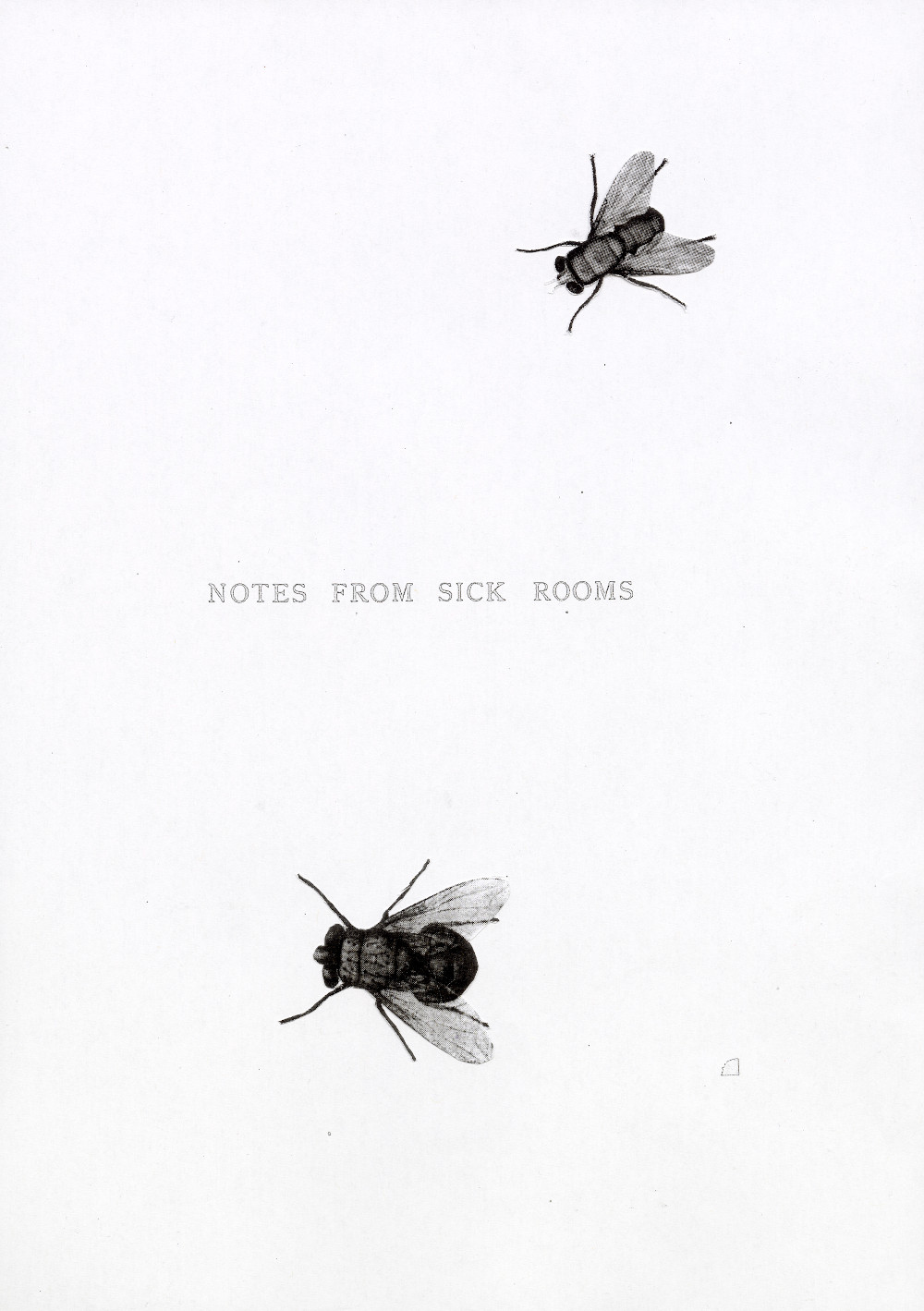
Notes From Sick Rooms

Posted in CHAPBOOKS | Tagged , , ,

Porous Walls, or, Why don’t you join me?: Poems from the Future of Health

In Poetry and the Fate of the Senses, Susan Stewart writes that the use of caesura or enjambment ‘bring[s] pulse and breath to the poem itself’, at the same time opening ‘the text to the excentric positions of unintelligibility and death’.

Perhaps especially these days, mid-pandemic (if implying ‘middle’ isn’t too presumptuous), we are accustomed to thinking of breath as intimately human, social. Breath as that tide of air we’re custodians of, that enters and departs our bodies, that exposes us to others, and others to us. Breath as both life and death.

When I began the Writing the Future of Health Fellowship at RMIT’s Health Transformation Lab, I was thinking of shared vulnerability and mutual inspiration. I invited twenty-two others to write with me and/or with each other.

For the last few months, this group of disabled, neurodiverse and chronically ill writers have collaborated on poems and essays. We have talked together as a group about our experiences, insights, dilemmas and dreams. We’ve diagnosed society, its systems, and imagined therapeutic futures.

These poems are a small sample. Heather Taylor-Johnson and Rachael Wenona Guy give voice to the uncanny experience of bodily instability in a world built for the (imaginary or rare) normal person. Kerri Shying and Esther Ottaway hold and amplify the small delights and pleasures that are in fact immense. Gemma Mahadeo and Anna Jacobson turn the tables on electroconvulsive therapy, watering a tree of resilence. Angela Costi and Leah Robertson reckon with their own internal others, presences who appear through trauma or the whims of the body.

Uncertain Parts‘ by Leah Robertson & Angela Costi
My Raucous, Singing Ear‘ by Heather Taylor Johnson & Rachael Wenona Guy
Joy to My World‘ by Kerri Shying & Esther Ottaway
ECT Tree‘ by Gemma Mahadeo & Anna Jacobson

These are poems of triggering places and shelter, of landmines and weeds, an unfurling and entanglement of voices. Why don’t you join us?

Posted in CHAPBOOKS | Tagged , , , , ,

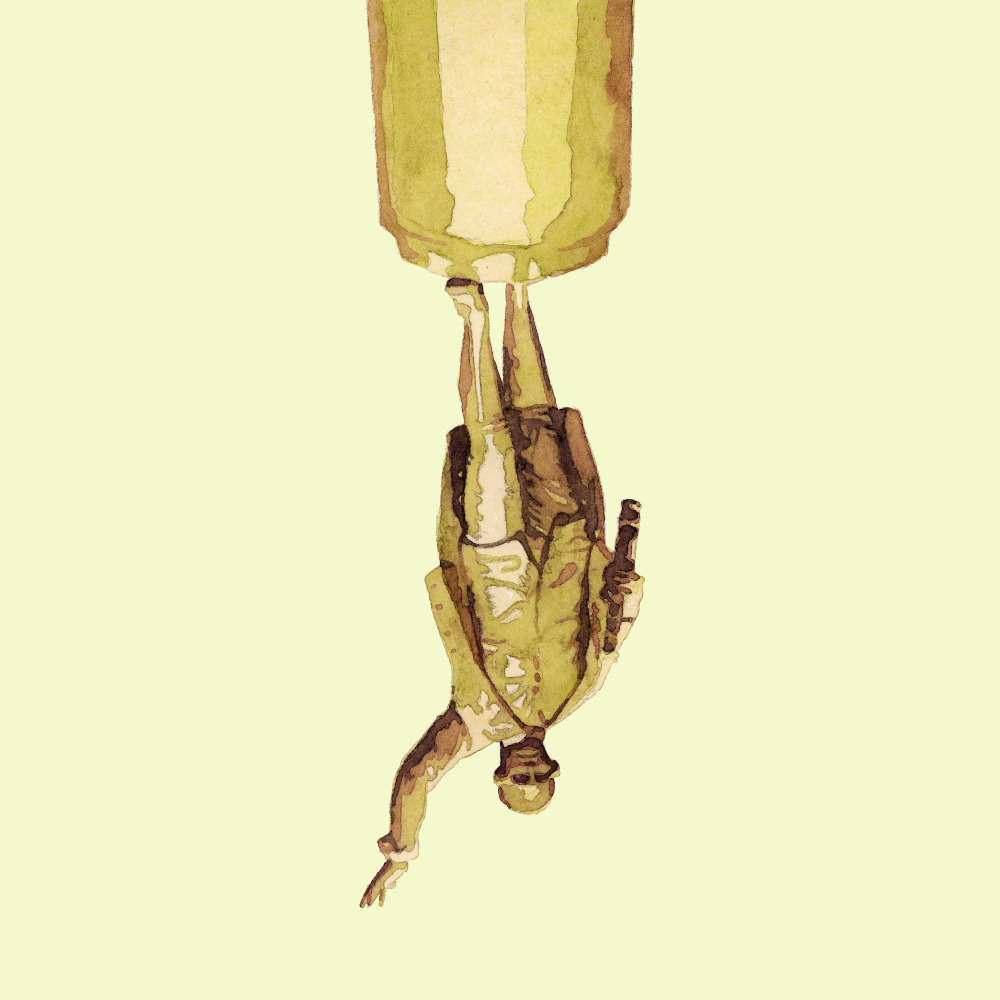
UnMonumental: 20 Works by Matt Chun and James Tylor

UnMonumental is a collaborative project by artists James Tylor and Matt Chun. UnMonumental posts events from Australian history that are little known, hidden or commonly misrepresented, accompanied by original watercolour drawings. New posts can be found at its Substack site, alongside the full UnMonumental archive, resources and references. Chun and Tylor undertake community consultation for UnMonumental articles and illustrations and pay consultants for their time.

Posted in ARTWORKS | Tagged , , , , , , ,