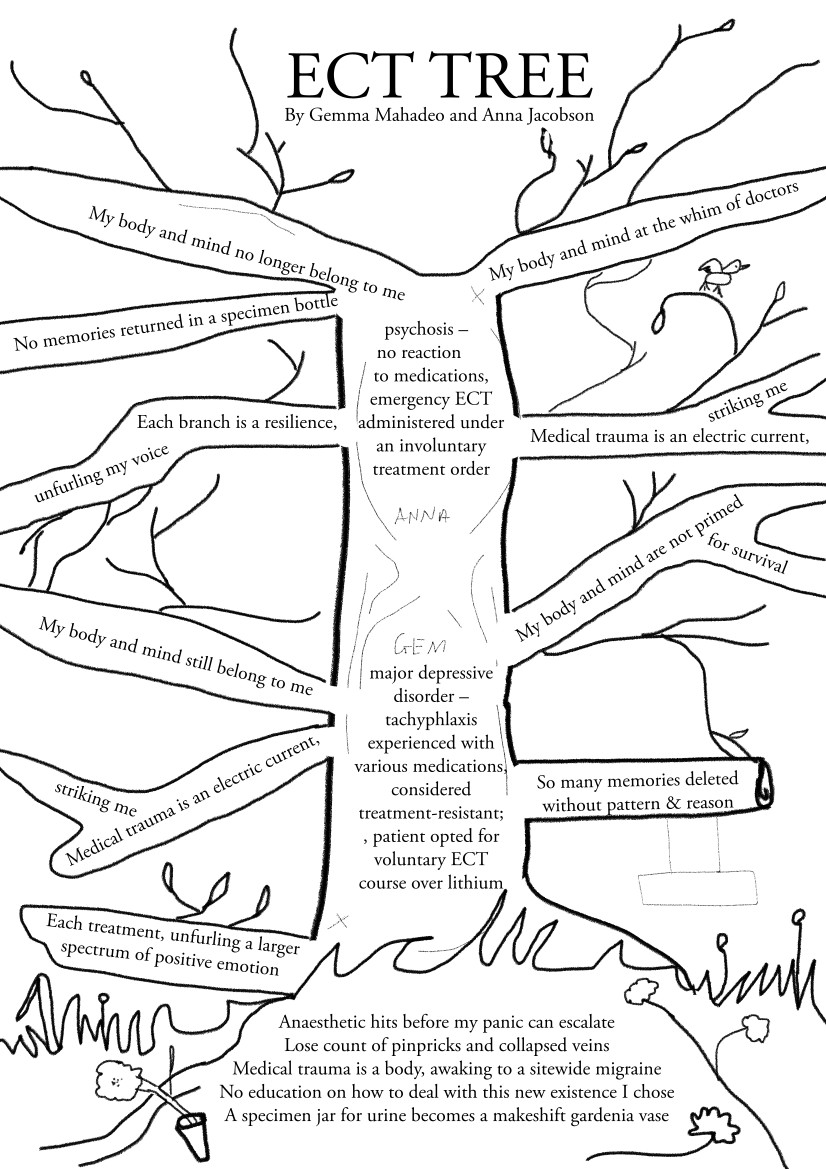
Select the image below to begin the essay.

Select the image below to begin the essay.

When I left Bosnia in 2018, my cousin gave me a book of poetry, Bosansko-Hercegovačka Poezija. It’s a slim volume, bright purple with a pale lilac square on its cover. From it, a woman sketched in dark blue, a wide-eyed and startled dove at her breast, stares out. It was published in 1983, and is soft with its years and the hands that have held it. I still haven’t read it. I can’t speak Bosnian. Or rather: I couldn’t. Or perhaps: I can’t speak it well enough for this. When we left Bosnia, we left the language too. I was five and naš jezik became simply: a language. Not mine. Definitely not ours.
It’s not entirely true to say that I haven’t read it. I’ve flicked through it, glancing at names as though I might find one I recognise. I am ignorant of most things to do with where I was born but I know that I do not come from a place famous for its poetic tradition. Bosnia is not Japan or India or Germany. That’s not to say we do not have poets. Every place has poets. But Bosnia is a small country, and, to most, insignificant. It is smaller than Iutruwita/Tasmania with two million less people, positioned on the south eastern flank of Europe and tucked into obscurity with countries like (North) Macedonia, Kosovo, Albania, Bulgaria, Moldova. It is very easily forgotten.
If people are good at history, when I tell them where I’m from, they make that sympathetic expression, their eyebrows folding like hands in prayer. They tell me that they ‘remember the war over there’, as though it were possible to reduce what happened to us to ‘the war over there’. Well. I suppose it is possible. Our genocide is obscure and attention is cruel. Case in point: they will then often ask, sometimes with morbid curiosity sometimes with the regular kind, what I remember of it.
When this happens, all I can think of is all the things that I don’t. My grandparents, for example. Their faces, their voices roughed with cigarette smoke, their papery hands holding me close as I grumble an escape in their lap. No matter how many times I look at the photos, they slip away from me. Even their names. Too, my father’s face unworried by grief. How it felt to be thrown in the air by him, caught in free-fall and tossed again, light as fog over Jablaničko jezero. My father, young and whole, clasping my hand in the tall grass behind our house, off to look at the bees. We had kept bees but they’re gone now. The bees. The sound of the word Babo. Our house without the ghosts. Our language without translation.
(No one is interested in this; they want to hear about the bombs, the camps, the hunger, the bullets; not my dead grandparents, the other dead, the interesting dead.)
I have not read the poetry collection that my cousin gave me, but my eyes have skimmed across certain poems and I’ve read others aloud, though with awful incomprehension. I did find a name I recognised, Ivo Andrić, and felt satisfied, connected to my cultural tradition even if I have only ever known him as a novelist and our novelists do not have quite as much trouble as our poets (Aleksandar Hemon, for example). Like our genocide, our writing is obscure. It does not cross the border. Or rather, when it does, it becomes diaspora, which is to say it becomes hyphenated. This is not the same as diluted, but it can feel that way.
‘to make
                  is to risk
making
a botch’
                                  —Harry Gilonis
As we sit down to write this introduction it’s reaching the end of winter in Geelong (Djilang), on unceded Wadawurrung Country – close to a year since we first considered the issue and its theme with Cordite’s Kent MacCarter. OPEN. What to say? Wattle’s blossoming in the park; magnolias are opening along suburban streets.1 The pandemic isn’t over, even if lockdowns have ended and, for many, masks are no longer. The government has changed, though as Behrouz Boochani wrote recently, in fundamental ways so-called Australia remains unaltered, seemingly unwilling to imagine itself anew. And so – amid continued violence across parts of the world including Ukraine, Gaza, and this colony – our approach to ‘Open’, at least thematically, remains an ironic, uneasy one.
Still. Open the balcony door and take a look: words and words … or should that read worlds? You pick. May the poem always be open and alert to whatever comes its way.
Our initial call-out for this issue suggested we were keen to see ‘crafted poems and crafty poems: writing conscious of its own making, unmaking, and making it new, of its contexts and antecedents’. We have – by design – been ‘open’ to how individual poems respond to our theme; we hope that makes for an eclectic mix of work that, in one way or another, makes for a compelling issue.
The poems we’ve selected caught and held our attention: they are poems that demonstrate an attentiveness to language and its possibilities (allusive, elusive, multivalent?), as well as paying close attention to the spaces they inhabit; spaces they both contribute to constructing and scrutinise through their presence. We were drawn to poems alert to their cultural and socio-material contexts; poems that opened conversations with other poets, artists and artworks, various other interlocutors, and new vantage points; poems that ‘opened’ as an action/verb, or whose openings – breaches, gaps, or breaks – provoked humour, joy, curiosity, discomfort, and/or surprise. Other poems here are ‘open’ in their frankness or candour, or – beyond theme or subject matter – also asked us to consider what an ‘open’ poem might look like, formally.
We were immensely humbled to receive submissions from more than 500 poets through the Submittable portal, and are grateful to each of the writers who generously submitted their work for this issue. We were honoured to read poetry of this magnitude and scope – and inevitably, we had to turn away many excellent poems. Had we opened the submissions portal at another interval in time, it feels possible that this issue might have comprised quite a different assortment of works – but this is the result of/at this juncture, and we remain appreciative and in no small part daunted by our part in bringing this issue together.
Thank you again to the poets whose works form this issue – for opening your words/worlds to us, and for the various pleasures and/or perturbances their poems offered to us as their early readers.
Thank you also to Kent MacCarter – a superb poet himself – and the rest of the Cordite team for continuing to create such a vibrant and inclusive publication.
We choose to close this editorial by deferring to the poems themselves, inviting you – the reader – to open (unfurl, uncork?) them next.
On the Train
I’m sitting on a blue seat, two red ones in front of me and a sign above them illustrating what priority seating looks like. Outside the window of the metro train, the day speeds past the planted trees, the parked cars, cottages, cafes, bicycles and prams. Red is for a person with half a leg and a crutch, and it looks as though the crutch has morphed into the person’s arm. Disability is all sorts of body parts, I see no need to linger. I am heading to the city, wearing boots that rise to my knees, protecting my ankles from excess atoms bouncing off one another with such fury they’re bound to trip me up. Red is for the person with a ball-tipped cane in one hand and lead attached to a dog in the other. The outline of the animal makes me think of my dog, and for a second I forget how fast we’re going. There will be a lot of people in the city, each one trying to match the other’s pace. As a group, it will look like they’re chasing after the rolling cars but haven’t the stamina or grace. I’m dealing with the sensorially complex; it doesn’t have to be rational. A red seat is for the person bent at the knees, spine at an angle, leaning on a stick shaped like a giant candy cane. And there will be noise in the city, invasive as rockets. Red for those with large bellies harbouring babies that haven’t a clue what they’re getting into, how each scream at the time of their birth will blast new light into their world. There will be traffic noise and footsteps and birdcalls and alarms and voices talking; the wind will mingle with every leaf; insects buzzing on the breeze. The sign says to please remember that not all disabilities are visible. The vibrations of the train are in my head, like the city will be with all those rushing feet, my knee-high boots in slow-mo, trying to catch the rotation. There is no image of what a person with invisible disability might look like.
            my flannel dress
                        my mounded breasts
                                    my ever-growing beauty mole
                                    the holes in my ears

my grandfather’s eyes
my head-top bun
                                    my thinking brain
                                                my dimpled thighs
these inner frights
my just-cut nails

these eating teeth
                        this gobbled mess
                                                these pounds of flesh
                                                                        this healthy tan
In my notebook, I record you each in different colours, hoping this will help me work out who
is saying what, and then why you are saying it.
You are not audible; I perceive you each
like a thought. Some of you brusque and unmistakable. Others needing stillness
and intricate mental work.
I do not know how many of you formed.
Your existence has come to make sense to me, but my awareness unsettles you. You have long gone unobserved. You suggest I have made
this up, or that I have not and I am insane.
You do not have full access to my intellect
nor what I have learned. I do not have
full access to your memories.
Other core facets of identity are challenged.
I am gay, but my certainty shifts when those taught young to please men suggest resuming. You obscure my centre. You fight to my forefront and rotate your versions of our politics and age and needs and direction. You flood with your emotion and manoeuvre my body.
I scramble for ownership.
My psychiatrist notes I am here more
frequently. These instances are a sharp
spring day. In the safety of these sessions
I refer to us as us. I am to have compassion
for you. I am to thank you for protecting me
and to help you understand that the
threats have now subsided.
Your threats have now subsided.
My neurosurgeon explains that as I’ve grown older so have you. You don’t push against my spine like you used to. No more spearing my back and legs. Still, you don’t give up, like a bully. Sniping my left foot. Denying me sleep. You’re supposed to be subtle, like regret.
I’m told to monitor you. Monitor. A word that contorts my brain into a knot. I know there’s at least twelve of you in me, but not exactly where and what you’re up to and if you intend to get nasty. One thing I’ve done is observe if any of you dare to bulge. Some of you have, like you want to spring out of me. My skin has been
good, holding onto you, but for how long?
You may remember, two of you had to be removed. Do you miss them? Do you visit the hole they’ve left behind? Were you close like siblings or estranged like siblings? Do you blame me for their death? I hope not. I tried to keep them, but they were destructive. You know how much codeine methadone and morphine I took to live with them. I hate surgery as much as
you do.
For too long I’ve compared you to weeds, worse still, I’ve written about you as landmines. But I don’t want the responsibility of a gardener or the fear of a soldier. For over fifty years you sit as I sit, you eat as I eat, you dream as I dream, when I’m cold so are you, when I sweat you are hot. We share this body. This tangled mess of thistles and thorns. An imploding grenade of screams. This body we share as a team of uncertain parts. I hope you can love my body when I can’t.
she’s 26 and may not reach Seoul with a comic novel
introducing a sliding scale of charge d’affaires
in caustically measured written characters
loose on an airliner folded into resilient rainforests
drummed in a minute’s arithmetic
promising to make something like a natural sound
a hint of dictionary from a local chorus
ripe for a nostalgic poll vaulter’s enduring grip
abandoned under abandoned covers
which is exactly how the plateau was mentioned
below the steamed up skylight of two of them falling there
rejecting the prized labels and headcount
the sonorous cube of someone’s descent
entering on their hands
choosing conversations of gradually adjoining landmarks
the cape and his bearded terrain
of conspiratorial windowsills
denying an ocean’s review
of timeworn phrases drastically repeated
treated to a tenement of rushing streets
until perspective caught up with it
ambling in the fast lane
humming a word’s tessellated mirror
“Maybe it’s a thing you could call the subgrime”
Jill Jones to Claire Albrecht
I’ve been looking at my hands holding the knife,
at the skins, pips, cores, stalks
at the sink filling
I’ve been looking at tiny writing on packets
I’ve been looking at daddy long legs in corners
at huntsmen stepping from crannies
the knotty hair of sleeping children
jar lids, special offers.
Angus Young plays the guitar.
It is his work, he wears a uniform.
Jodi lowers herself into the water.
“What even is everything,”
thinks Jodi.
My ordinary life feels like a dirty fleece
hard grease and soft grease
and dirt and burrs.
I’m hoping the energy to wash and rinse
that heavy, crinkled, mass
will discover me
one morning.
Angus Young
smoking a cigarette, wearing a jumper
talking to Molly
“we started as a rock n roll band
you never think you get that far
people
want you to soften it here
mellow it there.”
I’ve been looking
at the sky
clouds like Florentine wallpaper
clouds like crinkled staples
clouds like a frosty window. The sky with nothing
but a pewter-grey edge
coming in fast.
The sky cloudless. Every
fing
thing
ting
connected.
I’ve been looking at a hill of beans
and a damp coriander leaf wet and flat on the counter
feathery margins akimbo.
The knife, the wool
the sky, the burrs, the riff
the pool, the tapes, the taps.
Jodi pushes off the side
to start her backstroke
arms glittering.
Angus listens to the next question
answers with a cloud.
This side of the water-line everything is beetles,
on the other, the kingdoms of crabs, all else
are sports, dead-end prototypes, and us.
The startling dominance of it, the inevitable
reordering to the type: un-shucked, re-burdened,
the great evolutionary retreat to the form.
I started this with a thought for shells, for
carapaces, their self-evident superiority; why
else would nature tend towards chitin?
I thought to write something predictable about
vulnerability, about the strength in our softness,
the triumphs inherent in our weakness. I might still.
But this week the news is full of tanks, the men
crowded in them, the men that have sent them,
their mud-mired convoys, the shells they discharge.
The news is full of stories of farmers hitching
their rusty tractors to tanks and dragging them off
the road. Second-hand tanks selling on eBay.
It’s funny for a day, but where are all the tanks
coming from? A phylum I’d thought abandoned
long ago. Extinct. Hammered into ploughshares.
No useful form ever fails if it fills a niche.
Turn over any log, scrape the ocean. So now
my Timeline is filled with hard shells rutting a field.
We understand no love that is not in excess – Urvi Kumbhat
I never questioned why redemption
kept moving:
hilltop halls behind a yellow-
brick church, the Filipino congregation
evangelical in the valley
toward the river,
further west.
We tithed then
on stackable chairs, on knees
of kuyas and titos
our lips, tambourines
to sugared bread. /
By fourteen, we’d saved five hundred
for the Build2Reach fund.
The pastors were blue-eyed
desperate to own
second-hand buildings.
You were banking
By then, we’d survived pesos
in parking lots. /
And I earned too
selling three-piece feeds
gravy, breast
rib and roll
to older people driving through
custom spoilers
and a muffler scraping
to clear the gutter. /
You see if I write the browner poem
I get distressed
linen, a compostable toilet
cassettes of
Joni Mitchell.
(It’s been a long time).
And you’d be proud
I’m learning to squat
on Darkinjung country
Yarramalong
above a creek, inland from
Of course, I also grieve infinity
pools,
You are, in fact
pregnant –
before you left these parts
I listened to you FaceTime and fret
So let me cry uncle
I first notice in a poem the longest line
a place where I can lie down
come apart as a thing with no force of life
a place where a light has been left on
like in the other room
feels too far to switch off and how bright
whether or not someone’s there
Is this the merciful distance of disaster?
The earth senses me and I return
its light and tenuous silence:
I am on the brink of death and my lungs
I call them my wings
these wings were never a part of me
Say it might be dazzlingly bright
when it is over and I go the long way
home as the only disruption of light
perseus trips and cracks his head
medusa joins her sisters in a sunspoked field
returns to her research, the garden, the lute.
did not accept the sweet kiss of death
did not accept the gaze of another of anyone
listens to the earth with bright abandon
where flowers discuss the dead
on which they feed
behead the myth
and they are furious.
had no song for her
had no love for her
had no memory of her
but still they look.
when death forgets to avert their eyes
tell them to send another
a cold shadow flits through me
in her presence, but i like the chill.
are you hungry? would you like some bread?
wicked gorgon here is the plate.
beast, spectre of wrath, devil,
how was your summer?
damaged like the stumps of burned trees
barren as an opencut megamine
plastic litter in the stomach of manatees
the dull carapace, the cold-stunned loggerheads
poachers targeting dehorned rhinos
shanks in the noxious skin of the Murray-Darling
sirens at dusk, the gasping fish,
the Galilee basin …
I don’t want to let anyone else in
yet
but I remember being loved
the slope of your shoulder
as you pressed
forward and I
yielded, my hands knowing
the movement of your back
not
ever from sight
as now I watch outside the
memory a lurker
awkward and real
your love was felt
as safety as a rush
a ripple carried from your shoulders
all the way down my spine—
and they say you are so far
away you won’t be coming
back is it strange that
sometimes all of me
is very still
is hushed as
lake becoming glass
but look—
there
softly
like a shiver
the water, watch closely
it moves—
tell me how the wind works
why is it like being touched
pressed close
all the way up
my skin
to the nape of—
no tell me instead
what do you hold
where you are
so far away?
I untangle in this sky, this milk-white moonlight.
Earth’s satellite appears all night in moonlight.
Which country’s quiet sky did you design on this canvas?
I’m struck by the hues of your ever-bright moonlight.
This blue is a rehearsal for when our bodies are still.
I’ve lost sight of the fires in your swipes of moonlight.
For tonight, I chew dreams under lilac iridescence.
No classifications here, shapes suffice in moonlight.
In this dream I am fatigued, my language ossified.
Yet your palette is a relief invite to moonlight.
Your paint-knife is a landscape of dirt and skies.
For you Etel, I write, ignited in your moonlight.
After Roberta Sykes
Wake at 6 am to currawongs lifting the brow
of the Queensland box & shell pink clouds bleed russet
in the glass specks of dirt on scale
with black birds beyond the wires
unnameable at this distance, lost from the window frame
like Bobbi Sykes’ sentinel lines falling
off the edge/ of my flat brain.
Walking these nights out of lockdown
Keep strict to the path, it’s not safe
to slip through garden gates
for winter oranges Le Guin’s paradises lost
but now I understand the terror of flat earthers
Think of it: we live on the outside of a dirtball
in an incomprehensible sky.
Beyond my flat brain in the privet
a currawong swings on a branch
ripping off berries, this yellow eye
and that yellow eye on me
to a chorus further out of frame
singing currah currah currah-wong.
In this ink bleeding cloud in the sunrise
I might discern my emotional function
via intuition, algorithms or recollection
of a terror, not of writer’s block but Žižek’s intense hatred
of writing/ his take on The Shining illuminates
my spatial disturbance I keep in mind
a whole hotel might not stop us killing each other.
I remember my first time back in high school
the line that dragged me under my flat brain:
room upon room opened up
I was freefalling in mansions:
a sudden architecture against my teenage plunge
into vertiginous darkness.
Walking these days out of lockdown
to early morning saws, drills & grinders
but in these streets of compulsive renovators
many magpies hang out at ground level.
We make eye contact, I say hello
and keep trying to hear the universe
beyond B flat as textures of sound
held in bird space.
The currawong is exposed now
perched on the cold antenna
of the deep-pitched slate roof
whose skylights in summer refracting sun
to our window
burn our eyes out.
Stanza 4 borrows from Slavoj Žižek and Glyn Daly, Conversations with Žižek, Polity, 2004.
‘sentinel lines falling’ borrows from and ‘off the edge of my flat brain’ directly quotes Roberta Sykes’ ‘A poem for poets’, Love Poems And Other Revolutionary Actions, University of Queensland Press, 1988 (1979).
‘an incomprehensible sky’ borrows from and ‘on the outside of a dirtball’ directly quotes Ursula K. Le Guin’s ‘Paradises lost’, Birthday of the World, Harper-Collins, 2002.
She had feverish dreams and when
keratin tips erupted from her shoulders
the shame she felt was a red slash.
Plainly, she was growing wings.
Her husband moved soundlessly
about the house. He pitied her awful scratching
and was sorry when she shifted
to the spare room.
Ah, such dun-coloured feathers
no crimson or kingfisher blue,
no delicate spots. And she with
her heavy bones, earthbound still.
Yet, on autumn afternoons
she lies secluded in the courtyard,
her feathers glossy with the heat,
napping on the pavers
and imagines her phantastical
shape viewed from above. She is
not displeased. Neither siren nor harpy
just her own, old, mutable self.
Wings. Not better, not worse
than the breast buds that years before
had ended her weightless world
of cartwheels and handstands.
Now the magpies on the railing
are more beguiling than her books.
And they watch her too
turning their knowing heads
as she dips in and out
of the sprinkler’s parabola
and droplets flung from her shaken feathers
cascade and catch the light.
Buy a rugged lawnmower
to caress domesticated grass.
According to Ibid, I suppose;
but not before we’re runover,
stumped by a snap in our trump quiver.
OK buy the Beamer not to notice
more strung strings = $ for shamus.
You need dopamine. And as matter
of fact, I’ve got it now.
Someone in the C-suite hides the likes
and an influencer lays a hashtag
by a creek to weep.
NAB jumps 365 points on an 11% miss,
because it beats expectations.
He’s got game. He tells all the ladies
it’s not timing the market,
it’s time in the market.
They try to find a filter that says
is he an arsehole or is this a phase?
Don’t mind me, I’m the guy
who delays the upgrades,
hopes he’ll cope toasting the cities
that were supposed to sink but didn’t.
I’ll stick with a term deposit.
Forget the folks who drown. It’s not your fault.
They chose to be born on sinking atolls.
Open the frog app. This is an app for collecting facts.
Record and upload. A singer’s added to the frog song map.
The frog app is a translation app. I record clapsticks
and duelling washboards. I record a zydeco band.
Common eastern froglet is what the Australian Museum sends back.
Thank you for being part of our census. Why not join us on earbud safari?
The green stream frog squeezes from a styrofoam package;
the southern barred frog shells peas in a box made of timber
the striped marsh is chopping; this fretsaw work is the wallum rocket;
the broad-palmed frog thumbs a comb nonchalant
as the eastern banjo who’s floating up lobs.
I once asked, like a fool, where the tennis club was.
But with the frog app I found acceptance, found the guide
who leads me from avant garde throat singers, hiccupping buddhas,
back to the science of relative spawn depths, months for mating,
species distribution maps. Getting up close
the frog tells me whose pupils are vertical, round, or flat
and bears unflinching witness to blemishes, spots, and bands.
The frog app will not curate online personae.
Its expert identifications are cleansing a twittersphere
shouting alternative facts. For civil, for well-informed discourse
open the frog app. Top up your swamp. Replenish the tank.
Some days are metal
I see my face reflected –
cracks in the steel
I write to rupture
I feel layered
until I read me –
I am flat and abstract
not cut onions dripping milk –
I use the same words
I use the same words –
not cut onions dripping milk
I am flat and abstract
until I read me
I feel layered
I write to rupture
cracks in the steel
My face reflected, I see
some days are malleable
i bought my hate a pair of earrings
the same ones i wear with my blue dress
the beads are tightly sewn and shine
along the light of my jaw
my unhung clench
she-saids packed in the space
where i floss every night
in all those pin-pricked holes
beneath tongue-shelter
releasing what both burns and heals
and used to finish the foldless
my dentist says be gentle with the break-down
i blur from watching too closely
i hear the crack of enamel
i hiss muted bile-rhymes
my decomposition of a throat
there is recession
of every white bone i never worked to grow
a shift of soundless teeth-beads
against the cave of melting ears
and with every swallowed sigh
i emerge like blown glass
my composition of a face
the earrings shine when light hits them
i hit my hate with whatever i have