Andrew Carruthers Reviews Jessica Wilkinson

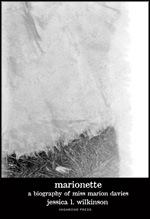
marionette

marionette: a biography of miss marion davies by Jessica Wilkinson
Vagabond, 2012

Historical Actuality and the Realpoetik

          'The page is not neutral. Not blank,
          and not neutral. It is a territory.'

                    Rachel Blau DuPlessis on Susan Howe (2006)

          'The page remains―but can the page restore
          The vanished bowers which Fancy taught to bloom?'

                    Mary Tighe, Psyche, or the Legend of Love (1805)

Free Music. Hung Voice

In an intriguing vispo ‘Free Music,’ published here in Cordite in 2011, Jessica L. Wilkinson hangs a score. Hung, literally: for what is it about the musical score that gets hung up on text? What was the final sentence? No: hang the score, hang it, Wilkinson writes! Wilkinson’s visible labor is at work in the lower half of the piece, where letters are strung along lines: alphabetic versus diastemmatic (or neumic) notation. Continue reading

Posted in BOOK REVIEWS | Tagged , , ,

Toby Fitch Reviews Mathew Abbott

Mathew Abbott

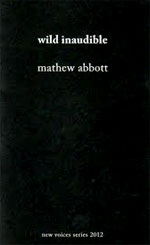
wild inaudible by Mathew Abbott
Australian Poetry Ltd, 2012

The organisational body Australian Poetry Ltd, formerly the Australian Poetry Centre, has reintroduced its ‘New Poets Series’ as a ‘new voices series’ via first books of poetry by Mathew Abbott and Eileen Chong., Both books are around 30-40 pages, and repeat the same production errors of the 2010 and 2009 series. This review focuses on the poetry of Mathew Abbott’s wild inaudible.

Continue reading

Posted in BOOK REVIEWS | Tagged ,

INDONESIA Editorial

Cordite 40.1: INDONESIA

When I approached major Indonesian poet Sapardi Djoko Damono – godfather of that sprawling nation’s contemporary poetics and a renowned translator of English-language works into Bahasa Indonesia – about working with me on a kind of ‘translation exchange’ to then publish online and promote in our countries, he e-replied enthusiastically that ‘we must’!

But it was with a slight twinge – the kind of cogent relish fork that skewers your mood (just enough, but none too deep) when you learn your most recent great idea is not as original as its first eureka promised you – that I read further into Damono’s email to learn that he’d done exactly this back in 1991 (sans the online angle). Mendorong Jack Kuntikunti: Sepilihan Sajak Dari Australia collects one to two poems from 41 Australian poets; together, the works form an anthology with Indonesian translations published side-by-side with the English originals. Co-editor for the project was Canberra-based poet R F Brissenden. Damono sent me a well-loved copy of the book immediately (I imagine it’s well out of print).

None of the book’s frontmatter, cover blurbs, editors’ statements or the introduction, written by David Brooks, has an English translation/original included … so I am not sure what angle or MO Damono and Brissenden took or exactly why they chose the poets they did.

Just who was included in that group of 41? Here they are in the order they appear in the book:

Henry Lawson, Kenneth Slessor, A D Hope, Douglas Stewart, John Blight, John Manifold, Judith Wright, David Campbell, James McAuley, Rosemary Dobson, Oodgeroo Noonuccal, Dimitris Tsaloumas, Gwen Harwood, Francis Webb, Bruce Beaver, R F Brissenden, Peter Porter, Bruce Dawe, Chris Wallace-Crabbe, Vivian Smith, Fay Zwicky, Thomas Shapcott, Judith Rodriguez, Les Murray, Geoffrey Lehmann, Geoff Page, Andrew Taylor, Kate Llewellyn, Ray Desmond Jones, Roger McDonald, Jennifer Rankin, John Tranter, Robert Adamson, Robert Gray, Eric Bogle, Billy Marshall-Stoneking, Rhyll McMaster, Michael Dransfield, Nicolette Stasko, David Brooks and Judith Beveridge.

Quite the line-up and, generally, they are safe choices (including at least two couples and a few well-established odd-couples). It would have been 1989–1990, roughly, when this collection was being developed.

In my preliminary discussions with Damono, he proffered that he’d distinctly be interested in translating established ‘younger’ poets, possibly each with only a full-length book or three out, whose writing careers were clearly very much on the uptick and who would be writing poetry for decades to come. And he’d donate his time in so doing. It occurred to me then, triggered by his generosity, that Mendorong Jack Kuntikunti was only one-way: English words from Australian poets translated into Indonesian and no reciprocity. That aforementioned twinge stopped immediately and my excitement grew.

The number of poets from each country for this special issue was initially set at 20. I put together a list of 25 writers (knowing there would be decliners or non-repliers) whose work features strong lyricism to best serve the translation process and not unduly tax the gentlemen’s agreement this project had been up to that point: Damano the translator, we the editors, Cordite the publisher. We wanted a mix of gender, geographic region and style from each country. Indeed, I got exactly 20 enthusiastic replies.

Unfortunately, a fair few of the Australian poets I approached – writers who initially agreed to be a part of the translation exchange – were unable or perhaps, in the end, unwilling to meet our deadline for the translations to commence. Yes, I did ask for new work. Yes, all poems were graciously donated by the authors. That we were down to 11 poets instead of 20 was fine. The result is that the diversity of Australian poets I had intended to include fell a bit short, but the quality that remained did not. The spirit of the project was very much intact.

By the contribution deadline, I had invited John McGlynn, director of The Lontar Foundation in Jakarta – and at his recommendation, academic and translator Deborah Cole and bilingual Indonesian poet and translator Dorothea Rosa Herliany – to join the project to help ensure its full realisation in translation and cementing the details Damono and I first agreed on. They have done amazing work to help make this special issue happen. I would be keenly interested in a volume II of this type of exchange with Indonesian poets, focusing more on experimental works (which would require a far larger translation crew and a larger budget, read: any amount > 0$).

So why Indonesia? How did I come to get in touch with Sapardi Djoko Damono in the first place, let alone McGlynn, Cole and Herliany?

During the time I was learning the rigging of ropes and jibs that intertwine and billow to form Cordite Poetry Review from David Prater, grand Oz behind the curtain of this website for so many years, I was concurrently in the thick of editing a collection of memoir essays from overseas-born writers now living in and writing from Australia. (Not to mention keeping a pragmatic day job as well. And being a new father. And being a husband. And commuting on Yarra Trams.) Researching for this nonfiction anthology is how I came to commission an essay from Lily Yulianti Farid, a superb short-story writer now living in Brunswick, Victoria. As it turned out, she is also director of the Makassar International Writers Festival on the north-central Indonesian island of Celebes. Farid had invited Damono out to the festival in 2011 and soon extended an invitation to me in 2012. There, I met McGlynn and the author and actor Luna Vidya, whose photos I used for this issue.

Farid, as it also turned out, knew some handy contacts at the US Embassy in Jakarta, a possible funding source for me (as I am both a US citizen and an irreversible permanent Australian resident). It was. They did. And so I travelled to Indonesia as a guest of the American Embassy (after much scrutiny of my career). The indefatigable Esti Durahsanti, a public-relations officer at the embassy, met me in Makassar and doubled as my translator and minder at some events outside the festival at Hasanuddin University. It turned out Durahsanti’s father is a very close friend of none other than Sapardi Djoko Damono, whom we talked about at great length – which indirectly sparked the redoubling of my effort to make this special issue happen.

So it’s been a circuitous calligraphy of good fortune, ‘turned outs’ and prescient timing that sees this special issue happening at all. But that, too, is how it occasionally bends. I hope you enjoy the poems.

Posted in ESSAYS | Tagged , , , , , , ,

Editorial Introduction: Crossing Bloodlines

Baca pengantar dalam Bahasa Indonesia

The poems in this collection trace the overlapping cycles of the human journey from birth to death across the space/time habitat we measure in footfalls and poetic metre. Travelled in the company of family and community, our journeys enact the species’ heritage and legacy of kinship and violence – two sides of the same struggle towards a longed-for intimacy that might negate the spatial, temporal and psychological divide between the other and the self. Through commingling languages and intertwining elocutions, this issue explores the distances and intimacies between a varied set of human journeys by poets writing in Indonesia and Australia. As these two countries are so close on maps – but oftentimes, sadly, only on our maps – these poems invite the re-arrangement of our conceptual geographies.

Indonesia photo salon by Luna Vidya

[EasyGallery id=’lunavidya’]
*Click on the image above to view this gallery.

This collection began as a conversation between Kent MacCarter and Sapardi Djoko Damono (arguably Indonesia’s best-known contemporary poet and leading literary scholar). The goal was to create a translation exchange that would showcase established poets whose work was still very much on the rise with a balanced representation of gender, ethnicity and region in each country. A second conversation between MacCarter and John McGlynn (leading translator of Indonesian literature into English and editor-in-chief of The Lontar Foundation) led to an invitation to McGlynn, poet Dorothea Rosa Herliany and me (Deborah Cole) to join the project – an invitation that we accepted enthusiastically.

For the past several years, McGlynn, Herliany and I have been putting together the forthcoming Lontar Anthology of Indonesian Poetry. We’ve discovered no shortage of Indonesian poets writing in the past century, somewhere in the neighbourhood of 1,800 people, with poems addressing topics as diverse as the writers themselves and as varied as the issues confronting their fast-developing nation. Choosing only eleven to include here was a difficult task, mitigated slightly by the conscious preference for mid-career poets active today.

This special issue of Cordite Poetry Review enables a preliminary realisation of the anthology’s goals, even before its appearance in print – to cross the language barrier between poets writing in Indonesian and English and to increase the diversity of each group’s literary meme pool. We offer our heartfelt thanks to MacCarter for his vision (it was his idea that this introduction be bilingual) and for inviting our collaboration.

One of the most striking characteristics of this collection – at least what stood out to me when at last I read all the selected poems together – is the abundance of blood that appears in these texts. They brought to mind a favorite passage in Tom Stoppard’s absurdist play, Rosenkratnz and Guildenstern are Dead, that features two of the minor characters from Shakespeare’s Hamlet. The title characters meet up with a band of tragedians, who offer to give them a performance.

PLAYER:  ... we can do you blood and love without the rhetoric, and we can do you
blood and rhetoric without the love, and we can do you all three concurrent or
consecutive, but we can’t give you love and rhetoric without the blood. Blood is
compulsory. They’re all blood, you see.

GUILDENSTERN: Is that what people want?

PLAYER:  It’s what we do.1

In the variety of loves contemplated and the assortment of rhetorics engaged here, blood does indeed appear to be compulsory. Violence is ubiquitous and rears its head even in the most serene moments and the most banal contexts. Alongside the appearances of out–and–out slaughter and face-to-face ravagings, these poets contemplate the violence of work in the modern world, the brutal ‘worlding’ of our childhood minds, and the assault on our sense of self and community in the ubiquity of our non-creative labor and consumer-driven media. All of which makes us ‘long for change, some quick suddenness in the veins’ that would enable us to slip one into the other, ‘to devour the membranes’ between us, or to cut them apart with a knife in search of satisfaction or pain.

At times, these poems emphasise the universal genetic connection of the whole of our species and our common experiences of growth and aging. On other occasions they highlight the undeniable distinctiveness of the birthrights and identities bestowed by our cultures, which set the boundaries between categories of people: men/women, royalty/commoner, ethnicitiy/nationality. Often they address the challenge of crossing over, of mixing blood with blood, of successfully exchanging genes and memes given the lines we’ve inherited and help to maintain.

There are a few moments of apparent ‘love and rhetoric without the blood’: A poem about a mother, her daughter and a horse, one about a newlywed, and one about a lover’s body in the sunlight. But even these are about blood, accenting our sexual desires and our inherited kinship with horses and mosses. As a collection, any imaginative purity is fleeting, and all love and rhetoric belong to a narrative wherein even the fantasy of mythology offers no escape from the tedium of modern life, our estrangement from each other, or our penchant to do others physical and psychological harm.

Blood is what we do. We’re a bloody violent species, even at our most intimate. These 22 poems remind us that blood is the red thread connecting us all. And they do so while arguing that rhetoric and love can mitigate how compelling blood will be. ‘Hearts can change’, and these poems bear witness to a human consciousness that recoils against the destruction of the body, against the violence that takes our best of friends, our dearest of lovers, and our littlest of siblings (‘Mei’, the title of Pinurbo’s poem about the violence in Jakarta in May 1998, means ‘May’ in Indonesian and ‘little sister’ in Chinese). The collection affirms that the human body remains our indispensible muse and that whatever violence we do, the wonder of the other’s body will engender the urge to cross bloodlines with poetry.

Posted in ESSAYS | Tagged , , , ,

Editorial Pengantar: Menyebrang Garis Keturunan

Read this introduction in English

Puisi-puisi dalam kumpulan ini merunut siklus-siklus perjalanan manusia yang bertumpang-tindih sejak kelahiran sampai kematian, melintasi ruang dan waktu yang kita hitung dengan derap kaki dan ukuran puitika. Berkelana di dalam lingkup keluarga dan masyarakat, perjalanan kita akan memerankan warisan spesies ini, persaudaraan dan kekerasan—dua sisi dari perjuangan yang sama yang sangat menginginkan kedekatan yang bisa meniadakan pemisah jarak, waktu dan psikologi antara sosok ‘liyan’ dan diri sendiri. Melalui pertemuan dan pergaulan bahasa serta percakapan, tema yang diangkat ini menjelajah berbagai jarak dan kedekatan di antara berbagai ragam latar perjalanan manusia melalui penulisan puisi di Indonesia dan Australia. Karena dua negara ini begitu dekat di peta, namun seringkali, hanya di atas peta, puisi-puisi ini mengundang adanya pengaturan kembali konsep-konsep geografis kita.

Indonesia Tidak salon oleh Luna Vidya

[EasyGallery id=’lunavidya’]
*Klik pada gambar di atas untuk melihat galeri ini.

Kumpulan ini berawal dari percakapan antara Kent MacCarter dan Sapardi Djoko Damono (yang bisa dikatakan sebagai penyair kontemporer Indonesia terkemuka sekaligus ahli susastra Indonesia). Dimaksudkan untuk menciptakan media pertukaran karya terjemahan yang akan menampilkan penyair-penyair kuat yang karyanya mengemuka, dengan perwakilan seimbang dari segi gender, etnis, dan daerah di masing-masing negara. Perbincangan selanjutnya antara Kent dan John McGlynn (penerjemah sastra Indonesia ke bahasa Inggris yang termuka dan pemimpin Yayasan Lontar) adalah lantaran bagi undangan John kepada penyair Dorothea Rosa Herliany dan saya untuk ikut dalam proyek ini – undangan yang kami terima secara sangat antusias.

Selama beberapa tahun terakhir, John, Dorothea, dan saya telah bersama-sama mengerjakan The Lontar Anthology of Indonesian Poetry, sebuah antologi yang akan memuat sekian ratus karya puisi dari abad keduapuluh. Dalam proses penghimpuan karya yang akan dimuat dalam buku tsb., kami menemukan segudang karya yang ditulis oleh sekitar 1.800 penyair dengan tema-tema yang sangat beragam sebagaimana para penulis sendiri, tema-tema yang berkisah tentang sejarah dan perkembangan negeri ini yang pesat. Maka, memilih hanya sebelas penyair untuk dimasukkan dalam kumpulan ini merupakan tugas yang tidak mudah. Dalam hal pemilihan tsb., kami memprioritaskan penyair yang masih cukup muda namun telah terbukti memiliki karir kepenulisan yang mantap. Edisi istimewa Cordite Poetry Review ini merupakan perwujudan awal tujuan Antologi di atas, yakni sebuah usaha mengatasi rintangan bahasa penulisan puisi dalam bahasa Indonesia dan bahasa Inggris serta meningkatkan keragaman lungkang meme literer pada masing-masing komunitas penulis. Kepada Kent MacCarter yang mengusulkan pengantar ini dimuat dalam dua bahasa, kami menyampaikan terima kasih sedalam-dalamnya atas undangan kerja sama kepada kami.

Salah satu ciri yang paling menonjol dari kumpulan ini—setidaknya yang langsung terlihat bagi saya ketika akhirnya saya membaca semua kumpulan puisi ini bersamaan—adalah adanya darah yang melimpah dalam teks-teks tersebut. Hal ini mengingatkan saya pada salah satu bagian dalam drama absurd karya Tom Stoppard, Rosenkratnz and Guildenstern are Dead, yang menampilkan dua tokoh minor dari karya Shakespeare, Hamlet. Tokoh-tokoh utama bertemu dengan kelompok pemain sandiwara yang menawarkan pertunjukan.

PEMAIN: ... kami bisa memainkan darah dan cinta tanpa retorika, atau darah dan
retorika tanpa cinta, dan kami bisa memainkan ketiganya secara bersamaan atau
bergantian, tetapi kami tidak bisa memberimu cinta dan retorika tanpa darah. Darah
adalah wajib. Semuanya darah, begitu.

GUILDENSTERN: Apakah ini yang orang-orang inginkan?

PEMAIN: Itulah yang kami lakukan.1

Dalam beragam perenungan tentang cinta dan berbagai variasi retorika yang tampak dalam puisi di edisi jurnal ini, darah sepertinya menjadi unsure wajib. Kekerasan muncul di mana-mana, baik dalam saat-saat hening maupun dalam konteks-konteks yang banal. Di samping penggambaran baik pembantaian masal maupun pembinasaan individu, para penyair juga menyampaikan pandangan tentang kekerasan yang terjadi di tempat kerja dunia modern, brutalnya pemikiran kita yang dibentuk sewaktu masih kanak-kanak, dan serangan terhadap perasaan diri dan komunitas yang terjadi sebagai akibat dari rutinitas pekerjaan kita yang serba non-kreatif serta dorongan konsumptif yang tak ada hentinya dari media massa. Semua ini yang menjadikan kita ‘mendambakan perubahan sekonyong-konyong di dalam pembuluh darah vena’ yang akan memungkinkan kita saling menyelip satu sama lain, ‘melahap membran’ yang memisah kita, atau untuk membelahnya dengan sebuah pisau dalam pencarian kepuasan atau penderitaan.

Terkadang, puisi-puisi yang dimuat di edisi ini menekankan adanya hubungan genetika universal antara seluruh makhluk manusia dan pengalaman yang sama dialami dalam hal bertumbuh dan menua. Pada kesempatan lain, puisi-puisi ini menjadi tanda penting perbedaan-perbedaan tak terelakkan dari hak-hak kelahiran dan identitas-identitas yang dilimpahkan oleh budaya-budaya kita, yang membentangkan batas-batas antara kategori-kategori masyarakat: laki-laki/perempuan, orang ningrat /masyarakat biasa, kesukuan/kebangsaan. Seringkali mereka mengalamatkan tantangan untuk melintasi batas, untuk mencampur darah dengan darah, untuk menukar gen dan memes meskipun adanya garis-garis yang kita warisi dan bantu untuk menjaganya.

Di dalam puisi-puisi yang terkumpul di sini ada pula beberapa sajak yang menampilkan ‘cinta dan retorika tanpa darah’: misalkan sebuah puisi tentang seorang ibu, putrinya dan seekor kuda; satu tentang pengantin baru; dan satu lagi tentang tubuh kekasih di cahaya matahari. Namun puisi-puisi ini juga ternyata menuliskan tentang darah, menekan pada hasrat seksual kita dan warisan ilmu sejarah keluraga kita dengan kuda dan lumut-lumut. Sebagai sebuah kumpulan, imajinasi yang murni muncul hanya secara sepintas lalu, dan semua cinta dan retorika menjadi milik seubah narasi dimana bahkan fantasi mitologi pun menawarkan hal yang tidak lepas dari kebosanan terhadap kehidupan modern, keasingan kita satu sama lain, kecenderungan untuk melakukan perusakan kepada yang lain baik secara fisik maupun psikologis.

‘Darah’ adalah yang kita lakukan. Kita adalah makhluk yang melakukan kekerasan dan menumpahkan darah, bahkan pada yang paling dekat. Puisi-puisi ini mengingatkan kita bahwa darah adalah benang merah yang menghubungkan kita semua. Dan ini dilakukannya sembari berdebat bahwa retorika dan cinta dapat meredakan dorongan terhadap darah tersebut. ‘Hati bisa berubah’, dan puisi ini membawakan kesaksian pada kesadaran manusia yang berkecut hati melawan perusakan tubuh, menentang kekerasan yang merenggut kawan-kawan terbaik kita, kekasih-kekasih tercinta dan saudara kita yang bungsu (Puisi Joko Pinurbo berjudul ‘Mei’ mengisahkan kekerasan yang terjadi di Jakarta pada bulan Mei tahun 1998. Kata ‘Mei’ berarti bulan ‘Mei’ dalam bahasa Indonesia namun juga mempunyai arti ‘adik perempuan’ dalam bahasa China). Kumpulan ini menegaskan bahwa tubuh manusia tetaplah mejadi inspirasi wajib kita dan bahwa kekerasan apa pun yang kita lakukan, keaijiban tubuh lian akan menimbulkan dorongan untuk melintasi batas garis darah melalui puisi.

Posted in ESSAYS | Tagged , , , ,

Ali Alizadeh Reviews ‘The Best Australian Poems 2012’

BAP2012

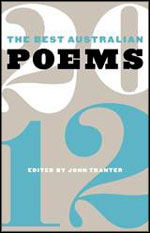
Best Australian Poems 2012 edited by John Tranter
Black Inc., 2012

Whatever one may expect from an anthology of contemporary poetry released by a mainstream commercial publisher – an accessible selection of diverse voices and styles, one for both the non-specialist, general reader as well as the (less snobbish) connoisseur, a selection featuring promising emerging writers as well as more prominent authors, and so on – Black Inc. Publishing’s annual Best Australian Poems Series has been meeting these expectations, more or less consistently, for close to a decade. And despite the series’ many specific strengths and few weaknesses, the latest addition to the series follows the same general tradition successfully.

Continue reading

Posted in BOOK REVIEWS | Tagged , , ,

Trilingual Visibility in Our Transpacific: 3 Mapuche Poets

The work of the three Mapuche poets included here – Jaime Huenún, Maribel Mora Curriao and Roxana Miranda Rupailaf – has been drawn from the Tri-lingual Mapuche Poetry Anthology, forthcoming with Interactive Press in later 2013. Poems are presented in Spanish, Mapudungun (the language of the Mapuches) and English. Huenún is also the anthologiser of this future collection. These four poems were originally written in Spanish … and are infused with a bi-cultural sensibility as they travel between the ‘traditional’ and the ‘mainstream’, drawing on Mapundugun terminology and cultural references. The poems have then been translated into Mapudungun by Víctor Cifuentes Palacios in Chile, and from Spanish into English by the team of Juan Garrido-Salgado, Steve Brock and Sergio Holas in Adelaide.

Presenting the poems in three languages is an important part of the anti-colonial nature of the project, which seeks to contribute to the maintenance and promotion of the Mapudungun language and promote awareness about the contemporary Mapuche struggle. We have found that, in translating these poems, there are parallels with themes in Australian Indigenous literature. In recognition of this, we have invited the first nation scholar, Professor Lester-Irabinna Rigney of University of Adelaide, to compose a foreword for the volume. Rigney makes the following observation:

The most important feature of the [work] is that [it raises] some extremely far-reaching questions about Mapuche injustice, death, life, love, compassion, struggle and reconciliation to a wider global audience. In this sense, Mapuche writers’ invisibility in the Pacific and elsewhere has been overcome. This is a refreshing change from the past where texts in Australia included Mapuche as: subjects without voice; distorted interpretations of Indigenous experiences; and Western deficit views masqueraded as reasoned argument.

The inclusion of these voices in Cordite Poetry Review‘s TRANSPACIFIC issue in three languages further contributes to the visibility of Mapuche writers in the Pacific, while promoting cross-cultural dialogue as a transformative and creative force that can re-negotiate the homogenous and hyper-real perversions of capitalism. Further, visibility in the Pacific as a theme is all the more poignant when considered in the historical context of the Mapuche struggle against ‘Pacification’ in Chile.

The Mapuche Nation comprises, according to official figures, four per-cent of Chile’s population. It was the only indigenous nation able to stop the advance of the Spanish Conquest in South America – where the Spaniards signed treaties and negotiated with the Mapuche in terms of their relationship and existence in a mutual space. Only after independence from Spain in 1810 did the Chilean State commence its war against the Mapuche Nation, a conflict which it named the ‘Pacification of the Araucanian’. This notable use of words that projects the nation-state’s demons onto other populations (it is not the state that is warlike, but the Mapuche) has been one of the main platforms of modern Chilean politics. In this case, these are the Mapuche people – ‘the people of the earth’ – the first nation living in the territories known today as the states of Chile and Argentina. Chile, like other colonial nation-states founded by the conquest of territories and souls, has its roots in such violence – a violence hidden under words like ‘pacify’ circa 1881–1883. Antonin Artaud, the French poet, has observed that all modern societies have their foundations based on a crime committed in common by its citizens.

Contemporary Mapuche poetry incorporates a literary culture that is in fluent dialogue with the Eurocentric aesthetics of contemporary Chilean poetry, drawing, as it does, on Mapuche oral traditions and histories. The poetry opens a new cultural territory that explores family histories, memories, relationships, ways of looking, modes of telling and angles of relating to the land. These revelations are particularly important if we want to be democratic and make our Transpacific societies intercultural. The poetry presented in the following pages is also part of a broader dialogue with many first nations of the greater ‘Transpacific’ map, as we have seen in the work of Lionel Fogarty and in works of the writers Oodgeroo Noonuccal, Mudrooroo and Charlie Perkins.1 Mapuche poetry can be read as an invitation of sorts for Chile and other countries with a colonial history to venture down the path of ‘democratising’ their democracy: the art of transforming our selves into a co-existence, becoming one and whole in the shared spaces we live in.

On to the poetry. The next four pages present an offering of this rich poetry in three languages, written by a new and politically engaged generation of Mapuche poets – many who draw upon a diverse range of traditional, literary and popular cultural references that shake the very foundations of the Transpacific aesthetic as we know it – and translated by those of us who can and care. This is not solely poetry; it’s an earthquake coming your way.

Posted in TRANSLATIONS | Tagged , , , , , ,

Ellipsis Getting Bigger

Me: Yeah, no, I write too …

Person: Really, great! What do you write?

Me: Poetry

Person: ‘…’

Sometimes that person actually lowers their eyes, bows their head, as though I have somehow reached too far into their minds and reminded them of all the cultural production, art forms and a hard kind of yoga they SAID they’re going to get into. They become confused, ‘cause they’d been hoping for a ‘published novelist/kids book author/cupcake blogger’ reply. They’d already decided to read me, and here I was telling them – just like that! – that I am a poet. And that means they’d have to read some poetry to follow through. Hmmm …

I think about this a lot – this event that happens, nearly daily. And I’m wondering about convergence.

I am thinking about ways poetry sidles up to, or just smooshes itself in with, other things. Other art forms, other places (places not billed as poetry readings). I will go a-hunting, and wait for those better times where, unexpectedly, the poetry is reached out to and invited. When people seek it, want it and show it to others. I hereby use the example – yes I am, and here it comes – of someone cutting out a poem from The Age or The Australian and keeping It. What happens if that person shows the poem to someone despite how afraid they are that it’ll refract in that other person’s reading of it or bounce back like an unopened letter? It takes bravery to do this – to show – and this in itself is curious when you consider it.

This post is not a call-to arms for poetry popularisation, or the need to ‘make it accessible’. Those efforts occur (public programs, school visits) and always will, not least because a majority of our population is concerned with what’s measurable, what’s able to be digested. Yet, neither am I anti-popular (provided the idea is good and does something of benefit).

I’m interested in the seams poetry creates; what is it that makes Kate Fagan’s students at UWS go mad for Michael Farrell’s poetry – the same poetry that makes some lyric poets’ heads hurt? Why did it take lobbying for poetry to be added as a category to the Australian Prime Minister’s Literary Awards and, moreover, now that it is included, does that make any difference? What kind of difference do we want? Why is poetry left out of the Stella Award altogether? Why did I like it when I was called a poetess (ah, the gender question) in Paris? How do people find their way into this messy place – poetry – that takes as much or as little as it likes from academia, history, rules, un-rules and music?

Things go missing from creative outputs when an art form is forced upon others. Like a member of a small but quite functional cult, I do, from the inside, want people to know about it – about how it can infiltrate your veins, and about how, if you’re interested in creative and arty art things, you should try this one. The trip is bigger, better. You’ll never go back to beginning-middle-end thinking after this.

What is the doorway, people? What is the gateway poem-drug?

My name’s Melinda Bufton. I’m your friendly neighbourhood pusher.

Posted in GUNCOTTON | Tagged , , ,

Robyn Rowland Reviews Anthony Lynch

Night Train

Night Train by Anthony Lynch
Clouds of Magellan, 2011

Anthony Lynch is a publisher, editor at Deakin University, reviewer, prose writer and widely anthologised poet. His contribution to Australian poetry is admired through his work with the journal Space and now through Whitmore Press. His book of short stories, Redfin (Arcadia, 2007) was shortlisted for the Queensland Premier’s Literary Awards. Uncluttered and moving, stories there show an astute observational eye, a hovering dread and a sense of the unfinished, so that Barry Oakley described them as being a ‘world of tangents’.

Continue reading

Posted in BOOK REVIEWS | Tagged ,

The Lee Marvin Readings: An Evening with Edmund Gwenn

The Lee Marvin Readings

'The Lee Marvin Readings are terrific.

They happen in Adelaide at Dark Horsey,

the bookshop of the Australian Experimental

Art Foundation. We go to them. 

You would, too ...'

                —Yolande Sharpe & Kerry Urquhart-Neue


A chapbook curated by: Yolande Sharpe and Kerry Urquhart-Neue.

Featuring: Christine Collins, Shannon Burns, Tim Wright, Ella O’Keefe, Pam Brown, Jill Jones, Cath Kenneally, Laurie Duggan, Doug Mason, Steve Brock, Kelli Rowe, Yolande Sharpe and Kerry Urquhart-Neue.


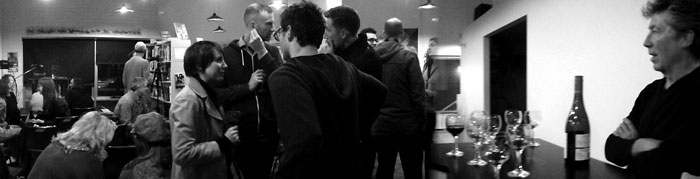
The Lee Marvin Readings series has run, off and on, since the 1990s. The venue has changed a number of times – from Adelaide nightclubs like Supermild, to the Iris Cinema, to the charmingly Zurich-1917, bo-ho De La Catessan and the more robustly hard-drinking and confrontational Dark Horsey bookshop at the Australian Experimental Art Foundation, where it now takes place. The sessions have been organised, run, staffed and emceed by poet and art critic Ken Bolton.

LMR

The Lee Marvin Readings format generally features two sets per night, comprised of two readers in a set with a break between for the audience (writers, students, artists, general readers, the curious, the pin-headed, the counter-intuitive) to talk, look at books or listen to the intermission music. Occasionally, nights are devoted to a single prominent writer – designed to give a career overview, or to give context to and show the development of some particular run of work.

The readings are held on Tuesday nights in approximately every second month, starting in May. The AEAF’s Dark Horsey Bookshop specialises in new literature and has great holdings in philosophy, politics, film, art, design and architecture. The gallery space adjoins the shop and ‘advanced art’ is in view during the sessions. Readers are introduced with a brief description of their careers to date, bulked up with apocryphal biographical detail. The philosophy of the Lee Marvin Readings is that it’s not about the comparison of career escutcheons and epaulettes, but new writing.

LMR

Some highlights of the 2012 season are selected here, somewhat at random. It was a good year. Who to chose? Ken Bolton said, ‘You do it!’ as he handed us his growing list of authors.1 Between us, we had attended most of the readings. This chapbook focuses on who we tracked down and what poetry/prose they’d read.

And now, our selections as a sampler of the work that featured in 2012. —Jo Sharpe & Kerry Urquhart-Neue

Christine Collins | I May Have to See You Again, Charlie

Shannon Burns | Transparent Things

Tim Wright | From Here On | Trick Light

Ella O’Keefe | Notebook Poems I—IV

Pam Brown | What’s the frequency, Kenneth? | More than a feuilleton

Jill Jones | Hindley Reverie | No, the System Did Not Work for Me

Cath Kenneally | A Little Rain | Charge Nurse | Dressed In Yella

Laurie Duggan | Bin Ends

Doug Mason | Ten Zen Poems

Stephen Brock | Night Works

Kelli Rowe | (Failing)

Yolande Sharpe and Kerry Urquhart-Neue | The Lives of the Writers, their Vicissitudes, Proclivities, Highs and Lows

LMR
All pictures by Martin Xmas

Posted in CHAPBOOKS | Tagged , , , , , , , , , ,

Submissions for Cordite 42: NO THEME II Now Open

Gig Ryan

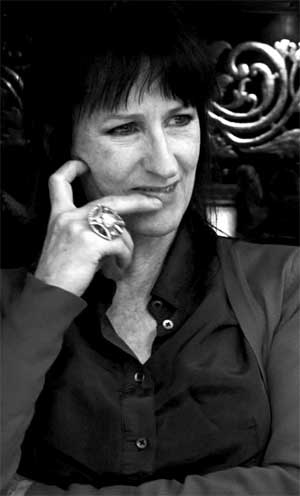
Image by Juno Gemes

It’s summertime in Australia.

Weekends officially begin on Thursday mornings. Your fridge will now gestate one bottle of Pinot Grigio, Blaufränkisch (or similar) per week until March.

All public holidays go off in one seasonal barrage.

We’re going to keep it simple.

There’s no theme for issue 42 of Cordite Poetry Review. Poetry will be guest-edited by Gig Ryan. If you’re unsure who she is, please read this superb review of her oeuvre. Straight to the pool room.

The previous NO THEME! issue with poetry guest-edited by Alan Wearne was a rave success. We’re doing it again for 2013. And the year after that.

So gussy up your three best Patricia Mae Andrzejewskis (aka: Pat Benatar) and hit us with your best shot(s). Submissions close at 11.59pm Melbourne time on 14 February, 2013.

Posted in GUNCOTTON | Tagged

Rosalind McFarlane Reviews Lesley Synge

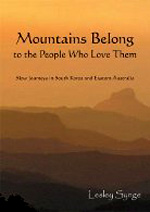
Mountains Belong to the People Who Love Them

Mountains Belong to the People Who Love Them: Slow Journeys in South Korea and Eastern Australia by Lesley Synge
Post Pressed, 2011

This collection of poetry, prose and photographs begins with a full-page preface about the author, Lesley Synge, indicative of the very personal narration throughout the book. Synge takes as inspiration her trips to Duncheol (in South Korea) and along the Gold Coast Hinterland Great Walk. This 2011 edition is an expanded version of an earlier work with the same title, including new poems and prose written in Australia and a revision of Synge’s poems written in Korea. The structure of the book reflects the two journeys taken by Synge, with the first half focusing on Korea and the second on Australia, and it is informed by Synge’s strong identification with Buddhist teachings.

Continue reading

Posted in BOOK REVIEWS | Tagged ,

THE REALPOETIK MANIFESTO

Realpoetik

[a declaration in progress]

FOR TOO LONG has poetry been disregarded as a valid vehicle for the exploration of real world experience. Too often has poetry been filed in the ‘too hard’ basket and deemed ‘irrelevant’ and ‘inaccessible.’ This declaration calls for an end to the mistreatment and marginalisation of poetic language; an end to the segregation of poetry from and by the authoritative discourse of prose. We summon forth the potential of poetry to expand our conceptions and perceptions of the ‘real.’ To this end:

WE THE POETS Jessica L. Wilkinson and Ali Alizadeh, and others who shall soon join us, in order to advance and expand the field of writing, declare the following conditions for the Realpoetik, an unavoidable and necessary code for the art of non-fiction poetry:

  • The Realpoetik recognises the unquantifiable potential of poetic writing to convey a deeper experience of reality and ‘real life’ accounts than may be possible through conventional non-fiction prose.
  • The Realpoetik celebrates the power of the poetic form to realise and enact factual content.
  • The Realpoetik unsettles the historical landscape of facts and accuracies, and directs the poet/reader towards the enlivened dramatic stage whereupon the past may be launched into action.
  • The Realpoetik travels through gaps in the historical imaginary.
  • The Realpoetik demands a poetic reclamation of the historical field, the biographical portrait, the autobiographical reflection, the scientific analysis of facts.
  • The Realpoetik demands that poets join novelists, historians, memoirists, biographers and philosophers as writers of the real world.
  • The Realpoetik hears Ed Sanders calling, and we reply Yes! The poets ARE marching again upon the hills of history.
  • The Realpoetik encourages the trawling of libraries, archives, newspapers and museums, for poetical fodder.
  • The Realpoetik advocates rigorous research as poetic process.
  • The Realpoetik respects the gifts of poetry: the line and the play; the rhythm and the space; the sound and the silence.
  • The Realpoetik may incite bold experiments with the line, with rhythm, with form; it revels in words that function not only as signifiers of linguistic meaning, but as visual and sound potential.
  • The Realpoetik follows the revolutionary threads unravelled by Julia Kristeva, Rachel Blau DuPlessis et al. and welcomes the immense power of the semiotic undercurrent of poetic language.
  • The Realpoetik hears Alain Badiou calling, and it breaks with arrogantly lyrical, fashionably experimental and simply educational schemata.
  • The Realpoetik rejects the view of the poem as an exercise in classical versification and conventional aesthetics.
  • The Realpoetik rejects the view of the poem as an exercise in formulaic experimentation and sophistic aesthetics.
  • The Realpoetik rejects the view of the poem as an exercise in prosaic representation and populist aesthetics.
  • The Realpoetik reclaims the view of the poem as an exercise in direct intervention and dialectical aesthetics.
  • The Realpoetik does not conceal the poet’s entrance into, and dialogue within, the world of facts.
  • The Realpoetik celebrates the performative, the playful, the adventurous.
  • The Realpoetik claims a space for the frivolous alongside the serious.
  • The Realpoetik encourages tea and cake.
  • The Realpoetik willingly follows the White Rabbit down the hole and into a world fit for alternative thinking.

EVERY POET sees the world through a unique lens; hears the world through their own exceptional ear. The Realpoetik does not curtail such diversity through stringent adherence to formal Law, but instead opens the field to these singular engagements with real world content. We aim to establish an expansive literary space within which poets can openly engage with auto/biography, history, politics, economics, cultural analysis, science, the environment, and all other aspects of life in the real world.

WE PROMOTE a poetry that is multiple, transformative, moving, contradictory, evental, rhizomatic, inaesthetic, evolving, whispered, piercing, stuttering, disruptive, performative, active, enveloping, epidemic.

We invite YOU, the poets of the world, to join us in our expedition through and across the excitable terrain of a non-fiction poetics.

Signed:

Jessica L. Wilkinson           Ali Alizadeh           

Posted in ESSAYS | Tagged ,

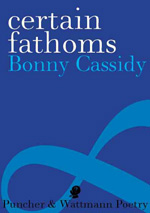
Siobhan Hodge Reviews Bonny Cassidy

Certain Fathoms

Certain Fathoms by Bonny Cassidy
Puncher & Wattmann, 2012

Bonny Cassidy’s Certain Fathoms encourages readers to feel for the full extent of her poetic linkages, presenting a series of poems broken into two parts, inviting immediate and further reflection. The poems outwardly celebrate subtlety and linkage through their fragmentary structures, including much natural imagery and a quiet but definitive speaking voice. Cassidy’s poems feature a strong focus on recognising different possible identities, as her speakers. Natural imagery and a variety of structural approaches work together to create, as Alan Wearne has observed, ‘a mapping-out that is organic’, focused on highlighting connections above and below the surface of otherwise everyday actions.

Continue reading

Posted in BOOK REVIEWS | Tagged ,

Writing | Menulis

Writing

I plane planks of letters
to build a fortress in your heart
a place constructed entirely of words
of utter and stolid conviction

here you will not tire
of counting the days
because unless you start
all traces will lose their meaning
and the things that are now worn out
will turn to trash on an endless plain

I plane planks of letters
and whether I am able or not able
I still try

Menulis

aku menarah sejagat huruf
untuk membangun benteng di hatimu
tempat sekotah benda berkata-kata
dengan benak- hati penuh kukuh

di sini
tak ‘kan jemu kau mengaji hari
karena kecuali mulai
seluruh jejak kehilangan arti
bahkan bagi sesuatu yang usai
jadi sumpah seranah tiada henti

aku menarah sejagat huruf
dapat tak dapat
dapat

1986

English translation by John H. McGlynn

Posted in 53: INDONESIA | Tagged ,

Tentang Mengajari Anak Perempuanku Berkuda | Teaching My Daughter to Ride a Horse

Tentang Mengajari Anak Perempuanku Berkuda

Di atas kuda,
Anak perempuanku menjadi makhluk lain
pegasus bersayap
anak-api yang berkata:
Ayo, jalan, mama, jalan! Dan,
Apa tak bisa lebih cepat?
Kaki anak perempuanku menjepit tubuh si kuda
persis seperti dulu menjepit tubuhku
ketika aku menggendongnya di pinggulku
atau membungkuk untuk menurunkannya
(tak mungkin begitu lagi; sudah terlalu berat)
Jerit suaranya seperti ringkik tawa kuda,
tendangan tumit,
suara rumput-padang membuktikan
sang pencipta anak-anak perempuan dan
kuda pun sadar pada keanggunan keduanya;
bagaimana keduanya melemparkan surainya ke angin,
kulit mereka, buluh mereka selembut beludru (tidak ada kata lain!),
hembusan nafas-jerami mereka yang manis,
dan masih banyak hal lain.


On Teaching My Daughter to Ride a Horse

Up on the horse,
she is another kind of creature;
equine and winged,
this fire-lit child who says:
Trot, mama, trot! And,
Are we galloping yet?
Her legs clamp around the horse’s girth
the way they used to clamp to me
when I’d support her on my hip
or stoop to put her down
(too heavy for that now).
Her squealing trill like a horse’s laugh,
a kicking up of the heels,
meadow-grass sound that proves
whoever invented daughters
and horses knows their grace;
the way both toss their manes to the wind,
their velvet (no other word for it)
pelt and skin, their sweet hay-breath,
and a lot of other things.

Posted in 53: INDONESIA | Tagged ,

Newlywed from the Coast | Penganten Pesisir

Newlywed from the Coast

I come dressed as a groom from the coast
in a procession as in days long past
accompanied by trumpets, drums, gongs, and carbide lamps

at the lead masked acrobats turn somersaults,
a wild boar, a tiger, a mouse-deer, a monkey
as roman candles burst and color the sky

I come in the origins of being in love
as before when we mutually owned the morning,
when together we harvested catfish roe

which later we dried and then fried
when twilight crept into the lines
of your poems which are now only a whisper

and do you know what I hated the most?
it was when we both went to school
and everyone called us “sea folks”,

people who were deemed to be exceedingly coarse
uncivilized folk with a fishy smell
the very smell of the same snappers they relished

I come intent to establish a household
to bend the bridal bough, create a diary of joy
and hope for children to be born of your shores

yet, like the lighthouse whose base is all that remains
and the fishermen who’ve lost their vessels and nets
have we still a chance to make love with the waves

meanwhile, sheets of receipts
have transformed our sperm into mosses
whose names no one even knows …

Penganten Pesisir

Aku datang dalam seragam penganten pesisir
seperti arak-arakan masa silam
jidor, kenong, terbang, lampu karbit mengiring

di depan para pesilat bertopeng monyet,
celeng, macan dan juga kancil berjumpalitan
mercon sreng sesekali mewarnai langit

aku datang dalam muasal bercinta
seperti dulu ketika kita sama-sama punya pagi
sama-sama mengumpulkan telur-telur sembilang

lalu dikeringkan kemudian digoreng
ketika senja menyelinap di jajaran
macapat-macapatmu yang kini tinggal bisik

dan tahukah kau yang paling aku benci?
adalah ketika kita sama-sama ke sekolah
dan sama-sama disebut: “Orang Laut,”

orang yang dianggap sangat kosro
kurang adat dan keringatannya pun seamis
lendir kakap yang sebenarnya sangat mereka sukai

aku datang dalam itikad berumah tangga
melengkungkan janur, membikin primbon bahagia
dan mengharapkan lahirnya bocah-bocah pantaimu

tapi, seperti juga mercu suar yang kini tinggal letak
dan para nelayan kehilangan jaring dan perahu
adakah masih sempat kita lakukan persetubuhan ombak

sementara itu, kertas-kertas kwitansi
telah mengubah sperma-sperma kita menjadi
lumut-lumut yang entah siapa panggilannya …

Gresik, 1993

English translation by Deborah Cole

Posted in 53: INDONESIA | Tagged ,

Bersyarat | Conditionals

Bersyarat

Jurang pemisah membuka
dan di sekitarnya retakan-retakan bumi
menggigit sulur
rasa

dari
mulut
tinggal mengering,
simbiosis
retakan tepi merah.

Perkataan perempuan itu terlepas dan
berlari menertawai
lainnya tak berlipat,
lengan sang lelaki kokoh
dan hangat
bila

dipegang
menggerogot
memompa
dengan gigi patah
dan lidah tumpul paling keji.

Dimakamkan di cincangan berdaging,
sebuah perjanjian
membungkus masing-masing bagian
dalam panas,
nyaman

sementara
cerita
tergelincir keluar
dari tanda-tanda manis dan rahasia,
mengundang semua

melahap selaput.


Conditionals

The divide is sprung
and all around
split earth nips
tendril
tastes

of
a mouth
left drying,
symbiosis
cracking red edges.

Her words escaped and
ran laughing to
seamless other,
his arms firm
and warm
to

hold,
gnawing
leverage
with broken teeth
and bloodied dead tongue.

Entombed in meaty
shards, a treaty
wraps each piece
in heat,
snug

while
stories
slip from our
secret, sweet signs,
inviting all to

devour the membrane.

Posted in 53: INDONESIA | Tagged ,

Batavia Centrum | Batavia Centrum

Batavia Centrum

1933:
Chinese women, young and old
Totter beneath
Buckets of sweat
Treading narrow lanes
between shops in Pintoe Ketjil

1942:
The Japanese arrive
Stupid bastard, they say
To the Chinese man in calico
Miserable from having
his godown plundered
No New Years this year
Moon cakes stuffed with coconut pulp

1954:
Chinese girls and boys
Unlatch their doors
And wait for coins
To fill donation baskets

1963:
Chinese men and women
Prop open their doors
To let the smoke of incense
Waft into their homes
Quietly, they calculate
Bad days on an abacus

1979:
Tapeikong cooks are envious
To see the god of gambling
Offered incense every day
The Tans and Lies control the chiefen
Some of them visit the temple
Others kneel before Mother Mary

1992:
Elderly Chinese women and men
Walk unsteadily hand in hand
To the square for tai-chi
As their grandchildren in Singapore
Remain soundly asleep

1998:
As the iron curtain crumbles
Jade statues of the goddess Kwan Im
And the tiger Pa Kua shatter
And are scattered with ancestors’ ashes

Batavia Centrum

1933:
Beberapa encek dan encim
Tergopoh-gopoh memikul
Keranjang keringat
Menyusuri lorong sempit
Pertokoan Pintoe Ketjil

1942:
Jepun datang
Bagero, katanya
Kepada babah berbaju blacu
Yang memelas saat gudangnya
Dikuras
Tahun ini tanpa Sin Chia
Kue Pia hanya berisi ampas kelapa

1954:
Beberapa amoy dan akew
Membuka grendel pintu
Dan menunggu recehan
Untuk mengisi pundi-pundi abu mereka

1963:
Sebagian enci dan engkoh
Mengganjal pintu
Dan membiarkan asap hio
Masuk ke rumahnya.
Diam-diam mereka menghitung
Hari-hari sial dengan sipoanya

1979:
Taipekong dapur iri
Melihat dewa judi
Diberi dupa wangi setiap hari
Marga Tan dan Lie mengikat chiefen
Sebagian sampkai ke vihara
Sisanya bersimpuh di hadapan Bunda Maria

1992:
Beberapa encim dan empe
Tertatih bergandengan
Menuju emperan untuk senam Tai-Chi
Sementara cucu mereka
Masih tertidur pulas di Singapura

1998:
Tirai-tirai besi koyak berderak
Bersamaan dengan itu
Batu giok Dewi Kwan Im dan Macan Pa Kua
Jatuh berserakan bersama abu leluhur mereka

1998

English translation by Deborah Cole

Posted in 53: INDONESIA | Tagged ,

Impian Tentang Kerja | A Dream of Work

Impian Tentang Kerja

Tengkorak kita yang tersesat saling mengitari
geloyor lapisan lemak dalam cahaya lampu kantor
yang meredamkan cahaya. Kita di sini
demi ada di sini, senantiasa siap sedia.
Kerja yang membara
keterdesakan yang tak begitu mendesak
– suara-suara manusia memadamkannya,
rekan-rekanku, saudara-saudaraku!
Suara kita menggertak udara, kisah kita
adalah kisah dunia, pacar-pacar lelaki
membereskan kebun belakang rumah demi cinta,
mencemooh diri terlalu kurus atau terlalu gemuk.
(Dalam urusan bobot tubuh
kita menyadari posisi kita.)

‘Makna kerja?’
pekerjaan menghasilkan topeng, kerangka,
rumah, yang menjadi milik kita

Mengharap pengakuan seperti
anak sekolah dengan gambar baru berwarna-warni,
berharap ikhtiar kita
selamanya tak bergeser dari rak di ruang,
namun dicatat dan diletakkan di sebuah taman
istilah setempat, menyuapi bahasa-bahasa kantoran
dan manajer-manajer berbaik hati yang menegur kita
saat kita tidak bekerja, dan mengawasi saat kita bekerja.
(Dan departemen yakin sebagaimana mestinya,
lintasan manusia dapat diatur, dimulai
dari benih terkecil sebuah kelahiran.)
Yang kita inginkan dari kerja hampir serupa cinta.

Bagaimana otak kita di masa kanak-kanak dibakukan:
hutan suara-suara, gerakan cahaya
menyentuh dan menggelitiki kita,
cinta yang menentukan kita,
tak pernah berubah, selamanya.
Kita diciptakan dari apa yang kita cintai:
lorong pikiran kita dilekuk jempol-jempol buruk
oknum yang mengakali dengan cara sehalus-halusnya
Sebagai orang dewasa, kita hampir tak bisa diubah,
namun mendambakan perubahan, semacam
kemendadakan dalam pembuluh darah.

Di tempat inilah kita pikir diri kita disia-siakan,
saban hari melangkah keluar dari lift
masuk ke dalam dunia-harian yang berpura sebagai dunia betulan,
berujar selalu tidak-pernah-ada-cukup-waktu-dalam-satuhari,
kelelahan yang hampir makrifat
perubahan, tapi terus terkenang-kenang
kehilangan barang, tak pernah bisa kembali
kecuali dalam bentuk kurang sempurna
lenyap sudah, berubah.
Dan kejemuan adalah rasa bersalah dengan beban berat
Aku duduk terikat pada kursi dalam setelan pakaianku
seperti balon di seutas tali
menjulang dan terombang-ambing di jendela,
dimana seekor anjing menyalak di sebuah balkon di tengah kota.
Aku seharusnya terlibat, aku seharusnya peduli,
namun pekerjaan menuntut begitu sedikit dariku sehingga
aku menyerah, aku membiarkannya mengambang di udara.


A Dream of Work

Our lost skulls orbit one another
in their fleshfolds, in the office’s
light-eating light. We are here
to be here, reliable as mustard.
Work smoulders
a not quite urgent urgency
– human voices quench it,
my colleagues, my brothers!
Our voices grind the air, our tales
are the tales of the world, boyfriends
shovelling backyards for love,
self-jeers of too-skinny, too-fat.
(We know our place
in the hierarchy of weight.)

‘The meaning of work?’
It makes us a mask, a shell,
builds us a house, it is ours.

Needing recognition like
a child at school with a bright new painting,
wishing that our efforts
did not slide forever on a shelf in space,
but were noted and added to a garden
of local meaning, feeding office languages
and kindly managers who straiten us
when we are not working, and notice when we are.
(And the department believes as it must, it can adjust
human trajectories, beginning
with the smallest seed of birth.)
What we want from work is almost love.

How our brains in infancy are worlded:
forests of voices, the moving light
touching and tickling us,
the love that sets us,
never to change, forever.
We are made by what loves us:
our thought-paths grooved by the terrible
thumbs of those who try their best.
Adults, barely changeable,
we long for change, some quick
suddenness in the veins.
Here we think ourselves wasted,
stepping each day off the elevator
into a day-world farcing as whole-world,
saying never-enough-hours-in-the-day,
exhaustion almost spiritual,
change, but not sleep
the thing given up, never to be returned
except inexactly,
already gone, already changed.
And boredom is a terrible guilt.
I sit tied to a chair in my suit
like a balloon on a string
looming and bobbing at the windows,
where a dog yaps on a city balcony.
I should be involved I should care,
but work requires so little of me
I give it up, I let it float into the air.

Posted in 53: INDONESIA | Tagged ,

Red Pools in Beutong Ateuh | Kolam Merah di Beutong Ateuh

Red Pools in Beutong Ateuh1

people come and express their greetings
people shake hands
people walk with gloom on their faces
people hold rifles, cocked and ready
people don’t hear the Quranic recitation
people forget to announce the call to prayer
people hear the sound of gunfire
people hear howls of terror
people hear moans of pain
people see blood turn into red pools

people count, with teeth chattering from fright,
the number of men martyred at Friday noon
people recall anxiously how many men were taken
and how many returned home
people begin to dig holes
so very soon soon filled
people begin to give witness;
witnesses wheeze with fear

and I and the thousands of others here
cannot be bought
I have an instinct
a conscience
although long besieged
I choose death
and I too give witness
(that the massacre really did occur)

Kolam Merah di Beutong Ateuh2

orang-orang datang mengucap salam
orang-orang berjabatan tangan
orang-orang berkeliling wajahnya suram
orang-orang di tangannya senjata siap kokang
orang-orang tak mendengar pengajian
orang-orang lupa mengumandangkan azan
orang-orang mendengar suara tembakan
orang-orang mendengar raungan kengerian
orang-orang mendengar rintihan kesakitan
orang-orang lalu melihat darah merah menjadi kolam

orang-orang menghitung dengan gigi gemerutuk ketakutan
berapa lelaki syahid Jum’at siang
orang-orang mengingat dengan harap cemas
berapa lelaki dibawa pergi kembali pulang
orang-orang mulai menggali
lubang-lubangpun berisi
orang-orang mulai bersaksi
saksi-saksi berdesah ngeri

dan aku serta ribuan orang disini
tak dapat dibeli
aku punya naluri
hati nurani
walau lama terkepung
aku memilih mati
akupun bersaksi
(bahwa pembantaian itu benar-benar terjadi)

English translation by Debra Yatim, edited by John H. McGlynn

Posted in 53: INDONESIA | Tagged , ,

Dalam Berjalan | On Walking

Dalam Berjalan

Selalu dan senantiasa sama,
satu kaki di depan yang lain:
suatu tindakan pemberontakan
pada masa emisi karbon:
kau mengklaim kembali waktu
yang telah hilang
ketika kau berjalan.
Demikianlah caranya jarak, hari dan impian dilewati
dengan irama langkah yang pasti,
satu kaki, di depan
yang lain.

Aku telah berjalan melewati
sebuah rumah yang tertutup rimbun kebun,
jendela berkilau lindap melewati
gesekan daun-daun yang saling bertumbukan
Seorang ayah bermain kriket dengan anaknya
di taman, di luar waktu, sebuah peringatan
bahwa itulah yang seharusnya kulakukan:
Orang-orang tak bersuara dalam keremangan
gereja yang pintunya terbuka, menunggu
kabar yang tak akan membantu mereka.

Berjalan itu semudah menarik nafas, namun lebih penting:
Berjalan menjaga jarak yang sama antara
kelahiran
dan kematian.


On Walking

It is only ever
one foot in front of the other:
an act of rebellion
in the age of emissions:
you claim back time
you’ve lost
when you walk.
In this way,
distances, days and dreams are crossed
in the rhythm of the deliberate step,
one foot, in front
of the other.

I have walked past
A house being swallowed by its own garden,
windows glinting defiantly through the
violence of collided leaves:
A father playing cricket with his son
in the park, outside time, a reminder that
that’s what I should be doing:
People quiet in the shadows
beyond open church doors, waiting
for the news that won’t help them.

Walking is as simple as breathing, though more important:
Walking maintains an equal distance between
birth
and death.

Posted in 53: INDONESIA | Tagged ,

Mythology | Mitologi

Mythology

As a child he like looking at himself in the mirror in his mother’s room.
“That’s you,” his mother said as she released a bird inside him. The bird
was beautiful, with clear pupils and a rose colored beak. “It will be your
friend even when I’m not here.”

As a teenager, his mother moved the mirror into his room. Each time he
looked at himself, the bird cooed and circled above his head. What was
it saying? What did it want? When he wasn’t there, her was sure the
bird suffered and felt lonely.

As an adult, maybe because he was constantly busy with work, he rarely
looked at the mirror. And the bird, maybe because he often gave it no
mind, rarely showed itself to him. For years, for tens of years, they
seemed no longer to be part of each other. But then one day, after he’d
reached middle age, he saw it again: an ugly disheveled thing, much like
the gloom that had taken hold of his life. Was that really it?

Now, as an elderly man, in front of the mirror, he bitterly longs for it.
But the bird, that bird, never actually existed.

Mitologi

Saat kanak-kanak, ia gemar melihat dirinya dalam cermin
di kamar Ibu. “Itulah kamu,” kata si Ibu seraya melepaskan seekor
burung ke dalamnya. Burung itu cantik, pupilnya terang, paruhnya
merah muda. “Sebagai teman, tentu, bila Ibu tak ada.”

Saat ia mulai remaja, cermin itu dipindahkan Ibu
ke kamarnya. Setiap ia berkaca, burung itu berkicau berputar
putar di atas kepala. Apakah yang dikatakannya? Adakah
yang diinginkannya? Bila dirinya tak ada, ia merasa
burung itu kesepian; dan tentu menderita.

Saat dewasa, sebab entah sibuk bekerja, ia mulai
jarang berkaca. Burung itu, entah memang karena ia lupa,
jarang pula tampak olehnya. Bertahun-tahun,
berpuluh-puluh tahun, mereka bagai bukan bagian
dari bersama. Tapi suatu ketika, dalam usia separo baya, ia
melihatnya. Burung jelek, kusam, tak ubahnya kelebat muram
dalam hidupnya. Betulkah itu dia?

Kini ia telah tua. Di depan cermin, pedih,
ia sering merindukannya. Burung itu—burung itu,
memang, sebenarnya tak pernah ada.

Payakumbuh, 1997

English translation by John H. McGlynn

Posted in 53: INDONESIA | Tagged ,

Istana Windsor | Windsor

Istana Windsor

tak ada seorang pun membangunkan sang Ratu
yang menelungkup di atas meja di antara makanan yang tinggal sedikit
tak banyak yang masih tersisa namun tetap mengotori tangannya saat dia hendak masukkan tangan ke dalam jubah

kilau tajam serupa kapak pemenggal kepala berkilat di Teras Timur
pelayan sang Ratu berdiri dekat tembok dengan nampan
tapi tak ada gerak isyarat atau petunjuk sedikit pun
walau sosis-sosis berbentuk hidung anjing corgi mulai menjadi dingin

dimanakah suara terompet, dimanakah bahtera sang Ratu
dimanakah rakyatnya yang berjajar berjam-jam di jalan-jalan
dimanakah pelayan yang mencuri bendera lambang sang Ratu
dan kabur ke Sungai Thames di atas karton-karton susu

berakhir dengan serbukan bedak dari tubuh
di antara pawai ceceran pil
pelindung atas Kompetisi Ibu Tenang
hingga sang Ratu melemparkan domba dari Menara penjara sendiri

akhirnya–lihatlah–petugas dengan nampan tadi
melangkah ke dalam tiang cahaya itu
dan menghadapi wajah yang berubah jadi biru megah
akan bertahan seperti itu selama-lamanya

untuk belaian paling lembut pada rambut yang tergerai itu
tegukan dingin dari cangkir saat ia
mengeluarkan pena dari kantong dan menggambar helai kumis
sepotong roti baguette di atas bahu—Penghormatan

bagi tangan yang memerintah Inggris—sebuah cinderamata
harus diambil kini bersih dari pergelangan tangan
dengan pisau tajam nafas mengepul
bagaimana itu tumpah di atas kain meja.


Windsor

no one resuscitates the Queen
she just slumps at the table so common
few have remained and everything spoiled
the arm she was trying to slip into her robe

a guillotine of light from the Eastern Terrace
her attendant at the wall with the tray
but no gesture now not the slightest cue
now the corgi-nose sausage going cold

where are her trumpeters her amphibious ships
her subjects who lined the streets for hours
where is the Yeoman who stole her flag
and escaped down the Thames on milk cartons

ending with a puff of talc from the body
amongst a pageant of scattered pills
patron of the Calm Mother’s Competition
until she threw lambs from the Tower herself

finally—watch—the attendant with the tray
stepping into that mast of light
to the face that is turning a royal blue
the only state the body will lie in

for the gentlest stroke of that unkept hair
a cold sip from the cup as she
a texta in the pocket to draw a pen moustache
a baguette upon the shoulders—the Accolade

for the hand that ruled Britain—a souvenir
to be taken now clean from the wrist
with a sharper knife a steaming breath
how it spills upon the cloth

Posted in 53: INDONESIA | Tagged ,