Patiwangi: Renunciation | Patiwangi

Patiwangi: Renunciation1

this is my new land
a spring guarantees its existence
fish embark on new love affairs
branches bearing budding leaves
fashion a burial ceremony

I can smell all kinds of flowers
and ritual offerings curse the feet I sink into soil
the tinkling of bells arrests the compass
powerless to guide the gods home

In the temples I make a map
to carry my colors to the sun’s family tree
the earth broods, the soil buries its wrath
no fragment of sound remains
to set my colors free

the men who are present challenge the sun
awaiting their chosen woman’s hue
no temple rites exist for them to perform

the officiants can only inhale the incense
required to recognize too many gods
and still the men press their suits for my hand

because of my name
I need to possess a ritual history

of this selection
I will bathe posterity’s children clean

Patiwangi2

inilah tanah baruku
mata air menentukan hidupnya
ikan-ikan memulai percintaan baru
batang-batang yang menopang daun-daun muda
membuat upacara penguburan

telah kucium beragarn bunga
dan sesajen mengutuk kaki yang kubenamkan di tanah
suara genta menyumbat mata angin
tak mampu mengantar dewa pulang

kubuat peta di Pura-Pura
mengantar warnaku pada silsilah matahari
bumi mengeram, tanah memendam amarah
tak ada pecahan suara
menyelamatkan warnaku

para lelaki menantang matahari
menunggu warna perempuan pilihannya
tak ada upacara untuknya di setiap sudut Pura

para pemangku hanya mencium bangkai dupa
terlalu banyak dewa yang hams diingat
dan para lelaki terus meminang

karena namaku
kuharus punya sejarah upacara

anak-anak
kelak kumandikan dari pilihan ini

1995

English translation by Deborah Cole

Posted in 53: INDONESIA | Tagged ,

Kuburan Suamiku | My Husband’s Grave

Kuburan Suamiku

Aku merobek widuri kapas dari rumput di samping kuburanmu.
mungkin kau injak hamparan rumput itu menjelang kepergianmu yang terakhir,
menarik duri dari celanamu, mengagumi bunga ungu menawan.
Alangkah jauh kau berjalan, lewat tumpukan jerami terbakar
dan rumah-rumah kosong, lewat mata perempuan yang menatapmu
lalu memalingkan muka. Aku yakin kau memimpikan beranda yang teduh
di rumah, lebah-lebah beterbangan di taman, selai plum yang baru kumasak mendingin
di dapur, sebuah surat panjang berdiam dalam saku mantelmu, sebuah puisi
tertulis di bagian belakang surat edaran iklan minyak hati ikan kod.
Teman baikmu, Miklós Lorsi, ditembak di sampingmu,
peluru mengiris dagunya saat ia mengistirahatkan biolanya.
Andaikata kau, Miklós Radnóti, berbaris dengan unit berikutnya kau masih hidup,
seperti puisi-puisimu – puisi-puisi yang tidak dimakan
cacing tanah, cinta setegar widuri dan sukar dibasmi.


My Husband’s Grave

I ripped a cotton thistle from the grass beside your grave.
No doubt you stepped on them on your last march,
pulled the spines from your trousers, admired the lovely
purple flowers. How far you walked, past burning haystacks
and deserted houses, past women who looked at you
and looked away. I’m sure you dreamt of the shady verandah
at home, bees flitting about the garden, my plum jam cooling
in the kitchen, a long letter safe in your overcoat pocket, a poem
written on the back of a handbill advertising cod-liver oil.
Your dear friend, Miklós Lorsi, was shot beside you,
the bullet slicing into his chin where he once rested his violin.
If you’d marched with the second unit you would have lived,
Miklós Radnóti, like your poems—poems the earthworms
did not eat; love as tough as a thistle and as hard to eradicate.

Posted in 53: INDONESIA | Tagged ,

Married to a Knife | Nikah Pisau

Married to a Knife

i have arrived somewhere, spinning
in a labyrinth, it was a long journey,
without a map. and the darkness
is perfect. I followed a lane
between a river and a chasm.

there was a scream. it sounded like a song.
perhaps it came from my mouth. there was a moan,
like a lullaby. perhaps it came from my mouth.

but i have landed in a place
of perfect alienation: your body is covered with maggots
which i ignore. until i find complete
sexual satisfaction. then i finish you too,
i stab you in the heart and
tear off your prick
in my pain.

Nikah Pisau

aku sampai entah di mana. berputarputar
dalam labirin. perjalanan terpanjang
tanpapeta. dan inilah warna gelap paling
sempurna. kuraba gang di antara sungai
dan jurang.

ada jerit, serupa nyanyi. mungkin dari
mulutku sendiri. kudengar erangan, serupa
senandung. mungkin dari mulutku sendiri.

tapi inilah daratan dengan keasingan paling
sempurna: tubuhmu yang bertaburan ulatulat,
kuabaikan. sampai kurampangkan kenikmatan
sanggama. sebelum merampungkankanmu juga, menikam
jantung dan merobek zakarmu, dalam segala
ngilu.

1992

English translation by Harry Aveling

Posted in 53: INDONESIA | Tagged ,

Tempat Tali | Timber Hitch

Tempat Tali

Perempuan itu terlipat ke dalam sinar matahari dan aku putuskan untuk memanfaatkannya. Matahari, cahaya, merupakan pelajaran mengenai bangunan. Pelajaran atas sinar matahari yang mengena sekarung goni gandum gorden tertutup, menjadi. Aku memintanya mengisi air pada bak mandi dan geli. Perempuan itu menunjukkan-kartu hati. Lalu di menelpon kembali akudi rumah dan aku membayangkan dia di luar, di lapangan tempat seekor kuda mencari rumput. Di tengah hutan. Pokok pohon retak. Meninggalkan pintu dengan kertas pesan kehilangan bertulisan pensil: Ashberry. Inilah hidup tenang. Inilah lukisan benda mati.


Timber Hitch

She folds over into the sunlight and I decide to use it. Sun, light, is a
study of buildings. Study of sunlight intercepting a hessian bag of oats
the shade drawn, drawing. I tell her to draw a bath and laugh. She
points it out – cards hearts. She calls me back on the landline and I
imagine her in a paddock. The centre of the woods. The tree splintered.
Leaves the door pencilled losses: Ashbery. It is a still life. A still life.

Posted in 53: INDONESIA | Tagged ,

Mei | Mei

Mei

Jakarta, 1998

To the fire, Mei,
I offered your beautiful body.
You went to take a bath that evening.
You bathed in fire.

Fire loves you, Mei, so very much.
Fire laps at your body
even its most hidden spaces.
Fire loves your body so very much,
nothing is left but color,
flesh and illusion.

Your body, Mei, writhing and melting in the fire,
is our body too.
The fire wishes to cleanse virtual body
but the body, your beautiful body, Mei
deceives us and burns completely

You’ve taken your bath, Mei.
You’ve bathed in fire.
With your body’s destruction and its union
with the body of this earth;
the fire has revealed its secret love
when there are no longer questions, Mei
about your name or the color of your skin.

Mei

Jakarta, 1998

Tubuhmu yang cantik, Mei
telah kaupersembahkan kepada api.
Kau pamit mandi sore itu.
Kau mandi api.

Api sangat mencintaimu, Mei.
Api mengucup tubuhmu
sampai ke lekuk-lekuk tersembunyi.
Api sangat mencintai tubuhmu
sampai dilumatnya yang cuma warna
yang cuma kulit yang cuma ilusi.

Tubuh yang meronta dan meleleh dalam api, Mei
adalah juga tubuh kami.
Api ingin membersihkan tubuh maya
dan tubuh dusta kami dengan membakar habis
tubuhmu yang cantik, Mei

Kau sudah selesai mandi, Mei.
Kau sudah mandi api.
Api telah mengungkapkan rahasia cintanya
ketika tubuhmu hancur dan lebur
dengan tubuh bumi;
ketika tak ada lagi yang mempertanyakan
nama dan warna kulitmu, Mei.

2000

English translation by John H. McGlynn

Posted in 53: INDONESIA | Tagged ,

Hujan Tropis | Tropic Rain

Hujan Tropis

Daun telinga gajah laksana talam sajian
sempoyongan di bawahnya, hujan tropis memecut ke samping,
tersandung seperti kibaran terpal di pohon palma,
rimbun, simfonik, tak ada gambar di dalamnya. Bara api yang tersulut
dari pukulan air-tempaan pada tepian pakis,
terhempas ke daun mangga.
Hujan yang kukenal itu laksana musik, oratorio kaleng
gagap seperti katak dengan tenggorokan penuh
lalu luber ke dalam sumber air pokok pinus,
suara seperti jarum kait dipercepat menjadi irama Kuba
retakan pecut di kaca jendela, menyayati
kulit pepaya, berselancar dalam pancuranhijau.
Hujan memejamkan kelopak mata pinggiran kota,
hujan melenceng ke kisi-kisi butiran, irisan hujan
dengan zat warna besi di dalamnya, hujan angin muson
demikian lebat engkau berhenti di tepi beranda
dekat dunia buram, semua pandangan dikaburkan
diratakan seperti di ambang tidur.
Lalu hujan di kejauhan pun datang, hanya bisa didengar
oleh telinga serangga, menetes melalui semak belukar,
hujan yang mungkin kau tak perhatikan di selingan hujan gerimis
seperti kegagapan rentetan senjata dari magasin api
yang bersuara kemudian berdiam lalu bersuara lagi.


Tropic Rain

Elephant ears like serving plates
stagger under it, tropic rain lashing down sideways,
tripping like flapped tarp on tree palm,
lush, symphonic, no image in it. Embers sparked
from the water-forge hammer fern brim
and fling starwards into mango leaf.
Rain I have known like music, a tin oratorio
stammering like a frog into full throat
then overspilling into pinewood soakage,
crotchets quickened into Cuban beat,
whipcrack on windowpane, slashing
down pawpaw skin, sledding in the green eaves.
Rain shuttering a suburb’s eyelids,
rain in slant to louvre grain, sliced rain
with tinctures of iron in it, monsoon rain
so sheeted you stop at the verandah’s brink
by a blurred world, all detail drummed,
tempered flat like the verge of sleep.
Then comes outpost rain, audible only
to insect ear, a trickle through weed thicket,
rain you might miss in an intermittent mizzle
like the stutter of magazine fire
that starts and stops and starts up again.

Posted in 53: INDONESIA | Tagged ,

A Poet Once More | Menjadi Penyair Lagi

A Poet Once More

I found strands of your hair, Melva, in Karang Setra
On the smooth ceramic floor. I always think of you
When I see ads for soap, shampoo, and toothpaste
Or dangdut singers on the tv.
Now, alone in this hotel, I feel myself to be
A poet once more. The intoxicating scent of your perfume
Slipping suddenly through the bathroom door
Attacks me like lines of poetry.
You know, Melva, words always make me tremble
And the strange scents from your nape, neck, and armpits
Have now turned into words.

Now, alone in this hotel, I feel myself to be
A poet once more. I carefully place the brown strands of hair
On the table, alongside the papers,
The cigarettes, and the cup of coffee. And then,
Still feeling your lips on my mouth
Your voice still filling my ears and mind, I write a poem.
Remembering the color of your shoes,
Your underwear, your bra, and the belt
You once left beneath the bed
As a way of saying goodbye, I write a poem.

No, Melva, a poet is not sad for being abandoned
Or from the pain because in the end such things do pass
The poet does not weep for being betrayed
Or fall unconscious because his mouth has been silenced
A poet does not die from his words’ loss of strength
Or because his powerful words will have turned into prose:
Becoming, for instance, unending war
Hijackings, plane crashes, floods, and earthquakes
Or, for instance, the never-ending corruption of this country
The mayhem, the looting, the rapes, or whatever

It’s just that I am alone here and feel myself to be a poet once more

Menjadi Penyair Lagi

Melva, di Karang Setra, kutemukan helai-helai ratnbutmu
Di lantai keramik yang licin. Aku selalu terkenang kepadamu
Sedap melihat iklan sabun, shampo atau pasta gigi
Atau setiap menyaksikan penyanyi dangdut di televisi
Kini aku sendirian di hotel ini dan merasa
Menjadi penyair lagi. Bau parfummu yang memabukkan
Tiba-tiba menyelinap lewat pintu kamar mandi
Dan menyerbuku bagaikan baris-baris puisi
Kau tahu, Melva, aku selalu gemetar oleh kata-kata
Sedang bau aneh dari tengkuk, leher dan ketiakmu itu
Telah menjelmakan kata-kata juga

Kini aku sendirian di hotel ini dan merasa
Menjadi penyair lagi. Helai-helai rambutmu yang kecoklatan
Kuletakkan dengan hati-hati di atas meja
Bersama kertas, rokok dan segelas kopi. Lalu kutulis puisi
Ketika kurasakan bibirmu masih tersimpan di mulutku
Ketika suaramu masih memenuhi telinga dan pikiranku
Kutulis puisi sambil mengingat-ingat warna sepatu
Celana dalam, kutang serta ikat pinggangmu
Yang dulu kautinggalkan di bawah ranjang
Sebagai ucapan selamat tinggal

Tidak, Melva, penyair tidak sedih karena ditinggalkan
Juga tidak sakit karena akhirnya selalu dikalahkan
Penyair tidak menangis karena dikhianati
Juga tidak pingsan karena mulutnya dibungkam
Penyair akan mati apabila kehilangan tenaga kata-kata
Atau kata-kata saktinya berubah menjadi prosa:
Misalkan peperangan yang tak henti-hentinya
Pembajakan, pesawat jatuh, banjir atau gempa bumi
Misalkan korupsi yang tak habis-habisnya di negeri ini
Kerusuhan, penjarahan, perkosaan atau semacamnya

O, aku sendirian di sini dan merasa menjadi penyair lagi

English translation by John H. McGlynn

Posted in 53: INDONESIA | Tagged ,

Dari Kereta di Connecticut | From a Train in Connecticut

Dari Kereta di Connecticut

Kapling Bengkel Petrillo, penjajah suku cadang mobil di pinggir kota New Haven
terisi ribuan mobil yang tak begitu tua
namun semuanya rongsokan, berkarat, dengan roda tanpa ban
dan kaca jendela berkatarak
Tak ada jiwa yang tampak, hanya sungai
mengalir pelan dalam lubang-lubang lembut
menabrak satu tepian ke tepian lain
Di kantornya duduklah John Petrillo, cemas pada bobot tubuhnya
saat mendengarkan radio, takut
pemain-pemain bintang tim baseball The Mets tidak berhasil dibujuk bermain lagi
sebelum babak penyisihan pertandingan.

Berabad yang lalu di lokasi kota New Haven sekarang
dua suku Indian, Quinnipiac dan Pequot, meluncurkan sejumlah pertempuran
yang sebenarnya lebih pantas disebut perkelahian dengan kekalahan di pihak suku
     Quinnipiac
yang akhirnya menjual sebagian tanah mereka ke kaum pendatang orang Eropa
hanya demi sekeping ketentraman.
Tak jauh dari tempatnya, pepohonan pinus berderet-deret di atas bukit,
mirip suasana di luar Munich
tempat dimana belum begitu lama diadakan negosiasi perdamaian serupa.
Sulit dibayangkan keadaan di sini yang begitu damai ,
meskipun pepohonan yang merayap itu sebenarnya meniru
kekerasan, penuh dengan kehidupan dan tujuan yang lembab.

Semalam Joe bermimpi, dia membunuh teman lamanya,
bertahun-tahun yang lalu, dan berhasil lolos selama ini.
Ketika bangun, dia ingat dia belum melihat temannya itu
selama beberapa tahun, sejak sang teman pindah ke kota Mystic di Connecticut.
Atau apakah dia bersalah? Siapa tahu
mungkin ada darah di tangannya.
Kini, dalam waktu yang longgar pada dinihari, berhadapan dengan laporan-laporan
     akutansi
yang belum disusun rapi angkanya, dia tak begitu yakin lagi.
Inilah inti masalahnya, bukan bisnisnya atau berat badannya–
dia seakan-akan tidak pernah bisa klop
dengan dirinya sendiri. Setiap kali dia menemukan dirinya sendiri,
selalu kesementaraan, seperti titian di sungai yang sedang pasang. Yang jelas, dia takut.
Silau matahari menerang,
menggerigi benang asap yang timbul dari rokok Brancusi.


From a Train in Connecticut

Petrillo’s Used Auto Parts just outside New Haven
contains about a thousand newish cars
all wrecked, rusting, with tyreless wheels
and cataracted windscreens.
There’s not a soul in sight, just the river
flowing slowly in mild lobes
swapping one bank for another.
In his office sits Joe Petrillo, worried about his weight
and listening to the radio, sweating
on the Mets getting back their stars
in time for the playoffs.

Centuries ago near what became New Haven
the Quinnipiac and the Pequot fought a series of battles
or skirmishes, really, the Quinnipiac coming off second best,
eventually selling their land to some Europeans
in exchange for a peace of sorts.
Nearby, firs serry up a hill, just as near Munich,
where not as long ago there was a similar appeasement.
It’s hard to imagine, it being so peaceful here,
although the creeping greenery is a clear imitation
of violence, full of life and humid intent.

Last night Joe dreamt he’d killed his oldest friend,
years ago, and had been getting away with it all this time.
Awake, he remembers that he has not seen him
for several years now, not since the friend moved to Mystic, Connecticut.
Or was that a mistake? Perhaps
there’s blood on his hands after all.
He can’t be sure, now, in the wide hours
of early morning, unbalanced accounts
before him in a yet to be ordered pile.
This is the problem, not his business or his weight
but that he never seems to coincide
with himself. Whenever he finds himself,
it’s always provisional, like a ford
in a rising river. Most of all he is afraid.
The blinded sun lights up,
serrates his thin Brancusi tube of smoke.

Posted in 53: INDONESIA | Tagged ,

Poetry Suppressed by News | Puisi Tertindas Berita

Poetry Suppressed by News

There’s a crock-pot inside me. Something always cooking
Its inner walls blistering thinner and thinner
Fire. You roast me with self-concealment

Temptations of friendship always arrive early in the morning
I am wont to embrace. Only to be shunted aside a list of interviews
News. News in a rush to be written. No time to wait

Whining will definitely drag out bedtime
But even the best-managed households have yet to be evaluated
Seeming instead to fall apart on the streets every day

I see that a heap of news fills my saucepan
The lighted stove scorches all feeling
Broadcast formulae crowd my mind.

Awareness. You say awareness will help
But it seems the entire country is pressing in on my fading years.
My children’s mouths are agape. Mouths always begging for something.

Puisi Tertindas Berita

Ada belanga dalam diri. Selalu bergolak
Dindingnya melepuh semakin tipis
Api. Kau panggang aku dengan ketertutupan diri

Rayuan pertemanan selalu datang di awal pagi
Ingin kurangkul. Tapi tertepis segala daftar wawancara
Berita. Berita tergesa ditulis. Tak ada waktu menunggu

Kecengengan pasti memperlama masa tidur
Sementara tangga tertinggi belum terukur
Seakan terbelah diri di jalan-jalan setiap hari

Seonggok berita kulihat memenuhi panci
Kompor menyala menghanguskan keharuan
Rumus berita merangkul kepala

Kesadaran. Katamu kesadaran akan membantu
Tapi tanah seakan menjepit usia kuningku
Anak-anak menganga. Mulutnya terus meminta segala.

English translation by Deborah Cole

Posted in 53: INDONESIA | Tagged ,

Hitunglah Kebaikan Yang Pernah Kau Berikan | Pony Up Your Beatitudes, Homeboys

Hitunglah Kebaikan Yang Pernah Kau Berikan,
wahai teman-teman sepermainanku

Hitunglah kebaikan yang pernah kamu berikan, wahai teman-teman sepermainanku.
     Nujuma
dari penasehatku – yang bilang niat itu tak terlalu penting
untuk semua yang telah diniatkan – cukup untuk menjelaskan gagasan
tentang sebuah niat. Toponimi, hatinya berkedip-kedip bimbang menentukan pilihan,
di wilayah abu-abu, seperti notasi dari patung effigy di kuncinada G terbuka.
Apakah ini kelemahan kritik autobiografi?
Setelah satu dasawarsa merantau, tahun-tahun beliaku muncul dalam pandangan
bentanganlaut. Hati bisa berubah.
Santai saja, wahai teman-teman sepermainanku, dan jelaskan dengan cahaya
syarat-syarat kesempurnaan. Dalam pengucapan yang sama akan terlihat
keanekaragaman aset. Kita sama sekali tidak
menyerupai orang-orang suci yang pernah menjadi harapan kita.

Patung effigy: dalam konteks politik bisa berarti semacam boneka yang dibuat cepat-cepat untuk mewakili
seorang tokoh yang tidak disukai dan lalu boneka itu dibakar.


Pony Up Your Beatitudes, My Homeboys

Pony up your beatitudes, my homeboys. Auguries
of my mentors – for whom intention isn’t necessary
for all intentional – suffice for or elucidate the idea of
intending. The toponymy of flickering hearts in
swing states is a tablature of effigy in open G tuning.
Are these foibles of autobiographical criticism?
After a decade away, a return to the seascape of
my formative years swells. Hearts can change.
Slow down, my homeboys, and explicate with light
the conditions of completeness. In these same
utterances the diversification of assets. We don’t
look a thing like the saints we set out to be.

Posted in 53: INDONESIA | Tagged ,

Rats | Tikus-tikus

Rats

Rats stop me in my path
The rats now hoisting a flag
and looking cynically my way
The rats embracing a flagpole
legs planted stiffly on the garbage bin
The flag, of indeterminate colors
flutters in the night
Which way the wind blows is uncertain
The rats that cross my path and the gutter
fly their flag high, as high as a minaret
as high as a church steeple
as high as a temple’s peak.
Whose national flag is it anyway
that flutters in the night.
Field rats, kitchen rats, gutter rats, garbage rats
tree rats, rice rats, city rats,
stand in formation at the flagpole’s base
paying respect to the night rats
on their memorial day.

The rats that bar my way as I go home
together carrying the multi-colored flag
Laugh giddily to see me stop in my tracks.

Tikus-tikus

Tikus-tikus memotong jalanku
Tikus-tikus yang yang mengangkat bendera
Dan melirik sinis ke arahku
Tikus-tikus yang memeluk tiang
Tegar kakinya menopang di tong sampah
Bendera itu, tak jelas warnanya
Berkibar tengah malam
Tak jelas ke arah mana angin bertiup
Tikus-tikus yang memotong jalan dan parit
Mengibar benderanya, setinggi menara masjid
Setinggi toreng gereja
Setinggi puncak kuil dan pura.
Bendera kebangsaan siapa sebenarnya,
Berkibar di tengah malam itu.
Tikus tanah, tikus dapur, tikus parit, tikus-tikus tong sampah
Tikus pohon, tikus sawah, tikus-tikus kota,
Berbaris di kaki bendera
Memberi hormat
Hari agung tikus-tikus tengah malam.

Tikus-tikus yang menghadang langkahku pulang
Menggotong bendera warna-warni
Tertawa gembira melihat langkahku yang terhenti.

GGB, Sawangan 12/08/97

English translation by John H. McGlynn

Posted in 53: INDONESIA | Tagged ,

Pendaratan yang Salah | False Landing

Pendaratan yang Salah

Membeli barang-barang yang dia inginkan
perhiasan hati di angin –
Minum krim brendi, bernyanyi bersama
sesuai irama tusukan-tok jam.
Tempatkan hasil uang kemenangan di bawah tumpukan kotoran sapi
Menebar lavender ke dalam setiap baris
Memasang kawat peledak bom di antara dawai-dawai biola
yang berhadapan denganku dalam kegelapan.
Nada yang sama jatuh
menjadi aksen irama musik yang sama
Aku adalah sebuah aksen –
Pantat yang ingin kau tepuk
Sepak ke samping
Koboi berpistol palsu
Madame Bovary, ya itulah aku
Namun ini bukan sebuah pengakuan
Tentang Paris, atau apa pun.
Sila mendesah, sesuka hati.
Kita akan selalu memiliki teknologi.
Perkenalkan perasaan apa saja –
Rasa spermento, spearmint, serpent atau sea spray semprot laut?
Aku akan meminta rejeki nomplok lain –
Sebuah rumah besar yang nyaman di antara pohon-pohon, tetapi
Kau akan memberiku sesuatu yang lain:
Sebuah moncong lentera yang tidak melepaskan satu pun cahaya nyasar.
Perlu berhari-hari untuk sebuah ketiadaan
Untuk mulai mengartikan sesuatu yang lain.


False Landing

Buy the things she wants
A bauble heart in the wind––
Drink cream-brandy, sing along
To the pin-pricks of the clocks.
Place the jackpot under a cow patty
Sow lavender into each row
Thread trip wires into the violins
I move in the dark against.
Same notes falling
into the same accent
I’m an accent––
An arse you want to pat
Kick it aside
Pop gun cowboy
Madame Bovary, yes it’s me
However this is not a confession
About Paris, or anything else.
Sigh all you like
We’ll always have technology viz.
Any promotional feeling––
Spermento or spearmint or serpent or sea spray?
I’ll ask for another windfall––
A warm mansion amongst the trees, but
You’ll give me something else:
A lantern jaw which sheds not a single
stray of light.
It takes days for the absence
To start to mean something else.

Posted in 53: INDONESIA | Tagged ,

The Centre Cannot Hold: 6 Contemporary Filipino Poets

Ynna Abuan
Infinite Possibilities | Ynna Abuan | 24in x 34in | acrylic on canvas | 2008

More than 92 million people live in the Philippines, making it the world’s 12th most highly-populated country. Given that many of these millions speak English as a second language, the Philippines is also one of the world’s largest English-speaking nations. Most Filipino writers publish in English, or in English as well as in other languages like Tagalog or Cebuano. This doesn’t take into account the millions of Filipinos who live overseas, particularly in the United States, where there’s a rich tradition of Filipino literature that begins with poets like the magnificent José Garcia Villa (1908-1997). In this light, Filipino literature is one of the world’s major English-language literatures.

Contents:

Three Poems by Conchitina Cruz
Four Poems by Marc Gaba
Three Poems by Marjorie Evasco
Three Poems by Francisco Guevara
Three Poems by Mabi David
Two Poems by Ricardo M. de Ungria

If for the fact that there are hundreds of thousands of Filipinos living in Australia wasn’t reason enough to take an interest in Filipino poetry, the fact that Filipino poetry shares a tremendous amount in common with Australian poetry should. Those fissures that have dominated so much of the past half-century of Australian poetry – between ‘the tradition’ and ‘the postmodern’, between an indigenous or nationalist poetry and a poetry that stretches to North America and elsewhere, between poetry that centres on the nation’s landscapes and poetry that sees in its cities and other locations a manifestation of global and/or North American trends – are quite central to poetry in the Philippines, too. As many of the poems in this chapbook demonstrate, what links much of contemporary Australian and Filipino poetry is a shared tendency to confront these issues not as a set of delimiting restrictions, but as entries into investigations that interrogate those most basic assumptions about who is writing, where s/he is writing and why writing in this particular language, in this particular time and place must occur at all.

More than anything else, perhaps, it’s a close but uneasy relationship to the United States of America that produces so much synergy between Filipino and Australian poetries. This involves anything from a wary ambivalence of cultural homogenisation to a fierce enthusiasm for the literature and culture of the world’s largest, wealthiest nation. Many of the poets in this selection have spent – or are spending, as in the case of Conchitina Cruz – long periods in the USA, and maintain close connections to its literary and scholarly currents. Their work shows traces of Steinian repetitions, Olsonian fields and Spicerean grammars. Yet in their willingness to unsettle the object, the speaker, and the situation of the poem, reveals a commitment to experiences of dislocation and homelessness – to a ‘revolution’, as Kokoy Guevara puts it, of people moving ceaselessly away from, towards, across territories.

This shared Filipino-Australian proximity to the USA provokes a much deeper uncertainty about the English language and how appropriate it is for speaking in and/or about Filipino or Australian concerns. It suggests that as we yearn for the cosmopolis, we are also rather appalled by it.

In the case of Filipino poets, this is glaringly obvious. Nationalist organisations like LIRA promote the writing of poetry in native Filipino languages and in forms derived from traditional oral poetries. LIRA has been highly critical of avant-garde groups like High Chair, whose poets would share much in common with many of the contributors to Cordite Poetry Review. In both countries there’s a strong sense that American English is not, and cannot be our English. Nevertheless, as we try to resist the imperialist momentum of the American version, we are only made more aware of the inherently colonialist, uniformalising tendencies of our own state-sanctioned codes. If our home isn’t to be found there, then where is it?

***


I’m ashamed to say that prior to my Asialink residency I knew next to nothing about the Philippines, let alone Filipino poetry. I had some extraneous ideas floating around to anchor my imagination (as an avid martial artist, I’d done some Eskrima training over the years, and after so much time in Latin America I was aware of the Philippines as a satellite of the old Spanish Empire) but I knew nothing of the ways Filipinos represented themselves, or of the ways they spoke about time, space and their long, turbulent history of successive colonisations. What I learned, the image I flew home with, was nothing short of extraordinary.

Posted in CHAPBOOKS | Tagged , , , , , , ,

Picture Becomes Text, Becomes Writing: Software as Interlocutor

While co-teaching a class titled TOO MANY COOKS at UnderAcademy College, our common interest in writing with the assistance of spell-check emerged. Sonny Rae Tempest’s Daily Motion Art blog post ‘A Picture Worth 11,739 Words’ provoked our idea to collaborate on a presentation for students during the course.

Allowing Microsoft Word and other programs or processing techniques to have non-trivial control over the content of a piece of writing is nothing new. In the mid-1990s, poets such as Joel Kuszai began to conceive processes which employed Word to help perform authorial tasks through the use of spell-check operations, and many others have invented methods for using the device as a compositional tool. In these mechanical poems, software serves as a type of interlocutor that sustains the writer’s experimental objective.

What is required in any type of spell-check writing is an input text, which can be anything prepared in a language a word processing program (e.g., Microsoft Word) understands. Though many approaches are possible, generally speaking an author proceeds by removing from the input text anything that is not an alphabetic character, including spaces, so as to have a block of letters to work with. From there, the block is uniformly recast into word-sized fragments – typically by use of automated processes (see A D Jameson’s HTMLGIANT blog post ‘Another way to generate text #1’ for a description of his lesson, which involves using macros for breaking text into chunks).

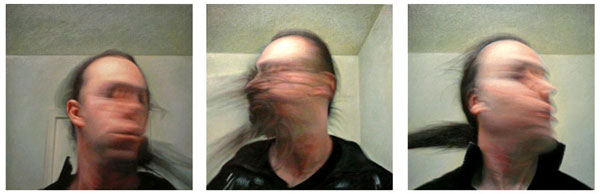
One can take many approaches in styling such works. In most cases, unless a strict replacement order is imposed, the end result combines objective aspects, such as Word’s analysis and consequent suggestions, with the author’s subjective choices. For this issue of Cordite Poetry Review, we derived our text, ‘Exit Ducky?’, from the issue’s cover images: a triptych of blurred faces.

After acquiring the alphanumeric code of the image by opening it in a text editor, the data was translated (via translate.google) from Chinese to English. The original coded output consists of thousands upon thousands of random characters. Encoding the binary in Chinese, a pictographic language, ensures that each character becomes its own individual word. Any other language encoding, except Japanese, will not accomplish this. We removed all non-alphabetic and non-basic punctuation characters, and then working with Word’s spell-check mechanism stylised the text. In this example, which is rare, the machine translation produced an abundance of excellent phrases. Thus, in addition to our spell-check work we also engaged in preserving and editing some machine-translated text.

This simple but time consuming process blends the creative and uncreative. The exercise obviously contains destructive qualities, but we prefer to emphasise its multi-level transformative properties. Allowing the software to dictate, at least in part, or steer the direction of this type of writing serves to provide the author with unexpected vocabulary and unforeseeable textual encounters in which compositional decisions must be made. One text, through programmatic filtering, expands into another. It is worth mention, however, that despite our use of a number of software programs (and different versions thereof) to conduct this text, the number of hours we humans spent shaping it for Cordite numbers in the range of dozens. In the end, it is by no means trivial ‘Uncreative Writing’. Certain forms of late-stage literature veer wildly from norms.

     Exit Ducky? Exit Ducky?

Posted in ARTWORKS | Tagged , , ,

INTERLOCUTOR Editorial

INTERLOCUTOR, guest edited by Libby Hart

Libby Hart

Before you do anything else today, I want you to stop and listen. I want you to close your eyes and listen to your surroundings. What is it that you can hear? Birdsong? Is it the sound of passing cars? The wind whispering? Is it the muffle of dead of night? Are you on a train? Are you listening to music while you read these words? Can you hear yourself breathing? Or is there someone else breathing beside you? Are they sleeping? Did the telephone just ring? Is that someone having an argument?

Regardless of what it is that you are listening to, you are experiencing something quite magnificent – and funnily enough, it goes on all around you at every moment of every single day. Its rules change frequently, but I think its premise goes a little something like this: to live is to experience the world and to experience the world is to commune with and within it. We are, all of us, in a conversation this very minute.

And sure, such magnificence is not always so marvellous. I am writing this editorial in an old house that is shared by creative types during waking hours. Unusually, I am here on a weekday during daylight hours – unusual because I typically come here most evenings to work or spend long days on the weekends. During interloping hours, I tend to have the place to myself. Yet today, a Friday afternoon, I am here with a small group of pianists who reside downstairs.

I have grown accustomed to sharing this space with several pianos that get a regular tinkering. And I am trying my best to ignore this as much as I can, now, while I write these words to you. The pianists also have a tendency to turn off the lights on the nights they visit the house. I’m left stumbling about the stairs when ready to go home, but that’s not really the problem. So what is? The problem is that there’s a woman downstairs who is talking very loudly to the group. I have not heard her before. She is opinionated and her voice is grating, tiresome.

What do I do about it? I listen to birds outside my studio window. I listen to the endless cars passing a busy intersection that rests at the edge of this old house. I put on some earphones without playing music. I listen to my own breathing. I decide to have a dialogue with my current surroundings and I begin to concentrate.

Poetry can act much in the same way. It beavers away quietly and then, when it’s ready, it perks up and listens. It sits up and wants to speak. Poetry can be shrill like a boorish woman. It can be mean like a stray cat in the alley. It can be tired, unwanted and looking for a bite to eat, much like the man who came by here last Sunday afternoon. It can be gentle and polite or layered as an onion. Or an opinion. Whatever poetry may be, it has personality. It has a voice that speaks endlessly of the world and how we experience it. And although I write ‘voice’, I mean voices. I mean diversity. I mean array.

So it is fitting that I now present to you poems I have selected for this interlocutor-themed issue. I deliberately chose only one poem per poet to allow as many conversations to unfold as was allowed. I have also grouped these poems into a sequence of loosely connected exchanges and, if willing, you can follow these threads by reading the poems from left to right, line by line on the issue index page.

I would like to express my thanks to all the poets who spent time and energy submitting their work for this issue. I read every poem that arrived at Cordite Poetry Review and I am extremely grateful to you for sharing your work with me. Before taking on this guest editorship, I had no idea of just how many poems are submitted to Cordite, but all that changed swiftly once I was in the thick of selecting work. It was a hard job selecting less than five per cent of submitted poems and I must thank Kent MacCarter for being one hell of a Managing Editor.

I will not mention any of the selected poets directly in this editorial as I’m a firm believer that if you name one poet you ought to name them all. Discussing forty-three poets would take up the entire section of this already bursting issue. The selected poems are wide-ranging in tone. Many deal with the body, with interaction and with being ‘in dialogue’ with the environment the words find themselves in. Other pieces explore the self as nature, while some discuss animals or mountains and the elements, and how such symbols come to represent loss or offering. Dialect, language, translation and the naming of things are ever present. This extends to body language, to legacies, to memory and the inner voice. There are soliloquies, two-way conversations, differences of opinion and rumination on the endless complexities we navigate so regularly. A sense of communion evolves in each poem. Let the conversations begin.

Posted in ESSAYS | Tagged

Nativism and the Interlocutor

The gypsy siguiriya begins with a terrible scream that divides the landscape into two ideal hemispheres.
It is the scream of dead generations, a poignant elegy for lost centuries, the pathetic evocation of love
under other moons and other winds. The melodic phrase begins to pry open the mystery of the tones and
remove the precious stone of the sob, a resonant tear on the river of the voice. No Andalusian can help
but shudder on hearing that scream. (p. 305)

The poet reread that endnote to Garcia Lorca’s poem ‘El Grito’ at the back of the Penguin edition of Christopher Maurer’s translations.

Then he returned to reading that poem by Lorca, the poem that bore – to use an English cliché – an uncanny resemblance to one he had written many years before, when he had been writing with a belief in the redemptive impulse of language.

Continue reading

Posted in ESSAYS | Tagged

I Have Three Wounds: Of Life, Love and Death


Image courtesy of Los Poetas Del 5

TERREMOTO

All of what remained in us was down to hours – daily, weekly accumulations of them – silent spans like we were puppets without any public function. My family and I were silenced humans, wounds of exile struggling to enjoy just a moment in an empty Adelaide street.

Arriving in Australia was like going to a previously undiscovered desert in our family’s soul; our words and smiles became irrelevant, our tears and sorrow the only sense of life. My young children, Tania and Lenin, seemed as if they were two ancient characters of Dostoevsky’s Crime and Punishment. Not knowing any English, we got lost in the solitude of this unknown land and, clinging together, would come to be people destined to eat, laugh and mourn together as one for our entire lives.

One night in June 1990, as we were coming home to the Pennington Hostel from Adelaide City on the bus, a man started yelling at us in English.

‘This is my land!’

His sounds made us sink into the floor, else we would have drowned within a minute of swimming in his Aussie accent. Another night, after returning from her first day in the Pennington Hostel Childcare, Tania remained very quiet. We all sat at the table to eat, drink and talk of the day.

Suddenly Tania spoke. ‘I will be mute forever?’

At that moment, I felt a 7.2 magnitude earthquake, so common in Chile. But no water sloshed in our glasses. Our dishes lay motionless on the table. We were already in Adelaide – it was only I that was rattling.

I felt like I was falling into pieces. I wanted to scream, and to continue to fall without a parachute. No passport. Just … fall. Back into a prison where I once lived instead of the one I am in now. I had put my children in the most modern of prisons – this country where they are today. Looking at us, Tania again asked her question. ‘I will stay mute? Because no one speaks Spanish at me here, and I don’t know how to speak in English.’

I looked at Lenin, my 3-year-old son, as he continued to take his milk and eat bread. Tania cried. We all cried as four castaways from the sound of the Spanish word. Past and present will always be an open wound of not knowing where we belong, where our life dwells versus where our bodies simply exist. We were four ‘new people in this country that someone else calls paradise.

Battle with Foreign Words

I am a tree living in a city
Where people are
I can’t speak their languages
I can’t write them either ...
But I dream every day,
Perhaps I would like to be a poet
I have many leaves that are my eyes,
I see everywhere
My heart is a storehouse for my fruits.

My roots are invisible toes
Stamping on the soil in deep relationship
With worms, ants, snails, and spiders.
Plants, seeds and flowers too
Sharing the great silence of
Our mother earth.

The sun, our father, protects us.
He is always with me,
My brother wind visits me sometimes
And together we dance in the sky,
Or jump over a cloud and swim through
The immense blue

A glass of water from my sister gives the most
Refreshing liquor
Everyone is equal with the other ...
It is not easy to live as a tree
I can’t walk,
I have to be here, forever
To survive here is not an easy matter
You have to convince them of who you are
I am a tree dreaming of being a bird in a nest,
Inside my poet’s heart.

And so began a long struggle with a new language inside a dominant capitalist system when we arrived in Australia. It’s a struggle I find paralleling the political refugee status that I had and still have, and of not being accepted as a citizen in a country that only accepted its original inhabitants as citizens in 1967.

Posted in ESSAYS | Tagged

Fauna Sounds: An Interview with angela rawlings


Photo by Starkadur Barkarson

Since the inception of the Arts QLD Poet-in-Residence Program in 2005, we Queenslanders have reaped the benefit of an international poet spending three months in our state. Each poet has brought new perspectives, ideas and energy to the poetry community and some of them have helped reshape our (poetic) landscape. These poets / agents of change include Jacqueline Turner (Canada), Hinemoana Baker (New Zealand), emily XYZ (USA), Jacob Polley (UK) and our 2012 resident, angela rawlings (Iceland/Canada).

I had the privilege of working with angela rawlings in 2010 when she was an invited guest of QLD Poetry Festival. With that, I came into this interview with some insight into the wonder she could create on and off the stage, so when Cordite tapped me on the shoulder to do this interview, you couldn’t wipe the smile off my face. Now, having done the interview and again enjoying the privilege of working with rawlings, seeing her inject energy and wisdom into the community, it’s a smile that has only grown wider.

Graham Nunn: As the 2012 Arts QLD Poet-in-Residence, you had the opportunity to visit a number of locations throughout the state to harvest material for the Sound Poetry and Visual Poetry project that launched at Queensland Poetry Festival 2012. How did the idea for this project originate?

angela.rawlings: Since 2009, I’ve been developing Hjlóðljóð (translated as ‘Soundpoem’) – a prototype series for Sound Poetry and Visual Poetry based on Icelandic geography and language. Hjlóðljóð focuses on audio recordings of water, photographs of glass vials in Icelandic landscapes or with soundscape contributors encased inside of them and a physical collection of vials comprising the Hjlóðasafn (Museum/Library of Sound). While each vial has the capacity to recall a certain sound via synaesthesia, by and large the objects themselves are visual or tactile in their materiality. I was also learning my way through photography, so I moved from photographing landscapes and flora to photographing bottles in the moment of their sound-harvesting. For me, this replicated that moment when an unknown though communicative element becomes known through an act of identification, of naming. There was the landscape itself, the documented landscape, the documented moment of naming and then the naming itself (which existed beyond the photograph as a portable museum of sound).

An integral component of the project hinges on exploring notions that humans read their environments and/or that humans are in conversation with landscapes and inhabiting non-human species. Through Sound Poetry and Visual Poetry, my intention is to actively question embedded notions of what a (sound or visual) poem can be, what bodies (be they human, water, weather, other) are capable of or even constantly composing and how to ethically read, converse with or interpret non-human entities.

The position – with the title of Queensland Poet-in-Residence – has provided an opportunity to explore what it means to be a poet affiliated with, if only for a brief time, a large geographic region. How could the work I undertake create dialogue (and/or collaborate) with the land and inhabitants? How might I form a creative research project that would place me in a situation to interrogate my relationship with and ethical approach to an eponymous region?

GN: I imagine it is incredibly important to feel a connection to each of the places you visit, to be able to move beyond the surface and enter into a deeper dialogue with the land and its multi-layered history. I am eager to hear about your QLD experience and your engagement with the many places you visited.

a.r: The opportunity to visit Queensland for three months – immersed within bioregions completely unfamiliar to me – to develop new work has proven important for me. Similar to immersion in foreign human languages, immersion in foreign bioregions heightens my capacity to sense environments that are partly removed from the immediate superimposed semantics I have inherited. Looking at organic litter on a beach, I know little more than cursory titles like ‘leaf’, ‘shell’, ‘seed’. In the Daintree and, later, Magnetic Island, I was mesmerised by little balls of sand littering beaches as tides receded. It took two days of studying to eventually spot the heavily camouflaged crabs scuttling amidst those balls and into holes nearby them. The sand balls and their intricate arrangements indicated a deep logic at work, but one I was not equipped to decode.

Fauna proliferates in rural Queensland, so I was humbled to spend time near wild bandicoot, cockatoo, kookaburra, kangaroo, orange-footed scrubfowl, brush-hens, orb spider, blacktip reef sharks, cicada, huntsman spider, and platypi. Prolonged exposure to flora and fauna – beyond the glimpse of recognition and the fleeting moment of identification – led me through welcome realisations: ‘I may know a name given to you, but I do not know your name; I do not know you’ and ‘I may not know your name, but we’ll sit together and learn something of each other.’

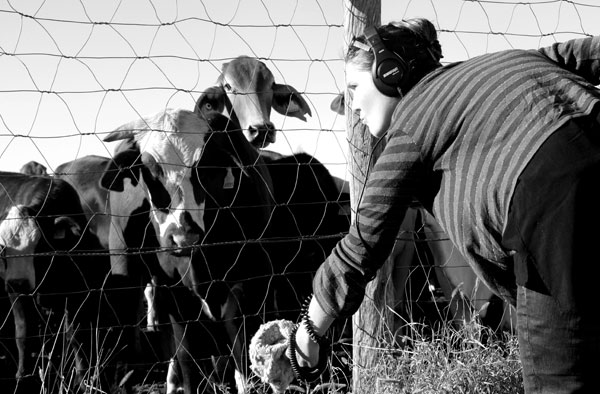
While I was in Longreach, poet Helen Avery shared her family cattle ranch with me. The cows in-yard provided an incredible opera. Having grown up in rural areas, I’ve heard mooing before – but I’ve never listened to mooing. I spent a long while in close proximity with cattle, recording their polyphony. The experience surprised me, since I could not have anticipated that the soundscape of a cattle yard would become a seminal component of the project.

GN: For someone who has never experienced Iceland and its volcano and glacier-shaped landscapes, I am interested to know whether this project has uncovered any parallels; any similarities in the way these two unique places open up and speak?

a.r: During my second day of the residency, I met you and several other lovelies for lunch. As we ate, I noticed the word ‘ISLAND’ in a large font outside of a nearby building. At first, I read this as Ísland, which is the Icelandic place-name for Iceland. After lunch, we passed by the building and I realised that foliage obscured more text; in fact, it read ‘QUEENSLAND,’ but the bulk of QUEEN was obscured (except for the last part of the letter N). Somehow, the Iceland-of-the mind didn’t feel so distant at that moment.

I’m sure there are similarities – crossover species of birds such as terns, plovers, oystercatchers or that both islands have desert interiors and comparatively lush perimeters – but I’ve noted more of the differences. Iceland is a young country in geologic terms, while Australia is ancient. The flora and fauna that have evolved in Australia are at such different levels of succession compared to Iceland that it dizzies me. My greatest enthusiasm in the rainforest was viewing large epiphytes for the first time. Flora grows on flora here. By contrast, Iceland’s ecosystems are quite sensitive and have noticeably suffered from overgrazing. Trees cover only 1-2% of the island, and so the more common flora to see there is moss covering lava rocks, or grass fields, or introduced species such as Alaskan lupin.

Posted in INTERVIEWS | Tagged ,

The Interlocutors: Poetry and Jazz in Collaboration

Geoff Page

Geoff Page with Simon Milman at The Loft in Canberra, 17 June, 2012

How do jazz and poetry talk to each other? Of course, they can lament their shared marginality to the majority culture – but that will take us only so far. They can boast of their heroic figures over a century (jazz) or the millennia (poetry). They can hyperventilate about the talents of the latest prodigies in either form, but that will almost always be ahead of the facts.

Continue reading

Posted in ESSAYS | Tagged , , , ,

4 Artworks by Melanie Scaife

[EasyGallery id=’melaniescaife’]

With her new set of oil paintings, 2011 Glover Prize finalist Melanie Scaife leaves behind her dour and wintry Clarice Beckett-like landscapes in favour of something lush and dynamic. She trades spectral and sallow greys for roiling reds (cadmium, perylene and alizarin) and symphonic blues and greens (viridian, cobalt, cerulean and ultramarine).

Instead of the static and indifferent earth, here she paints the benign and infinitely generous water. Even in the industrialised inner west of Melbourne – under the Westgate Bridge no less – Scaife finds kaleidoscopic, luscious, incandescent colours bouncing around in the oily shallows.

Not surprisingly, these works are highly responsive to different lighting states, handsomely repaying time spent with them in a naturally lit space as day turns to dusk. They serenely command our attention.

In individual works, colours jostle, one swatch ‘pops’ after another. Even in the single colour work ‘Murmur’ – a tour de force in blooming crimson – there is an intriguing narrative of the daytime blues seen and left behind. Like the isomer the colour takes its name from, alizarin crimson responds to its surroundings like litmus. As does the artist to hers.

Scaife invites us to find light in darkness. To find motion in stillness. To find enlightenment in meditation. She invites us to join her in an interior landscape.

– Chris Boyd

Posted in ARTWORKS | Tagged

4 Artworks by James Bonnici

[EasyGallery id=’jamesbonnici’]
*Click on the image above to view this gallery.

These distorted face images hint at the psychology of the represented individuals during private moments. The confined space and harsh florescent lighting add to the claustrophobic atmosphere and help to accentuate the figures’ restlessness. They are a reaction to their constructed environment, repressing their human reality.

Posted in ARTWORKS | Tagged

2 Translations of Alex Skovron

PEN Melbourne’s Translation and Linguistic Rights Committee (TLRC) recently commissioned Jacques Rancourt, French poet, translator and director of the Paris-based Festival franco-anglais de poésie, to translate a collection of poems by Melbourne poet Alex Skovron. Skovron and Rancourt discussed and read their work via Skype at the recent IFLIT/Light in Winter Festival. PEN Melbourne plans to publish the poems early in 2013. Presented here are two of these translations.

The work of the TLRC primarily focuses on issues of translation and linguistic rights and their effect on readers and writers across the globe. This includes access to literature at a most basic level. Concurrently to this access, PEN places great emphasis on the role that literary translation can play in enabling cultural exchange. – Elaine Lewis, PEN Melbourne


TACHES SOLAIRES

Les gens ont rempli les espaces ouverts de la ville,
ils se tiennent épaule contre épaule, s’attendant à tout.
La plate-forme au-dessus de la Place est vide.
Une sensation de malaise caresse les têtes nues,
leurs couronnes de cheveux s’amenuisent dans la brise ;
regardez ces journaux enroulés, ces foulards qui tressautent.

Le bourdonnement devient chuchotement, le chuchotement
délivre son secret, le secret
est trahi, se répand comme une épidémie ;
en dehors de la ville, ils construisent une pyramide de livres.


GALATÉE

Le pire c’est quand il me traîne dans son lit la nuit :
Sa chair molle et moite, son tâtonnement en sueur,
Ces intrusions flasques. Pourtant, ses yeux me hantent.
« Oh, serre-moi, serre-moi ! » supplie-t-il pathétiquement,
Bien qu’il connaisse ma paralysie – tout ce que je peux faire
C’est de fixer sans ciller le plafond de pierre.

Ensuite, il me caresse toujours amoureusement,
Polissant ma cuisse avec une guirlande de tissus,
Puis s’efface dans un ronflement. J’écarte les couvertures
Et me tiens sous la pluie. Me tiens là à imaginer la peau.

Posted in TRANSLATIONS | Tagged , ,

Fogarty & Garrido: A Bilingual Conversation between 4 Poems

Mapuche ‘campesinos’ – Lionel Fogarty

Chile our liberation fight is the same
Indigenous courage we must unite on land we relate to better than rich
Chilean brother we here are unity for you
Columbus 1492 was a white man like Dampier and Cook
Yet today we still find them in society
Aboriginals let come in tremendous
Resistance in mind and body for the Mapuche people fightness
The persecutions by the rich
We as all indigenous can’t break the pride, dignity and joy
Chile we here will give support
Never were heathen savages
Nature we live within
Chile Mapuche brutality, murdered
I’m glad you are reclaim land
Chile a discrimination of Indigenous is fettered and pained by us
Mapuche brothers all black children here will take up the weapon
Towards peace and justice
Mapuche sisters as here are suffering misery, yet we praise your strength
and determination.
You Chilean people staying here, let’s get up
Together and bash capitalists to the dumps
Live on, we are the earth, the land
Indigenous Chilean you shall shine in our heart’s spirits
We had civilization before they came so we know the way to a future
Chile Mapuche we are with you to liberation.

Mapuche (translated by Juan Garrido-Salgado)

Nuestra lucha de liberación es la misma
con el coraje indígena debe unirnos a la tierra,
Relacionarnos mejor que los poderosos.
Hermanos estemos unidos.

1492, Colon fue invasor como Dampier y el Capitán Cook.
Hoy, todavía los encontramos en la sociedad.
Hermanos que nazca la verdadera resistencia
Contra la persecución de los poderosos.
Resistir en cuerpo y alma en la lucha del pueblo Mapuche

Aborígenes e indígenas del mundo
No perdamos el orgullo, la dignidad y la alegría.
Desde aquí crece la fuerza
Nunca seremos un páramo salvaje.
Lo natural vive dentro de nuestra alma

Pueblo Mapuche: brutalidad y masacre
Interminable batalla por recuperar su tierra:
Yo estoy con su lucha.

Chile: discrimina al indígena, lo engrilla y lo encarcela.
¡Hermanos Mapuche!
Todos niños negros de esta tierra.
Tomarán las armas por la paz y la justicia.
¡Hermanas Mapuche!
Aquí también estamos sufriendo en miseria,
Seguiremos orando por su fuerza y determinación.

Hermanos chilenos, sigamos juntos en nuestra lucha.
Levantémoslo! Para barrer con el Capitalismo
Viva la madre tierra; somos tierra adentro.
Indígenas su espíritu y corazón brillarán.

Antes fue nuestra la civilización,
antes que llegara el Colonizador,
Sabemos el camino hacia el futuro.
Hermanos Mapuche nuestra será la liberación.

Posted in TRANSLATIONS | Tagged ,

Malaman: Words for ‘Sound’ from Several Languages

Malaman is a chanting of words for ‘sound’ from several languages. They are chanted with the intention of releasing their inherent sound-energy and are neither words for music nor for sound-as-noise. These are words for sound, one of the world’s prime energies in a similar capacity that light is a prime energy. These are the oldest words I have discovered to date.


Malaman (12:31) | by Annea Lockwood

In order to move beyond the performance of these sounds, and to initiate a flow of unbroken energy, the words are chanted in their original pronunciation – not consciously making rhythmic or tonal variants (as one chants a mantra and does not perform it). Then the variants which come about appear as a part of the process of change which the sounds’ energy induces. They happen to the chanter.

The following words – transliterations – are not spelled phonetically. Underlinings distinguish the accented syllables, no underlining indicates equally weighted syllables:

singyam:  (Cantonese)
tsooin:  (Welsh)
fooin:  (Gaelic)
ayhos:  (Greek, with a guttural ‘h’)
duidum:  (Turkish)
malaman:  (Maung people, Northern territory, the ‘a’ as in ‘ah’)
soun:  (Middle English)
Klang:  (German)
sadeu:  (Sri Lankan, the ‘a’ as in ‘ah’, the ‘eu’ as in French ‘deux’)
sote:  (Farsi, as in French ‘sauter’)
leeud:  (Swedish, the ‘ee’ very fast, the ‘ud’ as in ‘hood’)
swara:  (Malay)
awnee:  (Yoruba, ‘aw’ at the back of the throat with a fairly closed mouth position)
n’zeembo:  (Shona, the ‘n’ a chesty grunt)
nad:  (Sanskrit)
anhadnad:  (Sanskrit, all ‘a’s as in ‘ah’; meaning = the unstruck sound)

This chant is based on my belief that some old words are what they stand for … that these words are energy generators. Nourishing.

About the time I was doing ‘Malaman’, I wrote: ‘I suggest that sound is a major energy form, like light or heat and that all sounds partake of this, even that sound is an agent in world creation, so that in working with sound one is working with something analogous to the deceptive power of water. That same element – water, which we control at will, turning taps on and off, sustains the body which turns the tap. Sound is used rather like water now, we turn it on so easily via our devices, seeming to control a force which can actually shatter the body (at extreme levels), and yet can pour through the body (at another strength), relaxing tissues, nerves, energising quietly.’

Posted in TRANSLATIONS | Tagged