Now the world’s jobless again
and the government’s stopped threatening
to buy you an alarm clock, you can safely
get up every afternoon and campaign
for the right to work;
be back by midnight re-jigging
the first paragraph
of your novel that’s not
exactly a novel.
With your new orange sweater
and the big fat Easter egg you hide
in the cupboard when anyone visits,
you’re every auntie’s favourite
charity. The skin disease
you’ve been cultivating
is coming along nicely.
After we last spoke,
I checked my wallet and my soul
and found some part of both
missing. In more innocent times
you’d have gone to the gallows for being
a waste of valuable oxygen
or someone would simply
have set you on fire.
But petrol is expensive
and no one can be arsed
to do the paperwork.
You potter about the epochs, happy
to be everyone else’s fault.
Freeways are never exactly that.
Changing lanes with Maria Wyeth
in the rearview like a tail.
The headstones marched around the bend.
The pool where I learnt to swim
offered up to the slipstream,
progress leaving a red dustgrass elegy
where outer suburbs feast
on the outer outer suburbs.
Listening to “Maggot Brain” on YouTube
Eddie Hazel stutters in the streaming.
Standing on the cusp of a night as empty
as that nothingness they ran into
before bridges recorded their history.
Reading the notes
at the back of a semi-scholarly
copy of Henry V
just distracts me like Facebook chat
in the middle of Hazel,
his guitar howl in the night dust,
like a child clinging
to the breast
of a murdered mother.
bring a plate to the global
table brands are set
to translate into something
more than sulkiness tim
tams will soon greet the aurora
borealis the farm gate is not as
rubbery as it looks the bone density
dairy carries as much equity as the best
baguette so don’t break the glass of
simple arithmetic, just leave the red
ink out of the jus
ii. pot boiler
surplus romance liquidates
malls god’s grim suitors trample
church steps with epic flair buñuel
budgets for a guest list on the verge
of narcoleptic square is origami
better to snack upon than salvers of
paper balls, well scrunched, with or
without a butler can charm afford
the discretions of a shell investment
any longer leaks stench the marketplace
like crabs in boiler rooms eyes scratch
towards prayer or rupture
iii. write down
take a more conciliatory tone
the bird poo boutique the preferred
vehicle – $5.20 for a cup of coffee
on the kerb another fund manager
backlash, and the gravy train’s provided
more splash back than a rogue cooktop,
ruptured cufflinks in the trash compactor;
i saw sourpuss off to voucher island in a
patchwork suit eating canary pie –
iv. fancy
bankers danced the zumba junta
in the constitutional ballroom just
a bit of festive fancy dress like a
tv mockumentary on a bitter winter’s
night the pink batt cocktails kept them
warm enough; some escorted current
spouses others escorted escorts there was
a mix up when pecuniary interests were
introduced to love investments, just by chance;
certain guests rang promptly for their drivers, others
rang up potential losses; there was a moment when
the floorboards shifted like a listing, like a tower of
mini pizzas whose anchovies shone like bullets; then
the dollar suddenly shot up reaching the peak of the
continental drapes
Zips are better than buttons when going to the toilet,
but not when being undone by a member of the opposite sex.
Slow sex is better than quick sex,
except when quick sex is better.
Any sex is better than no sex when you’re 21.
By the time you’re 27,
you’re looking for a significant other.
At 32 you realise one or other of you
is not significant enough.
You sulk for five years in a not very good job.
Then you take your savings and open a cheese shop.
You hire an assistant and bond over
salt-washed Gloucester. When really, you realise,
you need a makeover.
Sex now is two hours of personal histories,
and 10 minutes in bed.
You’re learning tolerance.
Which you want extended to yourself.
This doesn’t quite happen.
He brings you breakfast in bed,
with a rose between his teeth.
Which you want to slap.
Though you don’t.
The lover of self is a verb-monstrosity,
all the pure dappled nouns it longs to deplume
into a plain of tautologous goose-flesh.
You can’t beat back your background;
the greenery shakes its fresh birthright
about your ears, a halo of gnats
catch the light by treachery.
After the self-chore your knees
are bored as stakes, your toes
rise from the tiny graves they’d dug.
Leaning over the sweet-rippled substrate,
suffering the nostrils’ lesser joke;
so sinks your expression. To love
is to know nothing more
of one’s penetralia, love is a lathering.
There’s no time saved or lost in monologue;
at some point each question stops
its quivering, is laid to rest.
How many men throughout history
have come into their flaming hearth,
to clash element with element? …
Synapse sizzes then is dim.
You cannot fathom what it’s like
for the world to be under water.
You only see it, from on high,
in vertigo’s negligent clutch;
wracked, yes, but impervious.
You stand: as the first plains man
you are maladaptively loose-limbed.
As the operose angel of history
you really are just looking at your feet.
The sloth to my having being sandwich hand steep,
so may we marquee sloth to not stoop
Rolls Royce, don’t move, around them moves
derby droves, strewn wishes
of rebarbative stone fishes. NN. Struth
ventriloquy. Through city I speaks easy entrance
free, tepee clone.
The long history strokes empire, gainfully employed,
but markedly ostracism. There, Marquis,
Kate Middleton and William Wordsworth come up
for tropics air like its live mercury set
cranium demonstration-like-Zaha-Hadid-metamorphosing
1/10th model-embedded, the history cake
containment in vitreo. Metaphysical suspenders.
second
It’s like smart alec spoliation, pillage absolute
in posthumousness, across the known diocese,
alp to plain. Convalesce valley of the virgins, spay
your first neighbour. Journalism turns faster
than the previous punnet, the first of four had white
blooms of spoil. He force-fed strawberries to begin,
our unconscious hours, strawberry milk, as our agent advises,
when we confide,
like mongrels as masterless as the cynic.
third
First mention of the hung cloven foot slung
for sweetness, and if not sweetness sweetness of the marvel
at this compassion for
neoteny. Who said blood ran bloodless veinless femur,
white as rain! Toddler saddles the international toggle doner,
his grand vision beyond direct intervention action incarnate
the falcon by sovereign suspension, unshot by gun
and unmaimed by dog. The duck he condescends, but Juno’s
peacock.
And what if you were assigned by HBC this cynic’s Sabbath
time to sew the latest flavoured milk crop,
or the variorum edition of architect juvenilia,
Stand up dear child let me see your tear ducts, you redden.
fourth
So called sloth stymied, but hirsute beyond years and my reputation
precedes me lichenly. Hydrofoil or hovercraft, Yakushima
or Tasmania, mood: solar nude. Your hand
parroting me. Starch on the irrefragable surface cake and silicon
unburn, at least this measly pulpit eats.
When the ghost up and walks it tokes poplar drive and wrong turn
for our Fairlaine bushwhack with tepee, juvenilia,
the desert funerals. To think we’d meet your foster parents
slunk on main street,
maybe the curmudgeon rest stop with pompous Samaritan phone,
since it divines but we beggarly.
Poorly, pregnant asp for a sinus, Geelong checks its Modernist warranty
for renovations on the sacristy for Hermes,
the name making no plaques for the mass dead, mind you,
mind all of you scurrilous dependents
of Temple Bar Pulley System, as early as generation your nails
are chalk, your quail talons for digits
since a pulley even takes the ring from the can of coke,
bane of your fumbles. I say loiter the shit out of the apocalypse
post-coitus. Waratah sport.
Self Translation by Ouyang Yu
Transit Lounge, 2012
In his often quoted poem ‘An identity CV’, Ouyang Yu describes himself as ‘Australian for the last couple of years, Chinese for the first 43; unashamed of either’. National educational priorities notwithstanding, I have not found the time to learn Chinese. Inevitably though, the ideal reader of this bilingual volume would know a little more of that language than nihao. However, I immediately offer an observation that if this book is not strictly intended for English monoglots, it will have to make do with a considerably smaller readership than the average volume of contemporary poetry.
Just a quick thanks to the 423 of you – and your accumulated snowfall of 1200+ poems – who submitted to Cordite 42: NO THEME II with poetry guest-edited by Gig Ryan. That’s quite the crush of submissions from around the globe, our largest yet. Big props! But please be patient as Ryan reads and makes her selections … it’s going to be a little while before she’s done. NO THEME II will publish 1 June 2013.
Submissions to Cordite 43: MASQUE with poetry guest-edited by Ann Vickery will open 1 April 2013.
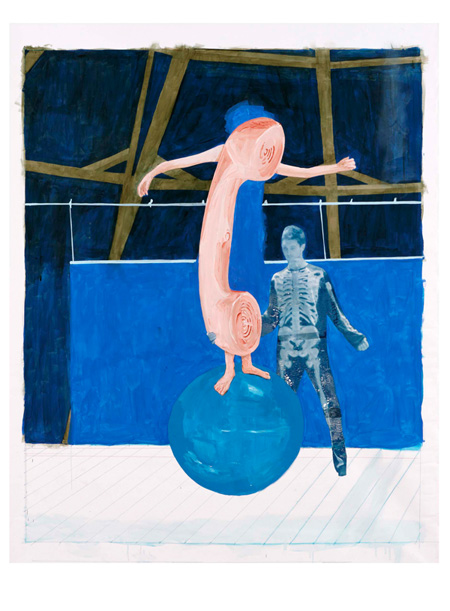
One of the sequences produced by the collaborative art project A Constructed World renders the phrases ‘No need to be great’ and ‘Stay in Groups’ in a range of media – silk-stitch, screen print, photography and painting. One of the painted versions of the image shows a naked woman covered in yellow post-it notes overseen by a hulking, shadowy male. These figures represent the artists Jacqueline Riva and Geoff Lowe. The image appears again in the form of a photograph and the installation was staged in various places around the world – as if the only way to get the message across would be to subject it to constant repetition in as many different formats as possible. Indeed, a number of the collective’s performances and installations attest to the impossibility of communication – even as these take the form of images that can’t fail to deliver.
Avant Spectacle A Micro Medicine Show, from 2011, features skeleton-costumed performers inexpertly singing and playing instruments while six knee-high wooden letters – S, P, E, E, C and H – burn like small condemned buildings at front of stage.
The Sunlit Zone by Lisa Jacobson
5 Islands Press, 2012
The verse novel is a peculiar organism: descended from the sweeping epics that chronicled the birth of nations and the misadventures of wayward heroes, we can still find characters struggling on their ‘grand’ journey – likely to be a personal, emotional and/or psychological journey – with the occasional battle scene (though, this is more likely to take place on a much smaller, personal level). As a distinctly modern form, there is certainly much less aggrandisement of the natural world via mythical and magical hyperbole in the verse novel. Continue reading →
The Abbotsford Mysteries by Patricia Sykes
Spinifex, 2011
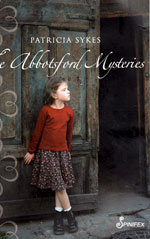
Patricia Sykes’ fourth collection of poems, The Abbotsford Mysteries, is a lyrical working-through of the experience of girls and women at the Abbotsford Convent in Victoria. While the site (located on the Yarra north of Melbourne) is now an arts and cultural hub, it served as a Catholic girls’ home from the 1860s until the 1970s, run by the Sisters of the Good Shepherd. The convent was built at the beginning of the twentieth century, and operated as a boarding house and school for ‘wayward’ girls and women, orphans, migrants and girls from rural areas. Given this context, it’s hard to read and react to The Abbotsford Mysteries without relating it to recent revelations in the media regarding the prevalence of child sexual abuse in Australian Catholic institutions, and the eventuating Royal Commission into such abuse. Continue reading →
It can be argued that one way to begin to make your ‘mark’ is to settle on a theme; in marketing, it’s a handle or a simple angle. In creative realms, it can be an oeuvre or a period, with a descriptor. Ideally, it should never be held too close to its object/subject for fear of typecasting, but for an emergent poet, it may well be the thing that reassures readers and helps them with a doorway into your work.
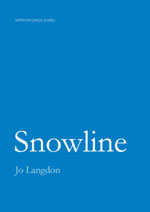
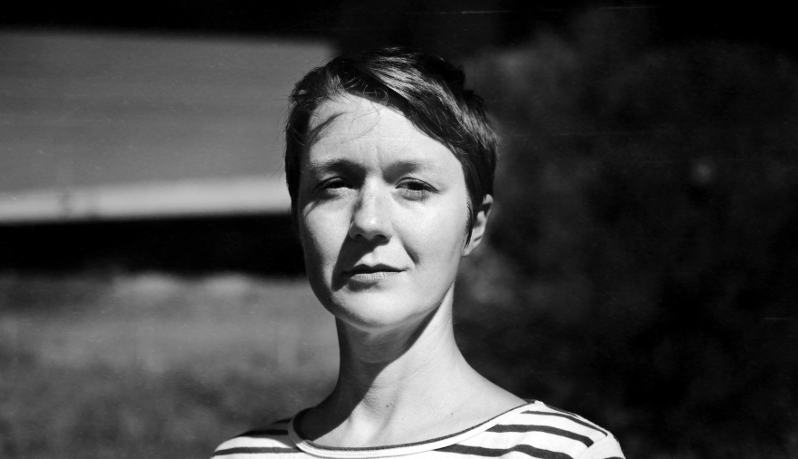
For a first chapbook, a theme can also be the way to find publication. Jo Langdon’s Snowline is the 2011 winner of the Whitmore Press Manuscript Prize, a welcome initiative for emerging poets from the Geelong-based Whitmore Press. It’s a deserving winner, and a pleasure to experience.
In April, 2012, I published a Guncotton blog post, responding to a paper given by Peter Minter in Melbourne. Specifically, I was interested in his proposal that Australian poetry could be viewed as an ‘archipelago’ of ‘psycho-geographic’ poetic activity. With thanks to Cordite Poetry Review for inviting me, and once again to Minter for his potent departure points, I’d like to expand on that post, particularly on seeking an alternative to national/ist and ‘monolithic’ ways of framing the poetry produced in and about this continent. By proposing an ‘archipelagic map’, Minter grants local poetry an appropriate critical framework that steers away from some problematic aspects previously encountered in reading and defining ‘Australian poetry’. In doing so, this framework negotiates a view of local poetry that is properly sensible to the actual, situated ethics of poetic practice and community.
Australian literature and poetry have enjoyed recent reappraisals in terms of the transnational and even global – terms that move beyond the fraught bounds of nationality and nationalism, and that rightly acknowledge the ongoing process of exchange, translation, influence and visitation that shape all writing including Australian. However, these enlightened critical concepts remained limited; transnationalism relies on the exclusive agreement of what is national, and Marshall McLuhan’s notion of globalism seems too unwieldy and frankly unrealistic (as well as creepily corporate) to describe literary practice.
Produced within immediate localities and regional histories, poetry and perhaps all aesthetic practice may be situated within any number of specific ‘intensities’ or ‘outcrops’. This way of seeing poetry has something in common with the established field of ecocriticism or ‘environmentalist cultural criticism’, namely that both claim a located view of literary practice and culture. However, Australian literary criticism and poetry have had a mixed relationship with ecocriticism.1 While by definition a transnational movement, it’s fundamentally related to a North American history of environment, particularly to notions of wilderness and the pastoral. When it ‘calls for a poetics derived from the interface of imagination and ethics, but predominantly informed by modern environmentalism’ – ecopoetics – it is traditionally invoking a North American literary history from Thoreau to Gary Snyder, Wendell Berry, Forrest Gander and onwards.2 For these reasons ecocriticism and ecopoetics, which have certainly been inhabited by Australian critics and poets, nevertheless impose upon them an imported set of concepts and traditions.
Importation itself, of course, has poetic value; after all, the trans part of transnational (or TRANSPACIFIC) seems very useful to thinking about how poetry and poetics are situated or placed within localities. But if we define place as a scale of infinitely nested localities, we can justify the concern that an international framework like ecocriticism may obscure significant local views. For instance, let’s consider some hypothetical poetic intensities or outcrops that might exist in and around the Australian continent: Australasian, trans-Tasman, transpacific, Oceanic, mainland and so on, all the way along to tropical northern, south-western, Bass Strait, detention-centred, and so forth. In his introduction to John Mateer’s the west: australian poems 1989–2009, Martin Harrison notes that an individual poet such as Mateer may possess several ‘parallel … organisations of networks, of overlapping centres of interest’ stemming from place.3 These are specialised, grounded in location. This is not to say that such outcrops are incomprehensible to critique; they are as much concepts for the free critical apparatus as they are reflections of how local poetry gets made.
Localism is at present enjoying a certain cultural cachet in parts of the heavily industrialised world. In that context, there are plenty of good reasons to be sceptical about it, not least when it manifests in contradiction, e.g. somebody sitting in a Brisbane locavore restaurant twiddling with their Chinese manufactured i-thing. In a critical context, however, location and locality offer a compellingly expansive frame through which to read Australian poetic practice. That frame is extendable from the local to the regional – bypassing the obstruction of nationality and thinking more specifically than globally. That somebody, perhaps, is a poet; he might be waiting for a group of friends, who are tonight celebrating a place that lies beneath their poetry: at the table will be Emily Bitto, Rhyll McMaster, Liam Ferney, Lionel Fogarty, Luke Beesley, Judith Rodriguez, Jaya Savige, David Malouf, Sarah Holland-Batt, and an empty chair for Gwen Harwood. (Dear critic, the guest list remains unfinished; add, subtract or rearrange place settings as you wish.) He might be reading Timothy Yu or Keiji Minato in Mascara Literary Review, or doing a bit of research apéritif to his Asialink residency in Singapore. Or he might have just flown across the ditch to catch up with his Australian publisher or to give a guest reading.
Because it recognises location in place, an archipelagic map or view of local poetry reflects real (and speculative) poetic communities and practice. Thus it proffers a potentially rigorous and revisionist critical mode in the spirit of transnational studies. I’d previously thought that ‘island poetics’ would be a suitable phrase to describe what this critical map might see; on second thought, however, the figure of the island is too readily associated in literary terms with isolation; as well as having for Australians unfortunate colonial, penal, exclusionary and escapist connotations, not to mention a settler history of anxiety about distance. On the other hand, ‘archipelago’ nicely conveys the sense of (geological, cultural, political, ecological, linguistic, economic and physical) interconnections that we see at work between local poetic outcrops.
Apart from those outcrops linked physically and psychically to settler cities and towns, another kind of archipelagic intensity might be found in Indigenous nationhood, with its own extensive and complex map. Woven into that poetic map might be connective histories of kinship, language, story and trade but also of movement, exile or return. Alongside that map, there is another, much sketchier one that may illuminate how some settler poets seek to ‘write about Australia’: a desire sensitively explored by Mateer in his essay, ‘Nativism and the Interlocutor’, in Cordite 40: INTERLOCUTOR. Can an archipelagic view of settler poetic activity help to locate and explore Mateer and other poets’ ‘wanting to imagine … the spirit of place’?4
Thanks for your letter. When Kent MacCarter first invited us to co-pilot this little Cordite dinghy and asked for our thoughts on transpacificism, I fell back on the opening lines of Richard Brautigan’s ‘Pacific Radio Fire’ – ‘The largest ocean in the world starts or ends at Monterey, California. It depends on what language you are speaking’. A tiny story of radio-burning and quotidian heartbreak, it is a narrative speck on the Pacific rim, dwarfed by ‘the hugeness of the Pacific Ocean with all its vocabularies’. Indeed, the Pacific, as a whole, is unfathomable.
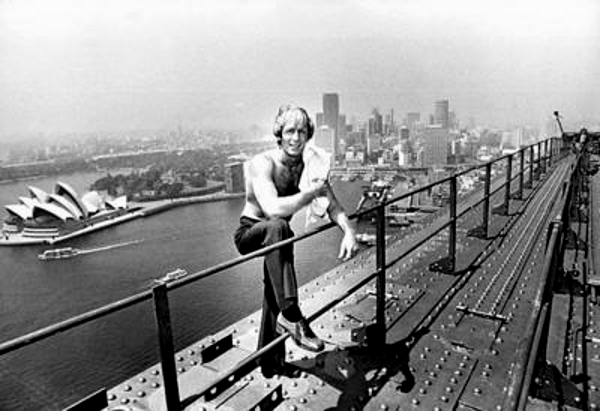
Paul Hogan builds the Sydney Harbour Bridge
I’ve noticed that most writers have their own means of denoting space for an idea that has yet to be articulated. Mine looks like (…). Yours is [///]. Perhaps we can ascribe a vague shape to this unfilled space, perhaps we even recognise it as having a particular cadence or rhythm – we just haven’t yet found a way of fitting language to it.
In the case of the Pacific, how else can that space, that parenthesised wordlessness be articulated but collectively? For the sake of this issue, ‘trans’ – across, over, beyond – provides a literal and conceptual starting point. If we are going across, over, beyond, there must then be origin and destination, a point A and point B. As well as the more direct interpretations of migration, both human and animal, we see that expanse traversed though other means; linguistically, commercially, epistolarily.
I first read many of our thousand-odd submissions while in transit across the Pacific, scrolling through Guam, Japan and Tonga en route to my first Northern winter. There are always poems that manage to find you right where you are, and there were poems that found me cruising at an altitude of 40,000 ft, steeped in the unhealthy glow of a laptop as my fellow passengers folded themselves into awkward parodies of sleep. I read B R Dionysius’ ‘On Not Having Encountered Snow, Aged 43’ never having encountered snow (aged 28). A few days later, tramping over icy footpaths to meet you on Rue Saint-Viateur on an innocuous minus-ten-feels-like-minus-twenty afternoon, I was the coldest I had ever been (and handling it with somewhat less grace than a migratory whimbrel). While most of our editorial discussions would later echo lines from Ian Gibbins’ ‘Dateline’ – ‘the telephone rings/and we stop, on time, today again yesterday’ – here was a brief window of synchronicity. Although the internet is, as Susan Shultz put it, ‘the fastest of the many kinds of canoes that have crossed the Pacific’, it cannot outstrip Skype glitches and conflicting sleep patterns.
So, in a small café in Mile End, we exchange editorial approaches and provide contexts for poems that respond to our nations’ politics. I attempt to explain how Australia has effectively excised Australia from Australia’s migration zone, and turn to Mark Roberts for help. We begin mapping out the issue, in a more literal sense than is typical; a curation that is part cartography. Though if it is to be taken purely as a map, the result could never be anything but incomplete; the faint tracing of coastlines and the smatterings of language heard a long way from shore. If we are to assign a function to this issue, it is more one of journey—the crossing, the over and beyond. I’d like to think it brings us a fraction closer to fathoming the [///].
It is tomorrow where you are. There are record heatwaves and bushfires burning through the interior. Red-brown clouds of smoke where the woodlands smolder. Here, in Montreal, we are deep in snow. Deep in snow, I mutter out loud, tromping over Mont Royal: Deep in snow, eep in ow, e – i – o. Barely a syllable seems to rise above the drifts.
The Muses of Poetry is one of the current projects at the Research and Development Department of the Institute of Animation at Filmakademie Baden-Württemberg in Germany, that intends to bring poetry – its emotionality, auditory structures and nuances when words meet elocution – to a larger audience. This is achieved through an interactive installation that makes use of character animation, voice synthesis and affective semantic analysis of poems, all in real-time.
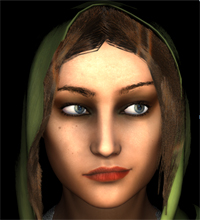
The project, funded by the Ministry for Science, Research and Art in Baden-Württemberg, started in November 2012 with the goal of finding new ways to experience poetry. As a result, a first prototype has been created with a realistic female character named Calliope, a poetess in The Muses of Poetry. For this project, visual and tonal representations of gender are important and must be considered in programing. Cordite Poetry Review has provided some guidance in the reading of poetry and, more importantly, a first batch of poems for Calliope to engage with. Further collaboration is planned in 2013.
The interaction begins when the virtual character invites a user to select three words from a word cloud, allowing her to decide the poem to be recited. Underpinning The Muses of Poetry is an extensive sequence in intelligent semantic analysis, novel Human-Computer Interaction (HCI) techniques, real-time automatic lip-sync and facial animation – developed and implemented at the Research and Development Department of the Institute of Animation.
Before The Muses of Poetry, our R&D team had been involved in several projects regarding conversational virtual characters. One of the most notable is the Agent Framework, which is a development platform for character-centric application prototypes. It has been designed as a set of modules that allow the fast and easy creation of realistic virtual characters. Among the projects we find a short film featuring Klaus Kinski as a 70 year old man, for which a completely digitised, aged version of the deceased German actor’s head and face were created; Emote, a system for creating animated messages for mobile devices; and Nikita, an installation with a female character that replies to questions according to a script, becoming visibly sad when insulted and happy when complimented. Behind all these applications is the Facial Animation Toolset – a plugin for Autodesk Maya – that facilitates the creation of facial expressions in different characters. The satisfactory results of these works inspired Volker Helzle, head of R&D, to develop a ‘poem reader’ that interacts with an audience, reciting and expressing the affective content of poems through facial expressions and finely-tuned audio controls.
‘For the Road’ by Carol Jenkins
Why poetry?
During the last three decades, interaction with computer-generated content has become a more natural and common activity. Human-computer interaction (HCI) has undergone a number of major improvements – from virtual characters on display in kiosks at museums and airports, to state-of-the-art augmented reality installations where a user embodies an avatar and engages with environments through its eyes.
But full interaction within a literary environment is quite new and one scenario where such interaction can provide an enhanced experience occurs within the topography and lexicography of poetry. In a poetry reading, for instance, the poet stands in front of an audience, reading his or her poem without interruption. But what would happen if, before the reader began, the audience suggest words for the poet to then extemporaneously settle upon a poem that best fits the cues? And for immediate recitation at that? This is the precise scenario we intend to recreate in Muses of Poetry. Achieving this goal, however, poses a number of questions: How to assess a poem’s emotional content? How to restrict a selection of words on the user’s side? How to organically interact with the character? Where to obtain the poems? I’ll address all of these questions and explain how we intend to achieve our objectives.
A bit of Greek mythology, a lot of semantic analysis
The Muses of Poetry is namesake to the muses of Olympus who inspired poets of the ancient Greek era. Therefore, our first character has been named Calliope – the ‘beautiful-voiced’ – who was the muse of epic poetry and wisest of all Olympus muses.
With this as inspiration, we faced our first big challenge: exactly how to analyse poems in order to obtain its affective content. A tool complicit in this task is the Dictionary of Affect in Language (DAL), created by the psychologist Cynthia Whissell 1, which is based on results of users’ evaluation of words in a variety of media. The version of DAL we are using includes 10,368 English words with affective connotations, where each one is described with regard to the dimensions of Activation (or Arousal) and Evaluation (or Pleasantness).
‘Genie’ by Kate Lilley
DAL operates as a licensed stand-alone application, and allowed us to introduce, then scrutinise the text of a poem to obtain relevant affective information of that poem. This information gives us a general assessment of the poem in terms of activation, evaluation and imaginary dimensions. It also provides a detailed classification of each major cue word in the poem according to the following states: pleasant, nice, fun, passive, sad, unpleasant, nasty, active, high imagery and low imagery. In the current alpha version of The Muses of Poetry, we only consider the pleasant, nice, fun, sad, unpleasant and nasty states. Beta versions and beyond will engage with an ever-broader assessment of emotional states.
Using DAL’s output, we developed an algorithm for the elicitation of the emotional expressions in the character. This prompted two analyses. First, we assessed if the whole poem was emotionally positive or negative. Then, equipped with this information, we evaluated each line of the poem by considering its individual words. For instance, if a line contained more unpleasant words and the poem was assessed as negative, then that line was tagged as ‘unpleasant’. This procedure was performed offline for all the available poems we had (most from Cordite). Thus, when loaded to The Muses of Poetry system, it would know which emotional facial expressions to trigger according to pre-tagged text.
As a starting point, we realise the process noted above is a literal reading of words and their definitions. We acknowledge that idiom, metaphor, simile and double entendre are tenets of poetry and aim to accommodate those tools in future versions.
Frapper: facial expressions and lip-sync
At the Institute of Animation, we have developed a custom framework that allows us to implement different applications that range from conversational characters to stereoscopics. Frapper, short for ‘Filmakademie Application Framework’, is a node-based tool that enables developers to focus on the core functionality of their application and research, while providing the basic foundation for operation.
One of the main advantages of Frapper is its modular architecture that allows any developer to plug in their app nodes. This first prototype of The Muses of Poetry has been developed using Frapper and features real-time animation rendering. But before their final display, these animations required creation in a program like Autodesk Maya or 3ds Max. Once complete, the animations were exported to a Frapper-compatible format. This was done through the Open Source 3D Graphics Engine.
As far as tragic poets’ stories go, Roque Dalton’s (El Salvador, 1935-1975) is perhaps the most tragic in Central America. In the 1950s as a Law student, he was the brightest of a literary movement which is now referred to as the Committed Generation, a group of militant leftist writers who saw art as a revolutionary act. ‘Commitment’ meant joining the cause of a communist revolution. Since any kind of dissent had been outlawed by military dictatorships in El Salvador since the 1930s, signing up to such an endeavour led to prison, exile or death.
Some influential, provocative articulations of position made by American US poet Kenneth Goldsmith are through redefinitions of the type of work that poetry is, and the type of work a poet does. Goldsmith’s critical writing continues to attract controversy in Canada and the USA, partly by how his re-figuration of the idiomatic labour of the poet challenges the discourse of craft. Rather than a specialised virtuous labourer or artisan, Goldsmith’s poetic worker is a hybrid of wage slave and outlaw. Continue reading →
Born in Farino, New Caledonia, in 1901, Jean Mariotti became that island’s foremost author of poetry, novels … and one children’s book, Les contes de Poindi (his only published English translation). Much of his adult life was spent in Paris, but he often returned to his island home for years at a time. Please read Le roi Nickel: Jean Mariotti en Nouvelle-Calédonie, a terrific account of his life and work by Eddy Banaré (in French only).
C’est ainsi que Mariotti s’est présenté en 1948 à l’éditeur Stock, donnant à voir les trajectoires qui font sa nouveauté dans le panorama de la littérature néo-calédonienne; il peut être ainsi considéré comme l’initiateur d’une modernité. Car son œuvre, qu’il entame à partir de 1920, apparaît comme une longue méditation sur la présence européenne en Nouvelle-Calédonie et dans la Pacifique. Son rapport au monde kanak contredit, en effet, le simple exotisme et le sensationnel dans la mesure où il en fait une matrice d’interrogations sur la présence européenne en Océanie. De fait, son œuvre est éloignée du document purement ethnographique proposé par Baudoux (la « vocation » accidentelle de ses contes et nouvelles), mais s’oriente plutôt vers la quête ou l’invention d’un geste fondateur et une compréhension renouvelée du monde kanak. Les notions d’interface, de biculturalisme, de transculturel ou d’hybridité sont également évoquées 1 comme marqueurs de cette modernité. L’implantation de Mariotti dans son pays natal est, en effet, des plus déterminantes, car placées sous le sceau de la colonisation pénale.
C’est une vendetta qui amène son père Paul-Louis en Nouvelle-Calédonie en 1878; il a vingt et un ans. Après six années de bagne, il s’établit à La Foa. Devenu veuf en 1898, il s’installe à Farino, Marie-Louise lui avait donné cinq enfants. Il se remarie l’année suivante à Marguerite Aïna, italienne d’origine qui, le 23 août 1901, donnera naissance à Jean. Au plan biographique, Mariotti réalise donc une totalité inédite de l’Océanie coloniale: fils d’un ancien bagnard dont est issue sa mère, un frère dans les laboratoires de la S.L.N, une enfance kanak bercée de contes et de légendes … Il semble en mesure de proposer une parole où s’entrechoqueraient celles du bagnard, du pionnier, du colon, du « sauvage », et même du fonctionnaire de l’administration coloniale. L’enfance à Farino, c’est la propriété paternelle: douze frères et sœurs dont Jean est le septième. On y naît cavalier. C’est aussi l’élevage, les plantations de café, d’agrumes, une vigne expérimentale, une tannerie, mais surtout, la présence de la chefferie Kawa, qui, à travers la présence d’une nourrice bénévole, participe à la légendaire « initiation canaque » 2 du futur écrivain. C’est Watchouma de À bord de l’Incertaine (1942) qui se rebaptise Mandarine après avoir symboliquement adopté le jeune Jean-Claude, le double romanesque de Mariotti. On retrouve également un personnage dénommé Watchouma dans À la conquête du séjour paisible (1952). Sur le plan biographique, cette mère adoptive de l’auteur aurait pour nom véritable Aroua. La singularité de Mariotti serait donc dans sa « fréquentation des mondes »; celle qui pousse l’auteur, au début de son œuvre, à se définir, comme Jacques, le personnage de son premier roman Tout est peut-être inutile (1929), comme un « un produit hybride: fils d’un colon, un broussard, un sauvage qui a reçu l’éducation d’un civilisé ». C’est un lien à travers lequel il tente d’éviter l’angélisme et l’exotisme bigarrés, mais plutôt quasi filial, fondé sur une reconnaissance.
La vie de ce nouveau centre de colonisation qu’est Farino se constitue lentement et les Mariotti en sont des acteurs importants: le père devient le président de la Commission Municipale en 1910, la scolarité de Jean se déroule en toute sérénité et fait la fierté de tous. L’élève est doué, sa réussite au Certificat de Capacité coloniale en 1920, le mène au Lycée de Nouméa: il fait désormais partie de ces jeunes colons prometteurs prêts à se réaliser dans cette métropole rêvée, ceux qui vont enfin échapper au labeur colonial. Nous avons vu, dans l’annonce de l’inauguration de la Bibliothèque de Melbourne en 1871 et les Chroniques de 1872, à quel point le désir était déjà grand de dépasser ce stade de l’édification coloniale. Si bien que dans les années 1920, la petite cité coloniale de Nouméa apparait déjà comme l’avant-poste d’un urbanisme à la française. Là-bas, Mariotti commence à découvrir les arts et la littérature, les ambitions et la vocation artistiques s’affirment: il pense à devenir peintre, mais le cadre d’une ville coloniale demeure inévitablement étroit. 1922, l’année où débute son service militaire, est également celle des premières tentatives d’écriture. Un poète est né: l’exil à Paris est son point de départ.
Invited by Kent MacCarter to convene a 6-seater of local poets from this neck of the Pacific woods – New Zealand – I faced the usual short list of questions we all try to avoid answering:
1. What do you mean, ‘local’?
2. What do you mean, ‘Pacific’?
3. Can I invite my friends?
I live in Auckland again having left in 1969 when I graduated from Auckland University. I like the place – Auckland, I mean. It feels like home. When Donna, my partner, and I came up from Wellington to scout for somewhere to live in the blistering summer of 2010, we stopped for a cold beer at a popular bar called Chapel on Ponsonby Road, took a sip, and felt, ‘Yep.’ Later, I had a swim at a little bay near where we live now, and looked across the warm, murky Waitemata at the pink Chelsea Sugar Refinery. I’d relocated.
Chelsea Sugar Refinery | image by Ian Wedde
When I catch the green Link bus to the university where I’m currently working for a couple of years, I usually walk part of the way through Albert Park. At the time the Treaty of Waitangi was signed in the Bay of Islands north of here in 1840, Albert was married to Queen Victoria. My father had the same name. One day when I walked through it, Albert Park was filled with Asian students in gorgeous graduation silks. Their parents had given them big bouquets of flowers. Over at the Student Union, Pacific Island fafafine entertainers from K Road were belting out show numbers in front of a short brass section. One of my students was an intense Russian guy. When asked to write a brief text about something someone close to him believed in passionately, he submitted a lengthy deadpan piece about Mikhail Bakhtin’s concepts of heteroglossia and the carnivalesque. I asked him if he considered Bakhtin to be ‘close’ to him. ‘I live in the Pacific,’ he said, in his special flat way.
I don’t know everyone in New Zealand who writes poetry, but I know many of them. I know the six poets I’ve invited to contribute to this chapbook and count them among my friends. One, Selina Tusitala Marsh, is a Pacific Island woman; she describes herself as being of Samoan, Tuvaluan, English, Scottish, and French descent, which is pretty post-subaltern Pacific. Her famous book Fast Talking PI (2009) has an apt title. She’s a kick-boxer as well as a Professor at Auckland University, and she recently represented Tuvalu at the Poetry Olympics in London – in poetry not kick-boxing. Marsh’s live poetry performances are something else – and you can hear the kick-on of Pacific hip-hop inside her Thai kick-boxing manual ‘Floating Ribs’.
Anne Kennedy lives part time in Auckland, and the rest in Hawai’i where she teaches writing at the University of Hawai’i at Mānoa. It’s hardly a secret that she’s a screenwriter as well as a poet – one day I hope she’ll revisit the Bounty story, one of the great Pacific narratives. It’s never had the kind of quick pass scenographic precision Kennedy brings to her writing, though everyone loves the floppy 1962 version with Marlon Brando as Fletcher Christian. She’d get some air in the old thing’s sails, and it wouldn’t matter if she wrote a long poem or a screenplay. What’s more, Kennedy would think about the viewpoint ‘from the beach’.
I was out drunk with friends one night in Perth, Western Australia. My father had just died. We were walking home, so to speak, and our path took us past the Church of Christ. At that, I launched myself at the wall of the church, found a toehold and lunged up into the air. I grasped the ‘t’ decal and with all my weight managed to prise it from the wall. The Church of Chris looked down upon us all. I continued on my way home, or rather to here, but not without the occasional somewhat gratified memory of the incident. I cannot help thinking of the sudden appearance of the Church of Chris as a sort of revelation, with something to say about the truth of something. That is what reading Finnegans Wake is like.
Paul Kane is the Professor of English and Co-Associate Chair of English at Vassar College in the Hudson Valley, 75 miles north of New York City. In addition to being a prolific poet and scholar of American literature, he is one of the world’s foremost scholars of Australian poetry. He studied at the University of Melbourne as a Fulbright Scholar to Australia in 1984-85, and has, since 2002, served as Artistic Director of the annual Mildura Writers Festival. He is also the poetry editor of Antipodes: A Global Journal of Australian/New Zealand Literature, and was recently named General Editor of the Braziller Series of Australian Poets. I caught up with Kane over a couple of coffees in Melbourne recently, and the following interview is the result of this conversation.
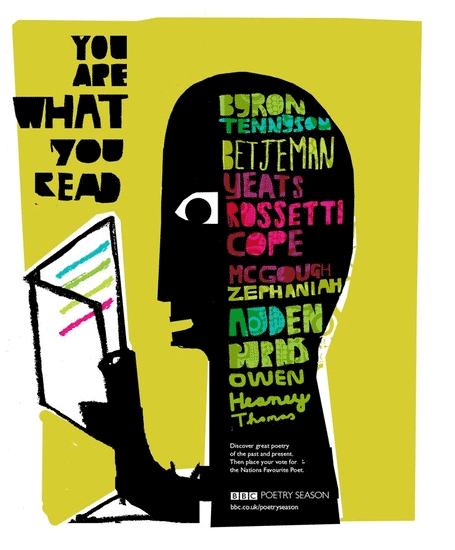
I did a series of 10 postcards and a poster for the 2009 BBC Poetry Season. Each postcard was based on a classic British or Irish poem to promote the Poetry Season.

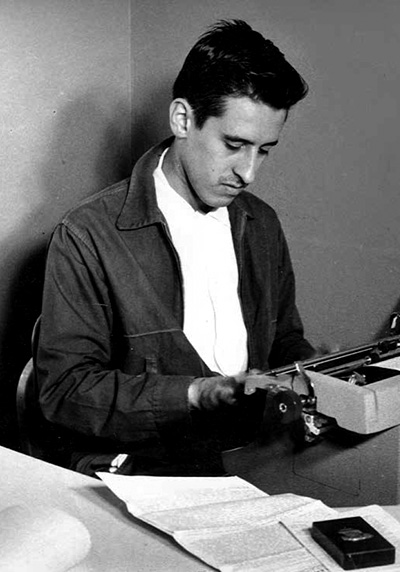 Roque Dalton | courtesy of Transparencia Activa
 photo © Association des Amis de Jean Mariotti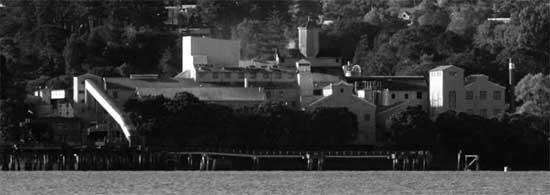
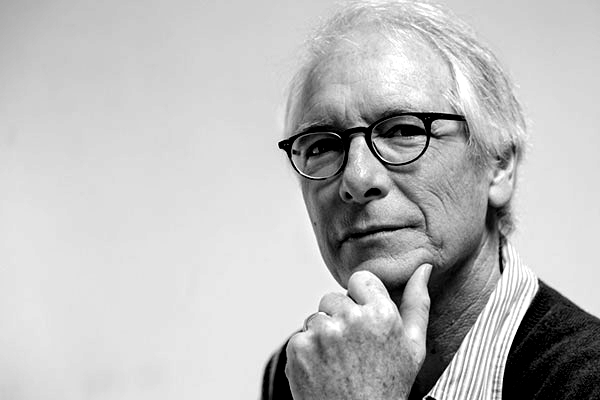 Photo by Florence Minnis