Review Short: Audacious 1, Benjamin Solah, ed.

Audacious 1 by Benjamin Solah
Melbourne Spoken Word, 2015

Coming straight at your inner eardrums is the debut volume of Audacious, the audio journal of Melbourne Spoken Word. Like a night at Passionate Tongues, or an afternoon at the Dan, this collection presents a variety of poets at different levels of artistic development. Some are seasoned and in full flight, while others are up-and-comers still finding their voice. In this volume at least, Audacious offers more of the latter. Continue reading

Posted in BOOK REVIEWS | Tagged ,

Review Short: Louis Armand’s East Broadway Rundown and The Rube Goldberg Variations

East Broadway Rundown by Louis Armand
Vlak Records, 2015

The Rube Goldberg Variations by Louis Armand
Vlak Records, 2015

Louis Armand’s poetry is unbending in its loyalty to the aesthetic and moral responsibilities of the avant-garde. In these new chapbooks, both published by Vlak Records, Armand mines culture for its buried messages, showing how fraught with uncertain track is any search for truth and authenticity in a world made knowable by language.

Continue reading

Posted in BOOK REVIEWS | Tagged ,

Submission to Cordite 55: FUTURE MACHINES

Future Machines
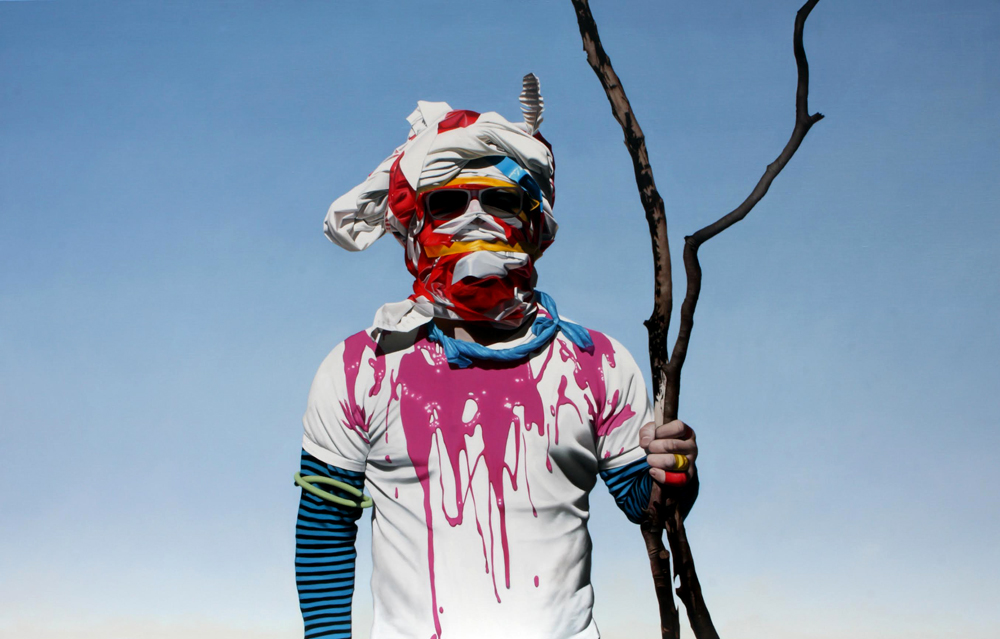
Image by Joshua Comyn

Poetry for Cordite 55: FUTURE MACHINES is guest-edited by Bella Li.

To conceive of future machines is to imagine what haunts the boundary, always fluid, always negotiated, between the possible and impossible. To figure the distance, real or perceived, blurred or distinct, between ‘now’ and ‘later’, between the machine and its others; to invent species of machines – human, poetic, desiring, infernal – that are yet to be. Verne, Asimov, Wells; automatons, androids, fictions; narratives, devices, DeLoreans – dream, design and send your future machines.


Please submit only once, with a maximum of three (3) poems (visual and concrete welcome) or works of microfiction (500 words maximum) in one (1) document … but first, please read the submission guidelines.

Posted in GUNCOTTON | Tagged ,

Matthew Hall Reviews Writing Australian Unsettlement

Writing Australian Unsettlement by Michael Farrell
Palgrave, 2015

In his essay on Charles Olson, ‘Open Field Poetics and the Politics of Movement’, David Herd bridges the geopolitical gulf between Hannah Arendt’s conception of ‘statelessness’ and Giorgio Agamben’s ongoing inquiry into the state of exception, biopolitics and nationhood. Herd contends that:

… [f]or complex and evolving reasons, the modern political state has become, by the early part of the Twentieth Century, synonymous with the idea of nation. The consequence of this was that citizenship came to be identified with national affiliation. Simply put, to fall outside of one national jurisdiction was to fall outside of all jurisdictions.

Continue reading

Posted in BOOK REVIEWS | Tagged , , , ,

Review Short: Linda Weste’s Nothing Sacred

Nothing Sacred by Linda Weste
Australian Scholarly Publishing, 2015

Linda Weste’s Nothing Sacred provides an eclectic, erotic and sometimes profane insight into the private and public lives of Republican Rome. The combination of historicity with sensory poetics provides an immersive, visceral reading experience. And there is immediacy about the submersion in place – the reader is there from the first line, walking through the ‘peat bog haze’ and ‘streamers of blood’ of the eternal city.

Continue reading

Posted in BOOK REVIEWS | Tagged ,

Review Short: Alan Loney’s conStellations

conStellations by Alan Loney
work & tumble, 2015

The value of information is in its organisation. Twin impulses to present and re-present data (words, text, images, worldly phenomena) inform Alan Loney’s recent chapbook conStellations, from work & tumble press.

Continue reading

Posted in BOOK REVIEWS | Tagged , ,

Review Short: Ken Bolton’s London Journal / London Poem

London Journal / London Poem by Ken Bolton
Vagabond Press, 2015

Readers of contemporary Australian poetry will most likely need no introduction to the work of Adelaide-based Ken Bolton. In a career extending back to Four Poems (1977), Bolton has established a distinctively discursive poetry, one that weaves observations of the poet’s everyday environment with musings on art, culture, and society more generally. Continue reading

Posted in BOOK REVIEWS | Tagged ,

THE END Editorial

Pam Brown


I think I was thinking of a big concept like ‘The End Times’ when I made up a theme for poems for this issue of Cordite Poetry Review. There is general consensus that the times we’re living in are endtimes. A few examples of thousands of cultural works on the theme could start with Dada at the beginning of last century, Maurice Blanchot and Samuel Beckett somewhere in the middle, Jean Baudrillard later on, Susan Buck-Morss, Slavoj Zizek – Living in the End Times, Esther Leslie’s Derelicts: Thought Worms from the Wreckage and Christine Brooke-Rose’s last work – a dark & comical exploration of the lead up to an elderly death, Life, End of. I could list countless speculative and dire investigations and reports into the catastrophes of climate change, permanent war and semio-capital’s rampant venality, land grabs, financial and social injustices. Basically, it’s a bit of a broken world.

But then, who am I to tackle a grand theme? It would sound pretty precious. In my own poetry I’m more likely to zero in on symptoms and effects. However, as someone who lost her faith in nihilism a little while ago, optimistically (and always also sceptically) I undertook the task.

Predictably, having settled on THE END as a theme, I started to notice all kinds of endings everywhere around me. There was a Samuel Beckett symposium at Western Sydney University titled The Endlessness of Ending. Of course, Beckett is exemplary when it comes to THE END, also the title of a theatre monologue adapted from his story of a dying man, that I saw Robert Menzies perform, very shrewdly, at Belvoir St Theatre in Sydney a few years ago. And then there’s Endgame, Krapp’s Last Tape, and myriad other endings in Beckett’s extraordinary work.

Recently I started watching yet-another-final-episode of the once-fantastic now-risible TV sci-fi show Doctor Who – you know the one, does the Doctor actually die this time? – in which the Doc pronounces that they’re ‘living in a reality bubble at the end of time itself’ and that they are at ‘the end of everything’ and so on relentlessly reciting ‘endings’ in a saccharine longueur. Fairly soon I found myself picking the iPad up from the couch and beginning to scroll through some other aimless thing.

Then I noticed an article on the recent Venice Biennale illustrated with Fabio Mauri’s painting of the final frame of a TV drama – ‘THE END’. During my time reading the poems I was also very conscious of and on the lookout for the wonderful lettering on ‘THE END’ in many cinema titles, especially in 1940’s film noir and cineuropa movies.

I remembered the graphics of the last frame of Loony Toons’ animations – ‘That’s all folks!’ Movie endings are endless. Alongside choosing the poems for this issue, I invited film critic Adrian Martin to contribute an essay. Then soon after his wonderful essay Last Concern arrived, I noticed that one of Adrian’s recent book titles is Last Day Every Day. Perfect.

Anyway, we’ve all been here before – there are millions of approaches to THE END. Wherever anything begins there is some kind of end and as Beckett wrote in Endgame, ‘The end is the beginning and yet you go on’. So it goes – on and on – so far …

The editorial zone is not always kind or fair in spite of our best intentions. I’m complicit in a couple of unfortunate aspects of it. I regret the constraint that meant only about 40 local poems of around 1000 could be chosen for publication. That comes down to the familiar and unjust paucity of literary funding. The other constraint was to read blind, so if anyone is feeling miffed for not having their poem in the issue I apologise – even though I have no idea who you are (the exception being two poets whose work I know and like who’ve told me that I sent their poems back). Enough of my waffling – as Ludwig Wittgenstein said ‘Explanations come to an end somewhere’. This is where.

I am pleased to present this particular ‘various field’ (thanks James Schuyler). Thanks to Cordite Poetry Review editor, Kent MacCarter, for the opportunity to do so, thanks to everyone who sent work in and may you, dear readers, enjoy the result …

Posted in ESSAYS | Tagged

Last Concern


Image courtesy of Myrna Suarez / Simon & Schuster

In cinema, isn’t death a synonym for ending?
–Serge Grünberg, David Cronenberg (1)

‘It’s over. You’re finished.’ And then, after a pause: ‘Goodbye’. These are the last five words uttered by Christopher Walken in the concluding scene of The Dead Zone (David Cronenberg, 1983). His character, Johnny Smith, has been tormented, up until this point, by an unusual gift that has made him the ostracised loner within his community: if he grips someone’s hand, he can foresee the moment of their death. If they take his advice, they can alter this destiny; but many, considering Johnny to be a nut or a freak, ignore it and suffer the consequence.

Continue reading

Posted in ESSAYS | Tagged , , , , ,

The Huntsman of the Rubáiyat: J H Prynne and Peter Henry Lepus Go to Abu Ghraib

Minor cultures are not only represented by poetry written in response to state violence. With each such poetic utterance, they are maintained as agential entities. Michael Richardson, in his forthcoming book, Gestures of Testimony: Torture, Trauma, and Affect in Literature (Bloomsbury, 2016) tracks various examples of these linguistic productions, investigating in part ‘how poetry can resist power even from within almost complete subjection.’ Continue reading

Posted in ESSAYS | Tagged , , , ,

The end is in the beginning and yet you go on: Samuel Beckett’s Lost Album

Café Beaurepaire resides snugly in a tree-lined cul-de-sac on the Rue de la Bûcherie in the fifth arrondissement. If not my favourite brasserie in Paris it is certainly up there, especially for its postcard glimpse of the Île-de-France, framed almost self-consciously through the horse-chestnut trees. On this particular afternoon I was less immersed in Parisian shadows and the frivolous play of light on dappled leaves than completely distracted by the object on the table before me – a long-playing record. This text is an account of the album’s discovery as well as a critical, archival and forensic study of the record and its cover art.

Continue reading

Posted in ESSAYS | Tagged , , , , ,

Natural Selection: Ecological Postcolonialism as Bearing on Place

For my son, Aidan, on his graduation with a PhD in biomolecular ecology.

Australian poetry reminds us that we cannot encounter the natural world except by cultural means. As Tom Griffiths writes, the idea of the natural world as a ‘cultural landscape acknowledges that an area is often the product of an intense interaction between nature and various phases of human habitation, and that natural places are not, as some ecological viewpoints suggest, destined to exist as climax communities or systems untouched by human hands’ (1996, p 277). Continue reading

Posted in ESSAYS | Tagged , , , , , , , , , , , , , , , , , , ,

Divergent Culture, Historical Influence: 11 Works by Abdul-Rahman Abdullah


Abdul-Rahman Abdullah | In the name (ed 3) (2015) | Tinted silicone, steel gambrel, galvanised chain | 140 x 65 x 25cm

My name is Abdul-Rahman Abdullah. I am a West Australian artist working primarily in sculpture and installation. My practice draws on the storytelling capacity of animal archetypes, familial space and the subjective nature of memory to explore and define personal experiences of cultural identity.

Continue reading

Posted in ARTWORKS | Tagged

This is Not a Poetry Review: Self-publishing 101

Romy Durrant, Love Poems. scribd.com, 2015

Cathoel Jorss, comb the sky with satellites, it’s still a wilderness. Australia: House of Lovers, 2014
(limited first edition of 100, reprinting 2015)

Justin Lowe, Nightswim. Katoomba: Bluepepper, 2014

Juan Garrido-Salgado, The Two Rivers of Granada Descend from the Snow to the Wheat.
Adelaide: Monje Califa, 2014 (limited edition of 100)


Self-publishing has never been easier to do than now, yet it’s often spoken about in terms of ‘last resorts’ or ‘building up’ to something. Some people do it shamelessly, others create publishing houses to mitigate the ‘stigma’. I’ve been sent four books to examine as case-studies, each of which use completely different styles of self-publishing.

I’m not a poet, nor a commercial publisher. Therefore, there are things I can’t do, even if I research them: I can’t really talk about perceptions of stigma from within the poetry community, or spout statistics on how many self-published poets find their way to ‘real’ publishing. I can’t tell you whether the poems that I have in front of me are ‘good’ or ‘bad’ writing, although I know if something is awful – and none of them are that.

I am a mix of designer, printer and artist, and I have spent most of my creative life in the company of poetry books, but on a different spectrum: zines, artist’s books and fine press books. All of which are, let’s face it, self-publishing formats. So what I propose to do is examine these four books through that lens, do some ‘thick description’, and see what emerges. First, though, I’d like to show you why self-publishing is particularly easy now, from a material/technological point of view.

Access to the making

Independent publishing has always been possible throughout history, but until the last twenty years or so, it has depended upon commercial relationships with those who own the means of production. The means of production were large machines, expensive to run and demanding to maintain, especially in terms of space and energy; machines that were physically dangerous, laborious to use, dust-catching, heavy and hard to move, and increasingly technical. The machines are still there – someone has to print on demand – but we don’t easily see them because that involves international travel to Asia. Private presses (those not beholden to commercial demands) were usually owned by those who had enough money to obtain and house some of the prettier pieces of equipment and the leisure to use it. Innovative poets and artists needed to befriend a printer, commercial or otherwise, and persuade them to use their skills interestingly (this is still often the case).

The first big change that gave poets and artists the power to fully realise their ideas was not part of the ‘press’ side of production, but in the ‘pre-press’ process, thanks to photography. The development of photographic reproduction in the very early part of the twentieth century allowed people enormous liberty with page space. Initially it was expensive, as text would still have to be set and printed with letterpress and then cut and pasted into interesting shapes before photographing and printing (this is one of the reasons why collage, using found text, was so exciting for the Dadaists et al). A few decades later, however, printing technology had advanced to the point where anyone could prepare text (‘artwork’) for the press using hand-drawn graphic methods, cut-and-paste text from typewriters and dry transfer lettering like Letraset, and it could be printed reasonably affordably (See Burke 1980). That is, if you could afford the offset printing process, which required a minimum of 500 copies and got exponentially cheaper the more copies you printed (which is why everyone had boxes and boxes of unsold books to store under beds and in broom cupboards). Later, ‘camera-ready copy’ was available to anyone with a personal computer and graphic software, and desktop publishing (in theory) allowed self-publishing to look much more professional.

Alongside this commercial publishing activity was the alternative stream of publishing, the kind that wanted or needed to sidestep the large machines. William Blake is one of the most famous self-publishers of history: he wanted to ‘cut his production costs, to be free of publishers and printers’, so he engraved his poems – backwards – onto his etching plates, incorporating them with his images and printing the plates as book pages (Oppen & Lyssiotis, 13). Not only is he a self-published poet, but he has been claimed as one of the first artists’ book makers, and here we first encounter a slippage between poetry publishing and artists’ books. The next one, after Blake, is Mallarmé, who knew enough about the printing processes of his time (1890s) to know how far he could push the process, which indicates that he had at least a working relationship with a printer.

Cheap and accessible methods of textual reproduction have proliferated over the last century: typewriters (especially with carbon paper), screen-printing, solvent copiers like Gestetner machines, photocopiers, risographs, and then desktop laser-printers and inkjet printers. Many of these are being revived by twenty-somethings keen to make something material without wanting to invest in large machines, or if they have committed to the big equipment (like Big Fag Press, in Sydney), they work co-operatively. Bindings, another expensive and technical consideration, were often rudimentary: staples, string, clips, coils.

The invention of the desktop computer and printer, and then a blip further, the development of the internet, is the biggest publishing revolution since the invention of the printing press. Suddenly there was infinite space, and very few overheads. Send a file by email and print one book at a time, via digital publishing or print on demand. But — why ‘print’, when you can simply jump to ‘publish’? Websites: blogs, online journals, digital archives, all threatening to kill the material book. Yet the book has refused to lay down and die, and poets as well as creative publishers like me are part of the reason why.

It has never been easier to self-publish across every genre of visual/textual expression than right now. Design, production, marketing, commerce: everything has dedicated software and most parts of the world can easily access your work if they know how to find it. So why does the notion of self-publishing make people wince?

Self-publishing, as I mentioned earlier, is an accepted form of artistic publishing. This is thanks to the persistence of the attitude that unique or limited output is of greater value than something produced in multiple – propagated, says Pierre Bourdieu, by the ‘cultural bankers’ (77). The opposite seems to be valued by poets: the dream is a wide audience, lots of good, serious reviews and ultimately – perhaps for one more generation – a large hard-copy print-run by a reputable publisher. Even when the poetry is conceptual, immaterial, gleaned from trawling the internet, it still often manages to end up as a hard copy book, because that matters.

Unprinted & online

For one more generation, perhaps? Let’s look at the first of my four examples: a downloadable PDF by Romy Durrant called Love Poems. Durrant, from her web presence, is a young savvy feminist student whose online username is @miseryclit. Her prolific output includes visual art as well as writing, and she is one of the founder/editors of a new online publishing platform called Alien She Zine (‘for women and non-binary artists and writers (but not exclusively).’ Calling the resolutely immaterial site a ‘zine’ is almost a manifesto, since zines have been the most lo-fi, low-tech, material vehicle for self-publishing since at least the 1950s.

Love Poems is downloadable for free from scribd.com and is a simple PDF file. Judging from Durrant’s other work, I supposed the title to be supremely cynical. It is cynical, but not supremely, because it turned out to be a tale of being lost and then found, or of seeing too much to be innocent, but still hoping for happy endings. The darkly saccharine photo-collage images reinforce the words like light bulbs switching on, then off as the file moves down.

What interests me here is the lack of trying to make this file unlike a book. The layout is quite conservative, despite the punkish use of lowercase text, and while I think it looks elegantly minimal, I suspect that it is instead insouciantly indifferent. It is hard to set poetry in any kind of dynamic layout file – the kind that devices like Kindles use – because much poetry is not dynamic, but rather completely inflexible thanks to its carefully composed and spacialised lineation. Thus most online poetry is in a static presentation format: PDFs, webpages, photographs. There are technicians working on the problem, but the dynamic/fixed line binary is pretty hard to overcome. Durrant’s PDF is seventeen ‘pages’ – actually, sixteen pages and a cover, in which it conforms to the print convention of pages needing to be divisible by four (because a sheet of paper, folded, has four reading sides). So if you tried to print it out as a booklet, it would actually make a slim chapbook. There is no ISBN, so she is relying on the/her internet community for distribution. The question is (and Durrant is welcome to answer it in the comments): would she prefer to publish in hard copy if the opportunity arose? Is that the end game? Or is broadening the exposure to her online work enough? She is obviously ambitious; sending her work into this publication shows that she takes herself seriously as a writer. The last line of this self-published book looks right back at the reader and says, ‘I found you.’

Posted in ESSAYS | Tagged , , , ,

(Self)Translation and the Poetry of the ‘In-between’

The subject and practice of translation has long been a feature of my poetry. It is a way of enacting bilingualism; the splitting and doubling of words, ideas, images and meanings that comes about in the processes of translation reflects my identity as someone who is in constant movement between cultures, split and doubled by my twin allegiances to different languages and places. In particular, I am interested in exploring my own practice of self-translation, to more fully understand the relationship between my poetic practice of writing across English and Italian and my subjectivity.

Continue reading

Posted in ESSAYS, SCHOLARLY | Tagged , , , , , , , , , ,

Interview with Laurie Duggan (Ella O’Keefe edit)

Image courtesy of Australian Poetry Library

Hazel de Berg’s recordings take place in the homes or work spaces of the subjects rather than a recording studio. This allows something of these places into the recording whether birdsong, traffic or an r&b song playing in the background. In the recordings, de Berg remains enigmatic, the ghostly presence operating the machine.

Interview with Laurie Duggan (O’Keefe edit)

Recorded on 25 June 1980 by Hazel de Berg.
2016 edit by Ella O’Keefe

‘Laurie Duggan interviewed by Hazel de Berg in the Hazel de Berg collection’
Courtesy of the National Library of Australia, TRC 1/1168
Special acknowledgement to Duncan Felton, NLA Oral History & Folklore Branch

Posted in INTERVIEWS | Tagged , ,

Danielle Collobert’s Survie


Image courtesy of Françoise Morvan

Danielle Collobert’s Survie is a sequence of six sonnetoid poems written and published in 1978 shortly before her suicide. The title is ironic: ‘survie’ means either the state of remaining alive after an event or in an environment that is normally fatal. As with ‘survival’ in English, the meaning of the term is commonly extended to mean a precarious living situation. Continue reading

Posted in ESSAYS, TRANSLATIONS | Tagged ,

Heavenly Emporium of Benevolent Knowledge


Image of Adrián Villar-Rojas’s ‘The Most Beautiful of All Mothers’ by Kubra Karacizmeli

When we consider the Heavenly Emporium of Benevolent Knowledge, we inevitably find ourselves discussing not the one but the many: the various extant editions of the compendium, the versions lost to fire and flood and strife over the centuries, the diverse and sometimes contradictory volumes that have pretended to the title at one time or another. Continue reading

Posted in CHAPBOOKS | Tagged , ,

Shy nag (a code opera): ACT II

The libretto Shy nag (a code opera): Act II was created by Sonny Rae Tempest and Chris Funkhouser, using a process similar process to the one used to compose ‘Exit Ducky’, outlined in an essay ‘Picture Becomes Text, Becomes Writing: Software as Interlocutor’, published in Cordite Poetry Review 40.1: INTERLOCUTOR. Shy nag’s libretto started by opening the image file of an UnderAcademy College course logo (see below) as a Chinese character-encoded text file.

The resultant text became English via Google Translate, and was subsequently processed and filtered through Word spell-check. Since the code is lengthy, over fifty pages, the output was large. A perpetually prismatic text, comprised of choices made among thousands of possible options the software provided, results. After the libretto was composed, Tempest translated the text into sound by utilising the P22 Music Text Composition Generator. The resultant MIDI file was opened with Acid Pro 3 DAW (Digital Audio Workshop) software. He created three identical audio tracks (double bass, acoustic guitar, piano), manually transposing all notes into the appropriate range (per instrument) and into the key of D major. This process results in a score that is more than five hours long, the first seventy minutes of which was excerpted for performance. A second audio track, compressing the whole sound file produced by the code to seventy minutes, is also layered into the performance mix. To make the projected imagery, the original hexidecimal code was broken into 24-bit sections to act as the hex code for HTML web colours. An HTML file was then created to consecutively fade from one color to the next, based on that partitioned hex, using JavaScript. Each colour block is displayed in text above its colour field.

In February 2015, a first staged reading of Shy nag was produced in Newark by students and faculty of the Rutgers-NJIT Theatre Department (Louis Wells, Brian O’Mahoney, Daniel Ovalle, Kassandra Perez, Eric Holzer, Antonio Johnson, Allison Mitchell, Olivia Duho, Darian Capellan, Sindy Sanchez); a second staging (Act I) occurred in August 2015, at the Electronic Literature Organization Festival in Bergen, Norway (Maria Aladren, Sandy Baldwin, Kathi Inman Berens, Natalia Fedorova, Aleatory Funkhouser, Christopher Funkhouser, Fluorish Klink, Jeneen Naji, Álvaro Seiça, Louis Wells). Act I is published in VLAK 5 (Czech Republic: LITTERARIA PRAGENSIA 2015).

For further information, including links to documentation, an essay on the process of producing the work, and open-sourced materials used to prepare Shy nag.

Posted in CHAPBOOKS | Tagged ,

6 Poems from Nachoem Wijnberg’s Divan of Ghalib


Image by Alessandra Palmigiano

Since being shortlisted for the Dutch prize for the best poetic debut of 1989, Nachoem M Wijnberg has won a series of awards in both Belgium and the Netherlands, including the highly prestigious 2009 VSB Prize for the Netherlands’ best book of poetry.

Wijnberg is known for giving each of his poetry collections a distinct identity, both stylistically and in terms of content, and the poems reproduced here are drawn from his Divan of Ghalib, which was published in Dutch in 2009 and is due out in a complete English translation in May 2016 (White Pine Press, Buffalo).

Continue reading

Posted in TRANSLATIONS | Tagged ,

The End

If you’ve run out of things to say you may need better ideas. Having left the city in a wheeled conveyance. It was one of several periods in a life largely ruled by hand-me-down leopard print. Lacking the whirl and swoop of her language. Airless sunset on the interstate. Advancing into a backyard filled with small white lights. I’d prefer it if timebanks were called laborbanks or skillbanks. Cut off by the tour bus. You haven’t walked down this street for two months & now half the shops are new. No more cookies for breakfast. To always be working & never be finished. Electrical hum & air conditioner hiss. Becca says it’s because we’re living on the internet in real time. I knew I shouldn’t be so scandalized. ALWAYS ALREADY PART OF THE PROBLEM. Itching under the skin of my arms. His mother could as easily have been one of my aunts. The erotic privacy of adolescence. Because in Coleridge it’s all storms and feelings. The pleasure of telling tales on a mutually-reviled acquaintance. Parental fragility. I am a professional & therefore I did not respond with lmgtfy.com. Was poetry ever successfully an art of seduction. I’m speaking historically. How did I give off the scent of caring person & was it too late to change. What do you believe available for your poetry. Kings and Queens. I know I cannot properly see my own biases. As though the page were a container to be filled with the political speech of the moment. But really I came for the couch and the enormous glass of wine. Just another night crying on the subway. I’ve identified a large plate-glass window as a precondition for this afternoon.

Posted in THE END | Tagged

The End

I believed I had reasons aside from nostalgia. Kept it cunningly concealed. Changing the water in which the beans are soaking. Just add salt. Waking to the sound of the police chopper. How did you learn to believe you would survive your heartbreak. Bedroom painted womb-red. Champagne wishes & real estate dreams. What morning means in your home. First comes love then comes marriage. Never saw the face of the guy behind us who said if you love me you’ll lose weight. Great relief of a day indoors. I am careful not to bump the perpetually sore bone while lifting my feet onto the couch. Like the time we heard gunshots nearby and froze in the hallway with our hands to the walls. An argument on television in the other room. The singer didn’t know yet about the years of darkness ahead. They told me about the sound the tornado made as it razed the neighboring block. Sound of high heels in the hallway. Getting used to the tightness of underused limbs. The pain of a retrospectively blessed moment. Why did I find the YOU MAKE ME postcard so romantic. Cowering in the hall closet. I believed all spaceships sounded the same. Fight or flight. Giving a child an adult name as an optimistic gesture toward the future. The plant has outgrown its pot. The plan is miles behind us. Portrait of the Artist as Overtaxed Slob. The sentences come in small clusters punctuated by periods of waiting. How to multi-task. Excitement of driving to the museum. First meal of the fall cooked in a huge orange pot. Climbing out of the shower I say I told you so silently to myself.

Posted in THE END | Tagged

The End

We thought we could crystallize caring. Watching the umbrellas going by in the street. Sarah calls this studio time although all we’re really doing is thinking and making notes. I was worried about what I could no longer notice. All the beer distributors on their laptops at the counter. I made a note to watch for epic similes. But what if we really do experience thankfulness. I can now see the tree as a storytelling device. Rituals exist because sheer will isn’t enough. Because sheer love isn’t enough. The pop song I remember from 1998. How to see the things that have become invisible to you. We take each ornament from the box. From its bunched tissue paper. Every house a container for objects awaiting their own dissolution. Today I empty the refrigerator and smell each item before replacing it. Attempting to account for the hours we spend under man-made lights. We wanted to believe in the moral uprightness of bedtime. Your complicated scent-distribution machine. Quotation marks around planning. Wanting to lift and arrange the towering sadnesses contained in the season. I write something about the shortening days and the towering workload. But do you have someone to talk to. I think the phrase I used was gently suggest. When the volunteer shift ended without warning. The profound relief of having a place where I was supposed to be in these hours. It’s easy to send an email but sometimes this task takes you days. Did you want to see how mortal we are. Left alone to watch birds fly over a neighboring roof. I made a note to watch for images of height and depth. You make a list in order to cross things off it.

Posted in THE END | Tagged

The End

Record sleeves warped and covered in mold. Train train ferry to the small hotel. How to step away from your life and seamlessly reenter. Stay up all night before the flight. What your body does and what you will. I think walking into a cloud is a name for love. You had been at the bottom of a fjord for days. Feeling diminished by what you share with strangers. What I meant by domestic was native to the region. I sighted the path across the meadow. I was in college when this novel was published & therefore recognize its world as one I wanted but could not imagine. A small wooden sign. Scenes of the movie set in years when I knew those subcultures. As though photography had the witchy powers anthropologists claimed. The sadness of discovering adult life was not significantly different from what preceded it. Had walking become a way of seeing or a form of speech. Writing from the coast of her loneliness within marriage. Who is and is not an intellectual. How to lock up your brilliance in heterosexual commitment. I mean really it’s all body body body around here. Squinting at my reflection to check skirt length. I was on the couch before the sun came up reading their statistics. How we had traveled through time and returned weeks later. The man’s elbow resting on my arm & gut. All the brilliant men and their women at a dinner party in Paris decades ago. What does research look like. The tearing sound when something pries loose. I wake up early and write this poem without coffee or tea.

Posted in THE END | Tagged