from origin

Marking the paths again and again and feeling for the wetness as the ink keeps bleeding and tearing. The pieces of oblivion flaking off in chunks. And for what. For nothing. So the meat lies inert in the mouth. The tongue keeps finding its purchase in stabbing. Tracing the path of trying to scramble up to the rock with meat still in the mouth. Swallowing down the mixture. Trying to bear down around the blow back. Still jumbling around at the banks darting the ache of ought. The not nothingness pulling at the joints jabbing into the hinge of where something begins to form like a mammal. So lying there, dragged and tussled, snuffling at the fissures. The cells dividing just frame by frame. Hatching one by one. Notice where the lines can’t form into gills where the breath still hitches into silence. Scratching a scratch. Hobbling across the deafened herds with nothing but an extreme case of usefulness. Tucked into the fecund uneven in the bunches that squirm. Not nothing in the in the eventual flap of skin. Nothing like the suction. Just sucking up the dirt like mud, rounding up the sticks for a feathered tempest for nothing.


Feeling the mammal rioting away with no plot to locate it. Some here. Some there. To hold it in the soft part of the palm like a squirming fetid thing. Not nothing. A lid half closed. A science of forgetting. Shoaled together towards the mud. All the tentacles left on the shoreline. Not touching. Hesitant. How the appendages yearn towards motion. How the grasping goes. This tendency towards dismemberment a mutation to hold in the ligature. The very least that nature has to offer. Hefting up the body and back again. Squirming like prey. Charting a change in the membranes. Between nothing and nothing. A kind of twitch of hesitancy. A kind of trick of the light. Remembering to remember when swarms blighted the sour taste of the hot and rapid discharge of an easy target. Not nothing that’s a commodity of an gutting in the grimace. One here. One there. Not nothing. Pecked around the waste.


Posted in 73: BAY AREA | Tagged

from We Are Nothing and So Can You

Diagonally, by love and hate
in equal parts
propelled, the mob returns
like a chorus
the cops keep getting
hit with, in the head
brick and bottle tra la la
of fuck you, pig and die, pig, die

the mob, torn together
by each temporizing, tangled
moment in its series
returning along the old animal tracks
of total science to mark with metaphoric
shit and piss the places where the earth
parts ways with each reason for enduring:
its also-rans, its would-have-beens
crashing into the shatterproof
curves of the cell wall, behind which
the makers of measure and rule
shelter in disordered nomenclature,
recounting in pantomime
our unfortunate tenure
as minor villains among the plant life.

Just then, you feel the scare quotes
C-clamp your skull, interatomic
emoticons spazzing out intransitively
in the middle distance where demoralized
shifters replace all sense of the past
with continuously updated commentary
from the compliantly defiant crowds
who compare their purchases
with the bland openness of experience.

They will never be a real mob
now that nature has been democratized
by these marvelous poisons
our rounded-up truants
leave dusted upon the rocks and trees.
As for the rest of us, we learn
something important about ourselves
watching from the loading dock
as the mushroom cloud
announces the end of another season—
e.g., that each riot really is
an assemblage of other riots
washed up on the boulevards,
from whose faded corpses
one dresses and arms one’s comrades
the total inadequacy of which
as equipment for the task at hand
traces out in negative
the seat perilous of the party historical
the poetry of the future
whose sweet new sounds
will fill with meaning slowly
while the seas rise.

Can software destroy hardware?
Can a class, acting strictly as
a class, abolish all classes
as the answer to a badly phrased
question might by sheer force of obviousness
cause the questioner to rise
blankly and walk into the ocean,
while the black flags cut from the robes
of executed magistrates
wave non-semaphorically,
where hope ends and history starts.

Posted in 73: BAY AREA | Tagged

From The Compleat Purge: Volume I

Last Will & Testament of Trisha Low

I, Trisha Low of the City of New York, State of New York, USA,
declare that this is my Last Will & Testament.


Article I
Preliminary Declarations

It’s enough to die of spite.

xoxo,
trisha.


General Provisions

If any beneficiary or beneficiaries of this Will shall contest the Will, or in any manner
attempt to have it or any trust or beneficial interest created by it declared invalid,
such person or persons shall receive no benefits from or interests under this Will and
my Will shall be carried out as if such person or persons had pre-deceased me.

I have entered neither into a contract to make wills nor into a contract not to revoke
wills. Any similarity of the provisions of my Will to the provisions of the will of my
witnesses or any other person, if any, executed on the same or on different dates than my
Will, shall not be construed of as evidence of such a contract.

Unless specifically set forth in writing and acknowledged by the donee thereof, of any
gift I have made or will make during my lifetime shall not be treated as satisfaction, in
whole or in part, of any device or bequest in my Will.

On this August 16th, 2012 in the City of New York, State of New York, I hereby sign this
document and declare it to be my last will.

Posted in 73: BAY AREA | Tagged

two excerpts from INFRA, an afterword

10.5.14

equivalence is not the same as existence
or the same as living or you can go now
flushed out from the shrubbery
to a surface whose angle is
moving toward you
& your dying
but the moths are the moths
eating wool blankets & flying round the
desk light one & the same ones
nil igitur mors est ad nos
tenderly to
escort the walrus herd in flight a lapse

to walk facing into a spider’s
web along the garden path & left there
the spider astride the shipwreck
of what I can’t avoid
that being oneself can’t be
being self possessor of oneself who can’t
own seeds of self whose being who
oneself now can’t mean one

10.26.14

I buy flowers two bunches
Norma says she eats chocolate
for those ones who can’t any
longer I translate pastor
cum traheret
for the shame
of having horrible things happen
forsaking this vividness it costs
too much for tenderly living

no stars no moon it’s
been two weeks & she’s
still traveling she feels
more away more distant
redundant & its precious
juice drained from a ciborium
it’s her syntax of pattern
& prayer that’s hocus pocus
hoc est corpus but not
now royal for raving
for virus

she shepherds her
across the waves in
her idea boat in a song
as her atmosphere of promise
an apostrophe to future as
I stumble into this where
atoms split I rescue
objects it’s my duty I
leave things as they are as
if to be summoned I remind
myself that she can’t

to conclude Alice performed
her ritual of outrage a ceremony
for those who no longer who hungered
she didn’t remember
the drawing she’d drawn of an owl
but only the owl’s feather
Beth sent her that the drawing
in reply was sent for

Posted in 73: BAY AREA | Tagged

Political Postscript

I turn on the radio before I begin to see. I hear the call of the political, it is everywhere.

Scanning for the moon and seeing only stars, expecting that thin cupping shape a bit swollen now, and earlier the sky clear enough to see the other side. So later I just looked for the other side and saw only stars among the streetlights.

Now the mornings are cold. This is a lyric poem whose fantasy is communism and space travel.

Which is why I love it when a bright star turns out to be plane or satellite. The moon is soft clay, made of dust, hair, crunched leaves, the underfoot. With the radio off, only the occasional trill of the garden birds lulls me awake, only the dull roar of not distant roadways, only the neighbor’s tread.

I won’t sleep on the call, it is everywhere. I only sleep now and then; my ears, always warm with meetings, my feet, twisted into these orientations.

I only fall luckily, looking up on the part of the street with dimmer street lighting, and that’s my privilege.


Posted in 73: BAY AREA | Tagged

from The Totality Cantos [15I+50H]

            Amass pessimistic concrete innocent economy bits
  Exposed expert ego chronologies
                 Applied associated atomism harmony frames
        Dependent activity technique
          Made armed libidinal foregoing material gnostic stranglehold sketch turn
                  Consequence
    Everything added
      Clear servant withdrawal categorization metaphysics accuracy love devices
              Ritual refusal galaxies measure personal constant coitus aesthetics thought relations
            Expect kind particular difference motion model correspondent tongues
          Analytic gravitational shadow commandments trained arbitrary conscious pantheon universe mountains
                Attack modern selection doctrine existence
      Pervasive human cultural continental mandala actuality interplay unity ideas
        Trivial determinant preoccupation theory circle fruit
  Mistaken canons
              Enchanted grace denial
                  Corollary touchstone praxis thousandths
Duchy
                  Adoption coup textile construction painting historian mutations
  Demographic sublime manner camera extinction compliance facticity situation object
    Grip glaring positive political carbon century news works
            Humanist neighborhood chancellor cornerstone opportunity method
    Globe elements reconstruct coherent survey number empire bishops
                  Advance same secure economic charismatic pattern vanitas brain set
              Deciding elaborate existentialist ownership poetics technology effect
            Solar conceptual reformer spiralled separation example
          Relationship
Riots compendium before enemy scriptures
Posted in 73: BAY AREA | Tagged

Anything in Opera

“ … everyone now living is experimenting
like the beautiful River Volga
writing herself in lazy meander
fingerlets inactive
in the hay between tractors.
Then what am I by comparison
—Augean?
Where the ombuds meets the diligence
with odic effervescence
anything in opera plotwise
renders one’s own account small
one’s way
paper thin.
Nevertheless we begin.
The exact words were overturned prophylaxis
scratched onto the stable floor
by the helpless ass and his sister
whose candid retort rhymes proxy
precisely with precosity
and something ending in ‘head.’ Then
will our wooden limbs fly
with a giddy-up
from here to the last eucalyptus nut
where otherwise fog might find itself dreadful
and hanging.”

From that point on the hike was silent.

Posted in 73: BAY AREA | Tagged

To the Diamonds (after Newton)

from Glass Action

Sulphurous gold-bearing vapor
signals the presence of copper
and gold near the mountainous crown.
Diamonds found also after the glass crackt
and some of the matter (diamonds from inside where)
pressurized carbon forms the hardest substance
(Superman does this in an early episode)
as later sand sticks to hot iron and flows
Active Geothermal Systems and Gold-Mercury Deposits
And mercury is found in local fog

Recent theory of diamonds
Jupiter and Saturn awash in them
floating in liquid hydrogen-helium also
Moon sized one found in constellation Centaurus

When, back to the laboratory,
red dusty Sulphur adhering to the glass
like wax and flew most of it away
resulting in weathered masses of clay
the famous “blue ground”
held over a candle
they flew both away
in the same heat and time
(also called the sublimate)
As ejecta including diamonds
explosively placed by volatile magmas
creates beryl & red emeralds
rarer than diamonds they
form near the surface at low pressure
instead of far below at high

To make a diamond. I Newton.
Take the whitest flint thou canst get &
beat the outside & dissolve the rest as
much as thou wilt in the white water
& when it is dissolved to clear (not to a pap)
put it into a violl and stop it close
and set in warm ashes & in 12 days
it will congeal to a hard gray
stone then increase the fire that the glass
may be red hot, let it cool & take it out
it will be like flint but polish it
and thou never sawest such a
sparkling diamond or so hard

I, Newton, having been not only a witness
but also an actor of such mysteries
of Nature as the world is not worth of &
the wise men of the world do scarce believe

the Vultur being upon the mountain
crys with loud voice I am
white of black & red of citrine
An honorable stone which is hidden
In the caverns of the metals
Surely I speak the truth

Posted in 73: BAY AREA | Tagged

Want

19    

hear news anchors then the bank     clerks adopt this accent the      next popular speech tactic 
arrives inarguable       now it’s personally yours       power penetrates bodies 

says Foucault to govern from       inside mostly soundlessly        you will soon hear us all used 
as history’s peculiar       alliance built simply of      its passage plus some friction    

caused by the indefinite     articles that any new       deception drags with it did
you think words were a way to     police yourself syllables     could be tamed with your counting 

thought you’d tempt what Keats left “light-       winged” in “some melodious       plot” to befriend your failure
to be more than fugitive      in the “shadows numberless”       you can’t just form subversive     

songbirds harmonically       transmitting “thou wast not born      for death” along the latest       
fiber optics to voice an      instantaneousness that’d       kin you to others in this 

brokenness to write what you      don’t know as if lyric hears     it


Previously published in Boston Review
Posted in 73: BAY AREA | Tagged

Transbluency

The poem doesn’t care who writes it
It is waiting in the wings
A belt of ekphrastic energy circumnavigating the earth
The planet we are made of
While others struggle to be fastened down completely
By standard protocols of identity and access management
We enter an archway and just keep walking
It’s good exercise
As opposed to war, pollution, greed, hate and delusion
Though these certainly have their adherents

I is a sum total adding up to now
Subject to future operations
Add to, subtract from, multiply by, divide by
And drive by
Trailing a long history like a tail
Reaching back into the paleo
There’s no place like magma
When it comes time to relax
And think it over
But we are too busy being multiples

The fountain draws from many streams
By way of the existence of cities
Shoots its spray to the heavens
In Technicolor and black and white
This experience of seeing
Is basic to being both awake and asleep
An insertion just beneath the skin
A workshop just beneath the floor
Water beneath the surface of the earth
Darkness

Transformation is natural
Woman to man, man to woman
The long road to being
The butterfly’s return
Silence where before there was none
The poem does not let go
It arrives from the future incessantly
Ordinary fingers pick up on its cascade of plans
We can see it from here
A head with stars for eyes

To play extremely slowly
Is to caress the surface of time
To speed to abolish its domain
Cheer up my brothers and sisters
And walk in the sunshine
Our understanding is so very great
Being beyond the comprehension of a single mind
Life forms outstrip the rigorous calisthenics of calculation
Populate the ocean floor

Posted in 73: BAY AREA | Tagged

from Early Evening

1.

Red-tail eating a plump squirrel in one

of the elm trees. I’d meditated already, had

a hedge on the night but owned nothing past

that. Surrounded by crows in three of the other elms—who

had come suddenly out of nowhere—shouting Caw as he

picked that squirrel to bits; “the most common hawk in North America.” Early evening

at Penn State, still light and no leaves yet, or they’d already fallen off—

late autumn then or early spring, two thousand something, probably two thousand three.

Off the hip of Old Main—ten crows, maybe

a dozen crows. One is a gun, Charlie Brown; after

all, one is a gun—a single

composition of many parts. Shadows

lengthen, Charlie Brown.


2.

Where was I?

I remember what

happened to me and can grin about that up

to a certain point. Address could be bright

and vivid or it could just be To

Whom It May Concern, or the nickname

for a whispering daemon, orders

in his hand, Charlie Brown. You might

ask, How do you know?

I’d say, Push comes

in parts. Two is a shoe, meaning

we’ll play both sides of the net, as it were—each

has its “natural boundaries,” its neighbors and “partially

overlaying ranges.” Knowledge seems easy, but who’m I to say? Swallows

and swifts, Charlie Brown, swallows and swifts. Pull

it apart: I’m who I say, I’m in town and the night’s young—it’s all doable and I’m

at your service, Charlie Brown.


The full ten parts of this poem first appeared in Iowa Review

Posted in 73: BAY AREA | Tagged

from Globe Touching

I thought for a long time
“A Woman is Talking to Death”
referred to a woman talking if not too much
at least a lot, as in talking you to death
something I do all the time
open one sentence after another
close some later, get annoyed
when you seem distracted

in the classroom too, if it were more mixed
if I didn’t teach at a women’s college I bet
I’d be taken less seriously, the way I’ve let myself
go, powerpoint slide with too many boxes
and too many arrows between them
so that everything seems to be connected
COINTELPRO, Redstockings, Deep Throat

maybe I mixed up Judy Grahn with Pat Parker

I’m beginning to
wonder if
the tactics
of this revolution
is to
talk the enemy to death

Parker means the enemy
she means this revolution too

Judy Grahn means death
who keeps us from / our lovers
the black man she leaves on the bridge
the women she didn’t hold didn’t kiss
the one with a knife she didn’t want
to sleep with—too fat too old too ugly—

she’s writing this in 1974
this woman is a lesbian be careful

so it’s a big deal when she leaves the man
on the bridge when she writes
as I have left so many of my lovers
that he should be counted among them
in 1974, Judy Grahn knows who the enemy is

six big policemen

and who her lovers are
and the wind

could blow them all over the edge

Posted in 73: BAY AREA | Tagged

Phillip Hall Reviews Mick: A Life of Randolph Stow

Mick: A Life of Randolph Stow by Suzanne Falkiner
UWA Publishing, 2016

Suzanne Falkiner describes her aim in writing this biography of Randolph Stow as being ‘to contextualise the [literary] works within the broad arc of Stow’s life’. She notes that Stow’s desire for an ‘authorial invisibility – and an accompanying silence – extended to a desire for a chameleon-like camouflage in his personal life’. This camouflage included a retreat from Australia and ‘from the world of published books, in a gradual progression towards silence and into a richer inner landscape’. But, Falkiner shows, this ‘richer’ inner life was always plagued by depression (and one serious suicide attempt), a one-time addiction to prescription drugs, a very complicated (dependency) relationship with alcohol, a fear of madness and a failure to establish long term sexual relationships and to acknowledge and accept his sexuality.

Continue reading

Posted in BOOK REVIEWS | Tagged , ,

Andy Jackson Reviews Mary Cresswell and Natasha Dennerstein

Fish Stories by Mary Creswell
Canterbury University Press, 2015

Anatomize by Natasha Dennerstein
Norfolk Press, 2015

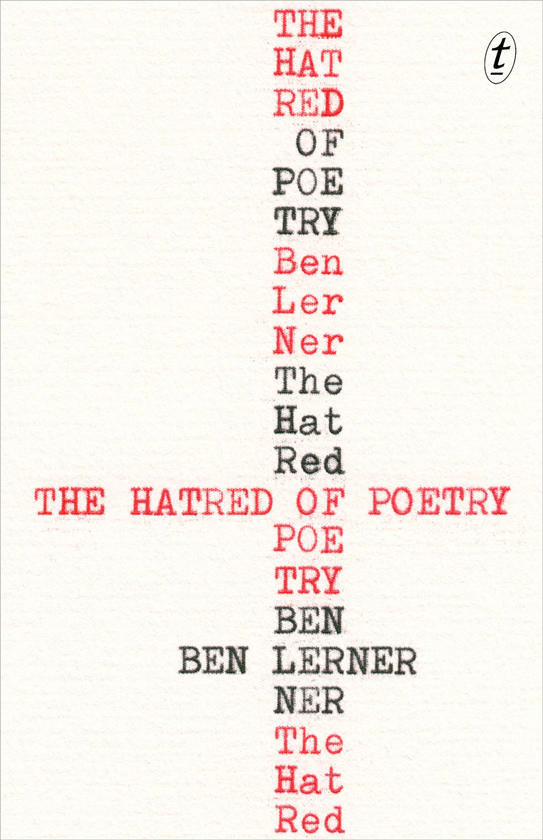
In a recent essay for the London Review of Books, Ben Lerner provocatively suggested that the reason that we dislike poetry (as Marianne Moore does in her infamous ‘Poetry’, which begins ‘I too dislike it’) is that all poems are failures. Each poem is an attempt to translate experience, research, idea or desire into language, and in that leap something is invariably lost – and, I would say, gained – because success is not the polar opposite of failure, but its way of proceeding. The success of a collection of poetry depends upon how the poet, rather than denying this inevitable ‘failure’, acknowledges and incorporates it.

Continue reading

Posted in BOOK REVIEWS | Tagged , ,

Extimate Subjects and Abject Bodies in Australian Poetry


Image by Leila Schubert

In Athens you ride a metaphor

A trip begins like translation, from one place to another,
you write from a Tel Aviv wedding, we chat on the run,
before bed we get the message. Afloat on the Dead Sea,
out on the moon, you drop a picture of tranquillity.

This wry poem by Pan Zijie addresses language and human bodies as mobilised subjects. An Australian-born Chinese poet, Zijie has written in relative obscurity since publishing his first book, Vostok. Reading his striking collection Beijing Spring, published in 2015 by Maninriver Press, I wonder why I am not familiar with his work. After some online enquiries I learn that Pan holds a master’s in creative writing from Macquarie University and that he completed a PhD on representations of Chinese masculinity in Australian literature. Continue reading

Posted in ESSAYS | Tagged , , , , , , ,

Tim Wright Reviews Lê Văn Tài, Nguyễn Tôn Hiệt & Phan Quỳnh Trâm, Edited by Nguyễn Hưng Quốc and Nhã Thuyên

Poems of Lê Văn Tài, Nguyễn Tôn Hiệt & Phan Quỳnh Trâm
Edited by Nguyễn Hưng Quốc and Nhã Thuyên
Vagabond Press Press, 2015

The academic Michael Jacklin who launched the present collection, has written that there is ‘ongoing neglect of literature produced in Australia in languages other than English,’ citing as one example the Australian-based, international journal of Vietnamese writing Tien Ve, which appears to be little known in Australian poetry circles. Continue reading

Posted in BOOK REVIEWS | Tagged , , , , ,

Michael Farrell Reviews Grant Caldwell

Reflections of a Temporary Self by Grant Caldwell
Collective Effort Press, 2015

Publishing a selected poems is an act of confidence. While no one who writes poems would want to be judged on their worst effort, a selection suggests these are the poems that – if readers must judge – the poet be judged upon. The act is, however, doubly denied by Caldwell in the qualified title, Reflections of a Temporary Self, and by the front cover author photo: is he asleep or isn’t he? The I-don’t-necessarily-give-a-fuck attitude is part of the package. I qualify the attitude because Caldwell, in producing an eighth book (consisting of poems from six previous books and new poems), clearly does give one.

Continue reading

Posted in BOOK REVIEWS | Tagged ,

Review Short: Π.O.’s Fitzroy: the biography

Grit in the Oyster

Fitzroy: the biography by Π.O.
Collective Effort Press, 2015

For Π.O., ‘Fitzroy is what you, bump into/ when you leave home’ (599). It was outside his family’s first front door after they escaped the Bonegilla migrant reception centre in 1954. After sixty years and homes in other suburbs, it is still the place that his poems gravitate towards. If anyone were to attempt writing the biography of Melbourne’s first suburb, Π.O. is the poet.

Continue reading

Posted in BOOK REVIEWS | Tagged ,

Review Short: Quinn Eades’s all the beginnings: a queer autobiography of the body

all the beginnings: a queer autobiography of the body by Quinn Eades
Tantanoola, 2016

The world can never be understood in quite the same way after having seen Eades’s ‘body’ written into these pages. It is an intimate connection, sometimes an embracing, but sometimes a turning away from that which feels too exposed but still draws the eye.

Continue reading

Posted in BOOK REVIEWS | Tagged ,

Review Short: Krissy Kneen’s Eating My Grandmother: a grief cycle

Eating My Grandmother: a grief cycle by Krissy Kneen
UQP, 2015

Eating My Grandmother is the first collection of poems by novelist and short-story writer Krissy Kneen. As its blurb announces, it is a book written out of a sense of necessity: the imperative to record and to make sense of grief. These poems are autobiographical and confessional: their ‘I’ presents itself as the voice of the poet, and a photograph of the poet’s grandmother appears after the last poem. Continue reading

Posted in BOOK REVIEWS | Tagged ,

Autumn Royal Reviews Martin Langford and Dan Disney

Maps for Landing & Leaving Ground

Ground by Martin Langford
Puncher & Wattmann, 2015

Mannequin’s Guide to Utopias by Dan Disney
Flying Island Books, 2013

Matters of identity in relation to land are a major concern for poets writing in Australia. In the introduction to The Penguin Anthology of Australian Poetry (2009) John Kinsella points out that since its earliest forms Australian poetry expresses ‘a sense of urgency about communicating the uniqueness and significance of the Australian landscape, and the relationship between individuals and community and country/place’. Continue reading

Posted in BOOK REVIEWS | Tagged , ,

The New Reality in Australian Poetry

The generation of Murray is not my generation. The generation of Adamson is not my generation either, nor is it Tranter’s or Kinsella’s. My generation is a new generation in Australian poetry. In this era of the ‘contemporary’, particularly as a political proposition after the end of history, it is a dangerous endeavour to suggest there is a modernist / social realist debate. And while the actors have undoubtedly changed (as has the world and its labels) we can discern two such derivative realities in the newest generation of Australian poets. These poets are working in ‘deformed realism’ and ‘sentimental radicalism’.

I take as foundational in the modernist / social realist debate the division that emerged in World War Two Australia and was later embodied by Katharine Susannah Prichard and Dorothy Hewett in the field of poetry. Of course, one could look to Lukacs and Adorno for similar faultlines, or to Albert Tucker and Neil Counihan, but given my position on Noongar country it is important to see what sediment exists here in and of itself. This then is a genealogical and sociological position, not a search for roots or an importation of culturally sanctioned and accumulated references.

Both modernism and social realism are important unconscious aesthetic influences in today’s new generation of Australian poets. This is simply one way of organising these groups and is a poetics of critique and projection not an inalienable and incontestable truth. If one chose to, one could organise the whole in a different way; for example, somewhat predictably, by authorial identity. I would welcome that if only to see how allegiances shift and groups coalesce around different stories. But authorial identity is a red herring and poor analytical tool at the best of times. It ultimately displays a myopic liberalism in the reigning paradigm of identity politics that focuses on the life rather than the art, and fails to come to terms with the death of the author.

That modernism and social realism haunt Australian poetry, now, seems to me to be in their complicated historical positions, for they have dripped down, leaving not so much inheritors in a strict lineage but rather a spectral presence. This is no doubt due to the elasticity of their original definitions and the catholic breadth of today’s poets. Indeed, the following observation from Martin Duwell’s reference to the ’68 generation seems so outdated that it has no resonance now. He wrote:

… a common charge was that the New Australian Poets had simply surrendered to a new (US) orthodoxy at just that moment in history when, in poets such as Dawe and Murray, Australia was finally achieving its own ‘voice’.1

That national moment has well and truly passed, but networking now means some possibility of return to a division before that. My generation works as bowerbirds do, taking language from all over to make its nest. The American influence that is predominant, though, would seem to be John Ashbery and L=A=N=G=U=A=G=E in deformed realists, and hip hop in sentimental radicals. But this does not discard that they speak in a distinctly Australian idiom.

As Bernard Smith wrote in 1944’s ‘The New Realism in Australian Art’, ‘The development of this realist tendency from the ranks of the moderns should be distinguished from the rise of modernism itself’ (466). Indeed, there may be poets working in a derivative modernist vein (Astrid Lorange for one, as epitomised by ‘Select Menu Items from Outback Steakhouse’) but the deformed realists who have taken modernism and twisted it, which is not entirely separate from a social realist iteration. This is particularly so in Bonny Cassidy’s Final Theory, Corey Wakeling’s Goad Omen and Luke Beesley’sJam Sticky Vision. These three poets seem to be the most prominent exponents of this style, which is characterised by disrupted narrative, concern with daily life and intermedia, and experimentation from a centripetal location. It could be said to have a stronghold in Giramondo Publishing’s list, which might be explained by the proclivities of publisher Ivor Indyk. But this is complicated by his publication of Lachlan Brown and Fiona Wright who seem to work in an entirely different, and altogether more suburbanist iteration. As Smith suggests though, ‘to accept realism is not to retreat’, which is to say it is not a retreat from the treatment of form nor of the figurative world, which is the case in these three poets (468). One is struck by the combination of difficult abstraction and literal image that seems to explode the binary oppositions that so animated mid century visual artists.

As Gertrude Langer wrote in ‘Notes for a Talk on Modern Art and Abstraction’ from 1945:

To abstract is to distil and to distil is to intensify. The contemporary artist (the genuine ones anyhow) search for an essence, a central meaning in what is seen. One group of abstract artists consciously abstracts (or distils from nature). The other group does not but, ultimately, no one can get away from nature, even if it is not so obvious in the work. (470)

Upon first inspection the sentimental radicals might appear to be moving away from nature, such is their relatively urban coordinates, but this is simply to resurrect an unhelpful city-country wall that does nothing to comment on the animating energy and form of the work. The importance of this passage is, I think, in highlighting intensification. Emerging from a context of spoken word, slam and orality, one notices the desire the intensify experience in the work of sentimental radicals like Omar Musa, Omar Sakr and Maxine Beneba Clarke. Their content is avowedly political, they deal in ordinary language and have a proclivity for rhyme, but this is not combined with a formal experimentation common to deformed realists. However, one notices in them a willingness to try new things and to be influenced by shared innovations, hence the break in strict teleological linearity common to the generation as a whole. Modernism matters here as well.

In splitting hairs though, deformed realism tends to be concerned with the form politics takes, which means it sides with a Hewettian archetype. By contrast, sentimental radicalism takes a political content (the Prichard mode). It should not be suggested that neither of them are Marxist, for materialist readings of each can be supplied. Rather than a traditional dialectics being projected, I would rather think of them in a synchronic sub status group conflict given their temporal concurrence. Who is the master and who is the slave remains to be seen for the identity politics paradigm (and in its left liberal microcosm of poetry) there are shifting intersectionalities that make the assessment of power fraught, particularly if it aspires to thoroughness. In addition, accessing information on the history of the book (sales, advances, reviews) and its performance (door takings, audiences, launches, readings, festivals) makes it harder to assess the field comparatively and to define where a poet definitively stands. While any poetics must always historicise, we must also always contextualise and in so doing understand that the frame will determine the weight, gravity, importance, power, place and so forth.

One might choose to see ПO as their common antecedent however. This is not first order obvious, and I doubt many would sight him as an influence, nor is it for reasons of identity. It is for his synthetical rejection of Hewett and Prichard, for his glocalism, epics which are poems including local history and for his formal inventiveness and orality/publication combined. He is decidedly his own thing, which is also decidedly a new thing. What unites them, though, is not so much an agreeable third way middle ground, which accounts for the majoritarian politics of poetry as a whole, but also a lack of politicised coherence. One forgets the content, or rather abstracts the content for fear of didacticism and obviousness. The other forgets the form, meaning that the radicalism of previous generations has not found its successor and that there is a conservatism that seems, at its worst, like the continued singing of the Internationale. This is despite the fact that the old can become new again, and that tradition is necessary bedrock for the revolutionary activities of tomorrow. It would be skulduggery and numbskullery to suggest otherwise. There is a half committed politics in a great many poets of my generation. This is not to deny the importance of a personal micro-politics grounded in embodied experience, but it is to acknowledge the decline of party membership and the lack of ideological vocabulary. We are all Marxists but none of us are members of the Communist Party.

This observation does not prevent seeing that some individuals are both poet and activist. Benjamin Solah − Melbourne Spoken Word and the Socialist Alliance − is one example. But of his work one might highlight what Albert Tucker suggested of his contemporaries:

The function of the artist is interpreted as that of a glorified cartoonist and banner maker … Only political action has validity today. Therefore art can only achieve validity when it functions in a direct and immediate political sense. It must be socially utilitarian consciously carrying out a correct political duty. Art is only art when it is politics. (433)

This is not to dismiss it, but to highlight the fact that we need to interrogate what art and politics are in a fundamental way, and in our language games that matter materially rather than simply take ideological positions and pragmatically proceed. In other words, the fundamentals need always to be questioned.

For deformed realism and sentimental radicalism one need turn to the Antipodean Manifesto, to suggest that ‘if the triumph of the non-figurative art in the West fills us with concern so too does the dominance of social realism in the East’ (686-7). There are, of course, other ways and these are evident even in specific poems by the poets named above (see the prose of Luke Beesley for example) which undo this paradigmatic assertion, complicating further the analytical critical enterprise.

Posted in ESSAYS | Tagged , , , , , ,

hows its: To the Pitch with Nicky and Astrid

Last June I had the pleasure of launching Nick Whittock’s hows its (Inken Publisch) at Gleebooks in Sydney. Since then, Michael Farrell’s extraordinary review has been published in the Sydney Review of Books, and Simon Eales’s essay, ‘‘Get ready for a broken fucken arm’: The anti-instrumentalism of postcolonial cricket poetry’, discussing Whittock’s earlier chapbook covers, has been published by the UK-based magazine Don’t Do It. It seems that we are in a moment – this one, right here – in which a discussion of Whittock’s poetics and a deep engagement with the critical relationship between reading cricket and writing poetry is emerging. In the spirit of the moment, I have reworked, or rather, rewritten, my speech for Cordite Poetry Review.

Years ago I went to a test match at the SCG. Australia versus South Africa. Blazing heat, beer scum smelling of rotten pipes. I sat next to Fred (not his real name), who constructed a large sun-blocker from a cardboard box and a t-shirt, obscuring his whole head. He had a book with him, for slow innings. When I hadn’t heard from him in a while, I looked to my left and found him ferreted in box-shade, reading a chapter of Eric Santner’s On Creaturely Life called ‘The Vicissitudes of Melancholy’. The chapter talks about the writing of W G Sebald, a novelist who, it seems relevant to emphasise, was concerned with the page as a site for the convergence of image, language, history and speculative thought. Fred’s awareness of the game was like a background to something else, an ongoing engagement with the relationship between psychic and creaturely life, or, maybe more exactly, between the problematic of consciousness and the immeasurably large and fraught context on which consciousness depends. The interminability of a January day spent shadeless amongst inaction and stoppage was just one version of this engagement’s endless scenes.

At the time I was making an effort to properly understand the sport, otherwise known to me as a very general sensibility, a set of loose concepts. But learning cricket, as I found out, requires an entire lifetime. Cricket doesn’t just ‘take’ time to learn, or indeed, to play. Cricket is time itself. Cricket is duration made apparent by the logic of industrial time – the rapidity of capital or broadcast modulated by the drag of infrastructural economy (contract, law, language, discipline). Cricket’s massive temporality is what makes it a difficult but compelling subject to dedicate one’s thought to – an act of dedication that is, above all, bound to a history that circumscribes thought’s regulation (in and as the effort of empire, towards a logic of the natural fact). For this reason, engaging with cricket as a critical activity can never radicalise its terms – radicalising cricket would require its literal destruction.

Hows its comprises a series of linked but separate experiments in scoring: scoring a match, scoring for performance, scoring the page, scoring as a register of activity. The experiments write across a body of other texts – literature, philosophy, criticism, art history, politics – and alongside the play of the match. If a game of cricket over-produces its own scoring data, then this book is both homage and satire in its re-staging of the perversity of data proliferation. Scoring a match by anagrammatically hacking Beowulf is no more perverse than the collusion of military technology and KFC to score the game in infrared.

The book is unusually structured, at least, for a book of poems. There’s no system for titles, the colophon is oddly tucked, there are extended spreads of blank, and the scanned pages show the underside of their original overleaf. And it’s as much other things as it is a book of poems; an artist book, a work-on-paper that happens to be perfect-bound but could otherwise appear as a packet of leaves or installed on a wall. Being a book, however, comes with its own consequences, material and otherwise. The object is A4, bound on the short edge, like a clipboard flipped to landscape or the open leaves of a photocopied logbook. This proportion fits snug like a mirror the perforated singles of ‘The “C.W.S.” cricket score book’, a gridded template on which many of the poems are composed. The embeddedness of these different page-forms in the book object draw the reading attention to the construction of a book beyond its most basic function of capturing and facilitating a linear flow. Hows its is also an annotated collection of illustrations – pen portraits composed by Whittock’s sketchy lines, which, though fine, overlay themselves in sudden emphases that make the images somehow both cautious and explicit. These illustrations bring yet another awareness of the hand, a hand whose indexed labour is the book’s total coherency.

Hows its is also map, a work of love, a conspiracy theory about Big Cricket, a sci-fi in which Brian Lara, Michael Clarke and Lara Bingle co-exist as the concept of pure desire, a version of Wittgenstein’s language game played by Ricky Ponting as a melancholy ink sketch and a cyborgian Shane Watson, a list hung together by the promise of numerology or the tease of a code, a meal distributed over a decade, a record of the road between Melbourne and the Brogo Valley, an account of the terminal years of analogue television, a study of the interior of the scanner at the St Kilda Library, a working theory for the logic of a nickname, and a queering of the mythos of sport. Whittock’s labour is not only in the construction of a book that manages to be so much more in addition, but in the capacity to read cricket as a writing practice.

In her essay ‘A Poem is Being Written’, Eve Kosofsky Sedgwick makes a connection between learning poetry by heart (using the regulatory logic of metre as a guide and mnemonic) and being spanked for transgressive behaviour. Both were disciplinary activities aimed at returning her, time and again, to the regular pattern by which meaning and form aligned. One of the reasons she makes this connection, I think, is in order to reconcile the contradictory desires we so often experience in our relationship to literature – the desires to both preserve and ruin it. Too often we are reminded of the inseparability of literature from that which we hope it might liberate us from; too often we are reminded that reading and writing cannot, at least not alone, transform for us what is hopeless. I reread Sedgwick to be reminded that writing does not save us from what we fear, but rather unites us with the fearsomeness of what we desire, allowing that desire to be encountered as a form of thought in what is written. Whittock’s poetics draws a series of radial lines between two acting centres – cricket and poetry, both equally corrupt and equally desirable. Hows its is the double quiver of these two centres, bending into one long duration of attention.

Posted in ESSAYS | Tagged ,

Bonny Cassidy Reviews Contemporary Australian Literature: A World Not Yet Dead

Contemporary Australian Literature: A World Not Yet Dead Nicholas Birns, ed.
University of Sydney Press, 2015

As Feature Reviews Editor and sometime reviewer for Cordite Poetry Review it is an unusual (and therefore fun) privilege to consider a title in which poetry is critically addressed in the company of other forms. Too often it is it either quarantined within poetry-only criticism, or mentioned as an embarrassing aside to discussions of prose. Continue reading

Posted in BOOK REVIEWS | Tagged , , , , ,