Review Short: Chapbooks from Simon Armitage and Philip Gross

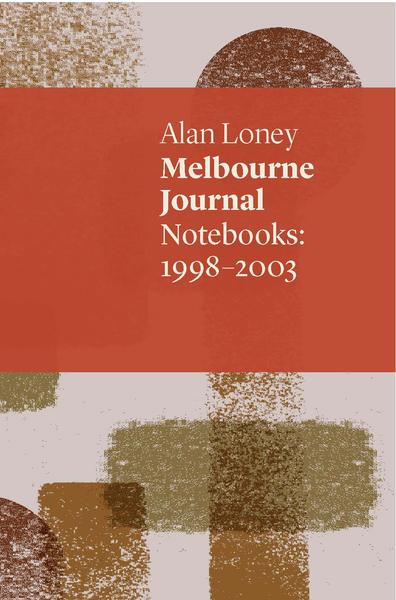
New Cemetery by Simon Armitage
Recent Work Press @ IPSI, 2016

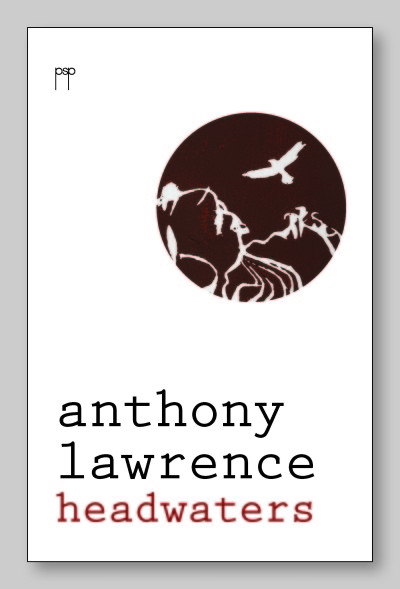
Time in the Dingle by Philip Gross
Recent Work Press @ IPSI, 2016


Poetry has a peculiar provenance in the public sphere. To describe the situation with egregious simplicity, some allege that poetry should speak to and for the people, while others assert that poetry should be avant-garde, testing the conventions of language and enacting nothing less than a transformation of society. The demands we make of poetry – arguably more pronounced than of other forms of literature – were recently explored in Ben Lerner’s The Hatred of Poetry (2016), which argues that such idealism inevitably results in dissatisfaction with actual poetry. Poetry ends up not being accessible or representative enough, while the avant-garde poem, as Lerner memorably describes it, disappoints like a bomb failing to go off.

These reflections seem pertinent to a review of two chapbooks by the British poets Simon Armitage and Philip Gross, published by IPSI (International Poetry Studies Institute), a poetry research centre housed at the University of Canberra. The work of the Yorkshire poet Armitage, in particular, has been celebrated for its accessibility and popularity, while also being criticised for betraying the avant-garde poetic ideal. In 2013, Armitage was the third best-selling living British poet (after Carol Ann Duffy and Pam Ayres). That year, he also published a non-fiction book documenting a walk along the Pennine Way, during which he famously gave poetry readings in exchange for food and board, emulating the troubadours of the Middle Ages. However, his considerable skill as a poet has also been institutionally acknowledged by his 2015 appointment as Professor of Poetry at Oxford University, suggesting that, for some, Armitage’s poetry would undoubtedly not be accessible enough.

The author of over 20 poetry collections and numerous other works across different genres, Armitage has the reputation of being a ‘working poet,’ and New Cemetery is further evidence of his impressive professionalism. The untitled poems concern the construction of a new cemetery, which is memorably compared to the construction of a housing estate. It is an event that inspires reflections on the mortal body, as well as on the poet’s vocation in the face of such impermanence (in a way that echoes Heaney.) Each of the poems shows off Armitage’s formal assurance. I quote from the thirteenth poem:

Today the poet
                  repairs his shed,
                                    last night’s storm

having scalped from the roof
                  some forty square feet
                                    of weatherproof felt,

                  lifting and slinging the job lot
                                    into next door’s field…

Armitage’s poetry is perfectly measured and typically distinguished, as here, by its outward gaze. The distancing use of the third person figure of ‘the poet,’ as in a number of poems in the chapbook, is interesting in this regard, refusing the autobiographical musing that render some lyric poetry obscure. (Some of Plath’s work comes to mind – though, interestingly, Armitage has named both Plath and Ted Hughes as key influences on his work, along with that other ‘popular’ poet Phillip Larkin.)

Armitage’s work is also known for its wit. In the fifth poem, the poet portrays himself working in an attic while it snows outside. An automatic sensor repeatedly turns off the light, due to the perceived lack of movement in the room. It is an episode rendered uncannily resonant in the context of a collection implicitly about death. The entire poem reads:

A cheap ballpoint
                  usually does the trick,
                                    just enough drag and flow,

like this one, striped
                  with the faded name
                                    of a Munich hotel.

Fine-grained snow
                  like old fashioned static
                                    fell into the night, blanking

the tiled rooftops.
                  At the writing desk
                                    in an attic room

I pushed forward, except
                  every fifteen minutes
                                    a sensor detected

no movement,
                  no signs of life, and turned out
                                    the one light bulb.

Philip Gross, like Armitage, is a prolific writer across various forms (from young adult fiction to opera libretti). Despite winning the TS Eliot prize (notably, when Armitage was a judge) and writing a book of poems about the concrete stumps of electrical pylons, Gross has, like Armitage, been criticised for writing poetry that is popular and therefore, by implication, compromised.

Time in the Dingle, like Armitage’s New Cemetery, is more accessible or ‘reader-friendly’ than some other works of poetry, but it is also far from facile, demonstrating Gross’s considerable skill with poetic language. Gross’s chapbook is a sequence of poems that centre on a local ‘dingle’ – a term the poet playfully defines in a poem called ‘Sounds’ (in which we see echoes of Hopkins and any number of contemporary lyrical ‘nature’ poets).

             … I’ve tried cleft
cleave coomb chine for this sudden steep slip

             of a strip of stray wildwood
into this crack crease interstices slightly
unpicked seam between breezeblock railing fence

             over which, not quite concealed
by under-tangle, small spews of rubbish get spilled
as if over-the-hedge was outside-of-the-story

             and into hiatus, the kind of between
we make with backs turned, where a place, a whole
order of things, might absent abscond conceal

              itself under a word like
dingle – there, I’ve said it. Yap-dog in the leaf-mould.
We can call its name but it won’t come to heel.

The linguistic excess here distinguishes Gross’s lyrical verse from Armitage’s, even as they share a Romantic interest in environmental – as distinct from environmentalist – topics. There is also similar wit in some of the imagery. In ‘…or the squirrel,’ a squirrel is described as pouring ‘up a fifty-foot oak as if I’d spilled him.’ Another similarity: despite their shared working-class origins (often foregrounded in establishing their populist credentials), there is a great deal of ‘middle-class’ emotional restraint or ‘tastefulness’ in these observational lyric poems.

Will these chapbooks ‘change the world’? Probably not. There is much to admire and enjoy but little that is urgent here – though some of the other titles on the IPSI list (by Samuel Wagan Watson, for instance) offer different poetic models. Is this poetry that ‘speaks for everyone’? Probably not, given the complexity of some of the poetic language and diction, though the work of Armitage and Gross has proven relatively popular. Do such questions matter? In The Hatred of Poetry, Lerner recommends that we rediscover our love of actual poetry by reading poems without such idealistic baggage. It might be worth a shot.

Posted in BOOK REVIEWS | Tagged , ,

Review Short: Chapbooks by Alison Flett, Louise McKenna and Judy Dally

Vessel by Alison Flett
Garron Publishing, 2016

The Martyrdom of Bees by Louise McKenna
Garron Publishing, 2016

Lost Property by Judy Dally
Garron Publishing, 2016


Garron Publishing’s recent ‘Southern-Land Poets’ collection is a ‘pathway                    trampled with voices’ (Vessel, by Alison Flett), intricately connected by a ‘golden thread/ still hanging from’ the readers flesh ‘like the sharp point of a stylus / forcing its message’ (The Martyrdom of Bees, by Louise McKenna). Composed of five individual chapbooks (of which this review will tackle three) Alison Flett’s Vessel, Louise McKenna’s The Martyrdom of Bees, and Judy Dally’s Lost Property move ‘closer to                                       the beautiful empty                                                                                                   at the                                        centre’ of ‘human’ experience, oscillating between modes of nostalgia, loss and mortality (‘Here is a pathway                   Trampled with Voices’, by Flett). The result of such a collection is a series of coalescing filaments restricting and expanding with experience:

                                                                never really knowing 
who he is 	who she is	where they stop

where the outside 	   begins

‘Vessel III’, by Flett)

Louise McKenna’s revelations of immanence in her titular poem, ‘The Martyrdom of Bees’, are subtle, precise and filled with a ‘deafening silence / as if the whole world tilts on the brink of loss’ (II). Composed of three distinct sections, McKenna’s prologue quote depicts the self-sacrificial nature of the bee to ‘protect the nest’ and the sequenced Passion of Christ narrative is split between the three sections (arrest, trial and suffering). Part one begins:

One of the swarm has left
her honeycombed sanctuary to find him.

This initial aphoristic couplet is suspended by the anthropomorphic possibilities in the ‘her’ and ‘him’; the subsequent stanzas concentrate on the physicality of the turbulent, mimetic world of bees. There’s a swift modulation between human and animal drives before the ‘her’ is resolved to the animalistic, as ‘she alights upon his arm, testing for sweetness / on the inside of it’. This double voice resonates between the three sections as part two establishes the masterful power ‘bees’ possess within this para-anthropocentric world:

‘If the bee disappeared off the surface of the globe then man
would only have four years of life left’. – Albert Einstein

Undergoing a perspectival shift to the human, the ‘martyrdom’ the bees embody becomes the inner experience of a modern man who, disregarding the ‘stylus / forcing its message’ and being hallowed of the bees ‘etiquette, / their lessons in humanity’, is doomed to be crowned ‘queen of a desolate queendom’. In part three, the martyr-bees are rendered as a perfect metaphor of humanity’s inner turbulence; this metaphor serves as a loose meditation upon the transience of life and imminence of death. Indeed, the suffering the bees experience at the hands of ‘aerosol venom’ is dual, as McKenna illustrates in the opening line and closing line: ‘Sometimes death is a mist the cell drinks’, and ‘Tonight I dream I am Dali’s wife, naked / beneath airborne tigresses, poised to kill’.

Lost Property adheres to familiar themes of nostalgia and loss, however it is Dally’s meticulous typesetting and spatial-organisation on the page that sets the two collections apart. Take for instance, Dally’s ‘My Mother Dreams’, a vision of mortality impeccably realised through the mundane:

My mother dreams she’s making cups of tea 
for people she doesn’t know
                     or doesn’t like
                     or doesn’t want to disappoint

with tea bags that break	
                     or split
                     or fall off their strings
in cups that overflow
                     or leak
                     or fall to pieces.

These disconnections articulate, spatially and typographically, an understanding that our visceral experience of reality (the lines at the margin) is contingent upon a cerebral counterpart (made manifest by the repeating ‘or’ conjunctions), as the final two stanzas conclude:

In her dreams
my mother thinks she’ll die
if the tea doesn’t get made. 

I’m afraid 
she’ll die
when it does.

In a sense, one feels like Orpheus looking back on Eurydice knowing that if we look too long ‘it will be — / careless, forgetful me —/ who loses / her mother’ (‘Lost Property’). At the same time, Dally demonstrates that by not looking back we become the ‘Lost Property’, our reality simply a placeholder for death:

I missed my father today. 

He died
forty-four years ago

and back then I felt relief
more than sorrow. 

But today
an old photograph 
called him to mind

and I missed 
not missing him then.

In a similar vein, Alison Flett’s Vessel is concerned with departure and revival. The opening poem an embodiment into metaphysical geography, tracing the ‘Vessel’’s departure into time, the ‘hollow                   gaps                   at the surface’ of reality, and peering past ‘CEMETARY SONGS’ to ‘Arrival’ at the beginning again:

No-one else	has seen inside	this child.

(‘Vessel I’).

This establishing line is a synthesis of juxtaposing modes, nostalgia and present, the narrative focused on the existential:

When you get older		do you remember more? 	
And her mother has answered	yes	I suppose you do		

and the child knows		this is		the wrong answer: 
she knows her mother means	you have more things
to remember		there’s more living filling your head

(‘Vessel I’)

Accordingly, the following poem, ‘Vessel II’, traces trajectories of ubi sunt (‘will she remember / where she was / before // she was born’ (‘Vessel II’)) and transform the mundane into memento mori:

a cup is holding itself       together    around      a cup’s 
worth of space.     In her head      something is pulling

(‘Vessel I’)

The after images of the cup taking on a second-life:

She watches her hands    move     apart. 
She watches the cup     drop     and break
The pieces   thrown outwards     making new

(‘Vessel’ I).

‘It seems a thing of itself / a thing that appears / and disappears’, mediating and obstructing reality as a shadow that is always in the peripheral of Flett’s ‘Vessel’ – the splintered fragments of the broken cup oscillate between the ‘fore’ and the ‘after’ of the object. This equivocation of mise en abyme is transfixing and dually destabilising as Flett continually moves between the discontinuities and splintered traces of words. Perhaps best envisioned in her eponymous poem sequence, each half/third is its own absolute entity:

She just asked her mother      a question
When you get older     do you remember more? 
And her mouth has answered      yes    I suppose you do 

And the child knows 	    this is     the wrong answer.

(‘Vessel I’)

In this instance, we cannot help but be captured by the present-tense nostalgia lingering in the final line. There is a remoteness of reality as we see the ‘beginning of / an understanding                   of how we go beyond                   what / we are                   an awareness                   of being and not being’, until we/’she comes to see / the cup                   isn’t                   what matters’ (‘Vessel I). The only concrete knowledge we may possess within Flett’s existential mediation is the centripetal and centrifugal motions of life, ‘the filling and emptying                   of the world’ (‘Vessel II).

These individual collections are a ‘balance of substance & space’ (‘Vessel II’, by Flett), reflections of the same reality shifting between experiences and perspectives. Such a series cannot be perceived alone; it is the whole and not the sum of its parts, to paraphrase Aristotle, that fantastically revises and reformulates aspects of the human condition to determine whatever text the reader experiences first,

                                                                          [w]hatever 
                                                                                 path we took
                                                                                        it didn’t
                                                                                               matter
                                                                                      it was always
                                                                                        going to end
                                                                                              with us

                                                                          (‘Arrival’ by Flett)
Posted in BOOK REVIEWS | Tagged , , ,

Review Short: Stephanie Christie’s Carbon Shapes and Dark Matter

Carbon Shapes and Dark Matter by Stephanie Christie
Titus Books, 2015


In Stephanie Christie’s first collection, Luce Cannon (2007, as Will Christie), language is a fissile material, words are rendered particulate, unstable, always threatening to devolve into their component parts. And while its subject matter is, often, not what you would call exactly bright, its tone is also not sombre, language tumbles along with a kind of free fall intelligence:

T- d rails                     the rushing scent
Sound of gull wheels          fin   e
Gers in water                       th.  Oughtful
	
Lady ailments              her bod is décor
A shun scars             and wheeling away
Holds out two wrists          wit  

(‘Overaching’)

Her second collection, The Facts of Light, was published as part of Vagabond’s deciBel series edited by Pam Brown, in 2014. This book continued certain elements of her previous poetry, but also saw a break in style, its poems assuming a more regular stanzaic form.

Her third collection, Carbon Shapes and Dark Matter (2015), may represent a more comprehensive merging of the two modes. As with The Facts of Light, there are lines of around five-to-ten words, and these are grouped into stanza-like formations; but concurrently there is Christie’s unusual cantilevered spacing, rapid switches in tone, puns, use of paradox, and characteristic word-grafting. In the latter modes, Christie’s poems are wonderful heterogenising machines: breaking words open to reveal their internal differences, recombining them with others (‘We simplicate things so much’ (‘The Old Story’)), making allusions (see, for example, the eighties/nineties song titles buried in the poem ‘Hung r’). The first, isolated word of the collection is the amalgam, ‘strugglue’, and indeed this insight into the somewhat sticky, glue-like nature of ‘struggle’ percolates through the book. Struggle involves time, and like time it can both flow and harden up or congeal. The reader is left with the sense of Christie’s respect both for personal resolve, and for vulnerability:

We all know our multiplying sides 
get into messes. He fights himself
a long time, then heads down
Cuba St with a golf club
just going for windows.

 (‘Wingettes’)

The knowledge that we are living in an epoch of climate change is one that rarely leaves these poems, and it follows that a current of anxiety runs through the book, along with a desire to find ways to think, feel, and love in light of that knowledge, and a reckoning of the capacities of hope. It is a curious characteristic of this book that the weighty descriptions of the previous sentence co-exist with Christie’s ebullient language: these are not poems that seem to map out a certain idea and then follow it through, but are always moving and shifting.

This reader must now admit to being at first disappointed that Carbon Shapes was not as immediately visually exciting as the earlier Luce Cannon. It was not until I heard an audio recording of a reading given by Christie that I began to understand what the poems were doing in their own right. Christie’s precise renditions of the poems brought across the highly tensile nature of the work as a whole, and attuned me to the more subtle level of experiment going on in the collection:

How did the future become this?
Sadness sits down on my chest
I can see it breaking up
before the fifty years the researchers
assume in their ethnographic sketches.

My mind is out of its debt.
Hope’s a feeling of progress
towards an empire and a safe bed. 
My irrational terror is really reasonable
when you look at the big picture. 

(‘Nix’)

Modulations of tone occur line by line: from the apparently sincere statement, to ambiguous wordplay (the mind ‘out of its debt’; logically this suggests ‘freedom’, though sounds like something quite different), to, one assumes, a kind of ironic sarcasm (‘an empire and a safe bed’), to paradoxical fact. In her book Ugly Feelings, Sianne Ngai refers to tone as, ‘the affective “comportment” of a literary text’. The rapidly changing nature of tone – that conventionally worded statements of feeling are neighbour to Joycean neologisms and word-splicings – might be one mark of the tone of Carbon Shapes; that’s to say, it stably evokes a mood of instability. While not confessional, there is a sharp clarity (and dry humour) to its reports of extreme states:

Being destroyed is wild and drastic
and for a while you’re intact enough
     to enjoy the show. 

 (‘Cleave’)

The theme of climate change runs alongside frequent references to elements of Christianity, specifically Protestantism, to which the poet seems to have a complex relationship. Words such as ‘prayer’, ‘God’, ‘heaven’, and ‘redemption’ appear, usually accompanied by a measure of ironic distance: ‘God’s love is the heavy black mass / in the brain that helps us sleep’ (‘Parachute’); ‘As fast as we chase it, redemption keeps / the same distance away’ (‘Clod’). In ‘Parachute’, again, we read: ‘Each day, the extra light fills us / with a worn hope’. The last two words read as richly suggestive about the utility of hope in regard to climate change, or indeed to the political change necessary to avert catastrophe.

The eternal themes of love and loss, and sadness, are found throughout Carbon Shapes, while a kind of everyday violence and fear flickers at the edges of many of the poems. This is a collection of many brilliant lines (‘Lust stutters in the blood’ (‘Post-protest/ant’); ‘Intense moderation’s hypnotic’ (‘Clod’)), and for this reader, Christie is one of the most exciting poets writing today in Aotearoa/New Zealand.

Posted in BOOK REVIEWS | Tagged ,

Review Short: Ouyang Yu’s Diary of a Naked Official

Diary of a Naked Official by Ouyang Yu
Transit Lounge Publishing, 2015

Well known as a poet, translator and literary critic, Diary of a Naked Official marks Ouyang Yu’s second foray into the novel form. His first, Loose: A Wild History (Wakefield Press, 2007), mixes fiction and non-fiction, poetry, literary criticism and diaristic writing. Continue reading

Posted in BOOK REVIEWS | Tagged ,

EXPLODE Editorial: Awfully Passionate Egregious Demagogueries … reflections on absolutes, straying, anguish and bees

I am responsible for the good of the other come what may: that is, my responsibility is anarchic, on the hither side of moral principles and the reasonings that provide their support – which means, among other things, that my relation to others is not one of knowing but, as Levinas likes to put it, one of proximity, as of skin exposed to touch.

Gerald L. Bruns, ‘Should Poetry Be Ethical or Otherwise?’


(i)

If poets are in the business of cultivating ‘voice’ then, logically enough, to which ends? Is there an onus not only to learn how to speak but to also become versed in what to speak of? If 20c. English-language poetry can be characterised at least partly as a constellation of non-dogmatic radicalised tropes making response to authorising discourses of power / knowledge, then which impetus remains (if any) to adopt transgression as a foremost rhetorical mode? In his fine essay, ‘On the Sidewalk: Towards an Ethopoetics of the Streets’, Kim Cheng Boey adopts a Levinasian methodology to then assert this heuristics:

it is in the act of writing that an ethos is discovered or established, an intersubjective poetics of ethos that arises from the dramatic and lyric recreation of the self-Other encounter.

How are we to be more than mere dilettante onomasiologists? This edition of Cordite Poetry Review is suffused with interruptings, ironisings, rupturings, reterritorialisings, strayings, problematisings and interventions which seem to ask, both in particular ways and when read as a swarming cluster: how to begin to look each other directly in the face?

(ii)

On a train from Bergamo to Milan with my wife and a friend … a man drops a card written in English and Italian on the empty seat beside us: ‘I am jobless, homeless, with two children: for god’s sake please help us.’ When he places similar cards with each passenger in the carriage we glance at one another cursorily, then fish through our bags for small change. He returns five minutes later and, finding a few coins on the arm rest beside us, wishes a ‘god’s blessing’, then continues through the carriage … and as he goes I catch myself thinking how I hope he doesn’t ask me anything, or try to talk to my wife, or want more money, as if my bit-part performance in this drama is not an act of kindness, but an attempt at self-absolution: what does this small change actually change? For me, everything … for make no mistake, this is a performance and those coins may have just purchased a ticket to a place where I can grant myself permission to no longer need to be further involved. The friend we are travelling with is an anesthetist; how many of us living in comfortable material certainties are already numb to those many who are not one of ours, flatly dehumanised, neither interesting nor real enough to be more than a passing moral complexity?

(iii)

After Mallarmé’s much-appropriated lines to Poe (later transmuted by Eliot, in which the work of poets is rendered an adage in which we ‘purify the dialect of the tribe’), which sorts of clarifications might be up for grabs and more crucially: how to steer clear of mere demagoguery? If lyric poetry resonates (etymol. ‘prolongation of sound by reverberation’) then explicitly: how to re-verb the ‘makings’ of poets? And how therein to avoid the totalisations of so-called purity? After Adorno’s claim for the lyric as a non-product to illuminate our alienations through the ‘subjective expression of a social antagonism’ (‘Lyric Poetry and Society’, 30), and after Levinas’ claim for poetry as a revelatory point of contact and possibility, a saying of proximities opening onto ‘an ethical relationship with the real’ (Collected Philosophical Papers, 118), to which extent do / should / must we compulsively express the ague of idealism? Is it barbaric to write in the aftermath of genocides so methodically hidden by officially enshrined mythologies? Is it reasonable to merely sing, lyrically, averting ourselves from all proximity with our others?

(iv)

Surely we must cultivate strategies (linguistic, ideal, moral, antagonistic) by which to bear witness?

(v)

Concerning himself directly with OzPo contexts, in ‘Being Caught Dead’ Justin Clemens opines that poetry ‘is threatened, like the honey bees of our world, with what’s known as ‘colony collapse disorder’,’ because we live in an era in which ‘everybody writes poetry, but nobody reads it’ (Overland #202). In her rebuttal, ‘Against Colony Collapse Disorder; or, Settler Mess in the Cells of Contemporary Australian Poetry’, Ann Vickery proposes an alternative focus toward ‘correspondences in otherwise unconnected ‘bees’ and the capacity for transformation’ (Cordite #48). Bees as a decollectivised swarm of strays? Indeed, contemporary poetry in ’Straya seems full of drift, and equally reactive with enforcers waspishly patrolling boundaries of possibility. In that place which operates yet to the logic of late colonisation, are we not simply an order of cleptoparasites, robber bees hiving / archiving creative / critical / cultural products in a coloniser’s material, extending next new narratives of habitus (always anything but a nullius) … and

within this nexus, beyond anguish, what is our duty?

What are to be the languages of these days (and their nexts),

(vi)

and which language (horde, purified, etc.) is ever as stable as enforcers would have us believe? That same way Chomsky illuminates difference between syntax and semantics with his ‘colorless green ideas sleep furiously’, my title should underscore just how furiously words can drift from etymological roots … that same way colonisers drift from origins to create authentic-seeming discourses (self / country / nation / other), language also strays: contingent, random, mutable, its own unreliable narrator. In contexts swarming with displacements both historical and contemporary, I catch myself asking: where does this leave the lyric?

(vii)

Deep in Italy’s northwest mountains, we are sitting at a table over steaming polenta, cheese, bread. A short burst of conversation with our friend’s friend, Beppe, about his country becoming part of what he calls ‘Eur-arabia’. None at the table has the (insert here — linguistic abilities? Chutzpah? Something else?) to venture in our stunted Italian a challenge to this man who has never travelled beyond the comforts of these sublime valleys. Our silence: complicit and enabling. Beppe, who spent his life working as a policeman, thinks in binaries of ‘us’ and ‘not us’ … and I catch myself thinking: how friendly a racist can seem (at least, when ‘we’ bear resemblance to anyone but the most ethnically, racially, culturally ‘not us’). Later, arriving at Milan’s Stazione Centrale we stand under a baking sun and watch the façades perform particular authorisations in white, fascist’s marble … less known is the subterranean platform where four generations ago Jewish people were transported to the German-run Nazi extermination camps in Poland. This is where identity thinking and its enforcements takes us. A small plaque in the station bears an inscription from the first line of Primo Levi’s ‘La bambina di Pompei’:

Poiché l’angoscia di ciascuno è la nostra
(Bearing witness matters since everyone’s anguish is our own).
Posted in ESSAYS | Tagged , , ,

Sublime Necrophilia or Ceasing To Exist in Order to Be : On Translating Kim Kyung Ju’s I Am a Season that Does Not Exist in the World

The tradition of the oppressed teaches us that the ‘state of emergency’ in which we live is not the exception but the rule. — Walter Benjamin, Theses on the Philosophy of History VIII

What you have heard.
Translations do not share. Bad copy.
They come after. Knock off. 
Is true like true is true.

Like the male dusky antechinus, an Australian marsupial, translation has an unusually long mating period. For 14 hours it fucks so vigorously that its stress hormones overload, causing its immune system to collapse. It performs the sexy death. A lethal transfer of life. Or is it a deathy sex? Continue reading

Posted in ESSAYS | Tagged , , , , , , , , ,

‘Transgressive Circulation’: Translation and the Threat of Foreign Influence

1.

At the AWP writers’ conference in Minneapolis a couple of years ago, I attended a panel on Paul Celan’s poetry. In the Q & A that followed the panel, the first question was ‘How can we make sure that young American poets are not improperly influenced by Celan’s poetry without truly understanding it?’ The panel responded by offering a variety of possible solutions, such as reading the extensive literature about the poet or reading his letters and journal entries that have been published as well. Continue reading

Posted in ESSAYS | Tagged , , , , , , ,

Metapod: An Essay and Analysis

Introduction

Pokedex Entry #011: Metapod is a Bug Type Pokemon. It evolves into Butterfree.

Species: Cocoon Pokémon

Metapod Base Stats

Metapod Stat Ranings

Metapod Moves
Metapod Fast Moves:

Metapod Charge Moves:

Posted in ESSAYS | Tagged

Activist Journal: Ireland and Germany Extraction, 2015-16


Image courtesy of JGR Tübingen

18/9/2015 Rosewood, Schull, Co. Cork, Ireland

Difficult and full fortnight of work coming up before I have to travel solo to London on bus, ferry and train.

Continue reading

Posted in ESSAYS | Tagged , , ,

Plato, Badiou and I: an Experiment in Writerly Happiness


Image courtesy of Ceasefire Magazine.

I have many irresolvable arguments with a close and particularly argumentative friend of mine. We regularly disagree, in a civilised, congenial way, on specific topics to do with politics, love, the weather, Asian food and ethics. But it is apropos of the matter of writing that we diverge most pigheadedly. And, yes, my friend is a fellow writer.

My friend believes that writing brings the writer pleasure, and it is this pleasure which more or less compensates for the lack of financial and social rewards. I, on the other hand, refuse to accept that I derive much pleasure from writing. Writing agitates me and makes me sleepless. It makes me very introverted and at times quite gloomy. Although I have been told that I’m one of the more active writers of my generation, I can’t say that I’m ever really pleased with the practice or products of my writing. So why then, as my friend often asks with a half-mocking smile, do I write so much?

The answers that I have given him and others in the past have been frankly dishonest, pretentious, perhaps even ideological. Yes, I have suffered a good deal for my decision to become a writer; and, yes, despite a few publications and some fondness from a few kind readers, I could not imagine ever receiving just recompense for the years, indeed decades, of work that I have put into literature. So, to expiate for this obvious imbalance, I’m given to providing grandiose, unintentionally untrue reasons for why I write.

I have claimed to write because I wish to change the world; to protest against injustice; to give voice to the voiceless; and so on. But these justifications seem, at best, secondary to the primary act of writing, to the initial decisions involved in spending hours, days and weeks alone producing texts most of which have never been published or read; most of which have not, in other words, been in the position to have any effect whatsoever on the world.

So why do I write? The simple and true answer that I would like to consider in this essay is that writing, despite all its concomitant challenges and disappointments, makes one happy. And this is not a happiness associated with an immediate sense of pleasure, nor does it have anything to do with a fantasy of how one’s writing may affect its potential readers. Looking back over the past two decades of my life, I have come to view a quest for happiness as central to my decision to remain loyal to the often difficult, unrewarding passion for writing books, poems, articles and stories. But this happiness seems at best intangible and ephemeral. In this essay I wish to simultaneously narrate and explore a definition of such a thing. This essay is both a story and an investigation of my years of yearning for contentment as a writer. My investigation will be an experiment in fusing the philosophical with the personal, the conceptual with the autobiographical, to occasion a hopefully intelligent and novel approach to the theme of happiness.

Guilt and failure

In his fascinatingly playful and modern recent rewriting of Plato’s Republic, contemporary French philosopher Alain Badiou provides an engrossing discourse on happiness. In the book’s fifteenth chapter, Badiou presents Socrates’s dialogue on happiness with two of his disciples, Amantha and Glaucon (the former being Badiou’s own female invention, based on the character of Adeimantus in Plato’s original Republic). This dialogue follows on from a discussion on tyranny in the book’s previous chapter, and begins with a contemplation on unhappiness.

Claiming that there exist three dimensions or agencies to the human subject – ‘Thought, Affect and Desire’ (Badiou 2012: 294) – Socrates argues that in tyranny ‘the agency of Thought is subservient to that little part of the “Desire” agency that’s ordinarily kept in check but that in this case runs rampant: the vilest desires, envy, informing on people, the outrageously exaggerated satisfaction of trampling on the weak’(Badiou 2012: 294). Amantha interprets Socrates’ characterisation of the tyrant as someone who, despite possessing the power to enact his ‘basest desires’, ‘always has the feeling he’s failed’ (Badiou 2012: 294). She sees this depiction of the tyrant as ‘the portrait of the fascist’ who ‘secretly regards himself as a failure and spends his whole life trying unsuccessfully to overcome the lethal duo of resentment and guilt’ (Badiou 2012: 294).

This definition of the other of happiness resonates with me strongly. Indeed, many of my memories of the earlier years of my work as a writer are saturated with feelings of failure and guilt.

I had been a voracious writer – of stories, biographical sketches and historical summaries – as a child in Iran prior to migrating to Australia in the early 1990s; but these writings were in Farsi, and it took a number of years for me to feel remotely confident to start writing in English.

In my late teens, while I was an undergraduate Creative Arts student in Queensland, and inspired by classmates who performed their poetry as spoken word, I began to write in English, and this made for an auspicious beginning to my writing life as an adult. I felt appreciated by my peers and teachers for performing my own poems at student gatherings and minor cultural events on and off campus, and, by the time I had turned twenty-one, I had decided that I wanted to become a writer.

Posted in ESSAYS | Tagged , , ,

Sharon Olds, Gwen Harwood and Dorothy Hewett: Truth, Lies, Poetry


Image courtesy of Vogue.

In 2008, US poet Sharon Olds came out about her poetry, admitting that her writing is based on her own life. Since the publication of her first book, Satan Says, in 1980, when she was thirty-seven, she’d been evading questions about the biographical basis of her work. In her rare interviews, she would gently correct ‘personal’ to ‘apparently personal’ as a description of her poems and emphasise with kindly patience that they were works of art, not autobiography. Continue reading

Posted in ESSAYS | Tagged , , ,

Mother and Rule: 8 Prints by Michael Cook


Michael Cook | Mother | Dolls house, 2016 | Inkjet print on paper | 80x120cm

All images courtesy of the artist and Andrew Baker Art Dealer.

Posted in ARTWORKS | Tagged

On the Sidewalk: Towards an Ethopoetics of the Streets

In his prose poem ‘The Eyes of the Poor,’ Baudelaire stages a Parisian tableau that brings together the disenfranchised poor and the privileged bourgeoisie in an awkward moment of encounter. The lyric / narrative ‘I’ and his female companion were about to enter ‘a new café that formed the corner of a new boulevard, still strewn with debris and already gloriously displaying its unfinished splendors,’ when he noticed ‘on the sidewalk, a worthy man in his forties was standing, with a tired face, a greying beard, and holding with one hand a little boy and carrying on the other arm a little being too weak to walk.’ They were all ‘in rags’ and their ‘faces were extraordinarily serious, and the six eyes contemplated fixedly the new café with an equal admiration, but shaded differently according to their age’ (Paris Spleen 51). As the poet and his lover sat down at a table in the ‘sparkling’ café lavishly furnished with kitsch décor including ‘nymphs and goddesses … all of history and all of mythology at the service of gluttony,’ he became mesmerised by the eyes of the poor, which spoke vividly to his imagination:

The father’s eyes said: ‘How beautiful it is! How beautiful it is! You’d think all the gold in this poor world was on its walls.’ — The eyes of the little boy: ‘How beautiful it is! How beautiful it is! But it’s a house only people who aren’t like us can enter.’ (52)

The poem inscribes an urban encounter when the lyric self comes face to face with an Other that is economically, socially, culturally marginalised; the sight of poor family triggers feelings of empathy, reflected in the description of the eyes of the poor. However, the narrator’s compassion and guilt are negated by the hard mirror of his lover’s gaze, her ‘beautiful and so bizarrely gentle eyes’ utterly devoid of sympathy, and her demand that the head-waiter chase the father and children off. The poem ends with the poet remarking on the gulf that exists between people, about how ‘difficult is it to understand one another’ and how ‘incommunicable is thought, even between people in love’ (52).

The aporia at the close of Baudelaire’s poem reinforces the liminal note evoked by that the prose narration and lyric description. The moment of snapshot clarity and recognition, when the lyric ‘I’ finds itself reflected in the abject gaze of the Other, is effaced by the blank indifference of his partner’s eyes. The stark contrasts of inside / outside, rich / poor, observer / observed are unresolved, opening up an interstitial space in which the ethics of looking, writing, reading and indeed the ethos of the text comes under scrutiny. Doubtless, the poem skewers bourgeois attitudes towards the poor and is one of the many street poems in Baudelaire’s oeuvre that evince his sympathy with the poor and marginalised sections of Parisian society, but its textual irony and ethos forestalls any moral resolution. There is a discernible sentimentality too, but not sentimentality which is shallow, indulgent, maudlin or melodramatic, and which precludes any real ethical engagement by reducing complex situations to simple and hackneyed responses. Baudelaire’s reflexive irony ensures that sentimentality, as Robert Solomon states, ‘need not be an escape from reality or responsibility; quite to the contrary, it may provide the precondition for ethical engagement, not an obstacle to it’ (226). The sentimentality is part of the affective receptivity of the lyric ‘I,’ and its vulnerability and exposure to the presence of the Other. The poem becomes a site or poetic space where the lyric ‘I’ finds itself shaken in the unsettling gaze of the Other, its aesthetics and ethics questioned, and its subjectivity brought to the brink of dissolution or transformation in the liminal moment. In the contingent ebb and flow of the street, the poetic space maps an ethical field where what Emmanuel Levinas calls an ‘ethical event’ can take place, in which the self is awakened to the unique and irreducible alterity of the Other.

The liminal setting of the poem, comprising the Parisian sidewalk and the café window that frames the encounter, unsettles any complacent affirmation of the human values of pity or compassion. It also foregrounds the ambivalence and ambiguity of the ethical moment, when the lyric ‘I’ bumps against the reality of the Other and is nudged to threshold point of change and transformation. Spatially the liminality is also embodied and enhanced by the prose poem form, its fragmentary narrative and lyric cadences blurring the boundary between observation and participation, self and otherness. Thus Baudelaire’s ‘hypocritical reader’ is implicated as much as the observer-poet; the poem is an open field that draws the reader into a state of participation-observation, to borrow a term from ethnography. Both the liminality and the reflexivity of the prose poem gesture towards what Anna Fahraeus calls the ‘operational ethos of texts’ or how in texts ‘ethos is ‘invariably textual’ (8). Baudelaire’s poem, and indeed any street poem that turns its gaze on social issues of poverty, race and justice, embeds in its ontological ground and textual body the question of ethics.

The poetry of the streets operates not dissimilarly to street photography, and faces the same ethical challenge. The street photographer, wearing his cloak of invisibility, often captures his human subject in candid moments, without seeking prior consent; similarly, the street poet, in establishing his poetic subject, even if the result may not be readily identifiable visually, is potentially guilty of an ethical blind spot if he ignores the ethics of creative production. While there is no disputing that fact that the photographic works of Walker Evans, Dorothea Lange, Helen Levitt and Robert Frank are informed by a social, ethical commitment to draw attention to issues of social, economic and racial inequalities, their objective, clear-eyed attention to the subject revealing profound empathy with the downtrodden and outcast, there is an a predatory, even exploitative aspect inherent in their art, even if the humanity of the subject is heightened in the process. Susan Sontag observes:

The photographer is an armed version of the solitary walker reconnoitering, stalking, cruising the urban inferno, the voyeuristic stroller who discovers the city as a landscape of voluptuous extremes. Adept of the joys of watching, connoisseur of empathy, the flâneur finds the world ‘picturesque.’ (55)

There is an objectification at work, as the camera turns a human being into an aesthetic image. This dehumanisation process may explain the objection of some tribal people to being photographed – they feel they have been robbed of their souls. Sontag remarks:

To photograph people is to violate them, by seeing them as they never see themselves, by having knowledge of them that they can never have; it turns people into objects that can be symbolically possessed. Just as a camera is a sublimation of the gun, to photograph someone is a subliminal murder – a soft murder, appropriate to a sad, frightened time. (28)

Hence ethics is an inescapable part of the photographic act, and the ethos of the photographer and the photographic subject is constituted in the act of looking, in what Henri Cartier-Bresson famously dubs ‘the decisive moment.’ Like street photography, the street poem is not just a spatial mapping of an urban space; just as the photograph carries the imprint of the photographer’s eye, its subjectivity and ethos implied or constituted in the choice of subject and perspective, composition and framing, the poem establishes its ethos through imagery, rhythm, diction, voice and tone.

In William Carlos Williams’s ‘To a Poor Old Woman,’ the observer-poet develops his ethical relationship to his subject through the framing of its central image. Williams’s shorter poems are exemplary Imagist lyrics, their haiku-like brevity and snapshot-like clarity revealing an alert photographer’s eye. Indeed, Williams is called ‘the master of the glimpse’ by Kenneth Burke, who observes: ‘What Williams sees, he sees in a flash’ (197). The image of the old woman on the street is captured in a photographic instant, the vivid clarity of the observed moment revealing Williams’s attentiveness to the everyday, his photographic reflex quick to seize fleeting mundane objects and moments and make snapshot poems of them. What also makes it photographic in quality is also the elision of the lyric ‘I,’ an absence or erasure that gives the poet the advantage of invisibility, and an impression of his detachment and non-involvement:

To a Poor Old Woman

munching a plum on
the street a paper bag
of them in her hand

They taste good to her
They taste good
to her. They taste
good to her

You can see it by
the way she gives herself
to the one half
sucked out in her hand

Comforted
a solace of ripe plums
seeming to fill the air
They taste good to her (91)

By running the title onto first line the poem underlines the instantaneity and contingent nature of the encounter; the casual voice and present participle ‘munching’ also create the effect of in medias res, as well as implicating the lyric ‘I’ in an event that is already unfolding. The use of the second-person pronoun further implicates the observer and reader in the street scene, makes them complicit voyeurs peeking into the private world of a poor old woman. However, the poem does not reduce the autonomous subjectivity of the woman in any expression of sympathy or compassion. The repetition of the sentence ‘They taste so good to her’ preserves her individuality; the emphasis on the woman’s taste inscribes her corporeality, gives her an impenetrable interiority and inviolable alterity. It is testament to Williams’s descriptive prowess that the corporeality of the woman is evoked not through any visual evocation of her body but of her gustatory action; the precise, emphatic and empathetic detail of the way she eats the plum is rendered in Cubist terms by the use of repetition, lineation and enjambment, foregrounding the physical gesture and corporeality of the figure. With its third repetition and end-positioning, ‘taste’ operates as a focal, pivotal point that not only makes the poet’s empathy abundantly clear, but also prepares for the shift in perspective in the next stanza, where the second-person pronoun firmly establishes the empathic and ethical ground. In the final stanza the old woman is seen in the social context of the street, of a world where, poor and oppressed, she seeks solace in a bag of plums. Here the ethical relationship is unequivocally realised in the words ‘Comforted’ and ‘solace,’ articulating a self-Other relationship of empathy.

In Williams’s poem, as in street photography that contains human subjects, the relationship of lyric or narrative ‘I’ and his subject is not only spatial but also interpersonal and intersubjective. Embedded in the lyric or photographic image is relationship between the perceiving self and the phenomenal world, or what Maurice Merleau-Ponty calls the phenomenology and primacy of perception. However, the dialectic is not merely epistemological and ontological; there is a deeper underlying ethical transaction or interaction involved, a positioning of the self vis-à-vis what the father of postmodern ethics Emmanuel Levinas calls ‘the ethical inviolability of the other’ (Totality and Infinity 195). In both the photographic act and poetic text, aesthetics and ethics are inextricably bound up. Where there is an awareness of the irreducibility of the Other, and of its own limitations and vulnerability, the aesthetic sensibility is inescapably ethical in its conduct and transactions.

This ethical element is integral to street poems that include a human Other as its subject. Street poems like Baudelaire’s and Williams’s are open to contingent and chance events, providing windows of opportunity for the self-Other encounter to take place, creating the space for an ethnopoetics that is also a kind of concomitant ethopoetics. The first term was coined by Jerome Rothenberg in Technicians of the Sacred to refer to the study of the range of poetries outside the Western tradition but was later adapted by Shirley Geok-lin Lim in her seminal article ‘Reconstructing Asian-American Poetry’ to denote the deployment of images and distinctive speech features that are identifiably ethnic in Asian American texts. More recently, Rothenberg has tinkered with the term to include ‘ethopoetics’: ‘Etopoética, no longer an accident. At one point I-I even found it to be a word in Plutarch. It means ‘the poetics of ethos’, that is, the making of ways-of-being. And ethos meaning there not just one way of being but a more healthier, open, developed, complex way of being … ’ (Rothenberg, ‘Heriberto Yépez: Ethopoetics, What Is It?’).

Posted in ESSAYS, SCHOLARLY | Tagged , , , , , , , , , ,

Contemporary Monsters: 11 Works by Marian Tubbs


Contemporary Monsters | 2016 | 2 channel video (still), colour and sound, projection room, floor to ceiling installation

A continuing inspiration for my projects comes from a definition of affect by Brazilian psychoanalyst and cultural critic Suely Rolnik. Affect – now a hyper-familiar term in art discourse – is utterly restless in its ubiquity, yet I remember in my early reading it provided an important alternative entry into thinking about what an artwork does or can do. Usually, I swap out its use, but here it seems fitting. Continue reading

Posted in ARTWORKS | Tagged ,

Elena Gomez Interviews Jasmine Gibson


Image courtesy of Jasmine Gibson

Jasmine Gibson is a Philly jawn now living in Brooklyn and a soon to be psychotherapist for all your gooey psychotic episodes that match the bipolar flows of capital. She spends her time thinking about sexy things like psychosis, desire and freedom.

I met Jasmine in New York earlier this year where she spoke as part of a panel with Commune Editions editors Juliana Spahr, Joshua Clover and Jasper Bernes, about activism and poetry. Her chapbook Drapetomania (Commune Editions) had me in its grip and I wanted to find out more from Jasmine about the themes in her poetry and work as an activist, and the way those two aspects of her practice reproduce each other.

Continue reading

Posted in INTERVIEWS | Tagged ,

Playing with Light and Dark: Amy Hilhorst Interviews David McCooey

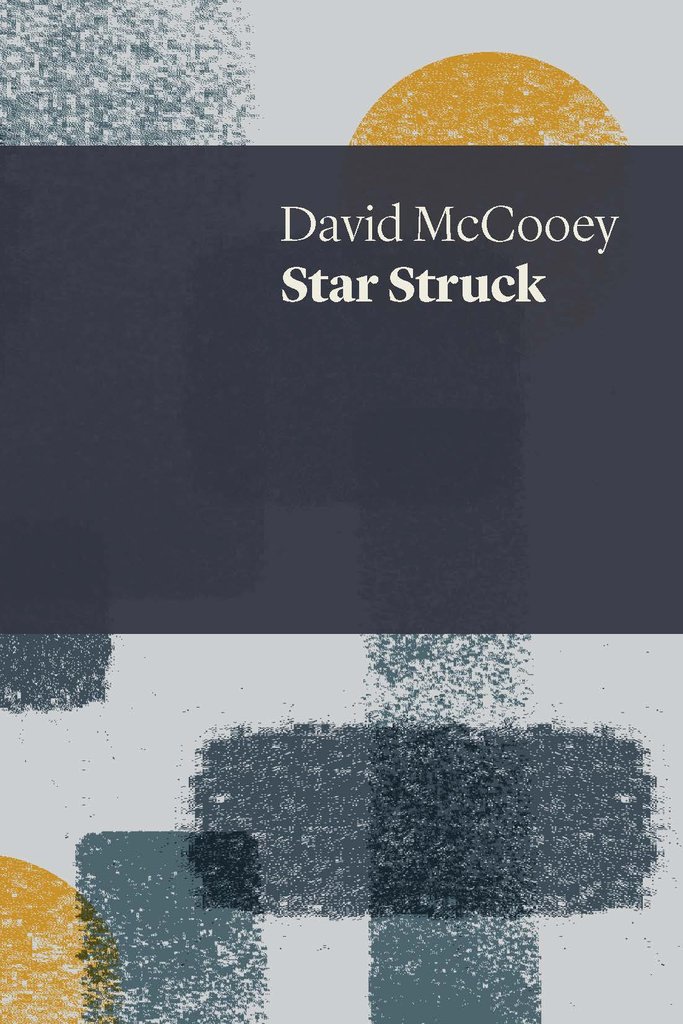
David McCooey is a prize-winning poet and critic. His latest book of poems, Star Struck, was published by UWA Publishing in October 2016. His previous collection of poems, Outside (2011), was shortlisted for the Queensland Literary Awards, and was a finalist for the 2012 Melbourne Prize for Literature’s ‘Best Writing Award’. Continue reading

Posted in INTERVIEWS | Tagged , , , , ,

Jesse Nathan Interviews August Kleinzahler


Image courtesy of FSG Books

August Kleinzahler’s latest book is Music I-LXXIV, and it’s his first book of music criticism. For his collections of poetry, he’s wracked up quite a trove of honours, including the National Book Critics Circle Award in 2008. Though he’s lived in San Francisco for decades, his poems wander the world, his forms and language ranging from mood to mood, his lines sinewy and learned and sonorous. One day in early July, I took the N-Judah over from the Sunset, where I live, to meet him at Finnegans Wake, a bar he likes not far from his apartment. We drank beer and recorded a conversation.

Continue reading

Posted in INTERVIEWS | Tagged , , , , ,

3 Translated Ester Naomi Perquin Poems


Image courtesy of David Colmer

Ester Naomi Perquin (1980 —) is a prize-winning Dutch poet. The Hunger in Plain View, her first collection in English, will be published in early 2017 by White Pine Press (USA). Perquin put herself through writing school by working in the Dutch prison service, and this experience informs her poetry, particularly the 2012 collection Cell Inspections from which these three poems are drawn. The work is colloquial but crafted, and the challenge for the translator is trying to maintain both these aspects as well as the clarity and individuality of the poems’ diverse voices. At times it was necessary to let Perquin’s rhymes fall by the wayside, as they would have been too obtrusive in translation and weren’t defining enough to justify major deviation from the original. Fortunately the poems have enough depth and originality to work in English despite such occasional losses.


Within Limitations

You get used to your format. Walls built up out of patience, the height of the ceiling with peculiar stains, a sticky floor, your unstoppable breath feels out the room and rebounds, in the dark your hands know where to find the switch, your cigarettes, know how to move, you get used to smoking in the dark, the visions of your sons still the most intense, them riding round on bikes with flat tires, wielding tools nobody explains, drawing a bead on the wrong birds, scraping their cheeks raw with your blunt razor. You get used to it. Under the blankets your wife tosses and turns herself naked, you feel her next to you, stretched out life-size, and try to touch her, you get used to a body nobody ever caresses and more and more lost, you circle her, difficult to console. You get used to the view like you get used to a story, the one who read it to you, almost asleep, years ago now, the point mostly escaped you, and it’s not the only thing you’ve forgotten and you get used to the afterimage that is left: thieves leap out and start singing, and there’s a man with a scythe, a woman in a tower, arms spread as if waiting to fall but she’s waiting of her own free will, smiling. You get used to it. There being some intrepid someone who will later come to rescue her, defeating the thieves and mowing down the man with the scythe. You get used to the tendency to call her in. To remaining hesitant at first, then your habits, a stripe of light on the sheets, the iron door, the leaking faucet, the cigarette burns in the curtains, your nude and accommodating posters, the all-seeing head that bends at night, the breath of justice, other men talking and distant music, the way things start to creak, the slow departure of steps down the corridor, you get used to being afraid, your complete nakedness, sperm on your hand, slug that you are, you get used to turning things over, to the pointless breathless never-ending constant, you get used to the constant thinking.


Binnen Beperkingen

Je went aan je formaat. De muren gestapeld uit geduld, de hoogte
van het plafond met merkwaardige vlekken, een plakkende vloer,
onverstoorbaar tast je adem ruimte af en slaat weer terug, je handen
weten in het donker waar de schakelaar, je sigaretten, weten hoe
zich te bewegen, je went aan roken in het donker, ziet je zoons nog
het hevigst, ze fietsen rond op lekke banden, hanteren gereedschap
dat niemand ze toelicht, schieten op verkeerde vogels, schrapen
met je botte mes hun wangen rauw. Je went. Onder de dekens
woelt je vrouw zich bloot, je voelt haar naast je, uitgestrekt
op ware grootte, probeert haar aan te raken, went aan een lichaam
dat niemand nog aait en jij meer en meer dwalend rondom haar,
lastig te troosten. Je went aan het uitzicht als aan een verhaal, aan wie
het je heeft voorgelezen, toen al bijna in slaap, toen al jaren geleden,
de strekking is je goeddeels ontgaan, zoals je wel meer bent vergeten
en je went aan het nabeeld dat is ontstaan: rovers springen te voorschijn
en zingen, er is een man met een zeis, een vrouw op de toren, de armen
gespreid alsof ze wacht om te vallen maar toch wacht ze vrijwillig,
ze lacht. Je went eraan. Dat er iemand zal zijn die haar straks
onverschrokken komt redden, de rovers verslaat en de man met de zeis
neer laat maaien. Je went aan de neiging haar binnen te halen. Aan
eerst aarzelend blijven, dan je gewoonten, een band met het licht
op de lakens, de ijzeren deur, de lekkende kraan, de brandgaten
in de gordijnen, je posters naakt en gewillig, het alziende hoofd
dat zich buigt als het nacht is, de adem van rechtvaardigheid, aan
andermans praten en verre muziek, hoe de dingen dan gaan kraken,
het langzaam verlaten van een stap op de gang, aan het bang zijn
wen je, je volledige naaktheid, zaad in je hand, slak die je bent,
aan het malende wen je, aan het nutteloze ademloze almaar
doorgaande, aan het doorgaande denken raak je gewend.

Posted in TRANSLATIONS | Tagged ,

2 Translated Edith Södergran Poems


Creative commons

Edith Södergran (1892-1923) is one of the greats of Swedish-language modernist literature. She died at the age of thirty-one, before her genius had the chance to be truly appreciated. Diagnosed with tuberculosis in 1909, her eventual death in 1923 was anticipated for the entirety of her short adult life. It is largely due to this consumptive fate, along with the loss of her large fortune during the October Revolution of 1917 (and, in part, her gender) that Södergran is often unfairly remembered as meek victim, isolated from the world, suffering and alone.

How to translate the death of God? A simple enough task, perhaps; much like in Södergran’s Swedish grammar, a seemingly innocuous change of case executed in the English language can have appropriately cataclysmic repercussions. The grammatical reenactment of an unmoved mover condemned to plurality would seem, then, to speak in both languages. But does this poetic descension – from proper to common – really translate? A more pertinent question might be: What exactly is it that must be translated? Are these words expected, as they are rendered into English, to capture the experience of a consumptive patient thumbing excitedly through the pages of Nietzsche, or is it enough that they portray the giddiness of the translator, a former Catholic schoolboy, as he resists the guilt-ridden allure of the shift key? What is it this reiterated little “g” is saying, as it transgresses both divine law and linguistic conventions? The act of translating “God” – this seemingly simple poem – reveals essential questions concerning the very act of translation itself. As the answers to such questions lie far beyond the realm of a brief translator’s note such as this, it must suffice here to pose a few further questions. While I have destroyed Södergran’s words to make them my own (as Rosmarie Waldrop would no doubt agree), as a reader – since all translators are, first and foremost, readers – weren’t they my words to destroy, anyway? Isn’t God also my god to kill?


My Soul

My soul can impart and know no truth
my soul can only cry and laugh and wring its hands;
my soul cannot recall and defend
my soul cannot consider and confirm.
When I was a child I saw the ocean: it was blue
in my youth I met a flower: she was red
now a stranger sits beside me: he is colourless
but I fear him no more than the damsel fears the dragon.
When the knight came the damsel was red and white
but I have dark circles under my eyes.


Min Själ

Min själ kan icke berätta och veta någon sanning,
min själ kan endast gråta och skratta och vrida sina händer;
min själ kan icke minnas och försvara,
min själ kan icke överväga och bekräfta.
När jag var ett barn såg jag havet: det var blått,
i min ungdom mötte jag en blomma: hon var röd,
nu sitter vid min sida en främling: han är utan färg,
men jag är icke mera rädd för honom än jungfrun var för draken.
När riddaren kom var jungfrun röd och vit,
men jag har mörka ringar under ögonen.

Posted in TRANSLATIONS | Tagged ,

Santiago Vizcaíno’s ‘Porn Verse’


Image courtesy of UT Dallas

Santiago Vizcaíno (1982 —) was born in Quito, Ecuador. He studied degrees in Literature at the Catholic Pontifical University of Ecuador (PUCE) and the University of Málaga, and currently serves as the Director of the PUCE Center for Publications. He has published three books of poetry, one short story collection, and a book-length study on Argentine poet Alejandra Pizarnik. His work has received several accolades, among them the Ecuadorian Ministry of Culture’s National Literary Projects Prize and the Second Annual Pichincha Poetry Award. His poems and short stories have appeared in translation in a number of journals, including The Bitter Oleander Review, Chattahoochee Review, Connotation Press, Eleven/Eleven, eXchanges, Lunch Ticket, The Brooklyn Rail and Ezra. The poems translated here are taken from his most recent collection of poems, Hábitat del camaléon (Ruido Blanco, 2015).


Porn Verse

It was a line suggestive of genitalia,
or was it genitalia that dictated the music
of the slow movement of the hidden?
The words tripped each other up
in the glimmer of a pair of eyes like a disco
seen from the outside.
And yet it was possible to read
—strange mechanism ordered upon the naked page—.
There was a vague idea of sex finding its den,
a supine reflection made light by semantic premonition.
But it was not possible to explain,
for nor did the metaphor open into catacombs,
only into the slow future of interpretation.
Or perhaps the reader never knew to observe his own life
that grew upon the pubic hair arousing the abyss?
And if that is what was meant,
what clumsy circumstance developed that syntax?
Not the poem.
Not the sharp story like a tongue.
Yes the hidden place.
Yes the flame of copulation.
Yes the luminous cock waning in the cave.
Ah!, and the resounding orgasm of faked music.


Verso Porno

Era una línea que sugería unos genitales,
¿o eran unos genitales que dictaban la música
del lento movimiento de aquello que se oculta?
Ciertamente las palabras se atropellaban
en el destello de unos ojos como una discoteca
vista desde fuera.
Y sin embargo se dejaba leer
—raro mecanismo dispuesto sobre la página desnuda—.
Había una idea vaga del sexo encontrando su guarida,
una reflexión supina aligerada por el pálpito semántico.
Pero no se podía explicar,
porque tampoco la metáfora se abría en catacumbas,
solo el lento porvenir de la interpretación.
¿O acaso el lector nunca supo advertir su propia vida
que crecía sobre el vello genital excitando al abismo?
Y si era aquello que designaba,
¿cuál torpe circunstancia había logrado desarrollar esa sintaxis?
No el poema.
No el cuento filoso como una lengua.
No la escena del teatro del absurdo.
Sí el escondrijo.
Sí la flama del concúbito.
Sí la verga luminosa apagándose en la cueva.
¡Ah!, también el orgasmo sonoro de la música fingida.

Posted in TRANSLATIONS | Tagged ,

The Anxiety of Affluence

can’t hide the tired beard, or unknow?
what you’ve seen, absolutely?
flat out screening, yes?
it takes as much as it gives?
even though all five walls are never quite right?
but you’re not as guilty as the guillotine in your head?
no one will
suit up for the argument or intimidate the witness?
replay the footage from the land of rumbling stomachs?

truth is hollow like a shudder

every day that clever voice, it tells itself?
don’t be aware, be alert?
not to feel freedom’s easiness?
what can you do
it’s like stabbing knives?
you’re a good man chained to command?
this proud business, shifting digits?
it makes you laugh all over?
your eyes are as blank as a bank?

Posted in 77: EXPLODE | Tagged

Off Kilter

This be the fulcrum, order’s pivot. Powers oscillate
my words the rivet, evil, chthonic, to show you

malfeasance, the urgency to recompense, the levers
wholly off kilter: 1) The tigerfish is the carnivore

of the Congo. Obtruding fangs eyes tenebrous
hideous diffused in glass can sink teeth into plastic

pillar coral. The poison dart frog has been brought
here from South America. Multihued little hunter lurks

synthetic foliage the flash of my camera. The spider
crabs have ten elongated legs and pinions. Horror

creatures incandescent aquarium. 2) This centre offers
unbeatable shopping experiences. A Valhalla of glamour

and discounts, afford purpose routine rush knowledge
grand survival. Enjoy your day at the world-famous indoor

entertainment park. The hottest names in fashion, Italian
pronounce educated expert to learn life. Delight

in a plethora of delicacies from all over the world. Arancini
di riso and cannoli yum ye grim third world scum

envy wish I was me. 3) Our aim is to end poverty, empower the planet’s
underprivileged. Bank loans for the poor spreading prosperity

handout saviour pivotal part of the solution without me and my
purse the world would end surely say it surely. We are a group

of passionate, dedicated people, fighting injustice and saving
lives. Ending genocide, achieving world peace, the political

don’t need it first world superiority magnanimity victims
shouldn’t be pugnacious but grateful I’m here stop it thank god

for me. Support families ravaged by conflict and donate
to Save the Children Appeal. Educating the homeless

satiating the hungry don’t end up asking what’s the point such a
fucked up world where’s fucking god believe in god beggars

don’t be but indebted the pittance no revolution remain cute
faithful helpable for me because I love you I do now smile

for the camera I said. 4) Written vividly with compassion,
this book sets a new standard for creative non-fiction. Delightful

life-affirming, confirming the other of disgust hate desires
angry ageing bourgeois crave destroy the world punish for

wrinkles and cancer. This is a witty and compelling account
of identity and existence in the contemporary world. Some of

the best most original writing of the year, multicultural what
racism give two shits postmodernist sophists we understand lit

lip service against our love for money. This is a superb
collection of memorable poems showing an author at the peak

of her powers. Magnificent and lyrical, philistines proud throw
cash poets no one ever reads announce pedestals force kids

to study their crap will think not pretenders but cultured. This is
the vital, indisputable role of literature in our society. 5) I was

born in Iran in 1976 and immigrated to Australia in 1991. Lucky
got away from so much war oppression don’t give a fuck

fanatical losers bloodthirsty strangled economic sanctions
diabolical I’m free now Australian bank account western

passport so fucking ecstatic when I’m confused for a Spaniard
or an Indian. I hold a BA with Honours in Creative Arts and

a PhD in professional writing. Five books published, the sixth
on its way, worked my arse off I can be good at English write

write write I’m not illiterate immigrant please it fucking hurts
when rejected get rejected all the time. I am a pacifist, an agnostic

and a contrarian. I enjoy travel and reading philosophy. What else
am I supposed to own up to contempt for mankind all the shit

in Iran racism in Australia knockbacks pretend I’ve moved on
mature not full of torment the girls never loved me the scholarship

I never got. A neat narrative of years and yearnings. Bio
-graphies must be brief, narrative, objective and so I must be

0) the fulcrum. Powers stumble, rumble, maintain the rivet
to join evil and chthonic, force you, deprive you until

the event, rupture, to recompense the grave hush-up
of these urges, the levers forever off kilter.

Posted in 77: EXPLODE | Tagged

Extinction Checklist

Count the lost:

those species
living only in stones.

Species
of a savage past
who held no power
in their habitat

to forbid

the building of a dam.
The scenery that
can scarcely repress the dead.

Check
their frequent disappearances.

Want to find
a way
to help

them cross

the harsh
black river to oblivion

where even the memory
of a time

when a thing
would fight back

to save its life

falls away.

Posted in 77: EXPLODE | Tagged

Roll Call

When you call my name
When your lovely voice enters my ears
I sigh and run.

You kept talking to me
Although my tongue was dry.

I traded the dog we raised in the yard with the neighbor’s dog. I dragged that dog to the mountain and tied it to a prickly, castor oil tree. In the yard we prepared a big pot. Struggling, the dog escaped.

Come here, come here.
Slow tone, rhythm uncertain.

The dog who hid somewhere runs toward its owner—does it believe in the love it has for the person that understands it? The one that understands me is the one that ties me up. That smell is the blood of my name being called.

The dog is passed back to these excited people. This time they watch until the dog is beaten to death.

People push and pull each other on the wooden bench.
The dishes and shot glasses are downed
And in front of the empty dog house, a few spoons of dried rice.

My dad calls me and I go up to the roof. Beyond the corn fields is a new highway. Beyond the flowing clouds there is only the sound of frogs in the river valley. I long for nothing.

Even if you call.
Even you with the wings.

Posted in 77: EXPLODE | Tagged ,