Jessica Wilkinson Reviews Lisa Jacobson

Lisa Jacobson

The Sunlit Zone by Lisa Jacobson
5 Islands Press, 2012

The verse novel is a peculiar organism: descended from the sweeping epics that chronicled the birth of nations and the misadventures of wayward heroes, we can still find characters struggling on their ‘grand’ journey – likely to be a personal, emotional and/or psychological journey – with the occasional battle scene (though, this is more likely to take place on a much smaller, personal level). As a distinctly modern form, there is certainly much less aggrandisement of the natural world via mythical and magical hyperbole in the verse novel. Continue reading

Posted in BOOK REVIEWS | Tagged , , , , ,

Review Short: Patricia Sykes’s The Abbotsford Mysteries

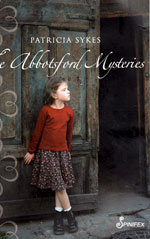
Sykes

The Abbotsford Mysteries by Patricia Sykes
Spinifex, 2011

Patricia Sykes’ fourth collection of poems, The Abbotsford Mysteries, is a lyrical working-through of the experience of girls and women at the Abbotsford Convent in Victoria. While the site (located on the Yarra north of Melbourne) is now an arts and cultural hub, it served as a Catholic girls’ home from the 1860s until the 1970s, run by the Sisters of the Good Shepherd. The convent was built at the beginning of the twentieth century, and operated as a boarding house and school for ‘wayward’ girls and women, orphans, migrants and girls from rural areas. Given this context, it’s hard to read and react to The Abbotsford Mysteries without relating it to recent revelations in the media regarding the prevalence of child sexual abuse in Australian Catholic institutions, and the eventuating Royal Commission into such abuse. Continue reading

Posted in BOOK REVIEWS | Tagged ,

Review Short: Jo Langdon’s Snowline

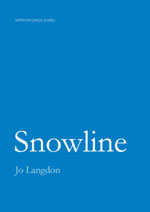
Langdon

Snowline by Jo Langdon
Whitmore Press, 2012

It can be argued that one way to begin to make your ‘mark’ is to settle on a theme; in marketing, it’s a handle or a simple angle. In creative realms, it can be an oeuvre or a period, with a descriptor. Ideally, it should never be held too close to its object/subject for fear of typecasting, but for an emergent poet, it may well be the thing that reassures readers and helps them with a doorway into your work.

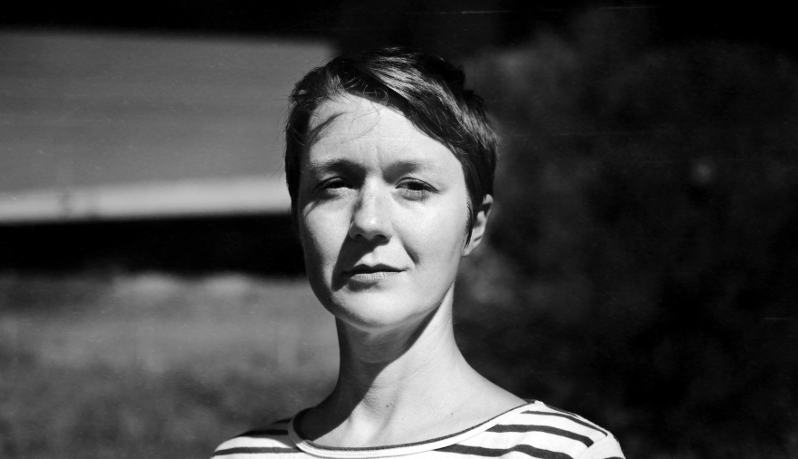
For a first chapbook, a theme can also be the way to find publication. Jo Langdon’s Snowline is the 2011 winner of the Whitmore Press Manuscript Prize, a welcome initiative for emerging poets from the Geelong-based Whitmore Press. It’s a deserving winner, and a pleasure to experience.

Continue reading

Posted in BOOK REVIEWS | Tagged ,

More Intensity: Topography of Poetry Outcrops

In April, 2012, I published a Guncotton blog post, responding to a paper given by Peter Minter in Melbourne. Specifically, I was interested in his proposal that Australian poetry could be viewed as an ‘archipelago’ of ‘psycho-geographic’ poetic activity. With thanks to Cordite Poetry Review for inviting me, and once again to Minter for his potent departure points, I’d like to expand on that post, particularly on seeking an alternative to national/ist and ‘monolithic’ ways of framing the poetry produced in and about this continent. By proposing an ‘archipelagic map’, Minter grants local poetry an appropriate critical framework that steers away from some problematic aspects previously encountered in reading and defining ‘Australian poetry’. In doing so, this framework negotiates a view of local poetry that is properly sensible to the actual, situated ethics of poetic practice and community.

Australian literature and poetry have enjoyed recent reappraisals in terms of the transnational and even global – terms that move beyond the fraught bounds of nationality and nationalism, and that rightly acknowledge the ongoing process of exchange, translation, influence and visitation that shape all writing including Australian. However, these enlightened critical concepts remained limited; transnationalism relies on the exclusive agreement of what is national, and Marshall McLuhan’s notion of globalism seems too unwieldy and frankly unrealistic (as well as creepily corporate) to describe literary practice.

Produced within immediate localities and regional histories, poetry and perhaps all aesthetic practice may be situated within any number of specific ‘intensities’ or ‘outcrops’. This way of seeing poetry has something in common with the established field of ecocriticism or ‘environmentalist cultural criticism’, namely that both claim a located view of literary practice and culture. However, Australian literary criticism and poetry have had a mixed relationship with ecocriticism.1 While by definition a transnational movement, it’s fundamentally related to a North American history of environment, particularly to notions of wilderness and the pastoral. When it ‘calls for a poetics derived from the interface of imagination and ethics, but predominantly informed by modern environmentalism’ – ecopoetics – it is traditionally invoking a North American literary history from Thoreau to Gary Snyder, Wendell Berry, Forrest Gander and onwards.2 For these reasons ecocriticism and ecopoetics, which have certainly been inhabited by Australian critics and poets, nevertheless impose upon them an imported set of concepts and traditions.

Importation itself, of course, has poetic value; after all, the trans part of transnational (or TRANSPACIFIC) seems very useful to thinking about how poetry and poetics are situated or placed within localities. But if we define place as a scale of infinitely nested localities, we can justify the concern that an international framework like ecocriticism may obscure significant local views. For instance, let’s consider some hypothetical poetic intensities or outcrops that might exist in and around the Australian continent: Australasian, trans-Tasman, transpacific, Oceanic, mainland and so on, all the way along to tropical northern, south-western, Bass Strait, detention-centred, and so forth. In his introduction to John Mateer’s the west: australian poems 1989–2009, Martin Harrison notes that an individual poet such as Mateer may possess several ‘parallel … organisations of networks, of overlapping centres of interest’ stemming from place.3 These are specialised, grounded in location. This is not to say that such outcrops are incomprehensible to critique; they are as much concepts for the free critical apparatus as they are reflections of how local poetry gets made.

Localism is at present enjoying a certain cultural cachet in parts of the heavily industrialised world. In that context, there are plenty of good reasons to be sceptical about it, not least when it manifests in contradiction, e.g. somebody sitting in a Brisbane locavore restaurant twiddling with their Chinese manufactured i-thing. In a critical context, however, location and locality offer a compellingly expansive frame through which to read Australian poetic practice. That frame is extendable from the local to the regional – bypassing the obstruction of nationality and thinking more specifically than globally. That somebody, perhaps, is a poet; he might be waiting for a group of friends, who are tonight celebrating a place that lies beneath their poetry: at the table will be Emily Bitto, Rhyll McMaster, Liam Ferney, Lionel Fogarty, Luke Beesley, Judith Rodriguez, Jaya Savige, David Malouf, Sarah Holland-Batt, and an empty chair for Gwen Harwood. (Dear critic, the guest list remains unfinished; add, subtract or rearrange place settings as you wish.) He might be reading Timothy Yu or Keiji Minato in Mascara Literary Review, or doing a bit of research apéritif to his Asialink residency in Singapore. Or he might have just flown across the ditch to catch up with his Australian publisher or to give a guest reading.

Because it recognises location in place, an archipelagic map or view of local poetry reflects real (and speculative) poetic communities and practice. Thus it proffers a potentially rigorous and revisionist critical mode in the spirit of transnational studies. I’d previously thought that ‘island poetics’ would be a suitable phrase to describe what this critical map might see; on second thought, however, the figure of the island is too readily associated in literary terms with isolation; as well as having for Australians unfortunate colonial, penal, exclusionary and escapist connotations, not to mention a settler history of anxiety about distance. On the other hand, ‘archipelago’ nicely conveys the sense of (geological, cultural, political, ecological, linguistic, economic and physical) interconnections that we see at work between local poetic outcrops.

Apart from those outcrops linked physically and psychically to settler cities and towns, another kind of archipelagic intensity might be found in Indigenous nationhood, with its own extensive and complex map. Woven into that poetic map might be connective histories of kinship, language, story and trade but also of movement, exile or return. Alongside that map, there is another, much sketchier one that may illuminate how some settler poets seek to ‘write about Australia’: a desire sensitively explored by Mateer in his essay, ‘Nativism and the Interlocutor’, in Cordite 40: INTERLOCUTOR. Can an archipelagic view of settler poetic activity help to locate and explore Mateer and other poets’ ‘wanting to imagine … the spirit of place’?4

Posted in ESSAYS | Tagged , ,

Letter to Michael Nardone

27th January 2013

Hi Michael,

Thanks for your letter. When Kent MacCarter first invited us to co-pilot this little Cordite dinghy and asked for our thoughts on transpacificism, I fell back on the opening lines of Richard Brautigan’s ‘Pacific Radio Fire’ – ‘The largest ocean in the world starts or ends at Monterey, California. It depends on what language you are speaking’. A tiny story of radio-burning and quotidian heartbreak, it is a narrative speck on the Pacific rim, dwarfed by ‘the hugeness of the Pacific Ocean with all its vocabularies’. Indeed, the Pacific, as a whole, is unfathomable.

Hogan

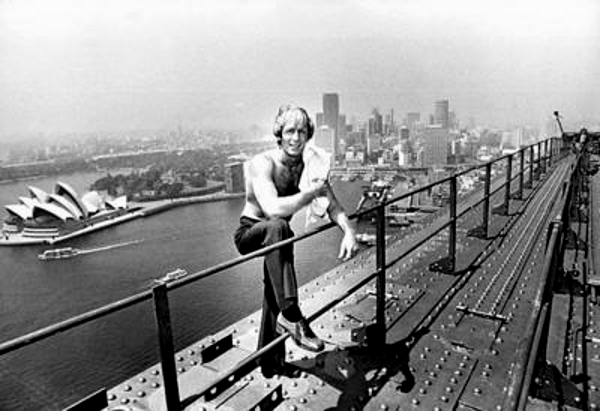
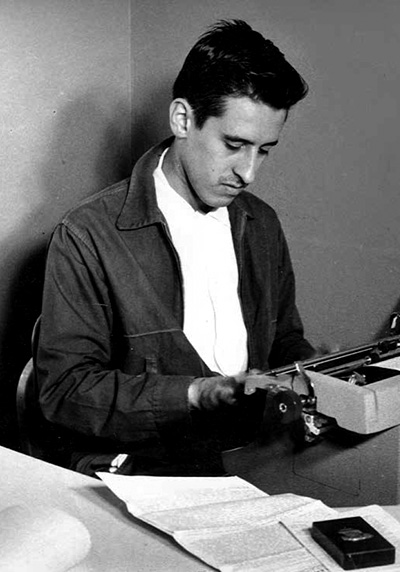
Paul Hogan builds the Sydney Harbour Bridge

I’ve noticed that most writers have their own means of denoting space for an idea that has yet to be articulated. Mine looks like (…). Yours is [///]. Perhaps we can ascribe a vague shape to this unfilled space, perhaps we even recognise it as having a particular cadence or rhythm – we just haven’t yet found a way of fitting language to it.

In the case of the Pacific, how else can that space, that parenthesised wordlessness be articulated but collectively? For the sake of this issue, ‘trans’ – across, over, beyond – provides a literal and conceptual starting point. If we are going across, over, beyond, there must then be origin and destination, a point A and point B. As well as the more direct interpretations of migration, both human and animal, we see that expanse traversed though other means; linguistically, commercially, epistolarily.

I first read many of our thousand-odd submissions while in transit across the Pacific, scrolling through Guam, Japan and Tonga en route to my first Northern winter. There are always poems that manage to find you right where you are, and there were poems that found me cruising at an altitude of 40,000 ft, steeped in the unhealthy glow of a laptop as my fellow passengers folded themselves into awkward parodies of sleep. I read B R Dionysius’ ‘On Not Having Encountered Snow, Aged 43’ never having encountered snow (aged 28). A few days later, tramping over icy footpaths to meet you on Rue Saint-Viateur on an innocuous minus-ten-feels-like-minus-twenty afternoon, I was the coldest I had ever been (and handling it with somewhat less grace than a migratory whimbrel). While most of our editorial discussions would later echo lines from Ian Gibbins’ ‘Dateline’ – ‘the telephone rings/and we stop, on time, today again yesterday’ – here was a brief window of synchronicity. Although the internet is, as Susan Shultz put it, ‘the fastest of the many kinds of canoes that have crossed the Pacific’, it cannot outstrip Skype glitches and conflicting sleep patterns.

So, in a small café in Mile End, we exchange editorial approaches and provide contexts for poems that respond to our nations’ politics. I attempt to explain how Australia has effectively excised Australia from Australia’s migration zone, and turn to Mark Roberts for help. We begin mapping out the issue, in a more literal sense than is typical; a curation that is part cartography. Though if it is to be taken purely as a map, the result could never be anything but incomplete; the faint tracing of coastlines and the smatterings of language heard a long way from shore. If we are to assign a function to this issue, it is more one of journey—the crossing, the over and beyond. I’d like to think it brings us a fraction closer to fathoming the [///].

All best from Melbourne,
J.

Posted in ESSAYS | Tagged ,

Letter to Josephine Rowe

11 January 2013

Dear Josephine,

It is tomorrow where you are. There are record heatwaves and bushfires burning through the interior. Red-brown clouds of smoke where the woodlands smolder. Here, in Montreal, we are deep in snow. Deep in snow, I mutter out loud, tromping over Mont Royal: Deep in snow, eep in ow, e – i – o. Barely a syllable seems to rise above the drifts.

Continue reading

Posted in ESSAYS | Tagged ,

HCI and The Muses of Poetry: Calliope Recites Jenkins, Lilley, Langdon and Williams

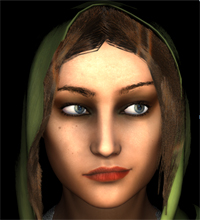
The character Calliope awaits instruction …

The Muses of Poetry is one of the current projects at the Research and Development Department of the Institute of Animation at Filmakademie Baden-Württemberg in Germany, that intends to bring poetry – its emotionality, auditory structures and nuances when words meet elocution – to a larger audience. This is achieved through an interactive installation that makes use of character animation, voice synthesis and affective semantic analysis of poems, all in real-time.

The project, funded by the Ministry for Science, Research and Art in Baden-Württemberg, started in November 2012 with the goal of finding new ways to experience poetry. As a result, a first prototype has been created with a realistic female character named Calliope, a poetess in The Muses of Poetry. For this project, visual and tonal representations of gender are important and must be considered in programing. Cordite Poetry Review has provided some guidance in the reading of poetry and, more importantly, a first batch of poems for Calliope to engage with. Further collaboration is planned in 2013.

The interaction begins when the virtual character invites a user to select three words from a word cloud, allowing her to decide the poem to be recited. Underpinning The Muses of Poetry is an extensive sequence in intelligent semantic analysis, novel Human-Computer Interaction (HCI) techniques, real-time automatic lip-sync and facial animation – developed and implemented at the Research and Development Department of the Institute of Animation.

Before The Muses of Poetry, our R&D team had been involved in several projects regarding conversational virtual characters. One of the most notable is the Agent Framework, which is a development platform for character-centric application prototypes. It has been designed as a set of modules that allow the fast and easy creation of realistic virtual characters. Among the projects we find a short film featuring Klaus Kinski as a 70 year old man, for which a completely digitised, aged version of the deceased German actor’s head and face were created; Emote, a system for creating animated messages for mobile devices; and Nikita, an installation with a female character that replies to questions according to a script, becoming visibly sad when insulted and happy when complimented. Behind all these applications is the Facial Animation Toolset – a plugin for Autodesk Maya – that facilitates the creation of facial expressions in different characters. The satisfactory results of these works inspired Volker Helzle, head of R&D, to develop a ‘poem reader’ that interacts with an audience, reciting and expressing the affective content of poems through facial expressions and finely-tuned audio controls.

‘For the Road’ by Carol Jenkins

Why poetry?

During the last three decades, interaction with computer-generated content has become a more natural and common activity. Human-computer interaction (HCI) has undergone a number of major improvements – from virtual characters on display in kiosks at museums and airports, to state-of-the-art augmented reality installations where a user embodies an avatar and engages with environments through its eyes.

But full interaction within a literary environment is quite new and one scenario where such interaction can provide an enhanced experience occurs within the topography and lexicography of poetry. In a poetry reading, for instance, the poet stands in front of an audience, reading his or her poem without interruption. But what would happen if, before the reader began, the audience suggest words for the poet to then extemporaneously settle upon a poem that best fits the cues? And for immediate recitation at that? This is the precise scenario we intend to recreate in Muses of Poetry. Achieving this goal, however, poses a number of questions: How to assess a poem’s emotional content? How to restrict a selection of words on the user’s side? How to organically interact with the character? Where to obtain the poems? I’ll address all of these questions and explain how we intend to achieve our objectives.

A bit of Greek mythology, a lot of semantic analysis

The Muses of Poetry is namesake to the muses of Olympus who inspired poets of the ancient Greek era. Therefore, our first character has been named Calliope – the ‘beautiful-voiced’ – who was the muse of epic poetry and wisest of all Olympus muses.

With this as inspiration, we faced our first big challenge: exactly how to analyse poems in order to obtain its affective content. A tool complicit in this task is the Dictionary of Affect in Language (DAL), created by the psychologist Cynthia Whissell 1, which is based on results of users’ evaluation of words in a variety of media. The version of DAL we are using includes 10,368 English words with affective connotations, where each one is described with regard to the dimensions of Activation (or Arousal) and Evaluation (or Pleasantness).

‘Genie’ by Kate Lilley

DAL operates as a licensed stand-alone application, and allowed us to introduce, then scrutinise the text of a poem to obtain relevant affective information of that poem. This information gives us a general assessment of the poem in terms of activation, evaluation and imaginary dimensions. It also provides a detailed classification of each major cue word in the poem according to the following states: pleasant, nice, fun, passive, sad, unpleasant, nasty, active, high imagery and low imagery. In the current alpha version of The Muses of Poetry, we only consider the pleasant, nice, fun, sad, unpleasant and nasty states. Beta versions and beyond will engage with an ever-broader assessment of emotional states.

Using DAL’s output, we developed an algorithm for the elicitation of the emotional expressions in the character. This prompted two analyses. First, we assessed if the whole poem was emotionally positive or negative. Then, equipped with this information, we evaluated each line of the poem by considering its individual words. For instance, if a line contained more unpleasant words and the poem was assessed as negative, then that line was tagged as ‘unpleasant’. This procedure was performed offline for all the available poems we had (most from Cordite). Thus, when loaded to The Muses of Poetry system, it would know which emotional facial expressions to trigger according to pre-tagged text.

As a starting point, we realise the process noted above is a literal reading of words and their definitions. We acknowledge that idiom, metaphor, simile and double entendre are tenets of poetry and aim to accommodate those tools in future versions.

Frapper: facial expressions and lip-sync

At the Institute of Animation, we have developed a custom framework that allows us to implement different applications that range from conversational characters to stereoscopics. Frapper, short for ‘Filmakademie Application Framework’, is a node-based tool that enables developers to focus on the core functionality of their application and research, while providing the basic foundation for operation.

One of the main advantages of Frapper is its modular architecture that allows any developer to plug in their app nodes. This first prototype of The Muses of Poetry has been developed using Frapper and features real-time animation rendering. But before their final display, these animations required creation in a program like Autodesk Maya or 3ds Max. Once complete, the animations were exported to a Frapper-compatible format. This was done through the Open Source 3D Graphics Engine.

Posted in ARTWORKS | Tagged , , , , , , ,

El Salvador Tragic: 10 Roque Dalton Poems from 3 Books

Roque DaltonRoque Dalton | courtesy of Transparencia Activa

As far as tragic poets’ stories go, Roque Dalton’s (El Salvador, 1935-1975) is perhaps the most tragic in Central America. In the 1950s as a Law student, he was the brightest of a literary movement which is now referred to as the Committed Generation, a group of militant leftist writers who saw art as a revolutionary act. ‘Commitment’ meant joining the cause of a communist revolution. Since any kind of dissent had been outlawed by military dictatorships in El Salvador since the 1930s, signing up to such an endeavour led to prison, exile or death.

Continue reading

Posted in TRANSLATIONS | Tagged ,

Secretary of Smash the State

Some influential, provocative articulations of position made by American US poet Kenneth Goldsmith are through redefinitions of the type of work that poetry is, and the type of work a poet does. Goldsmith’s critical writing continues to attract controversy in Canada and the USA, partly by how his re-figuration of the idiomatic labour of the poet challenges the discourse of craft. Rather than a specialised virtuous labourer or artisan, Goldsmith’s poetic worker is a hybrid of wage slave and outlaw. Continue reading

Posted in ESSAYS | Tagged , , , , , ,

Men Stink of Far Cities: Translations from Jean Mariotti’s ‘Sans Titre’

Born in Farino, New Caledonia, in 1901, Jean Mariotti became that island’s foremost author of poetry, novels … and one children’s book, Les contes de Poindi (his only published English translation). Much of his adult life was spent in Paris, but he often returned to his island home for years at a time. Please read Le roi Nickel: Jean Mariotti en Nouvelle-Calédonie, a terrific account of his life and work by Eddy Banaré (in French only).

Continue reading

Posted in TRANSLATIONS | Tagged ,

Le roi Nickel: Jean Mariotti en Nouvelle-Calédonie

[Cordite Poetry Review published this piece only in its native French.
Resources for its translation were unavailable – KM]

S’il vous plaît lire les traductions en anglais de ses poèmes.


C’est ainsi que Mariotti s’est présenté en 1948 à l’éditeur Stock, donnant à voir les trajectoires qui font sa nouveauté dans le panorama de la littérature néo-calédonienne; il peut être ainsi considéré comme l’initiateur d’une modernité. Car son œuvre, qu’il entame à partir de 1920, apparaît comme une longue méditation sur la présence européenne en Nouvelle-Calédonie et dans la Pacifique. Son rapport au monde kanak contredit, en effet, le simple exotisme et le sensationnel dans la mesure où il en fait une matrice d’interrogations sur la présence européenne en Océanie. De fait, son œuvre est éloignée du document purement ethnographique proposé par Baudoux (la « vocation » accidentelle de ses contes et nouvelles), mais s’oriente plutôt vers la quête ou l’invention d’un geste fondateur et une compréhension renouvelée du monde kanak. Les notions d’interface, de biculturalisme, de transculturel ou d’hybridité sont également évoquées 1 comme marqueurs de cette modernité. L’implantation de Mariotti dans son pays natal est, en effet, des plus déterminantes, car placées sous le sceau de la colonisation pénale.

Jean Mariotti

Jean Mariottiphoto © Association des Amis de Jean Mariotti

C’est une vendetta qui amène son père Paul-Louis en Nouvelle-Calédonie en 1878; il a vingt et un ans. Après six années de bagne, il s’établit à La Foa. Devenu veuf en 1898, il s’installe à Farino, Marie-Louise lui avait donné cinq enfants. Il se remarie l’année suivante à Marguerite Aïna, italienne d’origine qui, le 23 août 1901, donnera naissance à Jean. Au plan biographique, Mariotti réalise donc une totalité inédite de l’Océanie coloniale: fils d’un ancien bagnard dont est issue sa mère, un frère dans les laboratoires de la S.L.N, une enfance kanak bercée de contes et de légendes … Il semble en mesure de proposer une parole où s’entrechoqueraient celles du bagnard, du pionnier, du colon, du « sauvage », et même du fonctionnaire de l’administration coloniale. L’enfance à Farino, c’est la propriété paternelle: douze frères et sœurs dont Jean est le septième. On y naît cavalier. C’est aussi l’élevage, les plantations de café, d’agrumes, une vigne expérimentale, une tannerie, mais surtout, la présence de la chefferie Kawa, qui, à travers la présence d’une nourrice bénévole, participe à la légendaire « initiation canaque » 2 du futur écrivain. C’est Watchouma de À bord de l’Incertaine (1942) qui se rebaptise Mandarine après avoir symboliquement adopté le jeune Jean-Claude, le double romanesque de Mariotti. On retrouve également un personnage dénommé Watchouma dans À la conquête du séjour paisible (1952). Sur le plan biographique, cette mère adoptive de l’auteur aurait pour nom véritable Aroua. La singularité de Mariotti serait donc dans sa « fréquentation des mondes »; celle qui pousse l’auteur, au début de son œuvre, à se définir, comme Jacques, le personnage de son premier roman Tout est peut-être inutile (1929), comme un « un produit hybride: fils d’un colon, un broussard, un sauvage qui a reçu l’éducation d’un civilisé ». C’est un lien à travers lequel il tente d’éviter l’angélisme et l’exotisme bigarrés, mais plutôt quasi filial, fondé sur une reconnaissance.

La vie de ce nouveau centre de colonisation qu’est Farino se constitue lentement et les Mariotti en sont des acteurs importants: le père devient le président de la Commission Municipale en 1910, la scolarité de Jean se déroule en toute sérénité et fait la fierté de tous. L’élève est doué, sa réussite au Certificat de Capacité coloniale en 1920, le mène au Lycée de Nouméa: il fait désormais partie de ces jeunes colons prometteurs prêts à se réaliser dans cette métropole rêvée, ceux qui vont enfin échapper au labeur colonial. Nous avons vu, dans l’annonce de l’inauguration de la Bibliothèque de Melbourne en 1871 et les Chroniques de 1872, à quel point le désir était déjà grand de dépasser ce stade de l’édification coloniale. Si bien que dans les années 1920, la petite cité coloniale de Nouméa apparait déjà comme l’avant-poste d’un urbanisme à la française. Là-bas, Mariotti commence à découvrir les arts et la littérature, les ambitions et la vocation artistiques s’affirment: il pense à devenir peintre, mais le cadre d’une ville coloniale demeure inévitablement étroit. 1922, l’année où débute son service militaire, est également celle des premières tentatives d’écriture. Un poète est né: l’exil à Paris est son point de départ.

Posted in ESSAYS | Tagged , ,

NZ 6-Seater: A Chapbook Curated by Ian Wedde

Contents:

Floating Ribs by Selina Tusitala Marsh
Flood Monologue by Anne Kennedy
experiments (our life together) by Michele Leggott
Conversation with My Uncle by Murray Edmond
from ‘High Lonesome by John Newton
I Spilled My Story by Sam Sampson

Invited by Kent MacCarter to convene a 6-seater of local poets from this neck of the Pacific woods – New Zealand – I faced the usual short list of questions we all try to avoid answering:

1. What do you mean, ‘local’?
2. What do you mean, ‘Pacific’?
3. Can I invite my friends?

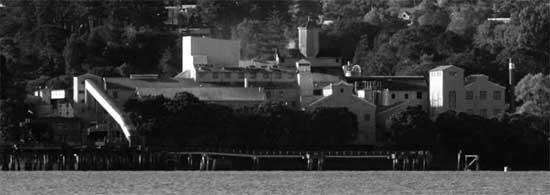
I live in Auckland again having left in 1969 when I graduated from Auckland University. I like the place – Auckland, I mean. It feels like home. When Donna, my partner, and I came up from Wellington to scout for somewhere to live in the blistering summer of 2010, we stopped for a cold beer at a popular bar called Chapel on Ponsonby Road, took a sip, and felt, ‘Yep.’ Later, I had a swim at a little bay near where we live now, and looked across the warm, murky Waitemata at the pink Chelsea Sugar Refinery. I’d relocated.

Chelsea Sugar Refinery

Chelsea Sugar Refinery | image by Ian Wedde

When I catch the green Link bus to the university where I’m currently working for a couple of years, I usually walk part of the way through Albert Park. At the time the Treaty of Waitangi was signed in the Bay of Islands north of here in 1840, Albert was married to Queen Victoria. My father had the same name. One day when I walked through it, Albert Park was filled with Asian students in gorgeous graduation silks. Their parents had given them big bouquets of flowers. Over at the Student Union, Pacific Island fafafine entertainers from K Road were belting out show numbers in front of a short brass section. One of my students was an intense Russian guy. When asked to write a brief text about something someone close to him believed in passionately, he submitted a lengthy deadpan piece about Mikhail Bakhtin’s concepts of heteroglossia and the carnivalesque. I asked him if he considered Bakhtin to be ‘close’ to him. ‘I live in the Pacific,’ he said, in his special flat way.

I don’t know everyone in New Zealand who writes poetry, but I know many of them. I know the six poets I’ve invited to contribute to this chapbook and count them among my friends. One, Selina Tusitala Marsh, is a Pacific Island woman; she describes herself as being of Samoan, Tuvaluan, English, Scottish, and French descent, which is pretty post-subaltern Pacific. Her famous book Fast Talking PI (2009) has an apt title. She’s a kick-boxer as well as a Professor at Auckland University, and she recently represented Tuvalu at the Poetry Olympics in London – in poetry not kick-boxing. Marsh’s live poetry performances are something else – and you can hear the kick-on of Pacific hip-hop inside her Thai kick-boxing manual ‘Floating Ribs’.

Anne Kennedy lives part time in Auckland, and the rest in Hawai’i where she teaches writing at the University of Hawai’i at Mānoa. It’s hardly a secret that she’s a screenwriter as well as a poet – one day I hope she’ll revisit the Bounty story, one of the great Pacific narratives. It’s never had the kind of quick pass scenographic precision Kennedy brings to her writing, though everyone loves the floppy 1962 version with Marlon Brando as Fletcher Christian. She’d get some air in the old thing’s sails, and it wouldn’t matter if she wrote a long poem or a screenplay. What’s more, Kennedy would think about the viewpoint ‘from the beach’.

Posted in CHAPBOOKS | Tagged , , , , , ,

Poetry as Extorreor Monolothe: Finnegans Wake on Bakhtin

1. The voice of the scholar

I was out drunk with friends one night in Perth, Western Australia. My father had just died. We were walking home, so to speak, and our path took us past the Church of Christ. At that, I launched myself at the wall of the church, found a toehold and lunged up into the air. I grasped the ‘t’ decal and with all my weight managed to prise it from the wall. The Church of Chris looked down upon us all. I continued on my way home, or rather to here, but not without the occasional somewhat gratified memory of the incident. I cannot help thinking of the sudden appearance of the Church of Chris as a sort of revelation, with something to say about the truth of something. That is what reading Finnegans Wake is like.

Continue reading

Posted in ESSAYS, SCHOLARLY | Tagged , , , , , ,

Ali Alizadeh Interviews Paul Kane

Paul KanePhoto by Florence Minnis

Paul Kane is the Professor of English and Co-Associate Chair of English at Vassar College in the Hudson Valley, 75 miles north of New York City. In addition to being a prolific poet and scholar of American literature, he is one of the world’s foremost scholars of Australian poetry. He studied at the University of Melbourne as a Fulbright Scholar to Australia in 1984-85, and has, since 2002, served as Artistic Director of the annual Mildura Writers Festival. He is also the poetry editor of Antipodes: A Global Journal of Australian/New Zealand Literature, and was recently named General Editor of the Braziller Series of Australian Poets. I caught up with Kane over a couple of coffees in Melbourne recently, and the following interview is the result of this conversation.

Continue reading

Posted in INTERVIEWS | Tagged , ,

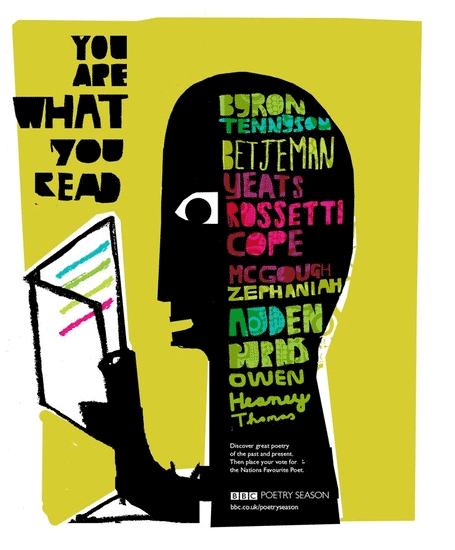
BBC Poetry Season: 4 Poem Postcards by Chris Haughton

I did a series of 10 postcards and a poster for the 2009 BBC Poetry Season. Each postcard was based on a classic British or Irish poem to promote the Poetry Season.

Here are four of them and the poster.

Posted in ARTWORKS | Tagged , , , ,

Reinventing the Ancient Across four Cultures, One Ocean

Introduction

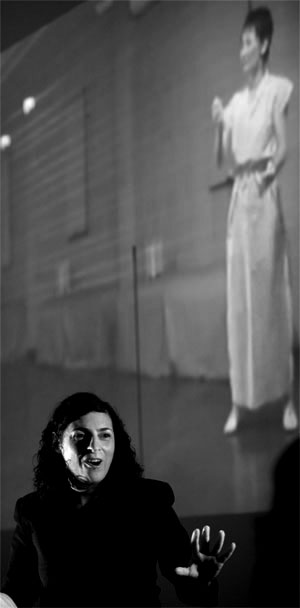
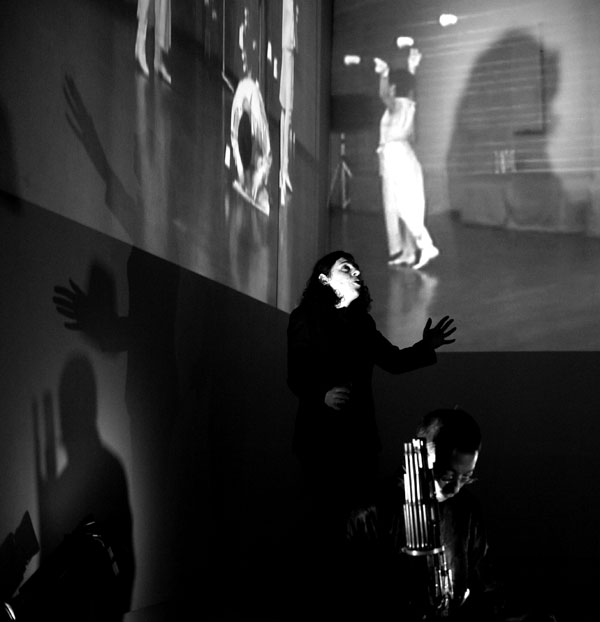
A Nest of Cinnamon was an international, multi-art form performance of three distinct art forms and artists:

1: poetry and spoken text created and performed by Angela Costi

2: playing of the Sheng instrument by Wang Zheng-Ting. The Sheng is an Ancient Chinese instrument – 3000 years-old – consisting of 17 bamboo pipes of differing lengths mounted onto a base

3: a music and dance installation created through the use of silk threads and paper cups by Stringraphy Ensemble (Japan-based).
Angela Costi

The collaborative mix of Ancient instrument, Sheng, modern reinvention, Stringraphy and Costi’s type of poetic practice led the artists to explore in detail the mythological journey of the Phoenix. The Phoenix myth spoke to them on many levels. It is a myth that is familiar to the world at large and yet misunderstood due to its popularity. In Chinese, Japanese, Ancient Greek and early Christian mythology, the Phoenix bird is an eternal symbol. At the end of its very long life, the bird builds a nest of cinnamon twigs, which it ignites and fans with its wings into a fierce fire. Both nest and bird burn fiercely and are reduced to ashes, from which a new, young Phoenix arises. For the artists, ‘the nest of cinnamon twigs’ symbolised culture, tradition, rules, social code and expectations.

The Phoenix myth not only resonated with their individual artistic practices, it crossed their cultural landscapes. The Stringraphy creator, Kazue Mizushima, walked away from her piano and conventional modes of composition to awaken in her a connection with trees, birds and insects through a new mode of making music as an embodiment of the Phoenix journey. Costi’s recreation of traditional Cypriot-Greek folk songs and storytelling into new poetic form and metre is another mode of ‘burning’ the past in order for it to have a contemporary resonance. The Sheng instrument is visually intriguing as it was formed to imitate the shape of the Phoenix bird (the symmetrical arrangement of the pipes in differing lengths is an aesthetic connection to Phoenix wings).

The production integrated poetry, music and performance as it sought to narrate the Phoenix myth and then embody the myth. Global Japan Network produced it in partnership with Multicultural Arts Victoria and in Japan, with Midori Yaegashi, the producer of Stringraphy Ensemble. The project received creative development funding from the Australia Council for the Arts and Arts Victoria. Three full-house showings of the performance took place at Studio Eve, Tokyo in April 2009. Two Melbourne showings without the physical presence of Stringraphy Ensemble (they were projected on screen) took place at Meat Markets, a part of the CultureLAB program of City of Melbourne in June 2009.
Angela Costi

The performance comprises four parts: ‘The Journey’, ‘What We Must Burn’, ‘The Burning’ and ‘In Order to Continue’. ‘The Journey’ focuses on telling the myth of the Phoenix through the three art forms, which provides a springboard into the next three parts. These parts encourage the artists to embody the myth, as they are required to ask themselves: What must I burn in order to continue? What is that aspect of myself – from my past, my childhood, my memories – that needs to be released ‘into the fire’ so that I can move on and be renewed?

Ting answers these questions by seeking release from the suffering he endured during China’s cultural revolution. Costi seeks to release into the fire her inherited sense of struggle to make ends meet, as handed over to her by generations of grandmothers. Mizushima revisits her childhood memories of being made to learn the piano from the age of four years old, and she releases this burden, discipline and control into the fire. ‘The Burning’, which is the third part of the performance, reaches a climatic level as all artistic elements are fused into the cathartic experience of letting go of the debilitating past. The final part of the performance embodies that part of the myth that concerns continuum and survival, and is explored separately by each artist.

This international collaboration illuminated the idea that we are all hybrids – continually igniting ourselves to make way for new cultures to exist within us – and so, performing it, we fly in the face of hanging onto our past from generation to generation, embedding our offspring with our nationalistic fervor and nostalgia. It also flies in the face of assimilation and integration because the past’s ashes are part of the air that we breathe, never lost or forgotten.


The Journey

(This poem integrates Stringraphy Ensemble, Ting with Sheng and Kiku in nest. All the elements – voice, body, sound and movement – symbolising the Phoenix and its journey.)

It is time to nest in the highest branch of the kiri
carefully select the most aromatic twigs
from the cinnamon trees
add frankincense and myrrh
create a censer of divine smoke
a pyre to perfume my ashes.

I will draw breath for the finest song
send it soaring to reach the sun
who will greet me with rays that spark
my wings will open in a wide embrace
to fan the flames into a blaze
and engulf me in a triumph of fire.

(breath – music – sound – movement)

My desire to die is not stimulated by age
though I am a parrot to my past
though I tire of singing my popular song
though I refrain from flying over mirrors
with their insistent display of my failure to moult feathers,
once mistaken for jewels.

(breath – music – sound – movement)

I admit, the sea’s spray does not refresh my flight
the horizon does not keep me awake
the world’s pattern does not capture my eye
the threads of war, the stitches from drought
the weave of eruption, corruption, destruction;
it’s so monotonous tending earth’s nest.


Now that I no longer glide with change
now that moments are not made on route
now that my organs have become debris
a bird cage grows from within
a civilisation is choking the earth
a 500-year cycle dreams of its end.

(breath – music – sound – movement)

When the burning turns my song into a scream
the flesh is seared with whimpers, a plea
how I wish to be spared
an ordinary bird dies quick and clean
I think of the peacock, eagle, even the pigeon
how would it be to die quietly?

(breath – music – sound – movement)

I have traveled from the Ancients to China
I have become a global trademark
I have met Ezekial, Nietzsche, Basho…
poets, philosophers, nation leaders…
know me as more than symbol,
know how to find life through death.

(breath – music – sound – movement)

The sun subsides               silence gathers around
a mound of cinders            night begins its reign
a tiny heart beat             unfolds its growth
a cry for light                    a thirst for home
soft feathers form into a new phoenix
who breathes in the ashes — and knows.


I must wake the sun with a song
rise from the nest
inhale tone, rhythm, pace
exhale heart, spirit, soul
fan out my wings and ask,
how will the world perceive me?

(breath – music – sound – movement)

There dies, my own mother
Here I am, my own mother
There dies, my own father
Here I am, my own father
There dies, my own child
Here I am, my own child.

The ashes of ancestry and history are a part of me
to gather into an egg
and cradle in flight to the city of the Sun
where I lay them to rest at the altar
forever in worship to that which burns
and takes and renews life.

(breath – music – sound – movement)

I continue my flight to what is known as home
with a flock of cranes, a company of kookaburras,
a parliament of owls, a congregation of magpies,
there is the dove to my left, the sparrow to my right
the squawk, screech, chirp of welcome;
I have so much to learn.

Posted in ESSAYS | Tagged , , ,

Soft Classic

New room. Pillows thumped into shape.
Twilight, pink and slim as hotel soap
unwrapped and lathered, shrinks.

From the bed, two small windows, one
above the other, separated by a strip of wall
which breaks the contained palm in two.

The wall is where you don’t want to be,
where the dark call originates, so opt
for the tree elongated by the disruption.

Waves raise marbled faces and unravel
a lace-of-foam that the calmer parts of us
find touching. Know an increase in the sea

breeze would make it so-so.

§

Your serviette tonight is a snow-white
bird-of-paradise folded by a village girl
who has chosen the name Dawn.

The couple is quite. Their eyes soliloquize
(inside a fetching silence that threatens to over
extend itself) a shift from garden innocence

to an inkling otherwise, conveyed in down
cast glances, and this hesitation is the branch
jammed in the spokes of a moment which had hitherto

recommended itself as the quintessential vehicle,
the sure wheel. Some running repairs and a walk
digests it best. Admire now the black butterfly

against a backdrop of palms. Swoon under
coconut clusters safe in the knowledge
there are sharks offshore but you braved it,

bobbing beside humble junks that are in turn
dwarfed by trawlers. Kicking the emptiness
with purpose, you’ve grown less ticklish underwater.

Posted in 54: TRANSPACIFIC | Tagged

Becoming Crystal

at Te Moeka o Tuawe (Fox Glacier)

I take my stone heart
to the river,
it moves with
all the other stones.

I slip and shear, ribs
crack like ice that makes
of the river gravel and gold
schist and carbon.

Forest’s dark green
sounds to the coast
with the dead and crystal
in their animate layers.

River collects sound
and boulder, water carries
time, leaves it, lifts it
as carcass, my becoming.

Rusty pebbles, creamy
lines of geographical age
grey and white moraine
bright icy time.

Posted in 54: TRANSPACIFIC | Tagged

Ipseity Game

Canadian or not, here I come!
I’ve counted long enough
my arm pressed against the brick
numbed despite the stings
my brow creased over eyes
closed as per social rules
my feet pricked by dirt
tickled to near death.

You hidin’ in the alley bin, girl?
You hidin’ good? Behind trash?
Or up the wall? Nobody looks up
where the monster splays.
You think I lookin’ down
all the time, blendin’ in,
brown brown me, quiet quiet
waitin’ waitin’ countin’.

Ok! I know you’re out there!
You not so silent for long.
You’re too used to do the talking.
You’re going to giggle.
You’re going to give yourself away.
You need a playmate.
It’s just a silly game. Come on.
Night’s falling. Supper soon.

Posted in 54: TRANSPACIFIC | Tagged

Transpacific

must have b e e n
my great grandfather [x30] taku tipuna1
Manaia –

he
was THE transpacific toa2
well b e f o r e any white-mariner’s hands murkied the swill.

aue so faaaaaaaaaar
back.

he’d poleaxed that grue Tūpenu
with one mighty swipe
& claiming utu3 for the rape of his wife, –
set sail trans-ocean.
Tokomaru te waka

steered by nga kuaka4 and maybe some whales,
they implored their gods
to skive a route southward,
scanning sidereal for matariki5 on those spectral nights,
&
peregrinating wave crests;
like no one before them.
Tokomaru te waka6

drinking deep from blistered nga hue7,
& filching errant flickers of rain
they delved down into kete8 for kūmara and taro,
y i
l n
thrusting for f g fish
yet lusting for far more
than those echinate gills.
Tokomaru te waka

transiting the currents and transcending the moon,
they trespassed on …

later, during the night
their gaunt dog absconded
&
guided all to shore with her faint distant yelps.

that first salient land-
beak
&
the l o n g white gossamer over

A O T E A R O A.

beamed out at them, beckoning.

Rākeiora sounded the pūtātara9;
they beached, stashing nga hoe10,
scrambling for sanctuary …
Taranaki

well a w a y from the liminal,
they’d transgressed the ocean, transposed the skies,

transpacific almighty

so waaaaaaaaaay
before now

Poem Notes:
In Māori tradition, Tokomaru was one of the great ocean-going canoes that were used in the migrations that
settled New Zealand. It was commanded by Manaia. His brother-in-law had originally owned the canoe. When
Manaia’s wife was raped by a group of men, he slew them, including the chief Tupenu. Killing his brother-
in-law, he took the Tokomaru and set sail with his family for New Zealand. Landing at Whangaparaoa, they
finally settled at Taranaki. Te Āti Awa iwi trace their ancestry back to Tokomaru. This is my iwi.

Posted in 54: TRANSPACIFIC | Tagged

Dateline

>> this message could not be delivered
because it was sent before it was received <<
POPmail


born a day apart we are here today, yesterday
but we are counting and the telephone rings
and we stop, on time, today again yesterday
and you ask how can this be and we go quiet
on time, listen to static, mosquitoes trapped
in flyscreens, smoke shifting decidual leaves
on time, on time, and you ask how can this be

so we sing who’ll come a-waltzing and we sing
john brown’s body and stars and spangles
and country too wide and sunburnt for any of us
while I dream of the city of angels and again you
call me the son of a godless convict, on time,
and the telephone rings and you ask about coyotes
and we glance at the clock, on time, always on time

and now if we were strapped in a jetliner careening
through new york skies and holding hands, cold
until we explode into shards of window glass
and aluminium and concrete-dusted filing cards
on time, this sun-struck morning, on time, last
fearful night and the telephone rings, on time
and you ask what date they will mark our epitaph

Posted in 54: TRANSPACIFIC | Tagged

Carrion Upbringing

An eagle’s diet consists
of corks, melons, priests,
winter births, Malcolm
McLaren, the newly
confirmed Deputy
Secretary of the U.S.
Department of Housing
& Urban Development,
an alpha male wolf, a family
exiled from the Dominican
Republic, Uluru, six Capuchin
monks—or was that
monkeys?—young Dracula,
Tip O’Neill’s grand-
children, their grandmother,
an impromptu curbside choir,
two HIV-AIDS research teams,
Gerard Manley Hopkins,
chopped mice & chicken
eggs, vegetarian primates, the
corpse of your enemy,
a cigar box lid, the Grand
Canyon, adopted & genetically
distant children of the
Baatombu, animal rights
activists, the delicate eco-
system of countryside Tasmania,
popular Brazilian music, &,
occasionally, small
animals & fresh fish.

Posted in 54: TRANSPACIFIC | Tagged

into

one feint :call. immense each stark limb uneased | sky
uneased | sky each immense stark limb one feint :call.
one feint :call. immense each stark limb uneased | sky
stark limb one uneased | sky feint :call. immense each
uneased | sky immense each feint limb :call one stark
uneased | sky each immense stark limb one feint :call.
stark limb one uneased | sky feint :call. immense each
one feint :call. immense each stark limb uneased | sky
uneased | sky immense each feint limb :call one stark

Posted in 54: TRANSPACIFIC | Tagged

Tears in Rain

for Nola Andrews

(i)

mother watches w-droplets
& planet’s blood pressure falls.

in sixty thousand years will
big Mars glow her memory

radiate again?

misses meteor shower over
brisbane, four children fracture

& depart.

silver hair; gelatin frost plate -67°
cold dawn is her cultural space.

(ii)

mother walks on green grass
ex-battery hen feet confusion

coal walker?

perspex sweats, can’t help it
ooohhh this feels good! Solid earth

claws frantic.

(heart)land burns domestic
re-entry, soul – Phuket soaked.

US air show pilot
aerial (r)ejected.

(iii)

that wet chicken smell, damp
bedraggled histories; Ubik found.

reached through to the other side
plastics multiple underground

& cover girls.
see through them, w-droplets
virgin stewards read safety cues

arm doors.

every woman needs a hoe
for those corporate snakes.

(iv)

drizzle flees mother’s country
anti-pastoral, soft plagues & shed

floors move.

half-mast mice, stalk hegemonies
sing out last moistures. rites of

spring abandoned.

drought’s fascist architecture
walls half papered, lino torn.

depression currency
of the great mind.

(v)

heaven will be Asiatic.
eternally damp for mothers.

no salt mirages, no dry heat
air-conditioned sanctuary

dust free.

she could believe in that
theology, sodden paradise

in between

monsoonal
& el nino.

Posted in 54: TRANSPACIFIC | Tagged