Introduction to Caren Florance’s Lost in Case


BUY YOUR COPY HERE

Caren Florance works in the Venn overlaps of text art, visual poetry and creative publishing. Her work is hard to pin down, principally because the artist herself is not interested in a static outcome. Much of the work appears as a flux, a process or a continuum along a moving line that often explores language and our usage of it.

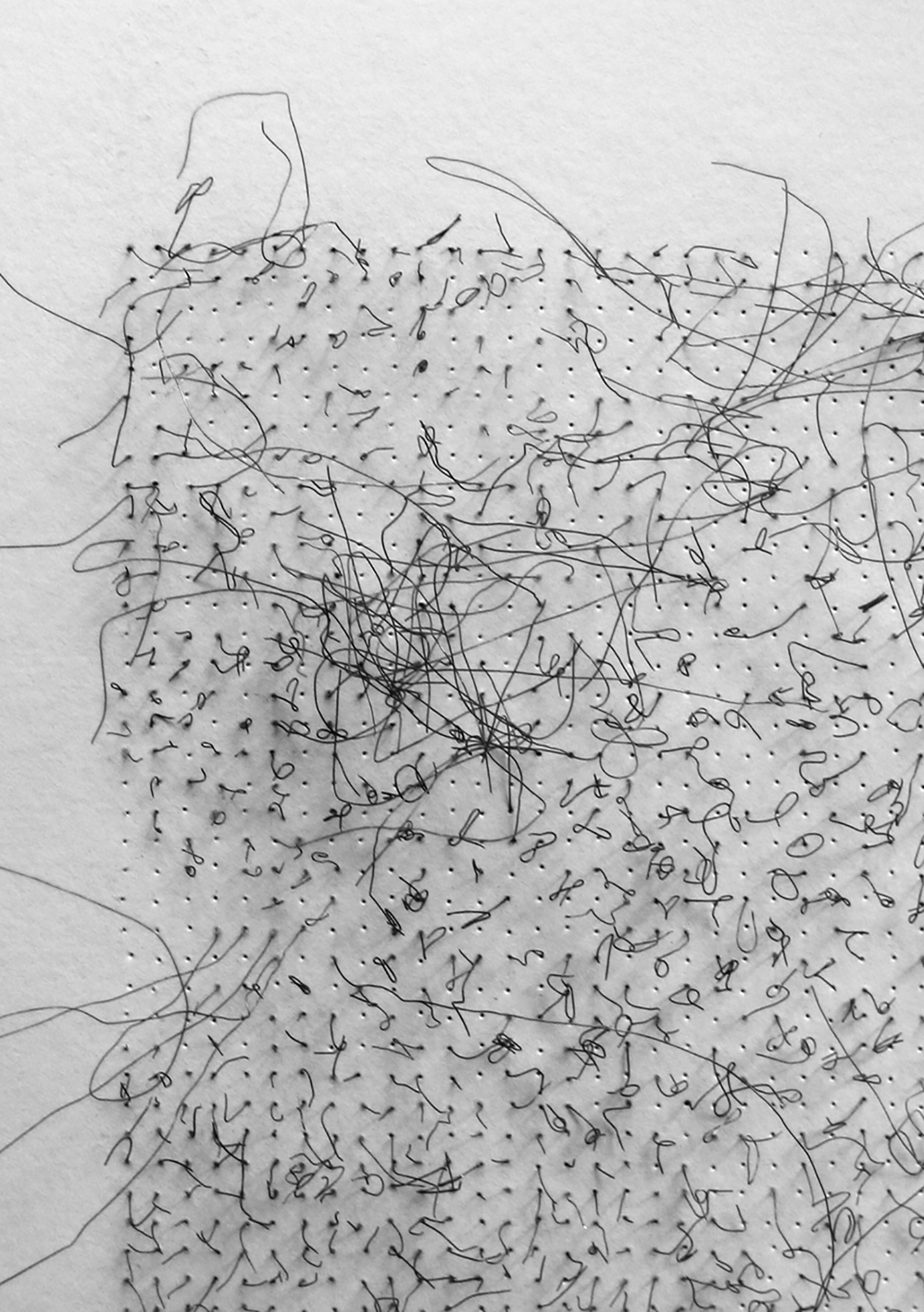
Take letterpress – the method of using moveable type to print multiple copies. In some of Florance’s work, the letterpress is not even printed as words (the expected or usual outcome of ink on paper, or at least ink on printable surface). Instead, what you see is the process of arriving (or not arriving) at the print. The California job case holds individual pieces of moveable type: there is one rectangular box for each letter, each space, each mark of punctuation. As the hand reaches across the case to pick each piece from its box, lines of movement are created. These lines are recorded by Florance with drawn lines: in this book, words are substituted for diagrams of movement.

As readers of these visual poems we are slowed down so that the meaning embodied in the method itself is made visible. A space in this system, for instance, has weight and heft, it is a metal piece that has its own positive presence in the type case. You reach for it as you would the space bar on a Qwerty typewriter and it yields the same result: a nothing that is a something, between other somethings. The typist knows the work of reaching for and touching that space; the reader, in the rush to get to the meaning, may forget.

Language is performative, and the words Florance has chosen to work with in Lost in Case have particular meanings and histories. Many are drawn from vocabularies of abuse, or shaming, of female bodies, or commentary on the availability of those bodies for the sexual use of men. The language is brutal and is taken from spaces that have not been friendly towards women: from misogynist male-only forums to incel chat rooms, for self-identified and angry involuntary celibates. With autonomous AI-informed sex-bots on the horizon, issues of determination and consent will continue to be foregrounded. Will a compliant human-like sex toy serve to reinforce the mistaken entitlement of the incels?

Using these words here is not self-abuse. Instead, Florance counters sloppy online reasoning, which seems to elide issues of self-determination and consent, with a rigorous analogue Teknik. She takes control of the gestures behind the words, to render the abuse as visual poetry. Florance’s aim to transmit the words again without reseeding their message is, in her words, ‘a cathartic act of feminist disruption’. Working from a theory of forensic materiality – informed by the work of academics Matthew Kirschenbaum, Jerome McGann and N Katherine Hayles – Florance makes something that seems impenetrable and lost to meaning able to be translated by forensic means. The word ‘forensic’ reminds us that words have heft, they take shape. How should we react to these words? Instead of allowing misogynistic language to proliferate in the self-reinforcing echo chambers of online forums, we must take it out into the light and examine what animates it. For some women this will become a matter of life or death.

Posted in INTRODUCTIONS | Tagged , ,

Submission to Cordite 94: EARTH

Why EARTH? Because we are of it, because we are destroying it, because there is nowhere else. I’m looking for poetry that brings about a cognitive shift resonant of the ‘overview effect’ reported by astronauts viewing our planet from space—though such an effect might be generated just as powerfully from a microscopic as macroscopic viewpoint. I’m looking for a poetry of feeling that understands how emotion is one of our brain’s ways of moving us to attend to things that are important. Get your hands dirty. We’ve had Martian poetry; now let’s write an Earthling poetry for the Anthropocene.


Submit poems (prose, comics, visual, concrete) or works of micro-fiction (500 words maximum). Read more about submitting to Cordite Poetry Review. Please note:

1. We will only read submissions sent during our official submission periods.

2. Cordite maintains a hybrid submissions policy. This means that the guest editor may invite five (5) Australian and five (5) overseas authors directly to submit to the issue. In addition, the guest-editor will anonymously select an additional 30-35 works from Australian authors and use their discretion to select further overseas works. For each issue, the guest editor does not know the identities of the online contributors (via Submittable) until after the final selections have been made.

3. Simultaneous submissions or previously published material will not be considered. This includes works published in print and web journals but does not apply to material first published on personal blogs.

4. Please place up to three (3) poems in one (1) Word, RTF or PDF document (unless specifically noted otherwise for special issues), with no identifying details in the document itself.

5. We are not able to offer feedback on individual poems.

6. Submissions will only be accepted via Submittable …

submit


Posted in GUNCOTTON | Tagged ,

NO THEME VIII Editorial

Nothing makes me feel my fallibility more than editing a literary journal, marking papers or judging a literary competition. I can be wrong. I can be unclear. I can miss things.

There was a lot to read in guest editing this edition of Cordite. Anything done repetitively makes me question purpose. Reading poem after poem and marking them ‘yes’, ‘no’ or ‘maybe’ I never once questioned why we write poems, that was blatantly obvious. We are moved to from ‘inner necessity’ as Carl Jung says. It is evidence of being alive. It’s an exchange, a product, a reaction, a response to stimuli like sweat. I did however question what makes a poem. Every poem I read is a poem. But is it poetry? Is it living? Intent is clear, but what is purposefulness and does it matter? Reading for meaning is the first thing that needs to be put aside to come at a poem. If there is meaning it needs to come upon you, not be imposed by reader or writer, to actually be meaning. A judgement is not an insight. A judgement is not an idea. Solely expressing a sentiment does not make poetry. Expressing a preconceived idea is not alive. There needs to be some personal risk some not knowing and the unknown in it for it to alive. If there is no meaning it is part of a conversation or simply and validly being. I looked for poems that the writer let be.

In the midst of the reading period I prepared and delivered my colloquium document for my PhD. I reflected on what happens between the initial movement in mind that results in writing and the making of it public. Where does the desire to share it and deliver it up to scrutiny like something sacrificial come from? How does the work transform having being read? As Jean-Paul Sartre and others have intimated the work happens in the space between reader and writer. Between breathing in and breathing out. The reader and writer in becoming. I can assure every poet I read your poems and that in the reading was some form of ignition.

Also, in the midst of the reading period I got a call from Saint Vincent’s hospital saying my procedure was scheduled for a Patent Foramen Ovale closure, a hole in my heart closure. I had a lot to organise and think about, including whether I would still write poetry after the closure. I told this to a number of poets thinking I was making a joke, but they took me and it seriously. One said they thought that the fact that I had written poetry so long had irrevocably changed my brain, therefore I would keep writing poetry. I was interested that they thought that poetry can change the nature of the physical brain. Another said they had stopped writing for a while after a heart procedure but had gotten back to it after a couple of years. Others just warmly reassured me they thought I wouldn’t stop writing poetry, implying somehow it was intrinsic. I was interested that not one of the poets had questioned the connections between, mind and body, physical heart and emotional heart, and poetry writing. It was taken as a given. I wanted to spend my time contemplating the mystery of all these curious thoughts. I wanted to spend my time before the procedure meditating on how ridiculously metaphoric a poet having the hole in their heart mended is and what affect it might have on my messy life. I did not want to spend my time guest editing a literary journal. But something in the patient guidance and hand holding and supportive manner and dedication to poetry of Kent MacCarter, Cordite’s managing editor, inspired me to realise that what a poet does when waiting for the hole in their heart to be mended is read poetry.

I had to get tough and clear and trust I know something about what poetry is and what it is not. Poetry is not about something it is something being. Broad sweeping abstractions are lazy. Saying hope or beauty, does not necessarily make beauty or hope happen. I looked for insect precision in detail. I looked for poems that had emotional and or intellectual drive or were consciously expressing a lack there of.

I choose poems with leaps of perception in them and language under pressure, poems with sustained extended thought and development. I choose poems that were consciously aware of the creative potential of language.

Repetition is not development unless it is for reinforcement, rhythm or to evoke an obsessive state of mind. Some poems started well but did not develop. Some poems had some great lines but were over written. Strength can cancel out strength.

I choose poems that were not posturing or performing being a poem. Poems that are simple and direct are better than poems that are trying to be poems. Poems that are complex and intricately layered are better when they are not abstracting just because that is what is thought to be a poem.

Some poems just needed another edit. One misplaced word can be the sinkhole the potential of poetry happening disappears through. To hold a reader in the world of a poem, not one word can be not of that world.

Just because it is a metaphor does not mean it is working. You can do what you like it is creative writing, but then it needs to be asked is it working?

Originality means specific individuality.

A consciousness of line breaks is an energetic engagement with the page as a stage.

A number of times during reading I asked what poems do I remember and is memorability the mark of a good poem and if it is what is it that makes a poem memorable?

One poem made me gasp; others made me exclaim out loud in frustration and disappointment at how close they had gotten. I choose the poem that made me gasp.

Yes, do the Hemingway thing of ‘what do I know about truly and care for the most’ it will give it the emotional drive and the authenticity that is authorial authority. I choose poems that held that ‘care’ is craft. I choose poems for their sense of play with the evocative, allusive and associative possibilities in language. I choose poems for their distillation and elegance

Of course, I overlooked worthy poems. I am sorry if yours’s was one of them.

Finally, endings are so important even an ending resisting ending is a conscious ending. It is a lens the piece is seen through.

Posted in ESSAYS | Tagged

‘A means of resistance’: Susie Anderson Interviews Alison Whittaker


Image courtesy of ABC

Some writing teaches you possibility. Possibility in a number of ways: seeing yourself reflected in a body of work, echoing familiar words, places, or ideas; some writing is a lesson about form, or acts as an overall object to aspire to. When I picked up a copy of Lemons in the Chicken Wire by Alison Whittaker, I saw for the first time a young queer Aboriginal woman subverting the form of poetry in a way that resonated with me. Yet Alison’s writing followed a lineage of other Aboriginal poets, and from reading her work I went on to find Samuel Wagan Watson, Ali Cobby Eckermann and Lionel Fogarty. These significant discoveries alongisde Lemons showed me how lyrical poetry could be reshaped in Aboriginal ways, encouraging and challenging my own writing. It felt like insurgency into Western ways of reading and writing.

When Alison and I came together for breakfast in Marrickville in early 2019, we had a fortifying conversation. And her second collection BlakWork dials up the insurgency a couple more notches. A Fulbright scholar at Harvard Law, she simultaneously interrogates and challenges the colonial inheritance of the English language, while critiquing injustices embedded into Australia’s legal systems. It might have been an inevitable outcome of two blak poets coming together, but as we spoke about the craft of writing and how poetry can serve as resistance, I was left with a sense of drive and momentum. What alternatives exist outside the Western acts of ‘reading’ and ‘writing’? And how can we continue to use poetry to reshape and resist old narratives? Alison’s poetry embodies those possibilities.

Susie Anderson: The crafting process of a poetry collection is really interesting to me. When you’re trying to please your own vision, maybe try to make sense in a linear way – because it’s a book – but then also you have to consider the reader. It creates a strange dynamic of prioritising. Do you feel this way as a writer as well?

Alison Whittaker: I write books of poetry because I think what I’m representing in poetry is important. Though I can get caught up in my own frame of understanding. As a legal scholar I’ve had really intense specialisations in certain areas outside of poetry and I like to talk about them when I’m writing poetry too, and I forget that other people don’t have that sensibility. To some extent, it’s really valuable to have good readers who can give you advice before your work is published, people who can tell you what’s coming through the poems. Sometimes it’s more than just miscommunication if you’re not expressing what you mean in what can often be a sardonic form. If the reference doesn’t translate through your poetry then it can come across as cruel.

SA: Yes, it’s funny how easily the tone of poetry can verge on the sinister or even mean. After talking with a friend about poetry readings, we agreed that the one-to-one communication, reading aloud, can almost feel like a jibe in some ways.

AW: It can be so, so intimate, like writing a letter. But you can also anticipate that a reader doesn’t exist. When you’re writing your first drafts you are anticipating a reader, so you’re constraining your work to meet their needs right off the bat, but then you can miss so much of what you as a poet are actually trying to produce. So I think maybe, the consideration of the reader maybe comes in through in the editing process. And even if you do anticipate a reader that exists and that is your primary audience – so you can meet their needs – then you can still constrain yourself unnecessarily, I think, at the wrong point of creation. It doesn’t have to make sense right away. Some poets fall into an illusion that genius just comes through or if you put on certain restrictions then all of a sudden it just flows but that’s not the case. It can be quick to write a poetry book, it doesn’t have to take long, there are not that many words – but the hardest bit is the editing process where you’re trying to be economical, you’re trying to be tight and you’re trying to be concise, you’re trying to be experimental, novel, fun. That doesn’t always come through during the first stage.

SA: I also think when it comes to editing it’s very much like ‘how long is a piece of string’? You can keep on honing and distilling for as long as you want and it can be quite hard to put an end to that process.

AW: I’ve become less and less precious about that process because I now know I can put the work out there with imperfections and still enjoy the work. I’m pretty sure I found a typo during BlakWork in a reading and I was like ‘it’s done, don’t worry about it’. Editing truly is a question of the audience that you’re implicating, the press that you’re going with, the extent to which you care about whether you’re a technical poet or are you more of an exuberant and expressive poet where the form doesn’t matter too much.

SA: Speaking of form, there are so many different types and styles of poetry in BlakWork and I while I was reading, I just kept on thinking oh my god ‘Alison made language her bitch’.

AW: Language is fun, but writing poetry can be kind of like watching a sausage get made. Watching poetry get made isn’t sexy and yet poems can be sexy. From my point of view ‘word play’ is such a great way to launch from a concept, when you’re stuck and you don’t know where you’re going to go. Word play, for me is one of the key things that you can use to generate a poem. From that you have something that germinates and takes on a life of its own somewhat organically. But you always need that first point to start from, which is where I struggle the most. Language is definitely not my bitch!

Posted in INTERVIEWS | Tagged ,

10 Works by Richard Bell


For Alan 2018, acrylic on canvas, 180 x 240 cm. Image courtesy the artist and Milani Gallery, Brisbane.

Posted in ARTWORKS | Tagged

Shipwrecks in Modern European Painting and Poetry: Radical Mobilisation of the Motif as Political Protest

Introduction

Cocooned in safety, we rehearse our peril and demise in the oceanic wilderness where a dramatic change in temperature and a switch of wind have turned benignly rocking nurture to tumultuous and deadly agitation. Shipwreck is also the synecdoche of all that shadows imperial expansion – navigational misadventure, piracy, cyclonic assault – tracking like sharks on the blood trail imperialism’s would-be glamorous advance.

Pitching puny humans against the formidable forces of nature, the shipwreck, or the genre of naufrage, as it’s preciously called, like a shiver-inducing gourmet delight, has been an ever-recurrent motif and narrative device in ‘western’ literature: from Homer’s Odysseus, Jonah of the Book of Prophets, Dante’s Ugolino, Shakespeare’s Prospero, through to our contemporary invocations of the catastrophic fate of boat people, demonised by so many governments across this planet in crisis. Shipwreck as extreme existential test has persisted through the centuries, but in visual art and writing the lineage intensifies to a perfect storm of staged maritime disasters as Neoclassicism segues into Romanticism and beyond. The theme of salvation through cunning or spiritual epiphany retreats and the political comes to the fore in works of protest or parody or both. Death might be the Leveller, as James Shirley wrote, but social hierarchies ensure that some are in a better position than others to postpone it.

Shipwreck as spectacle: Géricault and Turner

Before the advent of cinema, European painting took on the challenge, invoking the sublime terror of maritime disaster, but especially foregrounding the vicious brutality of the human response to it. J M W Turner raises such questions of the human predation behind Britain’s global empire with his close cropping of the wreck in ‘Slavers Throwing overboard the dead and dying – Typhoon coming on’, 1839’, inviting virtual engulfment of the viewer, where effects of sunset and carnage are bloodily indistinguishable and the twisted metal from the slaves’ shackles looks as actively rapacious as the swarming, maliciously toothy fish. Human fragments, even the tethered dark-skinned leg, towards the lower right of the painting, are less graphically resolved than the shackle as signifier of enslavement.

Depicting advanced disintegration, towards the disappearance point of the human, might allow for less affective investment by the viewer than the staged mortuary-to-come, with greyed and depleted but still well-modelled muscular flesh. This had been earlier and yet more famously the case with the young Théodore Gericault’s 1819 painting The Raft of the Medusa depicting the aftermath of the wreck of the French Senegal-bound frigate the Medusa, that in 1816, through the arrogance and poor navigation skills of the captain and his lieutenant advisers, ran aground off the coast of present day Mauritania. The painting attracted in equal measure condemnation and adulation in the French Academy and rocked a wider public, not only by featuring a young African man at the apex of the dominant right-hand triangle in his composition, but also through reports of Géricault’s collecting for preliminary studies severed limbs from the morgue of the Beaujon Hospital. He’d set up his studio opposite the Beaujon where he did dozens of sketches of dying patients and interviewed two Medusa survivors, including its surgeon, to insure he caught the sensation of death by dehydration, starvation and the stench, under a broiling sun, of the slow putrescence of excoriated limbs. But the account of the aftermath of the wreck by co-rafters Savigny and Corréard was perhaps to become the painter’s greatest resource, as it no doubt was for Lord Bryon in depicting Don Juan’s shipwreck in Canto II of the long eponymous poem which also appeared in 1819.

Recruiting for a contemporary moment the genre of ‘historical tableau’, Géricault’s painting was a frontal assault on the regime of Louis XVIII where nepotism had awarded the captaincy of the ship to the inept and unqualified protégé Captain Chaumareys, who arrogated for himself, the Governor appointed to the colony of Senegal, and most of the higher ranking officers, places in the various improvised life boats, decked and undecked, while, assigned to a huge, hastily cobbled raft to be towed behind this ragged fleet, were one hundred and fifty others, for the most mere sailors and soldiers. According to Corréart and Savigny’s amiable phrasing, the garrison was composed of ‘the scum of all countries, the refuse of prisons, where they’d been collected to make up the force charged with the defence and protection of the colony (Corréart & Savigny1816, p.150)’.

Géricault’s huge oil painting (491 cm X 716 cm) is no mere invitation to the vicarious savouring of sublime peril. According to the account by these relatively ‘noble’ bourgeois survivors Alexandre Corréart, engineer and geographer, and surgeon Jean Baptiste Henri Savigny (1816), having been cut adrift, lest they slow the advance of their compatriots in the boats, the one hundred and fifty initially aboard the raft were whittled down over thirteen days of drifting to a mere fifteen. Many were murdered, or heavily wounded and thrown overboard in repeated mutinous uprisings instigated by enraged, wine-soaked, dehydrated hunger-crazed, sabre-wielding ‘monsters’ and ‘scum’. Not without cause, the mutineers blamed the officers for their abandonment, but unjustly targeted those decent enough to come on the raft. Many threw themselves into the sea, all having lost powers of rational thought through the trauma of abandonment and physical torture, but this collective ‘departure of reason’ was especially catalysed by the horror of bearing testimony to such quick descent into depravity. After ten days, the seriously weak and dying were, with ‘regretful’ pragmatism, pushed off into the waters where fins of marauding sharks were clearly visible above the surface – this to economise on the ever-diminishing supplies of wine, the only source of sustenance left on board. But what shocked the authors themselves, who ended up participating in this degraded and decidedly unsymbolic mass, was that once it was mixed with that of flying fish roasted with the last remnants of gunpowder, human flesh washed down with various grades of urine became the survivors’ plat du jour.

Géricault denies direct representation to those responsible and portrays their moral legacy by honing in on the wretched drifting dying and dead, all turning with the last of their energy towards the spectre of their ultimate rescue, the Argus, for the moment a mere jaundiced speck, retreating on the horizon. This is death’s democracy but also a savage critique of the retreat in France from republicanism: by giving apical prominence to the African, who clearly has more vigour left than his co-rafters, Géricault radically inverts the hierarchical social order, reimposed after Napoleon’s demise with Louis XVIII, rendering the bankruptcy of such pyramidal ranking – from supreme sovereign to the toiling slave, as celebrated in neo-classical art.

The intensity with which this Medusa disaster had been reported, the wide readership of Corréart and Savigny’s narrative and the painting’s own gathering notoriety – it was exhibited in London shortly after the Parisian showing – not only established Géricault’s reputation, if not his fortune, but with its huge impact on other young painters like Delacroix, heralded the advent of Romanticism in art.

Posted in ESSAYS | Tagged , , , , ,

4 Self-translations by Danijela Trajković

Passionfruit Honey

I did not look for you on any road
the roads grew tired of us so quickly anyway
in the meadows where we ran
there are no birds anymore
I did not look for you at the village fountain
with the big stone sink full of leeches
where we filled jars of water
and took cattle to drink
I did not look for you
because you are sleeping
on the other side of our mahala
and I have no wish to go there

I looked for the man I love
on roads in meadows at the fountain
he called my name from all over
picking strands of my hair
to bury them in distant countries
around pyramids so flowers would blossom
in his mother’s yard under the olive tree
so it would flourish throughout the year
I looked for him in a teaspoon of honey
that my cousin served to me

our bees have travelled;
their honey
has the scent and taste of passionfruit


Med od marakuje

nisam te tražila na nijednom putu
ionako smo putevima rano dosadili
na nijednoj livadi gde smo trčali
jer ni ptica više nad njima nema
ni kod seoske česme sa velikim
kamenim koritom punim pijavica
gde smo punili balone i pojili stoku
nisam te tražila
jer ti spavaš s druge strane naše mahale
a meni se tamo ne ide

tražila sam čoveka koga volim
na putevima livadama kod česme
dozivao me odasvud
brao pramenove moje kose
da ih zakopava po dalekim zemljama
kraj piramida kako bi izniklo cveće
u dvorištu svoje majke ispod masline
da bi cvetala tokom čitave godine
tražila sam ga u kašičici meda
kojim me poslužila rođaka

naše pčele putuju
jer njihov med
ima miris i ukus marakuje

Posted in TRANSLATIONS | Tagged

Brutalism: Poems by Alex Creece


During a recent conversation, a friend and fellow writer asked what I considered to be my greatest literary strength. I am grateful for her patience, because I definitely didn’t arrive at a speedy conclusion. The question—though a simple one—had me stumped. I reflected on my writing across various genres, media, periods of growth and learning. Was there a collective throughline? What gave my work its pulse – its own unique pitter-pattering palpitations? What made all those words worth writing?

Vulnerable weirdness. That’s where I eventually settled.

Crusty feelings. Inconvenience. Viscera. Oversharing and non-apology.

Experiences breezily glossed over at Christmas dinner. Ugly architecture and asbestos innards. Laughing from the gallows once I’ve already lost my head. Surrendering any pretence of being “hardcore” as I weep over an Adam Sandler film. Biting a teacher at seventeen years of age. Those deeply uncomfortable close-ups in Spongebob Squarepants. A societal obsession with pimple-popping videos, perhaps borne from the jealousy that we are still pent-up ourselves, yet to ooze.

Failure and hope.

And failure, again.

Posted in CHAPBOOKS | Tagged

Imperfect Growth: a Travel Log

August 5 2013
Auckland, Aotearoa

Tonight there’s an opening at Fort Lane downtown, the space is partially uncovered so I have to dress warm. It’s my old team at Council. I don’t know if I want to see them all again before I leave. I already said goodbye and cut the cake and took home my giant laminated card with everyone’s well wishes.

The first time I left Council my goodbye card said, ‘poetry is the dance of the foot’ with a picture of sketched feet. It was hard to find google images for poetry so this is what the administrator decided on.

Most nights I curl up on the couch with my parents and watch TV with the heat pump on and a cup of hot tea.

I try to talk with my girlfriend in Italy.

Sometimes she answers the phone.
Sometimes she just lets it ring.

What is it about distance? In the visual arts world, they talk about ‘collapsing’ a lot, collapsing time and space, collapsing geography, collapsing histories. It’s easier to stick a skewer through time than it is to absorb it.

If my girlfriend were here we’d talk about absorbing the dreams of each other.

We were sitting at that weird bar underneath Ponsonby Food Court nine months ago when she said she had to go and find herself.

Is that a white girl thing?

If it is, seeing as I’m quarter white girl, does that mean part of me is lost overseas too?

Am I on a train to Mumbai? Am I wedged between businesswomen on the tube in London? Will I find myself on the subway in New York? I’m on some sort of on public transport, clearly.

If you’re always somewhere else, if a better you exists on the other side of the world, is that the answer to it all? Say you reach that point, won’t it just flip again? Will the very best you stay distilled at home? ’I’m so different at home!’ You can tell all your new foreign friends.

Or you’re the new foreign friend, aren’t you?

Posted in CHAPBOOKS | Tagged

4 Translated Kim Seung-hee Poems

A Heart Full of Fingernails

In sin, sin knows no sin.
In solitude, solitude knows no solitude.
“A series of solitary deaths all over the country.”
Though I am not a prisoner of conscience, what always troubles me
is the way death brushes past the stars again today.

In midwinter, the soil in a flower pot hiding unknown seeds
is rugged and parched
I approach, feeling like a microscope
the pot seems filled, not so much with soil as grains of sand, finely chopped bark,
fragments, fingernails,
broken fingernails, grains of sand on a beach
yet still, seeds will spring up in springtime
piercing the barren soil, kindred to rocks
and in any case in springtime, they’ll learn the soil’s true nature
outside the winter window a small squirrel is gnawing an acorn shell
with small, sharp teeth
it has winter teeth lonely like threads
gnawing the shell little by little, much munch
and riding those teeth, spring comes running
the flowerpot is full of broken nails, cracked nails, red-varnished nails,
blue-varnished nails, needle nails, saw-blade nails
eating that fresh blood
roots will quietly grow strong
the space between the protruding fingernails is full of petals of anemone blood
the fingernails seem to recall the taste of the blood they drew
all that sorrow once combined
the seeds will finally sprout from the pot full of nails
green leaves surge, bright flowers bloom
like petals and flowers
fruits and seeds gathering again
in a heart full of nails
there will be a day when a spring of love flows
and one sunset, rising suddenly, a blazing Uluru
on the springtime windowsill once curtains are drawn
deep yellow daffodils look through the window
like so many invalids at people passing.


손톱으로 가득찬 심장

죄 속에서 죄는 죄를 모른다
고독 속에서 고독은 고독을 모른다
“전국 곳곳에서 고독사 속출”
양심수도 아니면서 늘 가슴이 아픈 것은
오늘도 죽음이 별에 스치우기 때문이다

한겨울, 알지 못할 씨앗을 숨겨놓은 화분에
흙이 울퉁불퉁 버성버성하다,
현미경 같은 심정으로 가까이 가본다,
화분 속엔 흙보다도 모래 알갱이나 잘게 잘린 나무껍질,
파편들, 손톱이 차 있는 것 같다,
부러진 손톱들, 해변의 모래 알갱이들,
바위의 혈족 같은 박토를 뚫고
어쨌든 봄에는 씨앗이 솟아난다,
봄에는 이나저나 흙의 본심을 알게 된다,
작은 다람쥐가 겨울 창밖에서 도토리 껍데기를
작은 톱니 이빨로 갉고 있다,
야금야금, 오물오물, 두꺼운 껍데기를 갉는
실낱처럼 고독한 한겨울의 이빨이 있다,

그 이빨을 타고 봄은 달음박질하며 오더라,
화분 속에 부러진 손톱, 갈라진 손톱, 빨간 칠 손톱,
파란 칠 손톱, 바늘 손톱, 톱날 손톱들이 가득한데
그 선혈을 먹고 고요히
뿌리는 튼튼하게 자라나서
쑥쑥 손톱들 사이로 아네모네 피의 꽃잎들 가득한데
손톱은 자신이 찌른 피의 맛을 기억하고 있나보다
그런 모든 슬픔을 합하여
손톱으로 가득찬 화분에서 씨앗이 드디어 싹을 틔우고
푸른 잎이 넘실대고 화려한 꽃이 피어나고
꽃잎과 꽃입
과일과 씨가 다시 맺히는 것처럼
손톱으로 가득한 심장에서
사랑의 봄이 흘러나오는 날이 있을 게다
어느 일몰에 문득 일어서 불타는 울루루가
커튼을 걷은 봄의 창턱에서
샛노란 수선화가 환자처럼
유리창 밖을 지나가는 사람들을 쳐다본다

Posted in TRANSLATIONS | Tagged ,

Residence: Dwelling with The Shards (an essay)

S/

Walking.

     Haefliger’s Cottage
     Hill End Creek
     Post Office Flat 
     The Common
     High Street 
     Irish Town
     Specimen Gully
     Bald Hill
     Golden Gully

Eyes rake eroded ground for a gleam of glass or china. Clinking together in the pocket of my green parka.

Posted in ESSAYS | Tagged , , , ,

The Shards

A friend told me
she walked
the ks with
the tome on her back,
weight of exhaustive history
collection
to understand that other ground
she traversed
I too cross the same ground
(but different)
sweeping over the surface
—and occasionally
seeing the surface lift off

Stuff is always breaking
At first the crack, and then
a longer fracture
till at last a disintegration and
the pieces left

In walking the return
to the calm
of the longer view, the pace at which
the meek set out

The shards we find in the fields
still-visible inhabitation
of ghosts
In the fish
in the sea turtles, the fragments
we call nurdles. We’ve paved
the inner lives of the ocean
with plastic. And
in the abandoned gold fields
the occasional glint
of tea service, of
what they thought civil,
smashed.

The histories of rubbish are
our histories. Yesterday,
the middens of hard rubbish collection.
Next week, the how-to-compost
lessons. And always
the worry over humus, how
to build it. We housed
the dead before we housed ourselves
.
The critic meant the entombment
of corpses, but
the rest of the burial trove
counted too. That’s why
we unburied the urns.

News comes, unexpected
word of the poet
then come into town again
from time spent digging graves. The teller
outing herself as naïve
—that she thought this normal
for a poet, for we
who spend
time with the dead. These dead
those from the same field
of fragments.

State of emergency.
The ground
has been under emergency rule
since the ruminants
packed down the soil
stopped air
to humus,
humanitas

And elemental trace,
lode,
reef. And finite
stuff. Infinite hunger.
Exhaustion.

Break a vase or
tea cup or saucer
or bottle or ginger jar
or back
and the love
that reassembles the fragments

leaves town
when the gold
is gone

That day
the shelf collapsed
a cataract
of Willoware found floor
Some bounced
I took to my knees
with the dust pan
Porcelain dust
while Sandra
gathered the shards
for a mosaic of brokenness
at jade plant’s foot
collecting dew

The tome on my back changes
but I always travel
with ghosts

Denim worn to frayed
irreparable threads
thrown

Extraction is the only logic
of gold fever
—and its aftermath
mercurial
tailings lace
ground rendered secular

The graves the poet dug
generations after the gold boom
decades after the artists
his shovel for those
who stayed, though
the town appears on some lists
ghosted
the soil he dug leached
with speculation’s grammar:
past’s future, future’s
past

Imagine that future strata
excavated
anthropogenic, plastocene
—landfill compacted
and uncovered
precious folly
reed of luminous hunger

I dwell
in the past of determined
reuse—of the labelled
jars
“string: too short to use”
of the rag-and-bottle
merchant, greasy
skin scintillant
with waste
with imminent incineration

The artist
who proclaims her medium
context—her habitation
the county dump
assembling
the installation that tells
of fads, of land
sales, resales
of in attention

And I walk again
—in the inner suburbs
rarely find the shards
just abandoned bottles
I carry the poet of garbage
carry his proclamation
garbage is spiritual

Take only photographs
as if we ever
left a place pristine

I’ve been walking
every street of Leichhardt
recording every place
asking: how
does a place remember itself?
Imagine the schoolchildren
oozing out of busses
at the mine, never
questioning
memory

If garbage is spiritual
this trash is also memory
middens of care
carelessness

Think of the heat
that fired these fragments
these flakes
of ritual

Someone used the word
abandonarium
I think she meant a different place
place of feeling, bereft
but in the emptiness
(never empty)
the chips of porcelain
little scales of desertion

Old Willow, real Willow
Royal Doulton, Royal
Albert, Wedgewood, Delft, Spode
creamware
fine bone, porcelain
majolica, fineness
so breakable
ceremonial dust

(My pasta bowls (Target)
are chipped now I don’t know how)

The shards
the gold field shards
are lost time patience
I vision them back
in the field as you saw them
leisure shattered
liquidated inattention

Filter earth for profit
—depletion gilding
cupellation
salt cementation
acid parting, distillation
the Miller process

Elemental remains
and what remediation

I read about US landfill laws
the layer
plastic
to protect from garbage leach
legislated 50 year aegis
(warranty
of 60 years)

One foot
in front of the other
and so on
restores

Rubbish
in place of cairn
marker
of the regular path
pieced together fragments
the path we all make

Cross and recross
and recross
this is residence

An artist
found decrepit baseballs
photographed them
mossy, filthy, undone
reauthored

Perhaps the tome
I need to carry
is melancholy
anatomise the ghosts
perhaps
all that rubbish
just the scattered limbs
landfill the ghost
reassembled

Posted in 92: NO THEME VIII | Tagged ,

Introspection

He laid his mind out like parquetry on the floor
all different grains & shades connected
a maze of mandala like geometries
of finer polish than he’d ever thought.

He watched the sun play across its face
fingertips tracing smoothes of skin
without shame of intimacy | intimacy led
to greater purviews of self construction.

He was not he, in the constructed sense
of where light stopped & floor began.
He was he in the reflective sense
of gaze upon glaze of own lacquer.

No dust between he & himself,
reflection cut crisp outlines—
perfectly mirrored movement
on a dance floor | his alone to dance.

Posted in 92: NO THEME VIII | Tagged

in yr swimming pool

even in yr swimming pool /
our bodies moved in opposition

first, you’d torpedo (vertical)
limbs slippery and efficient
then clamber out with a shrug
and swollen pupils
just to do it all again
hipbones slicing through the blue!
as if water was invented to wait
on the other side of air:
god’s dependable crash pad
for man’s sickest tricks

then, i’d expand (horizontal)
my spongy body
cloaked in chemicals,
palms upturned,
eyelids pink against the sun,
silently following
some women’s weekly recipe:
macerate for twelve minutes,
play-dead for twenty,
soak till extremities are thoroughly pruned

you said you loathed
school swimming lessons
(was it the unspoken ratio
of urine-to-chlorine,
or the vision of yr classmates swimming laps:
suddenly anonymous in their matching latex caps
and silver goggles,
thrashing towards you
like a squadron
of aquatic baby cyborgs?)

and one time I was told
not to let my ears touch water:
your thoughts might soften, escape
and clog the pool filter

as if it were a crime
to renounce mind and muscle,
or dunk a sugar lump in a teacup
(at this you’d scoff
and spool yr legs into a cannonball
yr litany? yr prayer? a simple devil-may-care)

even in yr swimming pool /
these past lives sprawled between us

Posted in 92: NO THEME VIII | Tagged

Sonar for Conception

I.

your arrival was a kind of heliography you came with the sunrise: a seven hour process that set the platetone you, the lavender oil laid down to wipe away the steely toned posterior of my ambivalence now turned gooey.


the scientific sensation of a chemical process meant to cure the image in time taken here as the blood and scat that enveloped your body in protective bitumen to deflect the world’s input turned over to sunlight; your image—angel of history.


face turned oblique in your mother’s channel you don’t physically look to/like my past as in, he never gave you your bio/features, but he gave you your name; or rather i rudely interrupted the etiquette of evolution and inheritance to say: ‘here kid, have this but not this.’

genderless is everyone’s first experience, a narrow canal— head long and nameless —through which the world passes and then truly distorts: both thiiin and thennn. sibilant: a hissing speech sound made by forming a small gap between the tongue and the back of the upper row of teeth.


II.

where once ‘it’ was derogatory for ‘infant’ new forms of address as ‘they’ render subjects as p-l-u-r-a-l. the impression of multiple scenes onto celluloid where metaphor means transportation; birth carrying one domain of experience towards the other so that we walk around as hot cases DIY build-at-home-drones —talking ourselves into motion.

fruitful when applied to

humanity

doesn’t mean only physical reproduction; it refers to the process of mental conception which i take to mean my cocreation of you inside another’s womb.

how would saint augustine of hippo have felt in the fourth-hundred year after christ’s demise that by adding one-thousand- and-six-hundred more we arrive at a place where his word is dreamed up in sin’s common currency.

children are mentally conceived of daily coined through cordoned cash flows that quip subjective substances, inheritances self- insemination in bedrooms; rewritings of ‘fruitful’ from fruity as in nutty as in mad to ‘fruitful’ as in elected vagrant —a bird straying from its migratory route, fecund.

III.

i played you mozart once while in utero— does the fact of all the exposure to feminist folk lore undo the intellect you were due if mozart were more heavily rotated? spin another crumpled sucker punch.


music selection is a matter of compromise in this house micro-organism of

the present

rearranging our feelings towards the past ;

do what you wanna dooo

be who you wanna beeee

yeea-aah.

discipline plays like a continuous record, we stick to the score where it counts. where poets were the early internet, we carry boundaries of the plot manually little soldier crabs crumbs of bread scattered throughout the house rearranging your temperament— seasonally.

your intuition plays out like a chorus your defiance repeats in choreography we play into dynamic movement patterns of frustration bump into prolonged affection; we embrace to meet through sound and heat—heartbeat pulses.


IV.

just like a poem is a machine made out of sounds, pronouns human subjects are born through the detection of sonars; rangings of sneakers their squeaks on linoleum next to the tipping point of stilettos: écriture féminine.

you are a blueprint: a variant of nilak bluish pansy of psychogeography rewrit.

Posted in 92: NO THEME VIII | Tagged

The slow clock

In a gully we found it: hash of fallen trunks
like the ribs of some great beast. But
we were too old for it, too big to squeeze within
and too prissy, afraid of the doings of ants
and unknown others, intricate civilisations
and workings of rot, the dried bark half-way back
to dirt, and some maze, some great working
beneath the surface.

Up on Bald Hill, the grey shrubs grew knee-high,
slanted to the salt wind, flowered sometimes
purple like dusk, ochre like sand,
testament to endless endurance, endurance
without goal, without hope.
By night, if you left the track and sat,
shrub-high, you could simply be
gone.

The dull-scaled goanna,
shrunken in its hide as if the flesh
had perished since some past
moist plenitude,
moved in stop-motion, cranking
the cogs of its shoulders. We hung the rubbish
out of reach, beat spades on the ground,
while it licked the air like a slow clock.
Did it leave, whale swimming the dust,
for fear of us, or on its own prerogative?

Everything was wrong with me,
the purple welts where the unsought
woman-body erupted, faster than the skin could stretch,
the fat like off-casts of food.
It was wrong with her too and
I made a model of her fat rolls in the sand
for her to find. She tore apart my B-shaped pen,
threw the plastic in the dirt to warp and fade.
In the tent she rolled on me, savage even
when she’d left her body in sleep, pressed my face
in the stinking mildewed cloth, her on top of me
and her bedding on top of us both.

Each day the sun came up in the tent fly.
A sheet of light on the estuary,
flies rising from the trees like steam.
Each day the lighting of the stove,
one flame for each family.

Posted in 92: NO THEME VIII | Tagged

nanny on the water

we took ashes here once
this place of pearl divers
divvied up in tupperware
and closer to sand
than thin lines of incense
left after burning
plastic bags in the trees
singing out with feathered
teeth and beer cans
and cockle shells
and nanny on the water
floating slowly down

Posted in 92: NO THEME VIII | Tagged

Vernal Funks & Bluffs

Training wheels won’t help you owe it to yourself
Listening for bell-birds along a sagging power stave.

If it seems too far-fetched a clue for going about it
Bathe and persuade, establish evening routine.

If it seeps too far forward
Enter promo code, peel and seal.

A deep drag to blow it off, repairing to the alley burning per-
Diems up close and personal with local beauty hero.

Backstroke of generosity
Big cat walks
Big cat yawns

Serums and gels dotting the i’s of childhood butterflies.
Yonder, lies: an arsenal of pats on the back.

To last a lifetime feel free to ask the story behind
Each rustic remonstrance with the healing power

Of plankton. Big brow doll eyes hitherto cast doubt
On the impartiality of the poor old Data Ombudsman.

That will be (meatballs diminished)
All for now (not a good judge of charred remains)

Binoculars full of fake crows mooning
Over Ms. Gloriana’s cappuccino waves.

Posted in 92: NO THEME VIII | Tagged

I’d Have Called Her Sooner

Finally I lifted the phone to my ear
And I listened to it ring
I’d have called her sooner
But I’d left it so late already
She’d know how late I was
How thoughtless and selfish
To have kept her waiting
So I waited till I could lie
And call it sudden
And I called
It sudden
And so she thought better of me
She thought better
Of me
With her pardoning
Crackling voice on the line
I think she thought
Better of me

Posted in 92: NO THEME VIII | Tagged

WITH

I. I recall dreams
in the house I sleep
windows open

small shoes
crowd my mind
leaving abbreviations

the brain
“most incredible thing in the universe.”[1]

as plastic as the day

II. I don’t recall
schooled agendas
divine rites
of kings and more
the privileged stampede

unlettered = less than
= shame brain
mine
bionic ears
memory maps
oral graphic story tracks

no celebrate

III. I will never forget
skill = skill = skill deft
is everything versed

look listen eyes shut
watch why ears still

genuine with
what does equal equal

ideas bulldoze hypnosis
in regard to the world mess


[1]Oliver Wolf Sacks

Posted in 92: NO THEME VIII | Tagged

Call of Summer

A car passes by, its tires soft on the street
gliding through the pine-filled boardwalk,
hollow sounds meeting the ear as it wanders
through the air and lampposts glint with remembrance.
It is a summer night in a vacation city, and they are
whispering through the murmurs of an acacia
stretching its arms over the ballooning skirt of a girl
and the swish of a man’s shorts rubbing together,
passing by as the afternoon has passed. Moment to moment
they turn to each other as tires on the gravel, their voices
like car doors that slam at once, smarting like a hand
on the brake as the car parks—they are talking
about mundane things—dishes left to wash,
chores and laundry, but in their voices gather
the weight of their ghostly past. Over and over
it squeals silently like all the lights of a stoplight.
Seemingly with you but without you, I am
at once beholden to your promises one long ago day,
our heads turning to the other in angles
that indicated intimacy—but that was then.
Summer nights like these seem to never end,
but all has ended, yet still I turn to your voice
as a driver looks in the rearview for a glance
back at an incoming collision. The couple’s gone,
the waves are nearby, crashing with the opulence
of a chorus of seafoam. This is all that’s left
in the town you abandoned. I look up at the stars,
above the streetlights, above the monotone darkness,
and think I can walk along this road alone for miles.
All around me, I can see the intermingled hues,
and hear almost a comforting ring of rescue.

Posted in 92: NO THEME VIII | Tagged

agreement

free now brother, from life’s headlock
joke was—we thought we held paper
those hills we once hurtled down

spoke wheels flying—look mum no hands
but we were them, they were us
now, just indignation, soon to land in
another dull season—paddocks

spilt grain—numbers that don’t align
we get up before the world strikes the sun
only our memories have changed

the waiting, the expectation, a robust year
a dry year—whatever it was, unbothered
by comprehension—kindness is all that
remains—a strange sense of waiting.

Posted in 92: NO THEME VIII | Tagged

Sunday, call me a squid

My daughter’s Bible
cartoonifies judgement: salvation
is a fat pink fish
and all the squid
are going to hell.

She affectionately
calls the Most High ‘Goddy’,
swims under flannel
to the cotton cities of sleep
with her soul
netted still.

I shut the door
because I know she will rise
when he calls.

I shut the door
because I know
how tight the net falls.

Posted in 92: NO THEME VIII | Tagged

Mother Bird

we didn’t have much, but my mother
carried an invisible bag around her strong neck
went out searching for food and found

tidbits of affection, small sovereigns of love
she wandered all day while we were at school
would gather the warmest words, the softest touches

her bowerbird eyes found plenty; a scarf left at the bus stop
feathers, a two cent piece, lost keys
one special stone for your pocket

she collected and felt prepared – a sort of parenting kit
afternoon, they grew heavy in her pouch and she wandered home
at times only just arriving as we did

I don’t know if comforts came naturally to her
but she always had a stash of warm things
memories she had collected

a riddle overheard, cats whose chins she’d scratched
a whiff of chocolate on a walk past the posh shops
if we were hungry she’d bring us a mug of hot water

whenever unsure how to respond
Mum reached into the bag to feed us, in tender murmurs
the tiny stories of experience

we waited, beaks open
for the next wriggling warm thing
we could swallow to feel full

always able to kindle comfort
she’d sing a lullaby out of tune
recite a poem Grandma knew by heart

transformed from birds back into children
water-bottle warm, she’d kiss us on the head
we’d fall asleep smiling

as I grew older there were times I wanted to put my hand in the bag
but she was trying to help me grow up
it was time to weave my own

one day Mum put her bag down
we found it by the laundry door, full of odds & ends
– junk without her stories

the hands that no longer collect are stained
with maps to past adventures
now, deep in a maze of corridors, Mum, frail
waits for me to bring pieces of colour to her shrinking world.

Posted in 92: NO THEME VIII | Tagged