Brigid Magner Reviews Kerry Hines

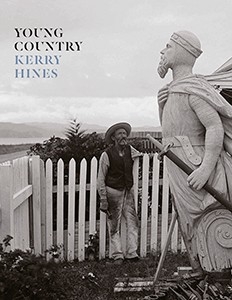
Young Country by Kerry Hines
Auckland University Press, 2014

The relationship between Australia and New Zealand has often been characterised as one of sibling rivalry, between an older and more established nation and a younger and less populous country. As the Honourable MP Phil Goff has commented, it contains ‘the closeness and the rivalries, the expectations and the tensions this implies.’1 To stretch the sibling metaphor further, it seems that the older sibling looms large in the younger sibling’s imagination but the interest is not always returned.

Continue reading

Posted in BOOK REVIEWS | Tagged ,

Review Short: Murray Edmond’s Then It Was Now Again: selected critical writing

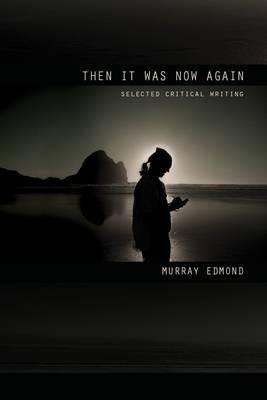
Then It Was Now Again: selected critical writing by Murray Edmond
Atuanui Press, 2014

The essays and reviews in this collection, all previously published, span roughly thirty years of New Zealand literary history, the earliest having been published in 1973 and the most recent from the late 2000s. With one or two exceptions, these pieces tend to focus either on New Zealand poetry or New Zealand theatre, and on the surface this might seem to limit the appeal of this collection to an international audience. Continue reading

Posted in BOOK REVIEWS | Tagged ,

Dead Man Modified: A Letter from Vienna


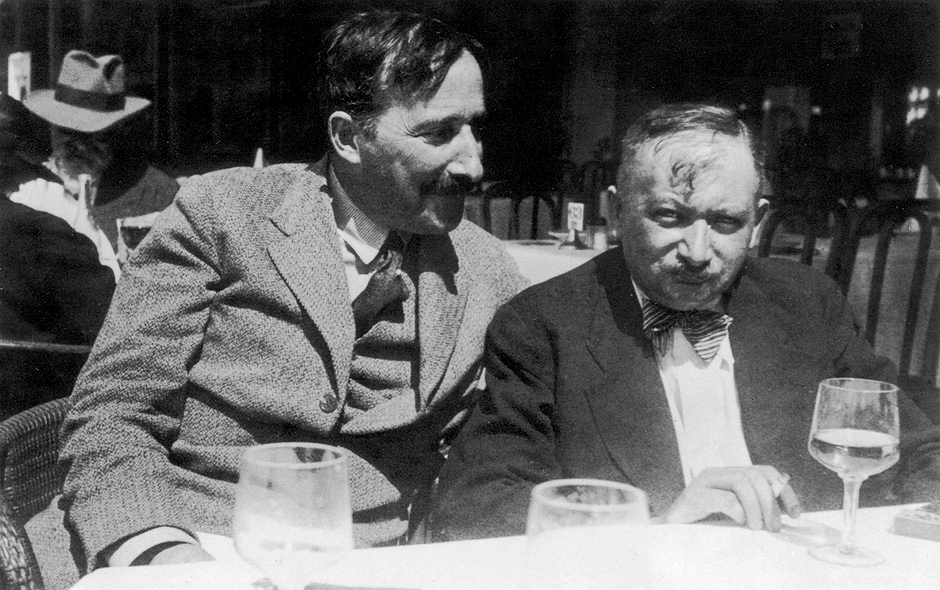
Stefan Zweig and Joseph Roth, 1936. Imagno/Hulton Archive/Getty Images

The words of a dead man
Are modified in the guts of the living.
                                                                    W.H. Auden, in Memory of W.B. Yeats

Just around the block from Vienna’s State Opera, on the outside of a mustard coloured building, is a plaque noting that here – in diesem Haus – W.H. Auden died. He was staying here following a reading at the Palais Palffy, and sometime in the night, while someone else was eating or opening a window, the poet’s heart failed.

Joan Didion describes the kinds of people who keep private notebooks as ‘children afflicted apparently at birth with some presentiment of loss.’ Vienna feels like that kind of city: the kind that keeps a private notebook.

A hundred and twenty years ago, Vienna was one of the artistic and cultural capitals of the world. The list of locals is impressive, and regularly recited: Freud was here, Schönberg, Schnitzler, Zweig, Mahler, Wittgenstein. Because there were barriers to Jews studying and teaching in the universities, a café culture sprung up which was dedicated to perpetual education. Clive James has argued that a rare upside to the rampant anti-Semitism of the time was that the Jewish literati were not wasting their energy writing doctoral theses. Instead, the coffee shops hosted discussion across multiple disciplines, and ideas were exchanged, critiqued, and developed.

The Viennese writer Stefan Zweig – visible most recently as the inspiration for Wes Anderson’s Oscar-winning The Grand Budapest Hotel – described Vienna before the First World War. ‘No one,’ Zweig wrote, ‘thought of wars, of revolutions, or revolts. All that was radical, all violence, seemed impossible in an age of reason.’ Within the coffee shop culture, characters abounded; the writer Peter Altenberg wore sandals in the snow, had his mail delivered to a café, and spent a lot of time chasing underage girls; the masterful aphorist Karl Kraus pronounced that journalists ‘write because they have nothing to say, and have something to say because they write’; and the independently wealthy Zweig served his guests liqueur scattered with flakes of gold leaf.

As we know, it didn’t last. When the Austro-Hungarian Empire entered the First World War, the Habsburgs’ grip was already loose, and four years later the empire – which at the time comprised 15 nations and over 50 million people – collapsed. On one night in 1918, Vienna went from being the capital of a massive empire, to the capital of a tiny European country stripped of mass, power and resources. (Today, the country remains relatively obscure; when I told people I was moving to Vienna, a surprising number asked if I could speak Italian, or if I had plans of becoming a gondolier).

In 1918, while Austria was suffering from the loss of its empire, the loss of the war, and inflation so crippling that a pair of shoelaces cost what would have once been the price of an entire shoe store, Zweig watched as thousands of unemployed people ‘shook their fists at the profiteers and foreigners in their luxurious cars who bought whole row of streets like a box of matches’. The industries that the empire had relied on were suddenly on foreign soil; ‘the railroads had become wrecked stumps, the State Bank received in place of its gold the gigantic burden of war debt.’ And the worst was still to come.

From Zweig’s house in Salzburg, you could stand on the terrace and look across into Germany, where on the other side of the valley, there was a house on the mountain. The owner of the house had lived many of his years in Vienna, painting watercolours of the Ringstraße’s famous buildings – he could stand for hours in front of the opera house, he said – and after twice failing to get into Vienna’s Academy of Fine Arts, finally left his beloved city for Munich in 1913. After fighting for the Germans in the First World War and spending time in prison, he eventually became Germany’s chancellor, and in 1938, he returned to invade his home country and begin World War II. The damage to Vienna’s intellectual culture, already profound, was complete. As a result of Hitler’s policies, two thirds of Vienna’s Jews were expelled and more than 65,000 were murdered in concentration camps.

Auden’s elegy for Yeats from 1939 reads: ‘In the nightmare of the dark/ All the dogs of Europe bark,/ And the living nations wait,/ Each sequestered in its hate’. My German Jewish grandmother left Germany, and moved as far away from Europe as she could, settling in New Zealand, where she forgot her native language. Even Stefan Zweig, a fierce optimist, lost hope. ‘Europe seemed to me,’ he wrote, ‘doomed to die by its own madness’. He and his wife moved to Brazil where they tried to rebuild their lives. In February 1942, even though it was clear that the Nazis could not win the war, they committed suicide.

Hitler’s 1938 ‘invasion’ of Austria had been of a curious kind: where many of the supposed victims came out of their houses to cheer on the invader and wave flags in welcome. After the war, the Allies declared that Austria had been Nazism’s ‘first victim’. In contrast to Germany, where attempts towards de-Nazification began as soon as the war was over, Austria, as supposed victim, did not confront its Nazi past until the 1980s.

The Slovenian philosopher Slavoj Žižek, visiting Vienna this month to speak at the national theatre, may have been trying to charm the locals when he suggested that it could well be time for a ‘second Vienna renaissance.’ Žižek, with his usual beguiling mix of wit, wisdom, and Hollywood references, said to the sold out Viennese audience, ‘120 years ago you were … like in Star Wars, the centre of the whole universe … everything was here.’

Since I moved to Vienna, I’ve heard half a dozen visiting academics and politicians announce, with varying degrees of conviction, that now Vienna is returning to the days when the city was a great artistic, intellectual capital. I can’t tell you whether these announcements are based on firm evidence, or if such hopeful claims have been made since the 1940s. In his 2007 Cultural Amnesia, Clive James said Vienna ‘feels empty now,’ and corrupted by ‘irreversible physic damage’. It’s certainly true that some of the old coffee houses seem to have lost their intellectual spirit, and have fallen into tourist territory.

The despair and grief of the twentieth century were for a long time denied or avoided; Vienna continued to celebrate Mozart, the height of empire, and the fin de siècle, skipping over the more recent century of horror and grief. This year’s Eurovision coverage traversed much of the same territory as Vienna’s usual tourism videos: Vienna’s beautiful buildings along the Ringstraße, the leafy Prater, the Spanish riding school. But there was no sign of the Flaktürme – the six giant concrete towers built by the Nazis and scattered through the city. In actuality, these Viennese buildings are just as iconic – one, now serving as a giant aquarium near the centre of town, has giant words splayed across it, as designed by the New York artist Lawrence Weiner, commissioned by the Vienna Festival in 1991. It reads Zerschmettert in Stücke im Frieden der Nacht (Smashed to pieces in the still of the night).

American poet Elizabeth Bishop’s famous villanelle ‘One Art’ shows us not only the disastrous nature of loss, but our desperate and futile attempts to control it. ‘The art of losing isn’t hard to master’ the poem insists, until the final stanza shows us the impossibility of mastery:

                                         … It’s evident
the art of losing’s not too hard to master
though it may look like (Write it!) like disaster.

That loss, the speaker knows – ‘(Write it!)’ – must be written, must be admitted.

Perhaps like the writer who is afflicted with loss, the tension of that loss translates into a kind of activity. A strength of present day Berlin is that loss and shame are in the air. The city always feels unfinished, raw. ‘(Write it!)’ it says, knowing that loss can never be unwritten, can only be written again and again. In Vienna, the young Viennese people I know far prefer the park with the giant Nazi flaktowers to the park where the emperor once rode around in his carriage.

This morning in a hipster coffee shop near where I live, on a street where the Austrians once welcomed Hitler’s motorcade, a woman sits by the window with a long-since-drunk coffee, and writes, slowly, in her notebook. Above her the high rafters are speckled with glimmery gold leaf, and she is taking her time. She consults the book beside her, which I peer at to get a closer look. It is Freud’s Die Traumdeutung (The Interpretation of Dreams). The dead’s words are modified in the guts of the living. I wonder what dreams she might be interpreting, what loss she’s trying to master.

Posted in ESSAYS | Tagged , , , ,

Recalling the Poet: Childhood Memories of Sam Hunt

‘I’ve written road songs, river songs, wave songs, songs about mountains and plateaus … Place has always been important to me. People and places. It’s all about the consecration of people and place.’ – Sam Hunt

Sheep shit, rugby and poetry

In an awkward clash of cliché and fact, I grew up on a sheep farm in New Zealand, in a house owned by a former All Black. In this steep green place, where the melodic peals of bellbirds rang out from ferny valleys and the lambs shat in your gumboots if you left them out overnight, I met my first poet. His name is Sam Hunt, and I owe him an apology.

No Kiwi worth their salt doesn’t know Sam’s name. His exuberant live performances, fuelled by red wine and his own restless, fizzing energy, are the stuff of pub and schoolyard legend. Driving to school we’d often spot his unmistakable figure striding along the roadside: tall and thin, shock-headed and long-legged, clad rakishly in stovepipe jeans and flowing scarves, with his equally famous sheepdog Minstrel loping at his heels. As he wrote in ‘Lines for a New Year’, ‘A friend used to say / my dog and I / had the same way of walking, / especially walking away.’ When Minstrel died in 1988, it was the lead item on the evening TV news. The whole nation mourned that dog.

Minstrel was so perfect and bloody lovely. When he died I lost a very good friend. He always travelled with me, and rumour has it he often used to do the driving, especially after a show – although I can’t confirm that, I was too pissed! Hahaha. But he certainly got behind the wheel. He didn’t touch my booze, but he liked to get into the hooch, so I had to watch out for that.

By reputation Sam was kind-hearted, charismatic, cheeky, incorrigible. You could tell he was a poet just by looking at him, and my sister and I adored him from afar. The guy was pure rock ‘n’ roll. He called his poems ‘road songs’. They were taut and unpretentious, funny or sad, sprinkled with swear-words, and he wrote about places we knew and loved. The titles were mini-poems in themselves: ‘Bottle to Battle to Death’, ‘School Policy on Stickmen’, ‘Girl with Black Eye in Grocer’s Shop’. He’d often recite other poets’ works from memory.

If a poem moves you, you may grow to love it and become unable to live without it. I’ve got thousands of poems in my head, and I can’t forget them. I remember the ones I love, so I’ve always got them with me … My best poem? Tom and Alf. My two sons.

Back then, Sam lived in a boat-shed on Paremata Harbour, across the water from our house. New Zealand is a small place with a high eccentricity count, and it’s no big stretch for a poet and a rugby-playing farmer to be close pals. Sam was mates with our family friend and landlord, the ex-All Black Ken Gray, and the poet often rowed his boat across the harbour help paint Ken’s woolshed, do some hay-baling, or join his family for dinner – reciting poems, telling stories and puffing funny cigarettes, which Ken valiantly tried to explain away to his teenage kids.

Nosy little bastards

A nomadic type, and with scant room in his boatshed, Sam also stored a bunch of his belongings in the attic of the old barn behind our chook shed. Free to roam across thousands of acres, ride horses, have mud-fights, harass tadpoles or get stuck up trees, you’d think we’d have spent every day immersed in such wholesome outdoor pursuits. But that musty attic exerted a strange magnetic pull. Time and again we’d climb the rickety ladder up to poke around in the poet’s personal effects.

Up there, amongst the smell of wool grease and decades-old manure, we’d pore over Sam’s treasures: old typesets from his early print runs, a tiny bible with a mother-of-pearl cover, a smutty paperback in which sex-crazed satyrs and nymphs cavorted (this is not a man who shied away from carnal matters: Sam’s friend, fellow poet James K Baxter, once hailed Hunt in verse by rhyming his name with the epithet ‘oyster cunt’). There were postcards from Paris, letters from Baxter, drawings by the artist Robin White, books galore, and other precious mementoes (here I’ll grant the man some privacy). We spent whole afternoons up there, breathing in the dust of the poet’s life.

I did my first paid show when I was 17. It’s a lonely old occupation, being a lighthouse. It’s a fucking lonely existence, throwing out what light you can … It’s a precarious existence, but it all becomes worth it when you get to the show. A lovely audience, the venue packed out, and you get the most wonderful responses. It’s just incredible. Magical.

Children get away with things no adult would dare attempt, much less least admit to. Rummaging around in Sam’s stuff, we never felt we were doing anything wrong; in fact Ken told us we had Sam’s blessing, and my sister swears she had a conversation with the poet by the chook shed, during which he ‘gave’ her the entire contents of that attic. But today I feel a vague guilt over that ransacking, our nosy repeat perusal of a man’s personal belongings – a guilt compounded by the fact that I’m now telling you about them.

Protect your spark

Why were we so fascinated? What were we looking for? The answer, I suspect, is that most elusive of trace elements: Essence of Poet. I wanted to be like Sam – a wandering raconteur, a rebellious wordsmith, wearing waistcoats and drinking claret, loved and welcomed everywhere. I’d barely hit school when I said I wanted to be a writer. ‘But writers don’t make any money,’ said my dad, hoping to steer me toward a more sensible path.

I grew up to prove dad correct. But I also remember some alternate advice, this from Sam himself, dispensed during a dinner party at the Grays’ house. As we left, Sam put down his wine glass, took my eight-year-old hand, looked me in the eyes and said, in his low gravelly drawl: ‘Never let them steal your spark. Okay? Remember: never let them steal your spark!

Great advice. I wish I’d followed it more often. But occasionally, when spark-stealers have lurked in my life, Sam’s words have returned to me. So along with that overdue apology, I also owe him thanks. I track down his mobile number … then hesitate. Who wants to be a pest from the past?

Five gunshots from humanity

It’s no accident that Hunt now lives in New Zealand’s remote far north. He’s been declared a national icon, and strangers stop him in the street to tell him their life stories. Today when not touring he cherishes his privacy, the peace and isolation of the Kiwi hinterland. He quantified his ideal domestic distance in a poem written for his younger son, with whom he lives: ‘Alive, Alf, to live / clear of any city / live more than five / gunshots from humanity’. Background noise, to Hunt’s mind, has a way of drowning out good poems.

I need a lot of solitude and silence to work. I’m not saying you have to be in particular state for a poem to happen, but if there’s a lot of noise, if you’re constantly surrounded by distractions, there’s more chance of missing it. A poem is an incredibly elusive thing – I mean a lyric poem, the kind of poem where you’re not so much creating it as having it given to you. When you think, where the fuck did that come from? Like waking from a dream.

Mid-winter, 2015: the signal bounces across the Tasman, lights on its target. Hunt picks up. The voice is the same, the wit quick and cheeky. He’s just home from a sell-out national tour to promote his new album, The 9th, a musical collaboration with David Kilgour and the Heavy 8’s. He has no idea who I am, and is at first politely wary. But he soon warms up. ‘Any friend of the Grays is a friend of mine,’ he says.

Working with musicians suits him. Despite having twenty-odd books under his belt, Hunt has the theatrical gene, and his poems are rhythmic things, born to be read aloud. It gets lonesome, too, being a poet touring solo: ‘I love DK (Kilgour) and the band. They’re like my younger brothers, they look after me. Musically, they surround me and work off me. To have such fucking superb company, both onstage and off, is a total pleasure and a gift.’

The new album is a corker – by turns lush, raucous, evocative and atmospheric, Hunt’s husky voice chanting the poems, backed by jangly guitars. It was recorded live, over four days in a Dunedin pub. Along with Hunt’s originals, it includes poems by Baxter, Yeats, and Hungarian poet Attila Jozsef.

Music can take a poem to places it mightn’t normally get to. Once all poems were songs. Then the printing press was invented and poems suddenly got crucified, nailed to the fucking page. And kept nailed there by academics who earn a living asking questions like ‘What is a poem? What is the poet saying?’ University English departments are some of the greatest butchers in the sense of killing poetry, taking it away from people, making it difficult, some sort of elite thing … I’m interested in poems – good poems – but I’m not interested in ‘poetry’.

Posted in ESSAYS | Tagged ,

4 Artworks by Matt Arbuckle


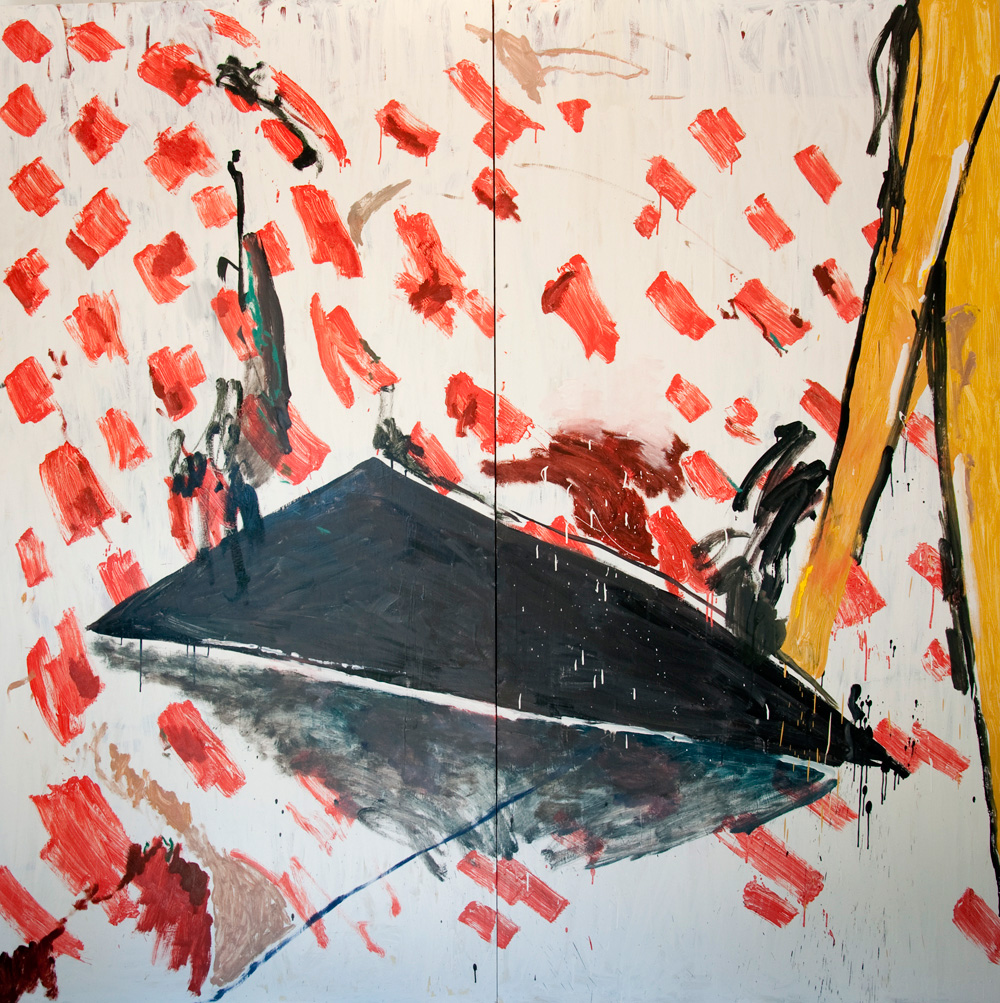
Billy Cart | oil on board | 240 x 240cm

Matt Arbuckle’s work explores a dialog between the construction and deconstruction of a painting. The narrative is one of space and perspective, where planes and illusion of depth are the topic for discourse, rather than direct representation. The viewer is therefore denied obvious footholds for interpretation, encouraging the experience to be dictated by an individual’s visual sensation and perception. The foundation of these paintings is the concept of accessibility for all. The blatant and at times aggressive marks encourage the experience of these paintings to not be over conceptualised, but rather a celebration of painting for paintings sake.

Posted in ARTWORKS | Tagged

Alters; Aspects from La Trobe Track, Karekare (after Anita Heiss)

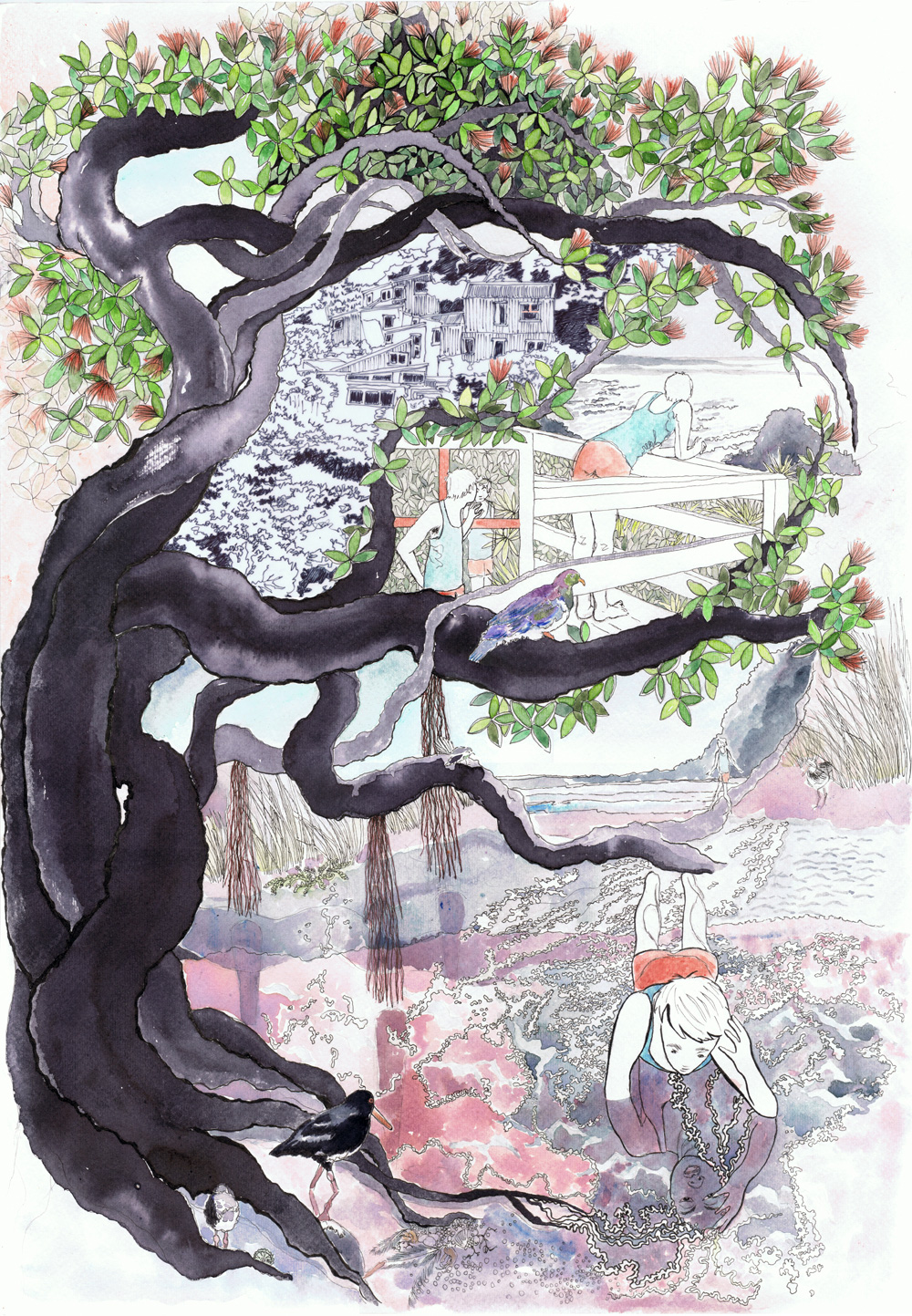
In terms of the image I’ve produced for ‘I don’t hate you, but …’ I thought a lot about the poem’s call for the reader to be self-reflective, to observe, and in particular to preach.

The stylised pōhutukawa symbolises Māori spirituality corrupted by colonial missionaries, the branches redolent of leaded church windows in reference to The Tree of Jesse from Autun Cathedral. Other artworks that inspired me were William Blake’s Hell Canto III, and John William Waterhouse’s Echo and Narcissus.

The scenes are taken from Auckland, including Karekare, the setting for many of Allen Curnow’s poems. A reference to Curnow’s ‘Spectacular Blossom’ was suggested by Robert Sullivan.

The colours, too, are symbolic: pinks for Australia’s soil and the displacement of indigenous peoples; red references both the St George flag and, with blue, my local surf life-saving club uniform. Surf life-saving slogans include ‘Between the Flags’ and ‘In it for Life’, relevant because sport is another kind of accepted ongoing crusade, but Surf Life Saving is a redeemable sport in the sense it functions to save lives rather than merely promote combat skills, having therefore the potential to teach other sports how not behave like the former British Empire.

Posted in ARTWORKS | Tagged ,

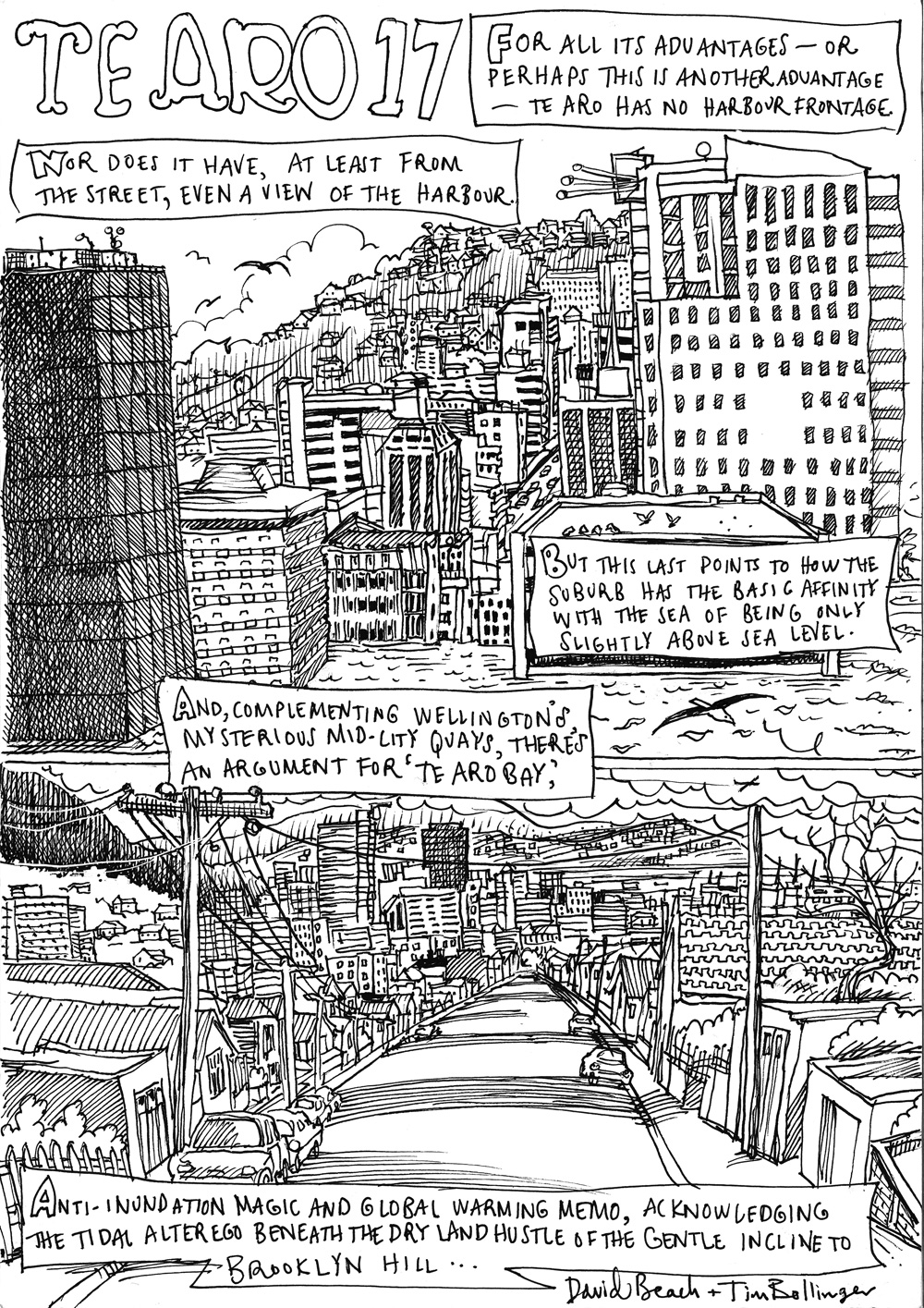
Te Aro 17 & 19 (after David Beach)

Posted in ARTWORKS | Tagged ,

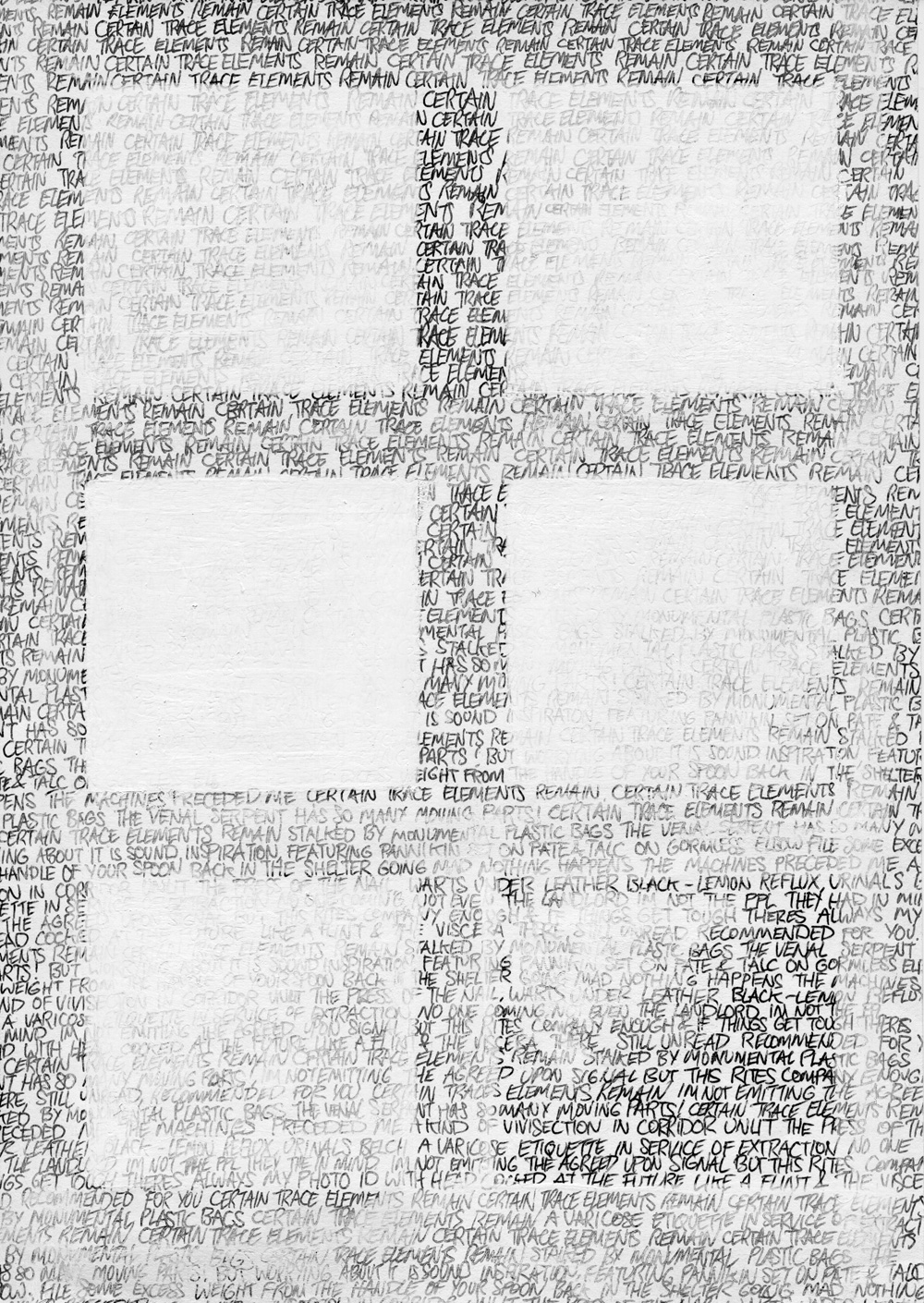
Certain Trace Elements Remain (after Marty Hiatt)

Posted in ARTWORKS | Tagged ,

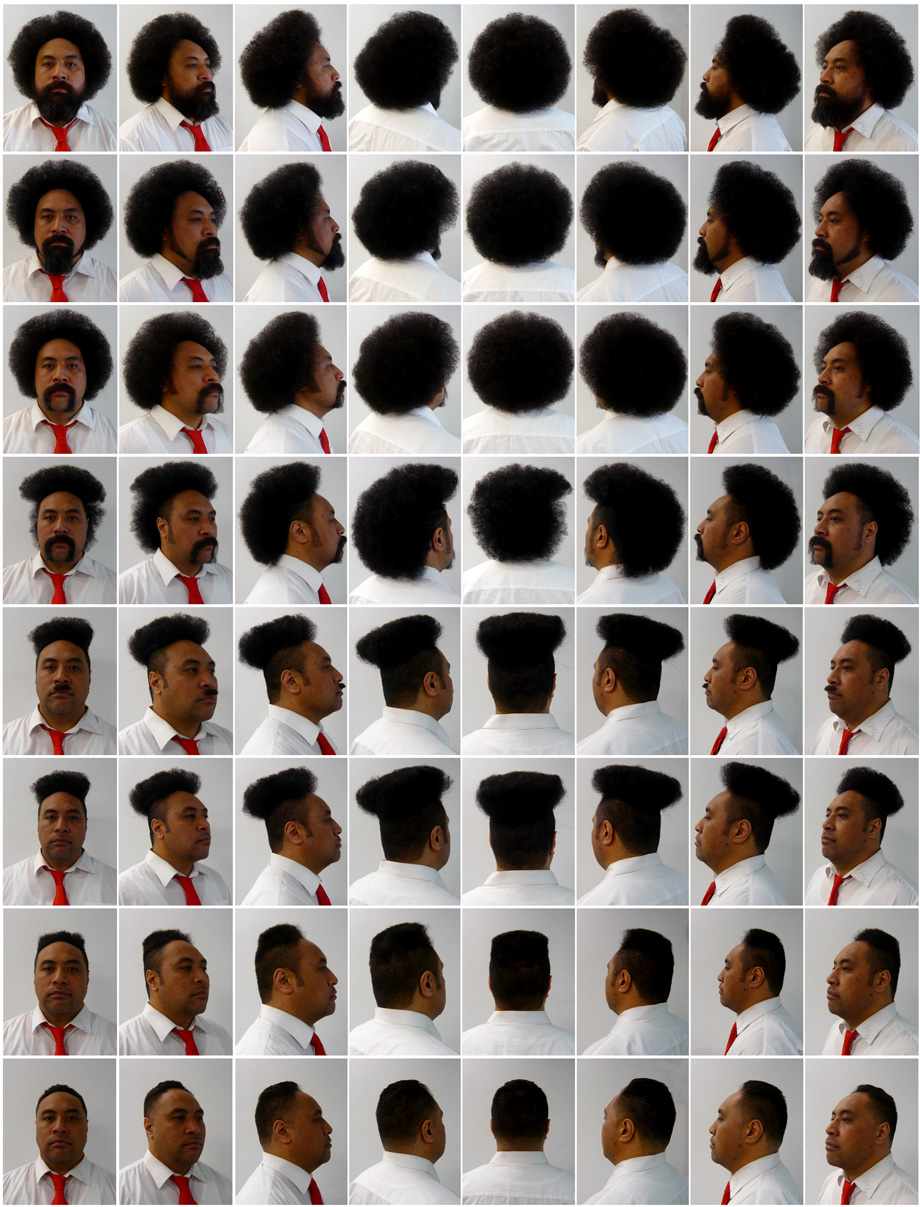
‘Oki fa’a kama Samoa moni lou ulu / Cut your hair like a true Samoan boy’ and ‘White Sunday’


Siliga David Setoga | Oki fa’a kama Samoa moni lou ulu / Cut your hair like a true Samoan boy | 2015
Photograph: Setoga Setoga II | Barber: Maligi Junior Evile

Posted in ARTWORKS | Tagged

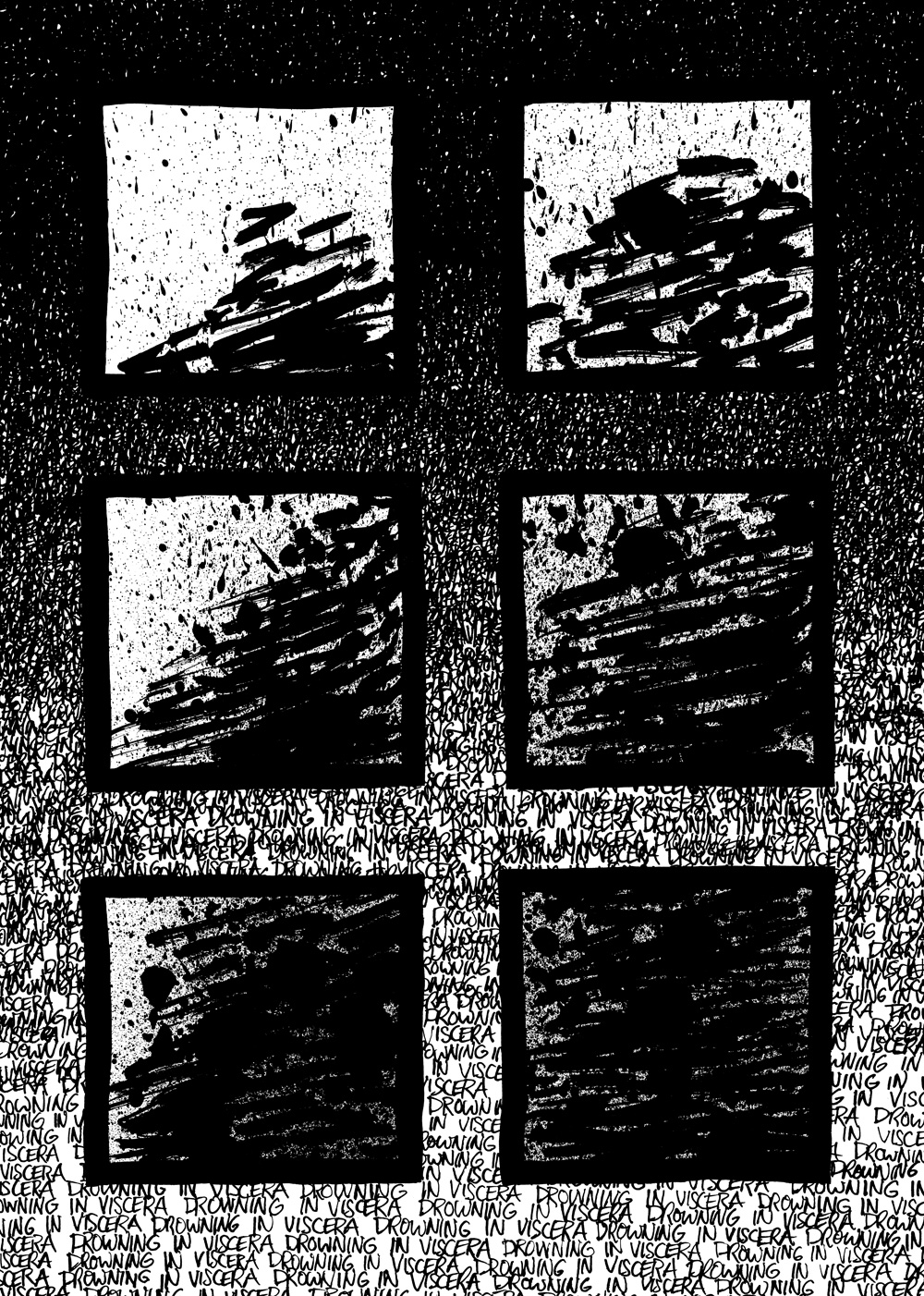
Drowning in Viscera (d) (after Marty Hiatt)

Posted in ARTWORKS | Tagged ,

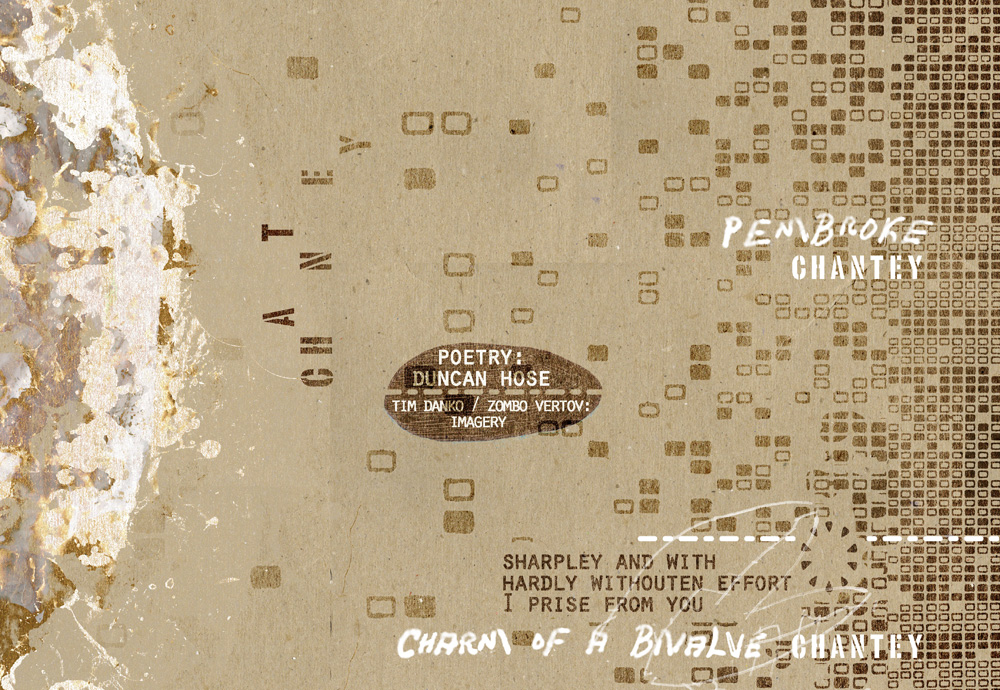
Pembroke and Charm of a Bivalve Chanteys (after Duncan Hose)

Posted in ARTWORKS | Tagged ,

To Change the World: Baxter As the Eternal Reader


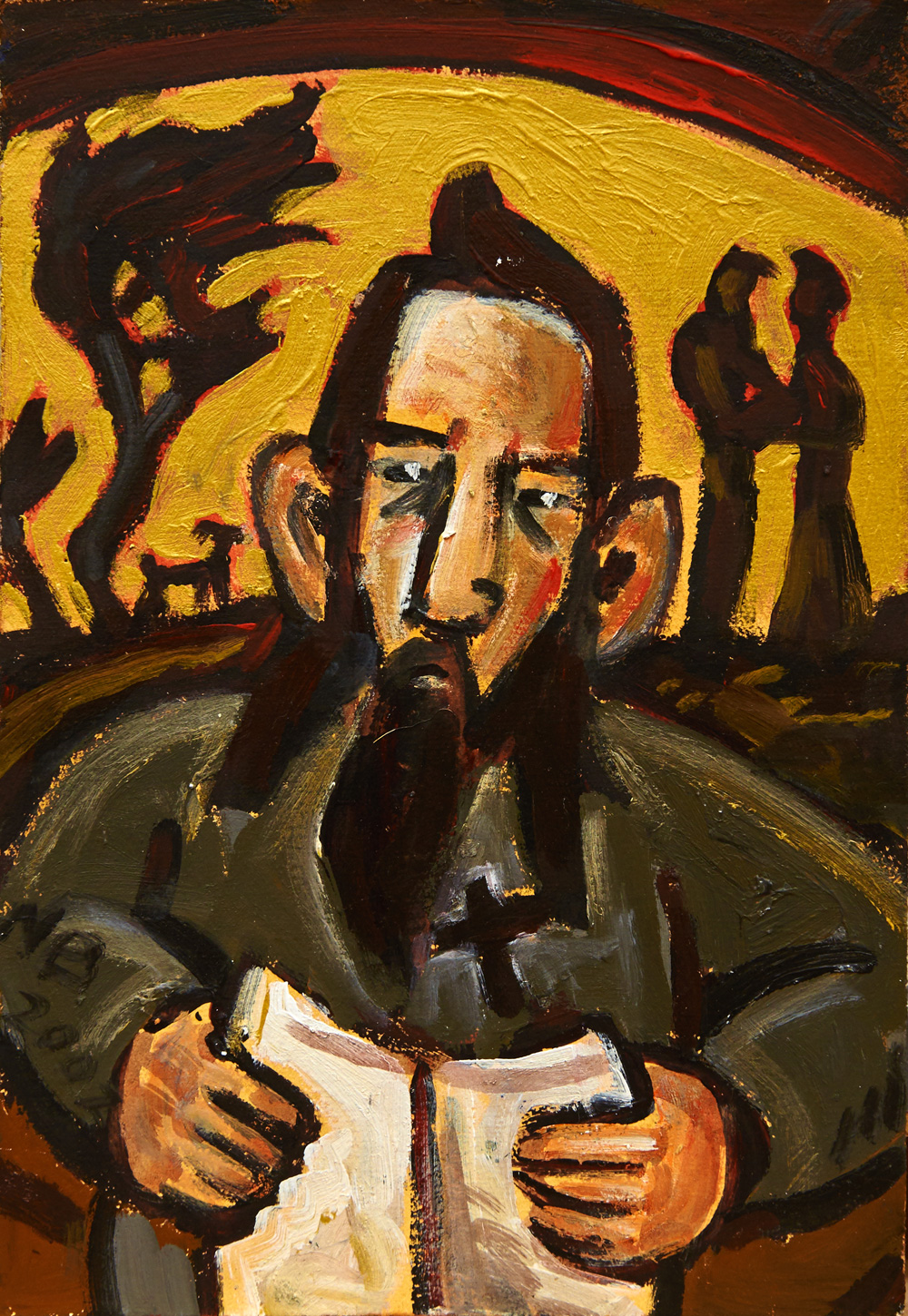
Nigel Brown | Reading with Couple | 2002 | acrylic on paper | 300mm x 210mm

It is difficult to paint from a grounded meaning, and for me the search has been intuitive. Both my father and I were deeply influenced by James K Baxter (1926-1972).The experience of being read poetry ‘that handled ideas like bombs’ was a kind of conversion. For over forty years Baxter has appeared in my work as the immortal hairy man dispensing a poetic that might cure the world. While that sounds religious, it is also just the spiritual urge lurking in archetypes, in our organic indigenous cultures, and in the abandoned Romanticism before our Modernist immersion and climate changing technocracy.

I use text in my work and always value associations with poets. Of course, Baxter was much more than a poet; in his work social injustice and ‘love not much valued’ push you creatively away from mere aesthetics. However, whatever the more clumsy aspects of his personal ‘search,’ his crafting held it all together remarkably. Just as Baxter disembodies into the ‘poetic eternal’ – separating from the earthly specifics of a life – so too may a painter embrace the freedom to evolve symbols with expanding boundaries.

Even in times of confusing disconnectedness I believe simplicities can be found. This approach is not a matter of ‘finding’ priests and dogmas, but one of more involvement with the timeless human ‘situation’. So when people gather for a Baxter reading, the words spoken lead a basic tribal urge – they are the words of someone who has travelled mentally, a master of chant. They form an alarm that calls for less indifference and more sensitivity.

Posted in ARTWORKS | Tagged ,

VCR

I wasn’t sure it would still
work
the VCR
its postbox
mouth stuffed with a Wombles
video my daughter had fed it
until it jammed
now plugged
into power again gears whir
noisy but effective
my son
fascinated with old technology
is piling up tapes
until I find
a video
with my dad on it
wishing he was not introverted
shying away from the camera
but an extrovert
so I could see
him properly
or hear him again

what I can see shows an old man
cancer already found
and removed
ready to spring back
gears whirring
my son finds this boring
a man
he’s never met
can we put another video on dad?

Posted in 69: TRANSTASMAN | Tagged

How I Cut My Nails

How I cut and file
My longer nails
The beloved of birth until death
as,
you always grow
to witness
all my pale hues;
The life
in seasoned pain and
gleam of crawling joy

All wedding rings pass through you
All pain remain your silent witness
Still,
Neither you beat a word
Nor you echoes thy pain

How lovingly must I groom and
file your pain
as,
you fall down lifeless
with invisible ooze:
The blood of my heart

My own never care
And I never cared to wipe my eyes
Dear my nail

Still longer shadow linger
To swaddle thy warmth
in a piece of velvety calm

Adieu,adieu
Dear my nail!
That which cul
Grows my shadows tall

How I cut and file
My longer nails …

Posted in 69: TRANSTASMAN | Tagged

Mt Frederick

there is a passage in
the lee, the lees
of the sun;
the poor
are said to be generous.
we’re holding out our feet.

Posted in 69: TRANSTASMAN | Tagged

you

i) each calibration is winter

ii) and you walk into my hand

iii) like a tenant


iv) eye & word alone.

Posted in 69: TRANSTASMAN | Tagged

Yellow Chevrons

An old story. Our hero wakes up disoriented in a strange and unfamiliar land. Rock strewn, treeless. He is amnesiac; expulsion from Eden is false memory. The Ruskinesque, quartz blaze of a fallen rock. Into his field of vision float half erased memories. The plank-hulled ship stretched upon the leek-green sea, for instance. Though how did he get here? Balloon cheeked clouds puff powdery gusts from every quarter. The ship tilts toward its destiny, sails pot-belled and proud. An empire in red shading and black lines spell out emptiness. A clutch of miniscule palm trees lean toward the coast. A few towns and oases marked out phonetically in copperplate promise little. Inland remains largely terra incognita, a persistent rumour. He observes a lizard, frozen beneath his shadow, its back patterned with yellow chevrons. This reminds him of ship’s anchors. The map fades off, borderless, into obscurity. The horizon swings on its boom in one slow arc either side of the perpendicular. The emissary has not yet returned with news from the ant-headed people. At best, trade routes remain speculative. Twilight is the texture of wickerwork all around him. Soon the stars.

Posted in 69: TRANSTASMAN | Tagged

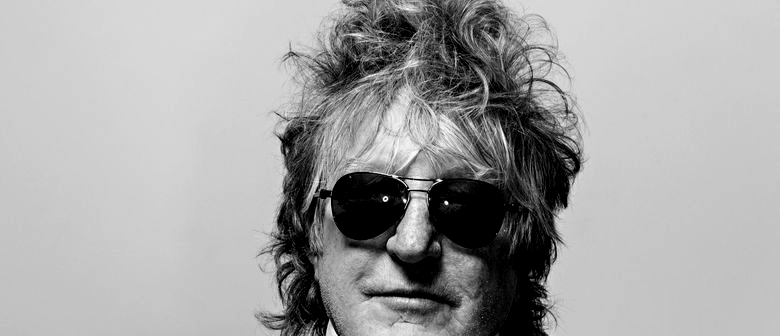
Young Mick Jagger

Young Mick Jagger-looking guy
crossing the road, you cut
the most self-assured line
I’ve ever seen, and I’ve seen some.

Fringe on sunglasses, denim on
denim – you almost had me off
my bus and running down the street
for a second look at you.

Posted in 69: TRANSTASMAN | Tagged

Tears in the Symphony

I feel like a terrible thespian
or maybe a great comedian
playing a retarded character,
like Freddy Benson.

Other-days
I feel like that guy who shot himself
during The Watchmen, like an octopus
in a tank of lobsters. Your lips when

kissed that afternoon, silky, salty and
cold, parted like a cut jellyfish on
an overcast shoreline. Poverty, chastity
obedience, enclosure. I had a dream.

Watching a nun fall off a bicycle on the
banks of the Seine … but it’s like watching
a .gif and after my laughter subsides
I find myself fascinated with the
paralinguistics of the way her ankles bend
as she hits the stair-rail. It’s like Springsteen’s
Dancer in The Dark, you know, up against
yourself, tongue kissing your
shadow with reckless abandon.

Posted in 69: TRANSTASMAN | Tagged

A Cramped Garden

You vines cling too tight
to the brown brick shed.
He has no room to move
with the car pressed up against him like that.

And the rest of you trees
and birds and the roaring traffic,
there is no space here
you are all too alive.

Posted in 69: TRANSTASMAN | Tagged

Forgetting

A small remark, almost unnoticed,
then not quite believed, like those false
pools the late afternoon heat makes

on the road you (for there is, it turns
out, a you here, and a setting, let’s
make it sun) are driving into dusk

time-wise, albeit away from dusk
geographically, moving east from
the mountain, trying to keep to the tip

of the peak’s shadow, which in a more
fanciful mood you might regard
as a hand reaching out for you,

though not the kind of personification
you particularly like in a poem,
not this late in the game. At any rate,

this remark, when it slipped into
existence, when she gave birth
to it there between you, held itself aloft

in your thoughts, like a moon
risen in the sky of your mind and which
you saw as though you’d never seen

it rise before. It seemed incongruous
among the other thoughts—the ones
about you, the ones in her head, that is,

the ones you’d invented about you
for her head—incongruous like an old couch,
beer-brown with a permanent ditch

carved into the far left cushion, amid
the matching soft-light white of the others,
the kind of couch a new husband naively sees

as inviting and friendly and so insists
at first on keeping in a place of prominence,
or rather he keeps insisting, but fails

and then it’s down to the cellar
to sleep the sleep of the past. (A bit
of a stereotype, which though unfair

is familiar enough that we might
meet on common ground, you and I.)
Anyway, just before she made

this remark, you had been so taken
with her—that is, taken with
her notions of you or, rather, taken

with your notion of her notions
of you—that it did not seem out
of the question that someday you

might give up the old couch, let it
sink a level in the house, a house you
might one day paint together,

an off-white to cover up the lives lived
there before you; you could see that
she was the kind to get a smudge

of paint there off-center on her chin,
which you imagined you might be called
on to remove, but then her remark slapped you

into the present, which itself now thankfully
is safely becoming the past, falling mile
after mile into the shadow catching up

with you, a shadow that now seems less like
a hand and more like memory itself (again,
though, not a comparison you’d normally find

fetching). For it was the kind of remark
not worth recalling or believing,
better left in the dim basement

of memory, beneath the old paint blanket,
the splatter-guard that covers so many
offenses, the botched junior prom date

with Marlie, the stumbling admission
of virginity (yours, I fear—I’m starting
to feel sorry for you), the whole summer

camp underwear incident—but why dredge
it all up, the stiff blanket of embarrassment
covers these offenses, the way paint slaps

pesky imperfections from the molding, or
a shadow masks the potholes in the road, or
the earth’s atmosphere gives the dead, airless

moon a kind of friendly, bon vivant
appearance, which is not at all the type
of description you favor in a poem,

not this late, driving to who knows what
metaphor you’re capable of, under cover
of, for Christ’s sake, the second person,

a mirage you’ve never favored because
you drive up and it disappears, as the day
does to dark, which is the convenient,

comfortable blanket beneath which we sleep,
you and I, even while driving, even in daylight,
every damned day of our peaceful lives.

Posted in 69: TRANSTASMAN | Tagged

Future Value

My finance teacher, with a voice like Ghandi’s,
is trying to explain the concept of future value.

He says we’ll like finance, because it’s like time travel.
He says it’s nothing like accounting, which is all about

tallying up the deficits of the past. Finance, he says
is all about the future, and so all of its answers

(he cheerfully tells us) are wrong.
Thousands all over the world, we’re listening

to his lecture, and trying to solve the problems
that cast most of us into an ideal future of singing

the song of future value. The magic mirror of finance.
The telephone booth that takes us far into the future

on the day the final payment is made––then back
to calculating the present value of all those payments

down the sluiceway of time. Calculating
as if the winds of hazard and contingency

can be measured out to many decimal places
for my fellow students, faces glowing

from their screens, gazing at the heaven
we’ve always dreamed of––a heaven of ideas

that create value, the best ones attracting
the capital that is always hungrily searching.

So says the tiny head of my professor
who pauses from his work on formulas to stare at us

backward through the camera––each of us out there,
whether in St. Petersburg or Singapore––to say

that he believes we learn best when we have to struggle;
and that some things are too valuable to measure,

and here he offers love as an example, as if
he’s used to assuming his students are young;

and that the problems on the test will be much, much harder
than anything he’s explaining to us now.

Posted in 69: TRANSTASMAN | Tagged

Notes on the Creation of the World

(for Visesio Siasau)

On the first night of creation
Hikule’o turned the sea upside down
and shook it out, the way an old lady shakes out her purse
for a bus driver.
The sun fell out of the sea
like small change.

On the first day of creation
Hikule’o drew squares and triangles
with her unstumped hand.
When she was finished
her characters looked at each other,
shrugged shoulders, cracked knuckles,
and shook their almost-perfect forms
into kinks and bulges and blurs.
They walked away, into the world.

On the edge of a clearing
a man and a woman coupled,
doubling their imperfections,
becoming one beast.
The goddess’ harelip moistened with joy.

On the second day
Hikule’o gave the world a will of its own.
Tides muscled the channel
to Fanga’uta lagoon. The whip and the fly-whisk
prepared persecutions.

On the third day the goddess felt suddenly alone
as she walked between plantations.
She turned, and saw her shadow flee
across a field, then disappear into a hedge
where hibiscus eyes waited.

On the fourth day
Hikule’o began her diary.
Her pen worked like a spade,
tunnelling forwards in time
to sons and usurpers.
She read a page aloud
to the future, and mistook the silence
for applause.

On the fifth day
Bishop Berkeley stood in ‘Atenisi’s seminar room
and denied the existence of space and time.
Hikule’o dropped him down a well
one of Maui’s heels had made.
The bishop fell like a lucky coin.

On the sixth day Hikule’o walked through Nuku’alofa
and took a table at Escape Cafe.
Lo’au read the New Zealand Herald aloud to her,
without knowing it was almost a week out of date.
Hikule’o yawned, and dropped the morning moon
into her teacup, then yawned again, and watched the moon dissolve
like a lump of sugar.


Lo’au: Tongan culture-hero who taught navigation and sailed to the end of the world.
Atenisi: independent school in Tonga associated with free thought and the pro-democracy movement.

Posted in 69: TRANSTASMAN | Tagged

Hard Bun

Soft fur on the hard top
Blood bone fur heart ears
run together
run over
run through
by crows’ peaks
kaffeclatsch
breakfast bun
turned over
As I drive by dodging crows
four wings flop a few feet away
one’s stomach speaking strongly
can’t let go
frantically pulling something stringy
in the soft light a hard beak.

Posted in 69: TRANSTASMAN | Tagged