A White Australia Mindset

When do you know it has become obsolete?
When can we be certain it has become obsolete?
Take the White Australian Policy abolished on paper yet
The mindset was to keep Australia for the descendants
Of the British and to keep ‘Asians’ and ‘coloureds’ out
Prime Ministers applauded making farmers feel safe
With the stolen lands taken from the First People’s
Australia’s foundation proudly cemented
As the land of the long white nation
A mindset transferred from father to son
Ensuring it survives down the line thru time.
A White Australia mindset is not out of date
Policies, Legislations, attitudes, stereotypes
A voice screaming “go back where you belong”
A voice asserting “Hey mate whites built this country”
A voice declaring “this was nothing before we came”
The White Australian mindset not replaced
Not obsolete, not out of date, not disappeared
Posted in 66: OBSOLETE | Tagged

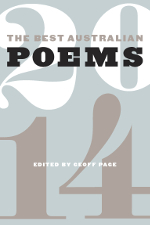
Duncan Hose Reviews Best Australian Poems 2014

Best Australian Poems 2014
Geoff Page, ed.
Black Inc, 2014

Being in and of one’s time (in favour of it, in fact) means producing work that is sensitive to the discursive furies of the day – the atmosphere of mutating code that the poet must stick to poems in new and strange forms. All else is nostalgia and denial. No-one knows what it means that Australia’s imperial republic, whose god has finally been revealed as cosmopolitan capitalism, is, in the history of colonies, still in its infancy yet so impressively seems to be approaching an end of days. If you’ve got burnt chaps and a warm six-shooter (cowgirl), these are exciting times.

Continue reading

Posted in BOOK REVIEWS | Tagged , , , , ,

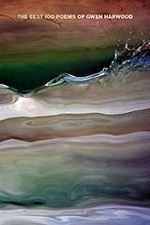
Review Short: Gwen Harwood’s The Best 100 Poems of Gwen Harwood

The Best 100 Poems of Gwen Harwood
John Harwood, ed.
Black Inc., 2014

Here is a new selection from that marvellously ardent poet, Gwen Harwood, a crafty voice that was heard from both Brisbane and Tasmania. In welcoming it, let me declare that Greg Kratzmann and I have a Harwood selection in print, but our book bounces back here from Manchester and must, as a result, be rather more expensive.

Continue reading

Posted in BOOK REVIEWS | Tagged ,

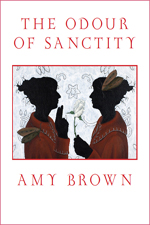
Review Short: Amy Brown’s The Odour of Sanctity

The Odour of Sanctity by Amy Brown
Victoria University Press, 2013

The Odour of Sanctity is New Zealand poet Amy Brown’s second collection, and a substantial one too, weighing in at 240 pages. It is a speculative work which postulates the potential canonisation of six historical figures, three granted sainthood (St Augustine of Hippo, St Rumwold of Buckingham, St Elizabeth of Hungary) and three non-saints in Margery Kempe, Christina Rossetti, and contemporary American indie rocker Jeff Mangum. The Odour of Sanctity takes these six subjects through six sections of the sainthood process, finishing with a seventh sestinesque envoi section in which the subjects converse in three pairs.

Continue reading

Posted in BOOK REVIEWS | Tagged ,

I.M. Tomaž Šalamun (4 July 1941- 27 December 2014)


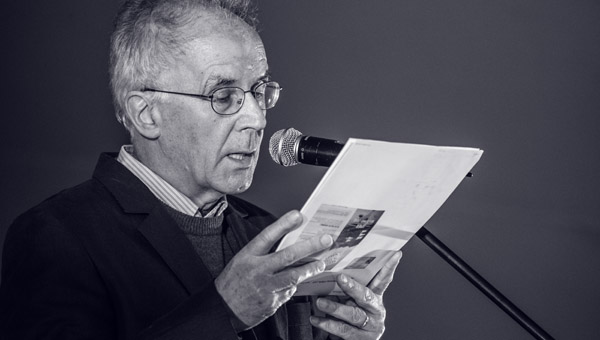
Image from The City of Ljubljana

The last time I saw Tomaž Šalamun was several years ago, at a reading at the Slovene Writers Union in Ljubljana. Of course, I was astonished to see him there – Slovenia’s most famous poet – to see his slight frame and warm smile. I can’t disagree with Robert Hass’s describing him as a saint who had just found his glasses: ‘Granny glasses, in fact, and a small, altogether angelic smile. It was a contrast between the eyes and the smile that made you look twice.’ I’d just woken from a nap on chairs inside the small hall where I was to read, having had a moment of déjà vu, realising that I was in the place described, albeit during the Cold War, in Hass’s short essay introducing Šalamun’s Selected Poems (Ecco Press), his first major book in English. The winter train trip from Vienna is much longer than its distance.

In the usual pre-reading awkwardness, Bogdan, a Romanian acquaintance, greeted my Slovene friend, a translator of German, by kissing her hand. Whether Tomaž did the same I’m not sure, though I feel he did. Certainly, I remember him addressing Bogdan, first in English, then in Slovene and French, then in jovial, conversational Romanian. Could that be right – did Tomaž know Romanian, too? He and Marjan Strojan, the legendary translator of Beowulf, The Canterbury Tales and Paradise Lost, embraced, not having seen one another for years, despite both living in Ljubljana. Small cities! The Macedonian poet Lidija Dimkovska and Slovene writer Andrej Blatnik were there. Still amazed that he and Marjan had made time to hear me, a poet from the Second Last Continent, with my translator I started to read.

Recalling all of this is not to dream myself into a literary Mitteleuropa, into the dim world of a past, wintery Ljubljana, rather to remind myself of how Tomaž was: friendly, engaging, kindly, erudite, modest, enthusiastic about others’ work and being. All qualities not as common as our world needs them to me. And this is not even to speak of him more personally, nor of his popular, experimental poems, poems that have influenced more than one generation of US poets …

In thinking of that evening and of our brief conversation afterwards, his saying how much he enjoyed the poem written as a homage to him, and of how easily he was able to express an appreciation of the Poetic, I now feel how much we have lost, those of us still in the Cult of the Poem. Tomaž, in life as much as in his poems, was child-like; his poetry was compelling, impulsive. A decade ago I went to Mexico after reading the poems he had written there. I believed he understood, better than the others there, that my poem was not only a homage to him but also to our impetuous, sinister, goddess Santa Muerta, the Latin American patroness of the criminal. Yes, despite his gentlemanly presence, he was a poet of the Wild.

Had Tomaž been Mexican I would be writing that he was a poet who wandered the Borderlands of Death. Had he been Buddhist, he might have been a painter of the illusions of the Bardo, whatever is between death and rebirth, or Enlightenment. But Tomaž was a Slovene, a famous, beloved poet, a sensitive man and a volatile, encompassing, open mind – which is to say, Tomaž Šalamun was his own kind of magic.

Invitation to a Slovenian Poet

Let's stroll up through the Zócalo, Tomaž, 
past the Aztecs purifying queues of peasants with sweet incense
and past the Indians wrapped in their stripped ponchos
whose faces we saw yesterday in the Museo de Antropologia,
and past the village men under white cowboy hats
and the police in riot-gear and the khaki-uniformed woman
cranking her barrel organ as if mulling over an errant
thought. Accompany me, Tomaž, please… If you like,
at a corner stall we can stop for quesadillas or slip 
into the Catedral Metropolitana to marvel as we're supposed
to at the Altar of Kings by Jerónimo de Balbas. Or as 'sociologists' 
we could stride the four streets up to Cinema Rio to study 
with microscopic acuity HISPANIC BEAUTY in a dark room. 
Anyway… Let's just amble inconspicuously through the Zócalo, 
then the few streets east to the den of ratters and smugglers
where, at the foot of Santa Muerte, the question-marks
of her scythe and her skull's smile hovering over our heads,
we'll take turns to kneel and, Tomaž, I'm sure you will agree
that there among the deviants and recalcitrants and other hopefuls,
we will be praying for success in crime,
for the sake of every one of our future poems.
Posted in GUNCOTTON | Tagged ,

Submission to The Lifted Brow and Cordite’s 51.1: UMAMI Now Open!


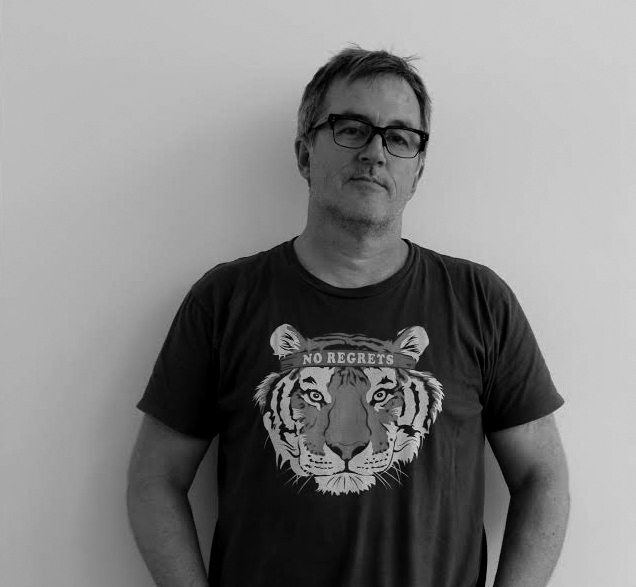
Luke Davies, Paris, 2014, photo by Samuel Pignan.

Poetry for The Lifted Brow / Cordite 51.1: UMAMI is guest-edited by Luke Davies.

Submission of flash fiction (between 1 and 500 words max) and poetry will be accepted until 11.59pm, 5 April 2015. These are special issues for both publications. They will feature original works selected by Luke Davies, as well as re-worked, re-rendered, translated, covered, adapted or wholly reconsidered versions of those initial works done by a new author, artist, auteur, game designer, etc. Publication will be in October 2015.


As a guest poetry and flash fiction editor for this special issue, I’ll take an interest in form. The Irish poet Michael Longley once wrote, ‘If most people who called themselves poets were tightrope walkers, they’d be dead.’

And yet ‘verse is everywhere, for those who write,’ said Mallarmé. There are even, he pointed out, ‘verses in the genre called prose’! They are, furthermore, ‘sometimes admirable’. (Thank goodness, and hats off to Faulkner, Joyce.) In fact, Mallarmé implied that prose doesn’t really exist. ‘There is the alphabet, and then there is verse.’ For the purposes of this call-out, however – for this exciting collaboration between Cordite Poetry Review and The Lifted Brow – I’m going to assume that there is prose as well.

Mallarmé’s is an extraordinary notion, speaking as it does of words being the disguise of their own first selves. They are the building blocks – the amino acids, so to speak – and after them, sprung into life like the first forms, comes rhythm, metre. Nothing lies between. ‘Only poetry recognises the centrality of absolutely everywhere,’ says Les Murray, revealing his own inner quantum physicist. Metre is not a function of language … rather, language came into being as a function of metre. The renowned Italian publisher Roberto Calasso, a sublime poet-in-prose himself, points out that in the great Sanskrit song cycles – in the Rig Veda for example, the oldest book in any Indo-European language – the earliest gods, those who originated from the progenitor god, had to wrap themselves in metres before coming close to the fire. The metres were the robes that prevented themselves from being disfigured by heat. ‘If the gods have achieved immortality’, says Calasso, ‘it is the metres they have to thank for it.’ The gods ‘reached the heavens through a form’. Then ‘how much more will [we] have need of form?’ asks Calasso.

At a practical level, that means I’ll be looking for evidence of the craft, the construction, the honing, that make your voice your voice, that make what it is that you need to fight for clear. For there is an awful lot worth fighting for. An awful lot worth fighting against. An awful lot worth praising. ‘This life of yours is not a picture of the world,’ wrote Cormac McCarthy. ‘It is the world itself, and it is composed not of bone or dream or time but of worship.’

Mallarmé’s purist holism stands in contrast to our more familiar, day-to-day experience of the world as being a very atomistic place. Everything is scattered, and there are very many things, and we live in a kind of junkyard of broken forms, rusted metres. Stephen Jay Gould once wrote of our ‘deeply entrenched habit of ordering our categories as oppositional pairs.’ (He was speaking, specifically, of the polarities that exist between science and the humanities.) For Gould, the habit comes from ‘this apparently ineluctable human propensity to dichotomize.’ It’s instinctive to yoke opposites together, in order to create a reference, in order to give the new thing described a sense of its context: we interpret something as being comprised of ‘this’ plus ‘this’.

The loan-term ‘umami’ speaks of a cultural difference of sorts – one to be found in the taste buds. It’s the fifth category of taste (along with the more familiar ones of sweet, sour, bitter, and salty). In Japan, umami contains within it the notion of the sweet and the sour at once … neither one or the other, nor simply both bound together. Umami is not necessarily a compound taste. It’s experience is elemental, indivisible: to bastardise Karl Jaspers, it’s more dasein than existenz. Admittedly, though, for Jaspers, dasein was like a reduction – real, certainly, but conceptual, too, elemental – whereas existenz, in all its extended messiness, was the place where we all really live.

There’s a YouTube clip in which Iron Chef Naomichi Yasuda dispenses some basic sushi wisdom to an amateur sushi eater (aren’t we all?) named Joseph George. Real wasabi, we learn, is sweet, before the kick at the back of the throat. ‘This is a balance,’ says Yasuda, presenting to George a fatty tuna roll he’s just prepared, comprising the best seaweed in Japan … ‘that means number one in all the world’ … and rice from his home village … ‘so this is my mother’s gift.’ ‘There’s a lot of things going on here,’ says Joseph George, the happy amateur, tasting it, his mind catching up with his mouth. ‘That’s right,’ beams Yasuda. ‘It’s almost impossible to explain this.’

In the realm of that which can be explained (I’m including, for sample purposes, the entire universe), good poetry and flash fiction can be particularly resistant to the further division of their compact mysteries. Again, Mallarmé understood this. Murray understands this, and most good poets do too; the poem, of course, is the mystery itself, and not its explication.

Nonetheless, for the purposes of this thematic co-issue, if the realm of the binary interests you, whether your proclivities be Cartesian or Manichean, I’m not going to complain. ‘It’s really juicy,’ says Joseph George to chef Yasuda, trying out some tuna – the kick of the wasabi, the sweetness of the toro. ‘Already gone. Already melting.’ Umami.

All other tastes may be only versions of umami, just as for Mallarmé all other forms of writing are broken verses – and sometimes irretrievably broken. Poets maintain that only poetry is consistently capable of peeling back the layers of disguise. Flash-fiction, by contrast, is all about creating said disguise with ambiguity. In any case, send me something juicy, something already melting, the instant it’s consumed. Your work can even come to me bloodied.


Please submit only once, with a maximum of three (3) poems or flash fiction pieces (500 words max) in one (1) document … but first, please read the submission guidelines.

Posted in GUNCOTTON | Tagged , , , , ,

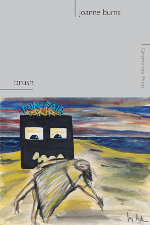
Review Short: Joanne Burns’s Brush

Images, Affinities and Transformations

Brush by Joanne Burns
Giramondo Publishing, 2014

Brush, the latest collection of poetry from Joanne Burns consists of layers juxtaposed in a profuse and generous abundance, styles not fused so much as flipped over and filed into an album as much as an anthology. What may appear to be random sections and selections on closer inspection consist of a gathering that implies a duty of care, assembling shared cultural and oneiric artefacts stripped of extraneous affects and putting on record that which is weird and wonderful and way out there.

Continue reading

Posted in BOOK REVIEWS | Tagged ,

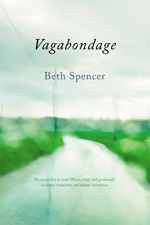
Review Short: Beth Spencer’s Vagabondage

A wilderness of small things (mattering)

Vagabondage by Beth Spencer
UWA Publishing, 2014

Twenty years ago Beth Spencer’s first collection of poetry, Things in a Glass Box, was published and reviewed to critical acclaim. Since then she has published individual poems and two volumes of multiple genre selected works that have included poems. It could be said that it’s a long time between drinks, though Spencer has been busy with fiction, essays, and memoir (and a PhD) in the meantime. Vagabondage is her first full collection of poems since, and widely anticipated because of that.

Continue reading

Posted in BOOK REVIEWS | Tagged ,

Greg McLaren Reviews Phillip Gijindarraji Hall and Benjamin Dodds

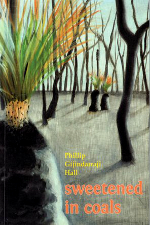
Sweetened in Coals
by Phillip Gijindarraji Hall
Ginninderra Press, 2014

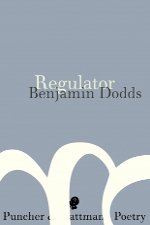
Regulator
by Benjamin Dodds
Puncher & Wattmann, 2014

These two debut collections cast shade and light upon one other. Both poets construct a complex, convincing and engaging sense of place, exploring belonging (or not) and being in it.

The strongest poems in Phillip Gijindarraji Hall’s Sweetened in Coals quiver and hiss with profusion, connections and abundance. These poems are firmly and specifically situated in place and in country that is constituted both ecologically and culturally. There’s a deep and rich conversation here about place and habitat. Hall’s representation and evocation of specific places is a consistently powerful presence in these poems – dynamic, in flux and abundant with the presence of animal, plant and cultural life.

Continue reading

Posted in BOOK REVIEWS | Tagged , ,

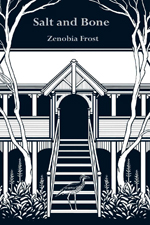
Review Short: Zenobia Frost’s Salt and Bone

Salt and Bone by Zenobia Frost
Walleah Press, 2014

In its own words, Zenobia Frost’s Salt and Bone slinks ‘between ibis-legged houses / and wakeful graveyard’, and belongs to ‘the hour of the curlew’, a liminal space that speaks of ghosts and transformation. As a collection, the poems are pervaded with a sense of haunting, plagued by abject bodies ‘aching for salt and bone’, the suffocating presence of water, and the archeology of death. It is noteworthy that Frost’s work both begins and ends with a warning of the power of unknown and strange things; a reminder, perhaps, of the gaps that exist between the ‘real’ and the imagined.

Continue reading

Posted in BOOK REVIEWS | Tagged ,

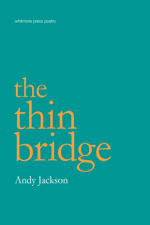
Review Short: Andy Jackson’s The thin bridge

The thin bridge by Andy Jackson
Whitmore Press, 2014

‘Poetry from a body shaped like a question mark’ That is the tag line for Andy Jackson’s blog, and it perfectly sums up the to and fro in his work. Jackson, who has Marfan’s Syndrome, has said that he came to write poetry partly ‘ to control the way people see me. I’d lived with the staring and comments that having an unusual body brings, and I wanted to be in charge.’

Continue reading

Posted in BOOK REVIEWS | Tagged ,

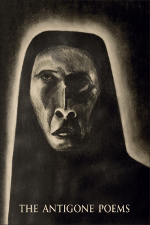
Review Short: Marie Slaight and Terrence Tasker’s The Antigone Poems

The Antigone Poems

The Antigone Poems by Marie Slaight and Terrence Tasker
Altaire, 2014

The Antigone Poems is a collaborative work, made up of poetry by Marie Slaight and drawings by Terrence Tasker. Created in the 1970s when the writer and artist were living in Montreal and Toronto, and published in 2014, it is an attractively produced book. The drawings, most depicting faces like tragic masks, divide the five chapters. Continue reading

Posted in BOOK REVIEWS | Tagged , ,

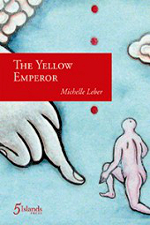
Lucy Van Reviews Michelle Leber

The Yellow Emperor by Michelle Leber
Five Islands Press, 2014

Medical diagnosis could be thought of as a form of storytelling; an analytic as well as creative process that translates the unclear expressions of the body into a plausible narrative, ideally one that directs the way to healing. Just as diagnosis might be considered an art – a speculative performance that is highly contingent, at times inspired or risky – the discipline of medical observation has itself often inflected and animated art forms. Continue reading

Posted in BOOK REVIEWS | Tagged , , , , ,

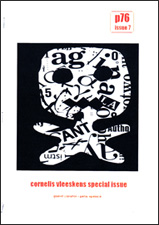
Review Short: p76’s Cornelis Vleeskens Special Issue

Cornelis Vleeskens Special Issue

Cornelis Vleeskens Special Issue
Pete Spence, ed.
p76, Issue 7, 2014

The first indication that the contents of this special issue hovers in the Venn overlap of art and poetry lies in its ‘curation’, not ‘edit’. Spence’s project was to ‘sample from a mass of work … to (make) a small but intense window’ (p. 5), and he does this by being true to the materiality of Vleeskens’s visual output. The nostalgic production values of the journal itself – photocopied in black and white on A4 paper, stapled, and with no frilly bits – is a perfect match for Spence’s vision and Vleeskens’s visual practice, which was firmly embedded in the intersections of text and image.

Continue reading

Posted in BOOK REVIEWS | Tagged , ,

Review Short: Nicholas Walton-Healey’s Land before Lines

Ania Walwicz

Inidentity + Community

Land before Lines by Nicholas Walton-Healey
Hunter Publishers, 2014

What Nicholas Walton-Healey’s photograph collection Land before Lines emphasises is not difference (the notion that every poet is completely individual, different, unique, special), but sameness (the complex social bind of community). The notion of the poet as ‘genius’ or ‘original’ is broken. In place of the genius is the obscurity of the face, what I would like to call the inidentity of the poet, the poet (re)framed, without identity, and most importantly, without centre. Continue reading

Posted in BOOK REVIEWS | Tagged ,

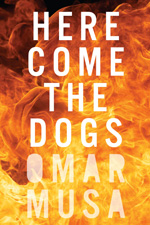
Review Short: Omar Musa’s Here Come the Dogs

Here Come the Dogs

Here Come the Dogs by Omar Musa
Hamish Hamilton, 2014

Primarily known as a performance poet and rapper, Omar Musa has embarked on another textual form with his latest publication, Here Come the Dogs. Written in a combination of verse and prose, Here Comes the Dogs offers an intimate portrait of three young men negotiating issues of identity and marginalisation in an unnamed Australian city. Musa, who is Malaysian-Australian, positions his poetry and prose in a manner that allows for his book to confront themes surrounding cultural and ethnic identities, intersectional discrimination and problematic expressions of masculinity and power.

Continue reading

Posted in BOOK REVIEWS | Tagged

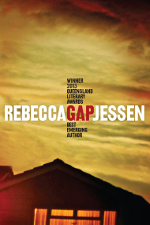
Review Short: Rebecca Jessen’s Gap

Gap

Gap by Rebecca Jessen
UQP, 2014

Winner of the 2013 Queensland Literary Awards for Best Emerging Author, Gap is Rebecca Jessen’s debut verse novel and a bold entrance into a strong line of Australian verse novels.

Continue reading

Posted in BOOK REVIEWS | Tagged ,

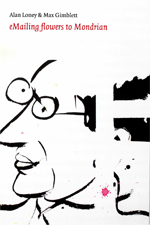
Review Short: Alan Loney and Max Gimblett’s eMailing Flowers to Mondrian

eMailing Flowers to Mondrian

eMailing Flowers to Mondrian by Alan Loney and Max Gimblett
Hawk Press, 2014

There are challenging layers to Alan Loney and Max Gimblett’s twenty-page poem, eMailing flowers to Mondrian. The first may appear self-indulgent, the second impenetrable, and the third overly personal; but, taken as a whole and meditated upon, this aesthetically pleasing saddle-stapled book turns out to be a cunning memoir.

Continue reading

Posted in BOOK REVIEWS | Tagged , ,

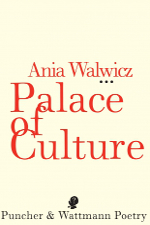
Review Short: Ania Walwicz’s The Palace of Culture

The Palace of Culture

The Palace of Culture by Ania Walwicz
Puncher & Wattmann, 2013

Ania Walwicz’s first book in more than twenty years, Palace of Culture, confirms her reputation as one of Australia’s leading conceptual poets. It consists of fifty (almost) prose poems, each between two and five pages length. The poems use the suggestion of narratives as a key organising principle. But suggestion is as far as any of the narratives get. Continue reading

Posted in BOOK REVIEWS | Tagged ,

Instructions As Art: Digital Writers as Modern-day Renaissance People

I am now almost thirty years old. While there were many different gaming consoles around when I was a kid, I wasn’t privy to many of them. I was a fairly active child and teenager who spent most of her spare time outdoors (usually wandering around parks aimlessly). My education did not involve classroom computers, however I did have access to one at home. From this I learnt the basics of computer symbols. Up, down, left, right, backspace, control, alt, delete, spacebar, and later in the PC’s development, the mouse-click. So, while I was not involved in a rich digital culture as much as children and teenagers are today, I would attest that not much needs to be known about a computer to make the basics work.

With this in mind, consider the term ‘digital literature’. This is a slippery term that takes on many forms, but generally I use it to think of digitally produced writing that also includes some form of interactivity for the reader. Writers were, for many years, trying to find ways to remove the book from the page – to give their words flight and freedom. The postmodernists, in particular, championed this by attempting to create written stories that were not held to the confines of the book. They were attempting to create stories that could be read differently depending on the reader. But they were still largely confined to text on a page, or clumsy convergence. The era of the digital, and namely, the Internet, brought with it the promise of an easy solution – text, images, sound, video, and choose-your-own-adventure style interactivity, easily contained within the one document, and easily publishable. This was seen in the hypertextual adventures of Net writing in the 1990s. But Internet literature quickly grew with the software, and now we see examples such as generative writing, and narrative games, that are perhaps digital culture’s best examples of multimodal literacy that considers visual art as a language. We’re also seeing more downloadable alternatives to the browser-based model, as the world of the application grows. A user can download your story or poetry piece to their phone, or touchscreen tablet computer, and interact with your words using new forms of feedback: touching, swiping, hands-free gestures. Further, their devices allow them to interact with your story not just through touching the screen, but through a range of sensors including accelerometer and vibration, where the world of physical computing, and the world of literature, overlap.

This newfound rush in Western societies towards touch devices and other haptic feedback devices (such as new forms of virtual reality) has played a bit of havoc with Internet literature, due to some fairly boring technicalities that I won’t go into. But it is forcing writers of digital works to further rethink their approach to ‘text’, by asking them to become even further aware of the interactivity between text and user, and asking them to develop a further awareness of multimodal literacy. As Barthes perhaps predicted, the story now has to consider the reader more than ever, and consider not just the reader’s imagination, but their entire body, their perception of space, and their location within it.

This opens up a myriad of possibilities for writers to not only collaborate with artists and technicians from other disciplines, but it allows for writers, themselves, to become more multi-disciplinary in their approach. The digital writer is not just creating words, they are creating visual art, sound, and moving imagery. They are intrinsically involved in the information technologies and software use, creation, and breaking. They become the modern day renaissance people. In this way, it may be so that the medium truly is the message, as the media used can drive the user’s experience, but meaningful and entertaining digital stories come from the author’s ability to embrace this as part of their process, rather than rejecting it.

We formulate our understanding of the world through our senses, and thus our ability to sense the world is generally an amalgamation of the visual, aural, haptic, vestibular, and the chemical senses. We also learn through exploration; through experimentation and adventure. This might suggest that multimodal literacy is something that humans can understand intrinsically. It also suggests that the process of exploring an interactive world, as a form of narrative play, is beneficial not just to our education, but our continuing growth and ability to create neurological connections.

So … if current forms of digital literature can wrap this up so easily via digital games and artistic narratives, why is it that a large percentage of paper book readers (which is still the majority of fiction readers in general) tend to find them difficult to interact with? The thing about most digital writing is that there’s no right or wrong answer as to how to read it – you’re invited to play and explore and attempt to break it as much as you wish. Press everything! Touch everything! Swipe everything! Type anything! You are in charge of the interaction.

Yet I still see some users of my work approach it as if they were attempting their very first mouse dissection. They fear touching the wrong thing, or sending the main character in the wrong direction, despite the fact that I want them to do both of these things. Sometimes they ask me what they’re meant to do with the story, as if the most important part of the interaction was finding the end, as if the traditional bounds of linear writing are still too sacred to be challenged. Thus, I notice that many digital writers, including myself, tend to include a great deal of instructions with their work. The ‘how to’ guide becomes one of the very first pages. The narrative itself tends to end up intertwingled with reading directions as strange footnotes and epitexts. Large arrows are created to point to buttons that can be pressed, or to point the user in the direction in which they could potentially take the main character. The art and the interface become loaded with instructional symbolism, as the author attempts to create work for the beginner and advanced computer user, alike.

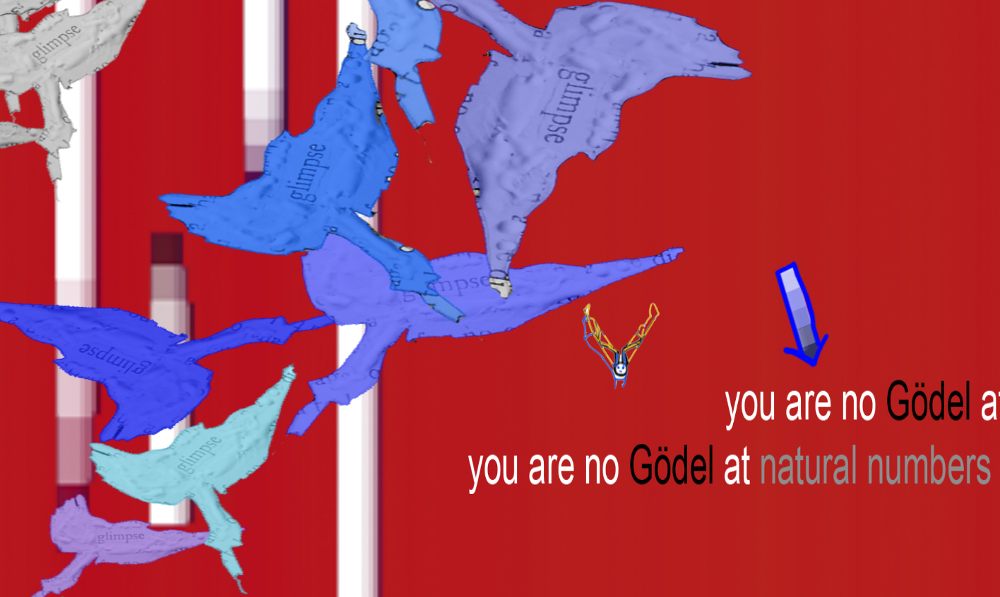
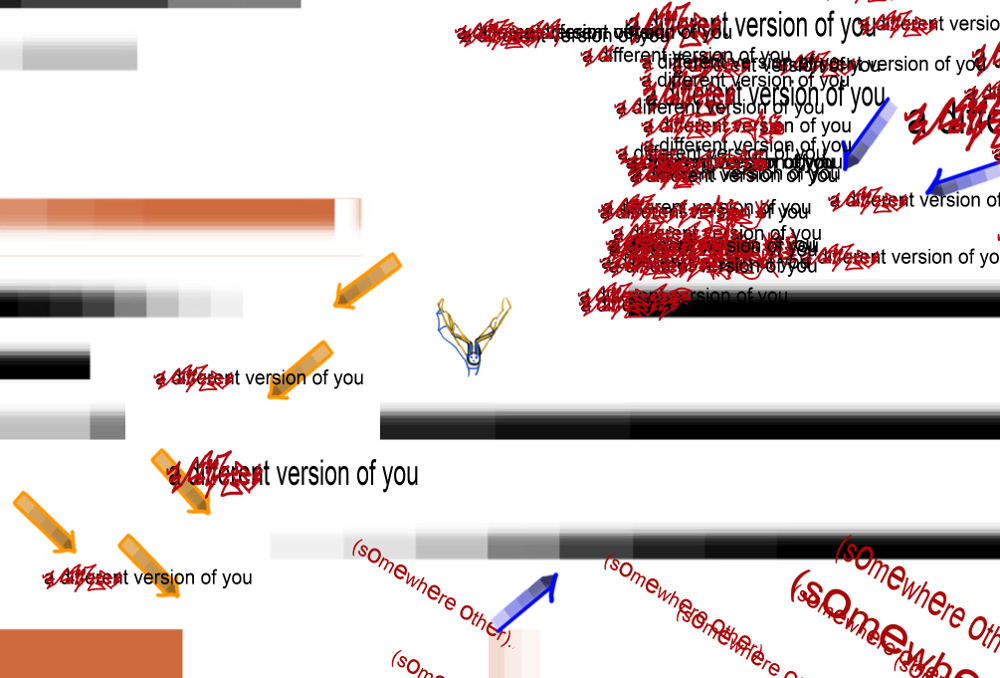
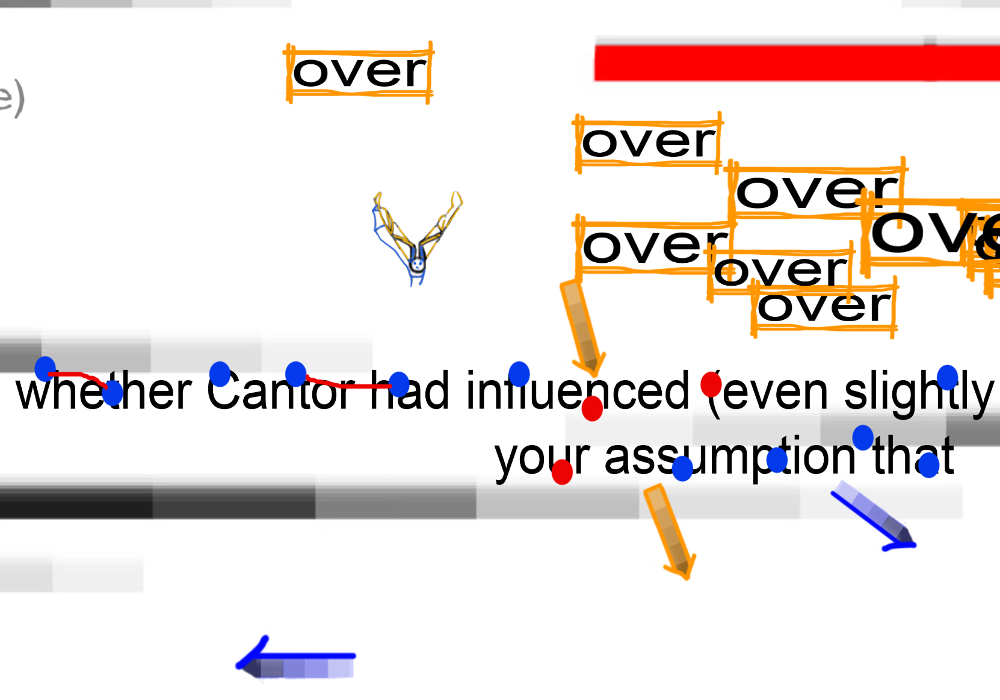
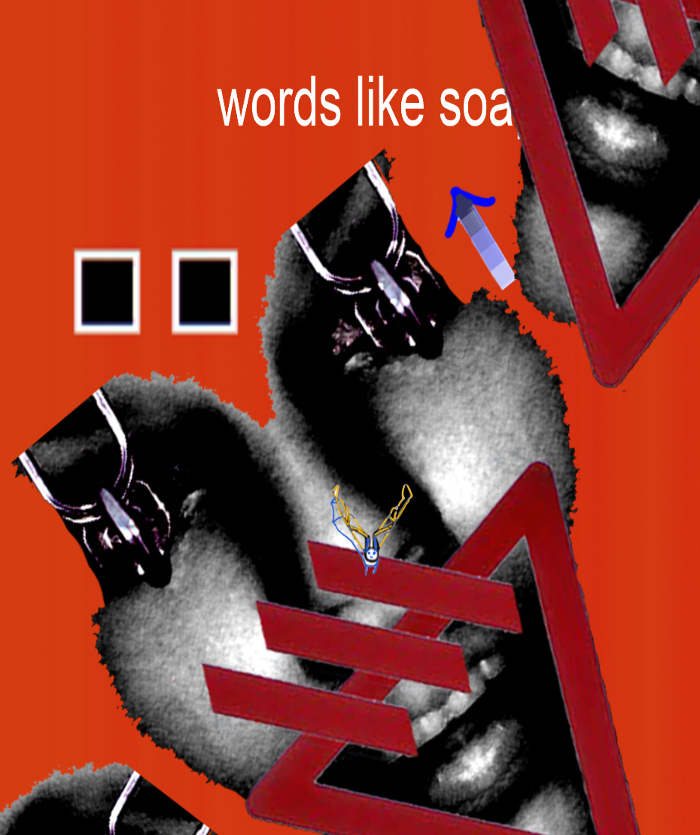
This weaving of art and instruction is beginning to form a major part of some digital literature works, as it can’t help but be a part of the multimodality. For example, in Figures 1-4, stills from my poetry game app ‘An Argument in Parallel Incompleteness’, you can see the interactive arrows forming part of the visuals from the first scene, all the way through to the end page.


figure 1


figure 2


figure 3


figure 4

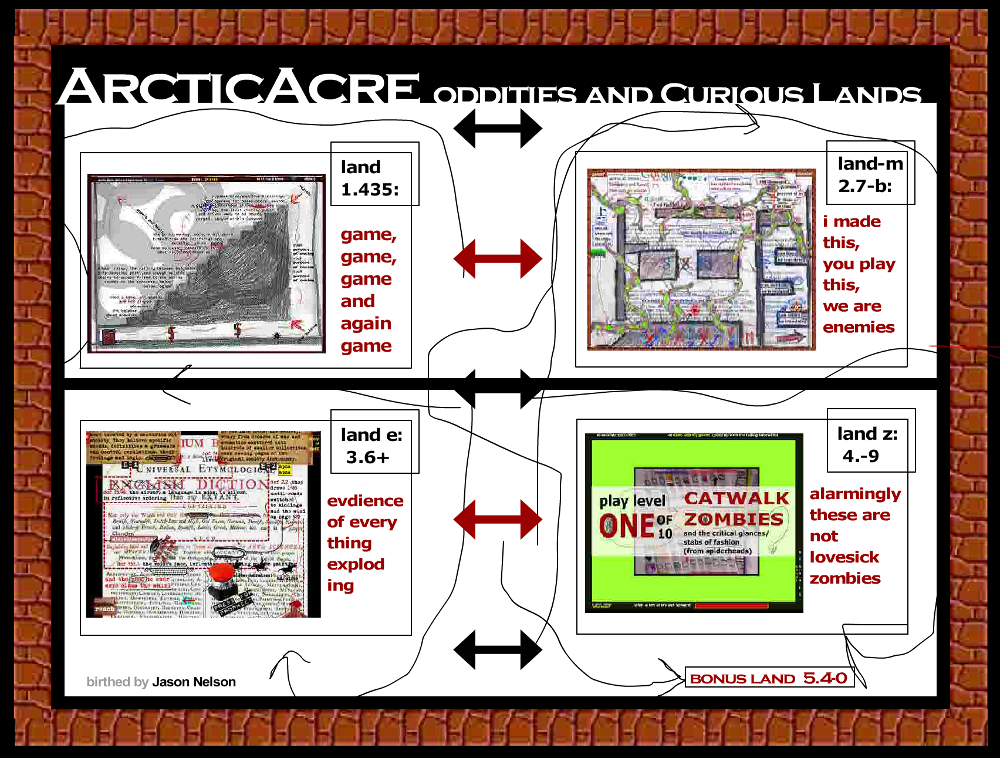
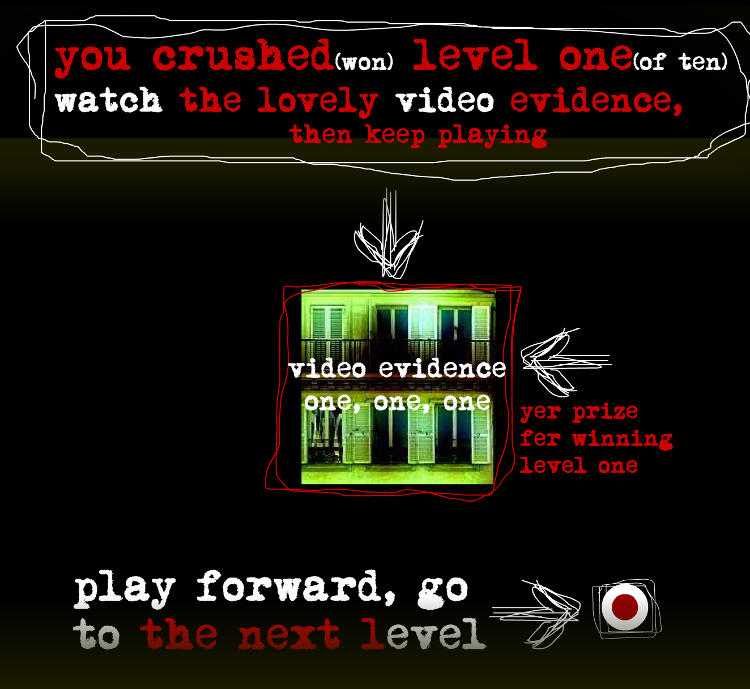
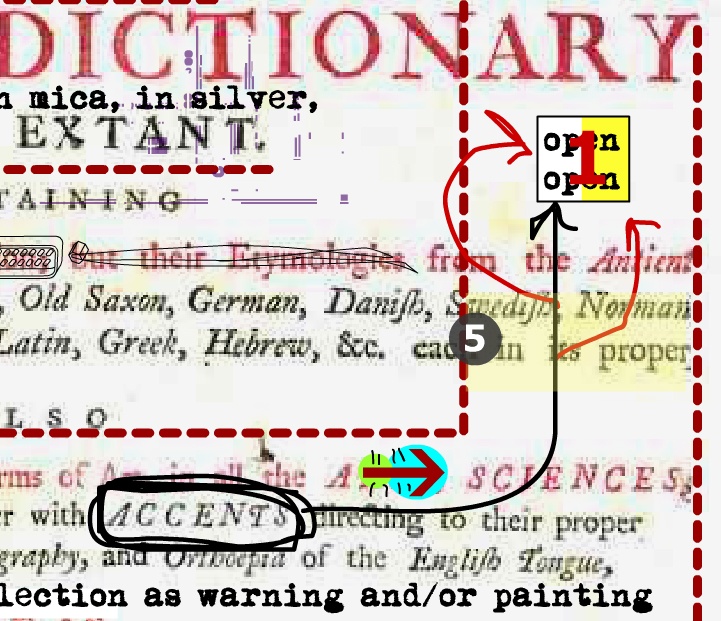
In Figures 5-7, stills from Jason Nelson’s ‘Arcticacre’, and ‘Evidence of Everything Exploding’, the messy arrows are an intrinsic part of the hand-drawn aesthetic, and form the bulk of the hand-drawn artwork. Perhaps it is inevitable, thus, that visual instruction becomes one of the main drivers of digital writing’s visual aesthetic (but I, for one, hope this won’t be the case forever).


figure 5


figure 6


figure 7

This is a sign of our times – our in between stage of half analogue half digital, where the world has computer users with a wide digital skill discrepancy. Of course there’s nothing wrong with narrative that becomes a kind of metatextual user-guide, but it is my hope that digital literature can move beyond this in order to place more emphasis on the narrative itself, beyond the directions. This direction-as-art has caused a symbiotic relationship between reader and writer, where the writer remains acutely aware of the widening gap in readership styles dependent on the reader’s understanding of the content delivery. If we want to see digital literature pushing boundaries further, and experimenting further with other ways of reading, then the readers themselves need to update their digital reading skills.

If you think your digital literature literacy might not be up to speed, there is one easy thing you can do to nourish your multimodal skills … Play more. Download some digital games – even simple ones, and be prepared to explore. What the world of digital literature really needs, are more explorers.

Posted in GUNCOTTON | Tagged ,

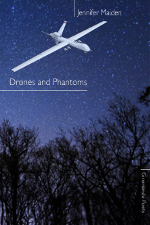
David McCooey Reviews Jennifer Maiden

Drones and Phantoms by Jennifer Maiden
Giramondo Publishing, 2014

Jennifer Maiden’s Drones and Phantoms opens with ‘Diary Poem: Uses of Live Odds’, a poem that juxtaposes – in a way characteristic of Maiden’s intensely synthesising work – politics, aesthetics, and gambling. Poetry, of course, is a kind of gamble, one in which the stakes are at once ridiculously low (financially speaking) and ridiculously high (personally speaking). Writing a poem – like any creative act – is a risky venture. One’s subjective experience of being creative never fully underwrites the created artefact. And as a communicative act, poetry runs the ever-present risk of obscurity and/or inconsequence.

Continue reading

Posted in BOOK REVIEWS | Tagged ,

CANADA / AUSTRALIA Editorial

An unlikely place to intersect, or even be at all – Brisbane, Australia – for Shane Rhodes (Canadian, poetry editor for Arc Magazine and the 2013 Arts Queensland Poet in Residence) and Kent MacCarter (native Montanan and Managing Editor of Cordite Poetry Review). Our peripatetic natures could have dictated that we’d be just as likely to meet in Winnipeg or Albuquerque or Brussels or Granada … or, most likely, never at all. Yet such a place was the 2013 Queensland Poetry Festival which brought poets from around the world (in addition to Shane, there were four other Canadians at the festival) and across Australia to converge on the Judith Wright Centre for Performing Arts (itself named after a notable Queensland poet) for three days of nothing but poetry. Sun and heat radiated on and through Brisbane’s stilted homes and Jacarandas, and the festival’s concentration of global poets created a tropical environment for ideas. We began discussing the possibility of a joint Arc/Cordite issue somewhere near the book table where both of us were calculating the maximum poetry purchase against national and international baggage allowances.

Why do this? Cultural relations via literature, that’s why. What similarities can be drawn or stylistic approaches extrapolated from reading the poetics of such vastly – 15,300 kilometres – separated places? Have similar histories of colonisation and immigration created similar poetics? Can what is being written in British Columbia or Nova Scotia, for example, find kindred forces in poetry from Tasmania or Western Australia? Our intent was, and remains, to showcase and cross-pollinate poetics between these antipodes and to share with a broader audience work that may be little known outside of home borders. To accomplish this, each magazine would, for one issue, hand the editorial responsibilities over to the other – so that the masthead at Cordite could fill one issue of Arc with nothing but Australian poetry, prose and artwork with Arc could do the same for Cordite. From that, the task became a seemingly simple one of amassing something that might be considered representative of what poetry looks like right now in Canada and Australia.

Of course, this was anything but simple as we all realised we wouldn’t be able to publish even half of everything we wanted nor would we be able to approach everyone we should. Rather than seeking work from well-established poets who may already have audiences in both countries, we decided to focus on emerging and getting-established poets – artists who may be early or mid-way in their ‘careers’ and are committed to and have found some success in being poets. What followed from this initial conversation were months of email correspondence as the collaboration grew from possibilities to long lists, then from short lists to making selections, honing budgets, sending out requests for work and publishing what you now see. We had expert help from our mastheads and volunteers – Chris Johnson, Zenobia Frost, Robyn Jeffrey, Monty Reid, Kevin Matthews, Matthew Hall, and Serge Duguay – in pulling the work together.

Although there are obvious gaps and chasms in our selections, what we were able to pull together is impressive for its range, quality, and verve. For both Canada and Australia, there have been very few occasions when such an amazing collection of poets has been brought together under one project. If there is one thread that unites these poets and their poetry, neither of us knows what that is or even might be. Rather, this project thrives on multiplicity, difference, and propinquity. It is with the indefatigable nature – in whatever drives us to write – of the authors and artists involved that will see this project both lasting and notable in both countries for some time to come.

Posted in ESSAYS | Tagged ,

Best Isn’t a Beauty Contest: How Canadian Poets Demand More of Verse


Image courtesy of Kootenay Arts E-Bulletin

No one in the class could say exactly. Writing that rhymes? A descriptive passage that seems to talk about one thing while actually meaning something completely different? A very very very short story that uses a lot of similes? The late Don Summerhayes, my first poetry workshop instructor at York University, had asked us to explain what poetry is. Continue reading

Posted in ESSAYS | Tagged , , , , , ,

Investigative Poetry: Are Poets the New Reporters?

It’s not unusual to come across, within a poem, a metaphor for the writing of poetry. For a reader, such a discovery is satisfying and delightful, and ever-so-slightly unnerving, a blurred window on the inner workings of a made thing. You see it, and then you don’t. And then, by focusing just so, you see it again. Poets do create such – metaphors deliberately, but not necessarily every time they occur. A metaphor may have an intended meaning beneath which some clue to Ars Poetica lurks. Continue reading

Posted in ESSAYS | Tagged , , ,