Reclaimed Land: Australian Urbanisation and Poetry

In memory of Martin Harrison

This cobbled expressway of signs and blackening holes. – Alex Skovron, ‘The Journey’1

Now I can go along high and dry, and preserve Warren’s blacking on my shoes in all its original lustre. Life is becoming quite calm and monstrous. I do not half like it. – Anonymous, ‘The Lament’2

1. The scanty vine

In the late 1850s, Charles Harpur composed the image of ‘a scanty vine,/ Trailing along some backyard wall’ (‘A Coast View’). It might be forgettable, save for its conspicuousness in Harpur’s bush-obsessed poetry. Whether purple ranges or groaning sea-cliffs, his poems cleave to a more-than-human continent. The scanty vine, however, clings to a different surface: human-made – the craft of a drystone wall, perhaps, or wire strung through posts like the twist of the poetic line – it signals domestic land division. Harpur’s vine of words trails along the vertical edifice of settlement. Continue reading

Posted in ESSAYS | Tagged , , , , , , ,

Australian Ecopoetics Past, Present, Future: What Do the Plants Say?

‘And I came to a bloke all alone like a kurrajong tree.
And I said to him: “Mate – I don’t need to know your name –
Let me camp in your shade, let me sleep, till the sun goes down.”’
– Randolph Stow, ‘The Land’s Meaning’ (1969)1

Like the country’s arid interior, contemporary Australian ecopoetics is vast and robust. The expressions of Australian ecopoetry are as varied as the antipodean landscape itself, underscoring the intricate connections between language and ecology in this part of the world. The Mediterranean climate of Western Australia’s southwest corner, the Red Centre of Uluru, the tropical rainforests of Queensland, the temperate Tasmanian old-growth forests and the alpine reaches of the Victorian High Country signify this: rather than a contiguous desert or a terra nullius (as some readers both inside and outside of Australia may still believe), the Australian environment is a mosaic of biota, climates, topographies and regions. Continue reading

Posted in ESSAYS | Tagged , , , , , , , , , ,

4 Artworks by Kelly Richardson


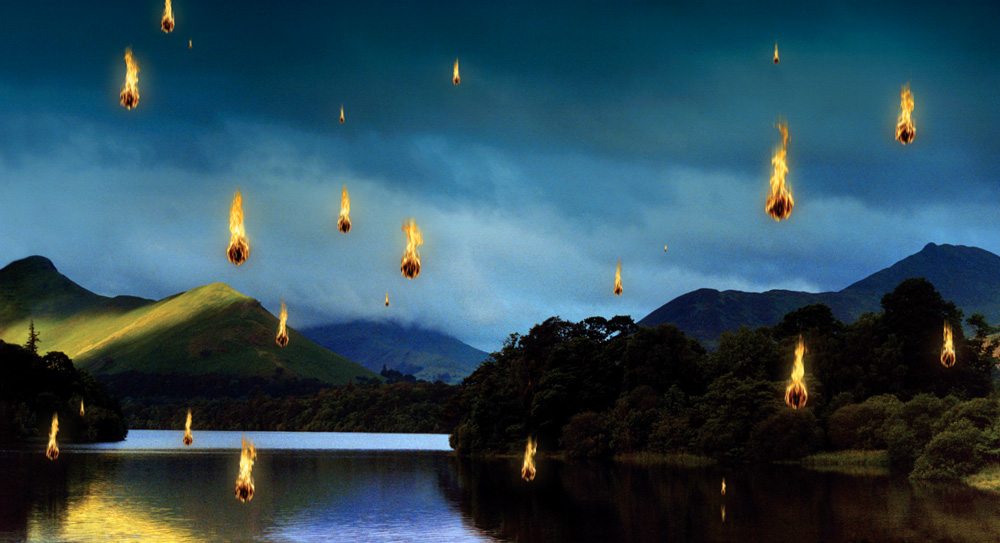
Kelly Richardson | ‘Exiles of the Shattered Star’, 2006 | Single screen HD video installation with audio and C-prints

In ‘Exiles of the Shattered Star,’ a beautifully colour-saturated lake is the backdrop for a slow, majestic rain of fireballs, perhaps fragments of the star of the title. This piece points to Richardson’s odd penchant for classic romanticism, pitting as it does the sublime beauty of the landscape against the terrifying, tragic certainty of mortality. – David Jager

Posted in ARTWORKS | Tagged

2 Artworks by Kim Adams: Autolamp and Breughel-Bosch-Bus Detail


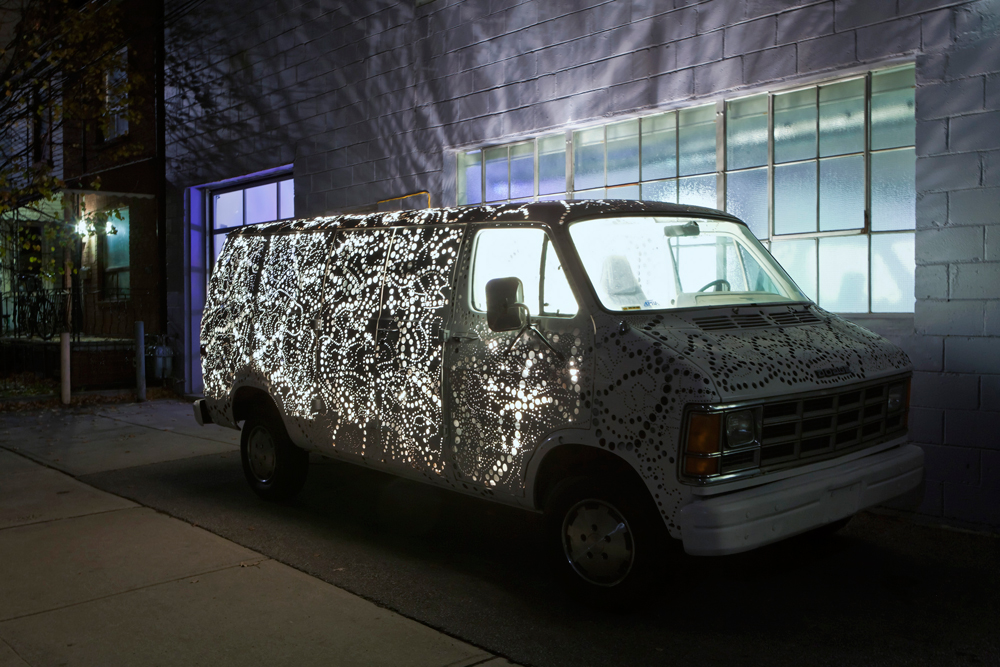
Kim Adams | Autolamp

Posted in ARTWORKS | Tagged

How Poems Work: Kate Fagan’s ‘Through a Glass Lightly: Cento for Beginners

We move through language, swimming on influence, arranging words into patterns that make sense for our purposes. An essay with an argument, an email trying to get the day off work, or a poem that tries to make letters do something that they haven’t done before. A cento makes the act of being influenced manifest. It could be a tribute, taking another poet’s work and laying it out through one’s own prismatic vision. Saying yes, I admire what you do and now let’s make what you do with language continue, to spin and spiral outward into any of the myriad forms that are possible. Let’s make your words go on and on and let me reveal how language is always material by delicately or forcibly or deliberately reconstituting your work.

Obviously, I don’t know Kate Fagan’s intention in ‘Through a Glass Lightly: Cento for Beginners’ but I can plainly see the care with which she has set out the lines of Arkadii Dragomoschenko and Seamus Heaney to make her own meanings from their work. The Princeton Encyclopedia of Poetry and Poetics defines the cento as, ‘A verse composition made up of lines selected from the work or works from some great poet(s) from the past’ (220) dating back to Homer. So just the idea of ‘great’ poet implies the notion of tribute, of admiration, of wanting the work to be revealed in a different light, thus ‘lightly’ we see the words as through glass with the traces of their original form as well as the prismatic colours or depth now being revealed in their new iteration. This could send us back to those poets (as it did for me) and it could send us forward into thinking of language as having more possibilities than the mere fallacy of original individual self-expression. The collective work of the cento is actually the work that all poetry does: it doesn’t pretend individual talent, but acknowledges the ongoing debts to language.

In this poem, Fagan imbues musicality with images of the common nasturtium (taken from Dragomoschenko’s poem ‘Nasturtium as Reality’): ‘I see it plain/as a living fretwork/in the distortion of sound’ so that the plant is recognised with its inherent energy intact, the idea that bursting could be a sonic action as well as a biological process of ‘cells dividing’ while at the same time, the action of moving fingers along a fret board to produce music is also conceived as some kind of miracle. What comes is a simple ‘water drop/clean in its own shape’ like a baby developing, an originary miracle if ever there was one. It’s also interesting to note that these ‘great’ poets of the past are men, and their work is developed in the service of images of the pregnant female body in all its remarkable commonality: ‘Our love called and we lie/in the future of cells dividing … A nasturtium between itself/and us, showing the light.’ Again, the ‘great poets from the past’ are called forth to enact a series of bursting forth moments that culminate in the final action of this new poem: ‘Time to be born.’

Here the poem is again:

Through a Glass Lightly: Cento for Beginners


The nasturtium is to itself already
a memory. It opens its leaves
its fire
ribbed impression in the grass
that forms like shadow.
I see it plain
as a living fretwork
in the distortion of sound,
press a leaf to a winter dream
of your hand
translated, given.
Our love calls and we lie
in the future of cells dividing,
a water drop
clean in its own shape.
A nasturtium between itself
and us, showing the light.
Time to be born.


‘Through a Glass Lightly: Cento for Beginners’ from the collection First Light by Kate Fagan, published by Giramondo Publishing Company (Sydney). Used with the permission of the publisher.

Posted in GUNCOTTON | Tagged ,

Kevin Matthews Connects with Spoken Word Poet Tanya Evanson


Image from The Great Black North

Tanya Evanson is as generous of spirit as she is on stage in the hour we spent on Skype from a sunny, mosquito-netted room in Antigua, following an email correspondence. She has the knack for bridging gaps, and we have a shining moment or two when space collapses, her eyes go wide and her hand rests on her heart. What’s the Internet anyway if not an interstice that leaves us all ghosts, ready to be touched without being touched?

Clearly she’s finding some of the solitude in Antigua that complements the moments of intense connection she facilitates as an artist and teacher, and connecting is what her work is all about.

‘I am the Muse’s bitch. As such, I do not decide what should be written, but try to capture epiphany as it hits … if I get in the way of these things, I am lost.’

If that sounds esoteric, it’s appropriate – Evanson’s been a Sufi student for the nearly twenty years she’s been performing her work.

We connect easily over our shared passion for performance poetry and the challenges it poses: to practice this art is to be forever negotiating the tension between the ephemeral and the permanent. Oral literature – dub poet Lillian Allen prefers ‘Orature’ – is fundamentally transitory, or so we say, but each experience is (most often) the delivery of a persistent text.

So, is a performance more an act of writing or an act of reading? Probably more an act of balancing, and Evanson is known to find a harmonious posture on stage. Maybe this is not as contradictory as I make it sound, especially if you consider the way that Evanson applies her studies of Buddhism and Sufism to her work. She calls herself a ‘Bothist’ in rejecting either/or propositions, and remembering that each story or fact is incomplete without its shadow.

But what happens when things get off kilter? Evanson has thoughts on this with regard to current Canadian spoken word. She was one of the poets of honour at the 2013 Canadian Festival of Spoken Word (CFSW). The festival, with a national team poetry slam as its core and other spoken word events to complement it, has chosen this way to honour ‘elder’ performance poets – two per year – who have a core role in fostering the national community. Evanson’s nearly twenty years of performance have certainly touched most places in Canada.

From Montreal to Vancouver and now cycling back, Evanson had a bilingual childhood with biracial heritage and bicultural roots in Quebec and Antigua. She sojourned in South America and then studied Sufism for years in, naturally, the tri-continental country of Turkey.

No wonder she emphasises that poets must find unity through multiplicity. But our scene, she worries, is too dominated by a single path.

‘Canadian performance poetry is currently so overwhelmed by the SLAM tradition that anyone working under the vast umbrella of spoken word is often labeled a SLAM poet. We need to shift our focus away from art as sport.’

At the same time, Evanson acknowledges that what has been built with tremendous loving care, around both slam and national competitions, is a community. Some inspiring conversations about caring for one another and inclusivity have resulted from this nesting activity. She cherishes this, but wants more poets to fledge. In her view, intimacy (personal or cognitive) must give way to separation in order for the journey to be complete. Each artist is on a path, and Evanson seems to feel that we are gathering on that one stepping stone where competition and ego are potential downfalls.

‘Granted, SLAM is part of our education, but there are three levels of learning: reception, digestion, and separation. We are fixated on the first two. It is like receiving treatment from a doctor who is still in medical school. Poets are doctors of the soul! We must graduate! Leave the controlled environment so that the work may fly into global, radical, experimental, limitless, cosmic possibilities for change.’

The pedagogical analogy fits. Evanson is a key mentor, or a shepherd of mentors, however humble she may be. Currently, she is Director of the Spoken Word program at the Banff Centre in Alberta, which Sheri-D Wilson began after consultation with poets and organisers from across the country. That consultation, near a decade ago, was driven by seemingly contradictory impulses to preserve the vitality of the spoken word, while somewhat professionalising – or at least taking seriously – the establishment of a critical record.

Now, each spring in Banff, successful applicants gather for a guided residency in spoken word performance. Participants have generated fringe festival shows and recordings from the experience. Faculty has included the likes of Evanson, Emily Zoey Baker, Lillian Allen, and Bob Holman.

This program is vital. It could be described as a heart for the circulatory system of spoken word poetry in Canada. It’s remote, but no retreat, and participants have frequently described it as a rite of passage in their artistic development.

Does that mean its director has an agenda for where Canadian spoken word should go? Humility won’t allow her to express it as such, but she does feel there may be an imbalance to address. Once again, Evanson’s Bothism guides her thinking. She believes in the conjunction of the near and far, of community with solitude – something that Banff evokes for all of us who’ve spent time there with our writing.

In applying this Bothism, the arbitrary, anti-expertise ethic of choosing random audience members to judge slams is intended as a counterpoint to the stultifying (or at least exclusive) effect of a qualified critical class. But she sees a potential danger here in overcompensating for such expertise. She talks in deliberately non-judgmental terms about each artist being on their path, but does not ignore the possibility that those paths may lead us astray. She points out that we do not have much of a critical record, and little that could be described as an aesthetic credo. Instead, there’s a vivacious community of mutual supporters and enthusiastic audiences, where a five-year veteran can be valued as an ‘elder.’ There’s also a connection between the program at Banff and Litlive.ca: The Canadian Review of Literature in Performance, and we can trace ourselves back to Victoria Stanton and Vincent Tingueley’s history book Impure: Reinventing the Word. In essence, we do have some kind of tradition – one Evanson says we need to foster and help create more stepping stones and connections. Reaching beyond the Canadian experience, she admires players in the Australian spoken word scene like DJ Lapkat (Lisa Greenaway) and the journal Going Down Swinging, which both bring a critical record to current work.

She holds dear the spirit of exchange, and this issue of Cordite Poetry Review includes Evanson’s poem ‘Finishing Salt’ about seeking and letting go of a counterpart.

‘It is an honouring of time spent observing something as it ends, in this case, a long-term relationship (my 8-year marriage) ending in tandem with autumn on Galiano Island, British Columbia. Both are holding on to the crescendos of summer but death is inevitable.’

So there we are again in the present moment, and the present transmission.

In fact, it’s when I broach the topic of this occasion – this publication, and its reaching out from one hemisphere to another – that her hand goes to her heart. She mentions an urge to have a group of Canadian poets go through Australia, as have C R Avery and Shane Koyczan have recently done. She expresses gratitude to Australian spoken word poet Emily Zoey Baker, who was on the faculty at the 2014 Banff program. She talks especially about how much it means for her that ‘winter and summer exist at the same time on this planet, day and night exist at the same time on this planet, each is a fact.’

In Evanson’s Bothism there is clearly something – not quite a longing, but an alertness – that looks always to the completion of a cycle, or to the turning over of a coin to see its other face.

Being a spoken word performer means living not in paradox, but at an intersection where the ephemeral and the constant define one another. Here, the balancing act is a dynamic equilibrium to seek, yet maybe not achieve.

Evanson’s a student preoccupied with teaching, a vocalist studying silence, a traveller concentrating on the present – a good description of a refined practice of Sufism. Rumi too, we remember, had much to say about silence. To negate ego and to perfect a worshipful posture is more than an esoteric tradition, and it may be just the sort of guidance our spoken word community is looking for.

Tanya Evanson is proud of her work at Banff and the artists she works with, but she has a wish for us: not to have it both ways, but to turn and return, seeking the place where both paths are in fact one.

Posted in GUNCOTTON | Tagged ,

How Poems Work: Nora Gould’s ‘While he waited for the school bus’

While he waited for the school bus’ is just one example of the extraordinary work that defines Nora Gould’s new book. Steadfastly observant, carefully detailed and with the capacity to twin trauma and beauty, Gould’s debut collection represents some of the finest regionalist writing in recent memory. This is slow poetry, a poetry which invites quiet consideration, a poetry of the wind and rain, fieldnotes written in a pocketed notebook during calving season. As with the example poem above, you’ll find little reliance on the egotistical sublime, or lyrical escape, the poems here deal with the rural honestly, poetically, and without trying to importune any sense of transcendence to the experiential.

The division I am working towards defining here is the division between rurality and rusticism. Taking cues from John Kinsella and Rosanna Warren’s dialog ‘Southern Winter and Northern Summer of 2007,’ which appeared in Fulcrum: an annual of poetry and aesthetics 6 [(2007): 236-267, 242], I think that the honesty that we sense in Gould’s work stems from an adherence to the rural, to a practical conception of pastoral in which the codifications for living and consuming in close proximity to the land is played out. Whereas, if Gould had been working in reliance on inherited Romantic assumptions we would we would be more likely to ascertain in her work the construct of rusticity, the fetishisation of conditions of rural control and corruption; the fetishisation of power relations which dictate the transformation of nature into the pastoral.

This division, I believe, is intrinsic to an ethical and honest representation of the pastoral, the manner in which Gould has documented the travails of a family working the land. This is not a typified version of the past, well-worn through Canadian settler stories or inherited from European models, but an articulation of life lived, which details the attendant artifices of rural control and the often graceless details of the everyday. The poem above, ‘While he waited for the school bus’, is a complicated, tragic story. The poem sutures the loneliness and contempt for nature that some children are trained to accept, with the realities of hard times. The poem’s opening stanza details the commonalities of ‘the neighbor kid’ remorselessly killing an animal and taking it to a fur trader. An economic exchange of the simplest sort: bait, attraction, slaughter, reward. The ideological dictates of control and contempt for life extend an account of the pastoral’s originating dominance: colonisation. These are a set of hierarchical power-relations built into the place itself. Colonial relations are further reinforced with the second stanza’s ‘Russian Thistle’ blowing perilously in the wind, and brings to mind a scene from Ken Burn’s The Dust Bowl. This stanza, removed from the narrative of the poem, is a compelling reminder of our homesteading ancestors, and paints the landscape with a sense of unease and uncertainty.

The only sense of Romantic association in the poem is instilled in the third stanza’s capitalised phrase ‘Prairie’s cold distillery’, which speaks to the manner in which reality plays against reinforced expectations of pastoral life. Certainly Gould has issued this as a challenge to the reader’s common assumptions about pastoral life in an ironic cast. Acting as a fulcrum in the poem, the capitalised ‘Prairie’ precedes a changing season, in which the subjective ‘child’ commits the final act in the poem. The details given in the fourth stanza’s opening documents the time of year as well as provides a sense of colouration to the scene, the weasel has moulted its seasonal fur, a passage, a camouflage, with which to remain hidden. The weasel’s seasonal return and its ability to remain hidden provide a counterpoint to the child, the poem’s subject, who is suffering from overt exposure. A neighborhood child carrying a gun and a buck-knife to the road-side bus shed, waiting, as the wind smirrs dust down the horizon. The instruments of violence held close. It is with a deft gift that Gould relates to us the subject’s final act, unexpressive, factual, almost undisclosed. The child’s suicide is only ever foreshadowed, its weight remains the hanging, undisclosed secret that the poem foretells. The poem’s final act reveals the complexity and complications of pastoral life, the personal, adolescent trauma of living within rural expressions of power. The poem’s final act hangs over the reader, leaving them to consider the disjointed impact which divides Romantic conceptions of the rural with the realities of prairie life.

In the spirit of Robert Kroetsch, Gould has provided us with a glimmering example of honest, ethical writing. I consider it amongst the finest rural poetry I’ve encountered in years, and believe that in offering readers this viewpoint Gould has belied the expectations and assumptions of the capacities of regionalist writing.

Here the poem is again:

While he waited for the school bus


The neighbour kid plugged a coyote, 
.22 long,
roadkill deer for bait,
a calf dead from pneumonia when that was gone.
Twenty-five bucks for a frozen coyote,
didn’t have to skin it.

Russian thistle tumbled down the fenceline,
caught, loose, caught, pushed before the wind.

He waited in Prairie’s cold distillery,
narrowed his eyes at the weasel’s black-tipped tail,
the moon low in the sky.

When the sun rose east-northeast
and he’d moved his jackknife
from his insulated overalls to his jeans,
he picked off gophers ’til he saw
the dust plume of the bus.
No carcass to hang on the fence.
The same weasel, black-tipped tail,
white fur shed for brown,
slipped around the old wooden granary 
where the kid stood his gun
butt down on the two-by-four sill,
clip hidden above the lintel.


‘While he waited for the school bus’ from the collection I see my love more clearly from a distance by Nora Gould, published by Brick Books.

Posted in GUNCOTTON | Tagged ,

Introduction to Essays on The Best Canadian Poetry in English, 2014

Versions of two essays – ‘Best Isn’t a Beauty Contest: How Canadian Poets Demand More of Verse’ by Sonnet L’Abbé and ‘Investigative Poetry: Are Poets the New Reporters?’ by Anita Lahey – preface the newest volume of The Best Canadian Poetry in English, 2014 (Tightrope Books). Since the series was launched in 2008, it has annually taken the pulse of Canadian poetry. As series editor Molly Peacock wrote in her introduction to the inaugural edition, BCP aims to gather ‘the freshest, the brightest, the most exciting, compelling and vigorous poems published in Canada’s literary journals from the previous year.’

Each anthology is comprised of 50 poems, as well as a long list of 50 notable others, and features a different guest editor whose particular sensibilities inform the selection. The series – read by poets, scholars, students, critics and newcomers to the genre – has become a reliable touchstone, a window on and record of the shifting gaze of the Canadian poet. This latest volume was curated by Peacock, assistant series editor Lahey, and guest editor L’Abbé.

Posted in GUNCOTTON | Tagged , , ,

Feature Poem with Judith Beveridge: At Willabah

I forget who it was who said that the writer needs to be ‘holy in small things’, but I think there is a great deal of truth in that. That’s one reason why I’m attracted by Todd Turner’s poem ‘At Willabah’. Here, the poet guides us through the details of the landscape in a not dissimilar way to the deep engagement with particulars in such poems as Seamus Heaney’s ‘Death of a Naturalist’ or Elizabeth Bishop’s ‘At the Fishhouses’. Place in poetry is often a point of exchange, and in this poem it works to become a bearer of human feeling as the speaker looks and looks at what is before him. You sense that Turner has undergone that meticulous discernment of image and word, the deep seeing that enables the world to open out, and he balances that arduous attention to detail with a lovely sense of the line and with sonic acuity as in the ‘crooning of frogs’ and the ‘searing horde of cicadas’ that ‘smoulders with a resinous hum’.

For me this poem is not so much about observation, but rather revelation gained through ‘trained worshipful attention’, the ability to keep looking and listening until the world opens itself up, until each thing becomes an object of thought, an aspect of immersion. The affectionate accuracy with which Turner makes the water and the canoe known to us keeps us engaged. He delves deeper and deeper into possibility, ‘still there is enough light, enough shadowless/ dark out here to stay and buoyantly float, hammocked, on this iridescent bed of backwater’, strenuously orchestrating his language and imagery until by the end, we too, lie ‘dumbstruck under stars’ – not an easy line to get away with unless the poet has drawn us line by line through a swell of detail, though their rhythms of affinities and recognitions, and given us opportunities to witness how sensual panorama is changed by perspective, both spatial and inner, and made complex by affect. By the end, this watertight poem has bound together weed and frogs, lily-pads and mosquitoes, nests and cicadas, water and stars and set them all magically ringing. – JB

At Willabah


Walking the long trodden path
down towards the dam, I hear pebble
stones squelch underfoot, and the wooden 
jetty out over the brown spangled water 
pulses with the crooning of frogs. 
At the foot of the landing thick tangles
of tall grass, green on the blade,
flaxen like wheat at the tips, shoot up 
between the narrow gaps of slatted planks 
and through the middle of a weather worn
tyre tube, giving the appearance of ease.
Either rife or in decline, lily pads brim 
in bright and mottled stages of bloom and ruin.
They look like a drifting patchwork 
of miniature parasols, each stem softly landed.
But they have risen from murky depths,
launched pea-green sails and hoisted 
ceaseless bulbs into the warm flushes of air.
Late afternoon sunlight crosses the dam
and an undershot cloud of tadpoles
darts beneath the dirty gold shallows
under the dear little dead one, floating on its side.
At the first mellow hint of dusk
a hidden swarm of cicadas begins to rattle,
amplifying a static reverberant pitch
that fills the place with a thronging charge.
Upturned on stilted racks above the edges
of swampish ground, a large red canoe lies
heavily with its curved ends turned down.
It is mosquito-peppered and sun bleached 
from bow to stern, has lain here long enough 
for a community of insects and organisms to thrive.
Lifting it up and turning it over, I see a small 
black spider scurry across the length 
of the gunwale then shelter under the dry 
mud-caked taper of weed stuck there on its side.
I lower the canoe down gently off its perch
and drag it by the ring rope to the water's edge
before going back for the partially sunken oars 
that lie in a melded slurry of bog and grass.

Out over the dam, jutting there steadily, 
the canoe hangs in the balance on and off the jetty.
I lift it from its back end, tipping the scales.
It slides with a sudden splash, and in an instant,
undulant wavelets swish into tremolo
then recoil, whitewashed in dissolving pools.
I ease myself into the lumbering vessel
and wait until the rocking ceases...
Tideless, level and brilliantly still, the water
is a reflecting threshold of the bottomless blue,
a blank scroll glazed with a long shot
sequence of idle air and suspended inland sky.
I set off, levering the blade-end of the oar into a rung
and mutable clouds lap in diminishing ripples.
I row on across the silvery water mirror
before letting the canoe drift and curve then run 
aground into the twig-ends of a white, overhanging 
lichened tree, where an almost unseeable nest, 
not wedged but pierced, woven around a branch, 
is stitched and webbed there into place. 
As night sinks in, blue lit, draining the heat,
the searing horde of cicadas gradually dims
and smoulders with a resinous hum.
Though still there is enough light, enough shadowless
dark out here to stay and buoyantly float, 
hammocked, on this iridescent bed of backwater.
I let the oar slip, the canoe slide, and soaking
it all up, run my hands through the rain
and sun-struck litres. Feeling no solidity
as the water recedes and emptying flows, 
I notice a gentle braiding between skin and bone,
leaving only a distilled measure of silt to behold.
Now, drawing upon its intricate undergoings,
its fervent source, the dam, doused in nightfall, 
magnetically blackens and seeps like a fumarole.
I lean back, immersed in a brightening shroud,
watching the smoke-spun strands of vapour
freeze in a levitation of steaming shafts.
Cutting through the thick of it and crossing 
the haze, I gape, lying dumbstruck under stars.
Posted in GUNCOTTON | Tagged ,

My Education as a Poet

Where affliction conquers us with brute force, beauty sneaks in and topples the empire of the self from within.
—Simone Weil


(Dad, I dreamed about you last night. Mom showed me your stiff hand open at the
top of the bed and said “See?” I had to agree it was stiff and dead alright. And I was
freaking out because I’d missed a meeting at work so was relieved Dad had died so
I’d have an excuse. But then he returns, is walking around like nothing happened
though he looks pale and frail and soon to die again, possibly). He would sing,
Go to sleep my little pickaninnie
Underneath the silver sunny moon
Hushabye, lullaby, mama’s little baby

and before that my grandmother’s red coral brooch—
Grandma: pianist, good-time girl, Rosicrucian—
the brooch I lost one night at one of those parties
it took days to recover from, beating myself up

the good lickins with wooden spoon with branch from Sacred Grove
with belt with whatever was to hand & we were lucky
because when the kids down the street were bad
they had to go find and present to their mom
their own stick for the good lickins they got at the Shuswap

their dad would walk out
into the lake holding up a bottle
in one hand, a glass in the other, and hoist himself up
onto the raft, us on the beach
laughing & waving, he was an okay guy,
a great joke teller, I’d always listen hard from
the bedroom when I heard Bill’s ice cubes quieten down
& he’d say “So okay a Jew and a Catholic
walk into a bar” but even better were mysterious
filthy jokes that would emerge from—
stupefied silence at 3:30 in the morning
and the laughter was tired or maybe
there was some sort of decorum such as when
someone would leap across the living room
to light his wife’s cigarette, he was so in love with her
my mother said, she’d barely have the cigarette
out of the package before he’d be over there with the lighter

Poetry: a bright flame.
I always knew we were in for a long night
when Dad got out the banjo and ripped into Bye Bye Blues
& who knew how the evening would turn out,
in joy or in sorrow.

Sometimes the parties would take place at Bill’s or
somewhere else in which case there might be a phone call
at 4 a.m. to come and drive them home even though I couldn’t
drive yet so I’d walk over and get the keys,
just put it in Drive, Dad would say, & off we’d go
with the high beams on & the birds beginning to tweet.
Brett Enemark used to say this was Young Driver Training
in Prince George; he’d done it, too. At least they were being
responsible by not getting behind the wheel in a condition
Mom referred to as tight. This was poetry: terms like
getting tight.

Both Bill and Dad were good joke-tellers but Dad,
a big fan of Bob Hope, had a more technical approach.
He’d study Hope’s routine on the Ed Sullivan Show
“Listen to this” he’d say, as we scrutinized the timing.
Dad could even imitate Bob Hope’s little smile.
Poetry: timing, a little smile, the lyrics to Ragtime Cowboy Joe:
he’s a high falutin’, rootin’ tootin’, son of a gun
from Arizona!
Dad would finish
with a flourish of his pick hand, whirling it around
like a pitcher on the mound, and give his little grin and
shake his head as if to say, Boy, that was fun! And reach
for his topped-up Bacardi & Coke.

He transferred mandolin-type playing to the banjo & worshipped
the guitar moves of Les Paul. I can still hear the wall-of-sound
playing and singing from the radio, a drone poured off the surface
of the tight harmony with Mary Ford. The World is Waiting
for the Sunrise
was Dad’s most soulful cover—
you’d hear him practicing in the basement, tiki lights
parsing the dark little bar.

Before that, in Kamloops, when grandma’s piano arrived
after her death Dad drove me over the bridge for lessons.
My first piece was called Indian Dance, a steady
single-note repetition on the left hand and a simple
two-note slightly sad yet menacing-sounding melody on the right.
Poetry: something out of whack. Grandma had played that same piano
for friends and guests both whites and Haida thirty years before
in Massett, accompanied on violin by her husband Edward.
It was known that in the hands of certain women, red cedar bark could be pounded
to a softness greater than cashmere. But most of those women
if not all of them were dead by then. Most of the artists, carvers, and poets were
dead by then also, or crippled by disease.
Mom’s biodad, an O’Donnell, accountant and charmer,
Drinker, brawler, persona non grata, left early.
Her grandfather James Martin was then
her father until he died when she was seven, and then
tubercular Edward arrived from Germany with his violin and soon
he died too. Poetry: consumption and epitaph.

Mom would be homesick for the sound
of the canneries and salty crashing ocean,
kelp and sand dunes north of Massett
toward Rose Spit where Raven discovered Humans.
Every Christmas a dozen cans of Alaska King crabmeat
would arrive from what she called The Islands.
She’d tumbled down the white dunes & gone out after storms
with a can opener to see what had washed up from shipwrecks:
mostly pork and beans. Poetry: a can opener. Treasures
were the glass buoys—large, pocked, thick-glassed orbs
from the Japanese fishing fleets out somewhere in the
four thousand miles of open sea to the west of Rose Spit.
In the sanitarium Mom
and her friend from The Islands both at death’s door
in young womanhood with children at home later sent
Haida bracelets for Xmas—mine was of Dogfish Woman
crafted by someone whose signature was “XX” and
whose carving was a bit off on an angle. Poetry:
off on an angle, amidst the TB and the whalers and the moieties.

Posted in 65: CANADA | Tagged

Commerce

It’s time to go to work.

The retired woman as big as a house stands on her porch
scattering pigeons with mild invective and a broom,

no longer prone to fluctuations in the market.
Five doors further neglected leftovers of a yard sale

gather must and furious glances from the neighbours.
Countless enterprising sparrows mill behind

the bakery while fish persist in sidewalk barrels
full of their own gore. The homeless guy, here

every day wearing one glove, begs in a stutter
that depreciates the air around him, discovers

he finally has enough change and considers
this a version of grace. Without any

explanation for such impossible endurance,
I’m met with a lack of nerve. If not these

back to back twelve-hour shifts, then what?
The next store window teems with samples made

for display purposes only. I can’t fit a thought
edgewise as I approach an evening’s

uninspired events. One adventitious gift
when later, all business with our peers, you

turn to say it’s time to go.

Posted in 65: CANADA | Tagged

Map

u recognize

u recognize ur kin

u recognize kinds of letters

u have ur bottle of water

u identify th front of th bus


it’s a station

u know this


i heard ur voice on th internet

birdsong or a fist it

moved me


she wants me 2 buy a flashlight

wants 2 sell me a pack of kleenex

no i say over n over north american

no


natural forms will tell u where 2 walk

they are th commodities that sold u

bsides

in ur knapsack is th map

Posted in 65: CANADA | Tagged

Guns and Words

and so these are words
the shadows in mouths
marking blackness
between the spaces of teeth

bold and raw barnacles sticking to gums
that make the Canadian psyche shutter
since truth is to be hidden behind the lips
and across this mosaic land a crop of lies is what
Canada has given to the world

I am the mixed blood of contempt
but my mother’s people put me on mountains
so that my own salvation dripped
from the sweat and tears I offered as prayer
to build a future for my grandchildren

no vision was offered
but the words of my ancestors tore open
from my throat to fall onto paper to write poetry
to use the weapon of the white man
because all they believe in is the ink that splatters on wood

I am nothing
I have nothing
but the words and images of volcanic poetry
will you point a gun at me for this?

Posted in 65: CANADA | Tagged

37 Look at Heaven

Teenagers trying on
second-hand clothes-karma
discovering music from
the acid 70’s
books from the reefer 50’s
Busking in the streets
ragamuffin yodeling mountain music
after being raised on top 40 radio
Dharma karma bums
masturbating in the flower power shower
giving quarters to homeless hobos
teenagers in from the suburbs
trying bohemian east-side karma on for size
Most remember
to be a teenager
with big eyes
& a man who knows real rain
& sadness flushes
with the rest of the shit.
Never forget early lessons of rugged broke ass, bad breath beauty,
innocence looked good on you in Al Capone’s hat with Woodie Guthrie’s mistress
nipping at your heels as his 2nd wife, the dancer, listens to records in the dark.

Posted in 65: CANADA | Tagged

For the Ski Jump at Canada Olympic Park, Calgary

You grew into your destiny
in the city’s northwest, overlooking
a gas station, the KOA, a few acreages maybe
on the earliest suggestions of foothills,
we hardly remember what that was like.
It was before I was born into
what I think of as my life.

Development has flooded the scene,
Victory Christian Church Complex venting
emissions, a warehouse vaguely Bauhaus,
reservoir of modern open homeplans
risen nearly to your base.
Each time I return to the same place

it’s different. The adjacent new
community of Crestmont tries to act natural
leaning on the hill, rife with claims, wearing
last year’s colours in its awkward
final construction phase. In 1988
some people who’ve bought its houses
weren’t yet alive. For them

you might as well be a product
of erosion. A natural event, without promise,
defined according to what is most durable
about you. Does it matter to us
if we’re outlived by a minute
or a thousand years? I’m not saying it should.

You wandered away from insignia,
from the party of the symbolic imagination
and no one noticed. Hung with ads now,
the odd corporate zipline. Tourists
on the observation platform observe
the accelerating ritual of supply
and demand. A view makes us feel young.

Ideal conditions are a memory that pains
even a Finn. Competitors and their equipment
have evolved, the old ratios are untenable.
You’ve outlived your design.
Would need to be retrofitted for safety
and who has that kind of time.

Posted in 65: CANADA | Tagged

My Father Says to Talk Only About the Weather Until I Break Off My Polyamorous Relationship

1. Hazy fog with high 6 & low -1
2. Rainfall with high 8 & low 1
3. Rainfall with high 8 & low -3
4. Hazy fog with high 6 & low -4
5. Hazy fog with high 8 & low -6
6. Rainfall with high 7 & low -4
7. Rainfall with high 6 & low 3
8. Rainfall with high 12 & low 4
9. Rainfall with high 10 & low 3
10. Rainfall with high 14 & low 9
11. Rainfall with high 14 & low 7
12. Rainfall with high 12 & low 7
13. cloudy with high 13 & low 8
14. Hazy fog with high 9 & low 3
15. cloudy with high 6 & low 3
16. Hazy fog with high 4 & low 1
17. Hazy fog with high 5 & low 0
18. Hazy fog with high 9 & low -2
19. Hazy fog with high 8 & low -2
20. Hazy fog with high 9 & low 1
21. Partly cloudy with high 8 & low -3
22. mostly cloudy with high 7 & low -1
23. Hazy fog with high 10 & low -2
24. sunny with high 8 & low -2
25. sunny with high 8 & low -4
26. sunny with high 7 & low -5
27. Rainfall with high 5 & low -2
28. Rainfall with high 7 & low 3
29. Rainfall with high 12 & low 4
30. Rainfall with high 9 & low 6
31. Rainfall with high 9 & low 4
32. mostly cloudy with high 10 & low -2
33. Hazy fog with high 7 & low -3
34. Rainfall with high 6 & low -4
35. mostly cloudy with high 3 & low -6
36. sunny with high -2 & low -6
37. snow with high -5 & low -7
38. snow with high -3 & low -7
39. snow with high -1 & low -4
40. mostly cloudy with high 1 & low -4
41. Rainfall with high 8 & low -4
42. Rainfall with high 9 & low 4
43. Rainfall with high 14 & low 6
44. Rainfall with high 13 & low 4
45. Rainfall with high 13 & low 6
46. Rainfall with high 13 & low 6
47. Rainfall with high 11 & low 4
48. Rainfall with high 12 & low 6
49. Rainfall with high 13 & low 3
50. Rainfall with high 8 & low 3
51. Rainfall with high 9 & low 5
52. Hazy fog with high 11 & low 1
53. mostly cloudy with high 8 & low -3
54. mostly cloudy with high 11 & low -1
55. Rainfall with high 7 & low 5
56. Partly cloudy with high 11 & low 2
57. Partly cloudy with high 11 & low 0
58. Rainfall with high 7 & low 1
59. Hazy fog with high 15 & low 4
60. Rainfall with high 7 & low 1
61. Rainfall with high 12 & low 1
62. Rainfall with high 16 & low 4
63. Rainfall with high 16 & low 7
64. Rainfall with high 15 & low 8
65. Rainfall with high 13 & low 7
66. mostly cloudy with high 16 & low 6
67. Rainfall with high 10 & low 3
68. Rainfall with high 14 & low 11
69. Rainfall with high 12 & low 3
70. Hazy fog with high 14 & low 0
71. sunny with high 18 & low -1
72. Rainfall with high 16 & low -1
73. Rainfall with high 17 & low 5
74. Partly cloudy with high 17 & low 3
75. Rainfall with high 16 & low 6
76. Rainfall with high 11 & low 4
77. mostly cloudy with high 12 & low 4
78. Rainfall with high 14 & low 1
79. Partly cloudy with high 10 & low -1
80. sunny with high 13 & low -2
81. sunny with high 17 & low -3
82. sunny with high 16 & low -1
83. sunny with high 20 & low 1
84. Rainfall with high 14 & low 8
85. Rainfall with high 11 & low 7
86. Rainfall with high 14 & low 7
87. Rainfall with high 12 & low 8
88. Rainfall with high 13 & low 8
89. Rainfall with high 13 & low 4
90. Rainfall with high 16 & low 1
91. Rainfall with high 11 & low 7
92. mostly cloudy with high 15 & low 4
93. Rainfall with high 14 & low 7
94. Rainfall with high 14 & low 8
95. Rainfall with high 13 & low 8
96. mostly cloudy with high 18 & low 8
97. Hazy fog with high 23 & low 6
98. Rainfall with high 21 & low 8
99. Rainfall with high 17 & low 7
100. sunny with high 19 & low 6
101. Partly cloudy with high 20 & low 4
102. Partly cloudy with high 18 & low 9
103. sunny with high 22 & low 2
104. Partly cloudy with high 23 & low 3
105. mostly cloudy with high 16 & low 7
106. Rainfall with high 14 & low 9
107. Rainfall with high 13 & low 10
108. sunny with high 15 & low 2
109. Rainfall with high 14 & low 4
110. Partly cloudy with high 18 & low 5
111. Rainfall with high 18 & low 9
112. Rainfall with high 12 & low 6
113. Rainfall with high 12 & low 8
114. Rainfall with high 15 & low 9
115. mostly cloudy with high 13 & low 5
116. Rainfall with high 13 & low 4
117. Rainfall with high 13 & low 6
118. Partly cloudy with high 17 & low 2
119. Partly cloudy with high 25 & low 7
120. sunny with high 28 & low 8
121. sunny with high 31 & low 8
122. Rainfall with high 24 & low 9
123. Rainfall with high 16 & low 11
124. Rainfall with high 15 & low 11
125. Rainfall with high 17 & low 11
126. mostly cloudy with high 18 & low 7
127. sunny with high 19 & low 4
128. Rainfall with high 15 & low 11
129. Thunderstorms with high 14 & low 9
130. Rainfall with high 17 & low 8
131. Partly cloudy with high 19 & low 5
132. sunny with high 26 & low 6
133. sunny with high 29 & low 9
134. sunny with high 33 & low 10
135. sunny with high 28 & low 12
136. Partly cloudy with high 21 & low 11
137. Rainfall with high 21 & low 12
138. Rainfall with high 16 & low 12
139. mostly cloudy with high 21 & low 12
140. Partly cloudy with high 23 & low 9
141. Partly cloudy with high 23 & low 10
142. sunny with high 18 & low 11
143. Rainfall with high 21 & low 14
144. mostly cloudy with high 21 & low 13
145. Rainfall with high 21 & low 9
146. Rainfall with high 21 & low 12
147. mostly cloudy with high 20 & low 10
148. Thunderstorms with high 18 & low 9
149. mostly cloudy with high 18 & low 11
150. Partly cloudy with high 24 & low 10
151. Partly cloudy with high 24 & low 9
152. Partly cloudy with high 23 & low 8
153. Partly cloudy with high 15 & low 12
154. mostly cloudy with high 21 & low 8
155. Partly cloudy with high 23 & low 9
156. Partly cloudy with high 24 & low 8
157. sunny with high 26 & low 10
158. Partly cloudy with high 25 & low 12
159. Partly cloudy with high 26 & low 14
160. Partly cloudy with high 23 & low 13
161. Partly cloudy with high 23 & low 8
162. Partly cloudy with high 26 & low 11
163. Rainfall with high 18 & low 13
164. Rainfall with high 18 & low 12
165. Cloudy with high 19 & low 12
166. Rainfall with high 17 & low 12
167. Thunderstorms with high 16 & low 9
168. Rainfall with high 15 & low 11
169. Partly cloudy with high 22 & low 9
170. Rainfall with high 27 & low 10
171. Rainfall with high 22 & low 12
172. sunny with high 24 & low 9
173. sunny with high 27 & low 10
174. Rainfall with high 27 & low 13
175. mostly cloudy with high 25 & low 14
176. mostly cloudy with high 25 & low 14
177. Rainfall with high 19 & low 16
178. Rainfall with high 22 & low 15
179. Cloudy with high 22 & low 15
180. Rainfall with high 22 & low 14
181. Partly cloudy with high 29 & low 10

Posted in 65: CANADA | Tagged

from This Poem Book 2

Mounted with lexical rivets, pivots
parties of oscillate paucits

this poem is quickening its pace
adjusting its race

writing bare-back and saddle strapped

and says
fare-thee-well ebullient ellusors
sluiced in floosy cues crimped
crumpers frumpy lumpen in a ramped-up
rumba boombox

of pushed property, apéritifs, parodies, parties of
froto folio philio-hillbillies

and it is groping in the
proxy fraudulence of
edgy arpeggios, fingering itself
like a discordant accordion in a squatting quadrant

all volatile and frustrated
like a fun-size yodeler roadie
in a rubber suit

all deviant and distorted and crammed with punkspew
spam panoramically rammed with hardcore caveats
like a reluctant carnival

crawling with prodigality


and it is garnishing its aegis,
collaging its pages, waging

in rended ends, upended
lends, inset with

petite pot-shot plotted naughty spotifiers
in whisky thicket and agon
of egged-on add-ons

oh this poem is
dressed for a poppy bonbon
a hey dolly heyday

but for all its spectroscopic gaiety
it’s just a heteoflexible
savoir-faire thee-well of abbatoir avatars
caveat have-nots

ghostly hostesses, hospice auspices
of fermishte foster fluster muster
plutards

and is just so on a roll

with its frictional flickers
flecks of screaming memes

montaging its ontology
ménaging its philology

of lexical proxemics
like a nymphy simplex-soaked candlyland

all asterisktaking

in the cataleptic spasm of techno-flexed flourishes
dissolute and nihilist, asemic, dyssemic and abstemious

exploding like visceral nostalgia

fraught with discarded favors
flavored percepts, surfaces, services
refigured in a
shifting ground of rewound
bounds

and is so unfollowing you

Posted in 65: CANADA | Tagged

Blue to Red

As you sleep, I am watching you drawn into the unsteady
Blur of a Shaker rocker, ear pressed against a teal welt

Gessoed onto your naked shoulder. In your drifting-off
Horse rider’s hands, so without borders they could be

A cartographer’s, the bow of a homemade violin aches
To map out scale. If they were awake, your fingers would

Unstring the staves of night, your left eye a bruised pianissimo
My right forearm a warm crescendo. Your lips, parting, tip

Up in profile, fear dividing my face in two: first a fighter
Next a bull charging a ranch gate the wind grates open.

Your hinges unhinge me while, outside, a magpie whistles
Into cottonwoods cobalt with breeze and, inside, mirrored

In me, you exist in dream, your face turning full. Mars
A readymade riding into the corral of my ribs. There

Is no other weather, no greater lightning strike to
Cleanse us as singly, our unsaddled horses fording

Vast floodlit night-spaces etched, we have come to feel
By the sharp stream of quietude we each have had to

Wade through to drink from. Once the eclipse starts gnawing
The moon outside inward, I sit across from you, thirsty

Inspired, and cold, slipping on your faded, dawn-bloodied shirt.

Posted in 65: CANADA | Tagged

Through a Glass Lightly: Cento for Beginners

The nasturtium is to itself already
a memory. It opens its leaves
its fire
ribbed impression in the grass
that forms like shadow.
I see it plain
as a living fretwork
in the distortion of sound,
press a leaf to a winter dream
of your hand
translated, given.
Our love calls and we lie
in the future of cells dividing,
a water drop
clean in its own shape.
A nasturtium between itself
and us, showing the light.
Time to be born.


‘Through a Glass Lightly: Cento for Beginners’ from the collection First Light by Kate Fagan, published
by Giramondo Publishing Company (Sydney). Used with the permission of the publisher.

Posted in 65: CANADA | Tagged

from Forced Drift, Section: Dawn

Variable irradiance; variable background. A body in sun beyond the shadow of a doubt. Buoyant reflectance; bouillon carbon. Good soil lights up lit-up hands and carbon of so much work. Light, neither-here nor-there, wondering glow nestles liquid scree. Somewhere is a perfect heat; perfectly real and concrete; perfect soluble forms perfect no more. Shore heat; shored-up by eternities of faith, and crumble puffs of ice-dust come fair and sharing-off light and shade. Come here, fair bodies. Fair says the world to come, says displaced color starts here, one with another – first melt – then leak – first painting: “Say, look at that quivering landscape.” Of a body, the remarkableness of it all, displayed against all other bodies. Firm heat; infirm sun. Clarity comes after: “Say, see the moon in morning.” Dawn is the drawing of a line – one made with a finger across water, hands across the back of an animal, several fingers through a lover’s hair – see the anxious landscape; see light advance – error of pen marks from rib to ear. Who has faith in the arbitrary? But in our sun and what it covers. This loneliness. Remains. This country. I want the sun to cover everything. Nape itself; limbs hard-site; what wraps together as skin? My rock to your hard place. Then bit by bit, a touching of everything. Everything is interesting. A man against a tree, an obstacle in front of a lizard. An octopus draped atop a whale. A mountain and a glacier. Our simple heads, last drenched – last glow animal praxis; glow our path into solemn etcetra. It becomes bright. There is nothing more to do. It’s all I’ve ever wanted. Ambrosian animal snout; sun receptacle passing species; simply living yet so taken by food; so taken with sweetness. All bees, you are, simply taken by food, and given subtle bodies, given subtle matter, who would not wonder at a chameleon in our midst? We have need of light that will bring fulfillment. Light our being, our matter, and mercy in shadow’s cold movements downwards, as in the case of water, as in what is visible, congealing as foam or phlegm – all sick – to learn, that is, to know, the gem hidden in the phenomena of color. Pink-purple green-yellow red-purple inches of tan-yellow pink-purple, with ½ inch pinkish-purple, dark purple partially red-purple, a red-purple arm, dark-purple patchy-red pink-purple dark-purple red-purple red-dark purple inch. What falls out when we shake a tree? Shake the tincture of scent? Nostrils, amniotic sacs – what bursts? It goes without saying that the ear is ever open; that little loops in front of mouth are attention encased bubbles; contained in breath like a purpose. Circles without circumferences; cartwheel galaxies. Full blown sun. Gently, we think in such substances, a breath from face to face; sun from peasant to field to bowl to body. Oral curves bear fruit. “Say, don’t speak with your mouth full.” Costume sun; drench and dry. I’ve given it up to you. Some hearts tell something good. Some hearts are together against seasons; some hearts are low hung fruit. It’s all I’ve ever wanted. A way to speak precise, quiet and with climate. A way to lounge in sun; flexible radiance, heat that’s nothing new to me. It is very bright in the sun. The birds wake us and I am gone from your belly to slowly rise. To set upon some truth in the day as not open, as not a yawning gap, but a mass; the massiveness of our bodies spooning together. Monstrous cuddled forms. Under light, we look silly. My tiny expenditure to your few grams. Under one body, cadence of another body. What a surprise. What unmanageable forms. Say, “the sun hunts us;” all this brightness, getting brighter. This almost very bright in which I’m all that I ever will be. It’s all I’ve ever wanted. To wake up over and over again in this small movement universe. To sun myself. My voice of an angel. Before breakfast and the fall away from warmth.

The sun does not break into pieces.
The sun is constant weight.

My darling hard-site; my darling under hooks. We per the direction, per the other duties. I was faking it. I was a hidden treasure. I desired to be known in sweetness and in cavity; of hollow and of blood taken at fifty degrees Fahrenheit. The month we are in accumulates in the mouth. Shit breath. Shit for brains. We reach sweetness, my darling. Heart from a distance and the heart from up close. This is my body – this is my love – incurring tiny grams; lone presence in weighted jumpsuits. The clean heart within me. Water into me; a second flowing towards my body, a third towards my legs. Light bowels. Distance arteries. We move without any interlude, as it were, as it is now, from the womb into the house of language, or the hall of sounds into each bowel’s acoustic gesture. This is our glow together. Our blood and treasure. Renouncing innards.

Free of thrombi.

The lamp by the lips as before

a sunrise we are under

vision of someone talking.

My face again in the last rays. My face again looking directly into the sun.

Oh, that old routine

rung around

our bodies.

Dodecahedron humid forms sweating buckets; dodecahedron duodenums shitting bricks.

It’s bright

“it’s me, sugar”

It becomes brighter even still.

Over the sternum we gaze red and willing amniotic sacs; the color of red works the face – dark but shaved close – shadows without constructors and us with our colors’ mosaic branches.

A. body thin.

B. body cold.

C. skin moderately pigmented.

D. dark brown beard and moustache.

E. irides brown

F. cornea clear

G. scalp dark

H. shaved close

I. lips without

J. teeth good

K. chest is

L. fingernails short

M. torso note.

I’m putting myself to work. There’s so much more to do. Both things, flesh and fields, on horizons and waiting irradiation; plunked irrigation, the water mishappens.

Braille pasture, my rolled form.

We resuscitate haze soul. The heaven within that gives me life.

The body is the temperature of no more lambs.

Gulp form horizon.

I melt into paradise.

Swallowed bits, tiny grams.

Curvilinear desire, a boat in a ravine or a mountain in a valley.

The body is the temperature of a working hand.

Roundness lurks touch; everything is roundness. Solar valleys, waves kicked up by wind and our skin together in brightness; it becomes bright, it becomes bright more quickly still. And each phase of wave and of our skin, as if mercy were a skin of water. Say, in the hands of a man with his gloves off who works all day in pasture and who walks slowly between rows and dwindles until he vanishes; and then returns, or his shadow, attaining its maximum length and then decreasing; or the idea of him as interfering waves, and his skin, empty now of water, because he drank it all or used it for the avocados; and the skin is empty now; it’s a normal skin, or skin that is still under fabric, an empty skin; because after all, a skin swollen with water does not arouse fear, does not awaken it, much less isolate it; but the empty skin does, and this is what I saw in the angle of the hour: a-free-for-all and shadow lengths standing for the sun.

The temperature is that of the refrigeration unit.

It becomes bright. It is very bright.

Red-purple knees blue-purple. Black red-purple black; blue-purple crust; red knees; blue-purple 3 ¼ inches; intramuscular purple; head counting pre-purple dawn.

Pinpoint clouding; pinprick dippage.

Deep calf patterns on the lawn.

Just think of the things I’m becoming.

Clothing on a body

hanging like a bear, stretching like a bird.

Your jungle out there to my greener pastures

capture landscape; the whims we are

on cleft

palates cliffs.

The body is the temperature of clouds at dusk.

Of mild clouding; injury solstice.

Cut surfaces show the usual deep red; branch embolus. Pink-purple arteries in-situ froth clots in a mild nutmeg pattern as deep landmarks glisten green-yellow in mucosal lining. The thymus; the hymns blunt force. Lip cut sections; cut the red-purple cheek covering an area of 1 ½ inches and to the left of this is 3 ½ inches of tan-yellow parchment which appears as a stain on the chest, pink-purple, with ½ inch separation between the two nipples. This extends, curvilinear, to the left, along the costal margin across the left flank and mid left back. Brush burn patterns implode and make a color, pinkish-purple, under a growing light of dark purple averaging ½ in the greatest dimension which now covers an area of 2 ½ X ¾ on the right upper arms, partially red-purple, a red-purple arm, on the right lateral side, an elongated dark-purple arm, covering the back and front and patchy-red arms scattered over inner pink-purple upper arms to the elbow and dark-purple arms at the greatest dimension of oblique and elongated red-purple arms upwards and along the back of red-dark purple arms – linear and outstretched.

Posted in 65: CANADA | Tagged

Finishing Salt

This is the end of season in the food forest. Bitter apple. Fairytale fungus.
Spores so dry they fly and impregnate everything nearby but us.

These are pivotal places. Leaves drop loud. Everything burns.
Autumn sugars in on itself. Concentrated sun. Jam on trees. A deep Gulf Island cum.

Spring is scented for courtship. Summers want wet. Winters lie in wait, yearning.
We make deep criminal love from far away. Inside. The Cabin. The Heart. Soft.
Because we know this will be our last.

Flame gone out as if we were not Lovers. Recovered as fire to smoke into air.
Breath into body absorbed into blood. Energy of muscles pushed to exhaustion
As if we had not just begun inside Nature.

These are the cutting times. Fear of amputation. Fall, the slow wood fire.
It never goes out. Even ash holds evidence in wind. Our Aegean meeting.
Fresh tomato, olive oil, broken bread and Turkish tea beneath the sycamore.

These are small cremations now. Slow. With intent. A forced ending.
You approach from the east and I, the west. We walk the path raw.
Our very own Silk Road toward separation.

Posted in 65: CANADA | Tagged

stuttering in domestica

Posted in 65: CANADA | Tagged

from ‘Perfect Blue Distant Objects’

That a subject can be observed, under its own

volition saying, ‘I

am with persons unfamiliar with difference. I

differ more

from things than from those places that effect
distance.’ At one remove from the latter we have

to back

them, their interests biting into former gains,

being back

in a home stripped of nature and thus full

of the art of the ill.

Very seldom are reports raised, or any

imaginings of present

disappointments, great estimates by individuals

high

on malice, constantly juiced on malice. We are

what

ignorance makes of a defective reality out

beyond

actual monsters and all their quaint little bugs.

It bears

out that hearsay is a thing, too, like matter,

that hearing

people as irritable conjecture or abstractions is
a particular quality of action to some. Acts

against ourselves

are not where we dislike the concrete. Existence
as arbitrary names, arbitrary nicks in the nominal,

innumerable

sides to the qualified good, other indifferences

of the damned.

Our features fill up the portrait. We are caricatures

who

know enough to hate scarcity, anyone

can, and has previously.

To whom should the observed up and complain. An acute
wish to spite the moment, to let it see him,

his particular

enmity, to sit down disarmed and go some way

toward disarming

circumstance. If he can view it, quartered in its unforeseen
neutrality, like any other supposed adversary, respect

for like men

might turn as the ugly eye turns, not balked at

but put out.

He is an abstracted object, not in the way

of expected

disagreements; he and his distance are an implacable

disgust,

hatred in a long room where the same person is
a face with no nose and a general to man. He found
you alone with your diversions, with your sympathies, alone
he seems contemptuous, he has nothing, and says

stupidity

conceived him over a laugh. You heard something laughing

as he laughed.

Unranked subjects talked and talked, knowing

you’d torn

into the party hoping to find some virulent

strain, find a writer

tamed by some animal’s cough. The sort who bites himself.
That’s him, in shorts, making nothing of opposites, even in
company he is balanced in a vice. Another expert

may be one

lime cordial away from dull hatred but you try

him for that also,

for that and other offenses you merely wished

were somewhere given.

Before learning to earn you acquainted yourself

with the nearest

fool. It is as well he’s forgiven your other hand,

as your other hand

is profligate with secrets milled from the public, characters
shaken out of the given heart and spoken to kindly,

handed

parts of their mothers and fathers as sport, as an aged

politics

hauling its personable carbuncle of fellowship. You are

a person

who has been told. You are sallow from all the ocular proof

of a face

on the ghost. Ghost mending this blue in the blunt matter.
Your dignity held up against ridicule is one edge
of the edited lie. He has invented _______ from scotch tape

and

a fondness for the anonymous just. Where you were not
just, so am I not the author of a moment. The moment can be known

critically,

or learned well, even as it comes out of the _______

unsatisfied.

Is it only the mask man dreads and do we only

hate disguise

if a human in shorts dredges the something for notions

concerning himself?

Distance entertains us only partially, and people

entertain

compounded simplicities then work out their guesses
in answer to nothing derived from reality. We drive

those ideas

into experience, mixing the only true general

up with models

abstracted from naked ones and zeros, the perfect

favoured over deformity.

Our being ill together, the mingled good

of our lives on the web

is not fault but whipped virtue. Our pride

not ours if not

encouraged by them. If I despair of vice,

my ‘if’ is courage,

a finely tuned one-­‐-by-­‐-one into the truly

long weakness, it bisects

pride, party of the proudly weak, named,

mean, learning all having is classified.

Posted in 65: CANADA | Tagged

Johnson Lake, Late August

You paddle tenderly
through the chatter

of paper-thin lake ice
while I cast and troll

a line in the wake.

This is what
it’s like to forgive
and yet remember.

Set a boat in the water,
push it off from shore.

Posted in 65: CANADA | Tagged