Review Short: Daneen Wardrop’s Cyclorama and Terrence Chiusano’s on generation and corruption

on generation and corruption
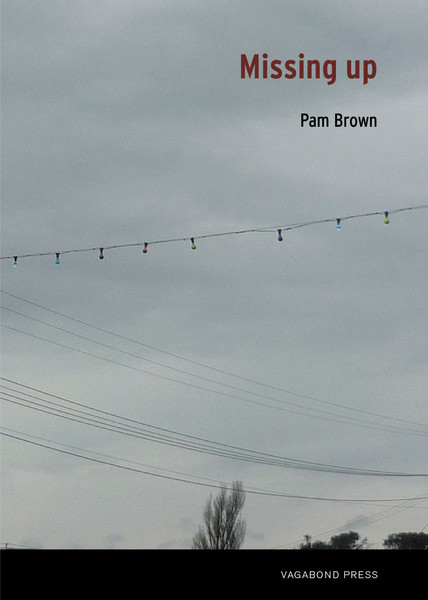
by Terrence Chiusano

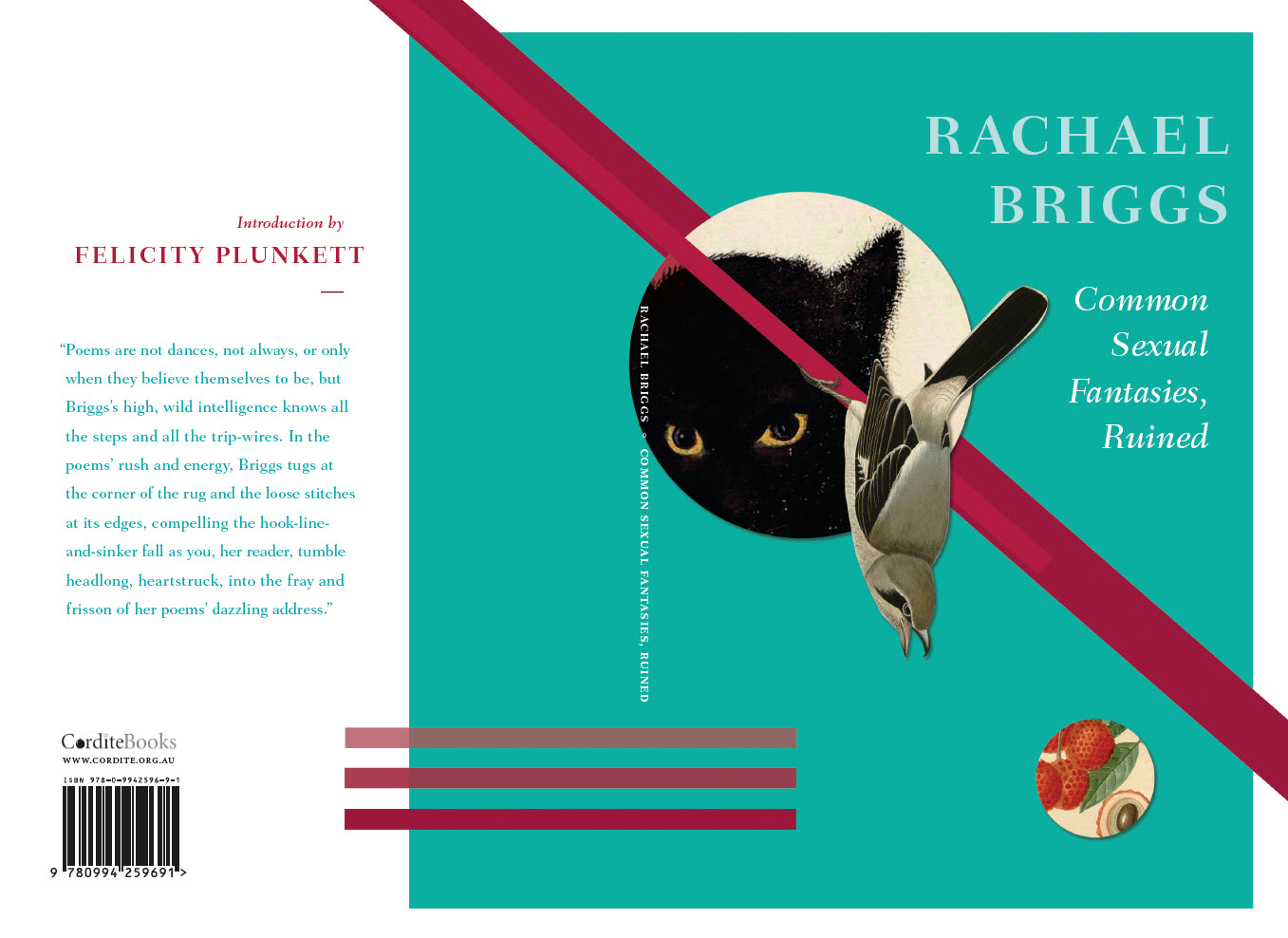
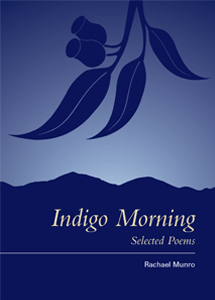
Cyclorama
by Daneen Wardrop

Fordham University Press, 2015

About a decade ago ‘trauma’ became an industry in the academic literary critical economy. This was due in part to the success of Cathy Caruth, but there were other theorists that mattered before and after (Freud’s ‘repetition compulsion’ and Elaine Scarry’s body in pain). Holding hands with trauma was ‘witness’. Of course, witnessing has been in the discourse for a long time as well, but there was a steady growth in its paradigmatic quality after the Holocaust industry began to develop more fully (see Norman Finkelstein). Continue reading

Posted in BOOK REVIEWS | Tagged , ,

UMAMI Editorial


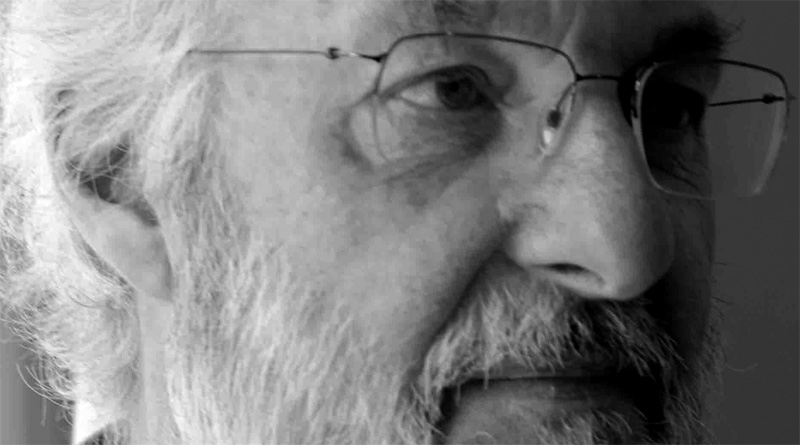
Luke Davies, Paris, 2014, photo by Samuel Pignan.

Around ten years ago I was offered a semester of teaching at the University of Technology Sydney. I accepted the job with some hesitation, thinking that energy spent teaching would be of the irreplaceable variety, and that what I would lose forever would be energy devoted to the central concern: writing. Yet the semester turned out to be a far more rewarding and enriching experience than I imagined it could have been in that the stint came to feel like a privilege. It was not a vertical experience of didactic instruction, wherein I ‘gave’ the students – in the form of knowledge – something they needed in order to ‘improve’ their journeys towards being writers. I never felt I had such a thing to give. (Well, broad bewilderment, they could help themselves to fridges full of that.) No, I don’t know what their experience was, but for me it was more a horizontal experience of shared endeavour. Teaching is all just a continuum, we come and then we go. I was merely at that moment a person who was more published, and either a little or a lot older than the students. I figured that my fundamental task of being a teacher is to share enthusiasm. The students should then take what they need for their journeys, and leave the rest behind. Teaching once a week for half a year made me understand that it is perfectly correct to say there is no centre of things. No received viewpoint.

Those insights were brought back to me in the process of being guest editor of this double-issue collaboration between Cordite Poetry Review and The Lifted Brow. I loved the fact that it was a blind submission process: only the words on the screen, no preconceptions or assumptions to cling to, no complexities of known-to-me/unknown-to-me, gender ratio etc. The experience felt very pure. I was looking for new surprises. ‘Each new contact with the cosmos renews our inner being,’ said the French philosopher Gaston Bachelard, ‘and every new cosmos is open to us when we have freed ourselves from the ties of a former sensitivity.’ I took this to mean that my personal preferences and proclivities were less important than an openness to what others might be up to, with their proclivities in play. And that each new poet was a cosmos unto themselves. And that close reading could repay the attention in the coin of surprise.

It so happened that the issue I was offered was one of Cordite’s themed issues, too. The theme was ‘UMAMI’, the fifth category of taste (along with the more familiar ones of sweet, sour, bitter and salty). ‘In Japan,’ I wrote in the call-out for the issue, ‘umami contains within it the notion of the sweet and the sour at once … neither one or the other, nor simply both bound together. Umami is not necessarily a compound taste. Its experience is elemental, indivisible: to bastardise Karl Jaspers, it’s more dasein than existenz. Admittedly, though, for Jaspers, dasein was like a reduction – real, certainly, but conceptual, too, elemental – whereas existenz, in all its extended messiness, was the place where we all really live.’

The physicist Werner Heisenberg would have understood the umami mystery; how a particle can exist as a combination of multiple states. There are questions that would not make sense outside of poetry that make perfect sense within it. Heisenberg, a true heir to Keats in the sense of wearing his negative capability like a multi-coloured cloak, came up with the uncertainty principle, a paean to wonder that dismissed as a category error the question ‘Are the smallest elements waves or particles?’ The answer was not that in different circumstances they can be either. (They can be, and are.) It was that they are, in fact, both. It is only how we measure (interpret) them that render them wave or particle. That moment of knowledge is a moment of collapse and loss: a fall, so to speak. Every event is a branch point. Until Schrodinger’s box is opened, his long-suffering cat is neither dead nor alive.

In the selection process I found myself drawn to pieces that hovered at this edge of knowing: where the ‘messiness’ is. It wasn’t that I was discarding form; it’s just that in the interest of variety, I tried not discriminate between whether in any given poem (or prose piece) energy trumped form or vice versa. ‘The present moment is a condition where there is absolutely no separation between yourself and things,’ wrote the Buddhist teacher Sekkei Harada. ‘That is not to say, though, that there exists such a thing as the present moment.’ I wanted to find no separation between myself, whatever fragmentary knowledge I had of the current ‘scene(s)’ in Australian poetry, and the work in which I found things to admire. The blind submission method was perfect for this. I juggled and revised a jumble of Yes, No and Maybe lists. There were poems that hit me in the gut. There were others I couldn’t quite get my radar on, but I kept coming back for subsequent re-readings. In the end, I reduced the 700 submitted to the 50 or so poems that make up this issue. Many of the submitted poems and micro-fiction were clearly not contenders; the first pass of the No pile was not a difficult one. But, in the end, there were at least 50 poems that didn’t make it in that could have and would have sat well in this issue.

IN MEMORIAM. My friend the Irish poet, playwright and novelist Dermot Healy died suddenly on 29 June, 2014. He wrote the extraordinary novel A Goat’s Song, and much poetry. I interviewed him at the Sydney Writers’ Festival in 2013, and he launched my book Four Plots For Magnets at the Brett Whitely studio in the same week. They were two of his last public performances. He will be missed. His widow Helen Healy and Peter Fallon, publisher of The Gallery Press in Ireland, kindly gave permission to publish the two Healy poems which appear here, from the just-published posthumous collection The Travels of Sorrow. My thanks for their kindness. The fine poet and beloved teacher Martin Harrison, with whom I’d shared the pleasures of a developing literary friendship in more recent times, died suddenly on 6 September 2014. He had agreed to give me a poem for this issue — alas, it was never to arrive.

This issue is dedicated to the memories of Healy and Harrison.

Posted in ESSAYS | Tagged

Pamphleteer

When a friend folded a piece of paper in front of me I remembered the history of the pamphlet.
– Kate Middleton


– – – – – – – – – – – – – – – – – – Fold here – – – – – – – – – – – – – – – – – – –


In November 1789, the matter gaining upon him in vigour as bodies, of the lights to be drawn from books, the dissenter Richard Price gave a sermon (as liquors are meliorated by crossing the sea) which interpreted Britain’s 1688 in light appearing as the act of persons in some sort of corporate capacity.


– – – – – – – – – – – – – – – – – – Fold here – – – – – – – – – – – – – – – – – – –


Body paragraph 1: From Edmund Burke’s pamphlet, Reflections on the Revolution in France (1790)

The paper securities of new, precarious, tottering power, the discredited paper to change their paper and depreciated paper is a paper circulation, the heart of a boundless paper circulation. Sinister designs vested in a body that composed the sides of sickbeds without horror and paltry, blurred shreds of paper about the rights of man, creating a new paper currency. They issued this paper currency to the great machine or paper-mill of their fictitious depreciated paper, which is stamped with the indelible character of sacrilege, and with the symbols of their own ruin, this compulsory paper, it will straiten or relax with every variation. A paper, carrying on a process of continual transmutation of paper into land, and land into paper, as the market of paper or of money or of land. Whose creatures are all these dreadful blood fresh things? When so little within or without is now found but paper, never was a scarcity of cash and an exuberance of paper bodies. A decomposition of the whole blood who dragged the bodies out of the quiets of their tombs to attaint and disable backward to stain with the blot of the end from whose womb? To swallow down paper pills their most rumpled and ragged Scotch paper, in a letter published in one of the papers, given in one of their papers, supplied with the ammunition of pamphlets as of cartridges.


– – – – – – – – – – – – – – – – – – Turn over here – – – – – – – – – – – – – – – – – – –


Body Paragraph 2: From a pamphlet in my letterbox today

AUSTRALIAN MEAT EMPORIUM Monthly Specials Specials available until 27th September 2015 BINDAREE VINTAGE 100 day grain fed Whole Beef Rump $1599 PER KG SLICED FREE $2999 PER KG MR LAMB Free range Whole racks of lamb MURRAY VALLEY Pork Striploin portion $1899 PER KG SLICED FREE Serving suggestion only AUSTRALIAN MEAT EMPORIUM 29-31 O’Riordan St, Alexandria Open Monday – Sunday 7am-6pm Telephone 96900979 www.meatemporium.com.au … taste the difference Sydney’s Original Meat Experience


– – – – – – – – – – – – – – – – – – Fold here – – – – – – – – – – – – – – – – – – –


Body Paragraph 3: From a pamphlet in my letterbox today cont’d

LIQUOR EMPORIUM $36.99 ctn Tooheys Extra Dry $19.99 each Grand Barossa Cabernet STAFF PICK $39.99 ctn Peroni Nastro Azzurro $39.99 each Hiedsieck Brut STAFF PICK $49.99 each Glenfiddich 12 Year Old $12.99 each Oyster Bay Sauvignon Blanc $39.99 each Makers Mark Bourbon $39.99 each Chivas Regal 12 YO 29 O’Riordan St, Alexandria NSW 2015 02 83999 1009 382 Burwood Rd, Belmore NSW 2192 02 9759 5229 28 Floss St, Hurlstone Park 2193 02 95559 4550 19 Unwins Bridge Rd, St Peters NSW 2044 02 9519 9956


– – – – – – – – – – – – – – – – – – Fold here – – – – – – – – – – – – – – – – – – –


Conclusion

An irregular, convulsive movement, an irregular, convulsive fume. Our paper is of value in blood, binding up our sepulchres, some rites of provisions, preparations, and precautions of the body.

Posted in ESSAYS | Tagged

Love in Contemporary American Gay Male Poetry in the Works of Richard Siken, Eduardo C Corral and Jericho Brown

Gay poets, in the main, are determined to claim difference by questioning orthodoxies that corral issues about sexuality and love − and the functioning of these constructs within an urban, heterosexist reality − issues always pertinent to gay male writers because it is they who must bear the burden of political self-consciousness in a heterosexist world. Continue reading

Posted in ESSAYS | Tagged , , , ,

9 Artworks by Deedee Cheriel


Perseverance of Mother Nature | Deedee Cheriel

My work explores narratives that recognise the urgency and conflict in our continuing attempts to connect to the world. With influences derived from such opposites as East Indian temple imagery, punk rock, and her US Pacific Northwest natural environment, her images are indications of how we try to connect ourselves to others and how these satirical and heroic efforts are episodes of compassion and discomfort. Bold elements drawn from landscapes, both urban and natural, and pop culture suggest the ability to find commonalities and relationships between ourselves and our surroundings that inevitably confirm our greater humanity and quest towards love.

Posted in ARTWORKS | Tagged

Angelina Saule Interviews Mohammed Bennis


Image courtesy of Mohammed Bennis

Poet and translator Mohammed Bennis began his career as a poet in Morocco in the 1960s, at a time when the free verse movement was taking the Arab intellectual world by storm with the Beirut-based journal shi’r, with the Syrian poet Adonis at the helm.

Bennis is not a poet with a cause. He is not writing for Palestine or for women’s writing in the Arab world, themes which are easily snapped up by Western audience. Instead, as one of the more innovative language poets, methodically tampering with language in a dialogue with language itself, Bennis has refused to be either local or international, a strain of consciousness that may have something to do with the geo-cultural location of Morocco itself, a conundrum of the Arab world, Africa and Europe.

Angelina Saule: When you began your career as a poet in the 1960s, did you feel influenced by the free verse movement taking place in the journal shi’r founded by Adonis, or by the events of ’68 in France? Which form of freedom and which task of liberating language seemed to have made their mark on you most?

Mohammed Bennis: When I began to write poetry I felt influenced by free verse in Arabic, as in the poems of Badr Chakir Essayab, but a few years after that I discovered Adonis. In the same period, I was reading French and German poetry and I was in Paris during the summer of ’68. Those events have had together a great influence on my thinking and my writing until now.

AS: How exactly did the events of ’68 in Paris affect you? What insight did they provide in terms of a free vision of language in the Arab world?

MB: As you know, the events of ’68 were a revolt against all traditional ways of life. To change Arabic language by using new forms and new styles was like a second coup. My new method has taken time. At last, I have transformed the many manners of writing.

AS: How do you see the innovations taking place within the Arabic language now? Are we still in need of a poetic revolution?

MB: The innovation within the Arabic language was great. It was a new Arabic or a modern Arabic coming into being. It was intensely different from classical Arabic writing, and this innovation motivated a poetic revolution in countries of the Maghreb.

AS: You have made a shift in terms of revolutionising certain poetic forms of expression – can your contribution be considered to be a part of this revolution?

MB: Maybe I have created a minor revolution. I am sure that I have only changed the manner, because changing the manner of something is not always a minor or major revolution. Change is a step, but it is not enough. On the other hand, literary life is difficult, and we are not able to accurately judge what we are doing or writing.

AS: Do you feel that your writing has begun the path of a poetic revolution in the Maghreb? Has your writing greatly informed new poets in Morocco?

MB: When I talk about manner, it is only a kind of observation concerning my own poetic method and its evolution. I have studied the rationale of a literary revolution in modern literary Arabic and I have found that so far it is not possible to accomplish this revolution within the Maghreb. We need time to see clearly what is happening. I only know that I must continue writing. Nothing else matters.

~

Bennis’s answer made me reflect on the Arabic phrase ‘Cairo writes, Beirut publishes and Baghdad reads’, which attests to the long-standing division of literary and intellectual labour in the Arab world. For a wider historical context, the literature of al-Nahda, the renaissance of the late nineteenth and early twentieth centuries, is usually viewed in terms of Egypt and Greater Syria. The peripheries of the Arab world (from Mauritania to Oman) are rather unknown even within the cultural fabric of Arabic life, with the exception of such writers as Tayeb Salih or Mohammed Choukri. The exodus of intellectuals from the centre of the Arab world to exile communities abroad at the beginning of the twentieth century not only created a bridge between Western literary developments and individual Arabic innovation, it also led to a certain trend or stereotype about the origins of the pulse of experimentation within Arabic poetics.

~

AS: What motivates you to change syntax the way you do? Are you seeking to make ‘the invisible’ – the absence of what is not in standard language – present?

MB: Poetry uses the standard language but all changes occur in the process of writing. If the poet uses the standard language, he writes in his own language. Using the standard language does not mean poetry is standard. Never can we say that. Every poet creates his own poetics and his ambition is to touch the impossible, to write the ineffable. How is it possible to not make the visible invisible, but to give the invisible a new life? This is the question.

AS: Which form of Arabic do you feel more comfortable writing in, Moroccan or Classical? Not long ago I was at a hakawati reading in Fes, and it was easier for me to understand most of the Classical verse, but rather difficult with the Moroccan-speaking hakawatis, although they were more engaging for the audience. (This reminds me of zajal in the Levant among the various mountain communities of the Druze and the Maronites, resuscitating the idea of the actual and the artificial within the one language.) Is there a preferred register for readers and listeners?

MB: Writing in modern Arabic is a choice. We must not confuse the situation of Arabic with the occidental languages, as we have another history. Unfortunately, we suffer from several factors, including education, and sometimes the problem is not clear. Maybe one day we can resolve the problem of languages in the Arab world. Maybe it is possible in the future.

~

The problem Bennis refers to here is the diglossia of Arabic. The written form has remained constant since the Quran, not having changed drastically until now, and is used in modern print media (imagine reading The Economist in the Anglo-Saxon of Troilus and Cressida), while the umma (dialect), which reflects regional differences in temperament and cultural background, is vastly changing lexically and grammatically according to local and foreign non-Semitic influences, making the various dialects mutually unintelligible. The written form bespeaks education, literacy and, perhaps, religious instruction, while the spoken adheres to the day-to-day profane (as opposed to the sacred written form of pure Arabic), generating hierarchies within the language.

~

AS: When you say ‘modern Arabic’, do you mean MSA (Modern Standard Arabic)? Do you ever feel the need to meld MSA with the flavour of Moroccan Arabic?

MB: Yes, I use the Modern Standard Arabic, and I use Moroccan Arabic when I feel it is spontaneous, when it is the expression of my body. This is normal, and we find the same comportment in the writing of other Arab poets and writers. The result is the Modern Arabic language.

~

The vernacular is, as Bennis expresses, something more deeply felt and physical in comparison with MSA: it is a labyrinth of identity oddly proud against the column of standardisation associated with MSA. As I write, I myself am surrounded by the clipped quaffs (ق) of my father’s people in Mount Lebanon, making my background easily heard when I am in the capital twenty-five minutes away; the overall vernacular of Lebanon chooses to speak without this particular letter. (It is rather bizarre to be told several times to drop the letter in a language I feel rather at odds with or baffled by; thankfully, I don’t write poetry in it.) It is important to deviate slightly into the field of phonosemantics to impart the significance of the basic phonemes of Arabic – especially in order to ascertain difference. It is claimed that certain checkpoints of the Phalangists during the Lebanese Civil War posed merely one question, which was to ask people to pronounce the word for ‘tomatoes’. The Palestinians pronounce it differently from the Lebanese, and thus fell into a linguistic trap and were killed in an instant for their accents.

~

AS: As a poet writing in Morocco, do you see yourself on the threshold of al-Andalus and the Arab world, or on the threshold of the Francophile-Moroccan world? Which axis do you feel informs the majority of your work? In the poem ‘I am not I’, you write quite beautifully about this:

This is my law – To reveal secrets to ardent lovers
In Baghdad and Fes,
In Cordoba and Qayrawan,
To accompany a tear to its burning anxieties,
To bless a rose on its way between a sweetheart and a lover,
And write to you
About this seed which is sufficient
For everyone who is
In the presence of madness
On the paths of hearing and seeing

MB: I do not have a difference between the two worlds. Since the beginning, it was clear to me that I need to understand the two worlds, as they have their traces on my body. The problem is not to choose between the two worlds, but how to be free in relation, vis-a-vis yourself and the other.

AS: How would you describe the movement of the traces of the two cultures on your body? Do they dissolve, disappear, etch, mark or do something else on your body? How do they move when you write?

MB: The trace of the two cultures means that my body is cultural. It also means that the two cultures are inseparable in my vision and my manner of thinking or feeling. I cannot separate this plural sensitivity in my words. For this reason, I believe I am writing in modern Arabic and it is the result of the two cultures, a sign of intercultural being that affects the culture of our world.

AS: Is there a particular school of Arabic poetry that mirrors some of your own poetic concerns? For example, the poetry of Jahiliyya, the Abbasid court poets or the al-Nahda movement?

MB: No, I do not think that is a particular school. When we write in Arabic, all Arabic poetry is your patrimony. I add that it is normal for me, as a Moroccan, to have an interest in Andalusian poetry. If you read my poetry, you find the poetry of Jahiliyya, the Abbasid court poets, as well as many international poets: all poets of the world are my family. The difference lies in language only.

Posted in INTERVIEWS | Tagged ,

3 Poems by Huang Lihai

Huang Lihai was born in Xuwen and now lives in Guangzhou. He is editor of the poetry magazines Poetry & People. His books of poems include I Know Little about Life and The Passionate Mazurka. He won the 8th Lu Xun Literary Award (Guangzhou, 2009) and Lebanon International Literary Award (2013).


who can outrun the lightning

The river is my blood.
She understands my thirst
in the migration.

I will outlive poverty.
The tree of our times will turn green.
But why are my sleeves wet?

The bush is flying.
My heart wearily shakes.
Life is as short as lightning.
It forces me to run
before I have the time to grieve.


tiny things

I cherish tiny things.
They stay warm in daily life,
never attract people’s eyes,
soundless as the stars.
When I touch them, they break into parts,
just like an ancient folk song,
incomplete, yet enough to make me uneasy.
It’s a grain of salt that invades the sea
or a rock that occupies the hill.
The animals whose names I do not know –
the yet-to-be friends
live in a tiny forgotten world.
I want to sing to them. I’m prepared
to get close to them
and cross out a few big words.


the saffron train

A fugitive
is running in the tunnel.
All of us are fugitives
wanted by life.
All places we stayed remained obscured,
so their names could not be erased.
At the turnabout
where train and light disappear,
I ride a horse
to the deep of the grass,
just like taking a breath in the dark.


誰跑得比閃電還快

河流像我的血液
她知道我的渴
在遷徙的路上

我要活出貧窮
時代的叢林就要綠了
是什麼沾濕了我的衣襟

叢林在飛
我的心在疲倦中晃動
人生像一次閃電一樣短
我還沒有來得及悲傷
生活又催促我去奔跑


細小的事物

我珍藏細小的事物
它們溫暖,待在日常的生活裡
從不引人注目,像星星悄無聲息
當我的觸摸,變得如此瑣碎
彷彿聆聽一首首古老的歌謠
並不完整,但它們已讓我無所適從
就像一粒鹽侵入了大海
一塊石頭攻佔了山丘
還有那些叫不出名字的小動物
是我尚未認識的朋友
它們生活在一個被遺忘的小世界
我想讚美它們,我準備著
在這裡向它們靠近
刪去了一些高大的詞


橘黃色的地鐵

一個逃犯
在隧道暗處狂奔
每一個人都像逃犯
被生活通緝
所有逗留的地方因此不詳
每一個地名因此不能抹去
在拐彎的地方
地鐵與光一起消失
彷彿一次暗處的喘氣
我和一匹馬
隱沒於草原深處


Posted in TRANSLATIONS | Tagged ,

2 Poems by Chen Yuhong

I’ve Told You

I’ve told you my forehead my hair miss you because clouds in the sky brushing through one another my neck my earlobes miss you because of the ennui of hanging bridge, alley grass and the bridge lane because of Bach’s Cello Suites softly gliding onto the moat my eyes my drifting eyes miss you because all the sparrows on phoenix trees fall off because of broken glasses in the wind

because of the day to day wall I’ve told you my sleepy pores miss you my ribs miss you my arms like lunar halo turning into wistaria in full blossom from the Tang dynasty also miss you I must have told you my lips because of a cup of hot coffee my finger tips because of the revolving lantern’s confusion about the night because the blue wooly sky is loath to part


我告訴過你

我告訴過你我的額頭我的髪想你
因為雲在天上相互梳理我的頸我的耳垂想你
因為懸橋巷草橋弄的閒愁因為巴赫無伴奏靜靜滑進外城河
我的眼睛流浪的眼睛想你因為梧桐上的麻雀都飄落因為風的碎玻璃

因為日子與日子的牆我告訴你我渴睡的毛細孔想你
我的肋骨想你我月暈的雙臂變成紫藤開滿唐朝的花也在想你
我一定告訴過你我的唇因為一杯燙嘴的咖啡我的指尖因為走馬燈的
夜的困惑因為鋪著青羊絨的天空的捨不得


Towards the Blue

Towards the direction of blue where shadows cannot reach you
where there is no language no footprints touching the sea’s slightly
curly hair its fresh body for only a moment time like plates pushing
against each other will also slip away that blue close to the equator
the hot and humid that have to be experienced by one’s flesh and soul
horse latitudes close to rain forests at nighttime a fisherman
holds up the big dipper to search for dreams in rock cracks you
must be fishes which won’t shut their eyes with the blue force
pressure-less and weightless for a brief moment layers and layers
of shimmering scales waving just make yourself a home
in tides you drifting naked kind ripples written line by line
loneliness line by line dispersing loneliness that won’t be taken away
only towards where the mist is the waves are and where the land sinks


往藍色的方向

往藍色的方向。影子追不到的方向。沒有
言語沒有鞋印的方向。你撫著海微捲的髮
微涼的身子。彷彿撫著不確定的滑音。只
逗留一剎那。只一剎那。時間如板塊推擠
也要滑落啊。那接近赤道的藍。那靈肉必
須親證的潮濕與熱。接近雨林的無風帶。
在夜晚漁人提著北斗探照岩縫裡的夢。你
們必須是不闔眼的魚。借藍色張力短暫失
壓失重。鱗光閃閃層疊如波濤。且在波濤
裡築巢。裸露而漂移的族類。寫一行行漣
漪。一行行寂寞暈散的寂寞也不帶走。只
往霧的方向。浪花的方向。陸沉的方向。

Posted in TRANSLATIONS | Tagged ,

3 Poems by Cao Shuying

A Letter from International Waters

(Love, I’m on international waters
lying on the pale blue deck
breeze touching the back of my bent knee
thinking, ‘I belong to no one’
touching my cheekbones, two hanging cliffs

A showing-off of local traditions just started
I realise I despise those photo-taking
tourists, on the beach, on those pure
salt crystals. It sends shivers down my spine when I think of the distinct
venation pattern of each of the three thousand plants on the island
it makes me detest those ungrateful people more
as if I have never loathed them before

Yet I’m not one of their opposites
drifting on international waters, I belong to none
those who have had my everything
changed their mind — I discover that hermit crabs
are born at sunrise and die at sunset, white pearl oysters
spend their whole lives looking after their pearls, what can I care about?
A bottle of fine wine spilt over night, not a single drop left

On international waters, a world without rules
sun glares everywhere, washes over the old paint on the deck
now and then a tiny rainbow shines, I’m lying in
a quiet pale blue, decide that I’ll give up
the home I remembered, built in a brick crevice anyway
when winter comes, that house will shake into a bone.
In fact one year ago, I had frequently been having sea dreams
at that time I was still one of the opposition, dissident,
fighting against all confronting dreams

Now, let she and him fight
I’m on international waters, a world
without rules, everyone is no one, everyone can’t be bothered
becoming his/herself, the whole sea is ringing —
all quiet above the waves)

Love, I’m the one who has had you
now writing you poems in the gaps between bricks
having not seen anything described in your letter

May 21, 2002
Zhanchun Yuan, Beijing


公海來信

(親愛的,這是公海
我趴在灰藍色的甲板上
風吹過深陷的膝窩
「誰都不屬於」,我想
我摸自己的顴骨,摸到兩塊懸崖

賣弄的民俗剛剛開始
我發現那些旅遊拍照的人
是那麼可惡,在沙灘上,純潔的
晶體鹽上。想到島上的三千種植物
絕不雷同的葉腺,我就戰慄
就更恨那些不知好的人
好像我從前不曾恨過他們

但我也不屬於和他們相反的人
我遊蕩在公海,我不是誰的
那保存過我的一切的人
又改了主意——我發現寄居蟹
朝生晚死,白貝殼用一輩子
愛惜自己的珍珠,我又能愛惜什麼
美酒一夜打翻,半滴,不留

這是公海,一個毫無規則的世界
陽光四處瞧著,衝刷過殘油的甲板
偶爾閃出小巧的彩虹,我趴在一處
安靜的灰藍色中,突然決定死心
記憶中的家,不過砌在磚頭縫裡
冬天一到,那樓就抖成根白骨。
事實上一年以前,我就開始頻頻夢見大海
那時,我還屬於那種相反的人,抗著不順從
抗著所有對峙的夢想

現在,讓她和他抗去吧
我到了公海,一個沒有規則的
世界,誰都不是誰,誰都懶得
成為自己,一海的嗡嚶——
浪花上一片寂靜)

親愛的,我就是那個保存過你的人
現在,在磚頭縫裡給你寫詩
未曾見過你信上的一切

2002.5.21 展春園


Poetry in the Mist

for Huang Jing

reaching up, you’re still in the mist
bending down to touch the stones, still in it
fleeing through an earth-crack, mist trails all your way
you had a me, I had myself

the universe is having green plums
cores casually spat out
are our bright days

in the mist throwing stones and breaking mist
if you don’t break it
the world won’t blossom

April 2, 2010
Chai Wan


霧中詩

——給黃靜

舉起手臂,還是在霧中
彎腰摸石,也一樣
從地縫中遁去,霧也一路追來
你吃一個我,我吃一個自己

宇宙吃青梅
隨口啐核,
都是我們的白晝

在霧中扔石頭砸這霧
不砸
世界不開花

2010.4.2 柴灣


For M.Y.

I think of you when I play my guitar
I don’t want to join other people’s mourning
because that green wave burning in the candle light
can’t be split into two petals
impossible to part, impossible
it can only burn in different
gestures … the tiniest dance but also endless
passed through by waters from every ocean
gushing out from its green
heart, becoming smoke
separating those left behind

January 2011, Tsing Yi


給M.Y.

彈起吉他時我想起你
我不參與眾人的祭奠
因為那燒在燭光裡的綠浪
不能分成兩瓣
根本不能分開,不能
只能用所有的姿態
燃燒⋯⋯最小的舞蹈然而無限
被所有的海水經過
由它碧色的心
湧出,化為煙
分隔剩下的人

2011.1 青衣

Posted in TRANSLATIONS | Tagged ,

Bella Li Reviews Pascalle Burton and Nathan Shepherdson


All images courtesy of Pascalle Burton and Nathan Shepherdson

UN/SPOOL and A gram of ideas on art, form and film
by Pascalle Burton and Nathan Shepherdson
Self-published, performed, 2014

In an anagram all the elements exist in a simultaneous relationship. Consequently, within it, nothing is first and nothing is last; nothing is future and nothing is past; nothing is old and nothing is new … (Maya Deren, An Anagram of Ideas on Art, Form and Film, Alicat Bookshop, 1946, p. 6)

Experimental filmmaker, choreographer, dancer, film theorist, poet, lecturer, writer and photographer, Maya Deren was a seminal figure in twentieth-century avant-garde art and theory. To begin with Deren’s words is to follow in the footsteps of Pascalle Burton’s and Nathan Shepherdson’s UN/SPOOL and A gram of ideas on art, form and film – twinned works that are simultaneously homages to, and dialogues with, Deren’s own work and ideas, and entirely new and original pieces of art.

Continue reading

Posted in BOOK REVIEWS | Tagged , ,

Antonia Pont Reviews Meredith Wattison

All The Precious, Broken Things Thrown In

Terra Bravura by Meredith Wattison
Puncher & Wattmann, 2014

I am reluctant to divulge for how long I deferred reviewing Meredith Wattison’s Terra Bravura. It languished with me during the later months of the first half of 2015, then, as I left the country in late June it joined the other analogue reads in my suitcase. Before my departure, I’d plunged in, but was unable to assemble for myself a sense of the individual poems and their relation, with the purpose, of course, of saying something about them that would do the work justice. Like a stern and observant child, the work insisted on a ‘doing justice’. Perhaps rather than opinions, what was gathering for me was a series of unrepresentables; atmospheres.

Continue reading

Posted in BOOK REVIEWS | Tagged ,

Yesterday I

Yesterday I googled your name
Because I missed you

A picture of a horse came up
I imagined you riding it topless

I googled your name again today
My internet was down.

Posted in 70: UMAMI | Tagged

Basic Cable

Tomorrow bends into
the marine layer with
alluvial decisions
spread across an imitation
Mesopotamia. Chops mountains to
hillocks, drain lakes to beds. Retires.

Chase scenes mock
an earlier, louder you in San Francisco.
then, at home years later, the sound
curved near quiet, separated
by the thrilling adventure
of internal decline. Tomorrow is a fable

with darting eyes, a remote control
changing hands, recording
stories that ship off to an absurd
kingdom posed as democracy.
Its salted oceans are granular. They
wear Petrochemical coveralls.

Back here, the channel changer,
the logline and the endless cycle
of entertainment brood over
powerhouse happy hours,
images debilitating as they
shift. They pixelate, then rise again.

Posted in 70: UMAMI | Tagged

Wallpaper

Nana’s ghosts gnawed through her walls.
Mum and aunts scale bow-legged ladders,

scrape paper, bury leaves of it
in pilling carpet. Autumnal crunch. Mum

makes Nana reinscribe her living room
with colours Grandad never would have

chosen. We scrawl on naked scraps
of palimpsest, in crayon. She cannot

watch; Nana’s propped on her walker
at the sink, fingers itching temples.

She insists we use old tea towels –
save the pristine ones for later.

Posted in 70: UMAMI | Tagged

Ward

The 75 year old ladies’ man is all cut up
in the hospital bed beside mine.

He loves his dog, brags he once slept with a woman
& her 30-year-old daughter at the same time…

some kind of summit for him
& they were both satisfied.

He’s lost most of the bowel, half his bladder, spleen,
appendix, bits of lung, a snip of the oesophagus,

prostate & finished with a distal pancreatectomy. Reckons
he’s now the ideal weight for his age. Great antidepressants &

you’ve gotta hope. His kelpie Jimmy is only 2 years old
& wouldn’t understand any thievery by death.

Still got all his hair & a full pension
which is accumulating nicely while he’s in the Royal.

Professor Coure is happy with the surgery
but hasn’t been around much since.

There’s a morphine pump & a cheeky Irish nurse.
Maybe he’ll get up next week. For Jimmy.

Posted in 70: UMAMI | Tagged

University Second Year:

Russ and I battling on Sega Genesis and Nintendo.
The victor singing our version of a song lyric: "I like the way your mama works it, my
dick-ety."
Hockey '94 in dispute, but Madden Football stored records:
Had him 80 something wins to 20 something losses.
Russ would tell people we played even.
I'd say: "I can see you in ten years telling people we played even."
(Ten years later Russ was telling people we played even.)
Marathon bouts of Baseball Stars – American Dreams vs. Ninja Blacksox (“The Douchesox").
Until I was required to write a paper:
Russ clamoring for a best of seven; I locked the door.
Harassed from the hall; minutes of silence; then at the window sounds of a break-in.
One afternoon we started with a stopwatch on Super Mario Bros.
Bet $20 within two weeks I'd beat the game in under 6 ½ minutes.
That evening registered a 6:24.
He wrote a check; I didn't cash it – taped it to the wall for visitors to see, and keep him
nervous about the bank balance.
Alone during my lowest round of Nintendo Golf:
2 eagles, 15 birdies, 1 par; Minus 19.
Second shot on the Par 5 18th:
Faded a wood in over the trees to 12 feet.
Made the putt.

Posted in 70: UMAMI | Tagged

c a p s u l e

how  is  this
plastic case
so attune to
tampering I
ask my love
bone-thin &
fossil-grey &
crying at me
        to       
s w a l l o w


Jessica Venables remixes this poem for The Lifted Brow portion of this issue.

Posted in 70: UMAMI | Tagged

Untitled

Boy who smells like fish with a leather jacket, piercings and rings came and sat next to me, he started writing poetry in his Moleskine. He has written “your light radiates through me/but I am empty/I know my feelings are true.” On the opposite page he has a shopping list, all I can read is “small nice protein powder”

Think i’m talking to an undercover cop on craiglist but i suppose i am eager to make frends of all shapes and sizes. Imagine if the craiglist undercover cop took a real liking to me and decided he wanted to be my bodyguard forever, protect me from everything at all costs. I’m not the one who sent every craiglist 420 man an email. that was my boyfriend. but now he’s asleep so I have to deal with all these incoming emails about Fire Ass Weed.

Every man always say Don’t do that to my non-stick pan my expensive pan! Anna! Don’t misconstrue my words and use them against me!

Then man insults me and I reply I am the product of three miscarriages and was born on my dead grandfathers birthday I say that there is no life running through me, only death

Posted in 70: UMAMI | Tagged

Pawpaw

Carica papaya

No Need To Argue, French Vanilla ice cream and tear-dry eyes
I will taste as I hear, hear as I taste for the rest of my life
Walk Two Moons, pawpaw with lime, and for once, not me who cries

there was no screaming, no hit, no touch, no whip, no knife
the only cut – the first sung notes of Ode To My Family, vanilla dissolving salt
I will taste as I hear, hear as I taste for the rest of my life

I’ll never know if something happened, if someone was at fault
all I remember is that voice, that taste, that beat, and each dry blink
the only cut – the first sung notes of Ode To My Family, vanilla dissolving salt

half a city away in my other home, each dry blink in synch
watching her, seeing her cry the first time, as she reads aloud, as I eat
all I remember is that voice, that taste, that beat, and each dry blink

the wonder of seeing such sadness, pure, without defeat
in someone else’s story, someone else’s death, someone else torn
watching her, seeing her cry the first time, as she reads, as I eat

I will taste mourning, salt and sweet in each note, each voice, the past born
No Need To Argue, French Vanilla ice cream and tear-dry eyes
this bridge spanning silence, with taste, with sound; without hate, without scorn
Walk Two Moons, pawpaw with lime, and for once, not me who cries

Posted in 70: UMAMI | Tagged

Kyoto Haibun

(In Memory of Harold Stewart)

          They say great blessings wait in the temple of a thousand goddesses. But on entering, the gold arms and faces of mercy statues stare with a penetrating purity that scares hungry ghosts out of your pores, and suddenly you are walking blind into a hell sauna of burning flesh, trees of lascivious knives, wards of addicts, a giant cauldron boiling with parent killers and Buddha murderers. Where the hell have you landed? asks the mind on vacation. What is real? Fear has entered and dribbles down a leg forming a piddle puddle on marble. You flee the red-pillared hondo with its dragon roof of orthodoxy and gasp for air.

          With great relief you find yourself on a green bridge inside a forest of plum blossom. It is a garden. A garden is a breathing space. Some pre-disposition for chimera-shaping has caused you to see hells or heavens inside icons or under ordinary leaves. Temple, garden. Garden, temple. What is the difference, what is your role in this? Maintain composure without losing face gazing at the grandfather carp of yourself, knowing this, too, is just another illusory standard flashing in the clear current that carries all your metaphors like beliefs.

                              Old white koi you wear a spot of red.
                              The flag of Japan swims on the riverbed.

Posted in 70: UMAMI | Tagged

Three Stories

I. She Asks Him “For the Third Time” to Leave the Toilet Seat Down

outside the elm trees
redden with autumn.
their tight green berries
bitter in the waning sun.

II. Her Uncle Slipped His Hand into Her Overalls — Whispered, shhh it’s a game

outside the elm trees
redden with autumn.
their tight green berries
bitter in the waning sun.

III. With His Fingertips, the Old Man Brushed Her Hair Behind Her Ear — Soon, my love.
Soon

outside the elm trees
redden with autumn.
their tight green berries
bitter in the waning sun.

Posted in 70: UMAMI | Tagged

Brawne Girl

Exchanging names like strangers
in a lifeboat. You say to me
“Let’s sleep for half an hour.”

Laughing as you reach beneath my t-shirt.

There is nowhere I can go now.
I jump forward in time from moon
to core to nebula.

A face I could not reconcile
with all those drinks I longed to taste
just once with you. Your face
was something new to taste.

To hold you near was something new,
a kind of mild celebrity. The subject changed
from day to day, the things we knew.
The things we did not know.

I never knew the proper form, your lips were full
of things to sell. But what was that?
I couldn’t say.

The prototype you hung to dry
so many brawne girls gleaming white.
Each part of you was brawne itself
your colour and your apple scent.

I never caught you in a line at sea or under
amber skies; we never spoke of it at all.
Your body slipped through every sign.

Sometimes you seemed a different brawne
your skin and hair and eyes would change
and I’d not recognise the title of that song
you’d hum quite tunelessly.

You’d smile and there was nothing
I could place between. No arcady or temple glade
no Beatles B side ‘Thank You Girl’,
no crass electric century, the waking dream
you left behind.

How simple then, this action hardly noticed
by an unrewarded glance, made sense.
Mere minutes spent alone with you
I would defend most savagely.

To watch you sleep, your neckline full of sun
not watching you at all, no time to see
this turn from truth to beauty with forgetfulness.

Full brawne and lovely with your laugh
an opening or a closing scene, one day
so full of heat, where we would always lie

by swimmers till the end of day.

In carnivorous winter, inhaling
the airwaves like smoke and a smell
of leaves there’s no reason to think
that the night is so still and so small;
you carried me here in your jaws
and once I felt your teeth in me.
Soft as applause.

A violet fuzz that’s so hot in the rain.
I am no stranger to the moon’s extinctions
soaked to the cotton bone, as eyes
ignite so ardent and bewildered.

Only dizzy with your tongue and tiger’s mouth.

In white dressing gown
she curls her hair, and talks
to me.

The moon shifts orbit by a shadow’s length.
Looks out of place.

And I like
to know that there is nothing
I can say.

A small flame falling through
a darkened library.

‘So many unsolved mysteries’
thought Philip Marlowe quietly.

And I like the way all things
come to an end outside her window.
And I like the way she takes
her time to tell me where she’ll be.
And I like the way she gives
herself the chance to look away.
And I like to know there is nothing
in the world that I can say.

Something that whispers
itself ‘Pacific’, or
the pause between,

that cheerful look of mayhem
on your face, goes on ahead
inconsequential.

Talking on the phone, I see you voiceless
wearing the red bra you showed me
for luck or the crook of your elbow.

How your left arm falls

where the last word can only be languid .

Here then, you might say, I have it.
One word that is more than to forget.
The phone that rang for me once
at 4.am. I never heard.

Humans love this new technology
that uses its ghosts with such economy.

later where people come walking
their dogs in the afternoon.
Sunshine. So normal.

It’ll be hard to find a place
to lie down with you. That’s all
I want. Wrapped up in our coats
and scarves. I like it there

where the sand is full of old sun-cream.
Bodies who have left their scents
by their side. Things that have
rubbed off and released.

Whatever you would want or would not wish
to be is here. The spoils of happiness.

The view eight stories high that shows
you traffic and a cheap hotel. An ashtray
stained with caramel, too many birds that hide
behind too many leaves.

Too much to learn from angles in the Doric columns,
corners facing corners. Maps are sold like tickets
to a murder; it intrigues you just the same,
your private theatre, confessional or bridge.

It left no scar. It was far
too visible.

I want to be awake, when you’re awake.
I want to be asleep, when you’re asleep.
In the cold nicotine drag of Monday
I want to taste the coffee when you taste it,
to hear the traffic argue when you do.
I want to move alone through an empty room
and make myself a mask of calm prepared
to meet you. I am never prepared to meet you.
I want to put my body between you on
the subway when the people stare.
I want them to stare at me. I want to stare
them down for you. I want to feel tired
and satisfied when you feel the day is one
long bus ride.

Today she is different wearing
the same colours she was wearing
yesterday. She has withdrawn
and she has not withdrawn. I have
laughed and not made a sound.
In these moments we are both
entangled in a clear blue sky.
The beauty and the fear that are half
a person each. Buildings stand
and do not stand a thousand years
or more. The last time I saw her
there was no sun or moon.
I felt both empty and complete
with the pure simplicity of opposites.
The way I could tell her anything
and see her smiling shake her head.

I miss that old apartment and my calendar.
How many weeks was that counting the rooftops
and antennae. I liked the early evening there,
the scent of old sheets waving friends goodbye.

The bed was wide and easy to forget.
The door was strong and easy to make safe.
Woke by an aftershock one morning
I enjoyed the sole possession. I kept
it clean and tidy, smelling good. The walls
were warm outside you faded in
and out sometimes.

Some nights I’d take a call and leave
to meet you by a fountain or a bridge.
Two hours on foot to cross I was corrupted
by the green glass dawn.

Your voice was softer than your skin
with words you used and years
before that made you theirs like drinks
and chemicals and other men.

Today I saw someone who asked no questions
in whose face I saw no rain. Someone with my face
was idly checking their reflection for calamity.

Just a perfect shave or the quizzical birdlike
gaze of an older man as I breathed out the desert.

For days I had avoided it that frozen meteor.
It hit without a sound. Five oceans rose.

I could not say that’s how it felt to me. One year
ago my life was full of echoes. You do not feel
those points of impact, worlds in darkness

worlds in light. A thousand hours to simply
walk you home.

Those thin shreds of light on my ceiling
tell me nothing that I don’t already know.
She is there behind the window and the wall

rolling it round like the world
between my fingers or the cigarette
you let me place between your lips.

Posted in 70: UMAMI | Tagged

The Garden

ii
With threaded beads of rain the spiderwebs
raise arch on vaulted arch of eyebrow studs
(say ‘garland fairy lights’ to please the mob),
the micro-metallurgist at each hub
extruding a St Andrew’s cross long-limbed
awaiting prey vibration of its net,
the planes at angles variously trimmed
and layered for a polaroid effect
of integrated air traffic control.
Their tick-plump cousins fatten in the eaves
on flies tucked into cotton cobweb folds
old gauze unravelled like a bandage sleeve,
unsightly yes but what annoys the eye
fly-proofs the house. Unless I am the fly.

Posted in 70: UMAMI | Tagged

Everyone I Know

The first night I moved in
my flatmate appeared in the hall
covered in blood of his own making.
He had scored his forehead
with a butter knife which he was still holding.
I locked myself in and watched his footfalls
back and forth –
I frantically SKYPED all night
asking for advice. Everyone I knew
was overseas.
In a Starbucks in Hong Kong
you veered and bobbed
giving me advice:
‘Put him on,’ you said.

Posted in 70: UMAMI | Tagged