Review Short: Ian Gibbins’s and Judy Morris’s Floribunda

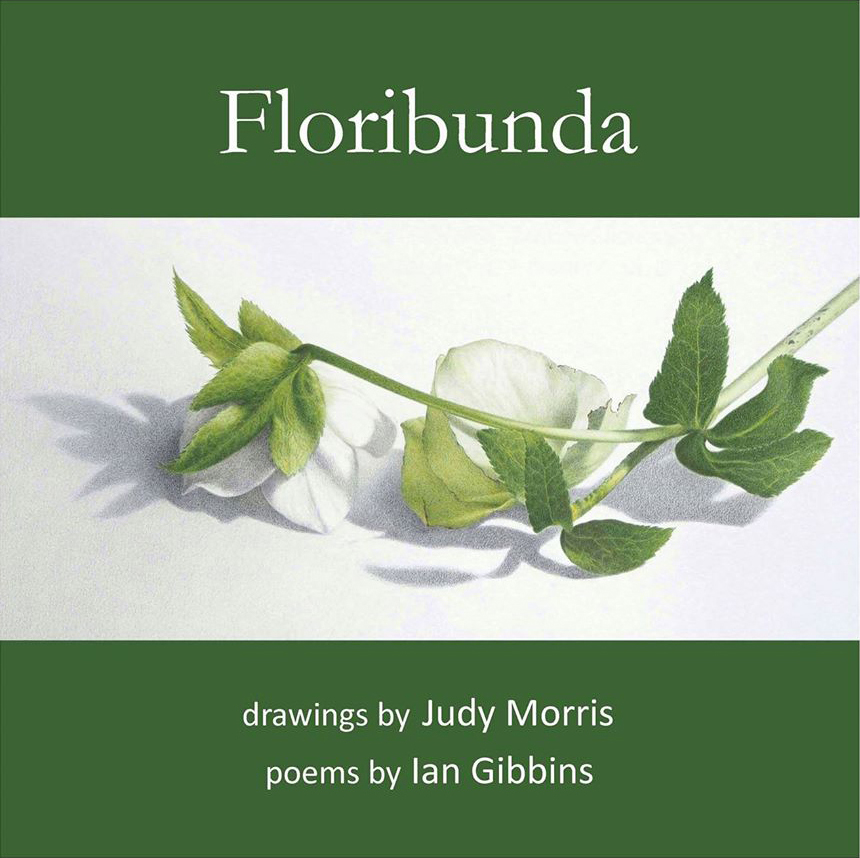
Floribuna by Judy Morris and Ian Gibbins
DIY, 2015

How far we are from the radical days of realism. Prior to Adorno’s dismantling of Lukacs and the Stalinist led state institutionalisation of it, realism may have laid claim to being an innovative aesthetic with agreeably progressive political inclinations.

Continue reading

Posted in BOOK REVIEWS | Tagged , ,

(m) those that have just broken the flower vase

I

For some, the relation between the body
and external objects is unclear, even
when buds are underfoot.

For others, it’s the symbolism of the vase
they fail to grasp.

For both kinds, the gap in understanding is
an effective tactic
to avoid censure.

For some, the vase marks the point
where the room ends
and nature begins.

For others, the petals imply
a garden.

For all, a change of scene
has dramatic value.

For some, the flowers use the vase
to express themselves.

For others, the scatter of porcelain
describes a constellation.

For other still, it’s not the fear of
disapproval but of thorns
that stops them chewing the stems.

For some, the water links the past
to the present.

For others, it’s a symptom of debts unpaid.

For none does any of this
signify your second
thoughts.

II

Do your ideas
correspond to the things around you? Picture
her lying here, for instance, writing

‘one is the start of the pattern
two is just where it reveals itself’.

Shoulder clefts and an ill-timed blush.
A season of pauses. Nearby a gentleman
plums in his mouth, thinking ‘not all answers
are excuses’.
Outside
you draw yourself up by the pond, still
in darkness or almost. The burrow discloses
an ambling mound, snuffling over
the threshold, thinking on what should’ve
happened yesterday, thinking ‘if not
why not?’ Only the curtain sees both sides
but––versed in discretion more than framing––
gives little away. Picture the parlour, then, with
she and he and a bearlike presence, where all
it takes is a careless glance
a sudden clutch of hearts, and a vessel
older than empires
meets its demise. The wombat jogs off
and no one is thinking ‘an iris
is also a flower’ or ‘regret is only a prelude’.
Light rain at daybreak. She is writing

‘three is
when it gets interesting’.

Posted in HEBK | Tagged

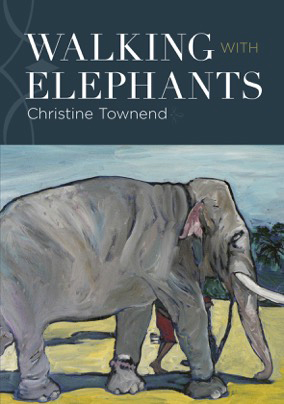
Shale Preston Reviews Christine Townend

Walking with Elephants by Christine Townend
Island Books, 2015

Christine Townend’s debut poetry collection is powerful, important and timely. Indeed, owing to its sustained and compassionate focus on animals, it could well come to be viewed as a watershed in terms of Australian poetry. Townend, founder of Animal Liberation Australia and a number of shelters for street dogs in India, is a woman who has been on the front line in terms of animal rights activism, and has performed some extremely valuable work therein. Continue reading

Posted in BOOK REVIEWS | Tagged ,

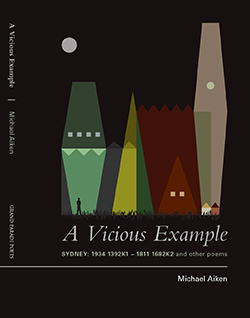
Oliver Shaw Reviews Michael Aiken

A Vicious Example by Michael Aiken
Grand Parade Poets, 2014

It’s 4 am. Nasruddin leaves the tavern and walks the town aimlessly. A policeman stops him. ‘Why are you out wandering the streets in the middle of the night?’ ‘Sir,’ replies Nasruddin, ‘if I knew the answer to that question, I would have been home hours ago!’ – Rumi, ‘On the Tavern’

Reading Michael Aiken’s A Vicious Example is like walking out of the pub and wandering city streets at 4 am, half-drunk and in sub-conscious wonder. The strangeness of it all: What year is it again? Where are we? Aiken’s collection is fragmented, forming thought-voices into obscure imagery that settles and unsettles on the mind. Aiken’s voice is lethargic, hopeless. There is only one narrative to this text that I can find, which from the beginning locates us and the poems in the Australian city. In the opening poem Aiken welcomes us to ‘come and see …’ what the rest of the country looks like after colonisation’s ‘Theft by Discovery’.

Continue reading

Posted in BOOK REVIEWS | Tagged ,

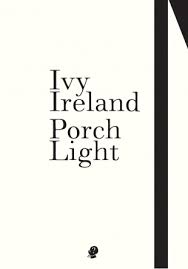
Review Short: Ivy Ireland’s Porch Light

Porch Light by Ivy Ireland
Puncher & Wattmann, 2015

By way of introduction permit me to share that for some reason I keep conflating this poet’s name with the title of her latest book. The result is a hybrid of name and place, forming a vague ‘place-name’ in the utterly made-up signifier ‘Porchland.’ Working back, this topos, to my mind, alluding to a libidinous, transgressive and, above all, fertile ground, is formed out of the name of the talented poet, Ivy Ireland, and the title of her second collection of poetry, Porch Light, whose eponymous poem quotes Tom Waits in the epigraph: ‘How do the angels get to sleep when the Devil leaves the porch light on?’ Continue reading

Posted in BOOK REVIEWS | Tagged ,

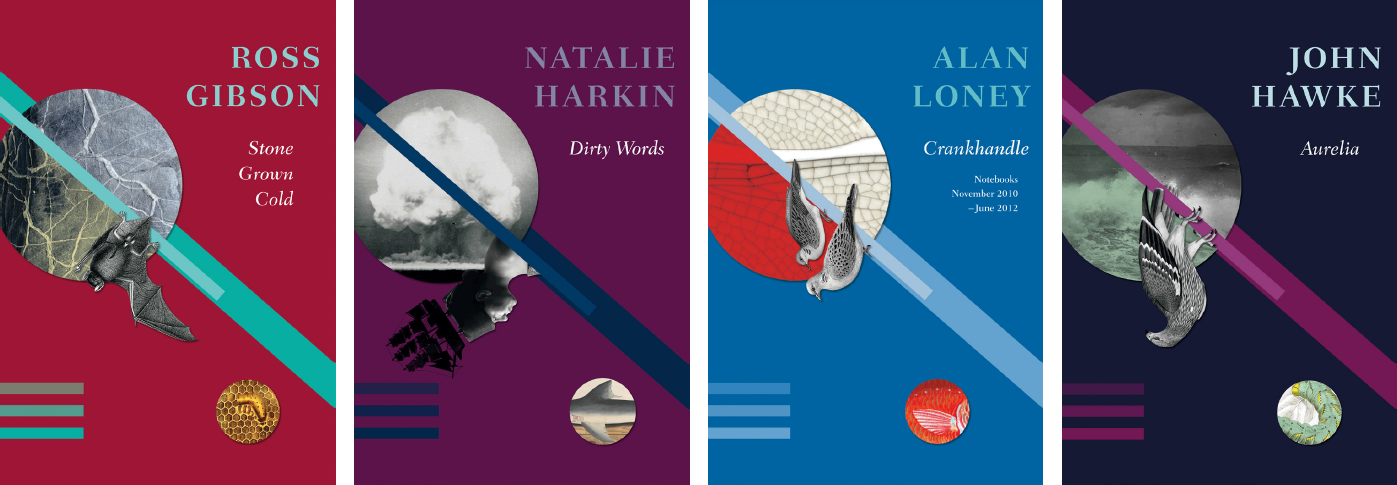
The Sydney Launch of Harkin, Gibson, Loney and Hawke

OBJECT: Australian Design Centre, Thursday 25 June, 2015

I’m pleased to say that I was at the launch of the very first issue of Cordite Poetry Review, way back in 1997. Good heavens, is that eighteen years ago? The journal is now old enough to vote and to enter pubs unaccompanied by an adult. Back at that 1997 launch at the Bondi Pavilion, Cordite was a broadsheet magazine; really more like a newspaper in appearance. I recall Adrian Wiggins, its co-founder with Peter Minter, spreading a copy against his chest and suggesting that it made an excellent gift – or was it that Cordite might be folded into a T-shirt and worn on special occasions?

Continue reading

Posted in GUNCOTTON | Tagged , , , , , , , ,

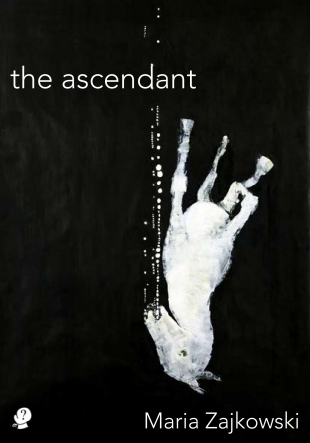
Review Short: Maria Zajkowski’s The Ascendant

The Ascendant by Maria Zajkowski
Puncher & Wattmann, 2015

The challenge for any author in writing a book about death is to somehow make the subject seem both itself and new at the same time. Death is familiar, but poetry about death should not be. A good poet will give death impact without slipping into easy sentimentalism. Maria Zajkowski – winner of the 2011 and 2012 Josephine Ulrick Poetry Prize – undoubtedly succeeds in this regard with her debut collection The Ascendant, creating a vulnerable portrait of the poet through evocations of possession and loss.

Continue reading

Posted in BOOK REVIEWS | Tagged ,

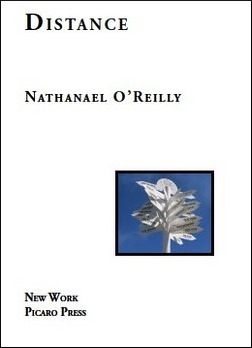
Review Short: Nathanael O’Reilly’s Distance

Distance by Nathanael O’Reilly
Picaro Press, 2014

Nathanael O’Reilly’s Distance is threaded with daily objects and locations pressed carefully against each other for maximum coverage within minimum space. O’Reilly’s poems can travel whole countries in a couple of phrases, or emotional landscapes that dart from comfort to the homesickness we glimpse via the sparse beats charged with its evocation.

Continue reading

Posted in BOOK REVIEWS | Tagged ,

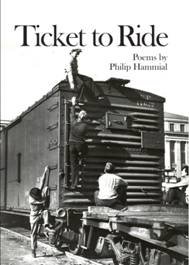
Review Short: Philip Hammial’s Ticket to Ride

Ticket to Ride by Philip Hammial
Island Books, 2015

Continue reading

Posted in BOOK REVIEWS | Tagged ,

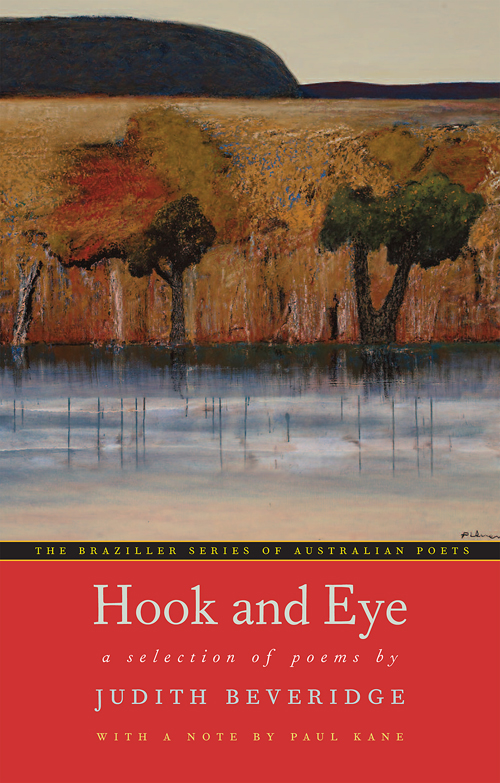
Review Short: Judith Beveridge’s Hook and Eye

Hook and Eye by Judith Beveridge
George Braziller, 2014

Last year I heard Judith Beveridge interviewed by Bronwyn Lea at the 2014 Queensland Poetry Festival. Aside from being left with the enduring impression that Lea should have her own TV show, I was also struck by a number of Beveridge’s revelations regarding her praxis. Beveridge confessed, for instance, that she does not like listening to music. Nevertheless, she described the process of writing poetry in a way that resonated with the classical foundations of lyric verse in music. Beveridge revealed that she begins writing by mobilising rhythm, rhyme, feeling and alliteration to bring forth the words and images of her poetry. She begins, in other words, from an embodied experience of language – as the philosopher Maurice Merleau-Ponty describes it in The Phenomenology of Language – that is essential to us all.

Continue reading

Posted in BOOK REVIEWS | Tagged , , ,

Review Short: Laurie Duggan’s East & Under the Weather

East & Under the Weather by Laurie Duggan
Puncher & Wattmann, 2014

It’s possible to say now, I think, that Laurie Duggan’s massive, monumental and documentarian long poem entitled The Ash Range (collected in 1987) has done for Australian expansive poetics what William Carlos Williams did with Paterson, and Charles Reznikoff with Testimony. Duggan is a practitioner of the serial and modular long poem par excellence. The long poem, in its weighty transfer from the epic, inaugurates a new kind of impure capaciousness, an ability to include modes, styles, citation and quotation, to document change, compromise, the whole mess of culture, all the rich materials that define the modern and contemporary long poem. A recent example of a modular long poem of the kind Duggan has engaged since the 1970s is Kate Middleton’s disjunctive, difficult and sprawling Ephemeral Waters (2013).

Continue reading

Posted in BOOK REVIEWS | Tagged , ,

Libby Hart Reviews Kate Newmann, Robyn Rowland and Jessica Traynor

Grim by Kate Newmann
Arlen House, 2015

Line of Drift by Robyn Rowland
Doire Press, 2015

Liffey Swim by Jessica Traynor
Dedalus Press, 2014

Labels are funny things. A lot of the time they can feel unnecessary – especially to an individual being labelled – but there are instances where such an exercise can prove useful. Writing about Ireland is a good example of this. On one level we must consider Ireland as one entity, but we must also acknowledge that modern Ireland is not made of one but two territories. This statement shouldn’t be interpreted as overly simplistic. The complexities surrounding the Republic of Ireland and Northern Ireland extend beyond politics and are deeply ingrained in the language and identity of people from both sides of the border.

Continue reading

Posted in BOOK REVIEWS | Tagged , , ,

(h) those that are included in this classification

I

There are those which are alike in spite of appearance
which share a secret affinity, an invisible harmony.

But then there are those which are neither alike nor unalike
that you place in separate boxes
as the wind picks out
a shape on the outer wall
sight so weary it can’t hold anything else.
You think on the essence of a leopard
always already a panther, always happy to field questions
from the audience. What do names correspond to
anyway?
Might as well call it what you like, lure the conversation
back to objects and their intentions.

To contain the world (they
say) draw a line around it.

But then, the chef holds a different knife to the hunter
the video a different shape to the eye––at that hour
from that distance
you can’t tell a blur from a likeness. It’s about prospect
and aspect, you know, a capacity for basking, that
resonance at the back of the mind. After all
Der panther is also sometimes a jaguar
sometimes a cougar
even a mountain lion.

II

To speak.

You followed language into the bush.

To say it in three words.

Pursued its scent.

To listen.

No one thought ‘the landscape is a system’ or ‘a geometry
of soil and sky’ or ‘a tree is already a symbol of itself’.

You felt its claw marks on the trunk.

No one said ‘our idea of the undergrowth
precedes our apprehension of it’
or ‘we don’t belong here’
or ‘it can climb, can’t it’.

The leaves
folded back on themselves.

No one thought ‘the rule for a circle
holds for all circles’ or ‘the clearing
lets in more light as it expands’ or
‘any perimeter can be stalked’.

To call up an image.

To consider it from all angles.

No one said ‘depict the canopy as a diagram’
or ‘understand it from the inside’ or
‘interpretation is always partial’.

To perceive.

You don’t know what words
were chosen
in the end.

To recognise.

Which of them were buried here.

To elaborate.

Not words, but teeth.

No one said ‘the ground is a plane of expression’ or
‘scatter the seeds’ or ‘let the architecture emerge’.

You made a mild intervention.

No one thought ‘we need a category
for both the things that are, that they are,
and those that are not, that they are not’.

To pause and reflect.

Now names lie concealed in each bough and branch
here and here and here.

To articulate.

No one thought ‘names are a vital part of what they define’
or ‘to name is to classify’ or ‘have dominion over things’.

No one said ‘we can’t think of a line
without tracing it in our minds’ or ‘a description
is a movement’ or ‘see where it leads’.

Now you’ve forgotten how to look past
the surface of things.

To be contained by the world.

Lost your bearings.

To stand outside it.

To reconcile time and place.

No one thought ‘a path exemplifies the forest’ or
‘talking about things brings them into being’
or ‘nothing is self-contained’.

You retrace your steps.

No one said ‘all categories are provisional’ or
‘any two objects placed in a space will form
a connection’.

No one said ‘the banks emerge only
as the bridge crosses the stream’.

To manifest.

No one thought ‘we should learn about the pines
from the pine’ or ‘all stones have weight’.

To leave from.

No one said ‘hold your finger to the neck
of the woods’ or ‘take its pulse’ or ‘feel the
tightened silence through the shoulders’.

To come into being.

You followed language into the bush.

To wait.

Took satisfaction from small insights.

To be in attendance.

Knowing that a more comprehensive
understanding was impossible.

No one reflected ‘an image plunges into the heart
and is gone’ or ‘the grove in our minds is laid waste’.

To revise.

To count the vertebrae.

Whoever said you can only walk halfway
into a forest has never been lost.

Posted in HEBK | Tagged , ,

Luke Beesley Reviews Christopher Kelen

Scavenger’s Season: fragments of an almanac by Christopher Kelen
Puncher & Wattmann, 2014

For some time I’d been carrying Christopher (Kit) Kelen’s Scavenger’s Season around in my backpack, where it jostled with other books, pencil shavings and an old apple. I happened to finally reach for it and dust it off while in the members’ lounge of the NGV Ian Potter Centre. I opened to the first pages and read until I hit punctuation – 10 pages in – and then walked through to the John Wolseley exhibition, Heartlands & Headwaters (11 April-20 September, 2015). I hadn’t planned it this way, but they’re an apt pairing.

Continue reading

Posted in BOOK REVIEWS | Tagged ,

Submission to Cordite 52: TOIL Open!

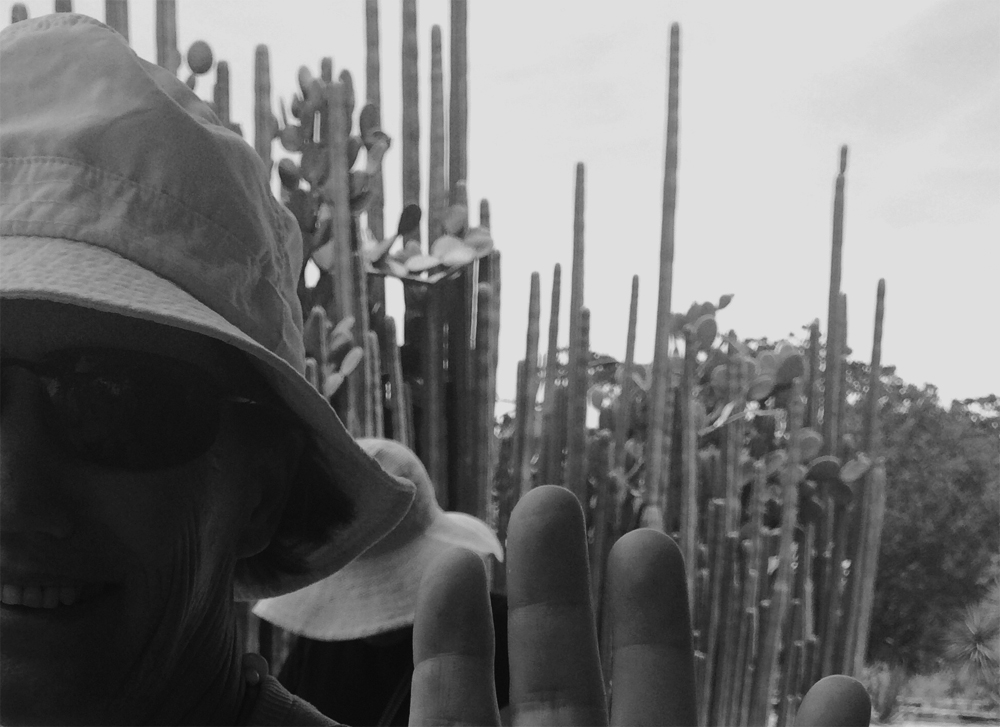
Carol Jenkins
Selfie in Oaxaca Ethnobotanical Garden

Poetry for Cordite 52: TOIL is guest-edited by Carol Jenkins

I’m looking to meet the lone toiler, the staff, whole professions, whole guilds.

What I want for TOIL are energetic and intelligent takes and insight into people at work, singularly and collectively; the jokes of the mathematician; the travails of plumbers; trade secrets and tricks; the mastery of crafts; the dance of deduction for detectives in all forms and the plied threading of making.

I’m looking for toil in its broadest sense, the quotidian tasks both paid and unpaid. I’m looking for poems that explore the fabric of working via wit and lucidity, and please consider yourself invited to make the most of that diphthong in toil, and whatever it rhymes with.

As to form, be my guest as to what that is. Set out hop-scotches of ideas that skip to it, send scintillating sestinas, quatrains, haiku, sonnets or be that agent of free-verse. I’d like to see landays and crazy coherencies of rhyme and rhetoric.

Work can be microscopic up to panoramic. Put that work toad to use.


Please submit only once, with a maximum of three (3) poems in one (1) document … but first, please read the submission guidelines.

Posted in GUNCOTTON | Tagged ,

Robert Wood Reviews Duncan Hose, Jean Kent and Alyson Miller

‘The Human Whisperer’

A Book of Sea Shantey by Duncan Hose
Bulky News Press, 2014

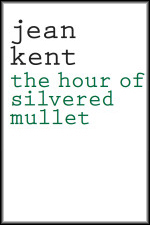
The Hour of Silvered Mullet by Jean Kent
Pitt Street Poetry, 2015

Dream Animals by Alyson Miller
Dancing Girl Press, 2014

In the library of Australian poetry animals occupy many pages. There are poems on kangaroo, frog, platypus and bandicoot; pig, dog, possum and cow; sheep, fox, dugong and crocodile; and an aviary of birds from budgies and pelicans to magpies and herons. There is lyrebird upon lyrebird upon lyrebird to name just one select, totemic mascot. Michael Farrell’s celebrated 2014 work ‘A lyrebird’ is simply the latest in a long line of the same subject. With its repetition and meta-commentary, Farrell’s poem seems apposite to our moment, engaged in a dialogue with history, ecology and poetry in an altogether affecting and complicated portrait. I tip my beak to his eye.

Continue reading

Posted in BOOK REVIEWS | Tagged , , ,

Cordite Book Launch: Loney, Gibson, Hawke, Harkin

Collected Works Bookstore, Wednesday 6 May, 2015

I will begin with a bit of spontaneous resentful metaphysics. I am sorry to do so, for a number of reasons, but there we are. If it can be justified at all, it will be by what it enables me to say about these books. But it is occasioned by a certain terrorising dehiscence in public representations of the stakes of poetry, a phenomenon that has been annoying me more and more over the past few years. The dehiscence is this: on the one side, the lickspittles of silicon; on the other, the lickspittles of identity. The first, encouraged by corporate interests, seem to think that the deployment of silicon automata to generate word-salad is enough to constitute poetry. A computer can do it. The second, enthusiasts of social biology, think that it’s a matter of evaluating the words according to the classifications of the bodies that emit them. Both sides are inimical to poetry. They wish to neutralise the acts of words as such. They serve the expropriators of language.

The abyss between the sides is only apparent. They are rather in a creepy compact with one another. Why? Because they refuse something that has always been essential to poetry: that poetry is an impotent and impoverished apparition that enhances the relations between language and life. To be engaged in poetry — whatever that is, however it is expressed — is to try to do and become a new thing in and by saying a new thing, something neither simply in the words nor in the body, that alters and affects both. A computer cannot think its own coding, at least not yet. A body doesn’t guarantee or determine any kind of utterance.

This isn’t to say new kinds of poetry cannot be written with the assistance of silicon automata. They can and are. And you try writing anything without your body: identity is crucial to poetry. But poetry tampers with both. As Jacques Lacan said: a certificate tells me I was born; I repudiate this certificate. And this is what I wish to affirm about these four very different books by four very different persons, whose ideas about and practices of poetry are otherwise mutually irreconcilable. All are essaying to repudiate the certificate in recreating themselves through their words. If I were to use the language of German idealism, I would say that much of the best of ConOzPo is currently exploring the paradoxical zone between spontaneity and receptivity.

These are books which you hold and read, as opposed to being scanned by your electronic device as you blink at the flickering screen. Books are little portable public places, unlike mobile phones, which are privatised, privatising forces. The editor Kent MacCarter, indomitable and indefatigable — words I always associate with the Gauls in Asterix Books — has, in addition to consolidating and extending the great online poetry rag that is Cordite Poetry Review, now turned his attention to the production of codices. The design by Zoe Sadokierski, which is not without its humour — is that a hawk on John Hawke’s cover? — is internet-fresh as you like, without giving way on the specificities of fine book design. This series, moreover, has not only been given this striking signature design, but a fine structure as well: of preface (by the poet)/introduction (by a luminary)/poetry. Hence Michael Farrell introduces Alan Loney, Pam Brown Ross Gibson, Gig Ryan John Hawke, and Peter Minter Natalie Harkin.

Alan Loney’s book, the hilariously-titled Crankhandle, subtitled Notebooks November 2010 – June 2012 (note to the end of that financial year!) is oriented by a kind of attention to nature writing machines. The epigraph, by Rochelle Altman, concerns the ancients’ attention to every aspect of their notation systems. I’m not so sure about the accuracy of this claim — I remember seeing a great Scandinavian skit which featured two monks, one asking the other how to work a codex when he had only previously used scrolls — but I take the inspiration for it as irreducible. For Loney, language seems to be a nature that sporadically takes notes on itself, not simply of little events, but of its own self-notations, of the ways in which a part of nature can reflect upon and inscribe its own place in nature, which, being thus caught between being-of and being-about, incite the equivocations of a middling poetry. ‘Middling’ is here not an evaluation of quality, but a counter-evaluation (or, as Loney said to me: a non-negotiable middle. Absolutely). Such middling denominates the poetry’s being part of a situation in continuous variation, without beginning or end, without arché or principle — a book of presencing or at least of a strange anti-product that you get when cranking that handle! The strange sensitivity, the hard gentleness of this book also reminded me that the post-WWII generation of Australian and New Zealand poets, at least those who turned away from English and European models to the US, also thereby necessarily added an interest in classical Chinese and Japanese poetry, even if sometimes the influence only came through the American words. Yet Loney writes as if in touch with an entire global history of poetry celebrating natural ephemera, in the middle of the milieu.

Ross Gibson’s Stone Grown Cold — these three hard monosyllables simultaneously flirting with cliché, agrammaticality, and the Southern Gothic — extends his well-known work into the field of poetry. Gibson is a topological thinker of the cinematic noir creepiness of human situations, often attending to the disaster of the proximity of abandoned or ruined sites, which cannot be absolved because their cause has vanished and any subsequent intervention therefore only assaults the epiphenomenon. But he also attends to the disaster of human organisation that brings together the diverse in the service of murder and mutilation. The noir imagination always celebrates compromised places and characters, and here the badlands of NSW are also the badlands of Gibson’s poems. Some of these poems are absolutely extraordinary in the way in which poetry confronts cinema on the terrain of epiphanic evil …

With Aurelia, John Hawke is a late symbolist troubadour, playing between the sadness and the anger of poetic melancholy, the withdrawing opacity of words that unveil themselves and vanish in breaking their promises of recuperation, but deliver in this very breach the lingering ambiguous effects of a primal Sehnsucht. One might note in passing the struggle in all four of these books between poetry and one or another rival media system. This struggle is not always as clear as in Gibson’s poems in which noir cinema becomes a polarising influence; in Loney’s case, it’s perhaps the poetic jotting contra the TV; in Harkin’s, as we’ll see, it’s the structure of alphabetisation itself. In Hawke’s, well, there’s an extraordinary amount of equipment — photographs, a lot of photographs, paintings, radio, and so on — but it seems to me that it is that symbolist media system par excellence, the telegraph, which covertly (it doesn’t appear here directly) becomes a paradigmatic foil for the verse. The rise and fall of the telegraph — that great invention of 19th century imperial media systems — is basically coterminous with the longue durée of French Symbolism, from Nerval to Mallarmé. Moreover, the telegraph was a kind of anticipation of our contemporary digital technologies, being at once electrified and binary, requiring specialist operators at the terminals to transmit and decode its messages. Symbolism at once repudiates and radicalises this suppressed paradigm, and Hawke is here no exception — the poet is the privileged operator of the great forest of natural and artificial symbols, which he or she decodes … and ultimately decodes as death. Richard Holmes says of Nerval that ‘Often, on his wanderings through Paris, he would leave messages for his friends in the form of animals’; I would like to say of Hawke that here the animal and human heads of his very beautiful verses are message-effigies dragged from the mutilated woods of yore.

Natalie Harkin’s Dirty Words is explicitly structured by the alphabet, a kind of abecedarian archive, cross-referenced like an encyclopaedia or a bureaucratic dossier, or just an index to a book to which it is a concluding guiding supplement. Note that the alphabet was precisely one of the supposed goods that European colonisers imposed — because it is just better to be ‘literate,’ right, because education ‘sets you free,’ right? I thought here of the indigenous Queensland painter Gordon Bennett, who died last year, and in whose paintings the letters ABC frequently appear, invariably in the context of colonising violence. Lacan used to speak of ‘alphabetisation,’ with the pun on the French word bête, the animal or beast, but also the beta, the silly, the stupid. For Lacan, Europeans were alphabeasts, in the sense that their obsession with a set of phonically-derived letters made them genuinely stupid and violent. Many politicians are surely well-represented by this neologism: hollow, shell-like creatures powered by the farts of foreign media rentiers, farts which spurt constantly from their mouths, and which one smells as well as hears or sees. It is this infectious, foul miasmal mist that Harkin writes to and against, trying to breathe out and expel this loathsome gas, to literally clear the air so that real exchange might become possible. The great political thinker Hannah Arendt once expressly defined collective responsibility as a state in which one has not committed any crime — but in which you and others are nonetheless continuing to enjoy the fruits of the crime. It is to collective responsibility that Harkin calls us back, in these hard and strong poems.

Posted in GUNCOTTON | Tagged , , , , , , , , ,

Review Short: Bel Schenk’s Every Time You Close Your Eyes

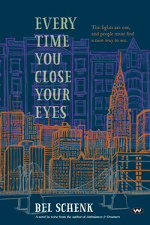
Every Time You Close Your Eyes by Bel Schenk
Wakefield Press, 2014

Bel Schenk’s third poetry collection, Every Time You Close Your Eyes, is sparsely written, yet deeply self-aware. Taking the form of a verse narrative, the book is a series of poems exploring events commonly referred to as the ‘New York City blackouts of 1977 and 2003’, similar in circumstance, yet as Schenk demonstrates, vastly different due to the temporal space between them.

Continue reading

Posted in BOOK REVIEWS | Tagged ,

Review Short: Les Murray’s Waiting for the Past

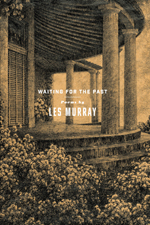
Waiting for the Past by Les Murray
Black Inc., 2015

Half a decade on from appearance of the elongated shadow figure that adumbrated Les Murray’s last collection, Taller When Prone, the poet returns with stature intact and a magisterial resounding of strata and reach.

Continue reading

Posted in BOOK REVIEWS | Tagged ,

Benjamin Solah Reviews Jeltje Fanoy

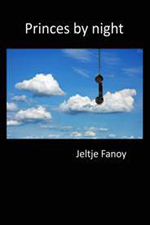
Princes by Night by Jeltje Fanoy
Island Press, 2015

Jeltje Fanoy’s Princes by night is part poetry collection and part fragmented family history, peppered with glimpses of the Dutch colonial experience in Indonesia. Her fourth collection, Fanoy has explained that it’s partly influenced by her becoming aware of Australia’s own colonial history, and has been her ambition for many years.

Continue reading

Posted in BOOK REVIEWS | Tagged ,

Review Short: Evan Jones’s Selected Poems

Selected Poems by Evan Jones
Grand Parade Poets, 2014

Continue reading

Posted in BOOK REVIEWS | Tagged ,

Review Short: David Brooks’s Open House

Open House by David Brooks
UQP, 2015

In Open House, David Brooks makes it look easy. These poems appear to be simply set down, flawless panes of glass framing scenes from a life. For the attentive reader, however, even one who doesn’t know the extent of Brooks’s work as a poet, a novelist, an editor, a translator, a researcher and writer of books about other poets and poetries, there are clues to the years of deep thinking, constant writing and serious, engaged living that Brooks brings to his own practice.

Continue reading

Posted in BOOK REVIEWS | Tagged ,

NO THEME IV Editorial


John Tranter, Sydney, 2009, photo by Anders Hallengren.

Sometimes people become irritated when I am once again asked to compile another collection of poems. Why him? they ask. Why him again? Well, there’s a reason. I am good at it. I am reasonably fair and broadminded, and I have shown I’m skilled at this work and reliable with deadlines for over half a century. A publisher can lose a lot of money and become very distressed, along with a lot of poets, when the publisher chooses an unskilled and unreliable compiler.

So I have done dozens of collections like this, selecting and compiling many more pages of poetry than my own production of poems, though – at a couple of thousand pages – that is substantial enough.

It starts with several major anthologies, from a roneod magazine I wrote and printed myself in 1968, two issues of Transit poetry magazine, a special issue of Poetry Australia when I was twenty-six, through The New Australian Poetry (1979), the Tin Wash Dish anthology (1989), the huge Penguin Book of Modern Australian Poetry (with Philip Mead, 1991) which became the standard text in its field for over two decades, Martin Johnston: Selected Poems and Prose (1993), The Best Australian Poetry (2007), The Best Australian Poems (2011), The Best Australian Poems (2012), Jacket magazine (1997 to 2010), the Australian Poetry Library (some 40,000 Australian poems, free on the internet, from 2010), the Journal of Poetics Research (2014 ongoing), and a couple of fifty-page supplements of modern Australian poetry for US magazines including New American Writing and the Atlanta Review.

This would also include establishing the original Books and Writing radio program in the 1970s, publishing four books of poetry by young Australian poets in the 1980s, acting as poetry editor for three years for the Bulletin magazine in the 1990s, through a lifetime teaching poetry and radio production, and producing ABC Radio National programs, many of which were about poets, from Sir Thomas Malory to Frank O’Hara. My own twenty-odd volumes of poetry hardly add up to a quarter of that mass of material by other writers.

Then I think of the dead poets I have been lucky to know. Can we live up to them? The hippy decadence and the loosely brilliant surfaces of Dransfield, the careful and complex erudition of Martin Johnston, the learning combined with the savage self-deprecating wit of John Forbes … how could anyone possibly live up to all that?

But today we have a clamouring chorus of younger voices, most of which I have also been lucky to know – Kate Lilley, Toby Fitch, Ann Vickery, Michael Farrell, Lisa Gorton, Andy Carruthers, Ella O’Keefe, Corey Wakeling, Fiona Wright, Sam Moginie, Jill Jones, Aden Rolfe, Astrid Lorange, Ali Alizadeh, Jessica Wilkinson, David Prater, Felicity Plunkett, Emma Jones, Kate Middleton, Claire Potter, Petra White, Kate Fagan, Sarah Holland-Batt, Bronwyn Lea, and many others, all of whom act as inspiring examples to other writers and readers. Their learning is also remarkable: a critic commented recently that this young generation of writers is the first to earn PhD degrees widely and unselfconsciously. We don’t have to solely look to the old conservative writers (writers without degrees in English literature!) like Banjo Paterson or Mary Gilmore or Francis Webb or Les Murray.

But what of this process of judging blind, new to me, where I am prevented from knowing the names or identities of the people submitting? It’s a good thing, of course, because the editor can’t play favourites, if that’s what it’s designed to do. But let me grumble a little. It often seems to me that readers want the editor to play favourites. Readers don’t go to a new magazine because it has a vast number of anonymous poets in it. In a book store (remember them?) people who browse the shelves used to ask for Gig Ryan’s latest collection of poems, or that late volume by John Forbes, or that recent Ashbery translation of Rimbaud … what was it called? Or Barbara Guest’s last book, or the vast Prynne Collected … in other words, they wished to read a particular book by a poet whose personality and whose writing they were interested in. Only a modern arts bureaucrat would invent anonymous submitters: that way you are likely to get a lot of anonymous poems. But bureaucrats don’t live in the world of writers and readers, of course, and they think that anonymity means balance.

But what did I find sifting through this largely anonymous pile of some thousand or more poems? (largely anonymous, because a few writers insisted in adding their real names to their submissions … I wonder why?) In the end I found it refreshing, to be honest. Sometimes when I receive a new issue of a magazine, or a newly-harvested anthology, I cover up the writers’ names until I have read the poems. And I have done this for over fifty years. That way I get the thrill of surprising myself: oh, so-and-so has written a really good poem after all, and I thought he was a creep. Gosh, so-and-so has a real turkey here — and I thought she was always so skilled! That kind of surprise is likely to occur here too, occasionally – that is, heaps of good poems – though a month or two has gone by, and I haven’t yet looked at the pile of submitters’ real names yet. Why? Well, I know the poems already, and I know that the collection as a whole is wide-ranging, balanced, and generously full of wonderful and very different poems. That’s why I selected them.

Posted in ESSAYS | Tagged

Fuori le mura: Seven Vicki Viidikas Poems

Vicki Viidikas’s first book Condition Red (UQP, 1973) – which most likely took its title from Kubrick’s Dr Strangelove (1964) in which Condition Red means war – burst with unsettling depictions of contemporary life and the status of women, a year after Equal Pay had become law. ‘It’s not enough, looking at you blundering like a turtle against the stream … Last night my heart was a cheap flag waving to the nearest mirror in sight. I couldn’t believe anything, seeing you drive away into others’ arms. I’m no sweet virgin sock-washer either …’ (‘Four Poems On A Theme’). Her second book, Wrappings (Wild & Woolley, 1974), was a collection of stories in a tone that twenty years later could have been marketed as grunge realism. As writer and colleague Michael Wilding wrote: ‘the world of publishers and editors found her difficult, and she in turn found them contemptible … In recent years she became a myth, lost to view of the literary world that she had inspired, stimulated, informed and reviled’. Behind the ‘great man’ we could now hear the mistress and the ‘sock-washer’ as Viidikas sourly calls a lover’s wife in her most-anthologised prose-poems. But there’s also buoyant spontaneity in poems such as ‘Loaded hearts’: ‘Oh boy Ken the smiling mountain is playing his guitar / The beautiful trembling Irene is taking another pill… / Oh boy to the phallic teeshirt / Oh sigh to the Baba breadknife / Oh gee to the landlord’s prayer…’. Along with the intense political and social tumult of the 1960s and ‘70s, and the dynamically modernising upheavals wrought by the first Labor Government in 23 years (Australian troops withdrawn from Vietnam; Equal Pay legislation; Single Mother’s Pension; voting age lowered from 21 to 18 years, free university education, etc.) the influence of recent anthologies, Donald Allen’s The New American Poetry: 1945-1960 (1960) and Donald Hall’s Contemporary American Poetry (1963), had reinforced and revitalised this new generation of Australian poets, and Viidikas may have been influenced by the adventurously jaunty spiritualisms of Kerouac and Whalen among others.

The revolt against institutional constraints would extend to the rules of syntax, grammar, poetic form, and genre.1

Most reviews and commentaries on Viidikas’s work emphasise the anti-intellectualism of her poetry, its immediacy and transparency, in a way that is not used of contemporary men poets such as Michael Dransfield, and that in fact dismisses closer reading.

As long as she’s dead we may sabotage and rape
                              (‘They Always Come’)2

Her poems often revolve around internal argument as images accrete interspersed with blunt or vatic statements, her deliberate artlessness composed into gradual assault or enigmatically drifting reflections. Statements are proffered to provoke and defy, but also to resolve a position, or to be absolved, in poems that are impressionistic, semi-narrative, ambiguous, often proceeding through repetition of tenses, nouns, vowels, such as the ‘o’ sounds dropped through ‘At East Balmain’3:

It’s hard to imagine that over there the city is roaring
and sledging her iron name into the ground.

And here there is clear water washing million-year-old
stones and the sun does not fall sheepishly between
buildings but blasts straight down.

Oblong rocks are texture paintings, without curse or
paint or time spent, just lolling, baking under the
fine sun.

Two dots upright as tin soldiers putt past in their
happy world of tug on water.

A hermit dog lives here, in a burnt-out boiler turning
orange. He stays inside all day - I’ve seen his eyes
glint in the dark, he is huge and black and solemn...

Dried weed hangs from a bleached stick, like a dead
rat swinging...I found one here yesterday. So cold
and grey and stiff with his tiny mouth open, arms
stretched above his head. I felt very quiet because
his bead eyes had lost their sparkle.

Oblong, rocks, dots, dogs, lolling, rolling, etc. ‘Oblong rocks are texture paintings…’ so art then is the equivalent to nature, or alternatively, nature’s effortlessness is seen as true art. The momentary is celebrated in itself, as if it can be unfiltered, unmodified, by interrupting thought. Poems are embedded with longing for oblivion, for floating into nature where fretful tainting consciousness, and self-consciousness, might somehow be erased. This desire, mirrored by her interest in Hinduism, is propelled by the objectification of women, as Viidikas often illustrates the feminist tenet that femininity is a socio-politically imposed construct, is drag. There’s a constant tussle between desire to disappear into nature, to abide in an eternal wordless stream, and to inscribe.

The Flow Of Them All4

What huge wooden grasshopper is crawling the hill?
What turtleness of feeling slid off the satin reeds?
Blue dragonflies are singing in clouds of transparent light.
Cows bellow and waddle leaving their footprints in mud.
Am I part of the river, the deck, or the willow?
The grey cranes are sleek and elegant and fly without fear.
Plain sailing is dead.
The wind arcs and hums and hooks itself round trees.
Geckos rise forward offering their throats to the sun.
Tails swish and flip.
Water reflections slip off green and luminous.
Ferns chuckle in their skirts.
And I compete with sadness, having only my memory, a string of words, a definition.

Descriptions of frolicking nature seem to make this a poem of joy: each animal or insect affects the thing it burrows through; each living thing interacts with, and contrasts with, its environment, ‘Ferns chuckle in their skirts’. The unexpected conclusion turns from this perceived, but unreachable, idyll: ‘And I compete with sadness’, so even in sorrow there is the energetic act of competing, ‘having only my memory, a string of words, a definition’, that is, the flow of life is, bizarrely, hindered, fenced in, by words, hence the dramatic to and fro of passive (sadness) with active (competition). The poet, classically, envies nature’s supposed thoughtless bliss that she is unable to mimic, and must instead hew definition, ruinously affix meaning. Yet the conclusion is deliberately, and traditionally, ambiguous, as the act of writing is also depicted as triumph over dumb nature, as she competes, assisted by heightening sadness, with prized memory and words to forge a corresponding beauty.

The country as an answer5

Endlessly walking the green hills in wet agitated galoshes,
trees lean outwards...they are nothing but leaves,
beautiful. coloured, falling and dying. The hills rise up,
breasts faces hands, their silence is complete.

I sit down and mud falls from my boots.

Cows plod towards a creek.

Not a single person is visible as the landscape flows and
dips...invisible dyings...no answer but what it is.
I have come a thousand miles to be here.
Peace, they tell me, sending messages from the black city.
This is what peace is? No use for the earth but as a place
to lie down in...faceless bodies...passive with
adoration? There is no love or hate here, the contrast is
so subtle.

I feel the mud in my hands, the wet bright grass.

I understand I am meaningless here, merely another presence
...the trees do not recognise me, the cows do not remember.

the landscape has absorbed me, giving nothing to be desired.

The landscape, complete in itself, or in itself a summation of all desires, leaves ‘nothing to be desired’, and only here can the poet’s restless subjectivity be entirely trammelled. Yet Viidikas also mocks such aspiration to serene self-effacement as impossibly unsatisfying as well as ludicrously impossible.

I … always felt that her work revealed a distinct sensibility and considerable craft. But while people seemed to want to commemorate a poet like Michael Dransfield (sex and drugs and Gustav Mahler) the Romantic myth didn’t serve a woman like Viidikas so well, despite her clear superiority as a poet.6

Viidikas’s voice is always recognisable, always effortless. There is nothing that sounds rehearsed or overproduced. She aimed for spontaneity… Her whole project was to be free of affectation, of manner, of precedent. But her clarity, directness, visionary evocations and surreal connections have the characteristic note of an assured, spare, vividly colourful modernism … She chronicles the era of what seemed at the time like liberation … (and) eagerly seized the opportunity to record what had rarely been written about explicitly before – a world of gays, lesbians, prostitutes, rapists and their victims, drug dealers and their junkie clients. These are sketches from the life, not narratives manufactured for commercial gain or propagandist agenda. Viidikas presented no agenda, other than the agenda of the clear-eyed writer, the Isherwood ‘I am a camera’. There were precedents, of course – Rimbaud, Anna Kavan, Leroi Jones – and she knew their work. As with every serious writer, she read widely and intensely … Thirty-five years after they were written, her searing attacks on male self-involvement and overall unsatisfactoriness still make me flinch. No doubt they should, since a couple were written at me. Not written for me, or to me, but confrontationally at me.’7

Viidikas’s frames of repetition are employed in many poems: the untitled ‘red is the colour’ (‘red were the shoes … red was the imprint … red was the silence … red were the flowers … red is the eye …’) and in the statements through ‘Keeping watch on the heart’8:

I have seen those hands die as they touched me,
pressed at my skin’s edge
                      dreaming of another

I’ve encircled their sighs like a wolf on the hunt,
ripped on a highland, the gentle blood flow
                      before light came

                                            Heard the dull tack tack in the veins,
                                            drawn into them without a shield

I have wanted to replace the hollowness in things,
besides the body and the heart, besides the silence after love,
                      withdrawal into singleness

                                            How the butterfly screams
                                            as it breaks from its cocoon

                                            The sad shutters bang
                                            tracing the hungry eye

Laughing at the madness of clocks, I’ve been buried in minutes,
expecting each face to be refined
                      finally, like silk

And disobeyed time, wanting a revolution in spirit,
the boundaries of the self
                      broken down and flooded with joy

                                            Does the wind celebrate
                                            as it moans along the hill?

‘I have seen those hands die as they touched me… / I’ve encircled their sighs like a wolf on the hunt… / I have wanted to replace the hollowness in things… / I’ve been buried in minutes…’ – all in perfect tense, then ‘How the butterfly screams…’ and the final question ‘Does the wind celebrate / as it moans along the hill?’ all present tense that extinguishes the past with transforming velocity. Yet her present tense also reveals a nature, sequestered from time, that discards and disdains the quotidian. In Viidikas, nature offers purifying benediction that dissolves ‘this too too solid flesh’. Many poems hinge on a ‘To be or not to be’ quandary, whether to pass into oblivion via nature or addiction or whether to act, that is, to write. Formalising repetitions are also used in ‘Swamp City’: ‘One leaves…One cuts…’, and ‘Family Images’ with its accusatory, or even exultant, vocatives: ‘You who have no name…You who have no home’, and in ‘Knives’: ‘I take the first and scalp the sunlight from the sky…I take the second…’, and also in ‘The Whole Bag’: ‘Why did we sit…Why did we argue…Offer me something…Offer me fusion’.

Posted in ESSAYS | Tagged ,