Blade

The premonition was that I’m asleep,
sleeping sensibly, believing it takes more
violence to wake us than daybreak.
– ‘The Premonition’, by John Mateer


Monday morning, another black death
in custody, the world emerging
from the misty firmament
her long, sooty howl

I step out onto the earth
and squint beneath the recollections
history’s page curling in the flame
a nation fattening on its own starch

I’m grumbling back to the pit
in the guts of a car at the lights
I slide into dream
(blasting eternity—the ugliest

word—into paragraphic scratches)
I grow larger than the waves and wipe out
suburbs by the sand
I sense nothing but I know how to fall

I bubble with curses and I freckle
and wilt under the shining blade
Country lost in promises of models
of melting worlds

I awake to see a body without flesh
your flags blending into my bones
as a wet splutter of current arcs
through my bed’s baked rock

you’re telling me, from across the paddocks
you’re telling me
you’re crammed into the coast
opening your arms and telling me
that a memory
is the epoch’s lonely fool

Posted in 69: TRANSTASMAN | Tagged

state library

I should be working
I’m reading
in the State Library instead
it’s close enough
though distant
like the skylight
in the State Library &
decibels heard but barely

the author
would rather drink
(as I would
if Sydney was
a liquid spectacle)
I’d fill myself with liquid
to drown decibels
until the cold freezes me
now ice
now partially in this poem
I guess but

for all that
I could still be less cold
& just for a moment
resist interpretation
& further definition

that’d help of course
I’m not still enough either
& that poem about saying
‘I love you’
how love is a word
stretched over definition
how it becomes
—no is
enormous
(too big for the poem at the time)
but I said it
& I wasn’t still then
nor my twitching mouth
& I said it then
& even as my eyes twist
lips move
time slips
goes
(all a first: ice
love)
the bed
wasn’t stuck in place
I wasn’t
you weren’t: ‘you love me
don’t you Dave?’
I did
I do
& I can’t say now still
at my desk
it was anything
that made me say it

maybe it is time
to adore reading again
(though I love clothes’
warmth more)
think of a red doona
where you’re awake
while I sleep

Posted in 69: TRANSTASMAN | Tagged

Bloody well doing

What do you think you’re bloody well doing?
It’s obscene. Let’s stop this monster exploding
right now.
Its glass throws up a sharp and cutting light
you know, colossal columns and monuments
and Money
to Remember Them.

We do remember them
wonderful old men
smelling like vinegar and gingernuts
crumbling alone
I’m fed up to the back teeth
with your expensive soup.
Just give those old soldiers a fork to eat it with
why don’t you
give them giant stylised poppies
columns quarried from red Australian stone,
ANZAC-ed right out of Ayers Rock

Warehouse and Woolworths, your fonts bigger
than diggers on your biscuits and tins
you make me sick.

Commemoration. Stop taking that drug
it’s bad for your heart:
politicians, corporations, institutions
your antiquated house of remembrance
is stubborn, you blue-arsed flies.
You weren’t even in 3 pin nappies.
What’s wrong with a poppy made out of paper
pinned on your suit and a bugler?

Posted in 69: TRANSTASMAN | Tagged

Tramping Through Headlands

I

We bundle up our ulcers
accumulated in domesticity’s
damp and private grotto
& lug them dutifully on our frail backs
as we fly hand-in-small-hand above the Tasman.

II

The texture of this headland, as luxe as thrush at dawn.
The fractal bloom of unquiet thoughts,
garrotting the navigation of sky-tearing
peaks. The tent has become
a surgically constructed empire,
worthy of assembling and dissembling,
cavities and ecosystems.

III
Fossicking for an ethereal dosage
potent enough to mute memories
of all that has sprouted,
unwanted and wild
in the humid undergrowth
of years.

Posted in 69: TRANSTASMAN | Tagged

Life-drawing class

The book said if you wanted a cow
you drew the cow.
And if you wanted the milk
you drew the milk.
And if you didn’t want that snowflake anymore
you simply joined the points together
to make a spider’s web.

On the course, the advanced students would draw the sun
then smudge the edge of the circle
to warm up the room.
The same technique made a static star shoot,
then you could wish on it – for anything.
I sensed the power of what I was learning.

There was one rule: you couldn’t erase.
If you didn’t like something you drew,
if the elbows of that tree were stabbing birds,
you had to keep drawing.
‘Draw again. Draw better’ was the brand’s byline.

But if an online class has a back corner, then I was in it.
I was flailing in a whirlpool of my own sketching.
I had to draw my mum to get me out.

As she spoke, full of concern,
I drew some coins: soothing, repetitious rounds.
Mum recited my student debt (my age plus three zeros),
and lack of pitched roof, weatherproof shoes, dinner invites.

Boy, those coins were really mounting up!
I ran their coolness through my fingers.
Mum tested the metal with her teeth.

Every pencil in my pocket – HB, 2B –
well I threw them away like crutches.
Then I filled my pockets with my new wealth.

When I drew the river and walked into it,
those coins worked better than stones.

Posted in 69: TRANSTASMAN | Tagged

Practical Purposes

To create the impression of being raised from the background is:
I cannot relate the state of tension to a specific risk.
For a long time, because it had been a long time. So defence
becomes the chisel. A performance through circles and semi-circles,
beyond folding trees of grief. Long after the animal died,
the child continued to behave as if it were alive.
Because the background was left plain.
She’s no longer aware of “not looking.”
For practical purposes, it wasn’t a dream but a horse. It’s too much
to be stone, especially when ankles are the weak point.
It can’t happen to me. Such assumptions reduce fragility, so that observation
becomes more than participation.
To cover it up, it disappears? However, we were saved
from forming the back of the subject. I didn’t think about it because I didn’t need to.

Posted in 69: TRANSTASMAN | Tagged

The Fern Boy

he is coming
from the bone wish.
Gift, from the once ocean
he surfaces in a glory of bubbles

speaking in silver and iron
forged rust promise dirt-written maps and
quick cut of desire

he is a fern with luck.
Once, he is frozen in the swell of embrace.

always and exception fizz,
a childhood chemistry

a search inside leaves a trail of stars.
the boiling of rock breaking down –
same vision of flesh

he hears secrets. he is a tiny landing spore.
he hears long songs for long walks
beckoning
the golden hollow

the spectre of curiosity looms low
over a wet thing,
unfurling

*

a thousand years slow
in this cathedral of moss
quietness that is both the sky
and the
bottom of the ocean.

a caravan at dusk on a blue drive
a sick kiss, the haze settles

in the palm of dunes
a revelation sleeps beside
the blood’s tide
its cascade

temperate rainforest
where you fused to damp soil
and spores now nestle in the night,

he is a doll face
in the artificial black
and the hush of recorded silence makes the pattern of
a new dream

*

he rolls under a wave
sweet marrow and beads of salt in a glass forecast.
the future speaks of littleness – the word itself fitting in
the palm of a hand
of fingers enclosing hip bones
mouths making nests

the estuary goes out, reveals a body made of triangles

he is the forever-squaring pattern
of diffusing light
through mountain ash

Old bodies to the earth,
a spray of midnight blue fungi chattering in decay
he pauses in a bed of broken shell.
pieces of tounge scatter the stage

a self-conscious light descends
a veil of protein called
destiny

made of numbers and lines that intersect
cleaving great magma from below

he perceives through eyelids an arrow
perfect pink translucence of capillaries shot.

*

swansong of the kelp forest,
he looks up and sees an entire world of sunlight
anchored, taken out to cooler waters,
suspended in the amnion of the deep.

exquisite wrinkled fruit of the setting day,
fine gold dust to protect him

he is purpling, horizon bruised and churning
he tilts doll eyes open
and breathes a tiny carousel
nose tip to nose tip, in the morning.

sheds a second skin
to the orange glow of cityscape; lightning rods
and bird silhouettes

*

scumming over – a sundial
carved into the flesh of his hand

he is singing to
a floating anatomy its dark rot
and wraps a trusting arm

words fall like the swimming of his laughter
he rests

*

ashy riverbed, pink rocks risen smooth

coal sticks struck like piano strings
No music.
crown of grass tree;
it’s blackened petals in the dirt

the yellow prowl of headlights
alighting on a flash of tangerine
tucked away

*

eked out like safety,
a crease in the silt births orchid, lily
and fern.

he is here

Posted in 69: TRANSTASMAN | Tagged

Belated Backstory

There were animals. They came to me
with their bloodstained murmurs

choking the night, the weight of misery
a gloom in their throats. Beasts of all

shapes and mythologies scratching
at the soil around my grave, each one

driven by its own unique hunger
but all intent on writing my end.

I can almost run my fingers through
the sun-streaked strands of those days,

when I was nothing but a silhouette
disappearing into fog – just a sketch.

I could step into a crowd and never
resurface. No one would suspect a thing.

Posted in 69: TRANSTASMAN | Tagged

The Fascicles

1

In darkness, redcoats marching out to the Pekapeka block. It cannot be true. But imagine for a moment it is. Two women stand almost in the same place which is the rim of an old volcano. One is remembering her father stepping out of the blockhouse when she was a little girl going down an Irish road wherever they were just then. The other is stunned by a memory of fruit falling in a dark garden, soft sounds in long lines or sweet juice over stops and starts. An orchard? A volcano?

Neither can be sure because the ground is shifting. They pick themselves up and go on, unaware of the jolt that has put them on the same page and will now tie them to this place, whatever it is. One watches the shadow of a long skirt ripple ahead of her in the afternoon wind. The other has almost reached home with her quire of clean white paper, walking uphill from the shops around the quay. There is dinner to get, the washing to be folded, but no children so there is time for everything connected or unconnected with the red jackets of the soldiers moving along the Devon road in darkness or in daylight.

I love him, she thinks. I vocate, says the other, haptic with risk. Each sits with her head in a pool of lamplight, mind and fingers flying over the mending of works and days, now and then, yes and no. They have torn up the pegs, they dispute the sale, they build a fighting pa on the ridge to the south west, Te Kohia, and draw fire from the valley running down to the bony sea. This is the beginning, a transfer of words for deeds with tails as long as kite strings in a clear blue sky. She folds the creamy sheets of paper and pulls red silk after the needle that pierces and pierces the fold, binding, stitching, tying together the new pages of a little book, a booklet really, pliable, plausible, something to fold down and begin writing. The valley in the dark, the ridge abandoned. The lamplight, the flashing needle, the words I will write from the orchard that is a volcano. For you have shown me the valley in the north and its river running down to the sea where redcoats, militia and volunteer rifles are landing to begin the work of destruction. One moment I am in a dark orchard. The next I feel the ground shake under my feet. I am a soldier’s daughter, fled away from my father over the sea and finding him again here in the new land.

What shall I write? Where should I bury my flashing needle with its red silk tail as long as kite strings in a clear sky?

I found it 
in a dictionary 
and look 
it comes true 

these days 
with peaches 
with intricacies 
of step 
                   and step 

afternoon tea 
with dancing

2

Prune plums bloom blue in the leaves. A holiday morning, the cutter making her way over the harbour towards Quail Island with a load of picnickers, bonnets and shawls and a row of bunting just visible under the billowing sail, high voices of children palpable to an attentive ear. The distal edge, a fingernail of sea and sky in this new place, late summer and the leaves of the orchard still thick with fruit.

My name is Dorcas Carrell and I was born in County Clare on the edge of the great western ocean. When I was nine we sailed with the regiment to Canada, when I was eleven I lost my mother and my sister there. Quebec, Sault St Louis, Montreal, back down the seaway to Halifax and out to St John’s, another edge. We were always moving, out and back, out and back, the sound of waves breaking on a rocky shore. I was eighteen when I married one of the gardener Carrells, twenty-four when we reached his brother’s acreage on Jackson’s road above the harbour in Lyttelton. We fell easily among nieces and nephews to whom I taught their letters and how to draw the delicate shapes of plants they brought for my herbarium. Seeing their pleasure in the folios on my worktable, I thought to make small books from butcher’s paper tied up with string in which they might draw and paint for themselves. We are gardeners, bedding down below the ferny ridges, looking south across the harbour to an island in the arms of an island, west to the rim of the caldera and beyond to the distant mountains. We are orchardists, bringing ashore the sea-wracked saplings, binding them to volcanic soil, making shelter against winds sweeping off the ice. I am a gardener of stars, I tell the children on clear nights. See, here is my garden and there are the stars, stellata, stellaria, stellissima. My pretty taxa.

It is afternoon. I see the children collecting sea eggs on the island, picking their way among the rock pools, squealing as the octopus shoots away from a hand that has come too close. The gaff does its work and they hold up the purple shadow still dripping ink and writhing, its three hearts salvo, salvo, salvo. Bodies lying in the fern above the Waireka stream, the beachwalkers under fire, regulars at the Whaler’s Gate turned and gone back to town, bluejackets after dark storming an empty pa. Who tied the notice to the gate of Henry Brown’s farm, clear cursive lines flapping in the wind? Whakarongo mai, whakarongo mai, e te iwi. A sign, a panui, a protection. Listen, listen all people. The road to the Minister and friends must not be trampled upon. White scarves. Aunt Dorrie on her hillside above the sea. The bows of the cutter lift as she turns into the wind.

plum under the blue 
bloom
       	    prunus
                           spaces
the sky came through
saying
       	    the dark leaves
       	    open
                           summer's
                           catalogue
we began 
keeping
       	    and can't
       	    finish

3

Dear winter it is 5.15 a.m. I take the short line, snapped or cut but never broken. Out of the cradle endlessly rocking I follow the long line, a valley running down to the sea. But rocking has stopped and the ships, Erebus and Terror, are caught in ice. The dark rule of history skips a beat and it is winter on the harbour looking over the rim of the caldera at distant mountains. It is winter in the northern valley where the fortresses Onukukaitara and Puketakauere stare down the flooded river, asking for trouble.

Rocking has stopped and the ships, Erebus and Terror, are caught in ice. Slowly they circle the frozen islands, and their names are mountains as well as ships. Slowly they circle frozen islands that are not freed in spring by the cracking of ice that rushes downriver to the seaway. Slowly they circle in a sea of ice that holds them fast, Erebus and Terror lost to us whether mountains or ships or figures of dream circling just beyond waking. I heard the ice come down the river in spring, says one. I saw the snow mountains beyond the buckled rim of the harbour says the other. A body of water, says one. A sea of ice, says the other. Erebus and Terror at the bottom of the world. Erebus and Terror at the bottom of the sea. If I wake from my dream of winter, will I see the river in flood, will I see snow mountains pouring over the buckled rim of the harbour? Will I see my lost mother and sister?

Dear winter it is almost light and the guns have opened fire in the flooded valley, anxious to redress looting and killing on both sides. A garrison moves out and is split in three between the two hills, Onukukaitara and Puketakauere. But the defenders lie in rifle pits outside palisades that shudder under the impact of each new explosion. Onukukaitara the bait. Puketakauere the hook. The defenders lie in wait. When the trap springs it is too late to get out of the gully, it is too late to get out of the swamp, it is too late to retreat with the dead and the wounded. The black cross of Te Atiawa flies in triumph on the hilltop this morning. The river is in flood.

I am Dorrie in Lyttelton, daughter of a soldier, wife of a gardener. My mother is an armful of lilies, my sister a stone angel. Erebus mother, sister Terror, you pour over the rim of the flooded valley this morning.

darling the boat was a murder 
though I must smile and say it was nothing 
out of the ordinary    the world turned 
upside down and beloved faces veiled 
behind ocean spray    you won’t remember 
the voyage from Halifax but mama’s white face 
haunts me still and the rocking of a boat 
is the rocking of a dark cradle in my brain

4

So they are burning the villages. Manukorihi and Tikorangi north of the river. Kairau and Huirangi to the south. There was a sharp engagement near a large grove of peach-trees at Huirangi with some of the Atiawa under Hapurona. The bush and trenches which sheltered the Maori tupara men were raked with grape and canister shot. Cattle, sheep and horses are driven off, cultivations destroyed. Columns of black smoke rise over the coastal plains by day. Fires blaze by night. Manukorihi the singing bird silenced. Huirangi the food basket overturned. Only in forest clearings do the gardens show spring growth to the people of the river.

The same spring brings white blossom to the orchards on the hillside in the south. Foam she thinks. And the other almost immediately My lovely Salem, and they are out on the harbour with a cargo of saplings for Pigeon Bay, Okains and Akaroa. She forgets the dream of pulling the lifeboat over a frozen sea, forty pounds of chocolate, boxes of tea and tobacco, on oak runners as heavy as the boat itself. She forgets how they came to rest, a body in the bow much disturbed by animals and another in the stern. Two guns standing loaded against the inside of the boat all those years later when the search party found them. She forgets the papers strewn around the boat on its sledge, defeated in the outward journey, defeated now in the return to a place where the ships lie off an island that summer could not reach. She forgets the silver forks and spoons on the throats of those who watched the sailors die without asking for help. She applies herself to the surfaces of white pages covered in black ink. Sometimes they carry her own words and are very fugitive. Sometimes the words come from so far away she cannot be certain of an origin. Sometimes they fall on her ear in another language. And sometimes they are newsprint issuing Wednesday and Saturday from a shop on the quay, relaying the burning of villages by the force that marches out each day from the blockhouse at Camp Waitara. She knows about reprisals. About keeping the peace. My life had stood, a loaded gun.

But perhaps she is also like this, bows lifting as the swell at the heads takes her out of the harbour on a bright day in spring. Eyes of the mother look up from the bed of the ocean, this ocean or that ocean, watching the keel of the cutter pass overhead. Eyes of the mother looking into Paradise.

Kettle and Kickinghorse the rivers roar, Fiddle and Bow full of themselves
full of snow full of us in blossom time and dangerous with melt, heading for
a ferry at Shelter Bay. We salute apple trees, peach fuzzies, the drawing by
all hands that words the question.
When will I see you again?

5

Sweet briar, mignonette, lavender, honeysuckle and violets. At five o’clock on a beautiful clear morning the General’s column left the town. I am Dorrie, very earnestly digging in the garden of the old stone vicarage. A tear-shaped hill at dawn of day. The Reverend Mr Knowles wants his asparagus thinned, his new potatoes lifted from the warm earth, his runner beans picked from the tall frame over which they scramble towards the sun. The only sign of life a thin wreath of smoke ascending peaceably in the morning air. A kitchen garden may hold flowers and herbs. Sound of the surging sea. A flower garden may hold medicines as well as roses. Come inland and let us meet each other. I am Dorrie conjugating the southern seasons of flowers and vegetables, inflorescence and dehiscence, on the hillside above the harbour. Fish fight at sea! Mrs Knowles wants her borders weeded, her vines tied up, sprays of briar rose caught back from the shingle paths they festoon. Come inland and tread on our feet. The cool of the morning. Make haste! Make haste! The warmth of the day. A cart road cleaving the hill Mahoetahi. The cool of the evening. Dropped flat on the ground and every man followed his example. Who are these like stars appearing? The bullets went over their heads. Who are these of dazzling brightness? A Volunteer who had joined in the charge on the southeast end of the pah fell mortally wounded. My knees are parallel with the earth on which I kneel. He was the son of the Reverend Mr Brown and not sixteen years of age. My back bends over the hoe and the spade. On the Waitara side of the pa there was a great deal of mint and long grass. My arms gather up trimmings and clippings, my hair is full of drifting blossom. Now came the most desperate work of the day. A life curled in my womb is no assurance of the breathing child, but I may hope. A shell had a most beautiful effect, the natives rose out of the swamp like birds, and were shot down or bayoneted, as they would not surrender. Marrow, pumpkin, squash. Reddened pools of water. A kitchen garden. Throwing away blankets, caps and in most instances their guns for I did not see them fire one shot after this. A sanctuary. But set the fern on fire to turn out any skulkers. Who are these like stars appearing? At twelve o’clock noon, the bodies of the three chiefs and three natives who died from their wounds were buried in St Mary’s Churchyard, the funeral service (in Maori) being read by Archdeacon Govett. Who are these of dazzling brightness? The bodies were placed in coffins and buried in two graves. Violets, honeysuckle, lavender, mignonette and sweet briar.

grows                          wild                         grows

bees                             bleeding                  bees

                                     heart

6

She is taken up with a length of baby. Weeks stretch out and she cannot hear the war in the north over the delicate racket of the double heartbeat. Lewis for a boy, Isabella for a girl, that Irish road passing her door again. When the sickness wears off she writes poems and adds watercolour drawings to the folders of the herbarium. She forages with the children over hills covered in tutu and fern. She is still Dorrie, beloved aunt, still centre of the world on the hillside above the harbour. But her eyes dream, her fingers fly invisible kites, she is not always quite on the ground when their voices break into her thoughts. I will go the length of it, she promises herself. This time the line will become the circle it is looking for. This time.

It is January when the redoubts begin imploding into her quiet. One, two, three, pushing across the plain. Then a long sap begins menacing the uplands. Four, five, six, and Huirangi falls to the sweating men in the trench that moves forward each day behind its enormous roller of supplejack filled with earth and fern. February, No. 7 redoubt draws a bead on Te Arei, the Barrier, and the digging and skirmishing begins again. Behold, No. 8 close under the pa near the precipice on the cliffs above the river.

Later on there is sweetness reported. Here, Jack, here’s wai for you. And shyacking. Lie down, Hiketi Piwhete, we’re going to shoot. Sometimes a request: Homai te tupeka, Tiaki. When in response a packet of tobacco was thrown over into the Maori trenches, back would come a basket of peaches or a kit of potatoes.

But hear Our Own Correspondent, from fallen Huirangi. These hills, which are covered with scrub, face the sea, and extend from the left bank of the Waitara four or five miles in a southwesterly direction. On the breast of one of them stands the pa which is our present object of attack. The hills occupied by the enemy were in front, a curved line of dense bush at some distance on our right, and the Waitara valley and river on our left. On the 12th inst., a force marched into the valley for the purpose of destroying such native crops as might be found. Nothing could exceed the wild beauty of the scenery on each side of the lovely river as it swept by banks alternately high and low according to the abrupt and varied windings of the stream. Along its banks were numerous little groves of karaka, peach trees, fern trees, &c., and no one could gaze on the scene without regretting the necessity of carrying the sword into a spot so formed by nature for peace and happiness.

eating big juicy Queens 
with red hearts 

quick blooded quick 
tempered oh 
            quick save this 
hurt

to the quick say this 
they’ll learn patience 
at last 

losing or exchanging 
juice 

and hearts for stones

7

Their heads were decorated with white feathers in token of amity, and they would occasionally take out one and present it to an officer as a mark of respect. They looked very well and were remarkably cheerful. Some of them invited the soldiers to go for fruit. The two women look at each other, astonished. This orchard. That volcano. The rich earth that connects them. Their hidden words, buried, put by or not yet written. They listen. A few of the men went a short distance beyond the karaka grove to the right of No 6 redoubt, and saw a number of whares, all occupied, and surrounded by little plots of cultivation.

I looked at him and heard him say. Two 8-inch guns, two 8-inch and two 10-inch mortars, as many cohorns, one 24-pounder howitzer, and a 12-pounder, and one 9-pounder field piece. His voice is a cannonade. We put the horses in and start with the wagon before daybreak. Darkness on the Sumner road.

I looked again and heard him say. These, falling with a ponderous weight, bury themselves in the earth and explode like a mine, throwing up the ground on all sides like a little volcano. His voice is the bombardment it describes. I look for the hunter upside down in the sky over the top of the hill. Spaces the dark leaves open.

I looked at him and heard him say. Smoke from our rifles and that from the enemy’s muskets mingling together and mounting upwards in a common cloud which, ere it cleared the earth, was followed by another and another in quick succession. His voice is an altar for the hills wreathed in fire. We are below the pass, the sky lightens, the team snorts and sweats. We walk now to lighten the load.

I looked again and heard him say. It is so high, however, as to command a grand unbroken view of the wild picturesque valley of the Waitara, and of the rich country on both sides as far as the mouth of the river, where the steamers can be easily seen riding at anchor. His voice is a space the dark leaves open. We rest the horses as the sun comes up. It lights the drowned crater and those who stand on the rim of the old volcano, breathless, uncertain, hidden by circumstance. Stratagem, siege train, embassy. The white flag, the red flag, the white flag again.

Their heads are decorated with white feathers in token of amity. He is astounded. They are not. They take him behind the lines for fruit. We are dancing on the edge of a volcano.

there on the breast of Ocean little fascicle 
bound for the black island of sunrise 
vitreous distances announce you to the citadel 
clear across the stations of the amber route 
there she has her home and her dancing-lawns
lift and fall small shadow on the breast 
without substance or moment you strike 
the shape of a sail against my living skin

Sources

Chris Pugsley’s ‘Walking the Taranaki Wars’ (New Zealand Defence Quarterly 1995-96), James Cowan’s The New Zealand Wars (1922-23) and the files of the Taranaki Herald and other newspapers 1860-61 supply historical background and certain voices here. Others, including Ron Silliman, Walt Whitman, Emily Dickinson and Fanny Howe, cut in from PennSound’s PoemTalk (2007-14).

The poems closing each section are mine, repurposed for their role in the imagining of a nineteenth-century woman writing on the outskirts of empire as bitter racial conflict erupts around her. We are connected (she is the sister of my great great grandfather). We are disconnected (there is no trace of her beyond a few bare dates). But she came to the place where my poetry begins. She heard about war in places I knew as a child. What might be chanced? What double binding of circumstance might produce one to (or for) the other? If ever you need to say something (the voice is Dickinson’s), tell it slant.

Posted in 69: TRANSTASMAN | Tagged

Hand

You looked over
just as I was looking up.
The trees were swaggering
amongst the clouds.
Your hand was upon my knee
and then not.

I pushed as you fought
against your own urgency:
Great surges of flesh
and then the heat
and then the smell of the heat.

The room was small
with the sound of us in it.
In the distance we could hear
dogs howling with their sound
for play.

Posted in 69: TRANSTASMAN | Tagged

Trouble Girl

Look how she looks
in the looking glass.

Fingers press
the sun

dust mouth opens
in an ‘O’

hair scratches
on the surface

her feet
kick at the floor

at the shift of backwards
as it carries on ahead of her.

* * * *

There are no answers
in the mirror.
No blueprint
of the girl
to store in the mind’s eye
nor any shadow
to fall in the light.

She must be
a displacement of time,
a confusion of dreams.

* * * *

They found her
in the garden.
Small girl of trouble
crouching in colour,
face buried in gypsophila,
breath heaving
with no tears.

* * * *

Posted in 69: TRANSTASMAN | Tagged

Lunch poem

These men are walking slowly.
They have angled their heads so they are not
looking at one another. They are wearing
plum-coloured jerseys with fresh, oxygenated
shirts pointing out their collars.
Their pants are rolling tyres.
They are moving very slowly now.
Their shoes are lead-bearing ores.
The napes of their necks, little flags.
Now their heads are lowered, forcing the men
to stare at the leaf-blowered path.
A rumble is coming. It is the rumble of large
submerged propellers
beginning to churn inside the men.
They are walking very slowly.
They are assembling a conversation.
We shall not pass them. There is no room.
One of us tries and is sucked into their propellers.
Should we call the police to make them walk faster?
‘Walk slower, walk slower,’ says the path they walk over.
‘A bit slower,’ say the windows
the men fill with plums and greys, as they go by.
The men are walking very slowly.
They are walking to the university.

Posted in 69: TRANSTASMAN | Tagged

the light in coal harbour

molten one minute, smoked glass the next
looking up from underwater, in
down and empty
streetlights, office lights, pub lights
home

let there be one, in one window
of one float home: a ghost in the dark
cast iron candle light

be a man: shine that pale construct
like a lighthouse beam, like you mean it
grow the light in you a foetus
cobalt blue and iridescent

bold and true
and simple: taxi light
stop light, moonlight
home

Posted in 69: TRANSTASMAN | Tagged

Woman Praying

By this kneeling I beseech repeating with misformed body, for sons and sisters we prayed before your imitation of death. Even the daughter it’s that she will not seek you. A mother lives most in the least of the number, sickly, unlikely to succeed, safest in revolt.
They made their mistakes, all, and quickly.
The boy mishandled ashamed of me to be seen near the gates. Days for days of years I passed the hours he visits me Sundays, eat and laugh.
Morning and evening expecting effacing. I wish nothing for him, nor the girl, save him.
By day Lord meals for the gentleman who travels and his son visited wanting money. I was serving and they quarrelled. He gives bonuses and pays strict as the calendar I keep my mouth shut, Lord.
And pay homage to Thee, to strengthen in Thy great and forceful mind the recollection of these few, that Thou reduce the weight size and number of our needs. As syllables echoing on increasing silence in the hour of this visit when hands breathe earnestly there is one sense, honour Thee who knows and thinks things into being. Now and here we call Thee God and make no appeal but before Thee apply the whisper of our thoughts to infinity, Yours, to keep my family in employment and my own ones free from harm.
Nor loud, barely, as Thee, to underimport before Thee. Though this admission reduces. Thou asketh no more than the dust I am. We are. I give for all. We go.

Posted in 69: TRANSTASMAN | Tagged

I’m Not a Painter

(after Frank O’Hara*)

I’m not a painter

I’m someone sitting in a gallery
at the front end of the 21st century
at the back end

of the end of an epoch


and I’m writing

because the words just roll

on from each other like this

and you don’t have to wait
for the paint to dry

and you’re not left with a painting

you have to put somewhere:

in a gallery, or in the home
of a wealthy collector —just words

on a screen

and it’s the end of the day
writing this poem which has nothing

to do with my job
or perhaps everything to do with my job, everything

to do with sitting here waiting

for the next person to come in

or thinking about what I need to do

to organise the next load of art

to be trucked in here and all this
is so mundane now, Frank


it must have been exciting

to write about ORANGE


(or to paint SARDINES)

in New York in 1971 the year before I was born

before it all petered out

—but

I have this wistful envious nostalgia
and I’m hoping something good
will roll out and onwards

for a few more years, even decades

and I agree, there’s many ways

you can write about ORANGE

if you don’t think it’s just a colour

but something you can ride on,

kick about,

poke your finger into,
lick, as well as suck

it’s ten minutes before 5 o’clock

when the doors can be closed
and I can go home but it feels good right now

every tap of the keyboard

echoing off the gallery walls it sounds like

I’ve got something to say

and it needs to be said


until it rolls no more

and the words are leaving

like the cars

that have started rolling

past the gallery

and out the gate.


*’Why I Am Not a Painter’ (1971).

Posted in 69: TRANSTASMAN | Tagged

L

every day is a loss of it
self

winter is now
baring it all

in its unloving look
even when it pre

tends to be fe
male

convenience is not square
but plural

to translate is to be always
chronologically challenged

there is fero
city in the feel

of the after
noon sun

the green bay but
an illusion from youth

that is youth
less

as every day turns
every night

Posted in 69: TRANSTASMAN | Tagged

from understory


for my wife
and our unborn daughter [håga]

~

We cannot think of a time that is oceanless
Or of an ocean not littered with wastage

—T.S. Eliot from ‘The Dry Salvages’

~

[she] is
drinking a

glass of
filtered tap Brita Pitcher Plastic Water Filtration $24.99

water when
she first

feels [håga]
kicking—plastic

from fukushima
litters the

beaches of
oʻahu gathering

place [she]
is watching

an online
documentary about

home birth—
part of

a comb
corner of

a crate
piece of

bottle cap—
[she] is

craving poke
fish eat ʻahi poke : $17.99 per lb at safeway in mānoa
preserved with carbon monoxide to promote color retention

fish that
eat plastic

derived from
oil absorbed

by tissue—
the doctors

recommend [we]
schedule a

c-section—if
you cut

open the
bellies of

large birds
you will

find the
bristles of

[our] tooth-
brushes—because

amniotic fluid
is ninety

percent water
because every 4-pack replacement filters $24.99

body births
plastic never

dis- so-
lv- e- s

~

before i first
visit [her] in
kaʻaʻawa—before

we eat ʻahi
limu poke at
the beach—before

we wash [our]
hands in salt
water and forage

the tide for
shells—before we
learn [our] body

languages before
i mistake trade
winds for her

hair—before my
tongue dives—before
[we] come against

wreckage—before [we]
close our eyes
to see what

darkness asks [us]
to let go—
before chickens crow

the sun rising—
before i knew
i would stay—

before vowels and
consonants—before was
pō—first darkness

birthing [our] sea
of moving islands—

~

i tinituhon—

[she] is breathing—

at home under a muku moon—

every island is an end and a beginning—

we time the contractions—

neither ocean nor oceanless—

thirty minutes apart—

hacha hugua tulu fatfat lima—

“imagine each contraction is a wave”

says the voice on the hypno-birthing app—$9.99

the alphabet is a collection of bone hooks—

neither arrival nor departure—

i place my hand on [her] darkened piko—

neither origin nor destination—

sounding lines measure night passing—

should [we] go to the hospital?

~

dear fu’una, first
mother, this is
my first prayer

to you, full
of questions: taotao
manu hao? where

are you from?
what made you
leave your first

home? war, disease,
rising tides? so
many of [us]

have left guåhan,
deployed to faraway
bases—dear fu’una,

dispensa yu’, i
lost [our] first
language in transit,

first words become
ghost islands—fu’una,
first sister, what

did you carry
aboard the canoe?
hacha hugua tulu

fatfat lima—i
carried my passport,
baseball cards, and

coin collection aboard
i batkon aire
to san francisco—

how did you
let go?

~

during RIMPAC 2014

~

when [håga]
was newborn

[she] rinses
her in

the sink—
atrazine in

the water—
a fat

pilot whale
deafened by

sonar washes
ashore hanalei

bay—now
that [håga]

is bigger
[she] bathes

her in
the tub,

cleans behind
her ears,

sings, “my
island maui,”

written by
her dad,

jeff, whose
ashes were

scattered in
māʻalaea harbor,

decades ago—
schools of

recently spawned
fish, lifeless,

litter the
tidelines of

nānākuli and
māʻili, koʻolina

and waikīkī—
when we

first take
[håga] to

the beach,
[she] carries

her into
the water,

hanom hanom
hanom
, DU

munitions, PCBs,
SINKEX—[she]

secures [håga]
tightly to

her chest—
what will

the weapons,
ships, aircrafts

and soldiers
of 22

nations take
from [us]?

i wrap
them in

a large
towel when

they return
to sand—

“i introduced
[håga] to

grandpa jeff,”
[she] says—

is oceania
memorial or

target? monument
or territory?

economic zone
or mākua?

a cold
salt wind

surges across
the beach—

[we] shiver
like generations

of coral
reef bleaching—


Notes:

Understory: in ecological studies, ‘understory’ refers to the plant life that grows beneath
the canopy of the forest, and consists of a diversity of shrubs, saplings, fungi, and seedlings.

Pō: In the Hawaiian belief system, Pō is the creative darkness from which all things emerged.

Fu’una: In the Chamorro belief system, Fu’una is the mother of creation that gave birth to the
Chamorro people. Worship of Fu’una was displaced by the missionization of Guam and replaced
by Catholic beliefs of creation.

Poke: Hawaiian dish made with raw fish.

I tinituhon: Chamorro for ‘The Beginning.’

Hacha hugua tulu fatfat lima: Chamorro for ‘one two three four five.’

Dispensa yu’: Chamorro for ‘forgive me.’

Piko: Hawaiian for ʻnavel.ʻ

Mākua: Hawaiian for ‘parent.

I batkon aire: Chamorro for ‘airplane’ (literally, ‘air boat’).

Hanom hanom hanom: Chamorro for ‘water water water’

DU munitions: DU stands for ‘Depleted Uranium.’

SINKEX: Military term that refers to a ‘Sink Exercise,’ in which an unmanned target ship is
used for torpedo or missile testing, sinking decommissioned warships in the Pacific.

RIMPAC: Military term for ‘Rim of the Pacific Exercise,’ the largest international maritime
wartime exercise that takes place biannually in the waters around Hawaiʻi. In 2014, the year
my daughter was born, twenty-two nations participated in RIMPAC.

For more on the territorisation of the ocean.

Various covers of Jeff McDougall’s song, ‘My Island Maui,’ can be listened to on YouTube.

Posted in 69: TRANSTASMAN | Tagged

The last to know

It seems contusion ceremonies grace
the serious approach, yes I think so
do that, they deep and deeper consider and there is – lull
back – plunk and o touch
scratch bird come to announce
like turning a corner around a wall
the sound drops

I think constancy is the object
gather, a distant difference of – mmm.
A distant close. They keep talking and I want to listen
in the way. Oh that’s begin
we swivel forward, someone’s at the door
inside your mind you swing
your hand up answer it

the svelt passage wombs out wide
in the thin river inside
it has gotten in there spooky kind
of vibrate and its echo loving each other without
understanding how that is. Groups of forests
call out. Mmm, the voice cur shunts, the voice
cur shunts in the side showing you
crunch trees, the crunch tree forest beside you.

We wait the hollow grows
inside the crunch tree huh, the swallow rackets
soften down huh the swallow racks
lilt, clear dense beside you, then without you

grows over there, the lilt tends huh, you can hear the
swallow, the very large room is pleased
enormous spoons tunk the sides of the room, huh
the middle of the room yes thinks you
tiny and tinier closing around the river
high inside the sharp river (huh) errs out

Posted in 69: TRANSTASMAN | Tagged

The Black Drop

Suddenly they’re churning away from the misty sounds
in the little barque, drying books jawed-up with specimens

such as the tough leaf of a cabbage tree Joseph Banks
and Dr Solander classified according to Linneaus’

look book and named Coryline banksii because Banks
who lost his trousers one hot night in Tahiti

is paying. In the clammy cabin – clothes lines of blotters –
he frets at the needling New Zealand rainfall:

damp will humus the specs as if they’d never left
their forest and then what would be the point? Above all

the prizes must arrive home dry. (In Tahiti by contrast
the books were onion-skin under the Transit’s moon.)

Days later on the boxy coast of terra nullius, Banks croaks
a private plea to Father Linné (Jesus of the leaf, mentor

to Dr Solander), Guide me! And the barometer rises
like Eastertime. Meanwhile (no one knows this)

George III’s Yankee penal colony will soon be dead,
long live the penal colony. And Banks steps ashore

at Botany Bay. He dries the drying books open and open
under the fierce sun. By nightfall, saved, but more

cursedness: the Endeavour is broken, dry-docked,
the two remaining artists poorly (one died in Tahiti).

For seven weeks while the cartographer perfects his lines
and Cook his book of swells all hazy with experiment,

Banks and Solander, solid with their ballast of Latin,
light on the red turf, their green and pleasant Bible

held up against the continent and they find, classify,
name, take, for science’s sake and for London

where the repurposed coal hulks anchored off-shore fester
with felons, the streets glister with whisky and piss.

The jewel of their findings – well there’s the Eucalypt –
a fat cock ridged in bumps, nothing girly, but serviceable,

dusky red, ochre yellow, can’t miss it, obvious to bees,
and they call it Banksia because Banks (this is the chorus)

is bankrolling everyone – Dr Solander, the sickly artists,
five servants, their food, the materials, to the tune of £10,000.

Eventually they are churning back to England, all aboard
apart from the dead, all a success apart from that moment

in Tahiti when the Transit was simply a black drop and Banks
looked past the physical world into nothingness.

Back home he stocks Kew Gardens with the shoots
of pure science, his star rises and the Royal Society is born,

his sphere of influence expands to I see dead people
and the colony is born.

Next – this is much later – I, at 21, hogget-reared product
of the grand design, travel back (nod my head at where ugly

comes from), step off the Tube at Kew to a rush of machine-oil,
flowers, Mrs Dalloway, enter the vast botanical organization

and on a winding path smell childhood colds and come upon
Eucalypts peeling to a smooth sore pink like the skin

of an Englishman at the cricket downunder
and over there, Banksia, and across a small sea of bluegrass

a ludicrous leggy second cousin from home waving:
cabbage tree in an unaccustomed grove.

Posted in 69: TRANSTASMAN | Tagged

After Plato

Days like these I’m squandering the circle
riding out on my hobby-horse, my long-nosed
metal detector, on a jaunty tangent
to forage among weeds.

Past the last of the smoking utilities
I saunter, humming an irrational
number by a latter-day monk.
There’s still some ground

out here that’s good for a
good-for-nothing, an in-
betweener neither fish
nor flesh, parboiled detective,

diviner of shoots and nuts
and bullets spent under the dust.
A picker-up and turner-over,
bad debt collector magnetised

by scrap and straggly growth,
against-the-grain survival of
perversity in adversity. It all goes
in my sack for due consideration

later, but today I aim to go
too far. I reach the limits
and approach the wire where
the corpulent border guard in blue

doesn’t shift from his post. I seen you coming,
kid, he says, and waves me ominously
through. Just keep moving—don’t stop
till I can see the back of you.

Posted in 69: TRANSTASMAN | Tagged

Man Up

Boys will be boys will
pine for lost dogs will
time travel in the space between soup scoop and spoon sup, will
knee-skid on dirt, moon-loop through tree tops, will
want friends who dream-share star sabres, infinity sugar, will
whisper in the dark at your door in pyjama-soft dread,
I just don’t know what to do
will curl atop you and suck muslin cloth, will
cry into the safe cave of your collar-bone, will
want your lipstick your eyeliner your skirts, will
sink silent into stories of orphans and cruel masters, will
dance with strange paper ziggurats calligraphed in cabalistic signs, will
want to be sheriff and diva, will
sketch doom castles in the sunpatch to piano sonatas, will
fight emperors with torch light, receive mortal wounds, will
find divine resurrection, because say that’s what happens?
And this time I’ve got the magic force?
So now the king-alien dies? Will
jump sofas and tables to thrash-metal drums, will
scuttle up the air’s skin like spiders, will
snout out the scent of your bed-musk for solace, will
sew purple felt flowers to clothing, thread clear-glass beads on blue string, will
sweat like ripe summer currants with rage at injustice
when boys will be boys who just misunderstood, will
punch you in the breasts for not listening, will
cry when they feel their own hard-ribbed shame, will
hold their galaxy-gasp fingers to a neonate’s knuckles
soft-soft as if to a pup’s wet nose, will
wear bruises like leopard skin they were born in, will
carry cuts like initiation rites into daylight, will
run to their fathers as if there were two words for mother, will
run to their mothers for skin-milk memory-shelter, or
boys will be boys as we all care to will.

Posted in 69: TRANSTASMAN | Tagged

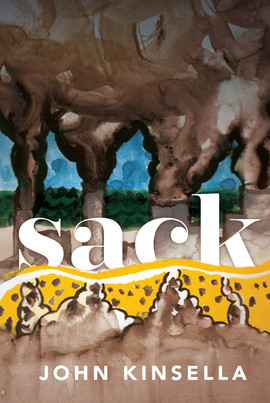
Simon Eales Reviews John Kinsella

sack by John Kinsella
Fremantle Press, 2014

In the first rabbit poems by the late J S Harry, her rabbit-character, Peter Henry Lepus, is thrown into a number of desolate or alien environments. Peter is ‘dumped … on the Desert of Sense’, ‘comes to … FORTY-THREE BLENDS / OF DUSTED-OFF & SUNDRIED RATIONALISM’, and ‘gets lost in “Calcutta” / on his way to visit Farmer McGruber’s vegetable patch.’1 He is displaced most comprehensively in the middle of Iraq, 2003, a warzone that amplifies his naïve and interlopic perspective. Such meaning-deprived contexts let Harry explore belonging, identity, and the stability of concepts themselves. In the poem, ‘Small & Rural’, for example:

Continue reading

Posted in BOOK REVIEWS | Tagged ,

Review Short: Robert Adamson’s Net Needle

Net Needle by Robert Adamson
Black Inc., 2015

Net Needle begins with the thoughtful interlacing of seven poems. The first poem, ‘Listening to Cuckoos’, highlights the bird’s ‘two unchanging notes’ during the start of spring. Then, ‘Summer’, with its ‘pallid cuckoo call’ through the poet’s garden threads into ‘Garden Poem’ and how sunlight spans the course of a day until ‘patches of moonlight’ travel into the next poem, ‘Dorothy Wordsworth’. Here, we find the Romantic poet’s sister ruminating near a window where the moon moves ‘across the star-decked dark’. Continue reading

Posted in BOOK REVIEWS | Tagged ,

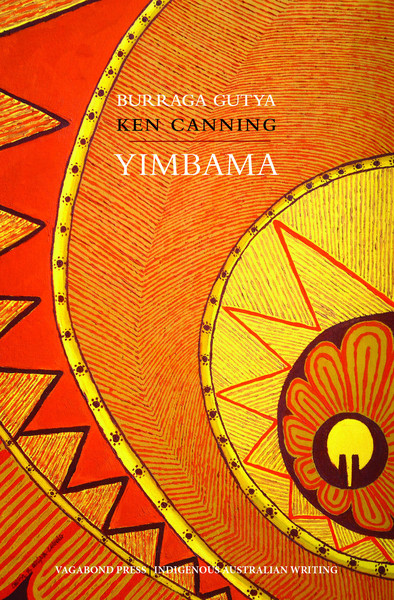
Review Short: Ken Canning/Burraga Gutya’s Yimbama

Yimbama by Ken Canning/Burraga Gutya
Vagabond Press, 2015

‘Oppressors always expect the oppressed to extend to them the understanding so lacking in themselves.’ – Audre Lorde

Reading a book by an Indigenous Australian author comes with a certain mythos attached. There is an uncritical expectation of explanation, of being taken by the hand and taught profound lessons that are appropriable, then displayed as trophies to liven up ‘Western’ society. Because indigeneity is often imagined as oppositional to modernity – and because modernity is assumed to belong to the ‘West’ – it’s as if the reader is sneaking off and doing something a little naughty, a little rebellious, by peeking over the fence at the fascinating and magical world of the ‘ethnic’ writer. And there is a reward for this, be it gratitude from the authors for deigning to listen, or kudos from one’s own cohort for being so very brave and ‘open minded’.

Continue reading

Posted in BOOK REVIEWS | Tagged ,