Miguel de Unamuno Question to Us: Why that Lilies the Ice Killed?


¿Por qué, Teresa, y para qué nacimos?
¿Por qué y para que fuimos dos?
¿Por qué y para qué es todo nada?
¿Por qué nos hizo Dios?
Miguel de Unamuno

Why, Teresa, and what we were born?

The wind makes this question to the poet on his grave.
Teresa responds with rain and cold breath
She planted a kiss on the skin and in verse of the worm.
I, the poet from south who will read us
(Unamuno may think as his final verse)
My reading will be a red carnation brought from afar.
Like a reading poem in other tongue after 1936
Blood and death that was we were.
Unamuno wrote What we were born?
I don’t know.
Your question is an old nest in rare book
Like a soul flying through time & space.
2015 I am reading … lirios que los hielos matan?
And you died in 1936. (en el nacimiento de la Guerra Civil de España).
Your question resurrected in my lips
As a saliva del gozo
joy saliva, saliva kiss liking my dream
cutting these lilies kill the ice.

That and we were both?

I do not know.
maybe we were a tree planted in the soul of the world.
We went on a cloud driven by a blind sky.
maybe we were a small Huidobro thinking ourselves God love with a star.
We went yesterday (peace war wound)
we went back years (onion in the hands of the prison nursing creature)
we went two (self, other Unamuno)
and your blood Teresa (Love in the Mist)
we were eternal in the unanswered questions.
only death rests on nothing.
The two were nothing in the verses
death, forgetfulness and love that made question.

For that and that is everything and nothing?

Violins embrace the lament of the melody.
bleeds rhythm in verse all
verse nothing is a line
My reading is all nothing.

violin regret leaving the soul
crying rivers in strings that are caught in the war.
rivers sailing at nothing earth as a seed fruitless.
one violin ask? On / off
A guitar singing without question?
I am life in your hands and I am nothing in your dream.
I am made of love and I’m all into nothingness.
Teresa because you were all to be dust nothing.

Why did God make us?

God replies that dead do not charge me
who killed Miguel de Unamuno?
Teresa or lilies
God answers: love and I have witnesses
my son
& its spirit of poet
since the father was out partying.

Why did God make us?
God responds angrily means:
I did not do anyone
each is one older enough
to know who their parents.
I know poet fall in love and they believe as a small gods
another dog with that bone.
Excuse me, I am God not a poet

Posted in 70: UMAMI | Tagged

The body has become its own refrain

The body has become its own refrain,
a silent roll call ticking off each night,
no more the vagaries of loss and gain.

The family visits, dress-rehearsing pain.
Let go they whisper nothing more to fight.
The body has become its own refrain.

Relinquished – ego’s hold on pride and shame,
the loosened tongue holds court from fancied heights.
No more the vagaries of loss and gain.

Hold the hand, stroke the face, speak sweet the name.
All accusations moot, all wrongs put right.
The body has become its own refrain.

What passed for love once now cannot be feigned,
all hearts aligned, familial threads pulled tight.
No more the vagaries of loss and gain.

Let time select the picture and its frame;
today the shadow dances with the light.
The body has become its own refrain,
no more the vagaries of loss and gain.

Posted in 70: UMAMI | Tagged

Keys to Success

1. Whisky

will take you back to a damp house on an island where your love dropped a rock on his own head and sat, dazed, in the caramel light

2. Dancing

with a lover to Prince at 4am or alone in your room; both are

3. Light

on your skin on the wall, that slip of it before night

4. Glute workouts

don’t worry about the rest, it’s the maximus muscle & it’ll burn up
the nothingness

5. Movie stars in technicolour or black & white

suck on the images like bleeding cuts

6. An animal

hungry, resting its head on your knee

7. Sex

in your skin in a message on a Tube under your tongue at your neck at the curve of the thigh / I could taste you for a day afterwards / at the wrist in a head-scratch in the mirror in the dark

8. Reading

an intake of breath

9. Art

that is you unbound

10. Pain

at the wrist in the pulse in the eyes in the glutes:
squats will keep you at an hourglass, sand tickling your arteries, knee ready for a dog

Posted in 70: UMAMI | Tagged

Poem

Adultery fucks a family up as much as poverty
Because the memories can’t run away from home
That’s a lot of hatred from a mother
Nothing I’d care to discuss right now

Because the memories can’t run away from home
Once a kid learns guilt he’s going to stumble
Nothing I’d care to discuss right now
Never grew any taller, just sadder and angrier

Once a kid learns guilt he’s going to stumble
I quit school to escape the staring eyes
Never grew any taller, just sadder and angrier
I know that nobody ever changed history, but I had to try

I quit school to escape the staring eyes
The sun, the silence, the nothingness
I know that nobody ever changed history, but I had to try
Part of what makes me interesting for science

The sun, the silence, the nothingness
It was like an acid eating into me
Part of what makes me interesting for science
You’re beautiful. What’s the emergency?

It was like an acid eating into me
No sexual act ever commenced, instead I trashed the room
You’re beautiful. What’s the emergency?
Everyone’s got their own version of the truth

No sexual act ever commenced, instead I trashed the room
Just want to see if property feels pain
Everyone’s got their own version of the truth
Maybe some day, but not today

Just want to see if property feels pain
It’s going to end in infinity, and if there is no infinity
Maybe some day, but not today
Can’t stop love from doing its damage

It’s going to end in infinity, and if there is no infinity
That’s a lot of hatred from a mother
Can’t stop love from doing its damage
Adultery fucks a family up as much as poverty

Posted in 70: UMAMI | Tagged

Gambling

1.

You’re not to this world
but will sleep in the depths of dream,
pat news, cast chat,
as tenants grind chemistry’s waved night to a flask
and galaxies ping time back
to tree-thrilled square,
or cross the lake tomorrow

out to sky’s unearthed racks,
the phone a bill, or writhing messages in garnished harangue.
A predicament’s sequence like a suburb cut with freeways
clusters at the music fair –
each tune’s mock funeral to love and love’s loved bitterness
while a van’s Pop Goes The Weasel continuously passes.


2.

Car’s barbarous pitch stomps the dealer’s sporting ensemble
that twinks neck chain against blue-toothed ear
assignation for a drop he goes Tucker’s good ad nauseam
a flail of it, cap and sunnies, butts a gasper
at the church’s two-tone guillotine panes
that shine on mourners queued to kiss
the block-slot limos, and then the school’s pepper trees,
glabrous errors then, have but not want again,
coiled magpie too dappled time out of the question.

Coburg’s blue and red cars wind the roundabouts
the halt neighbour doesn’t anymore slowly walk.
Kittens scatter like broken glass
as if some hi-vis local doesn’t talk
just throws it
Curtained trees ooze him away she says

Posted in 70: UMAMI | Tagged

Sweet Potato

My housemate was like, here’s some roasted sweet potato,
that’s your treat. My colleague
took my jellybeans onto her desk. She used to do
rollerskating when she was little. Her Dad’s
so fit. I’m trying to be good. I love Nutella,
and I’m doing hydrotherapy now. You know,
I think about it as, there’s two, three meals
each week, it’s whatever, totally free, and I don’t feel
guilty or anything. I went on a massive
health kick, it’s completely normal.
At the time I felt so good, I’m so reversed now.
I get motivated when I lose as well. My Mum
loves Curves, it’s really working for her.
My cereals had lots of sugar in them, so
now I just eat eggs. Consistency is the main thing.
I had to think about the things I really love.
Guys are better at it. I’m catching up with my boyfriend,
he’s a personal trainer, this afternoon.
You’ve got to listen to your body,
really listen.

Posted in 70: UMAMI | Tagged

\oriGaM[e,]i[,+ U]/

Step 1: Start with a 6_itch x 6_itch identity with desire side down. Fold yearnings in half on the
fan[boi+gal_ecs]tasy axis. Sleep_crease well and unfold.

Step 2: Fold both sides to meet in the [(f)etch-a-]sketch_center. CrE[r]ase well and unfold.

Step 3: Fold XY to meet XX. Seduce_crea[m]se well and u[E]nfold.

Step 4: Now fold XX to meet XY. C[|G]rease well.

Step 5: This is an interesting step that we'll repeat several times. RIP the [re]active side back to the
left. Fold and boil your_[d]raw[n]_self_dry. Heave through your rou[Sal]tines while
[D]ang[er]St_breathing. Murder_shift the table and p[b]o[lt]st the door. Then flIP your sIT_st[K]ill
switch and howl.


Atong Atem remixes this poem for The Lifted Brow portion of this issue.

Posted in 70: UMAMI | Tagged

Review Short: Amelia Dale’s Metadata and Thalia’s A Loose Thread

Metadata by Amelia Dale
Stale Objects, 2015

A Loose Thread by Thalia
Collective Effort Press, 2015

The question what are we to do at and with the limits of language presents itself as the central question in the two books under review here. That they frame themselves as poetry means that the context in which this occurs is different from art or graphic design – two fields into which both could easily be placed. One does not ‘read’ these works but apprehends them.

Continue reading

Posted in BOOK REVIEWS | Tagged , ,

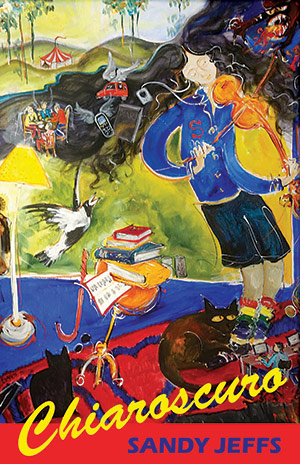
Review Short: Sandy Jeffs’s Chiaroscuro

Chiaroscuro by Sandy Jeffs
Black Pepper Publishing, 2015

In her poem ‘The suicides’, Janet Frame writes: ‘know they died because words they had spoken/ returned always homeless to them’. Perhaps more deaths could be prevented if people were able to speak without fear of being shamed or ostracised, knowing that their words might lodge in someone’s mind or heart, and that language, if wrestled with, could offer healing.

Continue reading

Posted in BOOK REVIEWS | Tagged ,

Intervention Pay Back

I love my wife she right skin for me pretty one my wife young one found her in
the next community over across the hills little bit long way not far

And from there she give me good kids funny kids mine we always laughing all
together and that wife she real good mother make our wali real nice flowers and
grass patch and chickens I like staying home with my kids

And from there I build cubby house yard for the horse see I make them things from
the left overs from the dump all the left overs from fixing the houses and all the
left overs I make cubby house and chicken house

And in the house we teach the kids don’t make mess go to school learn good so you
can work round here later good job good life and the government will leave you alone

And from there tjamu and nana bin tell us the story when the government was worse
rations government make up all the rules but don’t know culture cant sit in the sand
oh tjamu and nana they got the best story we always laughing us mob

And from there night time when we all aslepp all together on the grass patch dog and
cat and kids my wife and me them kids they ask really good questions about them olden
days about today them real ninti them kids they gunna be right

And from there come intervention John Howard he make up new rules he never even
come to see us how good we was doing already Mal Brough he come with the army
we got real frightened true thought he was gunna take the kids away just like tjamu
and nana bin tell us

I run my kids in the sand hills took my rifle up there and sat but they was all just lying
changing their words all the time wanting meeting today and meeting tomorrow we
was getting sick of looking at them so everyone put their eyes down and some even shut
their ears

And from there I didn’t care too much just kept working fixing the housing being
happy working hard kids go to school wife working hard too didn’t care too much
we was right we always laughing us mob all together

But then my wife she come home crying says her money in quarantine but I didn’t know
why they do that we was happy not drinking and fighting why they do that we ask
the council to stop the drinking and protect the children hey you know me ya bloody
mongrel I don’t drink and I look after my kids I bloody well fight ya you say that
again hey settle down we not saying that Mal Brough he saying that don’t you watch
the television he making the rules for all the mobs every place Northern Territory
he real cheeky whitefella but he’s the boss we gotta do it

And from there I tell my wife she gets paid half half in hand half in the store her
money in the store now half and half me too all us building mob but I cant buy
tobacco or work boots you only get the meat and bread just like the mission days
just like tjamu and nana bin tell us

And from there I went to the store to get meat for our supper but the store run out
only tin food left so I asked for some bullets I’ll go shoot my own meat but sorry
they said you gotta buy food that night I slept by hungry and I slept by myself
thinking about it

And from there the government told us our job was finish the government bin give us the
sack we couldn’t believe it we bin working CDEP for years slow way park the truck at
the shed just waiting for something for someone with tobacco

The other mens reckon fuck this drive to town for the grog but I stayed with my kids
started watching the television trying to laugh not to worry just to be like yesterday

And from there the politician man says I’ll give you real job tells me to work again
but different only half time sixteen hours but I couldn’t understand it was the same
job as before but more little less pay and my kids can’t understand when they come
home from school why I can’t buy the lolly for them like I used to before I don’t want to
tell them I get less money for us now

And from there they say my wife gets too much money I gunna miss out again I’m getting
sick of it don’t worry she says I’ll look after you but I know that’s not right way
I’m getting shame my brother he gets shame too he goes to town for drinking leaves his
wife behind leaves his kids

And from there I drive round to see tjamu he says his money in the store too poor bloke
he can’t even walk that far and I don’t smile I look at the old man he lost his smile
too but nana she cooking the damper and the roo tail she trying to smile she always
like that

And from there when I get home my wife gone to town with the sister in law she gone look
for my brother he might be stupid on the grog he not used to it she gotta find him
might find him with another woman make him bleed drag him home

And from there my wife come back she real quiet true tells me she went to casino them
other kungkas took her taught her the machines she lost all her money she lost her
laughing

And from there all the kids bin watching us quiet way not laughing round so we all go
swimming down the creek all the families there together we happy again them boys we
take them shooting chasing the malu in the car we real careful with the gun not gunna
hurt my kids no way

And from there my wife she sorry she back working hard save the money kids gunna get
new clothes I gunna get my tobacco and them bullets but she gone change again getting her
pay forgetting her family forget yesterday only thinking for town with the sister in law

And my wife she got real smart now drive for miles all dressed up going to the casino with
them other kungkas for the Wednesday night draw

I ready told you I love my kids I only got five two pass away already and I not
complaining bout looking after my kids no way but when my wife gets home if she spent all
her money not gunna share with me and the kids I might hit her first time

Posted in 66: OBSOLETE | Tagged

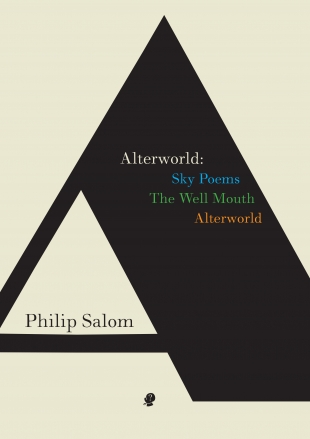
Review Short: Philip Salom’s Alterworld

Alterworld by Philip Salom
Puncher & Wattmann, 2014

Philip Salom’s Alterworld is much more than a standard ‘new and selected’. Two major books, Sky Poems (first published 1987, FACP) and The Well Mouth (2005, FACP) are reworked, and a new collection completes the three. Continue reading

Posted in BOOK REVIEWS | Tagged ,

Review Short: Philip Salom’s Between Yes and No

Between Yes and No by Philip Salom
Flying Island Books / Cerberus Press, 2014

Philip Salom is a poet and novelist who has, like several others of his generation, made a career straddling academia and a kind of award-and fellowship-winning literary writing (see the long list on his personal website) that has enabled him to retire in his late fifties to write full time.

Continue reading

Posted in BOOK REVIEWS | Tagged ,

Marion May Campbell Launches Tracy Ryan’s Hoard

Tracy Ryan, whose new and eighth full-length poetry collection we’re celebrating, Hoard is also a four-time novelist (Vamp, Jazz Tango, Sweet, Claustrophobia), a memoirist and translator. Her work has been acclaimed in multiple commendations and short-listings and has received the Times Literary Supplement Underground Poems Award; the ABR Poetry Award (2009); and twice won the West Australian Premier’s Book Awards for Poetry (2008; 2011). This collection was co-winner with Jill Jones’s Breaking the Days of the 2014 Whitmore Manuscript Prize.

From the remarkable debut collection Killing Delilah, through to the magnificent Unearthed (Fremantle Press 2014), Tracy has delivered poems of such arresting image economy and tensile musculature, that so many, no matter how strange and unsettling, assert their uncanny logic with retrospective inevitability, at times seeming to deliver in a mindflash an x-ray of the reader’s own psychic nakedness. This poetry is charged by an uncompromising feminist poetics and an intensity rare in a culture that often shopfronts irony at the expense of affective appeal and resonance. Not that irony’s ever lacking here – far from it, but it’s irony of a higher order – an irony that pulls on the soul.

This poet is a resistant phenomenologist for whom the ease of language must be made difficult; she is the concrete thinker undoing routine concretions and conflations. At its most quickening poetry hosts a space for juxtapositions, that according to the routine imaginary and reflex semantics are oxymoronic; it’s a space where paradox thrives and disrupts the purring continuum of bland; it’s language acutely re-earthed in us, releasing intensified currents through its lifelines.

Ryan returns, from her corner of the Irish diaspora in south-western Australia, to the Irish peat bog; which as a form of wetland has suffered great abuse both rhetorical and material – because of its in-betweenness: being neither quite liquid nor solid, zoned with the abject and thus, repressed, if not negated by drainage and infill, despite serving variously as placenta of birdlife, or the invaluable carbon sink. It has been treated like women’s sexuality as something to be controlled if not murderously suppressed by ruinous husbandry. More recently, wetlands in general have been reappraised thanks to the long struggles of eco-activists but not so, it seems, the peat bog, whose cultural shaming has been so frequently allied to classist and sexist reductionism – 38% of Irish bog habitat has destroyed between 1995 and 2012, according to statistics Ryan cites on p. 32.

So in her own words Ryan brings her ‘feet of drought and tinder’ back to the bogach – which in Irish and Scottish Gaelic means soft – to read there the hoard, not just of hidden artefacts brought to light, but to activate the slumbering potential of bog-speech, to catalyse our thoughts through bog’s eco-poetics. These are poetics drawn from an open, interrogative approach, an auscultation, of what the bog might have to say for itself, of its appeal, material and sentient. Of the bog I might’ve been tempted to say ‘she’, but cautioned by Ryan, from reflex gender alignments, especially where soft is concerned, I will not say she. ‘When first I saw you/spoke rock and soil to me// & like the new born/I must imprint’ (from the first long and superb poem ‘The changeling addresses Ireland’, p. 5). And here you notice the ambiguity of ‘imprint’: is it transitive or intransitive; is it in the body or on the page – the elision of the object invites us to read both. The eco-ethics are subliminally performed in these echo-poetics: through subtle seismics of word-music, through assonantal chains, the sly alliterative threads, through the orchestration of blanks and gaps, of ‘hummoch and hollow’ as speaking ‘nothings’. The slow fuse of the image-work finds ignition through the concerted effect of all these things – recovering so much that is lost through abstraction and quasi-automatic catchphrases of our instrumental or ritual transactions.

This is the concrete worker par excellence, undoing routine concretions, bringing matter back to life through poetic interruption and rearrangement. In the space of this slim, beautifully designed production by Anthony Lynch, poet-publisher of Whitmore Press, Ryan plays host to the unheard and unsaid in ‘hearsay’. What we might, by reflex, call the descent into the undifferentiated mud becomes here an exquisitely Derridean reader of difference – the bog as hoard of corporeal integrity and golden artefact. The bog is celebrated as the anaerobic preserver of life, gobbling as it does CO2 from the atmosphere.

The collection entertains an ethics of what Heidegger called co-respondance between bard and bog-hoard: the space of the poem hosts the multiple aspects of peat bog: the bog of oblivion; the bog of loss; the bog of archive; the bog of data retrieval, whether of pollen, farming, social or religious practice; the bog of secrecy; and of the secret’s betrayal; the bog of slow decay; the bog of denial, or of willed oblivion, and of mnemonic appeal.

Here the word c/leave encapsulates some of these oxymoronic tensions, between cleave as ‘cling to’ and ‘leave’ or ‘pull away from; between the diasporic uprootedness and stick-in-the-mudness; between identity and difference; the bog remembering what would be repressed, ‘wreaks chthonic havoc’ (‘Under’ p. 9) as this poetry does.

dressed like a well
but still treacherous
it courts a fall
(‘Under’, p.9)

Here we’ve got the sense of the mythic, the well being magical conduit between worlds lower and upper, between frog and prince – and the subtly suggestive verb ‘courts’ does all the work: of the royal high brought low. The bog, wearing its carpet of moss, its peaty layers, its strange carnivorous blooms, ‘courts a fall’ for those whose fail to ‘read’ it in its own terms.

Here hoard itself spells the ethics in poetics

hoard in the wrong hands
gets melted down

recast as meaningless 	
commonplace          precious
(‘Hoard hurt’, p. 19)

The difference between exquisitely wrought objects that the bog ‘respects’ is, on their unearthing, treated with contempt in name of reduction to marketplace value; so goes Mallarmé’s distinction between currency and gold; the poet re-establishes the economy of the gift or of sacrifice against that of exchange value. Thus of the 5000 year old golden torcs recovered, it’s the ‘heft’ that talks here, the body’s intimate encounter with its weight, which Ryan celebrates – not the shine to the I/Eye that escapes this reductive economy:

I need not the sight
but the heft of your beauty  
(‘Hoard bereavement’, p. 21)

In itself unmarked like the Platonic chora, the bog opens something like a pre-linguistic space and while it challenges the principle of naming, it becomes itself the borderline of the mnemonic, the beginning of the map generative of the name. ‘Bog mnemonic’ – ‘this wet portent/dense ledger’ […] awaiting our undivided attention.

The changeling poet returning from centennial removal is in excess, the great-great et cetera; the digresser from the line, the diasporic offshoot, always in principle the revenant.

denied corruption
this go-nowhere
this little stickler

who lies unqueenly
on territorial borders
no rooted yew to stop

her mouth to stem 
unhallowed utterance
once breached  
(‘Bog speech’, p. 27)

This Plathian reminiscence is very telling: the yew is ghosted by its second person homophone, the pronominal mask of the masculine Other in Sylvia Plath’s poem, wagging its death-dealing blacks. Here the order of the bog undoes the hierarchical, the taproot, the surveying maps of ownership. It celebrates the liminal, mocks all king- and queendoms. Thus we must also, in the logic of the liminal move beyond the gendered implications of bogach. In the spaces here Ryan shows the ruin of the collective imaginary:

A mirror is not        a lake                    is a dark mirror
tarnished over        mass-swollen                near opaque
till we call her bog                thinking her soft long suffering 
(‘Landfill horizon’, p. 35)

The refusal to reduce: the metaphor of the (cancelled) mirror is a mise en abyme of Ryan’s activist poetics: the (k)not of resistance; the refusal of the politics of anthropomorphic identification, of the reductive equation or captivating binaries which align the soft with the exploitable to be raped. And the aggregate portrait sent back by the bog treated as ‘negative mirror’ becomes our own destruction: when we reward its softness by making a tip of it.

The bog accommodates the nothing as something; it remembers; it holds its voices; it marks the parlous history of the negation of the wetlands in dangerous mythic or metaphoric conflations. The bog only pretends to cover up; it is active archive preserving difference: you call her nothing but she remembers. This is: ‘the utter resistance /of ground that isn’t’ (‘Bog road’, p. 38).

Another aspect of resistance, this time proliferative, and rhizomatic is celebrated in the Bacchae-like furze associated with the bog district of the Irish midlands:

see what can bloom
from nothing come
to fruition out of confusion
vulval and dentate 
her terms ungraspable
given to proliferation
queen of the barren
the margin of past glories
largesse and opulence
all but forgotten 
futile the burn set
by tenant or farmer
the hopes of management
she’s in her element
(‘Fire climax’, p. 45)

This quasi-inclusion through the rhyme ‘ement’ enacts the viral invasion of what husbandry would extinguish – a delicious ironic revenge on the agents of violent repression.

In ‘Revenant’ the poetics are superbly active in performing the call of the title

Revenant

Come back to vacancy
where formerly
whole nests of torcs
lay one above the other
each level a buffer
meant to divert
the casual robber
first bronze then silver
but best was deepest don’t say it
you were so sure no one could reach there
Over this turned ground you hover
discarnate now persuaded
whatever you had & amounted to
was here & so you wander
(p. 44)

Whereas the tremulant R, as the rhotic ‘R’ is gorgeously called, is left unpronounced by many English speakers, and is only ghosted in the changeling’s tongue, here it comes back triumphantly through the soundscape of this poem, just as, it can be said to haunt the whole collection.

And so the eco-poetics at work here resoundingly revive the tremulants cruelly repressed in our habitual rhetoric and ecocidal practices. All power to you Tracy Ryan: congratulations on Hoard, this magnificent new work of poetry.

Posted in GUNCOTTON | Tagged , ,

Robert Wood in as Commissioning Editor

I am pleased to announce that Robert Wood has joined the Cordite Poetry Review masthead as a Commissioning Editor. Shortly, we’ll start a series of critical essays from Australian and international writers, about one a month. This is in addition to what we’ll have in our quarterly and special issues.

Wood grew up in a multicultural household in Perth. He holds degrees from the Australian National University and the University of Pennsylvania, where he was a National Undergraduate Scholar and a Benjamin Franklin Fellow respectively. He has edited for Margaret River Press, Wild Dingo Press and Overland, and volunteered for the Small Press Network, Philadelphia Fringe Festival and Books through Bars. He has published work in literary journals such as Southerly, Plumwood Mountain and Counterpunch and a academic journals including Foucault Studies, JASAL and Journal of Poetics Research. He currently hosts a reading and conversation series at The School of Life and is a regular contributor to Cultural Weekly. His next book, heart-teeth, is due out from Electio Editions later this year.

More appointment news soon …

Posted in GUNCOTTON | Tagged

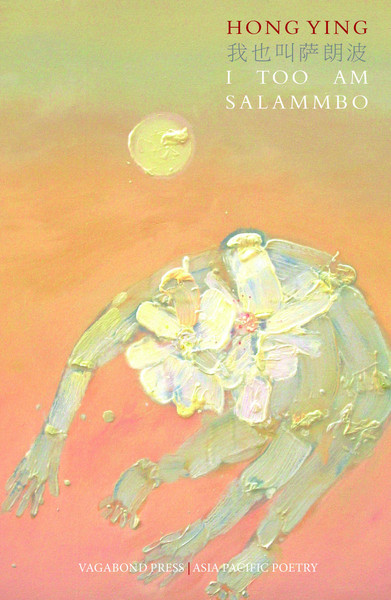
Michael Farrell Reviews Hong Ying, Translated by Mabel Lee

I Too Am Salammbo by Hong Ying
Translated by Mabel Lee
Vagabond Press, 2015

Hong Ying’s I Too Am Salammbo is a selection of poems from 1990-2012, based on a Chinese selection published in 2014. Though almost all the poems contain conceptual, or imagistic, interest (bar some of the ‘city’ poems: ‘Berlin’, ‘London’, etc.), the formal repetition gets a bit wearing.

Continue reading

Posted in BOOK REVIEWS | Tagged , ,

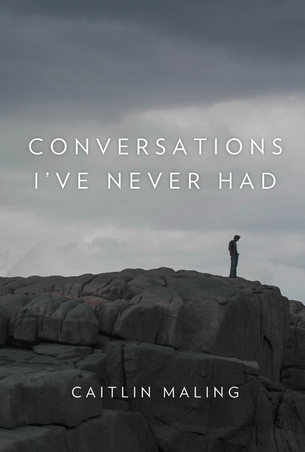
Tim Wright Reviews Caitlin Maling

Conversations I’ve Never Had by Caitlin Maling
Fremantle Press, 2015

Few writers seem to get the viciousness of Perth. John Mateer’s early poems do, and some of Deborah Robertson’s short stories. There’s also Laurie Duggan’s one-liner, ‘you can see why all the really savage punk bands came from here’ (‘Things to Do in Perth’), and for the encyclopaedic and lyrical, John Kinsella’s wonderful, aptly sprawling ‘Perth Poem’.

Continue reading

Posted in BOOK REVIEWS | Tagged ,

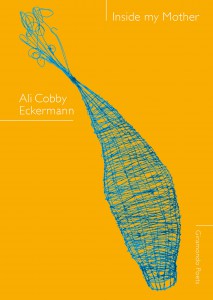
Review Short: Ali Cobby Eckermann’s Inside My Mother

Inside My Mother by Ali Cobby Eckermann
Giramondo Publishing, 2015

Celebrated South Australian writer Ali Cobby Eckermann’s fourth volume of poetry, Inside My Mother, is her most substantial and diverse collection to date. Although the book includes a handful of reworked earlier pieces, most of the seventy-three poems are new. Across four sections, these poems enrich and intensify the politically urgent subject matter that Cobby Eckermann’s oeuvre has, over the past decade or so, addressed so effectively. As an Aboriginal descended from the Yankunytjatjara language group, Cobby Eckermann’s chief concern is to express what she sees as the untold truth of Aboriginal people, both in terms of vital aspects of their culture, as well as regarding the (ongoing) detrimental impact of European colonisation. In this new work, Cobby Eckermann’s personal story provides a strong substructure in relation to which these larger issues are artfully explored.

Continue reading

Posted in BOOK REVIEWS | Tagged ,

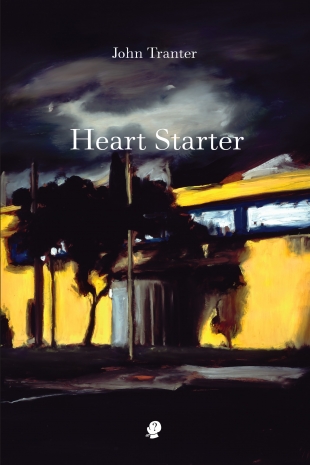
Review Short: John Tranter’s Heart Starter

Heart Starter by John Tranter
Puncher & Wattmann, 2015

What is more old-fashioned than modernity? New York in the 1960s; Paris in the 1920s; Edwardian England: how entranced we are by the bygone milieu of modernity. John Tranter has long appreciated the poetic potential of the almost-new, almost-old, as seen in his poems on movies, jazz, the New York School, and so on. But as seen in his latest book, Heart Starter, his interest in such things is not merely nostalgic. Rather, his work is obsessed with remixing the magic pudding of modernity. The past, in other words, is there to be used, not revered or sentimentalised. Tranter’s poetic revisionism treats source texts and forms as transitional objects (to use Winnicott’s term) that offer open-ended play and creativity, rather than demand compliance.

Continue reading

Posted in BOOK REVIEWS | Tagged ,

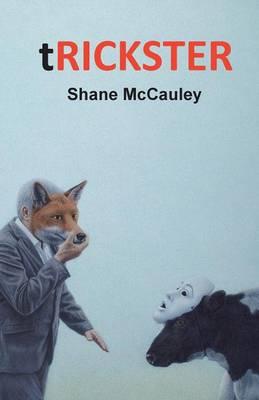
Review Short: Shane McCauley’s Trickster

Trickster by Shane McCauley
Walleah Press, 2015

It is something of a paradigm in literary criticism (poetics included) to couple West Australians with place. Of late Tim Winton and John Kinsella have occupied this ground, but it is there in thinking about Randolph Stow and Dorothy Hewett and many more besides. It was Winton, after all, who wrote – ‘we come from ‘the wrong side of the wrong continent in the wrong hemisphere”. The place, thought of quite literally as location, is simply ‘wrong’, meaning not quite right, meaning askew. This is to say nothing of the spirit here, or how, for a great number of people (some Noongars and others included), this always was and always will be the very centre of the world.

Continue reading

Posted in BOOK REVIEWS | Tagged ,

Judith Beveridge’s Twelve Highlights from 2014


Still courtesy of Allen & Unwin

Throughout 2014, Judith Beveridge selected one poem per month, from a litany of external sources, to spotlight in Cordite Poetry Review, and she delivered excellent choices … writing a bit to each selection. We have compiled them all here in one article. Enjoy!

~

I forget who it was who said that the writer needs to be ‘holy in small things’, but I think there is a great deal of truth in that. That’s one reason why I’m attracted by Todd Turner’s poem ‘At Willabah’. Here, the poet guides us through the details of the landscape in a not dissimilar way to the deep engagement with particulars in such poems as Seamus Heaney’s ‘Death of a Naturalist’ or Elizabeth Bishop’s ‘At the Fishhouses’. Place in poetry is often a point of exchange, and in this poem it works to become a bearer of human feeling as the speaker looks and looks at what is before him. You sense that Turner has undergone that meticulous discernment of image and word, the deep seeing that enables the world to open out, and he balances that arduous attention to detail with a lovely sense of the line and with sonic acuity as in the ‘crooning of frogs’ and the ‘searing horde of cicadas’ that ‘smoulders with a resinous hum’.

For me this poem is not so much about observation, but rather revelation gained through ‘trained worshipful attention’, the ability to keep looking and listening until the world opens itself up, until each thing becomes an object of thought, an aspect of immersion. The affectionate accuracy with which Turner makes the water and the canoe known to us keeps us engaged. He delves deeper and deeper into possibility, ‘still there is enough light, enough shadowless/ dark out here to stay and buoyantly float, hammocked, on this iridescent bed of backwater’, strenuously orchestrating his language and imagery until by the end, we too, lie ‘dumbstruck under stars’ – not an easy line to get away with unless the poet has drawn us line by line through a swell of detail, though their rhythms of affinities and recognitions, and given us opportunities to witness how sensual panorama is changed by perspective, both spatial and inner, and made complex by affect. By the end, this watertight poem has bound together weed and frogs, lily-pads and mosquitoes, nests and cicadas, water and stars and set them all magically ringing.

At Willabah


Walking the long trodden path
down towards the dam, I hear pebble
stones squelch underfoot, and the wooden 
jetty out over the brown spangled water 
pulses with the crooning of frogs. 
At the foot of the landing thick tangles
of tall grass, green on the blade,
flaxen like wheat at the tips, shoot up 
between the narrow gaps of slatted planks 
and through the middle of a weather worn
tyre tube, giving the appearance of ease.
Either rife or in decline, lily pads brim 
in bright and mottled stages of bloom and ruin.
They look like a drifting patchwork 
of miniature parasols, each stem softly landed.
But they have risen from murky depths,
launched pea-green sails and hoisted 
ceaseless bulbs into the warm flushes of air.
Late afternoon sunlight crosses the dam
and an undershot cloud of tadpoles
darts beneath the dirty gold shallows
under the dear little dead one, floating on its side.
At the first mellow hint of dusk
a hidden swarm of cicadas begins to rattle,
amplifying a static reverberant pitch
that fills the place with a thronging charge.
Upturned on stilted racks above the edges
of swampish ground, a large red canoe lies
heavily with its curved ends turned down.
It is mosquito-peppered and sun bleached 
from bow to stern, has lain here long enough 
for a community of insects and organisms to thrive.
Lifting it up and turning it over, I see a small 
black spider scurry across the length 
of the gunwale then shelter under the dry 
mud-caked taper of weed stuck there on its side.
I lower the canoe down gently off its perch
and drag it by the ring rope to the water's edge
before going back for the partially sunken oars 
that lie in a melded slurry of bog and grass.

Out over the dam, jutting there steadily, 
the canoe hangs in the balance on and off the jetty.
I lift it from its back end, tipping the scales.
It slides with a sudden splash, and in an instant,
undulant wavelets swish into tremolo
then recoil, whitewashed in dissolving pools.
I ease myself into the lumbering vessel
and wait until the rocking ceases...
Tideless, level and brilliantly still, the water
is a reflecting threshold of the bottomless blue,
a blank scroll glazed with a long shot
sequence of idle air and suspended inland sky.
I set off, levering the blade-end of the oar into a rung
and mutable clouds lap in diminishing ripples.
I row on across the silvery water mirror
before letting the canoe drift and curve then run 
aground into the twig-ends of a white, overhanging 
lichened tree, where an almost unseeable nest, 
not wedged but pierced, woven around a branch, 
is stitched and webbed there into place. 
As night sinks in, blue lit, draining the heat,
the searing horde of cicadas gradually dims
and smoulders with a resinous hum.
Though still there is enough light, enough shadowless
dark out here to stay and buoyantly float, 
hammocked, on this iridescent bed of backwater.
I let the oar slip, the canoe slide, and soaking
it all up, run my hands through the rain
and sun-struck litres. Feeling no solidity
as the water recedes and emptying flows, 
I notice a gentle braiding between skin and bone,
leaving only a distilled measure of silt to behold.
Now, drawing upon its intricate undergoings,
its fervent source, the dam, doused in nightfall, 
magnetically blackens and seeps like a fumarole.
I lean back, immersed in a brightening shroud,
watching the smoke-spun strands of vapour
freeze in a levitation of steaming shafts.
Cutting through the thick of it and crossing 
the haze, I gape, lying dumbstruck under stars.
Posted in CHAPBOOKS | Tagged , , , , , , , , , , , , ,

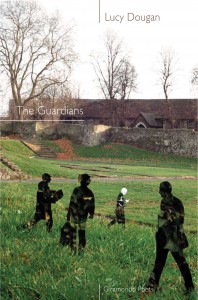
Review Short: Lucy Dougan’s The Guardians

The Guardians by Lucy Dougan
Giramondo, 2015

‘The dog ran in there / It had been a mistake / to take up his old trail.’ The bold lines that open ‘The Old House’ (48) from Lucy Dougan’s latest collection, The Guardians, deliver a fine sample of Dougan’s deceptive simplicity. What better emblem for the concept of guardianship than the family dog? But the sentimental cocktail of love and loyalty embodied by this familiar friend is immediately crosscut by the ‘mistake’ of memory, an error of the senses that leads directly to the unheimlich. Continue reading

Posted in BOOK REVIEWS | Tagged ,

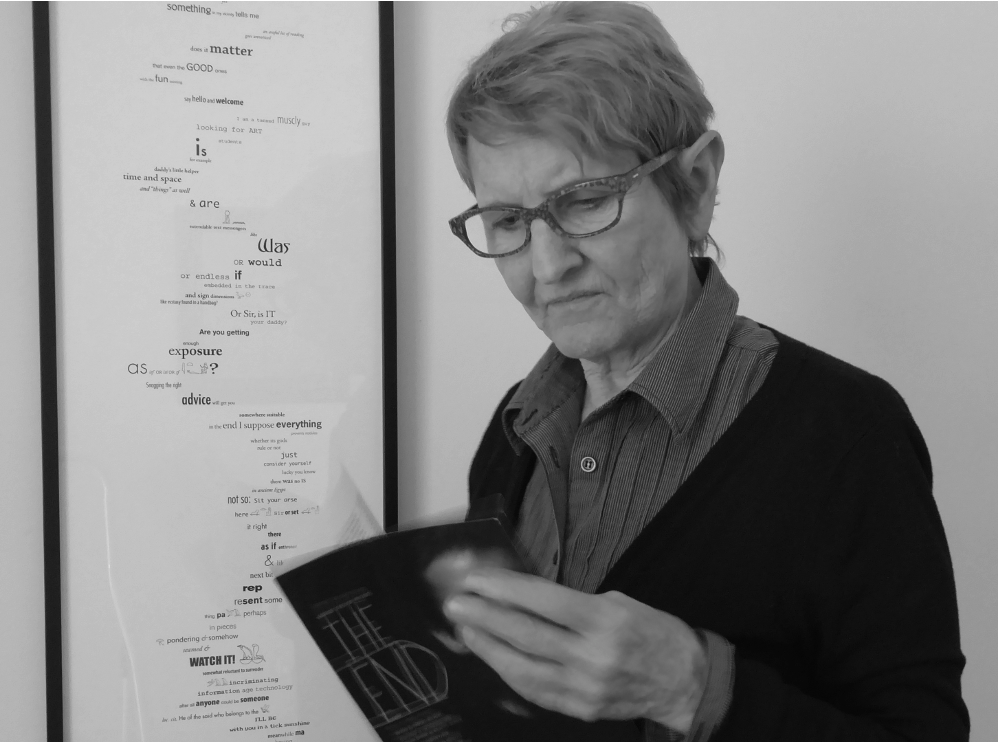
Submission to Cordite 53: THE END Open!

Pam Brown

Poetry for Cordite 53: THE END is guest-edited by Pam Brown. Read Corey Wakeling’s interview of Pam from 2012.

Let me start at the very end, the dead end, the living end, at wit’s end, the end of the line. Whether you dread the end or can’t wait for it, the questions are: ‘When to stop? How to finish? Where does it ever end?’

As the forever-quoted Samuel Beckett wrote in Endgame, ‘The end is the beginning and yet you go on’. Game over, lights out, end of story – please send poems on THE END.


Please submit only once, with a maximum of three (3) poems in one (1) document … but first, please read the submission guidelines.

Posted in GUNCOTTON | Tagged ,

(k) those drawn with a very fine camel’s-hair brush

I

Names change
but the concept
stays the same, tracks you
across the valley.
Night rides in on a gust

star-scatter
like so much porcelain.

Is an alibi a deleted scene
or a red thread? Dust in the pigment
matted mane under silk folds.
Like painting
desert blossom
you go by bone structure
not appearance.

Number the joints
count the filaments
know that it takes a single slip
to spoil the line. One hump
can still pass as a horse. Two
is fooling no one.
You look to the brush––
the concept slides.

II

One stands perfectly still, inclines
gently her head.
Two argue about the weather.
One keeps mostly to himself.

One is revealed only by delicate
stokes.
One has never seen the ocean.
Two pretend to be otherwise.

One thinks, a pose is a fusion of form
and subject.
Another says, half a rock
is also a rock.
One knows you could yield your life
to this place
and still not understand it.

One believes actions can be governed
at a distance.
Two discover a kingdom
in a fleck of salt.
One finds it easier
to pass through the eye
of a needle.

One forgot to interpret
the scenery, insists he is
not lost.
Two make plans
and put them in motion.
One spits on the ground
completes the pattern.

Posted in HEBK | Tagged , ,

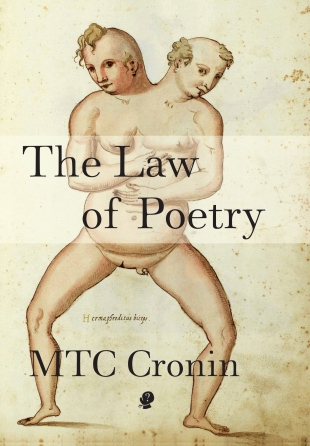
Review Short: MTC Cronin’s The Law of Poetry

The Law of Poetry by MTC Cronin
Puncher & Wattmann, 2015

MTC Cronin’s ‘The Flower, the Thing’ is a favourite poem; one to which I often return. What strikes me immediately – and what stays with me – is its first word: ‘urgently’. That word sucks its reader in; it says that what comes after is ‘urgent’, is going to pull at you. It says, read on. Continue reading

Posted in BOOK REVIEWS | Tagged ,