Review Short: Rob Walker’s tropeland

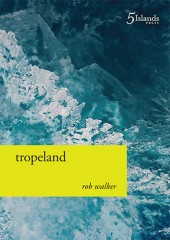
Tropeland by Rob Walker
Five Islands Press, 2015

South Australian poet Rob Walker’s latest collection, tropeland, is exceptionally playful. Puns and wry twists in language are balanced with humour and a self-conscious sense of otherness, the speakers always slightly displaced from their subjects. Walker is not pessimistic in this process however; there is a consistently optimistic tone throughout tropeland, as well as a canny awareness of failings and ironies in life.

Continue reading

Posted in BOOK REVIEWS | Tagged ,

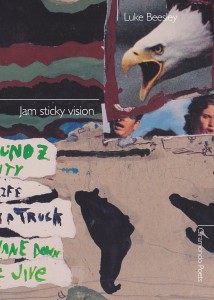
Review Short: Luke Beesley’s Jam Sticky Vision

Jam Sticky Vision by Luke Beesley
Giramondo Publishing, 2015

Luke Beesley’s long-term preoccupations with film, visual art, writing and literature, return to the fore in Jam Sticky Vision, with the poet now expanding the scope of his work to include 90’s alt-rock bands, like Silver Jews and Pavement. With allusions to filmmaker David Lynch and lo-fi rock musician Bill Callahan couched unselfconsciously beside poems about James Joyce or Henri Matisse, Beesley’s poems may seem to be drawn from something of an eclectic palette. What links the poems nicely together, though, is a close examination of the here and now. In the epigraph from John Dos Passos’s essay ‘The Writer as Technician’ (1935) this idea is more precisely expressed as ‘a time of confusion and rapid change like the present, when terms are continually turning inside out and the names of things hardly keep their meaning from day to day’.

Continue reading

Posted in BOOK REVIEWS | Tagged ,

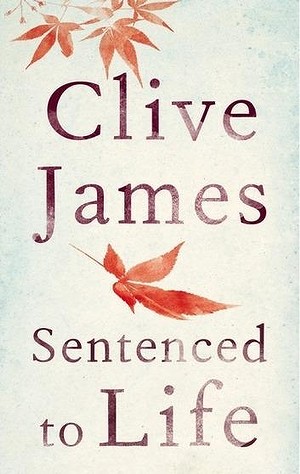
Review Short: Clive James’s Sentenced to Life: Poems 2011-2014

Sentenced to Life: Poems 2011-2014 by Clive James
Picador, 2015

Clive James’s Sentenced to Life is a poetic autopathography outlining his years living with emphysema and leukemia. While illness biographies ‘present information about diagnosis, treatment and outcome trajectories’, more importantly, they ‘share how the illness has affected the sufferer’s wider life course, social network and views of health care institutions.’, as Rachel Hall-Clifford puts it in her Autopathographies: How ‘Sick Lit’ Shapes Knowledge of the Illness Experience. However, James’s poetry is most often centred on his personal discomfort, regrets and ultimately his quest for reassurance that his writing and memory will survive his death.

Continue reading

Posted in BOOK REVIEWS | Tagged ,

blood & co.

certain trace elements remain
stalked by monumental plastic bags
the venal serpent has so many moving parts!
but worrying about it is sound inspiration, featuring
pannikin set on pate & talc on gormless elbow

file some excess weight from the handle of your spoon

back in the shelter going mad nothing happens
the machines preceded me
a kind of vivisection in corridor unlit
the press of the nail, warts under leather
black-lemon reflux, urinals belch
a varicose etiquette in service of extraction
no one coming, not even the landlord
im not the ppl they had in mind
im not emitting the agreed upon signal
but this rites company enough
& if things get tough theres always my photo id
with head cocked at the future like a flint
& the viscera there, still unread, recommended for you.

Posted in 69: TRANSTASMAN | Tagged ,

Pembroke Chantey

Unidentified girls of Pembroke sing
The sea was so rough and my hands is so tough
A long time agoooo
Blow-boy-blow – – my diggyman
Drunkdrunkdrinky

It goes on like this actually goes on like this coming out of the walls
In a vicious glandular whisper

Did the stones learn it from the girls aurora borealis
Songs of the girls trapped in stone ,
wind in the chimney fattens then rakes the fire
Pentecostal polish on my collar
Mixing in the sheen flakes of death

Fly ont’ the spit of strathspey re-born again to die on whale-jaw hill
The stench of the white man precedes me

Here come Pegasus, bags loaded, walking sideways, it is not only our fancy.
Hi Peggy, on this rottenest of days the sun comes out to appal.
Black Polly Harvey’s out of breath, deliberately stumbles in her plucking
The most beautiful, the most insouciant, still craven
Polly
. .hurtling
Then wandering the chalk groves hand in the hand

Louche, douche, I perve on you in the showering can
The air still burnt with our conversion.

Morning with Ernest Louis Matthewsand breakfast by boat-
Frying eggs on s flint of tin, watch the birds of extinction
Caper

Look away from the earth, where the atmosphere and its inert lover twitches, the
commingling licks
exchange of cumulus rump, voluptule
fire among the bitches

As we cusp you remarke on that pleasnought smell
Some sort of . . . sea-keg rides the continuous albas above yonder

Make your head as rough as possible
A major dirge oafs the lung
As we make way with square oars to the Blaskets

Posted in 69: TRANSTASMAN | Tagged ,

Charm of a bivalve chantey

sharpley and with hardly withouten effort I prise from you
a sigh, not the vaste soupir (oh.) of the sea
something more morbidly flushed
p.haps a ‘radiant travesty’


au revoir, Club-toe!


I am airs cheerful as I ought to be [GODDAMMIT]
& you can tell by the jauble
that this is sung
in le langue gelée
spoken in jelly
“it should have ‘spitoon’ in it”

What is a bivalve? What is behavior?

not sphinx but spinx don’t gender the enigma
Dear Bridie McCarrotty
Sister to Mellamurphy
He’s got a song to sing but it’s not about you

Dear Sir I am fallen in love with a pipe. Your pipe.
Item: Smooth tadpole tobacciana pipe, grit to suck
surface issues and teeth chatter
ouch and very fine!


<<See the restitution of angelic bisexuality>>


joined in enflamed opposition
round like a colloquoy of major and minor demon tongues
cured in raw bivalvoline.

I once methought we should have our bones thrown in together
Now I’d be pleased if our singing and kissing-bits
Beput in the one can of langues en gelée

Posted in 69: TRANSTASMAN | Tagged ,

Te Aro 17

For all its advantages – or perhaps
this is another advantage – Te Aro
has no harbour frontage. Nor does it have,
at least from the street, even a view of
the harbour. But this last points to how
the suburb has the basic affinity
with the sea of being only slightly
above sea level. And, complementing
Wellington’s mysterious mid-city quays,
there’s an argument for ‘Te Aro Bay’,
anti-inundation magic and global
warming memo; acknowledging the tidal
alter ego beneath the dry land hustle
of the gentle incline to Brooklyn Hill.

Posted in 69: TRANSTASMAN | Tagged

I don’t hate you, but…

I don’t hate you
For your ignorance
I don’t hate you
For your entrenched racism
I don’t even hate you
For supporting government policies of cultural genocide

I don’t hate you, but…

I do want you to at least
Embrace your own disfunction
Acknowledge it
And then analyse it–
Just as you analyse me

Then I want you to
Research it
Observe it
Write about it
And then maybe even preach about it,
Just as you do about me.

No, I don’t hate you, but…
I do wonder about you sometimes

Canberra, 2004


This poem first appeared in I’m Not Racist, But…, Salt Publishing, 2004.

Posted in 69: TRANSTASMAN | Tagged

Te Aro 19

After surviving the bypass it seemed the
house would succumb to national security
concerns, the police televised busting the
door down during an anti-terrorist
(or ‘te aro rist’ perhaps the term)
operation. An honourable scar, this
could be held renovation where by ‘house
painting’ is understood ‘words painted on
the house’, however vile the bypass it
at least delivering the masses within
consciousness-raising distance, if also
worth considering here putting up a
billboard the income from which to fund
protest and revolution in Aotearoa.

Posted in 69: TRANSTASMAN | Tagged

Into the World of Light

I was born beneath the colonial shadow
of Maungakiekie’s solitary pine
within cooee of a sacred Rongo stone

in a military hospital built for casualties
of America’s bloody Pacific Campaign

was immediately hoisted by the ankles
and smacked to incite my first breath

a squall of amniotic fluid and fright

my mother called my name

my crinkled fingers sought her voice

but she was hoisted through birth stirrups
trembling from the shock of delivery
defrocked, immobilised and totally spent

a uniformed interloper swooped me up
measured and recorded vital statistics
admonished me for crying up a storm

and that’s how I was duly welcomed
into the merciless world of light


Maungakiekie (Maori) A mountain that was formerly a pa (fortified village) site.
Also known as One Tree Hill. Rongo (Maori) God of peace and cultivated food, especially the kumara.
Pacific Campaign WWII – American war effort in the Pacifc region.

Posted in AOTEAROA | Tagged

Falling

(i)

Sometimes I feel as though
I am living half a life
A jigsaw puzzle I can’t
work out:
I am here,
I am there,
I am only half here.

I am half myself,
I am more than myself,
I am my worst self.

It goes on, it goes on,
I struggle, I get up,
I fall, I have all the pieces
But I just can’t seem
to put them together

I’ve lost something I need
I’ve lost something I never had
I’ve lost myself
I am losing.


(ii)

I betray what I have promised
and before and afterwards I feel sick
but without it, I feel empty.

I turn myself inwards, try to find
what is missing, I spend a lot
of time alone. I don’t find
what I’m looking for, I don’t
find any answers.

Outside the wind howls but
the frost is leaving the garden.
In the wind, the leaves shiver.

Posted in AOTEAROA | Tagged

Bronte to Bondi

Fur coat with long purple boots
black leggings and a peek of snake skin flesh
hair coiffed like a wig
a face that the wind had swept with sanded glass
stepped onto the bus in Bondi

Bondi rounded the corner from Bronte
a once challenging rockscape was now streetscape
inclusive of the must have fitness circuits
people jostled for space amongst the crowd
when paused to look at
sanded glass wind swept cliff faces
I was asked to snap a smart phone of two beautiful girls
out for a power walk

Jaded was the morning
with droplets of neurosis about yeah nah thinks
showered in rainforest steam and the smell of mandarins

Hash brown stacks atop of avocado fans
runny poached eggs and hollandaise
was eaten while perched on a cushion
looking out to sea

I’ve smiled my face off
ticking the bucket list of last opportunities
the muscles used to smile
releases the tension
of my grimace

all that at Bondi

Posted in AOTEAROA | Tagged

Long Light

(i) Long Light

A grey autumn full of splash,
spiders abseiling from gutters,
fresh raindrops
polka-dotting backyard green duvets
in the shortening light.
The animals are here: birdfeeder
tantalizing the cat, puppy
whining at the hedgehog,
ants massing at their queenly
altars, pupae swinging
off swanplants or snuggled
into softening flesh.
Voices in the light
and the no-light:
speakers, tappers, hummers,
barkers, purrers, clickers
scratchers and swishers;
swivellers and blinkers
of lenses.

(ii) Long Light Redux

So there was darkness
despite the sun’s claims—
its drunken rays lacked focus,
glared in pools on floorboards,
slipped through the filigreed
patterns of sheers.

The potted flax reached up
to the windows promising light.
The peace lily gathered dust
as it drank from its tray.
The long snuffed candle
rested before a clay scallop shell

painted gold. Its dimensions
are twelve cubits by twelve inches
falling out of heaven from God.
The scallop stripes reach east,
west, north, south, and each
direction has a gate made

from a single pearl.

Posted in AOTEAROA | Tagged

Dancing the Siva Samoa

Tijler’s song

I want to own myself in your
eyes feel the ruin culminate
in this belonging –
to pretend it’s a song
that roughens at the knees
/ music ashy on falsetto
there’s something hot about breathing
you in while we watch for the fish to pass
scales hanging off the windows
I want to spit the bones out onto saucers
let them prick our tongues on the way out
so maybe we’ll laugh
it begins like that.
and
it’s coal, yet
; they poured something bruised
over my palms so
black it’s purple, right?
I wipe my hands
(wipe hands)
Relearn, relearn you.
taxed sun, how many
hours make a promise?
did you know that when I was younger
we called that wishing?
day breaks across
our fingers
crumbling into ants
that crawl towards the hipbone.
a drum hails out of flesh.
could break my back
from:
rollie pollies down no tree hill
sticks and grass Snowballs
ones with the mallow middle us. chew chew.
– I don’t owe you secrets / can’t help it.
balancing along the fence
walk the lattice metal top of a pie on its side
and feet begin to slip rip
-don’t end up grazes / can’t help it.
stand out in the sun when
it’s mounted at the points of trees
yes, it dares for fingers popping tapioca pearls
so what if we have fish bones
pierced through our cheeks?
that’s irony.
that’s jaw metal coins we might
hand over for the soul boat
have them ready together
the water dances on us as us
that’s how movement should be
a certain angle of stippling
beneath this open bracket moon
hands that twine wind
struggle on bloom
go to catch us sprinting
with our mothers with our fathers
don’t get too puffed out
to say nothing we didn’t
, Babe, learn the sand
that shakes out of rock
(treat its dilution)
learn to sew
a quilted tongue
warm on.
it gets better as we season
the laziest heats
that we can’t move in with a tree’s kiss
tell me
(mouthing doesn’t mean shit)
tell me
(the branch broke in my wallet)
how much could we buy this sky for?
Getting semi-Magritte on you, yeah
and still bark cracked veins
enter the gates.
that bird’s nest
(from different kinds)
worn like a metal grass skirt
around Pulotu.
watch Cerberus-threedog dance the Sāsā
slapping his chest, shoulders,
elbows, bend easy fish bones
they’re sharp as tears
sometimes
our own a weapon fragile.
our own, an unsheathing.
I’ll be dressed in an ‘Ie Toga
and you know, who will care?
I’ll carry up the Taupou’s knife
and feel a path around my eyeliner.
there’s a pastry lipped
way of the spin
don’t, worry, is hard to know
when a clock bends its back
dawn’s reversal
the March
the drum roll
on tin boxes
think of all those echoes
that bridge while we wait
and tell me again
I’m graceful
if only for the second
(feed a heart its own
lasts longer.)
falling slowly to my knees
arc my back
fingers river-ed on air
a stream-dancing.

my baby oiled skin trace imprints
of this sky
watch yourself dance with me
on this floor
turning hooks as needles
stitch ourselves an ocean
one petal on scale
then another
watch our hands weave over
and over
the faint wash of frangipani petals
the snap of freshly caught fish
the way our knees click together
as we curl this kind of embroidery
on top of a granite platform.

Posted in AOTEAROA | Tagged

Why

why do we kill
our children
why do we
make war

why

Posted in AOTEAROA | Tagged

When We Went to Brisbane

When we went to Brisbane
I looked for you
in the streets and shops
I looked for you
on the buses and trains
I looked for you
by the river and beach
I looked for you

But I couldn’t find you
anywhere
not in the shops
anywhere
or on the streets
or buses or trains
or by the river
or by the sea

Although I did think I saw you
down at Streets Beach
I wasn’t for certain though
and I hoped I hadn’t
coz whoever I saw
was stealing something
and I didn’t want you
to be the culprit

I wanted to see you
in all your glory
a proud representative
of all your people
Koori
Blackfulla
Whatever your tribe
Whatever your language
Wherever your homeland

But I guess we were mainly
in tourist areas
and you wouldn’t do those
unless you were running them
but nowhere even
a name or a sign
or something that told us
that this is indigenous

Perhaps we needed
to head to the territories
like those being threatened
by your Governments
Which makes me think
if that goes ahead
where will you be
if not on your lands?

Posted in AOTEAROA | Tagged

BREAK ALL MY BONES / a water lily growing in my lung

after Mia Doi Todd

Tender all my love
Thrill to die again

Seep through my dreams
Wake to see the dawn

Drain all my hopes
Fly above abuse

Hoodwink passers-by
Passing is all we do

Shuffle the deck and cheat

See behind your eyes

Haul mist to the land
Whiteness—a bird in the hand

Dream death a shadow
Run behind the children

Reach across the garden
Green the waning tide

Death greets the wave
Haul my love inside

Slow all traffic to stall
Dreams now coalesce
Ha Ha in my happiness

Cut all my ties

Sew the threads anew

Leak all my mail
I want to leave a trail

Posted in AOTEAROA | Tagged

Mountains

mountains once roamed
this land, they fought
over women exploded
breathed fire ran off
into the ocean and
shook the earth now
battle scarred wearied
and older they wear
the cloak of Hine Hukatere
in winter and the skies
finery in summer they
command the clouds
weep streams bleed rivers
and rule with mana
sometimes they remember
old scores, fume, blow fire
out their heads and prepare
to fight once more

Posted in AOTEAROA | Tagged

Spidermoon

The spidermoon burns
reddish-yellow yolky,
sleepwalking through nightfields,
a spinner’s tranced orb.
Trapezes drift on silk bolas.
Strands carry them a long way
to spokes, sticky spirals,
guyed trapdoors.
Wakefulness in shadows at dawn;
soft, quivering snuffle of a muzzle
nosing grass and bat urine:
the dog’s off the chain.

The bombora of Mount Chincogan
tips a green wave down to the yoga church,
and the amped-up ukulele player,
who busks for coins outside the IGA
with ‘Yes, We Have No Bananas’.
The check-out chick pops her bubblegum.
Lorikeets squabble beyond the library.
A parrot-man coaxes:
his shoulders are perches.
A galah oohs and aahs.
He feeds the bird clinging to him.
The flock beats wings to a harbouring.

Summer kneads trees
the colour of a bloodnut hamadryad.
Sunflowers glow more yellow
than fluffy sponge-cake.
Cicadas swing like pendant earrings.
Grasshoppers like fallen clothes pegs, leap.
Brush turkeys stalk a picnic sandwich.
Tiny lizards pause, scuttle, pause.
A goanna hotfoots it
over the brickwork of the barbie.
The hot tin roofs
make with their creaking cha-cha.

The air’s dry as a dog biscuit.
Stones clang under dusty cars.
The burning tar sports a shiner.
A water dragon’s clean-bowled,
spread across the road.
The bat some kid shot at
hangs by claws from a wire.
Birds twitter, rayed out
against the phone transmitter.
The sun’s hard-boiled in its shell.
A spinnaker of cloud gets the wind up,
and bolts for the wild blue yonder.

Posted in AOTEAROA | Tagged

Transplanting Colenso: Taxonomy and Translocation in Leicester Kyle’s Koroneho: Joyful News Out of the New Found World

‘Language adheres to the soil, when the lips which spoke it are resolved into dust,’ wrote William Colenso in 1868, and again in 1883. ‘Mountains repeat, and rivers murmur, the voices of nations denationalized or extirpated in their own land.’ The 19th century New Zealand missionary, printer, explorer, and naturalist was conscious of massive, irrevocable changes to the botanical and human ecologies of New Zealand occurring as he wrote; it’s apparent that he was also conscious of the role of language in defining these systems and the encounter between them. Continue reading

Posted in ESSAYS | Tagged , ,

‘We Are all Rejects’: Unsupported Writers and the New New Zealand Journal


Image courtesy of Duets

The declining level of support offered to poets and other writers in Aotearoa/New Zealand is a source of real distress and debate for those in the writing community. Lee Posna, in an essay published last year on the Pantograph Punch, writes from the position of a poet who feels himself unsupported, and really suffers because of it. For someone so passionately invested in and in love with poetry, the lack of institutional support – in the form of publication, grants, residencies and the like – registers as an ‘injustice’, as ‘cultural capital bankruptcy’, even if his relationship with the aesthetic preferences and the politics of such institutions is, as he hints, an ambivalent one.

Continue reading

Posted in ESSAYS | Tagged , , , , ,

TRANSTASMAN Editorial

Bonny Cassidy
Photo by Nicholas Walton-Healey

At the close of his poem for this issue, ‘Heaven, Bruny Island’, Ken Bolton writes how the radio ‘seems to have stopped to listen’. As I reflect on the poems constellated here, I feel they are doing similarly; attending to something that is neither absent nor present. They are listening to signs of that abstract ground: transtasman.

Continue reading

Posted in ESSAYS | Tagged

600 Lines of Blindness & Rage

Blindness & Rage is a verse novel in 34 cantos. Lucien Gracq, suffering from a terminal illness, moves to Paris from Adelaide to live out his last days. There he discovers a secret society which only accepts as members writers with varying degrees of terminal illnesses. It is not a palliative clinic, but is in fact a meeting place for the production of literary texts. Its overriding premise is that a text considered good enough to be published would have to attributed to another member, the recipient of a gift which may endow that person with high honours and prizes. It is preoccupied with the question: What is an author? No egotistical apostasy, no reclaimed ownership/authorship of the original work would be allowed under threat of the potential murder/suicide of the ghost writer who breaks the faith. Euthanasia is a free service. Gracq’s epic is chosen. He now has to decide what to do … to live anonymously as long as possible, or to welcome a visiting assassin.


CANTO 1

All my life, thought Lucien Gracq, I’d written my disasters:
predicted them, installed them, lived them.
For example: all his life he’d written to women
in mannered courtly love
hoping they would respond, but
would not take it too far – or go any further.
It always redounded, overflowing into minor tragedies.
His heart began palpitating,
he developed high blood pressure.
Writing had consequences, not least
a sedentary posture and excess of calories.
So he turned from prose and entered a more
emphatic breath, of which he was short
or was brought up short.

And then some lesser ailments:
the neurotic episodes of embarrassment
dying into each at three in the morning,
all screaming, negotiating unpleasantness,
and it seemed nothing was enjoyable –
experience reeking of threat, regret and hurt.
Could romantic love so easily disappear
without casting around for a new desire
to enhance the redemption of illusion
in the small cell of the free, alert
to the farewell wave of chance?

All his life he wished for unemployment
in order to attain a paradise,
an Eden of inspired work and experience,
but all his life Gracq laboured as a town-­planner
in an Adelaide office unrolling ennui
and blueprints until now …
when time had already flown its coop.
I can’t bring myself to act, he thought,
since that would cut short
his precious melancholy.
Instead he could feel, enact through writing,
since he was in search of lost emotion –
words which slowed the heart and
humoured the day and held
the night with chimeras.

But how to write now in such gloom
in the face of real impending doom?
Should the work be given every attention
to become the focus of constriction?
His heart’s regret
was his life’s invention: to beget
lying and exaggeration
in exchange for deep imagination
when it was a sign of the times
to pretend to the truth,
even if it smacks of youth
to force some easy ABBA rhymes,
without relying on Pushkin’s Onegin
for good taste
after pulp fiction had laid waste
to innocence in the nursery,
pushpins inserted into favourite Teddy
and every friend a Fagin.

Divorce again, says Gracq each morning
while scooping out his avocado,
not meaning to indicate a new world dawning
but the cheery chime of boot-up time
rings well with his bravado.
Today I’m free once more with each new laptop page
to look forward without fear
at the horizon of a limited holiday; no foe,
no rule to fight against the rhyme save
something long suppressed,
sage Oriental respect perhaps,
for time, patience and all its psycho-analytic show,
suppressing atavistic anger
and deep revenge at God knows whom.
A breath.
A death.
It brought him back.

The corner shop opens for afternoon trading.
Long past the pizza for the microwave and
its use-by-date, Gracq has no appetite and
lingers by cancer’s tropic – his fate of late –
attending neither medicine’s ball nor
fortune-cookie fêtes, believes he’s at the meridian
or the End – soon to rave and pitch
a farewell note and bill of lading for the ferryman.

In Australia they were good at testing blood.
They said “we need to stick in tubes, then cameras
then see what else to try” –
after that it was pay the fee or fry in radiation.
They turned him inside-out on screen –
he would never eat stew again after this movie-tone autopsy.
He had not felt ill at all but now he did
in this panopticon of cell revolt.
A way of recognising the body was not
a representation of life,
of words, of significance, but
an object once deep in the ‘I’, now wrenched,
a struggling fish, from which
we have to be disentangled at some stage,
losing command, swimming in discomfort,
drowning in pain and evanescence.
Suddenly someone else’s, but not yet God’s.

I like to be in tune with the weather, Gracq thinks.
He has rented a small Parisian apartment
upon pronouncement of his sentence.
Can you tune the weather with a thermometer?
But like his body, it cannot be controlled, though
he is proud of reading both, waiting for change.
It has been a long time since he’s noticed
this kind of sky, mackerel cloud or stunted tree,
damp smell of a cemetery,
its symmetry of silence between passers-by and the passed.
Or heard the recursive chorus of guillotined Carmelites
from beneath an eight-metre ditch in Picpus
amongst freshly-weeded sods,
their mournful plainsong and bloody history,
cantos on the circularity of life and its short-circuitry,
so Gracq liked to say, unhelpfully seeking solitude
at the final hour, his words morbid and over-stuffed,
without the divine comfort of God’s.

From next door he hears
the beginning of another kind of music.
A respect at first for volume.
Someone playing piano.
Lightly, softly. Schubert, Gracq believes.
Gracq was from Australia.
Nobody played Schubert lightly there.
He corrects himself; he’s mythologising Paris,
where people live clustered together and have to deal
with noise and voyeurism and apartment users’ manuals.
It was in this small flat, numéro onze rue Linné
where the toilet lived up to the description of a cabinet
airless, dripping – that he had first read Roger Caillois.

Gaming.
He thought of trying speed, not pills but
extremist sports; flying over a cliff if only he could ski;
live in a peaceful coma until they turned off the apparatus;
but he read instead of the Collège de Sociologie,
of Bataille, Leiris and Caillois; all
smoking, drinking, eating fine foie gras,
screeching at meetings like wheeling plovers.
None died early except their lovers.

The specialist told Gracq to enjoy himself
in the remaining time. Soon he will be cactus:
more loss of appetite, of speech and hearing,
of sight and emotional reach.
He should substitute delicious soma for his summa,
forget writing, drink champagne with morphine,
be seen with friends, reconnect with women,
there was nothing else to lose.
That had been the motto of his youth;
anything for inspiration.
It had brought him to this pass,
a mirror-image now,
the only catch being a different end,
a stop at the mortuary station.
Gaming, the doctor said to Gracq,
was playing with chance and God,
not for pleasure but with angry purpose,
breaching the rules with all the tools
at man’s disposal.

He read how Caillois saw himself
on a list of names – it was 1938 –
a date with Germany looming –
so Roger the dodger left for Argentina
to write Man, Play and Games.
In a cursed corner of history
he sat out the war with Borges,
drinking coffee in smoky tango joints,
feeding bananas to a monkey in a fez
jigging in time to the melodeon,
a diatonic button accordion.
Jorge hated music, or didn’t have an ear;
he shouted that the monkey
give way to a dancing bear.
Perhaps his ire came from Plato,
whose rage at poetic shadow
kept philosophy centre-stage,
tuneless, spare and dry.
Roger found a spry new bed-fellow
in Victoria Ocampo,
fell in love and decamped for a long sojourn,
his wife mostly in the gloom of the next room,
smelling smoke but seeing no fire,
cutting up his fine Havanas.
When the cigar wars were finally over
they returned by way of Dover
to a dour Paris without bananas.

Caillois’ contribution to intellectual history
was to distinguish games of rivalry
from those of speculation and identification:
agôn (competition), alea (chance)
and a non-aggression pact between
mimicry (simulation) and ilinx (vertigo).
Play was not all about vanquishing a foe –
others or death – but enjoying the passive satiety
of waiting for excitement with
diversion, turbulence, free improvisation
and carefree gaiety
.

Lucien Gracq was much taken by this last quartet
which resembled the rising graph of an orgasm.
Death was not his enemy, only its little brother.
Caillois called it paidia, the Greek for play,
the rounded education of an ancient élite
living a well-played life, its end closing a circle
like a roundel or a lay –
and for one moment Gracq flirted with fantasy:
Did he have the courage, energy and impetus?

The piano next door began again
to saturate the past with syphilitic genius.

Every weekday morning Lucien made his way
to the national library
and in a small cubicle he watched the rain come down
softly over Paris listening for the brush of stockings,
click of stilettos, without looking for their source.
He lived in a painful secret
and in other people’s secrets,
tuning imagination to a sightless gauge,
for dying into writing was … well …
both blindness and rage.

Today he browsed the shelves for
Colette Peignot, the lover of Georges Bataille,
who drove his nephew crazy
with her tanned and scissoring legs –
and the latter burst his trousers
with his stallion’s cock
sitting beside her at a bullfight,
observing how the moment of blood and gore
brought her to orgasm
when she screamed above the roar,
“I adore the putrid lips of Jesus.”

She called Bataille her river-god, her rhesus,
for daring to publish his nephew’s pornographia,
but she was not part of their masculine mafia,
holding sacred the memory
of her father and four brothers,
killed in the trenches by shrapnel and TB –
sacrificial to the end.
This story of devotion would distend
to Bataille’s crazy theory, with focus
upon his luke-warm battle with fascism:
“A human sacrifice would stand up to oppression,”
he declared with some hocus-pocus.
In his boyhood Bataille almost became a priest;
now he was musing on the idea that
between play and blood lay a sacred feast,
the bullfight an example. Yet he couldn’t
quite catch the spark and struck an acrid match
to a bitter-sweet cigarette
at the thought of this leveller:
his nephew screwing Colette.
Pierre Klossowski, Jesuit friend and fellow-traveller
would write this version of his jealous joie
and call it Roberte ce soir.

Bataille liked reading Nietzsche.
Would he shake the hand of this mad man?
There would have to be some rules:
anti-­Semites to be excluded
from the secret society he was already
forming in his head,
though he declared that only to demonstrate
he may have been a communist instead.
He formulated a society for sacrifice;
now, that was it. He was at a crossroad
in the darkest night of the Catholic Right.

Lucien Gracq,
crossing rue Monge in his usual fog
on his way to the National Library
almost met an early fate and
froze half a metre
short of a speeding motorcyclist
who swerved in the nick of time
cursing behind his Grecian helmet.
Un grand serpent glisse le long de la rue
a nutter shouted from across the street.
Gracq took it as an omen: was he missing the beat
of the Reaper’s hoary finger upon his chest?
Had he committed an error?
What have I got to fear but fear itself?
He spoke aloud for that was best
when staving off chronic terror.
He had nothing to fear, nothing at all,
he declared, eyes agog
at the serpent stream of
passers-by who took him for another psychotic
in a secret dialogue with God.


CANTO II

I woke early one morning
with roving specks in an eye then
a pulsing, flashes of lightning in one corner
and soon a mosquito-net drew over sight,
a slurring through dirty water,
landing me like a prawn upon a semi-night.
That was the first sign of strife,
a deeper design, slaughter
at the gate of the auto-immune
which used to tick like a tuned V8
on the highway of a decent life.

He remembers the Dublin of years ago,
the lilting voices of Irish girls
laughing by the Liffey into which the English
had thrown the executed bodies of young rebels
during the Easter Rising.
There was no rebellion in him
when he was working on his epic poem Paidia,
staring out at the playing fields of Trinity College
capturing the summer muffle of sun and cricket bats
and collecting the smells of pubs, breweries and vats.
He was briefly famous in the musty halls
and foetid corridors of the vacated varsity,
not for his verse but for his stalls of
Australian wine, whose scarcity he managed
as a small sideline to fund his stay.
“Australian are we?” asked the Irish customs officer
who liked to take the piss.
“Ah oui” he would reply, not missing a beat,
adjusting his beret and blowing a kiss.

But now …
Just begin again, notice how safe
you’d become, how few risks
you’ve taken after two health crises,
your cockpit awhirl,
wheels down,
nosing onto the medical clatter
of premature death.
You don’t even go to the supermarket
without rehearsing dialogues
with the check-out girl …
if only she understood his breathless poem.
Just begin the epic again, play the game,
empty out the emptiness within
and supply the void with chatter.
That’s how life is done.
That’s how it is always done.
Just flirting; just gaming; just batting with a willow
at the sorrowful drooping of summer’s end.
That’s how to begin again at the bend,
replaying life before death’s accounting –
see it approaching with its high pillow –
an innings, then run.
The risk is extinction, but your problem,
Gracq told himself, was that in lieu
of making a living you should have learned to sit
and write posthumously,
as a shade beneath a yew, its suns long past.
Not homo sapiens but homo ludens
the word ludicrous holds it fast.

Gracq felt his pain was nothing
compared to others. Perhaps he should
find a group of brothers, a Männerbund
who understood time, its arrow and its wound.
But he changed his mind when he read
Georges Bataille, who said cryptically:
“There is no need to show solidarity
with those who are suffering.”
Bataille’s father, syphilitic and paralysed,
was abandoned by his wife and son
during the shelling of Reims in 1914.
Before he left, Georges carried
the blind old man to the WC and
watched his large translucent ears
light up with each shell-burst
as he groaned in pain during defecation.
Georges would not see his father alive again –
he locked the toilet door to memory –
but knew in his morning meditation
Joseph-Aristide had left his son a legacy.
Georges was seared with the painful smile
of perpetual guilt, suffice
to say a benediction –
his rationale for guile and sacrifice.

In 1936, elegant young Bataille in high collar,
now an archivist at the Bibliothèque Nationale
and editor of a magazine, formed a secret society:
Acéphale had as its symbol a headless
man with arms outstretched, a skull at his crotch;
it meant the state was leaderless.
Twenty disciples from the right and left
met secretly once a month, initially at the obelisk
on the Place de la Concorde where Louis XVI
had been guillotined.
Thereafter, nocturnal meetings were held
in the forest of Marly around a blackened tree
where Bataille lit a dish of sulphur and divulged
his plan to serve up a human sacrifice:
“France was headless and impotent,
its politics riddled with lice,” he said with a sneer,
“and man is nought unless death conjoins us.
Freed into nothingness, our solidarity
is what counts against mass fear.”

But it seemed the shaman was never in place
in order to keep his own life safe.
“He is a monster with whom I must live,” said
Colette of his semi-fascistic tendency,
sacrificing herself to porno
sessions in railway toilets,
something much discussed
by the cluster of intellectuals,
the society’s respectable face which
drew distinguished speakers from
Jacques Lacan to Theodor Adorno.
(Benjamin failed to show, nor did Leiris,
and Caillois was packing for Buenos Aires –
perhaps they all sniffed out pathology.)

In the end, no one was sacrificed, though Gracq
was sceptical: who would know? He too,
felt in need of secrets and silence. Besides,
no witness would talk when war was looming
and many a willing victim supplied no executioner,
like Colette Peignot, who would never deny
the lenience she attached to sleeping
with strangers in cheap hotels, for she
would be the one to give Bataille his baby,
his Story of the Eye.
She died from TB while GB shacked up with another,
exploring his so-­called ‘interior experience’.
His reputation was blooming.


CANTO III

An old habit,
scouring newspaper advertisements.
Not many do that now with the internet at fingertips.
Gracq likes to browse, lingers
over voluptuaries, women from lonely-hearts clubs,
scrupulously avoiding obituaries.
In the Paris papers there are still curiosities,
messages sent in anagrams, cryptic
crosswords for secret societies, elliptic
clues to meeting-places, acrostics meant for
expensive mistresses, invitations to necromancy.
One takes his fancy:

«This is not an advertisement for euthanasia. We welcome those with a terminal illness who are interested in the test of time, who think hard about sacrifice and the culture of intellectual legacies. Members will, through an act of law, erase their name and bequeath their work to a living other. It is plagiarism in reverse we practise, to provide a cleansing service before oblivion. We are Le club des fugitives.»

Gracq is particularly interested
in such hopelessness, in literatures and politics
that never get up, that are fired by long odds,
obscurity, kicking against the pricks,
seeds that will not burst from pods
until a hundred years later. Who could tell?
After all, a club for the terminally ill would need to
be replenished by a stream of dying clientele
which possessed a dispensation from lying
about success to reach such pure disinterest.
But then again, in the insanity
of enjoying posterity when quite dead,
would you be able to keen
for a hundred years ahead?
What does it mean
if not pure and present vanity
to think of your memory
as a future commodity?

He respects the loneliness of objects:
their inert and passive lack of protest
at abandonment.
He thinks of the burghers of Calais, the
martyrs of Masada and the Gracchi brothers
who pitted themselves against Roman nobility
to achieve plebeian land reform, assassinated
for their devotion to upward mobility.
They overlooked one point:
that the people had no powerbase in history.
Lucien Gracq understood the case:
his name was carved in theirs,
on stone that cares naught for abandonment.
When he instigated a program of housing reform
in urban affairs – no high rises in low-rent queues –
in Elizabeth for example –
he was told the disadvantaged didn’t need his views.
He hated colloquy
so the firm offered him a body lotion
labelled redundancy, his anger quelled
by the exit-strategy of an unlimited ocean
of time at precisely the moment
his body rebelled.
He was, is, and will be solitary.
He had almost finished the writing
of an epic poem in an age which
had no idea of such a form,
his words invisible as sand-flies,
irritating, bringing hurt and confusion
(“write prose and cut your margins”
a friend and editor advised),
relieved only by dreams
of a vast and streeling sea
of dangerous currents
and drowning sirens.

Now he had time and no time.
At first he tried to make each minute
last longer than the next by throwing out
his watch, but that was a fleeting fit, a personal fine
exacted by exasperation with his own inaction.

He wrote to the Club des fugitives
on expensive stationery he bought on the
Pont Louis-Philippe to inquire about
new membership. It took a while for a reply:
they obviously didn’t believe in haste,
but in their patience picked up he was not French:
something forced about the ancient grammar
at which he worked with cut and paste
of the crude and cultured,
sounding familiar, almost similar
to Restif de la Bretonne (1734-1806) who was
a pornographer, foot-fetishist and early communist.
He checked his mailbox every hour
and one morning found a crumpled envelope
which he opened in his favourite café
after ordering a sour margarita.

Mon cher Monsieur
and then the rest in English:

«We always welcome apprentices with some regret, for as you know, this is a dying club and new members take the place of the newly departed. We will send you instructions on how to arrive, instructions which will never be given in advance, and you should arrive alone, with your certificate of terminal malady, as when you will depart, and not speak to anybody at all, either in advance, or on the way here, and pray not to attract attention. You will only be a member for 53 days, during which the transaction of your sacrifice will take its place. With my sincere wishes,
Georges Crêpe


He scoured the petites annonces every single day
ensconced in the Café Louis-­Phillipe, where the waiter
brought him his margarita without delay.
Then he spied the puzzle under the heading «Spectacles»:
Dialogue des Carmélites
La Chope du Roi,
Place de la Nation
.

That was all there was. He franticly
tapped on his new laptop (its keys already worn
from vigorous typing –
Gracq worked it in a hammering fashion,
habituated to his ancient manual Olivetti),
and found that sixteen nuns were beheaded
at the Barrière de Vincennes on 17th July 1794.
They offered themselves as sacrifices to God
in exchange for the restoration of peace in France
and a short while later the Reign of Terror ended.
The square is now called the Place de la Nation.
(Poulenc wrote an opera on this carmeline gloom
but there was no performance of this work
at Nation anytime soon.)
Gracq needed to find the exact moment,
chanting now and at the hour of our death
employing every search engine in great torment,
his mouth agape
and came up with a time:
before sunset,
that summer,
vespers,
July 17th,
to unlock the coded message
of the Carmelites and Crêpe.
He would take the metro
and arrive on the square
at precisely six o’clock,
unaware of the shadow
of that guillotine or the flood
which overflowed mean drains
with thick black blood,
or the trains of song left in the air
as the gravediggers divvied up
dead linen in their dingy lair.
53 days to make up his mind,
erase his name,
delete in kind,
the fatuity of posthumous fame.

Posted in CHAPBOOKS | Tagged

Seeds from Rangiātea: Nine Māori and Pasifika Poets


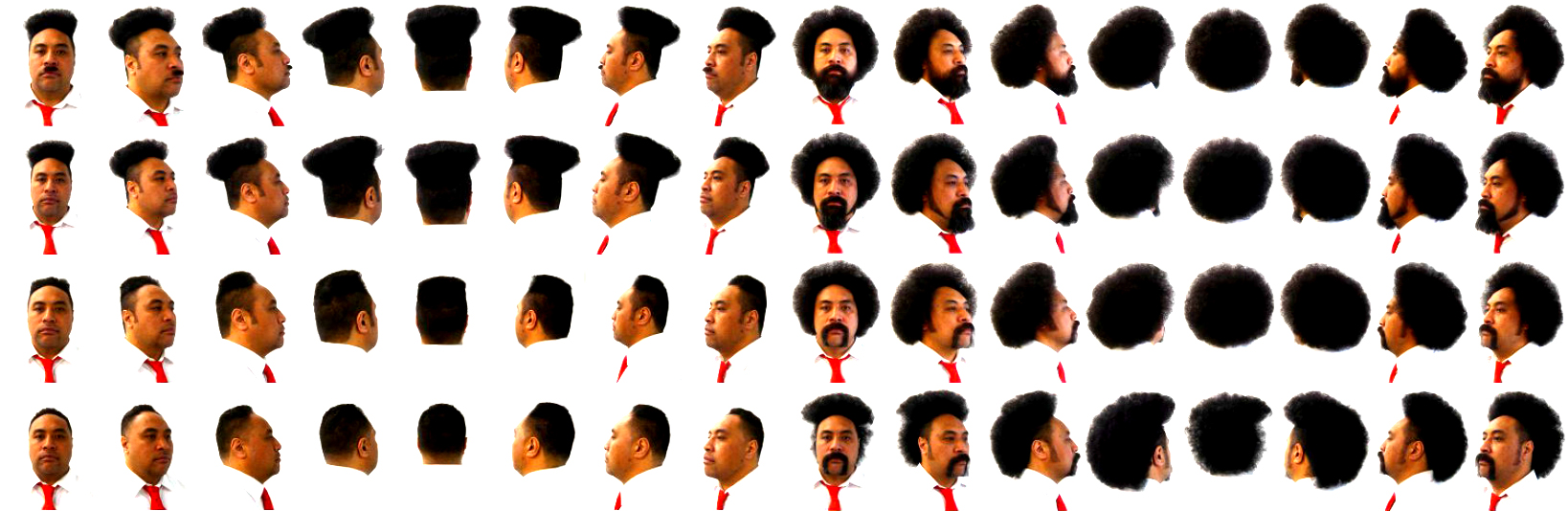
Siliga David Setoga | Oki fa’a kama Samoa moni lou ulu / Cut your hair like a true Samoan boy | 2015
Photograph: Setoga Setoga II | Barber: Maligi Junior Evile
>


E kore au e ngaro; te kākano i ruia mai i Rangiātea

I will never be lost; the seed which was sown from Rangiātea.1 This poetic saying refers to Māori descent from Polynesia, specifically the island of Ra’iatea in the Tahitian island group.

I was asked by Kent MacCarter to edit a group of indigenous poems from New Zealand. I have chosen to include Pasifika poets who are related to Māori through shared ancestry reaching back thousands of years into the South Pacific, and who are resident in Aotearoa. That is not the usual definition of ‘indigenous’ which would normally refer to peoples who are colonised within their homelands and who are now governed as a minority group, but it is a normal relationship to group Māori and Pasifika poets given our shared colonial histories (only Tonga was not colonised) as British subjects.

Two Anglophone poetry anthologies I co-edited with Albert Wendt and Reina Whaitiri, Whetu Moana and Mauri Ola, included Polynesian poets living inside and outside Oceania ranging from Aotearoa, to Samoa, Hawai’i, California, Oregon, London and Dubai. I hope that this brief selection arouses interest in new Pacific writing in Australia which has a growing Polynesian diaspora of its own.

I did not group the selection thematically. Each poem was chosen because I found the poem engaged me either emotionally; as a dance of the intellect or ideologically. In short, there is no singular way of writing as a person of indigenous descent.

Serie Barford: Into the World of Light
Apirana Taylor: Mountains
Apirana Taylor: Why
David Eggleton: Spidermoon
Jacqueline Carter: When We Went to Brisbane

Amber Esau: Dancing the Siva Samoa
Kiri Piahana-Wong: Falling
Marino Blank: Bronte to Bondi
Reihana Robinson: BREAK ALL MY BONES …
Robert Sullivan: Long Light

Serie Barford’s contribution begins right at birth, yet the opening image is a death one – the pine on Auckland’s One Tree Hill stood next to the monument to the Māori people erected as a memorial for the race. The tree was later damaged irreparably with a chainsaw by Māori activist, Mike Smith. Apirana Taylor’s poems also bear the scars of war, and invoke myths of mountains in fits of jealous rage. David Eggleton’s ‘Spidermoon’ is a lush sensory scape where all five senses are enlivened by the newness and the strangeness of the narrator’s visit to Mount Chincogan in northern New South Wales. Jacqueline Carter’s poem is also an Australian encounter, but this one desires a true meeting with Koori rather than the emptiness of tourist areas. Amber Esau invigorates a traditional Samoan dance with love poetry. Kiri Piahana-Wong in ‘Falling’ addresses identity as a meditation on absence. Marino Blank describes an urban Bondi Beach scene without naming her point of view as indigenous or even Māori, and yet so many Māori have emigrated there it becomes a particularly Māori and Australian poem. Reihana Robinson cites the singer songwriter Mia Doi Todd in a poem that speaks of a relationship in flux.

This range of poems is a microcosm of Polynesian poetry in English with its abundant personal themes, place-based writing, natural and contemporary referents, simultaneously globalised, sassy and politically motivated by a sovereign past. Each poet adopts different stances to identity, culture, sovereignty, environmentalism and their other significant relationships. They are writing about the human condition.

Posted in CHAPBOOKS | Tagged , , , , , , ,