Nosferatu’s Serenade

from Nosferatu

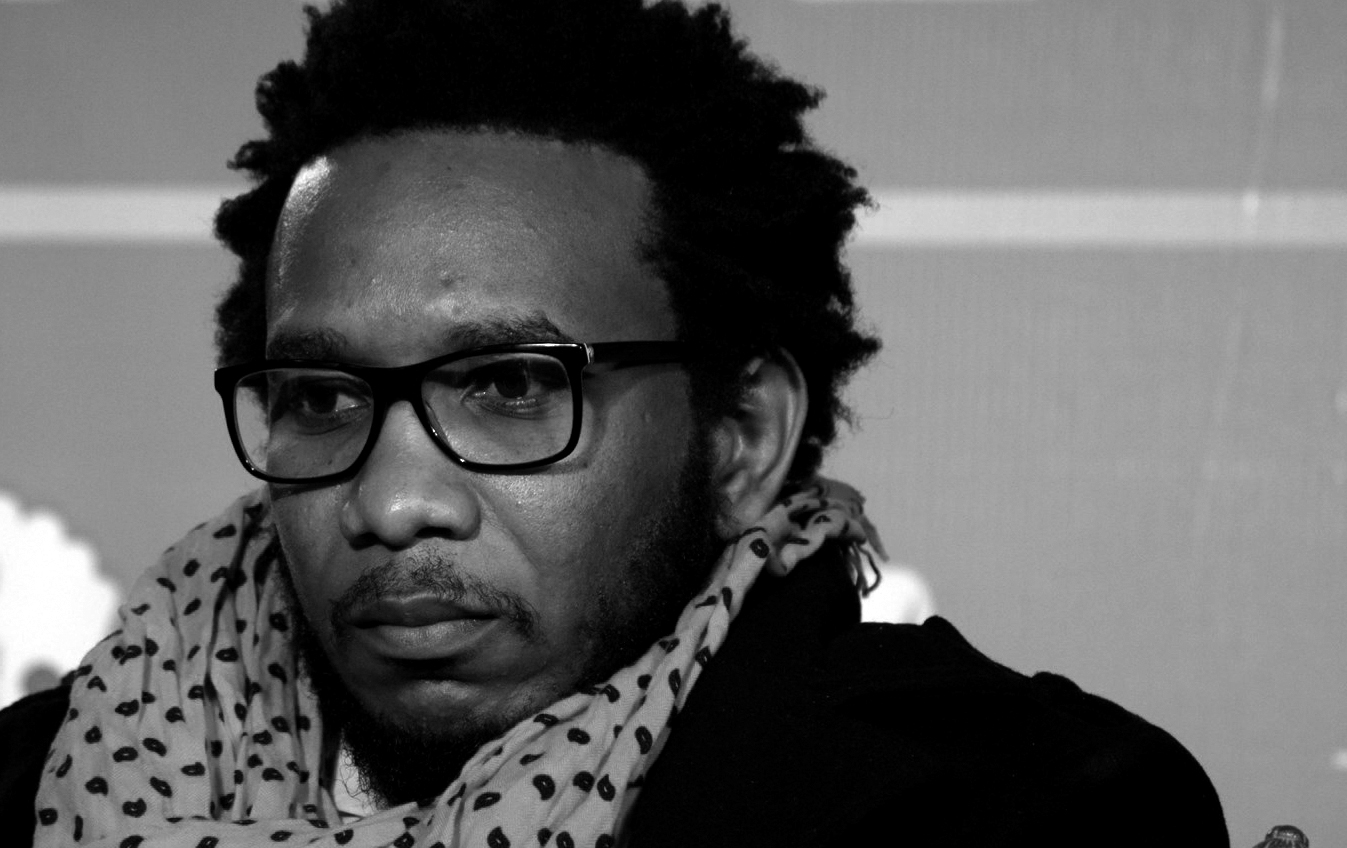
I am the image that darkens your glass,
The shadow that falls wherever you pass.
I am the dream you cannot forget,
The face you remember without having met.

I am the truth that must not be spoken,
The midnight vow that cannot be broken.
I am the bell that tolls out the hours.
I am the fire that warms and devours.

I am the hunger that you have denied,
The ache of desire piercing your side.
I am the sin you have never confessed,
The forbidden hand caressing your breast.

You’ve heard me inside you speak in your dreams,
Sigh in the ocean, whisper in streams.
I am the future you crave and you fear.
You know what I bring. Now I am here.

Posted in 79: EKPHRASTIC | Tagged

MRI

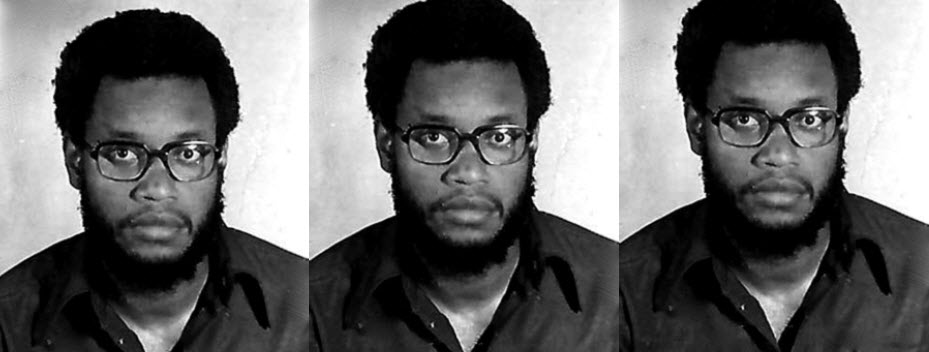
Maybe the mummy lost his heart
When it was alive, to a gaze

Or a hand’s press soft
Before it tightened, distraught.

Or he was always heartless.
Regardless, on screen

We can see it’s fallen
To pieces, chamber collapsed

On itself or
Just vanished, a door

Opening on air. Perhaps
He’s missing it and perhaps

Not. What can a poor mummy do
Without? The matter becomes

Absence. He’s lost something
Big, we know, the thing

Without which, etcetera, whatever
It may have been, or where.

Posted in 79: EKPHRASTIC | Tagged

William Cordova: Machu Picchu after Dark

Already more sounds in the world              than we can hear more frequencies

more attack more positive feedback more hammer and stirrup              and so for all the senses’ potential

to stifle scent and crowd the optic nerve              so here we go into the future with nothing you made

and nothing you thought you could catch              no LED no registration no dials

unmarked polyphony of radii              boxed up              for future radio 
                                                              
                                                              *

no one listens to reason alone                            it gets lost in the middle

the top of the woofer                   the background voice demands

the planetary holes in cones in holes                            as if you could talk back to geysers

repurpose the steam                   the scavenged and the holes in walls the heaps

or spread the bottom-heavy music for                   the shipping containers that turn the globe around

                                                              *

so put up your pinna your needles and hear              take notes

how much do the later nations              diverge              which are yours

the tenements tarps compartments the fake wood              the polymer the corrugated tin

vibrating sympathetically                            piling on

or holding everything in                            keeping up their own time

                                                              *

but the voice of the crowds		isn’t yours

it repeats		it’s rude                 it steps all over itself

it blows its top		“it zigs and zags”	corrodes

or stands up		rickety		        mortarless		it depends

on who has been able to stack		how long can they stay

                                                              *

so turn away              go back to fixing                            what you can fix

as for the unassigned styles              the extra amplitudes              the corners out of sight

what are they blaring or blending              what              crescendo or coda or catenary tone

what do they make              to cut              or amplify

the systems                            absent wires              present words
Posted in 79: EKPHRASTIC | Tagged

Pyroglyphs


With thanks to Heather Parnell, Pocket Remains.


Beyond the softnesses of squirrel, sable,
the more liquidly flickering kinds


of weasel, there is mouse-whisker,
down-feather of cloud-pheasant, newborn baby’s hair.


Don’t credit the word ‘air brush’. There is nothing
to be said with that in your calligraphy.


But look into the fire.


Pick one flame. Watch how it licks
itself, its frayed point, to the finest


definition. Try to read,
then to write, what is sketched by that tip.


*


In the lost script of the silent people,
thirty one characters seem to refer
to shades of being
absent – e.g.


‘the sense that someone has just left a room
where they were never present’ or
‘the state of having left what
is no longer there’.


There is a possibility
that you will understand them.
You have been warned.
Do you want to read on?


*


Among the rakings out of last night’s bonfire,
this: a flicker book of stills,


a busted flush of pages, each a brief exposure
of maybe an almost a face as it twisted away


but not before its glance burned in
as her or his face turned away might scorch the other


to the heart. Here’s a snap of the heart,


its heat print on the moment, here’s its ash-print
on the air. They’ll keep the albums, the two


matching albums of each other, see each other’s faces
riffled by in all the windows of a passing train.


*


As if the most mundane
and crumpled of us might reveal
in the body one day
what the mind hardly dared


suppose: spontaneous
combustion – every cell
resolving, in a kind of Rapture,
God’s equation, e = mc2


*


With a lighter-than-thinking brush-point,
a less-than-a-finger-tip’s flick, in an eye’s-blink,


a kiss to the page: a mark left without pigment
or ink – the almost weightless imprint


in the grass, the pad-scuff in sand
where life brushed past us, so close: signs


the old bush people knew. Ten thousand years


they shared the land with wildfire
in its season. Untended now, it stalks


the gardens of the suburbs, leaving crude
graffiti we can’t read beside our looted bins.


*


Where the angel of fire passed over
and did not stop
to knock:
a darkening …


Where it came low, slowed
and let its wingtip brush
between the streetlight and the blinds:
its shadow, with us …


Where it hesitated on the gable:
soot-fall
in the bricked-in chimney,
its grit on the page …


In the morning a scar, a charred
hole burned clean through
where it entered: as close
as we’ll come


to beholding the face,
to transcribing the one
and unsayable
name.


Note:
The poems of ‘Pyroglyphs’ dance around Heather Parnell’s Pocket Remains, a series of images
literally inscribed by fire, which can be accessed here.

Posted in 79: EKPHRASTIC | Tagged

Review Short: Maxine Beneba Clarke’s Carrying the World

Carrying the World by Maxine Beneba Clarke
Hachette, 2016


At the launch of Carrying the World, Maxine Beneba Clarke shared the mic with spoken word performers who were part of her decade long journey in poetry. The poignancy of Clarke’s gesture demonstrates how embedded she is in a literary community that erases the distinction between ‘high art’ (page) poetry and the spoken word.

In her poem ‘show us where you’re publishing’ she boldly declares:

and if so inclined
could mic some words across
and blow your fucking mind

Our review of Carrying the World is also a review of our journey into poetry, and our alienation from it. Both of our formal literary educations from high school to university, from the 1990s onwards, entailed a favouring of the Western English canon. While one of us studied Indigenous Australian playwright and poet’s Jack Davis’s play, No Sugar, none of his poems were offered by the curriculum. We struggled with our prescribed poetry and literary texts and missed the opportunity of reading and studying great Aboriginal Australian poets like Oodgeroo Noonuccal / Kath Walker, Lisa Bellear, Lionel Fogarty and Ali Cobby Eckermann. Also absent were non-Anglo poets like Pi O, Adam Aitken, Kim Cheng Boey, Ouyang Yu and Merlinda Bobis. Our experiences of poetry were dull and un-relatable. In contrast, Clarke’s poetry aches and roars of experiences that we can relate to as cis-gendered-identifying women of mixed race Ballardong Noongar and Peranakan-Chinese Malaysian descent.

Carrying the World traverses the autobiographical to the fictional, and ‘Demerara Sugar’ anticipates Clarke’s memoir, The Hate Race. Funded by the Hazel Rowley Fellowship, Clarke and her children traveled to England on a research trip tracing her family’s history and her diasporic Jamaican-Guyanese identity.

this niece of mine a-coming say
she going voyage west africa
some writer say she trace
our lineage /

Clarke’s clever use of patois in conversation effectively conveys intimate moments that
provides insight into her relationships with relatives and the uncovering of family secrets.

she going old country
what / she gon feed the chain 
back through the black
atlantic /

The title poem ‘Carrying the World’ is fictional, historical and mythical; it’s a poem you would expect or imagine a black writer and activist to write. At the same time, it also highlights what it feels like to ‘carry the world’, being weighed down by the heavy social justice work that black women must do. Work that is hard, and rarely acknowledged:

the rocking chair strains
under weight of it all
the ole woman’s frail
but she’s carrying the world

In comparison to black male historical figures, women who have participated in this fight remain under-appreciated and anonymous:

y’all don’t know her name
so let’s call her Black History

The pressure that this responsibility places on black women writers like Clarke is further demonstrated in ‘what are you going to say’, where she directly confronts the expectation that she must respond to the shooting in the shopping mall in Nairobi.

people / they have been writing to me
what are you/ what
are you going to say/ about
what just happened
about the westgate mall siege
 
like they think I am
the oracle
or something

By the end she realises that ‘the only weapon I have at my immediate disposal is a pen’ resolving to take up the fight. But in the act of writing Clarke acknowledges the exhaustion that comes with ‘carrying the world’.

but just maybe / I don’t
want or have to be the one
to write it

However, with her growing reputation, she unintentionally falls into being ‘the voice’ for a community, a positioning she questions.

maybe they need a poem
to make sense of it all

In ‘skin’ she conveys the trauma of racism with an honest simplicity that reading it felt like the words reached out and slapped you.

some nights
i try to claw my way
out of this skin
 
but pull and scratch and bruise
seems i’m locked tight in

In short sharp sequences we witness the abject conditioning her body endures in a white settler nation. The nightmarish image is a shocking reminder of the experiences people of colour have come to live with. For this woman writer of Afro-Caribbean descent, race has a strong and powerful presence throughout her collection. Often it is Clarke’s depictions of racial injustice that are the most gruesome but leaves a powerful impact. For example, in ‘mali’ she describes the fear she carries for her unborn son, an emotion that eludes the baby’s father.

your dada said
chill out / these are different times
you’re behaving like it’s 1965
but when I looked in his eyes
all I could see were whites

The poet Lia Incognita wrote in the Overland article ‘Four perspectives on race & racism in Australian poetry’ that writers of colour are ‘largely ignored by publishers, critics, prize judges, anthology editors, curriculum writers.’ Carrying the World begins to redress this imbalance and for readers like us, it is thrilling to read someone who speaks a truth that is often silenced.

The collection also reveals how challenging her journey has been towards mainstream success. In ‘the end of the affair’ she expresses the struggle of pursuing a passion where race and gender discrimination lurk in the background.

between me and you
it was wild while it lasted
but poetry/ he got all single white male
for the last part there on me
it’s true

Carrying the World encapsulates the extraordinary journey of a single black mother, poet and author within an industry dominated by white men and women. From writing and performing poetry at the margins to her recent win at the 2017 Victorian Premier’s Literary Awards for poetry, Clarke’s work is breaking down preconceptions and prejudices in white publishing circles. However, what is equally important as her accolades is that her popularity and force is creating new spaces for other vital voices to emerge:

we want poetry back / we
are the children you
left / wailing / without a backward glance
 
oh / but when you cut down word
the roots undergrounded / and grew
Posted in BOOK REVIEWS | Tagged , ,

Alex Kostas Reviews Dan Disney

either, Orpheus by Dan Disney
UWA Publishing, 2016


Is the contemporary world really as confused and as doomed as it seems? In his latest book of poetry, either, Orpheus, Dan Disney tends towards the affirmative with his ‘elegiac anthroposcenes’ – assaulting scenes of twenty-first century demise – but he does not attempt to grapple with the problem alone. Instead he enlists the help of a stunning amount of other writers and thinkers.

Kierkegaard and Rilke are the two major influences in this work, though they are far from the only ones. In every poem Disney pits different writers and their thoughts against each other; this creates a kind of poetic conversation, reminiscent of Kierkegaard’s early work in which he argues against himself using different pseudonyms. Sometimes an entire poem of Disney’s is dedicated to one poet, and other times a single poem is set up as a debate between various writers (interesting is Disney’s use of ‘vs.’ as opposed to ‘&’). What is the reason for all this, though?

Disney is intent on finding what he calls a ‘humanising mode’ of poetry that allows us to ‘peer across openings between appearances’ and, like Rilke, mobilise current global anxieties which other forms of writing can tend to shackle or conceal. And it seems that poetry is the only way to do this properly, as it appears to be the only way Disney can form his so-called ‘sound shapes’ that assemble everything from Marxian theories, Cultural Studies commentaries, and the self-proclamations of numerous creative producers of text and art into something that seems total and all-encompassing. By gathering the thoughts and ideas of so many writers, and synthesising these different viewpoints in such an explosive way, Disney erases the boundaries of time and space, as well as the pretense that any of us write or read or think in a vacuum. Disney knows whose ideas he is gathering as his ‘language-pollen’, and he is not trying to hide what he is attempting to do with this work: that is, something different from Kierkegaard’s either/or (a regretful atheist’s desire to divide himself into his ethical and aesthetic parts in an effort to find God) and Sonnets to Orpheus (poems bridging a silence that gives us glimpse into an empty, but responsive, unknown); instead Disney gives us his self-proclaimed ‘godless both/and’. This is the way through for Disney.

The theme of modernity and, more specifically, the constant nature of the modern world is apparent in these poems, largely due to how deliberately Disney grounds his poems in contemporary surrounds and situations. From the very first page we readers are plunged into the mysterious ether that is our century: post-industrial, post-modern, post-fact, post-meaning:

In a grey city filled with office buildings that scraped the underfloor of the clouds, in a grey city of factories run by well-greased machines that never slept in too late (and after all, who could sleep with the to-and-fro, all the shuffling hours of the day), in that city of shuddering systems at work, no-one noticed it at first

It seems to me that Disney sees modernity as a force, in and of itself. Technology and late-stage capitalism seep through the edges of this book; this is the Anthropocene circling around the self-destruct button. Disney seems to be attempting to coalesce the voices of many into a single theory, a single way through the labyrinth that looms all around us as a collective humanity.

Disney focuses on the individual becoming in tune with the universal, in a Kierkegaardian way, but it is never quite spelled out for us as simply as that. Disney isn’t asking to play preacher, if anything he’s simply a master craftsman, handing us a mirror which only reflects our own reactions back to us. Or maybe a better analogy would be that Disney has created a machine of sorts in this book, a kind of computer. The reader approaches either, Orpheus with their conceptions of the world and their unspoken anxieties regarding the present and future, and then these data points are thrown about and combined and examined until, at the end, the reader is left feeling tested and hopefully sharpened by the range of voices present in the pages. Maybe Disney has succeeded at creating a version of what Levertov calls the ‘meta-machine’, using an ‘extra-linguistic silence’ and the repetition of the ‘villanelle’ style to allow us to internalise the external while simultaneously bringing the internal to light.

A villanelle is a kind of fixed verse form, popular for pastoral poems during the eighteenth and nineteenth centuries. The villanelle’s most defining feature – and the one that Disney uses the most in his modernised version of the form – is repetition. His poems obsess over certain lines and ideas. For example, the first three stanzas of a poem dedicated to Ted Hughes:

I spent the first years of my life in a valley
            sitting in woods muttering the occult business of little folktales;
                        madness sometimes works

amid the machines kept running elegiacally by large sets of hands
            sweeping populations of crow from each momentary wholeness
                        I spent the first years of my life in a valley.

enchanted by the noise of complex human emotion: it was
            big trouble in tweed jackets, the very wide landscapes of modern man
                        and this is why madness sometimes works

This form lends itself well to a work of this magnitude and type. Traditional, and yet made modern due to the content of the poems themselves and by Disney’s different ways of inverting the villanelle into something more like concrete poetry, the sense of encapsulating and ‘bringing together’ of history and several viewpoints at once could perhaps only be properly communicated through such a form. Without looping and re-interpreting of the same idea, and without the necessary spaces between lines that the villanelle enforces, Disney’s poems may not have been so good as they are.

In the book’s epilogue Disney calls his poems ‘sound-swarms’, which is a good way to describe how it feels to read this book. It can be assaulting, and the spaces between the sounds and rhythms with which he fills the pages are noticeable. The spaces between the swarms are important to understand and contemplate, like in this poem that plays Alain Badiou against Samuel Beckett:

or does truth exist as a charm (L. carmen: song), epic
amid overgrown nakedness, geraniums, countless procedural fingerings
we know not where to begin, nor how

to announce disappointment in the rhetorical equipment of the gods,
a church of hats lurching through muddy breeze
where truth exists as a charm (L. carmen: song), and rats

gallop unsurveyed by mystics, alienating
in near-beastless gardens, opening ground in the name of tragedy/completion
we know not where to begin, nor when

to take the pulse of that society of old friends
in a matrix of poses declaring taste, flash of themselves in front of closed
windows
truth exists as a charm (L. carmen: song), an incarnation

Posted in BOOK REVIEWS | Tagged ,

Review Short: Lisa Jacobson’s The Asylum Poems and Judy Johnson’s Counsel for the Defence

The Asylum Poems by Lisa Jacobson
Recent Work Press / IPSI, 2016

Counsel for the Defence by Judy Johnson
Recent Work Press / IPSI, 2016


Lisa Jacobson is a Melbourne poet and social worker. In the chapbook The Asylum Poems, she attempts to empathetically inhabit the experiences of an Iraqi family fleeing persecution. Her images are often beautiful, like ‘uncle-blood falling in rays’ and ‘families scatter like music’. The prettiness of the language is a curious choice, though, given the raw horror of the subject matter. Closely observed grotesque details, like the father yelling ‘Towels! ’ as he carries his bleeding brother over the threshold of their Iraqi home, are among the sequence’s most satisfying moments.

The chapbook is bookended by a pair of poems in which Jews in historical exodus proclaim their understanding of the plight of contemporary asylum seekers. ‘To all those who seek asylum, do not think / we have forgotten you’, say the Jews in 1939 aboard a ship fleeing Germany. ‘We’, presumably, is a pronoun encompassing not only all living Jews, united by the shared burden of historical persecution, but all Jewish ancestors who suffered exile and racist inhumanity in history’s long and shameful dossier. The Asylum Poems dilate on the experience of a family who flee Iraq, brave the perilous boat journey, and arrive on Christmas Island. There are moments when the unbearable situation the family is fleeing is poignantly fictionalised. However, the book’s opening and closing poems situate these culturally particular experiences within the grandly compassionate and apparently uncomplicated total understanding of the narrator, who invokes her inheritance of the historical suffering of the Jews as evidence of shared experience: ‘We too were thin with hope’; ‘we were concave with sorrow like you’; ‘May we console you, as we were consoled, in the desert of our own exile’. I cannot quite dispel the smell of irony that hangs on these poems’ premises. No matter how the Jews of the SS St Louis and the Old Testament might sympathise with other situations of exodus, the Israeli government has little sympathy for the plight of other Middle Eastern peoples fleeing oppression, and an asylum seeker family wouldn’t think of showing up on Israel’s doorstep.

When expressions of compassion are aggrandised in this way, they become abstracted, thin, too pure. To me, they lack the textures of a genuine human-to-human exchange, where our own concerns, cultural lenses, to-do lists, and judgements are always interrupting. I think I would prefer to read poems where Lisa Jacobson the social worker sits with Ali the Iraqi asylum seeker, and to hear them talking, and to read the movements of their minds, known and imagined, and, crucially, to see some self-conscious intimation that there are pockets and crevasses of Ali’s experience that we (the ‘we’ of white, privileged, middle-class Australian poets sheltered from racism and persecution) can never understand.

The ‘Dark Convict’ poems in Judy Johnson’s Counsel for the Defence constitute another imaginative occupancy of the mind of an ‘other.’ In this case, Johnson writes the trauma of her ancestor, John Martin, who was one of eleven African American ex-slaves who were First Fleet convicts. The various hells of Newgate prison, typhus, bushfire, and the cat’o’nine tails are rendered with highly musical language, the images lush with dread and sometimes vomitously affecting. Listen to this:

            Flares galloped the trees with a million dirty hooves

gorged on the leaves   then shit black ash on my head   burped up
orange flares. (‘John Martin’s Fifty Acres’)

and this:

The flogger clears the gore with his fingertips   to make 
sure   the next lash will let those knots dig in.

and this:

                                                      We are bound
says they   for His Merciful Majesty’s African
plantations.   The blacks among us should feel   nostalgic
elation   says they.   Our long-lost dead might dig up   their
own bones   they had buried for safekeeping   til we came

home. Those withered sticks   then rise up and dance   under the
pus-clot   of all negro moons.   And yes!   Won’t we all dance
and swoon   right along   says they?

Black humour often rescues the poems from melodrama, which they risk but are never defeated by. The fucked power structures of the colonial project are also beautifully rendered in their cruel absurdity, layering the implicit compassion of the collection with textures of cynicism and exasperation. I also find that a certain self-consciousness about the process of fictionalisation fends off my discomfort around ideas of who can write the other. For example, in ‘Caught Black Handed’, the authenticity of apparently verbatim court documents is disrupted by lines like:

The clothes packed in their open-and-shut case of guilt   I
     show fast-and-loose to this court   hoping their plain-as-day
          material witness makes a fine noose.’

The poems wear their constructedness with some obviousness. These moments announce the attempt to imagine radically other experiences as just that – an attempt.

Johnson’s chapbook also includes five poems about flowers, a formal experiment of constraint (each line has nine syllables) that the occasional confusion of tones rendered less compelling for me than the ‘Dark Convict’ set. Still, the marvellous torque and thoughtfulness of Johnson’s project speaks of a mature poet at the height of her powers.

Posted in BOOK REVIEWS | Tagged , ,

Submission to Cordite 82: LAND

Land

Poetry for Cordite 82: LAND is guest-edited by James Stuart and Jane Gibian.

The land: timeless, underfoot, taken for granted. To live off it. To care for that land. The land.

#landscape #sublime #wild #topiary

Disturbed land. Conserved land.

Whose land? Yours, mine, the landlady’s?

Landlocked.

Land unlocked.

(don’t) Lock the gate!

To land: a punch, on your feet, a fish, a job, a chopper.

Step ashore. Landmark. Landslide: to win, to cover. To bury. Land.


Submit poems (prose, comics, visual, concrete) or works of microfiction (500 words maximum). Read more about submitting to Cordite Poetry Review. Please note:

1. We will only read submissions sent during our official submission periods.

2. Cordite maintains a hybrid submissions policy. This means that the guest editor may invite five (5) Australian and five (5) overseas authors directly to submit to the issue. In addition, the guest-editor will anonymously select an additional 30-35 works from Australian authors and use their discretion to select further overseas works. For each issue, the guest editor does not know the identities of the online contributors (via Submittable) until after the final selections have been made.

3. Simultaneous submissions or previously published material will not be considered. This includes works published in print and web journals but does not apply to material first published on personal blogs.

4. Please place up to three (3) poems in one (1) Word, RTF or PDF document (unless specifically noted otherwise for special issues), with no identifying details in the document itself.

5. We are not able to offer feedback on individual poems.

6. Submissions will only be accepted via Submittable …

submit


Posted in GUNCOTTON | Tagged , ,

Siobhan Hodge Reviews Contemporary Australian Feminist Poetry

Contemporary Australian Feminist Poetry
Bonny Cassidy and Jessica Wilkinson, eds.
Hunter Publishers, 2016


Contemporary Australian Feminist Poetry presents a compelling cross-section of feminist voices, experiences and engagements in Australia, picking up from where Kate Jenning’s 1975 feminist anthology Mother, I’m Rooted: An Anthology of Australian Women Poets left off. Bonny Cassidy and Jessica Wilkinson have collated new voices and criticisms, rich in their variety, yet presenting a thematically harmonious, unified front.

There is much of value in collections like these. Contemporary Australian Feminist Poetry sets up a layered answer to the question, ‘What is feminist poetry?’ There is no demand for urgent action, but rather a subtle, cresting sense of activism. Family, death, art, cyborgs and ancient history are all raised for comment, with a recurring central focus on the importance of individual voices.

The collection draws from the works of women (and a few men as well) located all over Australia, feeding into a central idea paraphrased from Rachel Blau DuPlessis by Ann Vickery: ‘a constellation of strategies’ rather than one homogenised approach towards feminist voices among hegemonic identities. There is a reassuring note of solidarity throughout the collection, but a simultaneous celebration of diversity in style, tone, theme and foci. This collection shares voices in collaborations, dedications, and solo strikes; there is no ‘one feminist voice’, but Cassidy and Wilkinson in the introduction recognise a shared sense of responsibility in the present. Diverse subject matter and direct styles abound.

In generating the collection, Cassidy and Wilkinson stipulated that none of the poems contained within could be previously published; motivated by a goal that ‘we would come face to face with “processes of consciousness and of writing” that reflect how people are using the page in Australia’ (Jennings, ‘Introduction’). These are on-going works, reacting to twenty-first century needs. In this sense, despite the editors’ professed desire not to document an écriture féminine, this is a necessary consequence of completing such a work (‘Walking through glass’, xiv-xv). There are risks of essentialism when compiling a collection like this. Hélène Cixous’ model of écriture féminine has attracted criticism for being excessively utopian and ahistorical. Pam Morris identifies some of these major criticisms, particularly concerns of biologism or essentialism in Cixous’ demand that a woman ‘write herself’ through returning to the libidinal drives of the body. This need for spontaneity can be seen as affirmation of stereotypically ‘feminine’ emotionalism and irrationality.

However, Cassidy and Wilkinson have offered much to counter this restrictive interpretation: there is no strict uniformity of style, tone or agenda; female and male voices are commingled; and the ‘selves’ within these poems are often layered presences, rather than immediately personal or self-referential. The voices within the collection are varied, alternately outpouring and remote, demanding and forgiving, but always resolute, and frequently with a note of rebuke. Poems are written by individuals, in collaboration, and in dedication. There is no one ‘feminist voice’ within the collection.

The structural and thematic implications of excessive quotation in Gabrielle Higgins’s ‘She will be praised’ dominate the poem. ‘Judith’, a Hebrew name which translates to ‘she will be praised’, completely frames the poem, broken into fragmentary quotations by three other poets: Judith Rodriguez, Judith Wright and Judith Beveridge. Higgins’s style borders on referential iconography, weighed against the irony of the final lines ‘(to the) subtlest form                 trying / each thought like a key’. In order to be recognised, subtlety is not necessarily going to get results. It is vital to breathe life into names. The speaker of ‘Visions’ by Ali Jane Smith, also early in the collection, shares a similar anxiety, as she is ignored by a procession of male icons – David Attenborough, Tony Robinson, Monty Don, Brian Cox – only to be finally addressed:

On an almost empty bus, the one
I’ve been waiting for, Professor Mary Beard.
Waist-length grey hair, long legs
the voice of a practical neighbour.
On her blog she has written ‘one should only
very tentatively pontificate
about places one visits, but doesn’t really understand.’
How to arrive at understanding?
First press the buzzer and alight.
Mary asks ‘What happened to that pencil?’

Smith’s speaker struggles to balance meaning-making while contending with a barrage of domestic chores and images, never quite reached by the suggestions of the male figures. Professor Beard’s representation pushes agency back into the speaker’s hands via directives and questions, but the work is still hers alone.

Traditionally ‘organic’ visions of femininity are teased in Meredi Ortega’s ‘Cyborg me’:

first thing I’d hack would be my womb
hack it right out like the tin woodman with his enchanted axe
               put a music box in there, have it play Greensleeves.

Irreverent yet flippantly scathing, Ortega playfully undoes the pinions of biological characterisation:

my forehead’s going to be an LED scrolling message
               sometimes it will say FUCK OFF, unprovoked
other times it will say USE YOUR INITIATIVE.

Ortega’s spilling over of agency outside of traditional body confines runs up against the agony of bodily ownership, soaked in imagery of abuse and wearing thin against external intrusions in ‘Unbecoming’ by Jo Langdon. All throughout the collection, Cassidy and Wilkinson have presented a range of ‘bodies’ to voice their grievances, circulating the recurring need for stronger feelings of autonomy, freedom, and safety. Elif Sezen’s ‘Immunosuppression’ embraces medical terminology to address this lingering gap between on-going national and international issues of lack of agency:

… I smile.
‘Your healthy self must visit all wounded parts
and dark places of your past’
               you say
‘send her to all places: embrace those selves’

The long-awaited secret is reflected
through the soul’s prism
the illusory corpses 
of those women
unnamed.
There is no end.

This idea that ‘there is no end’ is a recurring undercurrent to the collection. These are not ‘all’ Australian feminist voices, nor are these all of the possible angles in need of critique. Cassidy and Wilkinson succeed in taking a living tissue sample, but no one poet is offering answers to all of the concerns within.

Posted in BOOK REVIEWS | Tagged , , , , , , , ,

Melody Paloma Reviews Emily Stewart

Knocks by Emily Stewart
Vagabond Press, 2016


In her 2004 essay ‘Avant-Garde Community and the Individual Talent’, Marjorie Perloff highlights the disjunction between notions of the avant-garde and its reality, specifically the problematic association of the avant-gardist as having to belong to a particular band or movement. Perloff writes:

The dialectic between individual artist and avant-garde groups is seminal to twentieth-century art-making. But not every “movement” is an avant-garde and not every avant-garde poet or artist is associated with a movement.

Emily Stewart’s Knocks operates somewhere in between these two ideas. Certainly, Stewart is part of a new wave of avant-garde poetry in Australia, and collaborative prowess is surely at the collection’s centre; but it is difficult to attach Stewart to just one particular community. Knocks pays homage to a variety of twentieth century movements: there are traces of the Oulipo, The New York School, and a certain wave of Australian poets of the late ’70s, ’80s and early ’90s that includes Pam Brown, Gig Ryan, Ken Bolton and John Forbes. However, to place Stewart as generationally aligned with just one would be a stretch, as the poems in Knocks are too various and unruly for that. But if there is one alliance that crystallises in Knocks, it is an alliance with women.

Amelia Dale writes, ‘to read Stewart is to be in the company of women’. Like Dale, Pam Brown’s launch speech cited the influence on Stewart of Arielle Greenberg’s gurlesque – a mode that celebrates, in Greenberg’s words, ‘visceral experiences of gender; these poems are non-linear but highly conversational, lush and campy, full of pop culture detritus, and ultimately very powerful’. More locally, Knocks might be read as elaborating on Melinda Bufton’s performance of the gurlesque in her debut collection Girlery (2014). In a review for Cordite Poetry Review, Emily Bitto reads the collection’s title, Girlery, as a verb, ‘something close to a feminine form of tomfoolery. One imagines a stern injunction to “cease this girlery at once!”’ Girlery then, might be considered as a feminine report of ratbaggery, a gurlish nerve that is traceable throughout Knocks.

By way of example, ‘Mobile Service’ encourages us, with obvious hints of irony and moxie, to ‘dust down a book of microwave recipes and Instagram it, with / kisses’. Elsewhere, ‘MIAuk – Baddygirl 2 MIA PARTYSQUAD BEYONCE FLAWLESS REMIX’ indulges fanfare for the gurlish heroine, the Queen B of pop. The poem presents as selected YouTube comments taken from an MIA remix of Beyonce’s ‘Flawless.’ Stewart’s poem is a tongue-in-cheek remix of the digital commentary by one female pop star on another female pop star’s anthem for female sexuality and pride. For those who don’t know (but honestly, how could you not?), ‘Flawless’ moves around the refrain:

We flawless, ladies tell 'em
I woke up like this
I woke up like this
We flawless, ladies tell 'em
Say I, look so good tonight

To add another layer to this lineage, the original ’Flawless’ contains a sample of Chimamanda Ngozi Adichie’s ‘We Should All Be Feminists.’ So by this stage that’s remix x remix x remix x remix or, remix to the power of four (cheeky, to say the least). This is not to say that Stewart’s remix is a dilution, rather, in embracing this consistent deferral it has the opposite effect: the poem’s cognisance saves it from the risk of appearing too popish; Stewart’s art of remixing is both sharp and cutting. Moves like this one might be seen as an extension of Jacques Derrida – an ode to ‘différance’. The intertextual references in Knocks embrace the various trajectories of meaning; to be involved in the communicative matrix and to destabilise meaning is a thrill for Stewart, a thrill that is transferred to her reader, too.

One might also note this drive in the collection’s second section, consisting of some of the work’s most intriguing poems. It is composed of six erasures constructed from the writing of Lydia Davis, Virginia Woolf, Helen Garner, Dianne Ackerman, Susan Sontag and Clarice Lispector. Most obviously, these erasures continue the book’s dedication, its homage to and collaboration with female poets, not only because of the source material’s authors, but also taking into consideration the history of Erasure as a form rooted in feminism. Travis Macdonald argues that our earliest encounter with erasure comes from Sappho’s fragments, ‘authored by the elements themselves … via the remnants of weathered stone carvings and papyrus scrolls; artifacts dutifully discovered, reassembled and retranslated by the scholars of every successive generation’. Like Sappho’s fragments, Knocks is direct and erotic, an agent for female desire. ‘Animal hands’ declares, ‘All I want is your mouth on my neck’, and later in ‘Baby’, ‘If what you’re imagining is sex, place me / in the whip hot tundra where we can fuck / and burn for it’.

Posted in BOOK REVIEWS | Tagged , ,

Erin Thornback Reviews Andrew Lansdown

Kyoto Sakura Tanka by Andrew Lansdown
Rhiza Press, 2016


Through a series of visual and textual explorations, Andrew Lansdown’s Kyoto Sakura Tanka creates a striking depiction of the bicameral, separating his collection into kami no ku (the poet sees) and ashimo no ku (the poet wonders). The fundamental basis of Lansdown’s series is rooted in the Japanese tanka, or traditional waka: a five-line piece of poetry divided into mortas, or syllable counts, of 5/7/5/7/7. Yet, in this series, Lansdown once again takes up the themes of nature, transience and master Bashō’s doctrine of fueki ryūkō – ‘permanence and change’ – only to position himself against his chosen poetic tradition.

Lansdown’s self-assigned task in this collection is twofold: he is disruptive to form and yet desires to remain meaningful. Notwithstanding bold innovation, Lansdown’s tanka captures the precision of haiku in its brevity while simultaneously preoccupied with fresh visions of the Imagist tradition as a means of cognitive exploration. Each poem takes the reader on a poetic detour of Kyoto, which furnishes new significance for this microcosm of Japanese culture and tradition. Of course, small details and Lansdown’s exquisite precision of language are not definitive, yet they are specific enough to keep abreast of fueki ryūkō as a necessary innovation to the waning presence of the tanka in contemporary poetics.

Take for instance, Lansdown’s ‘Volcanoes’:

There are volcanoes
among the mighty bamboos,
extinct volcanoes
with water in their craters
where once other bamboos stood.

This perception of the ‘bamboos’ awakens us to a dual significance in what remains once the bamboo undergoes metamorphosis. In the heavily codified realm of traditional Japanese poetry, waka’s select poetic words allude to a multitude of connotations and prescribed associations. Within ‘Volcanoes’, ‘bamboos’ embody the perpetual vitality of nature itself or are presented as ‘extinct volcanoes’; nothing more than an awareness of the impermanence and delicate im / perfection of things, characterised in the Japanese aesthetic of Wabi Sabi. This idea is also demonstrated in Lansdown’s ‘Off-Pivot’:

Shishi-odoshi –
an off-pivoted bamboo tube
Periodically
lifting with the load of water, 
falling with the load of itself.

The ‘shishi-odoshi’ is an imperfect metaphor for the realisation that things are lost to us even as they are found, characterising the traditional subject of seasonal change and awakening thoughts of the transience in and of nature. This motion of ‘lifting’ and ‘falling’ is similarly presented as involutional, the motion from past to present, present to past, which thus allows the past of the classical tanka form and Lansdown’s contemporary poetry to embrace and inform each other in the dynamic immediacy of present vision. This is literally and figuratively realised in the accompanying photography. In this way, Lansdown’s poems offer an aesthetic ideal that uses the uncompromising touch of mortality in ‘Volcanoes’ to focus the mind; and, in ‘Off-Pivot’, to provoke a sharp, intuitive discovery in order to get the essence of life and fueki ryūkō, infused with tradition and abruptly disturbed by ‘the haunting hollow bamboo sounds punctuating the temple garden’ (‘Shish-odoshi Hauntings’).

Of the haiku, Lansdown adopts hyperbole and repetition as a kind of foil to the elegant poeticism of the tanka, and a contrast to the worldly realism of ‘vulgar’ rhetoric, only to then re-poeticise them. Set within the language of common speech and his perceptions, Lansdown utilises the poetic diction incorporated in the haiku to entice the reader to review the everyday life of contemporary Japan through aestheticized eyes, thereby authorising new subject matter as worthy of the grand tanka tradition:

Sakura, Susan …
as with the cherry petals, 
so also her cheeks –
a pink flush in the whiteness
and my regard as witness.

(‘Witness’)

The consonance of ‘cherry’, ‘cheeks’, ‘whiteness’ and ‘witness’ is used here to emphasise the ephemeral beauty caught fleeting in the sakura blossom and Lansdown’s wife, Susan, to whom the text is dedicated. Normally, of course, this sort of cloying reiteration would be very obvious. It stands out here, however, as an evident anomaly within the minimal scope of 31 syllables, where its imagist inclination depends on verbal economy, the reverential ‘pink flush in the whiteness’ resonating with ‘regard as witness’. Lansdown employs the exact word, not the nearly-exact, nor the merely decorative word, but hypostasises love and consciousness as qualities of nature itself. Through the alliteration of ‘Sakura, Susan’ he reveals that both figures are invested in an immense environment, not distinct from it, but, as determined in the adjoining poem, in a mutual, inexplicable process of eternal blending and appreciation of natural beauty:

She’s beyond white
in purity, so she’s quite
beyond seeing –
the Kyoto bride trailing 
confetti through the cherries.

(‘Bride’)

The result is a vision of human presence framed against an interfusional setting, that is, nature is not presented as an otherness distinct from Susan, but as a shifting perceptual field that is so ‘beyond white in purity’, that it is ‘quite beyond seeing’. This quiet process, whereby humankind and nature appear perfectly continuous and productive of each other, displaces consciousness into all things – human and inhuman – in such a way that cognitive and emotional qualities ordinarily belonging to the human are seen to anticipate an amorphous and embracive environmental unity of seeing and feeling. In unifying nature and the human, the marriage Lansdown celebrates is rooted in the Japanese concept of ‘furyu’, which literally means ‘in the way of the wind and stream’; Sakura and Susan presented as within a liminal zone, which the reader, as ‘Witness’, must occupy to realise Lansdown’s vision of the ‘Bride’.

Posted in BOOK REVIEWS | Tagged ,

Duncan Hose Reviews Nick Whittock

Watson Era by Nick Whittock
Crater Press, 2016


Whatever happened to the Goddam enlightenment? I understand that this grandiose Western intrigue has moved dialectically through succeeding twilights if not dark ages, and the twentieth century was a sort of apocalyptic culmination or quickening of this protracted ‘event’ with the splitting of the atom, the holocaust and turning the idea of the world into a globalised tele-visual circus of war and business. Maybe we should ditch the old plot of light overcoming dark and go for the Baphomet’s ultimate configurative solution: solve et coagula, come together and go apart.

This is the antagonistic motor of dialectics, the revolutionary (mobile, revolving) intercourse of opposite forces in whose confrontation comes the productive power of the cosmos (thanks, Heraclitus). One living practice of ritual confrontation is cricket, which, like whaling for Herman Melville, functions as Nick Whittock’s system of constitutional metaphorics, the eternal return of contest for the delectation of the gods, and I think the Baphomet an apt figure for the kinds of pagan minstrelsy encountered in Whittock’s new book Watson Era, concentrating conflictual forces in the figure of one charismatic beast.

Like a lot of Whittock’s work, this book is an effort toward the re-enchantment of the world, which does not pretend to universalise its terms but rather acts as a charge for us to do the same. We are presented with the complex symbolic atmosphere of the author’s current obsessions whose structural topoi belong to the spacing of the public but whose relational significance is intensely private. Happily, here, what might seem to be a series of niche obsessions becomes a fierce utopian project of modifying or troping bits of Australia (‘gecko         of glory’) to set them in permanent revolution. As an act of constitutionalising the world in a Shelleyean sense, this is not just cheeky but positively anarchistic. I cannot recollect all the proper names gathered here, but I sense that the effort represents an affirmation of human being in all its festive confetti terror – a staging of the life and death drives, of continual coming into being and disappearances, Vulcanic integrations and fiery disintegrations.

The work proceeds as a series of ritual innings of varying durations, long players and singles in vinylspeak. Much of this ritual action is structured through the intense grid of the cricket scorecard, dramatising the play of the finite as the infinite, the contingent as the necessary. What is made to come together and go apart in this game of signs is just about everything. Whittock’s scorecard method populates the columns of batter, bowler, how out, runs taken, balls faced, maidens, with unexpected values, or proper nouns, or anything at all, and affords the contemplation of catastrophic conjunctions like this:

1

In all the intricate machinations of Marxist theory, and the way these rhetorical formulae have played out historically in millions of human lives, what is the terrestrial relation of the name, the figure, the phantasm, the radically materialist philosophy of Marx to the seacrab? It is unthinkable, but it compels us to think to the limit. It is also, from the purview of the gods, very funny. Whittock demonstrates with aplomb what poets and I suppose sorcerers have known: comedy can be a weapon (scourge) and a great alleviation (salve) in the recreations of knowledge and the postulation of rejuvenated social systems. This book in particular goes to prove what I had always hoped and expected might be the case: the revolution has to be fun to keep it on a superhuman scale.

Watson Era mixes brilliantly micro and macro structuration, the occasional and the epic (the occasional as the epic), presenting the scale of being from ‘lorikeets’ to ‘gut florikeets.’ ‘James Faulkner’s Fiery Disintegration Machine’ occurs as a series of song cycles that gather their energy centripetally and well as centrifugally, which is to say that they are equally bent on a radical dispersal as well as a radical coming-together of code and combustions of meaning. Among the structural analogues I can think of are the helixical strains of difference and repetition in the oral poetics of Paddy Roe via Stephen Muecke in Gularabulu and in Stuart Cooke’s (polyphonic polymorphic) translations of George Dyungayan’s West Kimberley song cycle Bulu Line. Whittock similarly busts up the colonial aggregation of data by drifting across the regular fencing of the cricket score card. Being mostly hand drawn, these are fairly wonky to begin with (as paddock fencing seems to love to melt over time), but as the poem progresses these aggregate cells are made to swarm and explode all over (and off) the page, with the effect being one of watching a partly controlled particle collision machine.

One aspect of the poem, as I read it, is to capture the moment of being ‘buzzed’ or strafed by a Red-tailed black cockatoo:

black cocka                           turned tall    backs a too-let      quiver flame on
like fierce                             turned upon us    back atoo-let        fire burn
bright trembling                          w.   un                                            down
quenchable                                 w.     un                                             it
desire at                                    great beam of
                                                    milky                                               way be for
                                                     ever                                               tongue shiftin

This occurs in the context of everything- anthills, gums, boulders, mulgabrush- ‘turning its back on us,’ everything ‘moving’ and ‘shifting.’ This is the bush without its Romantic hero, visually happening at the speed of lexical flicks. The parabola of the event casually hands us infinity, the moment of swooping cockies is exploded to the sublime smudge of ‘milky         way be forever.’ This is the star system of cockatoo as celebrity and the milky way as dense ancestral cluster; these things always made of each other, an assurance that is both exhilarating and terrifying, confirmed by the promise to continue making mythos at the end: ‘tongue shiftin.’ I had a ‘bingo’ moment reading and re-reading this poem akin to the heavy electrical experience of seeing Cy Twombly’s Quattro Stagioni for the first time.

Posted in BOOK REVIEWS | Tagged ,

CONFESSION Editorial

Confession
The central drama of post-internet poetry is that of disclosure, confession and self-creation.
– Charles Whalley


Charles Whalley’s essay on post-internet poetics ‘This has been a blue / green message exiting the social world’ takes its title from a Sam Riviere poem, which makes me imagine ‘blue / green’ text messages bubbling like algae blooms on a mobile phone. If communication and sociality are nothing new to contemporary poetics – a conversational style pervaded many of the poems by Australian poets who have been writing since the 1970s that I cut my teeth on, poets such as Ken Bolton, John Forbes and Pam Brown, themselves influenced by the earlier ‘personism’ of American poets such as Frank O’Hara and Ted Berrigan – it remains in 2016 where so many of our conversations happen online (whether directly messaged or indirectly posted). Digital media has become an intrinsic intercessor not just in the expanded ‘digital literary sphere’ (Simone Murray 2015), but also aesthetically.

When I chose the theme of ‘Confession’ for this issue, I wanted to see what meaning it might yet have in our contemporary digital dialectic, where we must increasingly navigate and present ourselves and our lives in a way that is, at once, privately public. After all, this ‘knowing’ sense of constructing a self for consumption has always been the domain of confessional poetry (think Sylvia Plath), and I suspected that there would be confessional poems galore in our ‘over-sharing’ era. It’s a conversation we are dropped right into in Eva Birch’s ‘The Last Time’, a psychogeography of trauma, memory and digital communication:

Keeping up with
Keeping up with all the different types of abuse in Melbourne

my brain runs out
I can’t remember anything
except
every email and every text every ex sent

While Sam Riviere has gone on to use some decidedly non-lyrical techniques – his most recent book of seemingly semi-confessional poems, Kim Kardashian’s Marriage, is actually entirely unoriginal (none of it self-composed) – when I read his earlier collection, 81 Austerities, I was struck by how, at heart, I sensed a sexually anxious, heterosexual male persona, no matter how mediated. Indeed, mediation can seem to promise a desired remediation, as in ‘Save’, his poem in this issue:

… and in her bed
luxuriously blurred, I finally feel able to author an
anonymity that is believable.

Justin Wolfers’s ‘Backchannel Norms’ picks up the theme of masculine insecurity in lines so short they could have been composed on a phone screen:

I’m sorry, I
tell her later,
sorrier than
I can say
into such a
tiny chat box

The persona of this poem is called ‘Justin’, which suggests the kind of flat affect that Oscar Schwartz argues in his essay ‘Can I Have your Attention Please? Poetry in the Age of Social Media’ is familiar to readers of Alt-Lit (a loosely defined literary community that draws its motifs and modus operandi from online culture). It’s at once ‘detached, unaffected yet existentially absorbed and emotional’ (Schwartz). I’m not sure if Wolfers is interested in emulating or parodying poets like Tao Lin in his waxing anti-lyrical about a hypothetical long poem that

… simulates
the feeling of
disappointment
without delivering.

The poem acts as a meta-poetic orobus while performing what it is otherwise about.

Kafka once wrote,
I tell her, I solve
problems by letting
them devour me.
Yeah, she replies,
But I don’t think
he meant that
as advice

It’s a prime example of an on-going conversation with recent American and UK poetics happening in Australian poetry, engaging with established tropes such as gender, poetry’s relationship to film, music, literature and popular culture, and most compellingly, the question of voice.

Justin, a linguist would say,
violates backchannel norms.

While it seems there will always be the obligatory male masturbatory poem, it’s herein updated for the end of the anthropocene in Adam Ford’s ‘I’m Worried That My Increasingly Complex Shower Masturbation Routine is Unethical Because of The Amount of Water I Use’.

One criticism of Alt-Lit has been along gender lines, though in this issue the post-internet confession is decidedly queered, as non-binary poet Rae White writes in ‘tweets I never published’

& there are days i hate
         polyamory – it makes me
         more tired        than i thought possible

Relationships between self and other also provide the fodder for some other younger female poets new to publication in Cordite Poetry Review, like Alice Chipkin, whose ‘Lung Rubble’ charts the demise of a same sex relationship –

we hold hands and walk back to st kilda. I stare at the kids staring at us. Let
them think we are girlfriend & girlfriend. it’s not a lie, just fucked up
chronology

and Talia Chloe, a 21 year old poet whose list poem ‘21 Ideal Dates’ is riddled with projected anxiety such as solastalgia –

Ideal date: you tell me about meromictic lakes and melting glaciers. I am
nervous and say that you would make a pretty glacier.

though Ellen van Neervan’s ‘Water on Water’ ends more affirmingly:

I am loved.

Other poems are more engaged with the self (away from others) such as Ali Jane Smith’s anti-social ‘Clodhopping’ and Jill Jones’s riposte to contemporary culture ‘My Skeptic Tremor’. Some are built around the refusal of the self (Ann Vickery’s ‘On Not Giving an Account of Oneself’) while others compile portraits of others, such as Kathryn Hummel’s ‘Being Astrid Lorange’:

I’m round like a kitten and my kitten teeth too.
So soft, my white jumper like any boy’s beard.

This issue compiles work that is decidedly diverse in gender, sexuality and culture, and includes ‘Making Instant Noodles at the End of the Rainbow’ by Indonesian poet Norman Erikson Pasaribu (translated by Tiffany Tsao) writing a eulogy for a transgender friend. In another gastronomical ode, Jamie Marina Lau’s ‘Disgusting Landscapes’ creates an abject cornucopia that begins ‘The West has been kneed in the gut’ and ends ‘Some dairy wobbles’.

The relationship between music and the lyric is another strong theme. There’s the ‘Norwegian nu-disco’ of Alexandra Schnabel’s ‘aphex twin grin or, r.i.p Mercat’ through to Gareth Jenkins’s ‘There’ll always be music’ making the obligatory Leonard Cohen reference (turning him hygge!)

whom she’s translating into Danish
with the writer’s group she’s formed in the asylum.

In the year that Bob Dylan wins the Nobel Prize, Toby Fitch has composed ‘Illiterature’ with a nod towards Kurt Cobain and Ian Curtis, and for 80s fans there’s New Zealand poet (in an issue featuring the work of a number of both Maori and non-Maori poets from New Zealand) Stephanie Christie’s ‘Unfinished Objects’:

Today, hearing Classic Hits, I realised what’s going on in
the lyrics to ‘Total Eclipse of the Heart’. I had to step out
of my place in line and hide in an aisle with the diaries.
We’re living in a powder keg and giving off sparks.

More traditional confessional subjects, such as grief, are also covered. Kate Lilley’s ‘Mortalities Memorandum’ is about the death of her mother, Dorothy Hewett.

Name a prize after her call it the sad and lonely prize
Posted in ESSAYS | Tagged

‘The atomic landscape … does not allow me to rest’: Kurihara Sadako and the Hibakusha Poet as Public Intellectual

#hiroshima70

The 70th anniversary of the atomic bomb being dropped on Hiroshima was marked by a solemn ceremony in the Hiroshima Peace Park on 6 August, 2015. I formed part of the 40,000 strong crowd, pausing at 8.15 am while the peace bell tolled to mark the dawning of the nuclear age. On that day, the anti-nuclear sentiments the anniversary spawned were complicated and compromised by politics. Continue reading

Posted in ESSAYS | Tagged ,

Courrier des Antipodes – Notes on Michel Butor’s Letters from the Antipodes


Image courtesy of Louis Monier / Gamma-Rapho

In mid-August 2016, I was in Adelaide to read poetry with Kent MacCarter and others as a guest of Ken Bolton’s ‘Lee Marvin Readings’ series at the Australian Experimental Art Foundation. Over a couple of days, Kent, Ken and I had some expansive conversations including one about how much we loved various works by Michel Butor, the great French experimental writer. Just over a week later we heard the sad news that Michel Butor had died on 24 August at the age of 89.

Continue reading

Posted in ESSAYS | Tagged , , ,

The Many Lives of a Handscroll: Inspired by Zhai Yongming’s ‘Ambling along the Fuchun Mountains with Huang Gongwang’

Dwelling in the Fuchun Mountains is a handscroll by the Taoist painter Huang Gongwang from the Yuan Dynasty. It is now acclaimed as one of the ten masterpieces of Chinese painting. Inspired by Huang’s work, the renowned Chinese poet Zhai Yongming published her latest collection Ambling along the Fuchun Mountains with Huang Gongwang in 2015. Chen Si’an, a young theatre director and novelist, read an earlier version of the text and was inspired to create a theatrical adaptation. Sharing the title of Zhai’s poem, Chen’s play premiered in Beijing in 2014. This essay explores the life and after-lives of Dwelling in the Fuchun Mountains.

The Painter (1269–1354)

When he was still a boy, the painter sat for the imperial examination for child prodigies. We don’t know whether he passed the test or not – his biographer doesn’t say – and, in fact, none of the biographers seem to agree with each other on the painter’s birth place. Some even find his family name, whether it’s Huang or Lu, disputable. He called himself many names. Gongwang 公望 and Zijiu 子久, the former given when he was born and the latter adopted when he received his cap, a symbolic gesture for reaching adulthood. Other names including Da Chi 大痴 ‘the biggest fool’, Da Chi Daoren 大痴道人 ‘the most foolish Taoist’ and Yi Feng 一峰 ‘one peak’, probably taken up when he embraced the Quanzhen School of Taoism after being persecuted for his involvement in a corruption case. Disillusioned but not disheartened, the painter joined the tradition of dejected literati who withdrew from society to live in nature. He retired to the mountains along the banks of Fuchun Jiang 富春江, the river of luscious springs.

He didn’t take up painting until he turned fifty, and that might be why the landscape in Dwelling in the Fuchun Mountains was so unhurriedly spread. The opposite of action painting in the sense that there’s no sudden explosion in front of your eyes. Everything falls into place and stays, except the blankness left intentionally by the painter at the top and the bottom of the scroll resembling moving clouds and waters. He wrote in his Secrets of Landscape Painting that ‘a painting is nothing but an idea’. On the creaseless water near the mountain, a fisherman sits on a raft, bending towards an idea. An idea is a living thing that pulls your fishing rod from under the water.

The Collector (1650)

Paintings are dwellings. A seven-meter-long handscroll is even more inhabitable. Some say that the last collector of Dwelling in the Fuchun Mountains became so obsessed that he kept the handscroll close to him even when he was having tea. When the Manchurians came, he fled with only two items from his extensive art collection, one was The Thousand Character Classic written by the Sui monk Zhiyong 智永 in the calligraphic styles of Zhen 真 ‘regular script’ and Cao 草 ‘cursive or grass script’. The other was Dwelling in the Fuchun Mountains.

The more the collector dwelled upon the handscroll the more possessive he became. On his deathbed, he ordered his family to set it on fire, and they did. Except one of his nephews suddenly grabbed the burning scroll, lifted it out of the flames, and quickly chucked another scroll in the fire without being noticed. Paintings are dwellings that can easily be destroyed by fire. The scroll broke in half with a great section burned to ashes. Now the beginning half referred to as ‘Remaining Mountains’ 剩山圖 is kept in the Zhejiang Provincial Museum in Mainland China. The second, longer half, now known as ‘the Master of Uselessness Scroll’ 無用師卷, is preserved in the National Palace Museum of Taiwan.

Posted in ESSAYS | Tagged , ,

Language Barriers

Said the official verse culture antagonist to the suburbanist:

‘Yours is a proscriptive essay – administrative and alienated and angry yet masquerading as balanced. It is not a project for anyone else, but maybe it can generate heat and light as a prose critique of what is happening somewhere in the archive, which is infinite.’

The suburbanist replied:

‘Let me repeat: If we take for a moment a wide view of contemporary poetry in Australia we see the resilience of lyric, prose and narrative, which highlight stylistic elements such as clarity, rhyme and feeling. We see this in spoken word and slam, expressions of official culture like Hansard, bush ballads, and the literary bureaucratic establishment more generally, which is itself an international phenomenon. These stylistic qualities are less common in academic poetry (see Active Aesthetics) and traditionally inflected song poems (see Jacket2), but few have pushed poetry to a logical end of words. Pete Spence’s visual work might be one such endpoint, but limiting ourselves to language as language we see in many of today’s poems a number of techniques that half dissolve narrative prose.

Many live after L=A=N=G=U=A=G=E then, but few live as it. There is no comparable, or adequate, rupture precisely because there is a lack of Historical, and philosophical, work being done. Cue the misunderstanding of what to radically break with. This might be because of the paradox of university scholarship now – we live in a moment after the national mythmaking of bygone days and in one informed by the black armband view that is predominant institutionally. This means there is no agreed upon History, if ever there appeared to be one, no collective understanding both of a tradition to push against and a field of inheritance, which helps account for the common and superficial engagement with the contemporary. This means that the best one can do is simply capture the zeitgeist, sublimating this into a palimpsestic melange that flattens difference, distinction and knowledge. It ends up being anti-intellectual, which is not necessarily an altogether bad thing. But it helps explain the ecosystem. No wonder people trade heavily on personality and become obsessed with an internecine, close-in focus rather than a deep past or a relevant future.

Our history as our experience makes up our poetry, throwing into question the very notion of ourness and realising it is a performative utterance that brings into question what the limits, porosity and boundaries of experience and ‘the before’ are. This is not to be prescriptive about the type of influences that are ‘good’ or ‘valuable’, but to suggest that how we read, how we frame is not yet critical and hence creative enough. Why read L=A=N=G=U=A=G=E when you can read what they read, or read how they read? This should not be a way to throw the baby out with the bathwater even as sometimes the baby can be an asshole.

Our historical and philosophical work needs to go back far further. We need examine ourselves in the oldest forms of thinking and language that are available to us. This is not to binarise originality and repetition, to place a premium on beginnings instead of genealogies. It might be that our work is not unoriginal or derivative enough, that mimicry can be a politicised strategy for us in today’s colony rather than the embarrassment it is held to be going back, of course, to Plato. What then is the cure? The cure is not necessarily singular; we must have cures for many ills and it is not to have a project. But it is not not to have a cure and not not to have a project.

The originary rupture that I seek in Australian language is as poetic as it is political. It is a radical deformation and a reformed utopianism. There are many ways to enable this. Recontextualisation is one such method. This might occur when we take a settler conceptual assemblage into a legislative assembly. It might also look like a soundbite, or policy piece, taken into a poetry reading. But this relies on an understanding of context, which can be seen as a type of historical work. Historically, Australia is a colony and we need to realise we continue to live in one. The sands have shifted and continue to shift, but we still need to fight against the Queen’s English using the available material that is here. We need poetry that continues to stand against the hegemony that emanates from the crown. This happens at the level of content, form and style as well as language itself.

However, no poet working in Australia today has realised the potential of the available linguistic material. That may be impossible, but surely the ambitious search for it need be attempted. Of course, there are dextrous, nimble, thorough, able, adept, charming, intelligent, sensitive, aware, alert, challenging, difficult, admirable poets working today. And I love them all.

There is also potentially far more than that. To undo the Australian poetry mind means recognising that the material here, as a type of available truth content, need be re-expressed linguistically. But such is the conformity to structural limitations, the narrowing of available experience and the strength of the paradigmatic mentality that the possibility of new poetry, and with it revolutionary decolonisation, seems distant. In specific terms the hegemonic use of English, the slim band of influences and the geographic concentration of the literary bureaucratic establishment has meant the limitation of poetic, and hence political, possibility.

Of course, some poets counter the dominance of English. There is not only John Mateer (Portugese) but also a whole host of linguistically diverse Others (see Michelle Cahill’s ‘Extimate Subjects’). However, there are not enough poets working in Aboriginal Englishes, let alone with traditional Indigenous languages in and of themselves. This is not to dismiss those Englishes, or their idiolectical expression in, say, Lionel Fogarty or Ali Cobby Eckermann or their located and resonant, or, appropriative assemblaged use by non-Indigenous people (Philip Hall as an editor and educator in the Gulf of Carpentaria, or, in the latter sense, Bonny Cassidy’s Final Theory which quotes from tabi taken from Taruru). It is to suggest that traditional linguistic knowledge is under valued in society as a whole. Nowhere is this clearer than in governmental policies toward the teaching of Indigenous languages, which means that it is rare for students, or nascent emerging poets, to encounter those languages in ideological state apparatuses.

Quite simply, where does one go to learn Walpiri, Noongar, Yolngu or any other such language? Must one go to the country those languages are spoken in? But then one need ask, how does one gain permission? Such is the complicated and confusing legacy of new settlement governmentality. But many poets use the present situation simply as an excuse for a lack of genuine engagement and in so doing become complicit, through absence, in the egregious fact of occupation. One can read a whole host of linguistic material in Indigenous languages – there are wordlists, dictionaries and other such sources that retain the original, and there is also the Bible and a host of literary, and poetic, materials that have been translated back and forth in countless languages. That we should continue to be so uneducated on Indigenous matters is plainly criminal.

Posted in ESSAYS | Tagged

Elif Sezen’s ‘Dear Immigrants’ and ‘The Turkish Bath’

I am reminded of Doris Salcedo’s Shibboleth. For the work Salcedo broke a hairline crack into the floor of the Tate Gallery’s Turbine Hall. Running the sheer length of the hall, the crack broadened out to a crevasse of some feet. You walked alongside and gaped in. The floor was later repaired the cracks remain. So Elif Sezen’s ‘we / rather remain silent / as if ripping off the tree roots from its soil’. The effects of these words are quieter. But there’s a rent in the language of our familiar utterance – shouldn’t it be ‘ripping up’? – all the same. We rip off when deceiving others of their rightful share. And we find ourselves ripping tree roots off the soil in lands where there’s little for our plantations to take hold of. It’s dusty and even inimical to those with little history there, the rip-off merchants who in the state of Victoria, for instance, pioneered for the future nation the forcible removal of indigenous children from their families. The example spread, but the city of Melbourne is particularly built on it.

Actually the language of Elif’s ‘Dear Immigrants’ has already started to fissure with extra speakers, from the very first words of its ambiguous title: is it a letter to them, or a statement of topic? Look at line one ‘From the purses of immigrants roll out candies.’ We could see this as example of the tradition’s fondness for syntactic inversion, the sort of candy a poet rolls out, typically to platform a rhyme. But there is also that with the syntax inverted the words ‘roll out’ feel additionally stressed – there’s the hint of another voice within the line, roll up, roll up, that touch of the circus impresario. The ‘not-blessed eye balls’ which follow are also oddly phrased, though here the poetry’s proliferative effect is I think less a matter of distorted syntax or phrasing than the evocation of that disconnected eyeball any traumatic witnessing leaves behind. We don’t want to see their pleasure nor pain.

‘Well Come’ is stilted.

It could be ‘Well, come on in’, an automatic response to any sort of strangeness, such is our desperate fragility, our givenness to love. A stalling of that response will instead ‘remain’, ‘remain silent’ through to the end of the poem:

                                                                             we	
rather remain silent 
as if ripping off the tree roots from its soil.


Dear Immigrants [audio:https://cordite.org.au/audio/sevgili-gocmenler-dear-immigrants.mp3|titles=Dear Immigrants] (0:38)

Elif’s next speaking of it is even sadder: ‘or sending the raindrops back where they came from.’ In the poem’s final lines, the safe that simultaneously locks inside and outside in place is a stark image of Australian history. It is ‘shrinking more and more’.

The second is titled ‘The Turkish Bath’ and some of its surprise is already there in the oddly singularised title: this bath is of steam. So its bathers. ‘Foamed, steamed, speechless / ghosts’. Elif describes herself, her grandmother, some others. Also ‘How nice, angels / are more visible here’. Alain Badiou pointed out that angels float in a space beyond sexual difference. For him a measure of their unreality. In this poem, the effect of steam is not only to produce a room of ghosts and angels but also the subsequent statement, ‘I feel more feminine’, as if femininity were actually of such impossible realms. That line ends on a conjunction:

I feel more feminine, and

all women start looking alike
Is this a way to pay one’s account?

To whom?
No one knows what’s happening here


The Turkish Bath [audio:https://cordite.org.au/audio/hamam-the-turkish-bath.mp3|titles=The Turkish Bath] (0:51)

These lines perform a sort of hinge to the poem. The following five ghazals seem to break into disparate subjectivities, as if each were its own separate coin, paying account and to whom? Only that disaggregating has already started at ‘No one knows what’s happening here’ which might refer to the bath, to femininity, to place in general. Five couplets follow, which I have called ghazals. The looseness of their connection is not so much belied as emphasised by the ‘and yet’ introducing the second, on Nietzsche. It is reminiscent of how the Belfast poet Medbh McGuckian uses ‘like’ to connect disparate, faintly linked, concepts, underscoring the contingency of likeness itself. Here the shift is from the boiling of potatoes to a bathing in the eye, the mind’s eye.’

‘Look how much’ claims a line to itself. The lineation momentarily suggests something inconstant here.

Striking in the couplets to follow is the way Elif provides direct statements of emotional impacts – reference to hurting, anxiety and laughter – without describing precipitating causes. There is a sort of challenge to the reader here, to rise to an imagining of what events or states might land on such successive and suddenly vital emotions (‘an Ottoman lullaby is strained out of anxiety, / tinkles in my belly button’). I am reminded of Byron’s use of exclamation marks, which is never casual, Browning’s too, something more like a challenge to find your full emotional and intellectual being, your memories of the past and possibilities for the future in this space. In those multiple migrations of self through the Turkish bath, stanza to stanza, what would it feel like to have this sudden accession:

I drown in laughter
from the hypothermia of my soul.

It is not a comfortable image to think oneself through. But it is also, in this setting, strangely comforting.

Posted in ESSAYS | Tagged ,

Feminine Beings: A Resonance of Voices in Vietnamese Poetry


Translated by Kaitlin Rees

The Mirror Illuminating Me

I do not wish to attach gendered words to poetry: male or female, homo or hetero sexual – such labels give me the same heavy feeling as when taking stock of excessive items I unwittingly burden myself with on a long journey. Yet I also hear a difference in the stories that seem to originate from and flow into the experiences of female authors.

In Vietnamese, the word for ‘women’ is composed of two components: ‘phụ’ and ‘nữ’ from the Chinese ‘婦’and ‘女’, in which ‘phụ’ refers to females with husbands, and ‘nữ’ refers to females without husbands, thus locating females inside their familial relations. Here and throughout this essay, I use ‘nữ’ by itself (without the ‘phụ’) as an intentional handling of male-female relationships that leaves behind the constraints of familial relationships and places men and women, the masculine and the feminine, in positions of (assumed) equality regardless of differences in sexuality and biology.1

The authors I touch upon in this essay – perhaps not the female poets most in accordance with my personal taste – share a common story in which I am more or less implicated. I see their choices to write as a means of displaying a female experience, and – with a straightforwardness and sharp intentionality at every step – reject the matter of females as reflected objects. Instead, they assert their self-reflected subjecthood. In continuing a dialogue with certain rebellious experiences of writers in the past, their works have grown up with a strong awareness of protest against oppressive societal structures. They toil to reimagine womanhood in order to create a visible presence of femininity, as well as elicit hope for a community of Vietnamese female writers. At the very least, that is one story in recent Vietnamese literature that can and should be stirred.

To knock on the door of small private homes of female poets or to press an ear to their deserted walls, is, at times, to touch the happiness of solitude’s freedom, a solitude so assertive that no one can penetrate it. Sometimes I knock on a door only to hear the echo of my own vague knocking, sometimes I press my ear to a wall only to feel the breath of deserted moss. Other times I hear a scream, a strange shrieking, a shattering, a wall cracking, a rock dropped, a sob, a wail, a whimper, an arrogant laugh, a hopeless scattering of oneself down into the depths of an imaginary chasm … and whenever my ear is struck by words of explanation, analysis or emphatic declaration and condemnation, I can still feel emotion and imagination prickling the skin of female bodies. My body naturally trembles. For these reasons, and within this essay, I choose to use the provisional label of ‘female poetry’ and observe the (self)-reflected image of female poets’ most private aspect closest to ‘the feminine’: narratives of the body.

Around the turn of the century, it seemed as if some Vietnamese readers were expecting a wave of female poetry – with authors of various ages both inside and outside the country – who held radical concepts within their written art, such as those living abroad, notably Lê Thị Thấm Vân, Lê Thị Huệ, Nguyễn Thị Thanh Bình, Nguyễn Thị Hoàng Bắc, Nguyễn Thị Ngọc Nhung, Trịnh Thanh Thủy, Đỗ Lê Anhdao, Miên Đáng and Trần Minh Quân. Too, those in Vietnam like Dư Thị Hoàn, Ý Nhi, and younger poets Ly Hoàng Ly, Phan Huyền Thư, Nguyễn Thúy Hằng, and the Ngựa Trời (Praying Mantis) group of female poets – Thanh Xuân, Lynh Bacardi, Khương Hà, Phương Lan, and Nguyệt Phạm – harbouring similar concepts. Within these sets, some illustrate the straightforward demand for women’s rights, while other voices are seemingly apolitical, exploring the experiences of the imagination and refusing to express any clear message. The voice of the body, of the imagination, notions of love, sexuality, self-definition; how can such private concepts grow into a shared story of female poetry? How can the presence of individuals awaken in each other a consciousness of suppression and in turn demand the resistance to such suppression? When do power relationships need critical reflection, as those existing between males and females, women and men, female writers and male writers, female writers and their societal structure, female writers and themselves, or, more essentially, the enduring system of inequality between the presence of femininity and masculinity? Though I have not yet had the fortune of surveying many original voices from the pens of women writing in Vietnamese, I believe there have been notable interrogations of the prejudices placed on women and their representation in Vietnamese literature – in the past as well as the currently passing period. It is through linguistic strategies that such writing can present a distinct feminine experience and essence, enabling the feminine disposition to transform into a thriving vitality of language.

I Am a Lady: Grass in a Game of Wind

An image that emerges from numerous pages of female writing, in bluntness of language and poetic message, is that of a feminist discourse protesting the heavy-shouldered weight of past masculine discourses rooted in patriarchy. Although there are only four female authors who appear in the unique collection 26 Contemporary Vietnamese Poets (Tân Thư Publishing House, USA, 2001), the theme of agitating for feminism – particularly within the poetry of Nguyễn Thị Hoàng Bắc and Lê Thị Huệ – nonetheless creates a provocative impression. I take pleasure in Nguyễn Thị Hoàng Bắc for her distinctive tone, bemused humour in great sorrow, levity in deep compassion, as it quietly mocks, ready for attack yet seeming to maintain something poetic.

Betrothal

slap bang
the drum beat of betrothal                   rumbles 
its drum roll into battle
her escorting hour is up                                               and then what
to the ends of the earth
what will I do                                                     with that bum there
                                                                                                              and
what will it do to me

		
the drum beat of betrothal
banging the beat of battle
like hackneyed speech the matchmaker pronounces
from this day forth
the lives of two shall be                                       fused
to endure marital union
shoulder to shoulder with one back
standing
together we lead the frontline

me and that puppet man there
the drum beat pries our arms open 
our eyes regard the other
plainly bloodshot and strained

Here, the image of a solemn and sacred bridal reception, in accordance with traditional customs, a symbolic image of hierarchy and ritual in which conceptions of love and marriage converge, gets de-sanctified through permutations of vocabulary. The words describing the marriage betrothal ceremony simultaneously represent an actual war battle – where the betrothal drum becomes the battle drum, the scene of vows being exchanged is represented as ‘plainly bloodshot and strained’ – and the scene of marital union as ‘together we lead the frontline’. We can see a transformation of the woman’s condition from passive to active stemming from a change in perspective of the object. Reaching the end of the poem, ‘that bum there’ is merely ‘that puppet man there’, the object with an ability to dominate (man) is turned into a passive figure, a phantom (puppet). With a seemingly lighthearted poem, Nguyễn Thị Hoàng Bắc has on one hand subverted the hierarchical relation of a husband-wife status by establishing equalised relations, and on the other she has unmasked the system of language that oppresses women from unconscious use by writers and readers by parodying that language system. The battle may be dramatic – ‘plainly bloodshot and strained’ – but it is not loud, and for that the poem is, in a differently illuminated meaning, truly romantic.

Posted in ESSAYS | Tagged , , , , , , ,

Alyosha Wiengpong, Untitled and Translated

Untitled

Bound and syntaxed, threads of words in books transfix me
Create their own being, slither like snakes
Leave a crust of slough upon the flat dry tussock grass
The skin thrilled, covered with tired letters
Only the backbone precarious, grammatically spineless
On the footpath I chase and pickpocket pedestrians
among the traffic, disorderly, all over the road
Then, one spirited night, rejoicing in the play of gentle rain
I become a white bird soaring high
transformed in the sky, reflected and captured in a lake.

Night ripples away late in the mind’s eye.
I put the lanterns to paper
Try to turn the darkness into poetry
Recline in a micro-sleep of superdreams
On a mattress of dark foreboding
White down falls like snow
from the tips of slender wings, claws huge and hooked beaks.
I think to myself, is that really the One daring to be different?
All those fat yellow worms fallow the fall and tumble down.
Nauseated I leer as my feet carefully stamp them flat
And so what, just look at the full moon hanging up there
Bloated, swollen like an overripe fruit.

*

Desktop topography of a weird country
With its mountains of books, knowledge and learning
The pens slanting like a flagpole without a flag
A box of pipe tobacco, a monument of flowerpots.

Finally, I imagine a miraculous evening
A dinner reception for poets and literary characters
Rimbaud, Celan, Don Quixote
Deep conversation among the light of the stars
There is no music more melodious than the sound of poets
singing together like crickets
Lulling this land into peace
My imagination overflowing
Deaf and dumb to the music of flowers
Against the cruel angry eyes of the law
On the lookout shit-scared of the thieves’ boss
The hands kowtowing on keyboards
Cutting deep wounds into the poet’s left breast
Lips brimming with saliva
Laughter and arrogance of the intellectual
Stuffing the gravel of words and concepts down someone’s throat
From blood on the roads to repaved perfection
Twisted journalism
A wedge driven into the convulsive brain.

Look at this swamp full of lies, the pirouetting politicians
Piles of lonely bones in a chasm of false security
Tear drops brutally seduced, raped by the supremo’s words
What are they worth: the castles and watchtowers, the useless adjectives,
To the anonymous and down-trodden
Squeezed from a no-brand toothpaste tube?
Extraordinary feats of leadership
Secret names of the temporarily employed

Soon, words are transformed into a gang of monkeys
Leaping out from the pages of the newspaper
Shrieking, teeth gnashing
Snatching a pistol I’d left between the lines
Uprooting the roses I’d planted between the sentences
They bite Goethe in the neck, steal fire from Prometheus
Then escape through the window
In the end, I can only join Neruda in his lament:
“I do not know, I never know which bullet will pierce through which heart
I cannot tell which rose will belong to which hand
I do not know how to ask for my return.”

(Deep dark red flames flash signs far over the horizon)

(The peal of distant thunder)


ประโยคในหนังสือตรึงรัดร่างฉัน
มันสร้างชีวิตขึ้นเองและลดเลื้อยได้ดั่งงู
เหลือไว้เพียงคราบแห้งกรังและพงหญ้าแหลกราบ
ผิวหนังเปรอะด้วยอักขระและกระดูกสันหลังอันง่อนแง่นแห่งไวยากรณ์
มันไล่ฉกผู้คนบนทางเท้า เขมือบยวดยานบนท้องถนน
ค่ำหนึ่ง, มันเริงเล่นสายฝน
แล้วพลันกลับกลายเป็นนกสีขาว
บินขึ้นจากท้องฟ้าในแอ่งขัง
 
เมื่อดึกเคลื่อนสู่ดวงตา, ฉันเขียนโคมไฟ
ด้วยปรารถนาบันดาลกลางคืนให้เป็นราตรี
แค่เพียงนาทีในหลับพักพริ้มอันฟูฟ่องของฟูกนอนแห่งมืดมนอนธกาล
ปุยขนสีขาวร่วงโปรยช่างหนาวเหน็บ
ทั้งเรียวปีก จงอยปากและกรงเล็บ
คือนกที่โบยบินผ่าเผยตัวนั้นหรือ?
เหล่าหนอนอวบเหลืองที่ตกร่วงตามช่างชวนสะอิดสะเอียน
ฉันแสยะยิ้ม, ค่อยกดปลายเท้าบดขยี้
ก็นั่นกระไรพระจันทร์แขวนดวง
ฉุบวมเหมือนผลไม้เน่า

*
 
ผืนโต๊ะดั่งภูมิประเทศที่ดูประหลาด
ภูเขาเลากาแห่งหนังสือ
ปากกาปักตั้งโอนเอียงดั่งเสาที่ไร้ผืนธง
จัตุรัสแห่งกล่องยาเส้น
อนุสาวรีย์แห่งแจกัน
ที่สุด, ฉันเนรมิตราตรีมหัศจรรย์!
เป็นงานเลี้ยงที่แขกรับเชิญคือเหล่ากวีและตัวละครในวรรณคดี
แรงโบด์, เซลาน, ดอน กีโฮเต้…
ท่ามแสงดาว, ถ้อยสนทนาลึกซึ้งคมคาย
และดนตรีใดเล่าจักไพเราะไปกว่าเพลงของแมลงกลางคืน
ที่ขับกล่อมดินแดนแสนสงบนี้ จินตนาการฉันไหลหลั่ง
 
แล้วฉันเขียนถึงสันติภาพที่หนวกใบ้ต่อเสียงดนตรีดอกไม้
ถึงดวงตาขมึงทึงของกฎหมายที่เกรี้ยวโกรธต่อการจ้องมองกลับมาของหัวขโมย
ถึงมือที่หมอบคลานไปบนแป้นพิมพ์คอมพิวเตอร์
ถึงบาดแผลตรงอกด้านซ้ายของกวีที่ไหลเยิ้มด้วยฟองน้ำลาย
ถึงเสียงหัวเราะของนักคิดที่ดังโครกครากเพราะศัพท์แสงดั่งกรวดหินในลำคอ
ถึงเลือดบนถนนที่ถูกปิดทับด้วยข่าวบิดเบือนในหน้าหนังสือพิมพ์
ถึงลิ่มสมองที่ทะยานเลื่อนไหลไปสู่บ่อคำโกหกของหุ่นชักนักการเมือง
ถึงกองซากกระดูกเดียวดายก้นหุบเหวความมั่นคงจอมปลอม
ถึงหยดน้ำตาที่ถูกคำวิเศษณ์หื่นห่ามกระทำชำเรา
ถึงราชวังและหอคอยที่ถูกสร้างขึ้นด้วยคำคุณศัพท์ไร้ค่า
ถึงฝูงชนที่ถูกกระทืบบี้แบนเหมือนหลอดยาสีฟันด้วยวิสามานยนามอันมิกล้าเอ่ยนามฯลฯ
 
แต่พลันถ้อยคำทั้งหลายกลายเป็นฝูงลิง!
เผ่นโผนจากหน้ากระดาษ
กรีดร้องและเข่นเขี้ยวเคี้ยวฟัน
มันฉวยปืนที่ฉันวางลืมไว้ระหว่างบรรทัด
ทึ้งถอนกุหลาบที่ฉันปลูกระหว่างวรรค
กัดเกอเธ่ที่คอ, ขโมยไฟจากโพรมิธุส
แล้วกระโจนหนีทางหน้าต่าง
สุดท้าย, ฉันได้แต่คร่ำครวญกับเนรูด้า-
ฉันไม่รู้, ฉันไม่รู้ว่ากระสุนนั้นจะพุ่งทะลุอกผู้ใด
ฉันไม่รู้ว่ากุหลาบดอกนั้นจะไปสู่มือใคร
ฉันไม่รู้, จะเรียกมันคืนมาได้อย่างไร

(เปลวไฟวาบเลียขอบฟ้าแดงก่ำแลเห็นไกล…)

(เสียงเปรี้ยงปังดังห่างออกไป…)

Posted in TRANSLATIONS | Tagged , ,

3 Translated Nikos Nomikos Poems


Image courtesy of the author

The following poems are excerpted from Nikos Nomikos’s Σημειωμένες Διαφάνειες (Noted Transparencies), a collection of thirty poem-vignettes originally published in Greek in 2003. This translation is the first installment of a larger translation project aimed at bringing Nomikos’s poetry to the attention of the wider English-speaking literary community in Australia.

As soon as I began to consider the possibility of these poems in English, I had to accept that whatever I produce could be neither a replacement nor a secondary approximation of the original work. The translation of the work, after all, is not the same as the work itself, but something unique and distinct from the original that is at the same time in close dialogue with it. What does a translator consider to be ‘meaningful’ enough to be conveyed from the original language into another – into a whole other world? Abstraction has no place here. I didn’t want the work to become a clinical, purely academic exercise, veering towards the transliteration of a text in a cultural vacuum. Nomikos’s poetry is erudite and artful in its layering of meaning, but I didn’t want these poems to be subsumed by annotation, reduced somehow to the importance of their ‘sense’ – codes rendered superfluous upon being cracked for the reader. To give the poems in Noted Transparencies a kind of ‘Oxford Classics’ treatment would obfuscate and diminish the spirit of humility permeating the work. Annotations have thus been used only when absolutely necessary. The primary intention here is a simple one: to convey to the reader the original Greek poem in English, not an explanation of the original poem. In presenting the closest possible semantic translation of the work it was vital that Nomikos’s poetics also be conveyed. This means retaining the details of his imagery, ideas, narrative dynamics and technique while at the same time conveying the storytelling and mood of the work.

The elements of polyglossia in Nomikos work – the comingling of various permutations, dialects and registers of Hellenic language, not unlike that seen in the work of Alexandrian Greek poet C P Cavafy– posed an additional challenge. The key, however, was to find some sense of mutuality between these distinct elements in order to convey them, whether through the choice of individual words, the grammar of a strophe, or by maintaining as much as possible Nomikos’s aesthetic, stylistic and technical preoccupations.

At the same time, it was essential that my translation convey the simplicity and lucidity of Nomikos’s writing: disciplined and incisive, yet maintaining its beauty and mysticism. Every word, every pause and mark of punctuation serves a purpose. For instance, this translation faithfully reproduces the typography of the original Greek text, also retaining the original punctuation. Nomikos insists that his unconventional use of the comma, as well as periods and capitalisation on occasion, is a deliberate reflection of the truncated process of thought and expression as it is occurring – what Allen Ginsberg called ‘mind breaths.’ Just as in the original Greek, the translation had to convey the ability of such writing to draw the reader right into Nomikos’s own mind and creative process.

For Walter Benjamin, a translation’s ultimate purpose is to express the ‘central reciprocal relationship’ or ‘kinship’ between the original language of the poet and the preferred language of the translator. These two languages are for him ‘interrelated in what they want to express’ and whose ‘distinctive convergence’ in the process of translation has the potential to create its own language – a kind of ‘third space’ for the work. This sense of a third space — this ‘in-betweenness’ — is especially significant for diasporic poets like Nomikos, comprising a number of distinctive languages and cultures: from Alexandria to the Aegean islands of Siros and Chios (the respective homelands of Nomikos’s father and mother) to Athens (where he lived and worked briefly) to Melbourne, but ever on their periphery, never completely within the bounds of any one culture. The intersections and ‘kinship’ between these languages and cultures and their impact on Nomikos’s self-identity and work has been one of the key underpinnings of this translation project.

This, however, is only one aspect of the poet’s unique body of work. I wanted this translation of Noted Transparencies to convey to English readers a sense of how Nomikos — artist, surrealist, ascetic, mystic, humanist— is, both in his art and life, a world unto himself, one into which he himself disappears, taking the reader with him.

Posted in TRANSLATIONS | Tagged ,

4 Translated Reagan R Maiquez Poems


Image courtesy of Reagan R Maiquez

That Moment when an Owl Watches over Love

At that moment when an owl watches over love,
your sleep becomes my heart’s waking up.
The wind cradles the disquiet of your departure
in the quiet of a rustle
and your breathing that I long for.

Why does sleep have to be an awakening
as it watches over you,
embracing the width of your chest,
caressing the roughness of your hand?

Why does sleep have to be an unsleeping
every time you give in
to the peaceful slumber
of my unsheathed bereavement?

And now, my heart’s eyes are wide open
a wakeful bird flutters in joy
and in blinded love,
perched on the branches of our midnight.


Sa Sandaling Minamatyagan ng Pag-ibig ang Kuwago

Ang pagtulog mo 
ay paggising ng puso ko. 
Nakahele sa hangin 
ang pangamba ng paglisan 
nitong katahimikang 
dala-dala ng indayog 
at ng iyong paghinga
na matiyaga kong inaabangan. 

Bakit ang antok ay gising na gising 
binabantayan ka, 
nakayakap sa iyong malapad na dibdib 
nakahawak sa iyong magaspang na palad?

Bakit ang antok ay ang ‘di paghimbing 
dahil nandito ka 
at mapayapang natutulog
katabi ng aking
di maikubli-kubling
pangungulila? 

At ngayon,
bukas na bukas ang mga mata 
nitong aking puso 
isang ‘di nahihimlay na ibong 
humuhuni ng kaligayahan 
at bulag na pagsinta 
sa sanga ng puno 
nitong ating
hatinggabi. 

Posted in TRANSLATIONS | Tagged ,

Winking Fever

Posted in ARTWORKS | Tagged

But you’re not ugly: 28 Portraits by Therese Ritchie


Jenne

These portraits are designed to sit quietly inside the deluge of public debaters that swamp us every time there is mention of something other than heterosexuality. They are about basic trust – the foundation of belief in society and the progression of life – and how that trust can be trampled on when people are made invisible, trivialised, humiliated, derided, or seen as and spoken of as somehow being ‘wrong’.

They are part of a larger and ongoing series titled But you’re not ugly. The process of how they came about is simple, but its alchemy is difficult to explain. Overall, my process involves listening deeply as each subject talks about aspects of their sexuality. My job is to take notes and to ‘hold’ the process. Usually, by the end of our conversation, there will be a list of words and phrases – not a chronological list, but definitely an elegant description of a life. There is always one word or phrase that resonates deeply with the subject, and that is what they take to the next level by merging it with their physical form – in this project, their bodies.

Each subject has two photographs. After we have worked with the text on the body, shot some images and have had a look, the second image evolves quickly. The outcome is not fixed, and the fluidity of the subject’s self-love as they ‘see’ themselves is the work’s essence.

So, on their surfaces, the photographs appear to be about people coming out – some to a significant other(s), some not – and some are people’s most memorable interactions about their sexuality. But if we shift our gaze away from the subject as being the ‘other’, and see them as connected to community, we begin to understand their whole meaning. They are portraits of transactions, then – portentous moments – between people, a focus on a person’s particular response to someone else’s telling of intimacy and the previously ‘undeclared.’ When the images become more about human relationships – where trust, respect and boundaries shift when challenged – we see how intrinsically connected, and, therefore, responsible for each other we are.

If we arrive at a defining moment – speaking about that which could invite public shame, disbelief and scorn to someone we believe in or trust – we call into question basic human relationships. Depending on the code of conduct and the conversation’s outcome, our attachments to family, friends, love and the wider community become vulnerable and can be altered.

Finally, these portraits solidify a misdirected social narrative that we, consciously or not, brace ourselves for every day. They shine spotlights on our evolved democracy, and how within it, we have smaller systems of dictatorship that flourish within our families, friendships, schools, workplaces, institutions and religions; public and private forms of organised social violence. They open us up to the tyranny that exists in our minds and our private lives.

Using words on the body forces the viewer to focus on the moment when we are – or even the idea that we could be – betrayed by a source of comfort, and how we can trick ourselves into misperceiving pity or tolerance for acceptance or support.

The process asks viewers to consider how we rarely contemplate ourselves worthy of admiration, appreciation or genuine affection … and how this type of self-deception can leave us feeling utterly alone.

All images ©Therese Ritchie, 2016. Printed on Ilford Galerie, professional photographic paper 420 x 594mm. My thanks to David Hancock, Penny Rose Wiggins and all participants included here: Jodi, Alexandra, Jenne, Amanda, Cecelia, Koulla, Natalie, Sara, Sally, Joni, Dan, Lyndall, Tash and Therese.


Jenne

Posted in ARTWORKS | Tagged