Dialogue between Australian and Korean Poets in Seoul

The meeting, in the form of a seminar, was held at the Yeonhui Writers Village and gave the writers an opportunity to share their poetry and discuss poetic practices in Australia and Korea. Assisted by interpreter Kim Min-jeong, genuine insights were gained and, in the true spirit of dialogue, connections were made that will hopefully lead to future collaborations and greater understandings.

Park Hyung Jun, representing the Yeonhui Writers Village, and himself a poet, welcomed the poets to Yeonhui. He then introduced, in turn, 이경림 (Yi Kyông-nim), 김기택 (Kim Ki-taek), 심보선 (Shim Bo-seon) and 김언 (Kim Un). All four of these poets will be featured in Oz-Ko (Hangul-Hoju), the third part of Cordite’s Oz-Ko issue celebrating the diversity of Australian and Korean poetry in English and Hangul.

Yi Kyông-nim was born in Munkyung, Kyeongbook, South Korea in 1947. She made her debut (by her own admittance quite late in life) in Munhak & Bi-Pyeong in 1989. Her published collections include Si-jul-hana Onda, Jap-a-mukja – which is currently in the process of being translated by the Korea Literature Translation Institute (KLTI) – and Sangjadeul. Eleven of her poems were selected for Echoing Song: Contemporary Korean Women Poets, published by the Korean Studies Research Center, Harvard University in 2005.

Yi Kyông-nim read two of her poems, including ‘Korean Women’, an early poem about her own anxiety and the Korean medical profession’s inability to understand her emotions:

Today I wanted to sleep with another man.

Today I wanted to get drunk.

Today I wanted to strip myself and loiter

in sunlit streets.

Today I wanted to loosen my hair, laugh uproariously,

and feel splendid agonies.

Which country's woman am I?

While this poem aroused laughter in the audience, as well as from Yi Kyông-nim herself, later she admitted that reading the poem aloud, after so many years, had caused her to cry. This was a moving and powerful beginning to the day’s readings and dialogue, and we were privileged to hear Yi Kyông-nim read for us.

Barry Hill then read his poems To the God Skype and Old Photo: The Union Buries, and spoke briefly about the subject of the latter poem, namely the Australian labour movement. He and Yi Kyông-nim then discussed at some length the particularities of the Australian and Korean labour movements, and their varying traditions.

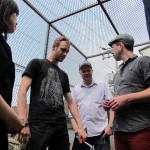
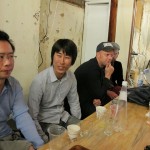
The next reader, Kim Ki-Taek (pictured, right), was born in An-Yang, South Korea in 1957. He holds a Bachelor’s Degree in English Literature from Jung-Ang University and a Master’s in Korean Literature and Linguistics from Kyung-Hee University. He made his debut in the Annual Spring Literary Contest of the Hankook Newpaper in 1989, and his published collections include Fetal Sleep (Taea-ui jam, 1991), Storm in the Eye of a Needle (Baneul gumeong sokui pokpung, 1994), Administrative Staff (Samuwon, 1999) and Ox. His literary awards include the Kim Soo-young Literary Award, the Yi Soo Literary Award, the Midang Literary Award, the Ji Hoon Literary Award and the Sang-hwa Poets’ Awards.

Kim Ki-Taek read two poems, including the slightly surreal ‘Fried Egg’, a commentary on the mass manufacturing of modern food, and the accompanying loss of connection between what we eat and where it comes from:

A fried egg,

its eyes which have never opened

its heart which has never beaten

its yellow beak which has never taken a sip of water

its rectum which has never passed droppings

freely and impartially mixed together and solidified

served up on a white plate.

Merry melodies from “The Open Concert” come from the TV

and around the dinner table with warm steam rising from it

my wife, my daughter, and I sit.

Kim Ki-Taek will be one of four Korean writers to tour Australia later this year, and his poetry is well worth checking out.
Posted in ESSAYS | Tagged

Yi Sang House, Seoul

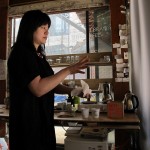
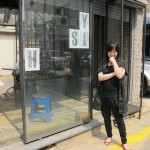
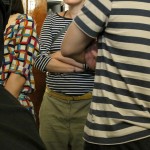
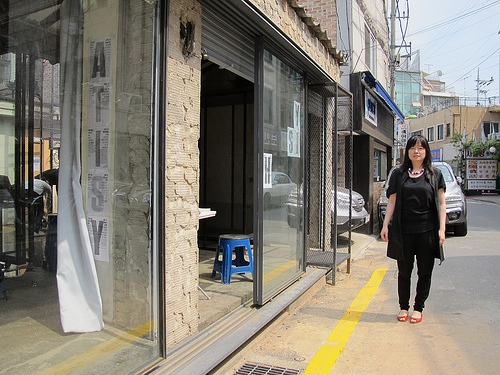
The Conversations with Yi Sang project, co-organised by artist Jooyoung Lee (pictured above), seeks to interrogate, engage with and memorialise the work of controversial twentieth-century Korean poet Yi Sang.

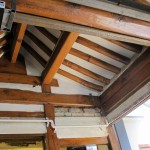
Located in the building in which Yi Sang once lived, the project focuses on both the reclamation of the physical structure as well as a site for multi-arts collaboration.

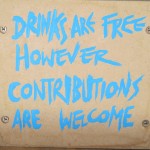
All this is set against the backdrop of a dabang or coffee house, which functions as a literary and artistic salon, sustained by contributions from its patrons paying for mulberry tea and whisky (double) with coffee.

Visit the Conversations with Yi Sang website.

Posted in 45: OZ-KO (HANGUK-HOJU) | Tagged , , ,

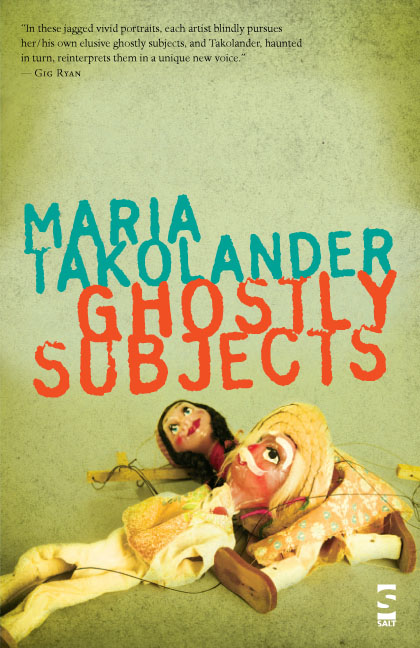
Ali Alizadeh Reviews Maria Takolander and Claire Potter

Ghostly Subjects by Maria Takolander

Salt Publishing, 2009

Swallow by Claire Potter
Five Islands Press, 2010

In his 2007 essay ‘Surviving Australian Poetry: The New Lyricism’, David McCooey identified the prevailing mode of poetry in contemporary Australia as a negotiation between experimentalism (the new) and traditional composition (lyricism). This view is apposite in describing the work of many important poets of the last couple of decades; but a number of newer Australian poets have gone beyond and broken with this conciliation. Among these poets are Maria Takolander and Claire Potter, whose startling debut book-length collections can be seen to illustrate what the radical philosopher Alain Badiou has called inaesthetics.

Continue reading

Posted in BOOK REVIEWS | Tagged , ,

Oz-Ko (Hoju-Hanguk) is now online!

If you’re a member of the Friends of Cordite FB group, you’re probably already keenly aware of the fact that the second part of Oz-Ko (Cordite 35.1 Hoju-Hanguk) is now online, thanks to FB having recently forced us to upgrade our group settings and, in the process, allowing our RSS feed to inadvertently spam the kim-chi out of all our members. So, for those who’ve been drowning in the hangul, our sincere apologies.

Of course, if you’re not a member of said group, you might still be interested to learn that Cordite 35.1: Oz-Ko (Hoju-Hanguk) contains forty new poems by twenty Australian poets, each of which is published in both English and Hangul. The task of bringing these poems to you has been nothing short of monumental. Starting with the combined efforts of twenty poets whose work was selected for this stage of the issue, followed by the Cordite editorial team’s struggles with the challenges of bi-lingual layout and formatting, and finally of course the crucial role played by our two Korean translators – 김재현 (Kim Gaihyun) and 김성현 (Kim Sunghyun) – it’s been a labour of love, and we hope you enjoy the results.

Publishing an issue of Cordite in English and Hangul has posed challenges we never thought we would come up against. In addition to the above-mentioned formatting and layout issues, the absolute incompatibility between Hangul Word Perfect (.hwp) and common (Western) document formats has given us grief to no end. Without the handy intermediary (translator?) of an application like Open Office, it’s unlikely that the issue could have been put together at all. Despite this – and despite my slightly gloomy prognostications in the editorial for Oz-Ko (Envoy) – it’s been really satisfying to see the works sitting together on the page, and to finally publish these works for your reading pleasure.

I’m writing this post from my room in the Yeonhui Writers Village in Seoul, which is the base for Cordite’s two week poet’s tour of Korea. The first week of the tour has, in summary, been intense and rewarding. We’ll shortly be bringing you images, reports and other impressions of our stay, but highlights so far have included a fascinating visit to the former residence of maverick Korean poet Yi Sang; a fantastic meeting and exchange of poems in English and Hangul with four Korean poets (Yi Kyong-lim, Kim Ki-taek, Shim Bo-seon and Kim Un, all of whose work will be featured in stage three of Oz-Ko); a lunch with staff from the Korea Language Translation Institute (KLTI) and the four Korean poets who will travel to Australia later this year; a packed reading to students and staff at Seoul’s Ehwa Women’s University; and a bizarre if not slightly harrowing visit to the infamous Demilitarized Zone (DMZ) on the border between North and South Korea.

To conclude this short, ‘bridging’ editorial, I’d like to acknowledge the support of the KLTI in co-funding the translations in this issue, as well as our Australian supporters; the friendly and welcoming staff at Yeonhui Writers Village, including the super-helpful Lauren; and of course my fellow tourees Ivy Alvarez, Terry Jaensch, Nic Low and Barry Hill, whose camaraderie this week in the face of both technical and cultural challenges has been a lifesaver.

So, on with the poetry.

Posted in ESSAYS | Tagged , ,

韓 – 濠 (Oz-Ko)

Hangul translation by 김재현 (Kim Gaihyun)


패턴인식 알고리즘은 텍스트를 위해서이거나, 아니면 다른 숭고함을 위해
정확한 의미는 피하면서 우리에게 오직 ‘애매’한 짝을 주었다.

그래서, 이 텍스트는, 현재 연구의 목적인 “韓 – 濠” 가 절대 목적이 아니라-오히려,
흔적을 찾는 시도라는 것을 알려주는 경고와 같은데,

그것은 기계번역이나 우연한 횡재를 사용하면서, 호랑이가 곰으로
변신하는 과정을 찾는다. 사실, 다른 것도 마찬가지지만, 이걸 위한 엡도 있다.

개막 스크린은 테라스 하우스 안쪽에서 사용자를 찾고
그곳은 구십년 대에는 학생들이 점거하던 곳이었는데

하지만 지금은 다른 뭔가, 좀 더 큰 무엇의 전면외관이 되었지.
마치 에이젼트 오렌지처럼, 저녁은 무자비하게 내려앉았어.

한번 그곳에 들어가면, 당신은 바람의 유화를 그리는 것처럼
기관총세례를 받게 될 거야, 충격과 놀라움을 느끼겠지. 여기에는 호주사람들이 있어

한국을 위해서도 한국에 반해서도 싸우고 있지. 포스트 묵시록
누군가는 둥지노래를 부르고 있어, 소리 없는 재건의 희망이

가득한 목소리로, 하지만 다른 사람들은 엄마도 없이 시를 쓰고 있지,
아니면 공허하거나 서글픈 메세지를 보내. 완벽한 멜로드라마가 생각날 만한,

남쪽을 바라보고 있는데, 우리는 나침판의 자침이 바뀐 것을 보았지:
삼십팔도 방향을 완벽하게 호위하면서, 한강을 건너고

그리고 북쪽으로 질주하는 거야. 오래된 민통선에 도착한 후
우리는 차에서 내렸고 아주 편리한 곳에 위치한

편의점 같은 PX에서 강장음료 한 두개를 샀지. 우리에게 물건을 팔던 젊은이는
우리의 회색 시계를 봤는지, 아니면 호주식으로 그을린 피부를 봤는지 씨익 웃는 거야

표지판에는 우리들이 읽을 수 도 이해할 수 도 없는 뭔가가 씌여 있어. 이건
예상했었지: 우리는 아무것도 모르는 상태에서 시작해.

예를 들자면, 사방 몇 킬로미터 안에 동물원도 없는데, 사자에게 먹이를 주지 마시오
라는 표지판을 이해하려면 누군가로부터 어느 정도의 친절함이 있어야 해

가능하지 그리고 획 긋는 나라는 먹을 것이 없어 울부짖는데, 비가 오는 거야.
아무것도 놀랄 것은 없어. 식상함이란 건 그런 거잖아.

당신이 보스를 쓴 그 백인 친구의 세계로 다시 여행을 간다면
그건 꽤 친숙한 것처럼 들리는데. 파란 하늘은 새로운

르네상스 같고, 인터넷 탐험가들은 URL을 타고 사막을 건너지
낙타의 발굽은 모래 속에 박힌 하이퍼링크를 클릭하고 있어,

아주 멀리에서 로라는 틸바 틸바에 갑자기 내린 비소식을 트위터로 전하지
이 두 상상속의 개념 – 濠 와 韓- 사이에

피부의 상호접촉이 있고, 흐릿하게 미래를 생각해보는 복잡한 길들이 있어.
당신은 그 길을 따라가면서 별로 많은 명시 편집자들을 만나지는 않을 거야 하지만

다시, 당신은 아무도 만날 거라고 예상하지 않았었다. 멀리서부터 들려오는
나무의 오래된 껍질이 벗겨지는 소리가 당신을 붙잡고, 당신을

주춤하게 만든다. 또한, 이 나무들 중 어느 것도 당신은 이름을 알지 못하지, 그래서
당신은 대신 농장에 주의를 기울이지. 개미들은 지그재그로 줄을 지어서

당신의 손등을 기어올라. 오래된 수로가 하나 있는데
거기는 잉어로 가득 차 있다. 우리들 처럼, 그것들도 수입된 것들이지

나무통속에 실어져서 운송되었다가, 커다란 수조에 담겨서 길러졌지. 녀석들을 잃어버린
강 속으로 풀어줘, 그리고 평화의 탑에 있는 연못 속에 풀어놓아. 우리는

연기가 피어오르고 몇 가지 화산 같은 명상을 경험했지.
물 밖으로 나와서, 우리는 잔잔한 공기를 마셔댔지만, 아무 소용없었어. 우리를

예정된 쇠락에서 구하려면 어설픈 마술사의 기술보다는 좀 더
새로운 것이 필요해. 다시 어떤 오만함을 가지고서 말이지:

만약 상어에게 공격을 받았다면, 상어를 탓해야지. 낯선 땅을
여행할 때는, 이방인을 증오해야지. 그리고 사진을 찍어서

당신의 블로그에 포스팅 하는 것을 잊으면 안 돼. 이거 왜 그러나, 우리는
살면서 한번쯤 한국을 욕하다가 걸린 적이 있잖아. 하지만 우리가 누구야?

결국, 당신의 역사라는 것은 단지 이전 포스팅이 하나도 없는
블로그의 게시판인가? 좋아, 이건 좀 거창하게 들리겠지 하지만

큰 소리로 읽으면 그땐 많은 시들도 그렇지. 당신은 새로운 무차無車 세대의
회원이기라도 한 것인지? 아니면 당신의 인생은 여행길이나 타르가 묻어나는 영화필름

속에서 뱅뱅 돌고 있는 것인지? 통도사 밖에 있는 버스운전사가 불쌍하군!
여행객들이 부처를 구경하는 동안 몇 시간째 꼼짝 못하고 있으니!

이 모든 게 친숙하게 들린다고? 우리가 처음으로 도착한 곳이라고 생각하는
이곳은 도대체 어떤 곳이지? 어떻게 우리가 적절한 시간에 나갈 수 있나,

우리의 모든 순간이 소통이 아니라 하나의 문화요소가 된다면?
서술자의 수사에 싫증을 내면서, 또 다른 한 시인은 다섯 편의 시조를 짓는다

침입자를 위해서. 시조의 복수형은 시조라는 것을 잘 봐야지, 세상의
모든 시조는 단 한편의 시조 속으로 녹아들 수 있어, 해안선처럼,

마치 네가 알고 있던 모든 해안선이 결국 하나의 텅 빈 도로가 되거나
아니면 물결이 되는 것처럼. 갑자기 수상구조원이 파도로부터 당신을 꺼내주었지

당신의 목숨을 구한 것만큼, 체면도 살려준 거야. 당신은 다음 슬라이드를 아주
유심히 보았지: 그 기억의 한 장면 속에서 우리들은 서로에게 키스하려고 했지.

국경의 경비병들은 당신에게 국적이 뭐냐고 물었지 하지만, 당신은
불타버린 마을에 여권을 두고 왔었고. 비슷하게, 두 자매가

1907년에 중앙기차역에서 발견되었는데, 두 자매도
신원을 확인할 수 없었어; 바로 3년 후에, 자매의 국가는

합병이 되었거든. 가능한 것을 재활용하기는 유일한 선택으로 증명되었지 –
하지만 어떻게 그랬냐구? 바람이 전하길 불가능하다고 했지. 건물들은 흔들리는데,

마치 나무가 “바보같이 굴지마”라고 소리치는 것처럼, 정말 그렇게 말하는 것처럼.
분명히 치유는 그것을 실행하는 것이 충고해주는 것보다 더 어렵지.

아직도, 당신의 수염기른 남자에 대한 연구는 놀랄만한 결과를 보여주었나; 사
실, 몇몇 저널들이 그 연구를 출판하는데 관심을 보이고 있었어.

번역연구에 대해서 이야기 하는 것은 아주 잘 되었지 하지만 언어와
의사소통 사이의 간극은 정말로 흥미롭지 않아?

다음 슬라이드, 두 사람과 함께 야라벤드에서 바라본 풍경, 에서
기차처럼 흘러가던 생각이 멈추고 말았어. 아마 그냥 괜찮을 거야. 결

국, 지금은 한밤중 이고, 편의점은 한 시간도 채 못되어서 문을 닫을 걸.
우리는 전에 한번 이곳에 왔었지, 어쨌거나 이유는 달랐겠지만:

당신은 황진이를 쫒아가고 있었지. 우리는 포카리스웨트를 사마셨어
밖은 아주 습했는데 음료수병에는 이온공급에 관한

뭔가가 쓰여 있었지. 나는 인시류학자의 일화에 대한 책의 자료를 모으고 있었는데,
책의 제목은 북한의 화려한 나방들이었어. 이건 아무나

써 낼 수 있는 책은 아니야. 숙주는 기생동물을 먹여 살리는 유기체야. 그래,
사실이지. 여기 위키피디아에 그렇게 쓰여 있다구. 지금 노트를 한권 꺼내서

스카이프 신에게 찬가를 한번 써 보라구. 그리고 나서 우리는 쇼핑을 하러 가기로
결정했지. 상점들은 모두 문을 열었어, 그리고 연기 자욱한 거리의 노점들도

우리를 초대하는 것처럼 보였지. 결국, 우리는 한국식 삼편 모듬을 선택했지:
번데기, 순대 그리고 맥주. 이상하게 들리겠지만, 그것들은

우리들의 뱃속에서 얌전히 앉아있지 못하더라구, 그래서 우리는 지하철
입구에서 비틀거리며 아-자-디를 울부짖었지, 하지만 여기선 아무 의미가 없었어.

뉴 사이언티스트지에 따르면, 북한은 해마다 핵폭탄을
두개씩 만들 수 있다고 해. 그런 속도라면, 북한은 앞 뒤로 한 10년 정도는

차이 나겠지만 4550년에는 세계의 슈퍼파워강국이 되고 말거야. 하지만 가프 휘틀럼이
말했던 것처럼, 전형성을 한 번 더 떨쳐버릴 때는 바로 지금이야, 지금이야

하나의 문화전체를 꼭두각시들로 만들기 위해서라면.
아니면, 단지 하나의 꼭두각시일수도…학생들은 훈련을 알고 있어: 카피, 포토커피

도서관이 문 닫을 때까지! 닉 케이브는 아마 서울에서도 유명할거야 하지만
우린 아직 알 수 없지. 당신은 “정예 대한민국 공군을 위하여” 가

진짜 뭐에 관한 것인지 알고 있나? 모두에게 당신의 생각을 이야기해줘.
아, “내 탓이오”. 그건 단지 인터넷 때문이야, 내 잘못을 추궁하면서.

이중 알파벳 기초를 세 번째로 가르치기 는 문제가 있는 것처럼 들려.
말해진 알파벳을 입체로 만들 줄 수 있는 학생들에게는

가산점을 주어야해. 여기 다시 또 구천을 떠도는 혼백이 있어
본부 바깥에 있는 인도위에 대자로 뻗어있는 것이 지친 싸이클리스트 같아, 울면서.

나침판의 자침은 다시 또 북쪽으로 돌아가 버렸어, 거꾸로 돌아가는 회전문처럼,
아니면 스크린 인쇄기의 스큄짐, 혹은 크림 브륄레 처럼. 젊은 친구들은

카페에 앉아 있으면서, 지시를 따르지 않고 있어. 사랑에 빠져 버려라.
지금 당장. 그건 너를 위한 아주 중요한 명령과 같은 것이지. 번호를 뽑아.

“내가 온 곳”에서는 절대 한 번도 말해지지 않은 언어는
귀로 들으면 정말 아름다우면서 위험하게 들리지. 입속에서 말들은

맛이 괜찮은 편이야. 이게 그거겠지? 영은 하나가 된다고? 그걸 접근 혹은
초대라고 불러봐. 다만 계몽을 위해 당신이 이곳에 온 척은 하지 말고.

Posted in 44: OZ-KO (HOJU-HANGUK) | Tagged

Enlightenment

Posted in 44: OZ-KO (HOJU-HANGUK) | Tagged

Aa-zaa-dee (아-자-디)

How can I define this Real
of language in words? Signs

betray its unsayable being
like a hoax. Has no authenticity

cheated by fakeness; condemns
all things to fantasy. How can I

praise this enemy
of appreciation? When it’s around

I’m disoriented, terrified
like a newborn. Has no quantity

beyond its lack; know it
by its non-being, risk its abdication

from your ideals by naming it
as a visible thing. Look and see

the home to the Statue of Liberty
is the empire of prisons, correctional

hellholes. How can you crave this
termination of desire? Beautiful

lover is a tundra if it’s the eternal
-ly absent flame. It’s understandable

as an ineffable terror, State
of Nature that deracinates words

like ‘nature’, ‘chaos’, ‘annihilation’.
It’s like nothing else. It’s the absolute nothing

at the core of our stifling things
’ composition. Equality, fraternity

need their triplet. I need it
to tease, evade me; like death

to define life, give it meaning.

Posted in 44: OZ-KO (HOJU-HANGUK) | Tagged ,

Grey (회색빛)

for Felicity Plunkett

i

In this World – which is not a world – black
and white withhold truths. In a world

we’d have multiplicities, the purity
of unqualified impurities. In ours we possess

, are possessed by, the comprehension
of qualified organs: terminal vs. respiratory

bronchioles of the lung, left vs. right
hemispheres of the brain. Not a scientist

(thank god) I best understand airports
life’s made me travel: arrivals vs. departures

of good and bad, tourists and terrorists,
and our so-called democracy: the Left

(cunning Capitalists) vs. the Right
(coldblooded Capitalists). Is my being

too a binary composite, bichromatic
backdrop of gloom with streaks of hope?

ii

Maybe I’d like to evoke an irrelevant
memory to name the absent thing: my desk

when my parents bought me one after
years of penury, after pouring their money

into a loan for a flashy house in Tehran’s
highest-status suburb, temporarily resigned

to their son being anti-social, introvert
ruining his spine by bending over notebooks

on the floor, asked me what colour
writing-table I wanted. Thrilled to get to choose

anything, I rejected their suggestions
(blue, blue, blue), insisted, resisted, fought

for two planks of vertical chipboard
legs joined by the horizontal third, desktop

covered in thick, grey contact. Ashen
’s so boring I remember someone sneering

(probably a nosy cousin): in Farsi ash-like
(khaakestar-ee) is the word for grey.

iii

Ashy vastness overshadowed the whiteness
of the page, incisions of my pen’s black ink

as I worked (regurgitated what I’d read)
to forge a raison d’être; and I stayed loyal

to the anti-colour post-migration. If I’d been
dark, wog and olive-complexioned

before, dislocation brought me the paleness
of a zombie’s skin, of what remains after

so much hurt, rejection, anger, self-hatred
not the certainty of black negation,

not the whiteness of success, undecidable
thing beyond the great and the ghastly

made me, overlooked immigrant boy,
loyal to the lyrics of 90s ‘alternative’ music

after I heard in a morose song: “Grey
would be the colour / if I had a heart.” The singer

a ‘Gothic’ artiste (albeit a millionaire
rock star) had just termed the emptiness

of my situation, the void of absolute colours.

iv

Cinder’s interstitial, sutures matter
to interment in ether, always

impermanent. At the point of erasure
by water or air; a caesura, exceeds

fire and smoke, cremation
is the idea of keeping alive the nothing

-ness of life against the parsimony
of urn and plaque – a person may only be

existent as a thing above and outside
body vs. epitaph, black vs. light, being vs. death

to belong to a world finally worthy
of the name, a world that can only be shaded

in ineffable, incomprehensible grey.

Posted in 44: OZ-KO (HOJU-HANGUK) | Tagged ,

copy, photocoffee (카피, 포토커피)

              
                            suppering for my art on spring
                            street,  a bright morning for korean
                            sushi:  chilli,  snow,  pine needles
                            (don’t)  mistake misnomers for
                            weasels  –  for weasel eggs open <


                  >  >  >  i love you now                     fictionalising everything.  if
                  your beak is in the                            it wasn’t for  ‘the books’  i
                  stream,  and i lie here                      would leave here,  the frogs
                  taking towelled notes


the family                     incheon                          of prejudice and secrets
gathered at                   thin cloud                      above them,  it looks

                                                                                comfortable.  your name
                                                                                rhymes with everything,  the
                                                                                way i cut it


봄의 거리에 오를 나의 예술을 위한
야식거리, 한국식 스시를 위한
눈부신 아침: 칠리, 눈, 솔잎
(절대) 잘못 쓰인 이름을 족제비로
오인하지 말 것 - 왜냐하면 족제비는 알을 깨니까 <


<<<당신을 사랑해 이제 모든 것을 소설로 만들면서. 만약 그게
당신의 부리가 시내 속에 책으로 만들게 아니면, 난
있고, 그리고 나는 여기 타월이 둘러진 이곳을 떠나겠어, 개구리들
노트에 있어


가족은 인천에서 편견과 그들도 모르는 비밀로
모두 모였어 엷은 구름 이루어진, 그건 편안해
보이긴 해. 당신의 이름은
세상 모든 것과 운이 맞는군, 내가
나누는 대로라면


Posted in 44: OZ-KO (HOJU-HANGUK) | Tagged ,

metamorphosis app for tiger and bear (호랑이와 곰을 위한 변신용 엡)

it came out of the folk
niche, voiding
stinkybreath

god hung around
an extra
night &
the
tigerwoman
jiggled her
carkeys in
her ear for the clicking
sound

the bear had his
own answer, he
bashed at his
taboo

this was about
formation, rather
than roots
rocking the
stuffed brush
turkey by the
staircase

there was no
emptiness, even the god had
a heart

it was the
tiger heir that
shouldered the
suffering

the
resol
ution
was
only
to
chan-
ge
as if
an
object

there was no memory
therefore no community; no
jealousy, or other virtue

Posted in 44: OZ-KO (HOJU-HANGUK) | Tagged ,

South – Compass Points (남 – 나침판의 자침)

It has to be north or south
it could be sou’sou’east
or nor’nor west
or ENE or SSW
and nudging like they truly do
and why not

it no longer has to be
left or right
it could be left of right
or left of left centre
and left of far right
round the back of middle

so make it south-west
and then north-east
maintain polarity
within the beast

it’s all about navigation;
taking bearings along topical and graphic lines
where things remain
north and south,
black and white.

Posted in 44: OZ-KO (HOJU-HANGUK) | Tagged ,

North – Compass Points (북-나침판의 자침)

It could be that the event had political repercussions which are beyond the compass of this poem maybe because his was not the side with those goods and services which fall within the compass of the free market even though the place had within its compass many types of agriculture and even the ship wherein Magellan compassed the world passed by here but now we hear only the cellos, playing in a rather sombre part of their compass.

It is what you get when a man has compassed his end only by the exercise of violence.

It is what you get when defining yourself by compass points.

(Author note: italics denote definitions taken from the Oxford Dictionary of English)

Posted in 44: OZ-KO (HOJU-HANGUK) | Tagged ,

‘Don’t be stupid’ (‘바보같이 굴지 마’)

I looked at his darkening profile, So, you are Korean?
No, Chinese, he said
If he were the black guy last night
I’d keep talking about Kenya and Obama
How his dad used to be working in the bank whose governor
Is now the president
Or if he were the Pakistani on my way back a few hours later
From the party where Nathan’s mouth constantly returned
To oneness, a line, or a cut
I’d probably ask the question I didn’t end up asking:
Why you look so white and like one of the hip hop guys in America?
Or if he were the white guy we’d probably plunge along the line
Of cities when he said, Oh, I wouldn’t live in Melbourne or Sydney
Not if you pay me! Here in Canberra
You’d have to learn how to
Entertain yourself
Since he’s ‘Chinese’ our conversation naturally drifted to houses
Till we came to a stop at Novotel where I had to go upstairs
To pick my luggage and come back
Frightened, I said, Would you wait for me here or?
‘Don’t be stupid,’ he said
I found myself explaining what happened in my trip to Dunedin
The cab guy drove me to the hotel but disappeared without even waiting
For the fare as I broke into a cold sweat congratulating myself
For having pulled my luggage out of the boot
He smiled his ‘Don’t be stupid’ smile as he listened
And when I came back with my three pieces
He’s still there
Afterwards when we went to the airport
He said, I still keep my Hong Kong
Passport even though I’m Australian
Citizen, you never know
You know

Posted in 44: OZ-KO (HOJU-HANGUK) | Tagged ,

Strokes country (획을 긋는 나라)

If you put people next to a stroke

Like this丨

On its right

Like this:人

You become wings

Like this:人丨

If you want to be air

Borne you put the person along

Side an English

Letter: H

Like this:人H

You are high

Up there

In the strokes

Country that is how

I learnt

The language

Stroke by

Stroke

I language

Stroke

By the side

Of Jiangbian

Or Gangbyeon

Language into

Language into

江边

Posted in 44: OZ-KO (HOJU-HANGUK) | Tagged ,

Oil on Air (바람의 유화)

To think of all the expectant creatures circling about,
the gulls circling, the white cat dozing into orbits beside me,
the crystalline drift of an ant colony between lines,
even the eruption of the gangly palm, over time,
would swirl in lazy, inexplicable spirals.

The way a cloud’s wound opens to pour light
on the thigh of a tumbling city,
the way a painting accumulates frayed fragments of decisions
and art is absconding to homes submerged by coasts
and the stupor of books closing, and fraying fibres, and bells.

Catch horrid hairs as they are falling,
collect the ash as it is floating, construct dams and
train lines with bolts, leap to uncertain conclusions, rims,
the particular tones of metal and crisp white,
a line provoking form, a form losing content.

Lifeless as a camera lens on an orange quilt, and pastels
on a hazy day, or there’s orange with lime-green on homes,
dogs barking at the wind’s fleece, dogs with clumps
of shit stuck in their coats, think of bowls of dead fruit,
fruit dropping from trees, a web-like hope

strung within the circles of its own filaments. Through
a revolution of sense, or a ridge consumed in fog:
the odour of things and their forms, their exhaustion,
cities swirling about in lazy spirals, waiting for space to close
and for shade, and shade, and never, ever, sound.

Posted in 44: OZ-KO (HOJU-HANGUK) | Tagged ,

Volcano Meditation (화산 명상)

All the best men are interested in other men, or their forearms are strong and lightly haired.
All the best men are already without that which they need no longer.
So it is that each woman, adrift, ends up with me.
So it is that each woman pretends she is happy with me.

How many times am I going to be told I feel so good?
That before I came along it was so hard?
That I’m so big? That I do it so well? – all without any reference to the facts.

I could be scaling a volcano that’s posing as a snow-capped mountain.

I could be scaling a volcano, a breathing volcano, scaling its rocky chest,
while the conical beast breathes quietly.

I could be on a giant breast of molten, fuming, breathing matter.
I could be trudging through an ephemeral, snowy skin.

How many times will I be told?
About the sting and cough of sulphur.
About the slow admissions of geology, the truth trapped in the rock.

I could be scaling a snow-capped lie,
a lazy, glacial tongue,
a smoky ode to my own burning questions.

This could all come back to who I am.

All the best men are young men
and despite the years I am not yet sure if I am a man.

To be young and to be a man!
Sitting completely on the seat of a bus or overcoming it slightly,
the body and its occasional hairiness.
To be strong and to suck on hangovers with gritty relish,
munching on savoury biscuits early in the morning.
To eat up the world, thrilled by blood’s sweet circus,
paying scant regard to the view.
To be eager and oblivious to the pit of the night.

As for me, I’ve neither riches nor righteousness.
I’m no smart-casual, golden credit card man.
I’m not grins and strong arms at a Sunday barbecue, light beer guzzle.
If I’m something women haven’t seen before then I am
hardly something they wanted to see before.
And they are moving…
The women are moving with the men.
The women are moving with the men behind walls of impregnable laughter,
while I am a bottle filled with thirsty salt and left to warm on the patio.

I am not youth; I’m not bristling hints of knowing.
I’m all the liminal variables.
I am incomparable because I dissolve amidst comparisons.

The collision of plates: so many secrets spraying out
then hardening.
To strip off my clothes and run, feet slapping the soft earth.
To leap with my delicious limbs, soar brilliantly and splash into
shady rivers, isolated coves.
To be a body wanted by bodies, to be nothing more than muscle, slick ski
and obvious yearning.

So, who is the man I might have become?
Or, who is the man I might be that I am not?

I’m no oasis, no waterhole.
I am not what you might like to come to.
I’m a traveller on a road of a size somewhere between a minor highway and a suburban street.
I emerge only when speech cracks open and illuminates me;
in this sense I’m certainly not geological.

If I were anything, it would be a plant or a lizard with skin the colour of rock.
I have skin the colour of rock and it screams colours and colours of sound.

You see, the more one knows, the less and less one knows.
How to tell each woman from herself?
How to tell the telling from my own halting speech?
The more one hears, the less and less one hears.
Deafened by explosions, when will I learn to see?
– the tremendous, fire-dark storm
of vision’s certainty, of contorted faces unravelling themselves, of trees and
lizards unravelling themselves.

I’m still too far below; I’m still scaling the snowy breast.
I am planting footsteps with my crampons’ frail nails and ascending
at the rate of a life.
A life could be a bubbling tomb upon a floating yolk.

From time to time, ghosts of forests gather and burst into the night,
burst stringy traces of yolk across the black pan of the night,
across sierras and their valleys,
across oceans and their limbs of kelp.

The women’s bright particles keep floating towards me:
their shimmering tongues lapping against the surface,
initially cautious of the steaming debris
then learning something of its vulnerable smoke.
Here I am, changing phases, escaping like the earth escapes,
through fissures of young, restless, twitching muscle.

If I were anywhere, it would have to be here.

Posted in 44: OZ-KO (HOJU-HANGUK) | Tagged ,

Fall in love. Do it now. (사랑에 빠져 버려라. 지금 당장.)

Nutritionists. Openly 9
out of 10 recommend
a lifestyle & know

the thick-shakes in all tastes
& sizes are coming

so recommend the following:
(with the exception of the following
because the following cause:

  • Barbecued food
  • Deep fried food
  • Food that is high
  • Food that is low
  • Food that (de)contains

The going theory is causality
’s the problem:

eg, the previous following foods
cause our body to gain various types of fat.

And which causes the brain? 
And which is the best?
…)

The best of all oils

is good for our brain
though the brain: not recommended
as part of a healthy diet – it causes

you see

actual thought
& designer food.

Palm oil is the worst.
It is highly unsaturated:

Here, it has saturated a brain
which is now full of fat.

Coffee, to put it simply, is good

because it contains the brain
at all hours of the morning.

If you spend half a day inhaling

the aroma of a cup of coffee, that’s two oranges
right there and then
as though you’d eaten them!

However,

it can cause cancer in rats
which is bad for the rats.

Four doses a day, the nutritionists say,
until we reach the age when

it is recommended that we go
to the land of lifestyle where

salt is the cure for pain
& honey: more helpful
than detrimental. But beware

once there, no more
Zhu Zhu noodles for you:

this is a place of pork awareness.

Posted in 44: OZ-KO (HOJU-HANGUK) | Tagged ,

Sudden Rain, Tilba Tilba (갑작스런 비, 틸바 틸바*)

We no longer go out to paint,
unless the object to be represented is such that it cannot be transported.

– Lang Shi Ning (Giuseppe Castiglione, Qing Dynasty court painter)

The fly-screen door has only just banged shut
& already the hills have scraped themselves bare
of spotted gums & blackbutts. What’s left?
Mainly pasture, gleaming green with summer rain;
some granite extrusions & fencing.
It’s an alternative version of Australia,
glimpsed through the lacquered lattice work
of this ‘Pavilion for viewing hobby farms’.

From the pavilion, designed in a tin-shed vernacular,
our sight lines stitch the view together
though livestock, crammed into a semi-trailer
blurring up the highway, might disagree
with their knife-edged human narrative.

Shadows cast by the corrugated awning
lengthen, shorten, then lengthen again.
Sunday fairs come & go: fruit preserves
& 70s bric-à-brac change hands;
the salt-crusted Alvey fishing reel, unwanted
on its trestle table, is a container of dawns
spent casting out from waves’ edge.

If idylls have a conclusion, I am yet
to find a happy one. In the distance
a walking trail bifurcates the mountain side
into twin histories, both deformed like a prediction
that unpicks itself one brick at a time.

We count the threaded ways in which
to immortalise the scene:
that chestnut mare, will it be recalled
in heroic oils & low-slung light or perhaps
the framework of a Chinese technique –
the grass as negative space upon which float
the black-ink strokes of eucalypts?

Whoever owns the postcard I sent you
from a country that one day will cease to exist
seems irrelevant. With the flick of a scholar’s sleeve,
the squeeze of a trigger, we picture
the dragon-spined rock shelf from which
I slip underwater into turquoise light, towards
sea urchins; the dreams of abalone & bream.

Posted in 44: OZ-KO (HOJU-HANGUK) | Tagged ,

Everyday Magician (매일의 마술사)

another boy catches a drive ►by bullet in his chest. born with straightjackets we buy records and start fires. gravity lets go. in the city no-one drowned last night. the florist saws another white lady in half. so many mis-made girls ♀, not enough well-hung men ♂. predicting where lightning will strike is the gift of the electrifying alive. Watch! ― the bills and eviction notice vanish. Presto! ― letterbox full of white rabbits.  we conjure enough coins to buy another round. the hitchhiker extends a detachable thumb into the throng of midday. Behold the morning coffee rush! Behold the credit card explosion! Behold the squeeze box of waking up! Juggling children the single parent breathes. the table of death hosts a party of seven. Watch the pills disappear! Watch the hair disappear! Watch the baby turn into an army! Watch time escape and all the wall clocks tick tick BOOM! the trick pulls up his pants. the elastic lady escapes from the clutches of co-dependence and becomes the disembodied princess. when it snows even I will be beautiful. vampires issue parking fines by daylight. the matrix opens. the box office opens. thighs open. a virgin has a tourniquet tied around her heart. your own hands stab you in the back. a tiger on Vaseline slides into view. the shops stay closed on Sunday. the 6 o’clock news ends. a dalmation forms stripes. the blood test is negative. the party stops talking tax cuts. the triumph of paying rent. burning alive we survive the summer. David Copperfield comes out of the closet. The cage opens. The canary shuts its eyes. The cage closes. in a puff of smoke § throat cancer. in a puff of smoke § the Statue of Liberty re-appears. the aging libido returns. Chen Lee boils a cup of tea. picking locks with other locks. the librarian finds love. an hour transforms into a year. the weather man predicts the sky will not panic. Balducci falls down. levitation ≈ the last resort of the lower class. our hands regain speech. alarm clocks fall silent. the dead rise from their beds.

Posted in 44: OZ-KO (HOJU-HANGUK) | Tagged ,

Do Not Feed the Lion (사자에게 먹이를 주지 마라)

enter the tangle
stay in groups, make sure you’re alone
bare your fangs, smile with tiger eyes

do not feed the lion

scratch your back
watch the big cat take your hands
start to run
when your confidence wanes

do not fear the lion

the corners of your mouth
fold into paper cages
birds without flight
offer you feathers

do not tame the lion

intensely crouch
creep towards the moon
recall that animals react poorly
to the smell of their own blood

do not free the lion

put out the distress flare
throw a rock at your reflection
roar at your childhood wasteland

do not love the lion

get down on your hunches
count the steps you haven’t taken
ask tour guides about breadcrumbs
tell your captor you’re not leaving

do not kill the lion

100 yards away is still too close
rapid movements, excited talk will do
take all the above steps
then appear larger
by raising
the roof of your head

do not chase the lion

if you ever stop hunting
may as well start praying
blessed is the lion
that becomes the man
that it has eaten

do not become the lion

Posted in 44: OZ-KO (HOJU-HANGUK) | Tagged ,

It’s Time, It’s Time (지금이야, 지금이야)

New Year clocks on over fog valley,
temperate Tibetans account for contributions.

Suburbs struggle and sweat through a summer
scented with mumbles and deceptions.

Fat detractors and software spruikers expire,
the paddockbashers steam from the load.

The thin mechanic massages a cigarette:
“Could ship ‘er off, up the road –

get the Billinudgel Boys to take a look,
but a cracked head is a cracked head.”

The skyline oils in the mercury ascent,
from mosquitoes and humidity exiles fled.

The boss does the Coco cabaña in Caloundra,
Jim Wage sneaks off for a lunchtime splash

loosens his tie, stuck jaw wide, at his wife
and her lover coitus interruptus confabulation.

The advice at the lectures is dorothy dixed,
VB addle cognition until everything is fixed.

Posted in 44: OZ-KO (HOJU-HANGUK) | Tagged ,

The New Scientist (새로운 과학자)

like a brave flag parading in the slipstream

of some desk jockey’s eight start day

the miracles of this season ruffle

like a party dress or the leaves in the trees

that ridge as snug as a favourite collar

and is that the sea of tranquility so far above?

so close they dreamed of it in camelot

and i am as faithful as a pilgrim

the brightest thoughts of those pre-zapruder days

and like nothing so casual as a chip packet

left to dance away from the picnic’s relics

you turn your head with eyes as wide as saucers

the orbs of the ones that make offerings to our stars

and you set off in your fantastic space chariot

while i cocoon in close to the landing gear

ready to dock in whichever port you choose

Posted in 44: OZ-KO (HOJU-HANGUK) | Tagged ,

View from the Yarra Bend with two men (두 남자와 야라 벤드*에서 내려다 본 풍경)

An ugly gentleman, six-and-a-half
feet tall, combs his black hair across one ear,
and then another. Mallee gums eavesdrop
the space where the magpies
dig for paddle pops and ants, and he sees himself
face down beneath the bench and rising,
then face down trickling down the river
until the affirmative disappearance. An Australian problem,
that is why one moves to England impulsively
at a bushfire juncture and searches for jacarandas.
Then, a swindler in a brown jacket, flinging manila folders
of old manuscripts in defiance. An early bank manager,
round over the crotch, wearing the stolen beard of Gaudi.
Abroad, he carries his hands
in his pockets because that is what his
mother had told him to stop. On the streets of
Melbourne, no one has ever seen his hands,
but in the company of the ugly gent we get his
right hand drawing the abstract symbols of
an oratory, but in farce, like a kyōgen, revealed
in reflections of bleached teeth. They
are specialists falling ill at Yarra Bend,
a conversation point for crows, later for the
kookaburras to mishandle.
The oldest country in the world does terrible mathematics
in a blue notebook using data drawn by the triangulation
of any number of the lighthouses countries away that keep
shining their sea lanterns onto the bodies of one another.
It leaves the draught of a cruelly interrogative map,
part-indictment, part-holiday brochure. Brown jacket falls to his
knees, begging for a constitutional library in British English.
Black hair, itinerant as usual, leaves a philosopher baby to trail
behind, to catch up, to always be a little too far off,
producing a vaseline-fogged Polaroid in which he reveals his ankles.
Blisters, signs of life. Inflamed like a plum pickle. The redness
of an outer-suburban encroachment. No hope
for the pale shallows of the Yarra Bend.
Residents have been kind enough to build their
fourth wall out of double glazing so that we
see them for what they are, but do not have to hear them.
Or is it that they too want to participate in the great
lighthouse triangulation? Impetuous geysers turn mud into
pits, and the pits soon enough erode away, dropping
all extraneous earth, leaving cones. Once
absolute openings have birthed at the
surface it takes but one idea for them to shine a
light to warn all the travellers of the earth of coastlines
between. But it is an indecipherable message,
openings close too quickly on the birth of say, Australia,
leaving foreign speakers of the same language to name soughing
bogs ignorant of them. It was a great winter, says black
hair playing with the white hair of his mother’s
corpse in the deepening Yarra with his legs in the murk,
a toe twirling the seaweed filaments. The same dandelions
as home you have crushed, shouts the man in the brown jacket.
But he is a stupid young swindler, burning manuscripts
and starting fires of summaries, declaring a
neutrality of violence wringing the neck of a black swan.
No more stupid than you, calls out the overhearing brown
jacket, the committer of grievous bodily harm
for the satisfaction of a grandfather’s grudge. All of your
bird calls are European war songs or heraldic threnes. Skinny
in a fat land, resembling only its wiriest trees.
A bushfire is important for the
active pollination of gum trees.
Under black crusts sprout bolls of swamp wattle, drooping dianella,
and families of timid geraniums looking about an opened
canopy. Floundering can look like drowning sometimes. A
storm far off swells the Yarra and strengthens its undertow.

Posted in 44: OZ-KO (HOJU-HANGUK) | Tagged ,

View from the memory in which we try to kiss each other (우리가 서로에게 입맞추려 했던 기억으로부터의 모습)

Firstly, I would like to say that I am sorry.
Right now I’m kissing you on the shore
of a lake so broad it is pulling all of
the vistas of the earth in toward it. The plug
island at which we kiss is clean, like your
ears after you rise from the bath. I am trying
my best not to kiss myself but for some
reason I am callously kissing my tears. Callous as
the typhoon at the apogee of my leaving you
at a local train station. This station, its name, I want to say, is
Nishikoizumi, but it must have been Spencer Street Station.
I think I’m accidentally kissing myself because you’re pulling
away from me and my arms are threshing like the
ponderous wings of wasp ants. It’s hard not to rise from a
bath wet as the afternoons trying to feel for the world’s
draw, crying of laughter for the foolishness of our dance
around naming. But we did find some titles. Then again,
there had been that canning of the visiting bear. I don’t want to say
that we compressed the scene into convenience, like tin, but a brand
did strike the hire car, sent it sliding across that seeping
glacier as old as the world. I want to say that I’m
sorry I saw us in the blue reflections of faceless masks.
Well, you’re kissing yourself now and longing for adumbration at
the caldera of the warm, excavating lake, hiding under one of its
names, soaking in blue. Ko-omote’s mouth opened
sometime between then and now, didn’t it.

Posted in 44: OZ-KO (HOJU-HANGUK) | Tagged ,