L

every day is a loss of it
self

winter is now
baring it all

in its unloving look
even when it pre

tends to be fe
male

convenience is not square
but plural

to translate is to be always
chronologically challenged

there is fero
city in the feel

of the after
noon sun

the green bay but
an illusion from youth

that is youth
less

as every day turns
every night

Posted in 69: TRANSTASMAN | Tagged

from understory


for my wife
and our unborn daughter [håga]

~

We cannot think of a time that is oceanless
Or of an ocean not littered with wastage

—T.S. Eliot from ‘The Dry Salvages’

~

[she] is
drinking a

glass of
filtered tap Brita Pitcher Plastic Water Filtration $24.99

water when
she first

feels [håga]
kicking—plastic

from fukushima
litters the

beaches of
oʻahu gathering

place [she]
is watching

an online
documentary about

home birth—
part of

a comb
corner of

a crate
piece of

bottle cap—
[she] is

craving poke
fish eat ʻahi poke : $17.99 per lb at safeway in mānoa
preserved with carbon monoxide to promote color retention

fish that
eat plastic

derived from
oil absorbed

by tissue—
the doctors

recommend [we]
schedule a

c-section—if
you cut

open the
bellies of

large birds
you will

find the
bristles of

[our] tooth-
brushes—because

amniotic fluid
is ninety

percent water
because every 4-pack replacement filters $24.99

body births
plastic never

dis- so-
lv- e- s

~

before i first
visit [her] in
kaʻaʻawa—before

we eat ʻahi
limu poke at
the beach—before

we wash [our]
hands in salt
water and forage

the tide for
shells—before we
learn [our] body

languages before
i mistake trade
winds for her

hair—before my
tongue dives—before
[we] come against

wreckage—before [we]
close our eyes
to see what

darkness asks [us]
to let go—
before chickens crow

the sun rising—
before i knew
i would stay—

before vowels and
consonants—before was
pō—first darkness

birthing [our] sea
of moving islands—

~

i tinituhon—

[she] is breathing—

at home under a muku moon—

every island is an end and a beginning—

we time the contractions—

neither ocean nor oceanless—

thirty minutes apart—

hacha hugua tulu fatfat lima—

“imagine each contraction is a wave”

says the voice on the hypno-birthing app—$9.99

the alphabet is a collection of bone hooks—

neither arrival nor departure—

i place my hand on [her] darkened piko—

neither origin nor destination—

sounding lines measure night passing—

should [we] go to the hospital?

~

dear fu’una, first
mother, this is
my first prayer

to you, full
of questions: taotao
manu hao? where

are you from?
what made you
leave your first

home? war, disease,
rising tides? so
many of [us]

have left guåhan,
deployed to faraway
bases—dear fu’una,

dispensa yu’, i
lost [our] first
language in transit,

first words become
ghost islands—fu’una,
first sister, what

did you carry
aboard the canoe?
hacha hugua tulu

fatfat lima—i
carried my passport,
baseball cards, and

coin collection aboard
i batkon aire
to san francisco—

how did you
let go?

~

during RIMPAC 2014

~

when [håga]
was newborn

[she] rinses
her in

the sink—
atrazine in

the water—
a fat

pilot whale
deafened by

sonar washes
ashore hanalei

bay—now
that [håga]

is bigger
[she] bathes

her in
the tub,

cleans behind
her ears,

sings, “my
island maui,”

written by
her dad,

jeff, whose
ashes were

scattered in
māʻalaea harbor,

decades ago—
schools of

recently spawned
fish, lifeless,

litter the
tidelines of

nānākuli and
māʻili, koʻolina

and waikīkī—
when we

first take
[håga] to

the beach,
[she] carries

her into
the water,

hanom hanom
hanom
, DU

munitions, PCBs,
SINKEX—[she]

secures [håga]
tightly to

her chest—
what will

the weapons,
ships, aircrafts

and soldiers
of 22

nations take
from [us]?

i wrap
them in

a large
towel when

they return
to sand—

“i introduced
[håga] to

grandpa jeff,”
[she] says—

is oceania
memorial or

target? monument
or territory?

economic zone
or mākua?

a cold
salt wind

surges across
the beach—

[we] shiver
like generations

of coral
reef bleaching—


Notes:

Understory: in ecological studies, ‘understory’ refers to the plant life that grows beneath
the canopy of the forest, and consists of a diversity of shrubs, saplings, fungi, and seedlings.

Pō: In the Hawaiian belief system, Pō is the creative darkness from which all things emerged.

Fu’una: In the Chamorro belief system, Fu’una is the mother of creation that gave birth to the
Chamorro people. Worship of Fu’una was displaced by the missionization of Guam and replaced
by Catholic beliefs of creation.

Poke: Hawaiian dish made with raw fish.

I tinituhon: Chamorro for ‘The Beginning.’

Hacha hugua tulu fatfat lima: Chamorro for ‘one two three four five.’

Dispensa yu’: Chamorro for ‘forgive me.’

Piko: Hawaiian for ʻnavel.ʻ

Mākua: Hawaiian for ‘parent.

I batkon aire: Chamorro for ‘airplane’ (literally, ‘air boat’).

Hanom hanom hanom: Chamorro for ‘water water water’

DU munitions: DU stands for ‘Depleted Uranium.’

SINKEX: Military term that refers to a ‘Sink Exercise,’ in which an unmanned target ship is
used for torpedo or missile testing, sinking decommissioned warships in the Pacific.

RIMPAC: Military term for ‘Rim of the Pacific Exercise,’ the largest international maritime
wartime exercise that takes place biannually in the waters around Hawaiʻi. In 2014, the year
my daughter was born, twenty-two nations participated in RIMPAC.

For more on the territorisation of the ocean.

Various covers of Jeff McDougall’s song, ‘My Island Maui,’ can be listened to on YouTube.

Posted in 69: TRANSTASMAN | Tagged

The last to know

It seems contusion ceremonies grace
the serious approach, yes I think so
do that, they deep and deeper consider and there is – lull
back – plunk and o touch
scratch bird come to announce
like turning a corner around a wall
the sound drops

I think constancy is the object
gather, a distant difference of – mmm.
A distant close. They keep talking and I want to listen
in the way. Oh that’s begin
we swivel forward, someone’s at the door
inside your mind you swing
your hand up answer it

the svelt passage wombs out wide
in the thin river inside
it has gotten in there spooky kind
of vibrate and its echo loving each other without
understanding how that is. Groups of forests
call out. Mmm, the voice cur shunts, the voice
cur shunts in the side showing you
crunch trees, the crunch tree forest beside you.

We wait the hollow grows
inside the crunch tree huh, the swallow rackets
soften down huh the swallow racks
lilt, clear dense beside you, then without you

grows over there, the lilt tends huh, you can hear the
swallow, the very large room is pleased
enormous spoons tunk the sides of the room, huh
the middle of the room yes thinks you
tiny and tinier closing around the river
high inside the sharp river (huh) errs out

Posted in 69: TRANSTASMAN | Tagged

The Black Drop

Suddenly they’re churning away from the misty sounds
in the little barque, drying books jawed-up with specimens

such as the tough leaf of a cabbage tree Joseph Banks
and Dr Solander classified according to Linneaus’

look book and named Coryline banksii because Banks
who lost his trousers one hot night in Tahiti

is paying. In the clammy cabin – clothes lines of blotters –
he frets at the needling New Zealand rainfall:

damp will humus the specs as if they’d never left
their forest and then what would be the point? Above all

the prizes must arrive home dry. (In Tahiti by contrast
the books were onion-skin under the Transit’s moon.)

Days later on the boxy coast of terra nullius, Banks croaks
a private plea to Father Linné (Jesus of the leaf, mentor

to Dr Solander), Guide me! And the barometer rises
like Eastertime. Meanwhile (no one knows this)

George III’s Yankee penal colony will soon be dead,
long live the penal colony. And Banks steps ashore

at Botany Bay. He dries the drying books open and open
under the fierce sun. By nightfall, saved, but more

cursedness: the Endeavour is broken, dry-docked,
the two remaining artists poorly (one died in Tahiti).

For seven weeks while the cartographer perfects his lines
and Cook his book of swells all hazy with experiment,

Banks and Solander, solid with their ballast of Latin,
light on the red turf, their green and pleasant Bible

held up against the continent and they find, classify,
name, take, for science’s sake and for London

where the repurposed coal hulks anchored off-shore fester
with felons, the streets glister with whisky and piss.

The jewel of their findings – well there’s the Eucalypt –
a fat cock ridged in bumps, nothing girly, but serviceable,

dusky red, ochre yellow, can’t miss it, obvious to bees,
and they call it Banksia because Banks (this is the chorus)

is bankrolling everyone – Dr Solander, the sickly artists,
five servants, their food, the materials, to the tune of £10,000.

Eventually they are churning back to England, all aboard
apart from the dead, all a success apart from that moment

in Tahiti when the Transit was simply a black drop and Banks
looked past the physical world into nothingness.

Back home he stocks Kew Gardens with the shoots
of pure science, his star rises and the Royal Society is born,

his sphere of influence expands to I see dead people
and the colony is born.

Next – this is much later – I, at 21, hogget-reared product
of the grand design, travel back (nod my head at where ugly

comes from), step off the Tube at Kew to a rush of machine-oil,
flowers, Mrs Dalloway, enter the vast botanical organization

and on a winding path smell childhood colds and come upon
Eucalypts peeling to a smooth sore pink like the skin

of an Englishman at the cricket downunder
and over there, Banksia, and across a small sea of bluegrass

a ludicrous leggy second cousin from home waving:
cabbage tree in an unaccustomed grove.

Posted in 69: TRANSTASMAN | Tagged

After Plato

Days like these I’m squandering the circle
riding out on my hobby-horse, my long-nosed
metal detector, on a jaunty tangent
to forage among weeds.

Past the last of the smoking utilities
I saunter, humming an irrational
number by a latter-day monk.
There’s still some ground

out here that’s good for a
good-for-nothing, an in-
betweener neither fish
nor flesh, parboiled detective,

diviner of shoots and nuts
and bullets spent under the dust.
A picker-up and turner-over,
bad debt collector magnetised

by scrap and straggly growth,
against-the-grain survival of
perversity in adversity. It all goes
in my sack for due consideration

later, but today I aim to go
too far. I reach the limits
and approach the wire where
the corpulent border guard in blue

doesn’t shift from his post. I seen you coming,
kid, he says, and waves me ominously
through. Just keep moving—don’t stop
till I can see the back of you.

Posted in 69: TRANSTASMAN | Tagged

Man Up

Boys will be boys will
pine for lost dogs will
time travel in the space between soup scoop and spoon sup, will
knee-skid on dirt, moon-loop through tree tops, will
want friends who dream-share star sabres, infinity sugar, will
whisper in the dark at your door in pyjama-soft dread,
I just don’t know what to do
will curl atop you and suck muslin cloth, will
cry into the safe cave of your collar-bone, will
want your lipstick your eyeliner your skirts, will
sink silent into stories of orphans and cruel masters, will
dance with strange paper ziggurats calligraphed in cabalistic signs, will
want to be sheriff and diva, will
sketch doom castles in the sunpatch to piano sonatas, will
fight emperors with torch light, receive mortal wounds, will
find divine resurrection, because say that’s what happens?
And this time I’ve got the magic force?
So now the king-alien dies? Will
jump sofas and tables to thrash-metal drums, will
scuttle up the air’s skin like spiders, will
snout out the scent of your bed-musk for solace, will
sew purple felt flowers to clothing, thread clear-glass beads on blue string, will
sweat like ripe summer currants with rage at injustice
when boys will be boys who just misunderstood, will
punch you in the breasts for not listening, will
cry when they feel their own hard-ribbed shame, will
hold their galaxy-gasp fingers to a neonate’s knuckles
soft-soft as if to a pup’s wet nose, will
wear bruises like leopard skin they were born in, will
carry cuts like initiation rites into daylight, will
run to their fathers as if there were two words for mother, will
run to their mothers for skin-milk memory-shelter, or
boys will be boys as we all care to will.

Posted in 69: TRANSTASMAN | Tagged

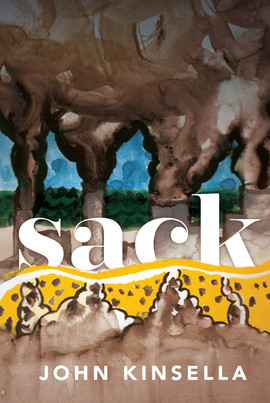
Simon Eales Reviews John Kinsella

sack by John Kinsella
Fremantle Press, 2014

In the first rabbit poems by the late J S Harry, her rabbit-character, Peter Henry Lepus, is thrown into a number of desolate or alien environments. Peter is ‘dumped … on the Desert of Sense’, ‘comes to … FORTY-THREE BLENDS / OF DUSTED-OFF & SUNDRIED RATIONALISM’, and ‘gets lost in “Calcutta” / on his way to visit Farmer McGruber’s vegetable patch.’1 He is displaced most comprehensively in the middle of Iraq, 2003, a warzone that amplifies his naïve and interlopic perspective. Such meaning-deprived contexts let Harry explore belonging, identity, and the stability of concepts themselves. In the poem, ‘Small & Rural’, for example:

Continue reading

Posted in BOOK REVIEWS | Tagged ,

Review Short: Robert Adamson’s Net Needle

Net Needle by Robert Adamson
Black Inc., 2015

Net Needle begins with the thoughtful interlacing of seven poems. The first poem, ‘Listening to Cuckoos’, highlights the bird’s ‘two unchanging notes’ during the start of spring. Then, ‘Summer’, with its ‘pallid cuckoo call’ through the poet’s garden threads into ‘Garden Poem’ and how sunlight spans the course of a day until ‘patches of moonlight’ travel into the next poem, ‘Dorothy Wordsworth’. Here, we find the Romantic poet’s sister ruminating near a window where the moon moves ‘across the star-decked dark’. Continue reading

Posted in BOOK REVIEWS | Tagged ,

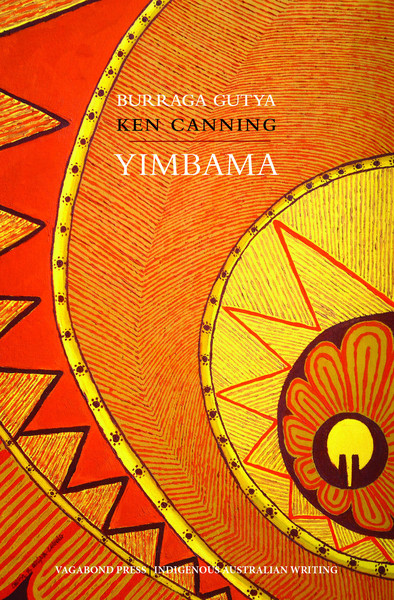
Review Short: Ken Canning/Burraga Gutya’s Yimbama

Yimbama by Ken Canning/Burraga Gutya
Vagabond Press, 2015

‘Oppressors always expect the oppressed to extend to them the understanding so lacking in themselves.’ – Audre Lorde

Reading a book by an Indigenous Australian author comes with a certain mythos attached. There is an uncritical expectation of explanation, of being taken by the hand and taught profound lessons that are appropriable, then displayed as trophies to liven up ‘Western’ society. Because indigeneity is often imagined as oppositional to modernity – and because modernity is assumed to belong to the ‘West’ – it’s as if the reader is sneaking off and doing something a little naughty, a little rebellious, by peeking over the fence at the fascinating and magical world of the ‘ethnic’ writer. And there is a reward for this, be it gratitude from the authors for deigning to listen, or kudos from one’s own cohort for being so very brave and ‘open minded’.

Continue reading

Posted in BOOK REVIEWS | Tagged ,

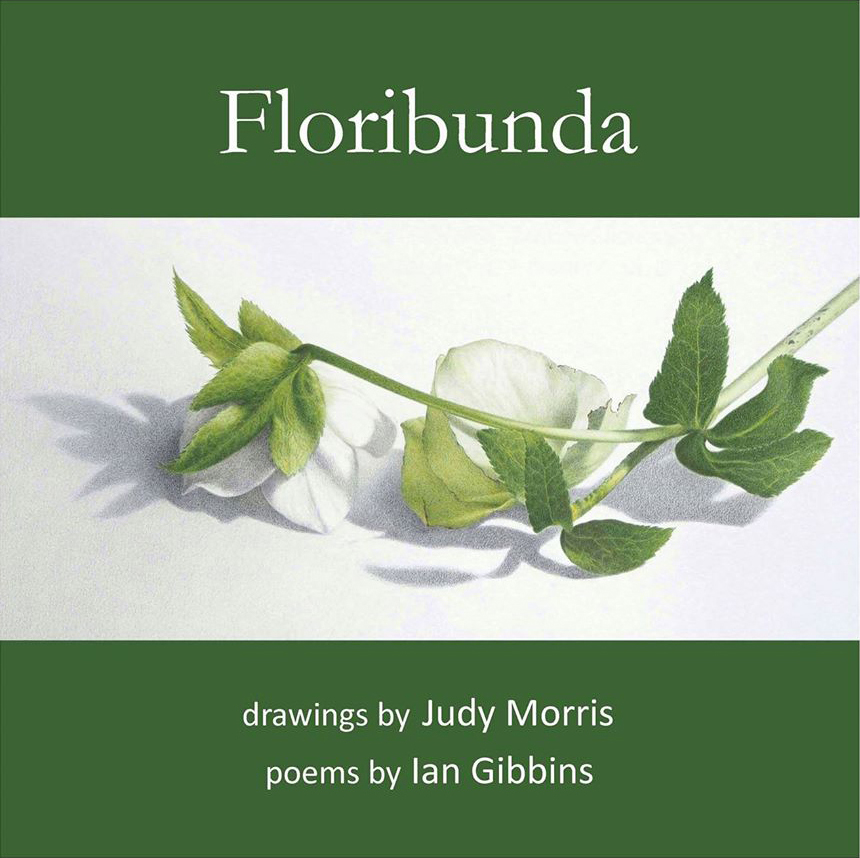
Review Short: Ian Gibbins’s and Judy Morris’s Floribunda

Floribuna by Judy Morris and Ian Gibbins
DIY, 2015

How far we are from the radical days of realism. Prior to Adorno’s dismantling of Lukacs and the Stalinist led state institutionalisation of it, realism may have laid claim to being an innovative aesthetic with agreeably progressive political inclinations.

Continue reading

Posted in BOOK REVIEWS | Tagged , ,

(m) those that have just broken the flower vase

I

For some, the relation between the body
and external objects is unclear, even
when buds are underfoot.

For others, it’s the symbolism of the vase
they fail to grasp.

For both kinds, the gap in understanding is
an effective tactic
to avoid censure.

For some, the vase marks the point
where the room ends
and nature begins.

For others, the petals imply
a garden.

For all, a change of scene
has dramatic value.

For some, the flowers use the vase
to express themselves.

For others, the scatter of porcelain
describes a constellation.

For other still, it’s not the fear of
disapproval but of thorns
that stops them chewing the stems.

For some, the water links the past
to the present.

For others, it’s a symptom of debts unpaid.

For none does any of this
signify your second
thoughts.

II

Do your ideas
correspond to the things around you? Picture
her lying here, for instance, writing

‘one is the start of the pattern
two is just where it reveals itself’.

Shoulder clefts and an ill-timed blush.
A season of pauses. Nearby a gentleman
plums in his mouth, thinking ‘not all answers
are excuses’.
Outside
you draw yourself up by the pond, still
in darkness or almost. The burrow discloses
an ambling mound, snuffling over
the threshold, thinking on what should’ve
happened yesterday, thinking ‘if not
why not?’ Only the curtain sees both sides
but––versed in discretion more than framing––
gives little away. Picture the parlour, then, with
she and he and a bearlike presence, where all
it takes is a careless glance
a sudden clutch of hearts, and a vessel
older than empires
meets its demise. The wombat jogs off
and no one is thinking ‘an iris
is also a flower’ or ‘regret is only a prelude’.
Light rain at daybreak. She is writing

‘three is
when it gets interesting’.

Posted in HEBK | Tagged

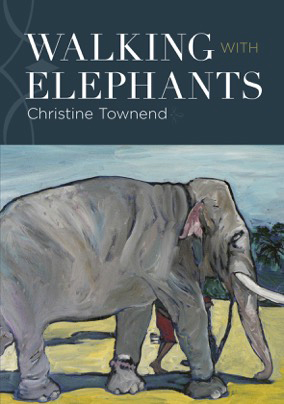
Shale Preston Reviews Christine Townend

Walking with Elephants by Christine Townend
Island Books, 2015

Christine Townend’s debut poetry collection is powerful, important and timely. Indeed, owing to its sustained and compassionate focus on animals, it could well come to be viewed as a watershed in terms of Australian poetry. Townend, founder of Animal Liberation Australia and a number of shelters for street dogs in India, is a woman who has been on the front line in terms of animal rights activism, and has performed some extremely valuable work therein. Continue reading

Posted in BOOK REVIEWS | Tagged ,

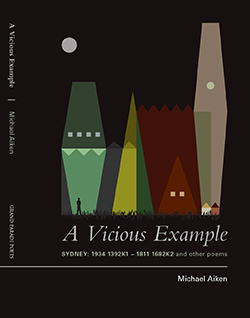
Oliver Shaw Reviews Michael Aiken

A Vicious Example by Michael Aiken
Grand Parade Poets, 2014

It’s 4 am. Nasruddin leaves the tavern and walks the town aimlessly. A policeman stops him. ‘Why are you out wandering the streets in the middle of the night?’ ‘Sir,’ replies Nasruddin, ‘if I knew the answer to that question, I would have been home hours ago!’ – Rumi, ‘On the Tavern’

Reading Michael Aiken’s A Vicious Example is like walking out of the pub and wandering city streets at 4 am, half-drunk and in sub-conscious wonder. The strangeness of it all: What year is it again? Where are we? Aiken’s collection is fragmented, forming thought-voices into obscure imagery that settles and unsettles on the mind. Aiken’s voice is lethargic, hopeless. There is only one narrative to this text that I can find, which from the beginning locates us and the poems in the Australian city. In the opening poem Aiken welcomes us to ‘come and see …’ what the rest of the country looks like after colonisation’s ‘Theft by Discovery’.

Continue reading

Posted in BOOK REVIEWS | Tagged ,

Review Short: Ivy Ireland’s Porch Light

Porch Light by Ivy Ireland
Puncher & Wattmann, 2015

By way of introduction permit me to share that for some reason I keep conflating this poet’s name with the title of her latest book. The result is a hybrid of name and place, forming a vague ‘place-name’ in the utterly made-up signifier ‘Porchland.’ Working back, this topos, to my mind, alluding to a libidinous, transgressive and, above all, fertile ground, is formed out of the name of the talented poet, Ivy Ireland, and the title of her second collection of poetry, Porch Light, whose eponymous poem quotes Tom Waits in the epigraph: ‘How do the angels get to sleep when the Devil leaves the porch light on?’ Continue reading

Posted in BOOK REVIEWS | Tagged ,

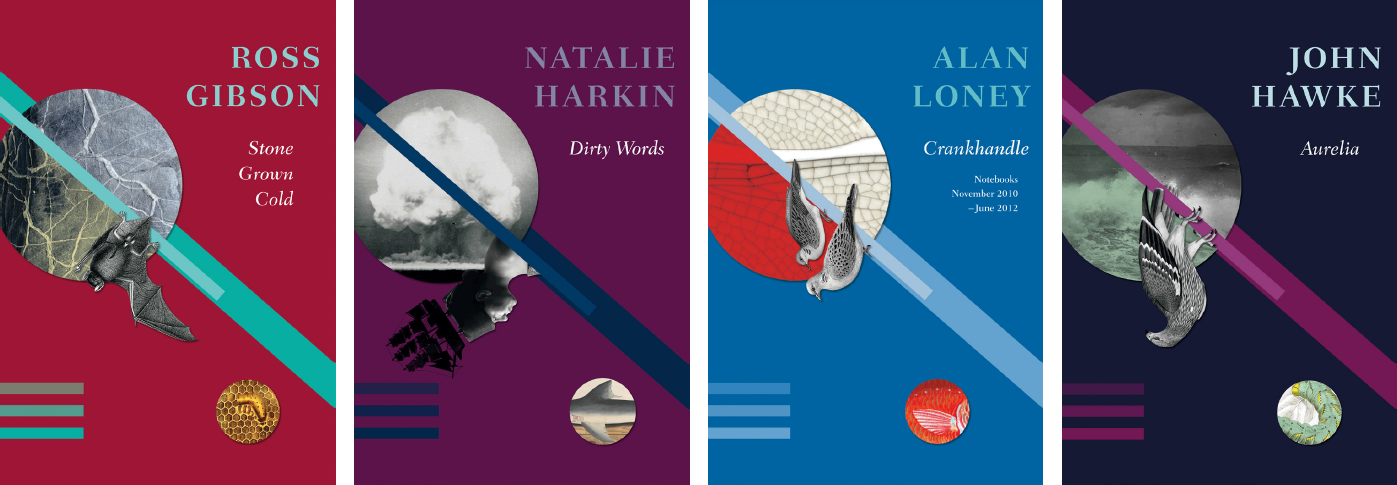
The Sydney Launch of Harkin, Gibson, Loney and Hawke

OBJECT: Australian Design Centre, Thursday 25 June, 2015

I’m pleased to say that I was at the launch of the very first issue of Cordite Poetry Review, way back in 1997. Good heavens, is that eighteen years ago? The journal is now old enough to vote and to enter pubs unaccompanied by an adult. Back at that 1997 launch at the Bondi Pavilion, Cordite was a broadsheet magazine; really more like a newspaper in appearance. I recall Adrian Wiggins, its co-founder with Peter Minter, spreading a copy against his chest and suggesting that it made an excellent gift – or was it that Cordite might be folded into a T-shirt and worn on special occasions?

Continue reading

Posted in GUNCOTTON | Tagged , , , , , , , ,

Review Short: Maria Zajkowski’s The Ascendant

The Ascendant by Maria Zajkowski
Puncher & Wattmann, 2015

The challenge for any author in writing a book about death is to somehow make the subject seem both itself and new at the same time. Death is familiar, but poetry about death should not be. A good poet will give death impact without slipping into easy sentimentalism. Maria Zajkowski – winner of the 2011 and 2012 Josephine Ulrick Poetry Prize – undoubtedly succeeds in this regard with her debut collection The Ascendant, creating a vulnerable portrait of the poet through evocations of possession and loss.

Continue reading

Posted in BOOK REVIEWS | Tagged ,

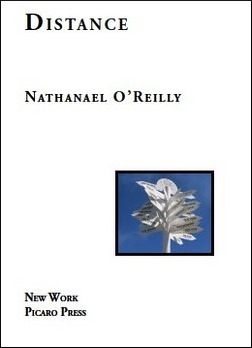
Review Short: Nathanael O’Reilly’s Distance

Distance by Nathanael O’Reilly
Picaro Press, 2014

Nathanael O’Reilly’s Distance is threaded with daily objects and locations pressed carefully against each other for maximum coverage within minimum space. O’Reilly’s poems can travel whole countries in a couple of phrases, or emotional landscapes that dart from comfort to the homesickness we glimpse via the sparse beats charged with its evocation.

Continue reading

Posted in BOOK REVIEWS | Tagged ,

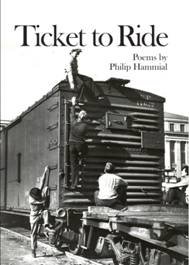
Review Short: Philip Hammial’s Ticket to Ride

Ticket to Ride by Philip Hammial
Island Books, 2015

Continue reading

Posted in BOOK REVIEWS | Tagged ,

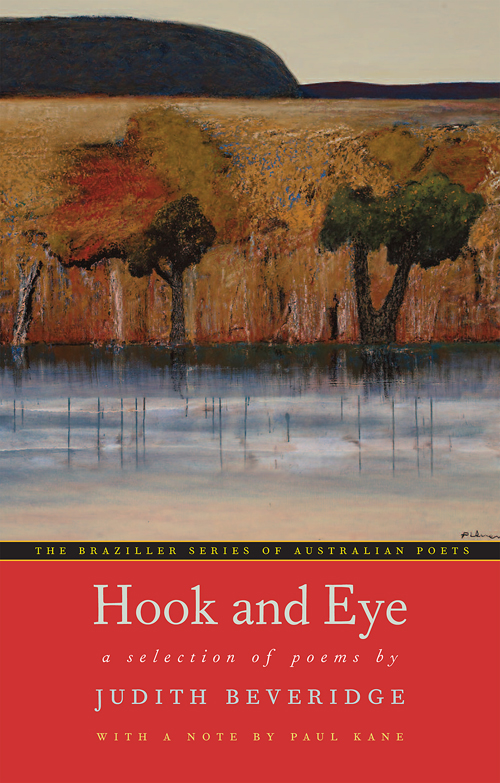
Review Short: Judith Beveridge’s Hook and Eye

Hook and Eye by Judith Beveridge
George Braziller, 2014

Last year I heard Judith Beveridge interviewed by Bronwyn Lea at the 2014 Queensland Poetry Festival. Aside from being left with the enduring impression that Lea should have her own TV show, I was also struck by a number of Beveridge’s revelations regarding her praxis. Beveridge confessed, for instance, that she does not like listening to music. Nevertheless, she described the process of writing poetry in a way that resonated with the classical foundations of lyric verse in music. Beveridge revealed that she begins writing by mobilising rhythm, rhyme, feeling and alliteration to bring forth the words and images of her poetry. She begins, in other words, from an embodied experience of language – as the philosopher Maurice Merleau-Ponty describes it in The Phenomenology of Language – that is essential to us all.

Continue reading

Posted in BOOK REVIEWS | Tagged , , ,

Review Short: Laurie Duggan’s East & Under the Weather

East & Under the Weather by Laurie Duggan
Puncher & Wattmann, 2014

It’s possible to say now, I think, that Laurie Duggan’s massive, monumental and documentarian long poem entitled The Ash Range (collected in 1987) has done for Australian expansive poetics what William Carlos Williams did with Paterson, and Charles Reznikoff with Testimony. Duggan is a practitioner of the serial and modular long poem par excellence. The long poem, in its weighty transfer from the epic, inaugurates a new kind of impure capaciousness, an ability to include modes, styles, citation and quotation, to document change, compromise, the whole mess of culture, all the rich materials that define the modern and contemporary long poem. A recent example of a modular long poem of the kind Duggan has engaged since the 1970s is Kate Middleton’s disjunctive, difficult and sprawling Ephemeral Waters (2013).

Continue reading

Posted in BOOK REVIEWS | Tagged , ,

Libby Hart Reviews Kate Newmann, Robyn Rowland and Jessica Traynor

Grim by Kate Newmann
Arlen House, 2015

Line of Drift by Robyn Rowland
Doire Press, 2015

Liffey Swim by Jessica Traynor
Dedalus Press, 2014

Labels are funny things. A lot of the time they can feel unnecessary – especially to an individual being labelled – but there are instances where such an exercise can prove useful. Writing about Ireland is a good example of this. On one level we must consider Ireland as one entity, but we must also acknowledge that modern Ireland is not made of one but two territories. This statement shouldn’t be interpreted as overly simplistic. The complexities surrounding the Republic of Ireland and Northern Ireland extend beyond politics and are deeply ingrained in the language and identity of people from both sides of the border.

Continue reading

Posted in BOOK REVIEWS | Tagged , , ,

(h) those that are included in this classification

I

There are those which are alike in spite of appearance
which share a secret affinity, an invisible harmony.

But then there are those which are neither alike nor unalike
that you place in separate boxes
as the wind picks out
a shape on the outer wall
sight so weary it can’t hold anything else.
You think on the essence of a leopard
always already a panther, always happy to field questions
from the audience. What do names correspond to
anyway?
Might as well call it what you like, lure the conversation
back to objects and their intentions.

To contain the world (they
say) draw a line around it.

But then, the chef holds a different knife to the hunter
the video a different shape to the eye––at that hour
from that distance
you can’t tell a blur from a likeness. It’s about prospect
and aspect, you know, a capacity for basking, that
resonance at the back of the mind. After all
Der panther is also sometimes a jaguar
sometimes a cougar
even a mountain lion.

II

To speak.

You followed language into the bush.

To say it in three words.

Pursued its scent.

To listen.

No one thought ‘the landscape is a system’ or ‘a geometry
of soil and sky’ or ‘a tree is already a symbol of itself’.

You felt its claw marks on the trunk.

No one said ‘our idea of the undergrowth
precedes our apprehension of it’
or ‘we don’t belong here’
or ‘it can climb, can’t it’.

The leaves
folded back on themselves.

No one thought ‘the rule for a circle
holds for all circles’ or ‘the clearing
lets in more light as it expands’ or
‘any perimeter can be stalked’.

To call up an image.

To consider it from all angles.

No one said ‘depict the canopy as a diagram’
or ‘understand it from the inside’ or
‘interpretation is always partial’.

To perceive.

You don’t know what words
were chosen
in the end.

To recognise.

Which of them were buried here.

To elaborate.

Not words, but teeth.

No one said ‘the ground is a plane of expression’ or
‘scatter the seeds’ or ‘let the architecture emerge’.

You made a mild intervention.

No one thought ‘we need a category
for both the things that are, that they are,
and those that are not, that they are not’.

To pause and reflect.

Now names lie concealed in each bough and branch
here and here and here.

To articulate.

No one thought ‘names are a vital part of what they define’
or ‘to name is to classify’ or ‘have dominion over things’.

No one said ‘we can’t think of a line
without tracing it in our minds’ or ‘a description
is a movement’ or ‘see where it leads’.

Now you’ve forgotten how to look past
the surface of things.

To be contained by the world.

Lost your bearings.

To stand outside it.

To reconcile time and place.

No one thought ‘a path exemplifies the forest’ or
‘talking about things brings them into being’
or ‘nothing is self-contained’.

You retrace your steps.

No one said ‘all categories are provisional’ or
‘any two objects placed in a space will form
a connection’.

No one said ‘the banks emerge only
as the bridge crosses the stream’.

To manifest.

No one thought ‘we should learn about the pines
from the pine’ or ‘all stones have weight’.

To leave from.

No one said ‘hold your finger to the neck
of the woods’ or ‘take its pulse’ or ‘feel the
tightened silence through the shoulders’.

To come into being.

You followed language into the bush.

To wait.

Took satisfaction from small insights.

To be in attendance.

Knowing that a more comprehensive
understanding was impossible.

No one reflected ‘an image plunges into the heart
and is gone’ or ‘the grove in our minds is laid waste’.

To revise.

To count the vertebrae.

Whoever said you can only walk halfway
into a forest has never been lost.

Posted in HEBK | Tagged , ,

Luke Beesley Reviews Christopher Kelen

Scavenger’s Season: fragments of an almanac by Christopher Kelen
Puncher & Wattmann, 2014

For some time I’d been carrying Christopher (Kit) Kelen’s Scavenger’s Season around in my backpack, where it jostled with other books, pencil shavings and an old apple. I happened to finally reach for it and dust it off while in the members’ lounge of the NGV Ian Potter Centre. I opened to the first pages and read until I hit punctuation – 10 pages in – and then walked through to the John Wolseley exhibition, Heartlands & Headwaters (11 April-20 September, 2015). I hadn’t planned it this way, but they’re an apt pairing.

Continue reading

Posted in BOOK REVIEWS | Tagged ,

Submission to Cordite 52: TOIL Open!

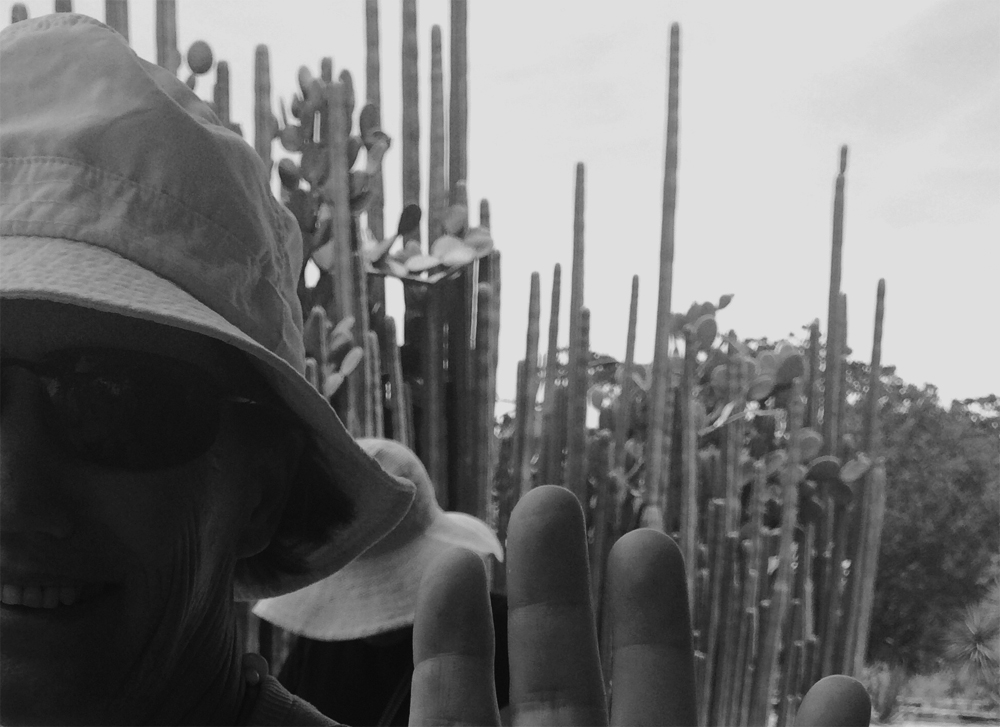
Carol Jenkins
Selfie in Oaxaca Ethnobotanical Garden

Poetry for Cordite 52: TOIL is guest-edited by Carol Jenkins

I’m looking to meet the lone toiler, the staff, whole professions, whole guilds.

What I want for TOIL are energetic and intelligent takes and insight into people at work, singularly and collectively; the jokes of the mathematician; the travails of plumbers; trade secrets and tricks; the mastery of crafts; the dance of deduction for detectives in all forms and the plied threading of making.

I’m looking for toil in its broadest sense, the quotidian tasks both paid and unpaid. I’m looking for poems that explore the fabric of working via wit and lucidity, and please consider yourself invited to make the most of that diphthong in toil, and whatever it rhymes with.

As to form, be my guest as to what that is. Set out hop-scotches of ideas that skip to it, send scintillating sestinas, quatrains, haiku, sonnets or be that agent of free-verse. I’d like to see landays and crazy coherencies of rhyme and rhetoric.

Work can be microscopic up to panoramic. Put that work toad to use.


Please submit only once, with a maximum of three (3) poems in one (1) document … but first, please read the submission guidelines.

Posted in GUNCOTTON | Tagged ,