Notes on Ratbaggery

1. What Is a Ratbag?

We think that ‘Anxious to Know’ must be a very selfish kind of person to think that any girl should endure dancing with him all night. He must think he’s a swell dancer. He wants to know what a ratbag is. He should know as Perth is full of them, and he’s probably one himself. After all, the people of Western Australia have no existence. They are people who have come to make a fortune, then return to the eastern colonies. They have no interest in the land except as an instrument of their material welfare. They are robbers and fleers. For them, secession is not just a ratbag’s dream. It is still taken seriously. Ratbag – meaning an eccentric or ‘queer’ person – most likely originated in Western Australia’s Hutt River Province. Continue reading

Posted in ESSAYS | Tagged

Ratbag’s Polemic

In Michel Serres’s book, The Parasite, rats figure as exemplary relations. When a rat turns up in your kitchen, you are each other’s guests: just as the rat is canny at thieving morsels of bread and rind, so too is the rat canny at crafting a home from a network of theft. A rat’s interference makes you an intruder …

For Serres, whose language is French, the word parasite means both guest and host, as well as what in English is called static, as in white noise. Thus, a parasitic relation, refers to both parties of parasitism as well as that which passes between them – confused messages, un-received signals, extraneous symbolics and waste. Serres chose rats to explain his mythos of relationality, because rats, so far as they are represented, are always up to something: rat-life is a complex mode of exploration, innovation, and deviation. If relations are understood to be both form and content of rhythms, patterns, and groupings of entities, then the rat can act as signal figure for any entity in a relation.

Philosophically speaking, then, a rat is a mode, a way of getting about. The rat is any one who is ratting at a given time – anyone who deviates or changes the rules of the game. Rats’ interferences have proper consequences.

In Australian English, a ‘ratbag’ is a contemptible someone, though often loveably so. The ‘bag’ of a ratbag abstracts from the mythical figure of the rat: a ratbag is not quite a rat, nor a whole bag of them, but rather a human whose tendency to act in the rattish mode is exaggerated – either through performance, as a strategy, or by character. A ratbag’s ratness lends a certain kind of nobility, and their humanness lends a veritable odiousness. Ratbags would in fact be better off as rats – but they’re not, and as such, their lovability is not guaranteed.

Ratbags are gossips and whistle-blowers. Their interventions can have critical effects. Ratbags confuse things. Poor ratbags know how to snag a choice cut from the rich; rich ratbags know how to profit from poverty. This is not to suggest that poor and rich ratbags are equivalents, nor even part of the same broad category. Any two modes of ratbaggery may well be mutually exclusive, or at the very least, at odds. Some ratbags are ideologues, others not. Some ratbags go politicking, others do not. Ratbags move between registers and mess up language. Because they tell secrets and set things in motion, in many senses, ratbaggery appears an ideal mode for change.

Women aren’t often called ratbags because they’re sooner designated as hysterics, cheats or succubi. It’s a privilege to be a ratbag, since ratbaggery can be risky when not loveable. For the ratbag who enjoys no affection, deviation and intervention can occasion dire consequences.

There are plenty of women ratbags but these are mostly named after the fact, by way of historical gesture – Shulamith Firestone and Laura Riding Jackson, exceptions to this rule, are two exemplary ratbags of the last century – or else their ratbaggery goes unnoticed or is recognised by other means. Women ratbags are often not perceived as such by the collective lore that names, loves, and reifies male ratbags.

Men who are ratbags are comfy in that role; as such, the disturbances of a male ratbag are mostly pre-approved. Ratbags have a confusing ontology: ratbags by definition cannot be ratbags by popular designation. However, only popular ratbags get to tell the ratbag’s story. True ratbaggery is known only by its actions, and ratbag-as-affect is always false.

Ratbags make good poets, since poetry, like ratbagging, is a mode concerned with minor variations and major affects. Ratbags have a careful ear for denaturing, a job done particularly well in the echo chamber of a poem. Women ratbags who are also poets write under the pressure of a literary culture that reifies the writer’s subjectivity while also over-determining the meaning and conditions of that subjectivity. Women who are ratbags and poets must write poems that devastate the sanctity of the loveable male ratbag.

When I read Gig Ryan’s poem ‘If I Had a Gun’, I think: ‘what a ratbag’. Ryan does something quite astounding by being entirely genuine while speaking hypothetically. She lists all the stock characters of arsehole masculinists: the gormless, the aggressive, the condescending, the sleazy and the oblivious. She claims she’d kill them and it would be a disservice to say the sentiment isn’t true. On the other hand, this is not a poem about murder or revenge fantasies, or the pleasure of rounding up and shaming arseholes. It’s a poem about the irrefutable fact that arseholes are abundant, and that one’s response to masculinist arseholism must be as excessive as arseholism itself. It’s not quite funny and it’s not quite serious, which is precisely the same paradoxical affect that a woman feels when in front of the earnest face of an arsehole. In Ryan’s poem, one struggles with the genuine discomfort of the rhetoric of violence, as it serves to index violences experienced by women. Ryan’s poem risks everything: being read as pro-gun, or anti-men, too hard or too much. It risks being dismissed as hyper-emotional or pathological. It risks every kind of dismissal, such that its own dismissal, pre-figured, contributes to its intensity.

Australian poetry celebrates the ratbag in its classical modes: the gadabout or fink, hoax or wilful fool. The continued heroic reading of Malley (accidental-Trojan-Horse ratbag) and the figure of the arch-laconic urban-new-romantic ratbag dominate narratives of the sneaky, the scruffy, the damning and the biting – all here figured as critical hinges in cultural transformation. Sanctioned forms of literary historical ratbaggery are important, the function they perform in collective contemporary readings necessarily void the potency of the ratbag’s modality.

The ratbag as the official avatar of verse culture must be usurped by ratbags apt to occupy the contemporary – to chew through its wires and piss in its corners.

Posted in ESSAYS | Tagged , ,

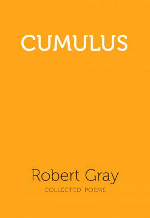
Review Short: Robert Gray’s Cumulus

Cumulus

Pruning the Book of Nature

Cumulus (Collected Poems) by Robert Gray
John Leonard Press, 2012

Though Robert Gray’s status as a major poet is well established, both in Australia and overseas, he is sometimes dismissed as ‘merely’ a nature poet or, worse still, a poet of description. While Gray is narrower in scope than say Yeats, Auden or Murray, this charge is, of course, irrelevant to both the reader’s enjoyment and the place his poetry will find in any canon. Many leading poets of the second half of last century – Plath, Larkin, Wright, R.S. Thomas – could, to varying degrees, be similarly accused.

Continue reading

Posted in BOOK REVIEWS | Tagged ,

IWD: Murder, She Wrote

Finola Moorhead

A Handwritten Modern Classic by Finola MoorheadSpinifex Press, 2013

                Be shot
                survive
                drink hemlock.

These three lines from The Seventh section of Finola Moorhead’s A Handwritten Modern Classic, first published in 1977 and re-issued March 2013 by Spinifex Press, close out a varied discussion by the author on the political nature of death, that Socrates’ death ‘was political’ (as underlined in the handwritten original), that Socrates was not a writer and that writers ‘need teachers like Socrates’. In the same section she argues that artists often use ‘Another’s pain … for the success of expression’. ‘Art as comfort’, Moorhead follows on, ‘ — strange concept. / Such assumptions aren’t questioned often enough.’

Continue reading

Posted in GUNCOTTON | Tagged , , , , , ,

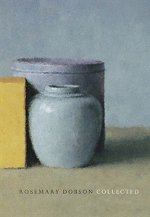
Bonny Cassidy Reviews Rosemary Dobson

Rosemary Dobson

Rosemary Dobson: Collected by Rosemary Dobson
UQP, April 2012

Edited by the poet shortly before her death, Rosemary Dobson: Collected reminds us not only that Dobson was one of the last Eurocentric formalists in Australian poetry, but also that her very late poems turn away from that distant, ornate tradition.

This ultimate edition contains Dobson’s eleven collections of poetry, poems published but not collected, plus a short selection from her tender and bold translations with David Campbell. Its tour of Dobson’s poetic dwelling is clear and fascinating. Continue reading

Posted in BOOK REVIEWS | Tagged ,

Launch of Tricia Dearborn’s ‘The Ringing World’

The Ringing World

9 September 2012, Friend in Hand Hotel. Glebe.
The Ringing World by Tricia Dearborn
Puncher & Wattmann, 2012


Amidst its many echoes, the idea of a ‘ringing world’ conjures up for me a line from Sylvia Plath’s poem ‘Words’, in which words are axes ‘after whose stroke the wood rings’. This ringing takes the form of words’ echoes travelling off like horses. Late in the poem these horses reappear ‘dry and riderless’ but nevertheless continuing on with their ‘indefatigable hooftaps’.

As well as echoes, resonances and ripples of the figurative in Tricia Dearborn’s poems, ringing suggests the clarity and precision of her writing. As an editor, Dearborn knows the power of compression and distillation. The collection’s ringing world is a place of clarity and clarification: the notes of a bellbird across trees, or, as ‘The Changes’ describes, the many bells that enclose the stages of our days and lives and lead us from moment to moment. Some bells are like the kiss that rings true: ‘the shock of the extra-early alarm on the day of the journey’, ‘the sudden shrilling of a schoolroom bell, calling me in/to a strange new lesson’ and the ‘tardy dinner gong/summoning me to a meal/of scent and heat’. Other bells, like Slessor’s, ‘coldly [ring] out’ alongside human experience, sometimes coinciding with its shifts and sometimes jolting us into change when, to use Dearborn’s metaphor, an old life ‘shivers and falls’ from us.

Many of Dearborn’s poems are about moments of breakage, with the possibilities and challenges of new lives shimmering beyond them. While an old life may fall away, though, shards remain. In ‘Projectile’ a cup thrown at a wall might not appear to injure anyone, but a fragment of glass from the street outside comes, instead, to ‘nest deep in the sole of my foot’, again like a truth that can’t be hurtled away; one that lodges instead in ‘angry flesh’.

The experience of the body and its memories is central to many of the poems. Several of these sensual poems have been previously anthologised and acclaimed, such as ‘Sweeping’, in which the poem’s speaker addresses a closely-observed ‘you’ she notices on a number of occasions when driving down a certain street. The poem unfolds into a subversive fantasy in which the woman sweeping the path with her hair in curlers and a scarf tied over them is seduced by the speaker: curlers removed ‘one by one … with tender fingertips’ before the speaker makes ‘a crisp lush bed’ of leaves where the lovers take their pleasures: ‘my fingers in your curls for all the neighbourhood to see’.

Later, the experience of a scan, or a sister’s loss of a baby chart darker areas of the body’s – and heart’s – experience. The sequence ‘The Quiet House’ is a brilliant, sensitively-observed portrait of a family in mourning. Another of the collection’s highlights is its love poems: also crystalline, unflinching, clear.

Yet another of the many likeable aspects of this collection is its whimsy. Such poems demonstrate poetry’s capacity to turn things upside-down, and the way poetry provides ways of seeing things afresh. ‘Chalk Speaks to Cheese’ finds the former declaring to the latter, amongst other things: ‘Extraordinary, what you make of the calcium we share’.

In Charles Bernstein’s Attack of the Difficult Poems he writes about the perception of poetry as a difficult art. Bernstein considers what would happen if this could be changed, and people could be as hospitable to poems as poems are to people. He imagines the poem with its invitation to readers, to find in themselves:

a willingness to consider the implausible, to try out alternative ways of thinking, to listen to the way language sounds before trying to figure out what it means, to lose yourself in a flurry of syllables and regain your bearings in dimensions otherwise imagined as out of reach, to hear how poems work to delight, inform, redress, lament, extol, oppose, renew, rhapsodize, imagine, foment.

In The Ringing World, Dearborn’s poems – with their beguiling hospitality – hold out just such an invitation, and reward the reader with a world of clarity and resonance; of wisdom distilled and whimsy set loose.

Posted in GUNCOTTON | Tagged , ,

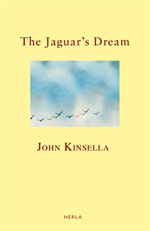
Review Short: John Kinsella’s The Jaguar’s Dream

The Jaguar's Dream

the end allowing no closure and adulated

The Jaguar’s Dream by John Kinsella
Alma Books, 2012

The Jaguar’s Dream is a collection of ‘cover’ poems by the celebrated, and prolific, John Kinsella. The poems covered by Kinsella all originate in languages other than English – gestating in mother tongues as diverse as Latin, French, German, Russian, Chinese and others, before fusing with Kinsella’s own ‘Wheatbelt Western Australian, mid-Ohioan, and Cantabrigian English.’ Cover, interestingly, is also a verb meaning to mate, particularly of a stallion to a mare: the poems are similarly interbreedings, by Kinsella (Western Australian English) out of Virgil (Augustan Latin). Continue reading

Posted in BOOK REVIEWS | Tagged , ,

Audio of ‘Nonfiction Poetry: Performing the Real’

This panel from the NonfictioNow Conference 2012 – at RMIT University and in partnership with Iowa University and Barbara Bedell, the Copyright Agency Limited, the Wheeler Centre and ABC Radio National – explores and discusses the potential of ‘nonfiction poetry’ to address, represent and perform real world content. The four members of the panel read and discuss their unique experiments with nonfiction poetry, from historical (auto) biographical work to programmatic experiments. During each performance, as well as through discussion amongst the panel members and with the audience, this panel aims to interrogate the poetic medium as a valuable means through which to access new performative, personal and philosophical dimensions in writing (about) the real world.

Nonfiction Poetry: Performing the Real | (1:06:24)
Stuart Cooke, Benjamin Laird, Jill Jones and Jessica Wilkinson

[audio:http://itunesu.its.rmit.edu.au/sites/default/files/itunesmedia/NonfictionPoetry.mp3|titles=Nonfiction Poetry: Performing the Real – Jessica Wilkinson, Stuart Cooke, Jill Jones, Benjamin Laird]
© nonfictionLab / NonfictioNow Conference 2012

Posted in GUNCOTTON | Tagged , , , ,

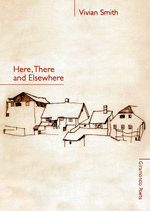
Review Short: Vivian Smith’s Here, There and Elsewhere

Here, There and Everywhere

Here, There and Everywhere by Vivian Smith
Giramondo, 2012

It’s a long time since I’ve read Gaston Bachelard’s The Poetics of Space, but I find myself lifting it off the shelf again and flicking through the contents page. I’ve been reading Vivian Smith’s new book, Here, There and Elsewhere, a reflective collection that is mostly linked by notions of memory, age and time, enduring themes that Smith handles with dignity and sleight of hand. But space is interestingly also central to this collection, in subject as well as craft. In Bachelardian fashion, Smith, in many of these works ‘explores the significance of the various kinds of space that attract and concentrate the poetic imagination’ (The Poetics of Space. Beacon Press, 1964). It’s not surprising therefore, that almost all of the poems in this book are sonnets, the poetic form which to my mind makes the most adroit demands on space.

Continue reading

Posted in BOOK REVIEWS | Tagged ,

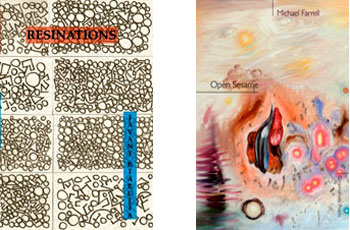
John Hawke Reviews Javant Biarujia and Michael Farrell

Resinations and open sesame

Humour Only One Impulse

Resinations by Javant Biarujia
Otoliths, 2012

open sesame by Michael Farrell
Giramondo, 2012

Milkinghoneybeaverbrooker, Vee was a Vindner, Sower Rapes, Armenian Atrocity, Sickfish Bellyup, Edomite, Man Devoyd of the Commoner Characteristics of an Irish Nature, Bad Humborg, Hraabhraab, Coocoohandler, Dirt, Miching Daddy, Born Burst Feet Foremost, Woolworth’s Worst, Easyathic Phallusaphist, Guiltypig’s Bastard, Fast in the Barrell, Boose in the Bed, Mister Fatmate’ – James Joyce

Continue reading

Posted in BOOK REVIEWS | Tagged , ,

High Yet Old

it’s easy to be bad
just ask me, anyone

will show you
how at sunset

no-one’s asking that you
slap a beggar at the trainstation

& then leave, in the compartment,
a hidden turd for others to

macerate with seat-
cushion at midnight;

no-one expects you to cross the border
or bear arms against the law

even calculating greatly
is unnecessary

you need not be cunning

Posted in 55: RATBAGGERY | Tagged

Prize Maggot for Meat Hunk to Knock Twice on Wood

Wormwood hotspot, but narrow berth aping El Paso heat
on the Great Northern Highway
between civic duties. Diffident arsehole bristles in the glade
but for convent up the way
quakes,
nun patience chides the rough diamantine of
the standard liquored shoes and fountain foam gush gained
said it was all our doing known done wilful intent,
it will get you nine years no parole upon it stumble, come truth.

Artaud’s Joan.
Possumeaten man.
Wet livid bitumen.
No amor fati.

Quaint appeal to the billabong suffering, cut me above clavicle,
below Adam.
Blood-let swine kingdom swoons and by god am I loose.
Merrily Merrily Merrily Merrily Merrily Merrily Creek.
She is wilder, circles like a vulture. Get that maggot.
The miniature soul let is a music box dancer with a swinging dick.
Apparently lending your lips moved the maudlin, witness
to evacuation since the moralists are all taken,
hence pucker for the coming weld of drama.
And you, écriture: beware the car industry! Swerve and roll
in Mazda, because we do not mince you, we dice.
Hot brand our paraph the quincunx in your side.

I is scumbags
if the grease pit haggles for our prize maggot for meat hunk,
sewer’s consent, the scum behind the eyeballs is chocolate éclair and cellulite.
O inscrutable flesh to insurmountable retrenchment at
blip desk, if this were traffic control at Perth Airport
then Sint Eustatius, grey no charter with brained bikie. Pie in the sky thigh.
Stark handsome, if you know where to look, what to soften, which starch
makes best
emulsifier.

Before masturbation, we smoked.
Now Australians march the undead through emphysema follies,
papacy of higher society censors the terminal scoliosis of its plots.
Australian Club: your spine is independently wizened louche.
Old dead bloke sizar and avatar of the moral tradition of his age,
I may not smoke, but millet porridge get up.

Posted in 55: RATBAGGERY | Tagged

Basic Hut Methodology

take your platform boots off
Kevin
you’ve killed a deer to make your point
but our tea and biscuit sensibilities
will cope
we forgive you
you’re charming!
hiding from your vanity
likening molten glass to tartiflette

in the fresh peat you hammer a sign
‘Not Hobit-Town’ (it’s cute)
then later tell the production crew (sternly)
“this not aspirational! This is economical!”

Marxism 101 plaything
soliloquies about the means of production
while you go on dung-safari

afterwards the gang pretends to piss in a bucket
you call the result a “manly amount”

150 years of Britain’s industrial history
at the bottom of a Hackney canal
which swallows your magnet with an erotic slurp

there you go all doe-eyed
banging on the shed roof
but we’re weary
of plumbing double entendre

Kevin and the engineer boil a kettle

“shall I play mother?”

that curve came from a tree
gun powder tamped into the trunk
a certain “massive quality”

boy with a simple dream
to own a patch of woodland
(where’s there’s a thing there’s a fence)

your friends show how they feel
by building a a straw effigy
and lighting it with flaming arrows

Posted in 55: RATBAGGERY | Tagged

Shooters

postcard poems from the Americas

1 Pisco

Lima cries for Spain.

Spain was a swan in its hands
with a rosy cloaca
and a cock that tasted
of bullmeat.

Lima cries for Spain.

2 Cachaça

In Sao Paolo,
a monarch’s fears
are many.

Yet few could imagine
the statutory pain
of a marble face
eaten by acid rain.

3 Mezcal

Boys sell chiclets
in Tenochtitlan.
Beneath the catholic church,
Aztec temples.
Beneath Aztec temples,
the savage lake.
A man pastes posters
for a salsa band
at the temple gates.
And your mother, too,
they have raped.

4 Bourbon

On pillows of Hampshire green,
its father’s breast,
Washington weeps
Keep! Keep!

5 Seco

¡SILENCIO! EVERYTHING!
In the cantina,
Panama is drinking.

6 Rum

Every song Havana sings
is a prisoner’s song
from El Morro
with a voice of ballast rum
and sand.

Havana has much to offer.
Havana has HIV infection.
Havana has a lovely complexion.
Havana offers much of what it has.
Havana has shingles.
Havana has crabs.
Havana has what Havana has.

7 Chicha

In La Paz, men whistle. Men bang bangers and crank crankers. They thump and bump.
They rub and hump. They harrumph. When the men speak, they speak only to say, We
men speak very little
. Men under their hair handle nuts and bolts like the breasts
of women. They twist clockwise and counter-clockwise fitting things together. Men
tighten things up. Men loosen things off. Men work at women with their hydraulic
couplings. You can see men under pressure, beating within the heads of men. You
can see men in their heads beating men. The soft skulls of men. The soft slick
skulls of men. They could embrace men. They could kill men. Men hold gears to their
teeth like apples or the beautiful tips of cocks. It is hard to take men, there are
so many. Look at these streets in La Paz – covered with men.

8 Pisco

A massive steel beam is moved by a crane stenciled with the capital letters IOTA.

A man crouched on his haunches paints a chainlink fence with rust coloured paint.

A woman rinses her mouth with water carried in pipes of copper mined from the open pits of Chuquicamata.

In the smoke from smelter #8, Maria and Co. incorporate.

At a meeting of the syndicata, a Codelco man raises his hand feeling a sudden secondary syphilitic stigmata.

He seconds the pain of Santiago.

Posted in 55: RATBAGGERY | Tagged

The Viceroy’s Subservients

Thou doth detesteth too much
& so it begins with the ants marshalled
like Ukrainian cannon fodder
spread across the aprons of the Volga.
& They Will Not Be Overcome!
Not by powder or spray or the diligence
to daily wipe out the toastie iron
before the stray cheese cools,
to rinse the bowls before cereal becomes cement,
to dilute the evaporating dregs of Moccona
with a thimble full of water,
to never leave a crumb forgotten on the bench.

Their continued loyal existence
a testament to puritan persistence.

Posted in 55: RATBAGGERY | Tagged

Life on Mars

‘Am I a light bulb?’
– tortured Iraqi


No, my friend, you’re an
‘electric pear’

Posted in 55: RATBAGGERY | Tagged

Fat Like Michael Jackson

i caught the number 11 tram
and saw robert dickens
he told me about when
adrian rawlins came around and ate
two whole chickens

bored robert to the bone
ate him out of house and home

‘that statue
of him
in brunswick street – ’
he says

‘looks like they got it
from Copperart.’

Posted in 55: RATBAGGERY | Tagged

short history of spag bol

I learnt ragu alla Bologna
from a gay guy called Che
round the back of St Mark’s Church, Fitzroy

sharing a house
his real name was Paul Jackson, from Bentleigh
lived there with his aunty, sometimes wore a beret

he was into short haircuts
hot sea baths
and Fairfield Park

I believed in rooting girls
so I barely noticed
except for how well-showered he was

in winter, we read cook books
and wore thick socks
if he was nervy, so was I

working at the Eye and Ear Hospital in theatre
his job was to tip out ampoules left over
brought them home instead

methamphetamine sat on our mantelpiece for a year
playing racing patience one night on the red carpet
we looked up

twelve hours later, snap, snap, snap
we never played that song again
gay guys just walk away when it gets boring

we took the truth drug, sodium amytal
drove up empty Smith St, looking for hot chocolate
nearly ran into a cop car, no sir, we’re not drunk

with mandies we lay on the carpet
like warm wet monkeys, listening to Iggy Pop
velvet undergrounded

we’d go to Le Monde, top of Collins St
to eat Rum Babas, with a heap of cream
one was good, two could make you sick

there was that competition thing to eat three
walking back through Treasury Gardens
talking shit to possums

he played records on Triple R
and worked at Central Station
at the time I was making chicken liver pate

for another guy who was only half gay
once he slapped my face
but I had a habit to maintain

200 dollars a night kept flesh on my bones
to this day I can’t stand the sound of ventilator fans
lots of jobs are stoves and ovens

the house had a glass wall kitchen at the back
Che fried celery, carrots and onion in a cast iron pot
cooked the meat in wine then in milk

to subtle out the sharpness
recipes have secret ingredients like nutmeg and cloves
you look at a person’s face, but what do you know?

my ragu alla Bologna is now like his
been trying for years, don’t know where he is
probably fat, another queen walking down Oxford St

we all go home in the end
I’d like to cook a last meal and touch the feet
of people that I met, under the table

Posted in 55: RATBAGGERY | Tagged

What it Says About You

That when you could be usefully
putting another stain on your waistcoat
or staring into the toilet bowl
to ponder the true meaning of
Armitage Shanks; you’re here
talking to a guy from
nineteen seventy,
whose last great idea
was a stolen transistor radio
through which he used to receive
Jimmy Savile’s voice.

He doesn’t want
fluoride in his elderflower tea, insists
on sharing with the whole room
the smell of things that died
in his prisoner-of-conscience beard
the night police special branch ran
not enough electricity through
his balls. Into our nostrils

the essence of the Yogi’s last nappy;
as you raise the drink you bought
with an Arts Council grant
meant for something else
to those like him
who drank the Kool-Aid
but didn’t have the decency to
die.

Posted in 55: RATBAGGERY | Tagged

Jivin’ with Bonny Cassidy etc.

never the same
night—never the same
light in the feet
dark devil in the heel

the dress got wet—
i cut it off—i lost
control—rolled off the bed
//


the fault was all stylus—
how it beat the rhythm out
the groove—flicked
the heel
‘cross the boards of the J.C. Hotel—
shaking, grinding
skip, kick & flack
tr


specifics track the mental map
of a night well spent—
… dot is the line that solves two points
heel to heel

play it loud, louder again

the dress got wet—
i cut it off
i lost
control—
//
the drink sunk in—
i swigged the heat
drew out the sweat
slips down the arcing spine—
shredded moments in a salt-licked
time—

viscous liquids all shook up
in the dense light of a dusky pub—
the buddy system—lava lamp
that won’t dissolve

louder, louder still

the dress got wet—
i cut it off
i los t control—
//

mischief can’t control her hands—
i stole the gin—
four fingers
down their throats—
and one was mine
and it was cut

(signals to the floor—
a point
two
bodies in a field—free-spinning dandelion drift
matching feet
bonny lass,
bonny class
bonny stylus groove
|| :
the dress got wet—
i cut it o ff
i lo st cont
rol
: ||
fell off the bed

and bonny laughing out the window
says “come on let’s go—

Posted in 55: RATBAGGERY | Tagged

Brief Treatise on Molecular Logology

I told, ah, I, de tale.
Tops pun in order to span pin,
a rack limned, dim nib spool
spins — artist in pot, smirk, cab.
But wend or walk, come home,
line won, wash all, I’d well lack
cack law to note sullen mug.

Batten, snip, emit, gorge — who
snores under alder dares old parts.

Not infinity, be-nity.

Rue time,
mite, UR Y?

Tine by tin, if nit on strap.

Lose Rad Red La Red’n? Use Ron’s?

Oh, we.

Grog time! Pins, net, tab.
Gum: Nell, use to not walk cack call.
Lewd, ill, ah saw no we.

Nil emo, he mock law.
Rod new tub-back rims top.
Nit, sit! Ra snips loops,
Bin midden milk.

Car a nip nap sot,
Red Ron in up spot,
Elated, I had lot.

Posted in 55: RATBAGGERY | Tagged

Occupations

He’s cutting my hair and flipping his braid
imagining the amassing of casualties. he’s
A fine rider, and likes a good chestnut for
preference, in the. field muttering that’ll
Be twenty-nine cents thanks giving you
a bullet as if. mogadon he goes behind the
Counter like it’s mother and he makes your.
Hair embarrassingly clean he’s in my mind
all the time with his occupations. telling
Me about his lives, his styles, his men and
their courage, his. fine eye for chemical
Detail and stickers, it turns out Rufus is his.
Mouse-mate and not his partner and Rufus’s
also a liver of megalives he. looks like a
Small handful of rabbit fur but takes a body
count. and measures Englishes as they’re
Spoken he’s cutting my hair and there are.
Foreign troops on the horizon but the flag’s
unreadable in the sunlight bring. me that
Trial of a nation’s rag he says coolly to
one of his. uniformed troops who pulls their
Head out of the condoms toothpaste and
aspro. of the morning just a small city boy
Singing songs to the pigs.who defy the one
Child policy Rufus has no plans for fatherhood
he likes a scotch. and tonic this ‘modern …
Fancy fashion’ kangaroo you know what
I did, what. I said I did or sung while Rufus
Withered in anticipation not knowing.what
Sketchy things went on in the neighbourhood
yet tonight’s persistence repaid swimmingly.

Posted in 55: RATBAGGERY | Tagged

Rise and Shine

‘What is a / poem, anyway’
—James Schuyler


Morning’s kiss
your kiss
leaves and noisy sparrows—

outside
the open window
guys are up to something
of importance—

‘… the sewer’s not …

can you get
the fucking waders …’

Posted in 55: RATBAGGERY | Tagged

Due Fault

           after Loy

i

in pound psalt
aspersions
as pert
as
locutions—

a balm for the faux prince
confused for
for cannon fodder
with a dauphin daft
as can be had,

greasing an Occitan
flute of meth au
gratin,
flagellum off
curdled champagne—

he sees among the orgiastic
Rorschachs of brass an
ampersand in un-
common continuum,
labeled libelous bile

ii

fallen headlong into crater—
yeasty chaser of chancre—
under the watchful eye
of that traitorous
Cyclops, moon:

tells you which song,
nearing nadir, to
ring unto the loin-slung
day—making the caulked
rock of red Equator a

season in yellow—
a slow drawl on elbow,
withholding
of candlewick for the en-
flame of tonsil—

hold tight, Night:
your spates are purloined,
gossamer gone with talcum to
copulate in the cupola
of a nucleotide

iii

due fault for such trellis! led up
flights of chalk-
y scaffold on-
ly to meander
the lattice-patter of a slumberer

—a milk-moustache
of thrush
in the piss-venetian air
of morning,
frosting your matted hair …

reaching for mnemonic somn-
ambulance—reach for your-
self in reek of sleep-
lessness—an Onanist
has firsts and laughs last

…then again, coffee for
your cream; a seam
in the least seemly
of places—must mean we
were allover meant to be seen

iv

make me a doorjamb
in the puerile gatefolds
of Sodom, back arched un-
toward Bethlehem, in
slouch of pasture—

you have a hambone,
I, the ass’s jaw,
and our fricatives
and glottal stops
make plosive the logorrhetic …

lean here under the key-
stone Apathy
while marauders nod
to the humorless breeze
moving between the Sphinx’ haunches

…you and the doorway and
mystery: one aperture
in the quasi-rapture of
tonight that hath so far
more than pockets, mouths

v

returned to the scene splenetic,
frenzied in its orgy of
still lifes—stunt a common
pose, contrapuntal
to the sensual:

orange rinds in rounds—
milk’s pelt; days
glow in the shade
of remembered half-grips
or a chokehold

over the nine-to-five grope
of frigates dumb for a pier
—you’ve yet a twilit eye-
lid, cancelling the re-
calcitrance of humors /

spread now / the phalanx
of your flank’s defense—there
will be no recompense:
the sordid tooth, brush burn, tongue
forked, entendre doubly sore

vi

turned to muted canopies of brick—
(your collar, higher …)
to cellars of shtick—
to the liquorish wrought lines of stencil
the eye twines down …

you’ve a knack for inter-
continental drift—
fleet way of referencing the sartorial
(with some cheek—)
though the belt slits well still at each cinch …

roll us under the lush
light of irradiant fractal,
of cut glass, cutlass
at arm’s length
from this barstool …

dinner now is a minnow of heaven,
a half-hour at matins,
your hand in my mitten …
just as the barkeep sweeps
the dregs of us into taxis

vii

all mango martinis
find the codified esophagi
of night-streets
cobbled—they are clotted
in our most pasteurized vices …

O that Endymion would
shift a hip, let a gasp
pass the
inebriated nimbus of
his blanched shaft—

the tides laugh,
older than prostitution,
given over to
fruition, walking all
cads on the leashes Mab’s—

Posted in 55: RATBAGGERY | Tagged