Professor Kröte’s Death

Dietrich chose cremation, not
a funeral without guests, chose
to rise from wood like notes escaping
their mortal boundary, chose to fly
beyond the piano’s last ivory.

A former pupil in an orange summer
dress receives the urn by morning,
her house clean as an IKEA display,
missing the chocolate smudged hands
on the long beige walls, the shrieks
and red-faced hatred that accompanies
the melody of everyday life.

Ruhe in frieden mein Lehrer1.
You are no longer a foreigner,
you are no longer, and no longer need
the heavy slosh of red wine
to dull and drown the discordant bruise
of ‘an ignorant town.’ You’ve entered the eighth
octave, leaving the rubbish behind.”
Sitting in the warm light of the window
she places Kröte’s urn on her piano.

Posted in 56: NO THEME II | Tagged

November Spacker

My sixth-grade teacher, Mr. Drashal,
would write NOVEMBER on the board,

and read poems about death.

Our trees
finally drop parasite leaves, let them fall

and blow away. If only this town
would do that. Instead it burps

up a new Wal Mart. It’s November
at last, dreary. Thanksgiving,

death on the table, everyone
ready to dig in.

Posted in 56: NO THEME II | Tagged

Courtly Love

Song of the troubadour, dance of the happy shades
mid-saggital cut-away of the Palatine Uvula
catalogue of all catalogues includes Lufthansa
treachery, the Alphabet murderer’s citational
liquidation. Not quite revealing the thing
that offends you, the impossibility of saying it all
become observant, noting the self to pieces,
hallucinatory parity exceeds inflight metabolism
indexed to the absence of its own gelatin, another
anecdote splintered whilst licking a filing cabinet
raconteur craving the post-aniseed Romantics. Sang-froid
means ‘how to summon the shiver’. Ice connotes
the distance between the object. Throwing a shoe
whilst unsocking the Woman constitutes an infinite
number of men in the shape of punctuation,
tends to make the negation shift.
Fretworked birds cause rhythmic bulges,
utterly without aperture, the number that counted itself
so plain, so poorly made———————————————
Axiom sucking itself to the bone.

Posted in 56: NO THEME II | Tagged

it grows on you

you lift a hand to sweep away
the cobwebs a rubber spider
is about to infiltrate your best
eye so entertain it with sweet
valentines the people in the park
may still be there even if you
dare not think of them or understand
their costume jewelry

the medieval greyhound flares across
your passage like a literal confirmation
can you read the subtext of that
syringe dangling at the periphery
of the paper rose

do you like the digitally enhanced
duck pond of the sesquicentenary
parklands tick all the boxes as
your lapdog poos in paradise clearly
please

is this where the national lector
slept with her tattered script,
a dream of playing tennis on
a painted lawn with hamlet;
how the rows of trams burned
brighter than ilium or carthage
i saw the exhibition – some inferno
and then i hit the sack

Posted in 56: NO THEME II | Tagged

Guardian

The fanatics were right,
but with them all
screaming within earshot

I couldn’t grasp
the edge
under those words

it looked like some sort
of innovative seafood,
mixed cocktail maybe
and madeira cake

What was that recipe?

why won’t
they remember me,
now that they gave
such bombastic advice?

baroque qualities
bore an equal label:
the homemaker’s lesson

Any refunds
On a ticking clock?
purchase receipts
must be made out
unequivocally to all consumers

A pearl-coloured prospectus
is required to share
in the anniversary of funds

quarterly statements
attracting
edacious annual penalty

hidey-hole of babes
rocked to Christmas tunes
(swell savings)

The Court pays all expenses.

Posted in 56: NO THEME II | Tagged

Icebergs

I hop up onto my bathtub’s rim
peep through the exhaust fan slats into the apartment
across an abyss-like drop between our buildings

He’s leaning (topless) against a fridge in board-shorts
fondling the long, dark strip of down-like gut-fuzz,
his other hand thumb-surfing airwaves via remote control
(TV the length of outstretched arms catching his sports)

Those walls without pictures or paintings, no ornaments
but for a pair of swimming goggles pendent off
a nail above his kitchen nook

If peering like me he’d see I’ve decorated my walls:
two framed photos of Ferraris, a pastel drawing
I bought off a footpath artist: Elvis pointing & winking
out of a kangaroo’s pouch

& my favourite illustration: a penguin holding a fat cigar
on an iceberg afloat an expansive sea, its caption reads:
Eh, anyone got a light for me?

Posted in 56: NO THEME II | Tagged

Tram Line Song Line

On the No 96 tram from the Museum to the Catani Gardens following the rules of relaxed proceduralism

  1. A tram line is a song line

  2. How to read the signs etched on the Lake Condah possum skin cloak in the Museum?

  3. What do the Wurundjeri make of the gold angel with a trumpet on Princess Theatre?

  4. Does Bunjil sit silently on St Patrick’s spire?

  5. Is that Barak busking in the Bourke Street mall?

  6. Do clever men twitter rather than point a bone?

  7. In Myers there’s a big mob of kids with Santa who’s painted up for ceremony

  8. At the GPO, Quakers hold a silent vigil for First Peoples. Elizabeth Street is a creek full of mullet

  9. Tom Roberts paints a dusty gold view looking up the hill

  10. Can you see up by Flagstaff they’re hanging the two bawling Palawa warriors for spearing shepherds?

  11. 100 years ago horse shit litters this street

  12. Southern Cross Station sits on a wetland full of ducks but there are more stars on the hotels than you can see in the night sky

  13. Each stop is a dot in a circle on a painting in the dirt

  14. If the Casino is a gamble what is shaking hands with Batman?

  15. Platypus above Dight’s Falls sift sewerage after it rains

  16. Djadjawurung Gold and Wathaurung Wool build the Teahouse. What’ll it say in 200 years?

  17. Is the tram a carpet snake full of tucker – us?

  18. When the Wimmera mob see the parallel tracks left by Major Mitchell’s bullock carts they wonder what sort of animal leaves two deep ruts in the mud

  19. Graffiti is painting by uninitiated boys

  20. The South Melbourne Football Club Swans are gubba white

  21. Prince Albert never makes it to Albert Park and it takes a Scottish Gillie to stop Vicky greetin’

  22. What do seagull egg eaters from St Kilda in the Hebrides think of this turbid bay?

  23. Barak’s uncles trade wives for peace. Now transvestites turn tricks for junk

  24. I used to act for their dealers up the road.
Posted in 56: NO THEME II | Tagged

The Code

In untidy light
criminals bud
on manky branches Singapore, London.
Ayn Rand’s underpants smoulder
as the stolid farm workers are buried with their wills.

Healing via austerity, Orchard Rd
(bypass pity). Five tattoos.
Those summer clothes
pass this merry chaos with
a chalky insouciance…
their never-worried hip switch.

I have danced
& been forgiven. Each leaf is personal.
That same timber gives both fruit & outrage.
The cat farms an acre
we won’t feel release
until the claws dig in.

Posted in 56: NO THEME II | Tagged

Moby Dick: Acrostic Sampling

1. Title


may, there stands the
of sea boots was heard in the entry; the door
bulwarks of ships from China; some
you?’ – he at last said – ‘you no speak-e,

do to take care of myself
interior door
charm wanting? – Water –
knots of human hair; and one was

open, and in rolled a wild set of mariners enough.
rise – yes, he’s the bird

turning flukes – it’s a nice
halting steps I paced the streets, and passed the sign
either in a physical or metaphysical

with fresh surprise. There was no hair on his head – none to
Harpoons’ – but it looked too expensive and
about a little and see the watery part of the world. It is
leviathan himself?
ever heard of. On the contrary


2. Author


He wears a
ease in manner, quite self-possessed in company
remember that – and
meanings
a child, I well remember a somewhat similar
No one having previously heard

marble tablets, and
England traveller
lie buried beneath the green grass;
vain; the indignant gale howls
In New Bedford, fathers, they say, give whales for dowers
lies my
lines that seem to gnaw upon all Faith, and
empty stomach, in the Negro heart of Africa, which was the


3. Ishmael


clasped me round the waist, and said that henceforth
as seen in the
‘look you,’ roared the Captain, ‘I’ll kill-e you, you cannibal
lasso, caught it

matters were, dived down and disappeared. A few minutes
eyes; for

I now complained
surprise and no small concern, Queequeg now gave me to
he was fearful Christianity, or rather Christians, had
more, and he rose again, one arm still striking out, and
affectionate arm
eyes shut, in order the more to concentrate the snugness of
long living arc of a leap


4. Queequeg


Humiliation, was
eluded him.
Another. This world pays dividends
deal less than seven hundred and seventy-seven
poising his harpoon, cried out in some
egress to Bildad, who, I make no doubt, was
dost not
down for the three hundredth,’
last, and knew nothing
into an
Gayhead, said that the name would somehow

Peleg, to his partner, who, aghast at
upon this ragged old sailor; and
rig jury-masts – how to get into the
papers. We must have Hedgehog there, I mean
looking over the bedside, there
eagerness to vanish from before the awakened wrath of

rag of a black handkerchief investing his neck. A confluent
a broad shad-bellied
soul’s a sort of a fifth wheel to a wagon
content if the world is ready to
a ship-owner; Bildad, as I hinted before
look; limped towards me where I lay; pressed his


5. Pequod


about his

talk of securing the top-sail halyards to them. In his
harpooner, say; and if in emulation
invite to that town some score or two families
not a tame
graze the keel, would make her shudder

ocean to kill whales for my living, and not
fornication

the world but in Africa, Nantucket, and
ruddy, young fellow, very pugnacious
own father’s? Where in the bottomless deeps, could he find
permitting stars. But this august dignity I treat of, is not
honouring us whalemen, is this: they think that, at best, our
island of Nantucket? Why did Britain
encounter all the terrors of the pitiless jaw;
since in this famous fishery, each mate or headsman,


6. Ahab


or inexpressive, I shall say so, and suggest another. I
lofty jet rising like a tall misanthropic spear upon a
devilish broad insult. But this insult is whittled

than the whale-fleet
hands among the unspeakable
upon fixed wages, but upon their common
never
down to a point only.” But now comes the greatest joke of
Ere
request among jewellers and watchmakers.


7. Starbuck


soul is more than matched; she’s overmanned; and by
this, with soul beat down and held to knowledge, – as wild
against Tashego
identity; takes the mystic ocean at his feet for
distracted decks upon which they gaze; however,

sting, that sanity should ground
things are forced to feed – Oh, life! ’tis now that
everything
at every
descry what shoals and
from the inclement weather of the frozen seas. In the fireside
as when an African elephant goes passenger
such a field! I think I see his impious end; but
the latent horror in thee! But ’tis not me! that


8. The Whale


A row! a row! a row!

comparatively, had knowingly seen him;
of their aspect. So that
lurking in him then, how soon would their
of the albatross: whence come those clouds
round our
life, – all this to
even at the present day has the original
strongly on the imagination of an untravelled American
storied structures, its neighbours – the

a row a’low, and a row aloft – Gods and men – both
leads his shaft by the ever shifting, muffled sound
Lords of the White Elephants

circumference, many
of spiritual wonderment and pale dread, in which that
Latin
of that brute; for, analysed, that heightened hideousness
rising in a milk-white fog – Yea, while

only arises from the circumstances, that the irresponsible
few of the fishermen recalled, in reference to

A row! arrah a row! The Virgin be blessed, a row!
These two statements may perhaps
Hue, nor yet his deformed lower jaw, that so much invested
enough in offering battle to the Greenland or Right whale
in his frantic
sublimer
more obvious considerations touching

Posted in 56: NO THEME II | Tagged

A. Frances Johnson Reviews Jill Jones

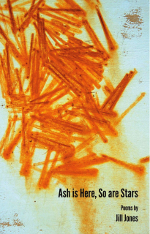
Ash is Here, So are Stars

Ash is Here, So are Stars by Jill Jones
Walleah Press, 2012

‘Why wish for the moon when we have the stars’, Bette Davis famously aspirates to Paul Henreid at the end of the film Now Voyager (1942, dir. Irving Rapper). That, of course, was an iconic, melodramatic story of unrequited love given an optimistic gloss by two lovers sharing last cigarettes. Jill Jones’ ambiguously rendered celestial bodies serve up different ideas of love and loss in this new collection. Jones’ stars, moons, candles, clouds and smoky skies are part of an identifiable romantic lexicon. Continue reading

Posted in BOOK REVIEWS | Tagged ,

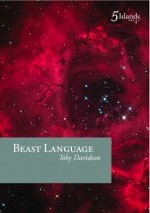
Review Short: Toby Davidson’s Beast Language

Toby Davidson: Beast Language

Beast Language by Toby Davidson
Five Islands Press, 2013

In the introduction to the collected poems of Francis Webb, Toby Davidson observes that the immediate influences behind Webb’s poems ‘do not supersede his locales.’ Webb’s poems are informed by a topophilia, a love of place and its ambient lore, a topographical attentiveness to detail that includes not just spatial but also temporal resonances. Davidson has inherited this attentiveness to space and place, and his debut collection, Beast Language, attempts a topo or ecopoetics that traverses a spectrum of geographies, mapping the Australian continent from the Indian Ocean to the Pacific seaboard, attempting not only terrestrial readings but taking cosmological measurements as well.

Continue reading

Posted in BOOK REVIEWS | Tagged ,

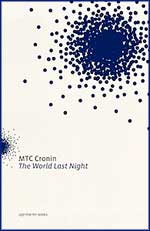
Michael Farrell Reviews MTC Cronin

The World Last Night

The World Last Night by MTC Cronin
UQP (2012)

A book as an experience of sampling, and of reading over a long period of time, may be ideal for the writer; but it won’t be that for all readers, especially not reviewers.

MTC Cronin has published several highly structured books in the past: Talking to Neruda’s Questions, 1-100 and The Flower, The Thing. Here the double title functions in a looser, more umbrella-like way; the book apparently aims to use death as its guiding concept: the assertion that the poems are themselves metaphors suggesting flexibility in her use of death as her theme. Continue reading

Posted in BOOK REVIEWS | Tagged ,

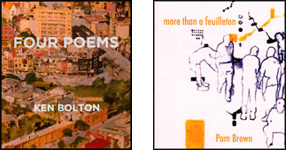
Justin Clemens Reviews Pam Brown and Ken Bolton

Brown and Bolton

Something Old, Something New

Four Poems by Ken Bolton
Little Esther Books, 2012 [first pub. 1977]
more than a feuilleton by Pam Brown
Little Esther Books, 2012

If there is one true love in the history of Australian verse, it’s perhaps the love of Pam Brown and Ken Bolton. As you should expect, it’s not a normal kind of love at all – or maybe it’s the only normal love, depending on how you’re predisposed to taking the word or the thing (‘normal,’ I mean), and depending whether you think you can tell the difference between the two (‘word’ and ‘thing,’ I mean). Continue reading

Posted in BOOK REVIEWS | Tagged , ,

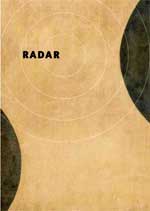
Andy Jackson Reviews Kevin Brophy and Nathan Curnow

Radar

Radar by Kevin Brophy and Nathan Curnow
Walleah Press (2012)

Radar. Green blips on a black screen. A large and vulnerable craft navigating a changeable world. A technological attempt to locate an invisible danger, or to give shape to darkness. All these associations emerge out of the poetry of Kevin Brophy and Nathan Curnow in their joint collection Radar, albeit in an intimate mode: these poets observe the ways in which we navigate through our lives in the contemporary world and improvise meaning. It is difficult, though, to talk about ‘the book’ because these two poets differ strikingly in their approaches.

Continue reading

Posted in BOOK REVIEWS | Tagged , ,

Suspensions of the Real

Studying the Sylvia Plath archival papers at Smith College in 1993, poet, editor and critic Felicity Plunkett intuited that a number of pages were missing from one poem draft. Plath assiduously page-marked drafts of the poems that were to become the Ariel poems. Plunkett was unable to uncover these pages in any of the archives made available to her, which were still in the process of being organised. One night, in dream, she ‘receives’ a phone call, made from a black, period-piece telephone, words delivered in Plath’s idiosyncratic trans-Atlantic diction – ‘look in the yellow folder’.

Continue reading

Posted in GUNCOTTON | Tagged , , , , ,

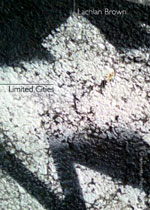
Review Short: Lachlan Brown’s Limited Cities

Limited Cities

Wide suburban similes

Limited Cities by Lachlan Brown
Giramondo (2012)

A meditation on city limits – the literal and figurative limits of cities – and the edges of ‘urban’ definition, Lachlan Brown’s first collection, Limited Cities, conveys the extreme contrasts and contradictions of suburban environments via train-window views. Macquarie Fields, Parisian banlieues and Barcelona street scenes: each keen observation of the space through which he moves contributes to a nuanced description of the poet’s perspective, and in turn the reader’s too. What at first appears to be a collection concerned with the external – landscapes and cityscapes – is, in fact, more personal.

Continue reading

Posted in BOOK REVIEWS | Tagged ,

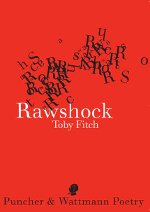
Review Short: Toby Fitch’s Rawshock

Rawshock

Rawshock by Toby Fitch
Puncher and Wattmann, 2012

Sydney-based poet Toby Fitch’s first book-length collection, Rawshock, is a lively, artful and conceptually engaging excursion into the underworld of a profound poetic imagination; through the eponymous poem sequence, Fitch offers up the viscera and vital organs of the Orpheus myth for the delectation of contemporary readers. Everyday Static’ and ‘Oscillations’ – the two chapbook-length series that accompany this myth – present a sensuous and affable rendering of Fitch’s key theme; the relationship of the present to the poetry of the past.

Continue reading

Posted in BOOK REVIEWS | Tagged ,

3 Translations with Notes: Laforgue, Soupault

Jules Laforgue and Phillipe Soupault are two poets with very little in common, particularly when the early period of the former is under consideration. Steeped in an unremitting metaphysical anguish (the poet himself would refer to his “poèmes philo”), Laforgue’s early work obsessively orbits around an irredeemable loss. It is perhaps a sort of bent continuation of the Romanticism of a Lamartine, with the difference that if in Lamartine nature, for all its richness, is a site of absence, for the young Laforgue it is patent that nature has already kicked the bucket, so there are no verdant dales through which one might wander while pondering the retreat of the absolute: no site of retreat and meditation remains. The lines from Hamlet that directly precede those Laforgue chose as epigraph to the present poem might be read as a summary: ‘How weary, stale, flat, and unprofitable/Seem to me all the uses of this world!’ He would soon manage to sublate his black bile into a kind of sparkling manna which enabled him to sing and dance his way through the dead world in spite of his paralysing dread. This transition can be read even in his use of exclamation marks (prevalent throughout his work). Initially they function to sharpen a desperate, earnest plea, but later they’re transformed into a flashing, sardonic wink before the same situation; the former variety want both world and poem to grind to a halt, while the latter goad writer and reader alike on to more madness and more play: they affirm the vertiginous movement of the groundless.

The present poem is early Laforgue (he has just turned 19 when it is published in La Guèpe, a short-lived monthly put out by his former schoolmates, in 1879), but its appeal is due to the fact that it anticipates the irony and perpetual deferral that mobilises his mature work, while still bristling with a youthful defiance that is somewhat more subdued when he comes to produce his sequences. Here Laforgue is still far from arriving at his infamous vers libres: he writes in flexible rhyming alexandrine couplets, which I was not intrepid enough to try to reproduce. What struck me instead as the crucial aspect of the poem to try to capture in English was the teeming of lines and overblown imagery (on my reading, a sentence in the centre of the poem runs over thirteen lines, undaunted by a suite of exclamation marks), which contrast with abrupt halts and bursts. ‘Coppée’ refers to François Coppée (1842 – 1908), a Catholic patriot and populist author who wrote of everyday miseries and took a leading role against Dreyfus. Rimbaud and Verlaine wrote savage parodies of his work. The three footnotes to the poem are Laforgue’s own.

No such metaphysical obsessions lie behind Soupault’s work. His verse is resolutely subjective, is grounded in and seeks to defend and glorify the present as living present against any and all systems of order and norms. To this end his writing seeks speed in the prosaic, which he injects with the infectious energy of immediate consciousness, as though each and every unit of creative inscription were already as monumental as the creation of a world, and to write of whatever passed before him (whether percept or affect) were to pay tribute to the vital powers that secretly suffuse all our immediate surrounds. He has banished all punctuation as an obstruction, and lineates in a ruthless, sausage-factory style, producing line-units to which he hopes to render, even if they contain only a few familiar words, a kind of absolute autonomy, imploring the reader not to pass over them with the usual indifference. He stops short, however, of using line breaks as boundaries between fragmentary monads of sense and syntax, as Berrigan and many others have done since, which would be too disruptive to the teeming energy of the poem. His cosmopolitan interests are reflected in ‘Prague Friends’, a panegyric to the days of warm friendship he experienced there with a group of Czech poets in the late 1920s. The poem was first published in 1927 (just following his 1926 ‘expulsion’ from surrealism for prioritising literature over the revolution) as ‘Do Prahy’ (‘To Prague’) in Revue Devětsilu. It was directly followed by ‘Poème pour Phillipe Soupault’ by Czech surrealist Vítězslav Nezval. The pronoun ‘you’ (‘vous’) is plural, addressing the poet’s friends, up until ‘Now/I see your hands’, where ‘your’ (‘vos’) suggests an equivocation between the hands of the Prague Astronomical Clock just mentioned and those of the friends. The link is then further strengthened by the fact that the clock’s chiming, its ‘great music’ announces the ‘meeting of friends’, as well as referring back to the passing of time with which the poem opens, and within which any music and any friendship at all must take place.

Posted in TRANSLATIONS | Tagged , ,

Submission to Cordite 43: MASQUE is now open!

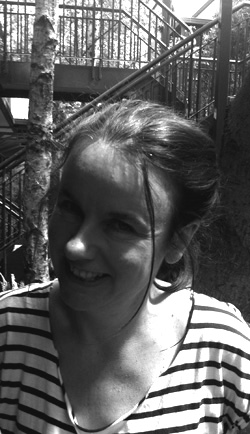
Ann Vickery

Ann Vickery, shadowed

Poetry for Cordite 43: MASQUE will be guest-edited by Ann Vickery with featured artists Jeremy Balius and Lily Mae Martin (coverstar).

This issue will be the Masque. An invitation is extended to displays of Devices and Mythic Mayhem, Stage Effects and Staged Affect. The issue desires to entertain Bold Interiors of Poetic Fancy and Brocaded Renderings, Lyricised Run-ons, and flirtatious Kinks in the Narrative. It seeks a toying with Masks and Anti-Masks of identity and all forms of Gender guises. The issue will delight in submissions that feature courtly design, political or ethical high drama, human conceit, or wall-to-wall costumed allegory. It calls for Mock eucalypt Grottos and Other Pastoral Settings, Love’s elevations and What Lies behind the Curtains.

Continue reading

Posted in GUNCOTTON | Tagged , ,

RATBAG Editorial

Ratbaggery: ‘To achieve harmony in bad taste is the height of elegance.’
                                                                                                         -Jean Genet

Ratbag poetry and Ratbag poets are not, necessarily, one and the same. There are poets for whom a Ratbag poem requires the serious maltreatment of themselves, while there are others for whom Ratbaggery is the effortless demonstration of their personal grace. There are poets who begin writing as Ratbags and become stockjobbers of Romantic flap, while others begin by making exquisite paste and later come to hear the sublime music of the rant. Whether sticking it to the jealousies of formal practice or mocking the precious tendencies of poesy, Ratbag poems always import a little wickedness. Or a lot.

Continue reading

Posted in ESSAYS | Tagged

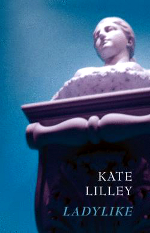
Bev Braune Reviews Kate Lilley

Ladylike

Ladylike by Kate Lilley
UWA Press, 2012

Kate Lilley’s second collection, Ladylike, is a tightly constructed and complex work on love and language. Reminding me of Welsh poet Gwyneth Lewis’ wry, poignant words concerned with Welsh language, use of English and meaning-frauds, Kate Lilley enlivens her readers to assumptions, contradictions and the various erections of judging behaviour that surround the definition of a woman today or in any recent age.

Continue reading

Posted in BOOK REVIEWS | Tagged ,

A Poetics of The Naughty

The word ‘naughty’ is etymologically related to the number naught. Winning, and its relationship to one, along with duplicity and its relationship to two, seem to be the only other similar contemporary instances where a number becomes descriptive of a particular kind of activity. But being naughty is not the opposite of winning, in the sense that winning is being number one.

How does naught become naughty? According to the word’s etymology, the expression ‘naughty’ comes from being needy, as in, ‘having naught’. Naughtiness, in this sense, is the expression of one’s not having anything, of one’s wanting nothing in particular, but having to have something. This is perhaps familiar to us in the archetype of the whiny child, who feels the need to express that they have nothing and are in need of something, albeit often something non-specific. The archaic definition of the word has connotations more closely allied to wickedness and evil, as in having no prospects concerning the question of redemption.

Picking through the OED, one finds a perhaps surprising range of things and events to which the word naughty has been applied. These include figs, water, meat, trees and the weather. ‘Thou wilt not have bad coin, bad soil, a naughty tree, but all good’, writes Robert Burton in 1621. It seems that naughtiness has come to be increasingly limited to the human realm – even when pointing to an animal kind of humanness.

My concern in the present study is first and foremost with what the category of naughtiness can mean today. It is a concern that makes use of historical content, however my method is as much philosophical and poetic as it is historical, as much to do with the vectorial existence of ideas and the redesign of language as with stable, traceable, datable information. This ties into a more general concern: the effort to add, conceptually and poetically, to the range of ways we identify activity, and to ensure that our means of identification are suitably informative, useful and interesting. While I do not refer to his work directly, Ian Hacking’s work on ‘interactive kinds’ and ‘biolooping’ provides something of a methodological and philosophical touchstone that orients my adventure.1

That the word ‘adult’ is listed as a euphemism for naughty seems a happy incidence of semantic perversion. Although we tend to associate naughtiness with childishness and with children, sex, thought to be the most adult of activities, cannot shake its relationship with those traits we take to belong to our less mature selves.

Naughtiness is an activity that requires boundaries. The relationship between naughtiness and its container is one of excess and of testing. The naughty being, while sometimes endearing, always has the capacity to become a pest. Naughtiness cannot exist without boundaries but it also pretends to ignore them. This is an aspect of naughtiness that I want to stress: the naughty thing always to some extent depends on the hospitality of the other, even though it wishes to illuminate the limitations of this hospitality. In recognising naughtiness, or attributing naughtiness to some thing, we create a space for the difference of that thing. Naughtiness is at once permission and prohibition.

In the sense that it is a kind of purposeful ignorance, naughtiness is conceptually related to irony. Naughty irony though, or irony as naughtiness, is less an intellectual variety of irony than it is attitudinal. As the poetry critic Charles Altieri remarks, with regard to the speaker in Ezra Pound’s poem, ‘The Bath Tub’: ‘Here irony is not intellectual, not a matter of appearing to say one thing while meaning another. Irony is attitudinal, a matter of disposing the will by adjusting the tone in which someone is regarded.’ (28)2 Irony, according to this definition, is not a matter of disjunction between appearance and essence, or saying and meaning, but ‘an adjustment to what language allows in the situation’ (28), and therefore is essentially a kind of expression. Naughtiness too, I would argue, and perhaps even more so than irony, is a way of working out what one can and can’t do through a certain relationship to limits (‘what language [or any criteria] allows in the situation’). Naughtiness is not in this sense thoughtless, but neither is it exactly thoughtful. It requires both an awareness of limits and of the simulated and stimulating nature of limits: ‘you wouldn’t dare, would you?’

Naughtiness is a thoroughly ambiguous category in terms of the way we conceive power. Not unlike the ‘cute’ which Sianne Ngai, in her work on minor aesthetic categories, characterises as the ‘aesthetisation of powerlessness’, the naughty requires that we read power relations and expressive capacities as more complicated than our binaries wish to make them.3 The attribution of cuteness, for Ngai, always involves drawing attention to the powerlessness of something. Naughtiness in a related though different fashion is a way of at once limiting and reproducing the power of the thing or event we choose to call naughty.

But in what way? Both the naughty and the cute are conceptually related to the infantile, the erotic and the shrewd. However cuteness seems to be more decorative, more about being in place, about something contained snugly within itself and its location; whereas naughtiness is elusive, adventurous, and less domesticated or pleasing. Naughtiness is nasty, cuteness is nice, though both in some sense embody the force of those things with which they seem to bear a negative relation: naughtiness is a nice kind of anger or meanness and cuteness is always on the way to becoming a menacing kind of niceness.

With reference to the artwork of Takashi Murakami, Ngai accounts for the sense by which ‘it is possible for cute objects to be helpless and aggressive at the same time [italics in original]’ (823). Ngai suggests that while cute objects become increasingly cute the less powerful they seem (for example, when they are injured), they also have the propensity to be agents that participate menacingly in their own deprivation, and thus to the feeling of deprivation experienced by the subject that calls them forth as cute (823).

Naughtiness relates to self-definition. While not being something one possesses as such, naughtiness is rarely described as out of character. In a way naughtiness is expected, as the gender exclusive saying ‘boys will be boys’ exemplifies. Naughtiness is what someone or something gets up to in order to enlarge the space into which their character might persist. In an odd way it is a kind of nesting impulse. The naughty child always depends to some extent on a home or care. We feel permitted to be naughty when we are happy and healthy, when we are entertaining our own excessive energies and wish to discharge these in some way. It is a sign of life or of liveliness.

We also feel the compulsion to be naughty when the concern others show for us becomes overbearing, which seems paradoxical, considering naughtiness is supposed to be the expression of need through having nothing. It is a way to escape, and perhaps become reconstituted by, vigilance through exhibition. Naughtiness is not melancholy, but cheeky, it is done with happy disregard, and it is also the acquisition of happiness through disregard. Despite its stingy numerical connotations, the decision to be naughty is in this sense never a zero sum game. The naughty individual makes something from nothing, even if this something has the propensity to spiral into the red.

People become naughty in order to actively forget those authorities and forces that might seem to impinge on their being. Naughtiness is also to some extent constituted by these forces, which implicitly treat what they identify as without, in the etymological sense of having naught. Likewise, naughtiness is in this sense the invocation of an authority. Someone might express naughtiness as neediness in order to be watched over or attended to more closely. But naughtiness might also be without direction and unprovoked. What delight is something if it is constituted simply as a reaction?

My grandfather used to say, ‘that one boy is worth one boy, two boys are worth half a boy, and three boys are worth no boys at all’, which interestingly preserves the relationship between naughtiness and its numerical ancestor. A group of girls, or boys, are naughty because they are worth nothing to the adult that hopes to obtain useful labour from them. This idea of naughtiness coming in numbers also seems apt in terms of highlighting its social dimension. One finds less reason to be naughty in no company. We depend on others to witness, egg-on and disapprove of our activity.

Posted in ARTWORKS, ESSAYS | Tagged , , , ,

Ross Gibson and Garry Pumfrey: Small to Medium Enterprise

The story so far    …    Jason’s gone to ground with a batch of meth home-cook he was boosting at the tapas bar.  He’s left your Touareg in a back lane out behind a yeeros joint.  Katie goes to see him.  Says she’ll blow him for a freebie.  But Jason won’t be getting it even half the right way up.  So he goes at her yelling. Berating what the fuck.  These are people you employ!

Continue reading

Posted in ARTWORKS | Tagged ,

Film of Sound

Film of Sound is a collaborative multimedia video work.

Electronic art video and interactive works generally prioritise image over sound; this is also the case in commercial culture at large. In Film of Sound, however, sound was chosen to be the initiator – sometimes even the driver – of the text and visual processes at work in the piece. The three collaborators involved are Will Luers (video composition), Hazel Smith (text) and Roger Dean (sonic composition). Continue reading

Posted in ARTWORKS | Tagged , ,