London Postcard: A Quiet Morning at The Wapping Project Art Space

Avenue Victor Hugo, cognac—
Lianne Fowler as Isabel
,’ the caption says.
And continues: ‘A French Picture Show’. So a movie still
I expect. Why such an image will
anchor one. Benediction. One is blessed.

It is the softness of the tones
& of the outlines—the slight rose of the flesh,
the mint cool of the T-shirt, planes
of cheek, forehead, & arms—hands
twisted beneath her chin, pressed

against her mouth—echoing, I suppose, our
own anxieties, resolving them
in an image of beauty, a balm
of solipsism & objectivity, of calm
& pity—for ourselves—selves we mend

with this distance & identification.
The fictive life of the tourist’? Or would
I feel this way about this image
anywhere? Lianne Fowler gauging something—
something within or without—tense, paying attention.

I attend to her in the idle moment. Not a film, it turns out,
but the exhibition of a story-boarded graphic novel, an
exercise in ’so funky, so French!’. Corn.
Still, I liked the photograph.

Posted in 57: MASQUE | Tagged

After Malouf Flights, 3

Our bodies are breakable. Supplicating themselves
at the cliffs of our daily
sorrows they smash, high
and wide the waters of our thoughts.

Time stays silent.
Witness:

We are blinded. Folded.
We step
in, step out.

We wait. We exhale
salt. It is bitter on our
tongue. We wait for
the next sweet moment.

We are monsoonal. Always
threatening to break our horizons

we pulse under our filamental
surface. We are spectacular
disruptions of tissue, explosions
of grape, cherry, grey, and the
yellow-green of our self betrayal.

By the time we have
our bearings –

our fields, scarred
and raked, studded
with half shorn trunks
of where, who, what. Everything,
everything,
we once thought –

we blink naked
to the clear-cracked
sky, to watch the arrival
of our true nature.

Posted in 57: MASQUE | Tagged

green : belt : space

The second difficulty is the sphere itself
               Lisa Samuels, Tomorrowland


Parkland, ring roads, tree. Reticent, without. Balance. Adhere, this slogan gap.

I remember now, this fact. This lack of fierce, a hollow shaft. Demolished.

~

Language is             a health issue. Above the earth.

~

Centretown, reduce. Paves, depraved. Victoria Museum. Decorum, conifers; long grass.

Water, you are not. I hate you.


Gréber, drew a line. War delayed. That which pulse, we did not need invent. Union Station stays, it strays. A line come over, beauty. Where is the water. We were looking at the water.

An echo, not the same as speech. A virtuous maiden. Words, repeat.

~

A stammer plan has been so             lovely, made.

~

Words, repeat. Typically features a bridge. In one corner, treehouse. Subjectivity. This truth, in various. The importance of this, states.

Technique, names. Embrace. A public, works.


Says, I love you, anyway. Serves the public trust. Collage, we mean such operates. Prime Minister Mackenzie King’s crystal ball. Calls back his dogs.

Squawked, a st             ammer. An opening paragraph, replants. Maple, repeats. This oak. Crescent, Shirleys Bay.

~

Picks a stone he picks a stone he repicks packs a stone a lovely stone.

~

Common as the underbelly. Translation, ends. Hurls, the swinging door. Asks, vacate my rented lawn. Remove thyself. Birds, pass through. What occupy. Right hand won’t give.

Vegetation, spreads. Strains, to meet horizon.


Largely undeveloped, threaten. Propose, an arc. Propose, at what the archive is.

Call me, answered. Fantasy. Again, the body. Significant, we are the same. Issues, raise young ashes. Denied, encased in silver birch.

~

I look into these boxes             stead. A stitch             continues.

~

Park, a landed wild. Acreage. Meaning of, protected fields. I would like to write you, in. Enacted.

Stony Swamp. Tell me, what does that hold. List, we pine.


Hard latch, blanket. Let me go. We recommend. Of course, I am incapable.

Sanctioned, discourse. Rationalities. Unceded native land. Grammatically irregular.

~

Tinfoil. A succession of statistics, wild. A bounty, leaf.

~

The reading, of a moment. Listing, where the pavement. Ends. So we say, this. A forested, suburbia. Boys woo girls beneath the fractured elm.

What does it mean, to want. Local, matters.


Greenbelt, holds. Surrounds the city core. Environmental, buffer. Clamour. Were we not mentioned. Leaves begat, these leaf-notes chain. For instance.

Contradiction, frames a meaning. Searchlight, autumn. A few lines. Water, surrounds.

~

Occupy:             that single word.

~

In the raw, unspoiled. Is, determined. Is, an island. Manuscript, aground. Is strictly named.

A pleasure drowned, farewell. Cows crunch grass, a passive Holstein. We resident, remember.

Posted in 57: MASQUE | Tagged

Phi

Jericho walls always fall hard on the
ear too many signs luxate too brightly
the eye once we believed in a thing call
it silence a thing like a thing like a
song we believed in a visual dream call
it green that! dream was nothing but balm once
we believed in all manner of things once
we believed we believed nought nought we throw
back our heads & cover the every
word we are but a poet & hardly

good morning & did we sleep well please write
out all your best rhymes say hello to rock
be nice to sky remember to wash your
sticky lines stand up sit down keep those hands
where they’re seen no talking walk backwards &
sing sing sing into the sweet silent green

Posted in 57: MASQUE | Tagged

Through a Child’s Eyes

She is a child whose play eyes
settle on the fine grains
sweetly falling through sugar fingers

She is a child whose factory eyes
settle on a shatter of sequins
like falling fire or a stitched up sky

When night settles one girl will close
her eyelids the other will want to tear hers off
Here a forest will grow each leaf a child’s eye

Posted in 57: MASQUE | Tagged

Lamb Chantey

Woodpies lurk near what may be a very fancy shantie
Wild clover up close is the detail of compromise
Hey noddy noddy
2 loins form a very grand roasting joint known as the saddle

Soft bickering of your teats I prefer
Your preference of weeding in the “nude”
The choler deepens to a purplish red in mutton

Hey lolly lolly
Historically two-tooth was very important, especially to country families
The fousand tiny hairs out the nose out the ears are bowled and chirmed by the wind
Hello middle-age, hello bone-flutes and summer’s corpses that go pop

How do you pronounce Eurydice? Why is caring for a rifle and loding
It so sexy
One attends to one’s musts or lets the will go to vapour
The promise of alcohol and the promise of song orders the blood about

Obediently like a flock of well-loved lambies: there it goes to the foot
There pesters the gut, carrying off sausage, there it festoons
The cock to take charge to tink tings over, to speak gladly and finally
To rest
Thismorning I cleaned my teeth with stew I think I want to
Smirch and be smirched

Posted in 57: MASQUE | Tagged

An Ode

A friend requests an ode to her vulva, less half-serious than the organ itself, insistent in humour insistent distress in a hothouse summer of self-fulfilled prophecy. It is the friend-of-a-friend you discuss and never meet – a troubled loveliness, no doubt – the one you always have to taxi home, the always-attended or the arms-around sulk. I never met, yes, just gossiped guiltlessly around the covered subject – private-platonic. But we vet haircuts first, commiserate on low-set design, and delight in any of its sonar voices. It is the changingest part of you and I have few words, but find myself glad it’s there, insisting something.
Posted in 57: MASQUE | Tagged

A Few Words from Our Sponsors

[audio:http://cordite.org.au/audio/Santo_Cazzati_A_Note_from_Our_Sponsors.mp3|titles=A Few Words from Our Sponsors – Santo Cazzati]
A Few Words from Our Sponsors (14:39) | by Santo Cazatti

Posted in 57: MASQUE | Tagged

The Prime Minister I

[audio:http://cordite.org.au/audio/Jaap_Blonk_The_Prime_Minister_I.mp3|titles=The Prime Minister I – Jaap Blonk]
The Prime Minister I (1:50) | by Jaap Blonk


Forthcoming in Mixed from Heaven, September 2013

Posted in 57: MASQUE | Tagged

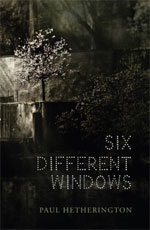
Review Short: Paul Hetherington’s Six Different Windows

Six Different Windows

you’ve been carelessly worn, an irresistible attraction

Six Different Windows by Paul Hetherington
UWA Press, 2013

As the title of Paul Hetherington’s compelling and richly imagined new collection suggests, and the six sections confirm, Six Different Windows offers an array of contrasting perspectives on experience. Framed visions: all of them to some extent haunted, or tainted.

Continue reading

Posted in BOOK REVIEWS | Tagged

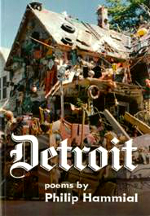
Review Short: Philip Hammial’s Detroit

Detroit

you’ve been carelessly worn, an irresistible attraction

Detroit by Philip Hammial
Island Press, 2013

Philip Hammial is the author of over a score of poetry collections. With his new book, Detroit, he returns to the city of his birth taking us, the reader, on his helter-skelter ride. From the first, a poem entitled ‘Mayday’, we are already travelling at break-neck speed, suddenly materialised in an alley with three unlikely characters, plus a bear and a looming summary execution. We enter and leave the poem in the thick of action and must imagine for ourselves the backstory and outcome. In twelve short lines I am already empathising with the un-named first person speaker to imagine him slipping free of the medieval fresco sky-hook descending from the heavens.

Continue reading

Posted in BOOK REVIEWS | Tagged ,

Review Short: Warwick Anderson’s Hard Cases, Brief Lives

Hard Cases, Brief Lives

Hard Cases, Brief Lives by Warwick Anderson
Ginninderra Press, 2011

The manner in which poets divide their lives is of enduring, perhaps obsessive, interest to me. More specifically, I’m interested in what they choose to reveal or emphasise, and what they let slide to the background of their visible identity. Warwick Anderson’s Hard Cases, Brief Lives is a collection of work wrapped in his role as a medical doctor, like brown paper around a textbook’s cover. Anderson has an extensive career in medicine, and has held research positions internationally in population health and the history and science of medical practice in diverse cultures. Continue reading

Posted in BOOK REVIEWS | Tagged ,

Review Short: Luke Davies’ four plots for magnets

four plots for magnets

four plots for magnets by Luke Davies
Pitt Street Poetry, 2013

The original book with this title, containing 13 poems, was first published in 1982 in an edition of 300 copies. This version contains the original 13, plus another 53 previously unpublished poems from the same era, a foreword from the poet and an afterword from the original publisher, S.K. Kelen. This is more than a reissue or a new edition. It is a comprehensive collection of Davies’ works from the early 1980s and it is to be valued for the light it sheds on the development of one of Australia’s best regarded poets.

Continue reading

Posted in BOOK REVIEWS | Tagged , ,

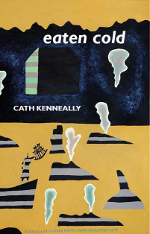
Review Short: Cath Kenneally’s eaten cold

eaten cold

eaten cold by Cath Kenneally
Walleah Press, 2013

In The Sacred Wood: Essays on Poetry and Criticism, T. S. Eliot famously wrote, ‘Immature poets imitate; mature poets steal; bad poets deface what they take, and good poets make it into something better, or at least something different.’ Cath Kenneally’s eaten cold offers a chain of indelible response-poems to New Zealand poet Janet Charman’s book, cold snack. In Kenneally’s collection, ‘Meanings perpetually eingeschachtelt into meanings’, creating new and original poetry that riffs off Charman’s book without ‘imitating’ or ‘defacing’ it.

Continue reading

Posted in BOOK REVIEWS | Tagged , ,

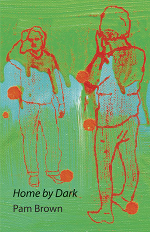
Justin Clemens Reviews Pam Brown

Home by Dark

Home by Dark by Pam Brown
Shearsman Books, 2013

What does it mean to be ‘Home by Dark’? Is it a parental instruction to a potentially wayward child? Is it an expression of relief after a day of threat and uncertainty? Is it a navigational expression, a crepuscular refiguration of ‘North by North-West’? Is it a simple description of an accomplished movement, or another possibility altogether? To open this book is not to find such questions answered; it is rather to move and be moved with and by somebody who, as the epigraph from Kevin Davies has it, is prepared to ‘just keep staring into that English-language night sky.’ Continue reading

Posted in BOOK REVIEWS | Tagged ,

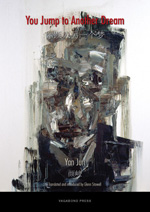
Review Short: Yan Jun’s You Jump to Another Dream

You Jump to Another Dream

This era’s most magnificent exhaustion

You Jump to Another Dream by Yan Jun
Vagabond, 2013

As I was flicking past
burning with an incandescent lamp
you turned off the switch
Like youth   will I not drop away?

Yan Jun’s poetry works through his experience of contemporary China by employing an aesthetic that is traditionally grounded in observation of the momentarily significant. He is captivated by the dazzle of a new consumerist culture only when that dazzle is spectral and fleeting. In an interview with Cristen Cornell (‘Lost in the Supermarket with Yan Jun’, Artspace China blog, University of Sydney) he decries the consumption culture’s take on art as a ‘production process’ which removes ’the possibility for uncertainty’ and what is ‘unknowable in individuals’. He comments on the inextricable logic of cultural monuments such as the Forbidden Palace being preserved while the traditional living areas, the Beijing hutongs, are pulled down, symptomatic of a daily life becoming ‘more and more deprived’.

Continue reading

Posted in BOOK REVIEWS | Tagged ,

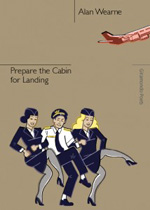
Review Short: Alan Wearne’s Prepare the Cabin for Landing

Prepare the Cabin for Landing

Prepare the Cabin for Landing by Alan Wearne
Giramondo Publishing, 2012

Prepare the Cabin for Landing, as with much of Alan Wearne’s poetry, draws on popular culture, social observations and the Australian vernacular. I recall reading a review of an earlier Wearne collection which warned the reader that they would require a Wearne dictionary in order to understand the cultural references being made. Of course, no such dictionary exists, and as Adam Ford has argued previously in Cordite Poetry Review, Wearne’s poems can be difficult unless you are ‘either amazingly well-read or precisely of Alan Wearne’s generation (and interested in the same things as him) to have the right combination of knowledge, memory and experiences to understand or empathise with every poem in this book.’

Continue reading

Posted in BOOK REVIEWS | Tagged ,

Notes from Medellín, Colombia

Since it began 23 years ago, the Internacional de Poesía de Medellín has grown to become a major poetry festival in the world, in a country riven by 50 years of civil war. This year’s Festival (6-13 July) coincided with a new round of peace talks in Havana between the Colombian Government and FARC, and FARC rebels reportedly fighting security forces in the mountains. The Festival featured Australian poet Les Wicks, who reports on his experience below. The Festival has also ‘grown’ up alongside seismic changes for the city of Medellín, Colombian’s second-largest and once described as the ‘most violent city in the world’ (Time, 1988), due to its brutal cocaine drug-cartel culture. This year, in February, it was nominated instead as the ‘World Capital’ of innovation, by the Wall Street Journal and the Urban Life Institute, following civic projects aimed at radically improving life and security for its citizens – and its reputation.

At the same time, a UN report condemned the city for being among the most unequal in the world, due to ongoing murders, ‘disappearances’, unemployment and criminal gang warfare. The Festival was started two years before the killing of drug-cartel kingpin Pablo Escobar in 1993 by Colombian National Police, and three years before the publication of Colombian-born author and film-maker Fernando Vallejo’s well-known novel, La virgen de los sicarios (Our Lady of the Assassins) – which spawned a new genre of novel known as narcorrealismo, narcotrendismo or la novella sicaresca, fiction drawing on the violent themes of the drug trade. Vallejo was born in Medellín but has lived in Mexico since 1971, and renounced his Colombian nationality in 2007 (becoming Mexican), citing his political dissent in a public letter. The Festival, which this year expressly endorsed support for the current Havana talks, was conceived by its founders to be an initiative of peace, a form of cultural resistance, and in 2006 was awarded the prestigious ‘Right Livelihood Award’, a prelude and alternative to the Nobel Peace Prize. (JLP)

Internacional de Poesía de Medellín

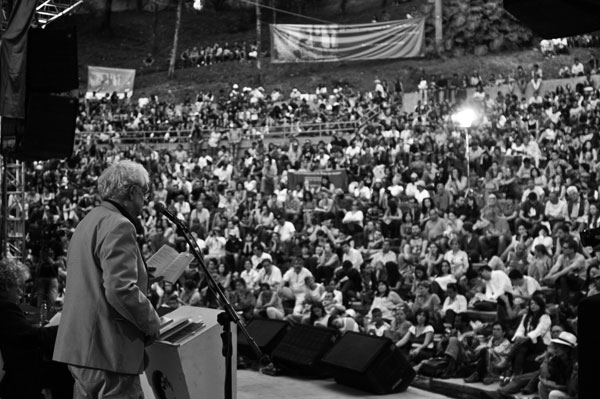
Norwegian poet Jan Erik Vold at the Teatro Carlos Vieco | image by Sara Marín

Daz(zl)ed

Okay. Around 5000 people were gathered in the generous heat of this amphitheatre, holding events from the 23rd Festival Internacional de Poesía de Medellín. A diverse crowd from children to seniors chattered animatedly amongst themselves as vendors moved along the rows selling popcorn and Coca-Cola. Television cameras fidgeted at the hem of the stage, broadcast lighting came on as sound techs stroked their dials. For an Australian poet, the crowd and attention seemed inexplicable – this was a poetry reading.

Colombia has been a nation at war with itself for 50 years. The toll of death and displacement is staggering. There are currently talks ‘underway’, there always seems to be talks underway. Twenty-three years ago some poets got the idea of responding to a culture of violence with poetry. The Festival was born. For an Australian – with our marginalised poetics – this notion might seem something like fighting fire with feathers. But in Latin America, as has been the case with other territories with long histories of war and civil dissent, political foment has often seen poetry and poets championed – and read – by the masses. Poetry considered relevant, and powerful, as a tool of revolution.

Early on, expecting perhaps only hundreds to attend, the organisers found public interest overwhelming and the nine-day event has grown to become a major fixture in the city’s calendar and the largest poetry festival in the world. It is attended by fervent audiences, and has inspired and supported a number of other new poetry festivals around the world. This year there were to be a total of 220 readings involving 66 poets from 41 countries. Venues are mostly in Medellín but there was a solid program of forays into other centres. I am this year’s Australian guest. It’s fundamentally important that we have a presence at gatherings like these. The Australia Council Literature Board covered the airfare while Macquarie University organised my Spanish translation with Judith Mendoza–White. Vastly appreciated further translation came from Raphael Patiño Góez and George Leogena. I have always argued that for our poetry in Australia to ‘work’, we need commitment, clear planning and sustained effort/support over time. This Colombian festival took off from its first year. Does this mean we have to change, back home, a people?

That amphitheatre – Teatro Al Aire Libre Carlos Vieco – was the site of the opening reading. The range of voices reading from the stage were astonishing; Lorna Shaughnessy (Northern Ireland) quietly shared the pain of internal conflict with Vietnamese-born Nguyen Phan Que Mai. Sainkho Namtchylak (Tuva) performed her famous throat-based work. Thiago de Mello, a grandfather of Colombian poetry, had the crowd screaming for more. It amiably forgave my woeful Spanish, seemed to enjoy the English versions of my poems, and loved the Spanish ones read by theatre director Wilson Zapata, who was to be my reader throughout the Festival. Later, as I was exiting the toilets, I was bailed up by an eager Colombian who wanted to show off his skills on the didgeridoo he had purchased in Ecuador. The tunnels under the stage became tunnels within my head as fellow urinators quietly smiled.

The days that followed were a crazy blend of intense multicultural dialogue, hugs and photos. Around 100 people came to the reading the next day in the working-class suburb of Carrera. That was the hall’s capacity. People were turned away. The workshop group hosting this event was celebrating its 20th year, and we all know how hard it is to sustain voluntary organisations over time.

Monday, a group of us flew to Apartado, a smaller city of around 180,000, for another capacity audience of 200 with my translations read by Mark Vender, an Australian living there, who is the convener of the city’s writers’ group. Tuesday saw a ‘disappointment’ with our first non-full house, a mere 65 people. Wednesday saw a mildly hair-raising 3 ½-hour trip across the mountains to Ciudad Bolivar. Thursday, Friday, reading, reading – the level of engagement with art across society in Colombia is simply remarkable. Vender told me he’d travelled the world and everywhere else seems to be sinking into a sediment of monocultural, consumerist tepidity. To him, only the people of Colombia (and maybe Brazil) appear content to be going their own way. That way is a long stretch short of perfect – there were gunshots last night outside the hotel. Colombia has critical problems. But it is definitely special.

It was also deeply energising to immerse myself further in the poetics of South and Latin America, which were obviously numerically dominant in the line-up. With the expected influence of Pablo Neruda and Octavio Paz, the New Baroque still exploring new territories – here was a body of work that was mostly vigorous, linguistically and emotionally robust, whilst profoundly engaging with their readers.

Other impressive poets: Tanure Ojaide, Josaphat-Robert Large, Javier Bello, Marra PL Lanot, K Satchidanandan, Maram Al-Masri, Moya Cannon, Ingrid Fichtner, Magnus William-Olsson, Gedour Kristny, Lidija Dimkovska and Tiziana Cera Rosco.

An Australian is invited most years to this festival. It is a pinnacle of a poetic life, professionally demanding and wholly satisfying. Today, as I write, is the closing ceremony (4pm-midnight) where all poetry guests will read one piece. The usual attendance for this final day is around 15,000. Breakfast was laconic – a lack of sleep and a regime of daily appearances has left us wrecked’n’ready. So … (LW)

Posted in ESSAYS | Tagged ,

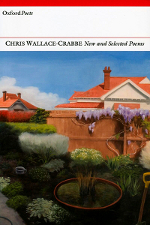
Geoff Page Reviews Chris Wallace-Crabbe

New and Selected Poems

New and Selected Poems by Chris Wallace-Crabbe
Carcanet Press, 2012

Now a youthful 79, the Melbourne poet, Chris Wallace-Crabbe, has been an important figure in Australian poetry since the early 1960s. As a teacher, scholar, anthologist and organizer – as well as a poet with at least fourteen volumes to his name – Wallace-Crabbe has been central to much that has happened in Australian poetry over the past fifty years, especially in Melbourne. As with his friend, the late Peter Porter, Wallace-Crabbe’s lightly-worn erudition and distinctive sense of humour have ensured that his work is admired by many poets (and readers) across the aesthetic divisions in our poetry reaching back to the 1970s. Continue reading

Posted in BOOK REVIEWS | Tagged ,

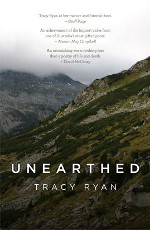
Review Short: Tracy Ryan’s Unearthed

Unearthed

Unearthed by Tracy Ryan
Fremantle Press, 2013

Tracy Ryan’s seventh full-length collection of poems, Unearthed, comprises of an extraordinary series of elegies and elegiac poems. The elegiac mode here is both intimate and epic in scale. These poems commemorate the most private moments shared with lost lovers – those times ‘relished and wasted’ (12), ‘snug’ in ‘coffin-dark’ beds (32) – as well as the ways in which our inhabited environments – mountains, the plant and animal worlds, even glimpses of the moon – are ghosted by the dead. Continue reading

Posted in BOOK REVIEWS | Tagged ,

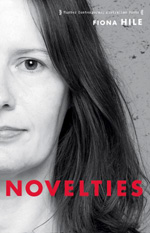
Review Short: Fiona Hile’s Novelties

Novelties

Novelties by Fiona Hile
Hunter Publishers, 2013

In Lacanian theory, ‘matheme’ and ‘patheme’ share an interesting correlation. While the matheme is, obviously, on the side of science, the patheme is part of the ‘logics’ of affect, whereby the body is an effect of language. Matheme and patheme don’t immediately have anything to do with sexual difference or ‘mechanistic’ versus ‘organicist’ understandings of the universe. There is nothing mysterious about the patheme. Rather, the patheme could be thought of as what the poem does to the poet’s body analogously to what a matheme does to a mathematician’s body: force it to work and, in some cases, give it pain.

Continue reading

Posted in BOOK REVIEWS | Tagged ,

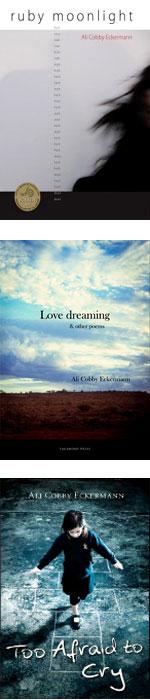
Tina Giannoukos Reviews Ali Cobby Eckermann

3 x Eckermann

ruby moonlight by Ali Cobby Eckermann
Magabala Books, 2012

Love dreaming & other poems by Ali Cobby Eckermann
Vagabond Press, 2013

Too Afraid to Cry by Ali Cobby Eckermann
Ilura Press, 2013

Ali Cobby Eckermann’s work offers us a compass to our past and present. In poetry, memoir and verse novel, she maps a journey of Aboriginal identity and the historical and contemporary challenges to its integrity and resilience. What emerges is a profound engagement with healing and the articulation of Aboriginal space as always present, alive, intruded upon but utterly felt. She renders legible how ‘Footprints don’t fade / Culture / Kami May’ (‘Mai’, Love dreaming & other poems).

Continue reading

Posted in BOOK REVIEWS | Tagged ,

Presence: A Chapbook Curated by Graham Nunn

Presence

When I was invited by Cordite to curate this chapbook, my mind filled with one word … presence.

Presence can be defined as:

The state or fact of being present; current existence or occurrence.

Immediate proximity in time or space.

The area immediately surrounding a great personage, especially a sovereign.

A person who is present.

A person’s bearing, especially when it commands respectful attention: ‘He continues to possess the presence, mental as well as physical, of the young man’ (Brendan Gill).

The quality of self-assurance and effectiveness that permits a performer to achieve a rapport with the audience: stage presence.

A supernatural influence felt to be nearby.

The diplomatic, political, or military influence of a nation in a foreign country, especially as evidenced by the posting of its diplomats or its troops there: ‘The American diplomatic presence in London began in 1785 when John Adams became our first minister’ (Nancy Holmes).

Fernando Pessoa stated the idea of presence functions in the following sense, ‘when you see a thing in the poem, it is exactly the thing.’


Archive Fever by Pascalle Burton
Kanashibari / 金縛り by Tim Sinclair
Mothers’ Day by Ross Donlon
The Bat Corridor by Louise Oxley
Under the Native Frangipani by Jean Kent
eXit/beerburrum by Nathan Shepherdson
Trinity Bellwoods by Jon Paul Fiorentino
Backyard Pool by Aidan Coleman
Presence by Jacqueline Turner
Now by Sachiko Murakami


This idea of presence gives poetry a privileged ground for the production of new truths precisely by enabling truth to develop within the poem itself. The ten poets I have invited to contribute to this chapbook arrive on the page/screen with a shimmering presence, and in so doing offer the reader ‘unquantifiable pleasure’ which, as Pascalle Burton so boldly states, is ‘the key to a really good secret’. These poems/secrets/truths come from some of my favourite writers working today in Australia and Canada.


Whether they are pumped from the brain ‘by a windmill into space’ (Nathan Shepherdson), or are found kicking euphorically beneath a skylight (Jacqueline Turner), they have an immediacy that slips into the bloodstream.

As your heart pumps each poem around your body, they will transcend the mere presence of text. The voices of the poets will become present and, concurrently, your own voice will bubble up from ‘far below the workings of sun’ (Aidan Coleman), making you, equally present in every poem. Without you, they remain charged wordy shapes; the poem, present only to itself.

As you enter these pages – or as they enter you – you will experience the ‘crushing weight of a demon on your chest’ (Tim Sinclair); witness ‘the moment the day’s balance tips towards night’ and ‘crepuscular bats’ are led by their ‘petalled noses’ (Louise Oxley); get ‘ambushed by bees’ as ‘scent bombardments’ stop your breath (Jean Kent); and sip tea as a mother slips beyond ‘the grave’s clean door’ (Ross Donlon).

These ‘conjurers’ have made the ‘illusory tangible’ (Jacqueline Turner). So accept this as an invitation to open to their presence.

— Graham Nunn, July 4, 2013

Posted in CHAPBOOKS | Tagged , , , , , , , , , ,

Review Short: Nicholas Powell’s Water Mirrors

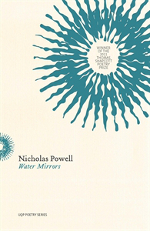
Water Mirrors

Water Mirrors by Nicholas Powell
UQP, 2012

Winner of the 2011 Thomas Shapcott Poetry Prize, Water Mirrors is Nicholas Powell’s first full-length collection of poems. Structured around an interweaving of landscapes – some real, others dreamed or imagined – the forty two poems that lead up to ‘The True Map’, the book’s final poem, can read as an exercise in cartography. Continue reading

Posted in BOOK REVIEWS | Tagged ,