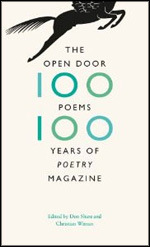
John Tranter Reviews The Open Door: One Hundred Poems, One Hundred Years of Poetry Magazine

The Open Door

The Open Door: One Hundred Poems, One Hundred Years of Poetry Magazine. Don Share and Christian Wiman, Eds
University of Chicago Press, 2012

The blurb tells us that Poetry magazine was founded in Chicago by Harriet Monroe in 1912, and that is it ‘the oldest monthly devoted to verse in the English-speaking world. The magazine established its reputation early by publishing the first important poems of T.S. Eliot, Ezra Pound, Marianne Moore, Wallace Stevens, H.D., William Carlos Williams, Carl Sandburg and other now-classic authors. In succeeding decades it has presented often for the first time – works by virtually every major contemporary poet.’

Continue reading

Posted in BOOK REVIEWS | Tagged ,

Review Short: Michael Brennan’s Autoethnographic

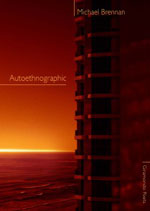
Autoethnographic

Autoethnographic by Michael Brennan
Giramondo Publishing, 2012

Michael Brennan’s Autoethnographic requires a curious reader, one to read its sketch-like poems carefully. The title, a reproduced image by Erico Tonotsuka and epigraphs by Edward Sapir and John Grey (‘We see the world through eyes of ancient mud’) suggest we should be reading the language of the poems reflexively, with an eye towards their ontological implications. But the poems don’t fit into this frame, and employ plain speech, dark comedy and lyrical melange un-reflexively. Continue reading

Posted in BOOK REVIEWS | Tagged ,

Review Short: Terry Jaensch’s Shark

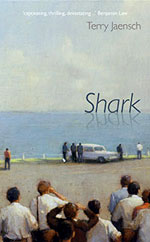
Shark

Shark by Terry Jaensch
Transit Lounge Publishing, 2013

You stare into the water, starkly aware of the ambiguous shadows there. So many of us are anglers in the Australian poetry scene; looking for something new, something fresh. Having landed this fish on my desk I will confess to a certain hesitancy to come too close. It’s not a large shark, some 60 odd pages generously spaced. There is more than a little empathy for this distressed, vibrant life. But I’m careful of the teeth.

Continue reading

Posted in BOOK REVIEWS | Tagged ,

Submission to Cordite 44: GONDWANALAND open!

Derek Motion

Wagga Wagga, Derek Derek

Poetry for Cordite 44: GONDWANALAND will be guest-edited by Derek Motion with featured artists Maxine Beneba Clarke and Favianna Rodriguez.

What does Gondwanaland mean to Motion? There is no intended prescriptive statement or gestalt. The name suggests a shared history as well as a process of divergence, the initiation of hemispheric identities.

A quartered tangelo?
Sri Lanka’s drift?
Limbs of Xenomelia?
The coast near Broome?

Everything is constantly severing, moving and re-forming … even that which seems most solid or stationary. How does contemporary poetry reach back into prehistoric ecosystems, personalities, engaging with ‘the now’ of transnational communication? What anticipated future shifts and continental/psychological assimilation lay ahead, even a post-Earth / Earth-form identity? There is vast space in this theme.

Continue reading

Posted in GUNCOTTON | Tagged , ,

Keri Glastonbury on Derek Motion

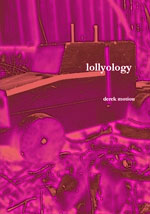
Lollyology

Lollyology by Derek Motion
Lulu, 2012

The title of Derek Motion’s recent poetry collection lollyology alludes to a theory of lollypops. If, as Urban Dictionary suggests, a ‘lollyologist’ (lollypop maker) is also street shorthand for the ‘most pointless job position in the world’, then Motion is willing to elevate this ‘pointlessness’ to a field of study, or perhaps an art. I’m not sure if this is intended as a comment on poetry and poetics, though with its lurid purple cover image of a toy truck the tone and aesthetics of lollyology appear punkish and juvenile, in a Bow Wow Wow ‘I want candy’ kind of way (although Motion’s ‘indie’ points of reference are more likely The Lemonheads, Dinosaur Junior and ‘another canberra bar / josh pyke’). Continue reading

Posted in BOOK REVIEWS | Tagged ,

Review Short: B.R. Dionysius’s Bowra

Bowra

Bowra by B. R. Dionysius
Whitmore Press, 2013

B.R Dionysius’ Bowra is a collection of fifty-two prose sonnets of sustained intensity and engagement with place, from the fringes of southeast Queensland’s urban sprawl, west to Cunnamulla, with excursions to California and Kazakhstan. These poems count the human and environmental cost of various man-made tragedies.

The fourteen-line constraint works to unravel an anecdote and/or piece of narrative sequence at once self-contained and part of the larger ambition of the book: to serve as a selective local history. The consistently restive and physical language is as uncompromised, and at times bewildering, as the landscapes and situations it describes.

Continue reading

Posted in BOOK REVIEWS | Tagged ,

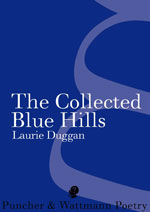
Review Short: Laurie Duggan’s The Collected Blue Hills

The Collected Blue Hills

The Collected Blue Hills by Laurie Duggan
Puncher and Wattmann, 2012

I’m far too young to remember the Blue Hills radio serial, which ran for an incredible 27 years, or 5795 episodes. But in my mind, I’ve always aligned it somehow with the long-running serial of a different medium, A Country Practice, and the experience of watching on, for years throughout my childhood. Watching fictional relationships bloom and end and change, watching births and deaths, illnesses and weddings, floods and fires and droughts; and now that I’m older, I can still, sometimes, align parts of its fictional time to the timeline that I experienced in the world. Continue reading

Posted in BOOK REVIEWS | Tagged ,

Review Short: Julie Chevalier’s Darger: his girls

Darger: his girls

Darger: his girls by Julie Chevalier
Puncher and Wattmann, 2012

Henry Darger’s reputation as an outsider artist – and the questions of morality lingering around his dark paintings – has inspired recent exhibitions, books, plays and a documentary. Julie Chevalier’s poetic biography Darger: his girls (subtitled a sequence of poems about the life of Henry Darger 1892 – 1973) has come at peak-Darger fever. Chevalier includes an introduction, familiarising us with the debate about what kind of man Henry Darger really was: child murderer, or misunderstood loner? The latter explanation is explored throughout this work.

Continue reading

Posted in BOOK REVIEWS | Tagged , ,

Foreword Viidikas: Reintroduction of the ’68 Poet

[This introduction to Vicki Viidikas: New and Rediscovered by Kerry Leves was commissioned in 2010. It is reprinted here in the memory of Kerry Leves and Vicki Viidikas with the generous permission of Transit Lounge Publishing – KM]

John Tranter, renowned Australian poet and occasional but incisive chronicler of the driving forces behind those Australian poets now classified as ‘The Generation of ‘68’ once wrote that the ‘Generation of ‘68’ was all about:

not the replacing of the old by the new (which soon becomes the established), but by the continual recognition of the need to ‘make it new’, to break down the urge to establish reputations and an entrenched position.1

Anecdotes surround Vicki Viidikas. None is definitive.

Continue reading

Posted in ESSAYS | Tagged , , , ,

‘It was a place of force—’ Re-reading the Poems of ‘Ariel’

Ariel

So much has happened to poetry since Sylvia Plath completed her last poems fifty years ago in 1963 that it might seem weird or regressively sentimental to focus back on them. But, encouraged to do so by a number of anniversary events around the globe this year, what strikes is the endurance of these final poems’ brutal clarity.

Having closely re-read, aloud, the poems of Ariel by Plath – whether in Ted Hughes’ Faber & Faber 1965 selection (cover image at left) and re-ordering, or according to her own earlier (December ’62) version, which excluded some of the great, later ‘last poems’ included by Hughes – I appreciated anew their authentic place in the canon, their vitality as a masterpiece work. In them, Plath put a stamp upon a century of poetic genius which experimented and developed the possibilities of free verse in English. She did this by fusing almost-perfected, virtuosic technical skills, groomed and grittily disciplined over her lifetime’s writing, with a new plumbing of free-verse innovation. This innovation included, but not only, her subject material. From ‘Paralytic’:

It happens.  Will it go on?—
My mind a rock,
No fingers to grip, no tongue,
My god the iron lung

That loves me, pumps
My two
Dust bags in and out,
Will not

Let me relapse
While the day outside glides by like ticker tape.
The night brings violets,
Tapestries of eyes,

In these poems – including the later ‘Years’, ‘Balloons’, ‘Edge’ and Words’, added by Hughes, and some poems already in her version of the manuscript, ‘Daddy’, ‘Ariel’, ‘Getting There’, ‘Medusa’, ‘The Moon and the Yew Tree’ – Plath tells us: this is what free verse is able to do.

From the beginning of ‘Words’, the final poem of Hughes’ Ariel selection:

Axes
After whose stroke the wood rings,
And the echoes!
Echoes travelling
Off from the centre like horses.

It is not tentative, reckless or haphazard ‘improvisation’, but a thing of deliberated, tensile and sustained syntactical nerve.

Plath would rise to write around 4 am – composing the ‘last poems’ – in the final few months before her death on 11 February 1963. From a note to the BBC by her in 1963, she describes the pristine air and plenitude of this space as ‘—that still blue, almost eternal hour before the baby’s cry, before the glassy music of the milkman, settling his bottles’.

Plath tells us herself that she felt compelled to ‘read them aloud to myself’. We know this from an interview and reading of poems made by her for the British Council. She continues, ‘Now this is something I didn’t [previously] do. For example, my first book, The Colossus – I can’t read any of the poems aloud now. I didn’t write them to be read aloud. In fact, they quite privately bore me. Now these very recent ones – I’ve got to say them. I speak them to myself.’ Finally, ‘Whatever lucidity they have comes from the fact that I say them aloud.’

Reading Plath’s poem ‘Daddy’ recently at an event, I was shaken by the experience of the poem’s physicalised, internal reverberation. Its language’s tonality, and the gale-force drive of that language as it mounts through the poem, was as resonant as if I was playing a cello, held to my body – proof of Plath’s vocalisation of the poems as they were being written. Craft-power, that.

On the innovation of subject matter in the Ariel poems, there is the common derision of Plath as a self-indulgent ‘confessional’ narcissist, likening the horror of Auschwitz and Dacau to her private terrors in ‘Daddy’. Simultaneously, we have commentators such as George Steiner arguing, ‘In ‘Daddy’ she wrote one of the very few poems I know of in any language to come near the last horror. It achieves the classic act of generalization, translating a private, obviously intolerable hurt into a code of plain statement, of instantaneously public images which concern us all.’

This double-take on an intensified ‘I’ and the transpersonal ‘I’ which, together, touch the authentic trauma of external events, is mastered in poems such as ‘Daddy’ and ‘Getting There’. It also allows them to be still, dismissively and simplistically, misread.

When we reassess Plath’s free-verse achievements, there is another motif that emerges strongly; her ability, in line after line, to capture image in language to the point of making image symbolic. This presents another paradox: we may read those images as personal, but they are also engraved beyond that. From ‘Getting There’:

Here there is such mud.
It is a trainstop, the nurses
Undergoing the faucet water, its veils, veils in a nunnery,
Touching their wounded,
The men the blood still pumps forward,
Legs, arms piled outside
The tent of unending cries—
A hospital of dolls.
And the men, what is left of the men
Pumped ahead by these pistons, this blood
In the next mile,
The next hour—
Dynasty of broken arrows!

The title of this essay, ‘It was a place of force—’, comes from ‘The Rabbit Catcher’, one of the dozen poems Hughes omitted from the Plath version of Ariel. To me, it closely describes the aura Plath wrote within during her last year. Much can be said about the voltage of these final poems where only a few words relent. Yet, in her control of the language, there is a governing, self-mastered sobriety, a sanity which acts to contain the poetry’s storming.

In the toxic mythologising of Plath as a young and tragic suicide, this sanity has often been obscured. In February 1962, Plath is quoted in the London Magazine’s ‘Context’;

‘the issues of our time which preoccupy me at the moment are the incalculable genetic effects of fallout [post-Hiroshima] and … the terrifying, mad, omnipotent marriage of big business and the military in America— … Does this influence the kind of poetry I write? Yes, but in a sidelong fashion.’

She continues:

‘My poems do not turn out to be about Hiroshima, but about a child forming itself finger by finger in the dark. They are not about the terrors of mass extinction, but about the bleakness of the moon over a yew tree in a neighbouring graveyard … In a sense, these poems are deflections. I do not think they are an escape.’

I contend that Plath set out to conceal such an ambition in the poems of Ariel – to tattoo into her poems, while referring to the personal self, the existential and verifiable hells and heavens of this world. Reading, or re-reading, this collection is a project, for those writers who wish to take it up, that remains utterly contemporaneous to these times.

Posted in ESSAYS | Tagged , ,

eXit/beerburrum

for simone gelli


what the streetlight is thinking is over her head

her body a tongue depressor on the white line

silence enclosed in silence
is not silent enough
when we realise
she is not dead
nor are we alive
in the moment
until it ends

AM I
equipped to use her body
as a crayon

empty all colour into this colour
this colour is this word

the bitumen not as famous as it is black
unable to get off the ground
despite the collective warmth
of uncounting roadkill prayers to a tyre

I AM
equipped to use her body
as a crayon

do not empty all colour into this colour
this colour is not this word
is not even in this word
as uneven as this word is
I AM prepared to quote it
to avoid where I AM
to not quote where she is
to myself who is not her colour
but who is in this word
where she is ←
gravelpressed

do not empty this word into her colour

her mauve dress of a length

unsubstantiated

too short to be a life
she pulls down what is not there
an aid to skin migration
under hands small enough
to be declared a country

light unsaddled from the moon
is denied its surface to rest

unrehearsed laughter in a backpack
caramelises inertia at a train station

a flattened heart
is kicked about a food court

pleasure is formed in the same way it dissolves

you are in the queue to sign the lease on this situation

the torpedo is being measured to fit the aquarium

stainsustainstainsustainstainsus
tainstainsustainstainsustainstain
sustainstainsustainstainsustain
stainsustainstainsustainstainsus
tainstainsustainstainsustainstain
sustainstainsustainstainsustain
stainsustainstainsustainstainmem
ory

using this word to levitate

her body

a row of teats bloom from her spine
produce a milk curtain of reflective paint
overflows the mould containing her night shadow
enough to squint two pair of male cat’s-eyes in a car

her hair dyed with reflex from an incorrect breeze

sometimes black is too much an absence
light overthrown by the macheted hand
at the switch

no invitation is known to exist

to exist is no invitation to

when is when
when is when
when is when
when is when

throw an answer down the hole
and wait for the splash

the three of us
still skeletons
when laughter ripples

her head is a beaker
chemical parrots on the rim
crack her thoughts

too green to convince this language into its sentence

there are too many worlds to orbit one insect

we will cancel this trajectory of reason
until her power is restored

we read her eyes as radar
her pupils red blips
in a race to our boundary

she is without shoes
nowhere to walk
lying under a streetlight
to two judges in a car
banging silent gavels
on the dashboard
speeding to zero
with the handbrake on
a teenage body
in the back seat
in the glove box
our weapons to misunderstand

asleep in the wound
before it’s made
she will be asked
why she is here

you notice a bull ant on her toe

the white line is restitching the bitumen

echoes too shallow to be water
are nonetheless for drowning

lipstick on a spoon is for eating

carried to our stomachs
we digest each other

brains pumped by a windmill into space

the two men in the car
are not the two men in the car

two men in a car

an arithmetic safe from allegation

Posted in PRESENCE | Tagged

Trinity Bellwoods

Down to my last
lyric

Do you know the word pilling?
it’s a piling-on of fabrications

You wear it well or
wore it

Free range derangement commences
as denizens make strange with tenses and moods

I saw an old cancerous friend here;
he said, “I remember when I used to be creative –

They cut it out of me
all interstitial-like.”

Now, the lies and years are
piling/pilling

I will miss you when you shun me. I write these
things for nothing

You remain
the best nothing I know

Posted in PRESENCE | Tagged

The Bat Corridor

Or we could leave the house, the pressure
of its walls and light, its hard words
bumbling against the windows,
and go down to the gully where the creek-bank
collapses with the autumn rains, something
you could fall for and put your lips to.
Come on, bring the mattock for the thistles;
hold it between us if you wish.

We won’t know what makes them
unwrap the bandaged thumbs of their bodies
and bear away from the canopy
the moment the day’s balance tips towards night;
we won’t decipher their insect-seeking sonar,
or tally the number of beetles they catch
and the number they miss.
Yet these little crepuscular bats,
flying by hand, led by their petalled noses,
have us mesmerised in the spiky pea,
motionless, transported.

Scouts sent ahead of the night, detachments
from dark like escaped pocket linings,
one is suddenly there, a sharp dip and yaw
over the paddock, then gone; there
and gone, a relay of presence and absence.
They’re our mystery and guesswork;
their flickering fly-past in the half-light is enough
to make us question the worth of seeing clearly
and settle for partial blindness; enough,
when it’s time to go in, to make you
shift the mattock to the other hand.

Posted in UNIVERSAL ARCHIVE | Tagged

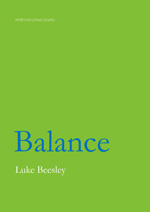
Review Short: Luke Beesley’s Balance

Balance

Balance by Luke Beesley
Whitmore Press, 2013

The poems in Luke Beesley’s Balance, like Siobhan Hodge’s work in Picking Up The Pieces, tend towards brevity (with a few exceptions). In Hodge’s case we might consider this quality in relation to fragments, where the body and the reader’s attention is cut-up. Reading Beesley, the encounter is one that is instead cut-off – that is to say that this is poetry attuned to the momentary and to the sensing body moving through the world.

Continue reading

Posted in BOOK REVIEWS | Tagged ,

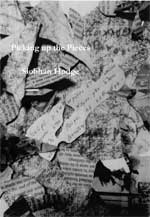
Review Short: Siobhan Hodge’s Picking Up the Pieces

Picking Up the Pieces

Picking Up the Pieces by Siobhan Hodge
Wide Range Chapbooks, 2012

Picking Up the Pieces is a compact debut of eight poems from West Australian poet Siobhan Hodge. Its publisher, Wide Range Chapbooks, is a Cambridge based small press run by John Kinsella. Wide Range publishes poets such as Redell Olson, Rob Mengham and Drew Milne mixed in alongside young and emerging local poets, many of them students like Hodge (who in 2012 undertook a research residency in Cambridge). The collegial spirit of Wide Range and the relatively modest production values – Hodge’s book comes stapled in a photocopied card cover – suggests a publishing model that favours immediacy and ease of circulation, in a town where poetry and thinking are a constant activity.

Continue reading

Posted in BOOK REVIEWS | Tagged ,

Kanashibari / 金縛り

Literally: bound in metal


There’s a Japanese word for it. English
needs one—the closest we get is sleep paralysis.
It doesn’t do it justice. The crushing weight

of a demon on your chest, immovable fingers
clamping your throat, your mind
as wild as your body is helpless.

Kanashibari. I’m here because of it. Four
in the morning, after the fear. It lets you up
eventually. And when it did, I had to move,

had to get out of the coffin I’d tucked myself into.
Pace the hallway, freed. There’s a dead rat caught
beneath the floorboards of my flat. There’s a man next door

whose body is eating him alive. I walk to the kitchen
because I can. Write these words
because the internet’s down, because for once

I’m unable to tweet about it. There isn’t a word
to express this impulse: something to say
but no one to say it to, self-disgust

at this glib dependence, these tiny fragments
strung out behind me. Poems lost and stories unwritten
while I feed the hungry bird. Pressed down

in suffocation, both fighting and complicit,
so tiny, this hourglass we’re given at birth,
so reckless we are with the sand.

Posted in PRESENCE | Tagged

Backyard Pool

1.

Viewed from the decking
above, your best
friend’s pool holds the afternoon
as a wobbly electricity.

At the edge: puddles
of deflated colour,
white plastic chairs,
a garden, other redundancies.

2.

Far below the workings of sun,
the surface-war
of kick and churn,
beyond the naked decibels,

there
time goes strange –

never more alone to yourself,
as you drift
in the company
of a vast slow-thumping heart.

3.

After the reign of traffic
and parents,
when night cools the water
to an ideal skin,

the only sound’s the tink-
tink-tinkle
of silver drops from a hand
lifted to place
a stroke.

And we’re careful
with our voices
so the moon won’t overhear.

Posted in PRESENCE | Tagged

Now

I would like to move this process along a little faster
Iwould like to move this process along a little faster
Iwould like to move this process along alittle faster
Iwould like to move this processalong alittle faster
Iwould liketo move this processalong alittle faster
Iwouldliketo move this processalong alittle faster
Iwouldliketomove this processalong alittle faster
Iwouldliketomovethis processalong alittle faster
Iwouldliketomovethisprocessalongalittle faster
Iwouldliketomovethisprocessalongalittlefaster
Iwldliketomovethisprocessalongalittlefaster
Iwldliketmovethisprocessalongalittlefaster
Iwldliketmvthisprocessalongalittlefaster
Iwldliketmvthsprocessalongalittlefaster
Iwldliketmvthsprocessalngalittlefaster
Iwldliketmvthsprocessalngalttlefaster
Iwldlktmvthsprocessalngalttlefaster
Iwldlktmvthsprcssalngalttlefaster
Iwldlktmvthsprcssalngalttlefster
!wldlktmvthsprcssalngalttlefster
!wldlkt’thsprcssalngalttlefster
!wldlkt’thsprcss’lngalttlefster
!wldlk’thsprcss’lng’lttlefster
!wld’thsprcss’lng’lttlefstr
!’d’thsprcss’lng’lttlefstr
!’d’thsprcss’l!’lttlefstr
!’d’thsprcss’l!’l’lfstr
!’d’thsp’css’l!’l’lfstr
!’d’th’p’css’l!’l’fstr
!’d’th’p’s’l!’l’fstr
!’d’th’p’s’l!’l’fst’
!’d’th’p’s’l!’l’!st’
!’!’th’p’s’l!’l’!st’
!’!’th’!’s’l!’l!st’
!’!’!’!’s’l!’l’!st’
!’!’!’!’s’!’!’1’!st’
!’!’!’!’s’!’!’!’!st’
!’!’!’!’!’!’!’!’!st’
!’!’!’!’!’!’!’!’!’!’
!!!’!’!’!’!’!’!’!’!’
!!!!!’!’!’!’!’!’!’!’
!!!!!!!’!’!’!’!’!’!’
!!!!!!!!!’!’!’!’!’!’
!!!!!!!!!!!’!’!’!’!’
!!!!!!!!!!!!!’!’!’!’
!!!!!!!!!!!!!!!’!’!’
!!!!!!!!!!!!!!!!!’!’
!!!!!!!!!!!!!!!!!!!’
!!!!!!!!!!!!!!!!!!!!

Posted in PRESENCE | Tagged

Archive Fever (after Jacques Derrida)

Do not ask who I am or ask me to remain the same.— Foucault


a measure of flame and oxygen, a white heat degree in shame
searing pain, unquantifiable pleasure
that’s the key to a really good secret

a secret doesn’t belong! —
it exists only if it is unsaid
it self-destructs on contact
a nervous system renegade
it must keep guard against detection
forget to remember itself
to itself

in the white room I lean forward, draw my cheek beside hers
eyes fixed on the wall socket, I listen to wet lips
hear her husk of breath and wait
for whispers of trembling ash

in the presence of my attorneys
I must decide the fate
of telling them anything

so now the third verse becomes:
in the presence of my attorneys
I must decide the fate
of telling them anything

I will tell them what it was like
they will hear an unreliable report
I have kept and erased the violence
(which violates and does violence to itself)
skin becomes new skin
I can’t believe my luck

and all my friends are conspiracy theorists
we are clumsy archeologists
we are writing our retractions as we speak
we are not who we say we are not
we are not saying anything
I will tell you what it was like
but we may run out of verses to erase
this burning desire to archive what is concealed

isn’t it always the case:
someone is always following someone around with a camera
asking them to reveal what nobody has seen before

someone is always following someone around
asking to reveal what they always do

Posted in PRESENCE | Tagged

Under the Native Frangipani

Ambushed by bees, I’m stopped at my father’s favourite
bivouac. While I’m bucketing water to save

what’s lived on long after him,
through a whirr like warplanes, drought shudders petals down.

My father in the last foggy weather of his life
had no breath to speak of who he’d been before.

He would pause, puffing, under the tattered camouflage
of this native frangipani, this domesticated rainforest escapee.

In my mother’s garden, the hymenosporum flavum tangled perfumes
of laundry and jungle. Away from its true climate, it alternated

between sending a high tent pole to the stars
and draping its torn canopy of green from side to side

before sucking out of summer heat a crinoline of blossom,
each crème brulée flower a semi-tropic explosion of scent.

Halfway between kitchen and chook-shed, house and first fence,
my father leant here on his stick, the last half of his lung

sucking in Toowoomba frost to mix
with Port Moresby mud …

The light and hope of a lifetime before that
bloom only in photographs, a black and white silence

where he is thinner, tall as a mast no family has yet
strung its sails on. Before he settled with us

he knew thirteen years of childhood, twenty-five years
in banks from Bourke to Dalby — and a war.

Then the ledgers of his bachelor’s experience were audited,
filed away, signed off with copperplate neatness

I longed to emulate, aged ten. Too late
I read old letters, fragile as the petals of these flowers,

learn from their faded khaki-cream of medals for rowing, a yacht
a cyclone claimed … float this youth over a clearer lake

than the sea I remember swelling inside him,
that tubercular tide where every day he launched

unromantic armadas of pills. Six months holiday is all I need,
he’d dryly say, heading for hospital not the Barrier Reef.

Years after his death, this is where I find him:
under the native frangipani. At his old bivouac

I hear his voice — and scent-bombardments
stop my breath.

Posted in PRESENCE | Tagged

Presence

Erudite licks embossed dictionary covers methodically.

Rain is not gold, nor the colour of truth; merely green in essence.

Subtext is always the opposite of pretence; underneath a scream.

Laughter ticks proprioceptively especially under soft covers.

Clouds can be beds or imaginary pillows as well as dewy cells.

(all this and your skin in the morning)

Lingual utterance is another way of saying the weather or love.

Euphoria kicks forth beneath a skylight with some force.

Conjurers make the illusory tangible, a confidence man too.

Ether settles in, says come to me insistently.

Distil an ellipsis (wait) it rains.

Posted in PRESENCE | Tagged

Mothers’ Day

For Margaret Phelps and Mary Veronica Lang


After the cups of tea and gifts of slippers
we always went to Rookwood Cemetery –

walk train walk again in swimming heat,
me bobbing behind your trailing hand.

To a small boy, your mother’s grave
alongside her stillborn grandchild

looked like a door or pebbled floor,
somewhere to rest after the long trip

safe inside the concrete arms, away
from buffalo grass, the nip of prickles.

No need to caution me about respect.
You knelt on newspaper and looked hard

at what a year had left. Life doesn’t respect
Death – the plastic dome of flowers cracked.

You had the hand shears and garden fork
to hedge grass back. I yanked at runners.

Both graves looked better for the work,
white crysanths we bought from a stall

glittered in jars on the heart of the grave
– posies of bright suns awake in the glass.

Later, there was something to eat and drink
in one of the nearby hive shaped rotundas.

Lattice walls patterned us, blurring light
and shade, you quiet now with memory,

your mother out of the grave’s clean door,
joining us in the half light, sipping tea.

Posted in PRESENCE | Tagged

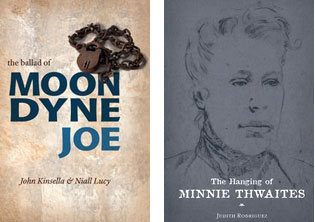
Angela Meyer Reviews Judith Rodriguez and Niall Lucy, John Kinsella

The Hanging of Minnie Thwaites and The Ballad of Moondyne Joe

The Hanging of Minnie Thwaites
by Judith Rodriguez
Arcade Publishing, 2013

The Ballad of Moondyne Joe
by Niall Lucy and John Kinsella
Fremantle Press, 2012

Judith Rodriguez’s The Hanging of Minnie Thwaites and Niall Lucy’s and John Kinsella’s The Ballad of Moondyne Joe are informative poetic explorations of the historical figures Frances Knorr, known as Minnie Thwaites, and Joseph Bolitho Jones, known as Moondyne Joe. The books are explorations and not interpretations, as the authors are aware of the trappings of context, of interpreting fragments of text from the past according to one’s own contemporary values. Of course, this is not completely avoidable and the postmodern notion of avoiding an authoritative account is itself, arguably, a condition of context.

Continue reading

Posted in BOOK REVIEWS | Tagged , , ,

NO THEME 2 Editorial

Gig Ryan

Image by Juno Gemes

Of the poems I’ve chosen for this theme-free issue, some are headily elusive, such as the epistolary ‘Shooting“Correspondence”Gallery’ where meanings crumple and re-form through their costly tousled language. Others such as ‘Gull’ are propelled almost entirely by sound and rhythm. Some have perfunctory line-breaks that occasionally thwart impetus, and some, such as ‘Bauxite’, totter catastrophically, as an imaginative raucous humour fuels that poem. One of the longest ‘india v aus 11-12 1st test day 4’ is an alt sports commentary, that both admires and wildly parodies that genre. ‘Another Chardin in Need of Cleaning’ re-makes a title of Frank O’Hara’s, but drops his chatty tone, and winds into a brightly flickering moebius strip of consciousness. ‘Professor Kröte’s Death’ pays homage to Gwen Harwood’s unheeded frustrated musician and teacher.

‘The Ritual of the Cup (Sestina)’ carries a rhymed semi-tragic burden, its title perhaps a reference to the utterly different ‘Little Cup Sestina’ of Ken Bolton’s. ‘small wondrous emails’ jokingly mimics a current emaciated android existence. ‘CV’ is a crazed version of pantoum with thumping end-stopped lines, but the tossed-salad of the pantoum throws up juxtapositions that escalate weirdly as the poem proceeds. ‘Jem Finch Gets It’ reimagines characters from ‘To Kill a Mockingbird’, just as ‘Moby Dick: Acrostic’ valiantly attempts to transform that epic into a poem. In the long ‘Eulogy for someone in the room’, expectation is confounded when the ellipses fail to deliver a punch-line, acting instead as pause in the narrative before it veers further afield. ‘Scenic Outlook’ begins with Stop and ends with speed, as the river it describes hurtles past the tourists, with the rhyming edge / ledge / sedge encasing a moment. ‘Wasted Heaven’ employs the Romantics’ nature mirroring subjectivity, while its line-breaks and isolating couplets forge ambiguities.

‘zerofourzerofivezerosixtwentytwelve’ in part satirises U.S. imperialism among its portrayals of everyday life. ‘AUSTFA’, ‘On paper this was not New’, ‘it grows on you’ and ‘Notes After Fort Worth’ explore depictions or ruses of nationhood: ‘AUSTFA’ even domesticates Parliament into a diminutive in its humorously mocking yet obstreporous enactment of a cultural cringe. The long ‘National Geographic’ surveys globalised vacuity, cultural exoticising and appropriation, blandly displayed via catalogue. Other poems reinterpret traditions: the epiphanic, such as ‘Gestalt with seagulls’, and the elegiac, in ‘Hinkypunk’.

So, after reading through a quivering pile of submissions, a large number of which were impaled on cliché – in construction, language, thought (as if those were even separable) – I have chosen those poems that most surprised.

Posted in ESSAYS | Tagged