from ‘The Yellow Emperor Poems’

1. fu bao's constellation

The arrival of the monsoon―
warring tribes forced south
the black-back frogs returned.
She heard the rounded cluck
of their swollen throats.
Jade slippered-feet
down eighty-nine steps
the heat of the day
still on the temple wall.

Then the light, the light,
the holy light

flaming the valley
silenced frogs all at once
struck Fu Bao
out of abstraction
a luminous sting
circling from behind
the throne of seven stars
white light that broke
into pieces
and travelled the ground
to charge at corpuscles
charging like Henan stallions
rearing up, arrived soft-hoofed
at the stable door
of her blood chamber.

She collected only red and
white stars that night
threaded them loosely
around her waist
felt them reach up
for her breast, down
to the tiger grotto.


2. women would believe

First month―
The seamstress teased
insisted she would stitch
Fu Bao's eyes closed
if she did not
dream of dandelions
taken to the sky
by a benevolent wind.

Second month―
The wild-storm girl with
bleeding gums whispered
pluck the blue feathers
of kingfishers
weave them into a seal
the shape of peach flowers.
Live in a quiet residence
undisturbed by males.

Third month―
For a son
practice shooting arrows
an old woman's counsel
smooth river-rocks falling
from her apron
offered as apples.

Fourth month―
Unknown woman;
do not eat rabbit.

Fifth month―
The widow who beat
her daughters said
stay away from strangers.

Sixth month―
All the nodding bent-double
field-women agreed that
to make the child's spine strong
go to the country side
and look at wild horses.

Seventh month―
Insistent, her mother
would not let her bathe
in the morning under
dripping eaves
in her qing-blue tub
or at any time.

Eighth month―
She was told
by the six-nippled fox
who surrendered the family's chickens
avoid grimacing
or shouting.

Ninth month―
When the melon is ripe
it will fall off the vine
sung her grandmother
like a yellow bird
as she snuffed
the evening candles.


3. firebird

Lei Zu never saw the mountain
open its twilight belly
to release the firebird into the sky.
They said that giant creature
with her grandfather's brow
wings like a horizon cloud
tail of spinning planets
eyes of winter sun
sent from heaven only
in times of greatest fortune.

It hovered the valley
above her ancestor's fields
as she peered into the throat
of a snow-bud
tiny horns rearing back
to slap a late-summer missile
onto a bee.

A fisherman said
the bird visited the river
to slake the bell flowers
of honeysuckle
that ignited the embankment.
Flowers, wind-loving
in the last gloaming light.
She noticed their pink-quiver
their swollen skirts.

And how all flowers
appeared as virtues
peonies in faithful sway
the wu-wei of dragonheads
violet-hued rehmannia and the courage
of their blood-quickening tubers
clustered, dusk-spells
in meadow grass.

The first time the bird appeared
did she ask how much of life
is spent in waiting?

as it landed silent
on the empress tree
displaced two leafs
goose-breast almost reachable
seemed to blow away the clouds
enough fading sun
to brighten up
the gaps between its feathers
a repousse of cerulean
unfaded reds, bijou ochres
beyond her acquaintance
of colour or form.
Then it was gone.

Her betrothed smiled
as Lei Zu's story panted its drama
from beautiful spaces
between her lips
like the plum-blossom
he saw that day
taken by the wind
graceful, announcing
its own history.


4. lei zu & the discovery of silk

Was it a hand that released her sash
or the wind that swept it eastward?
It fell like a snake
landed like an arrow aimed at the river.

Did her gown open in its own time
or did the peaks of her breast-points swell
to breathful bounty, that all clothes
became possibly impossible?

His fingertips like butterfly antennae
lifting in plucked suspension
considered all surface options
testing the layers outside of thought.

On a leaf above, one worm
a winged-cloud stuck in its throat
cocked its head, praised her behind its eye
yet the mystery of adoration
too difficult for the air of its short life
returned to its patch.

It took four seasons of waiting
before the catkins' spores
quick-shot faster than a trilling flute note
to thicken the air, swirling
as if discharged by
the pulse-beat of bodies,
dust-motes unpressured
in an uninstructed breeze.

That day it was said
an unceremonious cocoon
fell into her teacup opening its twine
to find her finger,
a billowing strand trailing
from a chrysanthemum sea
―a song for her emperor―
thread-written on blue sky

Like a night jar, I tremble in flight
follow a stream from Kunlun mountain
to the dark river's mouth
I ask the dawn hidden in reeds
to renounce honour
withhold its flame to keep you here.

What was the sun's collaboration?
Only the hearsay of doves
on a mulberry bough
doves that refused gossip,
yet Lei Zu stitched their beaks
on his battle coat
her visionary silk-armour,
to madden
the four-headed stone-eating beast.

Posted in 37: EPIC | Tagged

Writing on the Wall

Delphi, one of the oldest sacred sites in Greece,
includes rebuilt Temples to Apollo and Athena.
The 2500-year-old retaining wall has withstood two
earthquakes which demolished all surrounding buildings.


Prologue in Delphi
Ischegaon: The Wall That Keeps the Earth Back

Pale stones, dark-rimmed, limestone edges pressed together,
a cushion of air between. Pocked with age, the slabs interlock

for strength, connecting space to absorb history's blows: earthquakes
and other vandals. The wall is a document in stone two metres high,

thirty metres long, outlasting parchment or vellum.
Two fault lines run under the site; the wall remains.

Shapes of words imprint stone like fossils, chiselled in small square script,
more beautiful than lichen. Stories are patient,

silent until we are ready for them.
What is strength? Perhaps the names keep the wall standing;

one thousand ex-slaves
and the nobles who relinquished them into the hands of the god.

 

1. After Burial the Stele is Delivered

The swaddled stele lies on the bed of the cart, delivered to the estate
by the mason. We carry the headstone as we carried the old lord's body,

shrouded for burial, three slaves to each side; small, slow steps.
The young lord directs us under the lintel, into the men's chamber.

We rest gravestone on trestle, peel cloths. Dust from the journey
flurries in late light. The line is true; the old man's craggy face,

looking sideways into forever. Grapes on the vine, his walking staff.
Only in stone now; there was never a day without him looming

in grove and vineyard, busy with livestock. Bitterness rises like bile.
My father was one dead slave among many, never remembered on stone.

His name and liberty taken, though he was scholar
from a noble Persian house. War overtook him en route to Athens.

He should have been lauded at the Academy –
not captured as war-spoil; a chattel-slave sold at auction.

War takes all the seeds of the future – the mighty and the humble.
The young lord dismisses us, stays with the gravestone of his father.


2. The Will is Read

Fear passes like a baton in the games; shepherds, grove workers and domestics
whisper it along. Will we be sold at auction? The desk where I tutor, stylus

and writing tablets, will all these, even my own self, pass from one hand to another?
Will it be a better hand? Before the old man died

the young one returned home from Athens, with news from the polos.
Decades-long the bloodshed, then war with Sparta paused.

Into that peace like birdsong into morning, the voices of the brave ones dawned.
Lycophron, Alcimadas; the whole School of Gorgias causing tumult.

They challenged Aristotle's claim that slaves were living tools,
property to be used at will. Stalwart against wrath, they urged

freedom for slaves, saying foreigners were not barbarians,
Greeks could learn from us.

But Aristotle argued louder, his word had the crowd.
What I would give to see the rebels best him in debate!

The young lord returned on fire.
Is he made of more than words?


3. Called to the Atrium

The old master's son sends riders to call slaves back from grove and pasture.
We're gathered as at harvest festival, but uneasy, in the atrium.

Food is laid and jugs of wine. What are we to celebrate?
We're restive as a flock when strangers pass through.

Autumn, end-of-day sun pours honey-coloured light over us;
it blesses us when his news may not. Harvest-time will be soon,

already the grapes fatten. All that was husbanded in his father's time
is nearby; the storeroom with crocks of honey, amphorae of grain and wine,

olives in brine. Cloths of sheep cheese and strings of dried figs.
We never lacked in food. I saw other slaves when I went with the broker

while he sold olives – so thin; they kept their eyes down, cringed.
Some bore welts where skin had been opened by whip or knife.

Our master didn't use weapons but often raised a hand.
Short on patience, rage at mistakes and slowness;

life was misery for some.
I'm not grieved to see the old man gone.


4. The Son Becomes a Man

We fall silent as the new master walks out through the colonnade,
his robes dyed black for grief.

He stands – a pillar between heaven and earth, bows before the altar,
lays an olive branch heavy with fruit.

The mistress follows, places the bowl of oil. We drop to our knees,
children hushed. His lips move in prayer to Athena and sun-bright Apollo.

Our lips form the same shapes. Many minutes pass with only the coo- coo
of doves in the cote. He is rising: this is your home; always a roof, food.

His held-up hand gives pause. Are there are to be conditions?
Those of you who wish it, he says, I will release into Apollo's hands.

No-one moves, says a single thing. Moments pass before I hear words again;
… always my dream to set right what was wrong. To each who wants,

a pony and purse of drachma. Or you can stay here as free folk.
Marry, raise children with mine. He is fired with enthusiasm,

wants us free! Someone is already pouring wine.
All I can do is drink and hope to swallow his news.

I never thought he had this in him. Talk it over with your loved ones,
he says, no small detail to decide overnight.

Take your time and we will speak again.
Meanwhile, come eat with me and my kin.

I am to be freed? It hardly seems possible.
My master, he has never more deserved the title than now, in its relinquishing.


5. On the Road to Delphi

Only a handful of us, the hardy ones, decide on freedom.
The rest wait for news. Our carts sway and buck

in wheel ruts like coracles in water. The roads are safe,
for now, no strife from Sparta for months.

Dust covers everything like a pelt. We talked of nothing but freedom
along the plains from the coast; now grit closes our mouths.

Near to towns plane trees arch the road give momentary shade.
Signs of the gods abound. Athena's silver backed olive leaves flash

in the sun, Demeter's green gown is lush in pasture and crop.
My master Demetrius – I must practice saying his name – is named for her.

Three carts and a team of oxen ship us to Delphi. We carry his father's
grave marble and votives for the temple. When night covers us

in dark cloth, Demetrius sleeps in the taverna, we slaves in a shepherd's hut.
Like an underground watercourse, we hear taverna-talk of freed slaves

running furtive under discussion of crops, yield….
many fear reprisals.

Once I accepted the given as ordained. But if Apollo can receive us
into his hands, what's ordained about slavery?


6. Emerging

Walking unravels knots;
limbs, spine, thoughts begin to loosen from confinement.

Walking my way to freedom.
Imagine a statue; a figure emerging from stone.

The front is already chiselled free, arms reaching into open space,
chest bared to air. But behind is still imbedded,

still buried shoulder deep in stone. Worse than an ankle gripped
when you want to run. Worse than trying to pull free

from the suck and lock of mud. No matter how hard the struggle
it's not force that will part this back from rock.

That's me, a figure half way out of bondage.
how will I account for myself in the world?

Never been alone abroad or handled my own coin.
There's security in stone, bulwark against life's shocks.

I have taken the purse and the pony will be given me at Delphi.
I have taken the decision, but I'm still thinking like a slave.


7. Arriving at Delphi

We climb Parnassus. Delphi's temples cling to the mountainside.
Our wheels seem hardly to turn – I feel like an ant labouring.

The oxen heave. Walking between lead animals
I grip neck ropes with both hands, as if to haul them bodily.

My arms ache from the effort, but effort makes me stronger.
Turning the final corner, I glimpse the marble of Athena's Temple;

bone-white against the green of foliage, round like a hearth
columns rising vertical as pines, summit crowned in cloud.
My head spins – the audacity of coming so close to the Gods!

People from all over mill on the road waiting for the Priest.
Dull bell-metal rings from round the necks of tethered creatures,

echoes into the valley – the familiar sound makes me feel at home.
Delphi, the navel, Omphalos.

* *

It's no small thing to be given to a god. First, bathing in the Springs.
Never before allowed to kneel under that torrent,

but years back I dried the old man when he came
before making offerings. I tuck my votive into the niche

then step down into cold. Water roars from the lions' mouths,
cleanses spirit as well as body, pummels doubt away.

Demetrius bought Metic's clothes for each of us;
the garments and sandals of free men.

My chiton and mantle are newly made. I didn't know what dignity
came from robes which cover your knees.


8. At the Temple

Fasting and prayer are night-long in the athletes' dormitory.
After travelling I crave sleep but fall deep instead into fears,

worrying when I should be praying. I hope the god will forgive me.
Should I return to the estate with Demetrius?

Or head straight to Athens? Such a pull to the capital;
plenty of work for scribes, I'm told.

And what of Persia – do relatives survive?
People who knew my father? Am I bold enough for travel?

I wrestle with choice; it takes til morning to decide on Athens –
perhaps some of the others will choose it too.

* *

New day comes mountain-crisp, pale in the sky
like the blue of alpine flowers. Apollo's precinct is huge.

Sheep and goats bleat in the forecourt; resist handling and stamp
the marble with their hooves. Attendants tie the ceremonial ribbons.

They calm the animals; lead them in procession to the sanctuary
of sun-god Apollo. Sun spills like liquid on the altar-stone.

The Priest is good with the knife and quick.
Animals fall surprised not afraid; a whole flock to please the god!

Their sacrifice takes all morning. We leave votives from the home forge,
and drachmas. The carcasses are taken to prepare for feasting.

Now it us our turn at the altar. No knife this time, just the Priest's warm hand
of blessing on our heads. He offers us to Apollo, bids him give us care.

Outside the temenos we rejoice, loud with joy. Embraces are tight enough
to crush olives. There aren't words enough…

now I can choose a name, wear clothes of the free-man, travel, marry.
But this isn't close to what it means to call my life my own.

I know fear will return. For now, though, I am strong…
I think of my father, ex-slave son to slave father;

offer silent pleas to Apollo that my parent knows what dignity
was returned to us this day. One final task remains

before we can slake thirst and feast on haunches of sheep and goat.
We go to the mason's stoa, watch him scratch our details on a tablet.

Later he will carve our names on hexagonal wall-stones, for all to see;
Demetrius, son of Demetrius, gives the slave Theo into Apollo's hands.


Epilogue

Pale stones, dark-rimmed, limestone edges pressed together,
a cushion of air between. Pocked with age, the slabs interlock

for strength, connecting space to absorb history's blows: earthquakes
and other vandals. The wall is a document in stone two metres high,

thirty metres long, outlasting parchment or vellum.
Two fault lines run under the site; the wall remains.

Shapes of words imprint stone like fossils, chiselled in small square script,
more beautiful than lichen. Stories are patient,

silent until we are ready for them.
What is strength? Perhaps the names keep the wall standing;

one thousand ex-slaves
and the nobles who relinquished them into the hands of the god.

Posted in 37: EPIC | Tagged

The Man Who Cried Wolf

~ The Man Who Cried Wolf ~
or
What We Can Learn from the War

‘This is a man of great evil, as the President said.
And he is actively pursuing nuclear weapons at this time.'

Vice-President Cheney, Mar 4th 2002


There once was a man who lived in a house,
It was a large house built on a hill.
This man was strong and righteous
A straight-talking valorous man
Respected by all in the village.

Now, far on the other side of that village
At the place where two streams meet
Was another, smaller house, very old,
Where men and women of wisdom had lived
For as long as anyone knew.

~ Wisdom ~

The third millennium saw a series of developments basic
to most of the fundamental institutions and concepts of
the mainstream of all later civilized life.

The Greatness That Was Babylon, H.W.F. Saggs


But the man who lived in the house by the streams,
At the time of this story, had lost this wisdom,
And had now become a tyrant.
Two of his sons had hair that was brown,
The other two had hair that was red,
And these last would be beaten unmercifully
Whenever the wind was in the west,
After which those two boys could not walk for days.
But on the lucky brown-headed ones
He bestowed a great many favours.

But the thing that the bad man loved the most
Was a wonderful goose with sleek white feathers
That once a year laid a golden egg
Which the family could exchange in return
For all manner of wondrous goods.

~ A Wonderful Goose ~

President Saddam Hussein is believed to be sitting on
reserves of at least 115bn barrels, the second-biggest in
the world after Saudi Arabia.

Evening Standard, Mar 10th 2003


This goose had indeed lived in the house
For as long as memory lived —
But could not live away from that place
And keep its magical gift.

Now the man who lived way up on the hill
Had always liked that goose,
And grew sadder and sadder in the knowledge
That he did not own such a thing.
So one morning he rushed out and raised a cry
That the man in the valley had twelve vicious wolves
And was going to let loose these creatures
On the people at any moment,
And all their sheep would be slaughtered,
And all the little boys and girls
Would be in dreadful danger.

‘Wolf, wolf!' he cried
And his servants cried ‘Wolf!'
And his gamekeeper cried ‘Wolf, wolf!'
‘What are we to do?' asked the villagers.
‘We must save ourselves from this evil,'
Said the righteous man from the hill.

~ Evidence ~

‘We do have evidence of it. We are not suggesting that there
is a 9/11 link, but we are suggesting — and we do have
evidence — of connections over the years between Iraq and
Al Qaeda and other terrorist organizations.'

Secretary of State Powell, Jan 6th 2003


But another man came up to him
And said, ‘I've not seen or heard these wolves.
Perhaps you are mistaken.'
And the man from the hill then looked at him
With glowing eyes, full of valour,
And said calmly, ‘What I tell you, my friend,
On my mother's grave, is the truth.
We have no time to lose.'

Hearing the news of the strong man's plan,
The red-headed boys waited eagerly,
Knowing they would be saved at last,
But the brown-headed boys were much afraid
Because of being their father's favourites,
While the old man dared one and all to take him on,
He would fight them unto the death!

~ Here is a Small Fact ~

You are going to die.

The Book Thief, Markus Zusak, p.3


So it came to pass
That the strongest men of the village
Went out the very next day,
And descended on the house by the streams
And killed all the family,
And razed the house to the ground
That had been a place of wisdom for so many years
So that not a stick was left standing.
Luckily, they said to one another,
All the twelve wolves must have burned away
For not a trace was found.

But, lo and behold, the goose was saved
Through the foresight of that resolute man
And the townsfolk, to thank him for his courage,
Bequeathed to him and his descendents
All the eggs that the goose might lay
For ever more.

~ Mission Accomplished ~

‘The campaign has ended, and the United States of
America goes forward with confidence and faith.'

George W. Bush, acceptance speech, Nov 3rd 2004


Now once a week goes his bravest servant
To that place by the streams, to feed the goose
Which continues to live in its fine silver cage,
Midst the weeds and rotting splinters.

Brave indeed must he be,
And quick enough to enter and leave
Before the foul stench of Truth overpower him
And he suffer the same fate as that bad man,
And the brown-headed sons and the red-headed sons.

~ The Moral to This Tale ~

Thus it is that he who cries ‘Wolf!'
may have the good luck to receive golden eggs.

Posted in 37: EPIC | Tagged

What For? (Epic Triad Version)

Part 1. ‘Utterly, But Naked.'

Well the bankers had taken over the asylum
and I was still waiting for our ship to hit the fan,
for the shit to hit the shore and leave the sure behind,
unsure of just what the shore is for

As we walk through the streets of debris,
the valley of banality –
the cultural desert were the only thing that grows
are the plastic plants of distraction;
TV's the size of guilt complexes,
& opiated computer games so hip
that you don't even need to play them anymore,
just drop your pay-cheque off at your local store
& take their word for it,
while you get back too earning money more, more, more,
which it seemed to me was our state religion.

So I got this job ringing people and hassling them
about the job they were doing ringing people & hassling them
into buying some consumer durable drug or exotic drink
so that they could forget about much how they hated their job
ringing people & hassling them
into buying some consumer durable drug or exotic drink,
so that their bosses could ring & hassle my bosses
into hassling my supervisor
into hassling me into hassling you
about the level of harassment you been receiving of late
from the makers of fine consumer durable drugs & exotic harassment,

and round and round and round it goes
like the boiling fur in my toilet bowl,
because I couldn't give a damn if a toilets clean when I'm blue

& in the end it's just a choice between being scared or being bored;
bound up and bored as a battery hen,
or single and shit scared
as a feral stray cat in a McTuckey Fried Pie factory –

Utterly, but naked.
Utterly butt naked in the beautiful eyes of the world,
Utterly butt naked in the sad taxi cabs of existence,
Utterly butt naked on the 422 to Tempe Tip & Temporal reality,
via Newtown North & Newtonian Physical myths,
Utterly butt naked in the ocean of amore,
Riding the waves out to sea
& leaving the sure behind.


Part II. ‘Pub'

So anyway, we gave up on sobriety
and dived into the peculiar sea of our local piss hole
where the patrons garbled and yarbled in the pidgin English of Pub;
the soapy beer washing their brains into the guttering around the bar
as steroid raddled dogs ran rabidly after a rubber rabbit on a radio in the air around us

just like the debt of gambling addicts
abusing the invisible bitch of Lady Luck
that they've failed to pick up again
but still putting another lobster on Race 6 at Dapto today anyway where

‘My Embittered Liver hugs the rail against Sweet Escapism'

as they hug the rail in vein around the TAB betting desk
between the bar and the junky blue lit loos

as we sit surrounded by the salty ugh sounds
of the homoerotic violence of rugby
emitted by the pay TV in the corner,
until it's turned down of an evening only to be replaced
by the post-midnight mumbling stumbles and stupid attempts on
any females unfortunate enough to be in the visual perimeter of The Pub

‘Where anything can happen, and probably won't'
says the cynical amphetamine fuelled freak next to me, buying me drinks,
and wishing he could roll a number,
or a number of numbers, of Lebanese Blonde,
but he can't,
even though you can purchase a bag of sad cones
from the yob drinking himself to death with the off-duty cops in the corner
who only stop to oil the reams and reams of pokie machines
lined up against the wall like loaded fits
as the patrons garble and yarble in the pidgin English of Pub –

the soapy beer oiling their libidos
like the legs of ex-lovers lulling in laughter in the back of their brains
and driving them to drinking games,
till they're drunk enough to act as stupid and insane
as the school boys they become again.

Until something goes wrong
and the humidity puts humility on heat
and some drunken punter gives somebody else their fist to eat,

‘‘cause they were talking like a horse's hoof, with aspirations Mate!'

and we begin to think that we might be mixing our drinks
a little too untactfully to keeps ourselves intact around here

as my companion hits the pavement like a packet of beer nuts
& begins to scat ‘Taxi, Taxi, Taxi'
like an old snare drum
and I'm thinkin' that maybe what I need is the Wagon.


Part III. ‘What For Reality?'

So anyway, the next day,
like you do, I crawled out of the doona
gathered up a shadow of my former selves,
bounced a Berocca off the bottom of a glass
& prepared to 'take on' once more my intimidating existence.
And then it occurred to me,
what for reality?

What for this rat race of running around
like a mixed metaphor with it's head cut off?
Or worse still, waiting around frustrated on hold
for something, who knows what, to happen?

‘your call may be placed in a queue,
and you may be slowly tortured by classical muzak
till you learn your lesson and stop ringing us.
Your life may be placed in a meaningless void,
and your calls for help may be unmonitored.
If you don't wish this to happen, tough.
Your sense of self esteem may be placed in a precarious position
above a vat of boiling innuendo,
if you wish upon a star, press on.
Your sense of place in the universe may be placed in a vice,
& dropped slowly into a bucket of warm nuns
were it will be tortured by Catholic and Capitalist Guilt.
Due to current demands on our operators
you may have to wait as long as six incarnations
for anything bordering upon a sense of enlightenment.
Reality doesn't so much apologise for this inconvenience
as lay in the corner of the room having a quiet chuckle to itself.'

What for all this eat, shit, sleep, eat again?

‘give in to temptation: a quarter pound of fresh lard in every
Mc Pig-Fat shake and bake – good on ya Mum, offal's the one.
Tar and feather me Colonel with Kentucky battery farm strange fruit McUnidentified Pie
and the Grand Dragon of the Klu Klux Klan's 11 secret herbs and steroids.'

What for paid employment?

Make money to buy food to have energy to go to work so you can
drink and shop till you drop, no time for art or beatific visions, because you must
Make money to buy food to have energy to go to work so you can
Make money to buy food to have energy to go to work so you can…

What for money?

It takes money to make money
money makes the world go money
shut up and do what your money told you
I can't get by without my money
money knows best
money put aside for money will money into money
Money, just killed a man;
put a gun against his head, pulled my trigger now he's…

and on Money Street today, Money's up five points against Money
so I suggest you money your money on super money till you retire at 60
then money that money straight into a super-duper money
until you're bed-bound and have a lack of bladder control
then e-money that money into trust no fun money
until you are blind, deaf, senile and coughing up blood.
Then take your money out of money
and let your money realise your money's dreams
as you of course will be busy dying
which is one thing you can put money on.

So what for wake up in the morning
when your dreams are bound to be better
than the day time TV that reality tends to be?
Because life's a pitch,
and then you buy it
and everyone in Sydney's an actor anyway
and all sincerity is these days is something else you've got to learn to fake
as you sit there suffering one another's small talk
then swing back the symphony of sycophancy to
Me, Me, Me!
Before diving once more into the
beer and bullshit laden seas of socialising,
metaphorically pulling people off for fear of getting passed up for promotion

or perhaps netwanking with other stressed out wannabes
in conversations about as captivating as watching
the Weather Channel, or MTV
just so they can help justify your drab existence by
making your film or fucking you,
staging your play and publishing your poise-on-us poetry
till you cum all over the public's face in a vile volcano of kudos

or am I just being cynical?

Playing the game just as much as the rest of them
licking their bits with my B-Grade wit,
so I can feel superior to the suburban saps that I grew up with
wasting away on the factory floor as we speak.

Well the answer of course is yes;
I'm just oiling the wheels of wank with my whining,
and wasting more minutes of your precious existence,
and therein lies the irony, sleeping liking an ethnic stereotype

So I'll just shut up now,
be cause I'm sure you've got some very important shit to get on with.

Posted in 37: EPIC | Tagged

from ‘This Floating World’

5. Lone figure, Malin Head

The wind talks of its travels (and the muse's head
does turn to listen to the words it so wants to hear).

And its wildness is something remembered,
as if long, long ago it clung to me.

And it is wild-reaping. It's the future coming at us,
the past just loitering that little bit too long.

And it is distance, and does not sow its sides to bring us together.
Instead, it leaves the measurement as is:

Horizon without any trace of you, and
these eyes searching and never getting close enough.

And my head is in the ocean; my head is all out to sea.
Full of splashes, I'm fleet-footed

As the weather turns sharply like cut stone.
It blades the face and all that it touches.


13. The other woman, Derry

The evening air is like a ghost tonight
embracing all things,
yet our frozen breath covers the distance.

And breath is touch.
It comes like storm, full with lightning
full with high cloud cramming the sky.

And this breath comes like wave,
rolling over and into this room
like a king tide sinking the night.

This breath is like moonlight,
falling across my cheek, and then onto lips
in all its illumination.

And this breath speaks.
This breath that finds me in the darkness.
This breath that falls and is fallen.


35. A husband to his wife, Westport

What we do well is sleep and talk.
The talk is much the same,
it searches for hands.
We mutter words.
We sing a psalm of syllables
under a cloak of many midnights.

And we wait.

We wait for the passing of cloud,
then we do our talking in our sleep.
It's a measured language of fingertip,
of palm on palm. Of skin on skin.
(My lips are yours and always have been.)

We talk the night through
until the world's ears listen.
Until things fall ever still.
And this phenomenon owns mystery,
it glows like a pearl. It is polished so.
It buries darkness, it undresses itself from itself
to allow us a soft-steeped journey.

Then we wait.

We wait for birdsong,
wait for sorrow to return to us.
This is how we breathe our lives through.


78. Widower sitting on the edge of his bed, Kinsale

Your presence surrounds all things today.
Even the trees are talking to the wind,
even birds call your name. Clouds look like angels.

I remember how you tasted like honey
inside a room once full of sunshine.
These curtains, how they fluttered like wings.


40. Man making a pot of tea, Tuam

There are a lot of tears in the Bible.

A lot of promises
and a lot of zesty talk –
the right hand of love
and the left hand of hate.

I get to thinking sometimes
as to whether or not
God has a great ledger book
slapped fat and wide across the sky
where he writes all the lives out.

He's up to volume 636.
And you're in it.
And he's oohing and aahing
about what he wants to do with you.
And I have no say in the matter.


83. The angel of death, Dublin

And the nurse said:
The trouble is the length of him.
I still don't know what she meant by it,

But we both watched as he tumbled and turned
in the hospital bed and spat out his words:
Christ almighty, Christ almighty.

And he looked keen into my eyes
like a ghost who sees its future.
It was then that I thought that death

Grows inside of him like a talent.
It ticks a false time,
but the heart holds a prayer deep inside of it.


86. Bog man, Museum of Ireland (Dublin)

First, I travelled
sensuously through liquid lace,
going down, inch by slow inch,
into my private cell.

Then flat and distorted I became,
just a stain of skin,
a mere squeeze of bone and skull.
A tan of shadow, as in a strange relic,
as in an appeasement
for the gods who whisper of fertility.

Once there
I was as snug as a bug in a rug
in all my folds,
my skin growing darker by the hour.
Silence flowed through me
until I was stripped bare.

Now
I'm surrounded by a city
I'd never known nor could imagine
and I hear all sorts of things,
great whispers of gossip.

I'm all ears.

Posted in 37: EPIC | Tagged

The Archaeology of Palestine

1.

the period of doubt
the period, scarcely, this period

in the psychopomp. where feeling ran highest.
and Petrine. A role,

for the survival, in part for the survival
in the life of traditions

whose chronology is now probably, so far
so far. or, so

when very distant
the prophet. and the Law.

when very distant.
pass. if only by religion

and if only by religion, if only by religion
if by religion. if by religion. pass


2.

the narratives.
the language and the batayles. possession

and transcendence
only masses and community. the person.

and number.
the names, in the life of time

and the timeless
the names. and the prohibitions.

this period. scarcely.
and if only by invention. how, this is imitation.

this is adaptation. this is a schedule of tides
see,

this period. scarcely, this period.
in the psychopomp


3.

see,
only masses and community,

a neighbor, a fellow, a stranger. the letters
and ware.

the names. the letters and ware.
see,

the centres in Palestine.
the wand and schedule of tides.

this period. scarcely, this period,
in the didaskalos

and if only by religion, if only by religion
if only by religion, pass.

for the survival in the life of traditions
whose chronology is now probably, so far

Posted in 37: EPIC | Tagged

from Skulváði Úlfr: The Legend of the Son of Nadlan the Rus’


LETTER-So the story goes: Glámis, the bride
of Olaf Great Blade,
had a daughter called Nadlan The Rus’
who sailed east to Byzantion.

Nadlan journeyed and travelled some more.
And, because she craved adventure,
went as far as The Land of Seljuks
to trade in silk and silver.

Because she was brave, bold and the tallest
of any Viking maid —
with jet black hair and silver lashes —
she was welcomed wherever she went.

Or this was so till roving Hús-bands,
saw her south of Fatimid.
There she was taken to Togrul’s men,
but bought her freedom with gems.

It was fleeing the Ghuzz that she found Gladsheimr
for it seemed to her Óðinn’s plains.
The sun glided off dew-jewelled trees
and people there wore little clothes.

Being fond of jewels Nadlan would join them
in this place of pleasures waiting.
She had gone in fact to Ginnungagap
and could lie around as long as she liked.

On the outer shores of Ymir’s Pool,
shining with singing stones,
she lay for weeks — wounds from Hús-barbs
bristling beneath her ringshirt.

She was found by chance by strange dwarfs,
subjects of a powerful queen.
The Whizzer-stormer welcomed their faces
the shade of night itself.

Their leader, Alf Queen — let us call her that —
ordered Gardril, her medicine woman,
to tend the wounds of Silver Brows
(the name they gave to Nadlan.)

The Black Queen had seen such ravaged women
on her northern shores.
Lately they surfaced in great numbers,
but none like Nadlan.

She ordered the Archer robed in bright red,
in the finest beaten and woven reeds
boiled in richest dyes from red-parched earth
and from crimson berries.

Nadlan’s Rus’-black locks and fine white-haired face
glowed under Gardril’s touch.
When the Alf Queen looked at Nadlan now
she saw the sea as she did in her dreams.

To the Alfar Dís Silver Brows made deserts
into cool oceans of green
as she told stories, strange and sonorous,
of Arran and Atli’s desolate cities.

Alf Queen ate and drank to tales of the Hús.
‘They are poor bowmen.
‘They make good targets,’ smiled the Turkoman-feller
‘and their shields love the torch.’

She taught Silver Brows the secret ways
of desert hunting, well- fishing
and of signs to mark the highland rocks.
No bond could break the two.

The Gusir’s Terror taught the Queen
star-maps and iron smelting.
They charted caves and hidden islands
where fruit and minerals flourished.

While hunting for gems in the Radak Dunes,
leagues from the Queendom,
a Hús-band trader crossed their journey
with a wicked scheme.

He was a midget with hands to his knees,
of a foul and fiendish manner,
with rapier toes and amulet eyes —
one who gained ore for service.

‘Water for ware,’ he called to them.
‘These dunes are known
for their precious stones. I starve without them
and you are a long way from home.

‘Give me your takings and I will give you
water of the mineral springs
from Gardabon Lakes. You are too far south
to make the trip in one day.

‘You would not wish to travel wearied,
burdened by dust and thirst,
when you could give me your rubies and gold
for this crystal spring.’

‘We do not trade with those who treat
their women like animals.
Stoop lower with shame when you face me,’
said the Alf Queen.

‘Surely you deserve every respect,’
said the midget.
‘And for your bag of brilliant stones,
I would stoop lower if I could.’

‘You neither provide diversion nor distaste.
You have broken our rest
in the worst heat,’ said the Alf Queen.
‘You bore us with your begging.’

‘You will not last too many more days.
I hear that wind-storms wait
behind the Laak Dune and your bag is full,’
the ore-slave needled.

‘Leave us to ourselves,’ said the Soot-Elves Queen.
‘We ride and die together.
You have not cared for Alf-trade till now.
You will not have our bag!’

Because they refused to return his offer
of water for ore,
he now made demands to divide the two,
challenging one, then the other.

He saw how much the Rus’ loved the Alf
and set out to test them,
to break their bond, for news of the pair
had reached the Seljuk chiefs.

Nadlan spoke up for her lip-stream-diver,
to spare her the trouble of treachery —
this trader’s malice: ‘Bring me your chief’s heart
and take my life for my Queen.’

But the midget hated haughty women
and cast a curse on them:
‘While either lives, neither loves another.’
Still, the Queen was pleased.

This was a safe curse as they made no claim
to find another to fill their dreams.
The Queen had found all there was to love
in the feller of the finder-and-Gusir’s-work.

As the months went by it was found out
that Nadlan was to have a child
for the man-beast of the Hús-band tribe
who left her on Ginnungagap’s shores.

The Desert Rus’ so loved her loyal mistress
that she killed herself after the birth
according to Rus’-code — not to break a bond
by sharing its joys with a third.

The child grew up bold and strong.
The dwarfs named him Silver’s Son.
The lonesome Alf Queen could not love him —
her heart frozen by Nadlan’s death.

Under the guise of proving the man,
she sent him against the Ribat’s clan
to doubtful wars, his death assured.
But Hel’s Boat won battle after battle.

As his fame grew, the Alf-Queen’s faded.
Before long she died a lonely death.
Soon, the legend of Silver’s Son
spread to Harðraði’s camps.

Loveless and unloved Silver’s Son led wars
that drove ore-mongers
from the Radak Dunes before he rode north
through the edge of Ginnungagap.

He followed wars as far as Navarre,
and, later, as a trader
in Port Adulis on the Red Sea,
made his fortune in slaves.

Yet some say of him that Silver’s Son
lost all he gained;
that a single stone stands in Balerica
to the Son of Togrul Beg’s flight-bright Slayer.

Posted in 37: EPIC | Tagged

The Sirens and the Pesky Knave

Half man, half bird of cursed seed
a vain and fiendish knave was he
guilty of hatching schemes most fowl
who cared nought for humankind

Whilst on the wing, there came to he
the sweetest song unto his ears
filled with all alluring charm
It was the Sirens' song

Of these plumed maids I have heard tell
are much alike mineself
, thought he
Any one would make the perfect mate

Across the heavens, o'er oceans wide
the winged knave did swiftly fly
t'ward an Isle where he espied
a sailors' ship in strife

Then from the sky descended he
and low flew o'er a hapless scene
of sailors, dead and dying, strewn
‘cross wreckage, rock and sea

Struck with fear were those with breath
and thought the knave a sign of death
Then o'er a single man did pause
his dark, majestic form

How similar are our faces, thought the knave
Yet thou knowest neither sky nor sea
Ye sail in thy clumsy crafts
unable to endure even the slightest prick
from Poseidon's barb
Yet thy present fortune
owes much to the taloned maids, me thinks
Ye shall make for them a fine feast
But hark! They approach!

From the crest of craggy rocks
amidst the bones of human stock
came Aglaophone, Thelxepeia and Peisinoe
their bellies for to fill

Hearken to me, most commendable Sirens
the plucky knave thus spake
I praise thee for thy splendid deeds
I praise thee for thy splendid plumes
Couldst thee not make a companion of me?

Dost thou not know that men we loath?
spake Aglaophone
As thou art still half a man, we despise thee

But I too care naught for these feeble mortals
Oh spirited Sirens, thou art mine ilk
Birds of a feather should be cooped together
Let me feather thy nest and roost with thee
and gratify thy broody needs

Flee now, knave! Thou art unworthy
not even fit to feed upon
yet we would deign to soil our claws
to be rid of thee!

So the knave set forth to prove his worth
and swift beheld he a man of mirth
‘Twas the mighty Achilles, son of Peleus
with guitar for to play

With crew he plied the ocean wide
whose ears were stoppered with wax inside
His quest it was to conquer the Sirens
and render them powerless with his song

The Sirens sang, yet their power waned
as Achilles enchantingly crooned and played
In haste did the knave come down to perch
upon Achilles' mast

Nay Achilles! spake the knave
Thou knowest not what thou do!

What manner of creature art thou? asked Achilles
I heed no one but the gods

Well, I might well be a god
and I bid thee refrain from thy refrain
The time is nigh, brave Achilles of the bending knees,
to avenge the death of Patroklos and destroy Troy!

He was but one man
Hundreds of brave men have died in the war

But what a noble deed ‘twould be
if this one death be that which spurs thee!
Thou wilt slaughter thousands for the price of one!

Thou might spur me to slaughter thee
if thou not get thee hence!

Thou art not dim, Achilles, and if I sayest thou aren't
thou shouldest know it be in jest
But dost thou care not for the opinions of men and gods?
They say ‘Achilles betrayed his companion
He is not noble. He is a dim old fool who is afraid to fight!'
What sayest thee to that, Achilles of the bending knees?

I know not

Sayest thou will fight!!!

Well… alright

Achilles' ship did then turn face
as the knave took wing to return in haste
to the Sirens' side, much to their distaste
who with Parthenope and Molpe now made five

Look ye sisters, spake Thelxepeia
Here again is the flying fool
He dares to greet us
thinks to charm us
Well, charm away, knave
Thus ye will earn thy death!

But beloved Sirens, spake the knave
have I not proven mineself worthy?
Did I not rid ye of that manly pest?

Thou art so much like a man, knave
like a pesky cock
whose crooning crow is only fit
for the chopping block

Do not compareth me to them
Though cock maybe, I am unlike men
And as thou art hens, we were meant to breed
Lay not an egg at the sight of me
Let me be your cock and I shall lay thee

Flee now, knave! Get thee hence!
We sisters cannot bear such jests!
Fly quickly for the land of men
for thou shalt soon be one of them!

Unto the Gods did the Sirens beseech
and to the land the knave did speed
but his feathers thinned and low flew he
till he fell into the sea

Without wings, his weak arms flayed
as tossed he was from wave to wave
till washed up on the beach was he
having been adrift for days

The knave emerged from tangled weed
and stood upon his human feet
and from his mouth live fish did leap
amidst a village throng

What manner of creature is this, spake a villager
who canst survive certain drowning?
He is no god to have suffered such treatment
but a daemon the gods did punish

The villagers then surrounded the knave
with big sticks for of him to flay
and so the knave did run away
bending his knees rapidly

Faster than a chicken streakethed he
on his longer legs and ugly feet
‘Twas not out of fear that run did he
but to escape the humans' stench

At length, unto another village he came
to a lowly chicken plucker who was lame
and a great quantity of feathers the knave did claim
without a thought for the plucker

Wilt thou not giveth me something in return? spake the plucker
Feathers are valued highly as stuffing for pillows

In return I shall giveth thee thy life, spake the knave
but only if thou wilt also afford me some wax

But of wax I have naught! retorted the plucker

Then thou had better procure some!

The plucker traded a chicken for a candlesmith's wax
and gave it to the knave so as to ward off his attack
Then with arms full of feathers, the knave made to depart
but not before smiting the plucker

Onto his arms, the feathers with the wax he stuck
then up a ladder to a roof, the knave did strut
then jumping off the rooftop, his arms he wildly flapped
but he felleth straight down to the ground

Then he ran off a cliff and into the water fell
He jumped from a tree top and then fell into a dell
He ran up a hill while the wind his back did push
he leapt up high and then he ran straight down the other side

Thought the knave of Ic'rus who close to the sun flew
as the knave did approacheth where hot flames did spew
With arms outspread, the searing heat the knave could feel
from a campfire that featherless made he

On to a great shipping port the knave then trekked
for to join the crew of a ship, but first he had to get
some clothes to wear, and so a lowly drunkard he did smite
then donned his clothes and enlisted on a ship

Once set sail, a grim storm drove them into oceans bare
For days there was no sign of life and breezeless was the air
Then an albatross perched atop the mast. It brought them luck
the winds picked up, but a mariner – that bird he shot

He'll rue the day, did curse the knave
A pretty rump it had, I'll say
yet only a necrophile would now it lay

Yet all the while, the knave did naught of duties to relieve
for his stomach was sorely sickened by the crew's proximity
and the crew did jibe him, thought his sickness due to the deck's pitch
while the knave withheld a deluge that could sink the ship

Landlubber! boomed the captain
Do ye naught to earn thy keep?
Have thee not the stomach for a life at sea
in the stomach of sharks shall find ye!

Let me take of thee thy helm
thus spake the knave to he
I knowest well the lay of land and sea
as if I had before mine eyes a map
drawn by some diligent bird

The knave then told the captain of the sea and land so broad
of the currents, winds and dangers that to them there might befall
The safest route now plotted, the captain left the knave to steer
but as the captain deep did sleep, the cunning knave changed course

At morn, the captain came on deck and knew their course amiss
He cursed the knave, who sent the captain overboard with a kick
Then ‘round the knave the crew did crowd, some overboard he threw
but too foul their stench, so up the mast the gagging knave then went

Rocks ahead! there came a shout
but an enchanting sound was all about
and to the bow the crew did run
allured by the Sirens' song

They all went mad with ecstasy
and from the rails some leapt to sea
So much impressed by the Sirens was he
that atop the mast the knave thus mused:

How wondrous is the sound they sing
Might not I also, as their kin
sing such a song to so beguile
and make the Sirens flock to me?
If I could catch but one of these wenches
she'd succumb to mine embrace
I'd squeeze her heart till its shell was broke
and plunge my bread-stick in her yolk

Then into the rocks the ship did plough
what crew remained were thrown around
the hull was smashed, the mast came down
whilst to the crosspiece clung the knave

The crosspiece tore free from the mast
and the sail was raised up by a gust
but knave and sail were not far thrust
for a long rope bound them to the wreck

Suspended high above the rocks
the knave did laugh at the view he got
But espied he then the Sirens all
and unto them he called:

Hearken to me, oh Sirens all, thee again I greet
Did thou thinkest thou couldst be so easily rid of me?
Count not thy chickens before they hatcheth
for behold, I am yoked to thee

Again thou torment us with thy presence, spake Peisinoe
and revolt us when, with bellies lean
we were just about to feed

But ‘twas I who this big ship brought you
of seamen for to fill you full
Oh grant my semen entry too

Thy cock-surety shall be thine undoing
if ye do not cease thy wooing!

The knave, forthwith, his lungs did fill
and from on high began to trill
yet his song made such a raucous din
the Sirens could not suffer him

Thou hast put us off our dinner, screeched Parthenope
For that thou must sorely pay!

Thy succulent breasts and tender drumsticks
shall be the death of me
Crush me upon thy rocks
if thy chastity ‘twould unlock!

From hence, unceasing these winds shall be
declared a curse did she
Ne'er the land shall thy feet again greet
lest upon the rocks thou fall as meat
Now, to a distant isle go we
where ne'er again thy face shall see

Some gods viewed the Sirens merely as a poultry dish
others wished to change them from half birds into half fish
yet so governed by his cock was he, the knave put Zeus to shame
and for this the gods did grant the Sirens' wish again

What kind of bird is he now, sisters? chirped Molpe

A bird of prey he surely was, cheeped Aglaophone
but not a mighty eagle
for they are the greatest of the skies

Nor an albatross, twittered Thelxepeia
who with wings so long and wide
could poke right out your eye

Nor a vulture, tweeted Peisinoe
whose table manners and bad-boy charm
such dark allure does maids disarm

The knave is paltry, by comparison, clucked Parthenope

Then perhaps he should be called a kite, cackled Molpe

They all agreed. A kite1 was he

1 During the period in which 'The Sirens and the Pesky Knave was written, the word kite referred only to various species of avifauna. The word's alternative meaning, defined as a covered frame that is flown by string in the wind, has its origins in this tale.

							
Posted in 37: EPIC | Tagged

Sam Byfield Reviews the APC New Poets Series

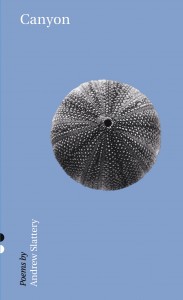
Canyon by Andrew Slattery
Little bit long time by Ali Cobby Eckermann
Evengelyne by Helen Hagemann
Awake During Anaesthetic by Kimberley Mann
Australian Poetry Centre, 2009

I read the four New Poets chapbooks with a high level of curiosity and expectation. Published by the Australian Poetry Centre, these collections represent the rebirth of the Five Islands Press New Poets Series, which published the first chapbooks of approximately 75 Australian poets until its cessation in 2007. The Five Islands Press series provided an important stepping stone for a number of poets who since their first collection have established themselves in the Australian poetry landscape.

Continue reading

Posted in BOOK REVIEWS | Tagged , , , ,

David Prater Interviews An Sonjae

teatimeBrother Anthony of Taizé, known as An Sonjae in Korean, is a retired Professor of English who has lived in Seoul for the last twenty nine years. He is also one of the foremost translators of modern Korean literature into English. David Prater caught up with him over a cup of green tea to talk about Korean poetry and society, Ko Un and the future of inter-Korean relations.

Continue reading

Posted in INTERVIEWS | Tagged ,

Perri Giovannucci Reviews The Penguin Anthology of Australian Poetry

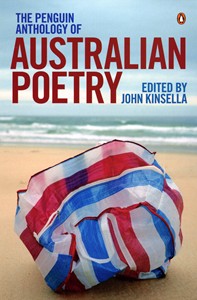
The Penguin Anthology of Australian Poetry edited by John Kinsella
Penguin, 2009

Since the 1990s, academic discussions about literature have challenged, if not deconstructed, the project of a national canon. These discussions have centered on the notions of representation, inclusion, aesthetics, and importantly, identity. While the debates may at times seem atomising, the effects have invigorated literature, both in how it is conceptualised as a discipline and in how texts are produced. The late discussions about national literature give context to The Penguin Anthology of Australian Poetry, clearly a labor of love, edited by John Kinsella.

Continue reading

Posted in BOOK REVIEWS | Tagged , ,

Libby Hart Reviews Judith Beveridge

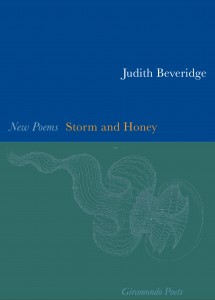
Storm and Honey by Judith Beveridge
Giramondo Publishing, 2009

Throughout Judith Beveridge's career we have seen her take an element from one volume of poetry and expand on it in her next book. Take for example her first collection, The Domesticity of Giraffes (1987) where she wrote of 'Hannibal on the Alps'. This theme was then redeveloped to become 'Hannibal Speaks to his Elephants' in Accidental Grace (1996). Again and again the subjects of these poems breathe new life into Beveridge's subsequent work, whether it be poems about India, birds and animals, Buddha or the water life of Sydney and beyond. With this as a guide, it is perhaps no coincidence that the three fishermen we were first introduced to in Wolf Notes (2003) reappear in Beveridge's new collection, Storm and Honey, in a series of thirty fictitious poems called 'Driftgrounds: Three Fishermen'.

Continue reading

Posted in BOOK REVIEWS | Tagged ,

TINA Reflections

derekmotionLiterary festivals happen again and again in Australia but you'll probably miss most of them. Even if you do reside in a major coastal city, then still, you'll miss things. I know. I used to not care so much, but now I read blogs and keep tabs on the activities of a lot of Australian writers; so I am privy to all the festival happenings, all the goss, and I am naturally left feeling left out. Why can't I go to these cool things if so many other people can?

Continue reading

Posted in GUNCOTTON | Tagged , , , ,

Ryan Scott Reviews New European Poets

New European Poets edited by Kevin Prufer and Wayne Miller
Graywolf Press, 2008

The editors of New European Poets have made their intentions quite clear. They aim to reinvigorate the transatlantic conversation between American and European poets. Such an ambitious task is not without compromise. In order to achieve their aim, the editors have had to set some constraints, some they admit are arbitrary. The final anthology then is one that sparkles with the brilliance of many poems, but which can only hint at the broader context from which they emerged.

Continue reading

Posted in BOOK REVIEWS | Tagged , , , ,

Louis Armand Live at the Globe

[audio:http://cordite.org.au/audio/Louis_Armand_Prague.mp3]

Louis Armand live at the Globe Bookstore (15:29)
Prague, 15 April 2009

Posted in GUNCOTTON | Tagged

Philip Hammial Live at the Globe

[audio:http://cordite.org.au/audio/Philip_Hammial_Prague.mp3]

Philip Hammial live at the Globe Bookstore (13:29)
Prague, 15 April 2009

Posted in GUNCOTTON | Tagged

Michael Farrell Live at the Globe

[audio:http://cordite.org.au/audio/Michael_Farrell_Prague.mp3]

Michael Farrell live at the Globe Bookstore (10:23)
Prague, 15 April 2009

Posted in GUNCOTTON | Tagged

Jill Jones Live at the Globe

[audio:http://cordite.org.au/audio/Jill_Jones_Prague.mp3]

Jill Jones live at The Globe bookstore (8:50)
Prague, 15 April 2009.

Posted in GUNCOTTON | Tagged

Pam Brown Live at the Globe

[audio:http://cordite.org.au/audio/Pam_Brown_Prague.mp3]

Pam Brown live at The Globe bookstore (11:24)
Prague, 15 April 2009.

Posted in GUNCOTTON | Tagged

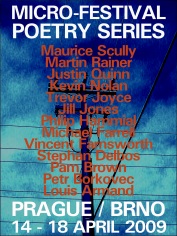
Stephan Delbos: The Prague Micro Festival Poetry Series

prague_festival_poster1In our latest feature, Stephan Delbos recalls some highlights from the inaugural Prague Micro Festival Poetry Series, held in Prague and Brno between 14-18 April 2009. To accompany the words and images, Cordite presents five live recordings of readings by Australian poets Jill Jones, Philip Hammial, Michael Farrell, Pam Brown and Louis Armand at the Globe Bookstore on 15 April 2009.
Continue reading

Posted in ESSAYS | Tagged , , , , , , , ,

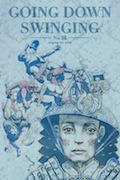
Bridie McCarthy Reviews Going Down Swinging and Indigo

Going Down Swinging 28 edited by Lisa Greenaway & Klare Lanson
Going Down Swinging Inc., 2009

Indigo: Journal of West Australian Writing Volume III edited by Donna Ward et al
Tactile Books, 2009

At the level of function, a literary journal produces a collection of writing on a periodical basis. However, a journal is also another kind of machine, an apparatus which generates a readership, presents writers, exercises its own ideological assumptions (however loosely formed or evolving), and which makes claims to a certain cultural space. At this discursive level, Going Down Swinging and Indigo are very different animals.

Continue reading

Posted in BOOK REVIEWS | Tagged , , , , ,

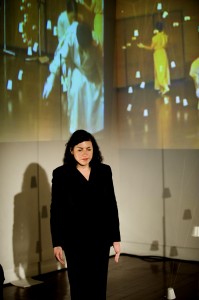
A Nest of Cinnamon

Angela Costi, during a Melbourne showing of 'A Nest of Cinnamon'Combining poetry with music to create a spatial dialogue is common practice. From Sappho to Leonard Cohen, Anne Sexton to Alison Croggon, Eric Beach to Kieran Carroll, there are many poets, from our past and modern times, who have engaged in a mutually rewarding collaborative process with musicians for the stage. The opportunity to present a poem off the page and to have it imbued with another form of metre, rhythm, beat, tonality and sound can etch the poem into memory. But what if the music or sound is unfamiliar to the poet? What if the music or sound comes from a place the poet has never travelled to? These questions, and others, presented themselves as I found myself agreeing to be part of an international collaboration involving my poems, a Japan-based musical troupe known as Stringraphy Ensemble, and Wang Zeng-Ting, a world-renowned performer of an ancient Chinese reed instrument known as the Sheng.
Continue reading

Posted in ESSAYS | Tagged , ,

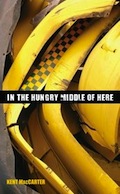
Emmett Stinson Reviews Kent MacCarter

In the Hungry Middle of Here by Kent MacCarter


Transit Lounge Publishing, 2009

The three sections of Kent MacCarter's excellent debut collection are marked by recipes of an imaginative kind. In 'Fruit Salad with Papaya-Mint Sauce' he instructs the reader to include 'Ounces of fresh goddamn seedless everything', which serves as an apt description of the collection as a whole. MacCarter's poetry is a sort of mulligan stew that seamlessly blends landscape, as Japan, New Zealand, Australia and various locales in the United States coagulate into a coherent vision.

Continue reading

Posted in BOOK REVIEWS | Tagged ,

But Is it Poetry?

In this special feature, Emilie Zoey Baker presents the strange and wonderful aural texture that is sound poetry. Sound poetry highlights the phonetic aspects of human speech: it is poetry that has gone way beyond words, beyond the mathematics of language. It can be anything – just the sounds you hear in your head. It's free, alive and nil by verse. Unsurprisingly, sound poetry is primarily intended for performance, but it can sometimes make its strange shapes on the page. Scroll down and enjoy an interesting taster's plate of sound poetry from Canada, the US and Australia.

[audio:http://cordite.org.au/audio/Peter_Murphy_Um.mp3]
Peter Murphy
Um

Peter Murphy writes poetry, short stories, plays and takes photographs. His poetry books include Glass Doors and Lies and Snapshots. His short story collections include Black Light and The Moving Shadow Problem. Murphy says of his own work:

My kind of sound poetry often involves variations on words or statements. I mix obvious jokes, metaphysical word games, one-actor mini-plays in which words break down with an exploration of how sound moves through the body and how the body moves with sound. In a number of poems over recent years, including 'Um', I've been exploring some of the small sounds in the voice which stand out when it isn't loud.

[audio:http://cordite.org.au/audio/Ania_Walwicz_Begin.mp3]
Ania Walwicz
Begin

Ania Walwicz's most recent work, Palace of Culture, is a collection of prose/poetry texts based on dreams. Using abstraction of language, condensation and displacement of subject matter, Ania encodes self-reflecting and self-analytical diary material in a performative mode. This challenging work, strongly influenced by Surrealism, Psychoanalytic Theory, musical composition (language as sound composition) and vocal techniques (performative monologue), immerses itself in sound language textures by re-enacting psychological states.

[audio:http://cordite.org.au/audio/Jeltje_UQ_Them_Took_Us_From.mp3]
Jeltje & Unamunos Quorum
Them…took…us…from…to

jeltje's been convening poetry performances at La Mama Poetica since 2004, and in 2007 produced and performed with UQ in La Mama Poetica: Voiceprints for the Melbourne International Arts Festival, which featured live works by visiting Japanese sound poet and composer Tomomi Adachi, Sydney-based poet Amanda Stewart and groundbreaking performances by 6 Melbourne polypoets.

[audio:http://cordite.org.au/audio/01 I Know Very Well How I Got My Note Wrong.mp3]
Jeltje & Unamunos Quorum
“I Know Very Well How I Got My Note Wrong”

Unamunos Quorum (Sjaak de Jong, Anna Fern, Mark Lewis, Eliane Mortreux and Polly Christie) is a soundpoetry/performance art group that has for over a decade relentlessly followed the path of improvisation in the development and performance of their material. They have worked on a regular basis with the poet jeltje building a repertoire of word- games and sounds- capes that augment her recordings and performances. They write:

Initially, the poems determined the musical forms but the poetic forms, in turn, have changed and/or have been crystallized by the interaction with the music. Sometimes the poetic form actually defines itself in the process. We think “jeltje and UQ” has at times been a true meeting place of poetry and music.

This piece, originally titled ‘Mirror Man’, was written by the late Jas H. Duke (1939-1992) who was born in Ballarat, Australia. He worked as a draftsman/ laboratory assistant/ technical writer and dreamed of becoming a chess champion (but didn't quite make it). As a substitute he read every book that he could find.

In the 1960s he became an Anarchist, wrote short stories and was desperately looking for a way to break-out! He went to England via the United States, where he circulated in the politico-psychedelic underground. In England he sought the camaraderie of Freedom Press; met Ted Kavanagh, Cohn Bendit, Yoko Ono, and Raoul Hausmann.

Duke became a political activist, and an actor who appeared in many underground movies by filmmaker Jeff Keen. He came back to Australia in the early 70s. He published a surreal novel Destiny Wood printed in 1978, which includes poetry translated from the German, and a section of Concrete poems.

He became an active member of Collective Effort Press, where he was involved in many small press publications, including the groundbreaking 925, a poetry magazine for the workers, by the workers, about the workers\' work.

Duke was also involved in the first Visual Poetry Anthology in Australia, Missing Forms, published in 1981 by Collective Effort Press. His last book, Poems of War and Peace, was published in 1989 by Collective Effort Press.

[audio:http://cordite.org.au/audio/Max_Middle_run scrummee.mp3]
Max Middle
run scrummee

[audio:http://cordite.org.au/audio/Max_Middle_Zedders.mp3]
Zedders

Max Middle lives and works in Ottawa where he has been involved in many projects which have as their fulcrum a practice of poetry or m a k i n g . u p (among them the Max Middle Sound Project). His work appears in Shift & Switch: New Canadian Poetry. One of his works is currently being shown in the exhibition 'Blends & Bridges: A Survey of International Contemporary Visual Poetry' in Cleveland, Ohio.

[audio:http://cordite.org.au/audio/Geof_Huth_A Tiny Movement towards Backwards.mp3]
Geof Huth
A Tiny Movement Towards Backwards

[audio:http://cordite.org.au/audio/Geof_Huth_Intense Yields.mp3]
Intense Yields

Geof Huth has lived in Africa, Europe, the Caribbean, and North and South America, all the while using language for his own purposes. His interest in language turned him into a poet, a visual poet, and a thinker on words. He works words in many media: condensation, crayon, frost, object, paint, pen, pencil, pixel, pollen, sound, type, and video.

His most recent books of poetry are “texistence” (300 one-word poems co-written with mIEKAL aND), “a book / of poems / so small / I cannot / taste them” (78 micropoems around the topic of winter), “ENDEMIC BATTLE COLLAGE” (the first publication of a suite of digital poems written in the 1980s), “Gingerbread” (a long poem retelling a fairy tale), and “Eyechart Poems” (27 visual poems).

Huth writes:

Occasionally, I produce sound poetry that is performed off a script, even a script for more than one voice, but those are exceptions. Most of my sound poems consist of what I call extemporaneous poemsongs. These poemsongs grew out of my play with oral language. As I worked around the house or drove myself to and from work, I would sometimes sing a song to myself-the song might be quiet, almost whispered; it might include screaming and pounding on the floor; or it could veer between the almost silent and the screamed. Every part of these songs is invented on the spot: the glossolalic words, the melodies, the occasional rhyme-and most of them are lost immediately upon being created. The best of these I have performed only for myself, though I also end almost all of my poetry readings with a performance, sometimes dramatic, of one of these poemsongs. The point of these pieces – beyond the assumed aural beauty of some of them – is to create a language for song on the spot and investigate that meaning within oral language that exists outside the realm of the word: how intonation defines emotion, how music trains the listener's ear to keep listening, how the physical movement of body sculpts meaning, how generally non-linguistic phonemes (such as clicks and whistles) might be incorporated into supposedly linguistic utterances.

I have saved some of these poems by videotaping my performances of them, and recently I have begun to tape the songs I sing otherwise only to myself. What I've noticed is that this new way of creating is more similar to writing, since I can save what I create and since it is encouraging me to investigate a wider range of sounds. Many of my recent pieces are more spoken than sung, more theatrical than musical. In the end I do all of this to understand and extend meaning, and to entertain myself. For me, the play's the thing.

Posted in ESSAYS | Tagged , , , , , , ,