Ella O’Keefe Reviews Claire Gaskin

Paperweight

Paperweight by Claire Gaskin
Hunter Publishers, 2014

In Paperweight, her third full-length collection, Claire Gaskin shows her talent for observing fluctuations in the state of things – personal, political and environmental. Within this, she does not turn from the darker corners of the human psyche. ‘Just do the best you can’ opens with a frank acknowledgement of mortality: ‘your death keeps growing/or your life keeps contracting’. Continue reading

Posted in BOOK REVIEWS | Tagged ,

Review Short: Rose Lucas’s Even in the Dark

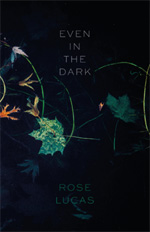
Even in the Dark

Even in the Dark by Rose Lucas
UWA Publishing, 2013

Rose Lucas is a name often found in anthologies, awards and shortlists, so it is no misnomer to call this first collection of poems long-awaited. Time calibrates the scale in Even In The Dark, which span detail in lives from pre-conception and birth to the discovery of a cremated woman’s body 40,000 years in the earth.

Continue reading

Posted in BOOK REVIEWS | Tagged ,

Review Short: Vanessa Page’s Confessional Box

Confessional Box

Confessional Box by Vanessa Page
Walleah Press, 2013

Australian poet Vanessa Page’s latest collection, Confessional Box, is equal parts personal and critical, examining emotional relationships with a terse, engaging style. As the title suggests, there is a strongly self-aware element to Confessional Box. The poems are relatively open, encompassing a range of points of view and personas, but these are not wholly simple reflections of human relationships. Rather, Page presents a series of evolving sections, embellishing on memories and balancing broader criticisms against more personally orientated notions of access and invitation.

Continue reading

Posted in BOOK REVIEWS | Tagged ,

When they Come for You: Poetry that Resists

‘This machine surrounds hatred and forces it to surrender’ were the words inscribed on the banjo of American folk legend and activist Pete Seeger, who died at 94 in late January 2014. Reading the tributes to Seeger, I was struck by a recurrent theme: his moral courage, which he lived out unrelentingly across a lifetime. Commenting on the ‘not common behaviours’ which made his life exemplary, a New Yorker post by biographer Alec Wilkinson wrote of ‘his insistence on his right to entertain his own conscience’.

That ‘insistence’ began early; Seeger preferring to face jail rather than invoke the Fifth Amendment defense when called to testify before the House Un-American Activities Committee in 1955, and refusing to name personal and political associations. He avoided jail only on appeal in 1962. In October 2011 he was among the leaders of the ‘Occupy Wall Street’ march.

The tributes also led me to think of the ways in which other high-profile figures in popular music – Bob Marley and Bob Dylan – have in the past century harnessed, insisting on their same right, the active, lyrical power of poetic language to express moral and political dissent.

This is one of the reasons for the diminished audience for poetry in the 21st century; its audience, lean as it has often been, has been further subsumed by other arts. Of course, at the same time, the meld of lyric and instrument harks to the days of the lyre, the bard and troubadour, lyric’s origins and tradition.

Yet there is an essence in poetry, where a poem can be a pure or unique instance of language (to use Paul Celan’s thinking), giving it the capability to be a stand-alone language of resistance. It has been often, in the works of accomplished poets, a language of essence, able to name what is essential to the fully lived human experience, and what depraves it.

There are abundant examples. Celan himself – in the words of translator Katherine Washburn, after being earlier a ‘pure poet of the intoxicating line’, and in the steep of the Surrealists – became ‘heir and hostage to the most lacerating of human memories.’ As a Romanian-born Jew, Celan worked in a forced labour camp for 18 months from 1942-1944. Both his parents died in Nazi camps. Just one excerpt here, from his 1952 book, Poppy and Memory:

Black milk of daybreak we drink you at night
we drink you at noon death is a master from Germany
we drink you at sundown and in the morning we drink and we drink you
death is a master from Germany his eyes are blue
(trans. Michael Hamburger)

And another, from the Palestinian poet Mahmoud Darwish, from ‘Victim No. 48’:

He was lying dead on a stone.
They found in his chest the moon and a rose lantern.
They found in his pockets a few coins,
A box of matches and a travel permit.
            He had tattoos on his arms.

His mother kissed him
and cried for a year.
Boxthorn tangled in his eyes.
	And it was dark…

(trans. Abdullah al-Udhari)

Both poets wrote other poems with dissenting force rising from more opaque and abstracted language. This is a cardinal point: the poetic force is not reliant on a singular poetic or only poetry that has an immediacy or transparency of meaning. It can be present in all kinds of poetry, including those whose language is complex, or difficult to access and decode. In fact, a capacity for ambiguity and subtlety – and an interrogation of the ability to speak at all – might be exactly what is required in such a poem.

This force is pressured by the complexities of linguistic play; pressured by the porous intricacies between poet, poetic voice and subject; and between the poem and the reader. Where it is calculable about political dissent, it can be pressured by multiple, insidious forces which need to be traced. A lucid and intelligent essay on this subject, ‘Poems from Guantanamo: Testimonal Literature and The Politics of Genre’, by Nina Philadelphoff-Puren, is part of the selection by editors Ann Vickery and John Hawke in their 2014 Poetry and the Trace (Puncher & Wattmann). It is worth reading.

The audience for poetry of moral witnessing has not always been, as it is usually today, small. During many socially traumatised times in history, in fact, the ability of poetry to express human conscience has seen it embraced as significant to a massed community.

The poets of these territories and events have also been embraced as public figures whose poetry and project is important to their community of origin: Yannis Ritsos, Pablo Neruda, Anna Akhmatova, Federico Lorca, Nazim Hizmet, Darwish and Miroslav Holub are 20th-century examples. Poets such as W.H. Auden (in poems which include ‘Epitaph on a Tyrant’ and ‘Refugee Blues’) or Wislawa Szymborska (‘Reality Demands’, ‘The End and the Beginning’) exemplify the duty and capacity of a poet to respond to their world, as human community, at large.

Also important about these poets’ contributions is their works’ reinforcement of humanitarian values – their insistence on nobler attributes against a certain era’s atrocities is distilled for the record. The poems are not only for their times. In these cases, the poet is not just a poet, but also an auditor of communal memory. The hook of poetry into the greater communal, in times where a society is embattled and pervaded by the injustices, remains alive.

The communal uptake in recent years of a traditional folk-couplet form, the landay, by Pashtun women in Afghanistan, demonstrates this. An extensive 2013 article in Poetry Magazine relays the story behind the contemporary adoption of this short, oral poetic form –its only rule is syllabic count, a first line of nine, 13 for the second – among Pashtun women living in Taliban strongholds in Afghanistan.

The author, New York poet and Guggenheim Fellow Eliza Grizwold, in her research collected examples of these modern landays on trips beginning in 2012 and interviewed their disseminators. These women create new landays or re-write existing ones, and go on to share them, at the highest personal risk.
Translated by Grizwold, with the assistance of Pashtun speakers and translators, some examples:

You sold me to an old man, father.
May God destroy your home, I was your daughter.
*
I dream I am the president.
When I awake, I am the beggar of the world.
*
The drones have come to the Afghan sky.
The mouths of our rockets will answer in reply.
Posted in ESSAYS | Tagged

Libby Hart Reviews Kate Middleton

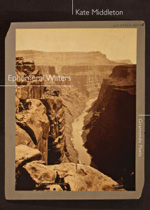
Ephemeral Waters

Ephemeral waters by Kate Middleton
Giramondo Publishing, 2013

For her second poetry collection Ephemeral waters, award-winning poet Kate Middleton followed the course of the Colorado River. The Colorado’s 2,330km journey begins in Rocky Mountain National Park. That journey should end at the Gulf of California but, as Middleton explains, ‘the river has so many hands dipping into it that it no longer reaches the sea’ (‘Reflection, after’).

Continue reading

Posted in BOOK REVIEWS | Tagged ,

Submission to Cordite 47: COLLABORATION Open!

Submission to Cordite 47: COLLABORATION Now Open!

Submission to Cordite 47: COLLABORATION Now Open!

THIS IS NOW CLOSED. Cordite 48.0: CONSTRAINT is accepting submissions.

Poetry for Cordite 47: COLLABORATION is guest-edited by Helen Lambert (Moscow) and Louis Armand (Prague).

What kind of poems are we looking for?: Two (or more) people working together to create a poetic work (written, visual, audio, video, etc). This can be your collaboration with an extant person or group, or with ones that’ve long come and gone … thus, your collaboration may be ‘known’ (you producing with another living poet or active group) or ‘unbeknownst’ (a response to an artist or artwork, but not a corporation, of any medium in the present or past).

Our further thoughts: Collaboration is traditionally understood as ‘working-with’ another person or persons, which makes the possibility of attribution slippery and problematic—for who, might we ask, is really the author of the text, the one who signs their name to the work?

In this way, collaboration undermines the singularity of the author. But if this ‘working-with’ is not simply a case of working with another writer, it is because it can also be understood as working with language, with the history of poetry (allusion, intertextuality), with other genres (poetry and painting, music, photography, etc), or with other languages (poetry and translation).

Are we then not all, whether we like it or not, always already collaborators? But collaboration also implies actions that do not necessarily partake, at least by intention, in positive pluralism. For collaboration also implies an adversary and adversity. Where intersubjectivities rarely co-operate, poetry thrives.

Literary history abounds in such collaborative ambivalence; the Ern Malley “hoax” being a classic example. Here, two disgruntled anti-modernists produced, in the space of an afternoon, and by way of collage, a pastiche, a subterfuge, a mock collection of quintessentially “modernist” poems by a non-existent, dead, Australian poet. Their intention was to discredit Max Harris, local literary editor of Angry Penguins, and Modernism in general.

An alternative view contends that these two hoaxers, freed from the usual constraints of aesthetic judgments etc., and driven perhaps by their unconscious impulses, unwittingly produced works of poetic genius. Their “collaboration” sparked further collaboration; first with the wider literary cabal in which they were involved, then with Max Harris, the duped editor who published the poems and hailed them the work of a great Australian poet, then with an unbeknownst (and thereafter increasingly knowing) public … and then with a reactionary political-judicial system devoted to the cause of anti-obscenity (Max Harris was eventually prosecuted on that charge).

The Ern Malley poems, however, took on quite a life of their own, despite all efforts of their creators. In doing so, they initiated a series of important further collaborative processes, notable among them the artist Sidney Nolan’s ‘Ern Malley’ series and, more recently, a series of poetic cross-collaborations with the poets John Ashbery, John Kinsella and John Tranter (all poets known for their interest in collaborative practices). That the Ern Malley poems appear in full in the Penguin Book of Modern Australian Poetry has opened a whole new area of collaboration.


Please submit only once, with a maximum of three (3) poems in one document (1) … but first, please read the submission guidelines.

*Note: You may be collaborating with a living somebody unbeknownst to them, or somebody long gone. That’s okay. But you MUST demonstrate more than simply being INFLUENCED by _______________.

**Note: You’re also welcome / encouraged to include a brief paragraph with your poems to contextualise the ‘known’ or ‘unbeknownst’ collaboration.

Posted in GUNCOTTON | Tagged ,

Feature Poem with Judith Beveridge: Kalutara

For many poets, place is an enormous point of inspiration. These places may not necessarily be places where the poet physically resides or has resided in, but they may be the imaginative or spiritual places where the poet is most open to their vulnerabilities and affections, and thus the place becomes a bearer of human feeling. This is what attracted me to Simeon Kronenberg’s poem, ‘Kalutara’. In this poem, the name of the place has unlocked the poet’s imagination enabling him to evoke an image-rich landscape, one that becomes a celebration of the people who live and work on the shore.

Barry Lopez has said that you become a poet of place ‘not by knowing the name or identity of everything in (a place), but by perceiving the relationships in it.’ This Simeon has done beautifully, noting the erotic beauty of the fishermen who have been shaped by their work and their environment, these men who are ‘masters of their skin and slim destinies’. The sense of community and family is also strongly suggested. You know that these people are not materially rich, but rich in happiness and with the joy that comes with living in close relationships with others and the natural environment. The poet avoids all sentimentality by his use of adjectives. I love the coupling of ‘beautiful’ with ‘cluttered’ in line two, and the implications in the word ‘manhandled’ underscoring the speaker’s desire to be close to these fishermen. The tone, though tinged with longing, is joyous and the poem is a glorious celebration of male sexuality and desire. — JB

Kalutara


I will go to Kalutara. I read of it once in a poem
and was won by its beautiful, cluttered name.
It thrilled me into desire for the elegant

lean-limbed fishermen with black legs 
like knotted rope (shiny and clean up to their sex)
half-hidden, beneath sarongs that hang like tea towels.

Grinning through white teeth 
and bright pink gums they are perfect masters 
of their skin and slim destinies

and daily, they haul in a catch worth having, 
live, silver bullets, some thrashing still
mouths agape, manhandled.

Women come to the beach with baskets 
and children, ready to claim what’s theirs. 
The thin-legged men shout names, Lakshika, Hashani, Dini – 

and they laugh, their eyes like black fire on marble.
Posted in GUNCOTTON | Tagged , ,

Review Short: David Malouf’s Earth Hour

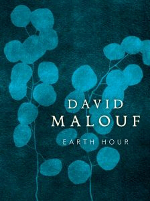
Earth Hour

Earth Hour by David Malouf
UQP, 2014

It is a delight to have, after seven years, a new collection of poems from David Malouf who remains, in his ever-modest way, one of the central figures in Australian writing. As a poet, he glimpses the big currents, but is constantly alert to the tiny epiphanies of dailiness, as when he evokes ‘Shy gifts that come to us from a world that may not/ even know that we are here. Windfalls, scantlings.’

Continue reading

Posted in BOOK REVIEWS | Tagged ,

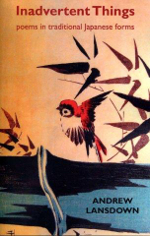
Review Short: Andrew Lansdown’s Inadvertent Things – Poems in traditional Japanese forms

Inadvertent Things – Poems in traditional Japanese forms

Inadvertent Things – Poems in traditional Japanese forms
by Andrew Lansdown, Walleah Press, 2013

Andrew Lansdown’s poetry has long been defined by the primacy of the image and a preoccupation with form. Inadvertent Things revisits the themes of nature, family and God through the familiar Japanese forms of tanka and haiku, and also the choka, a sort of extended tanka. The haiku is the form that features most often and always as part of a suite called a gunsaku, where the poems work independently but also cumulatively. All the terms are explained in a short introduction for the uninitiated, in which Lansdown expresses his intention to follow the spirit rather than the letter of the law.

Continue reading

Posted in BOOK REVIEWS | Tagged ,

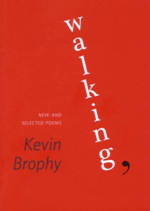
Review Short: Kevin Brophy’s Walking,

Walking,

Walking, by Kevin Brophy
John Leonard Press, 2013

Poetry collections aren’t prone to extensive reprints, so Kevin Brophy’s Walking, – which includes selections from five previous books – is somewhat of a trove for anyone wanting to access his earlier work. It also features a suite of new poems which, in their gentle complexity, are among his most interesting – testimony to a writer who’s carefully honed his craft over a 30-year stretch.

Continue reading

Posted in BOOK REVIEWS | Tagged ,

Review Short: Pip Smith’s Too Close for Comfort

Too Close for Comfort

Too Close for Comfort by Pip Smith
Sydney University Press, 2013

It’s funny the effect of sequence. When I picked up Pip Smith’s collection Too Close for Comfort, winner of the 2013 Helen Bell Poetry Award, I wasn’t primed for anything. I had no expectations – neither indulgent, nor prickly. The volume has texture: bundles of thin pages alternating with thick ones, the latter offering various portions of an illustration of the work’s ‘leitmotif’ – the giant squid.

Continue reading

Posted in BOOK REVIEWS | Tagged ,

Kate Middleton Reviews Kim Cheng Boey

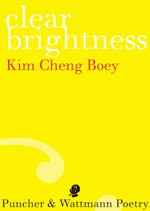
Clear Brightness

Clear Brightness by Kim Cheng Boey
Puncher & Wattmann, 2012

With Clear Brightness Kim Cheng Boey offers a slim volume that, in addition to addressing notions of place, exile and travel, carries with it a deep melancholy of being written in ‘the lone wastes of middle age’. His explorations of worldliness are welcome, and Boey offers portraits of interconnectedness even as he displays and explores alienation. Moving from markets to Chinatowns, from Singapore’s National Theatre to California’s Santa Barbara, this collection often shows the objects that connect the past to the present, keepsakes available to keepers and gleaners alike.

Continue reading

Posted in BOOK REVIEWS | Tagged ,

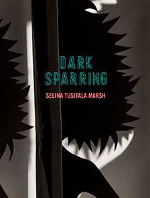
Review Short: Selina Tusitala Marsh’s Dark Sparring

Dark Sparring

Dark Sparring by Selina Tusitala Marsh
Auckland University Press, 2013

The first epigraph to Selina Tusitala Marsh’s new collection is from Muhammad Ali; ‘The fight,’ he says, ‘is won or lost far away from witnesses – behind the lines … long before I dance under these lights’. Behind Tusitala Marsh’s lines of poetry, there is an immense reserve of strength and grace, enough to sustain the poet through her mother’s death from cancer and to channel her fear and anger into rhythms of the Muay Thai kickboxing ring and the page.

Continue reading

Posted in BOOK REVIEWS | Tagged ,

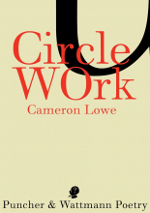
Review Short: Cameron Lowe’s Circle Work

Circle Work

Circle Work by Cameron Lowe
Puncher & Wattmann, 2013

The poems in Cameron Lowe’s Circle Work swing across each page at a strangely measured, athletic tilt. The scope is local and vast, the gaze muscular, and Lowe sweeps the vistas (from Corio to the universe) for details apprehended as preternatural. His rapture typified in the lines, ‘the body’s cruel admission// that close is never close enough’ (56), these poems skirt edges of realness without entering the domain of things. Lowe’s is a poetics of evanescence, not arrival, and Circle Work frames the contours of human habitats as noise-filled within << blancs >> of silence. This book, a ‘stage of surfaces’ (31), watches carefully the play of order: birds and cats and dogs, flower-filled gardens and houses, dark bays and intersected hills and, everywhere, sound and light tinged by season or time.

Continue reading

Posted in BOOK REVIEWS | Tagged ,

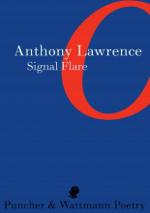
Review Short: Anthony Lawrence’s Signal Flare

Signal Flare

Signal Flare by Anthony Lawrence
Puncher & Wattmann, 2013

Some months back, I ended up sitting next to a fairly eccentric white-bearded bloke on a Sydney bus. Upon hearing I was an Australian poetry researcher, my new acquaintance exclaimed ‘Australian poetry!’ with obvious distaste, followed by ‘F—ing Anthony Lawrence!’ He went on to detail how feral Aussie upstarts like Lawrence and ‘bloody Adamson’ were bastardising the great tradition of English Romanticism. As he rose to hop off, I asked for his name. He cheerfully declined.

Continue reading

Posted in BOOK REVIEWS | Tagged ,

Feature Poem with Judith Beveridge: Prawn Heads, Oil Rigs and Infidelity – Kuala Lumpur 1977

‘Prawn Shells Oil Rigs and Infidelity – Kuala Lumpur 1977’ is a highly dramatic poem full of tension and suspense. The poet builds these elements into the poem through the astute use of short, sharp phrases which also deliver their punch through alliteration and vowel sounds. He sets the scene visually and viscerally, putting readers’ senses right in among the smells, the sounds, the heat, the dirt and grease of the oil rig. Phrases such as ‘They’re silver-palmed, thick-tongued, slick-skinned” and ‘The chili-fingered oil man’ deliver sonic power and imply much in a few words. The dramatic irony is also expertly achieved, as the reader becomes aware of exactly who it is having the affair, betraying ‘The chili-fingered oil man.’ This is a poem full of changing, slipping tones. The toughness of the oil rig workers and their vulnerability are finely articulated through the action and imagery. The poem’s language is tight and fresh, the emotions are not over-dramatised, the stanza constructions and lineation add to the tension, the narrative is beautifully paced, and the final image is evocative, resonant and surprising. – JB

Prawn Heads, Oil Rigs and Infidelity - Kuala Lumpur 1977


Fourteen on seven off, incessant 
equatorial days, heavy city sky, tarps dripping 
on stall counters. Prawn heads underfoot,

exo-crunch on concrete floors. Bare bulbs,
the bright lights dangling, threaded by mosquitoes.
Two rig workers lift steel tins of Anchor beer

and chew prawn flesh. They’re silver-palmed
thick-tongued, slick-skinned, the pernicious few
riding a state of expat grace. Woks steam,

surrounded by tins, tubs of grease
and ponds of chicken blood. Reedy men
in singlets sweat exhaling strands of smoke,

working the woks as ash falls through
their arms. The chili-fingered oil man
clutches a photo; bent, battered by his wallet;
 
a woman, shirtless, dark hair, haloed 
in a rattan chair. All he says is, look at her
how could you not trust her? His friend

doesn’t turn, nodding wordless sympathy; 
eyes on the wok-steam rising, disappearing.
The photo is thrust again, vigorously,

he looks, doesn’t speak, caught by
the hurry of mortality punching in his chest. 
Look at her, she won’t tell me who it is!

Blinkless, she stares from the photo 
divine as a gecko, tail part-shed, scaling a wall.
Posted in GUNCOTTON | Tagged , ,

SILENCE Editorial

Silence seems a paradoxical and perhaps daunting theme for writers, yet it strikes me as tantalizingly hospitable too. It was pleasing that 494 writers took up the challenge, submitting some 1100 poems; my warm thanks to you all. This high volume meant that a number of fine poems had to be regretfully declined. A common element in those I finally selected was assurance and presence, the sense of a person thinking through the poem – and of the poem thinking through the person. Precision, energy, surprise and an unlikely angle were other touchstones. Feeling, too, of course; silence, actual or metaphoric, can certainly be neutral, but more often it affects us either negatively or positively: as nothingness, dread, loss, denial and oppression, or else as affirmation, safety, intuitive understanding, intimacy, transcendence, and so on. For me, as for many of those submitting, the theme summons up death – the lost voices – but also a sense of mysterious imminence and immanence.

Continue reading

Posted in ESSAYS | Tagged

Silénzio / Scienza: Registering 5 in Joan Retallack’s Errata 5uite

like choosing the parameters of speech1, Diane Ward, ‘Mediate’ (1992).

Teaching Errorious Silence

Joan Retallack describes her second major book, Errata 5uite, published with Edge Books (Washington, D.C.) in 1993, as a ‘silent suite.’ A five line prefatorial note defines, or notates, the meaning of the books title and its composition:

errata 5uite. errant phrase denoting a suc
cession of 5 line errata slips of tongue
composed of letter notes written  on 5 line
musical staves (invisible) together form
ing a silent suite (Fr., a following)2

Continue reading

Posted in ESSAYS | Tagged , , , ,

A Writing Surface of One’s Own

for Tricia Dearborn, whose desk is a door

A waitress here has The Owl and The Pussycat tattooed on her goose-pimpled biceps. They sweetly peek from the hem of an unseasonable short sleeve. Indigo-inked, theirs is a nursery frieze’s block print detail. She is all at sea in her ravaged pea-green tights. Her roughly made skirt abounds with floating, shifting dice. It retains its looped yellow fringing, a faded tangelo backing, from its vintage past life as a painted velvet souvenir cushion cover. She has a ring at the end of her nose, her nose, a ring at the end of her nose. Her girlfriend’s lips, hair and boots are cerise. With honey, she sweetens – and makes a meal of – her sweetly gratis hot tea, blushes like a peach, purrs. The illustrated waitress hovers, calls ‘Who?’ and, like a zephyr, swoops with a cloth, a notepad and a fluffy rainbow-haired Troll Doll-ended pencil.

Continue reading

Posted in ESSAYS | Tagged , , ,

Reasons for Silence

Opinions. Nice to be rid of them. Opinions unloaded joyfully, with relief, like so much silver change weighing down a wallet. Plenty more where that came from. A million, but about five people left in the world, perhaps who can justify their opinion, who can argue the case at length. And about three people left with the time to hear them out.

Continue reading

Posted in ESSAYS | Tagged , , , , ,

Black Stone Poetry: Vanuatu’s Grace Mera Molisa

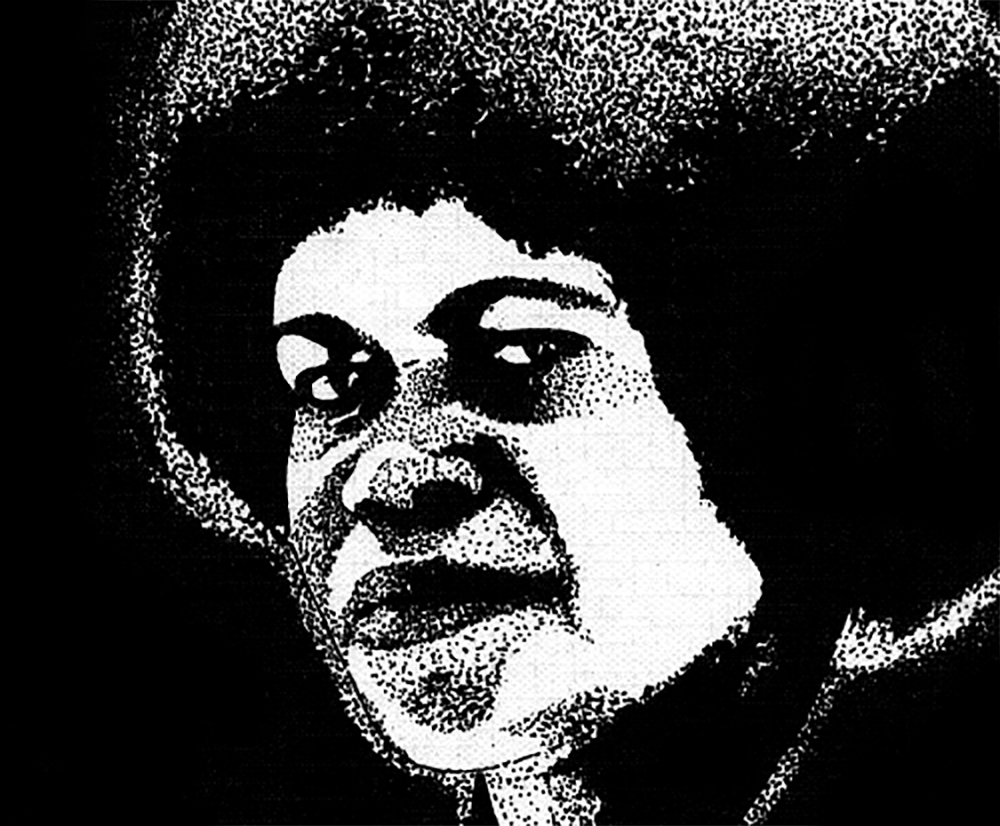
Grace Mera MolisaImage from front cover to Black Stone.

Black stone is both a figurative and literal reference to the vanua of Vanuatu, specifically, its black solidified lava base. Like many Pacific Islands, Vanuatu is founded on dormant and live volcanoes that impact upon the daily reality of its inhabitants. This essay examines the poetry of Grace Mera Molisa and how black stone is deployed as a key metaphor in her work as both poet and politician. Like black stone, Molisa has been a foundational creative and critical force in the formation of Vanuatu as a postcolonial nation, one based on an indelible Ni-Vanuatu spirit. I argue that before, during, and after Independence was won in 1980, Molisa’s poetry contended that this indigenous spirit must be black stone-based. This meant that in the newly forged postcolonial nation, the desirable volcanic state of ‘steadfastness’ could only be achieved in two mutually dependent ways: the productive equilibrium between indigenous and foreign influences; and the realisation of a constructive counterbalance between men and women. Molisa’s poetic voice in her country is unparalleled and virtually unknown beyond its borders. This essay seeks to redress that literary imbalance.

Amazing Grace

In the close-knit community of Pacific politics, Non-government Organisations, and feminist circles, Grace Mera Molisa was known as ‘Amazing Grace’ (Obituary, Focus, Winter 2002, 33; Randell (ed) 2002). With the announcement of her untimely death in January 2002 at the age of fifty-five, the tributes that poured in from around the world evidenced the impact she had as an activist, a political figure, an environmentalist, a poet, and beloved wife, mother and friend. These tributes were later published in Shirley Randell’s edited collection, Creative Writing in Memory of Grace Molisa (2002). Contributors recognised Molisa’s pioneering achievements and international reputation as an activist and politician. Four distinct and commonly acknowledged attributes made Molisa ‘amazing’: a fearlessness at confronting oppression and political hypocrisy; an unrelenting fighting spirit for improving the quality of life for women; a passion for sustainable development of the environment and local economy; and distinct and inclusive ideas about how Vanuatu’s Independence could be realised for all its citizens. By her more enlightened peers Molisa was seen as someone ahead of her time; by less sympathetic onlookers she was dismissed as a radical. Her work in politics and women’s affairs often led to public ostracism and loss of employment. Indeed, she was ‘Amazing Grace’ – an epithet punning on the title of the Christian hymn, evoking themes of salvation for the lost, justice for the oppressed, and freedom for the enslaved. These are themes that Molisa not only strategically maneuvered in her public roles, but in which she deeply believed.

While Molisa’s poetry was renowned for its ‘biting social commentary on life in patriarchal, post-colonial Vanuatu’ (O’Callaghan, 10), it is just as amazing for its poetics. However, this dimension has received little in-depth literary attention1 and few know of this strident poetic voice outside of (and in many cases, still within) the Pacific. Two questions interest me as a poet and Pacific Literary Specialist: How did Molisa use poetry to restore equilibrium after the ‘Joint Pandemonium’,2 an era that caused unprecedented political, cultural, social and spiritual disequilibrium? How did Molisa use poetry to advocate for equilibrium against a backdrop of indigenous and foreign systems of patriarchy, ensuring that post-Independence, women and children partook equally in the fruits of political struggle? Answers are sought by investigating a key metaphor in Molisa’s work: Black Stone.

Foundation of a nation

Vanuatu is an archipelago with a total land mass of almost 13 square kilometers spread over eighty islands stretching from the Torres Islands in the north to Hunter Island in the south. Twelve are considered main islands. Pre-contact population figures are estimated at just over half a million (Huffman 1995), while current figures sit around 250,000. The number of distinct indigenous languages range from 100 to 110 (Huffman 1995). Consequently, Vanuatu was and remains a kaleidoscope of geographic, cultural and linguistic diversity, perhaps comparable only to Papua New Guinea in the Pacific.

The Spaniard explorer, De Quiros, first sighted Vanuatu in 1606 with little consequence. Later, the French explorers Bougainville (1768), La Perouse (1788), d’Urville and d’Entrecasteaux (1789) came across the islands but in 1774 Cook voyaged throughout the islands and charted them (Lini 17). Cook named the islands in nostalgic recollection of the British Isles. Apart from the imposition of being charted and ‘named’ the New Hebrides by Cook in 1774 (which the indigenous peoples would have been oblivious of in any event), it would be almost a century later that European presence would be felt. Protestant and Catholic missionaries started settling in the archipelago in the 1840s.

Labour shortage for sugar plantations in Queensland, Fiji and New Caledonia, along with the growing trade in sandalwood and beche de mer, saw the rise of ‘blackbirding’ (Mortensen) – the kidnapping and enforced labour of islanders. With no formal colonial power ruling, foreign investors and businessmen viewed the islands as open territory for their labour requirements (Lini 17).

In the late 1860s European settlers acquired land and began planting cash crops of cotton, cocoa, coffee, maize, bananas, vanilla, and coconuts. French and British business interests competed with each other while indigenous peoples continued to be used as ‘polite’ form of slave labour (Jolly, ‘Custom’ 54). Indigenous lives were dramatically impacted. In particular, the workload of women, was increased (Jolly, ‘Custom’ 54).

During this time, both British and French colonial powers became interested in Vanuatu as both had existing neighbouring colonies. In 1887 a Joint Naval Commission was established to ensure the safety of British and French lives and property. In 1906, without consultation with the indigenous people, Britain and France took joint colonial control through an Anglo-French Condominium – the only one of its kind in the world (Jolly, 1996 3-7). Subversively coined by locals as the ‘Joint Pandemonium’, this would become one of the most multifarious and confusing political situations in the Pacific, unique only in its complexity.

Although the archipelago remained intact, it produced systems of government that created further divisions amongst Vanuatu’s multiple geographical, linguistic, social and cultural identities. There were not only two separate (and often opposing) administrative colonial systems, but also competing Anglophone and Francophone education and religious systems (French Catholicism versus English Protestantism) and policing and health systems which played on intra-village rivalries, creating ‘disunity and polarization’ (Jupp and Sawer 553). This made the creation of a unified indigenous movement for Independence a difficult, but not impossible task (Lini 39).

73 years after the Anglo-French Joint Condominium, Vanuatu gained Independence and became one of the world’s newest nations in 1980 (Lini 26). While Ni-Vanuatu were by no means passive agents during colonisation, this double yoke of colonisation was deemed disastrous by most. Much of the prime land had been ‘legitimately’ seized by foreign interests, often without the indigenous owner’s knowledge (Jolly, ‘Custom’), while the continual international rivalry between Britain and France produced a highly divisive local society in constant tension and opposition. There are numerous anecdotes about the absurdity of Anglo – French animosity and competition where half built roads and incomplete buildings mark territorial borders. Among Ni-Vanuatu, conflicting clan rivalries alongside inherited colonial allegiances was taken advantage of by colonial powers to thwart any indigenous political moves towards solidarity (Sokomanu 50).

Unlike many other Independence movements in the Pacific, Vanuatu’s fight for self-determination was violent (assassination attempts, looting, kidnappings, bomb threats, slanderous attacks), contentious, full of political intrigue. Independence was continually thwarted by French colonists, British and American speculators, and self-interested business owners who formed a sleuth of other parties including the main Opposition, the Union de la Population des Nouvelles-Hebrides (UPNH), various breakaway parties included the Union des Communates des Nouvelles-Hebrides (UCNH), the Movement Automomiste des Nouvelles-Hebrides (MANH), the Tan Union, and the Federal Party (Jolly, ‘Custom’ 319), along with and foreign-aided indigenous secessionist movements such as the early nationalist party, the Na-Griamel in the 1960s and French-backed Jimmy Stevens-led movement (Jupp and Sawer 555). But Ni-Vanuatu were determined in their quest for Independence, eventually coming to power with the only Melanesian-led nationalist party with broad based Melanesian support, the New Hebrides National Party. Formed in 1971 the party was headed by Anglican minister, Father Walter Lini (Plant; Lini). Based on the party’s 1977 congress resolve to rename the country as ‘Vanua ‘aku’ meaning ‘our land’ (Plant 115), Lini’s party eventually became known as the Vanuaaku Pati.

The Vanua`aku Pati remained in power until 1991. Molisa remained the Private Secretary to Lini, Prime Minister of Vanuatu from Independence until 1990. Due to internal conflicts within the Vanua`aku Party, she was dismissed by Lini in October 1990, shortly after the euphoria of Vanuatu’s 10th Anniversary of Independence. Many were of the opinion that Molisa’s dismissal was grossly unfair and due to her refusal to pander to Lini’s increasingly despotic style of leadership (Shackley). Not one to be silenced, Molisa used words to fight back. In the ‘British Friends of Vanuatu Newsletter’ Normal Shackley records how Molisa ‘commented on these events in a bitter pamphlet, soon swept off the streets, accusing Lini of acting as a totalitarian dictator and asking ‘Where are we going ?’’ (2001). Subsequently, the Molisa family were persecuted for their outspoken views. The constant threats culminated in the burning down of the Molisa family home. Refusing to be intimidated, the Molisa house was rebuilt on the original site. When I last visited the family home, Molisa’s outdoor writing table continued to occupy the creative centre of household, its partial charring displayed like a badge of honour.

After Lini dismissed a number of other Ministers of the Vanua`aku Pati on equally dubious grounds, others began to defect. After a notable split between Lini and Barak Sope, Lini was ousted and replaced as leader and Prime Minister by Donald Kalpokas. In the 1991 national elections Kalpokas was narrowly defeated by Maxim Carlot, leader of the Union of Moderate Parties (UMP) with its support base primarily among the Francophone. Lini and his newly formed National United Party (NUP) polled a distant third and a coalition was soon formed between the UMP and the NUP to hold onto the majority of power in the government (while quickly replacing about thirty senior officials regarded as too closely associated with the previous administration) (Ogden). Ogden describes the contemporary political situation as ‘fluid’, pointing out that despite its politics:

Vanuatu’s economic policies are generally seen as ‘orthodox’ … and considerable income is earned by selling tax haven services to international capitalist enterprises. Vanuatu’s main resources are agricultural, dominated by copra, beef and cocoa while the re-export of petroleum and fish products also makes up part of its export earnings.

This essay focuses on Molisa’s poetry published in the first decade after independence. This is poetry formed from the heated, volatile political climate, poetry formed under immense pressure then released to flow onto the page, creating new land, reclaiming old territories. This is what I call ‘black stone’ poetry.

The constitution of the Republic of Vanuatu is based upon the Westminster model, and provides for executive, judicial and legislative powers in the organisation of the government, as well as pledging to uphold the rights of every individual. The Preamble to the Constitution is as follows:

We, the people of Vanuatu,
Proud of our struggle for 
freedom
Determined to safeguard 
the achievements of this 
struggle
Cherishing our ethnic,
linguistic and cultural
diversity
Mindful at the same time of 
our common destiny
Hereby proclaim the
establishment
of the united and free
Republic of Vanuatu
founded on traditional
Melanesian values, faith
in God and Christian
principles
And for this purpose give
ourselves this 
Constitution (Vanuatu 65).

Posted in ESSAYS, SCHOLARLY | Tagged ,

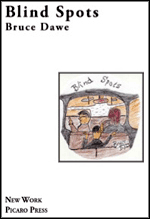
Andrew Fuhrmann Reviews Bruce Dawe’s Plays in Verse: Kevin Almighty and Blind Spots

Blind Spots and Kevin Almighty

Blind Spots and Kevin Almighty by Bruce Dawe
Picaro Press, 2013

Some poets are sublime and ridiculous at the same time. James Kenneth Stephen was only being felicitously expressive of what oft was thought of Wordsworth when he wrote:

Two voices are there: one is of the deep;
It learns the storm-cloud’s thunderous melody,
Now roars, now murmurs with the changing sea,
Now bird-like pipes, now closes soft in sleep:
And one is of an old half-witted sheep
Which bleats articulate monotony,
And indicates that two and one are three,
That grass is green, lakes damp, and mountains steep
And, Wordsworth, both are thine ...

Continue reading

Posted in BOOK REVIEWS | Tagged , , , ,

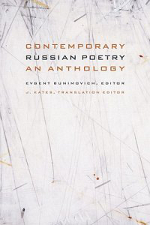
Nicholas Birns Reviews Contemporary Russian Poetry: An Anthology

Contemporary Russian Poetry: An Anthology

Contemporary Russian Poetry: An Anthology
Evgeny Bunimovich, editor, and J. Kates, translation editor
Dalkey Archive Press, 2008

Dalkey Archive Press has long been known as a premier publisher of cutting-edge international fiction; here the Illinois-based firm continues its venture into poetry. This massive book, including forty-four poets, all with English translations facing their Russian originals, and supervised by both an ‘editor’ and a ‘translation editor’, is an anthology of Russian poetry written by living poets, or those born late enough to still be plausibly alive today. It is not, in other words, just inclusive of the latest generation, or those explicitly linked to postmodern or experimental practices; or those coming to prominence only after the dissolution of the Soviet Union in 1991. Continue reading

Posted in BOOK REVIEWS | Tagged , ,

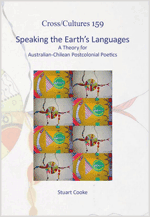
Nicholas Jose Reviews Speaking the Earth’s Languages: A Theory for Australian-Chilean Postcolonial Poetics

Speaking the Earth’s Languages

Speaking the Earth’s Languages:
A Theory for Australian-Chilean Postcolonial Poetics
by Stuart Cooke
Rodopi, 2013

If poetry registers ‘internal difference, Where the Meanings, are’, in Emily Dickinson’s deep phrase, then indigenous poetry creates meanings that are more different still. Growing from an alternative poetics that questions conventional procedures and challenges what we know, indigenous poetry gives us a chance to change. That is true whoever or wherever we are, Indigenous, indigenous or invited in. It may be more broadly true, across other art forms too, but to start from poetry, if poetic language is speech at its most highly charged, then in indigenous poetry there’s a glimpse of a potential for overturning and renewal. Dominant practice has its own built-in obsolescence. Paradoxically, given its acknowledgement of the timelessly old and absent, indigenous poetry suggests a new way forward.

Continue reading

Posted in BOOK REVIEWS | Tagged , , , , , , , ,