6 Ian Friend Artworks in Response to Poetics

A Precipitation of Fallen Angels
A Precipitation of Fallen Angels 2012 | India ink, gouache and graphite on Hahnemühle paper | 75cm x 55cm

I have worked allusively in relation to poetic texts for most of my professional life. I suppose the first was T.S. Eliot, and I have correspondence with Valerie Eliot on that matter (she told me Eliot didn’t like the idea of a direct relationship between text and image).

I made a series of images relating to Seamus Heaney’s ‘From the Republic of Conscience’, written for Amnesty International, and the poet, in correspondence, was enthusiastic about the resulting images.

The poet who has captivated me in a sustained manner is J.H. Prynne, with whom I have maintained a written correspondence, but after all these years we have still not met.

‘Star Damage at Home’, ‘The White Stones’ and ‘Biting the Air’ are Prynne texts that have evoked a visual response from myself. Jeremy also has one of my works. ‘A Precipitation of Fallen Angels’ is a reference to Coleridge’s 1802 journal, in which he writes about the alleviation of depression in the presence of a waterfall and describes this as ‘a precipitation of fallen angels’.


Posted in ARTWORKS | Tagged

Poetry Film: 被移動的嗎? | Was Being Moved?

World Premier

I was first introduced to the term ‘poetry film’ at the Zebra Poetry Film Festival in Taipei. As a poet, I knew right away that was the kind of video work I would like to do. In 2007, I went to the School of the Art Institute of Chicago to study filmmaking and to continue experimenting with the relationship between poetry and film. To me, making a poetry film is like weaving. It doesn’t prevent me from being a poet. Instead, my poems grow with my films simultaneously. I always write something first before I go out to collect images, but everything is still unclear and improvised when I am shooting. During the editing stage, I like to collage the images. Afterwards, I always write something based on the images and then collage the images more. In other words, my images and text feed each other rather than feed on each other.

Please allow a few (or quite a few) moments for this film to load. Vimeo buffers at varying rates depending on where you are on Earth and when accessed. It is WELL worth the wait.

In Was Being Moved?, this weaving can be seen through the combination of different images I collage: the New York City parades, the Baishatun Mazu pilgrimage, the homemade boat in Chicago, the Lanyu traditional boat, etc. The Baishatun Mazu pilgrimage is a very unique Taoist activity in Taiwan. The pilgrimage, itself, is a miracle. The sculpture of the god shakes her sedan in the direction she wants to lead the pilgrimage. The pilgrimage usually lasts for eight to ten days. Thousands of people follow Mazu more than 400 kilometers from northern Taiwan to the middle of the country and back again.

The handmade wooden sailboat in Chicago was made by two American artists, James Barry and Hui-min Tsen. The boat is part of their art project The Mt. Baldy Expedition. The project is a journey of the imagination that explores the act of commonplace exploration and the experience of wonder in daily life. After filming their boat, I went to Lanyu, a small island off the coast of Taiwan, to film another handmade wooden boat. The Lanyu boat is a ten-man, traditional boat made by the Taiwan native peoples for catching flying fish during the spring fishing season. I try to create a conversation between the sailboat and fishing boat. The main connection between these source materials is the concept of ‘movement’ and ‘being moved.’ Are people moving by themselves or being moved by Mazu? Do the boat builders move the boats, or do the boats move them?

If someone asks me what my creative process looks like, I would say, ‘It’s like directing a group of electric jellyfish sneaking into a tilt tower to rub together. They could become a sunny day, a fever, a humming song, or a glass of Bloody Mary, which … I never know.’

Posted in 61: NO THEME III | Tagged

Speech Poetry

Select the image above to start the poem

Posted in 61: NO THEME III | Tagged

X Marks the Parataxis: Louis Armand, John Kinsella and Jessica L Wilkinson

Parataxis

Displacement is apparent both geographically and textually in Letters from Ausland by Louis Armand, The Vision of Error by John Kinsella (subtitled, ‘A Sextet of Activist Poems’) and marionette by jessica l. wilkinson (written here all in lower-case and subtitled, ‘a biography of miss marion davies’). All three poets are or have been editors of literary magazines: Armand edits VLAK, out of Prague; Kinsella, SALT; and Wilkinson, Rabbit (why does this name always remind me of Wittgenstein’s drawing of a rabbit that can also be perceived as a duck?) Armand and Kinsella have also collaborated on a number of books.

I see displacement, forgetting Wittgenstein – and Freud – for a moment, in terms of shifting populations (‘as the town’s demographics shift’ [K 104]), exile and the moving image. The importance of film to the twentieth century cannot be underestimated. (Baudrillard calls political economics a ‘montage’.) It is perhaps the continuation of Surrealism – or at least Surrealism’s work of finding reality beyond reality, and therefore, truth – with a good dose of ‘French theory’ (K 69), Postmodernism (‘the postmodern mirror’ [W 35]) and feminism (otherwise called heroism in Ausland and Vision), and lends itself easily to the twentieth century’s techniques of collage, montage, assemblage, bricolage (the literary ‘mot du jour’), fragmentation, defamiliarisation, hypertextuality, tmesis and the readymade. Kinsella’s ‘[d]onner / la mort’ is echoic of Éluard in Donner à voir (‘Giving Sight’); Armand’s section titled ‘Forgetting Verlaine’ (Verlaine – like Ashbery, Olson and Spicer – is the littérateur’sécrivain du jour’.) reminds me of Baudrillard’s Oublier Foucault (‘Forgetting Foucault’). Kinsella disavows Surrealism in the everyday he witnesses (it is not Buñuelian; he likes to see nature through the artefices of prosody: ‘here, ants walking over the page are not surrealist / here, a deadly spider predating words is not surrealist / here, locusts swarming like diacriticals are not surrealist / here, snakes distracting and causing a line break are not surrealist’ [K 40]); while Wilkinson explores the often surreal history of (American) film-making though her subject, dealing ‘biographically’, postmodernistically and feministically with an actress of the Hollywood system.

Wilkinson’s (non-metrical) foot went on to foreign soil specifically to gather information, with documents often turning to dust – American soil that generated the most vital poetry in the English language in the twentieth century, with Auden, Pound and Eliot being transatlantic aberrations and Bishop, South-American.(Transatlanticism, my term, is responsible for Bishop’s relative obscurity in Europe, let alone for any Australian who for whatever reason never made the pilgrimage to England, but it does not explain Marion Davies’ fall into collective forgetfulness.) Davies is given extensive treatment in Kenneth Anger’s Hollywood Babylon, which came out in the 1970s, for her beauty, lavishness and association with William Randolph Hearst. (Not to mention Thomas Ince’s death). Anger was an avant-garde film-maker, most notable for Lucifer Rising, with Bobby Beausoleil, one of the Manson murderers, writing the sound-track, and Inauguration of the Pleasure Dome, starring Anaïs Nin, who should have been a poet, wearing a bird-cage. If Plath can write a pot-boiler, why not Anger? Clive James – author of Cultural Amnesia! and one of Australia’s most notable émigrés – maintains that Marion Davies is only remembered as Hearst’s mistress, reduced to a clitoris or vagina as a ‘rose-bud’ in Citizen Kane [Cain; ‘and Marion dressed as Anne / Boleyn (before the final cut)’ (W 82)], even though she was a talented actress and deserving of fame in her own right.)

But it is Kinsella and Armand, as expatriates, who are often looking at and judging, if not making judgements of, their native land from afar. (Expatriation as a kind of displacement.) Ausland is German for foreign country (Kinsella’s ‘Dialektik’), but I see ‘Ozland’ in the word, i.e., Australia, and pronounce it that way to myself. Its adjectival form is ausländisch, cognate with English ‘outlandish’, which originally meant not native and has come to mean bizarre (itself a Basque word meaning beard, which I would not have thought was a foreign feature; ‘Etymology / of bigotry’ [K 23] ‘manifest[s] every other outré’ [K 65]). Nor do Armand and Kinsella share the xenophobe’s distrust and dislike of foreign languages, sprinkling their poems and titles of poems with French, German, Latin and even Russian, adding depth, coloratura and panache to their work. Armand’s German – the poem on page 68 is titled in German: ‘Böhmen liegt am Meer’ – appears fluent, as opposed to a kind of German everyone knows, as in Eine Kleine Nachtmusik (K 74) or ‘wunderbar!’ (K 77).

Wilkinson’s parroty paralanguage (‘Shoot all the birds / The ducks the geese and the parakeets’ [W 52]), in her book divided into nine parts (she mimicked the number of reels in a film in which Marion Davies starred), with each page – apart from the playlet in the middle – able to stand on its own like a frame, is irruptive and disruptive for the most part, from the ‘spirit of calamity [and] mischief’ (W 91) to an irresolution (‘too many anxieties for me / to continue, writing / in this seed bed of irony’ [W 91]) and a weak ornithological pun (‘no egrets’ [W 91]). Bird imagery abounds in most poets’ work, as does the sea. Here, though, flags are for swimming between (‘pointing towards a palisade and white flags’ [A 24]), not symbols of nationalism (‘The Birth of a Nation / recruitment film’ [K 125]). Nationalism is reduced to flesh on an Australian beach (‘arses, buttocks, cocks, breasts, pricks, cunts’ [A 24]), but beaches may be foreign, too (‘Santa Monica Beach.[…] cirrhosis by the sea!’ [W 88; square brackets added]). The final word in marionette is FOOT in upper-case (footlights?) below a faint, broken line that appears like a hospital monitor’s flat line. But for me, this interrupted line is the silence of the silent movies to which Marion Davies largely belonged. And Wilkinson’s subject was all but married to one of the most powerful men in America, ergo, the world, in a business whose business it is to control the media, control what we think. (An Australian right-wing politician was thinking of Hearst recently when he urged us, in an almost left-wing manner if not mantra, to maintain vigilance against media control, upsetting his colleagues who thought he was talking about Rupert Murdoch, whose papers helped deliver them government last year.) Marionette has nothing Australian about it but is as universal as the movies; she uses every trick in the internationalists’ postmodern book, is deeply influenced by Howe (Farrell’s ‘Howeflies’ on the back cover; would only an Australian understand this pun?) and, like the other two poets in question, has devoured French theory.

Displacement as a filmic shadow, a film noir, disjunctive, a shift of attention, a shift in focus, direction or perception. Frame by frame (fame/framed). What is ridiculous in reality is taken at face value in dreams: ‘We are more curious about the meaning of dreams than about things we see when awake’ (Diogenes; ‘I dreamt last night that I knew what it felt like to be in your shoes, but they were too small and dainty for me and the feeling was distorted’ [W 11]; ‘Its ghost hustles at the door. Behind it / Diogenes Laertus [sic] squats on the fire escape / cursing the heat. Such things exist only if we read them’ [A 85]). Marion Davies was a glamorous and beautiful movie star exposed to the bright lights and projected onto a ghostly screen: all the staff and stuff of Hollywood, land of melodrama. Marionette, as Hollywood biography, has murder, intrigue, infidelity, gossip. Wilkinson even inserted herself as the prosecutor into her fiction of the courtroom drama of Ince’s murder trial, ‘world-famous producer and ‘maker of stars’ [W 61]. But there was no trial. Ince apparently suffered fatal indigestion on Hearst’s yacht. (Anger even asked if Hearst got away with murder.) Louella Parsons is the court clerk and Marion Davies herself is one of the jurors in Wilkinson’s fantasy: ‘Humanity finds the myth of / personal freedom intolerable, unlike a work of fiction’ (A 50); ‘Note: the most despised are lifted / to the pantheon Real-life Crime Dramas’ (K 121). And remember, shoot is a filmic term as well as what you do with a gun. ‘Judge: Taking lives…you shoot birds do you not?’ (W 58; ellipses in original). As Hearst asks, ‘What’s a little bird, anyway?’ (W 59). Play – metaphor – is a form of displacement that some birds can be observed to mimic (‘a flock of parrots swimming / in bluegrey dust. Metaphor is what beginning and / ending is’ [A 18], or ‘Morning birds on telephone wires talking’ [A 61]):

We remain, as Zukofsky says, the toy of paradox –
always la malade imaginaire boiling up from big sleep.
One last undecided metaphor, watching the street
below a fire escape. A pigeon with a
club foot, turns circles on the greyblack concrete. (A 75)

But Hollywood and politics are as intertwined as a cobra and an attacking mongoose. From an interview, published by Otoliths five or six years ago:

Normally, I turn away from ‘message’ poetry, bald manifestos, propaganda politics. Perhaps it’s because protest poetry does not have the kind of history in Australia as it does in other parts of the world. Certainly in many non-English-speaking cultures, art is elevated to such an influential level in society that artists have helped to change society (and even become presidents; think of Vaclav Havel’s ‘velvet revolution’ in Czechoslovakia). The rights movement in the US, with troopers killing students on campuses, Martin Luther King, the Black Panther movement, Stonewall, etc., simply has no equivalent in Australia. (To give a current example, while George W. Bush is taking more and more flak over America’s invasion of Iraq, Australia’s prime minister [John Howard], recently given a reception in Washington fit for royalty, has emerged completely unscathed from any criticism, much less condemnation, from his Australian constituents for his wholehearted commitment to the ‘Coalition of the Willing’. Even Tony Blair is envious.) It would take a lot more than poetry to wake most Australians up. Voices that do speak up are quickly marginalised by the Murdoch press empire here, that controls most of the country’s media. (Remember, Rupert Murdoch was an Australian before changing his nationality for tax purposes.) So we don’t have a tradition of Ginsbergs or Reeds or Joplins – or even Dickinsons or Whitmans – here.

Posted in ESSAYS | Tagged , , ,

I Revolve a Skull that Knows: On José García Villa

Jose Garcia Villa
José García Villa, mid calisthenics | New York City, 1993 | Photograph by Eric Gamalinda | 35mm Kodak Ektachrome 100

In my teenage years, the poet José García Villa had withdrawn into legend and silence in New York, an absent god from whom only the occasional witticism was relayed to Manila. In 1973, when my adolescence was coming to an end, he was 65 and teaching at the New School for Social Research. I would have been surprised had I been told he was still working. From his first American volume, Have Come, Am Here, that made his reputation in 1942, his poems mentioned nothing specific to the Philippine milieu. Continue reading

Posted in ESSAYS | Tagged ,

Reading Apollinaire’s ‘Vendémiaire’

There are too many things to say about Guillaume Apollinaire’s ‘Vendémiaire’, and all of them must be said at once. The title is the name of the first month of the French Republican calendar (1793-1805; 1871), which was taken from the Latin vindemia, ‘grape harvest’. The common term in modern French, ‘vendange’, stems from the same Latin word. ‘Vintage’ technically expresses this sense in English, though it is unfortunately obscured by other ones. Another possible rendering is ‘The harvest month’. Continue reading

Posted in ESSAYS | Tagged ,

2 Translations of Yang Lian

Yang Lian (b. Bern, 1956) grew up in Beijing. Trained in classical poetry by his father from childhood, he wrote classical poetry until the late 1970s when for the first time he encountered Western poetry in translation. He decided to abandon the rigid forms prescribed for classical poetry, but informed by the great poets of China’s past the ‘new’ poetic forms he created continue to resonate with the tonal qualities of the Chinese language. He was amongst a group of young unpublished Beijing poets – Bei Dao, Mang Ke, Duo Duo and Gu Cheng – who circumvented the censors by publishing poetry in their own unregistered magazine called Today. The magazine was closed down after a couple of years of operation, but their poetry won the approval of established writers, academics, and critics, and formed the first ‘new wave’ of poetry to emerge after the Cultural Revolution (1966–1976).

Yang Lian’s poems exude male sexuality cloaked in the ambiguity of metaphor and suggestion, while plumbing the enigma of human existence, history, life and death, and his own existence. At the same time, the creative process and the timeless importance of poetry and poets are central to his poetic concerns. His cycle of poems named Norlang, after a Tibetan god, was criticized in 1983, and he was banned from publishing for over a year. In 1988 he travelled to Australia where he took part in literary festivals in Melbourne and Sydney, and presented readings at various venues, before proceeding to New Zealand to take up a writer’s residency at Auckland University in early 1989. He successfully applied for New Zealand citizenship after the military crackdown in Tiananmen Square, Beijing, in June of that year. Equating poetry to life, he obtained writer’s residencies in the USA, Germany, and Australia, before settling in London where he established his credentials as an international poet. He has won many significant awards, including the Flaiano Poetry Prize in 1999, and the Nonino Literary Prize in 2012. The first of his English-language collections were published in Australia in 1990: Masks & Crocodile and The Dead in Exile, and today his poetry has been published in over thirty languages.

During March 2014 he was a popular guest at the Adelaide Writers’ Festival, and afterwards he gave an unforgettable presentation at the Seymour Centre at the University of Sydney. A selection of his recent poems translated by Naikan Tao and Tony Prince are included in Mabel Lee ed., Hong Ying, Zhai Yongming and Yang Lian (2014) in their Asia Pacific Poetry Series published by Vagabond Press in Sydney.

The two poems here are from Yang Lian’s Questions of the Taotie 饕餮之问 (Nanjing: Jiangsu Literary Publishing house, 2014). The ‘taotie 饕餮’ is a mythical animal depicted on bronze ritual vessels of the Shang and Zhou dynasties. Ancient historical records refer to the ‘taotie’ motif as ‘the gluttonous ogre mask’ because of the fierce stare of the eyes. In recent decades some archaeologists have argued that the motif can be found in Neolithic sites such as those of the Liangzhu culture, 3310–2250 BCE.

Posted in TRANSLATIONS | Tagged ,

The Vintage | Vendémiaire

Translation of Guillaume Apollinaire. Please read ‘Reading Apollinaire’s ‘Vendémiaire’’ by Marty Hiatt.


The Vintage

People of the future remember me
I lived during the eclipse of kings
One by one silent and sad they died
And such was their valour they turned into legend

Paris was beautiful at the end of September
Each night was a vine whose branches
Spread their luminous bulbs over the city while
Up above ripe stars pecked by the drunken birds
Of my glory awaited the harvest of dawn

One night as I was walking home to Auteuil
Along the dark deserted banks I heard a solemn
Voice singing and in the breaks of its song
The crisp laments of other distant
Voices reached the edges of the Seine

And I listened at length to the calls and cries
That Paris’s song rouses in the night

Cities of France Europe and the world I’m parched
Come all of you and flow down my gaping throat

Then I saw that Paris already drunk midst the vines
Was harvesting the sweetest grapes on Earth
Those miraculous fruits sagging and singing

And Rennes replied with Quimper and Vannes
Here we are Paris Our houses our people
These sensual clusters spawned by the sun
All sacrifice themselves on your tongue you insatiable wonder
To you we bring all the heads cemeteries city walls
Cradles full of cries you’ll never hear
And the coursing currents of our thoughts
The schools ears and our hands with slender digits
Clasped together our hands the belfries
And we bring you this plastic reason too
Closed by mystery as a house by a door
This chivalrous and gallant mystery
Fatal fatal mystery of another life
Double reason beyond all beauty
Known neither to Greece nor the East
Double reason of Brittany where breaker after
breaker gradually mutilates the ancient continent

And the northern cities responded with glee

O Paris here we are we living drinks
We virile cities where the metallic saints
Of our holy factories babble and sing
Our smokestacks open to the sky impregnate clouds
As once mechanical Ixion did
And our countless hands
Factories assembly lines workshops hands
Where workers naked as fingers
Manufacture real product for so much an hour
We give it all to you

And Lyon replied while the angels of Fourvières
Wove a new sky with silken prayers

Quench yourself Paris on the divine words
Murmured by my lips the Rhine and the Saône
Ever the same worship in death reborn
Divide the holy ones make it rain with their blood
Happy rain O warm drops O woe
A child watches as windows open
And clusters of heads are offered up to drunken birds

Then the cities of the south responded

Noble Paris sole surviving reason
You who bind our lot to your own
And you receding Mediterranean
Partake of our bodies as one does that of Christ
All these divine passions and their orphan dance
Will become O Paris the wine you cherish

And an endless groan from Sicily
Contained in the beating of wings these words

The grapes of our vines are harvested
The dead bunches whose swollen fruits
Taste of salt and the blood of the earth
Here they are for you Paris lying under a sky
Shrouded in the emaciated clouds
That following the caress of Ixion the bent artificer
Give birth to all Africa’s sea birds
O grapes And these families of blank eyes
The tedious life and future of these vines

But where are the winged sirens
Whose flashing eyes bewitched seamen
They no longer look upon the reef of Scylla
Where once their three sweet serene voices sang

The straits suddenly changed
Faces of flesh of sea-wash of all
Anyone could ever imagine
You’re nothing but masks upon masked faces

The smiling young swimmer in the straits
And those drowned in his new wake
Fled the mournful singers
Who farewelled vortex and reef
And their pale lovers ashore
And took flight toward the flaming sun
Following the others into waves that swallow stars

As night covered with open eyes
Strayed to the place where hydra hissed last winter
Suddenly I heard your imperious voice
O Rome
Cursing at once my old ideas
And the heavens where love guides destinies

The foliage re-sprouting on the tree of the cross
And even the fleur-de-lis wilting in the Vatican
Have soaked in the wine I offer you
It tastes of the pure blood of one
Who has known an other a botanic liberty
Which you don’t realise is the supreme virtue

The triple tiara lies on the flagstones
Trampled by the sandals of holy men
O waning democratic splendour
The royal night comes in which animals are slaughtered
Wolf and lamb eagle and dove
A mob of cruel enemy kings
Thirsting like you in the eternal vineyard
Will quit the Earth for the heavens
To down my two thousand year old wine

Europe prays night and day at Coblence
Where the Moselle and the Rhine silently converge
And I who lingered on the banks at Auteuil
As the hours fell like leaves
From the vine in autumn I heard the prayer
Binding these limpid rivers

O Paris the wine of your lands is better than
What grows on our banks but our every last berry
Has been ripened for your monstrous thirst
My clusters of strong men bleed in the press
In great draughts you’ll quaff all the blood of Europe
Because you are beautiful you alone are worthy
You’re the only place where God could exist
All my winegrowers in these lovely houses
Whose lamplight bounces off our waters at night
In these lovely black and white houses
Unaware that you are reality itself they sing your glory
With our fluid hands joined in prayer
We lead the intrepid waters to the salty sea
The city between us as though between scissor blades
Shines no light as it sleeps on our waters
But the occasional echo of our gurgling
Disturbs the sleep of the daughters of Coblence

The cities now replied by the hundred
I could no longer distinguish their distant voices
And the ancient city of Treves
Added its voice to theirs
The entire universe concentrated in this wine
The seas the animals the plants
The cities the fates and the singing stars
People kneeling on the shores of heaven
Our good friend pliant iron
And the fire we must love as we love ourselves
All the proud dead who are as one before me
Lightning flashing like a newborn thought
All the names six by six the numbers one by one
Tons of paper twisted like flames
And those good immortal worms patiently
Waiting to one day polish our bones
Armies in battle formation
Forests of crucifixes and my dwellings
By the lacustrine eyes of the one I love
Flowers crying out of mouths
And all I cannot utter
All that I’ll never know
Everything everything turned into the pure wine
That Paris desired
Was then held to my lips

Actions beautiful days restless sleep
Vegetation Copulation perpetual melodies
Movements Veneration divine pain
You worlds that look alike and look like us
I drank you all and was not satisfied

But now I know what the universe tastes like

I’m soused I drank the whole universe
On the banks where I watched waves roll and barges slumber

Listen to me I’m the gullet of Paris
And if I want to I’ll drink still more of the universe

Hear my songs of universal intoxication

The September night slowly drew to an end
The bridges’ red lamps were put out in the Seine
The stars died day was just breaking

Vendémiaire

Hommes de l’avenir souvenez-vous de moi
je vivais à l’époque où finissaient les rois
Tour à tour ils mouraient silencieux et tristes
Et trois fois courageux devenaient trismégistes

Que Paris était beau à la fin de septembre
Chaque nuit devenait une vigne où les pampres
Répandaient leur clarté sur la ville et là-haut
Astres mûrs becquetés par les ivres oiseaux
De ma gloire attendaient la vendange de l’aube

Un soir passant le long des quais déserts et sombres
En rentrant à Auteuil j’entendis une voix
Qui chantait gravement se taisant quelquefois
Pour que parvint aussi sur les bords de la Seine
La plainte d’autres voix limpides et lointaines

Et j’écoutai longtemps tous ces chants et ces cris
Qu’éveillait dans la nuit la chanson de Paris

J’ai soif villes de France et d’Europe et du monde
Venez toutes couler dans ma gorge profonde

Je vis alors que déjà ivre dans la vigne Paris
Vendangeait le raisin le plus doux de la terre
Ces grains miraculeux qui aux treilles chantèrent

Et Rennes répondit avec Quimper et Vannes
Nous voici ô Paris Nos maisons nos habitants
Ces grappes de nos sens qu’enfanta le soleil
Se sacrifient pour te désaltérer trop avide merveille
Nous t’apportons tous les cerveaux les cimetières les murailles
Ces berceaux pleins de cris que tu n’entendras pas
Et d’amont en aval nos pensées ô rivières
Les oreilles des écoles et nos mains rapprochées
Aux doigts allongés nos mains les clochers
Et nous t’apportons aussi cette souple raison
Que le mystère clôt comme une porte la maison
Ce mystère courtois de la galanterie
Ce mystère fatal fatal d’une autre vie
Double raison qui est au delà de la beauté
Et que la Grèce n’a pas connue ni l’Orient
Double raison de la Bretagne où lame à lame
L’océan châtre peu à peu l’ancien continent

Et les villes du Nord répondirent gaîment

Ô Paris nous voici boissons vivantes
Les viriles cités où dégoisent et chantent
Les métalliques saints de nos saintes usines
Nos cheminées à ciel ouvert engrossent les nuées
Comme fit autrefois l’Ixion mécanique
Et nos mains innombrables
Usines manufactures fabriques mains
Où les ouvriers nus semblables à nos doigts
Fabriquent du réel à tant par heure
Nous te donnons tous cela

Et Lyon répondit tandis que les anges de Fourvières
Tissaient un ciel nouveau avec la soie des prières

Désaltère toi Paris avec les divines paroles
Que mes lèvres le Rhône et la Saône murmurent
Toujours le même culte de sa mort renaissant
Divise ici les saints et fait pleuvoir le sang
Heureuse pluie ô gouttes tièdes ô douleur
Un enfant regarde les fenêtres s’ouvrir
Et des grappes de têtes à d’ivres oiseaux s’offrir

Les villes du Midi répondirent alors

Noble Paris seule raison qui vis encore
Qui fixes notre humeur selon ta destinée
Et toi qui te retires Méditerranée
Partagez-vous nos corps comme on rompt des hosties
Ces très hautes amours et leur danse orpheline
Deviendront ô Paris le vin pur que tu aimes

Et un râle infini qui venait de Sicile
Signifiait en battement d’ailes ces paroles

Les raisins de nos vignes on les a vendangés
Et ces grappes de morts dont les grains allongés
Ont la saveur du sang de la terre et du sel
Les voici pour ta soif ô Paris sous le ciel
Obscurci de nuées faméliques
Que caresse Ixion le créateur oblique
Et où naissent sur la mer tous les corbeaux d’Afrique
Ô raisins Et ces yeux ternes et en famille
L’avenir et la vie dans ces treilles s’ennuyant

Mais où est le regard lumineux des sirènes
Il trompa les marins qu’aimaient ces oiseaux-là
Il ne tournera plus sur l’écueil de Scylla
Où chantaient les trois voix suaves et sereines

Le détroit tout à coup avait changé de face
Visages de la chair de l’onde de tout
Ce que l’on peut imaginer
Vous n’êtes que des masques sur des faces masquées

Il souriait jeune nageur entre les rives
Et les noyés flottant sur son onde nouvelle
Fuyaient en le suivant les chanteuses plaintives
Elles dirent adieu au gouffre et à l’écueil
À leurs pâles époux couchés sur les terrasses
Puis ayant pris leur vol vers le brûlant soleil
Les suivirent dans l’onde où s’enfoncent les astres

Lorsque la nuit revint couverte d’yeux ouverts
Errer au site où l’hydre a sifflé cet hiver
Et j’entendis soudain ta voix impérieuse
Ô Rome
Maudire d’un seul coup mes anciennes pensées
Et le ciel où l’amour guide les destinées

Les feuillards repoussés sur l’arbre de la croix
Et même la fleur de lys qui meurt au Vatican
Macèrent dans le vin que je t’offre et qui a
La saveur du sang pur de celui qui connaît
Une autre liberté végétale dont tu
Ne sais pas que c’est elle la suprême vertu

Une couronne de trirègne est tombée sur les dalles
Les hiérarques la foulent sous leurs sandales
Ô splendeur démocratique qui pâlit
Vienne la nuit royale où l’on tuera les bêtes
La louve avec l’agneau l’aigle avec la colombe
Une foule de rois ennemis et cruels
Ayant soif comme toi dans la vigne éternelle
Sortiront de la terre et viendront dans les airs
Pour boire de mon vin par deux fois millénaire

La Moselle et le Rhin se joignent en silence
C’est l’Europe qui prie nuit et jour à Coblence
Et moi qui m’attardais sur le quai à Auteuil
Quand les heures tombaient parfois comme les feuilles
Du cep lorsqu’il est temps j’entendis la prière
Qui joignait la limpidité de ces rivières

Ô Paris le vin de ton pays est meilleur que celui
Qui pousse sur nos bords mais aux pampres du nord
Tous les grains ont mûri pour cette soif terrible
Mes grappes d’hommes forts saignent dans le pressoir
Tu boiras à longs traits tout le sang de l’Europe
Parce que tu es beau et que seul tu es noble
Parce que c’est dans toi que Dieu peut devenir
Et tous mes vignerons dans ces belles maisons
Qui reflètent le soir leurs feux dans nos deux eaux
Dans ces belles maisons nettement blanches et noires
Sans savoir que tu es la réalité chantent ta gloire
Mais nous liquides mains jointes pour la prière
Nous menons vers le sel les eaux aventurières
Et la ville entre nous comme entre des ciseaux
Ne reflète en dormant nul feu dans ses deux eaux
Dont quelque sifflement lointain parfois s’élance
Troublant dans leur sommeil les filles de Coblence

Les villes répondaient maintenant par centaines
Je ne distinguais plus leurs paroles lointaines
Et Trèves la ville ancienne
À leur voix mêlait la sienne
L’univers tout entier concentré dans ce vin
Qui contentait les mers les animaux les plantes
Les cités les destins et les astres qui chantent
Les hommes à genoux sur la rive du ciel
Et le docile fer notre bon compagnon
Le feu qu’il faut aimer comme on s’aime soi-même
Tous les fiers trépassés qui sont un sous mon front
L’éclair qui luit ainsi qu’une pensée naissante
Tous les noms six par six les nombres un à un
Des kilos de papier tordus comme des flammes
Et ceux-là qui sauront blanchir nos ossements
Les bons vers immortels qui s’ennuient patiemment
Des armées rangées en bataille
Des forêts de crucifix et mes demeures lacustres
Au bord des yeux de celle que j’aime tant
Les fleurs qui s’écrient hors de bouches
Et tout ce que je ne sais pas dire
Tout ce que je ne connaîtrai jamais
Tout cela tout cela changé en ce vin pur
Dont Paris avait soif
Me fut alors présenté

Actions belles journées sommeils terribles
Végétation Accouplements musiques éternelles
Mouvements Adorations douleur divine
Mondes qui vous ressemblez et qui nous ressemblez
je vous ai bu et ne fus pas désaltéré

Mais je connus dès lors quelle saveur a l’univers

Je suis ivre d’avoir bu tout l’univers
Sur le quai d’où je voyais l’onde couler et dormir les bélandres

Écoutez-moi je suis le gosier de Paris
Et je boirai encore s’il me plaît l’univers

Écoutez mes chants d’universelle ivrognerie

Et la nuit de septembre s’achevait lentement
Les feux rouges des ponts s’éteignaient dans la Seine
Les étoiles mouraient le jour naissait à peine


Posted in POETRY | Tagged ,

Lisa Samuels Reviews The Auckland University Press Anthology of New Zealand Literature

The Auckland University Press Anthology of New Zealand Literature

The Auckland University Press Anthology of New Zealand Literature
Jane Stafford and Mark Williams, Editors
Auckland University Press, 2012

The dust jacket for this anthology was justifiably awarded for the subtle arrest of its front visual. The front features a photo-semblance of four prior anthology dust jackets torn back to reveal the newest cover, simple beige paper with blue and beige print used for the title and editor names. This cover also reveals something about the enterprise inside: this newest entry is a beige discretion suffused by its relations to anthology making of the past. The 1164 pages within bear the desire of this anthology to be another in a sequence of Last Words.

Continue reading

Posted in BOOK REVIEWS | Tagged , ,

John Hawke Reviews The Organ-Grinder’s Monkey: Culture After the Avant-Garde

The Organ-Grinder’s Monkey: Culture After the Avant-Garde

The Organ-Grinder’s Monkey: Culture After the Avant-Garde
by Louis Armand, Litteraria Pragensia Books, 2013

The dream of a compact between revolutionary politics and a poetics of radical experimentation has haunted the avant-garde since its inception in the wake of the failed European uprisings of 1848. Rimbaud’s activation by the events of the Paris Commune, and Mallarmé’s sympathies for the Bakuninite anarchists of his day, signal an alignment between Modernist aesthetics and extremist politics (of both Left and Right) that is central to debates within twentieth century literature. The politics of the Cubo-Futurist avant guerre movements were notoriously unstable, informed by a mélange of Nietzschean and Sorelian violence, an apotheosis achieved in the cataclysmic events of the Great War. Continue reading

Posted in BOOK REVIEWS | Tagged ,

Danijela Kambaskovic-Sawers Reviews Graveyard Poetry: Religion, Aesthetics and the Mid-eighteenth-Century Poetic Condition

Graveyard Poetry: Religion, Aesthetics and the Mid-eighteenth-Century Poetic Condition

Graveyard Poetry:
Religion, Aesthetics and the Mid-eighteenth-Century Poetic Condition

by Eric Parisot, Ashgate Press, 2013

This book examines ‘Graveyard poetry’, a critical appellation described by its author, Eric Parisot (Australian Research Council Discovery Early Career Research Award Fellow, University of Queensland) as an imperfect, but serviceable and (grudgingly) accepted construct, commonly used to discuss the work of a group of eighteenth-century British poets meditating on death and Christian salvation, and doing so in close proximity of the dead, usually in a crypt or at a graveyard. If this cruelly crude summary sounds like it describes a simple enough phenomenon, think again: Parisot’s book shows clearly that everything about this category – the names of the artists who should be included in it, including Robert Blair, Edward Young, Thomas Grey, John Ogilvie, John Cunningham, Thomas Wharton (to name but a few), different characteristics of their work, the different sentiments addressed or evoked, and the effects the works had on contemporary readers (as well as readers in our own time) – can be questioned, contested or denied. And it often is.

Continue reading

Posted in BOOK REVIEWS | Tagged ,

Geoff Page Reviews John Kinsella

The Vision of Error: A Sextet of Activist Poems

The Vision of Error: A Sextet of Activist Poems by John Kinsella
Five Islands Press, 2013

John Kinsella’s latest foray into what has become known as ‘ecopoetics’ raises many more aesthetic and political questions than can be resolved in a short review. As in his Divine Comedy: Journeys Through a Regional Geography (2008), Kinsella makes vivid and considerable use of autobiography. He and his family are presented as embattled eco-pioneers in a region already much destroyed by bad farming practices, partly multi-national in origin, and roamed over at will by township hoons ready to shoot up anything that moves.

Continue reading

Posted in BOOK REVIEWS | Tagged ,

Spoon Bending: A Chapbook Curated by Kent MacCarter

A Precipitation of Fallen Angels Conjoin | Hannah Raisin and Will Heathcote | Archival pigment print | 75cm x 50cm

There is No Such Thing as a Good Poem about Nothing


Nicolette Stasko: Sendai
Tracy Ryan: Companion Poems    from the French
Elzbieta Wójcik-Leese: everything in the garden
Jane Gibian: Waiting
Jennifer K Dick: CERN 43
JS Harry: A Good Idea
Susan M Schultz: from _Memory Cards_
Vona Groarke: How to Name a City: a Dual Approach
Lee Kofman: The Allure of History

Dorothea Herliany: Metamorphosis Drumming
Berni M Janssen: (untitled)
Jodi Braxton: Circles
Amanda Stewart: cannes f. fest 21C
Elif Sezen: Their Bodies
Elena Gomez: soma dear
Gig Ryan: Tide Edit
Ingrid de Kok: Found Names


There is no such thing as a good poem about nothing? What does that mean, exactly? And what’s all this about spoon bending anyways?

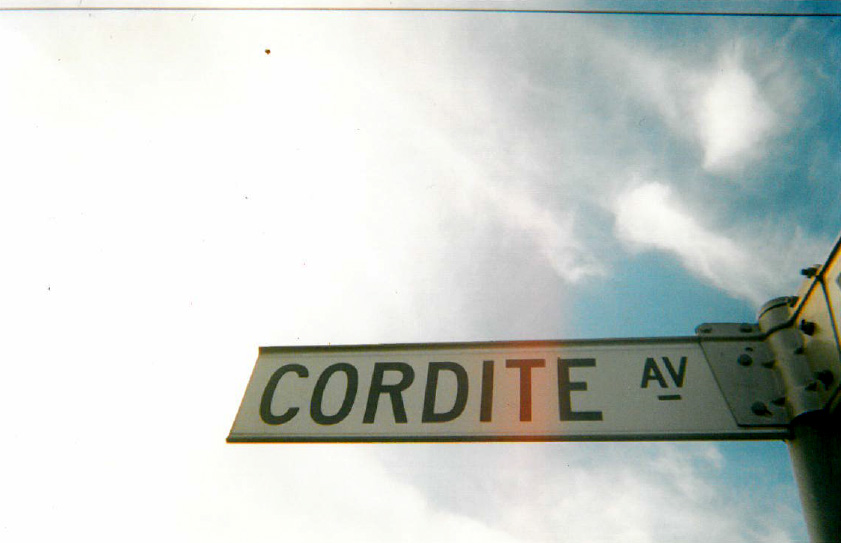
Not long ago, Australian literary critic Andrew Riemer slept-walked through the writing of his take on Best Australian Poems 2013 (Black Inc., 2013), edited by Cordite Poetry Review’s Feature Reviews Editor, Lisa Gorton. In his review of this most recent volume of the annual institution, Riemer lurches around the pachyderm – or one of a small parade – in his writing room, then coaxes it out to greet the reader midway through his assessment: ‘Apart from poems by several older, well-established poets – Les Murray, David Malouf, Vivian Smith, Geoffrey Lehmann and Thomas Shapcott, among others – most of these poems lack distinctive voices, a poetic sensibility, in other words’. If that isn’t a trunk-full of mucous water sprayed right in the kisser, then nothing is. His words seem to attest, then, that Australian poetics is / should still be defined by the storied careers of a few older, mostly white men (and a few women) … or, at least, his review supports the existence of such a lens that’s been ossified into place from a few vantages around Australian letters.

Irrefutably, the writers Riemer mentions have made and continue to make an enormous and significant contribution to Australian poetics. But, as the Best Australian Poems 2013 presents so well, there are a few well-accomplished whole generations of poets sharing this grand parade – including new poets right now, a most exciting bunch, many with generally perpendicular approaches to poetry than the aforementioned legacy poets. Riemer’s assessment of the anthology then ricocheted – via quite an arresting display of (con)textual ‘physics’, in high dudgeon and 3D! – clean off the surface of one of Australia’s most important indigenous poets, Lionel Fogarty, deeming his poem to be ostensibly ‘meaningless’, instead of representative of the deft post-colonial narrative origami that is Fogarty’s mastery. Entitled to opinion? No, I don’t believe in that. I prescribe more to the entitled-to-what-you-can-effectively-argue-for school. Consider these opening lines from Fogarty’s poem ‘Induct True Legendary Thrills Bravery’, included in Best Australian Poems 2013:

Bravery captors medal heroism circulate mission leftovers
Bravery tracks the saddle that throws sad off backs as
Honour full bloods across country’s rescues
Replica escorted stream afield sees gallantry

Riemer did not effectively argue these exemplar lines to be ‘meaningless’ (in fact, he made no attempt at all). What struck me most acute about this review-as-provocation was a response to the review itself; arriving as it did via Melbourne poet Bonny Cassidy on the Puncher & Wattmann small press blog a few weeks hence. In her reply to Riemer’s review, Cassidy wonders:

‘Seriously, when are we going to accept that poetry, like painting and music, may represent ‘patterns of utterance’ rather than figurative lines? Riemer seems to suggest that poems that ‘do not yield sense in conventional discursive or grammatical terms’ are so radical that they escape ‘literary or poetic tradition’.

‘Patterns of utterance’ – primal and archaic – Riemer chalks this up as failure. Yet Cassidy’s jujutsu reply is sound. Astute. Succinct. Tart. Deserving … and not altogether un-damning. I’ve spent years trying to proffer this exact question as well as Cassidy has. US poet and esteemed teacher, Theodore Roethke, put it a more florid way, ‘You’ve got to have rhythm. If you want to dance naked in an open barndoor with a chalk in your navel, I don’t care! You’ve got to have rhythm.’ Patterns of utterance = rhythm.

What, indeed, might Riemer make of Mark Rothko’s Sacrifice of Iphigenia, 1942, let alone the later No.4, 1964? Congruent motivations can be applied to poets as Rothko once wrote of painters in his famous letter to the New York Times – rebuttal to a poor review and co-written by Adolph Gottlieb and Barnett Newman: ‘It is a widely accepted notion among painters that it does not matter what one paints, as long as it is well painted. This is the essence of academicism. There is no such thing as a good painting about nothing. We assert that the subject is crucial and only that subject matter is valid which is tragic and timeless. That is why we profess a spiritual kinship with primitive and archaic art.’ The wide gulch, then, is Riemer mistaking something for nothing (‘more than ink on a page’, as he couched it) – in a number of the poems Gorton included – at base levels due to the near dearth of conventional discursive bridges linking those ‘some things’ together and failing to recognise the conduit that funnels abstraction into concept.

If we strip away the technology of lyric, we are left with the archaic. As Australian poet Peter Minter says in his introduction to ‘Proteaceae: A Chapbook Curated by Peter Minter’ for Cordite’s GONDWANALAND issue, and in referencing Australian painter John Wolseley:

‘Wolseley’s artwork shows how plant species such as the beautiful red waratah … have archaic affinities with similar species around the planet. This profound geo-aesthetical encounter reminds us of an embedded planetary and genetic inheritance that, despite the complexities of our technologies and linguistic apparatuses, is always and unescapably experienced ‘in common.’

The plug of Minter’s elemental ‘archaic affinities’ elides perfectly into Rothko’s ‘primitive and archaic art’ socket – the connectivity produces art, no adaptors are necessary (but optional, and interesting, so go for it you want to). How did this imbalance, the perceived sophistication of one approach over the other, become so entrenched? Or are Riemer’s thoughts the sinews of a loner puma? Perhaps. At any rate of conjecture, Australian poetics – or at least the expectations of it from a wider literary audience – feels to be slowly snapping out of its generational-ideological imbalance toward a trued scale. For this chapbook, I’ve asked writers from a number of other countries to contribute.

So, in hypothesis, what would a kindred holder of Riemer’s conclusions on art think of Olivier Assayas’s Irma Vep? Kraftwerk’s Autobahn? Michel Butor’s Mobile? Amaranth Bosruk’s ‘Between Page and Screen’? Kurt Schwitters, anybody?

Returning to Cassidy’s question, ‘… when are we going to accept that poetry, like painting and music, may represent ‘patterns of utterance’ rather than figurative lines?’, I got to thinking – thinking about spoon bending, about the nature of words-as-objects and how words’ multiple definitions, idiom and pronunciations distil as a unique ‘atomic mass’ of sorts, bundled with a litany of alchemic delights. Can a story also be told from the lexical reactions made simply by placing seemingly disparate words near each other? Might they reverberate and hum when they become too near? On one plane, perceptibly nonsense; on a sub-plane, potential chemical fusion; and split apart from either plane, fission? Arguably, yes. Is this kind of narrative as worthy or rigid a discourse as those reliant on lyric? I think so, but the onus clearly shifts significantly away from (but not entirely) the infrastructure of a given language and settles squarely on the writer, the spoon bender, to harness and corral the developing poem’s force as she sees fit (incidentally, if The Portuguese has a subway, let me loose with tokens to ride). These are not new questions. But the problem remains: the legacy class of poets in Australia doesn’t seem to have much time for one of these two (generalised) approaches. Or perhaps the leaky beaker exists only in the experiments of certain reviewers?

Indeed, the hybrids of these styles – conventional discursive v. patterns of utterance – appeal to me a great deal (as do many poems that shake out more like 95% to 5%, from either endpoint). Consider these seven lines beginning ‘Georgia talks to a painter’ from Australian publisher and poet, Michael Brennan’s recent book Autoethnographic, an engrossing collection I am well overdue to deliver a review of to a fellow journal:

The way spirit tracks, in brushstrokes or words,
you’d have Buckley’s of getting it right, sensing
how out here light does not fall. Waves of images
fill you so there’s nothing but to paint, though
you don’t like it, this country that’s in you, the
red dust coating everything in one place or the
granite now, beneath your feet an island, quartz

I am especially bewitched by the invocation of the term ‘Buckley’s’, itself a classic Australian truncation / amputation from ‘Buckley’s Chance’. All Australians know what this means, and I’m going to leave it at that … but are any of you readers abroad piqued enough to research the massive idiomatic gravity so adroitly slotted into place here? I hope so. It doesn’t require much research.

For this online chapbook, I have intentionally included works that plot point along the full arc of the hybridisation I mentioned earlier. Adding to this solution, I have included translations of the originals (or vice-versa) for an extra layer of phonetic consideration and socio-definition. Russian, Turkish, Bahasa Indonesia, sprigs of Danish: combined with English, the tongues dissolve into a common blood of verse. These poems do not represent rigid binaries of approach, rather I aim to continue the discussion of a polyvocalic literature that spans generational governance – technologies, linguistics, poetics and patterns – of what a poem can be.

Posted in CHAPBOOKS | Tagged , , , , , , , , , , , , , , , , , , , , ,

Galah

Eolophus roseicapilla

when car tyres were tall
you cracked a galah’s neck
in a ditch because you’d
hit it with the car but
it wasn’t dead so you
cracked its neck in a ditch
out of mercy you cracked it’s
neck and all I can hear
is the crack of its neck with
the crunch of sinew and all I
can smell is hot tar and all
I can feel is how quickly
the bird’s skin cools
through the prickle and soft
soft down of the bird’s
feathered neck

Posted in 61: NO THEME III | Tagged

Clarity

I have seen through the allusion

captured its light

that makes diffracted patterns,

meiotic and zygotic,

inside my instrument of witness –

a kaleidoscope I hold up

while pretending

it to be

a camera

Posted in 61: NO THEME III | Tagged

Fairy Penguins

at the corner of the coast we leave behind
a crossroad of island & mainland
walk the jetty with tea & sandwiches
settling on a narrow shore

a stray sentence begins & ends in the
margins of rock & sand,
grouped pine trees hug the foreland,
tufts of grass filter down on limestone

Penguin Island is Joie de Vivre,
bottled-nose dolphins, sea lions, the informed
reveal of penguins as seabirds who cannot fly,
who shy away like full stops from poems

children demand their attention, a noisy
thrumming persistence — we walk
facing the sun with office workers, musicians
the star attraction, pairs huddled into trellises of rock

rangers answer questions with torchlit marks
fish? mammal? the forces of people
in an open cage? such forces chatting on mobile phones
the hubbub of sinewy language in a factory thrum
— people — finding at last a pair nested in close
a narrow window compressed into rock – so alone!

the beginning is an end to their search
shadows tilt on tiny faces, the cave an arbitrary height
forces dark silhouettes further in — two creatures
inviting clear reasoning for tourists, to walk back along the shore
to a swell of waves on the western side, beach & tarp,
a swim & the mind’s industry churning thoughts of
we’ll catch a wave before lunch

Posted in 61: NO THEME III | Tagged

Poems from Mystes

1.

à Eva-Maria Berg

Je suis né
dans un pays de neiges
et de cendres

Pays où l’on n’arrive
Jamais.

Et que jamais,
on ne quitte ni ne connaît
Pays d’où personne ne vient,

le soleil croît
en larmes de cendres,
débris de neiges noircies
et d’âmes englouties
dans l’étincelle
des silences enfuis

Je suis né – ici,
ainsi que naît la peur.


2.

À la limite extrême
des mondes abandonnés
se produit le son
d’étoiles amères
égarées sous la voûte
de nos corps enfermés

Alors
la lune s’enroule
aux lisières tranchées
de veines de granit

où luit la parole
des épaves glaciaires
échouées sur la grève
de nos vies


3.

Silencieux
un morceau d’étoile

me regarde
à travers les cailloux
de pluie

l’heure approche
de lui tendre la main


1.

for Eva-Maria Berg

I was born
in a country of snow
and ashes

A country where one
never arrives.

And one
never leaves, never knows,
A country where no one comes,
where
the sun distills
tears of ash
the debris of blackened snow
and souls swallowed up
in the sparks
of retreating silences

I was born—here,
just as fear is born.


2.

At the extreme limit
of abandonned worlds
the sound of bitter stars
is heard
wandering beneath the vault
of our cloistered bodies

Then
the moon enfolds
the borders carved
from veins of granite

where the word shines out
from glacial rubble
abandonned on the strand
of our lives


3.

In silence
the fragment of a star

eyes me
through the pebbles
of rain

the hour is coming
to hold out my hand to him


Posted in 61: NO THEME III | Tagged ,

Cinquecento

The house received all ornaments to grace it,
The walls were of discolour’d jasper-stone,
One window shut, the other open stood,

The time is come, I must depart
My last thread, I shall perish on the shore;
Ring out your bells, let mourning shows be spread;

Close the Truncke, embalme the Chest,
You should not trust lieutenants in your room,
Or hawk of the tower:

Sir Charles into my chamber coming in,
Fillet of a fenny snake,
His chilling cold doth heat require;

Oh, what a lantern, what a lamp of light
Avising the bright beams of these fair eyes
Where Muses (like bees) make their mansion.


†a cento; sources: ‘The Description of Cooke-ham’ by Æmilia Lanyer, ‘Hero and Leander’ and ‘Elegies,
Book One, 5’ by Christopher Marlowe, ‘A Communication Which the Author Had to London, Before She Made
Her Will’ by Isabella Whitney, ‘A Hymn to God the Father’ by John Donne, ‘Ring Out Your Bells’ by Sir
Philip Sidney, from The Countesse of Montgomery’s Urania: “Love peruse me, seeke, and finde”
by Lady Mary Wroth, ‘The Steel Glass’ by George Gascoigne, ‘To Mistress Margaret Hussey’ by John
Skelton, ‘An Epilogue to the Above’ by Duchess of Newcastle Margaret Cavendish, ‘Song of the Witches’
by William Shakespeare, ‘New Heaven, New War’ by Robert Southwell, SJ, ‘O’ by Mary Sidney Herbert,
‘Avising the Bright Beams’ by Sir Thomas Wyatt, ‘Sonnet 17’ by Richard Barnfield

Posted in 61: NO THEME III | Tagged

Hansel’s Way

for Lisa J

1
‘Breast?’
Birthday boy, Hansel (milk-coloured, three),
lisped his request, hardly refused before then.
But it seemed the world was turning

on me – and my walking, talking suckling.
‘Will you breastfeed on his buck’s night?’
Jack’s mum pretended support, pretended
polite, as the play-group Gerties giggled.
Cows!

I burned, long after
the candles were spat on. Party over,
I poured myself into my bra
and Hansel forgot his attachment.

2
Look at him: lanky.
I can’t remember his last
laughing leap into my arms.
Had I known that moment
contained a final armful of boy
I’d have held on longer.

3
The not in my throat, thick and growing,
squeezes words from the knot in my neck.
I say, ‘How will you know your way back?’

Hansel flashes his fourteen-year-old smile
and laughs as he shows me a new bread roll.
He says, ‘Worry not, Mother! No need
to remember. I’m laying a trail.’

He sees the sky sunny; I see it grey
with seagulls and sparrows
whose insides are hollow.

The worry-knot in my chest finds its rhythm.

Posted in 61: NO THEME III | Tagged

Dream Diary – Tuesday and Wednesday Night

Tuesday night I dream
I go to an all you can eat
restaurant. The waiter says to take
a seat and brings out large platters:
pastries, chicken and potatoes.

Extra food keeps appearing on the table:
schmaltz and fishcakes that my sidekick brings
out from her many bags. The waiter rushes
past, sets down an ice cream sculpture
in the shape of Macbeth’s head with a clatter.
‘After this you leave’ he says, noticing all
the extra food my companion is adding
to prolong our stay. We eat and eat.

At the counter the waiter writes the bill: $13 041.
My friend takes the bill and writes
a big 0 on it. The waiter says ‘this is NOT
on the house’ and she writes
the 0 again. The waiter shows us a form
to say we are banned from going
to that restaurant again. Wednesday night
I dream my psychiatrist instructs me
to wrap my feet in parsley.

Posted in 61: NO THEME III | Tagged

On the Windswept Bridge

I walk across the bridge
for the pleasure of walking across the bridge,
daring the wind to pluck me up like a bird,
make me a cloud in its mouth,
transiting the boundless high
camino of unearthly blue,
morphing to a golden fetish
of the sun when day is through.

I cross the bridge
for the pleasure of striding
over ingots of gold light,
frisked by air’s invisible probes,
adrenalin channelling helium.

I do not resemble Hokusai’s women,
robed in ornate kimono folds,
clattering in high-runged clogs
with mincing gait to appear demure.
Above the diamond-python river
I quicken pace as the wind leans closer,
loosening hair, unfastening laces,
lifting my skirt, an impatient lover.

Posted in 61: NO THEME III | Tagged

Dakota

The first time I saw
the building
was from the hop-on hop-off bus
glimpsing Strawberry Fields
as we headed for 9/11
& the Soup Nazi
I looked for Yoko
with a shopping bag
and was disappointed

This time I walked through
Central Park dodging nannies
Designer Dogs
Yummies doing knee bends
leaning on prams

Randoms
were having photos taken
on a mosaic mandala
Shrine with the title
of his song inlaid

Early autumn
Winter nowhere on the horizon
it was impossible
to imagine a psycho with a gun
Wonked brain going
for a blood-splattered run
Letting it right off the leash

A John lookalike was playing
his twangy thang
A blackbird flew out of it

Posted in 61: NO THEME III | Tagged

The Sun | Beneath the Cathedral

The Sun


The Sun

we make ourselves
stories bright as fire
from teeth and stone and
feather

*
‘in all poetry a word is like a sun’ – ernest fenollosa
*

it starts with sound
a seed
a stone
cast into carbon
chance


Posted in 61: NO THEME III | Tagged ,

Procrastinate

The swinging curvature
of a feather as it falls
through the air
(escaped from my pillow; I lie across the bed
tired as the afternoon)

Posted in 61: NO THEME III | Tagged