Dream

from Apocalypse Dreams

how shit would it be if the end of the world
was a rave in the snow. yet here it is. muddy
snowy footfalls & loud music & stoned eyes
with drugs generated from beetroot compounds
nicknamed ‘banz’ and my brother discovers this
& loves it, raves. we dance or rest from dancing
as the edges of the world get smaller and closer
& the snow drips its blobs from the shrinking sky.

Posted in 67: A BRITISH / IRISH | Tagged

Carry On

from Apocalypse Dreams

I did not expect to find myself at the end of the world
camping. But I am and now naturally: the tent peg &
tarpaulin are familiars of many before me, before us.

A small enough encampment with quick smiles we
don’t believe our hopes for this taut new world
though we speak them out loud with dejected hair.

Rain here does not clean; it muddies: we feel this as
justice. At the edge of what we have made & believe in
is the thick meniscus, firm & trembling: it is impenetrable

but fragile: a thin sac separating the old world from the new.
I am afraid of our jellied lens, our cervix, through which we
emerged dewy-eyed, behind which the old world carries itself

murky & still in a cradle of watery poison. So it is that life’s
little necessities turn on us as we gulp down. Turn on us, we say
incorrectly. Man undoing his own kindness again and again.

Posted in 67: A BRITISH / IRISH | Tagged

Dream

from Apocalypse Dreams

The world is green and in flower, delicate but fecund
So green it almost hurts: no deadness anyplace, not a twig
Nor a fallen leaf but the bright greens of later spring
and waving vari-coloured flowerheads. Everywhere is growing,
the ground & the treetrunks have trails of climber’s leaves
twisting their extensions, their ascents. This is life.
We too are bubbling and irrepressible: laughing, shouting.
I am on your shoulders, rollicking, others too are playing,
romping: we are highly happy and we are young. Each one
of us knows that this is doomed, that we and the greengreen world
are dying; that soon, so soon, obliteration. We know
there is poison in the leaves and in our laughter.
That there are only minutes left. Our knowledge is
incommensurable. We are happy.

Posted in 67: A BRITISH / IRISH | Tagged

Sky Writing

from Apocalypse Dreams

The democracy of water: shocking
really in the stratified worlds we are losing.
But these internal compulsions of tidal ligaments
deeper, older than me
and simply unstoppable.

On the edge I consider these realities
with the likelihood I will die
and the sure knowledge that if I live
I don’t know what that will mean,
look like, be or where located.
At best: pain; an after blank.

Like the others, I give myself up
to the waters. Acquiescence
is inevitable.
We bob. Quickly, sinking a bit, swimming a little
tugged.

We are happy – are we stupid?
Horseplay and banter despite
the swill of speed and the salt swallows.
[Do worse things happen at sea?]
Here is the corner. Ahead – hello Homer! –
a rocky basin swells and falls, white and blue and spray.
The very meaning of spume.
Sea contractions expose coarse corals, smash
matter to matter.
We are bloodless; shit fish.
And it is just water coming down on people.

Posted in 67: A BRITISH / IRISH | Tagged

I Alice

from Apocalypse Dreams

on a journey i discover i have a magic power: i can make objects larger or smaller with my index finger though i don’t know which way they will go until i touch them. i make a goose go very small and turn a scrawny boy into a body builder. there is a familiar sense of apocalypse and danger, the need to escape. i tiptoe into a darkened wooden lecture theatre, a man is delivering an incomprehensible talk on physics, the others are here and we leave through a ritual circle into a magic house, sparkling with chandeliers in huge rooms. we land in a new world, a small island, it looks perfect, although a little flooded. american streets in rows, suburban large houses. young people approach, they are beautiful coming towards us wading through the water, automata-esque, silent, all alike. fear. they surround me; curious but impassive. we begin to leave this street, heading for a checkpoint, a tunnel and an old car. you and i have sex on a table at the checkpoint and you tell me you think of children when you screw me and i am surprised because at this moment that is what i too am thinking. no one is remotely interested in our lovemaking, the new ones have lost the urge for sex, they do not reproduce in the same way anymore.


Posted in 67: A BRITISH / IRISH | Tagged

The Strangles

I am not contagious though
dreaming up cities all night in compensation
for missing all the additional lives, what
cottaging makes palpable is
only the flesh end and I miss them.
Speaking privately all night,
and beating them to a pulp.

Chasing after language I end
up hunched by fantastic violence,
not violence as in the violence inherent
but a daydream of a brutal violation:
my nested eye in its blue pocket,
my survival instinct. I am not
historical but somewhat sadistic,
the run I go for is another man’s
writhing table of human limbs.

This is a fantasy of assessment.
Drowning in urgency how relatives
would be rearranged, and the sickle
blank out scheduled day. I wake up
liquid and heaving, either way,
taking a knife to the gobbet,
or endlessly coming onto a familiar face.

Then dreams make me broad
waking into a deathless instrument,
in parody of my body’s cantilevered grim.
Slipping into my forties I make
noises to accompany physical effort,
I brace myself on my knee.
Like the abandoned railways and sure
start centres, my dilapidation is a matter
solely of principle.

A hanged moth. While my children
reorganise the city one rubber band
at a time I am heroic during smears,
my devil’s advocate ragged under the lamps,
my futurity creeped out and desertified.
At one moment the balance tips into finitude,
calculating the remainder is actually quite easy,
I am doing what types me rather than the interim.
My body rich in timely organs none of which
is the word, I will see them
every two years equals ten
times at most.

I dream of Kenneth alive in his hyperbaric chamber
and Jean alive in her anechoic chamber
and John completing another circuit, but none
are at rest, I dream that your body is suddenly wax.
Without you, all memories are fantastic
like my legitimacy after their annulment.
A tiger carves the remainder to slivers,
and gobbles all the water from the tap.

I can picture you as a monument
heavy and costumed in the bed more than live
with the increments of your destruction.
And Emily alive in her kitchen. And all the others
climbing out of cars and pools. I die
tomorrow without having salvaged
the Concordia, put the stoppers
back in toy pistols. Desalinated
all the drinking water in Gaza. I am a pain
to children, and where my face was
the grotesque is spreading, the cloud
promises immortality but only packaged
as speculation my desires
have no more to do
with the propagation of species.

Posted in 67: A BRITISH / IRISH | Tagged

Depth Charge

The bronze traveller is feeling
at the top of the world
a lake, slim and all tinctures following
azure to cobalt to snot. It makes a vault the painted
monarchies, Lord Brown or Sir Sam Jonah, emperors of the cryosphere
their hydraulic gesture spanning aeons, their hands shot blue flame.
One wears a cape of phytoplankton blooms
green up greedy consumers surveyed depths off Peterhead, off Drax.
Having arrived here by tanker
no other remedy but the cheerful fantastic technofix:
Martian ships lofting aerosols,
gauzy microbubbles to necklace shores.
Glass beads (oh look so great) wear away a trillion ice creams
colonies of moss piglets recruited to eat air.

From space whose fears are too modest, the risks outgassing
from unscannable concrete small haptic theories of labour
all the models are insincerely gentle; air bubbles
ziplocked in ice pop alerts for future prosody.
400 ppm news invention, photopheresis
loosens the energies contained in generations
of stupid hungry death
into a strangulated hernia hung on Greenland,
court processes also to the climate forcings required
to blast open Siberian history with a 50 gigaton
methane pulse, and bring the extinct back to life

and extremophiles to the throne. The sea eats iron-rich dust
as basal melt brings intimacy to Harvard, pan handle, Dhaka.
The Arctic giants canonize Frobisher, plant
jerries and lay claim to the garrisons of the Northern
Sea Route with their nodding stills:

these are the contours of glacial minimum, the slim lake
acquires depth and prudish amory, artists and others such as
voting stockers need to cool down / locked in crystal lattices
where the benthic unconscious thrives on sinking expectations,
and especially on the heaviness of dead things.

The ice hosts a methane party still formation.
In time its fake gabion dissolves.
What you see into boundless poetic crystal

liberates its prisoners, who disperse immediately
into the humid pulsing air

and hunt us and blind us and drive us backward

to the absolute futuristic sea.

Posted in 67: A BRITISH / IRISH | Tagged

In the Škocjan Voids

Apples hang low their fat hearts.
The lizard is an autonomous tongue
champ of crevices, arrow reacher
she brings to light
and then to shadow
the false
jewel fools
gold
and ruby green, and emerald red

he grabs, he extends his legs in prayer.
He kneels and springs. Abandon
tourists
trailing
an underworld
of calcites massed to imperfection
pilloried in gothic vaults and too fast

they drive through vacancy sculpted
by lights and the red electricity
of the dead
void and
imperm-
anent
misplacing the orifices,
mistaking for humanity
what never bends into speech:

take the extension of the grass
hopper, kneading a plot rammed
into chopped sleepers, stag
horns on warring tribes
scarabs
squealing
infant bats and the zip alarms
its human food.

Turn on the light to keep
the sky warm and the moon made of wishes
in any language scratches
on the infant
face
and ankle move downward each day,
their fast health shows the direction
skin grows
and water pushes
relentlessly through the foundations
like peace through a pastoral
settlement whose rim is painted
by a train pulling
its western sledge
of noise.

Posted in 67: A BRITISH / IRISH | Tagged

Marlow One

Sky-head dashing through Chelyabinsk
distant intimate,
tumble yourself out shattering
glassy fears, we know no other.
Life has always looked set
to begin tomorrow, its ancientness
burns now the motorways and blasts out
windows and boils the ice under which you lay
so your corpse comes up like an apple.

With a name writ in water
with eyes clear to water transitional
species appearing to watch
your own appearance, your eel nature
that loves to hide
pinks up and comes wired with songs.

You give names to the unknown future,
make its fashions specific. If you keep
these almonds for eyes, will the rain glaze
with universal justice your membranous head.
Will you retain yourself in safety
if your crushing or exhaustion
is the black hole of thought, will you scatter
your radiant occult sugars
over a world quivering momentarily with peace?

Will you keep the nutty heat of the sacred
in your thumb-sized heart.
We page-turn for you forever,
because life is actually very stupid,
because we bide your admiration stupidly,
in proverbs, in grand precise speeches,
in flashes better than this

shows the limits of my power:
a limit lying alongside you through our intimately broken
night, like the silver horizon of waters
of promises whose writ you are the name

Posted in 67: A BRITISH / IRISH | Tagged

The Underworld

with Ayla ffytche


There’s a place down there where the sun doesn’t shine and the wind doesn’t blow.
Why are you doing lots of taps when it’s only a little sentence?
Because I’m taking notes.
I’m just going to make a cup of tea.
I like to have a cup of tea while I’m working.
You know what else helps the creative process?
Biscuits.
These aren’t the best biscuits.
Do you want to choose one?
In this poem are we allowed to start sentences with and?
In poems you can do whatever you want.
You’ve heard me read some of my poems, they don’t even make sense.
So, tell me about utopia.
Also, it has holes in the trees where some people live, and some owls sleep.
Why do people live in trees?
Yeah, because they don’t, we, there’s not enough blocks we can carry down.
Blocks of what?
Blocks of, just normal blocks that you use to build houses.
So.
The owls in that world don’t even hoot, because there’s no daytime.
But because the owl wouldn’t hoot, there is nothing for owls to say.
So the people who live in the place down there, what do their houses look like?
The houses are only built in the trees.
You can clear out the holes of wood and leaves and make little balconies out of owl’s holes.
That’s what life is like down there.
But then…
How do they make enough space for the trees to grow underground?
They builded a big hole.
Can you just read that out to me?
No, I’ll do that at the end, it’s easier if we do it at the end.
Then I need to carry on with my picture.
How did they dig the hole?
They just digged it.
But with a machine?
No, with big rakes.
Why do they live under ground?
I don’t know but they just wanted to.
Why do you have to ask me all these questions?
Because I’m trying to build a picture… a utopia is a picture of a whole society.
Now shall I tell you the next sentence?

There was no bread because the day wasn’t there and the corn wouldn’t grow, and the flowers wouldn’t sprout.
So what did they eat?
They only ate things that they brought up from their homes up in the upper world, and then they brought them down.
But what do they do when that runs out?
They just took lots and lots of it.
Lots and lots and lots.
So that it could last their whole lives.
But what about their children?
The children brought their own food down.
Because they had to do the same.
Because it was only time to build it when they were born, or maybe when they were just older, a bit.
How do they have light?
They used a big light bulb in each of their rooms.
Don’t they miss the sun?
They don’t miss the sun, they like their own homes just the way it is.
But I mean, don’t they miss the blue sky and the breeze and the flowers?
They don’t miss them, because they, because they they paint the top of the big hole blue and with clouds and the best thing is about that place that it’s never rainy.
But it’s never sunny!
What?
It’s never sunny.
Yeah but I tell you they used a big light bulb and they painted some of the top yellow.
Oh.
And what about poor people?
There’s no poor people there.
Cause there’s a big castle there as well with lots of trees planted and lots and lots of people live in the castle.
Is there someone in charge of the castle?
Uh, no but there is kings and queens there but they’re not the strongest people there.
Can I just take one more biscuit?
Yeah.
Mmm, chocolate finger.
I might have a chocolate finger as well.
So who are the strongest people there?
Nobody is.
Shall I say the next sentence?

There isn’t roads down there there’s only tunnels, that’s how you get place to place because it’s easier because there’s no sun.
What do people do all day?
Don’t worry about them, they have their own things to do.
Because wherever they go there’s a price to pay.
A price to pay?
A place to play.
So nobody works?
Nobody works.
So how does anything get done?
There’s nothing that has to get done.
What about if the tunnel breaks?
The tunnel won’t break.
Or if umm the electricity breaks.
There’s no electricity, they only use gas lamps, like things like lights with a candle inside.
But who makes them?
They do.
Isn’t that work?
What?
Isn’t that work?
What does that mean?
Isn’t it work to make the lights with candles inside?
No, because you just make it out of wood.
Are there any police?
No because all the people there are good people.
What happened to the bad people?
There’s no bad people.
The bad people aren’t let in.
Because only some people want to build their city under ground.
Shall I say the next sentence?

The rivers there you might think…
No, no, I want to start that sentence again.
They plug in big tubes to the sea in our world, and the tubes are brung down and put into the castle, and the castle puts other tubes into the other houses.
What goes in the tubes?
Water!
But it’s salty water?
They clean it.
Isn’t that work?
What does that mean as well?
Well, someone has to…
We clean water in the sea, don’t we?
But someone does that work.
But all the people who got there first clean the water, a group of people.
I mean, work is doing something because you have to, not because you want to.
But the people down there think that they don’t want to work and they just want to have a place where nobody has to work and there’s no schools.
Is that the best thing?
Yeah.
Is that the whole reason you made up this utopia, because you don’t want to go to school?
Yes.
And you don’t want us to go to work?
No.
Because the parents, they started living up in this world and they got all the money and the money that they get up there they bring down with them and.
Some people think you could have a society – I mean a group of people living together – without money, can you imagine that?
Yes, shall I say the next sentence?

That place is just so happy, lots of people want to join them, and they all get their food from the palace.
I would be cross if there was a palace.
Why?
Because, why should some people get to live in a big palace when I have to live in a little house?
Because the king and queen live there.
But why should there even be a king and queen?
Because of lots of people living in the palace because they just agreed that they want to live there.
Oh. So it’s not like a fancy palace.
No.
Because there’s still tree roots and tree things in the palace.
Are the people who live in the palace just one ginormous family?
Of course.
And lots of people there make skins out of animals and they and they like and you know those animals that have scales?
Mmmhmm.
They skin the scales off and make them into a kind of cape so if anybody tries to attack them it wouldn’t hurt them.
And some people are lucky enough to have a whole outfit made of scales.
But who would attack them if it’s only the good people in this world?
Yeah but some of the bad people might have sneaked in.
Do they have to guard the entrances to this world?
No, because they just they just they don’t really want to.
Because no one wants to stand out the castle for days and days and days and nights and nights.
So what happens if loads of bad people try to come in?
Well, there, I just don’t want to tell you this.
There’s lots of wars there.
There’s bad people who make flying cities and they sometimes come in war against the underworld and they have be protected and stay under their cloaks.
Are you finished yet?
I’m kind of carrying on.
There’s lots of different things we can think about.
Do you have to give me the next question now?
Yeah.
What is it?
Let me think.
So let’s imagine a day in your world.
What’s the first thing that you do?
You would get up, and then just get dressed and you can either wear some soft clothes or scaly clothes.
How do you choose?
You know how to choose because if it’s one of the days when the upper world comes in war, you have to wear the scaly clothes, if there’s no war, you wear the soft clothes.
And there’s a special kind of clothes made from long plants.
Long plants?
And they are weeded into clothes.
So what do you do when you’re dressed?
You have breakfast.
Then what?
And then you go out and you give out the food to the other people in the other tree houses.
That’s nice. Is that sharing?
Yep, because the castle is the one with the food.
Oh, that castle again.
What?
That castle again.
Why?
Because, why can’t we have the food in our house?
Because there’s lots more wars, and the people are in the castle are stronger and so they don’t get killed on the way and if the people come get it from the castle then they just you know.
What would happen though if the castle decided they weren’t going to share their food anymore?
They would never do that.
Are you sure?
I’m sure.
It sounds to me like life in this place would be worse.
No it wouldn’t, why do you keep saying you don’t want to live there?
Because I would, I would live in the castle.
But the problem is there’s nothing you could do about it, because there’s no government to have an argument with, and the people in the castle don’t want to have arguments.
They don’t want to have arguments?
Yeah. Can you just tell me one thing that you would like about that place?
Well, the scaly clothes sound cool, and it would be nice not to work.
But I wonder if everyone would get along.
They would.
Even if they knew the castle had all the food?
Yeah, they would.
Are you sure they wouldn’t just attack the castle and get all the food and give it to everyone?
They wouldn’t. Because the people in the middle would make sure that everyone agrees that the castle gives the food out.
That sounds like a government.
No, no, it’s just the people who make sure that everything’s ok and there’s no fighting and everyone’s happy.
But I wonder what you think the government in this world actually does, I mean, aren’t they the people who are supposed to make sure that everything’s ok and there’s no fighting and everyone’s happy?
But we would make it secretly and make tunnels going to our house.
I know but I mean, what do you think the government in this world does?
How am I – I don’t know how to answer that question because I don’t know, I haven’t really met the government as well as you have.
Hey, can I have one more of these?
Yes.
Do they have biscuits in your world?
Yes, but they only hand out little bits of food, like chicken legs, or Yorkshire pudding.
How would you wash?
With the water.
But won’t that make the world dissolve if it’s made of mud?
No it wouldn’t – this world isn’t dissolving and it’s got water in it!
What happens if people die in this world?
Nobody would die.
They just go in the castle in war time.
The castle is very strong.
But I mean, what about people who die just because they’re old?
Well, that’d be ok because they know how to put people in grey, in gravestones, or they realise that if they dig a bit more they might dig a bit more they would reach the hot bits so they go to the centre and get pearls of dirt.
They go to the centre?
A little centre, like a little house.
Why does this poem have to be so long?
We can stop whenever we want to.
But when are you going to read it to me?
Do you want to give me a last sentence?
Ok, that place was so happy, and cheerful, and merry, that everybody there, would just be friends, and not fight.
Should that be the end?
Yeah.


First performed by Andrea Brady and Lisa Robertson at Polyply 30: ‘Big Contemplative Utopia’, Centre for Collaborative Exchange, University of London (5 June 2014)

Posted in 67: A BRITISH / IRISH | Tagged ,

Skinflint

At 2:40 his head is cleared
though he is dazed and bathed
in wrong noise, he cannot yet
open his eyes though the light
is less blinding than the earth.

At 3:18 he raises
his arm to wipe his eyes, still half
interned and bearing
only soft clothes. This is not
a birth but an escape from death:
sorting the equivalences
is only one of the tasks.

I am waiting for his total emergence in pain
and press his form where no one has poured water
or brought warm towels. Home is a grave and among the things
it buries is differentiations,
but he is not thinking of them his head is full of broken images
that cannot be sorted by the divas of sympathy.

He is not cute dogs that speak in baby languages.
He is not the NYT debate about whether poetry matters.
Skinflint and dizzy with cartridges
like lions on a hypo
we take out our eyes
are virgin eyes
and put them on paper towels to dry.

The red route through
indifference is equivalence
the red route through
equivalence is distinction
the red route through
distinction is action.
The red route through
one house into another
is taken by giant robots
antennae popping like eyes
from their backs, for the homestoi
is the space of politics and my sitting
room can be a smoothed space,
as the sweet grass mowed.

So what if my son came up
through the water with his eyes
open. So what if he breathed
on the NHS and his cord
wrapped twice around his neck
was gently and silently slipped off
as I dug him up ferried him up
to graze and hear him
singing ‘up above the world’
at 7:45. There are brands of noosing
for rubber necks can be snapped
if braced only by inexpert love:
the first missiles knock
the second collapse
distinctions between storeys.

My other letter today was
to Meg Whitman
of Hewlett Packard and the board
of the USS. My other son was
trying to remember
who is parents were,
when the sky fell and the air
snuffed him into the loop
of his representative
his improbable survival.


This poem was first published in For the Children of Gaza,
ed. Matthew Staunton and Rethabile Masilo (Onslaught Press, August 2014).

Posted in 67: A BRITISH / IRISH | Tagged

from HUGZ

Those poems suck; those poems mean ‘no progress’. Including side-effects such as cock-rot; no
sleep; no appetite and, you know, dandelion and burdock is a drink like self-esteem is; tautologically.
As him from Westlife sings – the sound is so off it’s a PhD. Virtually unknown. Auditioning for
The Apprentice, 2014. Is something happening or am I just in stockinged feet, waiting? Socks, rather.
Thursdays, it’s, in Eccles, hard to breathe.  A place name. Romance of the future Carl Solomon’s (of
Eccles). This couch featured in the Supergrass song. Class distinctions – based on the use of couch,
sofa or settee. Asking: is this poetry? Applauding; without knowing why though. I am obsessed with
knees. The word for that loudly whispered ‘shush Richard’ – something Jon Bon Jovi knows which
Jim Burns used to. His own ‘personal brand’, now, being ‘whacko’. Unread; 7 hours there; in a+e. The
coolest month being, of course, Eliot’s intended phrasing. It’s spring. Regret is dirty like guilt which
my breath reeks of. While nearby, pot plants wither and die

                                                           The brief-case in your hand is not porn

                                                                                               That severe centre parting is not porn 

             The dancing at the juke-box, your back turned towards me, knowing I’m watching, is not porn  

                                                      Liking me better when I am sad is not porn 

                                             Describing me that way to the barman and off-licence bloke is not porn

Ocean ripple. The line between cold separating cold from ‘calming’. Oxford road station will never
change Moran (you stupid fucker). Neither will wanking in public in Prague. Attending the drug and
alcohol clinic; Salford Royal. Still, bumped off the anthology list. Cognizant of limits though: stating
‘aged 23; married at St Peters church; Swinton’. Linda, you were so bloody beautiful. I imagine sex
lives and friendships. Anxiety. A coldness sensed from up here where this view is outstanding –
accompanied by a smiley face sometimes now though, sadly, more often, nothing. Text me when
you arrive please. Welcomingly. Asking: but whose fault is that (knowing the answer). It’s half one in
the morning. Or, it’s quarter past eleven. It’s, anyway, time I went to bed soon. Poetry blows – never
ceasing to be amused by that distinction. Listen to ‘the Mac’. High on paint fumes; high on Sertraline
–  taking 7 days to exit the system. I want more fun times with you. Eating and not eating; eating
bratwurst. A kick in the teeth or a knock. A 6ft 2” Scandinavian on Facebook   

                                             The talking on the stairs is not porn

               Wanting, so much, you to be not anxious, depressed or lost to yourself is not porn

                                   The morning laminator workshop and reactionnaire is not porn

 The triage assessment is not porn

                                           The private chat with the deputy for half an hour at work is not porn

Mother’s day. Pharrel said ‘NO ONE EVER REALLY DIES’ which was, of course, totally not a lie. You
are stronger than me. Now all bets are off. No poetry when a person is poetry means Frank O’Hara –
in Preston and in numerous dissertations and theses. I float in space wondering, always, where
Tiplady is. What was the title of what you wrote I asked this week (I forget when though); and what
was the name of Jim Burns’ magazine Mark? Available to read where? Play intellectual games and
call it poetry you poetic bearded knob-end. This is, essentially, just a list of stuff that happened or
that was said to me Julie – no depth at all required. My wrist touches your wrist and I fantasise of car
wrist sex. I self-plagiarise. I believe in that. Scrolling up to the first bit to extract something from
there to insert in this last bit. I went to Birmingham once and all I got was this lousy t-shirt. I don’t
know why Sue, you fucking idiot, you would ask about orphans – how it feels to be one et cetera. I
don’t know about anything. Including crying at the poetry reading.


~
37 subtracted from 32 divided by the first number you thought of Donnie Darko and Point Break Every day is special when you’re me I wrote this bit of the poem in less than 10 minutes Not just anyone can not rhyme A decision only the psychiatrist can make That guy who did all the sound affect stuff from Police Academy Do you fancy a drink one night next month? Labile doesn’t mean what you think it means I’ve seen some big tits in my life but you’re the biggest, Dave Doctor, doctor I’m scared to come off my antidepressants. Do it anyway It’s a secret where my third penis is If I ever obtained what I wanted I wouldn’t know what to do with it Patrick Swayze’s second poetry collection: $42 from ABE books (some foxing) I could have been playing Mario Kart instead of writing this Lithium. As and when required I was The Fall’s back-up kazoo player. I received a credit on the track Jazzed Up Punk Shit After we’ve finished painting, Julie, can we take our clothes off please and lie on the floor together Why don’t you text me anymore? Every poem I ever wrote. Each saying essentially the same thing
~
porn glasses. remember that ass-hole gape remember the world’s a computer it’s noon; the world’s a turgid cock draw the curtains please pretend i’m not here where cambridge is sucking stones like beckett did cream-pie face heart glasses seen through a stone being a water-feature the judith e. wilson theatre strawberry fayre you first time vodka jelly drinker my googlewanking heart said repeatedly ‘porn’ introduced, then we sucked stones that day (did we?) anti-telescoping emotion hardening hard like / and fast like a cock like a heart (remember?) a stone online ‘why are your glasses porn?’ r_________ asked that mother i’d like to fuck, that front room curtains and blinds is another world’ s asshole i crawled into that asshole in manchester atrophied, you are far away but directly addressed still emotion is still far away ‘you wear your porn glasses why?’ r_________ asked
~
Tilda Swinton’s face. ‘I cannot do it’ though I can delete every Facebook post I posted ever. Explaining ‘we thought it’d be funnier’. Elfin or skeletal. The pathologist explaining about sepsis; about the side-effects of the surgery; necessary. Tomorrow is mother’s day. Standing for crying at school. Too much of that. The question is ‘how to be alone’. Angular; cheek boned. I cannot do this stuff for you (though I can wish it for you [sincerely. And from the very bottom of my heart]). Like a hard to follow movie. A child raised to believe in vampires and that it was born a vampire * Cheralyn, thanks *. A nought to sixty acceleration. Tilda Swinton’s face used as a bong. Smiling. We take on guilt like some high-end fashion item. On Saturday’s we sprawl outside the – at Oxford Road. We speak to former lovers. Had to remove more liver than. In the road – anticipated – a skirt falls off. Androgynous; the man in the off-licence says, he says stuff about Scouse and Manchester girls while Tilda Swinton listens; bored; existence lasting an infinite number of years. Sorry, but I could not possibly buy that poetry collection by Kirsten Stewart as – as it doesn’t exist yet. So yes this is my street. Yes, this is your street. Like water like. A mind colonised. Looking constantly for others – Tiplady then then. Be alone in that house where we will never let anything hurt you as advice is, Hans – I just don’t know if good or its opposite. Yes, through that door. Upstairs while I potter. I just don’t want to be like that though. No feelings. Living on memories. The surgeon in his evidence stated ‘the risks were always there he was advised’. But sometimes that’s perhaps all we have? I’m not upset I have this, no. We laugh til the clocks go back – on consecutive days. Outdoors; shirt-sleeves. You robot. That fragility. Ice cracks by the bed; ward – . fuck, I forget which ward. Forgetting the Manchester girls. Cheetham Hill. Thinking and thinking; forgetting St Swithins day. Wearing shirtsleeves outdoors on consecutive days. At the edge of the platform where we stood where I forgot about being together and being mugged off. You robot. I just want to know what you’re going to do about it. Slang but not northern slang so anachronistic as slang. The grieving process means to incorporate absence. So no footsteps upstairs today then getting dressed eh. Tiplady, where are you; Pete asked, are you ‘bigger than time?’ And we laughed in the Fall. In the Spring though Spake the grand slang king “I am alive”. Text me. Email me. PM me. Used indiscriminately and filled in and covered with whatever helps. Tilda Swinton’s face the starry canopy beneath which at night we all dream. I need to finish this poem. Ocean Ripple walls are not blue, oh no. A spoon left unwashed for four days is though maybe a Mayo spoon. Consider alternate titles. Washed now and remembered like the interesting Belgian I am. A small bag of aquamarine addressed directly ‘I know you care. And I know just how much. I need you’. HATE THE WORLD. All words considered fair game and likely to end up in this poem. Draining the blood out of IRL experience for writing. Ethics of bite marks on neck. Sweating in Albert Square; something is rotten in Manchester. The infection spread so much so that by Friday he just didn’t know where he was hallucinating. The town hall. Sharing confidences with aunts. Manchester suffering multi-organ failure. I am a jealous bitter mess who you’d be far better off without. Fuck the poem. The production line manufacture of poetry at the University. Fuck it and my / your martyr syndrome. Thwarted ambition. I cannot live your life for you. Don’t drink; take tranqs or be lonely. But learn again how to be alone.
~
That eventually there will be a time when you realise you feel okay again is Learning, with practice, that what’s said and done is said and done and, so, can’t now be changed is The comfort of photos is Everything good that could possibly happen tomorrow that is Sun, through the curtains, at dawn is Behind blinds, curtains or sheets; the sun is. Undrawing. Two vouchers here, yes; yes this room has some theoretical knowledge. People waking there. Such peaceful quiet, I mean. The sun comes up, the dawn. Early first job bank account opening. Such and such a percent interest paying. As a vessel so then – . Learn of research; taken on faith. That first Pavement CD. Knowing nothing and happy in that knowing. No secrets. Empty of experience. Our Singer’s resemblance to Hip Priest: unnoticed at first. Unappreciated. Through the skylight the sun wakes me *in Cambridge*. Remembering, slowly, where and who I am *in Cambridge*. My simple bird song brain. New beginnings. Interest; mortgage and ISA payments. Colours flood my eyes now opening, like morning. That, this first time morning opening. Smelling green and new and fresh I hear the sun today. Up with the, balm for the brain [like a duvet, kind of]. Free of memory. Brain wiped clean to; undraw curtains now, and No matter who might or might not be here with me now this room is Footsteps next door, early Saturday morning, is Your cousin’s daughter scrolling through the photos on her dad’s phone is Lying there thinking of all the day ahead holds is Walking to the shop for milk is My simple bird song brain. Synaesthesia. New optimism morning, remember ‘just put one foot in front of the other for, like, ever’. The letter expected. GP contact from the life of a colour chart (dulux); oh but I was never a list maker. In poetry as in life Adrian. Colours come as sounds, smells and feelings. Poetix of lists, the. Brothers Karamazov’s Grand Inquisitor. What we take on over years and share (some of it); what we keep to ourselves. Calmness; unexpected, gentle. How precious the soul is I know. How hard to visualise (!); a slow, calm, gentle interference. Welcomed. Whitworth park in the morning, crossed. Curtains opening. The recommendation ‘new meds plus mood stabiliser’ now feeling like old news. Opening an account: a complimentary hold-all. Pure rainbow morning over Manchester; Salford, the north-west; the world. Know it. Know that not carrying on will not happen. Birds sing. I taste red, yellow, blue, and green on my tongue. Hear the same. Talk to the grass. The park, opening up before me, I Joggers going round and round and round is The memory of a face that will be seen again sometime, though differently then, is The Fall being just not as much fun as Pavement, though for strange reasons hard to admit, is Old people complaining is The reflection of the sun on the ground ahead, you’ll be passing over soon, that is Feel the air in. Outside. The world. Vistas granted as nature. I remember you, you bullshitter ha ha ha [which only I can call you]. Starting work to a depressed brain. No model of grief. So natural because as moods cycle so does it all. Keeping going; systematically; putting one list in front of the other. The advice is, as always, be a cloud, Bruce Lee. Contact continues consider ‘running down the hill’ [no four hundred and fifty quid expenditure, there]. Buzz Cola, Ron. The air. Pun on Kate Bush song titles in poetry [annoyingly self-referential]. Get energy from somewhere. Remember, whatever’s been taken on or has happened is done now. Socks off. Grass and soil beneath. Vitamin D. The sun up. Malkmus knows what the sun up’s like. Malkmus knows plagiarism and has no qualms to plagiarise. Like water. How displaced water will then resettle. Trees offer succour. I will run there all the way and I will run forever as stars explode today. Exploding into blinding energy. Into nature, life, the world; and love 37 years set up against 6 or so months is My favourite thing ever being live music [as once you said] is An epilogue being a prologue being an epilogue being a whatever is Poetry is Walking to work with my eyes closed at half six in the morning, just the wind guiding me, is
Posted in 67: A BRITISH / IRISH | Tagged

Submission to Cordite 51: TRANSTASMAN Open!

Bonny Cassidy
Photo by Nicholas Walton-Healey

Poetry for Cordite 51: TRANSTASMAN is guest-edited by Bonny Cassidy

I’ll be looking for poems that can swim, fly, float, sail and possibly even skim across the very short and very deep difference between Australia and New Zealand.


Have at the current.


*NOTE: If you’re an NZ or AUS writer, you do, already, meet the theme, no matter what your poem is about. The poems selected will inform what the quality and style our binational literature is. But if you’re from anywhere else, your work is equally encouraged. We’re also looking for poems specifically about a literature born/stuck/benefitting from a bi-national duality, be it Canada or Philippines/USA; Irish/UK; Singapore/Malaysia; Indigenous Australia/_______ … and such.


Poems for this issue will be partially by invite and selected anonymously (but we’ll be taking about double the usual number of poetry we do in our issues). Robert Sullivan will also curate an e-chapbook of contemporary Māori poetry. Please submit only once, with a maximum of three (3) poems in one (1) document … but first, please read the submission guidelines.

Posted in GUNCOTTON | Tagged , ,

Rolfe on with Object Study

Aden Rolfe
Photo by Ian ten Seldam

Only heads and tongues loll. Apart from one’s time, what can be bided? And how broad is a swathe? Cordite Poetry Review is excited to work with the next generation of Aden Rolfe poetics over the course of 2015. Following JJ Gibson’s affordances for actions – a teapot affords being tipped and poured – Object Study looks at what different objects offer in terms of language. How does the essential nature of a thing contribute to its name? In what ways does language create or obfuscate categories in response to these essences? Does your interpretation of an object afford different modes of categorising? Potential of these questions in their capacity for play and transformation will be explored: ‘Meridian’, published in Cordite’s ‘No Theme III’ issue, is an example of what Rolfe’s thinking, but not the exemplar. Exploration of the poetic essay form will also be in the mix with this project (whatever shape that may take).

This project has been assisted by the Australian Government through the Australia Council for the Arts, its arts funding and advisory body.

Posted in GUNCOTTON | Tagged ,

O’Keefe on as Audio Producer

O'Keefe

Cordite is chuffed to announce that Ella O’Keefe will be our inaugural Audio Producer, and lends a stack of audio production knowledge to the journal. We’re already beavering away on detail for our first 20-30 minute program. O’Keefe is a poet and doctoral candidate and tutor with experience in radio editing and production. In 2011 she was a director of Critical Animals Symposium an interdisciplinary forum for creative practice and research held annually as part of This Is Not Art Festival. She has been a broadcaster at community radio station 2SER FM presenting Tuesday Breakfast and contributing content, including a series of interviews and readers with Australian poets, to Final Draft the books and writing program. She has also produced audio pieces for The Night Air on ABC Radio National and a radio documentary about the special collections of the Mitchell Library for All The Best on FBI Radio. She works part-time as Resource Officer at the Audio and Language Content Resource Centre for SBS Radio.

Posted in GUNCOTTON | Tagged ,

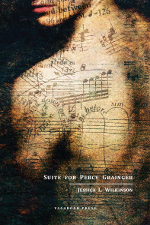
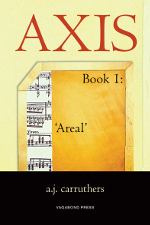
Simon Eales Reviews A J Carruthers and Jessica L Wilkinson

Axis Book I: ‘Areal’
by a j carruthers
Vagabond Press, 2014

Suite for Percy Grainger
by Jessica L Wilkinson
Vagabond Press, 2014

In 2013, Jessica L. Wilkinson and A J Carruthers collaborated directly on The On-Going March Box (Stale Objects dePress), a poetic object collection consisting of words and alphabet arrangements printed on oddly shaped sight cards contained in an aged box. Startlingly bold affirmations like ‘HORNS’ or ‘SHORN’ or ‘S-HORN-S’ in black and white, and ‘TO THE FORE,’ quivering with seismic formatting, behave as unapologetic provocations to the reader. Their affect is confirmed by the project’s extension of craft beyond the word: to the physical object and to the website documenting their existence.

Continue reading

Posted in BOOK REVIEWS | Tagged , ,

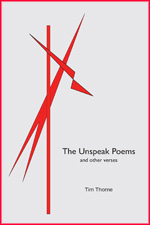
Review Short: Tim Thorne’s The Unspeak Poems and other Verses

The Unspeak Poems and other Verses by Tim Thorne
Walleah Press, 2014

I first came across Tim Thorne’s work through his fifth book of poetry The Atlas, published in 1983. I was struck by the cover – a globe featuring Tasmania at its centre, huge, and taking up more than half of the earth. The rest of Australia stretches away in the distance, small, a fraction of the size. As for the rest of the world, I could only assume that it was crammed away on the dark side of the Earth.

Continue reading

Posted in BOOK REVIEWS | Tagged ,

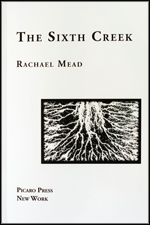
Review Short: Rachael Mead’s The Sixth Creek

The Sixth Creek by Rachael Mead
Picaro Press, 2013

Rachael Mead is part of a fine group of contemporary Australian poets writing about nature in nuanced and resonant ways. She brings her own slant to the genre with her first collection, The Sixth Creek, while doffing her hat to celebrated writers like Mary Oliver, Thoreau, and Judith Wright. Continue reading

Posted in BOOK REVIEWS | Tagged ,

Graeme Miles Reviews Tim Wright and Rob Wilson

The night’s live changes by Tim Wright
Rabbit Poets, 2014

Free Will and the Clouds by Rob Wilson
Grand Parade Poets, 2014

For all their contemporaneity, both of these books work with themes, or better, anxieties, that have always been at the heart of lyric poetry. In different ways, they are concerned with avoiding easy comfort in language and shying away from time and mortality.

Continue reading

Posted in BOOK REVIEWS | Tagged , ,

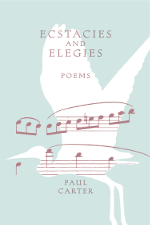
Tamryn Bennett Reviews Paul Carter

Ecstacies And Elegies: Poems by Paul Carter
UWA Publishing, 2014

If Paul Carter’s debut collection opened with a dedication, perhaps it would read, ‘For the gaps in history and those that have tried to fill them.’ Threaded with Carter’s critical work on the palimpsest of public spaces, Ecstacies And Elegies creates a fabric of human traces that patches the holes in our histories. From myth and exile, to design ecology and radio static, Carter’s poetics is archaeological, piecing together the hidden maps and inventories of existence

Continue reading

Posted in BOOK REVIEWS | Tagged ,

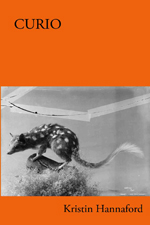
Review Short: Julie Maclean’s When I saw Jimi, Kiss of the Viking and Kristin Hannaford’s Curio

When I saw Jimi by Julie Maclean
Indigo Dreams Publishing, 2013

Kiss of the Viking by Julie Maclean
Poetry Salzburg, 2014

Curio by Kristin Hannaford
Walleah Press, 2014

Continue reading

Posted in BOOK REVIEWS | Tagged , ,

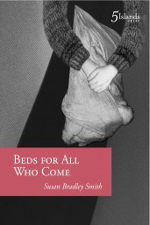
Review Short: Susan Bradley Smith’s Beds For All Who Come

Beds For All Who Come by Susan Bradley Smith
Five Islands Press, 2014

Susan Bradley Smith’s newest collection, Beds For All Who Come, is a delicate investigation into the lives of multiple historical figures, transitioning between the public and the personal. The collection is an excellent example of écriture féminine in that a range of individual female voices write to one another, but also acknowledge a fringe of male figures, assessing imagined and historical feelings and experiences, while also exposing some potential issues with this model.

Continue reading

Posted in BOOK REVIEWS | Tagged ,

11 Artwork by Christian Thompson


Christian Thompson | Danger Will Come | 2012 | We Bury Our Own series | 100cm x 100cm

Posted in ARTWORKS | Tagged

OBSOLETE Editorial


Tracy Ryan in Western Australia

‘Obsolete’ can only be neutral or pejorative; it is never a compliment. Even those who value the old, the superseded object or mode, are reinstating it so as to deny that the object or mode is obsolete. I can still use it.

Though you may be glad something is obsolete (an oppressive societal attitude, an exploitative work practice) or you may mourn it (you preferred that previous model), in neither case is the quality itself positive. Like ‘dead’, it is a word we seem to agree on. It is not something we want to be.

Yet while ‘dead’ in its literal sense can be firmly anchored by certain criteria, ‘obsolete’ is inherently shifty, as if we need to be told when it applies – and it may not apply in other places, for instance where a newer technology is unavailable. Obsolete for whom? Obsolete is an accusation that can be levelled at anyone or anything: a hot potato nobody wants to catch.

If you are afraid of social judgement you will abjure the obsolete, in case its properties should stick to you; if you are thrifty you will resent the label, because its application forces you to ‘keep up’ – that is, throw away or at best recycle. In a Carmelite monastery there is a room called The Tip, where old objects, parts, bits and bobs, odds and ends, have all been ditched – for retention – over many decades. When anything needs mending or replacing, those nuns will rummage in The Tip to find what they need, in line with their vow of poverty, which doesn’t mean doing-without so much as doing-with.

I’m not advocating a Carmelite way of life, just noting that separation from ‘the world’ can entail the persistence of an earlier mode (an obsolete practice?) that also internally resists obsolescence – you can fix or preserve or augment it, you don’t have to upgrade … It’s already a cliché (so what?) to point out that our parents’ or grandparents’ generation had a different relation to the durability of objects; it wasn’t just nuns.

Though the word impinges on so many fields, it was the technological aspect that first provoked this as a Cordite Poetry Review theme for me. There is shocking waste and exploitation allied to the concept of the obsolete in the writer’s working tools (try using a laptop for more than a few years; try getting it repaired; try not being pressured to acquire a newer gadget). If you resist upgrading (exactly as with cars) many people assume it’s because you’re stingy or stupid – why would you not want faster and better? A friend says jauntily – but do I detect a note of doggedness covering desperation? – ‘You have to keep up!’

However much we theorise or make into metaphor the obsolete and its near relations – waste, the redundant, the superseded – there is a real-world politics around them that cannot be rarefied away or rendered abstruse. The poems in this issue may address those matters directly, or may appear only tangentially connected, drawing on one aspect of the old, the former, the outmoded, the replaced, the now-absent: T. R. Hummer’s ‘Donkey’, for example, or J. P. Quinton’s ‘Seven Years, to the Day’.

In Sophie Mayer’s poem ‘Obsolute’ – its title drawn from a Scots form of the word – pun, Shakespearean-Dickinsonian-filmic allusion and disjunction combine and disperse to ask, ‘What country, friends,/ where analogue means proceed by metaphor, (dis)simulation,/ illusion; and digital, by hand’ and to contemplate the ‘End without world’ in which we seem caught.

Charmaine Papertalk-Green addresses Australian deployments of the obsolete in two poems – ‘Blinding Loyalty’ looks at the effect of technological change combined with employers’ indifference to the Yamaji worker where the overriding value is of the ‘Farmers wanting more from the land/ This was their priority – more, more, more’ – that force of repetition somehow resonating with Sophie Mayer’s ‘VOID VOID VOID VOID’ and the ‘syntax error, syntax error, syntax error’ of Samuel Wagan Watson’s ‘Some words no longer work’.

In a second poem published here, Papertalk-Green implicitly turns around the question of the obsolete in Australian racial/racist discourse and queries the persistence of ‘The White Australia Mindset’, ‘transferred from father to son/ Ensuring it survives down the line thru time’. ‘Obsolete’ encompasses so much more than objects or goods. Likewise, in an entirely different context but still interrogating ‘mindset’ about a country, Owen Gallagher, born in Scotland of Irish parents, deftly juxtaposes two succinct visions in ‘The Road to Ireland’, one aligned with romantic myths of the west, the other with the realities of community and politics. Scott-Patrick Mitchell, like Mayer, invokes Shakespeare via Louis Untermeyer and through The Tempest into the mining tropes of a state that has seen undertakings glorified with names like Prospero and Cosmos …

And from the UK, Simon Perril contributes two poems from a longer work in the voice of Neobule, daughter of Lycambes who broke off her engagement to ‘ancient Greece’s first lyric poet’ Archilochus, himself central to an earlier book of Perril’s. These poems, Perril says, ‘are entangled in the knotty roots of lyric and its negotiation of the nonsense of the body, with its babble of desires, urges and impulses. They particularly choreograph an incremental sense of the obsolescence of the physical, a perplexed state of slowly losing that body.’ Readers may look forward to the appearance of the full work with Shearsman in 2015.

Jennifer Clarvoe from the USA contextualises her ‘Barrow Ballad’ as written after a dream ‘in which there was a junkman named Harold, whose wheelbarrow was full of all kinds of junk that he took and re-made fantastically and then passed along to whoever wanted it. In the dream I could see into the barrow, but when I woke up, I couldn’t remember what I saw — just the song that Harold sang.’ Clarvoe had wanted, after her second book appeared, ‘to include more song-like poems in the next project, despite their seeming old-fashioned. Oddly enough, a number of these song-poems are, in one or another way, about trash, about things we throw away.’

This OBSOLETE issue invites readers to reconsider the throwaway – to rummage, revise and reassess in the imaginary office of lost property that some languages prefer to call ‘found’. It’s not about nostalgia; some things we need to lose. It’s about individual and collective responsibility and reinvention.

Posted in ESSAYS | Tagged , , , , , , ,