Rebecca Giggs Peers into The Microscope Project

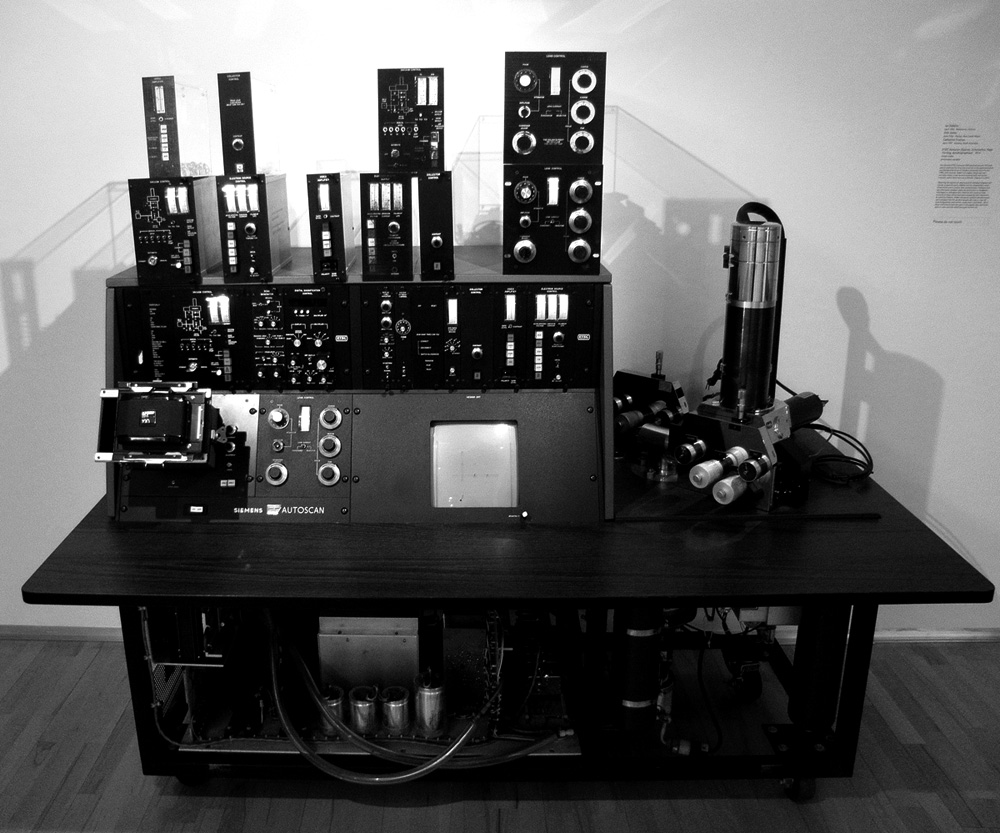
In 2012 Flinders University decommissioned a set of powerful microscopes. Technologies long since surpassed, ETEC, JEOL, LEITZ and the VANOX ‘twins’ (scanning electron and fluorescence scopes) had been marked for scrap; their manuals, notes and schematics boxed for collection.

But before the whole armamentarium could be junked, a group of South Australian artists and writers staged a salvage run. Stripped and disassembled, the microscopes were requisitioned with their attendant documents and some specimens inside an abandoned pharmaceutical distillery in Adelaide’s inner west. ‘Analogue anarchy … an autopsy of the electromechanical era’1, described one participant, surveying the recovered wreckage. Art made in response to these blinded instruments was later collected in The Microscope Project, exhibited at the University Art Museum in September 2014. Included as a poetical treatment was Ian Gibbins’s How Things Work.

Until recently, Gibbins was a neuroscientist and an anatomist at Flinders. For him then, the microscope parts represented more than a mere puzzle or provocation – they were ‘deconstructed collaborators’, his gutted staff.2 Hence, these are poems interested in the sense-memory of machines, the mechanisation of language, and the possibility of accreted intimacies that persist between tool and technician. From ‘JK (Monday, morning)’:

This is how it works. First, you must plug it in, obviously, switch on the power, ramp up the voltage, check the vacuum status. You rehearse the operating procedures, the protocols required for your session. But you may as well be on the moon, holding your breath lest the oxygen supply drops to empty. You peer into the squid-ink sky, your feet aglow with dry volcanic dust, just trying to keep your hands out of trouble. Are you alone?

Object presence is one feeling explored in this collection: how does the human body register, and then swiftly forget, the optic implement standing between the looker and the looked-at? The uncanny effect of the microscope, Gibbins implies, is to remind the operator of their own, inbuilt perceptual apparatus – how the body sees with the twitchy rigging of optic nerves and the brain’s interpretative spackle in addition to its eyes. Do you, reader, perhaps also remember a time in science class, your brow pressed upon the unfocused eyepiece of the microscope, each eye seeing something wholly different from the other? Each eye in a world, unrelated? You shut one, maybe, turned Cyclopean to resist it because the experience was a little frightening – your brain out of phase with your vision. Such instants dislodge the textbook memory, I have two eyes and what they see takes some reconciling. In a click, it’s forgotten. Adjust the lens. Then, as Gibbins has it: ‘you may as well be on the moon … your feet aglow with dry volcanic dust.’ The microscope siphons the mind down onto the slide. The machine has become another link in a system of seeing.

Gibbins’s work explores how the operator can seem to have internalised microscope, even as the microscope closes in on human tissues. Forget the body, forget the lenses. Go into the cell. The minute rendered immense and mentally habitable. At the end of the lab the rubber sockets of the microscope are warm. Matching indentations encircle the technician’s face. The microscope reasserts its strange presence. Some microscopes emit a noise, a whine or hum, until they are switched off and de-animated.

Gibbins is a writer with a developed appreciation of the word articulate and its double meaning: to speak, and to extend by means of a further joint or armature, to add more structures to a chain of seeing that always was a collaborative affair (light, retina, nerves, occipital lobe, etcetera. A sequence to which we might also add various other machines today including telescopes, periscopes, satellites, cameras and smartphones). The poet wants the microscope to articulate in both senses, and so a number of the poems in How Things Work concede human creativity to machine language. See, ‘A Recommended Procedure for routine use as a “Working Standard”’:

maximum    signal height
minimize hysteresis 
minimum astigmatism 
onto the      stage 
operational stability. 
or better. 
perpendicular to    gold lines
relocation of the images.
suitable for this purpose
2    to    1

Circuit diagrams are reproduced, with line-by-line collages of troubleshooting guides for the VANOX, and a ‘Receiving Tube Manual’ for one electron microscope. Marjorie Perloff’s idea of unoriginal genius is cited as an influence here, alongside the constrained techniques of French Oulipo writers of the 1960s, and concepts of uncreative writing made popular recently by Kenneth Goldsmith.3 The strategy limits the poet to acts of associative logic and syntactic texture: repetition, reordering, pattern recognition. These commands are – in our current cultural moment, and in the context of this work in particular – identified as computational. They can be found in ‘Learning to Read and Write’ and ‘Vanox Observation Procedures’. But what is the effect of Gibbin’s thinking and speaking as a machine?

The thing to keep in mind here is that he isn’t. Gibbins’s language in these poems is not rendered in signals, zaps or data packs, light or magnetism. However granular, sterile or exploded the register becomes, the aesthetic still retains a humane charge. Gibbins’s ambition is not to de-centre assumptions of creative capacity (that poet must = person), and neither does the author offer a critique of social mechanisation. Rather, Gibbins is interested in material and intellectual collusions between poet/technician and microscope; in moments of co-recognition. This is why the poems in How Things Work can’t properly be considered mere acts of ekphrasis – however sculptural the defunct microscopes have become in their disuse, the inspiration moving between machine and poet is not unidirectional.
Posted in ESSAYS | Tagged , , ,

>>Sidestepping the Known: A Loose Chronology of Meztext[ing]s

>>Beginnings: A Library, An ‘A’ and a ‘B’

When I was in my late primary school years, I was shunted into an accelerated reading program. This program was designed for kids who had either outpaced their schoolmates in terms of reading ability, or who whizzed through books [while still comprehending them] at a voracious rate. As part of this program it was decided that I should be given special privileges in order to join the primary public library. I was to be allowed to borrow books intended for adult consumption.

When the day arrived to venture into ‘The Proper Library’ [as I’d internally labelled it] I was determined to prove that I was just as mature as the adults with whom I’d soon share borrowing privileges. I ventured into the library foyer solo, with no adult chaperone. As I marched along the hallway past ‘The Children’s Library’, the thought hit me: I had no idea how to navigate this place. As I reached the front desk, my card was prepared and waiting, but [probably due to understaffing] there were no adults to show me the ropes. So, being the somewhat timid but determined youngster I was, I marched directly between the first shelves of books I saw. I had no idea what category of books huddled there.

I *was* aware [thankfully] of how books were organised in a library setting. I knew that if I selected the first book on the top row, it would be by an author starting with A. And so I grabbed the first three books located there [that I could reach], all by an author I hadn’t ever heard of: Brian Aldiss.

The section I had stumbled into was Science Fiction.

This simple act of selecting those books [written in a genre that would soon become an enduring favourite] shifted something. My life trajectory tilted. The tilt was subtle, but enough to make me realise that *this* was the way to tackle life: head on, by marching into the hiccoughing unknown with some type of fantastical accompaniment.

This sudden awareness of being an interloper who had stumbled into a previously off-limits information space helped shape my fascination with play aesthetics, fabulism, system theory, allegory, learning, subversion and connection. The idea that my future self would obediently trot down a life-path leading sequentially from sanctioned stepping stone to codified stepping stone was all-glitched-up that day. By essentially leapfrogging standardised methods of accessing information, I cottoned onto the value of testing and stretching boundaries of all stripes.

The notion of sidestepping [while not strictly subverting] tradition became my mantra. I built-riffed off this reality over the years, gradually refining my need to cobble creative output with eyebrow-raising-interest in ingesting, debating, absorbing and ultimately, playing.

>>TxtTales and Assorted Beasties

This concept of sidestepping the known came under some pretty standard fire during those post-Beginnings: A Library, An ‘A’ and a ‘B’ years. Thankfully, focused absorption, exposure to digital artists such as VNS Matrix, and the desire to incessantly create helped keep the ‘conventionally directed’ at bay. After finding myself verge-balancing on the edge of a successful academic career in the Applied Social Sciences, I decided to dig in and *make* instead. My rationale: there was something definitively frissonic [and worthwhile] on realising I did not need to pander to the established. This behavioural pattern of actively modifying constrictive systems [to circumvent the acceptable] helped cement my love of story.

And so I strained and battled all manner of cordons. I gathered aficionados [and fast friends] and enemies [mostly of the pedagogical and/or stiff-upper-lip variety]. But most of all, I courage-struck and grasped technologies in my then bared and [sometimes rictus] grinning 24-year-old teeth. In 1994, when a friend of a f[r]iend introduced me to a computer lab filled with internet-enabled machines, I grinned and ‘bit’ down hard.

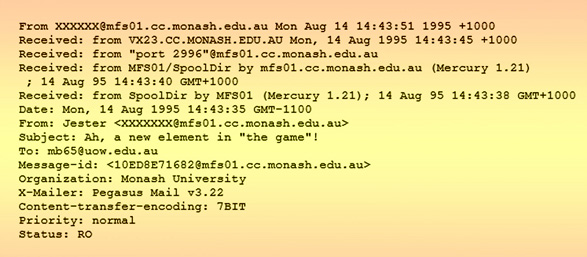
The first Meztext works classifiable as ping-worthy are spontaneous collaborations created via the Internet/web. In 1995, I spot-hunkered in a series of interchangeable computer labs and proceeded to create text fictions with other likeminded boffins connected via browser-based chatrooms and y-talk. My fictionalised inserts peppered those of Melbourne University students, Palo Alto based scientists and Swedish software engineers to create rambling, ingenuous text-sets. These texts would nowadays be known as flash fiction, interactive fiction, and/or labelled as ‘Alternate Reality Game-like Play’. Using Telnet, Mosaic [Netscape] and email as our playgrounds, we digitally shuttled missives filled with tales of Vikings, Jesters, and other assorted beasties.

In this period, we gang of fabulists construction-toyed with what would soon be recognised as electronic literature, code poetry, literary games, and the nature of online collaboration. From the value of simmering anonymity to the deliciousness of avatar [naming] adoptions, nothing was set. Spontaneity seemed the key. If you thought blisteringly hard [or for too long] about a snippet in a chatroom setting, your chances of contributing right *then* and *there* were lost. The [often ephemeral] game threads popped up quickly. They plot-shifted even faster. We all learnt how to produce story snippets quickly, by riffing on – and mangling – content.

I [or rather my chosen avatar at the time, ‘Ms Post Modemism’] next produced Cutting Spaces – my first HTML-based interactive fiction – from this lushness. Before manifesting as a signature Meztext, in 1996 this work pushed and pulled its way into the Norway based Online Exhibition and zine called The TUG Project. Cutting Spaces played with the audience, making them cyclic and plot-vulnerable in a hiccough-looped narrative. Cutting Spaces was a project designed by a meta-author determined to drag and push a reader as far as hypertext allowed.

MALFI was another project spawned during this time. MALFI [short for Multi-Artificial Life Form Interface] was a fictionalised version of a ‘more-human-than-human’ form of artificial intelligence. This AI was on a hell-bending quest to achieve autonomy from its scientific confines. First written as a non-standard story in 1996, MALFI morphed forms later that year so as to be shown at the Virtual Universe Online Exhibition [via the Public Art Forum and New-Media Symposium] at Prague’s Goethe Institute. The resultant MALFI project:

‘…promotes a proactive experience through providing the audience with the ability to play Electronic God [or Goddess] – that is, to create the future of the MALFI entity via crucial narrative choices. One hyperlinked path/set of choices allows MALFI to attain freedom/autonomy, the other leaves MALFI dependant on its scientific confines. These choices impact on the resultant MALFI persona, and leaves the viewer with an interesting emotional twist – if they direct the hyperlinks to ensure MALFI gains independence, they are surprised to discover that maybe MALFI doesn’t want it after all, thus encouraging them to interact again with the project in order to ascertain MALFI’s motives.’

MALFI Catalogue Description as part of the SEC (Secondary Consciousness) Exhibition, Herzlia Museum, Israel, 1996.

Posted in ESSAYS | Tagged

The Northern Territory Emergency Response: Why Australia Will Not Recover from The Intervention


Image courtesy of Giramondo Publishing

It was always an exciting time for me, during my time in the role of Art Centre Manager at Titjikala, to escort Aboriginal artists from central Australia to their art exhibitions and forums in Adelaide. On one occasion were two senior Pitjantjatjara / Luritja artists from Titjikala, and they were accompanied by their granddaughters. My granddaughter had joined the group in Port Augusta. And so we were in Adelaide when the news was announced.

Continue reading

Posted in ESSAYS | Tagged

My Intervention (in Cowdy)

My Intervention story began in 2011 when I moved to the Northern Territory’s remote Indigenous Borroloola community; a designated growth town located in the Gulf of Carpentaria, a few hundred kilometers from the Queensland border. As a teacher of outdoor education and health I am often sitting around a fire with kids sharing in the cooking of bush tucker parceled in paperbark while developing sport and camp programs designed to teach emotional resiliency, cooperative group learning, safe decision-making and environmental education. The love and generosity of Borroloola’s Indigenous communities in adopting me as family and welcoming me to Country has been my fire’s embers, stoked and releasing sparks, in plumes of rising heat.

Continue reading

Posted in ESSAYS | Tagged

Prithvi Varatharajan Interviews Maria Takolander


Image by Nicholas Walton-Healy

Maria Takolander is an Australian poet with Finnish heritage. Takolander lives in Geelong, where she works as a Senior Lecturer in Literary Studies and Professional and Creative Writing at Deakin University. She has published a book of academic criticism, on South American magical realism, called Catching Butterflies: Bringing Magical Realism to Ground (2007); three books of poetry: Narcissism (2005), Ghostly Subjects (2009), and The End of the World (2014); and a book of short fiction, The Double (2013); a novel is forthcoming from Text.

Continue reading

Posted in INTERVIEWS | Tagged ,

Elena Gomez Interviews Jahan Ramazani


Image from University of Virginia

From opposite sides of the world (east coasts of USA and Australia respectively), US scholar Jahan Ramazani and I began an email correspondence, before meeting face-to-face while he was in Sydney for the AMSN2: Transnational Modernisms Conference in December 2014, where he delivered a keynote address. I was particularly interested in his recent work about the dialogic components of poetic genres, their historical contexts and how they related to transnationalism within and beyond poetics. We discussed how these elements interact and resonate in the world, creolisation processes, postcolonialism and the instability of national boundaries.

Jahan Ramazani is the author of a number of books on poetics, including Poetry and Its Others: News, Prayer, Song, and the Dialogue of Genres (University of Chicago Press, 2013), A Transnational Poetics (University of Chicago Press, 2009) and The Hybrid Muse: Postcolonial Poetry in English (University of Chicago Press, 2001). He has also edited The Norton Anthology of Modern and Contemporary Poetry (2003) and co-edited The Twentieth Century and After, in The Norton Anthology of English Literature (2006, 2012). He is Edgar F. Shannon Professor of English and Department Chair at the University of Virginia.

Elena Gomez: To begin, could you describe, briefly, a definition of a transnational poetics?

Jahan Ramazani: By ‘poetics’, I mean how poetry works – i.e., not just what it means – and by ‘transnational’, I mean nation crossing. By contrast, a national poetics conceives of a poem in terms of its national origins and elements and reception. A transnational poetics explores how poems traverse national boundaries. Poems have an especially long memory of form. And the formal structures of poems, if typically reshaped by local or national circumstances, are often adapted from a variety of different cultures. I’m interested in illuminating how a poem’s fabric often knits together forms, idioms, tropes, and inheritances from various cultures. This is especially so in a global age. From the modernists, such as Yeats, Eliot, and Pound, who had transformative engagements with South and East Asian cultures, to postcolonial writers of South Asia, Africa, the Caribbean, and other parts of the global South, who have often lived and worked in between the cultures of the North and South, I think the story of modern and contemporary poetry defies circumscription within the limits of the nation.

EG: In Poetry and Its Others you explore the dialogic aspects between poetry, news, lyric and song, and you’ve written about elegiac forms of poetry before, too. I’m wondering if you can talk a little about the relationships these particular areas have to your other area of interest, in transnational poetics, and whether one came out of the other?

JR: My first two books were about the modern elegy, from Yeats and Hardy to Auden, Plath, and Heaney. I was interested in examining how modern poets remake the elegy, providing a more ambivalent, unresolved, sometimes even agonistic portrait of the mourning process than we had in traditional elegies. Genre analysis is inherently more transnational than some other modes of literary analysis. When you think about elegies, as also about sonnets, odes, epic, haiku, ghazals, or even open-form styles of poetry, these aren’t confined to any one nation, and poets often borrow styles and strategies that have various cultural origins. And indeed my next two books were about postcolonial and transnational approaches to poetry. Editing The Norton Anthology of Modern and Contemporary Poetry (2003) and the twentieth-century volume of The Norton Anthology of English Literature (2006, 2012) also widened the scope of my reading.

My work as an associate editor of The Princeton Encyclopedia of Poetry and Poetics (2012) kept me focused on the particular devices of poetry but also on larger questions such as: what is poetry? When I was asked to write a long essay on postcolonial poetry for a Cambridge history, I decided to explore the question of what poetry is by examining poetry’s interactions with what it isn’t. I became increasingly aware that many poems – postcolonial and otherwise – assimilate nonpoetic genres, such as news, prayer, song, the law, the novel, and theory. But far from losing themselves in these other genres that they absorb, such poems often implicitly define themselves in their resemblances and differences from their discursive others.

Both my transnational and my intergeneric work involve the study of poetry’s traversal of boundaries, whether between cultures or between genres. These approaches stand in marked contrast to traditional ideas of poetry as either more local than other genres or more closed and monologic than other discourses (cf. the Russian theorist M. M. Bakhtin).

EG: I’m interested in your comment on genre analysis, that it ‘is inherently more transnational than other modes of literary analysis’. Could you expand on that?

JR: When you talk about a genre – let’s say you talk about poetry, for example – inherently, inevitably, you’re going to be talking about a range of different kinds of texts, from different cultural sites. So that’s the broadest generic kind of category, but I think it’s also true of a narrower slice. Say you talk about a sonnet, or say you talk about the ode or the elegy. Inevitably, again, these are genres that travel across national boundaries, and aren’t confined to just one particular site. In order to understand what’s particular to, for example, the American sonnet in the 1930s, you might have to zoom in somewhat. Inevitably you have to think about it in relation to the sonnet in other places: how does it differ from the sonnet in Britain during the Renaissance, or in Ireland, where there might be less interest in the sonnet because of its association with British-ness. Or if you take something like the elegy – obviously, poems of mourning have been found in many different cultures and many different times. I think that generic categories inevitably allow you to cut across the kind of narrow confines of the nation.

EG: So do you think that maybe looking at other formal qualities in poetry would restrict a transnational reading?

JR: Not necessarily … looking at other formal qualities, if you’re thinking about the circulation, say, of a trope or a symbol from one place to another and how it’s indigenised or appropriated or transformed as it moves from one culture to another can be like tracking the movement of the ghazal or the haiku or the pantoum. You can trace other formal qualities, too, but I think that all of those have a potentially transnational reach in a way that’s different from, say, if you’re just interested in a narrow historical focus on Australian literature in the 1990s or something like that, for which you wouldn’t necessarily have to move outside the boundaries of the nation. To think of another counterexample, let’s say if you’re interested in material culture, you might just focus on the relationship between literature and architectural forms in the city, or wherever.

EG: Could you comment on a distinction you made a little while ago between poems that are postcolonial and otherwise. What marks the difference of a postcolonial poem?

JR: I would look to the specific historical conditions of colonisation under which it is written, and I would look at differences in those intergeneric qualities. In postcolonial writing, there is a much stronger sense of oral cultures and often of song in particular as a carrier of memory, or other oral forms. So I would say that one could look at some of those features as ways in which to start to think about differences between postcolonial and other forms, but I wouldn’t only look at them. I would look more broadly at the ways in which people writing under the shadow of colonialism and in the aftermath of colonialism have both written back to imperial centres of power and imperial forms, and incorporated them, transformed them, adapted them.

Posted in INTERVIEWS | Tagged , , , ,

Caledonian Antisyzygy: Seven Contemporary Scottish Poets

Caledonian Antisyzygy; Seven Contemporary Scottish Poets Thomas A Clark | Holderlin’s Shopping Bag | The Thing Quarterly, 2014
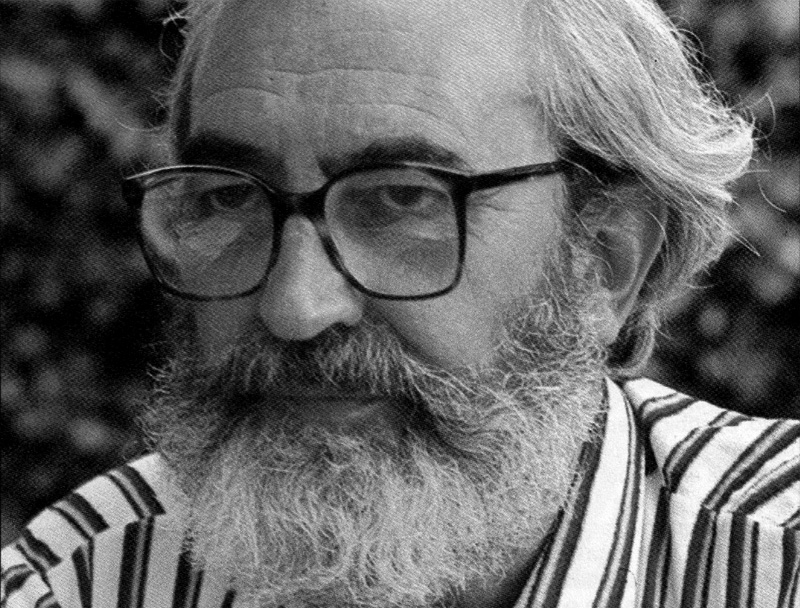

When Kent MacCarter asked me whether I’d be interested in selecting some of the younger Scottish poets for readers to sample in Cordite Poetry Review, of course I agreed … I like the way this magazine takes its introductions seriously, and wants to bring the rest of the world to Australia and vice versa. I’m the Director of the Scottish Poetry Library in Edinburgh, and there is a lot going on at the SPL, especially during the summer when the festivals are on and the desk is the last place you’re sitting.

Meanwhile, our Communications Manager, Colin Waters, was spending every minute away from his desk working on an anthology of current poets for the publisher Vagabond Voices (no relation to Vagabond Press in Sydney). He had decided to include poets who had no more than two published books to their name – most of them would be under 40 years of age, but not all. So as time went by, and as Kent politely pressed for my selection, I realised that this would inevitably overlap with Colin’s. In September his anthology Be the First to Like This was published, and the seven poets here are all included in it. One of each of their poems published here can be found in that anthology, and one comes from some other source or is previously unpublished. All of these poets are accomplished readers of their work, and I’ve included some links to the sound of their voices.

The Scots language as used by William Letford and Harry Giles might give you pause – Letford has more of an urban inflection, Giles brings his own mix from his Orkney background – but their confidence in using the spoken language is another aspect of the altered culture in Scotland that Colin talks about. What follows after the poems linked below is an abridged version of his introduction to Be the First to Like This. – Robyn Marsack

J L Williams: Revelation
Samuel Tongue: The Laws of the Game
William Letford: Sadness
Harry Giles: Honeymoon
Miriam Gamble: On Fancying American Film Stars
Claire Askew: Visiting Nannie Gray
Niall Campbell: Leave, Eriskay

Niall Campbell: The Work
Claire Askew: Bad Moon
Miriam Gamble: Dressing Fleas
Harry Giles: Piercings
William Letford: Thurs hunnurs a burds oan the roofs
Samuel Tongue: Why I was so bad at clay-pigeon shooting
J L Williams: All Water

Throw a stone in Edinburgh or Glasgow currently and you will hit someone involved in running or who has appeared on the bill of one of the many spoken word events taking place in both cities. Neu! Reekie!, Rally & Broad, Talking Heids, Caesura, 10Red, Shore Poets, Accelerator, Inky Fingers, Blind Poetics, St Mungo’s Mirrorball – just a few of the evenings combining poetry and (depending whose event you’re attending) music, film, and performance pieces, the informal atmosphere helped along with a drink or two. These nights, which are sparky, fun and impressively attended, are in the main organised by and give a platform to young and emerging poets, with an audience composed of people who are largely, but not exclusively, under 40. The bills aren’t necessarily dominated by slam or performance poetry. The poetry featured is as various as the nights themselves. Whereas Blind Poetics offers an open mic to poets who have only recently begun to write, Caesura focuses on the experimental and Neu! Reekie! mixes the leading poets of the day with emerging talent. It’s not at all unusual for established poets such as Don Paterson, Douglas Dunn and Jackie Kay to share bills with promising newcomers, these nights as much a conversation between generations of Scottish poets as they are an excuse for a knees-up.

Spoken word events in themselves are nothing new. For those with the ears to hear them, however, there are echoes of past moments when poetry stepped forward and made its voice heard on the national stage. Is it merely a coincidence that the last period to witness such an exuberant number of spoken word nights in Scotland was in the run-up to another big vote on the future of Scotland: the devolution campaign in the late 1970s? Then as now, these nights take place during a period of much discussion about the country’s future. When Scots are confronted with a major political choice, one that coincides with the question of identity, they talk and likely argue about it. And poetry is one of the ways in which our nation conducts that debate. Which isn’t to say that today’s poetry often directly addresses the subject of independence or is even formally about ‘Scottish identity’ – very little of it is.

When it comes to defining what or who is ‘Scottish’, I err on the generous side. I want to go beyond Alasdair Gray’s definition (found in his 1992 book Why Scots Should Rule Scotland) – ‘By Scots I mean everyone in Scotland who is able to vote’ – to include those born, bred and who continue to live and work here; Scots who have left the country for work or love or education; and those born outside Scotland but who have made their home here. I would like to interpret the broadness of definition as a sign of national confidence. The debate over who could be considered Scottish 30 years ago was a prickly, contested affair. There were even those who wished to exclude from the official record a native genius like Muriel Spark – she judged herself ‘Scottish by formation’ – because she had spent most of her adult life outside Scotland. In our more pluralistic society, it would be odder to leave out a poet such as J.L. Williams (born in New Jersey, a Scottish resident since 2001 and UK citizen since 2008) than to include her. Scottish poetry would be greatly diminished without the presence of poets originally from England, Ireland, North America, Mexico, Israel, and so on, who have loaned us their talents and done so much to open up our country to alternative ways of seeing and hearing.

The failure of the 1979 Devolution referendum was followed by a crushing decade of Thatcherism. I grew up in the 1980s, and recall a time of national low esteem and impotent anger. No one captured the mind-set better than Irvine Welsh did in his novel Trainspotting:

I hate being Scottish. We’re the lowest of the fucking low, the scum of the earth, the most wretched, servile, miserable, pathetic trash that was ever shat into civilisation. Some people hate the English, but I don’t. They’re just wankers. We, on the other hand, are colonized by wankers. We can’t even pick a decent culture to be colonized by. We are ruled by effete arseholes. It’s a shite state of affairs and all the fresh air in the world will not make any fucking difference.

I felt that then – but I don’t feel it now. And I believe a majority of Scots, whether born here or elsewhere, don’t feel it any longer either. There are a number of well-rehearsed reasons why there’s been a rise in Scots’ confidence since the 1990s, not the least of which was the founding of a reasonably functional parliament that while far from perfect has at least refused to go along with the worst excesses of the Westminster Tory-led coalition. Then there are cultural reasons for confidence, not the least of which – ironically – was the global success of Trainspotting. When it comes to poetry, we can look any other country in the eye. Scottish poets such as John Burnside, Kathleen Jamie, Don Paterson, and Jen Hadfield have won every major UK poetry prize. Writers have been very vocal in the independence debate, and unlike the last time, I don’t think there will be a slump in the wake of the ‘no’ vote.

Still, this remains a country of contraries, and the tendency even has a name: the ‘Caledonian antisyzygy’. I’m reminded of the last line in Niall Campbell’s ‘The Work’, included here, about poets being ‘the bringer of the feast and the bill’. Perhaps only a Scottish poet could describe his trade as such.

Posted in CHAPBOOKS | Tagged , , , , , , , , ,

Horse, Hawk and Cheetah: 3 Arabic Hunting Poems of Abū Nuwās

These three early ninth-century Arabic poems are examples of a genre of hunting poetry popular from the eighth to the tenth centuries. Three animals are described: a horse; a tiercel gos; and a cheetah.

The poet is Abū Nuwās (d. ca. 813-14)1, easily the greatest of all early Arabic poets. His name ‘Abū Nuwās’ means ‘Bearer of the Forelock,’ a moniker that describes an unusual hairstyle probably associated with his outrageous lifestyle. His extant corpus of poem describes all sorts of indulgences, from wine-drinking to boy-love.

‘Horse’ is composed in rajaz metre, with the rhyme –āquhu, and describes a young stallion (‘Colt’) of astonishing, mythic, power. Colt is ridden in a wild ass hunt.

The many opaque uses in the poem of the third person singular, in verbal and pronominal form, posed me certain challenges of interpretation and translation. I struggled at times to determine what the referents of any given occurrence are. I have tried to present a solution.

Horse

Rays lit up the sky
Black night struck camp—
Proof it was day.
I brought out Colt—a stallion of brute power and pedigree.
Fire’s energy coursed 
Through his tight-twist, taut-rope joints
He was sent to earth2 by night clouds guided by a rising star
Showered with their gifts
Blessed by clouds black with rain
In constant downpours.
He drank from their bounty. Limbs grew strong.

We approached. The ass neighed in alarm.
Colt stirred with lust.
The ass sprinted from al-Ṭuwā’s holy trees3.
I said to my slave, an expert hunter:
‘Mount! Colt makes me anxious.’
His light frame settled on Colt’s back.
He fired him. Colt’s eyes swam with water.
He hunted a hardloin male—
A thrust that made its jaws spew
Thick belly blood mixed with spit:
The bitter food of death
Delivered by doom’s lightning bolt
Neck iridescent, voltaic.
Horse

وانجاب من ذي ظُلَمٍ رَوَاقُهُ
قرّبتُ شَهْمًا كَرُمَتْ أعْراقُهُ
كمَرِسٍ مُمَرَّةٍ أطْلاقُهُ
من نَوْءِ نجمٍ جاده انْدفاقُهُ
والغيثُ مُدْهِمُّ ٱلذُّرَى وَدَّاقُهُ
لمّا دنونا ذُعِرَتْ نُهَاقُهُ
فلاح مِنْ غَابِ ٱلطُّوَى فَرَاقُهُ
إِرْكَبْ فقد أقْلقَنَا إِقْلاقُهُ
أرسله وَٱغْرَوْرَقَتْ أحْداقُهُ
بِطَعْنةٍ مجّتْ لها أشْداقُهُ
عن طَعْمِ مَوْتٍ مُمَقِرٍّ مَذَاقُهُ
من الرَّدَى إذ لمعتْ أعناقُهُ


لمّا بدا من ساطِعٍ إشراقُهُ
وحان من نهارنا مِصْداقُهُ
ومار في أوصاله إحراقُهُ
أَرْمَى به الغَيْثُ سَرَى بُعَاقُهُ
أَسْعدَه بوابلٍ غَيْدَاقُهُ
حتّى ربا من نِعْمَةٍ شِقَاقُهُ
والمُهْرُ قد هيَّجه اشتياقُهُ
قلتُ لِعَبْدٍ دُعْلِبَتْ أخلاقُهُ
لمّا استوى في متنه خفَّاقُهُ
فصاد عَيْرًا لاحِقًا صِفاقُهُ
نَجِيعَ جَوْفٍ شَابَهُ بُصَاقُهُ
من الذي أبرزه إبْراقُهُ


The poem explores a central feature of the ancient Arab conception of the horse, an equation of equine power, lightning and water. It is enhanced here to a mythic level: the horse is nurtured and cherished by lightning storms and rainclouds. As I read the final verse, the horse, the lightning from the rainclouds and death become one. The resulting picture is of an elemental horse of astonishing physical and poetic power. This mythpoeic quality is enhanced by the Qurʾanic overtones of verse 14 in the description of the hallowed wild ass safe in the sacred sanctuary of al-Ṭuwā until the arrival of Death in the form of Colt.

Whilst I was working on this translation, I could not stop thinking about a poem by Ted Hughes: ‘New Foal,’ published in 1977 or 1978.4 In that poem Hughes weaves a web of mystery and cosmic power around the newborn foal, describing how ‘he wants only to be Horse’ till the energy of ‘unearthly Horse’ surges through him. I seem to hear Hughes’s poem everywhere in my version of Abū Nuwās.

Posted in TRANSLATIONS | Tagged ,

Gu Yanwu: Translations of Letters, Poems and Essays

Gu Yanwu (1613-1682) stands out as one of the more remarkable figures in the history of Chinese letters, even in a landscape replete with remarkable figures. Undoubtedly a number of factors contributed to this, but two were of particular note. The first was his somewhat unusual upbringing in which there were two key figures. One was his adoptive mother, Wang, who undertook his early education. She was model of uncompromising rectitude who starved herself to death rather than live under the reviled Manchus and who extracted on her deathbed a promise from Gu that he would never serve the ‘alien regime’. The other was his grandfather, Gu Shaofei, who was responsible for his later education that was unusually wide-ranging.

The second factor was the turbulence of the times, marked by decay of the social structure and peasant uprisings, and saw the end of the Ming dynasty with the Ming ruling house being replaced by the conquering Manchus. Throughout a life which became largely itinerant, and was itself turbulent as were the times, Gu managed to write a great deal on a great number of subjects and formulate ideas that were particularly influential in a number of specific areas. In general terms, however, he is regarded as a pivotal figure in the redirection of Chinese thought away from the intellectual excesses of Song Neo-Confucian metaphysics and increasing inroads of Buddhism towards the essentials of Han Confucianism and the development of the kaozheng (evidential research) movement. Like most Chinese intellectuals of the day, Gu also wrote poetry and expressed clear ideas on what poetry should be about and what its purpose should be. As well, he was interested in the technical aspects of writing poetry and wrote an important work on phonology. In 1645, immediately after the Ming overthrow, he destroyed all the poems he had written as part of a fresh start in his writings. What follows are some samples of his letters, of which around 50 survive and are very revealing of the man, a small selection of his poems and two short essays of his on poetry.

Letters: from Gu Tinglin Wenji, section 3, 25 letters to friends

20: If some gentleman should wish to publish his own writings in order to seek fame in the world, it would be like someone losing his footing and falling into a well. If someone then were to add a preface to his works, how would this not be like casting a stone in on top of him? Before he has fallen, there is still time to stop him from this enterprise. If you try to stop him but he pays no heed, then a well may be considered an appropriate domicile for him. I have said all I need to say!

23: The ability to write doesn’t make someone a writer. The ability to explain (the Classics) doesn’t make someone a teacher. In my view those who are writers and teachers of the Classics at the present time are all motivated by the desire for fame as writers and teachers. Did the Master not say: “This is notoriety not distinction.” He also said: “To be silent and yet to understand it.” As Confucius said, even though I may not be a clever man, I must try to put these statements into practice.

25: Twenty-five years have passed from the year Dingyou (1657) to the present, during which time I have not received any news from you. Whenever I travel over mountains, along rivers or across strategic passes, I regret that we two are not together. And I think back to the high hills and fast-flowing streams between Rao and She which were like places at the very edge of heaven. Before, when you sent me a letter, I was at Wuhu and I made a record of it in my notebook. But my notebook was stolen by robbers so subsequently I didn’t know your address, and when I asked at Taiyuan Ford, I couldn’t get it. This autumn, people came from the capital and brought three letters from you, so I know you are well and haven’t been troubled with ill-health. I know too that in your travels by the Yellow and Fen Rivers, you have been accompanied by many men of the like of Fang and Tu, so my joy is unbounded. I unrolled and read your substantial writings in which you speak at length of present and past, and know that you think kindly of your old friend yet fear that his writings from an earlier time will not be transmitted. How solicitous you are!

Nevertheless, twenty-five years have gone by and I have made some progress in the matter. The noble man pursues his studies to clarify the dao of government and to save the world. Devoting oneself solely to poetry and elegant essays may be termed a trivial pursuit – what benefit does it bring? From the time I turned fifty, I have directed my attention to the Classics and Histories and have achieved some depth in my studies of phonology. Now there is the Wushu (Yinxue Wushu – Five Books on Phonetics) to continue the long-interrupted interpretation of the three hundred odes. And apart from this, there is the Rizhi Lu (A Record of Daily Knowledge) – thirty or so juan in all, comprising a first section on the study of the Classics, a middle section on the dao of government, and a final section on general studies. If a king were to arise who would use the material in the conduct of affairs, he might return the world to the glories of the rulers of ancient times. But this is something I hardly dare speak about with men of the present time. The works I previously published and circulated were but a small fragment.

Now, at Huaxia (Huayin), I have begun the building of an ancestral temple to Zhu Xi as a way of showing what was, at the time, the meaning of my reply to Zijing’s letter. Here the place is bleak and desolate in the extreme. I would like to visit my parents’ graves at Jiangzuo once more and build a shrine to my late mother, but I don’t know where they are exactly. I am an old man now and not likely to go to the capital again, but our letters must not stop. I would hope that from time to time you might write to me through my nephew Yan. It would be as if we were continuing our discussion. I am adding six poems to this letter.

Posted in ESSAYS, TRANSLATIONS | Tagged ,

5 Poems of Ángel González


Photograph courtesy of Susana González

Ángel González (1925-2008) was a member of the so-called Spanish Generation of 1950 – perhaps its most celebrated exponent. Having grown up during the Civil War and in Franco’s ensuing dictatorship, González, in his own words, ‘learnt very early on to protest in whispers, to curse inwardly and to speak ambiguously, very little and always of other things – that is to say, to use irony, metaphor, metonymy and reticence,’ all of which are trademarks of his dark, humorous and incisive poems. The translations below sample from González’s first two books, Áspero mundo [Rough World] (1956) and Sin esperanza con convencimiento [Hopeless with Conviction] (1961), where González began to explore many of the themes that would preoccupy him throughout his career; loss of illusions, lyrical love, the passage of time, and personal and social critique.


“For My Name to Be Ángel González”

For my name to be Ángel González,
for my being to weigh on the earth,
a long time and ample space
were needed:
men from every land and every sea,
wombs of fertile women, and bodies
and more bodies, blending ceaselessly
into a new body.
From solstice to equinox, a varied light
and changing skies accompanied 
the millenary journey of my flesh
as it climbed up centuries and skeletons.
Of its slow and painful voyage,
of its flight to the end—surviving
shipwrecks, glomming on
to the last gasp of the dead—
I am merely the result, the fruit,
what is left, rotten, in the wreckage;
what you now see,
and only this:
a tenacious scrap, fighting 
its ruin, struggling with the wind,
advancing on roads that lead
nowhere. The success
of every failure. The maddened
strength of dejection…


A Message for Statues You, fiercely misshapen stones, cracked by the accurate point of the chisel, will exhibit for centuries to come the final form they gave you: breasts unmoved by any sigh, rigid legs ignorant of tiredness, muscles sprung in futile effort, hair untousled by the wind, eyelids open to repel the light. And yet your static arrogance, your frosty beauty, the scornful faith of your impassive gestures, will one day meet their end Time is more tenacious. The earth awaits you too. You will fall into it from your own weight, you will be, if not ashes, then ruins, dust, and your wistful eternity will be nothingness. To the rock you’ll return as rock, insignificant mineral, sunk debris, having once lived the hard, solemn, illustrious, triumphant, equestrian dream of a glory built to recall something also scattered in oblivion.
“In the Far Distance…” In the far distance, dogs against the moon bring the restlessness of a murmuring night to our close environment. Clear sounds, inaudible before, are now perceivable. Vague echoes, shreds of words, angry hinges, trouble the darkened precinct. With hardly any room, silence, the elusive silence, surrounded by noise, tightens round your legs, your arms, rises softly to your head and slides on your unbraided hair. It is night, and sleep: be still. Silence has grown like a tree.
The Vanquished Rubble was left behind: smouldering bits of your house, arsoned summers, dry blood the wind feeds on like a final vulture. You set out and travel on, towards a day rightly said to come. Because no land is your own, because no country is or could be yours, because in no soil will your empty heart lay roots. Never—it is that simple— will you open a wrought-iron gate and say the words: “Good morning, mother.” Even if the morning is a good one, and there’s corn on the threshing floor, and the trees stretch their weary boughs toward you, offering their fruit or shade to rest in.
“I Know What It Is to Wait” I know what it is to wait: I have waited so often for so much in my life! Tedious winters waiting, summers in the sun, waiting, luminous and yellow autumns —a fine season for waiting— and even spring, where every wait is closest than ever to fullfilment, have found me in vain, yet firmly, persitent and hopeful, at the time and place of the appointment, with strong faith and a ready heart. With strong faith and heart at the ready, I stand, where I’ve so often stood, in a corner of time —it will soon come— behind a clean window of rain, or air, or sun, leaning on the clear lookout of the winds, while the months and days keep passing by.
“Para que yo me llame Ángel González”

Para que yo me llame Ángel González, 
para que mi ser pese sobre el suelo, 
fue necesario un ancho espacio 
y un largo tiempo: 
hombres de todo el mar y toda tierra, 
fértiles vientres de mujer, y cuerpos 
y más cuerpos, fundiéndose incesantes 
en otro cuerpo nuevo. 
Solsticios y equinoccios alumbraron 
con su cambiante luz, su vario cielo, 
el viaje milenario de mi carne 
trepando por los siglos y los huesos. 
De su pasaje lento y doloroso 
de su huida hasta el fin, sobreviviendo 
naufragios, aferrándose 
al último suspiro de los muertos, 
yo no soy más que el resultado, el fruto, 
lo que queda, podrido, entre los restos; 
esto que veis aquí, 
tan sólo esto: 
un escombro tenaz, que se resiste 
a su ruina, que lucha contra el viento, 
que avanza por caminos que no llevan 
a ningún sitio. El éxito 
de todos los fracasos. La enloquecida 
fuerza del desaliento...


Mensaje a las estatuas Vosotras, piedras violentamente deformadas, rotas por el golpe preciso del cincel, exhibiréis aún durante siglos el último perfil que os dejaron: senos inconmovibles a un suspiro, firmes piernas que desconocen la fatiga, músculos tensos en su esfuerzo inútil, cabelleras que el viento no despeina, ojos abiertos que la luz rechazan. Pero vuestra arrogancia inmóvil, vuestra fría belleza, la desdeñosa fe del inmutable gesto, acabarán un día. El tiempo es más tenaz. La tierra espera por vosotras también. En ella caeréis por vuestro peso, seréis, si no cenizas, ruinas, polvo, y vuestra soñada eternidad será la nada. Hacia la piedra regresaréis piedra, indiferente mineral, hundido escombro, después de haber vivido el duro, ilustre, solemne, victorioso, ecuestre sueño de una gloria erigida a la memoria de algo también disperso en el olvido.
“Perros contra la luna…” Perros contra la luna, lejanísimos, llevan hasta los ámbitos más próximos la inquietud de la noche rumorosa. Claros sonidos, antes inaudibles, se perciben ahora. Ecos vagos, jirones de palabras, goznes agrios, desasosiegan el recinto en sombra. Apenas sin espacio, el silencio, el inasible silencio, cercado por los ruidos, se aprieta en torno de tus piernas y tus brazos, asciende levemente a tu cabeza, y cae por tus cabellos destrenzados. Es la noche y el sueño: no te inquietes. El silencio ha crecido como un árbol.
El derrotado Atrás quedaron los escombros: humeantes pedazos de tu casa, veranos incendiados, sangre seca sobre la que se ceba—último buitre— el viento. Tú emprendes viaje hacia adelante, hacia el tiempo bien llamado porvenir. Porque ninguna tierra posees, porque ninguna patria es ni será jamás la tuya, porque en ningún país puede arraigar tu corazón deshabitado. Nunca—y es tan sencillo— podrás abrir una cancela y decir, nada más: “buen día, madre”. Aunque efectivamente el día sea bueno, haya trigo en las eras y los árboles extiendan hacia ti sus fatigadas ramas, ofreciéndote frutos o sombra para que descanses.
Sé lo que es esperar Sé lo que es esperar: ¡esperé tantos días y tantas cosas en mi vida! Los inviernos tediosos esperando, los veranos, bajo el sol, esperando, el luminoso y amarillo otoño —bella estación para esperar— e incluso la primavera abierta a toda espera más próxima que nunca a realizarse, me han visto inútilmente, pero firme, tenaz, ilusionado, en el lugar y la hora de la cita, alta la fe y el corazón en punto. Alta la fe y el corazón dispuesto, igual que tantas veces, aquí sigo, en la esquina del tiempo —vendrá pronto— tras un limpio cristal de sol, de lluvia o de aire, acodado en el claro mirador de los vientos, mientras pasan y pasan los meses y los días.
Posted in TRANSLATIONS | Tagged ,

3 Poems from Wojciech Brzoska


Photograph courtesy of Justyna Gorbacz


nowhere else

they say we always loved each other more during the night
than in the morning.

when she asked me to draw back the curtain,
I cheated on her with the sky and the city.

in the meantime we still swing inside ourselves,
when everything is long over.

where shall I seek shelter in vain 
from her and the rain?

they say one evening
somebody spotted a trickle of blood
on her neck, right behind the ear.

until today it keeps appearing and disappearing.

until today I can’t believe
the earring is to blame.


queen of the night and what if I gave you flowers the colour of the card that, in the heat of fight, you could show me? would they be: sunny daffodils, blood-red roses, or perhaps even the morbid tulips? “queen of the night” – a rare breed black as night the colour of fight, when we shed our black petals like fish scales. would you throw away everything? at everyone? and what if I stripped away my mask and put down my weapon – what would be my reward? would it be a victory or defeat?
hair grows on the border of worlds I left for her a three days’ stubble. I don’t know if I look more animalish now, but indeed, I do feel a little like her dog that apparently boldly probes the limits, how far you can go, poking somebody with its nose, only to hear the next moment: I love you, apologize, get the fuck out. as we part she shows me a lock of her late grandmother’s hair and says I should wait a little before I visit the barber.
nigdzie indziej

podobno zawsze bardziej kochaliśmy się nocą
niż nad ranem.

kiedy prosiła, bym odsłonił firankę,
zdradzałem ją z niebem i miastem.

tymczasem wciąż kołyszemy się w sobie,
kiedy wszystko od dawna skończone.

gdzie by tu się schronić jeszcze
przed nią i deszczem?

podobno któregoś wieczora
ktoś zauważył strużkę krwi
na jej szyi, tuż za uchem.

do dzisiaj pojawia się i znika.

do dzisiaj nie wierzę,
że to wina kolczyka.


queen of the night a gdybym tak podarował ci kwiaty w kolorze kartki którą, w ferworze walki, mogłabyś mi pokazać? czy by to były: słoneczne żonkile, krwiste róże, a może właśnie mroczne tulipany? „queen of the night”- ich rzadka odmiana czarna jak noc w kolorze walki, gdy czarne płatki zrzucamy z siebie niczym rybie łuski. rzuciłabyś wszystko? wszystkim? a gdybym zerwał maskę i rzucił broń- na co bym zasłużył? czy by to było zwycięstwo czy porażka?
na granicy światów wyrastają włosy zostawiłem dla niej trzydniowy zarost. nie wiem, czy wyglądam teraz bardziej zwierzęco, ale faktycznie, czuję się trochę jak jej pies, który podobno bezczelnie bada granice, jak daleko można się posunąć, szturchając kogoś nosem, żeby zaraz potem usłyszeć: pani kocha, przeproś, wypierdalaj. na pożegnanie pokazuje mi pukiel włosów nieżyjącej babci i mówi, żebym jeszcze się wstrzymał z pójściem do fryzjera.
Posted in TRANSLATIONS | Tagged ,

Charles Baudelaire’s ‘Les Petites Vieilles’

Charles Baudelaire, born in Paris in 1821, was one of the greatest nineteenth-century French poets. He is a key figure in European literature, with a far-reaching influence – an example, in his life and in his poetry, of what it means to be modern. Les Fleurs du mal, his major work, was influenced by the French romantic poets of the early nineteenth century, but is formally classical, though Baudelaire dispensed with some of the rigidities of French versification. He brought an intimate and sometimes shocking note into poetry through his confessionalism, his preoccupation with sin, sex, Satanism, suffering and subversion. His feeling for the transience and beauty of the city included its squalor and poverty and its most humble street people. He was an inspired art critic, a forerunner of the symbolists, and a progenitor of the prose poem; his translations of Edgar Allen Poe have had a profound effect on French writers and literary theorists. Baudelaire was perhaps his own worst enemy, a proud, intense, passionate, charismatic, wretched, impoverished, inspired poète maudit, beloved by loyal, long-suffering friends such as Théodore de Banville who spoke at his funeral: ‘the man has just died; the lasting triumph has begun.’

Continue reading

Posted in TRANSLATIONS | Tagged ,

Lost Venues, Long Nights: An Introduction to Historical Maps of Live Music in Sydney and Melbourne

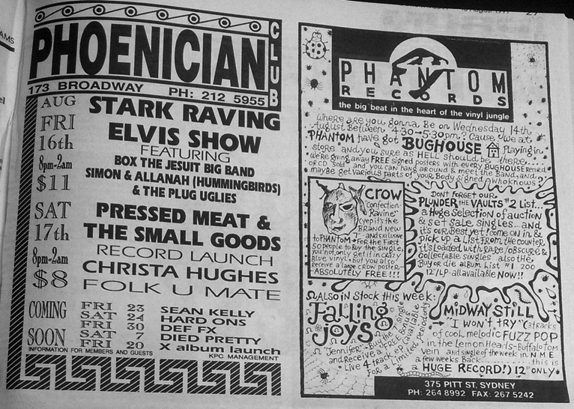
Advertisements for Phoenician Club (closed 1998) and Phantom Records store (also closed 1998), On The Street, Sydney, August 1991


As with many other industries, live music in Australia has undergone a form of restructuring. Much of this occurred during the 1990s, though it wasn’t so obvious at the time and there were plenty of other interesting things happening, often within stumbling distance of one’s affordable inner-city rental accommodation. Continue reading

Posted in ESSAYS | Tagged , , ,

Nicholas Birns Reviews Another English: Anglophone Poems from Around the World

Another English: Anglophone Poems from Around the World
Catherine Barnett and Tiphanie Yanique, eds.
Tupelo Press and the Poetry Foundation, 2014

This anthology’s editors are forthright about its flaws; in their introduction, Catherine Barnett and Tiphanie Yanique admit that their partition of the Anglophone world (excluding the US and UK) into seven parts is ‘woefully inadequate,’ (xiii) and that their decision to concentrate on Ghana, South Africa, Australia, New Zealand, Canada, the Caribbean, and India left out many other regions and nations where English was natively spoken (much of this is simply reflecting the dominant biases of postcolonial study in general). Continue reading

Posted in BOOK REVIEWS | Tagged , , , , , , ,

All Water

Been thinking a lot about gills,
how this flesh fringe can take in

water and air, how you can
catch a fish by tickling it

under its belly wearing silk
stockings on your hands.

How you can hold a fish
gently in the current’s stream,

revive it
as if it were a lover

needing stroking, needing
the brush of lips over glazed skin.

What is it we do
when we take a fish or sip,

pluck an apple, kill a man
or beast? Are we stopping or continuing

an endless flow
whose movement is toward

home or origin, whatever that may be,
whatever that may be, home,

beginning, but what or where is this?
Was it a cloud that formed,

let the first pure diamond
drop from its wet womb? Was it

first the puddle evaporating
in billion years’ young sun?

Is this why
everything keeps moving, why

the circle within the circle
within the circle turns?

Because there is no soil
worth dying for (it’ll

have us soon enough). We
are mostly water and all water

is a thing that seeks a home but has no home
except that carved in earth by seeking.

Posted in SCOTS | Tagged

Leave, Eriskay

I know the feeling of the grain farmer
who packed up and left his smallholding:
and not for the famine or the drought
but for the light being always on his back.


‘The Work’ first appeared in Moontide, Hexham: Bloodaxe Books, 2014

Posted in SCOTS | Tagged

Dystopian Empire

Gossip spot-fires in Borroloola’s Big Camp,
excitement incites The Gravel,
at Malandari, shopkeepers look up from their stocktaking
and the whitefulla foreskins forget their power:
dem people fightin’! twobula bardibardi ini dirt
an dem whitefullas can’t stop’em…

The grey nomad traffic to King Ash is incensed
at the effrontery, claiming a flotilla
with the miners for gawking. And crowds keep streaming
from the catchments, this build-up’s broken:
there’s two old women fighting down there
and no one can obstruct them.

The close combatants are tearing hair and stomping
toes; bowed knee to knee like breaking kindling; gouging
and screaming as though into mirrors: jirda! dat munga
cartin’ yarn at me ini!
The fierceness
of their fighting has the crowd banked up, pointing

and impotent in the late afternoon burning,
a dehydrated alcoholic crankiness; and the riot squad
is back in Darwin, worn out with the fighting,
their vacancy unfilled like the punch line of rainbows.

Some will say, in the years to come, that the young
blackfullas lit up their ganja, or sniffed,
at the spectacle; the expectant mums pissed
as coconuts fermenting in sand:
but that soap-box’s bent boss-eyed.

What do munanga know of salutarily singing Country?
Of the numinous mischievously stirring strife
amongst already sabotaged custodians whose kujika’s scorched?
Who will tearfully sing him, big business, with millad mob
in the dirt, pressing forwards, hoping for peace?

Posted in 66: OBSOLETE | Tagged

Grave

inside the clearing of the bush cemetery
I sit surrounded by a stark equality
every grave is marked with a plain white cross

the landscape is a post modern dirge
stretched in the aftermath of Christian law
the plastic flowers have faded to pastel

all distinctions are blurred here
the new and the old will conflict soon
the nearby trees will referee

I sit with a stark equality
Where earth and heaven meet
The reality is killing me

Posted in 66: OBSOLETE | Tagged

The Work

If I have to, then let me be the whaler poet,
launcher of the knife, portioning off
the pink cut, salt trim and fat, tipping
the larger waste off the side of the boat,
and then to have the poem in the drawer;

or, perhaps, let it be the poet nurse,
hearts measured by a small watch, balmer,
washer of old skin, stopping by the door
in the night –
or the oil-driller poet, primed
for the buried flame and heat, lips to the black,

aware how the oilfields in the evening
are lit like our own staggered desks.
Or, the horse-trader or the smith, or the waiter poet
offering the choice wine, polishing to the light,
the bringer of the feast and the bill.


‘The Work’ first appeared in Moontide, Hexham: Bloodaxe Books, 2014

Posted in SCOTS | Tagged

A Parable

Interventionists are coming, interventionists are coming
cries echo through the dusty community
as the army arrive in their chariots

Parents and children race for the sandhills
burying tommy axes and rifela
hiding in abandoned cars along the fence line

One woman ran to the waterhole
hiding her baby in the reeds
dusting her footprints with gumleaf

Other children went and got their cousin
shouting mum you gone rama rama
you should see the clinic

That night the woman went back to the waterhole
leaving her child in the reeds
this time in a basket

In the morning the children return
crying mum you gone rama rama
you should see the doctor

At the clinic I feel her pulse
check her blood pressure
test for diabetes

Staring in my eyes
she whispers quiet Luritja
this boy his name is Moses

Posted in 66: OBSOLETE | Tagged

Honeymoon

At the edge o a time, the tide n the licht begin
tae tell thir sweir-drawn bye-the-nou thegither –
the saft saund-slaikin-straikin, the sunslant
stellin an oor in lamer, the ootrug gaan
a bittie faurder ilka turn – awthegither:

twa welcome guests wae twa awa, mindin on
tae spear at yir lasses, n syne, a when
stappies nearere the door, turnin tae sae
hoo leesom n wi maun n mair aft,
n sic n sic-like, till watcht doon the road.

Nou, I this ower-seendle times, the stanes,
weetit n luntit, warship. Thay air colour.
saphir, ruby, dymont, dymont – ye wadna
hae trouit thare wis sae mony jems I the warld,
that mony prisms on wan weel-kent strand.

Posted in SCOTS | Tagged

Revelation

The heron has a dream of blindness.

He starves, but it is beautiful;
the feeling of the fishes brushing his legs.


‘Revelation’ first appeared in Locust and Marlin (Shearsman Books, 2014)

Posted in SCOTS | Tagged

Why I was so bad at clay-pigeon shooting

It was cold. It was raining. I was tired.
I cried ‘Pull!’ and tightened, tried to follow the whirring discus
to its apex, the point at which it would pause and begin its fall.
My eye filled with dark mountain,
the grey curve of two heron
sweeping back along the silver loch,
and the shotgun was an extension
of my ability to crush the world
in gunpowder and brass, and the recoil
went deeper than the soft socket of my shoulder.


‘Why I was so bad at clay-pigeon shooting’ was first published in Magma 55 (2013)

Posted in SCOTS | Tagged

Piercings

It took two looks to see him –
snapped head and loose jaw, silent
moviewise. The boy who broke me in,
my head, my skin, up, said ‘a break-
down would do you good’. The change

snuck him past me, but: same flesh,
same stride. I called; we spoke.
The quick, smiling chat of two
folk who knew inside each other’s
mouths, but not heads. I looked hard.

The difference wasn’t clear, and then
it was. – The lipring that turned
his pout sullen, hot. The jangle
of earrings I’d buried my face in
as he steel-tracked my heavy

shoulders. The scaffold. The sharp,
shocking stud in his busy tongue.
All gone. In the four years since
he hauled me into a lift, with
‘You wanna make out?’, he’d pulled

out every metal sign, become
employable, less obvious. I’d paid
ten quid in Camden for my first, made
more holes each time I got depressed.
Got inked. He asked, ‘So what do you do now?’


‘Piercings’ was first published in Visa Wedding (Stewed Rhubarb, 2012)

Posted in SCOTS | Tagged