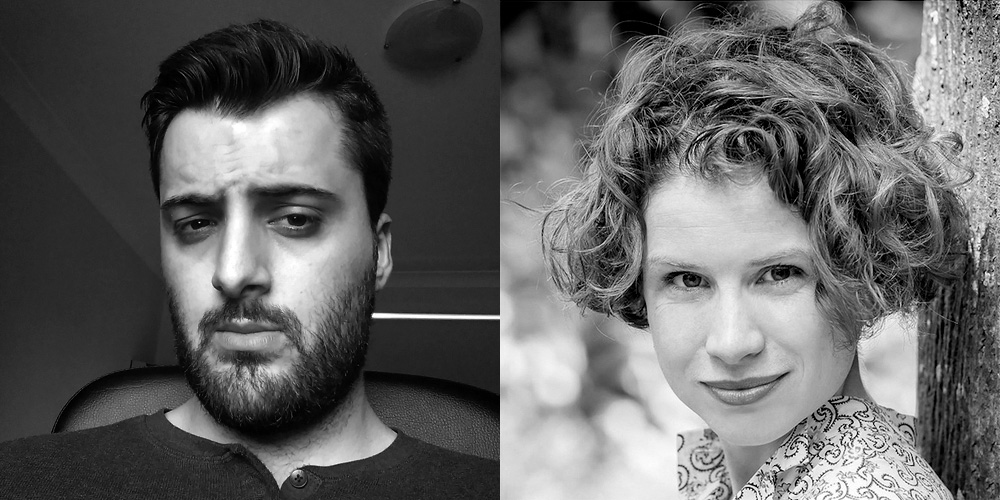
Tim Wright Reviews Lê Văn Tài, Nguyễn Tôn Hiệt & Phan Quỳnh Trâm, Edited by Nguyễn Hưng Quốc and Nhã Thuyên

Poems of Lê Văn Tài, Nguyễn Tôn Hiệt & Phan Quỳnh Trâm
Edited by Nguyễn Hưng Quốc and Nhã Thuyên
Vagabond Press Press, 2015

The academic Michael Jacklin who launched the present collection, has written that there is ‘ongoing neglect of literature produced in Australia in languages other than English,’ citing as one example the Australian-based, international journal of Vietnamese writing Tien Ve, which appears to be little known in Australian poetry circles. Continue reading

Posted in BOOK REVIEWS | Tagged , , , , ,

Michael Farrell Reviews Grant Caldwell

Reflections of a Temporary Self by Grant Caldwell
Collective Effort Press, 2015

Publishing a selected poems is an act of confidence. While no one who writes poems would want to be judged on their worst effort, a selection suggests these are the poems that – if readers must judge – the poet be judged upon. The act is, however, doubly denied by Caldwell in the qualified title, Reflections of a Temporary Self, and by the front cover author photo: is he asleep or isn’t he? The I-don’t-necessarily-give-a-fuck attitude is part of the package. I qualify the attitude because Caldwell, in producing an eighth book (consisting of poems from six previous books and new poems), clearly does give one.

Continue reading

Posted in BOOK REVIEWS | Tagged ,

Review Short: Π.O.’s Fitzroy: the biography

Grit in the Oyster

Fitzroy: the biography by Π.O.
Collective Effort Press, 2015

For Π.O., ‘Fitzroy is what you, bump into/ when you leave home’ (599). It was outside his family’s first front door after they escaped the Bonegilla migrant reception centre in 1954. After sixty years and homes in other suburbs, it is still the place that his poems gravitate towards. If anyone were to attempt writing the biography of Melbourne’s first suburb, Π.O. is the poet.

Continue reading

Posted in BOOK REVIEWS | Tagged ,

Review Short: Quinn Eades’s all the beginnings: a queer autobiography of the body

all the beginnings: a queer autobiography of the body by Quinn Eades
Tantanoola, 2016

The world can never be understood in quite the same way after having seen Eades’s ‘body’ written into these pages. It is an intimate connection, sometimes an embracing, but sometimes a turning away from that which feels too exposed but still draws the eye.

Continue reading

Posted in BOOK REVIEWS | Tagged ,

Review Short: Krissy Kneen’s Eating My Grandmother: a grief cycle

Eating My Grandmother: a grief cycle by Krissy Kneen
UQP, 2015

Eating My Grandmother is the first collection of poems by novelist and short-story writer Krissy Kneen. As its blurb announces, it is a book written out of a sense of necessity: the imperative to record and to make sense of grief. These poems are autobiographical and confessional: their ‘I’ presents itself as the voice of the poet, and a photograph of the poet’s grandmother appears after the last poem. Continue reading

Posted in BOOK REVIEWS | Tagged ,

Autumn Royal Reviews Martin Langford and Dan Disney

Maps for Landing & Leaving Ground

Ground by Martin Langford
Puncher & Wattmann, 2015

Mannequin’s Guide to Utopias by Dan Disney
Flying Island Books, 2013

Matters of identity in relation to land are a major concern for poets writing in Australia. In the introduction to The Penguin Anthology of Australian Poetry (2009) John Kinsella points out that since its earliest forms Australian poetry expresses ‘a sense of urgency about communicating the uniqueness and significance of the Australian landscape, and the relationship between individuals and community and country/place’. Continue reading

Posted in BOOK REVIEWS | Tagged , ,

The New Reality in Australian Poetry

The generation of Murray is not my generation. The generation of Adamson is not my generation either, nor is it Tranter’s or Kinsella’s. My generation is a new generation in Australian poetry. In this era of the ‘contemporary’, particularly as a political proposition after the end of history, it is a dangerous endeavour to suggest there is a modernist / social realist debate. And while the actors have undoubtedly changed (as has the world and its labels) we can discern two such derivative realities in the newest generation of Australian poets. These poets are working in ‘deformed realism’ and ‘sentimental radicalism’.

I take as foundational in the modernist / social realist debate the division that emerged in World War Two Australia and was later embodied by Katharine Susannah Prichard and Dorothy Hewett in the field of poetry. Of course, one could look to Lukacs and Adorno for similar faultlines, or to Albert Tucker and Neil Counihan, but given my position on Noongar country it is important to see what sediment exists here in and of itself. This then is a genealogical and sociological position, not a search for roots or an importation of culturally sanctioned and accumulated references.

Both modernism and social realism are important unconscious aesthetic influences in today’s new generation of Australian poets. This is simply one way of organising these groups and is a poetics of critique and projection not an inalienable and incontestable truth. If one chose to, one could organise the whole in a different way; for example, somewhat predictably, by authorial identity. I would welcome that if only to see how allegiances shift and groups coalesce around different stories. But authorial identity is a red herring and poor analytical tool at the best of times. It ultimately displays a myopic liberalism in the reigning paradigm of identity politics that focuses on the life rather than the art, and fails to come to terms with the death of the author.

That modernism and social realism haunt Australian poetry, now, seems to me to be in their complicated historical positions, for they have dripped down, leaving not so much inheritors in a strict lineage but rather a spectral presence. This is no doubt due to the elasticity of their original definitions and the catholic breadth of today’s poets. Indeed, the following observation from Martin Duwell’s reference to the ’68 generation seems so outdated that it has no resonance now. He wrote:

… a common charge was that the New Australian Poets had simply surrendered to a new (US) orthodoxy at just that moment in history when, in poets such as Dawe and Murray, Australia was finally achieving its own ‘voice’.1

That national moment has well and truly passed, but networking now means some possibility of return to a division before that. My generation works as bowerbirds do, taking language from all over to make its nest. The American influence that is predominant, though, would seem to be John Ashbery and L=A=N=G=U=A=G=E in deformed realists, and hip hop in sentimental radicals. But this does not discard that they speak in a distinctly Australian idiom.

As Bernard Smith wrote in 1944’s ‘The New Realism in Australian Art’, ‘The development of this realist tendency from the ranks of the moderns should be distinguished from the rise of modernism itself’ (466). Indeed, there may be poets working in a derivative modernist vein (Astrid Lorange for one, as epitomised by ‘Select Menu Items from Outback Steakhouse’) but the deformed realists who have taken modernism and twisted it, which is not entirely separate from a social realist iteration. This is particularly so in Bonny Cassidy’s Final Theory, Corey Wakeling’s Goad Omen and Luke Beesley’sJam Sticky Vision. These three poets seem to be the most prominent exponents of this style, which is characterised by disrupted narrative, concern with daily life and intermedia, and experimentation from a centripetal location. It could be said to have a stronghold in Giramondo Publishing’s list, which might be explained by the proclivities of publisher Ivor Indyk. But this is complicated by his publication of Lachlan Brown and Fiona Wright who seem to work in an entirely different, and altogether more suburbanist iteration. As Smith suggests though, ‘to accept realism is not to retreat’, which is to say it is not a retreat from the treatment of form nor of the figurative world, which is the case in these three poets (468). One is struck by the combination of difficult abstraction and literal image that seems to explode the binary oppositions that so animated mid century visual artists.

As Gertrude Langer wrote in ‘Notes for a Talk on Modern Art and Abstraction’ from 1945:

To abstract is to distil and to distil is to intensify. The contemporary artist (the genuine ones anyhow) search for an essence, a central meaning in what is seen. One group of abstract artists consciously abstracts (or distils from nature). The other group does not but, ultimately, no one can get away from nature, even if it is not so obvious in the work. (470)

Upon first inspection the sentimental radicals might appear to be moving away from nature, such is their relatively urban coordinates, but this is simply to resurrect an unhelpful city-country wall that does nothing to comment on the animating energy and form of the work. The importance of this passage is, I think, in highlighting intensification. Emerging from a context of spoken word, slam and orality, one notices the desire the intensify experience in the work of sentimental radicals like Omar Musa, Omar Sakr and Maxine Beneba Clarke. Their content is avowedly political, they deal in ordinary language and have a proclivity for rhyme, but this is not combined with a formal experimentation common to deformed realists. However, one notices in them a willingness to try new things and to be influenced by shared innovations, hence the break in strict teleological linearity common to the generation as a whole. Modernism matters here as well.

In splitting hairs though, deformed realism tends to be concerned with the form politics takes, which means it sides with a Hewettian archetype. By contrast, sentimental radicalism takes a political content (the Prichard mode). It should not be suggested that neither of them are Marxist, for materialist readings of each can be supplied. Rather than a traditional dialectics being projected, I would rather think of them in a synchronic sub status group conflict given their temporal concurrence. Who is the master and who is the slave remains to be seen for the identity politics paradigm (and in its left liberal microcosm of poetry) there are shifting intersectionalities that make the assessment of power fraught, particularly if it aspires to thoroughness. In addition, accessing information on the history of the book (sales, advances, reviews) and its performance (door takings, audiences, launches, readings, festivals) makes it harder to assess the field comparatively and to define where a poet definitively stands. While any poetics must always historicise, we must also always contextualise and in so doing understand that the frame will determine the weight, gravity, importance, power, place and so forth.

One might choose to see ПO as their common antecedent however. This is not first order obvious, and I doubt many would sight him as an influence, nor is it for reasons of identity. It is for his synthetical rejection of Hewett and Prichard, for his glocalism, epics which are poems including local history and for his formal inventiveness and orality/publication combined. He is decidedly his own thing, which is also decidedly a new thing. What unites them, though, is not so much an agreeable third way middle ground, which accounts for the majoritarian politics of poetry as a whole, but also a lack of politicised coherence. One forgets the content, or rather abstracts the content for fear of didacticism and obviousness. The other forgets the form, meaning that the radicalism of previous generations has not found its successor and that there is a conservatism that seems, at its worst, like the continued singing of the Internationale. This is despite the fact that the old can become new again, and that tradition is necessary bedrock for the revolutionary activities of tomorrow. It would be skulduggery and numbskullery to suggest otherwise. There is a half committed politics in a great many poets of my generation. This is not to deny the importance of a personal micro-politics grounded in embodied experience, but it is to acknowledge the decline of party membership and the lack of ideological vocabulary. We are all Marxists but none of us are members of the Communist Party.

This observation does not prevent seeing that some individuals are both poet and activist. Benjamin Solah − Melbourne Spoken Word and the Socialist Alliance − is one example. But of his work one might highlight what Albert Tucker suggested of his contemporaries:

The function of the artist is interpreted as that of a glorified cartoonist and banner maker … Only political action has validity today. Therefore art can only achieve validity when it functions in a direct and immediate political sense. It must be socially utilitarian consciously carrying out a correct political duty. Art is only art when it is politics. (433)

This is not to dismiss it, but to highlight the fact that we need to interrogate what art and politics are in a fundamental way, and in our language games that matter materially rather than simply take ideological positions and pragmatically proceed. In other words, the fundamentals need always to be questioned.

For deformed realism and sentimental radicalism one need turn to the Antipodean Manifesto, to suggest that ‘if the triumph of the non-figurative art in the West fills us with concern so too does the dominance of social realism in the East’ (686-7). There are, of course, other ways and these are evident even in specific poems by the poets named above (see the prose of Luke Beesley for example) which undo this paradigmatic assertion, complicating further the analytical critical enterprise.

Posted in ESSAYS | Tagged , , , , , ,

hows its: To the Pitch with Nicky and Astrid

Last June I had the pleasure of launching Nick Whittock’s hows its (Inken Publisch) at Gleebooks in Sydney. Since then, Michael Farrell’s extraordinary review has been published in the Sydney Review of Books, and Simon Eales’s essay, ‘‘Get ready for a broken fucken arm’: The anti-instrumentalism of postcolonial cricket poetry’, discussing Whittock’s earlier chapbook covers, has been published by the UK-based magazine Don’t Do It. It seems that we are in a moment – this one, right here – in which a discussion of Whittock’s poetics and a deep engagement with the critical relationship between reading cricket and writing poetry is emerging. In the spirit of the moment, I have reworked, or rather, rewritten, my speech for Cordite Poetry Review.

Years ago I went to a test match at the SCG. Australia versus South Africa. Blazing heat, beer scum smelling of rotten pipes. I sat next to Fred (not his real name), who constructed a large sun-blocker from a cardboard box and a t-shirt, obscuring his whole head. He had a book with him, for slow innings. When I hadn’t heard from him in a while, I looked to my left and found him ferreted in box-shade, reading a chapter of Eric Santner’s On Creaturely Life called ‘The Vicissitudes of Melancholy’. The chapter talks about the writing of W G Sebald, a novelist who, it seems relevant to emphasise, was concerned with the page as a site for the convergence of image, language, history and speculative thought. Fred’s awareness of the game was like a background to something else, an ongoing engagement with the relationship between psychic and creaturely life, or, maybe more exactly, between the problematic of consciousness and the immeasurably large and fraught context on which consciousness depends. The interminability of a January day spent shadeless amongst inaction and stoppage was just one version of this engagement’s endless scenes.

At the time I was making an effort to properly understand the sport, otherwise known to me as a very general sensibility, a set of loose concepts. But learning cricket, as I found out, requires an entire lifetime. Cricket doesn’t just ‘take’ time to learn, or indeed, to play. Cricket is time itself. Cricket is duration made apparent by the logic of industrial time – the rapidity of capital or broadcast modulated by the drag of infrastructural economy (contract, law, language, discipline). Cricket’s massive temporality is what makes it a difficult but compelling subject to dedicate one’s thought to – an act of dedication that is, above all, bound to a history that circumscribes thought’s regulation (in and as the effort of empire, towards a logic of the natural fact). For this reason, engaging with cricket as a critical activity can never radicalise its terms – radicalising cricket would require its literal destruction.

Hows its comprises a series of linked but separate experiments in scoring: scoring a match, scoring for performance, scoring the page, scoring as a register of activity. The experiments write across a body of other texts – literature, philosophy, criticism, art history, politics – and alongside the play of the match. If a game of cricket over-produces its own scoring data, then this book is both homage and satire in its re-staging of the perversity of data proliferation. Scoring a match by anagrammatically hacking Beowulf is no more perverse than the collusion of military technology and KFC to score the game in infrared.

The book is unusually structured, at least, for a book of poems. There’s no system for titles, the colophon is oddly tucked, there are extended spreads of blank, and the scanned pages show the underside of their original overleaf. And it’s as much other things as it is a book of poems; an artist book, a work-on-paper that happens to be perfect-bound but could otherwise appear as a packet of leaves or installed on a wall. Being a book, however, comes with its own consequences, material and otherwise. The object is A4, bound on the short edge, like a clipboard flipped to landscape or the open leaves of a photocopied logbook. This proportion fits snug like a mirror the perforated singles of ‘The “C.W.S.” cricket score book’, a gridded template on which many of the poems are composed. The embeddedness of these different page-forms in the book object draw the reading attention to the construction of a book beyond its most basic function of capturing and facilitating a linear flow. Hows its is also an annotated collection of illustrations – pen portraits composed by Whittock’s sketchy lines, which, though fine, overlay themselves in sudden emphases that make the images somehow both cautious and explicit. These illustrations bring yet another awareness of the hand, a hand whose indexed labour is the book’s total coherency.

Hows its is also map, a work of love, a conspiracy theory about Big Cricket, a sci-fi in which Brian Lara, Michael Clarke and Lara Bingle co-exist as the concept of pure desire, a version of Wittgenstein’s language game played by Ricky Ponting as a melancholy ink sketch and a cyborgian Shane Watson, a list hung together by the promise of numerology or the tease of a code, a meal distributed over a decade, a record of the road between Melbourne and the Brogo Valley, an account of the terminal years of analogue television, a study of the interior of the scanner at the St Kilda Library, a working theory for the logic of a nickname, and a queering of the mythos of sport. Whittock’s labour is not only in the construction of a book that manages to be so much more in addition, but in the capacity to read cricket as a writing practice.

In her essay ‘A Poem is Being Written’, Eve Kosofsky Sedgwick makes a connection between learning poetry by heart (using the regulatory logic of metre as a guide and mnemonic) and being spanked for transgressive behaviour. Both were disciplinary activities aimed at returning her, time and again, to the regular pattern by which meaning and form aligned. One of the reasons she makes this connection, I think, is in order to reconcile the contradictory desires we so often experience in our relationship to literature – the desires to both preserve and ruin it. Too often we are reminded of the inseparability of literature from that which we hope it might liberate us from; too often we are reminded that reading and writing cannot, at least not alone, transform for us what is hopeless. I reread Sedgwick to be reminded that writing does not save us from what we fear, but rather unites us with the fearsomeness of what we desire, allowing that desire to be encountered as a form of thought in what is written. Whittock’s poetics draws a series of radial lines between two acting centres – cricket and poetry, both equally corrupt and equally desirable. Hows its is the double quiver of these two centres, bending into one long duration of attention.

Posted in ESSAYS | Tagged ,

Bonny Cassidy Reviews Contemporary Australian Literature: A World Not Yet Dead

Contemporary Australian Literature: A World Not Yet Dead Nicholas Birns, ed.
University of Sydney Press, 2015

As Feature Reviews Editor and sometime reviewer for Cordite Poetry Review it is an unusual (and therefore fun) privilege to consider a title in which poetry is critically addressed in the company of other forms. Too often it is it either quarantined within poetry-only criticism, or mentioned as an embarrassing aside to discussions of prose. Continue reading

Posted in BOOK REVIEWS | Tagged , , , , ,

Review Short: Audacious 1, Benjamin Solah, ed.

Audacious 1 by Benjamin Solah
Melbourne Spoken Word, 2015

Coming straight at your inner eardrums is the debut volume of Audacious, the audio journal of Melbourne Spoken Word. Like a night at Passionate Tongues, or an afternoon at the Dan, this collection presents a variety of poets at different levels of artistic development. Some are seasoned and in full flight, while others are up-and-comers still finding their voice. In this volume at least, Audacious offers more of the latter. Continue reading

Posted in BOOK REVIEWS | Tagged ,

Review Short: Louis Armand’s East Broadway Rundown and The Rube Goldberg Variations

East Broadway Rundown by Louis Armand
Vlak Records, 2015

The Rube Goldberg Variations by Louis Armand
Vlak Records, 2015

Louis Armand’s poetry is unbending in its loyalty to the aesthetic and moral responsibilities of the avant-garde. In these new chapbooks, both published by Vlak Records, Armand mines culture for its buried messages, showing how fraught with uncertain track is any search for truth and authenticity in a world made knowable by language.

Continue reading

Posted in BOOK REVIEWS | Tagged ,

Submission to Cordite 55: FUTURE MACHINES

Future Machines
Image by Joshua Comyn

Poetry for Cordite 55: FUTURE MACHINES is guest-edited by Bella Li.

To conceive of future machines is to imagine what haunts the boundary, always fluid, always negotiated, between the possible and impossible. To figure the distance, real or perceived, blurred or distinct, between ‘now’ and ‘later’, between the machine and its others; to invent species of machines – human, poetic, desiring, infernal – that are yet to be. Verne, Asimov, Wells; automatons, androids, fictions; narratives, devices, DeLoreans – dream, design and send your future machines.


Please submit only once, with a maximum of three (3) poems (visual and concrete welcome) or works of microfiction (500 words maximum) in one (1) document … but first, please read the submission guidelines.

Posted in GUNCOTTON | Tagged ,

Matthew Hall Reviews Writing Australian Unsettlement

Writing Australian Unsettlement by Michael Farrell
Palgrave, 2015

In his essay on Charles Olson, ‘Open Field Poetics and the Politics of Movement’, David Herd bridges the geopolitical gulf between Hannah Arendt’s conception of ‘statelessness’ and Giorgio Agamben’s ongoing inquiry into the state of exception, biopolitics and nationhood. Herd contends that:

… [f]or complex and evolving reasons, the modern political state has become, by the early part of the Twentieth Century, synonymous with the idea of nation. The consequence of this was that citizenship came to be identified with national affiliation. Simply put, to fall outside of one national jurisdiction was to fall outside of all jurisdictions.

Continue reading

Posted in BOOK REVIEWS | Tagged , , , ,

Review Short: Linda Weste’s Nothing Sacred

Nothing Sacred by Linda Weste
Australian Scholarly Publishing, 2015

Linda Weste’s Nothing Sacred provides an eclectic, erotic and sometimes profane insight into the private and public lives of Republican Rome. The combination of historicity with sensory poetics provides an immersive, visceral reading experience. And there is immediacy about the submersion in place – the reader is there from the first line, walking through the ‘peat bog haze’ and ‘streamers of blood’ of the eternal city.

Continue reading

Posted in BOOK REVIEWS | Tagged ,

Review Short: Alan Loney’s conStellations

conStellations by Alan Loney
work & tumble, 2015

The value of information is in its organisation. Twin impulses to present and re-present data (words, text, images, worldly phenomena) inform Alan Loney’s recent chapbook conStellations, from work & tumble press.

Continue reading

Posted in BOOK REVIEWS | Tagged , ,

Review Short: Ken Bolton’s London Journal / London Poem

London Journal / London Poem by Ken Bolton
Vagabond Press, 2015

Readers of contemporary Australian poetry will most likely need no introduction to the work of Adelaide-based Ken Bolton. In a career extending back to Four Poems (1977), Bolton has established a distinctively discursive poetry, one that weaves observations of the poet’s everyday environment with musings on art, culture, and society more generally. Continue reading

Posted in BOOK REVIEWS | Tagged ,

THE END Editorial

Pam Brown


I think I was thinking of a big concept like ‘The End Times’ when I made up a theme for poems for this issue of Cordite Poetry Review. There is general consensus that the times we’re living in are endtimes. A few examples of thousands of cultural works on the theme could start with Dada at the beginning of last century, Maurice Blanchot and Samuel Beckett somewhere in the middle, Jean Baudrillard later on, Susan Buck-Morss, Slavoj Zizek – Living in the End Times, Esther Leslie’s Derelicts: Thought Worms from the Wreckage and Christine Brooke-Rose’s last work – a dark & comical exploration of the lead up to an elderly death, Life, End of. I could list countless speculative and dire investigations and reports into the catastrophes of climate change, permanent war and semio-capital’s rampant venality, land grabs, financial and social injustices. Basically, it’s a bit of a broken world.

But then, who am I to tackle a grand theme? It would sound pretty precious. In my own poetry I’m more likely to zero in on symptoms and effects. However, as someone who lost her faith in nihilism a little while ago, optimistically (and always also sceptically) I undertook the task.

Predictably, having settled on THE END as a theme, I started to notice all kinds of endings everywhere around me. There was a Samuel Beckett symposium at Western Sydney University titled The Endlessness of Ending. Of course, Beckett is exemplary when it comes to THE END, also the title of a theatre monologue adapted from his story of a dying man, that I saw Robert Menzies perform, very shrewdly, at Belvoir St Theatre in Sydney a few years ago. And then there’s Endgame, Krapp’s Last Tape, and myriad other endings in Beckett’s extraordinary work.

Recently I started watching yet-another-final-episode of the once-fantastic now-risible TV sci-fi show Doctor Who – you know the one, does the Doctor actually die this time? – in which the Doc pronounces that they’re ‘living in a reality bubble at the end of time itself’ and that they are at ‘the end of everything’ and so on relentlessly reciting ‘endings’ in a saccharine longueur. Fairly soon I found myself picking the iPad up from the couch and beginning to scroll through some other aimless thing.

Then I noticed an article on the recent Venice Biennale illustrated with Fabio Mauri’s painting of the final frame of a TV drama – ‘THE END’. During my time reading the poems I was also very conscious of and on the lookout for the wonderful lettering on ‘THE END’ in many cinema titles, especially in 1940’s film noir and cineuropa movies.

I remembered the graphics of the last frame of Loony Toons’ animations – ‘That’s all folks!’ Movie endings are endless. Alongside choosing the poems for this issue, I invited film critic Adrian Martin to contribute an essay. Then soon after his wonderful essay Last Concern arrived, I noticed that one of Adrian’s recent book titles is Last Day Every Day. Perfect.

Anyway, we’ve all been here before – there are millions of approaches to THE END. Wherever anything begins there is some kind of end and as Beckett wrote in Endgame, ‘The end is the beginning and yet you go on’. So it goes – on and on – so far …

The editorial zone is not always kind or fair in spite of our best intentions. I’m complicit in a couple of unfortunate aspects of it. I regret the constraint that meant only about 40 local poems of around 1000 could be chosen for publication. That comes down to the familiar and unjust paucity of literary funding. The other constraint was to read blind, so if anyone is feeling miffed for not having their poem in the issue I apologise – even though I have no idea who you are (the exception being two poets whose work I know and like who’ve told me that I sent their poems back). Enough of my waffling – as Ludwig Wittgenstein said ‘Explanations come to an end somewhere’. This is where.

I am pleased to present this particular ‘various field’ (thanks James Schuyler). Thanks to Cordite Poetry Review editor, Kent MacCarter, for the opportunity to do so, thanks to everyone who sent work in and may you, dear readers, enjoy the result …

Posted in ESSAYS | Tagged

Last Concern


Image courtesy of Myrna Suarez / Simon & Schuster

In cinema, isn’t death a synonym for ending?
–Serge Grünberg, David Cronenberg (1)

‘It’s over. You’re finished.’ And then, after a pause: ‘Goodbye’. These are the last five words uttered by Christopher Walken in the concluding scene of The Dead Zone (David Cronenberg, 1983). His character, Johnny Smith, has been tormented, up until this point, by an unusual gift that has made him the ostracised loner within his community: if he grips someone’s hand, he can foresee the moment of their death. If they take his advice, they can alter this destiny; but many, considering Johnny to be a nut or a freak, ignore it and suffer the consequence.

Continue reading

Posted in ESSAYS | Tagged , , , , ,

The Huntsman of the Rubáiyat: J H Prynne and Peter Henry Lepus Go to Abu Ghraib

Minor cultures are not only represented by poetry written in response to state violence. With each such poetic utterance, they are maintained as agential entities. Michael Richardson, in his forthcoming book, Gestures of Testimony: Torture, Trauma, and Affect in Literature (Bloomsbury, 2016) tracks various examples of these linguistic productions, investigating in part ‘how poetry can resist power even from within almost complete subjection.’ Continue reading

Posted in ESSAYS | Tagged , , , ,

The end is in the beginning and yet you go on: Samuel Beckett’s Lost Album

Café Beaurepaire resides snugly in a tree-lined cul-de-sac on the Rue de la Bûcherie in the fifth arrondissement. If not my favourite brasserie in Paris it is certainly up there, especially for its postcard glimpse of the Île-de-France, framed almost self-consciously through the horse-chestnut trees. On this particular afternoon I was less immersed in Parisian shadows and the frivolous play of light on dappled leaves than completely distracted by the object on the table before me – a long-playing record. This text is an account of the album’s discovery as well as a critical, archival and forensic study of the record and its cover art.

Continue reading

Posted in ESSAYS | Tagged , , , , ,

Natural Selection: Ecological Postcolonialism as Bearing on Place

For my son, Aidan, on his graduation with a PhD in biomolecular ecology.

Australian poetry reminds us that we cannot encounter the natural world except by cultural means. As Tom Griffiths writes, the idea of the natural world as a ‘cultural landscape acknowledges that an area is often the product of an intense interaction between nature and various phases of human habitation, and that natural places are not, as some ecological viewpoints suggest, destined to exist as climax communities or systems untouched by human hands’ (1996, p 277). Continue reading

Posted in ESSAYS | Tagged , , , , , , , , , , , , , , , , , , ,

Divergent Culture, Historical Influence: 11 Works by Abdul-Rahman Abdullah


Abdul-Rahman Abdullah | In the name (ed 3) (2015) | Tinted silicone, steel gambrel, galvanised chain | 140 x 65 x 25cm

My name is Abdul-Rahman Abdullah. I am a West Australian artist working primarily in sculpture and installation. My practice draws on the storytelling capacity of animal archetypes, familial space and the subjective nature of memory to explore and define personal experiences of cultural identity.

Continue reading

Posted in ARTWORKS | Tagged

This is Not a Poetry Review: Self-publishing 101

Romy Durrant, Love Poems. scribd.com, 2015

Cathoel Jorss, comb the sky with satellites, it’s still a wilderness. Australia: House of Lovers, 2014
(limited first edition of 100, reprinting 2015)

Justin Lowe, Nightswim. Katoomba: Bluepepper, 2014

Juan Garrido-Salgado, The Two Rivers of Granada Descend from the Snow to the Wheat.
Adelaide: Monje Califa, 2014 (limited edition of 100)


Self-publishing has never been easier to do than now, yet it’s often spoken about in terms of ‘last resorts’ or ‘building up’ to something. Some people do it shamelessly, others create publishing houses to mitigate the ‘stigma’. I’ve been sent four books to examine as case-studies, each of which use completely different styles of self-publishing.

I’m not a poet, nor a commercial publisher. Therefore, there are things I can’t do, even if I research them: I can’t really talk about perceptions of stigma from within the poetry community, or spout statistics on how many self-published poets find their way to ‘real’ publishing. I can’t tell you whether the poems that I have in front of me are ‘good’ or ‘bad’ writing, although I know if something is awful – and none of them are that.

I am a mix of designer, printer and artist, and I have spent most of my creative life in the company of poetry books, but on a different spectrum: zines, artist’s books and fine press books. All of which are, let’s face it, self-publishing formats. So what I propose to do is examine these four books through that lens, do some ‘thick description’, and see what emerges. First, though, I’d like to show you why self-publishing is particularly easy now, from a material/technological point of view.

Access to the making

Independent publishing has always been possible throughout history, but until the last twenty years or so, it has depended upon commercial relationships with those who own the means of production. The means of production were large machines, expensive to run and demanding to maintain, especially in terms of space and energy; machines that were physically dangerous, laborious to use, dust-catching, heavy and hard to move, and increasingly technical. The machines are still there – someone has to print on demand – but we don’t easily see them because that involves international travel to Asia. Private presses (those not beholden to commercial demands) were usually owned by those who had enough money to obtain and house some of the prettier pieces of equipment and the leisure to use it. Innovative poets and artists needed to befriend a printer, commercial or otherwise, and persuade them to use their skills interestingly (this is still often the case).

The first big change that gave poets and artists the power to fully realise their ideas was not part of the ‘press’ side of production, but in the ‘pre-press’ process, thanks to photography. The development of photographic reproduction in the very early part of the twentieth century allowed people enormous liberty with page space. Initially it was expensive, as text would still have to be set and printed with letterpress and then cut and pasted into interesting shapes before photographing and printing (this is one of the reasons why collage, using found text, was so exciting for the Dadaists et al). A few decades later, however, printing technology had advanced to the point where anyone could prepare text (‘artwork’) for the press using hand-drawn graphic methods, cut-and-paste text from typewriters and dry transfer lettering like Letraset, and it could be printed reasonably affordably (See Burke 1980). That is, if you could afford the offset printing process, which required a minimum of 500 copies and got exponentially cheaper the more copies you printed (which is why everyone had boxes and boxes of unsold books to store under beds and in broom cupboards). Later, ‘camera-ready copy’ was available to anyone with a personal computer and graphic software, and desktop publishing (in theory) allowed self-publishing to look much more professional.

Alongside this commercial publishing activity was the alternative stream of publishing, the kind that wanted or needed to sidestep the large machines. William Blake is one of the most famous self-publishers of history: he wanted to ‘cut his production costs, to be free of publishers and printers’, so he engraved his poems – backwards – onto his etching plates, incorporating them with his images and printing the plates as book pages (Oppen & Lyssiotis, 13). Not only is he a self-published poet, but he has been claimed as one of the first artists’ book makers, and here we first encounter a slippage between poetry publishing and artists’ books. The next one, after Blake, is Mallarmé, who knew enough about the printing processes of his time (1890s) to know how far he could push the process, which indicates that he had at least a working relationship with a printer.

Cheap and accessible methods of textual reproduction have proliferated over the last century: typewriters (especially with carbon paper), screen-printing, solvent copiers like Gestetner machines, photocopiers, risographs, and then desktop laser-printers and inkjet printers. Many of these are being revived by twenty-somethings keen to make something material without wanting to invest in large machines, or if they have committed to the big equipment (like Big Fag Press, in Sydney), they work co-operatively. Bindings, another expensive and technical consideration, were often rudimentary: staples, string, clips, coils.

The invention of the desktop computer and printer, and then a blip further, the development of the internet, is the biggest publishing revolution since the invention of the printing press. Suddenly there was infinite space, and very few overheads. Send a file by email and print one book at a time, via digital publishing or print on demand. But — why ‘print’, when you can simply jump to ‘publish’? Websites: blogs, online journals, digital archives, all threatening to kill the material book. Yet the book has refused to lay down and die, and poets as well as creative publishers like me are part of the reason why.

It has never been easier to self-publish across every genre of visual/textual expression than right now. Design, production, marketing, commerce: everything has dedicated software and most parts of the world can easily access your work if they know how to find it. So why does the notion of self-publishing make people wince?

Self-publishing, as I mentioned earlier, is an accepted form of artistic publishing. This is thanks to the persistence of the attitude that unique or limited output is of greater value than something produced in multiple – propagated, says Pierre Bourdieu, by the ‘cultural bankers’ (77). The opposite seems to be valued by poets: the dream is a wide audience, lots of good, serious reviews and ultimately – perhaps for one more generation – a large hard-copy print-run by a reputable publisher. Even when the poetry is conceptual, immaterial, gleaned from trawling the internet, it still often manages to end up as a hard copy book, because that matters.

Unprinted & online

For one more generation, perhaps? Let’s look at the first of my four examples: a downloadable PDF by Romy Durrant called Love Poems. Durrant, from her web presence, is a young savvy feminist student whose online username is @miseryclit. Her prolific output includes visual art as well as writing, and she is one of the founder/editors of a new online publishing platform called Alien She Zine (‘for women and non-binary artists and writers (but not exclusively).’ Calling the resolutely immaterial site a ‘zine’ is almost a manifesto, since zines have been the most lo-fi, low-tech, material vehicle for self-publishing since at least the 1950s.

Love Poems is downloadable for free from scribd.com and is a simple PDF file. Judging from Durrant’s other work, I supposed the title to be supremely cynical. It is cynical, but not supremely, because it turned out to be a tale of being lost and then found, or of seeing too much to be innocent, but still hoping for happy endings. The darkly saccharine photo-collage images reinforce the words like light bulbs switching on, then off as the file moves down.

What interests me here is the lack of trying to make this file unlike a book. The layout is quite conservative, despite the punkish use of lowercase text, and while I think it looks elegantly minimal, I suspect that it is instead insouciantly indifferent. It is hard to set poetry in any kind of dynamic layout file – the kind that devices like Kindles use – because much poetry is not dynamic, but rather completely inflexible thanks to its carefully composed and spacialised lineation. Thus most online poetry is in a static presentation format: PDFs, webpages, photographs. There are technicians working on the problem, but the dynamic/fixed line binary is pretty hard to overcome. Durrant’s PDF is seventeen ‘pages’ – actually, sixteen pages and a cover, in which it conforms to the print convention of pages needing to be divisible by four (because a sheet of paper, folded, has four reading sides). So if you tried to print it out as a booklet, it would actually make a slim chapbook. There is no ISBN, so she is relying on the/her internet community for distribution. The question is (and Durrant is welcome to answer it in the comments): would she prefer to publish in hard copy if the opportunity arose? Is that the end game? Or is broadening the exposure to her online work enough? She is obviously ambitious; sending her work into this publication shows that she takes herself seriously as a writer. The last line of this self-published book looks right back at the reader and says, ‘I found you.’

Posted in ESSAYS | Tagged , , , ,

(Self)Translation and the Poetry of the ‘In-between’

The subject and practice of translation has long been a feature of my poetry. It is a way of enacting bilingualism; the splitting and doubling of words, ideas, images and meanings that comes about in the processes of translation reflects my identity as someone who is in constant movement between cultures, split and doubled by my twin allegiances to different languages and places. In particular, I am interested in exploring my own practice of self-translation, to more fully understand the relationship between my poetic practice of writing across English and Italian and my subjectivity.

Continue reading

Posted in ESSAYS, SCHOLARLY | Tagged , , , , , , , , , ,