Translating Coastlines

On the beach’s long curve, gulls strut their names
into wet sand, seaweed scrawls tangled stanzas;
a piece of driftwood’s smooth-pearl journey ends
in a sandstone fissure.

Dunes and spinifex collaborate on parables, ancient
as rocks, balancing thoughts of the first
dry land; a eucalypt pondering death, casts
its human myth,

before the horizon fades into the grey metal sky,
to speak with like-minded continents;
the prophet moon wanders along borders,
performing stars fill theatres,

but the sea teaches the language of rips, hauling
a body to deeper science, yet, the murmuring
sound of spray, carries to sensitive hearts.
Then there is the white roll and splash of words

fused to a rock; this anonymous idea, captured
in a weak escape of fluorescent light.
It will be read next day, or next year
perhaps even, becoming the anthem
that mends the world.

Posted in 43: OZ-KO (ENVOY) | Tagged

Colourful Moths of North Korea

From a philatelic point of view North Korea has a lot to offer.

When the lights all went out
The sales assistant turned to a torch.

A rust-coloured Antheraea pernyi
Flew into the spotlight.

Antheraea yamami glowed yellow
Beside the drab of Bombyx mori L.

Outside the buildings cast no shadows
And found no light.

Outside the workers made common cause
Amid the gloom.

Aetras artemis priced for airmail and out of reach
A silk-moth cocooned in the fold of a curtain.

By torchlight we trafficked
Foreign customers among the official stamps.

Until the power returned and the fluoros
Resumed their humming

And the Pyongyang Stamp Shop Lepidoptera
Flew into the trap of light.

Outside the city faded into murk
Why do the worst dictatorships have the most beautiful stamps?

Posted in 43: OZ-KO (ENVOY) | Tagged

After Hwang Jin Yi (1506-1544)

WHITE WATER

White water hurrying to the blue mountain –
why such haste to embrace your
destination? Once there you won’t be
coming back any time soon. Relax,
love the moonlight on the mountain, but
take your time. Enjoy the beautiful journey.
 

I TAKE

I take the longest night of winter
by its centre and fold it
beneath a blanket of spring wind
and there I wait for your return
when part by part I will unfold
this night for us to enjoy again.


I AM STEADFAST

I am steadfast as this mountain.
Green is the water of my lover’s
affection. Water flows this way
and that, but a mountain never
changes. And as the stream passes by
it still reflects the mountain.


WHAT CAN BE OLDER

What can be older than a mountain
or younger than water
that with its ceaseless flowing
never ages? The restless people, too,
ebb and flow like water, gone so swiftly
they never learn how to grow old.


HERE

(after Im Je*)

Here in the valley’s long green grass
are you sleeping or just at rest?
Alas, where is your beautiful face?
Now only your bones remain in the earth.
Bereft, who is there to share with me
this sad cup of homage that I bring?

*Im Je travelled to Songdo to visit Hwang Jin Yi, the great kisaeng poet, only to find she had died some years before.

							
Posted in 43: OZ-KO (ENVOY) | Tagged

Midnight

after ‘Midday’ by So˘ Cho˘ngju.

When you leave me,
part of your heart

will still beat

in the empty space
between my sheets.

When you go,
the imprint of your body

will throb in the darkness

on the mattress
next to me.

And when I stretch out,
my arm to feel you

your absent fingers

will trail up the veins
in my arm.

But for now,
you fall asleep

with your arms around me

warmed by the red neon
of the Safeway sign.

Posted in 43: OZ-KO (ENVOY) | Tagged

The Anthologist

Of course, it is a work of love —
and has the smell of dust about it,
the love that settles from the air

on everything unread.
It has the whiff of toner, too,
the creak of books split newly open,

face down into the light,
poets’ names attached in biro,
a note for reference also.

We almost hear the cut-and-paste,
the metal edge, the mucilage.
Of course, there will be borders too —

space and time and native tongue.
The publisher will always want
her clean subtitle, not

the vagrant tastes of just one man
let loose among his intuitions.
And, as with all librarians,

his book will be arranged:
alphabetically perhaps
or poets by their date of birth

or sectioned into themes maybe,
the generations and their schools.
He’s read the Greek progenitor,

indifferently translated,
the original a template
inside the Palatine.

Sometimes it will be search-and-rescue,
helicopter, dangled ropes,
a poem flailing in the swell

against its third and final time.
And, yes, he feels the shove of others,
their sense of how things ought-to-be,

the by-lines that they’ve always known,
the names which cannot be be left out —
and, no less so, the what-ought-not,

the ones too cheap and glitzy,
indecorous perhaps
or much too modish in their time.

He’s tweaking still the Introduction,
his ars poetica,
the rationale that might explain

a teenage love to doubtful parents.
He sees the book in both its forms:
the hardback, leather-bound,

distinguished on a thousand shelves;
the paperback the young will relish
sprawling on their lawns.

He’s not untalented himself,
a man of (is it?) six collections,
but probably he won’t include

a sample of his own —
although the first anthologist,
sixty years BC,

was not beyond such self-absorption.
His book will have its own coherence,
its own necessity.

It’s in the closing stages now —
late inclusions, slow deletions,
ready almost for the scanner,

the unifying discipline
of one sweet serif font.
There’ll be the business of permissions,

the correspondence with the living
and those not so long dead —
the heirs at least, so hard to please.

He even conjures up the launch,
the song to send it on its way
given by the last great voice

remaining from her generation.
He’s seeing, too, the first reviews,
the listing of his strange omissions,

the talk of what they would have done.
And yet his book will find its readers,
the ones who’ll make it last for months,

the chosen poems, two or three,
they’ll slip into their sleep each night,
the few whose love is long and real —

among them the anthologists
who’ll murmur quietly to themselves,
inserting stickers here and there

and dreaming of their own.

Posted in 43: OZ-KO (ENVOY) | Tagged

The Renaissance

has only just reached
Appalachia. It’s winter,
& I’m driving with
the window rolled down,
listening to a pirated
CD of rapper, singer &
actor Yang Dong-keun
performing at a club in
the Hongdae district. His
use of ironies & wordplays
reminds me of—a legal down-
load this time—Herodotus
who I was listening to just
before, identifying, local-
izing & analyzing, by
purely syntactic parsing,
the recessive nature of
the sonnet in its meta-
physical form. Both are
back to their pissed
off indignant best even
though neither knows shit
about singing the blues;
but, hey, anything is
better than banjo music.

Posted in 43: OZ-KO (ENVOY) | Tagged

Translation Studies

beyond the reader’s window frame
the sky’s taut tent pulls
from pale nylon to the heavy canvas
of a violently blue
Australian mid-summer noon

far up the lost transition
the blackness of outer space

her cheek turns against
an indigo pillow

the magnified twill disperses
white light
and colour is seen
for the scatter it is

poor brain made of water
rainbowed soap bubble
popped to a starburst of tiny mini-bubbles
shootingoffin eight
directions

her eyes skate down the icy page
and suddenly every word twinkles

the sun in multiples
the vast and glittering sea

seen through a wire fly screen

Posted in 43: OZ-KO (ENVOY) | Tagged

State of Origin

“This is Hodges’ outstanding winger
Steve Price swallowed
up by Lockyer’s tackle

They’ve been together a long time
– as mates

[…] Back to the sideline &
finish him off!

Turn that left hand Carney!

“An intended intercept should nullify –
They’ve just been bamboozled
Hodges runs into a gap
double knock on

– nullify he was
waving his arms in the air nullifying

“He’s a good ‘un, he’s a Queenslander
Smith. Queenslander.
Slater. Queenslander.
Folau. Queenslander.

“Lockyer puts a soft ball on the stomach of Carney
He’s been used sparingly tonight Lockyer

chases,chases,chases
gets the hand out

They are revved up and ready to rumble
(It’s like running into a blacksmith’s anvil)

“This is where we started the game.
With enormous enthusiasm

Tonight We’ve Got the Chance to Divert
the Good Australia Even Further

Smith’s Over the line! In fact, Slater
threw him over the line. Very Solid defence

can’t see it from that angle? Or was it elevated
it was elevated

“The […] rule in this game
Can be confusing for the average punter.

Benefit of the doubt try,

Benefitofthedoubttry”.

Posted in 43: OZ-KO (ENVOY) | Tagged

Go out to be in time

in memory of Stuart Rynsburger

1 after Kim Hyesoon

Turn out the light, you hurt
the night. ‘When you look at me I feel
I should change.’

The day of the first snow
the snow was nowhere
to be seen. Cover your self

with its memory –
a cloud of flour over
hundreds of wooden chopping boards.

2

Pillows are stuffed with feathers – so much
for the early bird. The worm
hides from the sun,

the sun that is neutral but burns.
If there was a blade of grass I would blow through it
until out of breath, like you.

No one does most things. How well is irrelevant
to most things. They go on, they don’t
regardless. ‘All the best’ we said, knowing better.


Posted in 43: OZ-KO (ENVOY) | Tagged

Carless

we have spent money cleaning it and having it worthy of the road. we’re a little tense as it’s raining and one of us, eight years old, is not so aware or interested in the effects of mud on upholstery. we still have some petrol in the tank. it will be enough for the journey. it’s been a year since we made the decision and we’ve rehearsed being without it all through the winter recording each kilometre travelled, each litre expended. and now, we’re at this point, ready to drive for the last time from the town with little public transport to the city dripping in it, where the young guy who works for the armed services credit union will hand us a cheque to cash in at the bicycle shop.

Posted in 43: OZ-KO (ENVOY) | Tagged

Previous Post

red sky cast offs
to that of a deeper, postcard moon
just a flick, a screwed off lid
of a jar saved from recycling
remaining now as a piece of sound – the one
bracketed indication of rain
not as it is but as it is collected
on a wave-like surface made of tin
the ding of a machine, a bird scuffles
just a chick, now a honk
but not a goose (what would it be
doing up there?), then more scuffling
an animal hard to imagine
puppet-like – a day when it dims
“to make up for yesterday”
so you sweat inside a plastic jacket
but need it for the rain and
a siren cuts through it
to remind you of something
the previous bracket of life, twenty-five
minutes ago, unlocking the door
and coming around the side
the moving weight of cars, not
hostile but not altogether
friendly either (what if you had
an engine beneath you?) their
pleasurable version of floating
around, sleep in your eye, a radio
still as a drum, porous, agreeable
and annoying, a day: a gallery
or a tram, why not both? damp
salty surfaces and people hanging
their jackets up, sighing as if the weather
were a newspaper, dangerous day,
singing, ebullient outside, teeth
gritted against the weather, ‘the first
wave’ as musicians fold pillows over
and go back to sleep, toast
from wood-like, two-day-old
bread: put what you don’t eat
in the compost, and remember
the slighter changes in depth or pressure –
now a gull, yesterday a magpie
city birds, a teaspoon against
porcelain, a brush with the day, so far
so good, gathering – –

Posted in 43: OZ-KO (ENVOY) | Tagged

Driving North

The trunks of the eucalypts that crowd next to the highway
are black as a retina that looked at this sun.
They’re dressed for Sleepy Hollow and point
crooked fingers into the sky. Others aren’t playing
and stand there like tall donkeys bound with a fatigue
as thick as resin. Dead trees among the living,
they stand out like the ink-filled veins
of a medical procedure ending in bad news.
Shadows lay down across the bitumen like maidens
tied to train tracks. Twists of tyres, coiled like snakes,
litter the roadside, alternate with native animals
turned inside-out by the baking sun. Brahmin bulls
graze in dusty paddocks, the brown earth
as rutted as the cows’ bony sides. Something harp-like
about their ribs, the swollen knuckles of their hips.
Seventy-two shades of brown melting in the sun,
and it’s only August. Red flowers, burnt to a transparent rose,
wave from behind short white posts.
They beg for a lift, but are afraid of being seen.
We don’t belong here, we think but don’t say.
The highway our unfurling scream.

Posted in 43: OZ-KO (ENVOY) | Tagged

Warning

never believe the stone angels
listen closely to raven and possum
at night, ask the moon for permission
walk backwards past ivy-grown plots
do not cross running water
do not dig in the early hours
do not stand atop gravestones at sunset
draw your eyelids shut as you leave

Posted in 43: OZ-KO (ENVOY) | Tagged

Heather Taylor-Johnson Reviews Teri Louise Kelly

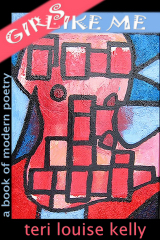
Girls Like Me by Teri Louise Kelly
Wakefield Press, 2009

Apparently for some it’s abhorrent to assume that a writer writes about herself, but I’ve always loved that bit: the drama of a writer talking about her own life, or about the lives she leads. So I really appreciate Teri Louise Kelly’s Girls Like Me, because she makes no secret about it. It’s about her life: the drugs, the druggy friends, the fuck-you atmosphere, the I-am-here stipulations. In short, I love the shear drama of it all.

Continue reading

Posted in BOOK REVIEWS | Tagged ,

Tara Mokhtari Reviews APC 2010 New Poets Series

Sundecked by Rachel Petridis
The Weeping Grass by Michelle Leber
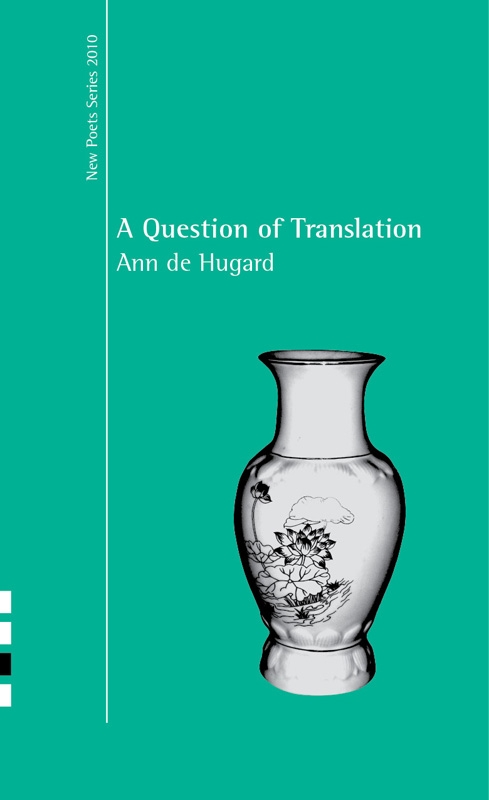
A Question of Translation by Ann de Hugard
The Mermaid Problem by Chloe Wilson
Australian Poetry Centre, 2010

The Australian Poetry Centre has published four mini-chapbooks of poems by new poets selected to workshop at Varuna with Ron Pretty in 2010. Each little collection sells for AU$10, a price that reflects the production quality more than the quality of the poems published in each. The books are intended to introduce new Australian poets, but given the miniature, low-budget presentation and editorship of the project, the poets are at some risk of being misrepresented. While any initiative to nurture and develop new poets is a welcome one, the value of this kind of publication experience to the poets themselves is worth some consideration.

Continue reading

Posted in BOOK REVIEWS | Tagged , , ,

Stephen Lawrence Reviews Chris Mansell

Letters by Chris Mansell
Kardoorair Press, 2009

Poet Chris Mansell has been active in publishing and editing since the 1970s. In Sydney, she co-edited and founded magazines of poetry and prose; and she later helped inaugurate Five Islands Press, which continues to produce successful and award-winning volumes of Australian poetry. She has lectured in creative writing, mentors poets for the Australian Society of Authors, and has published over a dozen volumes of her own poetry. Letters is her sixth full-length print collection.

Continue reading

Posted in BOOK REVIEWS | Tagged

Peter Mitchell Reviews Out of the Box: Contemporary Australian Gay and Lesbian Poets

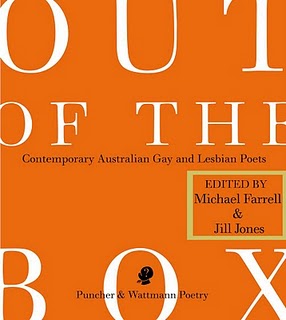
Out of the Box: Contemporary Australian Gay and Lesbian Poets
Michael Farrell and Jill Jones, eds.
Puncher and Wattmann, 2009

Out of the Box: Contemporary Australian Gay and Lesbian Poets is an elegantly-published product. The shape of the book looks like a miniature hatbox, the title of the collection leading a reader to anticipate exciting and colourful content. This ground-breaking anthology is a reasonable gathering of poets, currently writing under the descriptors of gay and lesbian in Australia.

Continue reading

Posted in BOOK REVIEWS | Tagged , ,

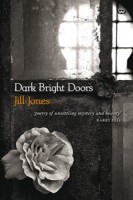
Bev Braune Reviews Jill Jones

Dark Bright Doors by Jill Jones
Wakefield Press, 2010

An intriguing haphazardness is the first thing that strikes you about the language of Jill Jones’s new book. Dark Bright Doors is at once familiar and strange. The tone is highly personal with a slightly highfalutin touch to what seems a study in existentialism. Through a surprising vagueness, Jones encourages us to read her book very deeply. Furthermore, she is asking us to reflect on the reading as we proceed from line to line of each poem rather than from poem to poem. And, yet, as those lines clearly strive to be contemporary and colloquial, the book discusses the loss of individual space in the expanse of information technology and the ensuing isolation and over-exposure in a world where humans are globalised, where there is no place for secrets.

Continue reading

Posted in BOOK REVIEWS | Tagged ,

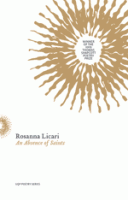
Libby Hart Reviews Rosanna Licari

An Absence of Saints by Rosanna Licari
University of Queensland Press, 2010

An Absence of Saints is one of those poetry collections you pick up and immediately sense all the effort and dedication that has gone into making it, the reader easily recognising those long hours that have since stretched into years where the poet shaped and reshaped poems to then be brought thoughtfully together into a manuscript of common themes. So, it is little wonder then that An Absence of Saints was winner of the 2009 Arts Queensland Thomas Shapcott Poetry Prize.

Continue reading

Posted in BOOK REVIEWS | Tagged ,

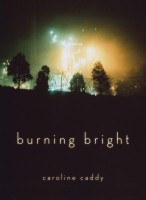
Rosalind McFarlane Reviews Caroline Caddy

Burning Bright by Caroline Caddy
Fremantle Press, 2010

A well known Western Australian writer, Caroline Caddy frequently explores culture as both familiar and unknown in her work. The most common of these explorations concerns the interaction between Chinese and Australian cultures. Her latest collection Burning Bright continues this theme, whilst also including poems that explore the south of Western Australia. The relationship between Australian and Chinese landscapes is vital in this work as the urban, rural and natural landscapes of the two are contrasted, compared and explored in depth. Caddy focuses on similarities that are often overlooked, while also documenting the varied and complex relationship that can develop between different countries and their landscapes.

Continue reading

Posted in BOOK REVIEWS | Tagged

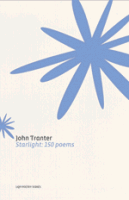
Corey Wakeling Reviews John Tranter

Starlight: 150 Poems by John Tranter
University of Queensland Press, 2010

John Tranter has been publishing poetry for forty years, and his latest book is published in tandem with a critical companion to his oeuvre, The Salt Companion to John Tranter. As Rod Mengham writes in the companion’s preface, Tranter is “widely regarded by critics as the most important member of the so-called ‘generation of ‘68’”. This generation of poets was in fact named as such by Tranter himself. For some time, his work and its devout experimentalism has been seen as a palliative to the pastoral traditions typified by poets like Les Murray. While such a distinction may seem facile, Tranter is rightly seen as the most internationally cross-germinating of the big names of Australian poetry. And as such, Starlight: 150 Poems is his most radical work so far.

Continue reading

Posted in BOOK REVIEWS | Tagged ,

Matt Hetherington Reviews David Brooks

The Balcony by David Brooks
University of Queensland Press, 2008

In a review originally published in Heat #6, David Brooks praised Peter Boyle’s The Blue Cloud of Crying as being influenced by the tradition of Cante Jondo or deep song, and as being more accessible, recognisable, and emotionally engaged than most Australian poetry. He then went on to observe: “There has been something of a tradition of emotional reserve in Australian poetry. There’s also been something of a tradition of complaining that no one reads poetry very much in this country, that it is no longer very close to the national heart. Not many have seemed willing to make the obvious connection.”Over a decade after this suggestion, we can observe Brooks’ own attempt to rectify the situation through a similar type of affective poetry.

Continue reading

Posted in BOOK REVIEWS | Tagged ,

Children of Malley 2: Vogel’s Gang


History has often proven kind to the avant-garde. You only have to struggle for a glimpse of some waterlillies at a blockbuster Monet show to see how easily the shock of the new becomes the comfort of the familiar. Or take Ern Malley, an unheralded insurance salesman labouring away lonely nights in a Melbourne library, dying tragically young in his sister’s place in suburban Sydney. None of his poems were published during his life and had not it been for the industry of his sister Ethel it is likely that they would have remained unpublished. Now, from our 21st century perch, it seems fitting to ask, how many of Ern’s more conventional contemporaries can you name?

Of course Ern’s rich back story was cooked up on a Saturday afternoon during World War II by two bored poets idling away the war on the St Kilda Road frontline. The two poets, James McAuley and Harold Stewart, wanted to expose the chicanery and charlatanry of modernist poetry by tricking young Adelaide tyro Max Harris into publishing some anti-poems in his journal Angry Penguins.

Stewart and McAuley composed poems, purporting to form the manuscript The Darkening Ecliptic, they believed to be slapshod. Peppered with quotations plucked randomly from books and reports ready-to-hand, the poems were sweetened with phrases as purple as Ribena. As the poets themselves said:

“Our rules of composition were not difficult:


1. There must be no coherent theme…


2. No care was taken with verse technique…


3. In style, the poems were to imitate, not Mr. Harris in particular, but the whole literary fashion as we knew it from the works of Dylan Thomas, Henry Treece and others …”

Upon completion the poems were packaged up with an unlikely but romantic back story complete with an early unheralded death and mailed off to an unsuspecting Harris. The ensuring media storm pushed poetry onto the front pages with an efficiency that would have made the Chk Chk Boom Girl proud.

The furore went global though most of the chatter centred around the tiresome “is it/is it not” poetry debate that continues to simmer to this day. (In fact, if you haven’t read Jaya Savige’s piece from the June edition of the Australian Literary Review, go there now!). But Malley’s poetics were hardly revolutionary, certainly not alongside the work of modernist luminaries like Pound, Joyce or Eliot. As one Londoner R. Hamilton pointed out in a piece reprinted in the Sydney tabloid the Sunday Sun: “The Ern Malley poems must be classed with the work of other surrealist poets and judged as we should judge any work from that school. These poets have done no more than continue early Pastiche experiments of Andre [sic] Breton and others, who made poems from newspaper cuttings, &c.”

These days, with all the postmodern water under the bridge, the poetry seems almost conservative. I mean who hasn’t spiced up an ode with a line stolen from a memo to the Adjutant-General about the necessity of establishing entomological services for malarial control? If there is a criticism it would be that the structure of some of the poems is a little loose at times and seriously has anyone else ever described dark as “umbelliferous”? This aside, the poems wouldn’t be too far out of place in Children of Malley 2.

The major difference between our Malleys and the ur-Malley is that ours were created in the spirit of fun. On the other hand there is something incredibly mean-spirited about the way McAuley and Stewart pursued the very public humiliation of Harris. Of course they probably never predicted the extent of the furore, however, the whole hoax seems like a lot of effort just to voice your disapproval of an alternative poetics. Everywhere there are poems written, I read poems I think are bogus. But I don’t devote the time or the energy to try and pull a swifty on some editor in the hope of delivering aesthetic comeuppance. I don’t have the time. Who does?

The procreation that preceded our Malleys was done with the wry smirk of larrikinism that animates so much of the best OzPo. This is the second time poets have risen to the challenge and given voice to the progeny of Malley and it was great to see poets put on the fantastically elaborate headdresses and masks of their Malleys. And the Editor has been a willing participant in the prank. It’s art for laughs sake. In fact, I hope have been hoaxed and that somewhere in this issue is a poem based on a paper on the reproductive habits of West African lemurs or a mash up of Hallmark sympathy cards.

By checking our nine-to-five bios at the door and assuming our various Malleys we can embrace everything that’s fun about poetry. We can take risks, try things on, be a little bit irreverent. Sure, at times poetry can be serious business but sometimes we’re just kicking a bunch of words around the park on a Saturday afternoon. So unfurl the picnic rug, unpack the Esky, slice the cucumbers and strawberries and settle in for a summer Malley-athon.

Which is where we hand it over to our good readers. It’s your turn to play Detective Vogelsang and figure out why people go into parks at night. Is Ern Malvern Star Nick Whittock, ∏ O or someone else entirely? Is Bennett Malley one of the recipients of the BR Whiting Fellowship or just a recent visitor to Italy? How easy it is to identify the poets? How difficult? And when you are reading the poems how important is the identity of the poet?

Friends, this is where the fun starts.

Let the unveiling begin.

Posted in ESSAYS | Tagged , ,

The Immortal Malley and the End of Modernity

‘Remember, this is the country of the duck-billed platypus. When you are cut off from the world, things are bound to develop in interesting ways.’

With these words Peter Carey’s character in My Life as a Fake identifies the fundamental factor behind the bizarre aftermath of a literary hoax, namely: particularity of setting.

Just as Bob McCorkle, fraudulent creation of Christopher Chubb, comes to life in Carey’s novel to wreak havoc and anguish upon his creator, so too did Ern Malley step out of the imagination of James McAuley and Harold Stewart into Australia of the 1940s, to forge his own place as an almost-person in the history of Australian literature.

The Ern Malley hoax provoked a debate that was not by any means unique to Australia. Indeed, the Ern Malley affair is simply an antipodean manifestation of a long-standing discussion in Western culture about the best way for literature and art to respond to the impact of modernity on society. Ern came to life because he was created at a time and in a place which predisposed the arguments surrounding his poetry to be of utmost importance.

There has been considerable rumination about the original intention of McAuley and Stewart when they sat down in October 1943 in the Victoria Barracks to conceive Ethel Malley, her brother Ern and to compose Ern’s ‘modernist’ poetry using such disparate inspiration as could be gleaned from sources such as the works of Shakespeare, a rhyming dictionary and a report on mosquito breeding grounds.

What seems to have started as a lighthearted (dare we say larrikin?) ploy to ruffle the feathers of Max Harris, editor of the literary journal Angry Penguins, had become, by the time the perpetrators were revealed to the press, a ‘serious literary experiment’ designed to demonstrate the perceived degradation of meaning that was taking place in modern poetry. Whatever the intended tone of the hoax, and whether or not they ever imagined that Max Harris would actually fall for their joke and publish the poems, the creators of Ern Malley could never have dreamed that a half-century later their progeny’s fraudulent poems would be found in multiple anthologies of Australian verse, and that Ern would have spawned an entire mythology which has, as Andrew Lynch has argued, swamped most of the discussion on Australian poetry of the 1940s.

The Ern Malley poems, created to make an emphatic literary point about the parlous state of the nation’s literary culture have come, paradoxically, to define an era, to be the archetype of a poetic which we wish had existed.

Ern and his poetry were, of course, the inspiration for Carey’s 2003 novel, quoted above. Carey uses the Ern Malley affair as a springboard to launch his parallel Bob McCorkle hoax, perpetrated by Christopher Chubb (who shares certain distinguishing features with James McAuley). The initial stages of Carey’s McCorkle hoax mirror the Malley hoax; he uses the Ern poems and the correspondence between Ern’s sister Ethel and Max Harris verbatim.

The two stories diverge at the point where Chubb’s fictitious creation, Bob McCorkle, actually comes to life in the novel as a flesh-and-blood human being who causes the death of his editor, kidnaps his creator’s infant daughter and proceeds to Malaysia to generally (and posthumously) cause trauma to those whose literary paths he crosses. Undoubtedly the themes of Carey’s novel have been thoroughly examined elsewhere, but suffice it to say here that by extending the idea of Ern Malley into a narrative in which a made-up poet literally comes to life, Carey explores the idea and the extent to which Ern really was brought to life, and the fact that his poetry really did matter.

The incarnation and immortality of Ern Malley are due in part to the accidental (?) if inconsistent genius of the poems themselves and to the ingenious characterisation of Ethel and Ern Malley through Stewart and McAuley’s correspondence with Max Harris.

Indeed, the literary legitimacy of the poems has been the topic of plenty of commentary. However, as Paul Kane has argued, Ern Malley ‘is no longer an occasion for an aesthetical debate, but provokes a historical one.’

The climatic conditions that coaxed and nourished Ern Malley into life in 1940s Australia involved a conflict about modernity, modernism and their role in Australian culture that was arguably the most important element in making the affair a historical event that continues to resonate today.

To look back to the cultural climate of the Ern Malley hoax, the literary world of 1940s Australia, is to sense a sort of atmosphere of desperation — a desperate scramble to establish an Australian literary and artistic culture.

Australia at the time of the hoax was emerging from what has been labelled a ‘cultural quarantine’: a mood of intense isolationism and distrust of outside cultural influences that had presided over the interwar period.[ref]See John F. Williams, The Quarantined Culture: Australian Reactions to Modernism 1913-1939, Cambridge, New York and Melbourne, Cambridge University Press, 1995.[/ref] The country during the 1930s had been subject to a ridiculously stringent censorship which saw the works of authors from Balzac to Hemingway to Joyce being officially outlawed. The 1940s saw a rise of new ideas, and new conflicts, about how an Australian literary culture should best be forged.

One attempt to establish a poetic that was uniquely Australian followed the spirit of the cultural quarantine that idealised the bush and agrarian culture. This was the Jindyworobak movement, founded by Rex Ingamells with the goal of freeing Australian art from foreign, Old World influences and making use of Australia’s ‘primaevalism’, its indigenous culture, and its unique flora, fauna and landscapes.

The movement saw its enemies in those who were disdainful of features which were distinctive to Australia. On the other side of the fence were a growing number of literary magazines, often left-aligned politically and more open to cosmopolitan influences and general experimentation. One such magazine was Max Harris’ Angry Penguins.

Harris was frustrated by the isolation of Australia, its lack of exposure to the literary and art world of Europe, and the nation’s insistent and tedious recourse to ‘the bush’ as a solution to self-definition. Harris was an advocate of modernism, a literary and artistic movement which had emerged in Europe somewhere in the mid-nineteenth century in response to a world that was rapidly and bewilderingly embracing modernity, and which promised, in his eyes, to help Australian culture transcend its leaden parochialism.

It was into this setting that McAuley and Stewart dropped Ern Malley.

Posted in ESSAYS | Tagged , , , , ,