Kanashibari / 金縛り

Literally: bound in metal


There’s a Japanese word for it. English
needs one—the closest we get is sleep paralysis.
It doesn’t do it justice. The crushing weight

of a demon on your chest, immovable fingers
clamping your throat, your mind
as wild as your body is helpless.

Kanashibari. I’m here because of it. Four
in the morning, after the fear. It lets you up
eventually. And when it did, I had to move,

had to get out of the coffin I’d tucked myself into.
Pace the hallway, freed. There’s a dead rat caught
beneath the floorboards of my flat. There’s a man next door

whose body is eating him alive. I walk to the kitchen
because I can. Write these words
because the internet’s down, because for once

I’m unable to tweet about it. There isn’t a word
to express this impulse: something to say
but no one to say it to, self-disgust

at this glib dependence, these tiny fragments
strung out behind me. Poems lost and stories unwritten
while I feed the hungry bird. Pressed down

in suffocation, both fighting and complicit,
so tiny, this hourglass we’re given at birth,
so reckless we are with the sand.

Posted in PRESENCE | Tagged

Backyard Pool

1.

Viewed from the decking
above, your best
friend’s pool holds the afternoon
as a wobbly electricity.

At the edge: puddles
of deflated colour,
white plastic chairs,
a garden, other redundancies.

2.

Far below the workings of sun,
the surface-war
of kick and churn,
beyond the naked decibels,

there
time goes strange –

never more alone to yourself,
as you drift
in the company
of a vast slow-thumping heart.

3.

After the reign of traffic
and parents,
when night cools the water
to an ideal skin,

the only sound’s the tink-
tink-tinkle
of silver drops from a hand
lifted to place
a stroke.

And we’re careful
with our voices
so the moon won’t overhear.

Posted in PRESENCE | Tagged

Now

I would like to move this process along a little faster
Iwould like to move this process along a little faster
Iwould like to move this process along alittle faster
Iwould like to move this processalong alittle faster
Iwould liketo move this processalong alittle faster
Iwouldliketo move this processalong alittle faster
Iwouldliketomove this processalong alittle faster
Iwouldliketomovethis processalong alittle faster
Iwouldliketomovethisprocessalongalittle faster
Iwouldliketomovethisprocessalongalittlefaster
Iwldliketomovethisprocessalongalittlefaster
Iwldliketmovethisprocessalongalittlefaster
Iwldliketmvthisprocessalongalittlefaster
Iwldliketmvthsprocessalongalittlefaster
Iwldliketmvthsprocessalngalittlefaster
Iwldliketmvthsprocessalngalttlefaster
Iwldlktmvthsprocessalngalttlefaster
Iwldlktmvthsprcssalngalttlefaster
Iwldlktmvthsprcssalngalttlefster
!wldlktmvthsprcssalngalttlefster
!wldlkt’thsprcssalngalttlefster
!wldlkt’thsprcss’lngalttlefster
!wldlk’thsprcss’lng’lttlefster
!wld’thsprcss’lng’lttlefstr
!’d’thsprcss’lng’lttlefstr
!’d’thsprcss’l!’lttlefstr
!’d’thsprcss’l!’l’lfstr
!’d’thsp’css’l!’l’lfstr
!’d’th’p’css’l!’l’fstr
!’d’th’p’s’l!’l’fstr
!’d’th’p’s’l!’l’fst’
!’d’th’p’s’l!’l’!st’
!’!’th’p’s’l!’l’!st’
!’!’th’!’s’l!’l!st’
!’!’!’!’s’l!’l’!st’
!’!’!’!’s’!’!’1’!st’
!’!’!’!’s’!’!’!’!st’
!’!’!’!’!’!’!’!’!st’
!’!’!’!’!’!’!’!’!’!’
!!!’!’!’!’!’!’!’!’!’
!!!!!’!’!’!’!’!’!’!’
!!!!!!!’!’!’!’!’!’!’
!!!!!!!!!’!’!’!’!’!’
!!!!!!!!!!!’!’!’!’!’
!!!!!!!!!!!!!’!’!’!’
!!!!!!!!!!!!!!!’!’!’
!!!!!!!!!!!!!!!!!’!’
!!!!!!!!!!!!!!!!!!!’
!!!!!!!!!!!!!!!!!!!!

Posted in PRESENCE | Tagged

Archive Fever (after Jacques Derrida)

Do not ask who I am or ask me to remain the same.— Foucault


a measure of flame and oxygen, a white heat degree in shame
searing pain, unquantifiable pleasure
that’s the key to a really good secret

a secret doesn’t belong! —
it exists only if it is unsaid
it self-destructs on contact
a nervous system renegade
it must keep guard against detection
forget to remember itself
to itself

in the white room I lean forward, draw my cheek beside hers
eyes fixed on the wall socket, I listen to wet lips
hear her husk of breath and wait
for whispers of trembling ash

in the presence of my attorneys
I must decide the fate
of telling them anything

so now the third verse becomes:
in the presence of my attorneys
I must decide the fate
of telling them anything

I will tell them what it was like
they will hear an unreliable report
I have kept and erased the violence
(which violates and does violence to itself)
skin becomes new skin
I can’t believe my luck

and all my friends are conspiracy theorists
we are clumsy archeologists
we are writing our retractions as we speak
we are not who we say we are not
we are not saying anything
I will tell you what it was like
but we may run out of verses to erase
this burning desire to archive what is concealed

isn’t it always the case:
someone is always following someone around with a camera
asking them to reveal what nobody has seen before

someone is always following someone around
asking to reveal what they always do

Posted in PRESENCE | Tagged

Under the Native Frangipani

Ambushed by bees, I’m stopped at my father’s favourite
bivouac. While I’m bucketing water to save

what’s lived on long after him,
through a whirr like warplanes, drought shudders petals down.

My father in the last foggy weather of his life
had no breath to speak of who he’d been before.

He would pause, puffing, under the tattered camouflage
of this native frangipani, this domesticated rainforest escapee.

In my mother’s garden, the hymenosporum flavum tangled perfumes
of laundry and jungle. Away from its true climate, it alternated

between sending a high tent pole to the stars
and draping its torn canopy of green from side to side

before sucking out of summer heat a crinoline of blossom,
each crème brulée flower a semi-tropic explosion of scent.

Halfway between kitchen and chook-shed, house and first fence,
my father leant here on his stick, the last half of his lung

sucking in Toowoomba frost to mix
with Port Moresby mud …

The light and hope of a lifetime before that
bloom only in photographs, a black and white silence

where he is thinner, tall as a mast no family has yet
strung its sails on. Before he settled with us

he knew thirteen years of childhood, twenty-five years
in banks from Bourke to Dalby — and a war.

Then the ledgers of his bachelor’s experience were audited,
filed away, signed off with copperplate neatness

I longed to emulate, aged ten. Too late
I read old letters, fragile as the petals of these flowers,

learn from their faded khaki-cream of medals for rowing, a yacht
a cyclone claimed … float this youth over a clearer lake

than the sea I remember swelling inside him,
that tubercular tide where every day he launched

unromantic armadas of pills. Six months holiday is all I need,
he’d dryly say, heading for hospital not the Barrier Reef.

Years after his death, this is where I find him:
under the native frangipani. At his old bivouac

I hear his voice — and scent-bombardments
stop my breath.

Posted in PRESENCE | Tagged

Presence

Erudite licks embossed dictionary covers methodically.

Rain is not gold, nor the colour of truth; merely green in essence.

Subtext is always the opposite of pretence; underneath a scream.

Laughter ticks proprioceptively especially under soft covers.

Clouds can be beds or imaginary pillows as well as dewy cells.

(all this and your skin in the morning)

Lingual utterance is another way of saying the weather or love.

Euphoria kicks forth beneath a skylight with some force.

Conjurers make the illusory tangible, a confidence man too.

Ether settles in, says come to me insistently.

Distil an ellipsis (wait) it rains.

Posted in PRESENCE | Tagged

Mothers’ Day

For Margaret Phelps and Mary Veronica Lang


After the cups of tea and gifts of slippers
we always went to Rookwood Cemetery –

walk train walk again in swimming heat,
me bobbing behind your trailing hand.

To a small boy, your mother’s grave
alongside her stillborn grandchild

looked like a door or pebbled floor,
somewhere to rest after the long trip

safe inside the concrete arms, away
from buffalo grass, the nip of prickles.

No need to caution me about respect.
You knelt on newspaper and looked hard

at what a year had left. Life doesn’t respect
Death – the plastic dome of flowers cracked.

You had the hand shears and garden fork
to hedge grass back. I yanked at runners.

Both graves looked better for the work,
white crysanths we bought from a stall

glittered in jars on the heart of the grave
– posies of bright suns awake in the glass.

Later, there was something to eat and drink
in one of the nearby hive shaped rotundas.

Lattice walls patterned us, blurring light
and shade, you quiet now with memory,

your mother out of the grave’s clean door,
joining us in the half light, sipping tea.

Posted in PRESENCE | Tagged

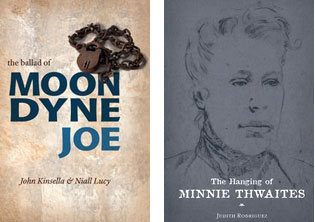
Angela Meyer Reviews Judith Rodriguez and Niall Lucy, John Kinsella

The Hanging of Minnie Thwaites and The Ballad of Moondyne Joe

The Hanging of Minnie Thwaites
by Judith Rodriguez
Arcade Publishing, 2013

The Ballad of Moondyne Joe
by Niall Lucy and John Kinsella
Fremantle Press, 2012

Judith Rodriguez’s The Hanging of Minnie Thwaites and Niall Lucy’s and John Kinsella’s The Ballad of Moondyne Joe are informative poetic explorations of the historical figures Frances Knorr, known as Minnie Thwaites, and Joseph Bolitho Jones, known as Moondyne Joe. The books are explorations and not interpretations, as the authors are aware of the trappings of context, of interpreting fragments of text from the past according to one’s own contemporary values. Of course, this is not completely avoidable and the postmodern notion of avoiding an authoritative account is itself, arguably, a condition of context.

Continue reading

Posted in BOOK REVIEWS | Tagged , , ,

NO THEME 2 Editorial

Gig Ryan

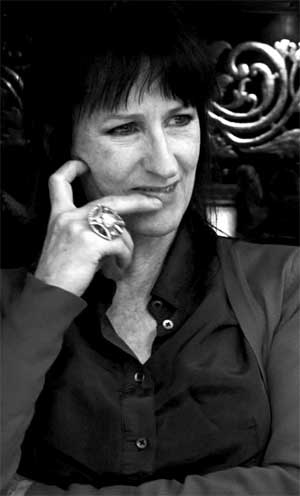
Image by Juno Gemes

Of the poems I’ve chosen for this theme-free issue, some are headily elusive, such as the epistolary ‘Shooting“Correspondence”Gallery’ where meanings crumple and re-form through their costly tousled language. Others such as ‘Gull’ are propelled almost entirely by sound and rhythm. Some have perfunctory line-breaks that occasionally thwart impetus, and some, such as ‘Bauxite’, totter catastrophically, as an imaginative raucous humour fuels that poem. One of the longest ‘india v aus 11-12 1st test day 4’ is an alt sports commentary, that both admires and wildly parodies that genre. ‘Another Chardin in Need of Cleaning’ re-makes a title of Frank O’Hara’s, but drops his chatty tone, and winds into a brightly flickering moebius strip of consciousness. ‘Professor Kröte’s Death’ pays homage to Gwen Harwood’s unheeded frustrated musician and teacher.

‘The Ritual of the Cup (Sestina)’ carries a rhymed semi-tragic burden, its title perhaps a reference to the utterly different ‘Little Cup Sestina’ of Ken Bolton’s. ‘small wondrous emails’ jokingly mimics a current emaciated android existence. ‘CV’ is a crazed version of pantoum with thumping end-stopped lines, but the tossed-salad of the pantoum throws up juxtapositions that escalate weirdly as the poem proceeds. ‘Jem Finch Gets It’ reimagines characters from ‘To Kill a Mockingbird’, just as ‘Moby Dick: Acrostic’ valiantly attempts to transform that epic into a poem. In the long ‘Eulogy for someone in the room’, expectation is confounded when the ellipses fail to deliver a punch-line, acting instead as pause in the narrative before it veers further afield. ‘Scenic Outlook’ begins with Stop and ends with speed, as the river it describes hurtles past the tourists, with the rhyming edge / ledge / sedge encasing a moment. ‘Wasted Heaven’ employs the Romantics’ nature mirroring subjectivity, while its line-breaks and isolating couplets forge ambiguities.

‘zerofourzerofivezerosixtwentytwelve’ in part satirises U.S. imperialism among its portrayals of everyday life. ‘AUSTFA’, ‘On paper this was not New’, ‘it grows on you’ and ‘Notes After Fort Worth’ explore depictions or ruses of nationhood: ‘AUSTFA’ even domesticates Parliament into a diminutive in its humorously mocking yet obstreporous enactment of a cultural cringe. The long ‘National Geographic’ surveys globalised vacuity, cultural exoticising and appropriation, blandly displayed via catalogue. Other poems reinterpret traditions: the epiphanic, such as ‘Gestalt with seagulls’, and the elegiac, in ‘Hinkypunk’.

So, after reading through a quivering pile of submissions, a large number of which were impaled on cliché – in construction, language, thought (as if those were even separable) – I have chosen those poems that most surprised.

Posted in ESSAYS | Tagged

unAustralian English: Oscar Schwartz Visits Chris Mann in NYC


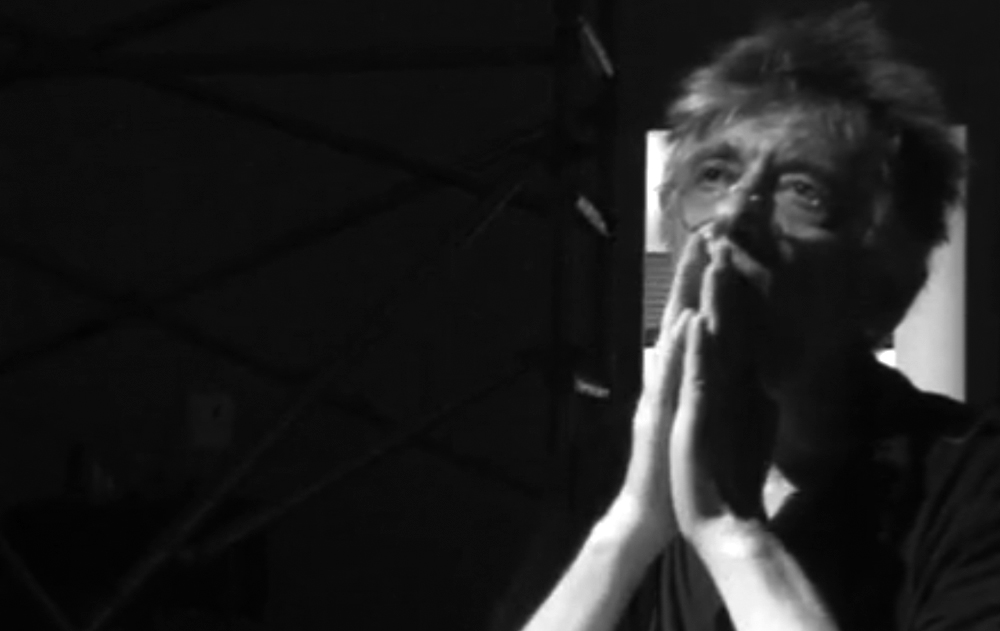
Image by George Quasha

I.

I went to visit Chris Mann in his apartment in Manhattan at the beginning of July 2012. Half of his apartment was covered with plants. There were trees, ferns and flowers hanging from every landing. Mounted on the walls were wood-framed bookshelves, completely packed. The other half of the apartment had a wooden table, kitchen, grand piano, and beyond that, some rooms for sleeping.

Continue reading

Posted in ESSAYS | Tagged , ,

Recording Archives: ‘A Way with Words’

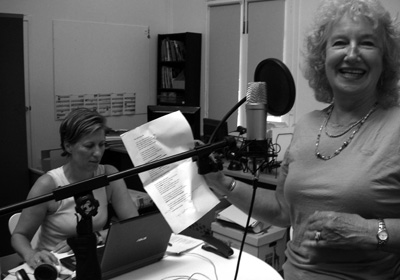
CJ in the studio

Carol Jenkins records Lyn Hatherly in Arthur Boyd’s original Bundanon studio

Six episodes of A Way with Words, featuring recordings of:

Michael Sharkey
David Mortimer
Christine Paice
Kerry Leves
John Watson
Julie Chevalier

… a poem apiece.

For two years, from September 2009 to October 2011, I produced a weekly radio program showcasing contemporary Australian poetry called A Way with Words. In all, 106 episodes (each of around five minutes) were produced. Presented here is a chance to listen in on six gems from the archives vault – some of my favourites, chosen for the most part because they are impossible to find elsewhere as audio.

A Way with Words was broadcast weekly by ArtSound in Canberra, picked up by Ozwrite on the National Community Radio Network, Dover Road Radio broadcasting from the Isle of Wright in the UK, 2KRRR Community Radio in Kandos and 3RRR in Melbourne.

Continue reading

Posted in ESSAYS | Tagged , , , , , ,

X About X: An Interview with Shane Rhodes


Image by Pearl Pirie

“Queensland Poetry Festival is thrilled to welcome award-winning Canadian poet Shane Rhodes as the 2013 Arts Queensland Poet in Residence. Since the residency program began in 2005, Queenslanders have had the pleasure of hosting an international poet for three months each year, bringing their ideas and creative energy to inform, influence, and engage fellow poets.

Continue reading

Posted in INTERVIEWS | Tagged , ,

David Shook Interviews John Mateer


Photo by Kent MacCarter

I first met John Mateer in London, at a reading at PEN International’s Free the Word! festival, where the international outlook of his poetry intrigued me. We corresponded regularly by email from that point forward, both of us often on the road, discussing poetry, translation, and travel. Mateer is a cosmopolitan poet, an international poet too little known on this side of the Pacific. His poems resonate with a deeply empathetic vision of the natural world and its inhabitants, be they Australian lizards or the translators he compares to angels, an assertion I can only aspire to live up to as translator myself.

Continue reading

Posted in INTERVIEWS | Tagged ,

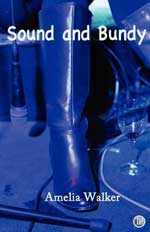
Tara Mokhtari Reviews Amelia Walker

Sound and Bundy

Sound and Bundy by Amelia Walker
Interactive Press, 2012

Amelia Walker has imaginatively approached the theme of the stories behind fake poets with Sound and Bundy, a collection of poems by three fictional poets and their collective, doubly fictional Ern Malley reincarnation named Jason Silver. Peter Lind, Shannon Woodford, and Angie Rawkins are the three protagonists in this very convincing work of fiction by Walker. A story emerges about these three poets who wrote together under the guise of Jason Silver, and the ways in which their lives and poetries intertwined. The result is something between an alarmingly realistic (but fake) anthology and a verse novel. It effectively sucks the reader into its reality – suburban Adelaide in 1998 until 2006 when both one of the poets, Lind, and the Jason Silver moniker commit suicide.

Continue reading

Posted in BOOK REVIEWS | Tagged ,

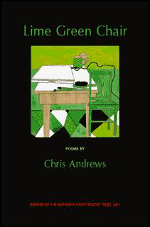
Ali Alizadeh Reviews Chris Andrews

Lime Green Chair

Lime Green Chair by Chris Andrews
The Waywiser Press, 2012

In a recent article published in Sydney Review of Books, Emmett Stinson argues that Australian reviewers’ and readers’ responses to Australian short story collections are regulated by the receptions of these authors in the US. And so, according to Stinson, the so-called cultural cringe lives on. But is this really the case? And should we really be suspicious of internationally recognised Australian writers such as Chris Andrews whose second collection of poems has been published by Baltimore’s Waywiser Press, the publishers of such giants of US poetry as Anthony Hecht, Richard Wilbur and W. D. Snodgrass?

Continue reading

Posted in BOOK REVIEWS | Tagged , ,

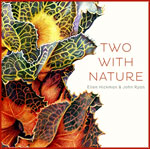
Review Short: Ellen Hickman and John Ryan’s Two with Nature

Two with Nature

Two with Nature by Ellen Hickman and John Ryan
Fremantle Press, 2012

As a book quite different to what is usually seen in the poetry sphere, Two with Nature, Fremantle Press’s book combining the poetry of John Ryan with the botanical illustrations of Ellen Hickman, contains some interesting possibilities and contradictions. In his introduction Ryan notes how ‘the term ‘botanical poetry’ might seem an unusual juxtaposition of two quite different practices – science and poetry’ and it is here that the importance of the ‘with’ in the title can be seen as Ryan and Hickman’s aim appears to be with nature through a combination of scientifically accurate illustration and poetry.

Continue reading

Posted in BOOK REVIEWS | Tagged , ,

Review Short: Martin Edmond’s Eternities

Eternities

Eternities by Martin Edmond
Otoliths Books, 2013

In this collection of prose pieces, memory and daydreaming are powerful forces, determinants rather than second-order effects. Its theme I take to be the transactions of past and present as they are occasioned by the spaces of a city (in this case, Sydney) or, to use another approach, Sydney’s ghosts. The title of almost every piece is or was an actual place in Sydney. The sites Edmond’s imagination gravitates towards might be seen as typical: legendary once-sharehouse (‘The Caledonian’), soggy-carpeted nightclub (‘The Manzil Room’), harbour’s edge (‘Blackwattle Bay’). While the pieces mostly derive from Edmond’s personal experiences of the city, some are enhanced by the work of archival research, amplifying the double vision of the past being tangible in the present. Continue reading

Posted in BOOK REVIEWS | Tagged ,

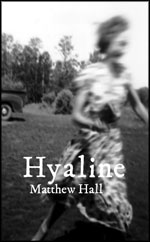
Review Short: Matthew Hall’s Hyaline

Hyaline

Hyaline by Matthew Hall
Black Rider Press, 2013

How does one review a book of poems that has no table of contents and no page numbers?

More to the point, perhaps, is how does one read such a book? What do those absences signify? Individual poems have titles, yet they seem to move on, almost glide on, from what preceded them, and into what follows. “Artifice’, the book’s first poem in the section ‘Harm’s Light’ in fact has each section beginning with the last line or two of the preceding section, pausing, but resuming , then handing on to its successor.

Continue reading

Posted in BOOK REVIEWS | Tagged ,

Venice Beach

from ZEROFOURZEROFIVEZEROSIXTWENTYTWELVE


First: drive down to Marina del Rey

turn right, a blue surfer shark will greet you, tell his story for a nickel

my nickel, I pick out

New Collected Poems (with CD of the poet reading) by George Oppen

& Garry Thomas Morse, After Jack at Small World Books

Béatrice selects a memoir & an Anne Tyler novel,

& from the Vietnamese hat stall, a fine, new sun bonnet for Flick

the endless posé of Harley’s, the odd

Kawa, & clichéd pick ups – Ford Toyota GMC

heading east


WRONG WAY

DO NOT ENTER

Horizon Ave.

it sez


Lunch: ordered off of the menu at Mao’s Kitchen –

‘Chinese country cooking with Red Memories,’ ‘Lunch Combination for the Masses’

“Mao loved to say, “Wei renmin fuwu!” – “Serve the people!”‘

Mao is vegan friendly, it sez.


Home: to Airlane Avenue after a detour to Ralph’s for trash bags

a bourbon & and run through Guy’s machine code poems

Posted in 56: NO THEME II | Tagged

Bauxite

(Notes from a Lecture Delivered by a Former English Poet Laureate)

At the age of six you were a bloody little genius
Bauxite was the only word you could spell
But I knew the year of the Battle of Hastings
from a title on the spine of one of mother’s books
salvaged by the boxload at an auction for fleeced up
calculators. Now, in the online gallery I follow you
around like a fox, impressed by your use
of the word formaldehyde. You stink of it and I’m arrested

skinking the meat off the bones you left in a box
of araldite, glued, I thought, on site, for me to you,
your plexiglass apiary. Some kind of art world
controversy dogs me like a blue
kettle so that anyone who makes a film I love.
Study for a running spotlight, scrounging
for sunshine in the flangular nape of the broad
eighteenth century, soldiers waft like truffle oil.
It’s only when you come to the harbor /
that you realize how you miss it.

A Nobel Prize is not enough, you have to kiss arse as well.

Massive sense of self peers piggishly from the space between
brain and brow. Wishes critics would see in his poems
mistrust of the middle classes forbidden entry to the mistaken
political observation. The next day in The Australian

Diabetica. Sweet graves. Lying in your vat of sugar.
Where you make the mistake is where the profundity
is Botch = depth. Computer manuscripts read like they were
yesterday. The other one, skinny and honking like a goose.
Getting you confused with some other English-speaking
painter. Someone re: cycling can read your mind.

Born of albatross, ruby skilled, fleeced sixty thousand on the first day.
Allied and German, loss of innocence, the beginning of a summer
techno war. Definition of poetry wider even than the world
War II. Tradition that goes back to Homer. Purification
critiqued—Swimmers into cleanness leaping. All the hills and vales
avoid reality. Oh, the mouthless dead. It is easy
to be dead. I tried it once, before I turned to early British
modernism culled by war

Relies on Americans for the subject of death itself
Killed at Loos in 1915. Looking for English publisher.

Head of Brass makes love to Thomas Hardy:
‘If we could see all, then all might seem good,’
said the biography of the new Francis
Webb my love of Elizabethan melody
disrupted by the eradication of music /
Isaac Rosenberg is not an officer;
Married to a dozen unfinished poems.
Difficult to finish when bombs going off
but love gives sense of urgency.

The red wet / thing

permeates poems, tests my lungs for ancient value.
You would think people would care less as they get older
but it’s not the case. Crumble me
into the torn fields of France.
Poppies whose roots are in men’s veins /
Six-thirty or seven is fine with me. They meet
and begin writing poetry. Just when you thought it was over
cosmopolitan rats. We all hate home / and having to be there:
touching the hands of the opiate connotation.
Democratic erotic emphasized by

Dust of an allusion to Thomas Nash. Reverse curate
your palimpsest perception. This is the Real
Departure from previous sentimentality.
Met Wilfred Owen at the war hospital in Edinburgh.
Gave him my poems. Each slow dusk is an anthem
for doomed youth. Killed in an oven a week
before victory. Telegram arrived on the doorstep of mother’s
bells, sounding like history like bella bellissimo.
The ‘yeasted up’ language of Keats
hi on the rise of a lifetime on lips. Freudian
assumption of increased tenderness for mankind
something of a Spring
Offensive. ‘Some say god caught them
before they even fell.’ Poetry thus emerges
from the belly of the premodern. But why Owen?

nude cantata passes through, streams of globulated

five percent civilians killed = sixty percent nature
technology. Arden Lewis died in Burma. We think he
shot himself. Back in England, we think
he shot himself. Poem ends with reference to
Edward Thomas. Village of steep hill now shoulder
of mutton. All day it is raining

Dreadlock the naming of parts

Not a decent set on them, Mother has said.
Mother loved bodies and trying to kill them.
Where the bullet stopped.

After the first death there is no other.
Song of the dying gunner, buying ballads
by the metre, angling high for the death
of a ball turret gunner.

Here the lover and killer are mingled.
Being damned I am amused. Just
hear this and we can go our separate ways:
I went with father to the trench of Pozieres
wallop of cods and swallow of whistle.
Lying in a field of deadly flowers,
Black bird of trespass I drink you

Posted in 56: NO THEME II | Tagged

Spacker Looks Under

rocks, thinks he’ll find something
splendid. Most of his life has come up
snake eyes. The more he tried to win

playing it fair and square, the more teeth
cracked in fights. His friend Danny the Raunch
found a wedding ring under a boulder

by Syssygy Creek. He gave it to his girlfriend
Wanda who was thrilled, who was pregnant,
who divorced him eight months later. Now

Danny sits on rocks,
doesn’t look beneath them. Spacker will avoid
wedding rings. He might find

a small bank with a tiny teller offering him
millions of bucks. Or
a rattler, disturbed, aiming for his eyes.

Posted in 56: NO THEME II | Tagged

The Zagreb Museum of Hearts

an ex-couple
still friends
wanted to store
their dead love
rented an old shop
and reached out
to collect
other people’s flotsam
a pink jump suit
a sandy copy of Proust
a torn photo
condoms past
their use-by date
letters of course
stale perfume
a toy bear clutching a heart
stamped ich liebe dich
a dried jacaranda petal
a lock of hair singed
a tooth possibly human
and a smear of lipstick
on a scrap of plastic wrap

a love museum

he says
she shakes her head
it’s just a dump.

Posted in 56: NO THEME II | Tagged

National Geographic

‘Weather Gone Wild’, September 2012

1.

Orangutan languorous
on the incongruous jungle seat. Mongolian
boy pushes his sister
on a makeshift swing.
Frayed ropes, dirty, smiling

faces. Cloudless sky.

Raccoon crawls
from a ditch
tempted
by a choc-chip cookie.

Romeo Doneza’s city skyline is black and white
through a hole in a freestanding
rooftop door. Blerta Zabergja’s skyline:

smoke-stacked and orange-hazed. She takes
a photograph while she’s photographed.

In deep space, a single egg rests in a nest
woven by human hands.

A salt white sky
peppered by birds.
A salt white sky
storm-clouded with birds

in the shape of a girl
who might be dancing.

A snake charmer’s cobra
has choc-caramel markings.
The charmer
in saffron, receding.


2.

Aerial map of America physical.
Black and green. Warning:

fluorescent roboworm. Death
by slow grinding glow.

Diver in a test tank, a bubbled view
of a shining world above. Space probe

beneath the sea investigates
submerged mountains. A seal
in long, green grass. Man in the probe
wears glasses, his dashboard says

one nine five one seven seven one six two.
To his right,

another probe
like a drowning printer cartridge.

Many species of unnamed gastropods and shrimps
in thirty-one Brady Bunch squares. But no one
looks at anyone. A school

of orange swordtails
another printer cartridge beside a scuba diver

and a massive brain coral.


3.

A Filipino Tansier stares with gremlin eyes.
The sky
aqua, black and yellow.

Rising dust cloud. Pink and yellow lights
of Phoenix.

A burning fence pole at Bastrop.

Frozen spray on a four-wheel drive
near Lake Geneva at night. Smiling girl
skates. In Tennessee,

lovers in a flood sit on the roof
of a sinking car. Tornado scarred

Tuscaloosa from above. Survivors:
hospital and football stadium. Tornado now!

Black grey brown on a wet road
in Nebraska. An emergency vehicle chases it.

Gushing water chases a Chinese villager
down a stairwell. He’s in military fatigues.

Levee house at Vichsbury survives a flood. Miles
of brown water then Martian landscape. Bill
Tulloch sits under a tree, hat in his lap:
If you’re proud of your country, you try
to take care of it.
San Saba

River is salt. Friday night’s football team stands
on its field under dusk moon. Kenneth Durst
in the Mason Feed Store watched over
by moose heads and leaning folders: They bought
a lot of hay and feed
to save at least their young cows.

One man perched on a windmill appears to fix it
while another, half-way up, stares at him.

Posted in 56: NO THEME II | Tagged

that thin mercury sound

after the fire escapes and security guards
it is good to be beyond CCTV
amidst the howling sirens whipped wind
the thin mercury sound sculpted on sand
the base jumper poised like a civilisation
on a precipice of wasting military assets
before a leap into faith and squashed Midtown gum

the fly-eyed troubadour’s declared intent
the Pitt St. tractor’s pilot manoeuvres by sextant
closer to the CWA delights aesthetic Marxism
handicapped by last season’s King Gee
the verses face up to supported living
wandering the parched grass beyond visiting hours
where in better days the wallabies grazed

lost in a hard drive somewhere between
formats and a nasty trojan horse the length
of an absence stretches like a hair band
co-opted into service as a lock a galleon
mid-ocean stranded twixt trade winds
like that commercial only melancholy
a microwave dinner in the warmth of the presbytery

when mysticism has deserted religion
it’s not enough to face down the beast with popsicles
exhibitors fill the Friday night choc top make out slot
with a CGI Jesus aloft some sea as pithy as
Wivenhoe a digital age donkey chase
piloting perilously down Pilate’s cavernous streets
distracted from our inevitable

Oedipal deaths the literary devices get left
on the shoulder abandoned like tics after therapy
while snow liquid papers over the green coronet
and the bits of science that science forgets
it is the bullsnorting bouncers who make us decline
bobbing weaving and hooking our grammar on
their death rattle line we like Hi-NRG

uptempo sounds eat yellowfin to be efficient
she kissed him behind the bike shed and it read
Thatcher OUT LBW Alderman
we have not been polled for our taxes
but we still body pop while the neocon circle sits
the gnarled acetates take you back to the crackled
part of the flanking manoeuvre you’ve already won

vinyl jams crammed
into the parcel shelf of your DeLorean
windows custom tinted as the hairs
on your neck prick with the sharpness
of that thin mercury sound

Posted in 56: NO THEME II | Tagged