Review Short: Steve Brock’s Double Glaze

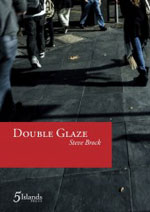
Double Glaze

And Soon There’s a Density to Things …

Double Glaze by Steve Brock
5 Islands Press, 2013

In his most recent collection, Double Glaze, Steve Brock moves the orderly reader from the very public realm of ‘Work’, via ‘The Commute’, to dwell with ‘Writing’ and finally to settle in, arguably the most intimate of registers, ‘Family’. Although poetic work rarely arrives in convenient clusters, a poet’s choice in manuscript arrangement is not arbitrary; it intimates the conceptual webbing informing the collection’s central aesthetic, thematic, and in this case, socio-political, preoccupations.

Continue reading

Posted in BOOK REVIEWS | Tagged ,

Review Short: Damian Balassone’s Daniel Yammacoona

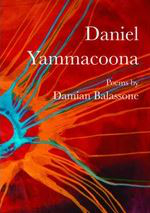
Daniel Yammacoona

Daniel Yammacoona by Damian Balassone
Ginninderra Press, 2013

The first three poems in Damian Balassone’s Daniel Yammacoona are about women who have been left by men. In each case the man appears to be the hero of the story, yet the woman is not necessarily unheroic; in at least two of the poems the heroism is one of steadfastness. Continue reading

Posted in BOOK REVIEWS | Tagged ,

Review Short: Susan Adams’s Beside Rivers

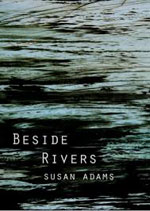
Beside Rivers

Beside Rivers by Susan Adams
Island Press, 2013

The poems in Susan Adams’s Beside Rivers are arranged in three sections: Awash, A Wonder, and Wander By Water. The cover blurb states ‘Susan Adams’s first book shines with imagery and clear eyed veracity …’; although many poems do shine, I’m not convinced that I found the ‘clear eyed veracity’ worked as well as the blurb suggested, nor that the imagery was always as successful as the poet intended.

Continue reading

Posted in BOOK REVIEWS | Tagged ,

Submission to Cordite 45: SILENCE now open!

Submission to Cordite 45: SILENCE now open!

Cordite 45: SILENCE is guest edited by Jan Owen

Silence as a theme could be interpreted, explored and challenged in innumerable ways. It might seem quietly paradoxical to even think of writing about absence of sound and language, but then we communicate with silence as our measure and matrix, especially in music and poetry. It’s a mysterious concept: I think of the silence of Tao, of Pascal’s eternal silence of infinite space. And what is the actuality of it to the profoundly deaf, to the one in solitary confinement, to the bereaved or oppressed?

It could be especially fruitful to deal with the concept in the plural: the many silences in our lives – intimate, hostile, enforced, questioning, fearful – and how they are coloured and understood by the before and after. How do we sense the qualities and degrees of various silences and quiet times, their shapes and textures? How do we experience inner silence in meditation or reverie, the relief of quiet after chaos, the knife-edge of silence that is suspense or dread? We are aware of the power of silence in speech and poetry; of timing as the essence of humour and drama, of the pause of the line break, ‘the beauty of innuendos’, the full stop in the text and in life – the finality of Hamlet’s last word. I like Roethke’s wish that his silences be more precise, and Mallarmé’s dream of a ‘silent white poetry.’ Yeats’s lines (slightly adapted) might spur you on: ‘Like a long-legged fly upon the stream/ the mind moves upon silence.’

But please, no blank white sheets!

Submit up to three poems … but first, please read the submission guidelines.

Posted in GUNCOTTON | Tagged

David Gilbey Reviews Jordie Albiston and Liam Ferney

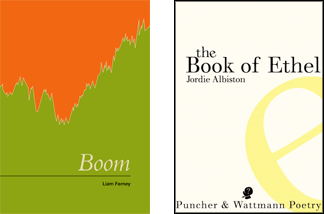
Boom and Ethel

‘Yoked with contrarieties…’

Boom by Liam Ferney
Grand Parade Poets, 2013

the Book of Ethel
Puncher & Wattmann, 2013

Jordie Albiston’s the Book of Ethel and Liam Ferney’s Boom illustrate two dramatic obverses in contemporary Australian poetry. Both are cleverly crafted; both have levels of subtlety and manifest strength; both are linguistically sinuous and inventive, taking liberties with conventional style and syntax; both use local vernaculars in contexts of global cultural pressures; both focus, often minutely, on particular individuals caught at moments of historical change and significance and, therefore, articulate and explore ‘political’ consequences and issues; both play – gloriously, ironically, iconoclastically – with language registers as a way of exposing implied ‘bigger pictures’. And yet these two collections are worlds apart in focus, style, nuance, framing and poetic affect.

Continue reading

Posted in BOOK REVIEWS | Tagged , ,

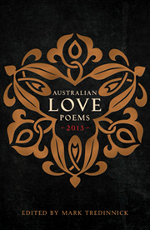
Keri Glastonbury Reviews Australian Love Poems 2013

Australian Love Poems 2013

Australian Love Poems 2013, Mark Tredinnick, ed.
Inkerman & Blunt, 2013

‘… Day
is so deep already with involvement’
Michael Dransfield, ‘Pas de Deux for Lovers’ (1968)

In his 1951 essay ‘Against Poets’, Polish writer Witold Gombrowicz describes the poet ‘as a being who can no longer express himself as much as someone who must express – a Poem’. With such sentiment in mind I approached Australian Love Poems 2013 with some apprehension. Despite all the lofty rhetoric surrounding love poetry – and, understandably, there is plenty of it in the eloquent, generous introduction to this anthology by editor Mark Tredinnick – would it ultimately prove, as Gombrowicz might suggest, to be a ‘boring orgy’?

Continue reading

Posted in BOOK REVIEWS | Tagged ,

Cordite Works in the BAP 2013

A quick shout out to Ken Bolton, John Hawke, Andy Kissane, Shari Kocher, Jo Langdon, Cameron Lowe, Ella O’Keefe, Louise Oxley, Ann Vickery and Jessica L Wilkinson … the ten poets featured in Black Inc’s Best Australian Poetry 2013 whose work first appeared in Cordite Poetry Review. Yeah. DayGlo cover, too.

Posted in GUNCOTTON |

Review Short: Rachael Briggs’s Free Logic

Free Logic

Free Logic by Rachael Briggs
UQP, 2013

Winner of the 2012 Thomas Shapcott Prize, Free Logic is the debut collection from poet and philosopher Rachael Briggs. The book is divided into nine sections, each poetically exploring themes of love, identity, and sexuality. Briggs infuses her poetic explorations with surreal allegories, moments of metamorphosis and a constant teasing of the ‘logical’, which allow for her poetry to forge an opening towards new possibilities. Briggs strikingly connects insightful fantasies with philosophical considerations.

Continue reading

Posted in BOOK REVIEWS | Tagged ,

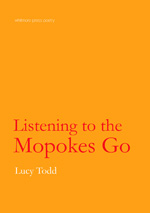
Review Short: Lucy Todd’s Listening to the Mopokes Go

Listening to the Mopokes Go

Listening to the Mopokes Go by Lucy Todd
Whitmore Press, 2013

‘Mopoke’ is the onomatopoeic nickname of the Southern Boobook or Tasmanian Spotted Owl, known in New Zealand (where I come from) as a ‘morepork’. This bit of idiom in the title of Lucy Todd’s debut chapbook prepares the reader for a collection attuned to its locality. ‘Listening’ also suggests the poet’s patient attention to sensory detail.

Continue reading

Posted in BOOK REVIEWS | Tagged ,

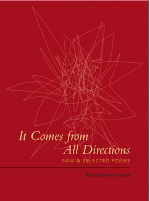
John Jenkins Reviews Rae Desmond Jones

It Comes from All Directions: New & Selected Poems

It Comes from All Directions: New & Selected Poems by Rae Desmond Jones
Grand Parade Poets, 2013

For more than 40 years, Rae Desmond Jones has remained one of Australia’s most challenging and rewarding poets, and in my opinion a major one, who has pursued an often hilarious, always astonishing and sometimes grimly confronting campaign against dullness, comfortable formulas and poetic complacency; and Grand Parade is to be applauded for drawing together some of his best work here.

Continue reading

Posted in BOOK REVIEWS | Tagged ,

The First 17% of Suburban Archaeology (after Anna Krien)

The First 17% of Suburban Archaeology

Posted in 58: PUMPKIN | Tagged ,

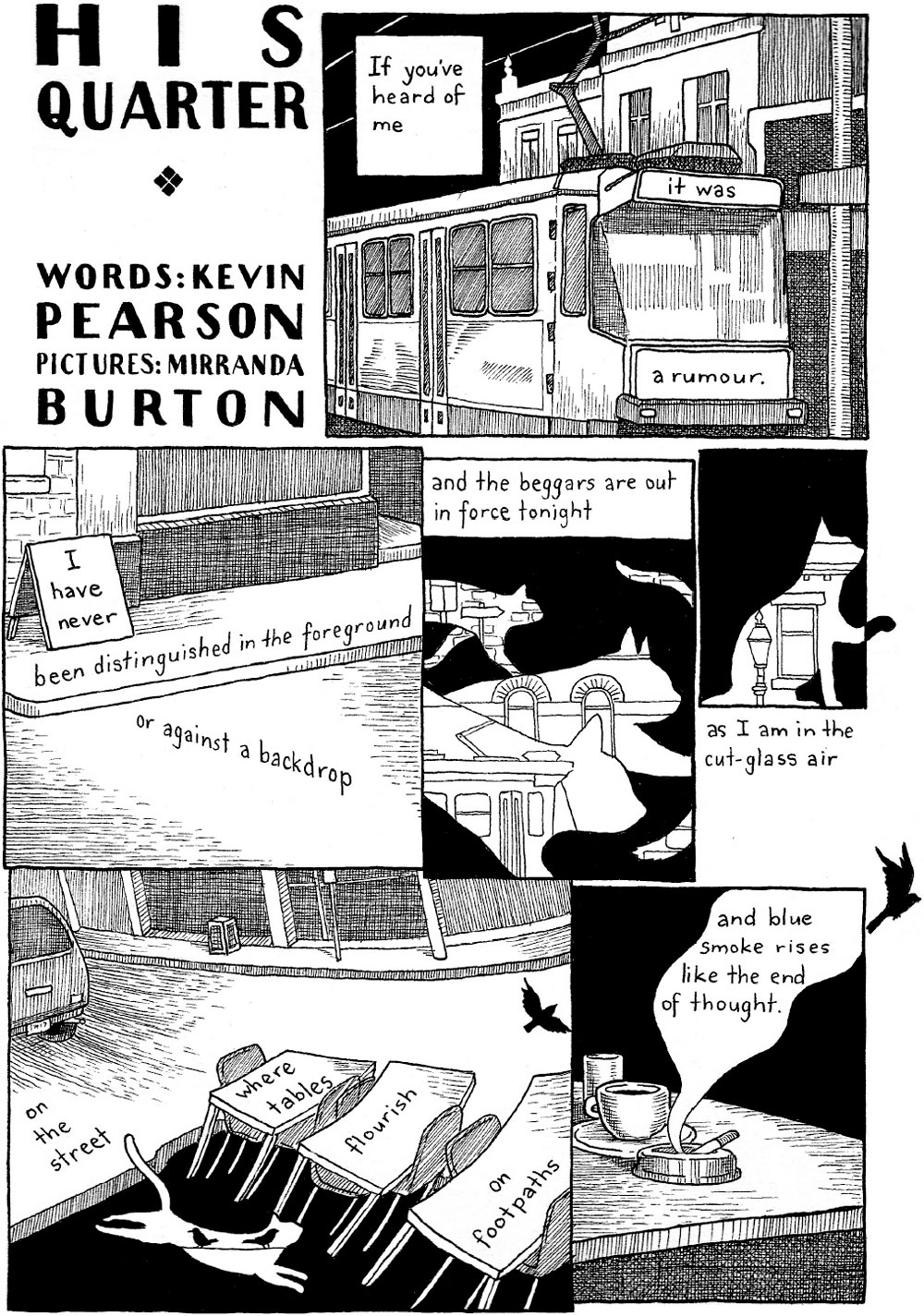
His Quarter

If you’ve heard of me it was a rumour.
I have never been distinguished
in the foreground or against a backdrop
and the beggars are out in force tonight
as I am in the cut-glass air
on the street where tables flourish on footpaths
and blue smoke rises like the end of thought.

Here, where the lost seek restitution
and the monied, overheard, can plot
a new assault on real estate,
I drift and sometimes take a seat
as unoccupied as a vacant wish,
and lift a lighter to a cigarette,
the flame as brief as an epitaph.

Being incognito and unknown
the options dictate I should sit,
my prowl from place to another place
cruelling a clung-to outside hope
that one who imagines me may stop
knowing to lose the sense of the street
is to lose the appetite for life.


This poem first appeared in The Apparition At Large, Black Pepper, 2006.

Posted in 58: PUMPKIN | Tagged

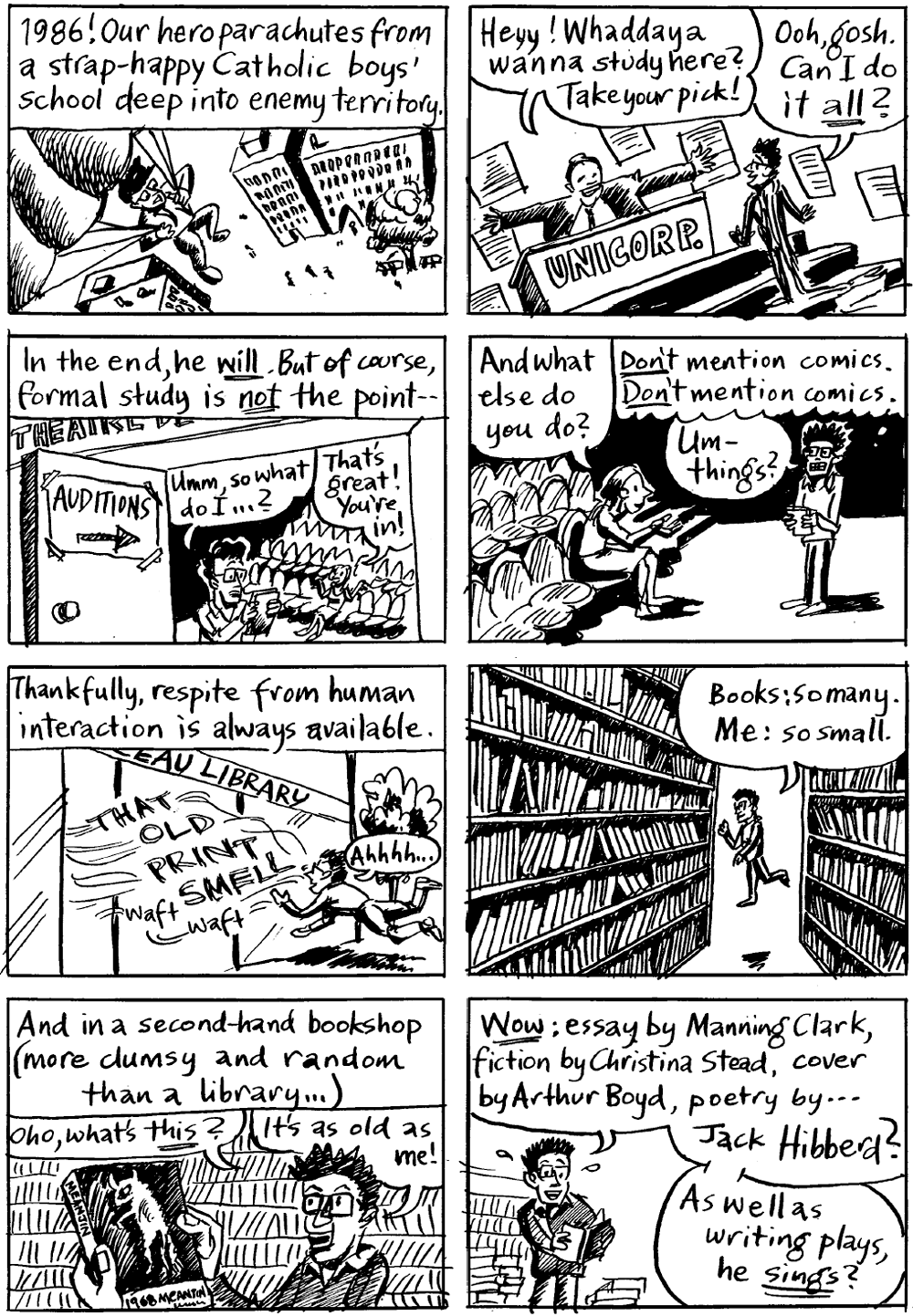
A Jesus Kind of Joy (after Jack Hibberd)

A Jesus Kind of Joy

Posted in 58: PUMPKIN | Tagged ,

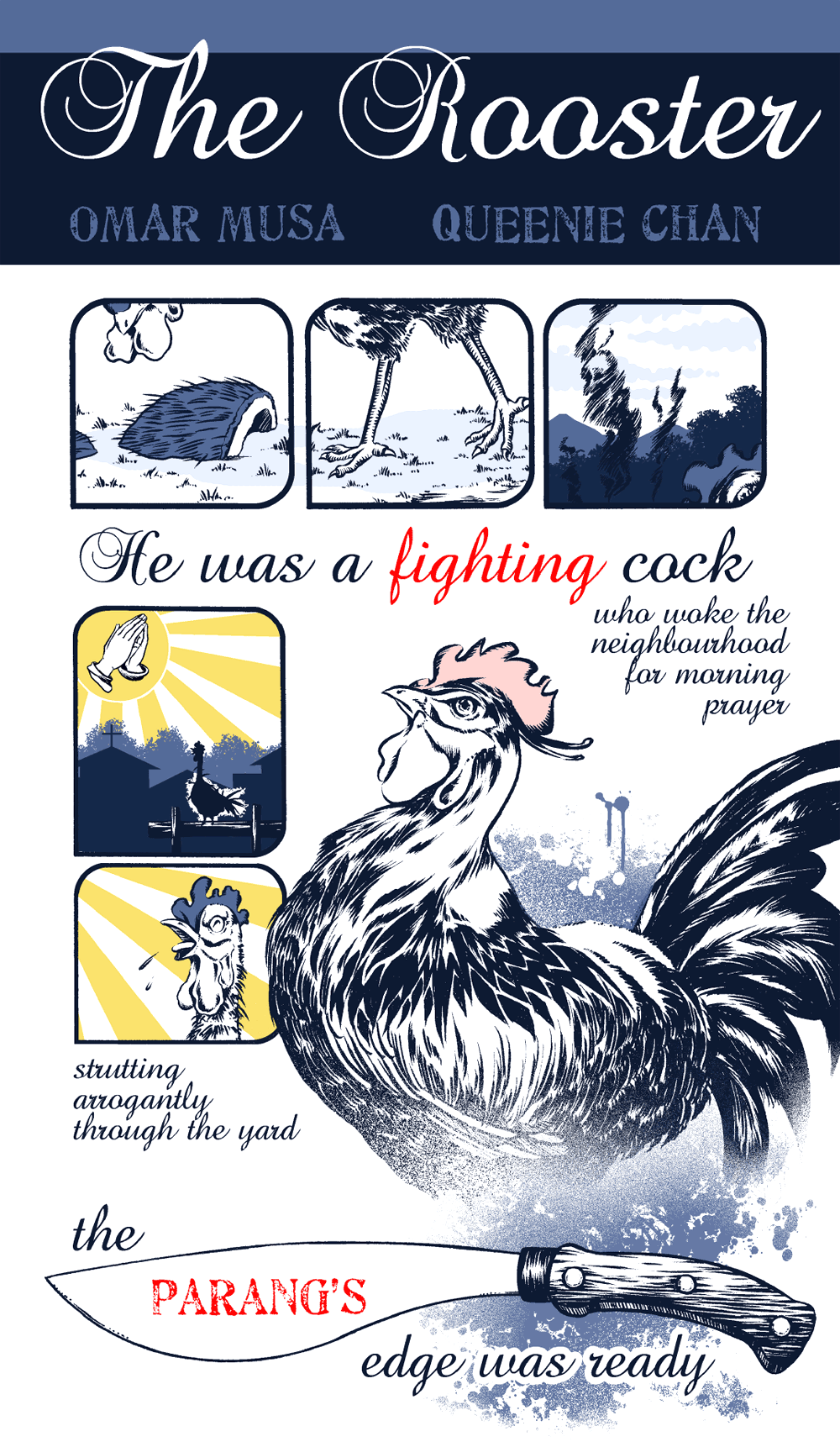
The Rooster (after Omar Musa)

The Rooster

Posted in 58: PUMPKIN | Tagged ,

Where are the dark woods?

they were always there
from the beginning
infant eyes open and blink on them

the world as it always was
unredeemed by history
abashing childsight in a whitening room

and other quotidian amputations
flaring distantly now a starry abstraction

inflamed absences
eat the scratched and damaged skin
imagined as soul

who can afford to flinch at pain
the one gate left open?

that memory of complete sufficiency
a dark pulse of heaven

we have already been there and won’t go back
astir in the knived light


This poem first appeared in Attempts at Being, Salt Publishing, 2002

Posted in 58: PUMPKIN | Tagged

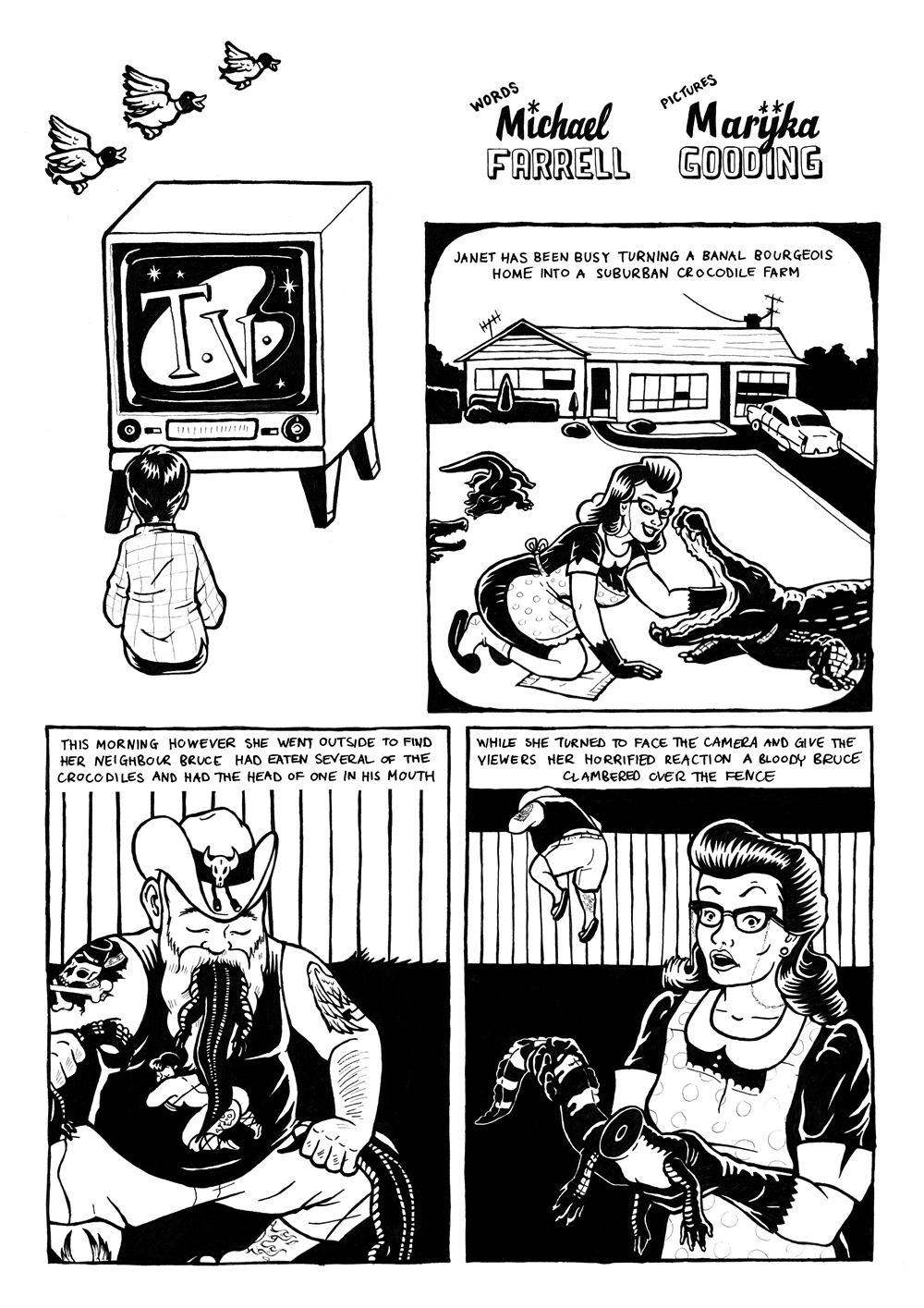
TV (after Michael Farrell)

TV

Posted in 58: PUMPKIN | Tagged ,

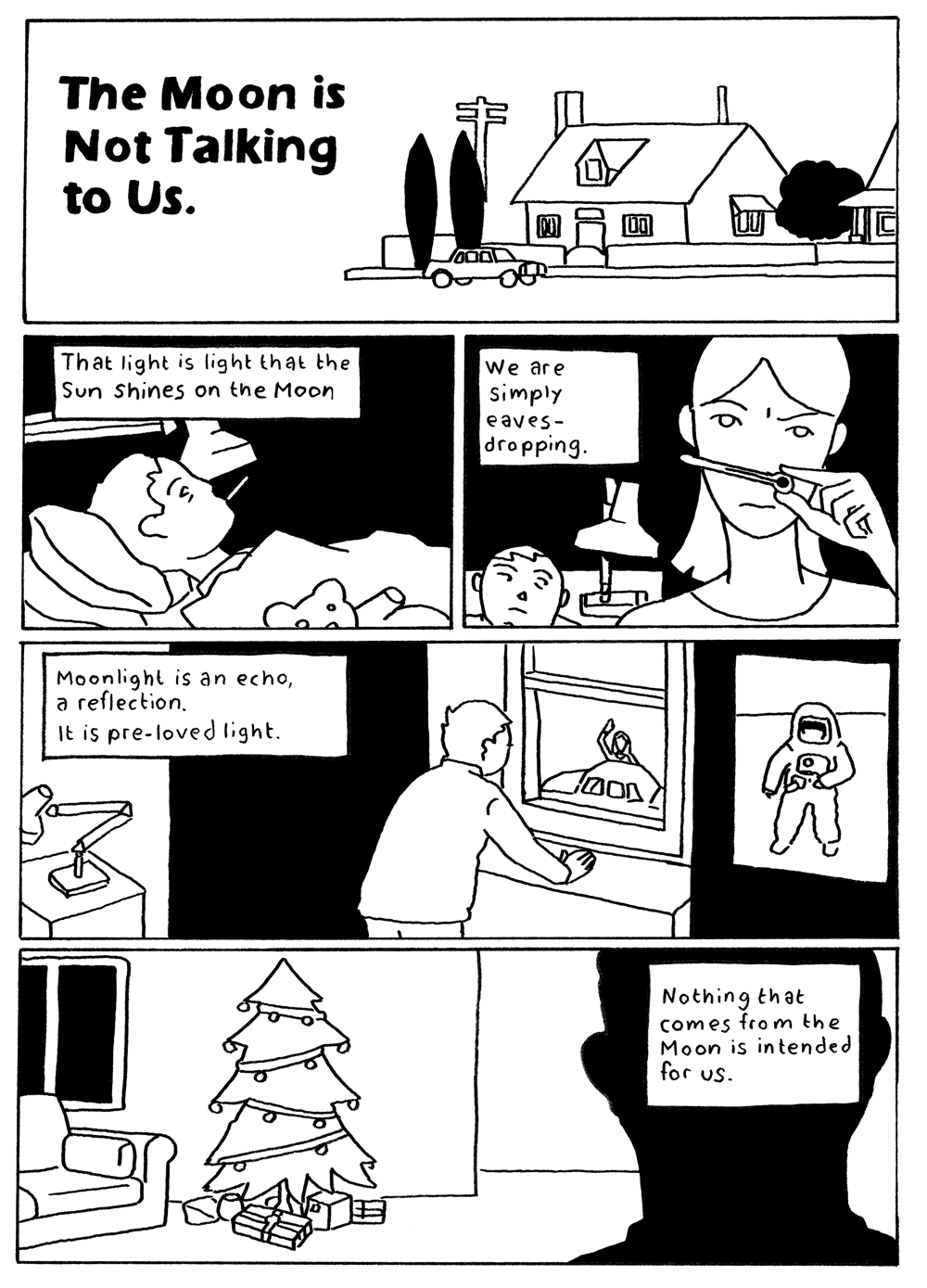
The Moon Is Not Talking to Us (after Adam Ford)

The Moon Is Not Talking to Us

Posted in 58: PUMPKIN | Tagged ,

Microaviary

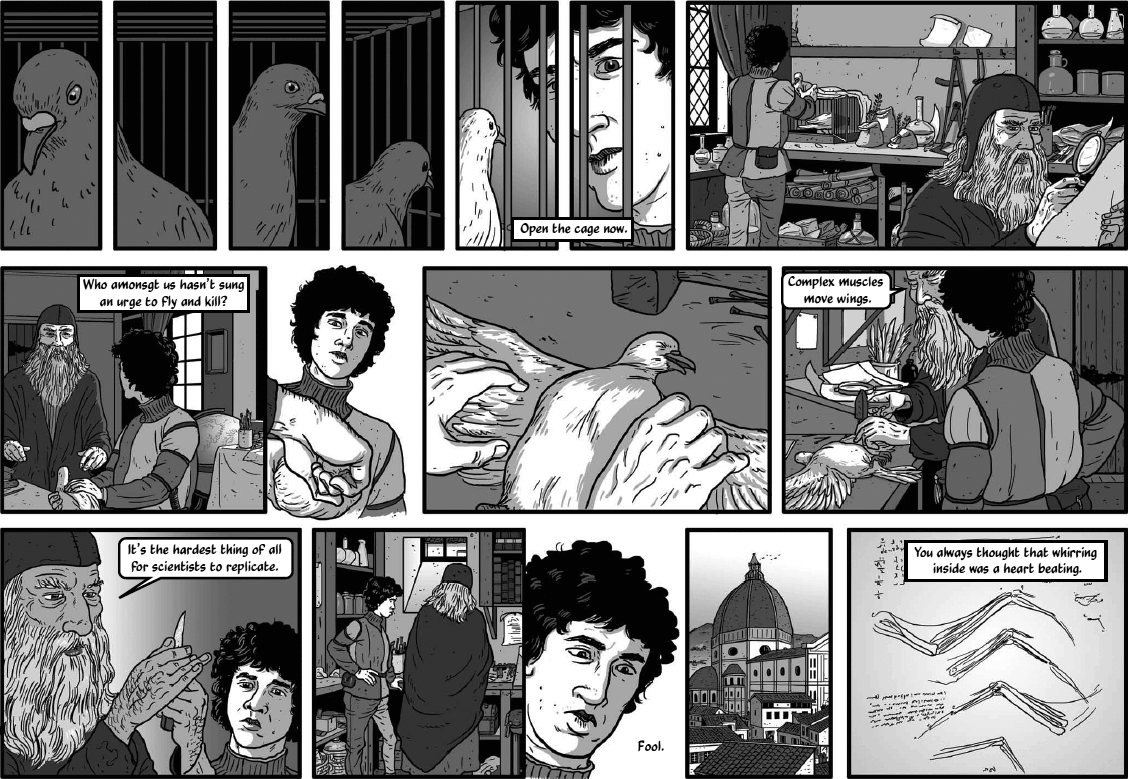
Hummingbird Drone

Open the cage now.
Who amongst us hasn’t sung
an urge to fly and kill?
Complex muscles move wings.
It’s the hardest thing of all for scientists to replicate.
Fool. You always thought that whirring inside you
was a heart beating.


Hatchery

In the microaviary
I am told that drones
are developed by army handlers
who simulate the flight
of moths, hawks, ravens
—anything winged
says the angel-haired man in the dock.
He watches me with Gorgon Stare,1
wings neatly clipped and hidden.

The new birds are small
but the nest is vast.
In a steel cavern in Virginia,
one hundred flat screens
hang from metal skeletons.
Think of the kindness of dentists
in small, featureless rooms,
airports at 3am, half-remembered raves.
An old grief rises up:
in the absence of bird-egg blue, cubbyholes,
antiquated soaring lyrics
I must admire
new foxholes,
a terrifying ability to see.

The man from PR has a brow
like a furrowed dune.
These are unmanned drones
he says in unmanned couplets
that surveil and kill.
He introduces me to a gifted man-child
building wings
that replicate the hovering skills of the hawkmoth.
Tested at 4500 metres
over Helmund province,
it has no smalltalk.
Nor does he.
But I saw the video of a woman at a well
carrying a large bag, then a glitch:
a flutter of fabric on repeat
her mouth opening and closing for days.

Ma’am, this partic’lar drone is programmed to spy,
unlike predator drones such as the Reaper
that both spies and strikes.

I look down at my clipboard
and long for birdseed, even soldiers with guns,
the rat-a-tat-tat of older kinds of verse.
I long to strip away
the fall-eyed angel’s khaki cloak
and sing ‘there!’
But song is not part of the technology.
Even so, it’s a growth market, sings Ashton B. Carter,
the Pentagon’s chief weapons expert,
to blue-hooded Virginian sky.


Raven drone

Troops toss Raven drones
over sandhills
as if they were model planes,
then take in the view remotely.
This is their featherless picturesque,
Johnny Appleseed’s best new video,
though some senior figures
have confessed to sword and sandal nostalgia,
a desire for knight-on-knight, bird-on-bird.
But daddy’s post-hero now,
in charge of hummingbird stock
and flapping wing technologies.
It makes no difference if he drops a uniform size;
life has flocked to him.

The trick is get them flying consistently at 18km per hour,
then to alight on enemy windowsills
and sing folk still.


Hummingbird versus Raven

‘The next month the Hummingbird and then the Raven went AWOL. The initial call I got was that the Raven was going to Africa’, said the corporal who asked for anonymity because he was not authorised to discuss drone glitches.

‘But it’d actually gone AWOL over a dark forest in Barvaria.’ The last soda straw images* coming through on wireless show the bird attempting to build a nest out of nails in the forest of Odin.


These poems form a suite first published in The Wind-up Birdman of Moorabool Street (Puncher and Wattmann, 2012)

Posted in 58: PUMPKIN | Tagged

A Jesus Kind of Joy

I profess an interest in it all,
The world-wide symphony of things,
The good, the hopeless and the small,
The crass cacophony that sings.

I hope for you, the not so tall
And the always about to win,
I wish them honey for their gall,
A sweeter sacrifice in sin.

I give to you, my maudlin man,
Love, that you might use it well
On malcontent and also ran,
A Jesus kind of joy in Hell.

I hand it out with great élan,
A little largesse for each day,
The doing well of what I can,
The loving faith in what it may.


This poem first appeared in Meanjin, 1968.

Posted in 58: PUMPKIN | Tagged

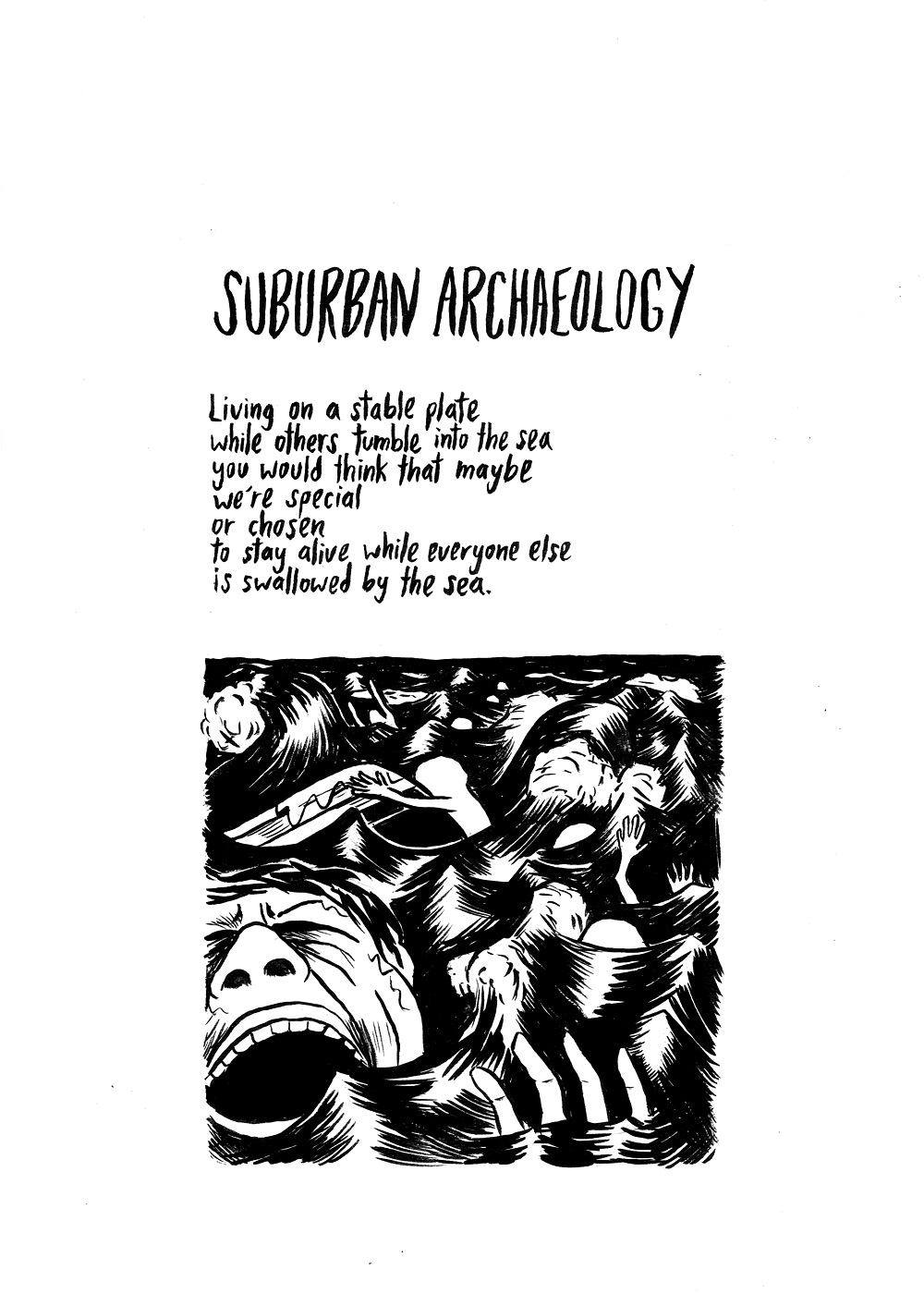
Suburban Archaeology

Living on a stable plate
while others tumble into the sea
you would think that maybe
we’re special
or chosen
to stay alive while everyone else
is swallowed by the sea.
Or maybe
because we’re so brand new
freshly shorn marines
we’re not quite ready to see the seams
of the earth
split open like a mouth.

And in this strange
cookie-cutter of a country
where waves flick like some girl’s hair,
clouds scuff against a faded denim sky
the night’s LCD ticker tape of highways,
there are only wells,
holes that shriek,
baths being drained.

Sometimes
you see them slowing down
drifting across a four-lane highway,
careening cats’ eyes.
The sky yellow and piss-coloured
spits warm into the bay.
Swimmers freestyle between buoys
and their goggles glint
as the sun sinks behind smokestacks
and empty apartment blocks
with the lights left on
by real estate agents.

You can hear the blink of ships
slipping under the Westgate bridge,
the soft plonk of fishing lines,
tinny rambling of AM radio.
There’s the clicking and cracking
of the magnet factory
as silver discs spill towards each other
across the Williamstown warehouse.

Dreams here are black,
except for the solitary flashlight
of abalone poachers.

And at night, lumps grow.

They grow up
out of the local football field
that used to be landfill,
a suburban grand canyon.
The under 18’s have to dig out car wrecks
that rise to the surface between seasons,
old Holdens bulging beneath the pitch.
In the cancer ward at Geelong’s Mercy,
women wait like oysters to be shucked,
hands over their breasts
feeling for pearls.

We drive through Little River,
past the toilet block where my grandma
once found a finger,
a small bloodied pinkie,
black hair on its knuckle.
She stood there
next to the pinkie
and strewn paper towels,
waiting for the police.

*

I run.
I never jog.

I fill the days with cups of tea,
checking on my laundry across the road
and visiting the painter downstairs
who does canvases for Ikea
to match lounge settings.
It’s all about safe colours, he says,
mulberry, chocolate brown and cream.
The post-September 11 palette,
he says the Swedes call it.

I read the newspaper.
A frat boy is found dead
post-initiation night,
his throat clogged with Hawaiian pizza.
They say his body was covered in thick black texta,
I take it up the arse
nigger lover
I suck cock
eat shit and cum.

The ink sunk in the rigor mortis
and the parents had to bury him like that,
covered in the haiku of a fucked-up generation.

I can’t stop thinking of the girl on the news
who called out of my clock radio
at exactly 7am
– I’m drowning –
when she was being raped
in her basement.

*

When I met him,
his leather bat-winged jacket flapping,
smoking hurried cigarettes,
ghosts coming out of his mouth,
I knew I was going to take to him
like lightning to a lake.

He said, striking a match,
that before matches were red, they were yellow.
The factory workers in London used to glow
because the phosphorus got into their hands and faces.
People watched them coming home,
these human lanterns in the night.

For an entire week he stood on a chair,
neck bent like Michaelangelo’s
mapping out the southern hemisphere
with 38 packets of glow-in-the-dark stars.
He copied everything straight from a map
except for the Milky Way.
That, he said, as we camped out in my one-bedroom flat,
he had traced from the freckles spilt across my nose.

While I slept, he worked.
Zooming in on strange pixelations,
wispy formations.
A police scanner alerted him to sites of homicides and suicides –
and he marked each ghost on a map of Victoria,
meticulously collecting life’s leftovers,
installing web cams
across the state and beyond,
trying to catch the rah-rah skirts of the dead.

In the dark
my hands would scramble towards him,
spiders across the sheets.
Sometimes he would take me
half-in half-out of sleep and
I would come with a film of moon
over my eyes.
In between bulbs
we ignited like headlights on the horizon
and in my bones
I could feel a deep dragging
as if something were pulling me under.

A jogger –
it’s always the joggers that find them, he says.
Clutching their ipods,
housekey on a bit of string.
They find the night’s bodies,
creaking in mottled light under bridges,
pink bloated pendulums.
Piss running down their legs
onto concrete footpaths
inscribed with teenage love affairs,
dreams coaxed to the surface.

Sometimes
the joggers note the small
squeezebox
of a heart.
A little bit of night
dragged into the day
like a cat with
blood on its whiskers.

Out the window
I watch as the owner
of the Laundromat
pushes each machine back
against the wall
after they spent the whole night
shuffling
forward on spin.

*

In summer the flat is too hot.
The stickers on the ceiling peel off.
He laughs and says
Falling Stars.

In just a T-shirt I can see
on his arms the tattoos
he had done with another girl.
Faded mistakes, I can still see them
under his new artwork,
lingering in the way
only an ex can do.

I’m gangly around his ghosts.
Arms thick and legs pylons.
Boobs like water balloons.
I close my eyes and breath our way out of the city,
past the vegemite factory,
car rattling, an old Luna Park ride
up over the Westgate bridge.
The Vicks distillery, the treated pine yards
and treated shit farm.
We pass the toilet block
where granny found the finger.

I can smell this place.
The secret blimps in the sky,
the paused kangaroos,
ink in my fingers.

Perhaps this country’s faultlines
are not so big and obvious like San Francisco’s cracks,
or shuddering like the earthquakes of Indonesia.
Maybe at the bottom of all the seas,
this place where letters land,
we are just a yellow canary
blowing out underground
eyes like poppyseeds.

Wrestling a jammed cassette
out of the player, I unravel the shiny tape.
Black streamers catch on the fingers of ti-trees.
Tomorrow the crows will line their nests
with Jimmy Little.

He slows near the salt marsh
where mum and me used to wade barefoot,
the cuts on our feet stinging
scooping up the salt in empty jam jars.
The egrets, those miniature storks,
would walk curiously alongside us,
poking their beaks into
the muddy holes
our feet left behind.

Once,
we watched a fashion shoot
on the bulldozed mounds of salt
Models in ski goggles, puffy jumpsuits and beanies,
crouched on skis.
Men managed the light with foil reflectors
and the models stared
straight ahead
down a dirt road,
an imaginary Black Spur
where the last length of power line
lit up an abandoned soap factory.
Where his most prized
webcam is on the blink.

Inside
I wait for him
beside an open container of rose-scented soap,
while he leaves footprints
on the dusty concrete floor and
hunts for ghosts
that stink
like potpourri.


This poem first appeared in Griffith Review, Autumn 2007

Posted in 58: PUMPKIN | Tagged

His Quarter (after Kevin Pearson)

His Quarter

Posted in 58: PUMPKIN | Tagged ,

The Moon is Not Talking to Us

The Moon is not talking to us.
That light is light that the Sun
shines on the Moon. We are simply
eavesdropping. Moonlight is an echo,

a reflection. It is pre-loved light.
Nothing that comes from the Moon
is intended for us. None of it is a gift,
not its light, not the tides, not the subtle

distortion of our path through space,
not the stolen moon rocks under glass.
We have left our footprints, our flags
and our memorials on its surface, woven it

into our myths, nostalgia and arguments.
We have populated it in stories, given it
a face, taken its photo, christened its craters,
but everything that comes from the Moon

is what we take or what we intercept.
The only light that is truly ours is the
light that hits us directly, the sunlight that
we absorb and reflect back into space,

light that the Moon overhears
when the Sun is talking to us.

Posted in 58: PUMPKIN | Tagged

Microaviary (after A. Frances Johnson)

Microaviary

Posted in 58: PUMPKIN | Tagged ,

The Old Rooster

The old rooster
pecked among coconut husks
and spires of smoke.

He was a fighting cock
who woke the neighbourhood
for morning prayer,
strutting arrogantly through the yard.

He had evaded death
until now.

The parang‘s edge was ready,
and just before I took his head off,
his thoughts became mine.

There was fear,
there were the stilts of a house,
a rusted fence and an eggshell,
there was the old, pointless pride.

I heard the whisk of a broom
and a flame catch on newspaper next door,
then the blade came down.

That night,
as I sat down to a thin-boned soup,
I noticed there was blood on my cuffs.

Posted in 58: PUMPKIN | Tagged