It was meant to simply familiarise me with the background to my research topic. But, as I went through the material on Judith Wright available locally, here in Jammu, India, a thought struck me: what if I needed to profile her? Until then, Judith Wright in Jammu till meant four superficially read poems. This, if you were serious enough about the one paper on Australian Literature offered as part of the Masters Program in English at the University. My initial trepidation naturally was: would it be considered presumptuous of a rank newcomer to profile a doyenne? Especially since, given the volume of writing already done on her, anything I say will already have been said before somewhere. This is something it didn’t take me long to realise.
The more I read on Judith Wright, the more I was convinced that she was, essentially, a person of oppositions and paradoxes. Born in a comfortably-placed family, yet not comfortable with that birth. A woman, yet not a fit-like-a-glove into the role of a woman prescribed for her. In love with the land yet feeling ‘unloved’ by it. Enchanted with its little beauties, yet unhappy for it. A member of the privileged white class, but intensely sympathetic with its opposing class. Endowed with the opportunities provided by a social structure, yet at odds with it. Capable of deep calm and content in relationships, and also of strident discontent and condemnation. With all the zeal of a true-blue novice, I congratulated myself on getting to the core of her personality, until I came Veronica Brady … and what did she have to say? Essentially, that Judith Wright’s self has been oppositional.
I was at first deflated. After all, who would believe it was a conclusion I had arrived at all by myself only a few hours before it was thus presented to me? I put Judith Wright away, and began tapping out frivolous emails to friends. But Judith Wright had got to me.
Determined, I applauded myself for an observation endorsed by a writer who is certainly more of an expert than I, not only on Judith Wright, but on the entire subject of Australian poetry. Also, with facts already dealt with and works analysed threadbare, I might be able to allow myself to luxuriate in self-indulgence; an indulgence that I shall think of as Judith Wright and me. With confidence, I decided I would throw together two opposites: the accomplished national icon and the beginner on the threshold of an academic chapter.
What are my first impressions of Wright? I am at once attracted to her treatment of ‘space’ – individual and collective – the area of comfort that is, or should be, the right of every being on this planet. Wright impresses not because one delights in being an iconoclast or because bohemian relationships are artistically fashionable, but because she felt passionately about things considered taboo, and because she articulated that passion in terms that were effective though ahead of their time. She impresses because she defined her ‘space’ and ‘comfort zone’ – terms so liberally thrown about. In literal terms, the sense of comfort and discomfort she describes in her autobiography, Half a Lifetime, as ‘Inside’ and ‘Outside’ reinforced to me her ‘duality of life and death, not to mention sex (and sex was not mentioned Inside)’ (Wright 1999). And figuratively, the idea of right to life with dignity and integrity. She did it, then, on her own terms. It could not have been easy.
It may not always be simple to isolate a defining moment in life. For Wright, the moment came during the journey home to Wallmumbi in 1942 when she suddenly became aware of a ‘sense of belonging’, of it being ‘my country’, of the sense that ‘These hills and valleys were – not mine, but me;’ (Wright 1999) a crystallisation that re-created ‘space’ and re-wrote definitions.
Being from a country that cannot stop boasting about its ancient legacies, and from a family whose own history goes back seventy-five generations, I find it incomprehensible how any nation could spend over a century looking outside of itself for a ‘heritage’. My affinity with one who seemed to have the same disapprobation is natural. The Wrights and the Biggses, fore-families of Judith Wright, were originally British. However, she turned to her heritage that came down from 1827 when George and Margaret Wyndham first landed in Australia, caught in the cameo of her red-haired great-great-grandfather in ‘Old House’ and passing down through her father sitting with his tea, encircled by birds of all hues relating an anecdote in ‘Reminiscence’. She was impatient with those to whom ‘to plant a garden was to root out everything there already and replace it with roses, delphiniums and petunias and fence it with barbed wire and hedges of conifers’ (Wright 1999). Just as any ‘rooted’ person anywhere in the world would do and appreciate done, she set out to translate into action what Veronica Brady calls the ‘sense of noblesse oblige, a sense of duty’ she inherited from her ancestors.
This is a poet who, true to the spirit of paradox, found beauty in seemingly insignificant, even unbecoming things in pursuit of an identity for her own country – an ‘Australian’ identity as opposed to a Eurocentric or an English one. Hers were the pictures and idiom of ‘Australia’ born of a deep and abiding bond – again, something that resonates irrespective of physical distance. She addressed a cultural and natural heritage that Australian ‘types’ breathe life into: a returned soldier, the half-caste girl, the drover and inevitably, Old Dan; the bush (no longer an enemy as it had been in earlier bush poetry), a flame-tree, the tree frog, the Australian spring which ‘is always the red tower of the may-tree, / alive, shaken with bees, smelling of wild honey’ (‘Child’, Wright 1999), the death of a dingo in a trap and cicadas. Besides, in Preoccupations in Australian Poetry she reaffirmed the bloodline of ‘Australian’ poetry with due deference to predecessors Charles Harpur and John Shaw Nielson.
Thus, Wright was instrumental in reinforcing a new collective (national) ‘space’. As a young student she was dismayed by the cold response to her eagerness to show off her connection with Australian novelist and poet Nina Murdoch. This only proved that at her university ‘the English department had no truck with Australian writing’ (Wright 1999), so to become a part of an internationally acknowledged ‘Australian’ literary canon is indeed life turning a full circle.
Re-drawing the map of Australian nationhood was one consequence of the intense feeling for the land. Another side to it was the oozing wound she used as a simile in ‘The Dark Ones’. Once more, the path was rough. Half a Lifetime is peppered with accusations of unrecorded truths concerning the history of white settlement in Australia – some wry, some sardonic and others matter of fact. ‘Bora Ring’ is a lament for the lost culture of original inhabitants and ‘For a Pastoral Family’, a reminder that ‘We stepped on sure and conceded ground’. ‘Two Dreamtimes’, a result of her friendship with Oodgeroo Noonuccal, also grieves for a ‘lost country’ in which both oppressed and oppressor have lost their ‘dreaming’. The poet’s sorrow and frustration at a history of suppressed facts is genuine and shatters illusions forcefully:
Born and brought up in what seemed a long founded, secure and permanent order of things, I did not learn until much later that no more than a couple of generations of occupation stood between my own birth and the days when Aborigines still the held the country I knew as mine. (Wright 1999)
The desolation of a lost culture, lost rights is emphasised, visually and empathetically:
the apple-gums
posture and mime a past corroboree,
murmur a broken chant.
The guilt that would last a life-time in ‘At Cooloolah’:
but I am a stranger, come of a conquering people.
…
being unloved by all my eyes delight in,
and made uneasy, for an old murder’s sake.
It was difficult for Wright to accept that only males had a claim to her beloved land, while women were classified together with the ‘lowest hierarchy of beings’ (Wright 1999) whose claim to the land was the only authentic one, but tragically unacknowledged. Wright had never been comfortable with prescribed gender expectations. At a time when female empowerment has become the watchword in India, it is with appreciation that I look back on a woman who re-shaped defining boundaries for her gender before it became politically correct to do so.
Many of us would, even today, wistfully envy her temerity to chalk out her own life. Her ambition to become a poet was encouraged, ironically, by her ailing mother, who was unintentionally responsible for an ‘imbalance on the feminine side of things (that) perhaps set me reflecting early on what my own use and function in life might be’ (Wright 1999). Even the relationship she eventually entered into with J P McKinney, on the fringes of academic and social life, flouted convention; what attracted her to him was his own unconventionality – intellectual and personal. ‘This man was different’, she reminisces, ‘He shared his enthusiasms and ideas as though I was an authority. It was a new experience to be asked my opinions on issues and writers.’ (Wright 1999)
Considering the amount of free advice we are given to aim for a social ideal (in an unequal world) representing a mutually sustaining relationship that fosters growth, the Wright-McKinney association should be an example … despite wagging society fingers. That the relationship was rewarding with ‘the power to answer love with love’ (‘Song’, Wright 1999) is apparent in the tenor and content of some poems, and the sense of loss at his death in 1966 is then more acutely understood. McKinney is thought to have influenced her work, and she admits the structure of the title poem of her first book of poems, The Moving Image – a successful work because it was seen as a paean to the New England of her childhood – was ‘intended to express what Jack saw as the triple development of western thought’ (Wright 1999). She could break out of a confining mould and chart new territory, and she confesses,
“… it was with Jack that I would find […] the only background for stepping out of the old rigidities and prejudices that were part of my background and from which I had been unable to break away” (Wright 1999)
xxxxx
Somehow, it is expected that an intelligently articulate member of the female gender who chooses to challenge the rules of the game loses out on womanhood. That Judith Wright defied this fallacy is a conclusion I arrived at with an I-knew-it glee. As an adolescent she suffered a consternation at her own physical awkwardness, an incredulousness at growing up as in ‘Naked Girl and Mirror’ that most of us can identify with. As a grown woman she eventually found happiness with a man and in motherhood, something hardly precluded by insisting on your right to space and standing by your beliefs. How could I miss the sensuality in the oft-quoted ‘Woman to Man’? Or the celebration of a life growing within a woman in ‘Woman to Child’ and the foray into myth where the mother proclaims
I am the earth, I am the root
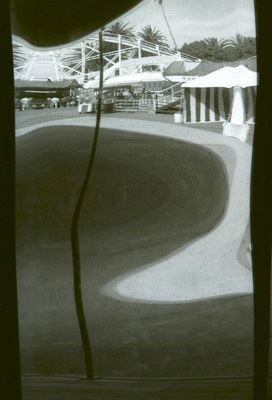 For a person exalted on to a pedestal, there is thankfully a human-ness – a blend of many feelings, emotions, and moods – that comes through in Judith Wright’s work. If equanimity of fulfilled love is tinged with fear, the intensely felt love for the country comes with a shadow of something ominous. A mood of exhilaration for ‘all of a world I made in me’ alternates with meditative, sometimes fearful, contemplation on the inevitability of an end, ‘the event will happen’, that dissolves into tears. This endearing quality hardly detracts from effectiveness; just as deafness never detracted from poetic punch.
On the contrary, as academic Julian Croft observes in a write-up on famous past students of The Women’s College (2004), it reinforced her feelings about language and ‘gave her poetry readings a directness and force any poet would envy.’ Wright’s later poetry shows the development of the activist poet, becoming what might be labelled in today’s terminology as ‘issue-based’, when ‘Bullocky’ becomes ‘Australia 1970’ with its shrill ‘Die’ and foreboding paradox: ‘we are ruined by the thing we kill’. An old forgotten tale about a group of people driven over the cliff opposite Point Lookout is brought to public notice as ‘Nigger’s Leap, New England’, and the collapse of the policy of assimilation finds voice in ‘The Dark Ones’ standing on ‘the other side of the road’. Personal poetry, choices and actions; professional proficiency and social responsibility – openly vocal as well as more subtly translated into conduct. It’s all there in the work and person of Judith Wright.
How does one take a critical appreciation of the poet further than these aspects, and move into a ‘space’ marked out by the poet’s chosen technique and treatment? Judith Wright moved to Brisbane following Jack McKinney’s death and as Penelope Layland reports in NFAW News, ‘Increasingly, from this time on, Wright the activist subsumed Wright the poet …’; and I recollect a belief – still accepted in many places – that Judith Wright’s earlier works are her best, assimilated about four years ago while skimming through an analysis of Shirley Walker’s monographs The Poetry of Judith Wright, A Search for Unity (1980) and Flame and Shadow, a Study of Judith Wright’s Poetry (1991) for my Masters exam. Is it also possible so many readings later that a lot of her work may have been subject to over-analysis? Was the old man within the circle of the camp fire in ‘Bullocky’ always meant to symbolize man’s alienation in this universe and paralysis at his own mortality? Should ‘Naked Girl and Mirror’ be psycho-analyzed as two personalities in one? Or is it that like all rich poetry, Judith Wright’s work is open to many interpretations?
Was Judith Wright a romantic? I guess so, if you agree with critics who point out the connection between reason and emotion through rhythm, rhyme and images; and the role of imagination and mysticism in her landscape / nature poems. A flame-tree is not only a tree but also a teacher of life; a tree-frog in a rainforest croaks out a song hinting at primeval wisdom; a moving may-tree is symbolic of elusive yet ever-present time; nature reflects feelings as in ‘Lake in Spring’ where the ‘waveless blue’ of happier days becomes wind-driven at the loss of love; ‘for earth is spirit’ he announces in ‘At Cooloolah’; and there is a definite feel of communion with nature in ‘Egrets’. I guess not, if you take the word ‘romantic’ plainly rather than with a Wordsworth-Shelley link: her concerns and idiom were very much grounded in reality – harsh reality.
Are Judith Wright’s poems metaphysical? True, there are the images that hit you right between the eyes (the clock wound every night ‘leaking’ time away in ‘Brother and Sisters’), and reviewers laud her craft, discipline and wit. She has been known to make powerful statements as in ‘Request to a Year’ advocating sustaining life through art, where a mother sketches her son drifting on an ice floe towards a waterfall with all the unconcern of a committed artist. Her focus on war, death, fire, time passing and time captured (‘The Cycads’, ‘The Child’) has been critically observed. However, getting acquainted with Judith Wright even in far-away Jammu opens a lot of doors. There emerges the optimism that the geographical and imaginative distance through the personality and work of this poet and others can be bridged. First impressions, notwithstanding the luxury of self-indulgence, are not conclusive studies. I know I shall keep returning to Judith Wright, and can only hope I can form some more of my own ideas before they are presented to me in somebody else’s words.
REFERENCES
Brady, Veronica, ‘Judith Wright’s Biography: A Delicate Balance between
Trespass and Honour’ National Library of Australia, 27 September 2004
http://www.nla.gov.au/events/doclife/brady.html
Hall, Dr Gerard, November 2000, ‘Judith Wright: Australian Poet & Prophet’,
from National Outlook, 27 September 2004
http://dlibrary.acu.edu.au/staffhome/gehall/Judith.htm
Layland, Penelope, ‘Judith Wright, Poet and Activist’, NFAW News Spring
2000, National Foundation for Australian Women, 28 October 2004 http://www.nfaw.org.au
O’ Connor, Mark (ed.), 1988, Two Centuries of Australian Poetry, Oxford
University Press, South Melbourne.
Ted and Ween (comp), 7 November 2001, A Compendium of Poetry, 27 September 2004
http://www.cs.berkeley.edu/~richie/poetry/html/aupoem.html
The Women’s College within the University of Sydney (Famous Past Students),
27 September 2004
http://www.thewomenscollege.com.au/history/judith_mckinney.htm [link no longer active]
Wright, Judith, 1999, Half a Lifetime, 2001, Patricia Clarke (ed.), The
Text Publishing Company, Victoria.
Trivikrama Kumari Jamwal, a scholar of Australian Literature living in the city of Jammu, India writes: “Also, re your question on Jammu, yes I live in Jammu city itself. The family I am married into is an old landed family of the erstwhile state of Jammu & Kashmir. Jammu is a wonderful place, although in the news for all the wrong reasons (terrorism, insurgency, militancy). It is known as the City of Temples, having numerous small and large shrines all over – and of course the famous Mata Vaishno Devi shrine in the peaks of the Trikuta Hills 45 minutes away by road in Katra. It is gradually modernising itself in terms of education (the University is the first in the country to receive the ISO certification of quality; there is a branch of the Delhi Public School which is an international Society for education), entertainment (a cineplex, in the process of being converted into a multiplex, a revolving restaurant), shopping (traditional artisans side by side with international brand names) and so on.” Trivikrama would like to thank Dr. Margaret Bradstock, Retd. Senior Lecturer in English at the University of NSW, for her feedback on this piece.
Images by Louise Molloy.

 CHARCOAL CLUB
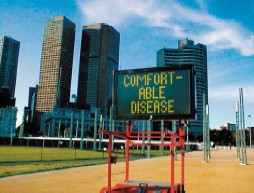 James Stuart
  Just now, I'm weary of the fractured, playful, tense world of the post-modern, post-language poets, the pomopomopomopony. 15 years back I was delighted to play with my mind in that way, to play with my politics in that way, to play with my ideas of language and literature in that way. But increasingly for me there seems to be a gap, a hollow, another path to follow. Some texts of the disenfranchised want for anchors.
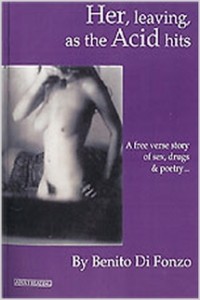 Her, leaving, as the Acid hits by Benito Di Fonzo
 minorphysics by Paul Mitchell
 The Year Nothing by Paul Hardacre
 Gateway to the Sphinx by Tony Page
 Love is the New Hate by Sean M. Whelan
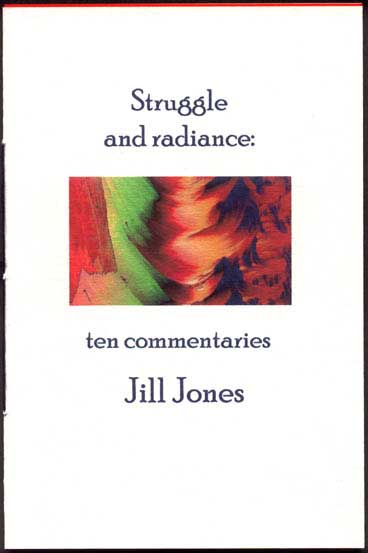 Struggle & radiance: ten commentaries by Jill Jones
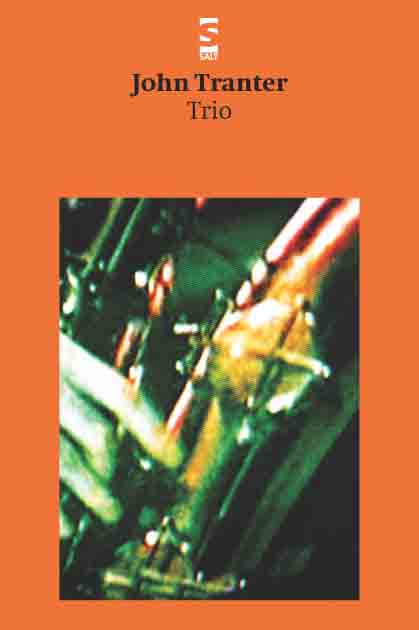 Trio by John Tranter
 Museum of space by Peter Boyle
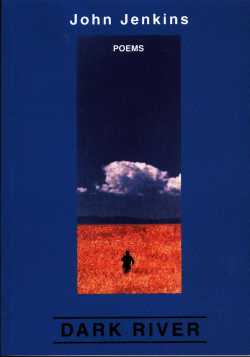 Dark River by John Jenkins
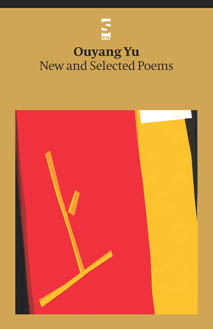 New and Selected Poems by Ouyang Yu
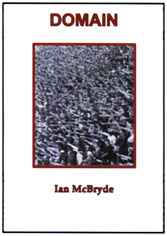 Domain by Ian McBryde
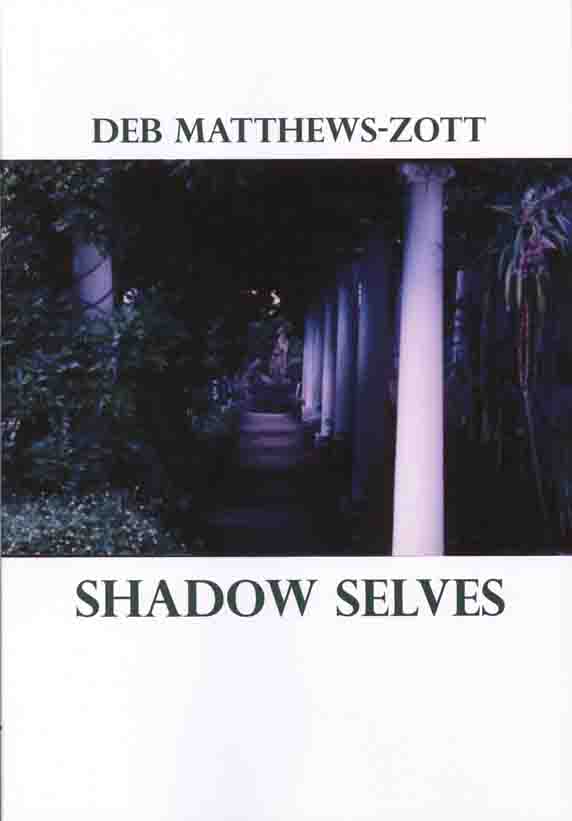 Shadow Selves by Deb Matthews-Zott
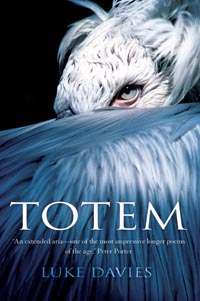 Totem by Luke Davies
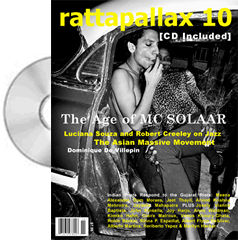 rattapallax 10, Ram Devineni (ed)
 Johanna Featherstone established The Red Room Company in 2003. Based in Sydney, Red Room creates, promotes and publishes new poetry by Australian writers in unusual ways. Paul Mitchell spoke to her recently about her work.
  Justin Heazlewood writes regularly for BMA and Voiceworks. He is, however, better known for his role as Triple J's “Bedroom Philosopher,” a character he continued to develop at the recent Melbourne Comedy Festival. Here he talks to Benny Walter about his comedy in depth.
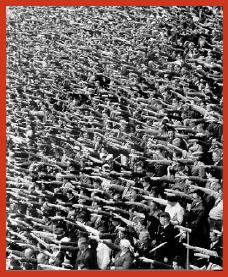 “Domain is without exception the most difficult and challenging poetry collection I have ever tackled. It involved almost four years of steady research and writing. It had a profound effect on me, and caused many a night of uneasy sleep. I found myself quite overcome by a lot of the imagery and literature, which hung around me in a sad, invisible, cloying sort of way.” Ian McBryde talks about his latest collection of poetry.






