Kate Middleton Reviews Kim Cheng Boey

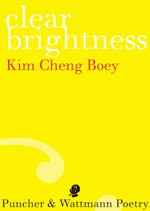
Clear Brightness

Clear Brightness by Kim Cheng Boey
Puncher & Wattmann, 2012

With Clear Brightness Kim Cheng Boey offers a slim volume that, in addition to addressing notions of place, exile and travel, carries with it a deep melancholy of being written in ‘the lone wastes of middle age’. His explorations of worldliness are welcome, and Boey offers portraits of interconnectedness even as he displays and explores alienation. Moving from markets to Chinatowns, from Singapore’s National Theatre to California’s Santa Barbara, this collection often shows the objects that connect the past to the present, keepsakes available to keepers and gleaners alike.

Continue reading

Posted in BOOK REVIEWS | Tagged ,

Review Short: Selina Tusitala Marsh’s Dark Sparring

Dark Sparring

Dark Sparring by Selina Tusitala Marsh
Auckland University Press, 2013

The first epigraph to Selina Tusitala Marsh’s new collection is from Muhammad Ali; ‘The fight,’ he says, ‘is won or lost far away from witnesses – behind the lines … long before I dance under these lights’. Behind Tusitala Marsh’s lines of poetry, there is an immense reserve of strength and grace, enough to sustain the poet through her mother’s death from cancer and to channel her fear and anger into rhythms of the Muay Thai kickboxing ring and the page.

Continue reading

Posted in BOOK REVIEWS | Tagged ,

Review Short: Cameron Lowe’s Circle Work

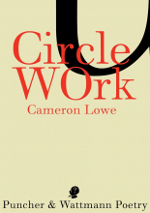
Circle Work

Circle Work by Cameron Lowe
Puncher & Wattmann, 2013

The poems in Cameron Lowe’s Circle Work swing across each page at a strangely measured, athletic tilt. The scope is local and vast, the gaze muscular, and Lowe sweeps the vistas (from Corio to the universe) for details apprehended as preternatural. His rapture typified in the lines, ‘the body’s cruel admission// that close is never close enough’ (56), these poems skirt edges of realness without entering the domain of things. Lowe’s is a poetics of evanescence, not arrival, and Circle Work frames the contours of human habitats as noise-filled within << blancs >> of silence. This book, a ‘stage of surfaces’ (31), watches carefully the play of order: birds and cats and dogs, flower-filled gardens and houses, dark bays and intersected hills and, everywhere, sound and light tinged by season or time.

Continue reading

Posted in BOOK REVIEWS | Tagged ,

Review Short: Anthony Lawrence’s Signal Flare

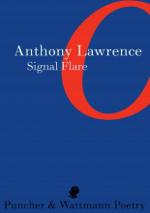
Signal Flare

Signal Flare by Anthony Lawrence
Puncher & Wattmann, 2013

Some months back, I ended up sitting next to a fairly eccentric white-bearded bloke on a Sydney bus. Upon hearing I was an Australian poetry researcher, my new acquaintance exclaimed ‘Australian poetry!’ with obvious distaste, followed by ‘F—ing Anthony Lawrence!’ He went on to detail how feral Aussie upstarts like Lawrence and ‘bloody Adamson’ were bastardising the great tradition of English Romanticism. As he rose to hop off, I asked for his name. He cheerfully declined.

Continue reading

Posted in BOOK REVIEWS | Tagged ,

Feature Poem with Judith Beveridge: Prawn Heads, Oil Rigs and Infidelity – Kuala Lumpur 1977

‘Prawn Shells Oil Rigs and Infidelity – Kuala Lumpur 1977’ is a highly dramatic poem full of tension and suspense. The poet builds these elements into the poem through the astute use of short, sharp phrases which also deliver their punch through alliteration and vowel sounds. He sets the scene visually and viscerally, putting readers’ senses right in among the smells, the sounds, the heat, the dirt and grease of the oil rig. Phrases such as ‘They’re silver-palmed, thick-tongued, slick-skinned” and ‘The chili-fingered oil man’ deliver sonic power and imply much in a few words. The dramatic irony is also expertly achieved, as the reader becomes aware of exactly who it is having the affair, betraying ‘The chili-fingered oil man.’ This is a poem full of changing, slipping tones. The toughness of the oil rig workers and their vulnerability are finely articulated through the action and imagery. The poem’s language is tight and fresh, the emotions are not over-dramatised, the stanza constructions and lineation add to the tension, the narrative is beautifully paced, and the final image is evocative, resonant and surprising. – JB

Prawn Heads, Oil Rigs and Infidelity - Kuala Lumpur 1977


Fourteen on seven off, incessant 
equatorial days, heavy city sky, tarps dripping 
on stall counters. Prawn heads underfoot,

exo-crunch on concrete floors. Bare bulbs,
the bright lights dangling, threaded by mosquitoes.
Two rig workers lift steel tins of Anchor beer

and chew prawn flesh. They’re silver-palmed
thick-tongued, slick-skinned, the pernicious few
riding a state of expat grace. Woks steam,

surrounded by tins, tubs of grease
and ponds of chicken blood. Reedy men
in singlets sweat exhaling strands of smoke,

working the woks as ash falls through
their arms. The chili-fingered oil man
clutches a photo; bent, battered by his wallet;
 
a woman, shirtless, dark hair, haloed 
in a rattan chair. All he says is, look at her
how could you not trust her? His friend

doesn’t turn, nodding wordless sympathy; 
eyes on the wok-steam rising, disappearing.
The photo is thrust again, vigorously,

he looks, doesn’t speak, caught by
the hurry of mortality punching in his chest. 
Look at her, she won’t tell me who it is!

Blinkless, she stares from the photo 
divine as a gecko, tail part-shed, scaling a wall.
Posted in GUNCOTTON | Tagged , ,

SILENCE Editorial

Silence seems a paradoxical and perhaps daunting theme for writers, yet it strikes me as tantalizingly hospitable too. It was pleasing that 494 writers took up the challenge, submitting some 1100 poems; my warm thanks to you all. This high volume meant that a number of fine poems had to be regretfully declined. A common element in those I finally selected was assurance and presence, the sense of a person thinking through the poem – and of the poem thinking through the person. Precision, energy, surprise and an unlikely angle were other touchstones. Feeling, too, of course; silence, actual or metaphoric, can certainly be neutral, but more often it affects us either negatively or positively: as nothingness, dread, loss, denial and oppression, or else as affirmation, safety, intuitive understanding, intimacy, transcendence, and so on. For me, as for many of those submitting, the theme summons up death – the lost voices – but also a sense of mysterious imminence and immanence.

Continue reading

Posted in ESSAYS | Tagged

Silénzio / Scienza: Registering 5 in Joan Retallack’s Errata 5uite

like choosing the parameters of speech1, Diane Ward, ‘Mediate’ (1992).

Teaching Errorious Silence

Joan Retallack describes her second major book, Errata 5uite, published with Edge Books (Washington, D.C.) in 1993, as a ‘silent suite.’ A five line prefatorial note defines, or notates, the meaning of the books title and its composition:

errata 5uite. errant phrase denoting a suc
cession of 5 line errata slips of tongue
composed of letter notes written  on 5 line
musical staves (invisible) together form
ing a silent suite (Fr., a following)2

Continue reading

Posted in ESSAYS | Tagged , , , ,

A Writing Surface of One’s Own

for Tricia Dearborn, whose desk is a door

A waitress here has The Owl and The Pussycat tattooed on her goose-pimpled biceps. They sweetly peek from the hem of an unseasonable short sleeve. Indigo-inked, theirs is a nursery frieze’s block print detail. She is all at sea in her ravaged pea-green tights. Her roughly made skirt abounds with floating, shifting dice. It retains its looped yellow fringing, a faded tangelo backing, from its vintage past life as a painted velvet souvenir cushion cover. She has a ring at the end of her nose, her nose, a ring at the end of her nose. Her girlfriend’s lips, hair and boots are cerise. With honey, she sweetens – and makes a meal of – her sweetly gratis hot tea, blushes like a peach, purrs. The illustrated waitress hovers, calls ‘Who?’ and, like a zephyr, swoops with a cloth, a notepad and a fluffy rainbow-haired Troll Doll-ended pencil.

Continue reading

Posted in ESSAYS | Tagged , , ,

Reasons for Silence

Opinions. Nice to be rid of them. Opinions unloaded joyfully, with relief, like so much silver change weighing down a wallet. Plenty more where that came from. A million, but about five people left in the world, perhaps who can justify their opinion, who can argue the case at length. And about three people left with the time to hear them out.

Continue reading

Posted in ESSAYS | Tagged , , , , ,

Black Stone Poetry: Vanuatu’s Grace Mera Molisa

Grace Mera MolisaImage from front cover to Black Stone.

Black stone is both a figurative and literal reference to the vanua of Vanuatu, specifically, its black solidified lava base. Like many Pacific Islands, Vanuatu is founded on dormant and live volcanoes that impact upon the daily reality of its inhabitants. This essay examines the poetry of Grace Mera Molisa and how black stone is deployed as a key metaphor in her work as both poet and politician. Like black stone, Molisa has been a foundational creative and critical force in the formation of Vanuatu as a postcolonial nation, one based on an indelible Ni-Vanuatu spirit. I argue that before, during, and after Independence was won in 1980, Molisa’s poetry contended that this indigenous spirit must be black stone-based. This meant that in the newly forged postcolonial nation, the desirable volcanic state of ‘steadfastness’ could only be achieved in two mutually dependent ways: the productive equilibrium between indigenous and foreign influences; and the realisation of a constructive counterbalance between men and women. Molisa’s poetic voice in her country is unparalleled and virtually unknown beyond its borders. This essay seeks to redress that literary imbalance.

Amazing Grace

In the close-knit community of Pacific politics, Non-government Organisations, and feminist circles, Grace Mera Molisa was known as ‘Amazing Grace’ (Obituary, Focus, Winter 2002, 33; Randell (ed) 2002). With the announcement of her untimely death in January 2002 at the age of fifty-five, the tributes that poured in from around the world evidenced the impact she had as an activist, a political figure, an environmentalist, a poet, and beloved wife, mother and friend. These tributes were later published in Shirley Randell’s edited collection, Creative Writing in Memory of Grace Molisa (2002). Contributors recognised Molisa’s pioneering achievements and international reputation as an activist and politician. Four distinct and commonly acknowledged attributes made Molisa ‘amazing’: a fearlessness at confronting oppression and political hypocrisy; an unrelenting fighting spirit for improving the quality of life for women; a passion for sustainable development of the environment and local economy; and distinct and inclusive ideas about how Vanuatu’s Independence could be realised for all its citizens. By her more enlightened peers Molisa was seen as someone ahead of her time; by less sympathetic onlookers she was dismissed as a radical. Her work in politics and women’s affairs often led to public ostracism and loss of employment. Indeed, she was ‘Amazing Grace’ – an epithet punning on the title of the Christian hymn, evoking themes of salvation for the lost, justice for the oppressed, and freedom for the enslaved. These are themes that Molisa not only strategically maneuvered in her public roles, but in which she deeply believed.

While Molisa’s poetry was renowned for its ‘biting social commentary on life in patriarchal, post-colonial Vanuatu’ (O’Callaghan, 10), it is just as amazing for its poetics. However, this dimension has received little in-depth literary attention1 and few know of this strident poetic voice outside of (and in many cases, still within) the Pacific. Two questions interest me as a poet and Pacific Literary Specialist: How did Molisa use poetry to restore equilibrium after the ‘Joint Pandemonium’,2 an era that caused unprecedented political, cultural, social and spiritual disequilibrium? How did Molisa use poetry to advocate for equilibrium against a backdrop of indigenous and foreign systems of patriarchy, ensuring that post-Independence, women and children partook equally in the fruits of political struggle? Answers are sought by investigating a key metaphor in Molisa’s work: Black Stone.

Foundation of a nation

Vanuatu is an archipelago with a total land mass of almost 13 square kilometers spread over eighty islands stretching from the Torres Islands in the north to Hunter Island in the south. Twelve are considered main islands. Pre-contact population figures are estimated at just over half a million (Huffman 1995), while current figures sit around 250,000. The number of distinct indigenous languages range from 100 to 110 (Huffman 1995). Consequently, Vanuatu was and remains a kaleidoscope of geographic, cultural and linguistic diversity, perhaps comparable only to Papua New Guinea in the Pacific.

The Spaniard explorer, De Quiros, first sighted Vanuatu in 1606 with little consequence. Later, the French explorers Bougainville (1768), La Perouse (1788), d’Urville and d’Entrecasteaux (1789) came across the islands but in 1774 Cook voyaged throughout the islands and charted them (Lini 17). Cook named the islands in nostalgic recollection of the British Isles. Apart from the imposition of being charted and ‘named’ the New Hebrides by Cook in 1774 (which the indigenous peoples would have been oblivious of in any event), it would be almost a century later that European presence would be felt. Protestant and Catholic missionaries started settling in the archipelago in the 1840s.

Labour shortage for sugar plantations in Queensland, Fiji and New Caledonia, along with the growing trade in sandalwood and beche de mer, saw the rise of ‘blackbirding’ (Mortensen) – the kidnapping and enforced labour of islanders. With no formal colonial power ruling, foreign investors and businessmen viewed the islands as open territory for their labour requirements (Lini 17).

In the late 1860s European settlers acquired land and began planting cash crops of cotton, cocoa, coffee, maize, bananas, vanilla, and coconuts. French and British business interests competed with each other while indigenous peoples continued to be used as ‘polite’ form of slave labour (Jolly, ‘Custom’ 54). Indigenous lives were dramatically impacted. In particular, the workload of women, was increased (Jolly, ‘Custom’ 54).

During this time, both British and French colonial powers became interested in Vanuatu as both had existing neighbouring colonies. In 1887 a Joint Naval Commission was established to ensure the safety of British and French lives and property. In 1906, without consultation with the indigenous people, Britain and France took joint colonial control through an Anglo-French Condominium – the only one of its kind in the world (Jolly, 1996 3-7). Subversively coined by locals as the ‘Joint Pandemonium’, this would become one of the most multifarious and confusing political situations in the Pacific, unique only in its complexity.

Although the archipelago remained intact, it produced systems of government that created further divisions amongst Vanuatu’s multiple geographical, linguistic, social and cultural identities. There were not only two separate (and often opposing) administrative colonial systems, but also competing Anglophone and Francophone education and religious systems (French Catholicism versus English Protestantism) and policing and health systems which played on intra-village rivalries, creating ‘disunity and polarization’ (Jupp and Sawer 553). This made the creation of a unified indigenous movement for Independence a difficult, but not impossible task (Lini 39).

73 years after the Anglo-French Joint Condominium, Vanuatu gained Independence and became one of the world’s newest nations in 1980 (Lini 26). While Ni-Vanuatu were by no means passive agents during colonisation, this double yoke of colonisation was deemed disastrous by most. Much of the prime land had been ‘legitimately’ seized by foreign interests, often without the indigenous owner’s knowledge (Jolly, ‘Custom’), while the continual international rivalry between Britain and France produced a highly divisive local society in constant tension and opposition. There are numerous anecdotes about the absurdity of Anglo – French animosity and competition where half built roads and incomplete buildings mark territorial borders. Among Ni-Vanuatu, conflicting clan rivalries alongside inherited colonial allegiances was taken advantage of by colonial powers to thwart any indigenous political moves towards solidarity (Sokomanu 50).

Unlike many other Independence movements in the Pacific, Vanuatu’s fight for self-determination was violent (assassination attempts, looting, kidnappings, bomb threats, slanderous attacks), contentious, full of political intrigue. Independence was continually thwarted by French colonists, British and American speculators, and self-interested business owners who formed a sleuth of other parties including the main Opposition, the Union de la Population des Nouvelles-Hebrides (UPNH), various breakaway parties included the Union des Communates des Nouvelles-Hebrides (UCNH), the Movement Automomiste des Nouvelles-Hebrides (MANH), the Tan Union, and the Federal Party (Jolly, ‘Custom’ 319), along with and foreign-aided indigenous secessionist movements such as the early nationalist party, the Na-Griamel in the 1960s and French-backed Jimmy Stevens-led movement (Jupp and Sawer 555). But Ni-Vanuatu were determined in their quest for Independence, eventually coming to power with the only Melanesian-led nationalist party with broad based Melanesian support, the New Hebrides National Party. Formed in 1971 the party was headed by Anglican minister, Father Walter Lini (Plant; Lini). Based on the party’s 1977 congress resolve to rename the country as ‘Vanua ‘aku’ meaning ‘our land’ (Plant 115), Lini’s party eventually became known as the Vanuaaku Pati.

The Vanua`aku Pati remained in power until 1991. Molisa remained the Private Secretary to Lini, Prime Minister of Vanuatu from Independence until 1990. Due to internal conflicts within the Vanua`aku Party, she was dismissed by Lini in October 1990, shortly after the euphoria of Vanuatu’s 10th Anniversary of Independence. Many were of the opinion that Molisa’s dismissal was grossly unfair and due to her refusal to pander to Lini’s increasingly despotic style of leadership (Shackley). Not one to be silenced, Molisa used words to fight back. In the ‘British Friends of Vanuatu Newsletter’ Normal Shackley records how Molisa ‘commented on these events in a bitter pamphlet, soon swept off the streets, accusing Lini of acting as a totalitarian dictator and asking ‘Where are we going ?’’ (2001). Subsequently, the Molisa family were persecuted for their outspoken views. The constant threats culminated in the burning down of the Molisa family home. Refusing to be intimidated, the Molisa house was rebuilt on the original site. When I last visited the family home, Molisa’s outdoor writing table continued to occupy the creative centre of household, its partial charring displayed like a badge of honour.

After Lini dismissed a number of other Ministers of the Vanua`aku Pati on equally dubious grounds, others began to defect. After a notable split between Lini and Barak Sope, Lini was ousted and replaced as leader and Prime Minister by Donald Kalpokas. In the 1991 national elections Kalpokas was narrowly defeated by Maxim Carlot, leader of the Union of Moderate Parties (UMP) with its support base primarily among the Francophone. Lini and his newly formed National United Party (NUP) polled a distant third and a coalition was soon formed between the UMP and the NUP to hold onto the majority of power in the government (while quickly replacing about thirty senior officials regarded as too closely associated with the previous administration) (Ogden). Ogden describes the contemporary political situation as ‘fluid’, pointing out that despite its politics:

Vanuatu’s economic policies are generally seen as ‘orthodox’ … and considerable income is earned by selling tax haven services to international capitalist enterprises. Vanuatu’s main resources are agricultural, dominated by copra, beef and cocoa while the re-export of petroleum and fish products also makes up part of its export earnings.

This essay focuses on Molisa’s poetry published in the first decade after independence. This is poetry formed from the heated, volatile political climate, poetry formed under immense pressure then released to flow onto the page, creating new land, reclaiming old territories. This is what I call ‘black stone’ poetry.

The constitution of the Republic of Vanuatu is based upon the Westminster model, and provides for executive, judicial and legislative powers in the organisation of the government, as well as pledging to uphold the rights of every individual. The Preamble to the Constitution is as follows:

We, the people of Vanuatu,
Proud of our struggle for 
freedom
Determined to safeguard 
the achievements of this 
struggle
Cherishing our ethnic,
linguistic and cultural
diversity
Mindful at the same time of 
our common destiny
Hereby proclaim the
establishment
of the united and free
Republic of Vanuatu
founded on traditional
Melanesian values, faith
in God and Christian
principles
And for this purpose give
ourselves this 
Constitution (Vanuatu 65).

Posted in ESSAYS, SCHOLARLY | Tagged ,

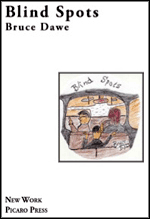
Andrew Fuhrmann Reviews Bruce Dawe’s Plays in Verse: Kevin Almighty and Blind Spots

Blind Spots and Kevin Almighty

Blind Spots and Kevin Almighty by Bruce Dawe
Picaro Press, 2013

Some poets are sublime and ridiculous at the same time. James Kenneth Stephen was only being felicitously expressive of what oft was thought of Wordsworth when he wrote:

Two voices are there: one is of the deep;
It learns the storm-cloud’s thunderous melody,
Now roars, now murmurs with the changing sea,
Now bird-like pipes, now closes soft in sleep:
And one is of an old half-witted sheep
Which bleats articulate monotony,
And indicates that two and one are three,
That grass is green, lakes damp, and mountains steep
And, Wordsworth, both are thine ...

Continue reading

Posted in BOOK REVIEWS | Tagged , , , ,

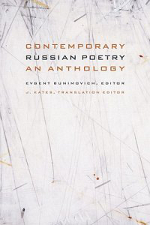
Nicholas Birns Reviews Contemporary Russian Poetry: An Anthology

Contemporary Russian Poetry: An Anthology

Contemporary Russian Poetry: An Anthology
Evgeny Bunimovich, editor, and J. Kates, translation editor
Dalkey Archive Press, 2008

Dalkey Archive Press has long been known as a premier publisher of cutting-edge international fiction; here the Illinois-based firm continues its venture into poetry. This massive book, including forty-four poets, all with English translations facing their Russian originals, and supervised by both an ‘editor’ and a ‘translation editor’, is an anthology of Russian poetry written by living poets, or those born late enough to still be plausibly alive today. It is not, in other words, just inclusive of the latest generation, or those explicitly linked to postmodern or experimental practices; or those coming to prominence only after the dissolution of the Soviet Union in 1991. Continue reading

Posted in BOOK REVIEWS | Tagged , ,

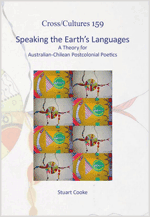
Nicholas Jose Reviews Speaking the Earth’s Languages: A Theory for Australian-Chilean Postcolonial Poetics

Speaking the Earth’s Languages

Speaking the Earth’s Languages:
A Theory for Australian-Chilean Postcolonial Poetics
by Stuart Cooke
Rodopi, 2013

If poetry registers ‘internal difference, Where the Meanings, are’, in Emily Dickinson’s deep phrase, then indigenous poetry creates meanings that are more different still. Growing from an alternative poetics that questions conventional procedures and challenges what we know, indigenous poetry gives us a chance to change. That is true whoever or wherever we are, Indigenous, indigenous or invited in. It may be more broadly true, across other art forms too, but to start from poetry, if poetic language is speech at its most highly charged, then in indigenous poetry there’s a glimpse of a potential for overturning and renewal. Dominant practice has its own built-in obsolescence. Paradoxically, given its acknowledgement of the timelessly old and absent, indigenous poetry suggests a new way forward.

Continue reading

Posted in BOOK REVIEWS | Tagged , , , , , , , ,

Gig Ryan in Vietnamese Translation

Oppenheimer trước Ủy Ban Điều Tra Những Hoạt Động Phương Hại Mỹ Quốc

Những câu hỏi của họ bắt đầu, rồi đến những giả định, tiếp tới là những giả thuyết
Mỗi góc cạnh bị tránh né, bị đẩy tới. Tiên khởi, những câu trả lời của ta có vấp váp
thành thực phải nói vậy, nhưng rồi qua những giờ, những tuần lễ giàn xếp
đã bọc vo quanh ta – một vụ – hẳn nhiên ta có thể thấy sự mắc lỗi thiếu sót
tất nhiên nó được hiệu chính, ghi nhận, để lúc khả hợp sẽ được trình bày với sự chuẩn xác
ngày nào, tập hợp nào, lý do nào. Sự kiện thuộc lòng kia ta vốn biết
mỗi công thức được tài trợ là một ràng buộc trong không khí, ẩn nấp gọn ghẽ
thế nhưng họ vẫn khéo giọng ngọt, tự hỏi có phải ý nghĩa phải chăng thế này thế kia
những cuộc gặp, những sinh viên của ta, những bạn đồng sự
vượt lên khỏi thứ chân trời nhân tạo, mang vết thương hở miệng chúng ta đã thấy
với những bạn trở áo, những người sẵn đích hướng, một diễu hành huýt sáo miệng
họ xóc xáo, tô đậm “những chỗ hư hỏng trong cá tính” của ta
rồi thì một mẩu ức đoán kêu rền kẽo kẹt. Ta còn được bao nhiêu chân bản ngã
một quả quyết cho tới chỗ Tôi là … rồi những hồi ức đóng lại, tôi xưa cũng đóng lại


Oppenheimer at the Un-American Activities Committee

Their questions began, then suppositions, then hypotheses
Each angle parried, pushed. At first, my answers tripped,
nicely true, but as the hours, the weeks arranged
around me – a case – sure that I could see the slip,
of course corrected and jotted, helpful, when applicable, to make precise
the day, the set, the score. The rote I knew
each angeled formula stringed in air, canyon-neat
yet they still wheedled, wondered if, what meeting meant
and my students, co-workers, rise above that gashed and made horizon that we
                                                                                                     summed
and friends turn who tended, a whistling parade
they shuffle and chalk my “defects in character”
and then a morsel, a speculation, creaks. I have so little self remaining
and crisp til then I am… and recollection folds and what I was too

Posted in TRANSLATIONS | Tagged ,

Phan Nhien Hao in English Translation

In the changed season

I heard the season has changed
the river is running this direction then one day the sea will enter the city
I heard in the far places people had lit up the night
with pleasure some are sitting down
an elongated room: people among the book shelves
the library is not that busy and high above sometimes I heard
that I was once a day dreamer who now often is too busy
to discern the breathings of the birds
a brown-bricked road, a time-perfected
flower, if one is to talk about youth
or, homeland, certain names, their abstracted relations
As nights fall I heard things will be calm again
I walk alone and this aloneness clings on me
two tied into one down the road-slopes
I heard conflict and reconcilement are dialectics of the wheels
surely the highway surface and speedy motion are handsome signs
                                        of a big city
I am right under the roadsigns
still manage to get lost from one haunt to the next
among schools of philosophy, political doctrines
                          and welfare policies for the poor
I have my skin, the colour of a metal coin
I heard if patient enough I may be able to do an exchange
for food, things neatly packaged, geographical moves
I heard many people like me have finished
yet I still am walking under a small sign, a flower
this pair of shoes cost me seventy-five dollars.


Trong mùa đã đổi

Nghe nói là mùa đã đổi
con sông chạy hướng này rồi một ngày biển sẽ vào thành phố
nghe nói là ở xa người ta đã thắp đèn
ngồi chơi trong căn phòng hẹp giữa các kệ sách
thư viện vắng người và ở trên cao
tôi đôi khi nghe nói chính tôi là kẻ mơ màng
nhưng thường thì sự bận rộn
không nghe những con chim thở
con đường gạch nâu và một bông hoa cổ điển
của những giấc mơ thiếu thời
quê nhà và một vài liên hệ mù mịt
buổi tối nghe nói sẽ yên
nhưng tôi bước đi và sự một mình lẻo đẻo
ngã bóng xuống đồi
Nghe nói xung đột và hóa giải là biện chứng của những bánh xe
mặt lộ và chuyển động là dấu hiệu điển trai của thành phố lớn
tôi ở dưới các bảng chỉ đường
                          và còn lạc từ hang ổ này sang hang ổ khác
triết học, chủ nghĩa
và những chính sách phúc lợi người nghèo
tôi có màu da của đồng kim loại
nghe nói nếu kiên nhẫn thì tôi có thể đổi được thức ăn
sự kiện đóng thùng, các cuộc chuyển dời địa lý
nghe nói nhiều người như tôi đã xong
và tôi còn đi dưới bông hoa nhỏ
đôi giày này giá bảy mươi lăm dollars.

Posted in TRANSLATIONS | Tagged ,

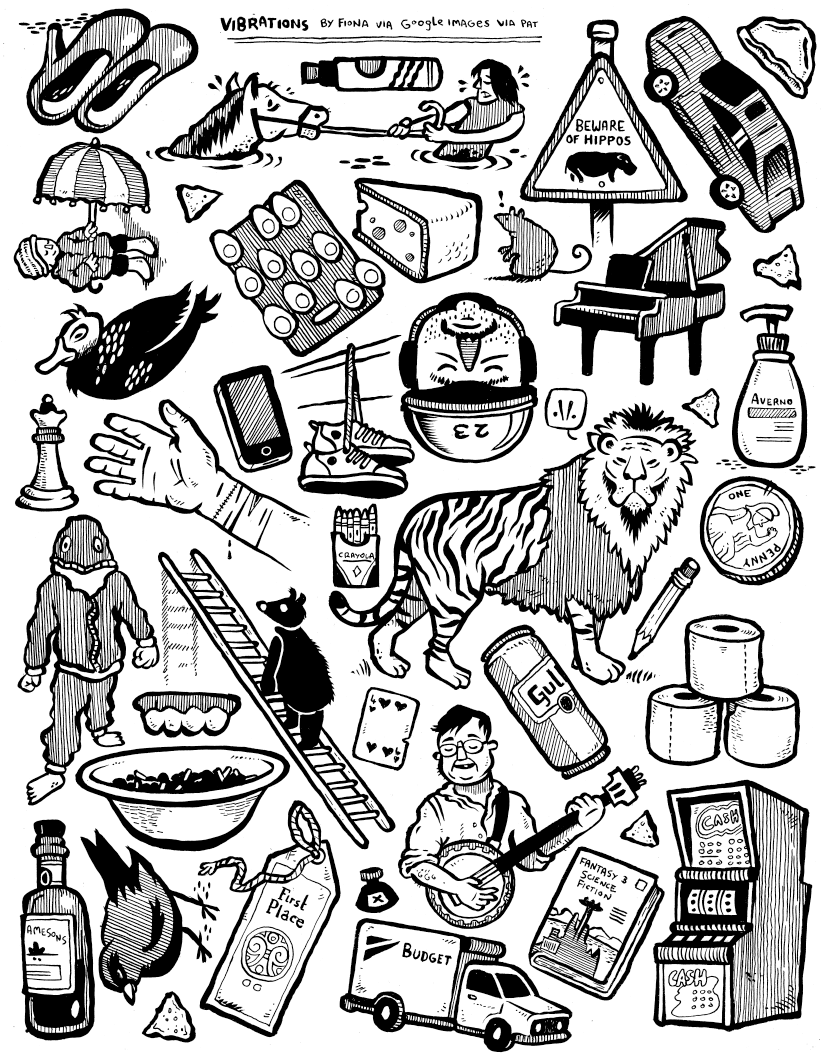
Vibrations (after Fiona Wright)

Vibrations

Posted in 58: PUMPKIN | Tagged ,

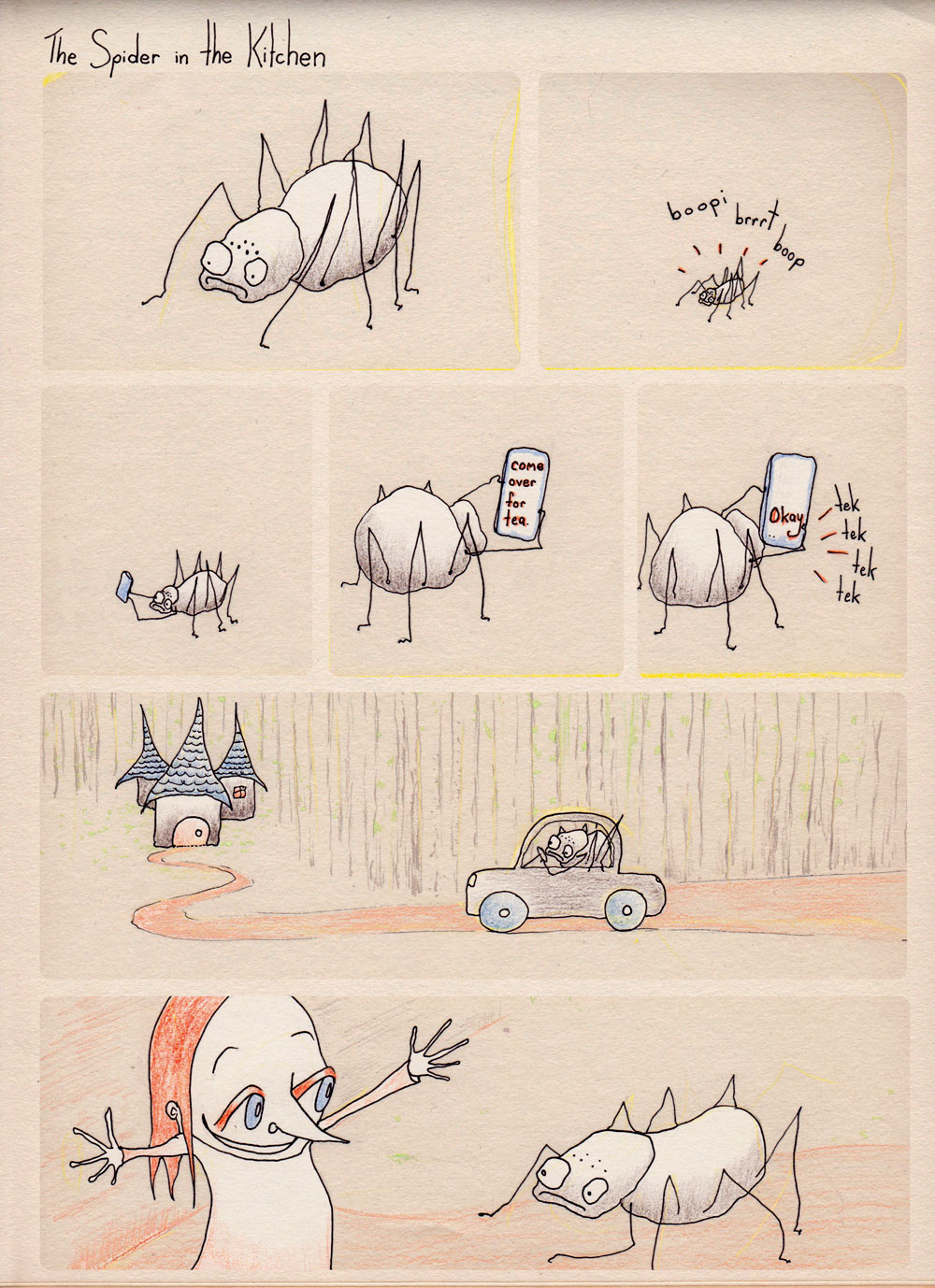
The Spider in the Kitchen (after Andrew Sant)

The Spider in the Kitchen

Posted in 58: PUMPKIN | Tagged ,

Concrete Sequence: APPEAL IN AIR

APPEAL IN AIR

APPEAL IN AIR parallels the names of birds with the names of poets, particularly those from the avant-garde tradition. APPEAL IN AIR assumes the form of a spreadsheet that adds together a suicide, a list of bird-names and a valedictory roll-call of poets. By using an accounting tool for an anatomy of sadness, the poem questions the way that we place value in our own lives.

Who gets overlooked? What’s unheard? What’s too loud?

The poem begins with a pile-up of noise, urban overload, into which is inserted the story of A, a true story of a suicide, verbatim from an overheard conversation. ‘… a thought lost in noise sold as music …’ The poem drowns in random information, out of which come soaring flights of birds … first in tiny letters, then in flurries of word / birds that populate the page. The final section leaves us in the big wilderness spaces of the air. The sequence presented here is culled from my original book, APPEAL IN AIR (Knives, Forks and Spoons Press), and assembled from previously unseen material.

BEGIN >>

Posted in ARTWORKS, ESSAYS | Tagged

Fiona Annis’s Celestial Measures in Ferrotype


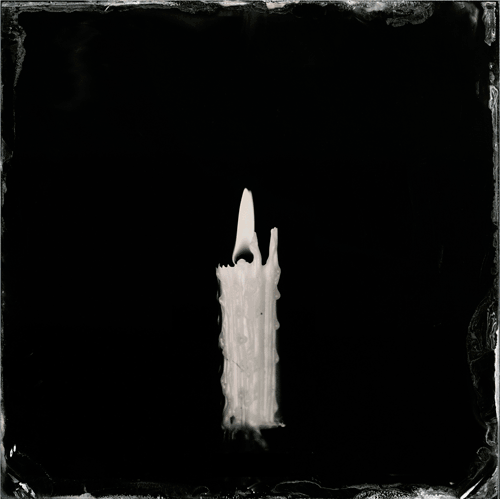
Real Things Do Not Dream Long | Fiona Annis | C-type enlargement of wet-plate collodion | 91x91cm

Common threads in my work include the use of instructions, time-based media, and esoteric technologies. This is paired with an ongoing interest in how the past inhabits the present. In this respect, the prefix re is in constant use: return, revenant, remediate, reinvent, and residue all reoccur in the writings that describe my various projects. Most recently, the impulse to riffle through discarded or disavowed material objects is interwoven with an exploration of obsolete lens-based technologies. Continue reading

Posted in ARTWORKS | Tagged

Twelve Sights of the Sea

{sea-anemone}
barely inside and out, the rippling enfoldment
that adheres to your nerve-tips, that draws you
further away, abandons any comfortable reassurance

{sea-breeze}
through your voice, strained to breakpoint,
hastily called upon, past your lips, parched,
cracking into bloodlines, blisters ready to weep

{sea-gull}
or swoop and dive and bank and soar
or pick scaly iridescence off your blinking eyes
or steal the thoughts leaking from your bones

{sea-horse}
from your memories of brothers, sisters,
babes-in-arms, collected, recollected, encased
by the thinnest of ivory, the purest of gold

{sea-pen}
across the ebb, the flood, the marks circumscribing
your day-long, week-long, drift through doldrums,
your irresolute desire to be elsewhere

{sea-salt}
the sweatiness of countless dock-side farewells,
the story you neglected to tell the crowds that came
and went and cheered and invariably forgot to smile

{sea-serpent}
too bright for photography, too dense for dreams,
the sun, the air, the fire ablaze underwater,
while you, alone, prepared to catch the sparks

{sea-shore}
a fleck of paint, screw-threads, unspliced fray,
is this some kind of clue? splinters, half-varnished oak,
was this your final hand-hold?

{sea-snail}
perhaps you wished for oxygen, a raft, a tightly closed
bulkhead, instructions on which way to come about
in case of break or catastrophic failure below deck

{sea-star}
what did you see, scratching for contact, before
the sky was crushed flat on its back, before
coral reefs zigged and zagged and slashed at the rain?

{sea-wasp}
useless now, the oil-skins, Mae-Westers, personal
flotation devices as required under law, a buoy
engulfed with tendrils displaced in the roil

{sea-weed}
only By-the-Wind-Sailors, storm-sintered glass,
one canvas shoe, barnacles, slow-darkening Sargasso,
the bells, a message unbottled, awaiting receipt

Posted in 60: SILENCE | Tagged

Slick

dawn unleashes
her molten hoard

a lucent slick
assailing land

2 snakebirds wrought
from whitby jet

incise its skin
to break their fast

a boat named hope
is coaxed from sleep

she clears her throat
her bilges spit

a shoal of diesel rainbows
spawning in her wake

Posted in 60: SILENCE | Tagged

Penal Colony No.14.

When the wind howls, like a Belaz 75710
blasting through huts, wire fencing, padded jackets
you know there is snow coming
the fields will be white like heroin
and then you don’t need fences
there is nowhere to go, but the cathedral vastness of the mind

and the time it takes to walk a cell
to shower, and shit, and play games with the warders
like pretending to be killed, or that the world has not forgotten
that you are on hunger-strike, that you have been beaten-up
or sexually molested, or this is not now, but between the wars.

Where have all the great poets gone?
bargaining their meagre rations for scraps of thin paper
to write their poems on, hiding them behind broken masonry
in their cells, on the chicken farms, factory floors
until they rot unfound, unread

or memorizing each agonizing word, line, verse
in their food-starved, work-numb minds
until the first word, line, verse disintegrates
and disappears like salt waves falling back on a beach.

There are only the old women left Nadezhda
some have been here for years
neither kind nor cruel, but indifferent
to suffering borne or given,
oh, and young girls writing punk lyrics
to a man on a pale horse in Siberia.

Posted in 60: SILENCE | Tagged

Homo Suburbiensis

With a phrase from Franz Wright’s ‘Another Working Dawn’

you’re dreaming still : soaring high above an endless city : your view
slantwise : your back to the dawning sun : the streets are empty :
the high-wires knotted with pigeons : you’re dreaming still :
of absent friends : of your own domestic library : its drowsy aroma :
the piles of weighty hardcovers you’ve acquired : there’s nothing
for it : but to turn yourself out into the streets : post-boxes
gagging junk mail : newspapers lying at the streetsides : unexploded :
even the notorious guard-dogs, the most predictably vehement
of them, have developed inhibitions in the night : which means
nothing : you’re dreaming still : meat-hooks in the soft ham
of your ankles : scraping the pavement : a dreadful rasp : that wakes
the neighbours : that wakes the whole indecent postcode :
clammy in their bed-sheets : from their dreamless sleep :
or sleepless dreams : one way or another, they’re dreaming still :
late night programming flickering inside their eyelids : station ads :
infotainment : the exposed breast they didn’t kiss : aged sixteen :
that wakens them : with a hankering for pavlova : it doesn’t matter :
you’re streets away : in an avenue of enthusiastic bottlebrush :
that sheds its eyelashes onto your shoulders : where some ghost :
some lost child or teen suicide : agitates a swing in the soldiers’
memorial gardens : rattling its chains : with a lightness that counters
the heft of gravity : its tension on the swing : its catenary fullness :
puddles in the gutters shiver : attuned to some resonance
beneath your hearing : suffering it like a skin : some gristle
in the teeth of the fault-line : on a corner a broken bird : dishevelled :
its eyes screwed shut : it’s dreaming still : wheeling high above
this vast suburbia : paved with rooftops : its view slantwise :
far beyond the curvature of the earth :

Posted in 60: SILENCE | Tagged

Carte Blanche

I.

what to make of this blank space :
this white noise : to score it :
to give it some characters : to put
black marks against it : the way
these lines run on : stack up :
stretch out : ranks of peasants
shaking their rakes & forks :
agitated : jostling : is there
a weak point in the defences :
a vulnerability in the lines : some
place we might break through :
into spaciousness : into nothing :


II.

whiteness on whiteness : to pluck
a white rabbit from a white hat :
in the middle of a snowstorm : or
a ptarmigan in its winter morph :
the whites of your eyes shining :
the cat who got the cream : your
mouth opening on a porcelain
smile : & death with a moon in
her pocket : song of the pack-ice :
jingle of the permafrost : an army
camouflaged in bed-sheets :
gnawing ice : marching out to
battle : under a flag of abject white :

Posted in 60: SILENCE | Tagged