Tim Wright Reviews Caitlin Maling

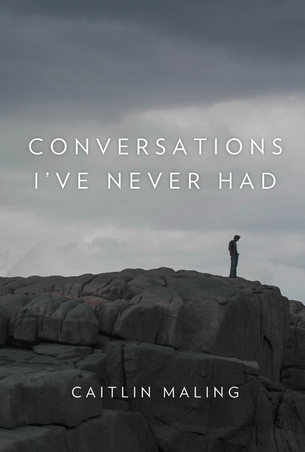
Conversations I’ve Never Had by Caitlin Maling
Fremantle Press, 2015

Few writers seem to get the viciousness of Perth. John Mateer’s early poems do, and some of Deborah Robertson’s short stories. There’s also Laurie Duggan’s one-liner, ‘you can see why all the really savage punk bands came from here’ (‘Things to Do in Perth’), and for the encyclopaedic and lyrical, John Kinsella’s wonderful, aptly sprawling ‘Perth Poem’.

Continue reading

Posted in BOOK REVIEWS | Tagged ,

Review Short: Ali Cobby Eckermann’s Inside My Mother

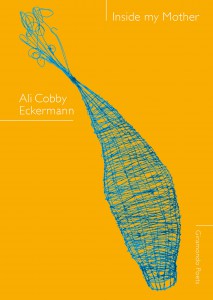
Inside My Mother by Ali Cobby Eckermann
Giramondo Publishing, 2015

Celebrated South Australian writer Ali Cobby Eckermann’s fourth volume of poetry, Inside My Mother, is her most substantial and diverse collection to date. Although the book includes a handful of reworked earlier pieces, most of the seventy-three poems are new. Across four sections, these poems enrich and intensify the politically urgent subject matter that Cobby Eckermann’s oeuvre has, over the past decade or so, addressed so effectively. As an Aboriginal descended from the Yankunytjatjara language group, Cobby Eckermann’s chief concern is to express what she sees as the untold truth of Aboriginal people, both in terms of vital aspects of their culture, as well as regarding the (ongoing) detrimental impact of European colonisation. In this new work, Cobby Eckermann’s personal story provides a strong substructure in relation to which these larger issues are artfully explored.

Continue reading

Posted in BOOK REVIEWS | Tagged ,

Review Short: John Tranter’s Heart Starter

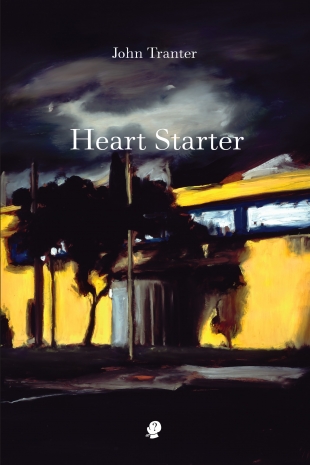
Heart Starter by John Tranter
Puncher & Wattmann, 2015

What is more old-fashioned than modernity? New York in the 1960s; Paris in the 1920s; Edwardian England: how entranced we are by the bygone milieu of modernity. John Tranter has long appreciated the poetic potential of the almost-new, almost-old, as seen in his poems on movies, jazz, the New York School, and so on. But as seen in his latest book, Heart Starter, his interest in such things is not merely nostalgic. Rather, his work is obsessed with remixing the magic pudding of modernity. The past, in other words, is there to be used, not revered or sentimentalised. Tranter’s poetic revisionism treats source texts and forms as transitional objects (to use Winnicott’s term) that offer open-ended play and creativity, rather than demand compliance.

Continue reading

Posted in BOOK REVIEWS | Tagged ,

Review Short: Shane McCauley’s Trickster

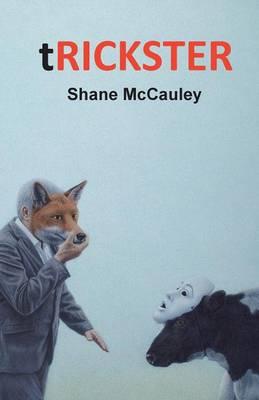
Trickster by Shane McCauley
Walleah Press, 2015

It is something of a paradigm in literary criticism (poetics included) to couple West Australians with place. Of late Tim Winton and John Kinsella have occupied this ground, but it is there in thinking about Randolph Stow and Dorothy Hewett and many more besides. It was Winton, after all, who wrote – ‘we come from ‘the wrong side of the wrong continent in the wrong hemisphere”. The place, thought of quite literally as location, is simply ‘wrong’, meaning not quite right, meaning askew. This is to say nothing of the spirit here, or how, for a great number of people (some Noongars and others included), this always was and always will be the very centre of the world.

Continue reading

Posted in BOOK REVIEWS | Tagged ,

Judith Beveridge’s Twelve Highlights from 2014


Still courtesy of Allen & Unwin

Throughout 2014, Judith Beveridge selected one poem per month, from a litany of external sources, to spotlight in Cordite Poetry Review, and she delivered excellent choices … writing a bit to each selection. We have compiled them all here in one article. Enjoy!

~

I forget who it was who said that the writer needs to be ‘holy in small things’, but I think there is a great deal of truth in that. That’s one reason why I’m attracted by Todd Turner’s poem ‘At Willabah’. Here, the poet guides us through the details of the landscape in a not dissimilar way to the deep engagement with particulars in such poems as Seamus Heaney’s ‘Death of a Naturalist’ or Elizabeth Bishop’s ‘At the Fishhouses’. Place in poetry is often a point of exchange, and in this poem it works to become a bearer of human feeling as the speaker looks and looks at what is before him. You sense that Turner has undergone that meticulous discernment of image and word, the deep seeing that enables the world to open out, and he balances that arduous attention to detail with a lovely sense of the line and with sonic acuity as in the ‘crooning of frogs’ and the ‘searing horde of cicadas’ that ‘smoulders with a resinous hum’.

For me this poem is not so much about observation, but rather revelation gained through ‘trained worshipful attention’, the ability to keep looking and listening until the world opens itself up, until each thing becomes an object of thought, an aspect of immersion. The affectionate accuracy with which Turner makes the water and the canoe known to us keeps us engaged. He delves deeper and deeper into possibility, ‘still there is enough light, enough shadowless/ dark out here to stay and buoyantly float, hammocked, on this iridescent bed of backwater’, strenuously orchestrating his language and imagery until by the end, we too, lie ‘dumbstruck under stars’ – not an easy line to get away with unless the poet has drawn us line by line through a swell of detail, though their rhythms of affinities and recognitions, and given us opportunities to witness how sensual panorama is changed by perspective, both spatial and inner, and made complex by affect. By the end, this watertight poem has bound together weed and frogs, lily-pads and mosquitoes, nests and cicadas, water and stars and set them all magically ringing.

At Willabah


Walking the long trodden path
down towards the dam, I hear pebble
stones squelch underfoot, and the wooden 
jetty out over the brown spangled water 
pulses with the crooning of frogs. 
At the foot of the landing thick tangles
of tall grass, green on the blade,
flaxen like wheat at the tips, shoot up 
between the narrow gaps of slatted planks 
and through the middle of a weather worn
tyre tube, giving the appearance of ease.
Either rife or in decline, lily pads brim 
in bright and mottled stages of bloom and ruin.
They look like a drifting patchwork 
of miniature parasols, each stem softly landed.
But they have risen from murky depths,
launched pea-green sails and hoisted 
ceaseless bulbs into the warm flushes of air.
Late afternoon sunlight crosses the dam
and an undershot cloud of tadpoles
darts beneath the dirty gold shallows
under the dear little dead one, floating on its side.
At the first mellow hint of dusk
a hidden swarm of cicadas begins to rattle,
amplifying a static reverberant pitch
that fills the place with a thronging charge.
Upturned on stilted racks above the edges
of swampish ground, a large red canoe lies
heavily with its curved ends turned down.
It is mosquito-peppered and sun bleached 
from bow to stern, has lain here long enough 
for a community of insects and organisms to thrive.
Lifting it up and turning it over, I see a small 
black spider scurry across the length 
of the gunwale then shelter under the dry 
mud-caked taper of weed stuck there on its side.
I lower the canoe down gently off its perch
and drag it by the ring rope to the water's edge
before going back for the partially sunken oars 
that lie in a melded slurry of bog and grass.

Out over the dam, jutting there steadily, 
the canoe hangs in the balance on and off the jetty.
I lift it from its back end, tipping the scales.
It slides with a sudden splash, and in an instant,
undulant wavelets swish into tremolo
then recoil, whitewashed in dissolving pools.
I ease myself into the lumbering vessel
and wait until the rocking ceases...
Tideless, level and brilliantly still, the water
is a reflecting threshold of the bottomless blue,
a blank scroll glazed with a long shot
sequence of idle air and suspended inland sky.
I set off, levering the blade-end of the oar into a rung
and mutable clouds lap in diminishing ripples.
I row on across the silvery water mirror
before letting the canoe drift and curve then run 
aground into the twig-ends of a white, overhanging 
lichened tree, where an almost unseeable nest, 
not wedged but pierced, woven around a branch, 
is stitched and webbed there into place. 
As night sinks in, blue lit, draining the heat,
the searing horde of cicadas gradually dims
and smoulders with a resinous hum.
Though still there is enough light, enough shadowless
dark out here to stay and buoyantly float, 
hammocked, on this iridescent bed of backwater.
I let the oar slip, the canoe slide, and soaking
it all up, run my hands through the rain
and sun-struck litres. Feeling no solidity
as the water recedes and emptying flows, 
I notice a gentle braiding between skin and bone,
leaving only a distilled measure of silt to behold.
Now, drawing upon its intricate undergoings,
its fervent source, the dam, doused in nightfall, 
magnetically blackens and seeps like a fumarole.
I lean back, immersed in a brightening shroud,
watching the smoke-spun strands of vapour
freeze in a levitation of steaming shafts.
Cutting through the thick of it and crossing 
the haze, I gape, lying dumbstruck under stars.
Posted in CHAPBOOKS | Tagged , , , , , , , , , , , , ,

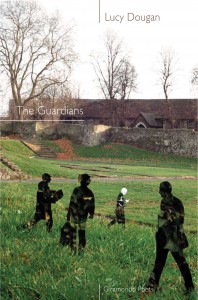
Review Short: Lucy Dougan’s The Guardians

The Guardians by Lucy Dougan
Giramondo, 2015

‘The dog ran in there / It had been a mistake / to take up his old trail.’ The bold lines that open ‘The Old House’ (48) from Lucy Dougan’s latest collection, The Guardians, deliver a fine sample of Dougan’s deceptive simplicity. What better emblem for the concept of guardianship than the family dog? But the sentimental cocktail of love and loyalty embodied by this familiar friend is immediately crosscut by the ‘mistake’ of memory, an error of the senses that leads directly to the unheimlich. Continue reading

Posted in BOOK REVIEWS | Tagged ,

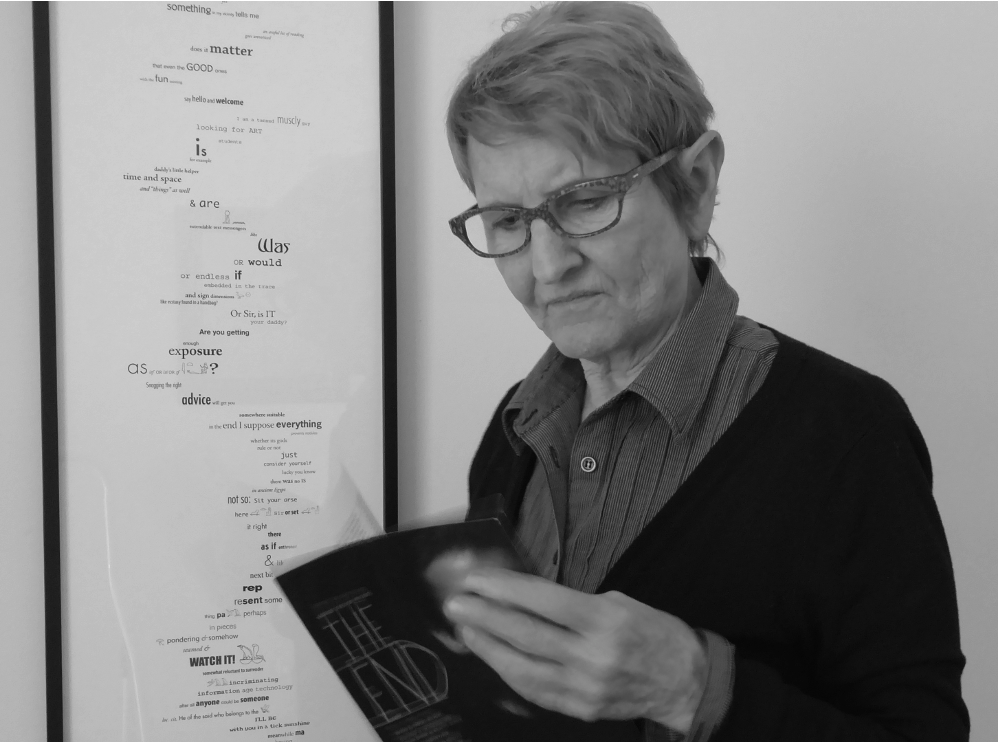
Submission to Cordite 53: THE END Open!

Pam Brown

Poetry for Cordite 53: THE END is guest-edited by Pam Brown. Read Corey Wakeling’s interview of Pam from 2012.

Let me start at the very end, the dead end, the living end, at wit’s end, the end of the line. Whether you dread the end or can’t wait for it, the questions are: ‘When to stop? How to finish? Where does it ever end?’

As the forever-quoted Samuel Beckett wrote in Endgame, ‘The end is the beginning and yet you go on’. Game over, lights out, end of story – please send poems on THE END.


Please submit only once, with a maximum of three (3) poems in one (1) document … but first, please read the submission guidelines.

Posted in GUNCOTTON | Tagged ,

(k) those drawn with a very fine camel’s-hair brush

I

Names change
but the concept
stays the same, tracks you
across the valley.
Night rides in on a gust

star-scatter
like so much porcelain.

Is an alibi a deleted scene
or a red thread? Dust in the pigment
matted mane under silk folds.
Like painting
desert blossom
you go by bone structure
not appearance.

Number the joints
count the filaments
know that it takes a single slip
to spoil the line. One hump
can still pass as a horse. Two
is fooling no one.
You look to the brush––
the concept slides.

II

One stands perfectly still, inclines
gently her head.
Two argue about the weather.
One keeps mostly to himself.

One is revealed only by delicate
stokes.
One has never seen the ocean.
Two pretend to be otherwise.

One thinks, a pose is a fusion of form
and subject.
Another says, half a rock
is also a rock.
One knows you could yield your life
to this place
and still not understand it.

One believes actions can be governed
at a distance.
Two discover a kingdom
in a fleck of salt.
One finds it easier
to pass through the eye
of a needle.

One forgot to interpret
the scenery, insists he is
not lost.
Two make plans
and put them in motion.
One spits on the ground
completes the pattern.

Posted in HEBK | Tagged , ,

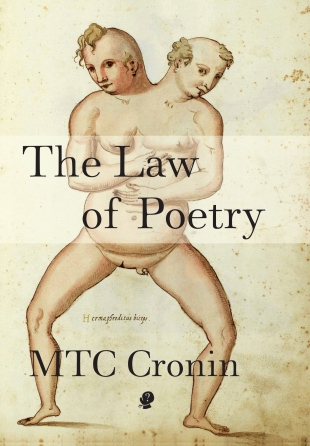
Review Short: MTC Cronin’s The Law of Poetry

The Law of Poetry by MTC Cronin
Puncher & Wattmann, 2015

MTC Cronin’s ‘The Flower, the Thing’ is a favourite poem; one to which I often return. What strikes me immediately – and what stays with me – is its first word: ‘urgently’. That word sucks its reader in; it says that what comes after is ‘urgent’, is going to pull at you. It says, read on. Continue reading

Posted in BOOK REVIEWS | Tagged ,

Review Short: Rob Walker’s tropeland

Tropeland by Rob Walker
Five Islands Press, 2015

South Australian poet Rob Walker’s latest collection, tropeland, is exceptionally playful. Puns and wry twists in language are balanced with humour and a self-conscious sense of otherness, the speakers always slightly displaced from their subjects. Walker is not pessimistic in this process however; there is a consistently optimistic tone throughout tropeland, as well as a canny awareness of failings and ironies in life.

Continue reading

Posted in BOOK REVIEWS | Tagged ,

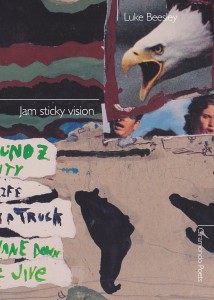
Review Short: Luke Beesley’s Jam Sticky Vision

Jam Sticky Vision by Luke Beesley
Giramondo Publishing, 2015

Luke Beesley’s long-term preoccupations with film, visual art, writing and literature, return to the fore in Jam Sticky Vision, with the poet now expanding the scope of his work to include 90’s alt-rock bands, like Silver Jews and Pavement. With allusions to filmmaker David Lynch and lo-fi rock musician Bill Callahan couched unselfconsciously beside poems about James Joyce or Henri Matisse, Beesley’s poems may seem to be drawn from something of an eclectic palette. What links the poems nicely together, though, is a close examination of the here and now. In the epigraph from John Dos Passos’s essay ‘The Writer as Technician’ (1935) this idea is more precisely expressed as ‘a time of confusion and rapid change like the present, when terms are continually turning inside out and the names of things hardly keep their meaning from day to day’.

Continue reading

Posted in BOOK REVIEWS | Tagged ,

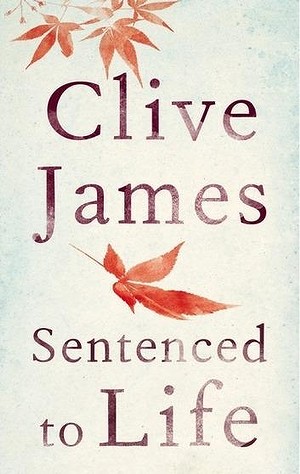
Review Short: Clive James’s Sentenced to Life: Poems 2011-2014

Sentenced to Life: Poems 2011-2014 by Clive James
Picador, 2015

Clive James’s Sentenced to Life is a poetic autopathography outlining his years living with emphysema and leukemia. While illness biographies ‘present information about diagnosis, treatment and outcome trajectories’, more importantly, they ‘share how the illness has affected the sufferer’s wider life course, social network and views of health care institutions.’, as Rachel Hall-Clifford puts it in her Autopathographies: How ‘Sick Lit’ Shapes Knowledge of the Illness Experience. However, James’s poetry is most often centred on his personal discomfort, regrets and ultimately his quest for reassurance that his writing and memory will survive his death.

Continue reading

Posted in BOOK REVIEWS | Tagged ,

blood & co.

certain trace elements remain
stalked by monumental plastic bags
the venal serpent has so many moving parts!
but worrying about it is sound inspiration, featuring
pannikin set on pate & talc on gormless elbow

file some excess weight from the handle of your spoon

back in the shelter going mad nothing happens
the machines preceded me
a kind of vivisection in corridor unlit
the press of the nail, warts under leather
black-lemon reflux, urinals belch
a varicose etiquette in service of extraction
no one coming, not even the landlord
im not the ppl they had in mind
im not emitting the agreed upon signal
but this rites company enough
& if things get tough theres always my photo id
with head cocked at the future like a flint
& the viscera there, still unread, recommended for you.

Posted in 69: TRANSTASMAN | Tagged ,

Pembroke Chantey

Unidentified girls of Pembroke sing
The sea was so rough and my hands is so tough
A long time agoooo
Blow-boy-blow – – my diggyman
Drunkdrunkdrinky

It goes on like this actually goes on like this coming out of the walls
In a vicious glandular whisper

Did the stones learn it from the girls aurora borealis
Songs of the girls trapped in stone ,
wind in the chimney fattens then rakes the fire
Pentecostal polish on my collar
Mixing in the sheen flakes of death

Fly ont’ the spit of strathspey re-born again to die on whale-jaw hill
The stench of the white man precedes me

Here come Pegasus, bags loaded, walking sideways, it is not only our fancy.
Hi Peggy, on this rottenest of days the sun comes out to appal.
Black Polly Harvey’s out of breath, deliberately stumbles in her plucking
The most beautiful, the most insouciant, still craven
Polly
. .hurtling
Then wandering the chalk groves hand in the hand

Louche, douche, I perve on you in the showering can
The air still burnt with our conversion.

Morning with Ernest Louis Matthewsand breakfast by boat-
Frying eggs on s flint of tin, watch the birds of extinction
Caper

Look away from the earth, where the atmosphere and its inert lover twitches, the
commingling licks
exchange of cumulus rump, voluptule
fire among the bitches

As we cusp you remarke on that pleasnought smell
Some sort of . . . sea-keg rides the continuous albas above yonder

Make your head as rough as possible
A major dirge oafs the lung
As we make way with square oars to the Blaskets

Posted in 69: TRANSTASMAN | Tagged ,

Charm of a bivalve chantey

sharpley and with hardly withouten effort I prise from you
a sigh, not the vaste soupir (oh.) of the sea
something more morbidly flushed
p.haps a ‘radiant travesty’


au revoir, Club-toe!


I am airs cheerful as I ought to be [GODDAMMIT]
& you can tell by the jauble
that this is sung
in le langue gelée
spoken in jelly
“it should have ‘spitoon’ in it”

What is a bivalve? What is behavior?

not sphinx but spinx don’t gender the enigma
Dear Bridie McCarrotty
Sister to Mellamurphy
He’s got a song to sing but it’s not about you

Dear Sir I am fallen in love with a pipe. Your pipe.
Item: Smooth tadpole tobacciana pipe, grit to suck
surface issues and teeth chatter
ouch and very fine!


<<See the restitution of angelic bisexuality>>


joined in enflamed opposition
round like a colloquoy of major and minor demon tongues
cured in raw bivalvoline.

I once methought we should have our bones thrown in together
Now I’d be pleased if our singing and kissing-bits
Beput in the one can of langues en gelée

Posted in 69: TRANSTASMAN | Tagged ,

Te Aro 17

For all its advantages – or perhaps
this is another advantage – Te Aro
has no harbour frontage. Nor does it have,
at least from the street, even a view of
the harbour. But this last points to how
the suburb has the basic affinity
with the sea of being only slightly
above sea level. And, complementing
Wellington’s mysterious mid-city quays,
there’s an argument for ‘Te Aro Bay’,
anti-inundation magic and global
warming memo; acknowledging the tidal
alter ego beneath the dry land hustle
of the gentle incline to Brooklyn Hill.

Posted in 69: TRANSTASMAN | Tagged

I don’t hate you, but…

I don’t hate you
For your ignorance
I don’t hate you
For your entrenched racism
I don’t even hate you
For supporting government policies of cultural genocide

I don’t hate you, but…

I do want you to at least
Embrace your own disfunction
Acknowledge it
And then analyse it–
Just as you analyse me

Then I want you to
Research it
Observe it
Write about it
And then maybe even preach about it,
Just as you do about me.

No, I don’t hate you, but…
I do wonder about you sometimes

Canberra, 2004


This poem first appeared in I’m Not Racist, But…, Salt Publishing, 2004.

Posted in 69: TRANSTASMAN | Tagged

Te Aro 19

After surviving the bypass it seemed the
house would succumb to national security
concerns, the police televised busting the
door down during an anti-terrorist
(or ‘te aro rist’ perhaps the term)
operation. An honourable scar, this
could be held renovation where by ‘house
painting’ is understood ‘words painted on
the house’, however vile the bypass it
at least delivering the masses within
consciousness-raising distance, if also
worth considering here putting up a
billboard the income from which to fund
protest and revolution in Aotearoa.

Posted in 69: TRANSTASMAN | Tagged

Into the World of Light

I was born beneath the colonial shadow
of Maungakiekie’s solitary pine
within cooee of a sacred Rongo stone

in a military hospital built for casualties
of America’s bloody Pacific Campaign

was immediately hoisted by the ankles
and smacked to incite my first breath

a squall of amniotic fluid and fright

my mother called my name

my crinkled fingers sought her voice

but she was hoisted through birth stirrups
trembling from the shock of delivery
defrocked, immobilised and totally spent

a uniformed interloper swooped me up
measured and recorded vital statistics
admonished me for crying up a storm

and that’s how I was duly welcomed
into the merciless world of light


Maungakiekie (Maori) A mountain that was formerly a pa (fortified village) site.
Also known as One Tree Hill. Rongo (Maori) God of peace and cultivated food, especially the kumara.
Pacific Campaign WWII – American war effort in the Pacifc region.

Posted in AOTEAROA | Tagged

Falling

(i)

Sometimes I feel as though
I am living half a life
A jigsaw puzzle I can’t
work out:
I am here,
I am there,
I am only half here.

I am half myself,
I am more than myself,
I am my worst self.

It goes on, it goes on,
I struggle, I get up,
I fall, I have all the pieces
But I just can’t seem
to put them together

I’ve lost something I need
I’ve lost something I never had
I’ve lost myself
I am losing.


(ii)

I betray what I have promised
and before and afterwards I feel sick
but without it, I feel empty.

I turn myself inwards, try to find
what is missing, I spend a lot
of time alone. I don’t find
what I’m looking for, I don’t
find any answers.

Outside the wind howls but
the frost is leaving the garden.
In the wind, the leaves shiver.

Posted in AOTEAROA | Tagged

Bronte to Bondi

Fur coat with long purple boots
black leggings and a peek of snake skin flesh
hair coiffed like a wig
a face that the wind had swept with sanded glass
stepped onto the bus in Bondi

Bondi rounded the corner from Bronte
a once challenging rockscape was now streetscape
inclusive of the must have fitness circuits
people jostled for space amongst the crowd
when paused to look at
sanded glass wind swept cliff faces
I was asked to snap a smart phone of two beautiful girls
out for a power walk

Jaded was the morning
with droplets of neurosis about yeah nah thinks
showered in rainforest steam and the smell of mandarins

Hash brown stacks atop of avocado fans
runny poached eggs and hollandaise
was eaten while perched on a cushion
looking out to sea

I’ve smiled my face off
ticking the bucket list of last opportunities
the muscles used to smile
releases the tension
of my grimace

all that at Bondi

Posted in AOTEAROA | Tagged

Long Light

(i) Long Light

A grey autumn full of splash,
spiders abseiling from gutters,
fresh raindrops
polka-dotting backyard green duvets
in the shortening light.
The animals are here: birdfeeder
tantalizing the cat, puppy
whining at the hedgehog,
ants massing at their queenly
altars, pupae swinging
off swanplants or snuggled
into softening flesh.
Voices in the light
and the no-light:
speakers, tappers, hummers,
barkers, purrers, clickers
scratchers and swishers;
swivellers and blinkers
of lenses.

(ii) Long Light Redux

So there was darkness
despite the sun’s claims—
its drunken rays lacked focus,
glared in pools on floorboards,
slipped through the filigreed
patterns of sheers.

The potted flax reached up
to the windows promising light.
The peace lily gathered dust
as it drank from its tray.
The long snuffed candle
rested before a clay scallop shell

painted gold. Its dimensions
are twelve cubits by twelve inches
falling out of heaven from God.
The scallop stripes reach east,
west, north, south, and each
direction has a gate made

from a single pearl.

Posted in AOTEAROA | Tagged

Dancing the Siva Samoa

Tijler’s song

I want to own myself in your
eyes feel the ruin culminate
in this belonging –
to pretend it’s a song
that roughens at the knees
/ music ashy on falsetto
there’s something hot about breathing
you in while we watch for the fish to pass
scales hanging off the windows
I want to spit the bones out onto saucers
let them prick our tongues on the way out
so maybe we’ll laugh
it begins like that.
and
it’s coal, yet
; they poured something bruised
over my palms so
black it’s purple, right?
I wipe my hands
(wipe hands)
Relearn, relearn you.
taxed sun, how many
hours make a promise?
did you know that when I was younger
we called that wishing?
day breaks across
our fingers
crumbling into ants
that crawl towards the hipbone.
a drum hails out of flesh.
could break my back
from:
rollie pollies down no tree hill
sticks and grass Snowballs
ones with the mallow middle us. chew chew.
– I don’t owe you secrets / can’t help it.
balancing along the fence
walk the lattice metal top of a pie on its side
and feet begin to slip rip
-don’t end up grazes / can’t help it.
stand out in the sun when
it’s mounted at the points of trees
yes, it dares for fingers popping tapioca pearls
so what if we have fish bones
pierced through our cheeks?
that’s irony.
that’s jaw metal coins we might
hand over for the soul boat
have them ready together
the water dances on us as us
that’s how movement should be
a certain angle of stippling
beneath this open bracket moon
hands that twine wind
struggle on bloom
go to catch us sprinting
with our mothers with our fathers
don’t get too puffed out
to say nothing we didn’t
, Babe, learn the sand
that shakes out of rock
(treat its dilution)
learn to sew
a quilted tongue
warm on.
it gets better as we season
the laziest heats
that we can’t move in with a tree’s kiss
tell me
(mouthing doesn’t mean shit)
tell me
(the branch broke in my wallet)
how much could we buy this sky for?
Getting semi-Magritte on you, yeah
and still bark cracked veins
enter the gates.
that bird’s nest
(from different kinds)
worn like a metal grass skirt
around Pulotu.
watch Cerberus-threedog dance the Sāsā
slapping his chest, shoulders,
elbows, bend easy fish bones
they’re sharp as tears
sometimes
our own a weapon fragile.
our own, an unsheathing.
I’ll be dressed in an ‘Ie Toga
and you know, who will care?
I’ll carry up the Taupou’s knife
and feel a path around my eyeliner.
there’s a pastry lipped
way of the spin
don’t, worry, is hard to know
when a clock bends its back
dawn’s reversal
the March
the drum roll
on tin boxes
think of all those echoes
that bridge while we wait
and tell me again
I’m graceful
if only for the second
(feed a heart its own
lasts longer.)
falling slowly to my knees
arc my back
fingers river-ed on air
a stream-dancing.

my baby oiled skin trace imprints
of this sky
watch yourself dance with me
on this floor
turning hooks as needles
stitch ourselves an ocean
one petal on scale
then another
watch our hands weave over
and over
the faint wash of frangipani petals
the snap of freshly caught fish
the way our knees click together
as we curl this kind of embroidery
on top of a granite platform.

Posted in AOTEAROA | Tagged

Why

why do we kill
our children
why do we
make war

why

Posted in AOTEAROA | Tagged