Angles and Marks

You make your mark like this, by scraping
the poetry of the future clean
of angels’ body parts, or proving
humiliation is flammable,
by mounting hypnotic spectacles
of confidence or holding the head
of state rock-steady in your cross-hairs.
This is how you make it, by offering
something to echo and erosion.

Candidly the hand that shook the can
writes I like short short$ and having writ
texts to see what’s going down under
the sign of the sneakers full of rain.
Not a lot. A concrete-pumping boom
swings into place. A footsore psycho-
geographer stops to consider
mysticism as a Trojan Horse
to revive the city’s dead angles.

Headquarters of the public secret
constellation of places and things
my sister has shaped: a chicken gleans,
a cup of tea goes cool reflecting
crow-flight and cloud-shear. Holding open
an unflinching eye, she lets the drop
fall while sketching on a mental bloc
towards what might come after the end
of a long slow curve of dry stone wall.

Posted in 70: UMAMI | Tagged

Bedtime Story/Reveille

Snow can’t have fallen.
There was a chessboard on a scintillating
bluff
of stairwell
flesh—what-all he
up endued, or down, with pivots,
concretised. It smelt of old spit-
air let from a carnival mallet.

5 a.m. He’s in a bed, not at home.
Some dark smokes and peals.
Tell a story, says a boy’s voice. The boy is white-blonde, with an obdurate coldness
of finger. And tuck me
—sheet shrink-filming rib-
cage—so I can’t squirm at all.

A Blue Mountains hermit
gazing at clear
still creek water counts
the pulse in his sallow jowls—one, three,
four, two, dawn fog, pulse, each a gecko
darting. Creek-
smell the urine of one with thirst.
He sees that his clothes are rags now and draped over a nest
of spurred bones. Kookaburra lands on the whipper snipper cord
rack of the vision eating him.

Yarraville warehouse—studio
where in kinder times they shot
cars, also farming machinery. All-white,
LED, without squaring, diaphanous
tunnel to the ancients, star portal.
He paid the cover at a side entrance. Ate four googs.
Went out front some to breathe.
Snow can’t have fallen.

Meanwhile other isolates
surfing coastal plains, Southern-
Cross-eyed in trim deserts,
ferreting honey ants from basin
alluvium, in hisses
through grassland winds, steamrolled
pennies of pink
salt and plateau blood
—they are all eaten.
To some gnomic ends they feed themselves.
Your brain, the boy’s fire.

By white whizz-bang hushed
West Gate siren mast oil squat vistas
4 a.m.-bay-tinted
eyelets
of cab glass black what-all
boy up whispered down down the Melbourne
side whispered man’s voice snow
can’t have fallen can’t have fallen tell me
driver is it very
anything where you’re from

Good sleep collects
in the bone. Salt
pent from creek water
drunk wishes rushes snowy. And Great Sandy
camels, they bear what little
remains of the devoured
over a Europe of red dunes
south—to rhododendron gardens.
There is a mass interment in the gardens. An obelisk
shrine erected. Into this bed we tuck our wild folk and their kin.
You who went without: sleep.

Posted in 70: UMAMI | Tagged

Old Lielacs

vintage soul beats and mixt apes
and in be tween the toes

un settled ridges where we tumbled
in liquored torpor

the shaft of sun lite from the window by
the kitchen door

mixt in with the cigarete smoke
the smel of old lielacs from
the corner store

wild nights swimming throuogh wild grass
blunt hands and prehensile lips

the names we summoned each
other with

the frost that never came even
with the wintry winde


Kate Geck remixes this poem for The Lifted Brow portion of this issue.

Posted in 70: UMAMI | Tagged

Broth

to tongue or not to tongue
			                    reed    stone    heart    word   mushrooms   explode in mouth the world					     
			                    in this bowl of broth
			                    my mother has sung 
			                    songs her mother sung in
			                    the making of another poor
			                    and thin in the time 
of war 	remember	     the words we spoke 
			                    to vanquish the hungering always 
			                    remembrance of sweet a piece  a peach
		            peace					                                        the nights cold ponds
				                              all faith fled 
		            notes 
				                    pot mouth belly empty clangs hunger 
				                    urgent as sirens
				                    curfew curlew clamour heart bold
	in the star-stare shiver a bristle of brisk stems salt-water edged
			         gills  gulls  fret  air  she  bends				
				                    an egg palmed      
            			 shell  cap  fractures  voice  rupture

		all lost in a night where the tongue 
			      silenced
			      tastes no more 

					                    remember
					                    stone 
					                    soup
Posted in 70: UMAMI | Tagged

THE END

I can love you face to face but not on the internet. Inductive reasoning about what it means to be human. Fevered in a dead-end street. Poems jam the inbox. Of course the world is full of ambient awfulness. Sad state physics. In an uprising you must imagine no past and no future. This effort is ongoing and imperfect. Puddles reflecting trees. Little weeds poke up out of mud. What about a t-shirt that says I Remember the Information Superhighway. Puddles reflecting construction signage. How devoted are you to your performance. Dropping into character on the train. Defenders call this mob mentality. I guess I’m more interested in freedom of assembly. The people I know versus the people I know. Oil all over the coastline. How working on your reading skills might mean working on your feelings. Long catastrophe of the enlightenment. A body’s limit is where it touches something not itself. Knowing as a speculative project. Drunk on camera sound. Going over the river again and again. Containers falling off ships in high seas. As if a person could be a diffuse film of consciousness spread over everything. At the edge of Brooklyn where they keep warehouses and birdsong. You go down easy like a baby. Phone call from an airport bar. You started to give off the Scent of Mortality. This seat is reserved. How to tally the times you vanish into a lit screen. Let’s not get all sci-fi about this. History continuous or swerving. I can’t keep a secret. I can’t plan ahead.


The line ‘In an uprising you must imagine no past and no future’ is a paraphrase of a point in Anthony Reed’s Freedom Time: The Poetics and Politics of Black Experimental Writing; the line ‘The effort is ongoing and imperfect’ is a paraphrase of something said by Jennifer Tamayo at the Enough is Enough meeting at the Poetry Project on November 6, 2014.

Posted in 70: UMAMI | Tagged

Arthur’s Seat, Edinburgh

During the conference I share a narrow college room with my ex-girlfriend, so we can go on to Germany together next. Since I last saw her she has climbed Ben Nevis, bought a BSA Regal, got an editor’s job in London. The first afternoon we find a stone path behind the college, scramble to the top of Arthur’s Seat and crouch in the mustard grass. Still breathless, I try to apologise for how it ended back in Brisbane. The wind is cold and bullying so she gives me her jacket, white blonde hair flicks her face and glasses. The city can’t stop falling into low sun. That night I go to a poetry reading, a pub, vinegar sharp, in the Old Town. When I get back she is still awake, cocooned in her sleeping bag. “That smarmy professor who chaired your panel burst in here an hour ago, pissed and naked, tried to get on top of me.” I stare at her in shock. “He was snuffling at my breasts and whining about his wife. I threw him on the floor and made him crawl back outside.” We lie side by side, not touching. Just above her head what looks like a moth squats flat against the wall. A while later she adds “He had the smallest dick I’ve ever seen.” A pause – then we laugh until we ache, lying on our backs again in the yellow grass, the jacarandas, the raw room. She is both anger and generosity, like the ambulance siren at 1.00am. When morning comes there is fog and Arthur’s Seat fills the window like some medieval lord who feels entitled.

Posted in 70: UMAMI | Tagged

Twenty First Century Wail

For Mark Sanders

I saw the minds born during the summer of love destroyed by phantasy, almighty frenzied absurd,

succored on battery-charged eggs six-twenty corn syrup slabs of butter washed down with Tang flourided water and the Streets of San Francisco,

hippy offspring disconnected from bell-bottom wisdom revealed on the discotheque trail near Kathmandu,

the last to gaze at the blanket of sequined heavenly messengers whispering psalms on cool black windless nights contemplating toenails,

to hear rain drops falling on tin roofs filling buckets placed under old ceilings that needed to be new,

to run to the store for milk see pedophiles on the street and come back with white bags filled with candy,

to walk through lazy avenues of one-bathroomed red brick and yellow timber houses following a path of authoritative trees,

to make four-eyed socialists break down pop a vein or split weary spleens as spitballs and juvenile cocks split the anatomy of a frog,

to laugh read and sing hallucinogenic tunes that codified the transcendence of the stars,

to take bicycles across wire fence suburbs over train tracks and angry roads that carried lumber steel washing machines and televisions made by fodder in sweaty factories with sheds reeking of smoke instant coffee and flatulent fava beans,

to ride like horsemen searching for the Apocalypse come home at the end of the day whispering SFA to mother and fodder toiling for gravy and grease,

rusted loveswings charismatic lawns plastic outdoor drunken Socratic soapboxes rum and cola ice buckets bread and butter bum-fuck nowhere tea towels swaying in habitual depression outdoor televisions welded to ten-dollar patios, half-cut gauche aficionados of 50s jalopies with a rail for every point,

to thrillseek on dangerous Saturday nights in underage driving jock-loving through the hoop mag-wheeled ecstasy that died when the fodder arrived with buffoons,

to conform in blue at the top of humanity and sit through dog-eared luminescent tracts of rhetorical glory funky nerdiness from classless polo-necked idealists,

to leave with stubble and testosterone for towers that filled incandescent minds with ivory words and humanitarian manifestos sprung from cages opened by portly governors,

a backslapping cadre of neophyte plagiarists eager to unlock secrets of nihilist capitalism and art and communism and greed,

to sit on long petrified lawns that had heard intrigues of anarchists conformists and thought-provoking Shylocks menacing for war isolationism neo-con freedom capitulation and increased speed limits,

frugal liberalists pontificating on Biafran cornflakes and sentimental musos with dry biscuits and dust for the midday meal,

to drink lukewarm coffee in bohemian cafes with Francophile theorists whose arguments spilled onto the street and dislodged unemployed Luddites,

who ran debts paid back mercenary loans one cent at a time for a hearth that is warm and their own, trembling checking balances every evening,

to rail against each other against esoteric moons Armageddon mace and Moloch’s Ray Bans filtering the sun from sarcastic eyes,

to take certified papers throw wicked hats and cheerfully set out with fortified Odysseus on the road to starfucking serfdom,

to beg in conforming grey as grotesque teeth dripped with vanity and muscular lederhosen holding Cubans and ambrosia,

to present varnished papers in gilt-edged frames with marshmallow credentials for the gothic scrutiny of an uneducated mother superior,

to sweat in beautiful glass cages with carpets and ashtrays never burnished by grease or carcinogens,
to sit at six-by-three mocking laminate with melancholy stationery and irrefutable documents stained with excrement,

to listen to hysterical aphorisms wanting citation and the poisoned authority embraced in towers of Babel and ivory,

to suck pig-ear burgers and plastic milky straws like fiscal phalluses draining Velcro wallets with erogenous familiarity and bearded lips,

to eat fat leftover by obese suits drinking Moselle and Burgundy in Shiraz and Bordeaux late into the afternoon spawning digits and superhighways to promulgate nothingness,

to drive baby boomers to airports ca-chinging doctors and investment bankers that were friends from the street who stole money with jargon and Cheops and actuarial tables spinning like fixed slot machines in sleazy velvet lounges,

to wait for the death of fodder overpriced bricks and Jones terrazzo adding meaning to nothingness adding nothing to meaning but black holes and hypochondria,

to run towards beloved futility and the cognitive dissonance of kudos and imperatives of jungles in East Africa,

to be fucked in the arse by saintly advisors and scream in pecuniary pain,

to take interstate trysts and blow guilty in elevators taxis and beds that smelled of lilac and lemonade,

to put the hapless haphazard sword in a fireman’s wife a military maid a saxophonist’s groupie as they choked on the heat of the steel,

to remove Marks and Sparks brassieres in dim-lit flats near beachside palaces with the fingers and thumbs of a pole-vaulting chess player,

to make love to frigid bitches with enchanted curling wands and hundred-dollar manicures who contrived sighs like the soprano crescendo of an operatic pornstar,

to screen calls from bunny-boiling tight-arses with red pubes green eyes fashionable wineries and vindictive voices that blew the machine and made peanut shells withdraw their German helmets,

to sow seeds on baseball fields car seats and car parks with Japanese cameras and Dutch beckpeckers kicking at flora and pebbles as she climaxed with one leg in the dirt,

to ride across oceans of bodies in fragrant red light parlors with nutty millionaire vagabonds lining up at the door of some candlelit whore whose oily tattooed hands greased a pole an hour for a year, rickety boxsprings squeaking,

to stab at the nothingness with limp implants multiplying DVD sales with the spontaneous frankness of a child,

to celibate running dreaming into pale overexcited cities of agitated bankers with more money than trouble bars with salty-lipped fruity suits to the inch throbbing scotch so close to suburbs Marilyn posters and Che Guevara t-shirts,

to see towers planes memorial seat belts irate box cutters x-ray breasts queues and malicious liquids interrogating sacred texts of sympathetic authority as Midnight Express officers disappointed Turks,

to fear goats sand-traps manchester beards and binaries ejaculating from nucular presidents we were not for or against,

to slump on remote control recliners fitting tangerine skins like leather sheaths with ribbed rubber seedy sensual comfort in the ‘burban bourbon ‘hood,

to palliate chronic fatigue with ignorant sound bytes from hasty ivory colleagues burdened by poor grammar and soporific syntax,

to yield to mendacious credibility starving craving stale valium dressed in soothing stanzas of techno banality,

to squeeze apocryphal humanity up a licentious fat ass dripping with champagne,

to drape dirt over coffins cash red bricks and yellow timber and off-shore factories and warehouses,

to construct welcoming granite porticos install rosewood benches for daiquiris and boutique beer that tasted of honey,

to sit in hot tubs with neurotic neighbors waxing hackney sipping quickly and lusting after slippery skins willing to fuck for a dollar thrill,

to watch as suicide farmers and confessional clerks aimed their passionate bullets at themselves,

to socialize the cocaine pill press hedged suit pyramid ninja junk shadowstat equity bondarama rollercoaster of fiduciary motherfuckers printing the world into a hole,

to embrace naiveté at dinner with Nigerian princes serving unclaimed petro-estate dollars from childless billionaires for dessert,

to buy Rolexes and Gucci ankle socks with titanium-trimmed credit cards and income protection plans for overweight middle-aged sagging scrotums with grey temples varicose veins and heart arrhythmia,

to light fires in houses and stuff kerosene socks under mattresses full of worthless notes from promissory relatives and sleazy uncles with Filipina wives and pot bellies that gurgled and hissed when they walked,

to smile excessively and cordially at deluded lawn mowing neighbors with watering cans and hoes and hos and hoses that dribbled onto the street,

to scream at bilious plasma and surrogate touchscreen friends and fear nothing but interactive HD voids filled by telemarketers with scripts and turbans and the temerity to ask for a name,

to laze on schizophrenic sofas sick ottomans and Persian carpets from Sweden when the sun was still high in the sky,

to run into sun like a child naked born new wiggling fat sunburnt rich in a tropical haven of slaves coconut cocktails and wives with ten kids and a cow, resolute prayers to live there forever,

to fly to paradise and paradise on promises blind to mirrors of wrinkles love handles blotches and cellulite stalactites hanging from armpits arses and thighs dripping with Pina Coladas,

to pay double and triple and get hoodwinked and shystered and post-colonialed off islands with trinkets heat rash and pirated copies of Botox and collagen,

to rear good Samaritans in patrolled palaces with sensible-shoed matrons and well-intentioned pastoral virgins hiding constant erections,

to rent grey nomad caravans surf selfish waves in tourist stops gold souqs and shiny towers made of fossilized coin waiting for Dystopia in Raqqa Tikrit or Homs,

to escrow annuities and elegiac bank accounts with gold from a Chinaman’s calluses and silver and jade from slappers back home with the clap,

to run naked in tank tops and sweaters with zircon embroidery as peasants drink smoke and dance during Ramadan and Lent,

to take Warfarin Xanax Viagra and writhe with indifference at impudent haemorrhoids lactose intolerance hip hop and sat-nav directions,

the last to homage to caskets flowers condolences on sticky ubiquitous tablets anesthetising anxiety like a cocktail of Somma,

hospitals graveyards arrogant tubes wrinkled misogynistic testicles masticated nipples and salivating mouths hungry for a sweet salty fix of nothingness filling the hole, Starbuck hits and Subway professors, imitation of a poet’s last poem, dreams that make noises like bombs and broken glass,

leaving the void darkness pits of nothingness four-feet-deep in shit and boggy unsympathetic soil eroded by time by yesterday’s garbage futility string theory Big Bang lottery,

Mark, you took too much ran smoked ran stogied ran drinking laughing at mercy fools and payment plans with superannuated knees,

Black Sabbath Jimmi Hendrix on leg guitars in a bus on a road to some Mid-West county with Pintos and trailers and jailbait,

thought nothing of morning beer and a run in the heat and sun dripping wet beer coming through pores running eight miles to see someone from a bar or a wire cage with the scent of wood and pine tar,

came to nothing from nothing but made memories of words of jokes Walkman screaming sonnets of heavy metal Roxanne hardcore that was your dance your poem your lyrical ecstasy reverberating around rooms you walked through gates you crossed hours you spent laughing like a tyrant,

the crazy banger with thick limbs hairy chin eye-popping muscle left on the floor of a kitchen, heart broken in the heat of a Lismore day when the mercenary sun killed someone who loved it,

who rose from the grave like a king playing metal on a leg with a cry in the morning like a ghost who had found nectar on a wardrobe at dawn,

haunting me calling me echoing down years through corridors of memories onto black lines howling for our hole in the ground.

Posted in 70: UMAMI | Tagged

Old Wounds

It was the day after the day
you nearly strangled
the dog pushing her
into the dirt
my eyes bulged
lips glued tight while
you shouted
keep up.

I don’t think it’s possible for skin
to get any whiter than mine was
kabuki white, though strictly
speaking shades of white are
actually neutral greys: death grey
the absence of colour.

Colour is a private sensation
anyway, like fear.

In the now of what some might call
aftermath a pattern of broken molecules
appears in the gravel below
yesterday’s feet while I fall further
behind atoms vibrating harder in the
centre while the edges of my life spread

into this new space, charged by
discomfort
every day, it’s like a new start
into an old wound.

Posted in 70: UMAMI | Tagged

What I Talk About When I Talk About Helicopters

the moth that beats itself to death against the chandelier dies an unheroic death in the corner of the study. heroic is listening to Jeff Buckley on repeat and not getting in the car to drive. repeating your sentences because your head is all messed up and you don’t recall where you end and the madness begins. you find yourself lying on the back lawn at dinnertime. look at the stars you say. they don’t make them like this in the big smoke. in the big smoke you never saw this many helicopters. the helicopter flew so low the chandelier shuddered. that’s what you tell your girlfriend when she asks. what it is that you are doing as she lovingly prepares a fig and cheese tart. you don’t hear because your ear is pressed to the wood panelling on the side of the house. I’m listening to the house’s heart beat is what you say when your girlfriend calls from an open window. a warm hand on your shoulder is not the same as a finger over a flickering flame. a knife against your wrist is not doing the dishes. your insistence on dead-locked doors will cause alarm after the fifth time. you are not Jeff Buckley. you are not heroic. just depressed. you are the moth that beats itself to death against the chandelier and that’s what you should say next time your girlfriend asks. helicopters belong in the sky not grazing suburban rooftops in broad daylight. no matter how many spy movies you’ve never watched a SWAT team will not spiral down a rope and break down your door. forgive her when she asks Are You Okay? because this is what I talk about when I talk about helicopters.

Posted in 70: UMAMI | Tagged

Miguel de Unamuno Question to Us: Why that Lilies the Ice Killed?


¿Por qué, Teresa, y para qué nacimos?
¿Por qué y para que fuimos dos?
¿Por qué y para qué es todo nada?
¿Por qué nos hizo Dios?
Miguel de Unamuno

Why, Teresa, and what we were born?

The wind makes this question to the poet on his grave.
Teresa responds with rain and cold breath
She planted a kiss on the skin and in verse of the worm.
I, the poet from south who will read us
(Unamuno may think as his final verse)
My reading will be a red carnation brought from afar.
Like a reading poem in other tongue after 1936
Blood and death that was we were.
Unamuno wrote What we were born?
I don’t know.
Your question is an old nest in rare book
Like a soul flying through time & space.
2015 I am reading … lirios que los hielos matan?
And you died in 1936. (en el nacimiento de la Guerra Civil de España).
Your question resurrected in my lips
As a saliva del gozo
joy saliva, saliva kiss liking my dream
cutting these lilies kill the ice.

That and we were both?

I do not know.
maybe we were a tree planted in the soul of the world.
We went on a cloud driven by a blind sky.
maybe we were a small Huidobro thinking ourselves God love with a star.
We went yesterday (peace war wound)
we went back years (onion in the hands of the prison nursing creature)
we went two (self, other Unamuno)
and your blood Teresa (Love in the Mist)
we were eternal in the unanswered questions.
only death rests on nothing.
The two were nothing in the verses
death, forgetfulness and love that made question.

For that and that is everything and nothing?

Violins embrace the lament of the melody.
bleeds rhythm in verse all
verse nothing is a line
My reading is all nothing.

violin regret leaving the soul
crying rivers in strings that are caught in the war.
rivers sailing at nothing earth as a seed fruitless.
one violin ask? On / off
A guitar singing without question?
I am life in your hands and I am nothing in your dream.
I am made of love and I’m all into nothingness.
Teresa because you were all to be dust nothing.

Why did God make us?

God replies that dead do not charge me
who killed Miguel de Unamuno?
Teresa or lilies
God answers: love and I have witnesses
my son
& its spirit of poet
since the father was out partying.

Why did God make us?
God responds angrily means:
I did not do anyone
each is one older enough
to know who their parents.
I know poet fall in love and they believe as a small gods
another dog with that bone.
Excuse me, I am God not a poet

Posted in 70: UMAMI | Tagged

The body has become its own refrain

The body has become its own refrain,
a silent roll call ticking off each night,
no more the vagaries of loss and gain.

The family visits, dress-rehearsing pain.
Let go they whisper nothing more to fight.
The body has become its own refrain.

Relinquished – ego’s hold on pride and shame,
the loosened tongue holds court from fancied heights.
No more the vagaries of loss and gain.

Hold the hand, stroke the face, speak sweet the name.
All accusations moot, all wrongs put right.
The body has become its own refrain.

What passed for love once now cannot be feigned,
all hearts aligned, familial threads pulled tight.
No more the vagaries of loss and gain.

Let time select the picture and its frame;
today the shadow dances with the light.
The body has become its own refrain,
no more the vagaries of loss and gain.

Posted in 70: UMAMI | Tagged

Keys to Success

1. Whisky

will take you back to a damp house on an island where your love dropped a rock on his own head and sat, dazed, in the caramel light

2. Dancing

with a lover to Prince at 4am or alone in your room; both are

3. Light

on your skin on the wall, that slip of it before night

4. Glute workouts

don’t worry about the rest, it’s the maximus muscle & it’ll burn up
the nothingness

5. Movie stars in technicolour or black & white

suck on the images like bleeding cuts

6. An animal

hungry, resting its head on your knee

7. Sex

in your skin in a message on a Tube under your tongue at your neck at the curve of the thigh / I could taste you for a day afterwards / at the wrist in a head-scratch in the mirror in the dark

8. Reading

an intake of breath

9. Art

that is you unbound

10. Pain

at the wrist in the pulse in the eyes in the glutes:
squats will keep you at an hourglass, sand tickling your arteries, knee ready for a dog

Posted in 70: UMAMI | Tagged

Poem

Adultery fucks a family up as much as poverty
Because the memories can’t run away from home
That’s a lot of hatred from a mother
Nothing I’d care to discuss right now

Because the memories can’t run away from home
Once a kid learns guilt he’s going to stumble
Nothing I’d care to discuss right now
Never grew any taller, just sadder and angrier

Once a kid learns guilt he’s going to stumble
I quit school to escape the staring eyes
Never grew any taller, just sadder and angrier
I know that nobody ever changed history, but I had to try

I quit school to escape the staring eyes
The sun, the silence, the nothingness
I know that nobody ever changed history, but I had to try
Part of what makes me interesting for science

The sun, the silence, the nothingness
It was like an acid eating into me
Part of what makes me interesting for science
You’re beautiful. What’s the emergency?

It was like an acid eating into me
No sexual act ever commenced, instead I trashed the room
You’re beautiful. What’s the emergency?
Everyone’s got their own version of the truth

No sexual act ever commenced, instead I trashed the room
Just want to see if property feels pain
Everyone’s got their own version of the truth
Maybe some day, but not today

Just want to see if property feels pain
It’s going to end in infinity, and if there is no infinity
Maybe some day, but not today
Can’t stop love from doing its damage

It’s going to end in infinity, and if there is no infinity
That’s a lot of hatred from a mother
Can’t stop love from doing its damage
Adultery fucks a family up as much as poverty

Posted in 70: UMAMI | Tagged

Gambling

1.

You’re not to this world
but will sleep in the depths of dream,
pat news, cast chat,
as tenants grind chemistry’s waved night to a flask
and galaxies ping time back
to tree-thrilled square,
or cross the lake tomorrow

out to sky’s unearthed racks,
the phone a bill, or writhing messages in garnished harangue.
A predicament’s sequence like a suburb cut with freeways
clusters at the music fair –
each tune’s mock funeral to love and love’s loved bitterness
while a van’s Pop Goes The Weasel continuously passes.


2.

Car’s barbarous pitch stomps the dealer’s sporting ensemble
that twinks neck chain against blue-toothed ear
assignation for a drop he goes Tucker’s good ad nauseam
a flail of it, cap and sunnies, butts a gasper
at the church’s two-tone guillotine panes
that shine on mourners queued to kiss
the block-slot limos, and then the school’s pepper trees,
glabrous errors then, have but not want again,
coiled magpie too dappled time out of the question.

Coburg’s blue and red cars wind the roundabouts
the halt neighbour doesn’t anymore slowly walk.
Kittens scatter like broken glass
as if some hi-vis local doesn’t talk
just throws it
Curtained trees ooze him away she says

Posted in 70: UMAMI | Tagged

Sweet Potato

My housemate was like, here’s some roasted sweet potato,
that’s your treat. My colleague
took my jellybeans onto her desk. She used to do
rollerskating when she was little. Her Dad’s
so fit. I’m trying to be good. I love Nutella,
and I’m doing hydrotherapy now. You know,
I think about it as, there’s two, three meals
each week, it’s whatever, totally free, and I don’t feel
guilty or anything. I went on a massive
health kick, it’s completely normal.
At the time I felt so good, I’m so reversed now.
I get motivated when I lose as well. My Mum
loves Curves, it’s really working for her.
My cereals had lots of sugar in them, so
now I just eat eggs. Consistency is the main thing.
I had to think about the things I really love.
Guys are better at it. I’m catching up with my boyfriend,
he’s a personal trainer, this afternoon.
You’ve got to listen to your body,
really listen.

Posted in 70: UMAMI | Tagged

\oriGaM[e,]i[,+ U]/

Step 1: Start with a 6_itch x 6_itch identity with desire side down. Fold yearnings in half on the
fan[boi+gal_ecs]tasy axis. Sleep_crease well and unfold.

Step 2: Fold both sides to meet in the [(f)etch-a-]sketch_center. CrE[r]ase well and unfold.

Step 3: Fold XY to meet XX. Seduce_crea[m]se well and u[E]nfold.

Step 4: Now fold XX to meet XY. C[|G]rease well.

Step 5: This is an interesting step that we'll repeat several times. RIP the [re]active side back to the
left. Fold and boil your_[d]raw[n]_self_dry. Heave through your rou[Sal]tines while
[D]ang[er]St_breathing. Murder_shift the table and p[b]o[lt]st the door. Then flIP your sIT_st[K]ill
switch and howl.


Atong Atem remixes this poem for The Lifted Brow portion of this issue.

Posted in 70: UMAMI | Tagged

Review Short: Amelia Dale’s Metadata and Thalia’s A Loose Thread

Metadata by Amelia Dale
Stale Objects, 2015

A Loose Thread by Thalia
Collective Effort Press, 2015

The question what are we to do at and with the limits of language presents itself as the central question in the two books under review here. That they frame themselves as poetry means that the context in which this occurs is different from art or graphic design – two fields into which both could easily be placed. One does not ‘read’ these works but apprehends them.

Continue reading

Posted in BOOK REVIEWS | Tagged , ,

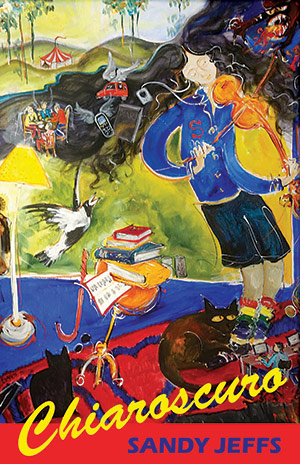
Review Short: Sandy Jeffs’s Chiaroscuro

Chiaroscuro by Sandy Jeffs
Black Pepper Publishing, 2015

In her poem ‘The suicides’, Janet Frame writes: ‘know they died because words they had spoken/ returned always homeless to them’. Perhaps more deaths could be prevented if people were able to speak without fear of being shamed or ostracised, knowing that their words might lodge in someone’s mind or heart, and that language, if wrestled with, could offer healing.

Continue reading

Posted in BOOK REVIEWS | Tagged ,

Intervention Pay Back

I love my wife she right skin for me pretty one my wife young one found her in
the next community over across the hills little bit long way not far

And from there she give me good kids funny kids mine we always laughing all
together and that wife she real good mother make our wali real nice flowers and
grass patch and chickens I like staying home with my kids

And from there I build cubby house yard for the horse see I make them things from
the left overs from the dump all the left overs from fixing the houses and all the
left overs I make cubby house and chicken house

And in the house we teach the kids don’t make mess go to school learn good so you
can work round here later good job good life and the government will leave you alone

And from there tjamu and nana bin tell us the story when the government was worse
rations government make up all the rules but don’t know culture cant sit in the sand
oh tjamu and nana they got the best story we always laughing us mob

And from there night time when we all aslepp all together on the grass patch dog and
cat and kids my wife and me them kids they ask really good questions about them olden
days about today them real ninti them kids they gunna be right

And from there come intervention John Howard he make up new rules he never even
come to see us how good we was doing already Mal Brough he come with the army
we got real frightened true thought he was gunna take the kids away just like tjamu
and nana bin tell us

I run my kids in the sand hills took my rifle up there and sat but they was all just lying
changing their words all the time wanting meeting today and meeting tomorrow we
was getting sick of looking at them so everyone put their eyes down and some even shut
their ears

And from there I didn’t care too much just kept working fixing the housing being
happy working hard kids go to school wife working hard too didn’t care too much
we was right we always laughing us mob all together

But then my wife she come home crying says her money in quarantine but I didn’t know
why they do that we was happy not drinking and fighting why they do that we ask
the council to stop the drinking and protect the children hey you know me ya bloody
mongrel I don’t drink and I look after my kids I bloody well fight ya you say that
again hey settle down we not saying that Mal Brough he saying that don’t you watch
the television he making the rules for all the mobs every place Northern Territory
he real cheeky whitefella but he’s the boss we gotta do it

And from there I tell my wife she gets paid half half in hand half in the store her
money in the store now half and half me too all us building mob but I cant buy
tobacco or work boots you only get the meat and bread just like the mission days
just like tjamu and nana bin tell us

And from there I went to the store to get meat for our supper but the store run out
only tin food left so I asked for some bullets I’ll go shoot my own meat but sorry
they said you gotta buy food that night I slept by hungry and I slept by myself
thinking about it

And from there the government told us our job was finish the government bin give us the
sack we couldn’t believe it we bin working CDEP for years slow way park the truck at
the shed just waiting for something for someone with tobacco

The other mens reckon fuck this drive to town for the grog but I stayed with my kids
started watching the television trying to laugh not to worry just to be like yesterday

And from there the politician man says I’ll give you real job tells me to work again
but different only half time sixteen hours but I couldn’t understand it was the same
job as before but more little less pay and my kids can’t understand when they come
home from school why I can’t buy the lolly for them like I used to before I don’t want to
tell them I get less money for us now

And from there they say my wife gets too much money I gunna miss out again I’m getting
sick of it don’t worry she says I’ll look after you but I know that’s not right way
I’m getting shame my brother he gets shame too he goes to town for drinking leaves his
wife behind leaves his kids

And from there I drive round to see tjamu he says his money in the store too poor bloke
he can’t even walk that far and I don’t smile I look at the old man he lost his smile
too but nana she cooking the damper and the roo tail she trying to smile she always
like that

And from there when I get home my wife gone to town with the sister in law she gone look
for my brother he might be stupid on the grog he not used to it she gotta find him
might find him with another woman make him bleed drag him home

And from there my wife come back she real quiet true tells me she went to casino them
other kungkas took her taught her the machines she lost all her money she lost her
laughing

And from there all the kids bin watching us quiet way not laughing round so we all go
swimming down the creek all the families there together we happy again them boys we
take them shooting chasing the malu in the car we real careful with the gun not gunna
hurt my kids no way

And from there my wife she sorry she back working hard save the money kids gunna get
new clothes I gunna get my tobacco and them bullets but she gone change again getting her
pay forgetting her family forget yesterday only thinking for town with the sister in law

And my wife she got real smart now drive for miles all dressed up going to the casino with
them other kungkas for the Wednesday night draw

I ready told you I love my kids I only got five two pass away already and I not
complaining bout looking after my kids no way but when my wife gets home if she spent all
her money not gunna share with me and the kids I might hit her first time

Posted in 66: OBSOLETE | Tagged

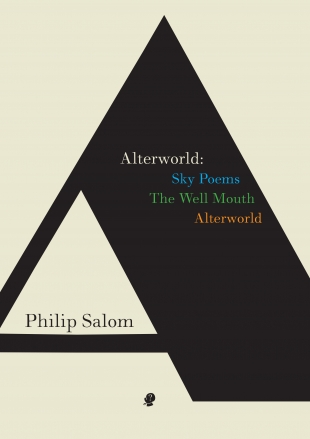
Review Short: Philip Salom’s Alterworld

Alterworld by Philip Salom
Puncher & Wattmann, 2014

Philip Salom’s Alterworld is much more than a standard ‘new and selected’. Two major books, Sky Poems (first published 1987, FACP) and The Well Mouth (2005, FACP) are reworked, and a new collection completes the three. Continue reading

Posted in BOOK REVIEWS | Tagged ,

Review Short: Philip Salom’s Between Yes and No

Between Yes and No by Philip Salom
Flying Island Books / Cerberus Press, 2014

Philip Salom is a poet and novelist who has, like several others of his generation, made a career straddling academia and a kind of award-and fellowship-winning literary writing (see the long list on his personal website) that has enabled him to retire in his late fifties to write full time.

Continue reading

Posted in BOOK REVIEWS | Tagged ,

Marion May Campbell Launches Tracy Ryan’s Hoard

Tracy Ryan, whose new and eighth full-length poetry collection we’re celebrating, Hoard is also a four-time novelist (Vamp, Jazz Tango, Sweet, Claustrophobia), a memoirist and translator. Her work has been acclaimed in multiple commendations and short-listings and has received the Times Literary Supplement Underground Poems Award; the ABR Poetry Award (2009); and twice won the West Australian Premier’s Book Awards for Poetry (2008; 2011). This collection was co-winner with Jill Jones’s Breaking the Days of the 2014 Whitmore Manuscript Prize.

From the remarkable debut collection Killing Delilah, through to the magnificent Unearthed (Fremantle Press 2014), Tracy has delivered poems of such arresting image economy and tensile musculature, that so many, no matter how strange and unsettling, assert their uncanny logic with retrospective inevitability, at times seeming to deliver in a mindflash an x-ray of the reader’s own psychic nakedness. This poetry is charged by an uncompromising feminist poetics and an intensity rare in a culture that often shopfronts irony at the expense of affective appeal and resonance. Not that irony’s ever lacking here – far from it, but it’s irony of a higher order – an irony that pulls on the soul.

This poet is a resistant phenomenologist for whom the ease of language must be made difficult; she is the concrete thinker undoing routine concretions and conflations. At its most quickening poetry hosts a space for juxtapositions, that according to the routine imaginary and reflex semantics are oxymoronic; it’s a space where paradox thrives and disrupts the purring continuum of bland; it’s language acutely re-earthed in us, releasing intensified currents through its lifelines.

Ryan returns, from her corner of the Irish diaspora in south-western Australia, to the Irish peat bog; which as a form of wetland has suffered great abuse both rhetorical and material – because of its in-betweenness: being neither quite liquid nor solid, zoned with the abject and thus, repressed, if not negated by drainage and infill, despite serving variously as placenta of birdlife, or the invaluable carbon sink. It has been treated like women’s sexuality as something to be controlled if not murderously suppressed by ruinous husbandry. More recently, wetlands in general have been reappraised thanks to the long struggles of eco-activists but not so, it seems, the peat bog, whose cultural shaming has been so frequently allied to classist and sexist reductionism – 38% of Irish bog habitat has destroyed between 1995 and 2012, according to statistics Ryan cites on p. 32.

So in her own words Ryan brings her ‘feet of drought and tinder’ back to the bogach – which in Irish and Scottish Gaelic means soft – to read there the hoard, not just of hidden artefacts brought to light, but to activate the slumbering potential of bog-speech, to catalyse our thoughts through bog’s eco-poetics. These are poetics drawn from an open, interrogative approach, an auscultation, of what the bog might have to say for itself, of its appeal, material and sentient. Of the bog I might’ve been tempted to say ‘she’, but cautioned by Ryan, from reflex gender alignments, especially where soft is concerned, I will not say she. ‘When first I saw you/spoke rock and soil to me// & like the new born/I must imprint’ (from the first long and superb poem ‘The changeling addresses Ireland’, p. 5). And here you notice the ambiguity of ‘imprint’: is it transitive or intransitive; is it in the body or on the page – the elision of the object invites us to read both. The eco-ethics are subliminally performed in these echo-poetics: through subtle seismics of word-music, through assonantal chains, the sly alliterative threads, through the orchestration of blanks and gaps, of ‘hummoch and hollow’ as speaking ‘nothings’. The slow fuse of the image-work finds ignition through the concerted effect of all these things – recovering so much that is lost through abstraction and quasi-automatic catchphrases of our instrumental or ritual transactions.

This is the concrete worker par excellence, undoing routine concretions, bringing matter back to life through poetic interruption and rearrangement. In the space of this slim, beautifully designed production by Anthony Lynch, poet-publisher of Whitmore Press, Ryan plays host to the unheard and unsaid in ‘hearsay’. What we might, by reflex, call the descent into the undifferentiated mud becomes here an exquisitely Derridean reader of difference – the bog as hoard of corporeal integrity and golden artefact. The bog is celebrated as the anaerobic preserver of life, gobbling as it does CO2 from the atmosphere.

The collection entertains an ethics of what Heidegger called co-respondance between bard and bog-hoard: the space of the poem hosts the multiple aspects of peat bog: the bog of oblivion; the bog of loss; the bog of archive; the bog of data retrieval, whether of pollen, farming, social or religious practice; the bog of secrecy; and of the secret’s betrayal; the bog of slow decay; the bog of denial, or of willed oblivion, and of mnemonic appeal.

Here the word c/leave encapsulates some of these oxymoronic tensions, between cleave as ‘cling to’ and ‘leave’ or ‘pull away from; between the diasporic uprootedness and stick-in-the-mudness; between identity and difference; the bog remembering what would be repressed, ‘wreaks chthonic havoc’ (‘Under’ p. 9) as this poetry does.

dressed like a well
but still treacherous
it courts a fall
(‘Under’, p.9)

Here we’ve got the sense of the mythic, the well being magical conduit between worlds lower and upper, between frog and prince – and the subtly suggestive verb ‘courts’ does all the work: of the royal high brought low. The bog, wearing its carpet of moss, its peaty layers, its strange carnivorous blooms, ‘courts a fall’ for those whose fail to ‘read’ it in its own terms.

Here hoard itself spells the ethics in poetics

hoard in the wrong hands
gets melted down

recast as meaningless 	
commonplace          precious
(‘Hoard hurt’, p. 19)

The difference between exquisitely wrought objects that the bog ‘respects’ is, on their unearthing, treated with contempt in name of reduction to marketplace value; so goes Mallarmé’s distinction between currency and gold; the poet re-establishes the economy of the gift or of sacrifice against that of exchange value. Thus of the 5000 year old golden torcs recovered, it’s the ‘heft’ that talks here, the body’s intimate encounter with its weight, which Ryan celebrates – not the shine to the I/Eye that escapes this reductive economy:

I need not the sight
but the heft of your beauty  
(‘Hoard bereavement’, p. 21)

In itself unmarked like the Platonic chora, the bog opens something like a pre-linguistic space and while it challenges the principle of naming, it becomes itself the borderline of the mnemonic, the beginning of the map generative of the name. ‘Bog mnemonic’ – ‘this wet portent/dense ledger’ […] awaiting our undivided attention.

The changeling poet returning from centennial removal is in excess, the great-great et cetera; the digresser from the line, the diasporic offshoot, always in principle the revenant.

denied corruption
this go-nowhere
this little stickler

who lies unqueenly
on territorial borders
no rooted yew to stop

her mouth to stem 
unhallowed utterance
once breached  
(‘Bog speech’, p. 27)

This Plathian reminiscence is very telling: the yew is ghosted by its second person homophone, the pronominal mask of the masculine Other in Sylvia Plath’s poem, wagging its death-dealing blacks. Here the order of the bog undoes the hierarchical, the taproot, the surveying maps of ownership. It celebrates the liminal, mocks all king- and queendoms. Thus we must also, in the logic of the liminal move beyond the gendered implications of bogach. In the spaces here Ryan shows the ruin of the collective imaginary:

A mirror is not        a lake                    is a dark mirror
tarnished over        mass-swollen                near opaque
till we call her bog                thinking her soft long suffering 
(‘Landfill horizon’, p. 35)

The refusal to reduce: the metaphor of the (cancelled) mirror is a mise en abyme of Ryan’s activist poetics: the (k)not of resistance; the refusal of the politics of anthropomorphic identification, of the reductive equation or captivating binaries which align the soft with the exploitable to be raped. And the aggregate portrait sent back by the bog treated as ‘negative mirror’ becomes our own destruction: when we reward its softness by making a tip of it.

The bog accommodates the nothing as something; it remembers; it holds its voices; it marks the parlous history of the negation of the wetlands in dangerous mythic or metaphoric conflations. The bog only pretends to cover up; it is active archive preserving difference: you call her nothing but she remembers. This is: ‘the utter resistance /of ground that isn’t’ (‘Bog road’, p. 38).

Another aspect of resistance, this time proliferative, and rhizomatic is celebrated in the Bacchae-like furze associated with the bog district of the Irish midlands:

see what can bloom
from nothing come
to fruition out of confusion
vulval and dentate 
her terms ungraspable
given to proliferation
queen of the barren
the margin of past glories
largesse and opulence
all but forgotten 
futile the burn set
by tenant or farmer
the hopes of management
she’s in her element
(‘Fire climax’, p. 45)

This quasi-inclusion through the rhyme ‘ement’ enacts the viral invasion of what husbandry would extinguish – a delicious ironic revenge on the agents of violent repression.

In ‘Revenant’ the poetics are superbly active in performing the call of the title

Revenant

Come back to vacancy
where formerly
whole nests of torcs
lay one above the other
each level a buffer
meant to divert
the casual robber
first bronze then silver
but best was deepest don’t say it
you were so sure no one could reach there
Over this turned ground you hover
discarnate now persuaded
whatever you had & amounted to
was here & so you wander
(p. 44)

Whereas the tremulant R, as the rhotic ‘R’ is gorgeously called, is left unpronounced by many English speakers, and is only ghosted in the changeling’s tongue, here it comes back triumphantly through the soundscape of this poem, just as, it can be said to haunt the whole collection.

And so the eco-poetics at work here resoundingly revive the tremulants cruelly repressed in our habitual rhetoric and ecocidal practices. All power to you Tracy Ryan: congratulations on Hoard, this magnificent new work of poetry.

Posted in GUNCOTTON | Tagged , ,

Robert Wood in as Commissioning Editor

I am pleased to announce that Robert Wood has joined the Cordite Poetry Review masthead as a Commissioning Editor. Shortly, we’ll start a series of critical essays from Australian and international writers, about one a month. This is in addition to what we’ll have in our quarterly and special issues.

Wood grew up in a multicultural household in Perth. He holds degrees from the Australian National University and the University of Pennsylvania, where he was a National Undergraduate Scholar and a Benjamin Franklin Fellow respectively. He has edited for Margaret River Press, Wild Dingo Press and Overland, and volunteered for the Small Press Network, Philadelphia Fringe Festival and Books through Bars. He has published work in literary journals such as Southerly, Plumwood Mountain and Counterpunch and a academic journals including Foucault Studies, JASAL and Journal of Poetics Research. He currently hosts a reading and conversation series at The School of Life and is a regular contributor to Cultural Weekly. His next book, heart-teeth, is due out from Electio Editions later this year.

More appointment news soon …

Posted in GUNCOTTON | Tagged

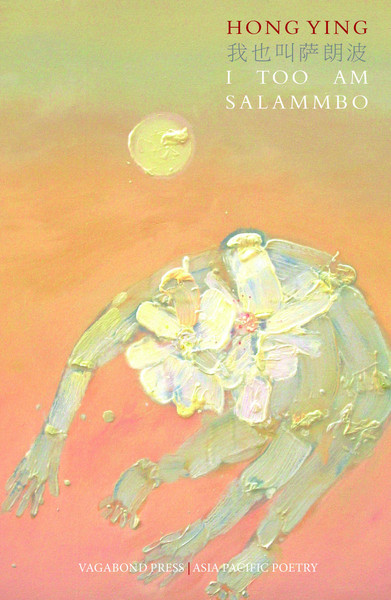
Michael Farrell Reviews Hong Ying, Translated by Mabel Lee

I Too Am Salammbo by Hong Ying
Translated by Mabel Lee
Vagabond Press, 2015

Hong Ying’s I Too Am Salammbo is a selection of poems from 1990-2012, based on a Chinese selection published in 2014. Though almost all the poems contain conceptual, or imagistic, interest (bar some of the ‘city’ poems: ‘Berlin’, ‘London’, etc.), the formal repetition gets a bit wearing.

Continue reading

Posted in BOOK REVIEWS | Tagged , ,