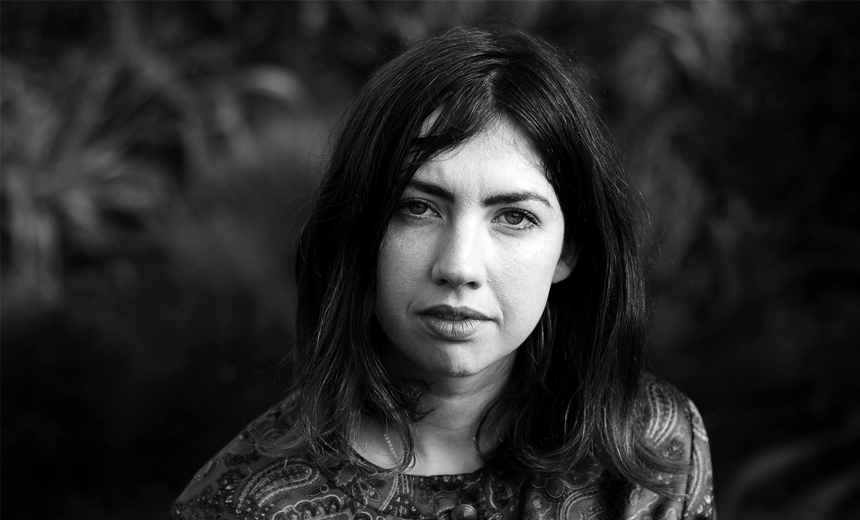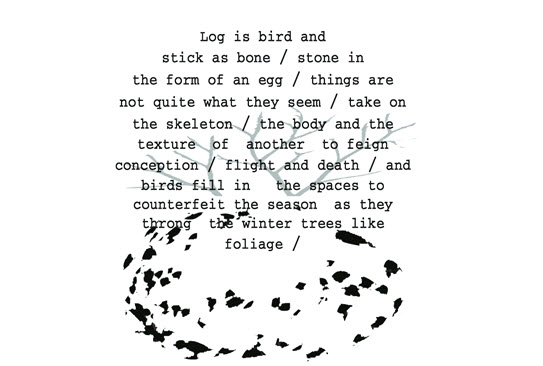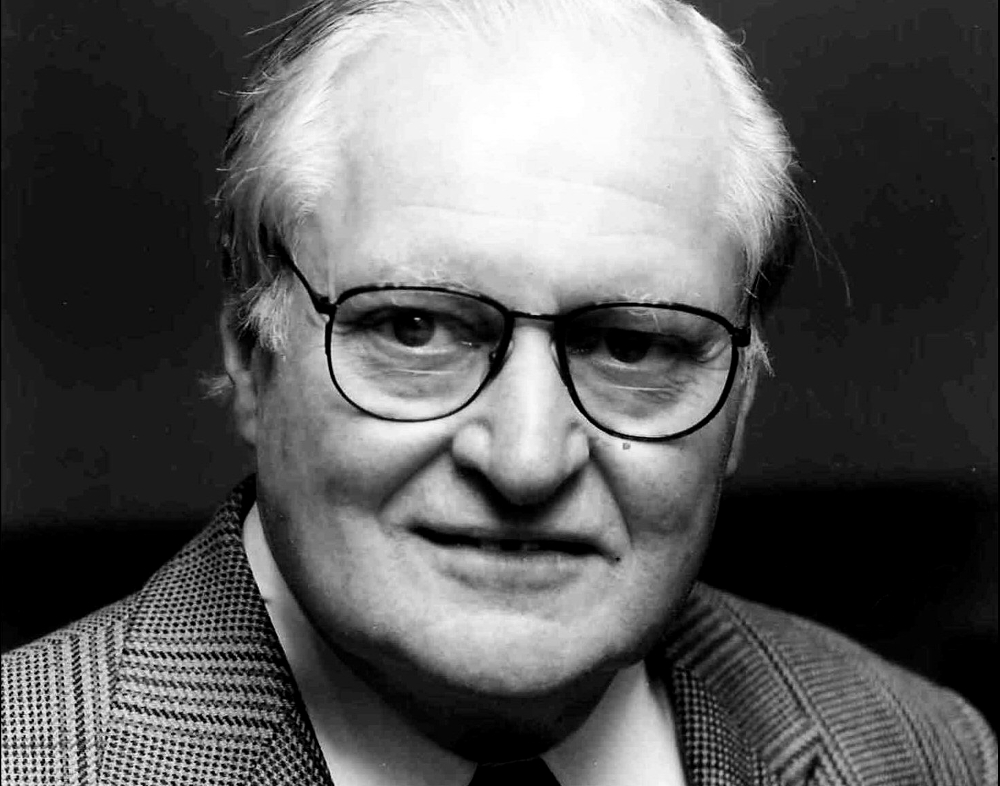
12 Pigment Prints on Paper by Tony Albert


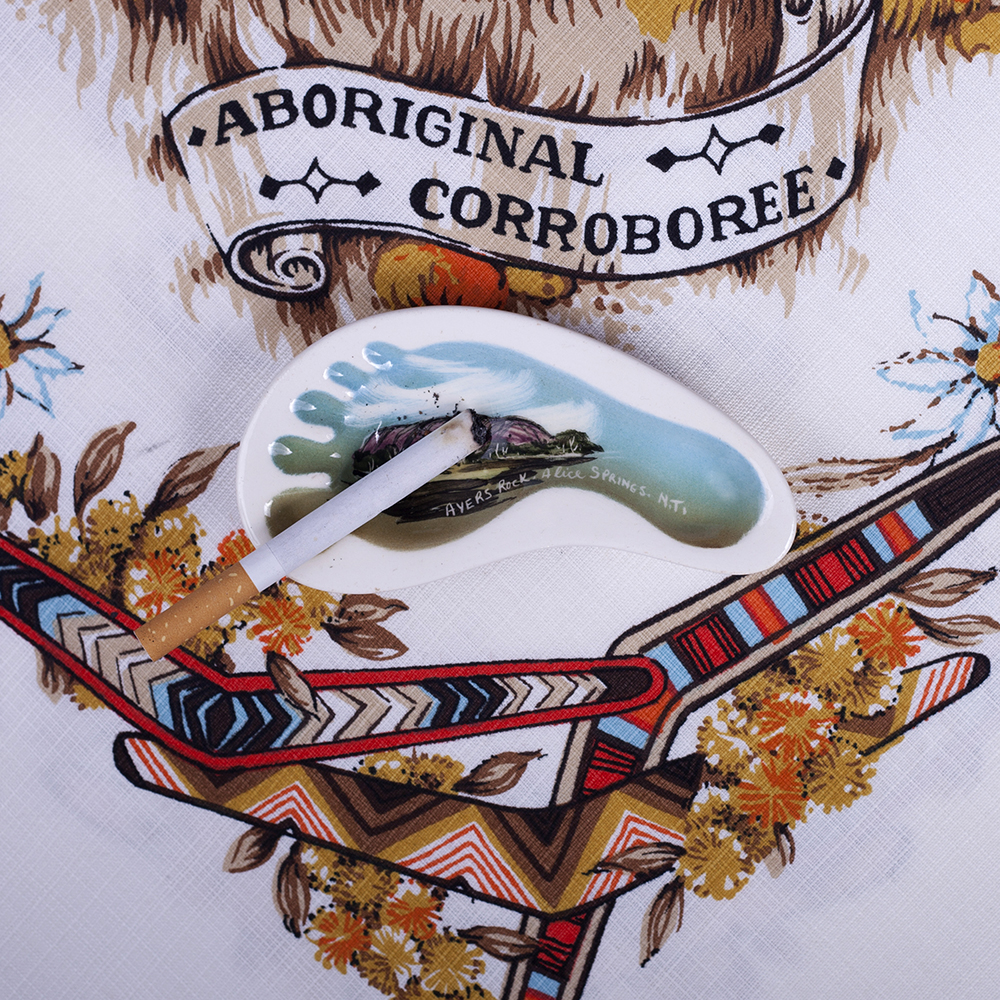
Mid Century Modern-Aboriginal Corroboree | 2016 | pigment print on paper | 50 x 50 cm, edition of 2 + 1AP
Image courtesy of the artist and Sullivan+Strumpf.

Tony Albert’s art practice interrogates contemporary legacies of colonialism in a way that prompts the audience to contemplate elemental aspects of the human condition. Mining imagery and source material from across the globe, and drawing upon personal and collective histories, Albert questions how we understand, imagine and construct difference. Certain political themes and visual motifs resurface across his oeuvre, including thematic representations of the ‘outsider’ and Aboriginalia (a term the artist coined to describe kitschy objects and images that feature naive portrayals of Aboriginality). Albert’s ‘Mid Century Modern’ series uses hundreds of collected vintage retro ashtrays and tablecloths depicting Westernised stereotypes of Aboriginal culture, assembling them to create a vibrant and relentless photographic series that examines cultural appropriation and the erasure of Aboriginal racial and cultural identity.

Posted in ARTWORKS | Tagged

‘a serpentine | Gesture’: The Synthetic Reconstruction of Ashbery’s Poetic Voice

JA

In 1966, John Ashbery published Rivers and Mountains. The departure from the fractures of The Tennis Court Oath (1962) are immediately apparent: it is a return to a language still distinctly marked by Ashbery’s usual probing and misdirection, but without the direct dislocations committed to denotative meaning, form and syntax in the earlier book. Indeed, much of what would become Ashbery’s characteristic fluid, evasive and evolving later style(s), can be found in Rivers and Mountains. And though its final epic poem, ‘The Skaters,’ holds a central place in the canon of Ashbery’s poetry, and more pointedly his long poems, the speculative and living voice of his poetry can be seen to have to been launched into its perpetual shapeshifting in the marvellous penultimate poem of Rivers and Mountains, ‘Clepsydra.’

A ‘clepsydra’ is an ancient device that measures time by the regulated passing of water (or mercury) through a small aperture. Considering Ashbery’s vague, but pointed, statement about ‘Clepsydra,’ being ‘a meditation on how time feels as it is passing’ (Kostelanetz 101), it is an appropriate object for the work to be named after. One of the last poems Ashbery wrote while he was living in France (Gilson 502), he has said in interview with Richard Kostelanetz that he is particularly close to ‘Clepsydra,’ feeling in it a poetic unity that he hadn’t experienced before,1 noting in the same interview:

After my analytic period, I wanted to get into a synthetic period. I wanted to write a new kind of poetry after my dismembering of language. Wouldn’t it be nice, I said to myself, to do a long poem that would be a long extended argument, but would have the beauty of a single word? (101)

Of course, considering this is the poem that he believed moved him on from his ‘analytic’ to his ‘synthetic’ phase – terminology rooted in Cubist art criticism and history, which traces phases of artistic development analogously similar to Ashbery’s own early development as a poet – it makes sense to think of ‘Clepsydra,’ alongside ‘The Skaters,’ as the poem which illustrates the reconstruction of his poetic voice after its dispersal in The Tennis Court Oath. As Ashbery writes in ‘Clepsydra’:

                                                   We hear so much
Of its further action that at last it seems that
It is we, our taking it into account rather, that are
The reply that prompted the question, and 
That the latter, like a person waking on a pillow
Has the sensation of having dreamt the whole thing,
Of returning to participate in that dream, until
The last word is exhausted
                    (Collected 141)

One of the defining features of ‘Clepsydra’ is how it operates on various reversals of expectation and a persistent self-cancellation, darting from ‘Untruth to willed moment, scarcely called into being’ (Collected 140). In this sense, it truly is ‘The reply that prompted the question.’ John Shoptaw perceives this to be an essential drive in the poem: ‘that unforeseeable ends are somehow written into forgotten beginnings’ (89). The poem maintains its development on the back of this indeterminacy, digging so deep into itself in search of an answer – which will provoke another query – that the ‘sensation’ becomes one of a ‘dream.’ It is a ‘dream’ that will only disperse, maybe concretise into something more readily familiar, when ‘the last word is exhausted,’ which, as ‘Clepsydra’ unfolds, seems impossible. Notwithstanding the best destructive efforts of the irrational subconscious, there will always be another word, another meaning, especially as these things come into synthetic relation with other things. The intuition of the speaker, then, is clearly favoured in the near automatic, but ultimately controlled, musing of the poem. If The Tennis Court Oath aimed to ‘exhaust’ Ashbery’s ‘words,’ it was ‘Clepsydra’ that ‘anchor(ed) this new way of writing’ (Kelley). It is the ‘reply’ he purposefully sought in asking questions of his poetry that effectively opened it to new questions and explorations.

As such, ‘Clepsydra’ is important for laying the groundwork for later works, like the perpetual argument, sentences and motions of Three Poems, the evasive sense of a just out-of-grasp meaning in ‘Litany,’ and the long lines of poems like ‘A Wave’ and Flow Chart. Nonetheless, it still looks back to The Tennis Court Oath in the indeterminacy of its grammar and syntax – it is still of Ashbery’s self-proposed ‘French’ period (Kelley) – albeit in a manner no longer at the service of exposing the fractured nature of the poem’s objects, so much as creating a continual, sinuous, shifting and prosodically elegant link between them. ‘Clepsydra’ is hinged on a concessional language that lends it a sense of constant and correcting momentum, its words encountering and portraying a sense of time as an unresolved, contradictory and unexplainable entity. Nothing in the poem is fully present, except for the text itself, and thus it is in need of the reader to directly engage it in an, often troubling, attempt to bring it to presence; not necessarily to ‘make sense of it,’ but to understand the kind of aesthetic sensation of ‘time’ that Ashbery is endeavouring to provoke. In essence, they are responsible for bringing the poem to ‘life’ – ‘this crumb of life I also owe to you’ (Collected 145) echoing the apparent appeal to multiple readers (or lovers, though for a poet what is the difference?) in ‘A Blessing in Disguise’: ‘I prefer ‘you’ in the plural, I want ‘you,’ | You must come to me’ (Collected 139). This appeal toward, and acknowledgement of, his readers is vital for Ashbery’s future poetics, particularly in the sense that he still refuses to grant them anything particularly easy. In fact, the work’s difficulty is its invitation.

This sensation is comparable to the ‘unanalyzable transcendental claim’ proposed by Kenneth Rexroth in his essay, ‘The Cubist Poetry of Pierre Reverdy’ (1969),2 where the reader is lured into the world of the poem to recognise it not as something ‘other,’ but as an additive to the world already known. Or, correlatively, in Maurice Blanchot’s discussion of Surrealism:

Surrealists understand, moreover, that language is not an inert thing: it has a life of its own, and a latent power that escapes us. Alain wrote that one must always verify where ideas are – they do not stay in their place, that is why they cannot be on their guard. It is the same for words: they move, they have their demand, they dominate us. That is in part what Brice Parain called the transcendence of language (‘Reflections on Surrealism’ 88-89).

‘Clepsydra,’ then, through the slippery vagaries of how its language freely develops into a poem, plays insistently on notions of presence and absence, seeing them not necessarily as opposites, but as active and parallel corollaries in pursuit of an idea of existence and selfhood – ‘light sinks into itself, becomes dark and heavy’ (Collected 144). It opens with a seeming promise of illumination, but is always circling back to contrast this with darkness, noting near its conclusion that ‘because everything is relative’ in the poem – opened to a kind of Cubist simultaneity – it is impossible to grasp any ‘more than groping shadows of an incomplete | Former existence’ (Collected 146). Ben Lerner argues that Ashbery uses ‘time’ to pin the reader ‘to the moment of reading,’ effectively frustrating ‘retrograde interpretive strategies that would stop the flow of language at its source’ (203): its ‘incomplete | Former existence.’ This is a particularly apt way of looking at ‘Clepsydra.’ The poem is present in ‘the moment of reading,’ but is guided by a speaker who nonetheless attempts to lead its busy language to absent itself from the breadth of its connotations as it emerges on the page, is consumed, then dispelled in this moment. The extensions of the lines in ‘Clepsydra,’ and the hint of it arriving at a point that is always skipping away, establish a sense of time as the simultaneous creation and fulfilment of the work by writer and reader – the moment of reception in the ‘shadow of | Your single and twin existence’ (Collected 146). Its words are always moving, creating a patchwork of themes and images that read back and forth, with no firm indication of their import or even beginning; of where retroactive reading should occur; of where the self can actually reside. To read ‘Clepsydra’ is to experience ‘time passing’ in the sublimations of its voice wrestling with the inevitable grinding forward of time itself, as the voice or poem attempts to know itself in a present that is always threatened by the presence of the past.

The ‘long extended argument’ based around the significance of a ‘single word’ that Ashbery claimed was the aim of the poem, which it indeed pivots on, is an argument between the resistant, half-formed consciousness evident in ‘Clepsydra’ and the presence of time which insists on this consciousness’ continual renewal to arrive at individuality: the self. Although this self exists in the present, it cannot know itself in the present, only retrospectively in the moment just passed:

Each moment seemed to bore back into the centuries
For profit and manners, and an old way of looking that
Continually shaped those lips into a smile. 
                    (Collected 143)

Time, as he notes in the later poem, ‘Soonest Mended’ from The Double Dream of Spring, ‘is an emulsion’ (Collected 186): it is suspended in itself. The argument, then, is about the significance of past and present time, which ultimately cannot be rent apart. ‘Clepsydra’ is not even broken down into stanzas to perhaps lend some respite to the harried speaker, who pursues and evaluates point after point to only watch them shift away as the sentence or line extends and moves on. The voice of the poem, often adopting an almost legal or even academic rhetoric amid its flights of emphatic lyricism, attempts to bring together these disparate parts to form a whole, but finds itself thwarted by the onward and circular momentum of ‘Clepsydra’ – the never still and self-negating language enacting the sensation of a nonlinear time the self has little chance of reconciling, controlling or understanding. The argument and poem are lost to the presumably ‘white noise’ of a ‘recurring whiteness’ (Collected 140), leading to a ‘white din’:

                                                  But the argument, 
That is its way, has already left these behind: it
Is, it would have you believe, the white din up ahead
That matters: unformed yells, rocketings,
Affected turns, and tones of voice called
By upper shadows toward some cloud of belief
Or its unstated circumference. 
                    (Collected 140-41)

Whereas in Three Poems, Ashbery places his speaker in a state of Bergsonian ‘duration’ – even parodies it, or the Modernists’ appropriation of it, in the poems’ grandiose, seemingly infinite, never resolved extensions that similarly demand ‘wholeness’ – in ‘Clepsydra’ the sense of the eternity of the moment is muted, building via colons to an ‘unstated circumference,’ to examine instead how the self only really has the sensation of the passage of time, swirling around, de- and re-constructing the individual moment-by-moment in the midst of the ‘unformed,’ ‘affected,’ and disruptively blank ‘white din.’

As Ben Hickman writes, the poem is concerned with ‘becoming complicated’: ‘that is, both how things become complicated, and how becoming itself is a complicated matter’ (35). What it attempts, then, is to ‘represent … the movement and essential ungroundedness of moments of thought’ (37). The opening of ‘Clepsydra’ presents this indeterminacy, dropping the reader and speaker into a question only seemingly half-asked, as if it is ‘thought’ emerging without any clear notion of its beginning. Or as John Koethe writes: it is ‘a question in search of a subject.’ The question mark seems to indicate the following sentence is the question’s answer, even if, without the grammatical sign, it can be seen to syntactically follow the question – the question mark can feasibly be moved to be after either ‘dropped’ or ‘go’:

Hasn’t the sky? Returned from moving the other
Authority recently dropped, wrested as much of
That severe sunshine as you need now on the way
You go.

‘Clepsydra’ appears to use the ‘sky’ and ‘air’ to establish a sense of the poem’s desire for ambiguity and openness – the transparent spaces around its language, which even attempts to invade the language. Here, though, the speaker seems to be asking if they have done enough, if they have adequately performed their role. Has ‘the sky’ not given ‘you’ enough ‘sunshine’ to, suggestively, light up the ‘way | You go’? Will the poem be bathed in this early light to achieve some clarity? Evidently not, as it quickly goes on, and the reader is left to wonder what the ‘other | Authority’ is? Moreover, who is the second person in reference to? Who exactly is, or are, the ‘other | Authority’? The ambiguity of these four lines indicate the way in which ‘Clepsydra’ will unfold from this strange, but contextually apt, half-asked question: there is always doubt and evaporation, never a sense of being fully present: it’s all ‘half-meant, half-perceived’ (Collected 140).

Posted in ESSAYS, SCHOLARLY | Tagged , ,

Vorticist Portraiture in Mina Loy’s Anglo-Mongrels and the Rose


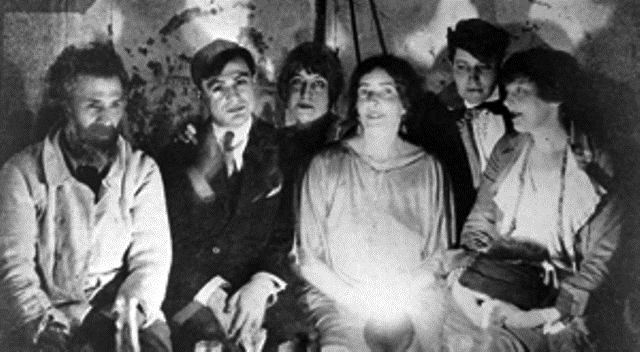
Mina Loy with friends, image courtesy of My Poetic Side

Mina Loy’s book-length poem Anglo-Mongrels and the Rose (1923-25) essentially presents an alternative, revised understanding of the modernist figure of the artist through a ‘polyglot’ language and avant-garde form (Perloff, English as a Second Language, online.). I argue in this essay that each of the characters within the poem is constructed through a Vorticist model, which also encompasses elements of Futurist and Cubist theory, as well as structurally incorporating Steinian poetics. Loy eventually distanced herself and her work from a purely Futurist model because of the movement’s misogynistic overtones as well as their exclusive focus on speed and dynamism. Although she was not formally associated with the Vorticist poets and painters, their combination of analytic stasis and poetic dynamism are elements which assist in illuminating Loy’s approach. Vorticism’s formal focus on transformation complements a deeper study of Loy’s poetics and constitutes the vitality with which Loy created her verbal composition of an artist.

Anglo-Mongrels and the Rose (1923-25) chronicles the childhood and early adolescence of Ova, a character who represents Loy in this semi-autobiographical work (ibid., online.). The poem is broken into three main sections through which verbal portraits of Exodus (Ova’s father), Ada ‘The English Rose’ (Ova’s mother) and Ova herself are presented. By using Futurist and Cubist techniques, which can be directly related to the contemporaneous aesthetic principles of Gertrude Stein’s ‘portraits’, Loy presents these personalities as fragmented elements of motivations and traits revolving around an epicenter of conscious and unconscious intentional energy. Whilst Exodus in the poem is defined by his constant unease and need to migrate, Ada is defined by a continuous negation of the self; Ova’s primary interest becomes a need for artistic expression which she inherits in part from her father, and utilises to give expression to the corporeal and bodily experiences her mother denies actively for herself. Ultimately, Loy uses Ova to refigure the modernist trope of the artist, particularly in its feminine construction. In doing so, she combines Wyndham Lewis’s and Ezra Pound’s idolisation of artistic genius with Gertrude Stein’s call to displace subjectivity from its position of centrality within the text, in order to suggest that the ‘artist’ is found in moments of relational action, especially in the relationship between a creative individual and their dynamic environment. Her poetry must also necessarily be understood through its abiding concern with the question of gender: like her contemporaries Djuna Barnes and Gertrude Stein, Loy endeavoured to represent a reformed female consciousness through its role and function within the modernist avant-garde. Ultimately, an irresolvable conflict emerges from the core of Loy’s poetic subjects which maintains their defining qualities (gender, environment, ideology) within a dynamic tension. The artist is rendered as an accommodating space or entity. Loy’s method of representing the various elements of her characters’ personalities in a constant state of flux, while located in terms of a central concern which struggles to express itself through language, can be considered Vorticist.

Mina Loy lived in Italy whilst the energetic popularity of Futurism began to spread across Europe. Her romantic affiliations with the founder of Futurism – F T Marinetti – as well as with Giovanni Papini, a member of the group, has been widely noted. However, it is likely that Loy was in fact involved in the creation of the movement and it is certainly the case that Futurist aesthetic principles heavily influenced her early poetics1. Marinetti’s ‘Futurist Manifesto’ called for the ‘destruction of syntax’ (Marinetti, Futurism, 143) and for a liberation of words from traditional linguistic modes of representation. He stated that the poet must ‘cast immense nets of analogy across the world’ so that a new and unusual relationship is formed between otherwise unrelated images and ideas (ibid., 149). For the Futurists, in the dawning ‘machine age’, subject and object, foreground and back ground, could be expressed through a ‘sense of speed or dynamism’ (Adams, Blasting the Future, 10) that essentially blurred the division between interior and exterior realities, with a renewed focus on movement and sensation. Whilst Loy does not submit fully and as ferociously to a worship of modern technology, she does embrace the changing ‘Modern’ world by texturing her writing with selected words from various scientific and technological discourses. She often incorporates repeated references to biology, physics, geometry as well as other physical sciences (Prescott, Moths and Mothers, 198). Thus the very fabric of Loy’s poetry is created through her ‘polyglot’ vocabulary and reflects a more nuanced and unstable vision of the Modern, technological world (Perloff, English as a Second Language, np.). Additionally, a confusion of subjectivity and the phenomenal world is a major concern in Anglo-Mongrels and the Rose, as Loy comments on the formational roles of nationality, culture and society in the shaping of the subject’s language, consciousness and sense of agency. Marjorie Perloff notes that the poem itself is an encompassing of linguistic hybridity. In its satirical nature, ‘the language itself is as “mongrelized” as are the principles of her narrative’ (ibid., np.). Ezra Pound, with Wyndham Lewis, would later incorporate this Futurist ethos to disrupt society on all levels through the Vorticist movement.

Futurism is often contrasted with the contemporaneous artistic movement of Cubism which began in 1908. A major concern with spatiality in the visual arts is common to both schools, however, Futurism’s ‘plasticity’ and spatiality itself, for the Cubist, is imbued with perspective2. Rather than art transcending in a vertical manner to a higher realm through symbolic means, the Cubists prized a spatial transcendence which provided an analysis of multiple perspectives. Particularly influential for Loy was Gertrude Stein’s realisation of Cubist principles through verbal portraiture. Susan Holbrook concisely compares Stein’s works to Cubist theory. Whilst Stein re-organised syntax, treating adjectives and verbs as nouns, Cubist paintings held no singular viewpoint, ‘democratising components of a composition.’ Stein’s obscured and disavowed verbs represent the Cubist collapse of time in painting. Their subjects are ‘viewed from different vantages presented in two dimensions’ (Holbrook, Companion to Modernist Poetry, 351). Loy’s verbal portraits, whilst quite different from Stein’s, still echo a self-reflexive focus on the ‘materiality of language’, complementing the simultaneous use of language for ‘representation, reference and enlivened realism’ (ibid., 350). Perloff draws a similarity between the achievements of both artists in their poetry and verbal portraiture: ‘Anglo-Mongrels and the Rose represents a rupture with lyrical tradition that parallels Gertrude Stein’s break with conventional narrative’ (Perloff, English as a Second Language, online.).

Mina Loy associated with Stein in Italy and Paris and wrote about Stein’s poetics. In Stein’s texts she finds ‘the very pulse of duration’: as she writes, Stein ‘invites you into the concentric vortex of consciousness involved in the most trifling transactions of incident’ (Loy, Manifesto, 242). What interests Loy most about Stein’s writing is her portraiture, particularly her ability to evoke a concrete sense of personality through a foregrounding of the materiality of the language. She compares Stein’s texts on the one hand to sculpture, and on the other characterises them as encompassing an essential dynamism – ‘the flux of being as the ultimate presentation of the individual, she endows with the rhythmic concretion of her art, until it becomes as a polished stone, a bit of the rock of life – yet not of polished surface but of polished nucleus’ (my emphasis) (ibid., 238). Loy’s terminology here strongly echoes the French philosopher Henri Bergson (1955), an influential figure for Futurism, Vorticism and Steinian poetics. Using Bergsonian ideas, Loy identifies in Stein’s compositions, an ‘inner life’ of movement and ‘flux’ complemented by a heightened attention to form. The ‘nucleus’ of the text or subject is hardened or ‘polished’ and their various, outwardly resonating movements are in a state of flux: this is in many respects similar to Vorticist theory.

The displacement of the subjective from its central role in the text is a fundamental innovation that Stein brought to modernist literary aesthetics. Whereas Marinetti, Pound and Lewis designated a ‘superhuman’ will to poetic subjects in order to penetrate matter with form, Stein’s poetics insisted on a variety of perspectives and a complex relationship between matter and form itself. Peter Nicholls describes Stein’s ‘different modernist poetics’ as expressing ‘continuities between self and world’ with an attention to ‘texture as opposed to meaning’ (Nicholls, Modernisms, 198).

Ultimately, Stein’s poetics presented Loy with alternative ways to think about language in a modern way: her ideas at once complement and run counter to those of the Pound tradition also evident in Loy’s poetry. In Anglo-Mongrels and the Rose, Loy primarily employs the present tense, especially in pivotal moments in her characters’ consciousness when depicting revelations – she thus achieves a version of Stein’s ‘continuous present’. Like Stein, Loy’s portraits demonstrate a desire to ‘achieve an immediacy of presentation’ that is ‘normally identified with painting or drawing’ (Blau, The Artist in Word and Image, 132). Her characters’ subjective realities do not occupy a linear relation to their surroundings. Rather, Exodus, Ada and Ova experience their language, and by extension, consciousness, as being overtly shaped by their environment. Changes in thought and patterns of behavior emerge suddenly and spontaneously, as a combination of both subjective will and environmental circumstances. Thus, Anglo-Mongrels and the Rose problematises the concept of artistic agency in Steinian terms.

Founded by Wyndham Lewis with the help of Ezra Pound and others, Vorticism developed as an English response to preceding European avant-garde movements. Pound himself describes Vorticism as an amalgamation of ‘imagism, neo-cubism and expressionism’ and defines it as characteristically an ‘intensive’ art (Pound, Gaudier-Brzeska, 90). Crucially for Loy, its conception of the human subject is also one of continuous movement and transformation: instead of a person being passively and receptively that ‘toward which perception moves’, the Vorticist subject directs forces and conceives, as opposed to merely ‘reflecting and observing’ (ibid., 103).

Within a project of characterising influential Modern poetry as combinations of ‘Logopoeia’, ‘Melopoeia’ and ‘Phanopoeia’, Pound specifically termed Loy’s poetic style: ‘Logopoeia – the dance of the intellect amongst words and ideas’ (Pound, Literary Essays, 25). Logopoeia, Pound asserts, ‘ employs words not only for their direct meaning, but it takes count in a special way of habits of usage, of the context we expect to find with the words, its usual concomitants, of its known acceptances and of ironical play.’ (ibid., 25). Loy’s frequent use of poetic irony – which she inherited, like T S Eliot, from the French poet Jules Laforgue3 – also injects clarity and wit into her verse. Nicholls explains that the ‘dance of the intellect’ is ‘the dance of irony which offers the necessary escape from sentimentality and romantic expressionism, providing a strategic means by which to affirm the self as strong and authoritative, ‘modern’ rather than ‘decadent’’’ (Nicholls, Cambridge Companion, 55).

Loy’s logopoeic poetry expresses itself with machinic efficiency, but this technique is used primarily to develop her characters as well as for social critique. Often in Loy’s verse, especially in the case of Exodus and Ova, the characters encounter and are fascinated by new words and phrases. Loy initially presents their intellectual processes through unexpected, physical and proficient vocabulary before the words are worked into the rhythm and texture of the verse itself. This method draws attention not only to the materiality of the text, but also to the nature of consciousness itself. The reader is required to engage actively with the poetry through numerous perspectives in order to find significance in the changing patterns of the verse. Through her logopoeic style, Loy keeps ‘different elements’ distinct within a scene, although the scene itself is constantly changing.

Posted in ESSAYS, SCHOLARLY | Tagged , , , , , , , , , , ,

Petrus Augustus de Génestet’s ‘Peaen to the Netherlands’

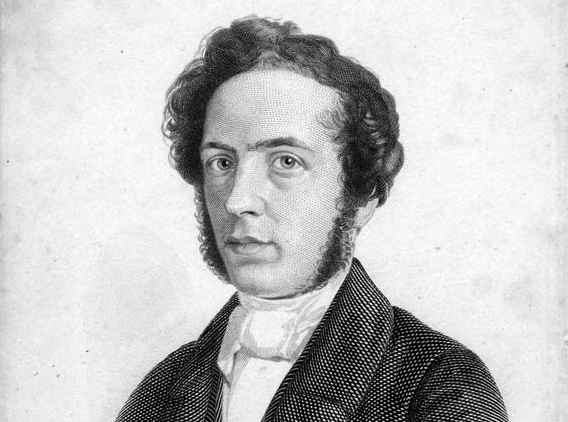
Peter Augustus de Génestet (1829-1861) was a Dutch poet, theologian and preacher. Having lost his widowed mother to TB early in life, he was brought up by his uncle, a well-known artist. He studied theology in Amsterdam with the Remonstrant Brotherhood, a denomination that had broken away from the Dutch Reformed Church, and became a liberal Protestant preacher in Delft.

De Génestet was among the most popular poets of his time, publishing several volumes of verse that was widely appreciated for its musicality, and often for its humour. Yet his short life was marked by tragedy. TB took his much-loved wife, Henriëtte, and one of his four children. De Génestet died of the same illness aged just thirty-one.

Peaen to the Netherlands

Oh, land of bogs and fogs, of drizzle dreich and chill
You soggy scrap of ground, imbued with damp and day-dew
Immeasurably mired, your muddy roads have drunk their fill;
You heave with gout and toothache, with overcoats and ague!

Oh, dreary land of marshes, land of spats and overshoes,
Of dredgers, frogs and cobblers – where it either rains or freezes –
Land of ducks of every species and of any size you choose,
Hear the plaint of this your scion with his autumn coughs and sneezes!

Your climate, so inclement, turns my very blood to sludge:
I have no song, no appetite; no joy, and yet no patience.
Oh, blest land of my fathers, don your gaiters for a trudge!
Country wrested – unrequested – from the briny by the ancients.

– Nov. 1851


Boutade Oh land van mest en mist, van vuile, koude regen, Doorsijperd stukske grond, vol kille dauw en damp, Vol vuns, onpeilbaar slijk en ondoorwaadbre wegen, Vol jicht en paraplu’s, vol kiespijn en vol kramp! O saaie brij-moeras, o erf van overschoenen, Van kikkers, baggerlui, schoenlappers, moddergoôn, Van eenden groot en klein, in allerlei fatsoenen, Ontvang het najaarswee van uw verkouden zoon! Uw kliemerig klimaat maakt mij het bloed in de aderen Tot modder; ‘k heb geen lied, geen honger, vreugd noch vreê. Trek overschoenen aan, gewijde grond der Vaderen, Gij – niet op mijn verzoek – ontwoekerd aan de zee. – Nov. 1851
Posted in TRANSLATIONS | Tagged ,

3 Translated Takako Arai Poems

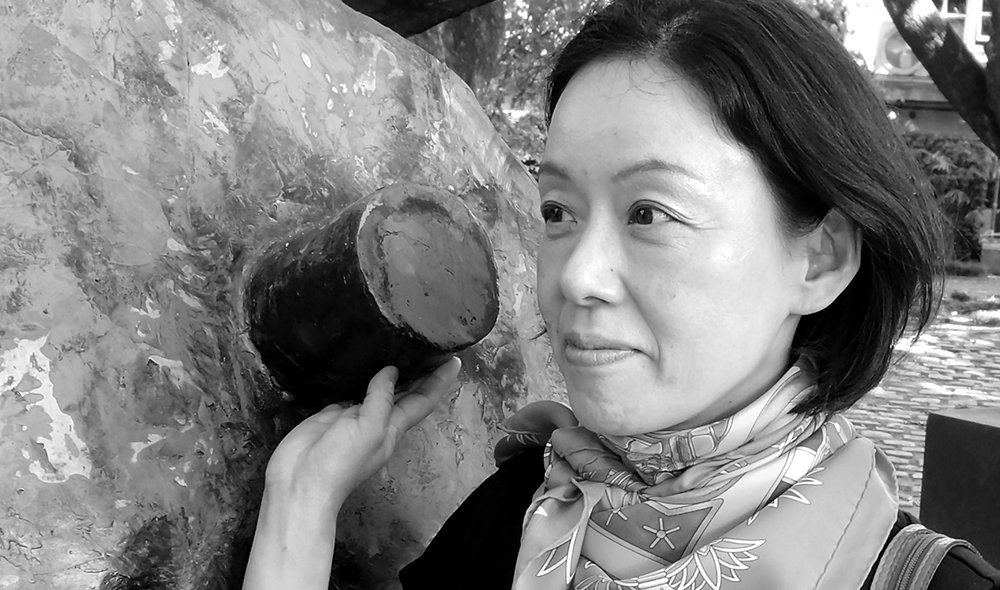
Takako Arai (1966 —) was born into a silk-weaving family in Kiryū city, Gunma Prefecture, on the outskirts of Tokyo. She began publishing poems in the early 1990s, and since 1998 has run a poetry magazine, Mi’Te, which features poems, translations and poetry criticism. Her second poetry collection, Tamashii Dansu (Soul Dance) was published in 2007, and received the Oguma Hideo Poetry Prize. Her latest collection, Betto to Shokki (Beds and Looms), published in 2013, explores the lives of female textile workers, applying a unique language inspired by the local dialect of Kiryū.

Takako’s poems in English translation are anthologised in Four from Japan: Contemporary Poetry and Essays by Women (Belladonna Books 2006) and Poems of Hiromi Itō, Toshiko Hirata & Takako Arai (Vagabond Press 2016). Her poems have been translated into many languages, including Chinese, French, Italian, Serbian and Turkish, and recited at International Poetry Festivals in countries such as America, Argentina, Italy and Turkey. Takako will perform her poetry at the Poetry on the Move Festival in Canberra in September 2017.

A Lightbulb

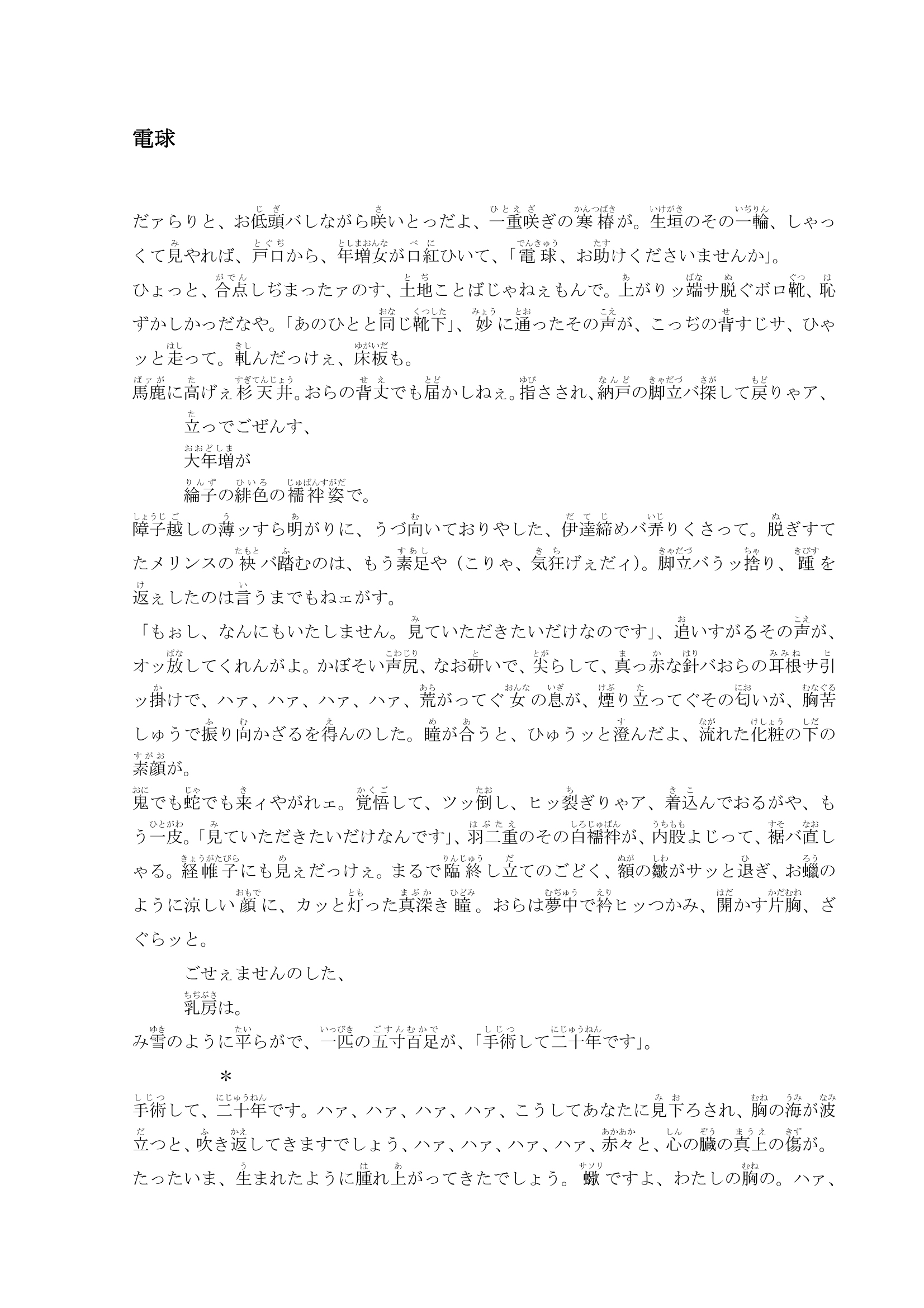
Withered while bowing, tsubaki1— single bloom on the hedge. Scoop it up & there’s— this old girl, lipsticked, watching from a doorway: “A lightbulb. Perhaps you could help?”

It startles me, her stranger’s phrasing. Yes. Better go in, better shed these worn-out scuffs. “The same socks as him!” Her voice runs clear & cold down my back. The floor creaks—

Her ceiling’s unbelievably high. Can’t reach it—not me. She points, I go for the stepladder, come back,

& she’s standing—
this old girl
in her bright red wrap

In dim light through paper screen I can see her looking down, touching her sash, her sleeves, standing on the kimono’s fallen layers—feet bare already! Crazy! I drop the ladder, of course, & turn to go—

“Pardon me. I’m not going to do anything. I just want you to take a look.” Her voice is pleading, catching me. Thin, thinner, sharpening, red, the whet barb hooking my ear’s depth. Ahh—ahh—her breath pushes back, her scent’s rising like smoke, my heart chokes, I turn—we turn to one another. Her make-up’s slipping. I can see her naked face.

Ogres, snakes—I’ll take what I can get. Pull it together, go to her. Push her down, tear open the wrap—what? Another underneath—silk, fine and white as a shroud. “I told you, I just want you to take a look.” Her thighs are twisting, she’s wrapping herself back up. Her face smooths, cool & waxy, her eyes flash a deep red. I grab the neck, pull at it, grab her breast—

it’s not there
her breast

a handspan cut
smooth as mountain snow
& Scolopendra flat.
“The operation was twenty years ago.”

*

the operation         twenty years         ahh         like this         you’ve looked down on me the sea of my breast surging         reviving         ahh         so red         the scar that tips my heart reviving         as if new-born         ridges swelling, yes?        Scorpius         of my breast ahh         these stitches         the scissors
like the tail, yes?         the needle-tip puncturing
and should I let this stretch         ahh         ahh         with my deepest breath?

That morning a bloom                 single, on the hospital hedge.
I was put in a white gown. The doctor looked like you, with your strong nose.
The anaesthetic began to work

                                and through the haze to my lost ears
        the voice echoed

                                                        Let’s begin

frantic         I prised open         my inner lids
        & the bulb’s sting                 was printed
        on the water mirror

                                                        my inner abyss

Quickly, turn it on         again
you look like him         today again
                                                                                the hedge
                                                        and in a white gown
                                                I         bloom         yes

Turn it on                         c’mon

you just brush past me         with your scissors         so chilly
and I’m surging         surging         showing         hot red scissors
I         forever         and ever in a white gown
you         forever the doctor

slashed them, didn’t you? the white tsubaki
chopped them into pieces         so I came in red!

Why doesn’t it turn on!
                                                        the single bulb
the poisoned needle         prising         scratching         at my eyelids
scratching me         stabbing         pushing me down         stinging bright

Just turn it on!

                                                                                so sweet, this anaesthetic haze.
                                                                                                                                so chilly
I’ll puff         puff till I burst
swell
                        and swell
                                                my belly
                                                                        gross, yes?
                                                                                don’t
let me hang on the hedge.
Red or white, it doesn’t matter.
        it blooms anyway—
                the flower
                                lightbulb swinging in the wind
                                                                                        I
                                                                        pendant         star of the sour night dew
        clambering, stitched thread clenching         clambering
                hanging, dangling, Scorpius, bound up, springing droplets
                        swollen                 scorpion belly
                        reflecting         in this image, this compact
                                lightbulb, a lightbulb, a lightbulb

                                                                                                                Turn it on


Posted in TRANSLATIONS | Tagged , ,

3 Translated Nguyễn Man Nhiên Poems

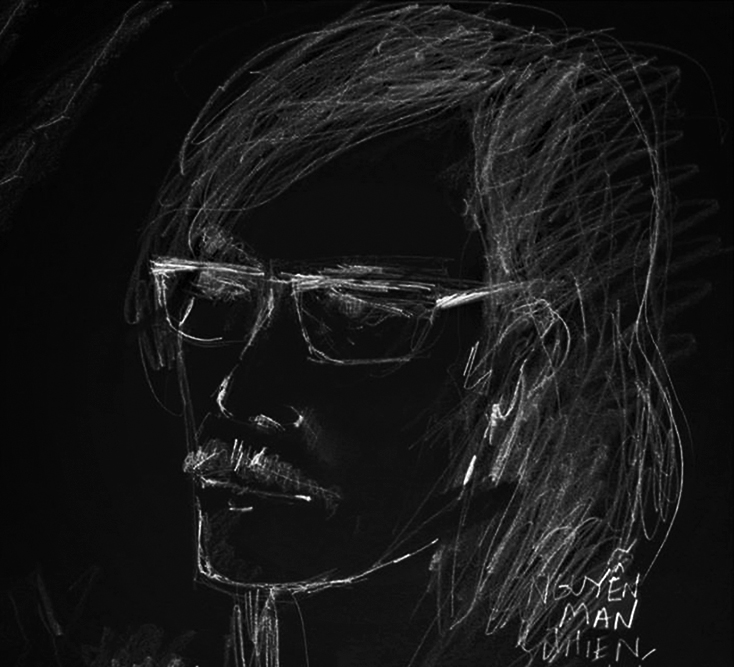
Nguyễn Man Nhiên (1956 —) was born in Nha Trang, Vietnam. He has published a number of poetry and essay collections within Vietnam, as well as with the literary magazines Da Màu and Tien Ve. He is also a well-known folklorist and prolific visual artist. His most recent book of poetry, Đêm dịu dàng thế kia, và gió… (Night How Graceful, And the Winds…) was published in 2011.

Out There the Sky Turning Grey and Winter

mad twenty years old
denied a place to plunge into the sea
I sat still like a portrait
the dockland of mine smoky-grey

no longer here the ailing brownish-red sun
night like a bar of syrup-ice melting, dripping
a song, blue and single, a song from the dark foliage licking it open

a revived season for many a bouquet of flowers in the laundry at dawn
the banging and thudding loud noise of devils hanging low under the garden’s
clusters of light globes
I stuck my teeth into the edge of this rotting suburb of grey ash that pulled
one in like opium

distant stars like a flash of lightning
upon small altar-cups, the unblemished souls now haemorrhaged on the rooftop
            of the district-cathedral
let me be with my prayer on the icy-cold sidewalks

I closed my eyes, resting my head on my own shoulder
resembling act of holding and caressing that youthful  love once upon a time
the street lamps were being soaked in dripping purple rains, late evening 
I was leaving the ship-cabin, an empty seat


Ngoài Kia Trời Xám Màu Động tuổi hai mươi điên không có chỗ lao vào biển ngồi như một bức chân dung bến tàu của tôi khói xám không còn nữa mặt trời đỏ nâu ốm yếu một thanh tối chảy như kem bài hát xanh đơn của tán cây liếm mở mùa tái sinh các bó hoa giặt sáng tiếng ầm ầm của quỷ sứ kêu vang treo lủng lẳng dưới bóng đèn chùm tôi gặm mòn ngoại ô màu xám tro gây nghiện những vì sao xa xôi như ánh chớp những chén lễ nhỏ và sự thánh thiện chảy máu trên nóc nhà thờ hãy để tôi cầu nguyện trên vỉa hè băng giá nhắm mắt và dựa đầu bên vai như ấp ủ một tình yêu trẻ dại đèn đường trong mưa tím rịm chiều tôi bỏ lại boong tàu ghế trống
Posted in TRANSLATIONS | Tagged ,

4 Translated Gerhard Fritsch Poems

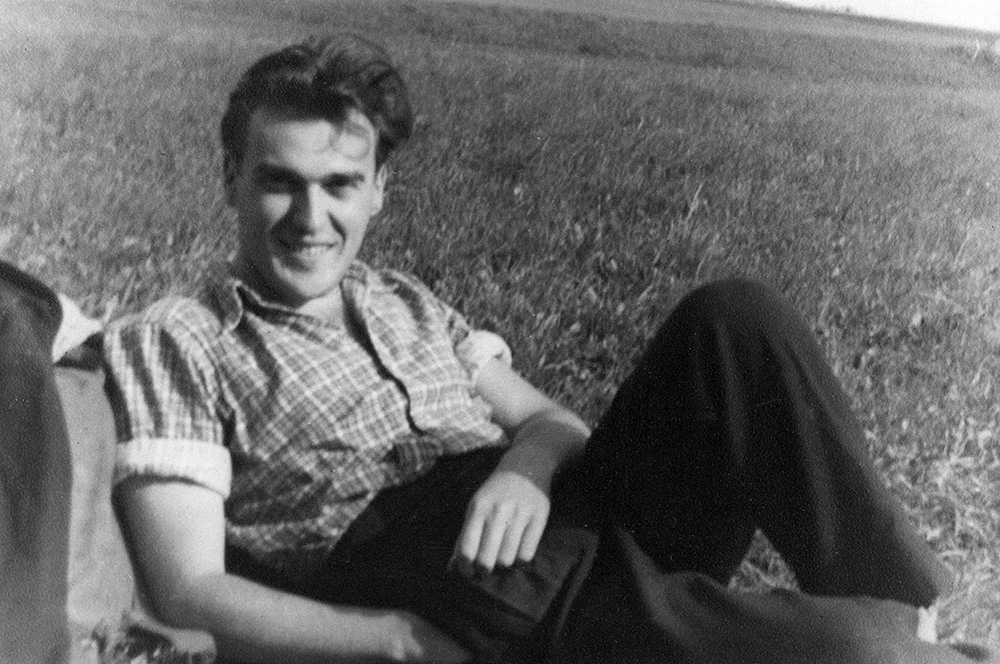
Gerhard Fritsch (1924—1969) began publishing poetry and literary criticism after his service in WWII. He also authored two novels; the first, Moos auf den Steinen (Moss on the Stones 1956), followed standard conventions of realism, while the second, Fasching (Carnival 1969), with its fierce indictment of Austrian complicity and its stylistic concentration, reflected the personal and artistic upheaval Fritsch passed through during his tragically short lifetime. Fritsch took his own life in 1969, just five days before his 45th birthday.

Parting in November

Don’t take the silence
out of the morning fog;
the train platform is
talking quite enough:
the poster for Venice in September,
the pungent soft brown-coal smoke
and the obtrusive heartache
of a withered vine
of wild grapes.


Abschied im November Nimm nicht das Schweigen aus dem Nebel des Morgens, der Bahnsteig redet genug: das Plakat vom September in Venedig, der scharfe Braunkohlenrauch und die aufdringliche Wehmut einer vertrockneten Ranke wilden Weins.
Posted in TRANSLATIONS | Tagged ,

Rattling the Forms

I wanted to dissolve my marriage, explode the limits,
seek comfort, oblivion, anything in caves,
on a whaling ship, in a hundred other places.

Shrewd reverie in my perilous head,
I struck out through the shambling waves:
I wanted to dissolve my marriage, explode the limits!

Beyond waterfalls and time lost and the first chastities to mar the shore,
defenceless men set me aflame,
on a whaling ship, in a hundred other places.

Not me at all, but my double, my look-alike;
not someone, but anyone in a sort of cloak and hood…
I wanted to dissolve my marriage, explode the limits.

How bare the narrative seems!
And nothing! And nothing and nothing and nothing…
on a whaling ship, in a hundred other places.

If you could only see me riding on and on,
babbling like a saint in the open fields!
I wanted to dissolve my marriage, explode the limits,
on a whaling ship, in a hundred other places.

Posted in 82: LAND | Tagged

Arraignment Song

The same show every time – that’s death
Flash boat, fast cars – it’s all going to end
Go cosy, slow, investigate
Dead ten years when the letter was mailed

Flash boats, fast cars – it’s all going to end
Assume a certain monkey wrench
Dead ten years when the letter was mailed
Nice clothes, expensive dental work

Assume a certain monkey wrench
Blood pooling poetically around the fingers
Nice clothes, expensive dental work
Tropical fish and some books on the subject

Blood pooling poetically around the fingers
Back where you started with the bitter pills
Tropical fish and some books on the subject
Psychos like to work together

Back where you started with the bitter pills
Everyone has solid alibis
Psychos like to work together
Stop on one thought, think it over and over

Everyone has solid alibis
So listen and record the names
Stop on one thought, think it over and over
Who faked a will, didn’t mourn the loss?

So listen and record the names
No one wants to sit with frailty
Who faked a will, didn’t mourn the loss?
Killers get jittery in spring

No one wants to sit with frailty
A lit cigarette at a respectful distance
Killers get jittery in spring
If the family find peace, disturb it

A lit cigarette at a respectful distance
Slim chance connects you to a name
If the family find peace, disturb it
Night’s your office, shadowing pays

Slim chance connects you to a name
Go cosy, slow, investigate
Night’s your office, shadowing pays
The same show every time – that’s death

Posted in 82: LAND | Tagged

Archiving the Present: Ivy Alvarez Interviews Conchitina Cruz


Image courtesy of Conchitina Cruz

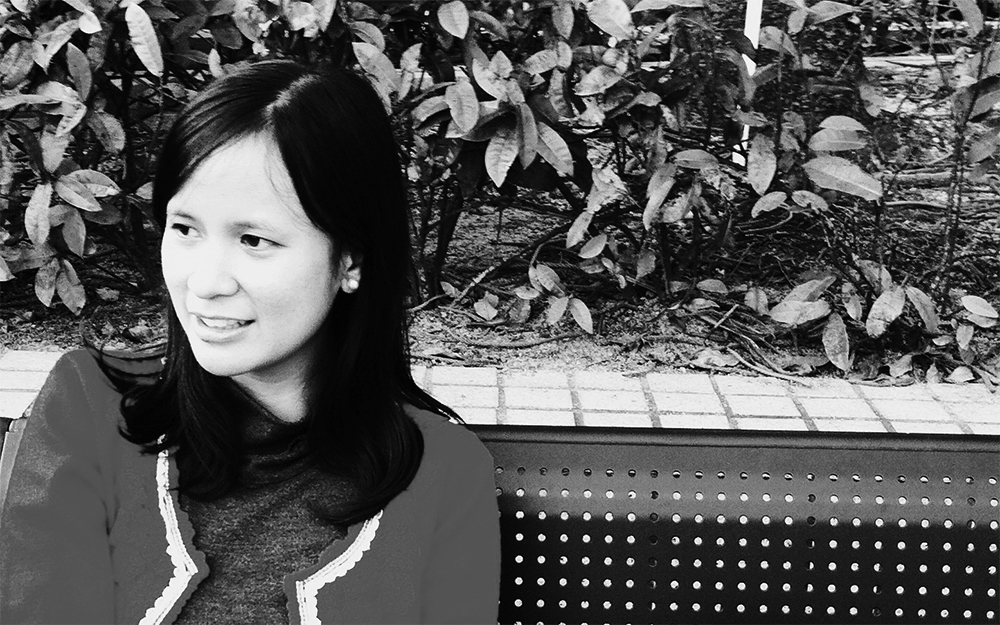
Conchitina Cruz teaches creative writing and comparative – literature at the University of the Philippines in Diliman. Her book, Dark Hours, won the 2006 National Book Award for Poetry. Cruz is also the winner of two Palanca Awards: one in 1996 for Second Skin, and another in 2001 for The Shortest Distance.

Demonstrating bodily athleticism and a steady, generative interrogation of the physical and liminal world, Cruz’s enumerative poetics moves smoothly between many forms, from spatially-oriented poetry, prose poetry and micro-fiction, to letters, lists and invocations, to forms that take their cue from reference texts. All the while invoking a language of the hyper-real, the mythic, dramatic, and the routine.

From November 2016 to April 2017, I corresponded with Cruz over email. Commensurate with an ongoing political emergency, and in the face of turmoil and bloodshed in the Philippines, this conversation is, out of necessity, open-ended.

Ivy Alvarez: How has your drive to ‘convert the perishable to the permanent,’ as you wrote in your statement introducing ‘Three poems’, manifested recently, compared to how it was when you published your work in ‘The Centre Cannot Hold: Six Contemporary Filipino Poets’? How has it evolved in the meantime? Have there been any reversals to this impulse, wherein you explore its opposite?

Conchitina Cruz: I find myself wincing at the phrase ‘convert the perishable to the permanent’, which strikes me as quite arrogant now that I’m seeing it in isolation, fished out from a brief statement I wrote a few years ago to describe my work. It seems so casually convinced of poetry’s capacity to enforce meaningfulness, or to transcend material realities. It isn’t something I would say now without wariness, I think.

I know the phrase is meant to gesture (clearly inadequately) toward my interest in the idea of the archive, or what it means to engage in archival work – which I suppose is another way of saying, I am interested in the work of committing to memory, in what goes ‘on the record,’ how and why it gets counted, how and why this one is memorialised and that one is not.

In my latest book, There Is No Emergency (of which the three poems published in Cordite are part), this archive is generated by a lyric self in the aftermath of personal catastrophe, who, while in this catatonic state, is haunted by larger catastrophes, both socio-historical and natural, which turn nursing private tragedies into a painfully indulgent endeavour.

This self’s tactic for survival is to collect ephemera – thus the many poems in the book that are running inventories, catalogues that begin and end, but don’t exactly have a beginning or end. Forged in the nexus of private and collective suffering, this archive of the mundane, to my mind, was a means for the ruins to become liveable – continuing access to the humdrum must mean that indeed, life goes on.

I tried to write poems that were decidedly unfinished, unpolished, monotonous even, or ordinary – qualities that I think tend to be excised from a piece of writing for it to become a poem. I also wanted to write with an acute awareness that there is always an outside to any archive – things both inevitably and intentionally forgotten, omitted, suppressed, discarded. An archive of the mundane, I thought, in explicitly staking no claim to relevance, would magnify its own partiality and invite contestation.

Of course the impossible that is at the heart of the project is ephemera [that] ceases to be such when collected (you could say that ephemera is what the archive displaces), and a poem, especially when published or ‘recorded’ becomes a particular iteration of a generalised desire to go beyond its current version. It achieves permanence, so to speak – which is what I said I set out to do, so I guess you could say that realising my intention was also my limitation.

Still, I feel uncomfortable ascribing permanence to poetry. Sure, this is true, and we need only to turn to the poetry we love from places far and centuries past for proof. I think, though, that too much faith in poetry’s transcendence can also be a source of complacency for living, breathing, working poets – as if writing poetry were in itself a sufficient form of action.

‘Historical revisionism’ is a widely circulating term in the Philippines these days because our president is (among many other things) a staunch Marcos loyalist. Thanks to his efforts, and with the aid of the Supreme Court, the long-dead dictator and plunderer Marcos, whose carcass has been preserved for close to three decades by his family, was recently buried in our Cemetery of Heroes, a move that has caused widespread outrage among Filipinos.

Posted in INTERVIEWS | Tagged , ,

‘The concept of risk is intensely personal’: Jonno Révanche Interviews Hera Lindsay Bird


Image courtesy of Rachel Brandon

Hate

Once………………I tried to give hate up
But I was born to feel a great pettiness
To lie face-down in my catholic schoolgirl outfit
and pound the cobblestones of the Royal Albert hall

New Zealand writer Hera Lindsay Bird has been described as many things in recent times; internet poet, a crisp new voice in a constantly shifting medium, the sole cause of poetry’s demise, a conspirator and revolutionary, historical necromancer, albatross, a stern jewellery thief. Considering the ephemeral history of the genre of ‘internet comments’, none of those descriptions are singularly defining. What matters is that legions of readers who might not otherwise have engaged with poetry are now responding enthusiastically to her work.

Bird has an MA in poetry from Victoria University – she is based in Wellington – and her debut poetry collection exploded online in the viral way that poems are not known to do. Additionally, her work has received attention from a litany of publications that often underestimate the poetic form, and recently lead to her appearance at the Sydney Writers Festival and Emerging Writers’ Festival. Her work intermingles the frayed literary conventions of the past with a gripping, yet fittingly conversational tone, striking an equilibrium between two contemporary poles of feeling. Bird writes with gravity about attachment and sentimentality as much as she does the exquisiteness of decaying castles and ’90s celebrities, making keen and often alarming observations about the peculiarities of mundane life. The enthusiasm she shows for the modern simile – as in her poem ‘the ex-girlfriends are back’ – could conceivably function as a self-jab as much as it could be a light-hearted take-down of fourth-wave / academic feminism or lazy pseudo-intellectualism. For those who eschew camp and kitsch out of fear that they have lost their place in poetry, Bird is writing to convince them otherwise. The collection Hera Lindsay Bird spouts off in the face of morbidity and shame while sinking deeply into its gratifying embrace like a favourite old armchair, and with nary a trace of fear or apprehension.

Having spent years experimenting against restrictive conventions of poetic structure, Bird’s debut collection demonstrates how she’s outlasted self-doubt and created a collection of snappily clever, moving, profoundly validating and balanced poems. Despite all this, maybe it’s just liberating to read work by a poet who is clearly cackling, internally, while writing their work, thoroughly enjoying the process no matter the result.

Jonno Revanche: One of the things that stands out from your poetry collection is not just how funny it is, but it’s a very precise kind of humour, one that allows for introspection, sentimentality and emotional involvement. For example, in ‘mirror traps’ you declare it’s ‘love that plummets you down the elevator shaft.’ Sort of blunt, but still honest and witty in its own way. Do you find it hard to accommodate all these things? If so, do you feel like it took a lot of practice to get there?

Hera Lindsey Bird: This is a hard question to answer because it’s so second nature to me now, and I don’t mean to sound like I’m dashing off poems while laughing in a stolen Cadillac, but that particular hybrid of humour with a base of emotional honesty or engagement is almost all I care about in writing these days. There was a period when I first started, and I was writing a lot of controlled, aesthetically rigid poems but I quickly became bored of that, and when I get bored I get reckless, and when I get reckless I send a lot of joke poems about oral sex to my masters supervisor. But most of the work was admitting to myself what kind of writing I truly had the energy and enthusiasm for, and giving myself permission to write that way. My favourite writers in every genre always straddle the line between comedy and emotional engagement, George Saunders, Chelsey Minnis, Mark Leidner, Frank O’Hara, Lorrie Moore. It was just a matter of admitting that to myself, and then hot-wiring Cadillacs became a lot easier. I never write well when I’m sombre. Even my greatest personal tragedies I like to turn into a joke, which might be a personal failing but I don’t think has been a poetic one at least.

JR: A lot of the imagery in your book recalls medieval symbolism, but it’s also fringed with elements that reference pop culture, whether that be from now or the ’90s and noughties. Is this blending together of the old and the new an automatic thing, a product of the culture where you’ve grown up / living, or are you purposefully trying to tie these together?

HLB: I am totally obsessed with medieval imagery. Historical re-enactors are one of my great obsessions in life, and I take any opportunity I can to casually mention turrets and get away with it. I like my historical content to be camp and poorly realised, like a seafood buffet served in a Medieval themed restaurant, which is not to say I don’t have a genuine love for real, un-franchised history without a current liquor license but I love the way it’s been so poorly and enthusiastically translated into a contemporary context. My entire room is decorated with pictures of the Rosetta Stone and Stonehenge and Roman columns and the wonders of the ancient world, but I’m also a true contemporary dirtbag, and I love Paris Hilton and figure skating rivalries and Liza Minelli made-for-TV movies. Basically, what I am trying to say is all of the imagery and references in my poetry are things that I deeply love, and want to include regardless of how thematically relevant they are to the poem.

JR: In a recent talk you mention Lauren Gould and how her influence helped you to understand moving outside of poetry’s conventions. Have you had any other similar experiences with contemporary poetry in the last five years that moved you in the direction you’re travelling now – whether you were making work in opposition to something or whether you were affirmed by the voice of other poets?

HLB: I try not to make art in opposition to anyone else, because I think, for me at least, it makes my work reactionary and didactic, and being didactic doesn’t produce good poetry. I think there is certainly a place for a good literary eye rolling, and there are a few in my book, but I’d always rather work towards something I was excited by. If you define yourself too much by what you oppose, than what are you left with when the old institutions crumble, as they inevitably do? I don’t want to spend too much of my writing life screaming at clouds, unless they’re naughty clouds and they deserve it. Besides, my favourite writers were never reactionaries, or when they were, they were reactionaries on ideological leave, like when the Surrealists got a bit lax with their manifesto and started writing love poems. The way I have always learned to write was to imitate the writers that I loved, and there have been some new additions to my personal reading list, but the direction I’m travelling in is still the same. I have recently discovered Crispin Best and Kimmy Walters and Max Ritvo and Richard Siken, all of whom have pushed me to work harder and risk more.

Posted in INTERVIEWS | Tagged ,

signs of impression

design

I see iron, wrapped, to posts 

windows-snuggle-triangles, a hose,

draped, on concrete-lion’s-prowl

the verandah … keeps bricks-from-climbing grass 

this asymmetry keeps its rhythm


main house horse way servants’ quarter cemented-lion-centre

and that church over the road? isn’t far away / Bendigo designs / Irish eyes / Big White Lies you’ve been laying designs / two sides of the creek ever since / this story fell for possession and the architect scribbled “city” far across this gangly colour line

the lion? ruled from the roof so it’s more than red - white - brick - thick foundation / brick walls brick Jubilee / Villa


1:3 panels 1:2 windows 1:1 home
Posted in 82: LAND | Tagged

Trompe l’oeil

Posted in 82: LAND | Tagged

Upon a Shot Star

I wish they wouldn’t bolt like that:
the wallabies that also take tenuous
place on the block. But soon as I’m out
and wandering wide of the shack’s cleared margin, crackling
twigs and dry leaves only blind feet would,
I’ll shock the solar doze of one,
whose mares I spark and set alight
to firetailed crashing flight through bracken –
rarely more than glimpses of rusty grey –
for anything else at breakneck,
anywhere else but me.
(Me some scorched
remainder, unquivering like the scrub,
left to worry the hours of water, rue
the kilowatts of grass to reach takeoff.)

For even after five years down here –
carefulling steps, averting eyes and clearly
slipping through myriad human cracks –
I still look, walk, smell like a man,
like one of them. What’s to say I won’t
likewise blind with bright lights,
start brandishing gun and dog, reduce
this bush-block I rent to another
sheepless paddock stripped of cover?
We can probably tell I won’t. But try
telling them that: wishing words up
and over a species barrier.

Posted in 82: LAND | Tagged

Final Hours, Sputnik 2

You travelled in a bullet until the heat
spiked your blood and panic curdled lungs.
Solid ground slipped into ocean, no waves
only millions of pins and a small rubber ball
suspended in the distance. You hurled
yourself toward the familiar shape, veins boiling.

Six hours of rattling teeth on metal, a great bear
roaring through the dimness.
It was in this new darkness that you collapsed,
a miniature sun: no longer dog but red giant.
Contrite, they printed your face on postage stamps
to orbit the world once more, forgetting
it was the earth you loved.

Posted in 82: LAND | Tagged

The Old Fort at Grennan

Miles, and nothing alive
though an oystercatcher
calls somewhere, sadly.
Dykes twist to the horizon.
Where are the men who built them?
Gone to Nova Scotia
with their pipes and neckerchiefs.
On either side of the walls,
new wire restrains livestock
that’s not there either,
to show that someone, somewhere,
owns this land, has a grant to prove it.
I climb, emerge onto the crest,
and a hare bounds off into cloud.
On top, with its boulders and sheep skulls,
its faint scars of ditch,
with a hollow wind through the thorns,
Grennan nails empty land to empty sky.

Posted in 82: LAND | Tagged

Karma Bin

Our fifth for dinner sits out in the dirt,
holds its voracious mouth up to receive
within the keeping of its dalek skirt
our skin and core and stone and rind and leaf
and laughter and the pip: all table traffic,
lawn and garden clippings, daily news.
There is vast acreage within this plastic
hem where dalek innards enjoy tardis views,
cook slow and, pitchfork-turned, digest
to next to nothing, crumbling loam that’s dug
back into beds. Descendants of the dead
arise and our new growth is shadow tagged
and wrestled by tomato vines, the spawn
of stuff should be done with— still reborn.

Posted in 82: LAND | Tagged

slippage (un)fixed

Louis Buvelot is painting. It’s a quarter past
midday and you wouldn’t know out here unless
you looked at the sun but Louis doesn’t look
at the sun because he’s squinting at the trees.
A mammoth gust of wind blows a twig onto the
canvas. It lodges itself in a glob of oil paint. Louis
picks out the twig with his thumb and forefinger.
It messes up a branch of his painted eucalypt.
There’s something else stuck to the grass in the
foreground. It looks like a tooth; human or
animal, Louis doesn’t know. He picks it out but
once he’s done that he sees another appear.
And another. Louis goes on picking out teeth
until finally he pulls a whole skull out of his
canvas. He tosses it away and puts the finishing
touches on the landscape. Calls it The Clearing.

Posted in 82: LAND | Tagged

kambarang

the trend is warming
split seasons into six
from white noise &
thought, ungrip. static
hiss

as heat waves out
back from middle
of the track. the
degrees will rise &
climb

swooping is occasion
: monochromatic arcs
dive & loop & lark. a
squawking suggests
eggs

have opened, cracked
like sweat wets every
thing. hibernation done
becomes reptilian in its
moving

a sea breeze is soothing
but rare : here, we call
a fremantle doctor into
the air. the land begins
dare

of pushing bush orchids
into stare of wondrous
proportions, colouring
with pollen & bees for
adornment

Posted in 82: LAND | Tagged

Sedimentary

Relaxed, way out to sea,
way out of my depth,
unable to touch bottom,
reef, bullkelp, urchin spine,
I tread water, monitor backwash
and rip, listen for dolphin jump,
osprey, gulls in pairs,
catch Southern Ocean surge,
with neither compass nor chart,
semaphore nor morse code
to count the swill of atmosphere,
heart pump, the pressure
of fathom on lungs that
shudder, quake in hope,
remand slap and rush
against wavespray, stringybark,
windowframe, lock.

Deep under dunedrift,
shoulders, elbows subluxed,
askew, wrists disjunctured,
fingernails long gone,
my company, gooseneck
barnacles, cuttlebones, great
crested tern inspecting
my eyes for death, the meanwhile,
however, the nevertheless,
when only a newspaper page,
postcard shred, a fisherman’s
glass float, fray, hook,
shout, sunblack and blistered,
with nothing more
to be heard under the load
daytide squall parries far
across displaced wrack.

One million years,
ten, five hundred million,
stratigraphy dawning
over definition, site,
the slow flood of earth,
while I reconsider flightless
birds, crocodiles, sandworms,
evaluate flint, jasper, quartz
through carbon cycles,
nitrogen, the complex sugars
that once caramelled
your lips, pursed around
howl and whistle and roar,
sunk almost past lines’ end
until gales abate, seek
limbered skeletons to release,
expose unyielding bedrock.

Posted in 82: LAND | Tagged

Unpicking a Bird

To follow the wing of a herring gull
is a meditation on balance

an invisible string links lead weight to scale
feather to foot to my eye

the gull hops on one leg leans to the right
extends a wing but doesn’t fly

beak humbled on breast on clawed toe
on sand and rock on my left forefinger

fishing hooks catch on everything

Wind and waves bring onto the fringing reef
every tangled and tethered

strangled thing dead-eyed belly up
the beach is a white-washed tomb

beautiful on the outside on the inside
full of bones of the dead and the hobbled

bird throat narrowed by nylon a fisherman’s
careless catch

falls limp on the grass like an old toy
fashioned from a white feather boa

and I am the puppeteer unpack every wire
every string trying to make him dance.

Posted in 82: LAND | Tagged

Untitled Poem #2

*
You button this sleeve the way smoke
is trained –a sudden shrug
and the night moves under you

can’t see you’re still on your feet
and though they no longer fit
the ground is already a crater

where her shadow would have been
holding on from behind
as a clear, moonlit dress

and the last thing you saw left open
as the slow, climbing turn
that’s still not over.

Posted in 82: LAND | Tagged

Intruder

Ovalish, out-of-shape, clownish shadows halt
over trees and spaces unfamiliar to intrusion
on ground a dry crust resisted the clanking
grandeur of city, behind anagogic walls
crumpled leaves waited orgasmic crush, but
the intruder was meticulous, this time of the year
we used to edit our thoughts ,every time clouds came
stories of mangoes oozed, tongues endured
before a flood of taste brought bold gestures of love
in Lahore’s crouching cartography some open lands
housed shadows generously, roofs with crooked wires
offered surreal evictions, we promised to counter
arrogance in this transition, so feudal in intent
so irreverent that whipped us to take out words
from rusty suitcases.

Posted in 82: LAND | Tagged

Humpback (Pacific)

I make my boys stand in the wind
and look at the ocean
unhinging itself over and over.

I tell them that among the waves craving
themselves there is a mass of blue permanence,
that below the surface tension of water

there are escapees from our squinting.
I tell them to wait for their bodies to break
the susurrating gossip of the sea.

Then, punching vapour over the rail
of the wavering horizon
filament fists scatter in the offshore breeze.

We see their slick nodes heading south,
sounding sinus clicks,
lobtailing their flukes like petals.

I point to the whales clapping the drum of the world.
But all my children can say is that they’re cold
and ask when they can go inside.

Posted in 82: LAND | Tagged