Stephen Lawrence Reviews Chris Mansell

Letters by Chris Mansell
Kardoorair Press, 2009

Poet Chris Mansell has been active in publishing and editing since the 1970s. In Sydney, she co-edited and founded magazines of poetry and prose; and she later helped inaugurate Five Islands Press, which continues to produce successful and award-winning volumes of Australian poetry. She has lectured in creative writing, mentors poets for the Australian Society of Authors, and has published over a dozen volumes of her own poetry. Letters is her sixth full-length print collection.

Continue reading

Posted in BOOK REVIEWS | Tagged

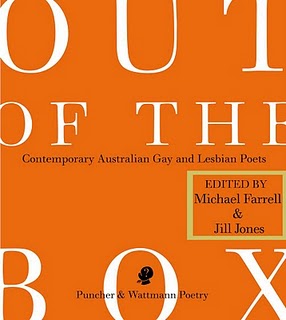
Peter Mitchell Reviews Out of the Box: Contemporary Australian Gay and Lesbian Poets

Out of the Box: Contemporary Australian Gay and Lesbian Poets
Michael Farrell and Jill Jones, eds.
Puncher and Wattmann, 2009

Out of the Box: Contemporary Australian Gay and Lesbian Poets is an elegantly-published product. The shape of the book looks like a miniature hatbox, the title of the collection leading a reader to anticipate exciting and colourful content. This ground-breaking anthology is a reasonable gathering of poets, currently writing under the descriptors of gay and lesbian in Australia.

Continue reading

Posted in BOOK REVIEWS | Tagged , ,

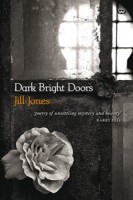
Bev Braune Reviews Jill Jones

Dark Bright Doors by Jill Jones
Wakefield Press, 2010

An intriguing haphazardness is the first thing that strikes you about the language of Jill Jones’s new book. Dark Bright Doors is at once familiar and strange. The tone is highly personal with a slightly highfalutin touch to what seems a study in existentialism. Through a surprising vagueness, Jones encourages us to read her book very deeply. Furthermore, she is asking us to reflect on the reading as we proceed from line to line of each poem rather than from poem to poem. And, yet, as those lines clearly strive to be contemporary and colloquial, the book discusses the loss of individual space in the expanse of information technology and the ensuing isolation and over-exposure in a world where humans are globalised, where there is no place for secrets.

Continue reading

Posted in BOOK REVIEWS | Tagged ,

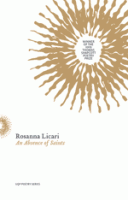
Libby Hart Reviews Rosanna Licari

An Absence of Saints by Rosanna Licari
University of Queensland Press, 2010

An Absence of Saints is one of those poetry collections you pick up and immediately sense all the effort and dedication that has gone into making it, the reader easily recognising those long hours that have since stretched into years where the poet shaped and reshaped poems to then be brought thoughtfully together into a manuscript of common themes. So, it is little wonder then that An Absence of Saints was winner of the 2009 Arts Queensland Thomas Shapcott Poetry Prize.

Continue reading

Posted in BOOK REVIEWS | Tagged ,

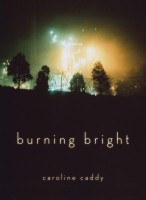
Rosalind McFarlane Reviews Caroline Caddy

Burning Bright by Caroline Caddy
Fremantle Press, 2010

A well known Western Australian writer, Caroline Caddy frequently explores culture as both familiar and unknown in her work. The most common of these explorations concerns the interaction between Chinese and Australian cultures. Her latest collection Burning Bright continues this theme, whilst also including poems that explore the south of Western Australia. The relationship between Australian and Chinese landscapes is vital in this work as the urban, rural and natural landscapes of the two are contrasted, compared and explored in depth. Caddy focuses on similarities that are often overlooked, while also documenting the varied and complex relationship that can develop between different countries and their landscapes.

Continue reading

Posted in BOOK REVIEWS | Tagged

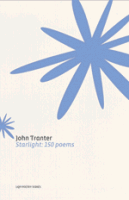
Corey Wakeling Reviews John Tranter

Starlight: 150 Poems by John Tranter
University of Queensland Press, 2010

John Tranter has been publishing poetry for forty years, and his latest book is published in tandem with a critical companion to his oeuvre, The Salt Companion to John Tranter. As Rod Mengham writes in the companion’s preface, Tranter is “widely regarded by critics as the most important member of the so-called ‘generation of ‘68’”. This generation of poets was in fact named as such by Tranter himself. For some time, his work and its devout experimentalism has been seen as a palliative to the pastoral traditions typified by poets like Les Murray. While such a distinction may seem facile, Tranter is rightly seen as the most internationally cross-germinating of the big names of Australian poetry. And as such, Starlight: 150 Poems is his most radical work so far.

Continue reading

Posted in BOOK REVIEWS | Tagged ,

Matt Hetherington Reviews David Brooks

The Balcony by David Brooks
University of Queensland Press, 2008

In a review originally published in Heat #6, David Brooks praised Peter Boyle’s The Blue Cloud of Crying as being influenced by the tradition of Cante Jondo or deep song, and as being more accessible, recognisable, and emotionally engaged than most Australian poetry. He then went on to observe: “There has been something of a tradition of emotional reserve in Australian poetry. There’s also been something of a tradition of complaining that no one reads poetry very much in this country, that it is no longer very close to the national heart. Not many have seemed willing to make the obvious connection.”Over a decade after this suggestion, we can observe Brooks’ own attempt to rectify the situation through a similar type of affective poetry.

Continue reading

Posted in BOOK REVIEWS | Tagged ,

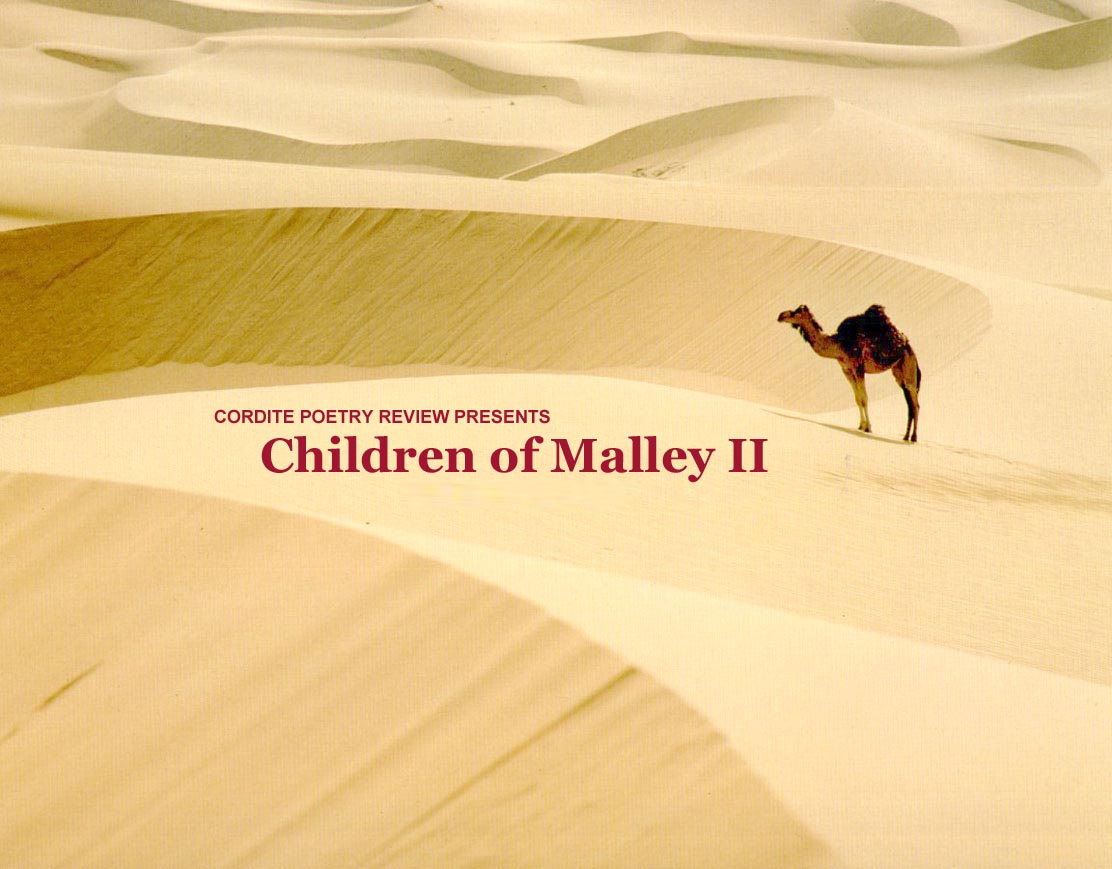
Children of Malley 2: Vogel’s Gang


History has often proven kind to the avant-garde. You only have to struggle for a glimpse of some waterlillies at a blockbuster Monet show to see how easily the shock of the new becomes the comfort of the familiar. Or take Ern Malley, an unheralded insurance salesman labouring away lonely nights in a Melbourne library, dying tragically young in his sister’s place in suburban Sydney. None of his poems were published during his life and had not it been for the industry of his sister Ethel it is likely that they would have remained unpublished. Now, from our 21st century perch, it seems fitting to ask, how many of Ern’s more conventional contemporaries can you name?

Of course Ern’s rich back story was cooked up on a Saturday afternoon during World War II by two bored poets idling away the war on the St Kilda Road frontline. The two poets, James McAuley and Harold Stewart, wanted to expose the chicanery and charlatanry of modernist poetry by tricking young Adelaide tyro Max Harris into publishing some anti-poems in his journal Angry Penguins.

Stewart and McAuley composed poems, purporting to form the manuscript The Darkening Ecliptic, they believed to be slapshod. Peppered with quotations plucked randomly from books and reports ready-to-hand, the poems were sweetened with phrases as purple as Ribena. As the poets themselves said:

“Our rules of composition were not difficult:


1. There must be no coherent theme…


2. No care was taken with verse technique…


3. In style, the poems were to imitate, not Mr. Harris in particular, but the whole literary fashion as we knew it from the works of Dylan Thomas, Henry Treece and others …”

Upon completion the poems were packaged up with an unlikely but romantic back story complete with an early unheralded death and mailed off to an unsuspecting Harris. The ensuring media storm pushed poetry onto the front pages with an efficiency that would have made the Chk Chk Boom Girl proud.

The furore went global though most of the chatter centred around the tiresome “is it/is it not” poetry debate that continues to simmer to this day. (In fact, if you haven’t read Jaya Savige’s piece from the June edition of the Australian Literary Review, go there now!). But Malley’s poetics were hardly revolutionary, certainly not alongside the work of modernist luminaries like Pound, Joyce or Eliot. As one Londoner R. Hamilton pointed out in a piece reprinted in the Sydney tabloid the Sunday Sun: “The Ern Malley poems must be classed with the work of other surrealist poets and judged as we should judge any work from that school. These poets have done no more than continue early Pastiche experiments of Andre [sic] Breton and others, who made poems from newspaper cuttings, &c.”

These days, with all the postmodern water under the bridge, the poetry seems almost conservative. I mean who hasn’t spiced up an ode with a line stolen from a memo to the Adjutant-General about the necessity of establishing entomological services for malarial control? If there is a criticism it would be that the structure of some of the poems is a little loose at times and seriously has anyone else ever described dark as “umbelliferous”? This aside, the poems wouldn’t be too far out of place in Children of Malley 2.

The major difference between our Malleys and the ur-Malley is that ours were created in the spirit of fun. On the other hand there is something incredibly mean-spirited about the way McAuley and Stewart pursued the very public humiliation of Harris. Of course they probably never predicted the extent of the furore, however, the whole hoax seems like a lot of effort just to voice your disapproval of an alternative poetics. Everywhere there are poems written, I read poems I think are bogus. But I don’t devote the time or the energy to try and pull a swifty on some editor in the hope of delivering aesthetic comeuppance. I don’t have the time. Who does?

The procreation that preceded our Malleys was done with the wry smirk of larrikinism that animates so much of the best OzPo. This is the second time poets have risen to the challenge and given voice to the progeny of Malley and it was great to see poets put on the fantastically elaborate headdresses and masks of their Malleys. And the Editor has been a willing participant in the prank. It’s art for laughs sake. In fact, I hope have been hoaxed and that somewhere in this issue is a poem based on a paper on the reproductive habits of West African lemurs or a mash up of Hallmark sympathy cards.

By checking our nine-to-five bios at the door and assuming our various Malleys we can embrace everything that’s fun about poetry. We can take risks, try things on, be a little bit irreverent. Sure, at times poetry can be serious business but sometimes we’re just kicking a bunch of words around the park on a Saturday afternoon. So unfurl the picnic rug, unpack the Esky, slice the cucumbers and strawberries and settle in for a summer Malley-athon.

Which is where we hand it over to our good readers. It’s your turn to play Detective Vogelsang and figure out why people go into parks at night. Is Ern Malvern Star Nick Whittock, ∏ O or someone else entirely? Is Bennett Malley one of the recipients of the BR Whiting Fellowship or just a recent visitor to Italy? How easy it is to identify the poets? How difficult? And when you are reading the poems how important is the identity of the poet?

Friends, this is where the fun starts.

Let the unveiling begin.

Posted in ESSAYS | Tagged , ,

The Immortal Malley and the End of Modernity

‘Remember, this is the country of the duck-billed platypus. When you are cut off from the world, things are bound to develop in interesting ways.’

With these words Peter Carey’s character in My Life as a Fake identifies the fundamental factor behind the bizarre aftermath of a literary hoax, namely: particularity of setting.

Just as Bob McCorkle, fraudulent creation of Christopher Chubb, comes to life in Carey’s novel to wreak havoc and anguish upon his creator, so too did Ern Malley step out of the imagination of James McAuley and Harold Stewart into Australia of the 1940s, to forge his own place as an almost-person in the history of Australian literature.

The Ern Malley hoax provoked a debate that was not by any means unique to Australia. Indeed, the Ern Malley affair is simply an antipodean manifestation of a long-standing discussion in Western culture about the best way for literature and art to respond to the impact of modernity on society. Ern came to life because he was created at a time and in a place which predisposed the arguments surrounding his poetry to be of utmost importance.

There has been considerable rumination about the original intention of McAuley and Stewart when they sat down in October 1943 in the Victoria Barracks to conceive Ethel Malley, her brother Ern and to compose Ern’s ‘modernist’ poetry using such disparate inspiration as could be gleaned from sources such as the works of Shakespeare, a rhyming dictionary and a report on mosquito breeding grounds.

What seems to have started as a lighthearted (dare we say larrikin?) ploy to ruffle the feathers of Max Harris, editor of the literary journal Angry Penguins, had become, by the time the perpetrators were revealed to the press, a ‘serious literary experiment’ designed to demonstrate the perceived degradation of meaning that was taking place in modern poetry. Whatever the intended tone of the hoax, and whether or not they ever imagined that Max Harris would actually fall for their joke and publish the poems, the creators of Ern Malley could never have dreamed that a half-century later their progeny’s fraudulent poems would be found in multiple anthologies of Australian verse, and that Ern would have spawned an entire mythology which has, as Andrew Lynch has argued, swamped most of the discussion on Australian poetry of the 1940s.

The Ern Malley poems, created to make an emphatic literary point about the parlous state of the nation’s literary culture have come, paradoxically, to define an era, to be the archetype of a poetic which we wish had existed.

Ern and his poetry were, of course, the inspiration for Carey’s 2003 novel, quoted above. Carey uses the Ern Malley affair as a springboard to launch his parallel Bob McCorkle hoax, perpetrated by Christopher Chubb (who shares certain distinguishing features with James McAuley). The initial stages of Carey’s McCorkle hoax mirror the Malley hoax; he uses the Ern poems and the correspondence between Ern’s sister Ethel and Max Harris verbatim.

The two stories diverge at the point where Chubb’s fictitious creation, Bob McCorkle, actually comes to life in the novel as a flesh-and-blood human being who causes the death of his editor, kidnaps his creator’s infant daughter and proceeds to Malaysia to generally (and posthumously) cause trauma to those whose literary paths he crosses. Undoubtedly the themes of Carey’s novel have been thoroughly examined elsewhere, but suffice it to say here that by extending the idea of Ern Malley into a narrative in which a made-up poet literally comes to life, Carey explores the idea and the extent to which Ern really was brought to life, and the fact that his poetry really did matter.

The incarnation and immortality of Ern Malley are due in part to the accidental (?) if inconsistent genius of the poems themselves and to the ingenious characterisation of Ethel and Ern Malley through Stewart and McAuley’s correspondence with Max Harris.

Indeed, the literary legitimacy of the poems has been the topic of plenty of commentary. However, as Paul Kane has argued, Ern Malley ‘is no longer an occasion for an aesthetical debate, but provokes a historical one.’

The climatic conditions that coaxed and nourished Ern Malley into life in 1940s Australia involved a conflict about modernity, modernism and their role in Australian culture that was arguably the most important element in making the affair a historical event that continues to resonate today.

To look back to the cultural climate of the Ern Malley hoax, the literary world of 1940s Australia, is to sense a sort of atmosphere of desperation — a desperate scramble to establish an Australian literary and artistic culture.

Australia at the time of the hoax was emerging from what has been labelled a ‘cultural quarantine’: a mood of intense isolationism and distrust of outside cultural influences that had presided over the interwar period.[ref]See John F. Williams, The Quarantined Culture: Australian Reactions to Modernism 1913-1939, Cambridge, New York and Melbourne, Cambridge University Press, 1995.[/ref] The country during the 1930s had been subject to a ridiculously stringent censorship which saw the works of authors from Balzac to Hemingway to Joyce being officially outlawed. The 1940s saw a rise of new ideas, and new conflicts, about how an Australian literary culture should best be forged.

One attempt to establish a poetic that was uniquely Australian followed the spirit of the cultural quarantine that idealised the bush and agrarian culture. This was the Jindyworobak movement, founded by Rex Ingamells with the goal of freeing Australian art from foreign, Old World influences and making use of Australia’s ‘primaevalism’, its indigenous culture, and its unique flora, fauna and landscapes.

The movement saw its enemies in those who were disdainful of features which were distinctive to Australia. On the other side of the fence were a growing number of literary magazines, often left-aligned politically and more open to cosmopolitan influences and general experimentation. One such magazine was Max Harris’ Angry Penguins.

Harris was frustrated by the isolation of Australia, its lack of exposure to the literary and art world of Europe, and the nation’s insistent and tedious recourse to ‘the bush’ as a solution to self-definition. Harris was an advocate of modernism, a literary and artistic movement which had emerged in Europe somewhere in the mid-nineteenth century in response to a world that was rapidly and bewilderingly embracing modernity, and which promised, in his eyes, to help Australian culture transcend its leaden parochialism.

It was into this setting that McAuley and Stewart dropped Ern Malley.

Posted in ESSAYS | Tagged , , , , ,

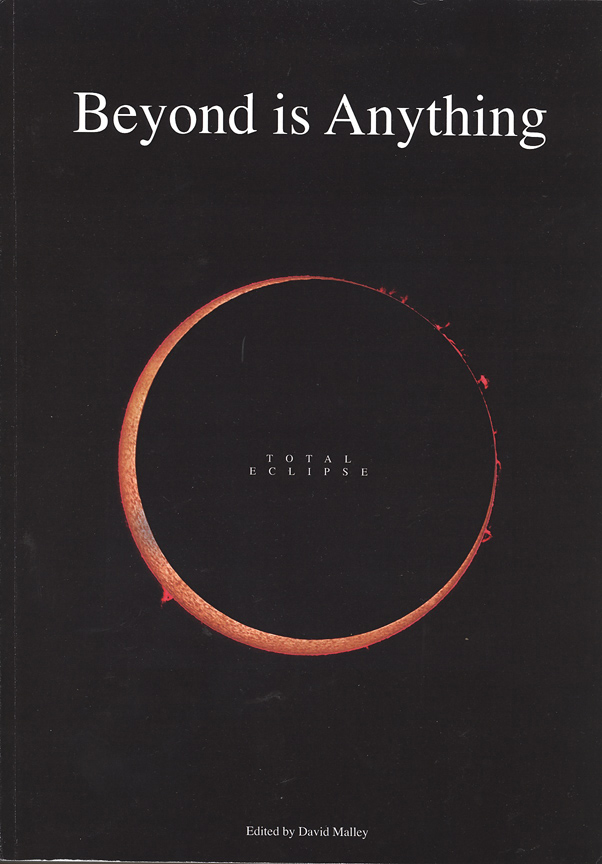
Recasting the Mould: ‘Beyond is Anything’

Upon hearing of our Children of Malley II edition, one of our readers sent in an unexpected surprise. Lurking in the wings was a Malley encounter we never expected: we found that the hoax lives on.

The story was related to us like this:

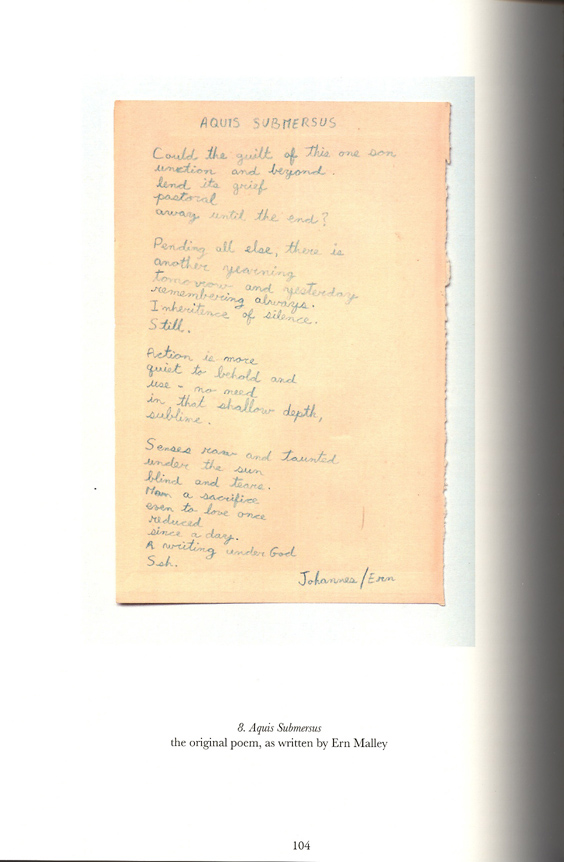
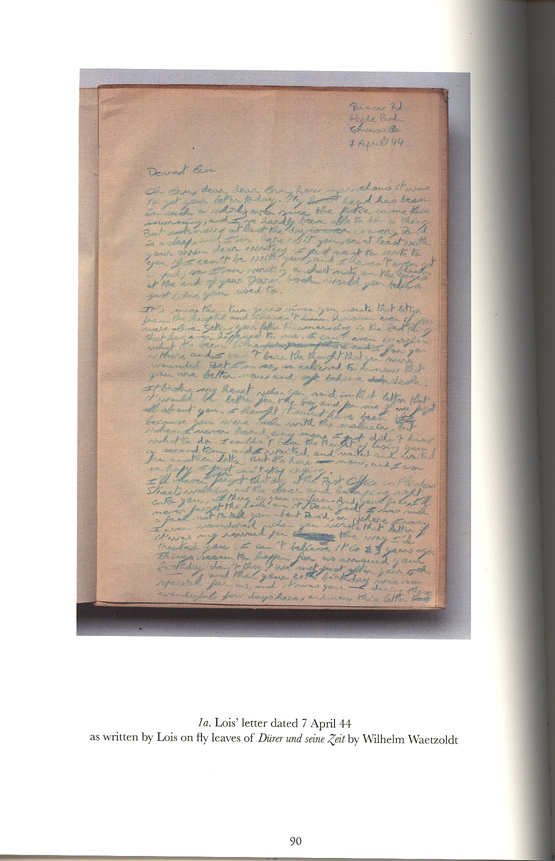
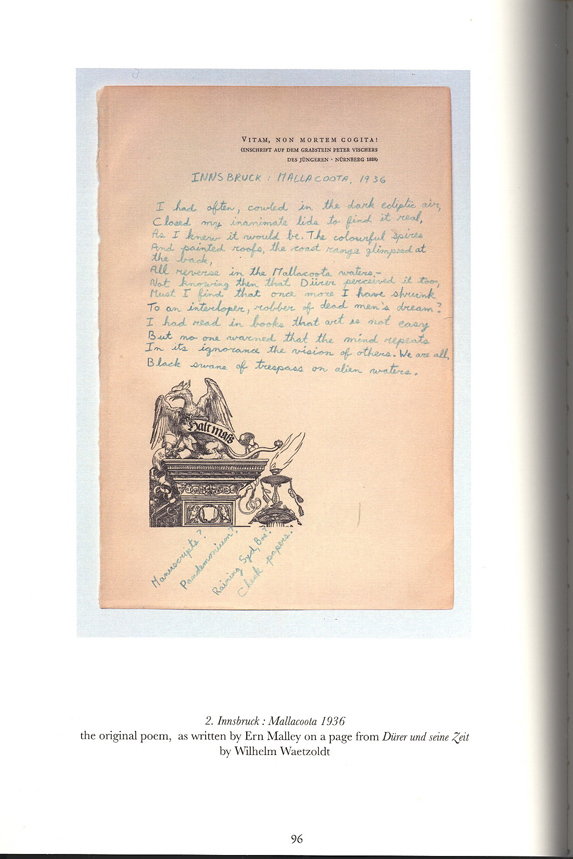
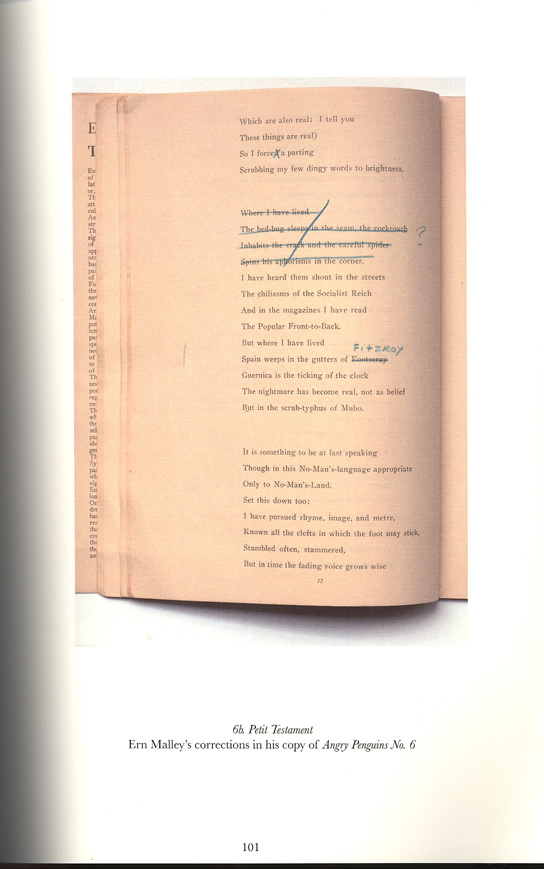
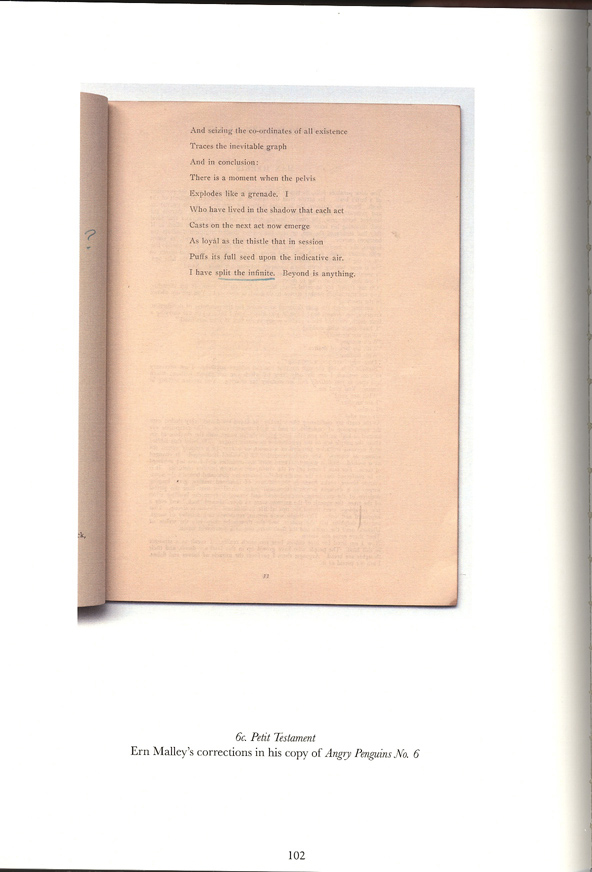
Earlier this year I received a package in the mail with a book Beyond is Anything edited by a “David Malley” with a letter explaining that David Malley is not a real person. The story tells of a “real” Ern Malley, although Malley was not his real surname, and that he and a “real” Lois had a son David who almost drowned during the war leading to Ern writing a poem Aquis Submersus. A copy of the poem in Ern’s hand appears in the book that mysteriously arrived. It says that Ern grew up with McAuley and that the poems published in Angry Penguins were actually written by Ern, who left them with Lois during the war asking her to give them to McAuley to get published. They were originally called Total Eclipse and the hoaxers changed this to Darkening Ecliptic as well as making a few other changes…

And it seems we were not alone: Martin Edmond has written about his frighteningly similar situation. The book lists a number of other recipients such as John Tranter and Philip Mead.

But not to worry if you don’t know anyone with their own copy – below, we’ve reproduced a few of the pages from the book to spark off your own investigations. In case you don’t believe us, check out the NLA catalogue entry for Beyond is Anything.

If this confirms anything it’s that The truth is anything. Beyond that, one can only imagine.

Posted in ESSAYS | Tagged ,

Ern Malley and the Art of Life

During a panel at the 2010 Salt on the Tongue poetry festival in Goolwa, SA, one audience member slammed performance poetry as being ‘more about the poet than the poetry’. Their intention was to damn performance poetry as an inferior genre – the under-educated, over-celebrated, buck-toothed cousin of real literature. Inadvertently, though, the comment hit upon a much bigger issue than that same tired line in the sand. As a sometimes performance poet sitting just a few rows back, I was not so much insulted as amused by the attack. Yes, I thought to myself, there’s a grain of truth in that – perhaps not more, but often as much – but how is page poetry any different?

Take Ern Malley. When James McAuley and Harold Stewart cooked him up, they gave him a bio befitting the archetypical tragic poet: dead-end jobs, a failed relationship, tragic illness and death at the sweetly Keatsian age of twenty-five, never recognised in his own lifetime, his work kept secret, a la Emily Dickinson, from even his family until after his death …

Max Harris later mused:

I was offered not only the poems of this mythical Ern Malley, but also his life, his ideas, his love and his death… For me, Ern Malley embodies the true sorrow and pathos of our time. One had felt that somewhere in the streets of every city was an Ern Malley… a living person, alone, outside literary cliques, outside print, dying, outside humanity but of it.

That Malley was unlucky in love brings an extra intensity to lines like:

I have remembered the chiaroscuro

Of your naked breasts and loins.

For  you were wholly an admonition

That said: ‘From bright to dark

Is a brief  longing. To hasten is now

To delay.’ But I could not obey.

and Malley’s awareness of his own terminal illness offers a grim context for Petit Testament, which begins:

I find myself to be a dromedary

That has run short of water between

One oasis and the next mirage

And having despaired of ever

Making my obsessions intelligible

I am content at last to be

The sole clerk of my metamorphoses.

and ends:

Explodes like a grenade. I

Who have lived in the shadow that each act

Casts on the next act now emerge

As loyal as the thistle that in session

Puffs its full seed upon the indicative  air.

I have split the infinite. Beyond is anything.

Would things have played out differently if Ern had been living? If he had been a well-fed lawyer and swinging voter? A stamp-collecting debt collector? A preacher? A police officer? A woman? Furthermore, what if the hoax had never been revealed? Would Ern’s poetry still have racked up dozens of reprints in countries all over the world?[ref]Ibid 10.[/ref] Would there have been a Children Of Malley I, let alone a Children of Malley II?

McAuley and Stewart intended the revelation of the hoax to prove that surreal poems were ‘nonsense … devoid of literary merit as poetry.’ But over the long term Malley’s poems have arguably toppled the hoaxers’ more ‘genuine’ works. Malley has provided inspiration for numerous artists including Sidney Nolan[ref]Ibid 56-63.[/ref] and Garry Shead and for writers such as Peter Carey and Elliot Perlman. There have been so many Malley spin offs that, like “Robinsonade”, it is practically a genre in itself. As John Reed observed, ‘the myth has overwhelmed its creators.’

Further supporting Reed’s observation, Malley is the focus of numerous essays, academic papers, theses and critical analyses.[ref]Ibid 10.[/ref] Interestingly – or perhaps ironically – many of these investigate the psychologies of the hoaxers themselves. Rundle claims that ‘the answer to the riddle of Ern Malley’ can be found ‘in James McAuley – in his frustrations, his fears and the terrible splitting of his soul’. Rundle also explores the possibility of unexpressed sexual tension between McAuley and Stewart. In terms of validity, such theories lie wide open to challenge. But validity is not the point here. The point is that theories exist – in such abundance that Stewart finally wondered whether ‘perhaps neither McAuley nor I ever existed except in the imagination of Ern Malley’. In other words, readers are concerned as much – if not more – with the poet(s) as with the poetry.

Similar phenomena can be found in other literary and artistic identity scandals. Helen Darville used the name Helen Demidenko and feigned Ukrainian heritage to give a ring of authenticity to her novel, The Hand That Signed The Paper, which relates events of the holocaust in the Ukraine. The book received initial praise, but was slammed when Darville’s real identity was revealed. Darville’s writing has more or less faded into obscurity, but fascination with the Darville/Demidenko character and her performance of the hoax persists. In the art world there was Aboriginal artist Eddy Burrup – really Elizabeth Durack, a white Australian. Durack’s supporters described Eddy Burrup as ‘a work of art in [him]self’ and a character in the story “his” paintings told. I stress here that I by no means intend to defend Durack’s actions, but am fascinated by the concept of authors as characters. Traditionally, authors are considered extra-textual – existing outside the text. But in the cases of Malley, Demidenko and Burrup the authors, both “real” and invented, can be seen as intra-textual – existing within their texts as literary devices.

Posted in ESSAYS | Tagged , , ,

‘King’ James Malley: Genesis

WHETHER we listen with aloof amusement to the dreamlike
mumbo jumbo of some red-eyed witch doctor of the Congo, or
read with cultivated rapture thin translations from the sonnets
of the mystic Lao-tse; now and again crack the hard nutshell of
an argument of Aquinas, or catch suddenly the shining meaning
of a bizarre Eskimo fairy tale: it will be always the one, shape-
shifting yet marvellously constant story that we find, together
with a challengingly persistent suggestion of more remaining
to be experienced than will ever be known or told.
This is a story of long ago.
The snow in the mountains was melting and Bunny
It was a queer, sultry summer, the summer

WILL you look at us by the river!
Here it is again, light hoisting its terrible bells.
He – for there could be no doubt of his sex,

OLD DUDLEY folded into the chair he was gradually molding
WHEN he was nearly thirteen, my brother Jem got his arm
BROTHER THOMAS,

You know how I always seem to be struggling, even when the situ-
ation doesn’t call for it?


FIRST ACT

SCENE

[Morning-room of Lord Windermere’s house in Carlton House Terrace.

Doors C. and R. Bureau with books and papers R. Sofa with small tea-

table L. Window opening on to terrace L. Table R.]

[LADY WINDERMERE is at table R., arranging roses in a blue bowl.]

[Enter PARKER.]

PARKER: Is your ladyship at home this afternoon?
Modern thought has realized considerable progress
THERE WERE ninety-seven New York advertising
men in the hotel,

Posted in 42: CHILDREN OF MALLEY II | Tagged

Text and Paratext: Ern Malley and the Function of the Author


Image courtesy of Australian Book Review

‘No-Man’s-language appropriate / Only to No-Man’s-Land’

The immediate target of the Malley hoax was Max Harris and those associated with Angry Penguins, but James McAuley and Harold Stewart also had ‘bigger fish’, as it were, in mind. Herbert Read in particular, the English poet and critic – whose writings were a significant influence on Max Harris’s own poetry and aesthetics – was very much in the hoaxers’ sights. According to McAuley:

It was the egregious Herbert that we set as our mark, hoping to keep the thing going long enough to reach him, and knowing he would be a dead sucker for any gross rubbish that came his way. He is, at least in the publicity sense ‘bigger’ than the locals, and would give the thing less of an air of taking lollies from children.1

For the hoaxers, Harris and other Angry Penguins writers represented a derivative Australian example of modernist techniques – championed by Read amongst others – that had already swept England and America. Modernist poetry, for McAuley and Stewart, was a ‘collection of garish images without coherent meaning and structure; as if one erected a coat of bright paint and called it a house.’2 Accordingly, the Ern Malley poems are a distorted reflection of such imagery; texts constructed out of misquotation, false allusions, nonsensical sentences and awkward rhyme. The ‘rules of composition’, as McAuley and Stewart explained once the hoax was made public, were fairly simple: ‘(1) There must be no coherent theme, at most, only confused and inconsistent hints at a meaning held out as bait to the reader; (2) No care was taken with verse technique, except occasionally to accentuate its general sloppiness by deliberate crudities; (3) In style, the poems were to imitate, not Mr. Harris in particular, but the whole literary fashion as we knew it from the works of Dylan Thomas, Henry Treece and others.’3

The sixteen poems that comprise The Darkening Ecliptic were all written – according to McAuley and Stewart – within the time frame of an afternoon and evening, McAuley called ‘a hard day’s work.’[ref]Graeme Kinross-Smith, Australia’s Writers, Nelson, Melbourne, 1980, p. 319.[/ref] Michael Heyward, putting this time frame in context, has noted: ‘assuming they produced [Malley’s] oeuvre over a period of eight or ten hours, discarding drafts and false starts along the way, that sets their output at a poem every half an hour, a rate slightly less than a line a minute, no mean feat.’4 Many commentators have expressed doubts that the poems could have been written so quickly; Sidney Nolan – who was closely associated with Angry Penguins at the time of the hoax and designed the front cover of the edition devoted to Malley – suggested facetiously that ‘it would have taken Shakespeare [at least] a weekend.’5 The speed of composition, as Heyward has noted, is in many respects unimportant, in that it in no way guarantees ‘either inferior work or the outpourings of genius … it simply makes the poets’ disclaimers of merit more powerful.’6 For McAuley and Stewart, it was important to maintain that texts such as Malley’s could easily be produced, and importantly, produced with little intellectual input.

To create the poems the hoaxers improvised with free association and conscious interruption, not dissimilar to surrealist techniques of poetic production. To build their collages they used whatever books were on their desks; the Concise Oxford Dictionary, a Collected Shakespeare, a Dictionary of Quotations, Ripman’s Pocket Dictionary of English Rhymes. The poems misquote and parody, among other things; Shakespeare, T.S. Eliot, Keats, the musical Oklahoma, Mallarmé, Dürer and Ezra Pound. It is little wonder, on the basis of this, that Harris was intoxicated by the imagery of the poems.7

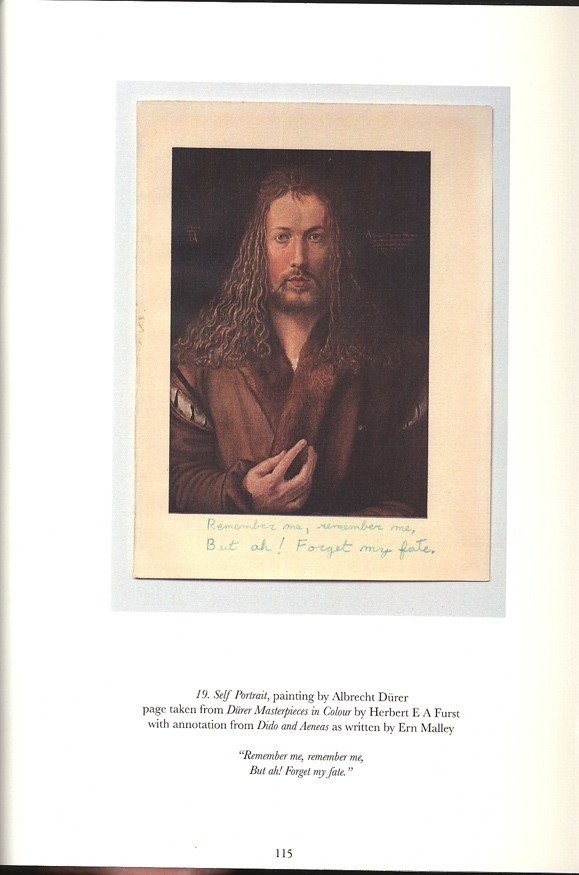
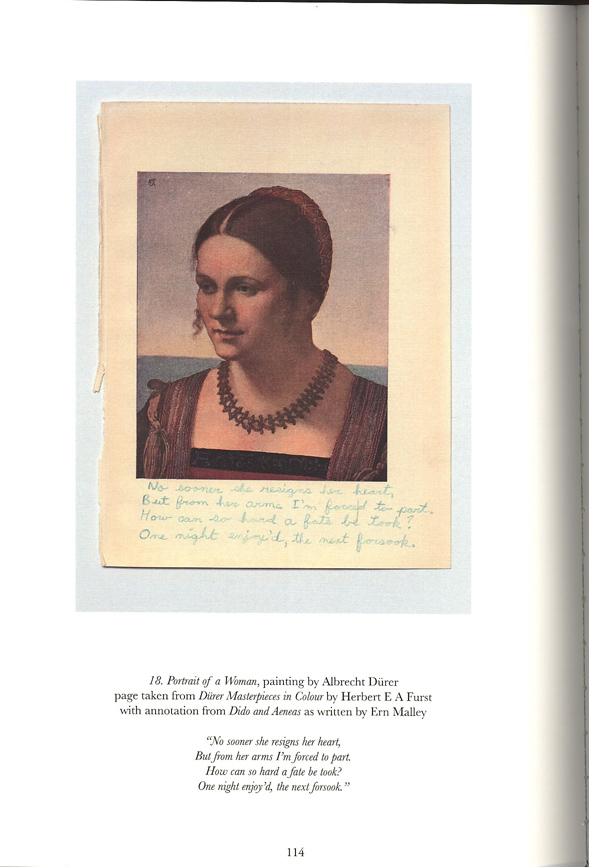
One problem the hoaxers faced in this task was to create poems that would be convincing enough to deceive Harris. Consequently, the first poem Harris received was ‘Dürer: Innsbruck, 1495’, actually a ‘serious’ poem composed by McAuley prior to the hoax, one that he described as a ‘come on’:

But no one warned that the mind repeats
In its ignorance the vision of others. I am still
The black swan of trespass on alien waters (DE, 243)8

McAuley argued that despite the lovely imagery the poem was still nonsense: ‘What the poem claims is that the poet had often had a pre-vision of Innsbruck before seeing Dürer’s picture: not a very credible assertion … We need a revival of the eighteenth century reading habit of noticing what the poem says and asking whether this is sensible.’9

McAuley’s insistence that the poem possess some inner logic that is ‘credible’ and ‘sensible’ is crucial, for we see here not only a clash of artistic aesthetics, but also a tension over the production and value of ‘meaning’ within literary works. Or, to put it another way, the hoax becomes a testing ground for conflicting notions of textual reception. McAuley was calling for a revival of literary interpretation that foregrounded the author as the arbiter of unified meaning within the poem, a figure always prior to the text and informing it with significance. Such a position has been rendered problematic, however, by post-structuralist literary theory, where it is not the author that is imbued with the power to generate meaning, but rather the reader. In a complete rejection of McAuley’s stance, Roland Barthes (1977) argues that the author’s intention is fundamentally irrelevant as far as the unity of meaning within a text is concerned.

But before turning to Barthes it is worth noting that at the time of the hoax – when Harris was being publicly humiliated for believing the Malley poems were the work of a major, if previously undiscovered, poet – there were many respected commentators endorsing Harris’s assessment of the poems. The Age critic, Colin Badger, noted that ‘whatever the deficiencies of Mr. Max Harris as critic and poet, it is very difficult indeed to find that he erred in his estimate of these poems … with whatever doubts and hesitancies, honest criticism will endorse Mr. Harris’ judgement.’10 Brian Elliot, the Australian academic, wrote – despite certain reservations – that the Malley poems were ‘really quite remarkable as literary craftsmanship … There is something most unique about the whole thing.’11 But perhaps the strongest support for Harris came from Herbert Read, who hadn’t been embroiled in the hoax as McAuley and Stewart had hoped. Writing to Harris, Read argued that the poems were ‘undoubtedly poetic, and poetic on an unusual level of achievement’; indeed, Read argued that McAuley and Stewart had deceived themselves in creating the hoax:

It comes to this: if a man of sensibility, in a mood of despair or hatred, or even from a perverted sense of humour, sets out to fake works of imagination, then if he is to be convincing, he must use the poetic faculties. If he uses the faculties to good effect, he ends up by deceiving himself. He calls himself ‘the black swan of trespass on alien waters’ and that is a fine poetic phrase. So is ‘hawk at the wraith of remembered emotions’ and many other tropes and images in these poems.12

Read’s approach to the poems seems to be heralding the work of Barthes. For Barthes our concept of the author is a modern construction, a social product emerging out of discourses that promoted the primacy of the individual. It is therefore logical, according to Barthes, ‘that in literature it should be this positivism, the epitome and culmination of capitalist ideology, which has attached the greatest importance to the “person” of the author.’13 Such a concept is nowhere more evident than in the modern literary festival, where the cult of celebrity foregrounds the author before the text. As Barthes notes ‘the image of literature to be found in ordinary culture is tyrannically centred on the author, his person, his life, his tastes, his passions.’14 It was this social emphasis upon ‘the author’ that ultimately condemned Max Harris in the public response to the Malley hoax. If the ‘author’ of the work was a hoax, how could the poems have any merit whatsoever?

Barthes’s response would be that the author is not the issue: it is the text itself that needs to be considered. In this sense, McAuley and Stewart’s intentions in producing the hoax poems becomes an irrelevancy to the poems. That the poem ‘Culture as Exhibit’ contains a direct quotation from an American manual on mosquito control – intended as a complete absurdity by the poets – is a case in point:

‘Swamps, marshes, borrow-pits and other
Areas of stagnant water serve
As breeding-grounds …’ Now
Have I found you, my Anopheles! (DE, 255)

The Australian poet Elisabeth Lambert, who was the Angry Penguins representative in Sydney, made the point that regardless of its source the quotation had ‘a fine flavour’:

Someone should try and locate the man who wrote the opening lines of that American drainage report. It might be accidental, but on the other hand the poor ellow might be a suppressed poet … The whole quotation has a fine flavour. And borrow-pits. What a beautiful word. I’m doubtful just what a borrow-pit is, but it makes a lovely noise. In any case what made Stewart-McAuley think a mosquito unpoetic?15

For Barthes literary language is a language ‘without bottom’, something like a ‘pure ambiguity’ supported by an ‘empty meaning’:

There are no beginnings and no ends, no sequences which cannot be reversed, no hierarchy of textual ‘levels’ to tell you what is more or less significant. All literary texts are woven out of other literary texts, not in the conventional sense that they bear the traces of ‘influence’ but in the more radical sense that every word, phrase or segment is a reworking of other writings which precede or surround the individual work.16

Barthes’s position here is almost an echo of the hoaxers’ methods, except that for Barthes it is a position of affirmation.

Barthes’s approach to language and writing resemble that of French theorist Jacques Derrida. Derrida argues that the signs composing a text can be ‘deconstructed’, undermining the systems of logic by which we traditionally approach a text. For Derrida ‘there is something in writing itself which finally evades all systems and logics’, a constant defusing of meaning that the text cannot contain. 17 Like Barthes’s idea of literary language as ‘pure ambiguity’, Derrida’s concepts undermine traditional theories of meaning. This deconstruction of meaning is ‘a challenge to the very idea of structure: for a structure always presumes a centre, a fixed principle, a hierarchy of meanings and a solid foundation, and it is just these notions which the endless differing and deferring of writing throws into question.’18 It is interesting to note that both McAuley and Stewart were advocating not just a traditional unity in poetry but something more fundamental; their emphasis upon coherent meaning in poetry mirrored their desire for metaphysical unity. In the years after the hoax both poets sought the certainties provided by religion, or spirituality. For McAuley, this involved a conversion to Catholicism, and for Stewart a lifelong immersion in Taoism.

For Barthes, as for Derrida, such a position is untenable. It is a yearning for a sign [God] that acts as a transcendental signifier, an anchoring, unquestionable meaning to which all our signs are ultimately pointing; the transcendental signifier. For Barthes our concept of the author can be viewed in the same manner: ‘We know now that a text is not a line of words releasing a single ‘theological’ meaning (the ‘message’ of the Author-God) but a multi-dimensional space in which a variety of writings, none of them original, blend and clash.’19 In this multi-dimensional space it is the reader, not the author, who interprets meaning. Indeed for Barthes a text is made of ‘multiple writings, drawn from many cultures and entering into mutual relations of dialogue, parody, contestation, but there is one place where this multiplicity is focused and that place is the reader, not as was hitherto said, the author.’20 It is at this point that we come to what Barthes has described as the death of the Author: the reader, the only one who can interpret or write meaning into the text, is only born out of the Author’s death. At this point whether McAuley, Stewart or Ern Malley wrote the poems becomes of no importance; the identity of the author is an empty presence in relation to the text.

Posted in ESSAYS, SCHOLARLY | Tagged , , , , , , , , ,

‘King’ James Malley: Revelation

The modern hero, the modern individual who dares to heed
the call and seek the mansion of that presence with whom it is
our whole destiny to be atoned, cannot, indeed must not, wait for
his community to cast of its slough of pride, fear, rationalized
avarice, and sanctified misunderstanding. “Live,” Nietzsche says,
“as though the day were here.” It is not society that is to guide and
save the creative hero, but precisely the reverse. And so every one
of us shares the supreme ordeal–carries the cross of the redeemer
–not in the bright moments of his tribe’s great victories, but in
the silences of his personal despair.
‘Thank goodness!’ said Bilbo laughing, and handed him
the tobacco-jar.
He turned from me and walked away. I watched his back
receding down the long, gleaming hall.
, and
guiding myself by them, as by a magical thread, I stepped into
the room.
they went
inside the big old house whose door stood open, pressed back
by the breeze they made in passing.
You don’t see things or people, you see space –
the winch between two branches. You live in
the winch between two branches. Something spoke,
you answered. And you don’t know what, or when.
And the twelfth stroke of midnight sounded; the twelfth
stroke of midnight, Thursday, the eleventh of October, Nineteen
hundred and Twenty Eight.
It was at the bottom of the alley with its roots in the air.
“I only tell people once,” the man said and left the window.
He
would be there all night, and he would be there when Jem
waked up in the morning.
P.S. That night in the emergency room, do you recall if I threw up
something I needed? Some small but trivial thing that belonged
inside? I distinctly feel as though I’m missing something.
But then, I always have.

LADY WINDERMERE [taking her husband’s hand]: Ah, you’re marrying
a very good woman!

CURTAIN

reply only on the ethical plane. We shall devote to them a future work.

THE END

aimed
the pistol, and fired a bullet through his right
temple.

Posted in 42: CHILDREN OF MALLEY II | Tagged

‘King’ James Malley: Prayer of Manasses

The figure of the tyrant-monster is known to the mythologies,
folk traditions, legends, and even nightmares, of the world; and
his characteristics are everywhere essentially the same.

He had not been down that way under The Hill for ages and
ages, not since his friend the Old Took died, in fact,

‘I – well, my name is Richard Papen –’
He put his head to the side and blinked again, bright-eyed,
amiable as a sparrow.
‘– and I want to take your class in ancient Greek.’

Great white bearskins lay about underfoot, and the only
furniture was a lot of low beds covered with Indian rugs.
Instead of pictures

Dolly saw it was his right hand. His bloody working
hand. A man could hardly pick his nose with a thumb and
half a pointer. They were done for; stuffed, cactus. Thank
you, Lady Luck, you rotten slut.

, I carry

and nurse, my diffident twin, I’m often morose, and think
of those statues that lean above themselves in water,
Horses
tossed their plumes. The Queen had come.

The shutters and doors of the Radley house were closed on
Sundays, another thing alien to Maycomb’s ways: closed
doors meant illness and cold weather only. Of all days Sunday

DAY FIVE

I let Irene cut my hair today. It’s kind of horrible. She’s only
twenty, and her skin is all broken out from PCP and heroin. I got
so absorbed listening to her stories of blackouts and arrests for

prostitution that I didn’t notice how badly the haircut was ac-
tually going.
Julie is so cheerful I want to punch her.

LORD DARLINGTON [still seated L.C.]: Oh, nowadays so many con-
ceited people go about Society pretending to be good, that I think
it shows rather a sweet and modest disposition to pretend to be bad.
Besides, there is this to be said. If you pretend to be good, the world
takes you very seriously. If you pretend to be bad, it doesn’t. Such
is the astounding stupidity of optimism.
LADY WINDERMERE: Don’t you want the world to take you
seriously, then, Lord Darlington?
LORD DARLINGTON: No, not the world … you

Simi-
larly, if we question someone on well determined events in his private or
public life, he may reply, “I know nothing.” And this nothing includes
the totality of the facts on which we questioned him. Even Socrates
with his famous statement, “I know that I know nothing,” designates
by this nothing the totality of being considered as Truth.

“It sounds darling,” Mrs. Carpenter agreed.
“Sybil, hold still, pussy.”
“Did you see more glass?” said Sybil.
Mrs. Carpenter sighed. “All right,” she said.
She replaced the cap on the sun-tan oil bottle.
“Now run and play, pussy. Mommy’s going up to
the hotel and have a Martini with Mrs. Hubbel.

I’ll bring you the olive.”

Posted in 42: CHILDREN OF MALLEY II | Tagged

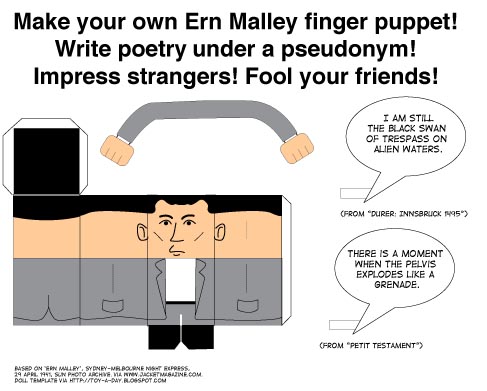
The Ern Malley Finger Puppet

Download today! (PDF!)

Posted in BLOG ARCHIVES | Tagged , , ,

Sally Malley: Trunk

“I beckon like a lemon, like a feather”
~ Sam Sejavka


damn that rose! there you go – alcohol’s
typos, elephant trees in boots, the body
like a present goes stale in its box

i say i am the sun of my room, though further
inside moss grows on kidneys, and love
as deep as the moon inside a wolf’s throat

o this winter that lasts longer than
a year – what’s to be done, but put one hand
on a sheet, watch it deny itself a bed

you shall arrive when you do unless you don’t
though in the capital of invisible prisons
someday the open door must let in a snake

it ends with a riot of affluence

Posted in 42: CHILDREN OF MALLEY II | Tagged

Margie Malley: Fahrenheit 451

good example of good literature
cold – very little human touch her house
was the opposite of montag’s, full of life
montag: state of confusion sense of saying
it hasn’t any lenient feelings sense of speaking
that if they programme the ‘hound’ re: he/it will
kill mon main point – why couldn’t they do other
things besides killing etc. montag is beginning to
be curious, doubtful about the whole society whether
it is right to do these things shows you what kind
of person she is (our is another way of saying mine)
she doesn’t care so therefore doesn’t care about her
marriage pretending topic seas provided them
with no challenge & they’ll be happy imagination
conscious is what makes montag guilty & thinks
to quit beatty hasn’t got any conscious faber’s
character comes out here! the sound of its death
comes after

carmel bird year 10 mercy college
fahrenheit 451 – ray bradbury

Posted in 42: CHILDREN OF MALLEY II | Tagged

Ethelred Malley: Soil: A Nocturne

for my late cousin Ernest

A bleat of lambs on Junee’s
naïve hills, a kind of white
foam in the dark; the clash
and slam of locomotive carriages:
stubborn cymbals of the Gods or
an ordinary torment? Such hyperbolic
music, I may have caught the railway blues!

How the mind repeats itself;
baked beans, heaped on my enamel
supper plate, chipped as any
conscience, o Nightshift
can your cruel roster!

I should have locked
the garden gate against
those volatile intruders
who swung their Eveready
torches over my lawn sculptures –
I tooled them all myself : a gathering
of penguins, swans, flamingoes
guarding the hydrangeas!

Louts kicked them down and
hurled them round and sprayed
them all with shaving cream (I have
the tin to prove it ), then darkened them
with thrusts of soil – can’t they read – are
they so illiterate – my signs that clearly
say No Trespassing No Hawkers. I sob
inside this rhetoric of slaughter!

Posted in 42: CHILDREN OF MALLEY II | Tagged

Blinkie ‘Bill’ O’Malley: The fête

“When an inner situation is not made conscious,
it happens outside, as fate.” – Carl Jung


Let me start by saying you
are unstable.
Eight deaths
in eight days. At the home
you thought you’d send
your mum to. Only you can’t send
mum anywhere she doesn’t
want to go, unless you have a signed
enduring guardianship, that is.
Sign
here pls.
Pls call
if you have questions. Like:
is it audited,
and what happens to my capital
&c. Well, what I started out
saying is “you look nice today
in the shadow of Eyjafjallajökull,
at 63°38′N 19°36′W.” Dazzling
stratovolcano, your fire makes
us tack around the planet one
way, then another, from departure
lounge to airport bar & back
with toiletries & stuff
sacks—the same planet where
what you don’t make
conscious emerges later
as a fête (dunking machine,
chocolate wheel, lucky
dip, white elephant)
as blood spilt
in a defrosting fridge.
That’s all fate is: a fridge
with blood in it
that you spilt
(& the fridge tells
not of it) so, as I sd,
to weigh a mountain, any mountain,
go to the mountain—
go about it with a plumbline;
measure between heartbeats etc,
as though we’re not actually stuck
here on the midgard kicking ash
and ice in our birthday
puffer vests from mum
saying mean things, ie:
“Like Man U you’re a bagatelle
in economic terms, and the banks
will write you off. Me too. #justsayin”

Posted in 42: CHILDREN OF MALLEY II | Tagged

Blinky ‘Bill’ O’Malley: F#!* Yeah

“And man shall be just that for the overman: 

a laughing-stock or a painful embarrassment…” 

— Nietzsche, Thus Spake Zarathustra


At the outset, let me just say this:
this poem has Tourette’s — it wanted to be
a swear bear so I let it be — an MA15 poem
[Medium level profanity, mild
nudity] — a Kevin Rudd
of a poem & in it Sergei Bubka says fuck
yeah Steve Hooker’s awesome
as he lines up & GOES
FOR GOLD with his ginger
ringlets & bung knee
with his special pole shipped
through monsoons
to nama-fucken-ste the docks
Hooker pulls up proud,
flushed & elated & post-meet says
if some competitors are Delhi
no-shows that’s a matter
for their conscience, an elite
athlete’s soundbiting way
to say “weak as piss”
respectfully for the news.
Polite people
everywhere (chef de bloody mission
Steve Monaghetti fr example) think (& sometimes
say) if you use cuss words in your work
(& not substitutes eg ‘pish’ or ‘tosh’)
it’s poor language command,
reflects badly on the team 1st, you 2nd, yr
family, yr school, yr nation, & so
the message goes down the shitter.
“Fuck ’em” says this poem & Kevin Rudd
says “ratfuck ’em” which is better
yet. Possibly best. Lolz I overpromised
on the nudity. Apols.

Posted in 42: CHILDREN OF MALLEY II | Tagged

Blinky ‘Bill’ O’Malley: Dithyrambs of Dennis

If I had any ambition
I’d make you a bouillabaisse in the Provençal
in St Marks Square. To create
intimacy in the poem, I turn up
the volume & this piece conforms
to an emergent post-OMGWTFBBQ
cast in acrylic in the Square where
our fingers touch when I hold
your guide while you woe
betide a pickpocket
only then, when you are most orthogonal,
are you most bent
& it’s sweet
my flame-haired
Russian spy, boating
to the rendezvous, hair the colour
of that toxic sludge spill killing fish
(villagers too) & I like you & so say
“like smallmouth bass
in the Potomac
there are three
kinds of poet; male, female &
intersex, to which I’d add two
further dimensions:
living or dead.”

Posted in 42: CHILDREN OF MALLEY II | Tagged

Bernie Malley: Blu-ray Morpheus


His metamorphosis contains the very mystery of sleep:
the outline of a fluidity, the look, sign, and gesture of evanescence
with the charm and virtue of presence
– Jean-Luc Nancy


a.
Technicolour dreaming
leads me here again an era
of corrosive sleep, caustic
slippages
left malnourished and dug in.


b.
7am in salty beach rain
a pale leavening moon, a summer
I got dragged into
by the weight of tides: time


c.
Sun hero, laconic heart –
strong and decent to women.
Your matter-of-factness a barbed spool
that lives inside me now
and unwinds and unwinds and unwinds


d.
Phraseology ill or broke, memory’s
coarse mark cordons my chest with
silvery thread
the brevity line of the sky sea horizon


e.
I say, hold my hand into a million pixels good
rain sizzles to the ground don’t you think?
If I keep on descending with you
will I exhale forever? My own mutiny…


f.


g.
Dark cinema dreams of you
leaning in for an onscreen kiss:
you say something, there is a shadow at the door
you say something, there is a shadow at the door.

Posted in 42: CHILDREN OF MALLEY II | Tagged

Bernie Malley: red eye

inflight enter-
tainment guide
say “chillax”.
glance prehist-
oric day dawned
corrugated
charmed, seams
of burn-
ished earth ochre
deep spindly
curve end fabled
plinths, white.

this new day is
witness: trajectory
of god s rich,
myths eternal
gold spun –

he a bored space
man yawn! at the
endpoint of
millennia dreams
skeins of silk new
day not there to
cushion a rapture
or a fall.

chillax. we’re
not going to the
moon. more hum
drum locale & vicious
civic primacies call
now next aisle over
son argues with
father,
attendant inter
venes, bends,
& dulcet tones
firm she
confiscates

his gilded wings

Posted in 42: CHILDREN OF MALLEY II | Tagged