P.S. Cottier Reviews Mark Pirie

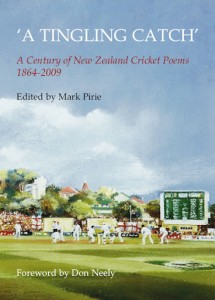
‘A Tingling Catch’: A Century of New Zealand Cricket Poems 1864-2009 edited by Mark Pirie
HeadworX, 2010

While waiting for this book to arrive, I found myself wondering what the best known cricket poem in the world might be. I’d say that it’s still the absurdly patriotic ‘Vitai Lampada’ by Henry Newbolt. Fortunately, many of the poems in this New Zealand anthology, ‘A Tingling Catch’ (the name drawn from a 1907 poem by Seaforth Mackenzie) are less thumpingly patriotic and rather more challenging than Newbolt’s less than subtle hymn to unshrinking school-boy masculinity.
Continue reading

Posted in BOOK REVIEWS | Tagged ,

Comings, Goings and GUNCOTTON

There is only one appropriate way to begin my first news post as Managing Editor of Cordite – that being to extend, then extend further, then possibly dislocating my e-arm in extending further still, a massive thank you (for all the poetry, fish, insight, editorial and wit) to David Prater, outgoing ME. Handing over an established publication can be an exercise fraught with pitfalls, especially if it’s in a state of massive disarray or has been bobbing along, sans rudder, for an extended time.

This not the case for Cordite.

Now in 2012, as it has for many years, the publication hums, thunders, critically engages and charms its way along a trajectory that elucidates Prater’s fine control of what an online poetry review can be. Indeed, should be. Eleven years under his pioneering helm – with quality help along the way from a fantastic team of editors and publication founders – and the publication is in exquisite shape, widely read and is of impeccable quality.

It’s primed to publish another 39 issues and beyond – a most impressive place for me to begin.

And so I begin.

It is with great pleasure that my first act in managing Cordite is to announce the appointment of poet, editor, thinker extraordinaire and literary gadabout, Emily Stewart, as editor for our new blog: GUNCOTTON.

That’s right. This new space will directly, organically engage with Australian writers and thinkers from every corner of ‘here’ and numerous points abroad. GUNCOTTON will be an entertaining and engaging conduit to further engage with work inside the journal, promoting it to a more global reach than exists now – engaging with international poetry zeitgeists in so doing – and to broaden the scope of what an ‘Australian poetic’ is. Emily is well-suited for the task.

So, just what is a ‘guncotton’ anyways? It’s a material that was accidentally discovered by Swiss-German chemist, Christian Friedrich Schönbein, in 1838 when mixing up cellulose forms with nitric acid, trying to best the lowly capabilities of garden variety gunpowder.

Guncotton is rocket fuel propellant, aka nitrocellulose. But it’s a mild explosive, in deference to its cordite parent. When mixed with camphor, it creates a substance that was first used to manufacture billiard balls. It’s a base ingredient for printing ink and, before 1930, was an active element in X-ray paper. Before 1951, 35mm films for theatrical release were made from one of its cousin compounds. The Jazz Singer, anybody?

Now, it’s Cordite’s blog. Coming soon.

Posted in GUNCOTTON | Tagged , , , , , , , ,

So long – and thanks for all the poetry!

This issue of Cordite Poetry Review is my last as Managing Editor. After eleven years I feel that the time has come for renewal and fresh energy.

Therefore I’m also very pleased to announce, after a lengthy selection process, that our new Managing Editor will be Kent MacCarter.

You’ll be hearing more from Kent over the coming months but for now, I’d like to take this opportunity to wish him every success in steering Cordite in new and exciting directions.

I’d also like to take a moment to thank each of the editors, contributors, subscribers and readers who have helped make Cordite what it is today. In the words of Jeff Fenech, I love youse all.

When I first took over as Managing Editor of Cordite in 2001, I had precious little idea about how to run a magazine, let alone any knowledge of HTML. But somehow, and with the assistance of Adrian Wiggins (who, together with Peter Minter, founded Cordite in 1997), I managed to bumble through and over the years have managed to convince a number of other loons to join me in what seemed a very fragile and crazy enterprise.

Today, I’m glad to be leaving Cordite in an orderly fashion (oh how great it is to jump rather than be pushed!) and will of course continue to provide assistance to Kent and the remainder of the editorial team for as long as I am required.

In the meantime, for anyone who’s interested, I’ve assembled a list of my ‘top eleven’ moments as an editor of Cordite over on my blog.

So long, and thanks for all the poetry!

Posted in BLOG ARCHIVES | Tagged , , ,

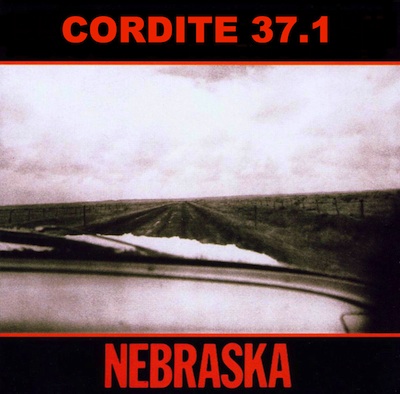
Cordite 37.1: Nebraska is now online

Cordite 37.1: NebraskaReleased in conjunction with the Cordite-Prairie Schooner co-feature, Cordite 37.1: Nebraska is a tribute to Bruce Springsteen’s Nebraska album, presented by Sean M. Whelan and Liner Notes.

Contributors include Neil Boyack, Josephine Rowe, Omar Musa, Gabriel Piras, Samuel Wagan Watson, Eric Dando, Jessica Alice, Josh Earl, Alicia Sometimes, Emilie Zoey Baker and Ben Pobjie.

Sean M. Whelan’s editorial outlines the genesis of the Liner Notes project and also discusses the significance of the Nebraska album:

Nebraska in the form we know and love today was never meant to be released. Recorded originally as a demo in Springsteen’s home on a four-track cassette recorder it was later given the full E-Street band treatment in the studio, ready to be unleashed on the world. But after comparing the two, Springsteen and his manager and close friend Jon Landau decided that something got lost in the transition. Something gritty, raw and real. So the demo, recorded on a $5 cassette was handed in as the end product, a remarkable act for a major label to concede.

We’re thrilled to be able to present this special issue. Big thanks to Sean and all of the contributors. We strongly suggest you check it out!

Posted in BLOG ARCHIVES, GUNCOTTON | Tagged , , , ,

Liner Notes: Nebraska

Bruce Springsteen’s Nebraska album was released thirty years ago, in 1982.

Twenty-four years after that iconic moment in the history of urban American folk, Liner Notes debuted at the 2006 Melbourne Fringe Festival with a spoken word tribute to David Bowie’s Hunky Dory album.

Now, thanks to Cordite Poetry Review these moments in history come together. Cordite 37.1: Nebraska features original works by eleven of Australia’s finest writers and spoken word performers, all responding to Nebraska, track by track (plus a special bonus track, but more on that later).

The first obvious question is: what is Liner Notes?

It came to me like a bolt from the blue in early 2006. I was at the time convening Babble, a regular spoken word event held at Bar Open in Melbourne. I was always trying to think of new concepts to attract a wider audience to poetry events. I wasn’t interested in just putting on shows for the same old faces week after week. For poetry to grow, as a live artform, it has to evolve from just poets reading to other poets waiting to get up and have their turn. I remember waking up in the middle of the night with this idea and immediately having to write it down for fear of forgetting it by morning.

Here’s how it works.

Choose a classic iconic album. For each track on that album, allocate a writer. Their task is to write and perform a response to their chosen track, anyway they choose. Over the years since Liner Notes began the works have been songs, stories, poems, non-fiction deeply personal accounts, raps, even experimental dance performances. Some pieces directly reference the songs they are responding to, some will just riff off a single line or image. The works are performed on the night in the order they appear on the album with a break taken between side A & side B (respect to vinyl). A tribute night with a very important difference, brand new original work is born from it.

My Liner Notes co-producers, Emilie Zoey Baker and Michael Nolan, have been there right from the start. I only came up with the concept but Liner Notes would definitely not be what it is today without this team and especially the exceptional hosting skills of Michael Nolan. Nolan doesn’t just introduce the acts, he extensively researches each album and takes the audience on a kind of guided tour through the making of the album. The behind the scenes dirt, the hilarious anecdotes, the studio bust ups, the scintillating juice from the fan forums, and … he sings! Each Liner Notes event includes a house band performing uniquely interpreted covers from the album.

Liner Notes has grown from humble beginnings in a small upstairs Fitzroy bar to being a regular sold out event at the Melbourne Writers Festival for the last three years and there are now copycat events held in Seattle and Vancouver and probably more we don’t know of yet. Albums presented have been from David Bowie, The Velvet Underground, The Cure, Madonna, Nirvana, AC/DC, Michael Jackson, Fleetwood Mac and INXS.

And now … Bruce Springsteen’s towering, aching, epic release, Nebraska, presented for the first time for an exclusive online only edition of Liner Notes.

Nebraska in the form we know and love today was never meant to be released. Recorded originally as a demo in Springsteen’s home on a four-track cassette recorder it was later given the full E-Street band treatment in the studio, ready to be unleashed on the world. But after comparing the two, Springsteen and his manager and close friend Jon Landau decided that something got lost in the transition. Something gritty, raw and real. So the demo, recorded on a $5 cassette was handed in as the end product, a remarkable act for a major label to concede.

It was a risky move, his previous albums built on bombastic production, heavily layered arrangements and blaring horn sections. But it was a move that paid off and many regard Nebraska now as The Boss’s finest moment. Thematically it hovers in darkness and shadow, from tales of true life killers (Charles Starkweather) to other brushes with the law, domestic heartache, crumbling cities, desperate characters in desperate times, all searching for ‘reasons to believe.’

Take a look at the cover now, (You’ve got the vinyl right? Okay the CD will do as well), there’s the ice slightly banked up on the windscreen, the wide open road and endless sky ahead. You can FEEL that crisp grey chill whipping at the chassis. You reach for the radio to take your mind of the emptiness. Imagine each of these eleven* writers coming on Cordite FM as you drive along, each giving you their version of this road trip. You could be driving through rural America, or you could be driving through the Australian outback, you could be anywhere.

Bruce sings everything dies baby that’s a fact, but maybe everything that dies someday comes back.

And I believe him.

*Eleven writers? ‘But there’s only ten songs on Nebraska!’ I hear you indignant Bossaphiles shout! Well, at the time of the recording of Nebraska, Springsteen also recorded a bunch of demos, several of which would later appear more fleshed out on a little-known album called Born In The USA. So we decided to include a special Bonus Track to honour this.

Posted in ESSAYS | Tagged , , , ,

Born In the USA

[audio:http://cordite.org.au/audio/11 Born in the USA.mp3|titles=Born In the USA – Ben Pobjie]
Born In the USA (2:45)
Written and produced by Ben Pobjie

Posted in 48: NEBRASKA | Tagged

Reason To Believe

[audio:http://cordite.org.au/audio/10 Reason To Believe.mp3|titles=Reason To Believe – Emilie Zoey Baker]
Reason To Believe (3:23)
Written and produced by Emilie Zoey Baker

Posted in 48: NEBRASKA | Tagged

My Father’s House

[audio:http://cordite.org.au/audio/09 My Father’s House.mp3|titles=My Father’s House – Alicia Sometimes]
My Father’s House (2:24)
Written by Alicia Sometimes. Music by Chris Nelms.

Posted in 48: NEBRASKA | Tagged , , , ,

Open All Night

[audio:http://cordite.org.au/audio/08 Open All Night.mp3|titles=Open All Night – Josh Earl]
Open All Night (4:35)
Written and produced by Josh Earl

Posted in 48: NEBRASKA | Tagged

Used Cars

[audio:http://cordite.org.au/audio/07 Used Cars.mp3|titles=Used Cars – Jessica Alice]
Used Cars (2:01)
Written and produced by Jessica Alice

Posted in 48: NEBRASKA | Tagged

Batter (State Trooper)

In the Wee Wee Hours

You loved to shock. You always said what was on your mind, even if it upset people. You loved upsetting people with the truth – that was your reason for being. I always liked that about you, even if you upset me sometimes by telling me some truth nobody else had the balls or naiveté to say to me. You were only a kid. You could get away with it. You always knew the gossip of the household, even if you didn’t really understand it. You remembered everything.

There was no internet in the house. No Google. Maybe there was Google in other houses if you had enough money, that sort of information was expensive back then. So if somebody in our house wanted to know something about someone they would go to you and you would just tell them. You were an oracle.

You had perfect timing. You were a comedian. You practised the same material on different audiences to hone your skills. You were the first person to tell me that my breath smelt like a bum. You were the first person to tell me that I was going bald – I remember you referring to my “baldy bits” to alternate hysterical laughter and awkward silence, depending on the company. You spread it around. Awkward situations always amused you. You were puzzled by them but always aloof, speaking with your wisdom in your childish deadpan. Like an alien super being or a prize-winning scientist studying the behaviour of alien super beings.

The things that I done

One time me and your mum were having an argument and I suppose I was yelling at her and you clapped your hand over my mouth and it was just so unexpected I started laughing and then your mum was laughing again. We couldn’t help it, you were so funny back then. Everything you said was either very wise or funny. You were a sage. You made us laugh. I loved the sound of your mum’s laugh. You weren’t laughing though, you were serious. It was like you were never going to smile again. I can’t even remember what we were arguing about that time. But you remembered everything back then. You would know. If I asked you about it now you would remember.

Somebody out there listen

Now after all these years of incubation, I hatch out my master plan. I put the drawing you did of all those cows having Christmas dinner underwater as my Facebook profile picture in the hope that you will friend me. I post your drawing on Facebook like an egg and I wait and wait and wait.

When you accept my friendship on Facebook I am so happy. Look at my face on my new profile picture it is electric.

I shoot you a message straight away with an attachment of the picture you drew of Santa and the reindeers in the “One Whole Holfen Sleigh”. On that farm there is to ride a One Whole Holfen Sleigh, you would sing. We would sing that song together. ‘The One Whole Holfen Sleigh is a sleigh full of presents,’ you would tell me. You loved presents and the whole ritual of receiving, but not necessarily giving. You loved Christmas. And Easter. The orgy of chocolate and presents. The pomp and ceremony, the pantomime, like an Eminem concert.

Huh! Whooooooooo … Huh! Whooo-a-hooo …

I remember laughing with your mum about how you thought Santa lived on a farm. ‘I suppose it is a kind of farm,’ said your mum, ‘with all the reindeers and the elves and the workshop.’

‘It’s a battery farm,’ I said to your mum, ‘it’s a sweatshop.’ I am proud that I never shared my true feelings about Santa and the Easter Bunny with you. I did tell you what I knew about Jesus, though I am not really a fan of his. I just thought it was better that you heard it from me first. We talked about all three of them in the same breath. You were electrified by these ideas. None of it was possible without magic. You were interested by the idea of magic. It excited you. I guess you imagined Santa and Jesus and the Easter Bunny all living on the same farm to save money, in the same way that you and me and your mum lived in a house with an artist and a chef and a musician to save money. Because it was cheaper and a lot more fun to live this way. It made a lot of economic sense back then, even if it didn’t make much sense in other ways.

Jammed

You liked eating pancakes. That was your first English composition in Grade 1. You wrote ‘My favourite food is pancakes’ on the computer in Times New Roman and you drew three pixelated pancakes with maple syrup. Your mum made you give it to me. She made a big thing out of it. It was a peace offering. I stuck your mum’s peace offering on the fridge. I think you knew what was going on. Most of your classmates had drawn pixelated McDonalds and KFC scenarios and I was proud that you had drawn pancakes on the computer with the mouse because pancakes were something we could
truly be proud of, something we could make ourselves, for each other.

Even today, if you walk into my kitchen and look at the stovetop above my oven, you will see the three pancake circles you drew on the computer in Grade 1, draped with generous irregular maple syrup shaded shapes. There were always enough pancakes to feed everybody in the house. Even after all this time, whenever I make pancakes I look at your dot matrix pancake picture and feel happy and sad, it is like I am being bombed by little jet fighters dropping little bombs marked ‘happy’ and ‘sad’. Over all this time the little splatters of butter and oil and syrup have made your computer drawing translucent. I can look straight through it and see you and your mum lying down on a blanket in the vegetable garden through the kitchen window of the old place.

Jammed up with talk ‘till you lose your patience

You wanted to make your own pancakes from scratch and I remember telling your mum how we should capitalise on this.
I tell her about an episode of Sesame Street I watched with you: “I’m gonna make a stool for me,’ says a little Hillbilly five-year-old with an axe and a tree her pappy just cut down.

‘That’s what we should do with the pancakes,’ I said, motioning in your direction. ‘Look at how independent and resourceful that kid is. We need some of her Hillbilly gumption.’

Of course your mum took this the wrong way. She thought I was making fun of her. She thought I was calling her a bad mother.
‘That’s not what I meant,’ I said to your mum. ‘You should eat something,’ I said. ‘You haven’t eaten anything. I don’t think you have the energy to even think.’

I was always trying to get your mum to eat something. Things could be so fantastic when your mother ate something.

You both liked eating pancakes. I liked eating pancakes. Everyone in the house liked eating pancakes. I tried to have maple syrup in the fridge at all times, but it was no good. The other people in the house guzzled the maple syrup spoon by spoon and the honey, sometimes we went without sugar for days. I never knew who was in charge of buying the sugar. It was like a Mexican standoff sometimes with the sugar and who bought the sugar. Sometimes we drank tea without honey, without sugar. All I knew was that it was my job to keep buying maple syrup and that’s what I did.

There were people in the house that depended on me.

Your mind gets hazy

I can’t remember now. These are things I thought I would never forget but I have forgotten them. I never did have your gift of remembering things exactly as they happened. When I think now about what I actually remember I am not left with much. Some of the memories are very sweet and some of the memories are very painful but most of the memories are missing. Maybe we all wanted it that way. Even if I try very hard, I can remember very little about all those old times with you and your mum.

All I have is a box of your writing and drawing and some letters you wrote to me. I taught you to write letters. If nothing else, I am proud of this small thing. You wrote letters to Santa and Jesus and the Easter Bunny and your dad and your mum.
I answered every letter you wrote me. I didn’t push it. When you stopped writing I did too. It was natural. You are not my kid. I get that now.

Listen to my last prayer

I prayed that your mum would eat something. She liked sweet things. If she was going to eat something, it would probably be something sweet.
‘Hey,’ I whisper to you in secret. ‘Wouldn’t it be fun to make some pancakes for your mum?’

So I taught you how to make pancakes. I like to think that you still make pancakes from scratch. Even though I don’t really know that for a fact. You might just buy the Shake ‘n’ Bake ones from 7-Eleven. Maybe you hate pancakes now, maybe they conjure up bad memories for you. I don’t know you anymore, not like I used to. Once I knew everything there was to know about you.

‘neath the refinery’s glow, where the black rivers flow, got a clear conscience, yo

The other good thing that was good to put on pancakes was lemon juice. Maple syrup and lemon juice tasted good on a pancake, we all liked that combination. We didn’t have a lemon tree but everybody knew where to get lemons. It was like a free supermarket for the people, all of the ripening branches of apricots and feijoas and peaches hanging over the bluestone lanes behind the fish ‘n’ chip shop on the main road.

Mr State Trooper

I can’t keep a secret. I tell you the secret ingredient in my pancake mix, which is yoghurt. I blurt it out to you. Vanilla yoghurt is best I think. That’s what I tell you. You don’t even have to torture me. It’s not that much of a secret. You can get a similar effect by letting the mix sit for an hour or so. You have to let it go a bit sour.

We have all gone a bit sour we have been sitting around for so long.

You don’t put your hand over my mouth or anything but I can tell you have stopped listening to me again. You were like the fuzz back then. You smashed my dreams, you smashed your mum’s dreams. She could have been on TV if it wasn’t for you.

Just talk talk talk talk

We walk all the way along the main road to Coles to buy the most expensive brand of maple syrup, all the way from Canada. I do not hide my contempt of imitation maple-flavoured syrups from you.

I show you how to steal nuts from Safeway and Coles, before they became hip to it. This was back when you were very moralistic. Everything was black and white to you at this age. Swearing was bad. Stealing was bad and you were allergic to nuts, so you were never going to approve of this. I can see that now. I get it.

I do not steal maple syrup from Coles, only cashew nuts that I eat casually while shopping for other products. I will go to jail for eating cashew nuts from Coles without paying for them you tell me.

As we wait in line to buy the expensive imported maple syrup, I tell you all about how maple syrup is made from the sap of maple trees in Canada.
Then, on the way home you tell me that sap is the blood of a tree. ‘Yes,’ I say laughing, ‘it’s tree blood.’

I tell you all about blood sugar and the xylem and the phloem and your mind boggles. After a while you put a hand over my mouth again. You are tired of this now. I talk too much, you don’t have to say it. Even back then you were a man of few words.

Botherin’

One time late at night, I ate one of your chocolate rabbits and somehow your dad found out about it and there was hell to pay. He really paid out on me for that. I felt very small that year and I would have melted away if I could have managed that. It didn’t matter how many chocolate rabbits I bought from then on. Your whole family was watching me now.

Radio relay towers

You were only worried about me. You were used to looking after your mum. You went to jail if you stole something. If you smoked cigarettes you would die of lung cancer. I remember when I stopped smoking in front of you. Your mum and I both smoked. We made our own. I remember when you became conscious of this: “My mum makes brown cigarettes, her friend makes green cigarettes,” you told your Grade 1 teacher. Your dad found out about this and made as much trouble as he could make about it.

I never wanted to be your dad. I never tried to do that. I always tried to leave a big space for all that to happen between you and him. He didn’t visit much but when he did I always made myself scarce.

I made like one of those maple trees from Canada.

Hi Ho Silver Oh

You knew all these things you were never meant to know. I don’t know if you actually remember these things or if you just heard the stories and made memories of them that way. One night you and your mum were visiting your dad and he was sitting on your mum so she couldn’t get up. He was angry at her for being with me and thinking about me when there were other more important things to think about. Why wasn’t she thinking of you and her and him? What was wrong with her? He started wailing on your mum with your little plastic hammer making tiny little bruises all over her pretty little face. You tell me this happened and you remember it, but you were only two years old. I don’t remember anything from when I was two years old. But your memory was a supercomputer. You remembered everything. Sometimes I forget that.

When she came back to my house to be with me and you, my housemate put some semi-frozen meat on your mum’s face and the next day we all agreed that it didn’t look as bad as it could have looked. Your mum was still very pretty in a hard sort of way. She made all the planes and helicopters fall from the sky, she made them crash into buildings. She was a little stunner. She was always causing traffic accidents and train wrecks as she
walked down the main road. All these blokes just drove into each other to be close as they could be to her.

Maybe you got a kid, maybe you got a pretty wife

I buried treasure in the sand. You loved money and finding money. You collected it. I would always tell you that the money you found was treasure. I would romanticise it. I liked the look on your face whenever you found a piece of the treasure I had buried for you in the sand. Your eyes were so wide with wonder. You hoarded your money in a secret place in your bedroom like pirate gold. You loved the idea of gold, you would dig for it. You and your mum were both digging for it. We were all digging.

I liked booty too.

I would drop coins for you in the checkout isles of Coles. A couple of times I hid the coins too well and homeless people found the money before you did. You should have seen your face. You knew it was your money and they had taken it from you.

Ain’t

And always the same song playing on the cassette player in your mum’s car, or on the record player in the house when I was moving furniture into my car. Every time I hear it on the radio I am transported back there with you and your mum. It’s like a time tunnel or a re-run of The Time Tunnel.

Listen to my last breath

When your mum met your new dad I wrote you a letter and stuck it inside a picture book about treasure called Pirate Booty with some Chinatown lollies in the shapes of pizzas and hamburgers in an old metal chest and buried it in the garden. I left you a treasure map, stained with coffee and burnt edges on the kitchen table. I buried the treasure chest really deep in the vegetable garden of the old house so it would take you very a long time to find.

None of this cost money. I got the book about pirate booty from the op shop on the main road for eighty cents. It was only loose change. I was careful with my money. I was an ideas man. A good idea is worth so much more than money and you understood that. That’s one of the things I liked about you.

Radio’s all jammed up

Now that we are Facebook friends, I am constantly being shocked at how casually you use the c-word on your Facebook status. How frequently this word is used by you and your friends. I am astounded by how much you use this word and how little I know about you now. You are drinking too much and driving too fast. I do not understand your new haircut. You look just like your dad. I feel so old when I look at the photos of you on your profile. We are strangers now.

Licence, registration, I aint got none

One night I drove past the old house and saw you on your bike. Your mum told me that you had my phone number and you would call me. This was when your mum was with your new dad. The one that was much better than me and your first dad put together. I wanted to stop. Even though I was driving quite fast I will always remember travelling past you in slow motion. You might have looked up and recognised my car but I would have already been long gone by then.

I just want you to remember that I have always been here for you. Me and your mum and dad and Jesus and Santa and the Easter Bunny, we have always been here for you. We may have taken it in turns, but whenever you needed somebody, one of us was always there. You were never alone. You always knew that. I always took comfort in knowing that you knew that.

I remember the song playing on the radio as I zoomed past. It’s stuck in my head.

Posted in 48: NEBRASKA | Tagged , , , ,

Fade away … (Highway Patrolman)

We’re sworn by blood
and how blood trickles away ...
one brother went to the middle east,
another to track his own isolated sovereignty
while I am just bound to stay ...

The night’s silence jars my joints; an owl sparks the death-feather that someone has passed. But ‘Who’ is that someone? No breeze on the veranda under the moon’s deadly milk. Drunks pass the house and throw beer bottles into my hedge … is this the Australian Dream we’re all fighting for? I couldn’t handle a ‘missed call’ from Afghanistan tonight. I’m disturbed sometimes by the calls I receive. My Brother is accepted as a warrior for the Establishment; but the Establishment questions his legitimacy as a warrior for his people at home, on his country where he is at ease …

Just to hear your voices, my Brothers, shakes the death feather away; no death tonight, but it’s just a fade gone sway …

We promised each other loyalty … until the end. Sealed; our tide of brotherhood and love. Screw the mining company! Screw what they’re doing to our land! Tonight I’m just another person in waiting. Waiting to reinstate a love, as blood trickles on blood. Brothers never fall for Brothers … and Brothers never should …

a butterfly’s wings
capture love in a mirror,
holding a brother ...
Posted in 48: NEBRASKA | Tagged , , , ,

Johnny 99

[audio:http://cordite.org.au/audio/04 Johnny 99.mp3|titles=Johnny 99 – Gabriel Piras]
Johnny 99 (4:58)
Written and produced by Gabriel Piras

Posted in 48: NEBRASKA | Tagged

Mansion On the Hill

[audio:http://cordite.org.au/audio/03 Mansion On the Hill.mp3|titles=Mansion On the Hill – Omar Musa]
Mansion On the Hill (1:30)
Written and produced by Omar Musa

Posted in 48: NEBRASKA | Tagged

Atlantic City


Atlantic City (1:35)
Written and produced by Josephine Rowe

Posted in 48: NEBRASKA | Tagged

A Record of Our Trip (Nebraska)

There was wind
between the clouds and the earth
when we argued on the beach
an easterly
		cloud darkened day
that whined past our ear holes
and picked up the sand
that covered our ice creams
our teeth
whipped the skin of the son and the daughter
and made the baker
nag customers 
to close the door when they came into his shop

                             *****

Things I said to you
into your sunglasses
went unheard
by the kids
or maybe they ignored 
for the ecstasy of the wet mud-sand 
that they could cover each other with
free of consequence

                             *****

The son pointed to an albatross 
that swooped on a crab
the size of a meat pie

                             *****

Wind noises
between my words
	from a nail gun
		I hate you
		I’m going to pack 5 shirts
		And leave
you threw sand
that was hard to gather
it was so wet and thick
so 
only a sprinkle hit me
which made you madder

and you sat away
in the easterly wind cocoon
to soak up the hate
to move the clouds
the water, the sand
seagulls
following the albatross with the big crab in it’s beak

people all around
walking dogs
kissing
children thrown in the air
like it is was all fantastic
in this wind

                             *****

Later in the surf at Skene’s Creek beach
I helped the son
ride a board
for the first time
	something unforgettable that belongs to me now
like the black cockatoos
above the surf
the mountain behind
your hands on hips, smiling at the son on the wave
		that belongs to me 

                             *****

At night
outside the beach house
reading quietly
old people inside with all lights on
loud air conditioner
louder television

drowning out the crickets that flew into your back
my face
making the night hotter

six small flashes of lightning
in an hour
showing a pocket of horizon
orange
		silver
	grey
	orange
	orange
		yellow


way 		away

                             *****

In the morning
I didn’t tell you how beautiful you looked
on purpose

                             *****

on the walk
with the son and the daughter
we saw the sea urchins
the dead penguin
and 
starfish
shark shaped rocks
caves with couches
a bolt drilled into the rock

the wind gone then

                             *****

Back at the house
the old people
talking over lunch
about
how they could buy as many toilets as they wished
 from the second hand barn
you could also get shoes
orange juice
chain
crucifixes

                             *****

You, the son and the daughter
slept all the way home
through the flat farms 
between Colac and Ballarat
pines, oaks dead, from World War I
no music in the car
all the way home
replays of the argument on the beach
and old people in the second hand barn
interrupted by a slow tractor
a trailer with a bag of wool
a hawk
crows
everyone asleep

Posted in 48: NEBRASKA | Tagged , , , ,

Q&A with Liam Ferney

Liam Ferney is a Brisbane poet. He works in politics. His collections of poetry include Career (Vagabond Press, 2011) and Popular Mechanics (Interactive Press, 2004). He is a former Poetry Editor of Cordite.
Can you describe your typical day at work?

I am a political staffer in the education and industrial relations portfolios for the Queensland Government. I am responsible for media management and with more than 1200 schools spread across an area more than nine times the size of Nebraska with 50,000 teachers teaching almost half a million students with just under a million parents who all get their news from 14 daily newspapers, four television networks, five radio networks and the incessant mosquito swarm that is social media, it can be a huge job.

The average working day usually kicks off around 6:30am. Before I get out of bed I’ll scroll through emails on my Blackberry to find out if anything has happened overnight and to take stock of the morning papers.

However, if I’m especially unlucky my day can start closer to 5:00am with some obnoxious radio producer wanting an interview on some breaking issue. If this happens I have to pretend that a) I’m already awake, b) am completely across the issues and c) didn’t think it was a good idea to have half a dozen G&Ts the night before.

If there are urgent morning issues I’ll generally try and write talking points and handle enquiries from home before heading in, however, if it’s a light morning I will be in the office before 8:00am to read the rest of the papers, scan the office diary and brief the Premier’s staff on key issues. This is all fuelled by mugs of strong black instant coffee.

What follows can be hard to predict. There is no real typical day or even rhythm to a day. Some days are completely taken up by talking to journalists and public servants to handle breaking media issues. Other days are completely consumed by writing speeches, media releases, tweets, talking points, statements and updating websites.

If there are media events I am heavily involved in planning them and often accompany the Minister to schools, worksites or other events across the state. This might even involve taking a 6:00am flight in one of the Government planes to open a school 2000kms away.

Other days can be full of meetings with Departmental staff, politicians and other political staffers, external stakeholders and community groups. There are always documents to approve, Right to Information applications to manage, briefing notes to approve and all of this while keeping an ear on the radio and an eye on twitter to stay ahead of the media cycle.

While there are no typical days, generally my day begins to wind up around 5pm with the first of the evening news bulletins. This is the time to finalise media enquiries, prepare talking points ahead of tomorrow’s news items and try and clear the email inbox. Generally, if I’m lucky I’m out of the office by around 6:15pm.

It doesn’t give me a whole lot of time to write but it is a tremendous finishing school for a communications professional and while writing poetry is my heart and soul, professional communications is my bread and butter and I am working hard to build twin careers in both areas.

Do you consider writing poetry to be a form of work?

Poetry is a passion however it is also an art and, as such, it is like anything you want to improve at, you have to work at it. This means reading poems, writing and drafting poems, reading other critical material and immersing myself in other art forms that impact upon my poetry. This is something I need to approach with a certain amount of discipline because without discipline there is no way I would be able to find time to write.

The other side of the coin is what I call the administrative side of writing poetry. I am responsible for promoting and distributing much of my work which means there are always accounts to be maintained, receipts to be filed, publishers to be invoiced, submissions to prepare and track, readings to arrange and grants to apply for. Even this interview is just another one of the things that needs to be done and sitting here typing up my responses when I could be sitting at a cafe have breakfast make it feel like work.

How long do you generally spend writing an individual poem?

Five or six years. The initial composition generally only takes about fifteen minutes (I write short poems) but the polishing and tightening and drafting can take years. One of the reasons I am able to balance a demanding professional career and poetry is the fact that I write predominately short, experimental lyric poems which I can scribble off in a lunch break or in the couple of free hours I get an evening. If I was writing The Iliad I might struggle to find some balance but I’m not.

I think it might have been Ashbery who was lamenting the fact that O’Hara had to sustain himself with his job at MOMA throughout his writing career. However, I don’t think O’Hara’s work is any poorer for his professional life. In fact, it was this life that gave him something to write about.

Is work a preoccupation or theme in your poetry?

Work isn’t really a theme in my poetry, however, politics are and I work in politics. I also find that the language of work informs my poetry. By this I mean the jargon, the turns of phrase, the expressions, that are part and parcel of any work environment. I like to collect this language and play with it in my poems. In one sense I see my poetry as a record of language and speech so obviously the language of work is something to record alongside the language of art, the language of sport, the language of social situations.

What is your attitude towards unpaid publication?

I care more about the journal, the editor and who else is publishing in it than whether or not I get paid. Obviously I prefer to get paid but money doesn’t really dictate where I send my poems. I want to find my readers and my readers are often other poets whose work I admire so it makes sense to publish where they do.

At the moment you’ve got great little magazines like Steamer out of Melbourne that are really fun and really innovative. They don’t pay but that’s something exciting so I want to be a part of that.

What is the smallest amount you’ve ever been paid for the publication of a poem?

Probably $15 but it might have been $20. The most in one go, aside from grants, was probably about $500 which I promptly went out and bought a kayak with.

Describe your poetry writing work environment.

I have a small desk in a small office in my house with a laptop on it. I used to have a bigger desk but I sold it when I moved and I haven’t gotten around to buying a new one. Sometimes I’ll take drafts to the park or to a café but generally I’m in my study at my desk.

What do you think is the (ideal) monetary worth of a single poem?

Poetry doesn’t have an intrinsic financial worth. That’s the beauty of it. It costs very little to produce, very little to distribute and therefore it falls outside the tentacles of economics that can strangle, or at the very least, hinder art.

Ultimately, I think the market is the best mechanism for setting the financial value of any good, service or work of art so what the market pays for a poem is what it is worth. Of course the market can’t determine aesthetic value (if there is such a thing) but it will tell you exactly how much people are prepared to pay for something.

Should I be paid more for poems? I’d like to have a ski chalet in Wyoming and a shack on a beach in the Caribbean and oscillate between the two depending on the season. But if I did get paid that much for writing poems I’m sure it would impact on the way I think about my audience and ultimately impact on the poetry.

Can I stress again that I think one of the strengths of poetry, as an art form, is the fact that the market doesn’t value it highly. It isn’t expensive to produce or distribute therefore it does not need to be constrained by the need to find an audience.

Have you ever worked as an editor? Describe your experience.

I edited Cordite for about six issues back in about 2004 returning for a one-off guest editing slot again last year. It was a fantastic experience. I enjoy reading poetry, I like talking about poetry and I find it rewarding to champion poets whose work I particularly enjoy. I have pretty clear ideas about the poetry I enjoy and the poetry I value and I am keen to promote this. It was fun seeking out new poets to promote as well as boosting Cordite’s profile by soliciting contributions from higher profile poets.

It can be a lot of work and you’ve certainly got to read through a lot of terrible work but it’s great finding a jewel somewhere amongst the flotsam. Then you have to keep track of the submissions, whose is, whose out, etc. which can be quite an administrative burden but you’ve just got to be reasonably disciplined and get it done.

When asked your occupation, do you reply ‘poet’?

Rarely. The label doesn’t sit comfortably with me. I don’t mix with too many poets socially and if people know I write poetry they want to know what it is about and that is a question I always struggle to answer.

When you were a child, what did you want to be when you grew up?

At age five I wanted to be an archaeologist or an anthropologist but I think that was more because of Indiana Jones than anything else. I’ve wanted to be a writer for as long as I can remember and I have been writing poetry since I was about twelve. I remember standing up in a Year 11 English class and saying I wanted to be a poet and the teacher replied by saying that wasn’t a real job.

Liam Ferney’s ‘Millennium Lite Redux’, first published in Cordite 31: Epic (2009), has now been republished as part of the Cordite / Prairie Schooner ‘Work’ feature.

Posted in GUNCOTTON | Tagged ,

Q&A with Tom Clark

Since 2006, Tom Clark has been an academic in the School of Communication and the Arts at Victoria University, Melbourne, where he teaches and researches in political rhetoric as a family of performance poetry. Previously he completed a PhD, writing his thesis on irony in Beowulf, which Peter Lang (Bern) published in 2003. He works intermittently as a political speechwriter. He has a prose book on poetry and truthfulness in political speech due out in April 2012. ‘Why be a delegate?’ will be included in an anthology of his political poems, also due for publication in 2012.

Can you describe your typical day at work?

Leave home at 8.00. Catch tram into city. Delete unwanted emails on iphone. Catch train from city to my campus. Delete more unwanted emails on ipad. Read up on all the urgent things before arriving at work. Trip takes 65-75 minutes from door to door. Arrive in office. Try to get writing done, whether that is creative or scholarly, but in fact spend most of the day responding to queries from students and colleagues. Teach a class somewhere in there. Take a half-hour lunch break somewhere in there. Make espresso for favoured visitors on my electric Bialetti. Typically afternoons are taken up with a couple of formal meetings. When they’re over, typically between 5 and 6, pack up and read on my way home. Delete more unwanted emails on ipad.

Do you consider writing poetry to be a form of work?

Yes. Both because I do it for work (i.e. my university encourages me to write) and because I work at it. When the poems are just OK, I would call them workmanlike, or trying hard. When they’re really working, I find more idealistic epithets.

How long do you generally spend writing an individual poem?

Drafting can be quick – maybe as little as thirty minutes for an 8-line lyric – but revision typically takes 10-20 times as long, and spreads out over several years.

Is work a preoccupation or theme in your poetry?

Often it is, especially the politics of the workplace. I love the banality of work language and trade union activism as a vehicle for poetic transcendence.

What is your attitude towards unpaid publication?

I have the luxury of a salary for writing and teaching, so I don’t feel driven to sell it — nor do I want to judge others for whom the money is less discretionary. If poets really want dough, though, they should write for advertising. Plenty of scope for versification there!

What is the smallest amount you’ve ever been paid for the publication of a poem?

$10.00, several times, paid by the University of Sydney Union.

Describe your poetry writing work environment.

Varied. Often I write in an aeroplane, working in the back of the boarding pass, before I type it up at home or in the office. Longer pieces need the dependability of uninterrupted time, but travel is often good for that too. Revision is typically done by iPad on the train to or from work.

What do you think is the (ideal) monetary worth of a single poem?

AU$820.00 per page (standard consultancy rates).

Have you ever worked as an editor? Describe your experience.

I have edited a few publications at the less professional end of the scale. It was great for the discarding skills. Editing gives you a very keen sense of the difference between people who actively read poetry and those who just write it.

When asked your occupation, do you reply ‘poet’?

No. I am an academic, so that’s what I say — but I’m really glad to be in a job that recognises and supports creative work.

When you were a child, what did you want to be when you grew up?

A politician.

Tom Clark’s ‘Why be a delegate?’, first published in Cordite 26: Innocence (2007), has now been republished as part of the Cordite / Prairie Schooner ‘Work’ feature.

Posted in GUNCOTTON | Tagged ,

Q&A with Ivy Alvarez

Ivy Alvarez is the author of Mortal (Red Morning Press, 2006). Her poems feature in anthologies, journals and new media in many countries, including Best Australian Poems 2009, and have been translated into Russian, Spanish, Japanese and Korean. In May 2011, she was invited to give readings in Seoul, Korea, as part of Cordite’s Oz-Ko Poetry Tour. A recipient of several awards and prizes, she has received funding towards the writing of her second book of poems from the Australia Council of the Arts and from Literature Wales. Previous writing residencies include MacDowell Colony (USA), Hawthornden Castle (Scotland), Fundación Valparaiso (Spain) and Booranga Writers Centre (Australia).A visiting lecturer in Creative Writing at the University of Chester in 2010, she is the series editor of A Slice of Cherry Pie and We Don’t Stop Here, poetry chapbook anthologies inspired by David Lynch’s cult TV show, Twin Peaks, and his film, Mulholland Drive. She also writes reviews and articles, and has guest-edited for Cordite and qarrtsiluni. Born in the Philippines, Ivy Alvarez grew up in Tasmania, Australia. She acquired British citizenship in 2010, having arrived in Wales in 2004.
Can you describe your typical day at work?

Previously, I have worked stints in retail (bookseller), features writer for a commercial magazine, researcher for a university professor and administrator/grant writer for a dance company. My recent work as a visiting lecturer in creative writing (University of Chester) feels like the closest intersection of my poetry life and the academic life I once thought would be my path. As a freelancer nowadays, work can vary from delivering poetry and writing workshops, to poetry readings all over the UK. In the current climate, this practice is getting harder to continue, so I am again beginning the quest to find other sources of steady income.

Do you consider writing poetry to be a form of work?

Writing is the lens I polish again and again to see the world. When I’m lucky enough, I can trace the line from thought to hand, easily, and the words appear on the page, needing hardly any editing. Most of the time, however, my drafts do require editing, which is the part that might be considered hard work. Though even this has its pleasures.

How long do you generally spend writing an individual poem?

I don’t really time myself when I write a poem. I would guess, if I have all my ideas and triggers set up, I can draft a poem in about half an hour, type it up and finish it (or close enough) in another half hour. When I work on a formal poem, it can take me days. A long poem can take months. Almost finished poems can beckon me to complete them years later.

Is work a preoccupation or theme in your poetry?

I’m between thematic obsessions at the moment, although I have been consistently interested in writing about or around the relationships between people.

What is your attitude towards unpaid publication?

I used to favour paying publications until I realised they were working with honorarium amounts. With print publications, receiving a contributor’s copy as payment is always nice. A journal (print or online) that showcases writing beautifully and thoughtfully is my prime consideration now.

What is the smallest amount you’ve ever been paid for the publication of a poem?

I think it may have been AUD$5, back in the 90s. What would that be worth now, I wonder? I don’t think I even cashed the cheque. It’s probably somewhere among my papers, in storage.

Describe your poetry writing work environment.

I’m most comfortable writing on a bed (or, failing that, a sofa), in a well-lit room, with a window from which to gaze.

What do you think is the (ideal) monetary worth of a single poem?

A poem is worth three meals a day, a bed, a desk and chair, and a roof, for a month — which is a steal, really, since it does not take into account the books read for study and research and absorption, the hours daydreamed (the chores completed) or the conversations gathered in the years previous to the writing of the poem.

Have you ever worked as an editor? Describe your experience.

I have served as editor for my university magazine, reviews editor for Cordite, guest editor for qarrtsiluni and APWN, and series editor for The Private Press (a micro-publisher of poetry).

A good journal issue (or publication) is when everything comes together, it is as error-free as possible and the work selected gets people talking and engaged with the writing. The editor’s work is necessarily invisible. Any recognition for this work usually comes after the job is done, she has moved on and readers can have the incoming editor’s work for comparison.

When asked your occupation, do you reply ‘poet’?

I say ‘writer’ if I want to continue the conversation. The querent will then usually ask, ‘What do you write?’ to which I can respond, ‘I write poetry.’ The thought of calling myself poet makes me squirm. ‘Writer’ feels the most apt whereas ‘poet’ makes me feel like… I don’t know… like I’m trying to rise above my station. For me, it’s an honorific title.

When you were a child, what did you want to be when you grew up?

I wanted to be a movie star. I was very shy, though, and really, I was happiest reading and writing. I just wanted to be near books as much as possible. Not much has changed.

Ivy Alvarez’ ‘Curing the animal’, first published in Cordite 29: Pastoral (2008), has now been republished as part of the Cordite / Prairie Schooner ‘Work’ feature.

Posted in GUNCOTTON | Tagged

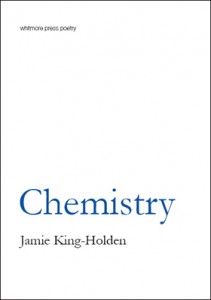
Tara Mokhtari Reviews Jamie King-Holden and Koraly Dimitriadis

Chemistry by Jamie King-Holden
Whitmore Press, 2011

Love and Fuck Poems by Koraly Dimitriadis
Self published, 2011

Jamie King-Holden is the 2010 winner of the Whitmore Press/Poetry Idol Manuscript Prize and this is her first collection of poetry. I am reminded, upon finding this out, of a series of miniature chapbooks published by the Australian Poetry Centre which I reviewed for Cordite a year ago. Whereas those prize-winning new poets were underrepresented by poor editing and production quality, Whitmore Press have done King-Holden’s poems due justice by publishing a tight little collection that boasts charming presentation for a limited edition chapbook.
Continue reading

Posted in BOOK REVIEWS | Tagged , ,

An interview with Benito Di Fonzo

Born into an Irish-Italian working class family in Sydney’s inner west, journalist, playwright, poet and performer Benito Di Fonzo has written for, and been profiled by, the best and worst of publications including The Sydney Morning Herald, The Sun Herald, The Australian, CNN, and Bardfly Magazine (where he was editor). Benito has performed his narrative neo-beat poems and spoken word in London, Edinburgh, Sydney, Melbourne, Rome, Adelaide, Perth and Indonesia. As well as writing radio serials and plays for 2SER and 2FBI he has had two plays broadcast live from The Sydney Opera House. He has also performed on ABC 702 & Radio National, 3RRR (Melbourne) and Resonance FM (UK) amongst others. In 2005 Independence Jones Guerrilla Press published Benito’s free-verse novel Her, Leaving, As the Acid Hits to positive reviews. Benito’s 2010 stage-play “The Chronic Ills of Robert Zimmerman, AKA Bob Dylan (A Lie)” was a hit of Adelaide Fringe before several sold-out seasons in Sydney and a litany of glowing reviews, resulting in the show being awarded the 2010 BITE (Best of Independent Theatre) award. It is still touring Australia. Benito’s second Fonzo Journalistic show, “Lenny Bruce: 13 Daze Un-Dug in Sydney” will premiere at Darlinghurst Theatre in November 2012. Benito holds degrees in Literature and Creative Writing from The University of Western Sydney. In 2001 he was awarded the Inner City Life Literary Award by The NSW Writers’ Centre. His favourite colour is irrelevant.
Can you describe your typical day at work?

Waking in the middle of the night I begin what Les Murray famously called ‘The 4am Show’ in which I lay and sleeplessly panic about my career as a writer and where it is and isn’t going and why such-and-such an editor seems to suddenly hate me so. I can’t sleep now so I will read Lao Tzu or Somerset Maugham till dawn, when I will promptly fall asleep.

Rising again I will suffer Capitalist Guilt that I should have been up and writing hours ago so, after ablutions, cold leftovers, and much Bushells Australian Breakfast Tea, it’s to my writerly cockpit where I will ignore the vampires of Stalkbook and warm up by tweeting a quick western haiku or tanka waka as ‘Jack Kerowank’.

Now I work at whatever is my current article, poem, story, or play until lunch. After lunch I may wander the streets somewhat, then read some more, play guitar, or just worry about all those unpaid invoices.

It’s here I may have to suffer at some day job for a few hours. If I’m not working I may have to review a play to for 2SER-FM (where I co-host ‘Stages’ each Saturday morning) or I go busking – playing drums on King Street, Newtown to John Maddox’s dobro bass and Tug Dumbly’s guitar. Untypically this coming January 2012 I may be playing a live guitar score in my Short & Sweet Festival spoof “One Day In The Life of Keef: The Human Riff” at Newtown Theatre.

Eventually old Mr Moon will raise his watery head over the early hours and I will fall in a stupor in my garret next to Eveleigh Railyards, just waiting for my stage-call for the 4am Show, and some Somerset mourning…

Do you consider writing poetry to be a form of work?

Yes and no. I mean, ‘work’ means slaving away in the factory that towered over my street as a kid. Being an artist of any kind is a flukish gift. So it’s work, but it’s not work in that ‘work’ to me is associated with something you don’t want to do, dig?

How long do you generally spend writing an individual poem?

Anywhere from a fifteen minute scribble in a notebook, to weeks going over and over it. There’s no rule – it’s not like baking a cake or manufacturing amphetamines.

Is work a preoccupation or theme in your poetry?

It does come up, particularly in my earlier work. I think I suffered a sense of what I called ‘capitalist guilt’ for a time, it’s like catholic guilt but related to work instead of sex. Basically I felt guilty I wasn’t stuck in the factory at the top of my childhood street like my dad had to be.

What is your attitude towards unpaid publication?

It should be exchanged for paid publication.

What is the smallest amount you’ve ever been paid for the publication of a poem?

I’ve either been paid nothing or paid between $50 and $100. There doesn’t seem to be anything in between. Readings on the other hand can range from $250 to a beer.

Describe your poetry writing work environment.

Usually my flat by Eveleigh railyards (the steam-train shed to be precise.) Although the seed of some of my best poems happened in some pub or party, or at least I think it did, and was jotted down in a notepad.

What do you think is the (ideal) monetary worth of a single poem?

Whatever my rent is that week.

Have you ever worked as an editor? Describe your experience.

I have, and it is humbling to have to look at a poem from a more critical point of view. It’s much like being a reviewer, which I’ve also been. Suddenly you empathise with all those folk you swore at over your mailbox or news-agency.

When asked your occupation, do you reply ‘poet’?

My business card says “Writer Extraordinaire,” whatever that means…

When you were a child, what did you want to be when you grew up?

It was more what I didn’t want to do, i.e. a proper job, like at the factory at the top of the street. Discovering that there were people who actually made a living (of sorts) as artists, writers, and musicians was quite a joyous adolescent epiphany.

Benito Di Fonzo’s ‘What For? (Epic Triad Version)’, first published in Cordite 31: Epic (2009), has now been republished as part of the Cordite / Prairie Schooner ‘Work’ feature.

Posted in BLOG ARCHIVES | Tagged ,

An interview with M. F. McAuliffe

M. F. McAuliffe was born and educated in Adelaide and Melbourne, and holds an Honours degree in English and some graduate stuff in photography and anthropology. She has taught technical writing, media analysis and basic TV production to engineering and applied science students, Business English to business students, and Film Study to high school students. Since moving to the U.S. in 1982, she has worked as a political pollster, technical editor and crypto-librarian. She made her US publishing debut in Damon Knight’s Clarion Awards, published fiction and verse in The Adelaide Review, Overland, Australian Short Stories, Cordite, WORK Magazine, and in Tema and Poezija (Zagreb).
Can you describe your typical day at work?

A typical day at work always begins with the 11-mile commute along the Columbia River: canadian geese, wood ducks, bald eagles, red-tailed hawks, crows, cranes, Pacific gulls; low-lying islands with Mohawks of cottonwoods and dogwoods; growing marinas of houseboats; pale current-patterns in the water, water-skiers in summer, feathers of fog rising from oily stillness in autumn and winter. Mt. Hood walks slowly across the horizon.

And then I: let myself in through the security-door, write the daily and weekly work-schedules, unsnarl the printer and the Word docs and the resumes and the term-papers; process new books, de-process the old, make lists of books to order; answer the phone, help download ebooks, lend laptops, process returned laptops; answer the phone, unsnarl the printer, direct people to the programs, sign people up for classes; sign for deliveries of federal tax-forms and store them for the New Year; unsnarl the printer; see everything’s secure, alarm the door on my way out.

The 11-mile commute: home ahead of me, away, warmth, food; the great white triangle of Mt. Hood behind me, an unbelievable snow-cone in a small, ovoid, oblong mirror; ahead of me, beside me, behind me, the long, out flat to both horizons, the trafficless, tempting, pseudo-asphalt of the river.

Do you consider writing poetry to be a form of work?

At the beginning it is a rush & a joy. when the inspiration runs out, or when it falls apart and I have to make a complete thing of it, then it’s work. Painstaking. I don’t want the seams to show, or the several tectonic plates of “first” and “patching up” to be discernibly different in cogency & intensity.

How long do you generally spend writing an individual poem?

It depends. It took me from 1979 till 2003 to write Orpheus because I couldn’t finish it in 1981, and I lost the manuscript for 10 years. I can wait 10 years to fit a 3rd line to the first two. Or I can wake up with a complete poem in my head.

Is work a preoccupation or theme in your poetry?

Sometimes.

What is your attitude towards unpaid publication?

That depends very much on who’s not paying me. Local anthologies of spoken word, financed by a couple of the better-off poets – fine. Croatian magazines devoted to poetry/ photography/ literature – fine; it’s a poor country and the writing there’s so good I’m just happy to be included. If I am publishing something myself, I do it to make money. I make very little, but still feel as though I’ve successfully laid seige to some stronghold as I count the dimes.

What is the smallest amount you’ve ever been paid for the publication of a poem?

I can’t remember. There are so few paying outlets I think the only time I am paid is when an Arts Council funded Australian publication takes something. I sell my own mini-chapbooks for $2 – they usually contain about 7 poems. (Orpheus is $3. It’s long.)

Describe your poetry writing work environment.

Usually my office. (A narrow room downstairs, somewhat under the stairs. I have a very long desk which leaves me free to lay out a short book of photographs, for example, or the Xmas-cards in varying states of completion, or lists, bank-statements, or longer-term projects at the other end. I work at the window end. I’ve set up the room to face east (the blank wall), but the light comes from the window, the north, the river.

Sometimes I write in my head, driving to work. Sometimes in my head, sleeping – I find myself having written long pieces of prose or shaped entire novels in a particular contemporary style. The prose fades on waking. I suspect I’m testing modes, doing asleep what I don’t have time to do when I’m awake. Or perhaps they are things I will never follow up because of some other limitation.

Sometimes I have written things at work, a couple of lines scribbled to be worked on or out, later. During the mid-late ’90s I wrote a lot of very short poems at work & hid them in my pocket. We worked in a big open room, at desks which could be seen & scanned from the supervisor’s office (it really was supervision). So the things I wrote then fitted onto 3″ x 5″ pieces of scratch paper.

Over the last few years I haven’t written much. I will be able to concentrate on writing in 2012, as older projects move to press. I might take the computer & stuff upstairs in the early mornings. My office is getting to be too cold in winter.

What do you think is the (ideal) monetary worth of a single poem?

Depends on the poem. Don Juan made Byron’s fortune, but Byron was a genius. I like the current payment structure of Cordite, for example – the money is enough to make your work feel valued, without being too onerous for the Council. With small or very small, truly independent presses, I think the principle of payment should be the widow’s mite.

Have you ever worked as an editor? Describe your experience.

I have done a lot of editing over the last 10 years. Again, that experience varies. I’ll never forget the day Venus Khoury-Ghata’s Words arrived at the Gobshite Quarterly office, as a mailed fax from Marilyn Hacker. It was a delirious experience – they were so good and so far outside the realm of English poetry; it felt like a life-changing moment.

The next best Gobshite Quarterly experience was getting “Sirens,” a short story by Frederic Raphael that wouldn’t place in England. It’s a great story. I couldn’t believe it’d been good luck with placing it elsewhere’d.

The 3rd experience I will always remember was getting an email from Palestine (long after we’d given up hope), giving us permission to reprint some of Mahmoud Darwish’s poems. (Typesetting the Arabic was an adventure – it was eventually done by one of the partners in a local printing business, who’d studied Arabic and been to Syria for a year as a Fulbright scholar. As we didn’t have the right font at the time we turned the page into a jpg and InDesigned it that way.)

Marilyn Hacker also brought us the French poet Marie Etienne; on a visit to Portland Julienne Eden-Busic chanced to see us mentioned in The Oregonian, and brought us a treasure-trove of new Croatian Slovenian and Bosnian poets – Tomica Bajsic, Barbara Korun, Dubravka Oraic-Tolic, and Ferida Durakovic, as well as prose-writers Edo Popovic and Gordan Nuhanovic; from a copy of Gobshite found in an Algerian café we got Algerian poet Amari Hamadene. & last but not least, Les Murray sent us a batch of pre-publication copies from Poems the Size of Photographs.

In 2007 I co-edited Broken Word: The Alberta Street Anthology Volume Two, which was a very small publication co-financed by two or three people. The open mic at the Alberta Street Pub was uncommonly good; arlo Voorhees, the MC, was that rarest of creatures, a catalyst, as well as a lively and tolerant host. So over the course of 2 years or so the reading just kept getting better; community radio exposure attracted people from southern Washington as well as the Greater Portland area. Volume Two contained at least one poem by each of the regulars, 50 poets in all. Editing that meant taking the best from each person and carefully orchestrating the flow of the whole. Colours and shades of language were very important there.

Broken Word 2 was a very different kind of publication from Gobshite in that everyone who read more than once (& who responded to the call for submissons) had to be represented. BW2 was a showcase and a commemoration; it was an inspiration to local writers; it completely outsold everything in the small-press poetry section at Powell’s that year – partly because it was local, and partly because so much of the work in it was good. The editorial committee was composed of 6 of the people who’d read consistently at the pub, and whose work qualified them to examine & yea or nay others’ work. The photographer on the Committee also discovered he was a good book designer.

The other end of the editing scale – submissions to Gobshite which need, well, editing. If R. V. Branham (the founder & editor of Gobshite Quarterly) is swamped with other work or in two minds about a particular poem, he will hand the matter over to me. If I’m lucky it’ll be a matter of picking one from a bunch – I look for completeness of thought, internal consistency of tone and mood in the poem itself, and whether I feel as though I’ve felt or seen something new, something I didn’t know, or hadn’t thought of before, by the time I’ve finished reading. I remember once I suggested that the writer cut one word from the last line of a longish poem. My reason was rhythm, and the fact that it was unnecessary to the meaning and its very lack of necessity pulled the reader out of the poem. He declined, and so did we. But we did publish another of his submissions.

The worst-case scenario, and the one I really dread because it is so fraught with consequent email, occurs when something is submitted and the submitter asks for editing. This almost never ends well; the submitter hates the cuts or the title and storms off in a huff, electonically speaking, having wasted everybody’s time… This happens very rarely, but I doubt we will accept anything on that basis again, simply because it does waste our time… But this is why having extra material on hand and being able to plug a sudden gap is one of the most basic survival techniques an editor must have.

When asked your occupation, do you reply ‘poet’?

No, I never do. I reply “I work at [XXX]” the name of the org that signs my paycheques. Saying “I’m a poet” seems odd to me, because it’s not something people will generally find useful, or even immediately graspable, such as being a plumber or dentist or lawyer or carpenter or nurse or even a policeman, fireman, actor, singer, songwriter. We are the very unacknowledged legislators of very little – though good poetry can still cut through the asphalt of conventional thought, mood, perception, dullness like nothing else, like mental and spiritual lightning. Rock/pop songwriters occupy the spot Byron and Keats used to, shaping the sensibilities of their time. But then, written poetry was an always abstraction from song. Technology has simply let song take its old place back.

When you were a child, what did you want to be when you grew up?

I didn’t know, but I always felt a quick, hot jolt of awe and longing (and the furtive, secret shame of incomprehension) whenever we visited our distant cousins the Dutkiewicz family, who spearheaded the Modernist movement in Australian painting and sculpture. When I lived in Australia I always knew a disproportionately large number of painters.

So I suppose I really wanted to be an artist.

M. F. McAuliffe’s ‘Epic, Untitled’, first published in Cordite 31: Epic (2009), has now been republished as part of the Cordite / Prairie Schooner ‘Work’ feature.

Posted in BLOG ARCHIVES | Tagged ,

Q&A with Brendan Ryan

Brendan Ryan grew up on a dairy farm at Panmure in Western Victoria. One of ten children, the themes of farming and family have influenced his poetry for over twenty years. His first chapbook, Mungo Poems was published by Soup publications in 1997. His first collection of poems, Why I Am Not a Farmer, was published as part of the New Poets’ series by Five Islands Press in 2000. A Paddock in his Head was published by Five Islands Press in 2007 and A Tight Circle was published by Whitmore Press in 2008. His latest collection of poems is Travelling through the Family, which will be published by Hunter Publishers in 2012. He has had poems and essays published in newspapers and journals such as The Age, Australian Book Review, Meanjin and Heat. He has had poems published in the Best Australian Poetry series (Black Inc.) and The Best Australian Poems series (U.Q.P). He has been awarded three Australia Council grants and in 2008 was awarded a Varuna Longlines residency. A Paddock in his Head was shortlisted for the 2008 ACT Poetry Prize. He teaches English at a secondary college in Geelong and lives in Geelong.


Can you describe your typical day at work?

It is a ten-minute drive to work through a leafy suburb, which also takes me over a single lane bridge where drivers have to wait for each other before they can pass over the bridge. A great exercise in democracy in the early hours of each day. Once at work, I walk up to the school library, collect my copy of The Age newspaper, glance at the headlines and front-page articles and make my way to my staffroom. I am lucky to have a desk that overlooks a lawn and small garden of Clonard College where I teach English and Religion in the lower years of secondary school.

Once I have worked out that I have the lessons of the day planned, photocopying is done, school emails have been checked, chatted with other teachers who sit nearby, it is off to the classroom. What happens in the classroom varies from week to week, but a lot of the teaching involves explaining different ways of writing, be they essay writing, poetry, reflective writing, short story writing of 100 words or 600 words. There is also a lot of helping students within the class, walking around to their tables to offer help, having a word to the students who may be distracted or want to muck around. We have two 50-minute lessons, which start at 8.50 and continue until morning recess at 10.35. Period 3 begins at 11.00 and period four ends at 12.40 when it is lunchtime. Twice a week I do a yard duty for a ten-minute interval. The afternoon periods begin at 1.35 and the teaching day ends at 3.15.

At the end of each day I decide what work needs to be taken home and what can stay until the next day. I usually have to pick up my children from their primary school straight after I finish, so I don’t have a lot of time to hang around after school. I mark essays and other school work each weekend and sometimes twice a week. But the marking varies…. Throughout the day I will have many short informal meetings or chats with teachers and usually correspond with parent enquiries as well.

Do you consider writing poetry to be a form of work?

Well it is, in the sense that it is something that I return to as often as I can. Discipline is needed to get back to the desk as much as I can. It can’t be quantified in terms of hours put in and payment for those hours, so in that sense I guess that it is a hobby. I prefer passion or obsession, or nagging urge that makes me want to write poems. Also, editing a poem is like work, skills that I have picked up over the years.

How long do you generally spend writing an individual poem?

This varies of course. As a general rule, a poem may take up to a month to be written. This includes the time after first draft that I leave it sit for a few days, then weeks, tinker with it, sometimes make big changes. The initial drafts are generally done over one or two days. I always write the first drafts in pen, this may be three or four versions before I put it on the computer. I have to be happy with it before I put it on the computer where I play around with the layout and spacing etc. But may of these decisions have been made in the first drafts. I often have ideas or lines come to me when I am driving, in the shower etc, and so I will think about the poem before I write it. Sometimes poems are inspired by other events or poems and the poem that I intend to write is more or less planned in my head in one form. I just have to get it down quickly before it disappears.

Is work a preoccupation or theme in your poetry?

It isn’t intentionally, although I wouldn’t mind if it became one. I think work doesn’t get written about enough in Australian poetry. It takes up such a large part of our lives and time, it is amazing that we don’t read poems about a variety of jobs, be they bricklayers, teachers, nurses etc. This issue of work poems does relate to the jobs that poets have done of course and that the people who take time out to write poetry may not be in the thick of a job that demands all their time. I have written a few poems about work indirectly and may do more so in the future.

What is your attitude towards unpaid publication?

Naturally, we’d all rather be paid for our efforts, however there are instances that I think it is worth doing something if it raises other people’s interest in what I write. I decided long ago that poetry wasn’t going to make me rich.

What is the smallest amount you’ve ever been paid for the publication of a poem?

I think that the smallest amount that I’ve been paid is $10.00 from Famous Reporter, which considering all the work that the editor Ralph Wessman does in bringing out the journal, which has now folded, I don’t complain about. However small the amount, it is still a recognition of the poem that is being published.

Describe your poetry writing work environment.

I moved with my family, this year and I have a room where I write at the back of the house. I also had another room in the previous house where I wrote. In this room, is a big old desk, acquired second hand years ago, two large bookshelves, one stacked with poetry and some biography, the other fiction and non-fiction, biography etc. I look out to trees and the awning which hangs over part of our back yard. I can hear birds, sparrows and hummingbirds, crows. During the day, the sound of cars on a nearby road rises and falls to the rhythms of the day.I am lucky to have this space away from the rest of the family as it is mostly quiet, however, I don’t get back here as often as I would like because of work and family commitments. On my desk are various notebooks, a journal, one or two poetry books and a quote from Thoreau- Live the life you’ve imagined.

What do you think is the (ideal) monetary worth of a single poem?

Well, at a least a grand! I guess that it depends on the length of a poem. I think for publication in a journal, it should be $200.00. There are many poetry prizes around now, and $10,000 does seem to be a bit unreal as far as payment for a single poem. I guess the recipients of prizes like that have to pay tax on it. I think that two or three thousand is enough for a poetry prize. I would like future poetry prizes to have a social justice element to them, where by the winner accepts say $1000.00 for the poem and another thousand goes to helping alleviate poverty in Africa or Asia, or contributes to health programs. When poets enter the competitions they would have to agree to these conditions. This could also give poetry greater recognition.

Have you ever worked as an editor? Describe your experience.

No, not on other people’s poems or for a magazine. Only on my own and I have enjoyed the experience. I have given plenty of advice to other poets who have sent work to me, but that is different, I guess.

When asked your occupation, do you reply ‘poet’?

I used to when I was younger and more full of myself. I have since seen the error of my ways and now I’d be embarrassed by such a moniker. I tell people that I write poetry and that often receives an incredulous smile and various questions. Often other people call me a poet and I have been introduced as a poet, which usually embarrasses me.

When you were a child, what did you want to be when you grew up?

Not a poet, as there wasn’t any real connection to poetry in our family beside John O’Brien’s Around the Boree Log. There weren’t a lot of books in our family. Most people around me were working on farms, in local factories or leaving the country to go to uni and work in the city. For awhile I wanted to be a footballer, then a singer. Once I started working I was happy to be a labourer and earn a wage so i could go out and get drunk. One of the reasons that I moved from the country to the city was to be a dj in a radio station. Well that didn’t work out, but I did pick up something about writing, through copywriting ads for supermarkets that I was practising. Once I went to uni. in Melbourne and became exposed to books more, the direction that I wanted to follow became clearer. In short, I guess I have stumbled along to find my own path. Now I am teaching part time and writing when I can, which is generally good enough.

Brendan Ryan’s ‘Factory Boys’, first published in Cordite 27: Experience (2008), has now been republished as part of the Cordite / Prairie Schooner ‘Work’ feature.

Posted in GUNCOTTON | Tagged ,

Work: A Cordite-Prairie Schooner Collaboration

Cordite - Prairie Schooner Work Feature

Cordite is excited to announce a special collaboration with Nebraska-based literary journal, Prairie Schooner. The collaboration, entitled ‘Work’, is the first in what promises to be an exciting ‘Fusion’ series, wherein Prairie Schooner teams up with innovative journals from around the world. ‘Work’ consists of fifteen poems from each journal’s archives, as well as artworks, audio poems and interviews.

Prairie Schooner editor Kwame Dawes’ introduction expounds some more on the Fusion concept:

Fusion is an opportunity to create dialog across geographical spaces and cultures through the sharing of art and writing. It represents an effort to create bridges between the many silos that separate us, and to do so by asking writers to think about the very things that connect us and distinguish us in different parts of the world.

Read more

Cordite editor David Prater reflects upon work in his editorial:

“I got my first paid job while I was still at school, working as a milk delivery boy in the suburb of Wollongong, an industrial city in Australia where I lived with my family in the 1980s …”

Read more

Poets from Cordite whose works are featured in the issue include Tom Clark, Lorin Ford, Derek Motion, Brendan Ryan, Adrian Wiggins, Jennifer Compton, Ivy Alvarez, Barbara De Franceschi, Liam Ferney, Peter Coghill, M. F. McAuliffe, Benito Di Fonzo, Esther Johnson, Geoff Page, Emily Stewart and Margaret Owen Ruckert.

Poets from Prairie Schooner include Hedi Kaddour (translated by Marilyn Hacker), R. F. McEwan, Ander Monson, Linda McCarriston, Toi Derricotte, Marvin Bell, Marcella Pixley, Ted Kooser, Moira Lineham, Sandy Solomon, Jenny Factor, John Engman, Gary Fincke, Dannye Romine Powell, John Canaday, James Cihlar, Nance Van Winckel, Floyd Skloot and Roy Scheele.

Special features include audio poems by Sean M. Whelan & the Interim Lovers, Maxine Beneba Clarke, komninos zervos and Benito Di Fonzo; illustrations by Michelle Ussher and Watie White; and interviews with Derek Motion, Jennifer Compton and Nance Van Winckel.

Over the coming week we’ll also be featuring eight more interviews here on the Cordite site. Then, to round out the collaboration, and in honour of Prairie Schooner‘s prairie roots, we’ll be presenting a special Nebraska tribute, curated by Liner Notes star Sean M. Whelan. More on that soon.

For now, head on over to the Prairie Schooner site to check out the goods, or else do so indirectly by visiting the Cordite mirror page.

Posted in GUNCOTTON | Tagged , , , , ,