Will Day: Richard Frankland’s Charcoal Club / My Deconstruction Fatigue

Just now, I'm weary of the fractured, playful, tense world of the post-modern, post-language poets, the pomopomopomopony. 15 years back I was delighted to play with my mind in that way, to play with my politics in that way, to play with my ideas of language and literature in that way. But increasingly for me there seems to be a gap, a hollow, another path to follow. Some texts of the disenfranchised want for anchors.
Continue reading
Posted in FEATURES | Tagged ,

Claire Stewart Reviews Benito di Fonzo

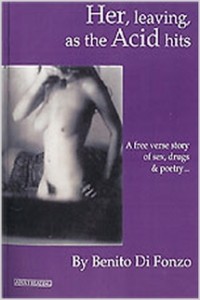
Her, leaving, as the Acid hits by Benito Di Fonzo
Independence Jones, 2004

The first thing that struck me when reading 'Her, leaving, as the Acid hits' was that it embodied, like the muse of the story, a lament of an era long gone. Di Fonzo has successfully recreated the zeitgeist of the pre-gentrification time of cosy inner city dwellings before real estate went up and the well worn homes that gave these areas their character went down to make way for sterile, so-called architecturally designed apartments.

Continue reading

Posted in BOOK REVIEWS | Tagged ,

Claire Stewart Reviews Paul Mitchell

book.jpgminorphysics by Paul Mitchell
IP, 2003

The first comparative poet who came to mind as I was reading this collection was Bruce Dawe, who shares 's alternating ocker flippancy and grave sensitivity. Like Dawe, Mitchell finds beauty and solace in the most seemingly mundane of subjects. His poems have a tendency to oscillate between sensory osmosis and abstract observation.

Continue reading

Posted in BOOK REVIEWS | Tagged ,

Michael Brown Reviews Paul Hardacre

The Year Nothing by Paul Hardacre
HeadworX, 2003

If one name stands out as a hero and influence among the present generation of Australian poets it's Michael Dransfield. B. R. Dionysius has dedicated a poem to him. Jayne Fenton Keane has penned an adequate parody of one of his most recognisable works and Jaya Savige claims that discovering Dransfield's work prompted him to pursue writing instead of law. There is also John Kinsella's recent retrospective of Dransfield's work. However, Paul Hardacre in his first volume The Year Nothing, is perhaps closest not only in style but also in intent.
Continue reading

Posted in BOOK REVIEWS | Tagged ,

Rob Walker Reviews Tony Page

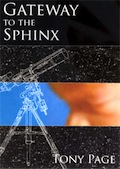
Gateway to the Sphinx by Tony Page

Five Islands Press, 2004

The Schism

Writing a book of poems about abstract scientific theories is a high-wire act. The danger is that those who comprehend the science may not appreciate the poetry and those who dig the poems may not comprehend the science. Writing a review on this little gem was somewhat daunting, too. To begin with, a succinct review forming an introduction to the work has already been written by one Phillip Adams, whose intellect and eloquence I admire greatly.
Continue reading

Posted in BOOK REVIEWS | Tagged ,

Diana Young Reviews Sean M. Whelan

Love is the New HateLove is the New Hate by Sean M. Whelan
Hit & Miss Publications, 2003

In reading Sean Whelan's Love is the New Hate, I was invited on a journey into the hinterlands of evasive emotion, decorated by the wreckage of cryptic personal revelations. Whelan's ten poems combine a strong narrative orientation with a casual conversational cadence to pull us into his native terrain. As we become conspiratorial conscripts exploring the bounds of his uncertain subjectivity, it becomes obvious that Whelan has a real talent for enigmatic juxtaposition.
Continue reading

Posted in BOOK REVIEWS | Tagged ,

Maria Christoforatos Reviews Jill Jones

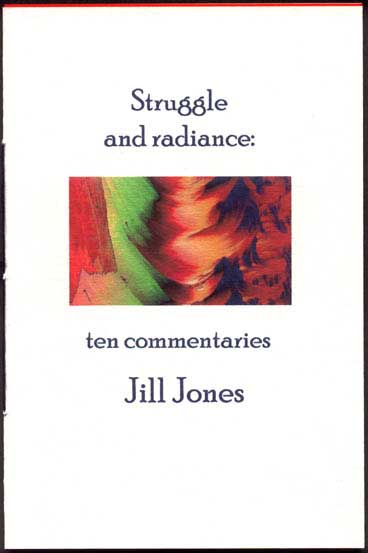
struggle_big.jpgStruggle & radiance: ten commentaries by Jill Jones
Wild Honey Press, 2003

As I sat reading Struggle and Radiance in my local laundromat and occasionally looked out at the pub or the tendrils of exhaust fumes across the road, I found there was plenty that was unapologetically radiant in these poems and the word ‘struggle' in the title suggested an unnecessary weight or polarity to this collection.

Continue reading

Posted in BOOK REVIEWS | Tagged ,

John De Laine Reviews John Tranter

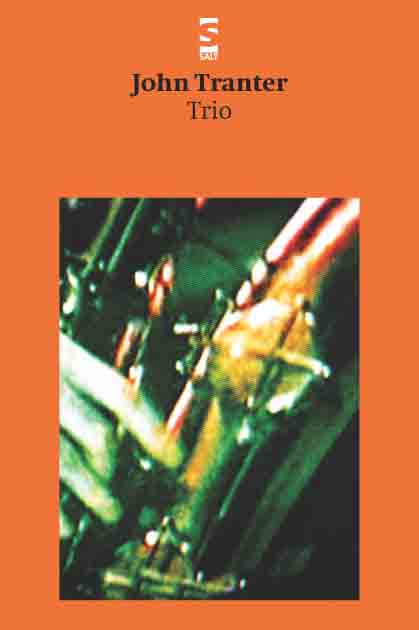
trio.jpgTrio by John Tranter
Salt Publishing, 2003

Salt Publishing's decision to republish three 1970s collections by John Tranter under the title Trio nicely bookends the army of books no doubt already occupying the home library shelves of his most ardent and serious fans. In reality, this collection appears because the individual collections within are no longer in print; though I venture to believe that Trio marks the point at which Tranter is pausing for sandwiches and thermos coffee — the fork in the road.

Continue reading

Posted in BOOK REVIEWS | Tagged ,

Bev Braune Reviews Peter Boyle

Museum of space by Peter Boyle
University of Queensland Press, 2004

Peter Boyle strikes me as a poet who likes the air, much as Peter Minter likes water; Robert Adamson, leaves; Jordie Albiston, defined/confined spaces; John Tranter, lines or, rather, the lineage of the cursive. Boyle most reminds me of Robert Adamson with his gentle, probing style, his yearning approach to all that should be desirable–an understanding of ourselves in space and time, wherein we point all our limitations. In this context, Boyle holds his place very well as a watchful observer of the world (e.g. the wind, sunlight, birds, music, reflections, waves) and other writers (e.g. Rilke, Saint-John Perse, Jabès).

Continue reading

Posted in BOOK REVIEWS | Tagged ,

Scott Thornton Reviews John Jenkins

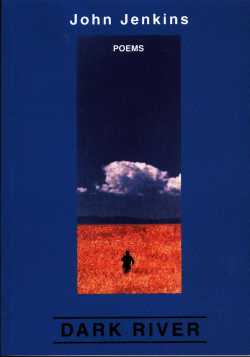
DarkRiver.jpgDark River by John Jenkins
Five Islands Press, 2001

In John Jenkins' eighth collection, Dark River, the question he asks the reader is, 'Are we apes or cobalt clouds?' Throughout the collection, a poetic narrator directs the reader towards a continual reassessment of science and aesthetics. Thus, this collection reminded me somewhat of the 17th-century Metaphysical poets because of its ability to implicate the reader within the poem. Jenkins directs his verse behind a persona who describes this wonderland to 'you', the reader.

Continue reading

Posted in BOOK REVIEWS | Tagged ,

Ali Alizadeh Reviews Ouyang Yu

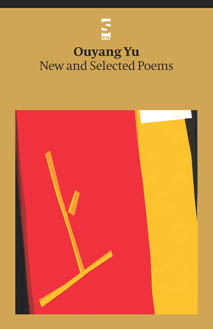
New and Selected PoemsNew and Selected Poems by Ouyang Yu
Salt Publishing (UK), 2004

´Multiculturalism', when all has been said and (often very little) has been done about it, remains a difficult, even paradoxical, idea. It is an English-language term invented by, and used for the purposes of, the dominant Anglo-Celtic culture; yet it supposedly represents the reality of being from the ´minor' cultures that, at least in Australia, do not have English as a first language.
Continue reading

Posted in BOOK REVIEWS | Tagged ,

Ali Alizadeh Reviews Ian McBryde

DomainDomain by Ian McBryde
Five Islands Press, 2004

In the media release for Ian McBryde's latest collection, Domain, Peter Porter states that World War II and the Holocaust &#151 the content of McBryde's collection &#151 have been “subjects defiant of poetry”. Here, I think, Porter is trying to make a claim for this collection's uniqueness. While this powerful book is in many ways unique, I find Porter's claim strangely ignorant: many poems have been written about this darkest period of history by, amongst others, some of the best known poets of the 20th Century such as Yevgeny Yevtushenko, WH Auden, Randall Jarrell, Primo Levy, Geoffrey Hill and Czeslaw Milosz.
Continue reading

Posted in BOOK REVIEWS | Tagged ,

Rob Walker Reviews Deb Matthews-Zott

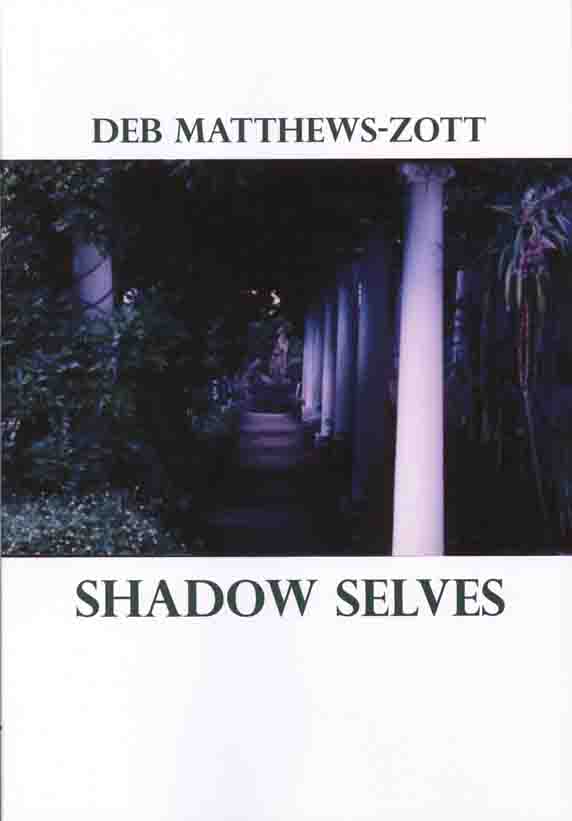
Shadow SelvesShadow Selves by Deb Matthews-Zott
Ginninderra Press, 2003

Poetry about erotic desire is fraught with perils. Just look at some of the worst on thousands of teen websites and you'll get some idea of just how bad it can get! Contrast this with Shadow Selves, Deb Matthews-Zott's latest work, and the difference is striking, showing a sophistication that welds the physical to the intellectual. She achieves all this without resorting to anatomical diatribe. But it's still hot.
Continue reading

Posted in BOOK REVIEWS | Tagged ,

Bev Braune Reviews Luke Davies

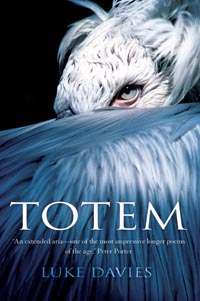
Luke Davies's TotemTotem by Luke Davies
Allen and Unwin, 2004

The efficacy and strength of Luke Davies' Totem lie in its drawing on a long familiar tradition of mythological narratives as a vehicle for romantic verse-tellers – from Publius Ovidius Naso (known to us as Ovid), to Giovanni Boccaccio, to John Milton. Davies' tastes are eclectic; he even tries a poem in Jamaican English, such as it is generally recognised in reggae songs, in one in the series entitled '40 Love Poems' following his 'Totem Poem'.

Continue reading

Posted in BOOK REVIEWS | Tagged ,

James Stuart Reviews Luke Davies

Luke Davies's TotemTotem by Luke Davies
Allen and Unwin, 2004

I'll let you in on a secret: I think Luke Davies is in love.

OK. So it's not much of a secret. Still, while descriptions on the jacket refer to it in a variety of glowing terms (‘A sustained aria' &#151 Peter Porter; ‘the great Australian long poem' &#151 Judith Beveridge) what they basically elide is that ‘Totem Poem', and its 40 companion poems are pretty much all about love. And so we pass the microphone to Davies.
Continue reading

Posted in BOOK REVIEWS | Tagged ,

Moses Iten Reviews rattapallax 10

rattapallax 10rattapallax 10, Ram Devineni (ed)
NYC, 2004

I have to admit, I picked up issue 10 of rattapallax for 'The Age of MC SOLAAR' cover story. Although my French is still very limited, I have had quite a few tracks by the Senegal-born, Paris-bred, hip-hop superstar on high rotation for several years. Undoubtedly, his flow alone is dope enough for heads of any language.

Continue reading

Posted in BOOK REVIEWS | Tagged , , , ,

Postcard from Cardiff

When I arrive in a new territory, I sniff it out, find spots that I like and leave my own scent, which is what I did when I came to Cardiff. Cardiff's likeable in many ways: friendly peeps, a public transport system that actually works and enough stationery and book shops to keep a writer happy. But in one essential part, Cardiff has failed me.

Continue reading

Posted in FEATURES | Tagged , ,

Q&A with Johanna Featherstone

Johanna Featherstone established The Red Room Company in 2003. Based in Sydney, Red Room creates, promotes and publishes new poetry by Australian writers in unusual ways. Paul Mitchell spoke to her recently about her work. Continue reading

Posted in GUNCOTTON | Tagged ,

Q&A with Justin Heazlewood

Justin Heazlewood writes regularly for BMA and Voiceworks. He is, however, better known for his role as Triple J's “Bedroom Philosopher,” a character he continued to develop at the recent Melbourne Comedy Festival. Here he talks to Benny Walter about his comedy in depth.
Continue reading

Posted in GUNCOTTON | Tagged

Q&A with Ian McBryde

Domain is without exception the most difficult and challenging poetry collection I have ever tackled. It involved almost four years of steady research and writing. It had a profound effect on me, and caused many a night of uneasy sleep. I found myself quite overcome by a lot of the imagery and literature, which hung around me in a sad, invisible, cloying sort of way.” Ian McBryde talks about his latest collection of poetry.

Continue reading

Posted in GUNCOTTON | Tagged ,

Slivers

The nets. the horses, the nets.

White noise carries too many messages.

Your diamonds are invisible, but hide them anyway.

The swings of the playground are aflame.

The best voice in the choir can belong to a monster.

Somewhere in Texas, farmhouses are burning.

Old women's tears weigh more than our planet.

The cliffs are much closer than we think.

Next door the drapes stay closed.

There are more than fourteen stations of the cross.

A blind girl senses air movement, wonders who has entered.

The nets. the horses, the nets.

Posted in 19: ANTI/HEROES | Tagged

Billy Bragg and the Fight for a New Australia

Thatcherism was the name given to the tide of economic rationalism that swept through Britain in the 1980's. It was a series of often forceful policy reforms and social upheavals that transformed the nation economically, politically, socially and philosophically. Musically, the nation was mute. The original f&^k you of punk's first wave, which was quite often only ever protest for protests sake, had all but died. In its place the superficiality of New Wave and the introspection of Goth reigned supreme.
Continue reading

Posted in ESSAYS | Tagged ,

Ethics in the Kitchen

I'm living off pasta to get over you –
you can tell. A big jar next to the stove.
Just penne and butter. The French way?

Spent two thirds of my rent last week
being Pandora. Can-opening wounds
from my last squeeze blended with love

that will not come. This tastes of
camping: cheap cask red and carbohydrates,
to compensate for that CD I bought

which I didn't want but hoped
would make me feel better. Now I think:
can cook for myself, don't need you,

while a tiny creature watches, chuckles,
then remains silent on the curtain rail.
You see, I have this theory that if

she never opened that box I could
believe that noodles can be a substitute
for all things, a leveller of desire (al dente)-

as it is, I maneuver wheat onto my tongue
in order to keep away from the phone;
as if, calling you, I may unfasten a hinge.

Posted in 19: ANTI/HEROES | Tagged

Ghost Writing

Lapsed vegetarian, lapsed Jew
we connect at absurd points
(one discreet eater of bacon to another)
memory like the old story
about the blind men & the elephant
each groping for proof
you will insist on your version
how you sang Lara's Theme
till your ribs cracked.

You persist by remembering
the story you tell like an alibi
trying to reconstruct an atmosphere
out of air wearing thin. I did not
forget my God. My God
forgot me
.

When your God writes, his medium
is fire-no one can erase it.
& that's what you want, a story
whole, indestructible, Mr. Spielberg
on your doorstep, the reverse eclipse
of flash bulbs in the dark
applause to eat silence.

Posted in 19: ANTI/HEROES | Tagged